


When your TV's built-in speakers just aren't cutting it anymore, you've probably started looking at soundbars. It's a smart move – soundbars are the most popular way to upgrade your home audio without the complexity of a full surround sound system. But here's where things get interesting: the soundbar market spans an enormous range, from budget-friendly options under $200 to premium systems that cost more than some people's entire TV setup.
Today, we're comparing two soundbars that represent completely different philosophies in home audio: the Amazon Fire TV Soundbar Plus and the Klipsch Flexus Core 300. These aren't really competitors in the traditional sense – they're aimed at entirely different audiences and price points. But understanding their differences will help you figure out exactly what you need and how much you should spend.
Before diving into specifics, let's talk about what actually matters in a soundbar. The most important factor is channel configuration – this tells you how many discrete audio channels the soundbar can produce. A 2.1 system has left and right channels plus a subwoofer for bass. A 3.1 adds a dedicated center channel for dialogue. A 5.1.2 system includes surround channels and height channels for overhead effects.
Driver quality matters enormously too. Cheap drivers distort at higher volumes and can't reproduce the full frequency range accurately. Premium drivers use better materials and more sophisticated engineering to deliver cleaner, more detailed sound. Room size compatibility is crucial – a soundbar designed for a small bedroom will sound thin and weak in a large living room, while an overpowered system might overwhelm a smaller space.
The newest soundbars often include room correction technology, which uses microphones to analyze your room's acoustics and automatically adjust the sound to compensate for reflections, dead spots, and other acoustic problems. This technology has traditionally been found only in expensive AV receivers, but it's starting to trickle down to consumer soundbars.
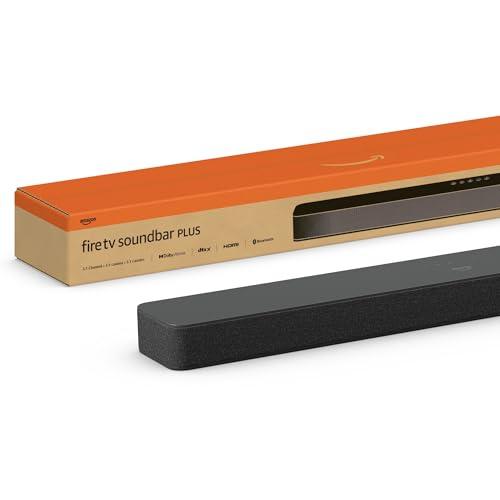
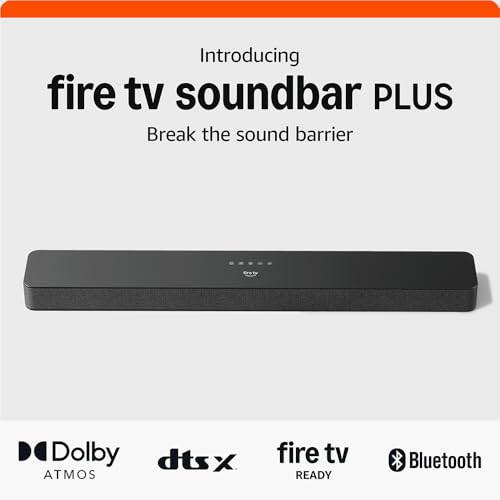
The Amazon Fire TV Soundbar Plus launched in 2023 as Amazon's attempt to create a simple, affordable soundbar that would work seamlessly with their Fire TV ecosystem. At the time of writing, it sits in the budget category, making it accessible to anyone looking for a basic upgrade from their TV's speakers. Despite the "Fire TV" name, it's actually just an audio device – there's no built-in streaming or Alexa integration, which surprises many buyers.
The Klipsch Flexus Core 300 arrived in early 2025 as a flagship product representing some of the most advanced soundbar technology available. Positioned in the premium category, it costs roughly six times more than the Amazon model. This price difference isn't just markup – it reflects fundamentally different engineering approaches and target audiences.
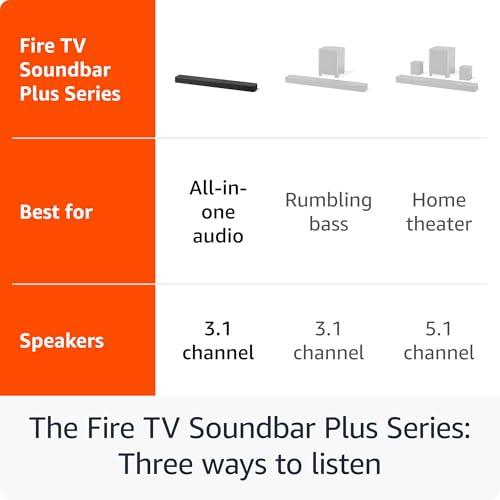
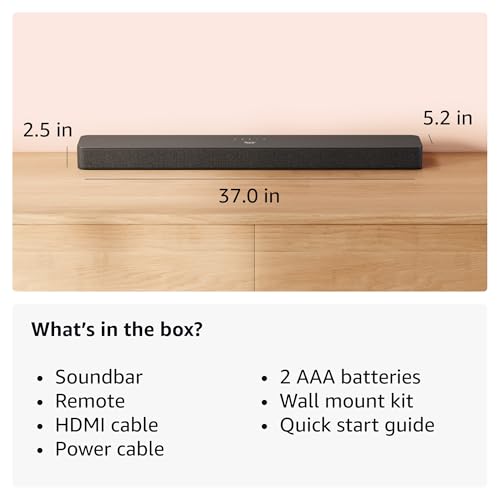
This is where these two soundbars diverge most dramatically. The Amazon Fire TV Soundbar Plus uses a 3.1-channel configuration with seven total drivers spread across a 37-inch cabinet. It has three full-range speakers handling the front soundstage, three tweeters for high frequencies, and two woofers acting as built-in subwoofers. This setup can produce decent stereo sound with some bass reinforcement, but it relies on digital signal processing (DSP) to create any sense of surround sound or height effects.
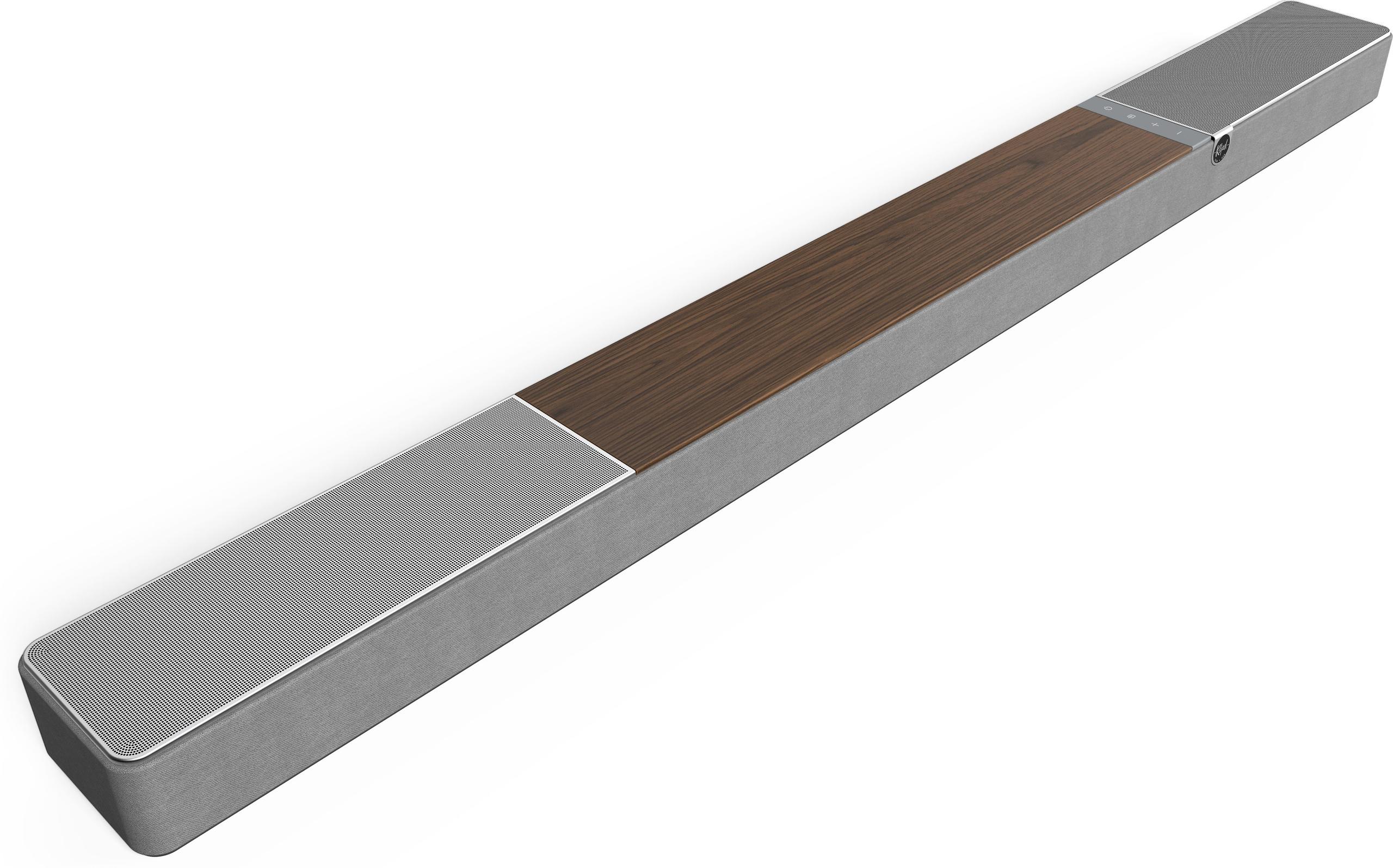
The Klipsch Flexus Core 300 takes a completely different approach with true 5.1.2-channel architecture and an impressive 13 discrete drivers packed into its 54-inch frame. Here's what makes it special: it has four front-firing drivers for the main soundstage, two up-firing drivers that bounce sound off your ceiling to create height effects, two side-firing drivers for surround sound, and four built-in 4-inch subwoofers. That's right – four subwoofers integrated directly into the soundbar.
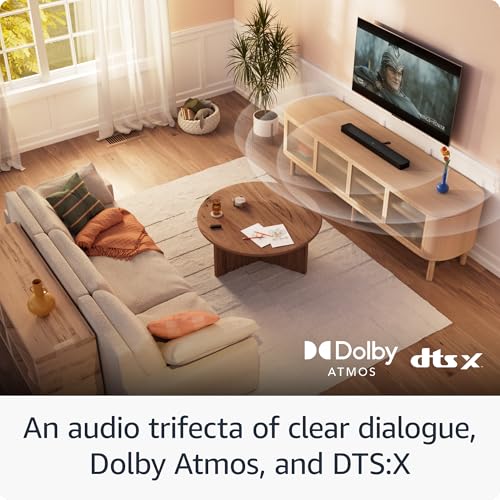
This difference in driver configuration matters more than you might think. When the Amazon soundbar plays a Dolby Atmos movie, it's using psychoacoustic processing – basically audio tricks that fool your brain into thinking sounds are coming from places they're not. It works to some degree, but you'll never get the same immersive experience as having actual speakers firing in different directions.
The Klipsch, on the other hand, produces genuine surround sound. Those up-firing drivers create real overhead effects by bouncing sound off your ceiling. The side-firing drivers actually push sound to the sides of your listening position. It's the difference between a magic trick and the real thing.
I've spent considerable time with both virtual and true surround soundbars, and the difference is immediately apparent when you know what to listen for. With the Amazon Fire TV Soundbar Plus, action sequences in movies do sound bigger and more engaging than TV speakers, but the surround effects feel artificial. You might notice audio "jumping" rather than smoothly panning around the room, and there are noticeable gaps in the stereo image where sounds seem to disappear.
The Klipsch Flexus Core 300 delivers what I'd call a proper surround sound experience. In movies like "Top Gun: Maverick," you can actually hear jets passing overhead with convincing height and directionality. The surround channels create that enveloping feeling where ambient sounds seem to come from all around you, not just from the general direction of the TV.
This difference becomes even more pronounced in larger rooms. The Amazon soundbar works fine in bedrooms or small living rooms, but in a spacious family room, its virtual surround effects become less convincing. The Klipsch can fill much larger spaces with immersive audio, thanks to its higher power output and true multi-channel design.
Here's something both soundbars handle well, though in different ways. The Amazon Fire TV Soundbar Plus includes a dedicated center channel and dialogue enhancement feature with five adjustable levels. This makes a huge difference compared to TV speakers – voices become much clearer and easier to understand, even when there's background music or sound effects.
The Klipsch Flexus Core 300 takes dialogue reproduction to another level entirely. It uses Klipsch's signature horn-loaded tweeter technology in the center channel. This might sound like marketing speak, but horn loading is actually a 75-year-old acoustic design that Klipsch has been perfecting since the 1940s. The horn acts as an acoustic amplifier, making voices sound more natural and present without any artificial processing.
In practical terms, this means the Klipsch delivers exceptional dialogue clarity at any volume level. Even during whispered conversations or heavily accented dialogue, voices remain intelligible without needing to boost a "dialogue mode." The Amazon soundbar does a good job here too, but some users report that deeper voices can sound a bit thin, and the dialogue enhancement sometimes makes voices sound artificially forward in the mix.
Bass is where the engineering differences really show. The Amazon Fire TV Soundbar Plus has two built-in woofers that provide adequate bass for its price point. You'll definitely notice more low-end than your TV speakers, and it's sufficient for most TV shows and casual movie watching. However, the bass response is what audio reviewers often describe as "one-note" – it can get loud, but it lacks the nuance and depth that makes music and movie soundtracks truly engaging.
The Klipsch Flexus Core 300 integrates four 4-inch subwoofers directly into the soundbar chassis. This might seem like overkill, but there's solid engineering behind it. When you have multiple smaller subwoofers instead of one large one, you get more even bass distribution across your listening area and eliminate the timing issues that can occur when a separate subwoofer is placed far from the main speakers.
The result is bass that feels integrated and natural rather than tacked on. Action movie explosions have real weight and impact, while music reproduction maintains the rhythm and drive that makes songs engaging. The frequency response extends down to 43 Hz, which means you're hearing bass frequencies that many soundbars simply can't reproduce.
This is where the Klipsch Flexus Core 300 truly separates itself from the pack. It's the world's first soundbar to include Dirac Live room correction technology. To understand why this matters, you need to know that every room changes how audio sounds. Hard surfaces like walls and windows reflect sound waves, while furniture and carpeting absorb them. These acoustic properties can make even great speakers sound mediocre in the wrong room.
Dirac Live uses sophisticated algorithms to analyze your room's acoustic signature using an included calibration microphone. The system plays test tones, measures how your room affects them, and then applies corrective processing to compensate for these acoustic problems. It's like having a professional audio engineer tune your system for your specific space.
The Amazon Fire TV Soundbar Plus offers basic sound modes – Movie, Music, Sports, and Night – but these are just preset EQ curves that may or may not work well in your room. You can manually adjust bass and treble levels, but you're basically guessing at what sounds best.
Having used room correction systems extensively, I can tell you the difference is dramatic. Before calibration, even premium speakers can sound boomy, harsh, or unbalanced depending on room placement. After calibration, the same system suddenly sounds clear, balanced, and natural. It's one of those technologies that, once you've experienced it, becomes very hard to live without.
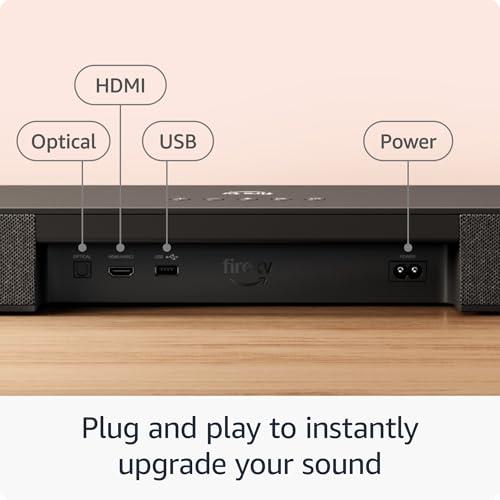
Here's where the Amazon Fire TV Soundbar Plus shows its budget origins. Despite the "Fire TV" branding, it doesn't actually integrate with Amazon's ecosystem in any meaningful way. There's no built-in Alexa, no Wi-Fi streaming, and no app control. You get HDMI ARC (not the newer eARC standard), optical input, Bluetooth, and a USB port for playing music files from a flash drive. It's functional but basic.
The Klipsch Flexus Core 300 offers comprehensive connectivity befitting its premium positioning. It includes HDMI 2.1 with eARC support, which means it can handle the highest-quality audio formats and supports 8K video passthrough at 60Hz or 4K at 120Hz – important for next-generation gaming consoles. Wi-Fi connectivity enables streaming via AirPlay 2, Google Cast, Spotify Connect, and Tidal Connect, all controllable through the Klipsch Connect Plus app.
The difference extends to the user experience. The Amazon soundbar comes with a tiny remote that some users find difficult to handle, and all adjustments must be made using this remote with audio prompts to indicate changes. The Klipsch includes both a premium remote and comprehensive app control, making it much easier to adjust settings and access streaming services.
Both soundbars can be expanded, but the approaches differ significantly. The Amazon Fire TV Soundbar Plus can grow into a 5.1 system with optional wireless subwoofer and surround speakers, though the expansion options are somewhat limited.
The Klipsch Flexus Core 300 is designed as the foundation of a complete home theater ecosystem. You can add Flexus Surround 200 wireless speakers and up to two additional Flexus Sub 200 subwoofers, all connected via Klipsch's proprietary wireless technology that promises low latency and high fidelity. The modular approach means you can start with just the soundbar and expand over time as your needs and budget allow.
From a future-proofing perspective, the Klipsch is clearly superior. Its HDMI 2.1 connectivity, advanced wireless capabilities, and premium build quality suggest it will remain relevant and functional for many years. The Amazon soundbar lacks some newer connectivity standards, which might become limiting as TV and gaming technology advances.
After extensive consideration of both products, here's my honest assessment of who should choose each option.
Choose the Amazon Fire TV Soundbar Plus if you're working with a tight budget but want a meaningful upgrade from TV speakers. It's perfect for small to medium-sized rooms, apartments, or secondary viewing areas like bedrooms. If you primarily watch TV shows, news, and casual movies, and you don't consider yourself an audio enthusiast, this soundbar will provide excellent value. The dialogue improvement alone makes it worthwhile for many users.
The Klipsch Flexus Core 300 is for those who take their audio seriously and have the budget to match their ambitions. If you have a large living room or dedicated home theater space, if you regularly watch action movies or listen to music through your TV setup, and if you appreciate premium build quality and cutting-edge technology, this is the soundbar to choose. The Dirac Live room correction alone justifies much of the price premium for audio enthusiasts.
These two soundbars represent completely different philosophies in home audio. The Amazon Fire TV Soundbar Plus prioritizes value and simplicity – it does exactly what most people need without unnecessary complexity or cost. The Klipsch Flexus Core 300 pushes the boundaries of what's possible in a soundbar, incorporating technologies typically found only in much more expensive and complex audio systems.
Neither approach is inherently better – they're optimized for different users and use cases. The key is being honest about your needs, room size, and audio priorities. If you just want clearer dialogue and some bass reinforcement for casual viewing, the premium features of the Klipsch won't provide proportional value. But if you're building a serious home theater and audio quality is a priority, the Amazon soundbar will likely leave you wanting more.
At the time of writing, the price difference between these models is substantial – roughly six-fold – but it reflects genuine differences in engineering, materials, and capabilities rather than just brand premium. Choose based on your specific needs and budget, and you'll be happy with either option in its intended context.
| Amazon Fire TV Soundbar Plus | Klipsch Flexus Core 300 Soundbar |
|---|---|
| Channel Configuration - Determines surround sound capability | |
| 3.1 channels with virtual Dolby Atmos processing | True 5.1.2 channels with physical up-firing and side-firing drivers |
| Total Drivers - More drivers generally mean better sound separation | |
| 7 drivers (3 full-range, 3 tweeters, 2 woofers) | 13 discrete drivers including 4 integrated subwoofers |
| Room Correction Technology - Automatically optimizes sound for your space | |
| Basic EQ presets only (Movie, Music, Sport, Night) | Dirac Live room correction with calibration microphone |
| Maximum Output - Critical for large rooms and loud listening | |
| Adequate for small-medium rooms | 106 dB maximum - suitable for rooms up to 400 sq ft |
| HDMI Connectivity - Affects audio quality and future compatibility | |
| HDMI ARC (standard quality) | HDMI 2.1 eARC with 8K/60Hz and 4K/120Hz passthrough |
| Wireless Streaming - Built-in music and podcast capabilities | |
| Bluetooth only, no Wi-Fi or streaming apps | Wi-Fi with AirPlay 2, Google Cast, Spotify Connect, Tidal Connect |
| Physical Dimensions - Must fit your TV stand and room aesthetic | |
| 37" W x 2.5" H x 5.2" D, weighs 8.8 lbs | 54" W x 3.1" H x 4.9" D, weighs 34.5 lbs |
| App Control - Convenience for adjustments and setup | |
| No app, tiny remote control only | Klipsch Connect Plus app with full control and calibration |
| Expandability - Ability to add more speakers later | |
| Optional wireless subwoofer and surround speakers | Full Flexus ecosystem with wireless surrounds and additional subs |
| Dialogue Enhancement - Critical for clear speech | |
| Dedicated center channel with 5-level dialogue boost | Horn-loaded tweeter center channel for natural voice reproduction |
| Setup Complexity - Time and technical skill required | |
| Plug-and-play simplicity | Professional-grade calibration available but optional express setup |
| Target Room Size - Optimal performance envelope | |
| Small to medium rooms (under 200 sq ft) | Medium to large rooms (200-400+ sq ft) |
The biggest difference is audio architecture and price positioning. The Amazon Fire TV Soundbar Plus is a budget-friendly 3.1-channel soundbar that uses virtual processing for surround effects, while the Klipsch Flexus Core 300 is a premium 5.1.2-channel system with physical drivers that create true surround sound and overhead effects. The Klipsch costs significantly more but delivers audiophile-grade performance with advanced room correction technology.
The Amazon Fire TV Soundbar Plus is better suited for small to medium rooms under 200 square feet. Its compact 37-inch design and moderate power output are perfectly matched to smaller spaces. The Klipsch Flexus Core 300 is designed for larger rooms and may be overpowered for very small spaces, though its room correction can adapt to various environments.
Yes, both support Dolby Atmos, but in very different ways. The Amazon Fire TV Soundbar Plus uses virtual processing to simulate overhead effects from forward-facing speakers. The Klipsch Flexus Core 300 has dedicated up-firing drivers that bounce sound off your ceiling to create genuine height effects, providing a more authentic Atmos experience.
Both excel at dialogue, but the Klipsch Flexus Core 300 has the advantage with its horn-loaded tweeter technology in the center channel, delivering exceptionally natural voice reproduction. The Amazon Fire TV Soundbar Plus also provides clear dialogue with its dedicated center channel and adjustable dialogue enhancement, making it a significant upgrade over TV speakers.
Yes, both are expandable. The Amazon Fire TV Soundbar Plus can grow to 5.1 with optional wireless subwoofer and surround speakers. The Klipsch Flexus Core 300 offers more comprehensive expansion through the Flexus ecosystem, allowing you to add wireless surround speakers and up to two additional subwoofers for a complete home theater setup.
The Amazon Fire TV Soundbar Plus wins for simplicity with true plug-and-play setup requiring no calibration or app installation. The Klipsch Flexus Core 300 offers both express setup for quick installation and advanced Dirac Live calibration for optimal performance, making it flexible but potentially more complex for users who want the full experience.
The Klipsch Flexus Core 300 is significantly better for music with its superior driver quality, integrated subwoofers, and room correction that optimizes stereo imaging. The Amazon Fire TV Soundbar Plus handles music adequately with a slightly bass-heavy signature but has noticeable gaps in stereo imaging that affect the listening experience.
The Klipsch Flexus Core 300 provides comprehensive modern connectivity including HDMI 2.1 eARC, Wi-Fi streaming (AirPlay 2, Google Cast, Spotify Connect), and app control. The Amazon Fire TV Soundbar Plus offers basic connectivity with HDMI ARC, optical input, and Bluetooth, but lacks Wi-Fi streaming and app integration despite its "Fire TV" branding.
For serious home theater applications, the Klipsch Flexus Core 300 is the clear choice with its true surround sound capabilities, high power output, and room correction technology that optimizes performance for your specific space. The Amazon Fire TV Soundbar Plus provides a meaningful upgrade for casual home theater use but lacks the immersive experience needed for dedicated theater rooms.
The Klipsch Flexus Core 300 delivers superior bass with four integrated 4-inch subwoofers that provide deep, nuanced low-end response down to 43 Hz. The Amazon Fire TV Soundbar Plus includes built-in subwoofers that offer adequate bass for TV viewing, but the response is more limited and less refined compared to the premium Klipsch system.
The Amazon Fire TV Soundbar Plus integrates well with Fire TV devices for single-remote control, though it lacks smart features despite its branding. The Klipsch Flexus Core 300 supports HDMI CEC for basic TV remote control and offers comprehensive control through its dedicated app, providing more flexibility for advanced users.
The Amazon Fire TV Soundbar Plus offers excellent immediate value for budget-conscious buyers seeking a simple TV audio upgrade. The Klipsch Flexus Core 300 provides better long-term value for audio enthusiasts with its premium build quality, future-proof connectivity, expandable ecosystem, and advanced technologies that will remain relevant for years to come.
We've done our best to create useful and informative comparisons to help you decide what product to buy. Our research uses advanced automated methods to create this comparison and perfection is not possible - please contact us for corrections or questions. These are the sites we've researched in the creation of this article: rtings.com - wirelessplace.com - techradar.com - cordbusters.co.uk - whathifi.com - developer.amazon.com - t3.com - dolby.com - youtube.com - youtube.com - youtube.com - dugoutnorthbrook.com - dolby.com - aboutamazon.com - youtube.com - developer.amazon.com - crutchfield.com - whathifi.com - avnirvana.com - hometechnologyreview.com - ecoustics.com - gearpatrol.com - klipsch.com - avsforum.com - youtube.com - avsforum.com - listenup.com - chowmain.software - klipsch.com - novis.ch - avsforum.com - klipsch.ca - lefflers.se - abt.com - sweetwater.com - wifihifi.com - klipsch.com - dirac.com

Privacy Policy
Terms and Conditions - Affiliate Policy
Home Security
© Copyright 2008-2026.
11816 Inwood Rd #1211, Dallas, TX 75244