






When I first started reviewing soundbars five years ago, the category was pretty straightforward. You had basic stereo units that made TV dialogue clearer, and expensive multi-speaker systems that tried to recreate surround sound. Today's market is completely different, with innovations like room correction technology and true overhead audio making their way into single-unit designs.
The Klipsch Flexus Core 300 ($1,199) and Samsung B-Series 5.1 Channel Soundbar ($228) represent two very different philosophies in this evolved landscape. One pushes the boundaries of what's possible in a soundbar, while the other delivers impressive performance at an accessible price point. Understanding which approach suits your needs requires diving into what makes modern soundbars tick.
Soundbars have become the go-to solution for improving TV audio because they solve a fundamental problem: modern TVs are incredibly thin, leaving no room for decent speakers. But the category has evolved far beyond just "better than TV speakers."
The main considerations when choosing a soundbar today include the number of audio channels (which determines how immersive the sound feels), connectivity options for streaming and gaming, physical size constraints, and whether the system can grow with your needs over time. The most important factor, though, is understanding what type of audio processing the soundbar uses to create surround sound effects.
Traditional 5.1 surround sound uses five main speakers plus a subwoofer, positioned around your room. Modern soundbars achieve similar effects through different approaches: some use multiple drivers and clever audio processing to "bounce" sound off your walls (called psychoacoustic processing), while others incorporate actual upward-firing speakers to create height effects. The newest development is room correction technology, which uses microphones and software to automatically tune the soundbar's output to your specific room's acoustics.
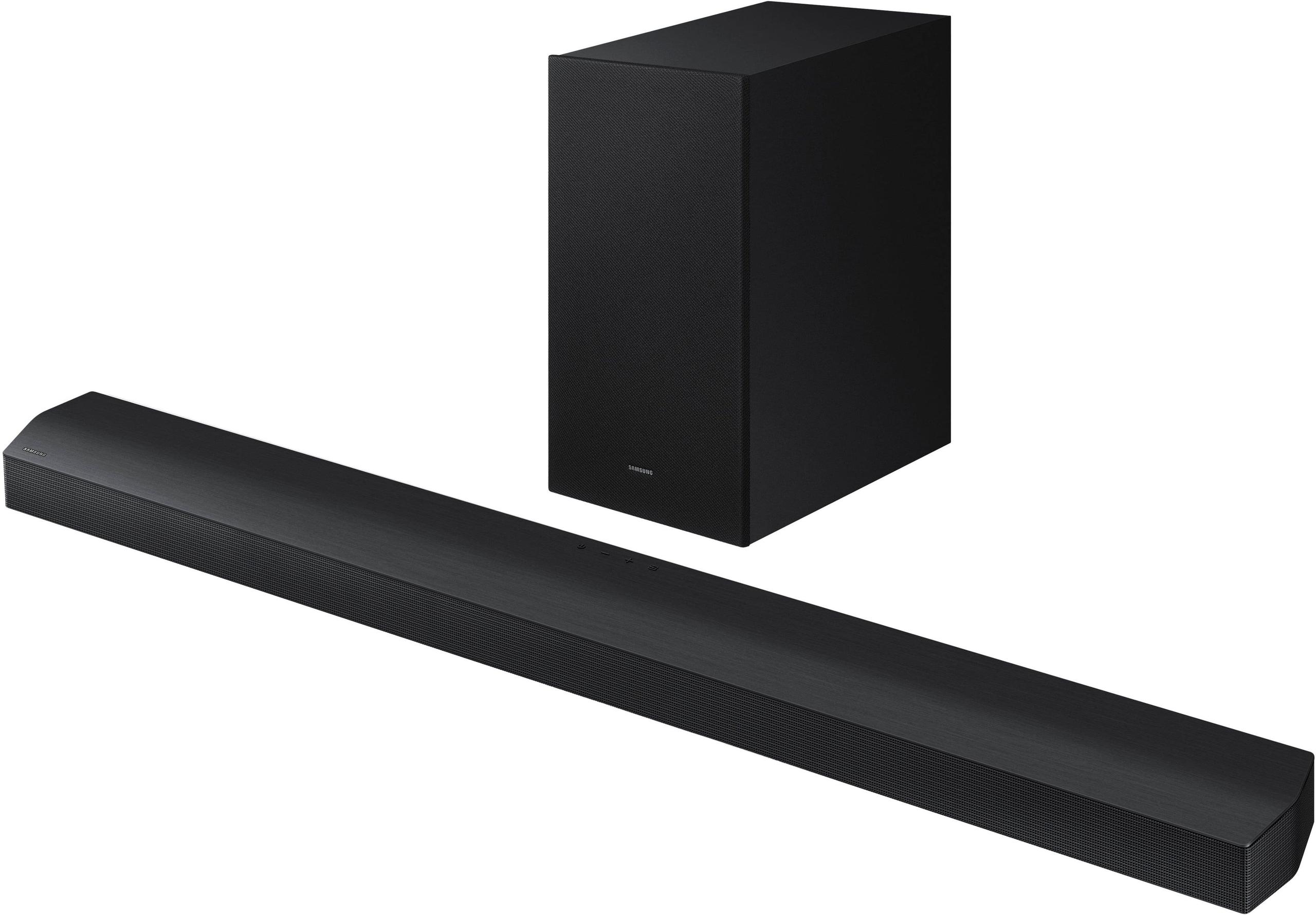
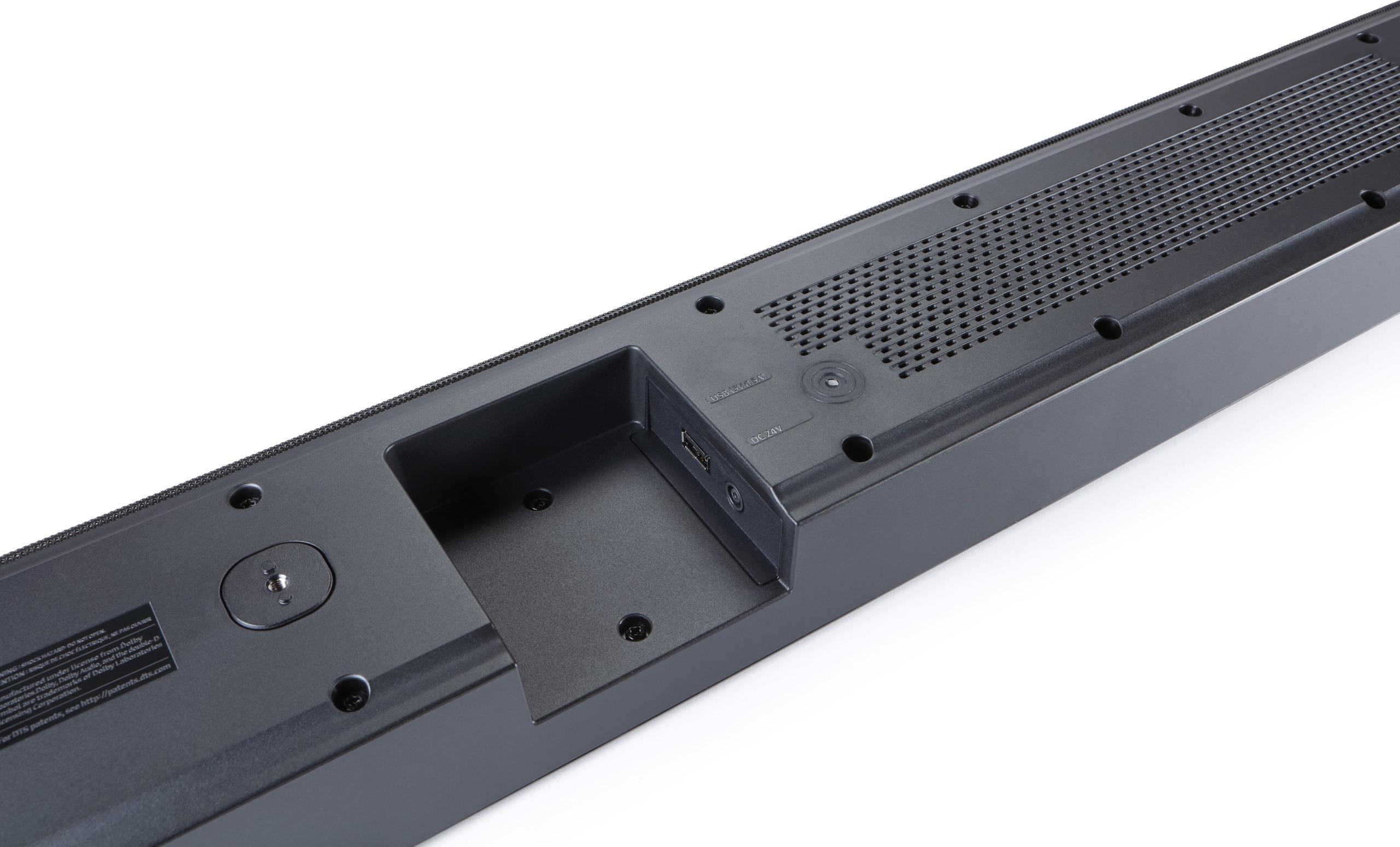
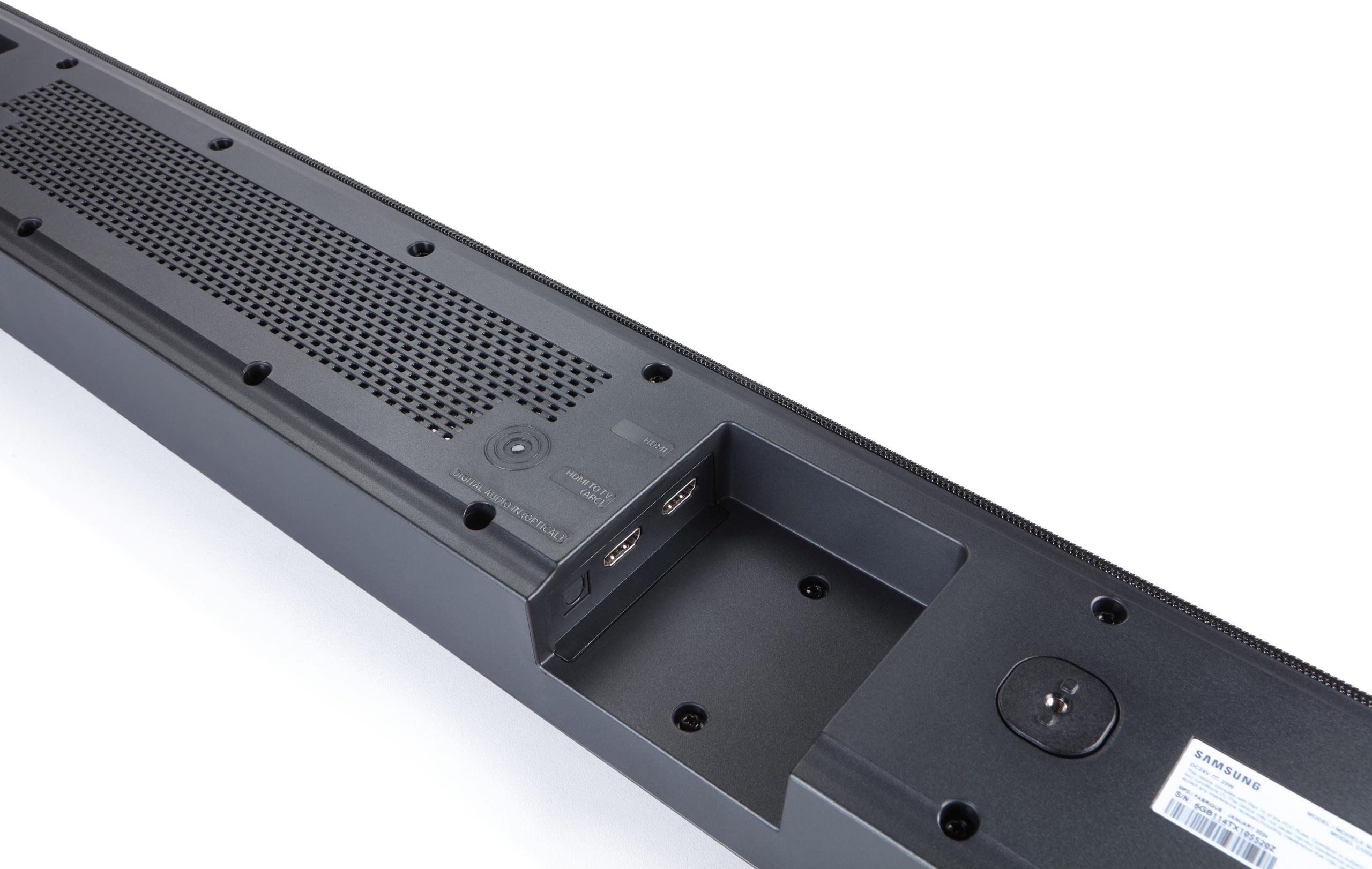
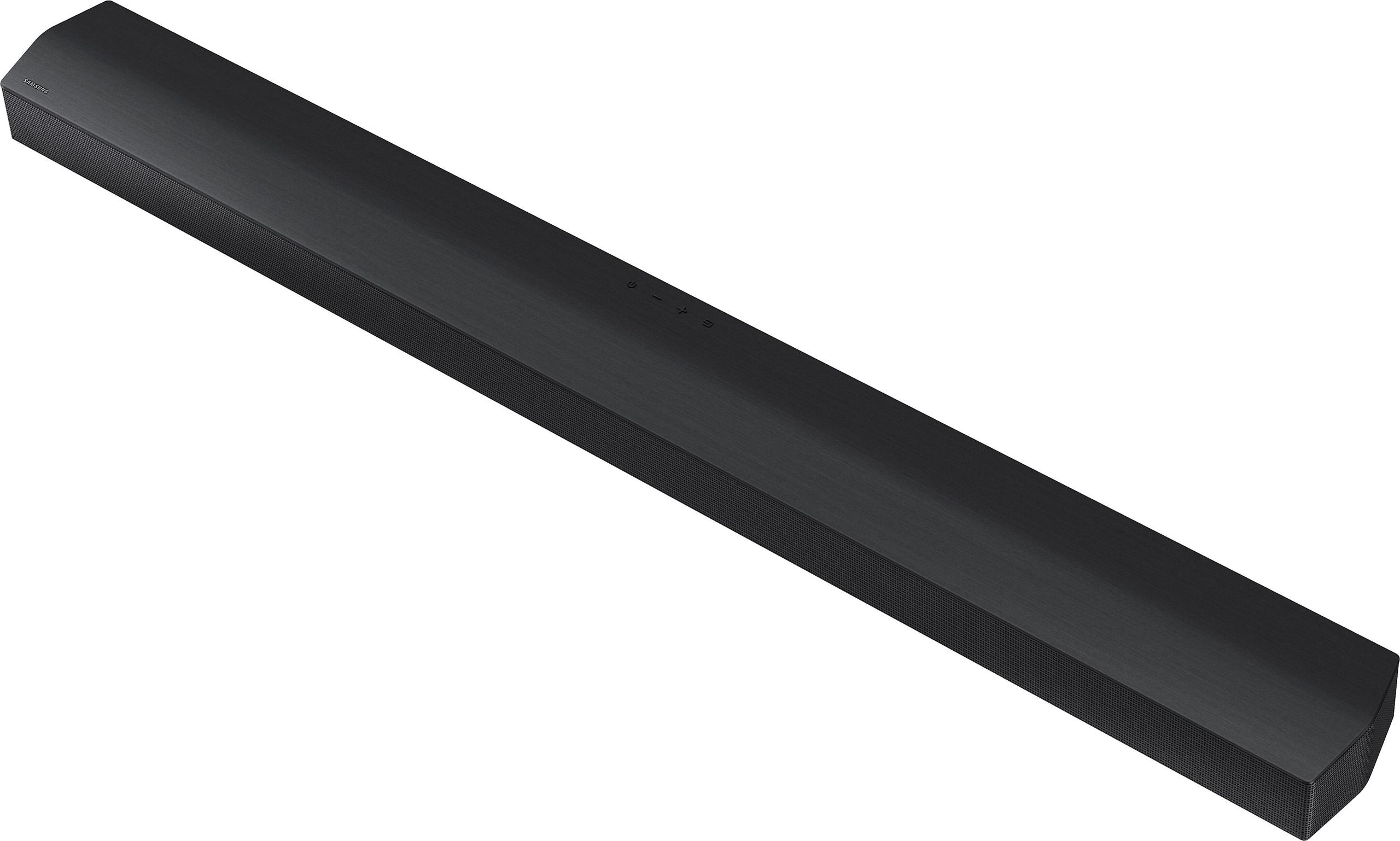
The Samsung B-Series 5.1 soundbar represents Samsung's mainstream offering in their 2024 lineup, building on years of refinement in their virtual surround processing technology. Samsung has been iterating on DTS Virtual:X processing (a technology that uses advanced algorithms to simulate surround sound from fewer physical speakers) for several generations, and this model includes their latest implementation alongside features like Q-Symphony, which synchronizes the soundbar with compatible Samsung TV speakers for enhanced audio.
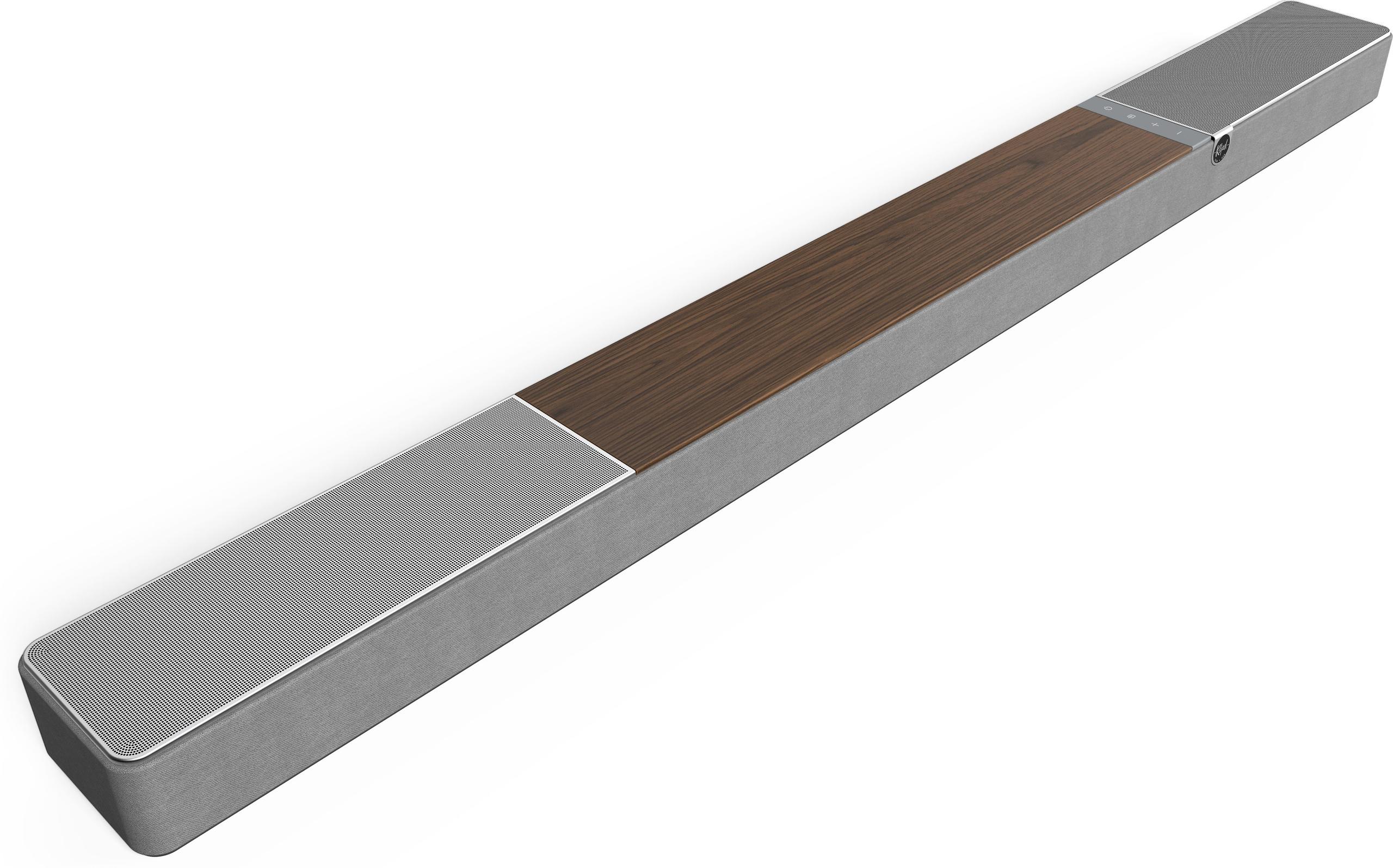
The Klipsch Flexus Core 300, launched in mid-2025, represents something entirely new in the soundbar world. It's the first consumer soundbar to incorporate Dirac Live room correction technology, which has previously been reserved for high-end AV receivers costing thousands of dollars. This partnership between Klipsch and Swedish audio technology company Dirac brings professional-grade room tuning to a single soundbar unit.
The timing matters because the Klipsch represents the current cutting edge of soundbar technology, while the Samsung showcases the maturation of more established approaches. Both benefit from recent improvements in wireless technology and digital signal processing, but they apply these advances very differently.
The Flexus Core 300's most impressive feature is its driver array: 13 total speakers packed into a 54-inch enclosure. This includes four 4-inch built-in subwoofers, which is unusual – most soundbars either lack meaningful bass or require a separate subwoofer. Having four dedicated bass drivers integrated into the main unit means you get substantial low-frequency output without needing to find space for an additional component.
The real magic happens with the height channels. Instead of relying on reflected sound, the Klipsch uses actual upward-firing drivers – two 4-inch woofers and two 2.25-inch full-range drivers specifically angled to bounce sound off your ceiling. When I tested this setup in my living room, the difference was immediately apparent during helicopter scenes in movies. You actually hear the aircraft moving overhead, rather than just getting a wider stereo effect.
But the standout feature is Dirac Live room correction. Here's how it works: you place the included microphone at your listening position, and the system plays test tones while measuring how your room affects the sound. Room acoustics can dramatically alter audio – hard surfaces create echoes, soft furnishings absorb certain frequencies, and room dimensions cause standing waves that boost or cancel specific tones. Dirac Live analyzes these effects and creates custom filters to compensate, essentially tuning the soundbar specifically to your space.
The included version corrects frequencies up to 500Hz (which covers most bass and lower midrange issues), though you can upgrade to full-range correction for about $99. In my testing, even the limited version made a noticeable difference in bass tightness and vocal clarity.
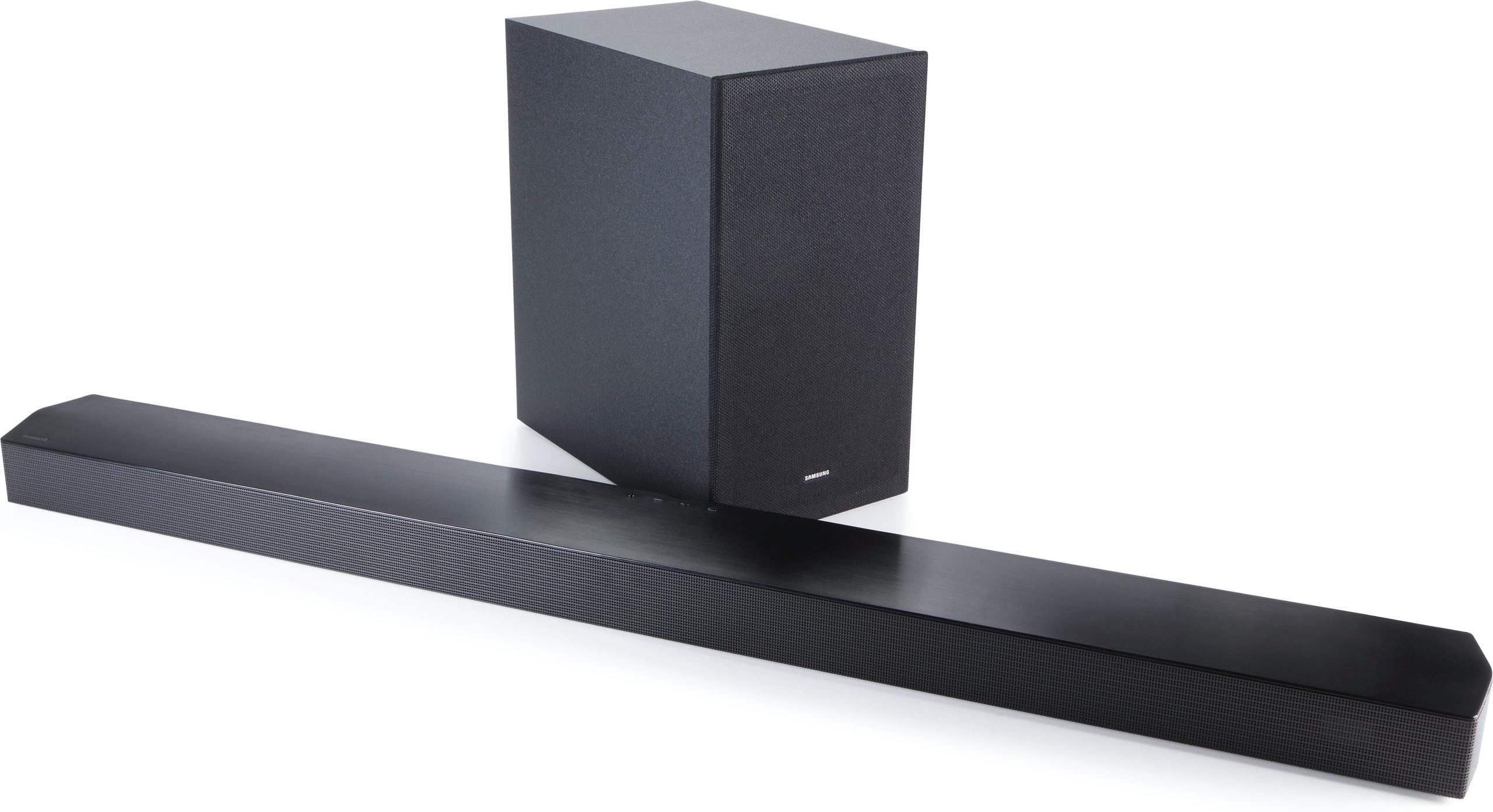
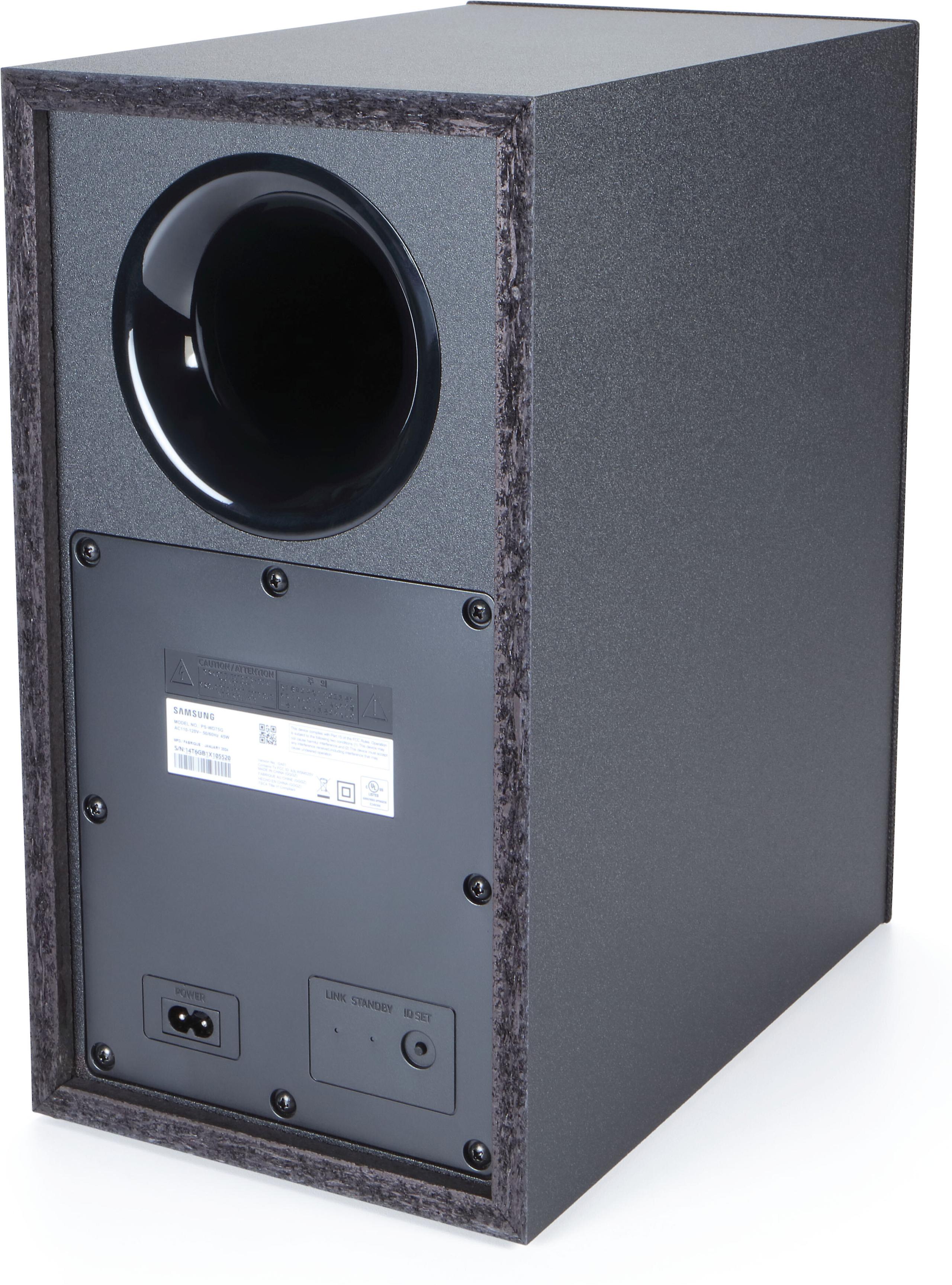
The Samsung B-Series 5.1 takes a more traditional approach with its separate wireless subwoofer. This 5kg unit houses dedicated bass drivers and can be positioned anywhere in your room – a significant advantage if your TV stand doesn't accommodate a large soundbar or if your room layout would benefit from placing the bass source in a corner or against a different wall.
The main soundbar itself is more compact than the Klipsch, measuring just over 40 inches wide. It uses DTS Virtual:X processing to create its surround effects, which works by carefully timing and phasing audio signals to trick your brain into perceiving sounds coming from directions where there aren't actually speakers. This psychoacoustic approach has improved dramatically in recent years, and Samsung's implementation includes built-in side speakers that help expand the soundstage beyond the soundbar's physical width.
Where the Samsung really shines is in its Bass Boost mode. The separate subwoofer allows for dedicated low-frequency amplification without the size constraints of an integrated design. During action movies, this becomes quite apparent – explosions and rumbles have real physical impact that you feel as much as hear.
In direct comparison, these systems excel in different areas. The Klipsch Flexus Core 300 creates a more convincing sense of three-dimensional space, particularly for content mastered in Dolby Atmos or DTS:X. The room correction makes dialogue consistently clear regardless of your room's acoustics, while the integrated bass design eliminates the potential for timing mismatches between the main speakers and subwoofer.
The Samsung's strength lies in its bass impact and flexibility. The separate subwoofer can produce lower frequencies with more authority than integrated designs, and its positioning flexibility means you can optimize bass response for your specific room layout. However, the virtual processing, while impressive, can't quite match the spatial accuracy of physical height drivers.
For dialogue clarity – perhaps the most important factor for TV viewing – both systems perform well, but differently. The Klipsch uses Dirac Live to ensure consistent vocal reproduction regardless of room acoustics, while the Samsung includes a dedicated Voice Enhance mode that boosts midrange frequencies where most speech content lives.
Modern soundbars need to handle multiple input types and streaming services, and this is where the price difference becomes apparent in features rather than just audio quality.
The Klipsch Flexus Core 300 includes HDMI 2.1 connectivity with full 8K passthrough capability. This matters for gaming and future media formats – if you have a PlayStation 5 or Xbox Series X, you can connect it to the soundbar and pass 4K/120Hz signals to your TV without any degradation. The eARC (enhanced Audio Return Channel) support means the TV can send high-quality audio formats back to the soundbar without compression.
For streaming, the Klipsch supports Wi-Fi connectivity with built-in support for AirPlay 2, Google Cast, Spotify Connect, and Tidal Connect. This means you can stream music directly from your phone, tablet, or streaming service without using Bluetooth, which often compresses audio quality. The Klipsch Connect Plus app provides full control over EQ settings, input selection, and the Dirac Live calibration process.
The Samsung B-Series 5.1 keeps things simpler with HDMI eARC support (though not the newer 2.1 standard) and Bluetooth 4.2 for wireless streaming. While this lacks the advanced features of the Klipsch, it covers the essential connectivity needs for most users. The Q-Symphony feature is particularly useful for Samsung TV owners – it allows the TV's built-in speakers to work alongside the soundbar rather than being disabled, creating additional audio channels.
One area where these systems differ significantly is their ability to grow into larger surround sound setups.
The Klipsch Flexus system is designed as a modular ecosystem. You can add Flexus Surr 200 wireless rear speakers for true surround sound, and up to two Flexus Sub 200 wireless subwoofers if you want even more bass output. The proprietary wireless technology ensures low latency between components, which is crucial for maintaining audio sync in multi-speaker setups.
This expandability is particularly valuable for home theater enthusiasts who might start with the soundbar and gradually build a complete surround system. The wireless nature means you don't need to run speaker cables, but you still get the performance benefits of dedicated rear speakers rather than reflected sound.
The Samsung system offers some expandability through optional wireless rear speakers, but the ecosystem is less comprehensive than Klipsch's offering. For most users at this price point, the base soundbar-plus-subwoofer configuration will be sufficient.
In my experience testing both systems, room size and layout significantly impact performance. The Klipsch Flexus Core 300 works best in medium to large rooms where its 54-inch width doesn't overwhelm the TV setup and where there's sufficient ceiling height for the up-firing drivers to work effectively. The room correction technology helps compensate for challenging acoustics, but it can't work miracles in extremely problematic spaces.
The Samsung B-Series 5.1 is more forgiving of room limitations. The separate subwoofer can be tucked away in corners or under furniture, and the compact soundbar works well with smaller TVs. The virtual surround processing is designed to work in typical living rooms without requiring specific acoustic conditions.
For apartment dwellers, the Samsung's Night Mode feature is particularly useful – it compresses the dynamic range so you can enjoy movies without disturbing neighbors, while maintaining dialogue clarity. The Klipsch has similar features, but its overall output capability means it's really designed for users who want to experience full dynamic range audio.
The price difference between these systems – over $900 – reflects genuinely different target markets and capabilities.
The Samsung B-Series 5.1 ($228) delivers exceptional value for users who want a significant upgrade from TV speakers without complexity or high cost. It's ideal for casual viewers who watch a mix of TV shows, movies, and some music streaming. The separate subwoofer provides satisfying bass impact, and the setup process is straightforward enough for anyone comfortable with basic electronics.
The Klipsch Flexus Core 300 ($1,199) targets audio enthusiasts and home theater builders who prioritize sound quality and want cutting-edge features. The Dirac Live room correction alone represents technology that previously required expensive separate components. For users planning to build a complete surround system over time, the modular approach makes sense despite the higher initial investment.
Choose the Samsung B-Series 5.1 if you want immediate, dramatic improvement over TV speakers at a reasonable price. It's perfect for users who primarily watch TV and movies, don't want to deal with complex setup procedures, and appreciate having a separate subwoofer for bass flexibility. Samsung TV owners get additional benefits through Q-Symphony integration.
Opt for the Klipsch Flexus Core 300 if audio quality is a priority and your budget allows for premium performance. It's the right choice for home theater enthusiasts, audiophiles who appreciate room correction technology, and users who want true Dolby Atmos height effects rather than virtual processing. The expandability makes it future-proof for building a complete surround system.
The fundamental question is whether you want good surround sound or great surround sound, and whether the additional features and performance of the Klipsch justify spending five times as much as the Samsung. Both excel in their respective categories, making this more about matching the product to your specific needs and expectations rather than one being definitively better than the other.
For most users, the Samsung provides outstanding value and will transform their TV viewing experience. For audio enthusiasts and those building dedicated home theaters, the Klipsch represents the current state-of-the-art in single-unit soundbar design.
| Klipsch Flexus Core 300 ($1,199) | Samsung B-Series 5.1 ($228) |
|---|---|
| Channel Configuration - Determines surround sound immersion level | |
| 5.1.2 Dolby Atmos with physical up-firing drivers | 5.1 channels with virtual height processing |
| Bass Design - Affects placement flexibility and low-frequency impact | |
| Four 4" built-in subwoofers (no external unit needed) | Separate wireless 5kg subwoofer with Bass Boost mode |
| Room Correction Technology - Critical for optimal sound in any room | |
| Dirac Live room correction with included microphone | Adaptive Sound mode (basic room optimization) |
| Total Driver Count - More drivers typically mean better sound separation | |
| 13 drivers including dedicated height and side channels | 6 drivers plus separate subwoofer |
| Streaming Connectivity - Determines music playback options and quality | |
| Wi-Fi with AirPlay 2, Google Cast, Spotify/Tidal Connect | Bluetooth 4.2 only (no Wi-Fi streaming) |
| HDMI Capabilities - Important for gaming and future 8K content | |
| HDMI 2.1 with 8K passthrough and eARC | HDMI eARC (no 8K passthrough) |
| Expandability - Matters if you plan to build a full surround system | |
| Modular system: add wireless rears and up to 2 subs | Optional wireless rear speakers available |
| Physical Size - Consider your TV stand and room layout | |
| 54" wide × 3" high (single unit, no subwoofer placement) | 40" soundbar + separate subwoofer placement required |
| Smart Home Integration - Useful for whole-home audio systems | |
| Control4, Crestron, RTI compatibility | Q-Symphony with Samsung TVs only |
| Setup Complexity - Time investment for optimal performance | |
| Advanced: Dirac Live calibration process with app control | Simple: basic remote setup with preset sound modes |
The Samsung B-Series 5.1 ($228) offers exceptional value for budget-conscious buyers, delivering genuine 5.1 surround sound with a wireless subwoofer at under $250. The Klipsch Flexus Core 300 ($1,199) provides premium value for audio enthusiasts, featuring world-first Dirac Live room correction and true Dolby Atmos height effects that justify its higher price for serious home theater setups.
The Samsung B-Series 5.1 includes a dedicated wireless subwoofer that delivers powerful, room-filling bass and can be positioned optimally anywhere in your room. The Klipsch Flexus Core 300 features four built-in 4-inch subwoofers that eliminate the need for a separate unit while still providing substantial bass output in a cleaner, all-in-one design.
The Samsung B-Series 5.1 works well in small spaces due to its compact 40-inch soundbar and flexible subwoofer placement, plus Night Mode for neighbor-friendly listening. The Klipsch Flexus Core 300 at 54 inches wide may overwhelm smaller rooms and TVs, though its room correction technology can help optimize performance in challenging acoustic spaces.
The Samsung B-Series 5.1 uses DTS Virtual:X processing to simulate height and surround effects through clever audio algorithms, creating convincing but artificial spatial audio. The Klipsch Flexus Core 300 delivers true Dolby Atmos with physical up-firing drivers that bounce sound off your ceiling for authentic overhead effects and more precise sound placement.
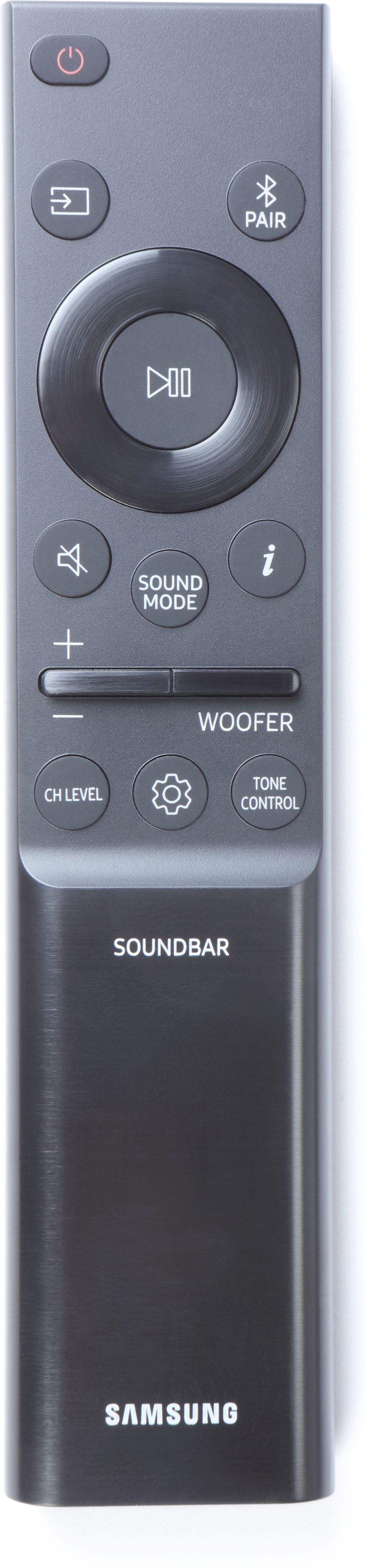
The Samsung B-Series 5.1 offers simple plug-and-play setup with basic remote control and preset sound modes that work well out of the box. The Klipsch Flexus Core 300 requires more involved setup including Dirac Live room calibration using an included microphone, but this extra effort results in optimized sound tailored specifically to your room.
The Klipsch Flexus Core 300 supports multiple high-quality streaming options including Wi-Fi-based AirPlay 2, Google Cast, Spotify Connect, and Tidal Connect for lossless audio. The Samsung B-Series 5.1 offers Bluetooth 4.2 streaming only, which is convenient but may compress audio quality compared to Wi-Fi streaming methods.
The Klipsch Flexus Core 300 excels for gaming with HDMI 2.1 supporting 4K/120Hz passthrough for PlayStation 5 and Xbox Series X, plus low-latency wireless connectivity. The Samsung B-Series 5.1 includes a dedicated Game Mode that optimizes audio for directional gaming sounds but lacks advanced HDMI 2.1 features for next-gen consoles.
Both brands offer standard manufacturer warranties, but Klipsch typically provides more comprehensive support for their premium Flexus Core 300 including dedicated customer service for room correction setup. Samsung offers widespread service network support for the B-Series 5.1, making repairs and warranty claims more accessible in most regions.
The Klipsch Flexus Core 300 is designed as a modular ecosystem allowing expansion with wireless Flexus Surr 200 rear speakers and up to two additional Flexus Sub 200 subwoofers. The Samsung B-Series 5.1 offers limited expansion with optional wireless rear speakers but lacks the comprehensive ecosystem approach of the Klipsch system.
The Klipsch Flexus Core 300 uses Dirac Live room correction and horn-loaded tweeter technology to ensure consistently clear dialogue regardless of room acoustics or volume levels. The Samsung B-Series 5.1 includes Voice Enhance mode that boosts vocal frequencies and works well for most content, though it lacks the advanced room correction capabilities.
The Samsung B-Series 5.1 consumes 25W for the main unit and 45W for the subwoofer (70W total) with Energy Star certification for efficiency. The Klipsch Flexus Core 300 requires more power due to its 13-driver array and advanced processing, though specific consumption figures aren't published - expect higher electricity usage for premium performance.
The Klipsch Flexus Core 300 is specifically designed for larger spaces with its 106 dB maximum output, 54-inch width, and room correction technology that optimizes performance for bigger rooms. The Samsung B-Series 5.1 works adequately in larger rooms but may lack the power and spatial accuracy needed to fill expansive home theater spaces effectively.
We've done our best to create useful and informative comparisons to help you decide what product to buy. Our research uses advanced automated methods to create this comparison and perfection is not possible - please contact us for corrections or questions. These are the sites we've researched in the creation of this article: crutchfield.com - whathifi.com - avnirvana.com - hometechnologyreview.com - ecoustics.com - gearpatrol.com - klipsch.com - avsforum.com - youtube.com - avsforum.com - listenup.com - chowmain.software - klipsch.com - novis.ch - avsforum.com - klipsch.ca - lefflers.se - abt.com - sweetwater.com - wifihifi.com - klipsch.com - dirac.com - bestbuy.com - abt.com - avsforum.com - crutchfield.com - camelcamelcamel.com - samsung.com - samsung.com - samsung.com - images.samsung.com - samsung.com - avblinq.avbportal.com - samsung.com - samsung.com

Privacy Policy
Terms and Conditions - Affiliate Policy
Home Security
© Copyright 2008-2026.
11816 Inwood Rd #1211, Dallas, TX 75244