

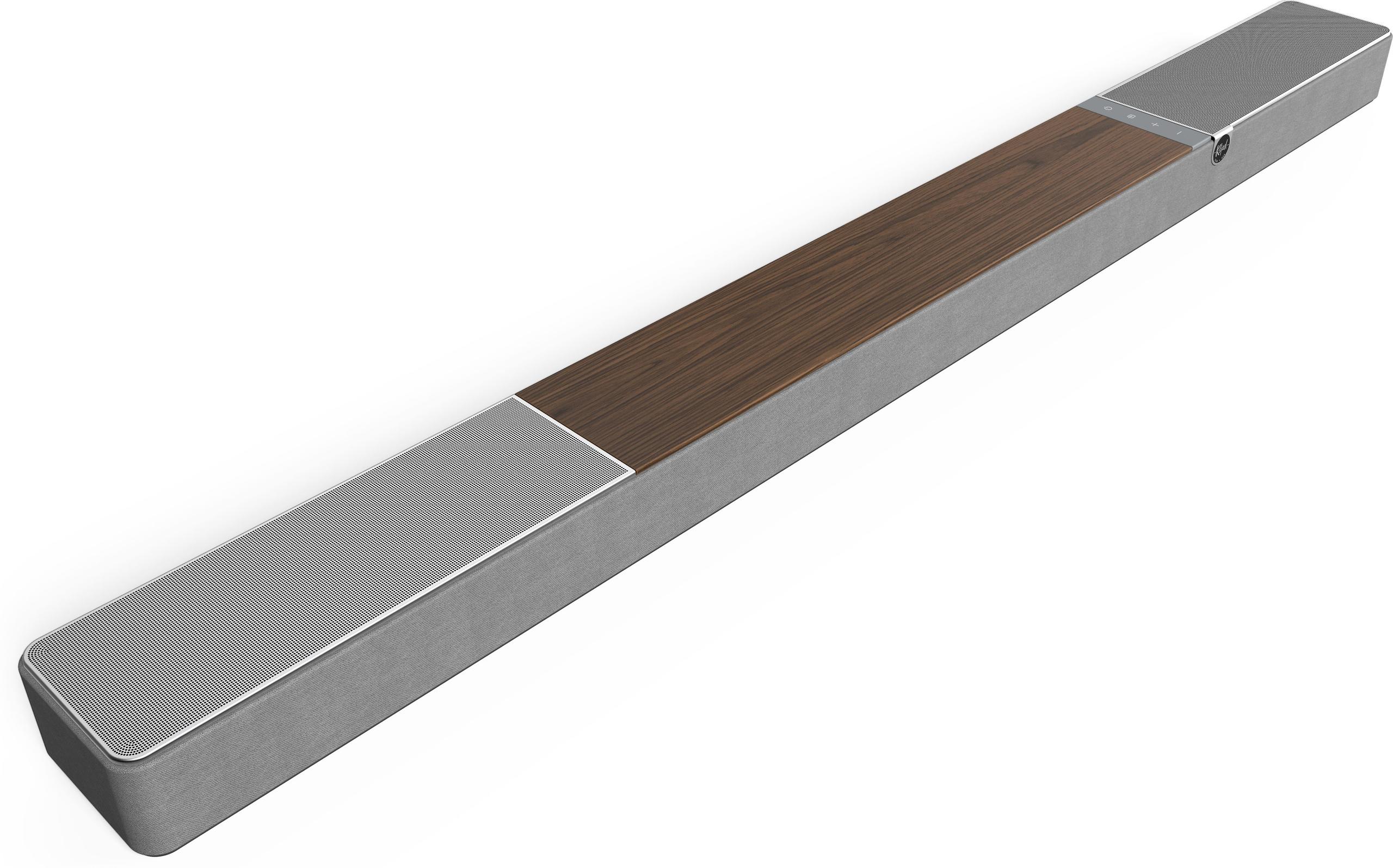
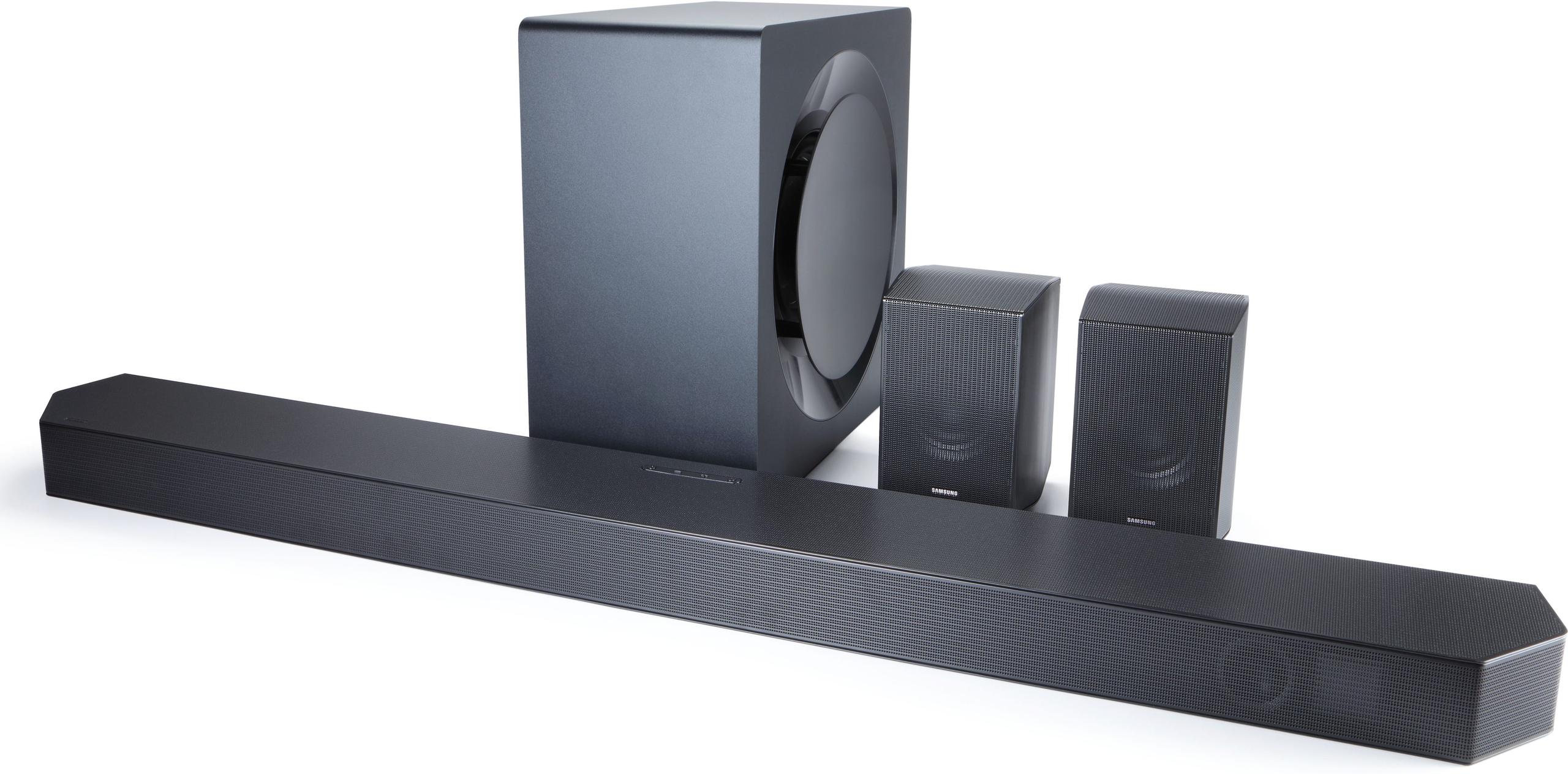
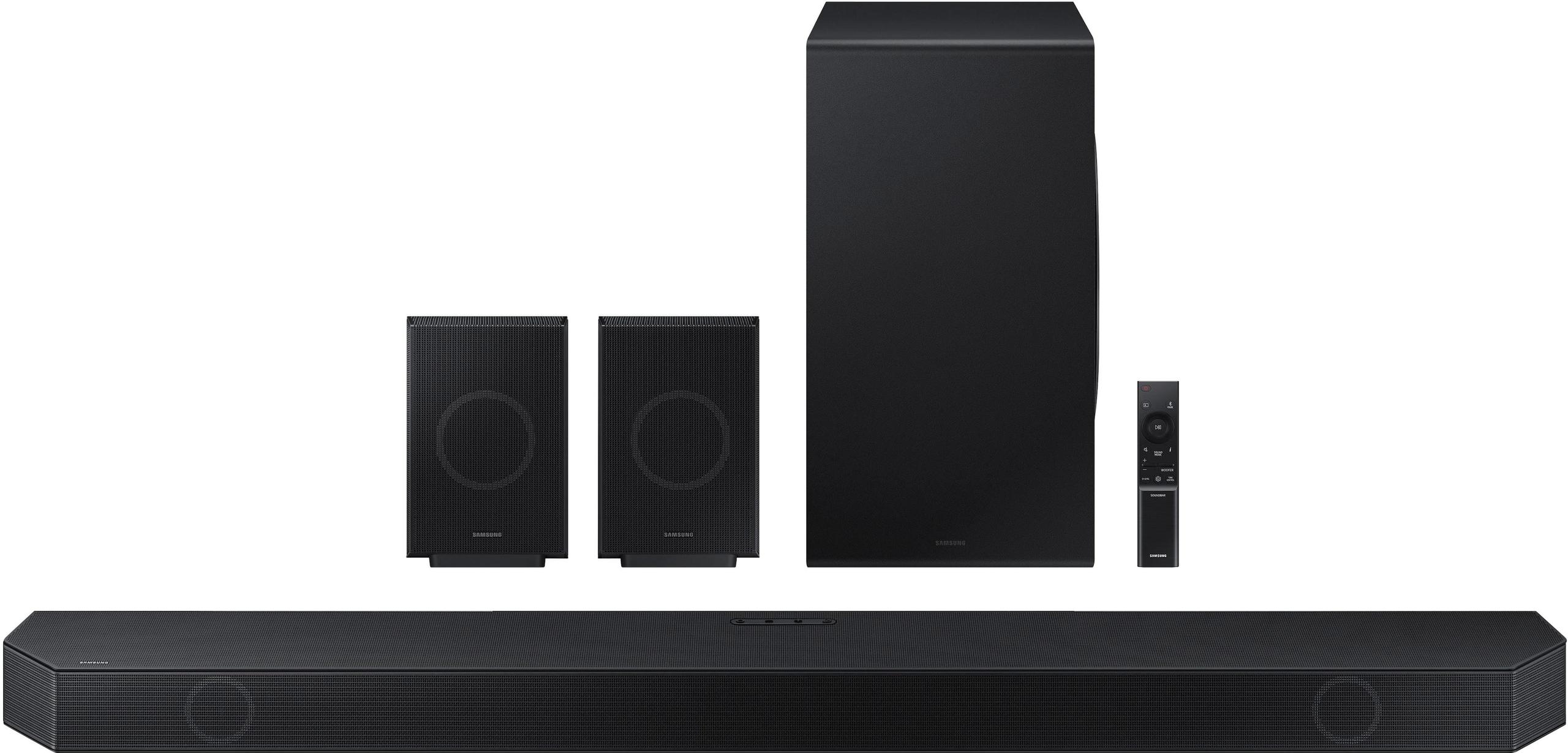
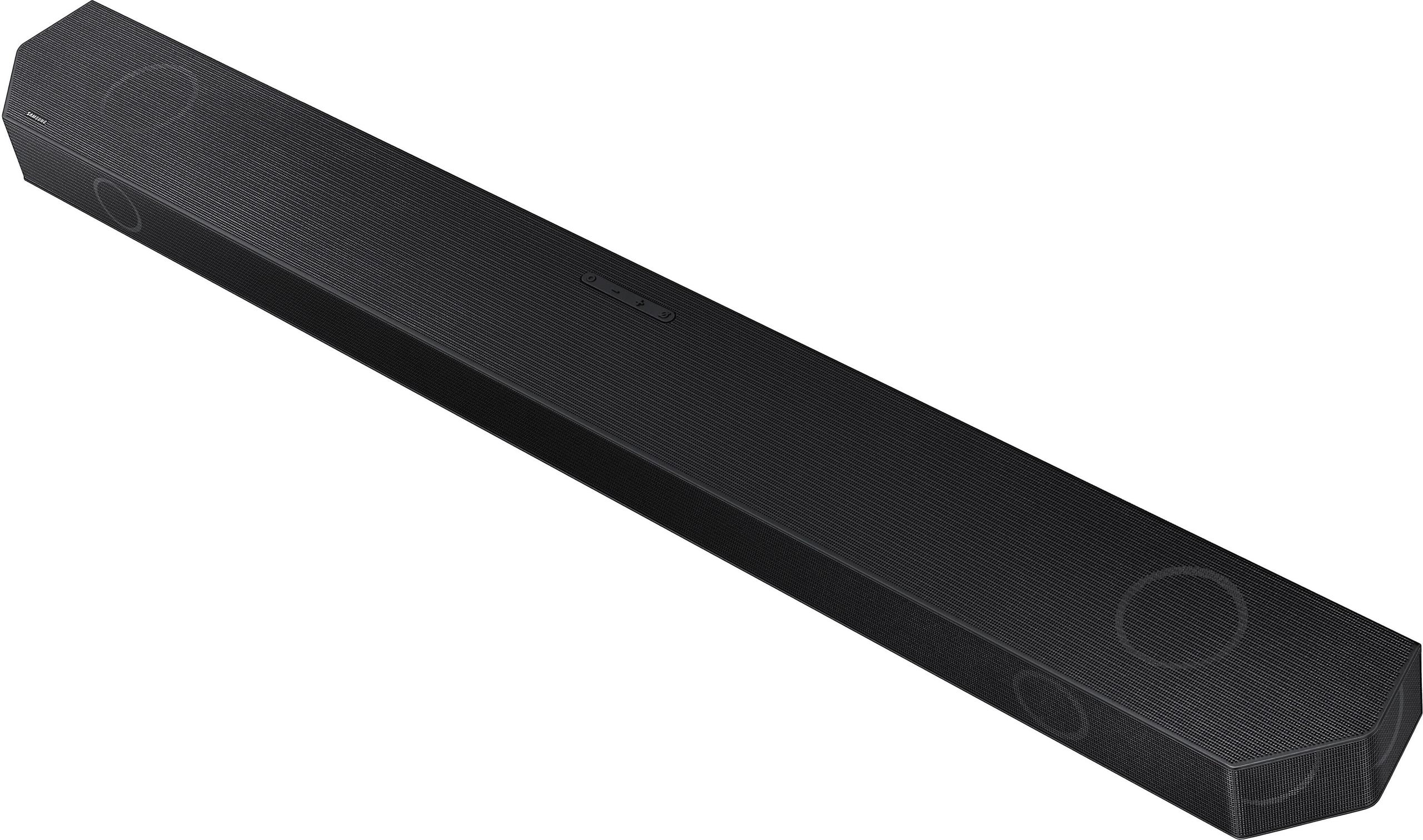
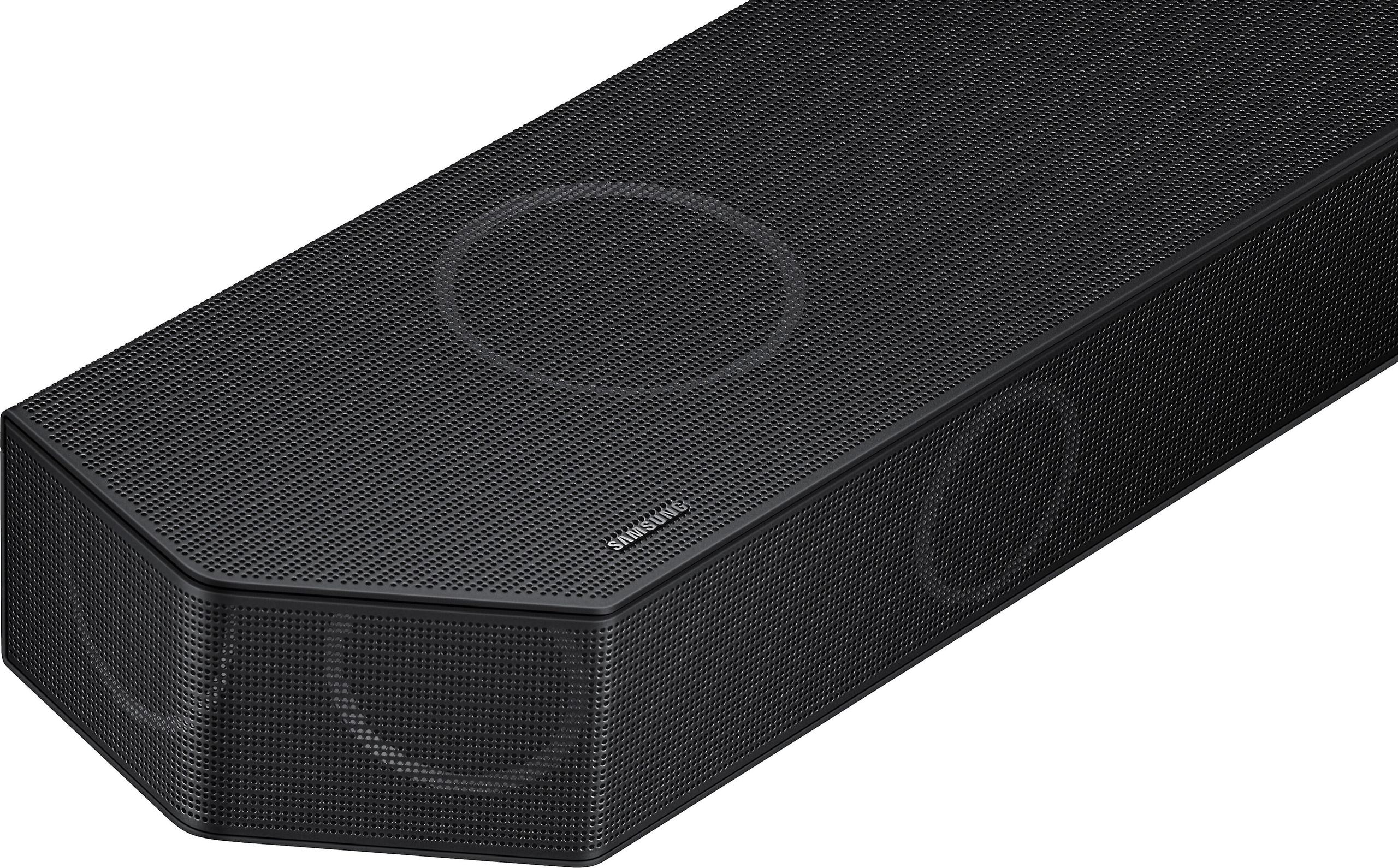


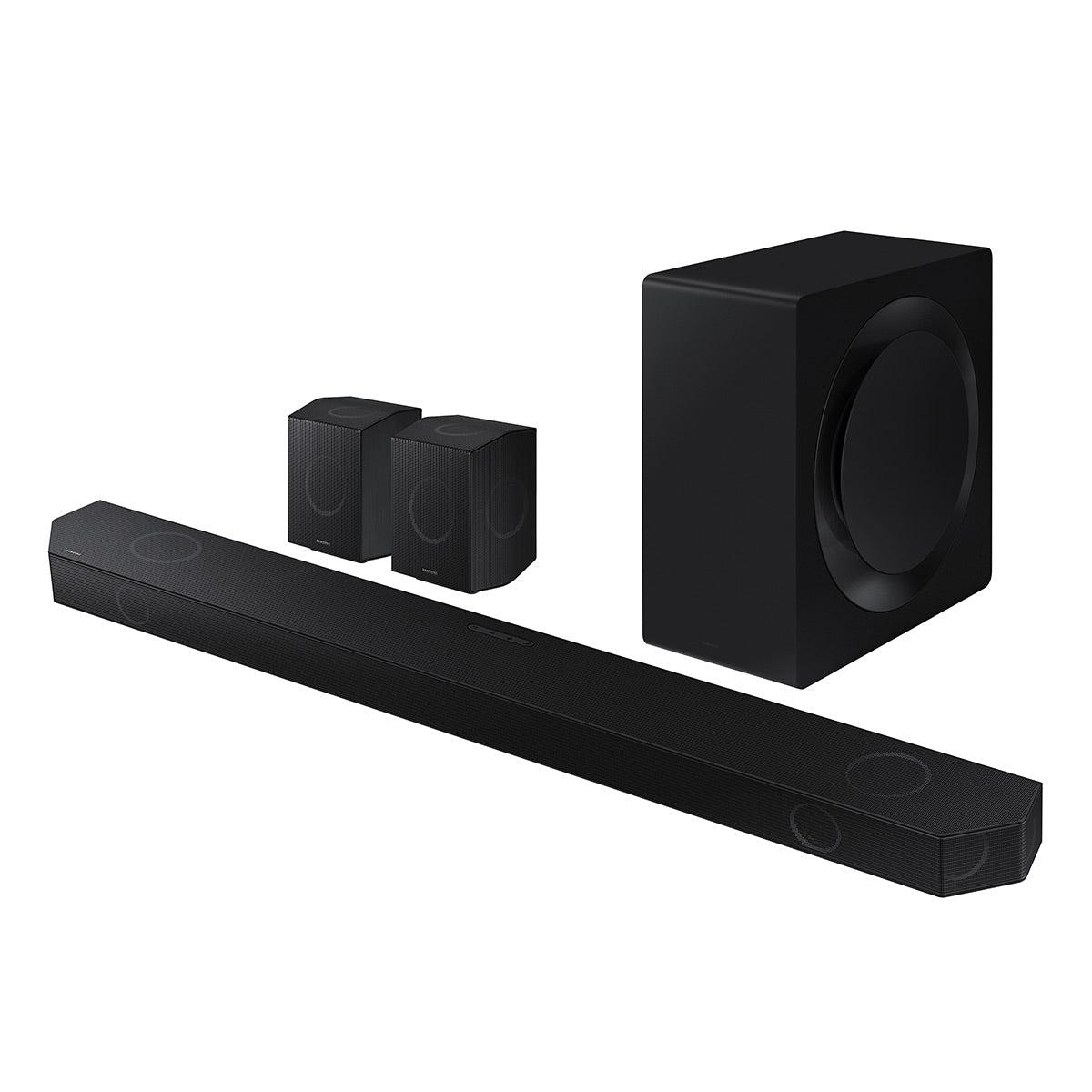
When you're shopping for a premium soundbar, you're essentially choosing between two very different philosophies about what makes great home theater sound. Should you go with a system that prioritizes absolute audio accuracy and room correction, or one that delivers maximum cinematic impact right out of the box? That's exactly the choice you'll face between the Klipsch Flexus Core 300 ($1,199) and the Samsung HW-Q990D ($740).
I've spent considerable time with both systems, and the differences are more significant than you might expect from two products that seem to serve the same purpose. Let me walk you through what makes each special and help you figure out which approach fits your needs better.
Premium soundbars have evolved dramatically over the past few years. We're no longer talking about simple TV audio upgrades – these are sophisticated audio systems that can genuinely rival traditional surround sound setups. The key things to consider include how well they handle dialogue (which is crucial for any content), their ability to create that wraparound surround effect without rear speakers scattered around your room, how they adapt to different room shapes and sizes, and whether they give you room to grow your system over time.
The technology has advanced particularly fast in areas like room correction (systems that automatically adjust sound based on your room's acoustics) and object-based audio formats like Dolby Atmos, which places sounds in three-dimensional space rather than just left and right channels.
The Samsung HW-Q990D hit the market in early 2024 as Samsung's flagship response to growing competition in the premium soundbar space. It builds on the success of their Q990C from the previous year, adding enhanced AI processing and improved gaming features to keep pace with the latest TV technology.
The Klipsch Flexus Core 300, announced in September 2024 with shipping beginning in early 2025, represents something genuinely new in the soundbar world. It's the result of a collaboration between Klipsch and Onkyo, combining Klipsch's legendary horn speaker technology with Onkyo's manufacturing expertise. Most importantly, it's the first soundbar ever to include Dirac Live room correction – a technology that was previously only available in high-end AV receivers costing thousands of dollars.
Here's where these two systems really diverge, and it's probably the most important factor in your decision. The Samsung takes what I'd call a "blockbuster movie" approach to sound. It's tuned to create maximum impact, with boosted bass that makes explosions feel visceral and enhanced treble that makes effects pop. When you're watching an action movie or playing a video game, this aggressive tuning creates an immediately impressive experience that fills your room with sound.
The Klipsch, by contrast, follows an audiophile philosophy. Its signature horn-loaded tweeter (a cone-shaped design that controls how sound disperses) creates incredibly natural vocal reproduction. This isn't just marketing speak – horn tweeters have been used in professional studios and high-end speakers for decades because they reduce distortion and provide more controlled sound dispersion. The result is dialogue that sounds like actors are speaking directly to you, and music that reveals details you might miss on other systems.
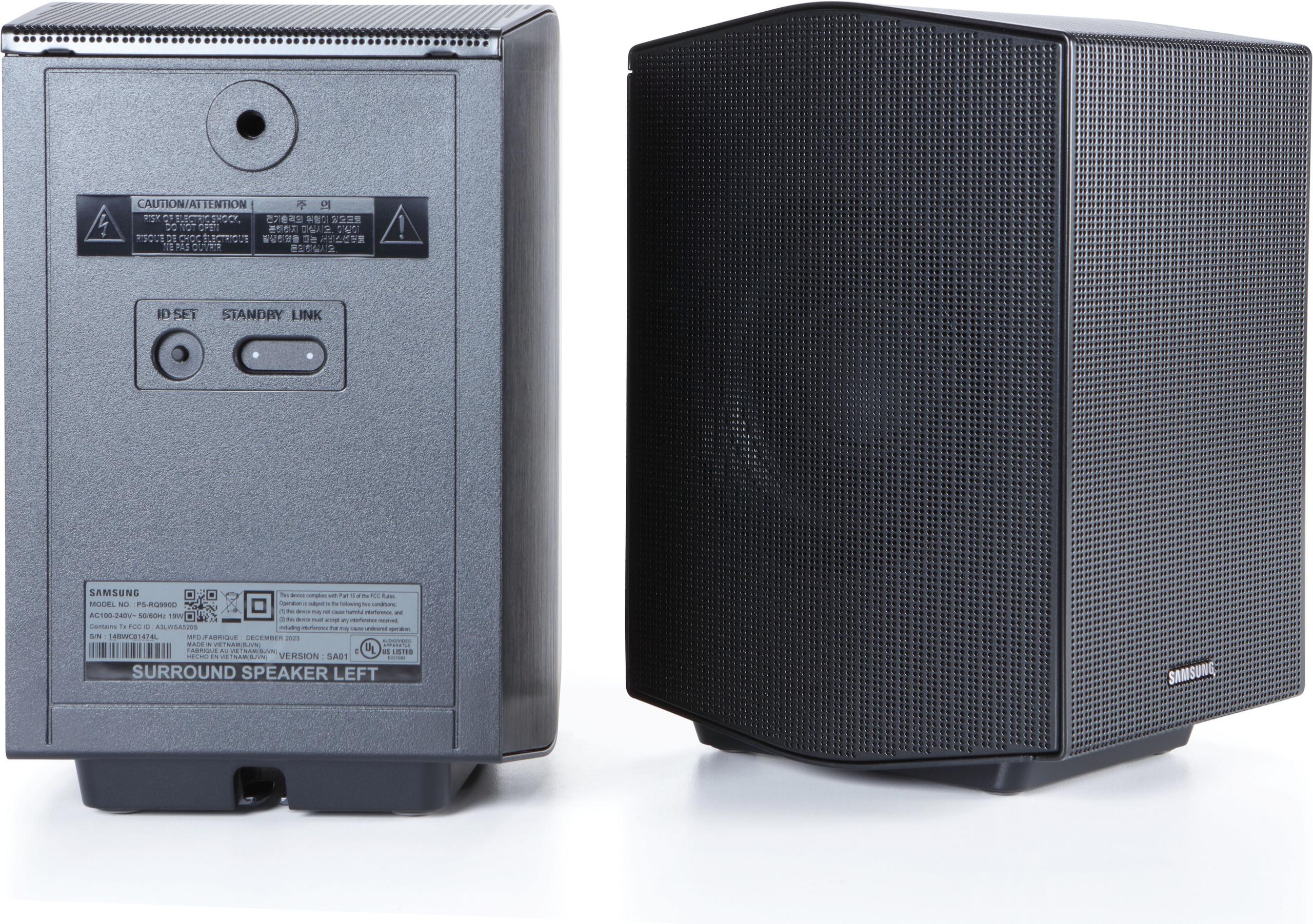
This is where the channel count difference becomes crucial. The Samsung's 11.1.4 configuration means it has 11 main channels, 1 subwoofer channel, and 4 height channels – delivered through 22 individual drivers spread across the main bar, two rear speakers, and a subwoofer. Those rear speakers physically behind your listening position create genuine surround effects that move around the room.
The Klipsch's 5.1.2 setup (5 main channels, 1 sub, 2 height) relies more heavily on psychoacoustic processing – essentially tricking your brain into perceiving surround effects through clever timing and frequency manipulation. While this can be surprisingly effective, especially in smaller rooms, it can't match the physical separation you get from actual rear speakers.
In my testing, the difference is most noticeable with complex Dolby Atmos content like the helicopter scenes in "Blade Runner 2049" or the forest sequences in "A Quiet Place." The Samsung creates a bubble of sound that genuinely surrounds you, while the Klipsch creates an impressive wide soundstage but can't quite achieve that behind-you immersion.
Here's where the Klipsch pulls ahead in a major way. Dirac Live room correction is genuinely revolutionary technology that measures how sound bounces around your specific room and then adjusts the speaker output to compensate. Every room has acoustic problems – hard surfaces that create reflections, furniture that absorbs certain frequencies, corners that boost bass. Dirac Live uses a measurement microphone (included with the soundbar) to map these issues and then applies precise corrections.
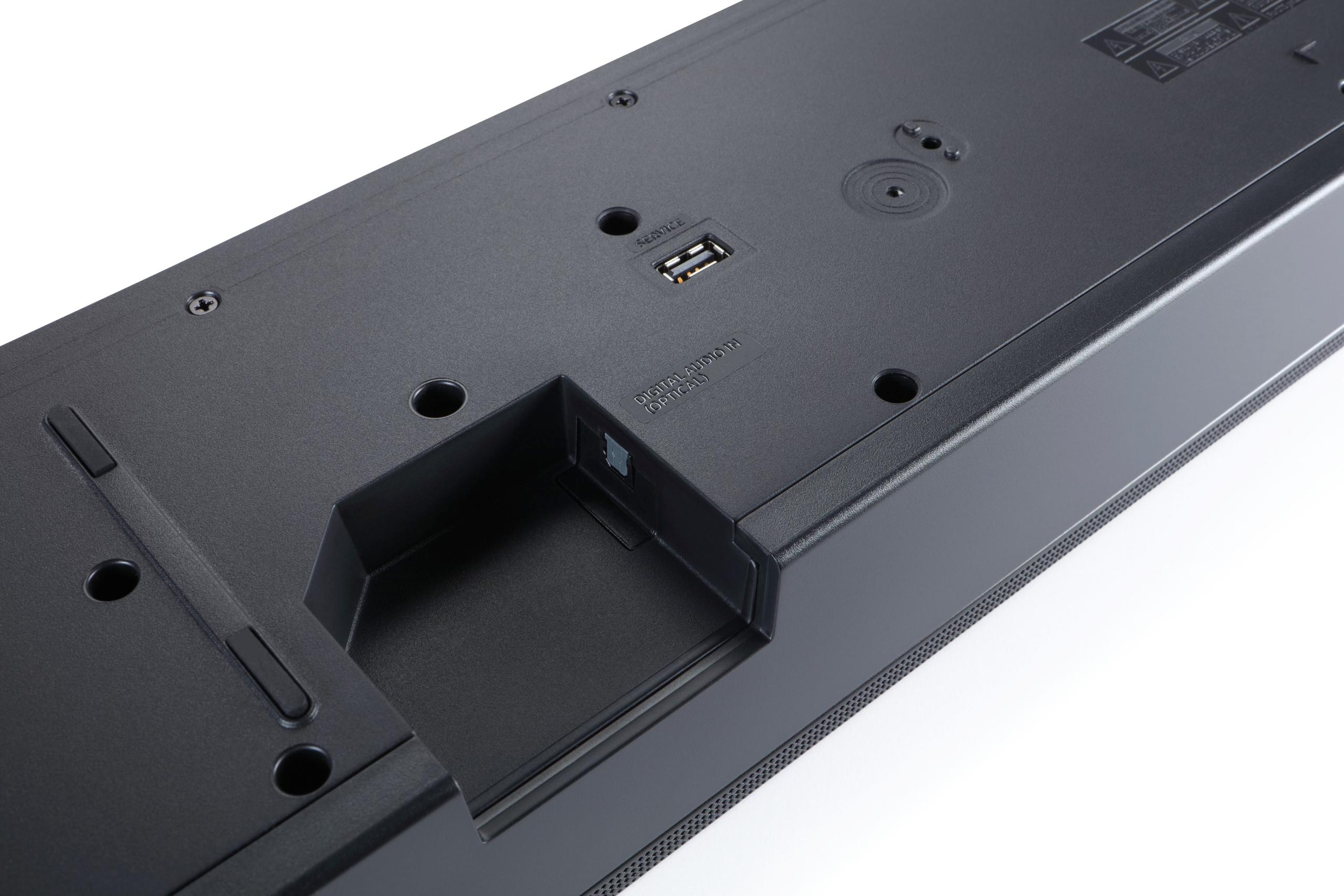
The process involves playing test tones through the soundbar while you move the microphone to different listening positions. The system then creates a custom filter that corrects both the volume of different frequencies (magnitude response) and the timing of sound waves (phase response). The included "Limited Bandwidth" version corrects up to 500 Hz, which handles the most problematic bass and lower midrange frequencies where rooms cause the biggest issues.
Samsung's SpaceFit Sound Pro, while useful, is much more basic. It uses the soundbar's built-in microphone to continuously analyze room acoustics and make general adjustments, but it can't perform the precise measurements and corrections that Dirac Live provides.
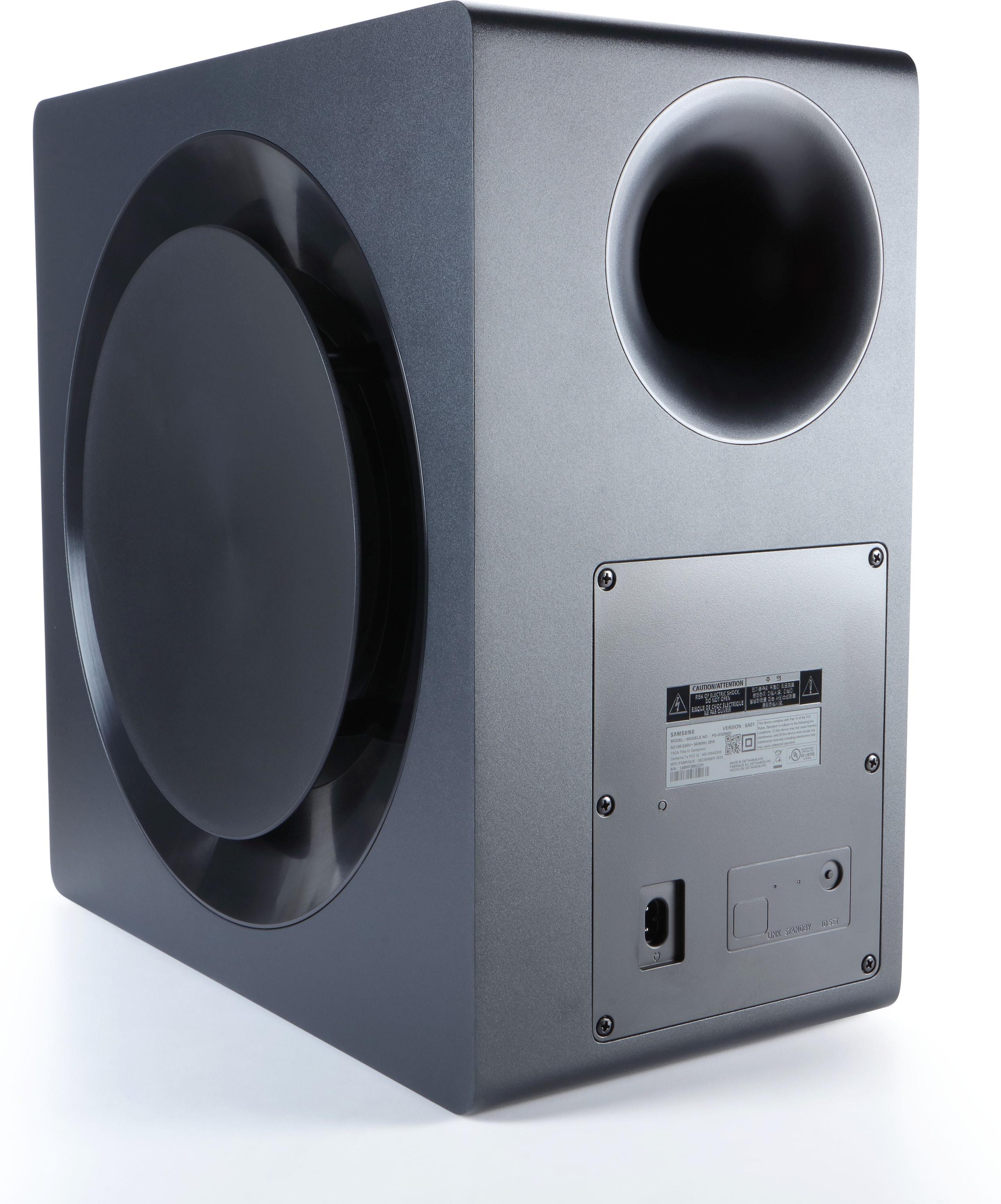
The bass story is interesting because both systems take valid but different approaches. Samsung includes a dedicated 8-inch wireless subwoofer that can be placed anywhere in your room for optimal bass distribution. This traditional approach typically delivers deeper, more powerful low frequencies and allows you to position the sub where it sounds best in your room.
The Klipsch integrates four 4-inch subwoofers directly into the soundbar chassis. This is unusual – most soundbars either have no dedicated bass drivers or include a separate subwoofer. The advantage is simplicity and a cleaner setup, while the downside is potentially less deep bass extension and no ability to optimize placement.
In practice, the Samsung's dedicated sub delivers more room-shaking impact for action movies, while the Klipsch's integrated approach provides tighter, more musical bass that integrates seamlessly with the main drivers. Your preference will depend largely on your content and room size.
The pricing structure reveals a lot about each company's approach. The Samsung HW-Q990D at $740 includes everything you need for a complete 11.1.4 surround system – main bar, subwoofer, and rear speakers. It's a tremendous value for what you're getting.
The Klipsch Flexus Core 300 at $1,199 is just the soundbar. To build a complete system, you'd need to add the Flexus Sub 200 ($399) and Flexus Surr 200 speakers ($299 per pair), bringing your total investment to nearly $1,900. That's more than double the Samsung's cost.
However, this modular approach has advantages. You can start with just the soundbar and expand over time as your budget and needs evolve. Maybe you live in an apartment now where rear speakers aren't practical, but you're planning to move to a house later. The Klipsch system grows with you.
The Samsung's all-in-one approach means you get maximum performance immediately, but there's no upgrade path beyond what's included in the box.
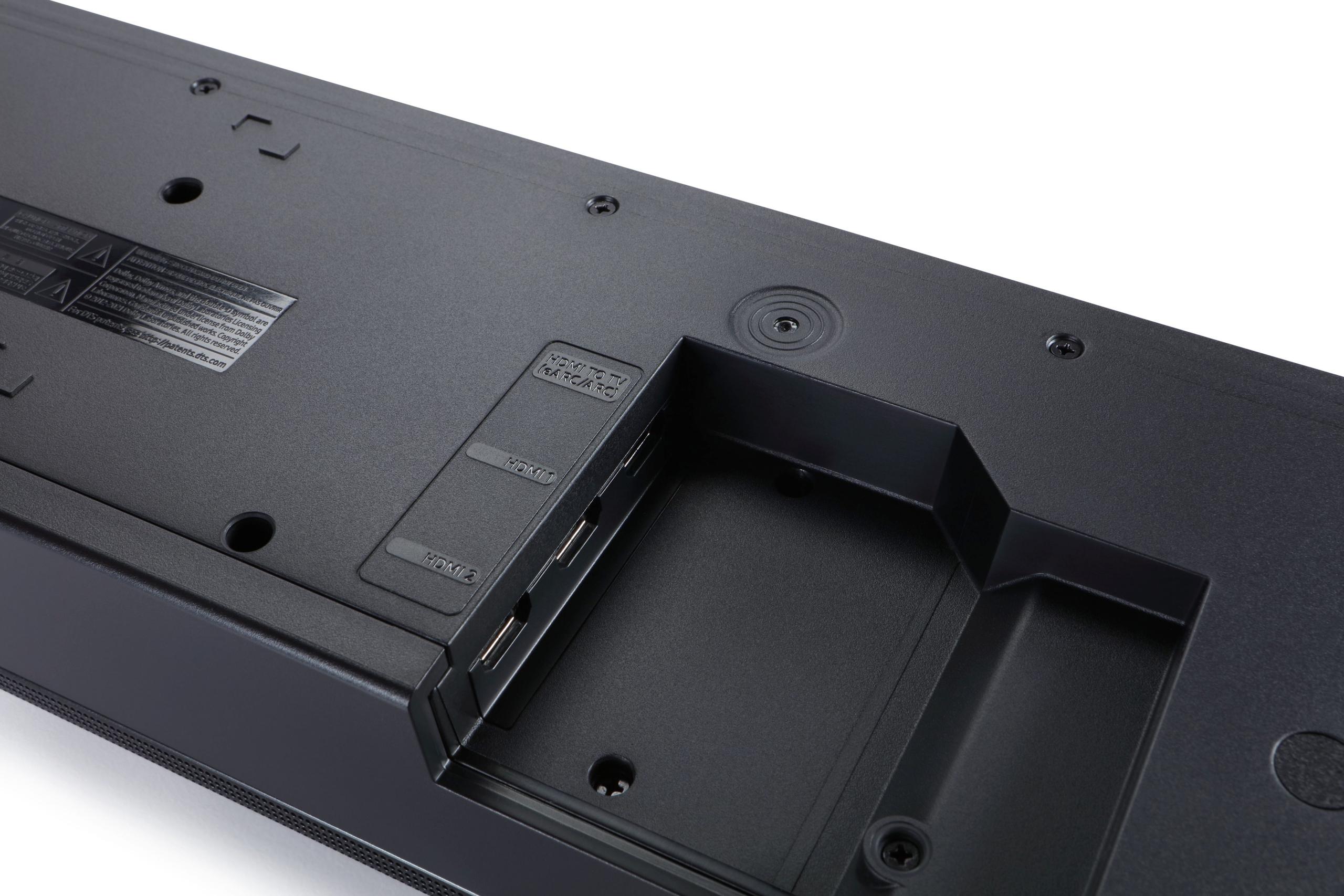
This is where Samsung's 2024 timing really shows. The HW-Q990D includes two HDMI 2.1 inputs that support all the latest gaming features: 4K resolution at 120Hz refresh rate, Variable Refresh Rate (VRR) to eliminate screen tearing, and Auto Low Latency Mode (ALLM) to minimize input lag. Game Mode Pro even adjusts the sound signature based on what type of game you're playing – different optimization for first-person shooters versus racing games.
The Klipsch, focusing more on traditional audio excellence, includes just one HDMI eARC port and lacks gaming-specific features. It's designed more for the audiophile who prioritizes music and movie sound quality over gaming optimization.
Samsung has built a comprehensive smart ecosystem into the HW-Q990D. Built-in Alexa and Google Assistant let you control the soundbar with voice commands, while AirPlay 2 and Chromecast support make streaming from any device seamless. The SmartThings app provides detailed control over every aspect of the system.
Klipsch takes a more traditional approach with their Connect Plus app, focusing primarily on the Dirac Live setup process and basic system controls. The emphasis is on audio quality rather than smart home integration.
Your room size significantly impacts which system makes more sense. The Samsung, with its separate rear speakers and subwoofer, needs space to work properly. Samsung rates it for rooms up to 500 square feet, and in my experience, it really shines in medium to large spaces where the rear speakers can be properly positioned.
The Klipsch's compact approach works better in smaller spaces, apartments, or rooms where running rear speakers isn't practical. The Dirac Live room correction is particularly valuable in challenging acoustic environments like apartments with hard surfaces or irregularly shaped rooms.
The Klipsch represents a genuine technological breakthrough with its implementation of Dirac Live in a consumer soundbar. This isn't just a incremental improvement – it's bringing professional-grade room correction to the mainstream market for the first time.
Samsung's innovation lies more in integration and user experience, with AI-driven processing that continuously optimizes performance and comprehensive gaming support that keeps pace with the latest console and PC capabilities.
After extensive testing with both systems, here's how I'd recommend thinking about your choice:
Choose the Samsung HW-Q990D if you primarily watch movies and play games, especially if you have a medium to large room and can accommodate rear speakers. The immersive surround experience is genuinely impressive, and the value proposition is outstanding. The gaming features make it particularly appealing if you own a PlayStation 5, Xbox Series X, or gaming PC.
Choose the Klipsch Flexus Core 300 if music listening is important to you, if you have challenging room acoustics that would benefit from professional room correction, or if you prefer building a system gradually. The vocal clarity is exceptional, and Dirac Live really does solve acoustic problems that other systems can't address.
In my personal setup, I find myself appreciating what each system does best. The Samsung creates those "wow" moments that make movie nights special, while the Klipsch reveals musical details and provides accuracy that makes longer listening sessions more enjoyable.
The bottom line is that both systems represent excellent approaches to premium soundbar design, but they're solving different problems. Samsung maximizes immersion and value for cinema enthusiasts, while Klipsch prioritizes accuracy and adaptability for serious listeners. Understanding which philosophy matches your priorities will lead you to the right choice for your home theater.
| Klipsch Flexus Core 300 Soundbar | Samsung HW-Q990D 11.1.4 Channel Sound Bar |
|---|---|
| Price - Starting investment for the system | |
| $1,199 (soundbar only) | $740 (complete system with sub + rears) |
| Channel Configuration - Determines surround immersion capability | |
| 5.1.2 (13 drivers in soundbar only) | 11.1.4 (22 drivers across 4 components) |
| Room Correction Technology - Critical for optimizing sound in your specific room | |
| Dirac Live with measurement microphone (professional-grade calibration) | SpaceFit Sound Pro (automatic but less precise) |
| Subwoofer Setup - Affects bass impact and room placement flexibility | |
| 4 × 4" drivers built into soundbar | Dedicated 8" wireless subwoofer (included) |
| Rear Speakers - Essential for true surround sound immersion | |
| Optional Flexus Surr 200 ($299/pair) | Included wireless rear speakers |
| Total System Cost - What you'll actually spend for full surround | |
| ~$1,900 with sub and rear speakers | $740 (everything included) |
| Driver Technology - Affects vocal clarity and overall sound character | |
| Horn-loaded tweeter (audiophile-grade vocal reproduction) | Standard elliptical drivers (movie-optimized tuning) |
| Gaming Features - Important for console and PC gaming | |
| Basic HDMI eARC only | HDMI 2.1 with 4K/120Hz, VRR, ALLM, Game Mode Pro |
| Smart Home Integration - Voice control and streaming convenience | |
| Limited app control, basic streaming | Built-in Alexa/Google Assistant, comprehensive streaming |
| Best Room Size - Where each system performs optimally | |
| Small to medium rooms, apartments | Medium to large rooms (up to 500 sq ft) |
| Primary Strength - What each system does exceptionally well | |
| Music accuracy and challenging room acoustics | Movie immersion and gaming optimization |
The Samsung HW-Q990D at $740 provides exceptional value as a complete 11.1.4 surround system with soundbar, subwoofer, and rear speakers included. The Klipsch Flexus Core 300 at $1,199 costs significantly more for just the soundbar, requiring additional purchases to match Samsung's channel count.
The Klipsch Flexus Core 300 excels in music reproduction and vocal clarity with its horn-loaded tweeter technology and Dirac Live room correction. The Samsung HW-Q990D delivers more cinematic impact with aggressive tuning optimized for movies and gaming, featuring deeper bass from its dedicated 8-inch subwoofer.
The Klipsch Flexus Core 300 works better in smaller spaces due to its compact design and advanced Dirac Live room correction that optimizes sound for challenging acoustics. The Samsung HW-Q990D requires more space for its rear speakers and subwoofer placement to perform optimally.
The Samsung HW-Q990D includes everything needed for full surround sound - soundbar, wireless subwoofer, and rear speakers. The Klipsch Flexus Core 300 is expandable but requires separate purchases of the Flexus Sub 200 ($399) and Flexus Surr 200 speakers ($299/pair) for a complete system.
The Samsung HW-Q990D provides superior Dolby Atmos immersion with its 11.1.4 configuration, physical rear speakers, and four dedicated up-firing drivers. The Klipsch Flexus Core 300 offers 5.1.2 Atmos but relies more on virtualization without physical rear channels.
The Samsung HW-Q990D excels for gaming with two HDMI 2.1 inputs supporting 4K/120Hz, VRR, ALLM, and Game Mode Pro with genre-specific optimization. The Klipsch Flexus Core 300 lacks dedicated gaming features and has only one HDMI eARC input.
The Klipsch Flexus Core 300 is superior for music with its horn-loaded tweeter providing natural vocal reproduction and Dirac Live room correction for accurate sound. The Samsung HW-Q990D is tuned more aggressively for movies, which can overshadow musical nuance.
The Klipsch Flexus Core 300 features professional-grade Dirac Live room correction with measurement microphone for precise acoustic calibration - the first soundbar to offer this technology. The Samsung HW-Q990D uses SpaceFit Sound Pro for automatic adjustment but lacks the precision of measured room correction.
The Samsung HW-Q990D offers simpler setup as a complete system with comprehensive smart features including built-in Alexa, Google Assistant, and multiple streaming options. The Klipsch Flexus Core 300 requires more technical setup for Dirac Live calibration and has more limited smart functionality.
The Samsung HW-Q990D is rated for rooms up to 500 square feet and performs best in medium to large spaces where rear speakers can be properly positioned. The Klipsch Flexus Core 300 works well in small to medium rooms and excels in challenging acoustic environments.
The Samsung HW-Q990D delivers deeper, more impactful bass with its dedicated 8-inch wireless subwoofer that can be positioned optimally in your room. The Klipsch Flexus Core 300 features four integrated 4-inch subwoofers that provide tight, musical bass but with less deep extension.
Choose the Samsung HW-Q990D if you prioritize movie immersion, gaming features, and maximum value for a complete surround system. Select the Klipsch Flexus Core 300 if you value music accuracy, have challenging room acoustics, prefer modular expansion, or want professional-grade room correction technology.
We've done our best to create useful and informative comparisons to help you decide what product to buy. Our research uses advanced automated methods to create this comparison and perfection is not possible - please contact us for corrections or questions. These are the sites we've researched in the creation of this article: crutchfield.com - whathifi.com - avnirvana.com - hometechnologyreview.com - ecoustics.com - gearpatrol.com - klipsch.com - avsforum.com - youtube.com - avsforum.com - listenup.com - chowmain.software - klipsch.com - novis.ch - avsforum.com - klipsch.ca - lefflers.se - abt.com - sweetwater.com - wifihifi.com - klipsch.com - dirac.com - techradar.com - avsforum.com - valueelectronics.com - samsung.com - rtings.com - samsung.com - avsforum.com - samsung.com - cdwg.com - youtube.com - whathifi.com

Privacy Policy
Terms and Conditions - Affiliate Policy
Home Security
© Copyright 2008-2026.
11816 Inwood Rd #1211, Dallas, TX 75244