




Getting great sound from your TV shouldn't require a degree in audio engineering or a mortgage payment. Yet walking into the soundbar market can feel overwhelming, with dozens of brands promising theater-quality audio at wildly different price points. Today, we're breaking down two popular options that represent very different approaches to upgrading your TV audio: the Ultimea Poseidon M60 Boom and the Polk Audio Signa S2.
The fundamental question isn't just which sounds better—it's which approach makes more sense for your specific needs, room, and budget. One offers genuine surround sound technology at a surprisingly low price, while the other focuses on reliability and dialogue clarity from an established audio brand.
Before diving into specifics, let's clarify what these products actually do and why the differences matter. A soundbar's primary job is replacing your TV's built-in speakers, which are typically tiny drivers crammed into impossibly thin displays. Think of it like this: your TV speakers are like trying to fill a swimming pool with a garden hose, while a good soundbar is like opening the floodgates.
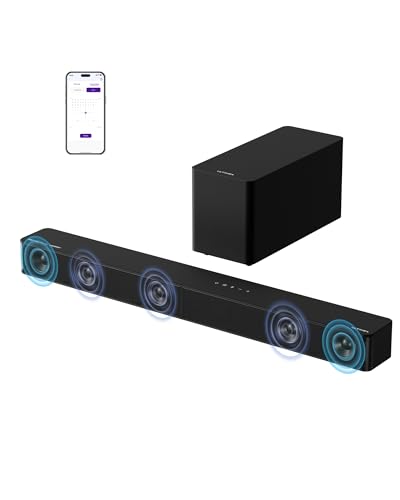
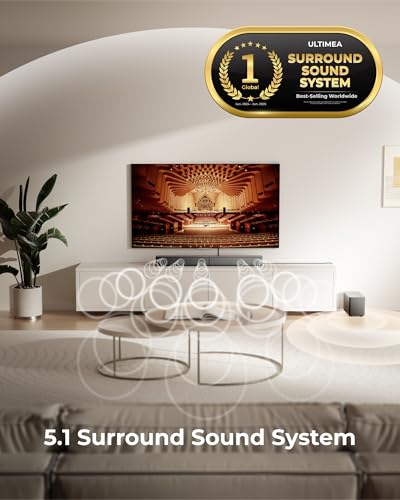
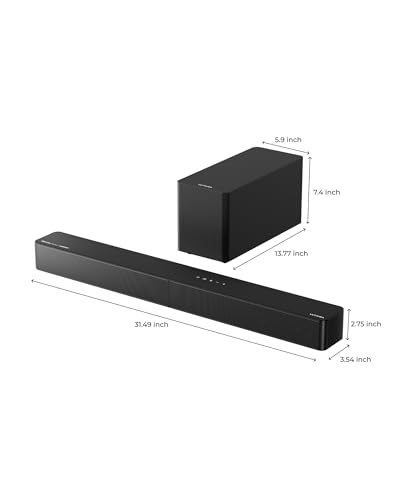
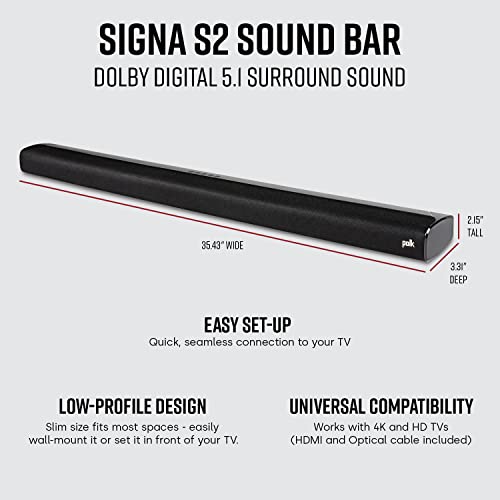
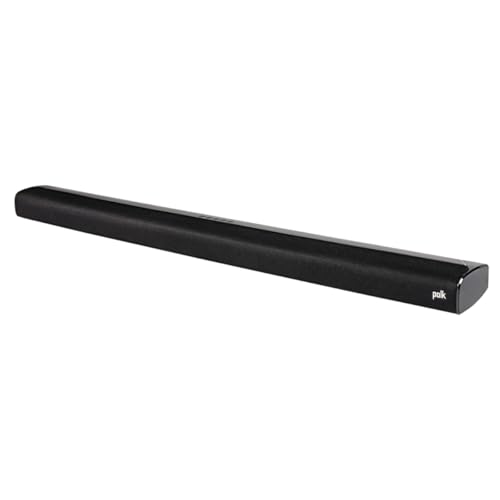
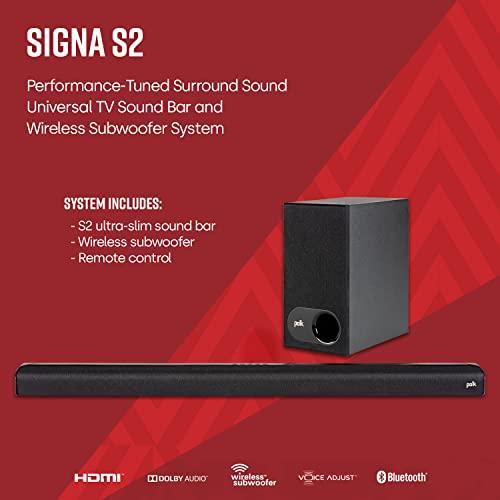
The key technical distinction between our two contenders lies in their channel configuration. The Ultimea Poseidon M60 Boom is a true 5.1 channel system, meaning it has five main audio channels (left, center, right, left surround, right surround) plus one dedicated bass channel (the ".1" handled by the subwoofer). The Polk Audio Signa S2, meanwhile, is a 2.1 system—just left and right channels plus the subwoofer—that uses digital processing to simulate surround sound.
This difference is crucial. True 5.1 systems can actually position sounds around you in three-dimensional space, while 2.1 systems with virtual surround use clever audio tricks to make your brain think sounds are coming from places they're not. It's the difference between having five musicians positioned around your living room versus two musicians using echo effects to sound like five.
Both soundbars represent significant technological advances that have emerged since around 2020. The Ultimea Poseidon M60 Boom, released in 2024, benefits from the dramatic cost reduction in Dolby Atmos processing chips. Dolby Atmos—which adds height information to surround sound—used to require expensive receivers and multiple speakers. Now, advanced digital signal processing (DSP) chips can handle this complex audio math affordably.
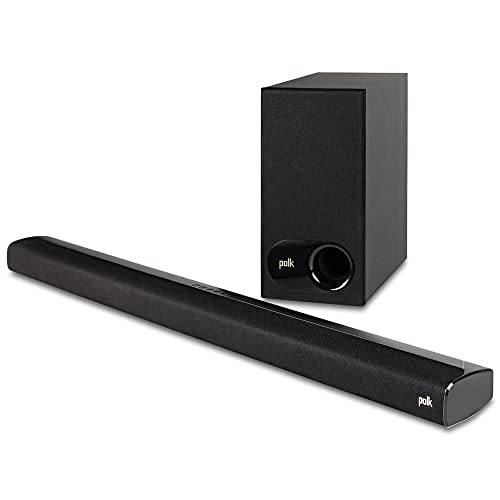
The Polk Audio Signa S2, which has been available since 2021, represents the refinement of 2.1 soundbar design. Polk has decades of speaker-making experience, and this shows in their VoiceAdjust technology—a feature that specifically enhances the frequency range where human dialogue lives (roughly 300Hz to 3kHz) without making everything sound unnatural.
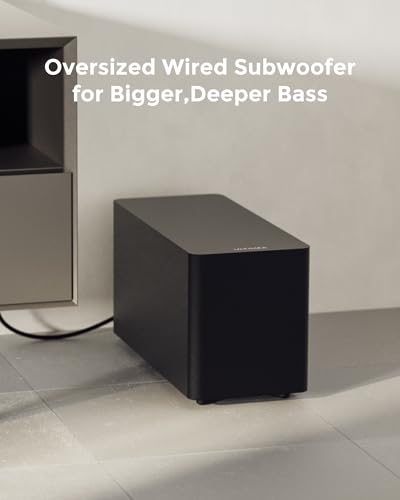
The wireless subwoofer revolution also plays into both products. Early soundbars required running cables to separate subwoofers, limiting placement options. Now, wireless transmission technology has advanced enough that you get reliable, low-latency bass without the cable mess—though the Ultimea system surprisingly still uses a wired connection, likely as a cost-saving measure.
Here's where things get interesting, and where your priorities really matter. Based on extensive research into professional reviews and user feedback, these systems take fundamentally different approaches to audio reproduction.
The Ultimea Poseidon M60 Boom impresses with its ability to create genuine spatial audio. When a helicopter flies overhead in a movie, you'll actually hear it moving across the ceiling—not just louder in one speaker than the other. This comes from having five separate full-range drivers in the main soundbar, each handling different audio channels. The system's 340W peak power output means it can fill larger rooms without strain, and the BassMX technology in the subwoofer delivers the kind of deep, controlled bass that makes action movies feel visceral.
However, our research suggests the Ultimea system requires some tweaking to reach its potential. Out of the box, it may sound somewhat harsh or boomy, but the included smartphone app provides extensive equalization controls. This is both a strength and weakness—audiophiles love the customization options, while casual users might find the setup process intimidating.
The Polk Audio Signa S2 takes the opposite approach. It's tuned to sound good immediately, with a focus on what most people actually watch: TV shows, news, and dialogue-heavy content. The VoiceAdjust technology is genuinely impressive—it dynamically boosts the frequency range where human speech lives while keeping background music and effects from overwhelming conversations.
Where the Signa S2 falls short is with truly immersive content. Action movies and video games that benefit from directional audio cues won't have the same impact. The virtual surround processing is convincing for casual listening, but it can't match the spatial precision of true multi-channel audio. Music playback tends toward a "V-shaped" sound signature—emphasized bass and treble with slightly recessed midrange—which can make some genres sound artificially hyped.
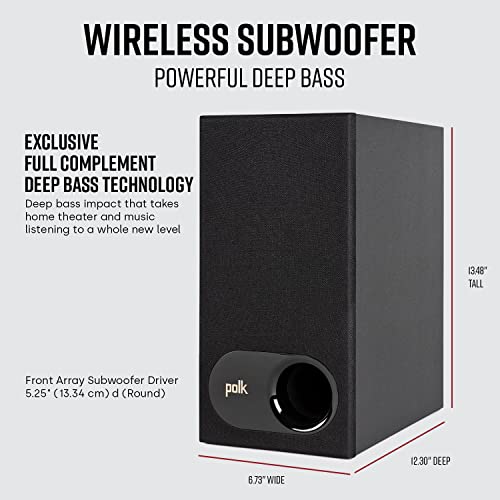
Both systems include 5.25-inch subwoofers, but they approach bass reproduction differently. The Ultimea's wired subwoofer connection ensures zero latency between the main soundbar and bass response, which matters for tight, punchy bass during action scenes. The BassMX technology uses a larger internal cabinet volume and longer driver excursion—meaning the speaker cone can move further back and forth—to generate deeper, more impactful low frequencies.
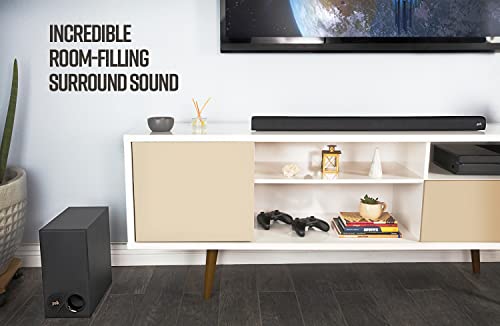
The Polk's wireless subwoofer offers more placement flexibility, which can actually improve bass response in many rooms. Bass frequencies interact heavily with room acoustics, so being able to position the subwoofer away from walls or in corners can eliminate boomy resonances. The trade-off is slightly higher latency and the need to keep the subwoofer plugged into power.
For bass quality, the Ultimea system delivers more raw impact—the kind that makes explosions feel physical. The Polk system provides more controlled, musical bass that integrates better with the main speakers. Your preference depends on whether you prioritize visceral impact or tonal accuracy.
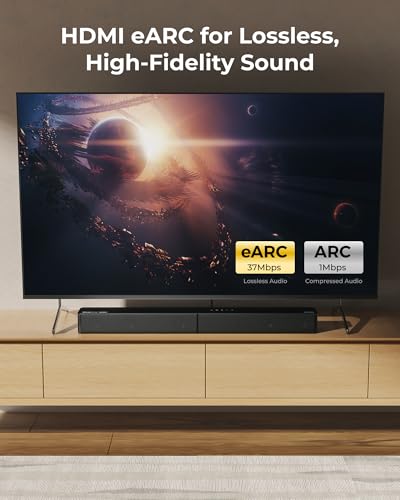
The feature gap between these systems is significant. The Ultimea Poseidon M60 Boom includes HDMI eARC (enhanced Audio Return Channel), which enables lossless audio transmission from your TV. This matters for streaming services that offer high-quality audio tracks—you get bit-perfect reproduction of Dolby Atmos soundtracks rather than compressed versions.
The system's Bluetooth 5.4 support represents the latest wireless standard, offering faster pairing, more stable connections, and lower latency for gaming or video streaming. The smartphone app control is comprehensive, providing access to multiple EQ presets, bass/treble adjustment, and even room-specific tuning options.
The Polk Signa S2 keeps connectivity simpler with HDMI ARC (the previous standard), optical, and auxiliary inputs. This covers virtually any TV or audio source, though you won't get the highest quality audio streams. The included remote is straightforward, with direct access to the three sound modes and VoiceAdjust settings.
From a practical standpoint, the Polk system wins for immediate usability. Everything works out of the box with minimal setup. The Ultimea system offers more potential but requires more involvement from the user to reach that potential.
At the time of writing, the pricing difference between these systems is substantial—the Ultimea system costs significantly less while offering more advanced audio processing technology. This represents remarkable value for true Dolby Atmos capability, which traditionally required much more expensive equipment.
However, value isn't just about features per dollar. The Polk Signa S2 commands a premium for several reasons: established brand reliability, comprehensive warranty coverage, and audio tuning that required decades of speaker design experience to perfect. You're paying for engineering refinement and customer support infrastructure.
For most buyers on a budget, the Ultimea system delivers more bang for the buck. You get genuine surround sound processing, higher power output, and advanced connectivity at a lower price point. The trade-offs are potential reliability questions from a newer brand and the need for more setup time.
For buyers who prioritize simplicity and reliability, the Polk system justifies its higher cost through ease of use, immediate satisfaction, and proven long-term durability.
If you're building a dedicated home theater space, the channel configuration becomes crucial. The Ultimea Poseidon M60 Boom can handle the complex audio tracks found on Ultra HD Blu-rays and high-end streaming services. Movie soundtracks mixed in Dolby Atmos will play as intended, with sounds positioned throughout the room rather than just left and right.
For gaming, directional audio cues matter enormously. In competitive gaming, hearing footsteps behind you or gunfire to your left provides tactical advantages that 2.1 systems simply cannot match. The Ultimea system delivers these positional cues effectively, while the Polk system provides excellent overall audio quality but loses the spatial information.
Room size also influences the decision. The Ultimea's 340W power output can fill larger spaces without strain, while the Polk system works best in small to medium rooms where its refined tuning can shine without being pushed to uncomfortable volume levels.
Based on aggregated user reviews and professional evaluations, both systems exceed expectations in different ways. Ultimea system users consistently report surprise at the genuine surround sound effect, especially given the price point. The ability to hear rain falling around you or dialogue positioned at the center of the soundstage creates a dramatically more engaging experience than standard TV speakers.
However, some users find the initial setup process frustrating. The system may sound harsh or boomy until properly adjusted through the smartphone app. This learning curve can discourage less technical users, though the results justify the effort for those willing to spend time with the settings.
Polk Signa S2 users praise the immediate improvement in dialogue clarity and overall audio quality. The system sounds good right out of the box with minimal tweaking required. The wireless subwoofer setup is virtually foolproof, and the overall reliability matches Polk's reputation.
The limitation that bothers some Polk users is the lack of true surround sound immersion. Once you've experienced genuine multi-channel audio, virtual surround processing feels like a compromise, even when it's well-executed.
The decision ultimately depends on your priorities, technical comfort level, and primary use cases.
Choose the Ultimea Poseidon M60 Boom if you want the most advanced audio technology at the lowest price point. This system makes sense for movie enthusiasts, gamers, and anyone who values spatial audio immersion. You'll need to invest time in setup and tweaking, but the payoff is genuine theater-like surround sound at home. The wired subwoofer placement limitation is manageable in most rooms, and the extensive app controls let you fine-tune performance for your specific space.
Choose the Polk Audio Signa S2 if you prioritize simplicity, reliability, and immediate satisfaction. This system excels for TV watching, especially dialogue-heavy content like dramas, comedies, and news. The wireless subwoofer provides placement flexibility, and the refined audio tuning sounds good without adjustment. You're paying more for proven reliability and effortless operation.
For most buyers, the Ultimea system represents exceptional value—genuine surround sound technology that previously required much more expensive equipment. The learning curve is worth it for the dramatic improvement in audio immersion.
For buyers who want to plug in a soundbar and immediately enjoy better TV audio without any complexity, the Polk system delivers exactly that experience, though at a higher cost for more limited capability.
Both systems dramatically improve upon built-in TV speakers, but they serve different needs within the soundbar market. Understanding which approach matches your priorities ensures you'll be satisfied with your choice for years to come.
| Ultimea Poseidon M60 Boom 5.1 Soundbar | Polk Audio Signa S2 Sound Bar with Wireless Subwoofer |
|---|---|
| Channel Configuration - Determines surround sound capability and immersion | |
| True 5.1 Dolby Atmos (genuine multi-channel surround) | 2.1 with virtual surround (stereo with simulated effects) |
| Peak Power Output - Affects maximum volume and room-filling capability | |
| 340W (suitable for large rooms) | Not specified (optimized for small-medium rooms) |
| Frequency Response - Range of audible frequencies the system can reproduce | |
| 50Hz–18kHz (focused on impact over extension) | 45Hz–20,000Hz (broader range, especially high frequencies) |
| Subwoofer Connection - Impacts placement flexibility and setup complexity | |
| Wired 5.25" subwoofer (zero latency, limited placement) | Wireless 5.25" subwoofer (flexible placement, easy setup) |
| Audio Processing Technology - Advanced features that enhance sound quality | |
| Triple-core DSP, BassMX Technology, VoiceMX vocal enhancement | VoiceAdjust™ dialogue enhancement, Dolby Digital decoding |
| Connectivity Options - How you connect devices and control the system | |
| HDMI eARC, Bluetooth 5.4, optical, USB, AUX, smartphone app control | HDMI ARC, Bluetooth, optical, 3.5mm AUX, basic remote control |
| Setup Complexity - Time and technical knowledge required for optimal performance | |
| Moderate (requires app setup and EQ tuning for best results) | Simple (plug-and-play with factory-optimized sound) |
| Brand Heritage - Company reputation and warranty support | |
| Newer brand focused on value-driven features | Established audio brand with proven reliability and warranty coverage |
| Best Use Cases - Primary scenarios where each system excels | |
| Movies, gaming, music with spatial audio needs | TV shows, dialogue-heavy content, simple everyday use |
| Value Proposition - What you get for your investment | |
| Maximum features and true surround at budget price point | Refined audio quality and reliability at premium pricing |
The Ultimea Poseidon M60 Boom is significantly better for movies due to its true 5.1 Dolby Atmos surround sound. It can position sounds around your room—helicopters overhead, footsteps behind you, dialogue in the center—creating genuine cinematic immersion. The Polk Audio Signa S2 only offers 2.1 channels with virtual surround processing, which simulates but cannot match true multi-channel audio for movie watching.
The key difference is channel configuration: the Ultimea Poseidon M60 Boom delivers true 5.1 surround sound with five separate audio channels, while the Polk Audio Signa S2 is a 2.1 system that uses digital processing to simulate surround effects. This means the Ultimea provides genuine spatial audio, while the Polk focuses on stereo sound enhancement with virtual surround.
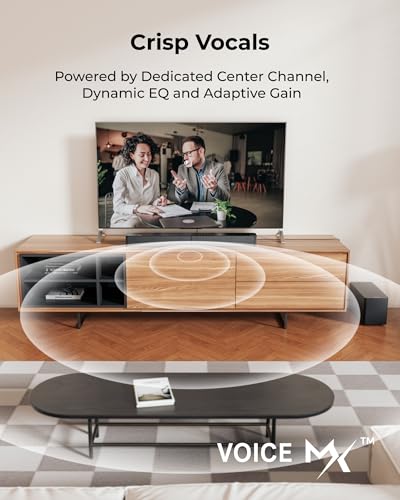
The Polk Audio Signa S2 excels at dialogue clarity thanks to its VoiceAdjust™ technology, which specifically enhances the frequency range where human speech occurs. While the Ultimea Poseidon M60 Boom includes VoiceMX vocal enhancement, user reviews consistently praise Polk's refined tuning for making TV dialogue crisp and clear without sounding artificial.
No—only the Polk Audio Signa S2 includes a wireless subwoofer, offering flexible placement anywhere in your room. The Ultimea Poseidon M60 Boom uses a wired subwoofer connection, which provides zero audio latency but limits where you can position the subwoofer for optimal bass response.
The Polk Audio Signa S2 is much easier to set up with its plug-and-play design and factory-optimized sound settings. The Ultimea Poseidon M60 Boom requires more initial setup time, including smartphone app configuration and EQ adjustments to achieve optimal performance, though this extra effort results in more customizable sound.
Both support HDMI connections, but with different capabilities. The Ultimea Poseidon M60 Boom features HDMI eARC for lossless audio transmission and supports the latest audio formats. The Polk Audio Signa S2 uses standard HDMI ARC, which handles most common audio formats but doesn't support the highest quality lossless streams.
The Ultimea Poseidon M60 Boom offers exceptional value by delivering true Dolby Atmos surround sound at a lower price point than the Polk Audio Signa S2. However, the Polk justifies its higher cost through proven reliability, simpler operation, and refined audio tuning from an established brand.
The Ultimea Poseidon M60 Boom is superior for gaming due to its true surround sound capability, which provides directional audio cues essential for competitive gaming. You can hear enemies approaching from specific directions. The Polk Audio Signa S2 offers good overall audio quality for gaming but lacks the spatial positioning advantages.
The Ultimea Poseidon M60 Boom produces higher volume levels with its 340W peak power output, making it better suited for large rooms or outdoor spaces. The Polk Audio Signa S2 doesn't specify peak wattage but is optimized for small to medium-sized rooms where its refined sound quality can shine.
Yes, both support Bluetooth connectivity, but the Ultimea Poseidon M60 Boom uses the newer Bluetooth 5.4 standard for faster pairing and more stable connections. The Polk Audio Signa S2 uses standard Bluetooth, which works reliably for music streaming but may have slightly higher latency.
The Polk Audio Signa S2 is ideal for apartments due to its Night Mode feature that automatically reduces volume during loud scenes, preventing neighbor complaints. Its wireless subwoofer also offers placement flexibility in tight spaces. The Ultimea Poseidon M60 Boom can work in apartments but may be overpowered for very small rooms.
The Polk Audio Signa S2 works seamlessly with most TV remotes through HDMI ARC, allowing volume control without switching remotes. The Ultimea Poseidon M60 Boom also supports CEC control with compatible TVs, plus offers comprehensive smartphone app control for advanced settings and customization options.
We've done our best to create useful and informative comparisons to help you decide what product to buy. Our research uses advanced automated methods to create this comparison and perfection is not possible - please contact us for corrections or questions. These are the sites we've researched in the creation of this article: ultimea.com - ultimea.com - youtube.com - bestbuy.com - youtube.com - avsforum.com - youtube.com - manuals.plus - youtube.com - device.report - ultimea.com - ultimea.de - community.ultimea.com - ultimea.com - community.ultimea.com - ultimea.com - youtube.com - aliexpress.com - ultimea.com - rtings.com - youtube.com - bestbuy.com - rtings.com - consumerreports.org - rtings.com - youtube.com - hometechnologyreview.com - soundbars.com - youtube.com - manuals.plus - creativeaudio.net - parts-express.com - thomsunmusic.com - polkaudio.com - manuals.plus - polkaudio.com - polkaudio.com - polkaudio.com - bestbuy.com - youtube.com - youtube.com - polkaudio.com

Privacy Policy
Terms and Conditions - Affiliate Policy
Home Security
© Copyright 2008-2026.
11816 Inwood Rd #1211, Dallas, TX 75244