


Choosing the right soundbar can transform your TV-watching experience from mediocre built-in audio to genuinely immersive sound that rivals movie theaters. But with dozens of options flooding the budget soundbar market, it's tough to know which system delivers the best bang for your buck.
Two standout contenders have caught our attention in the affordable 5.1 surround sound category: the innovative Ultimea Poseidon M60 Boom and the established Amazon Fire TV Soundbar Plus 5.1 Channel System. Both promise to deliver true surround sound without breaking the bank, but they take dramatically different approaches to achieve that goal.
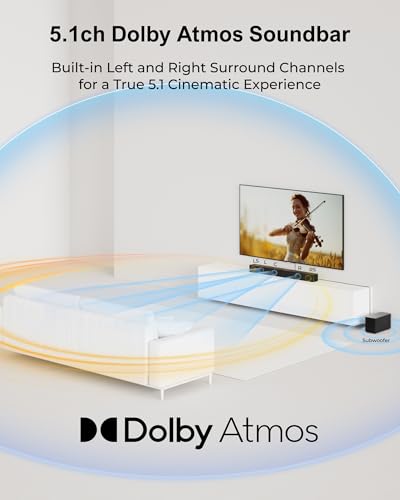
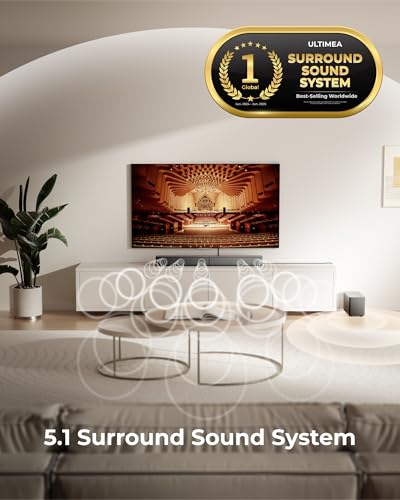
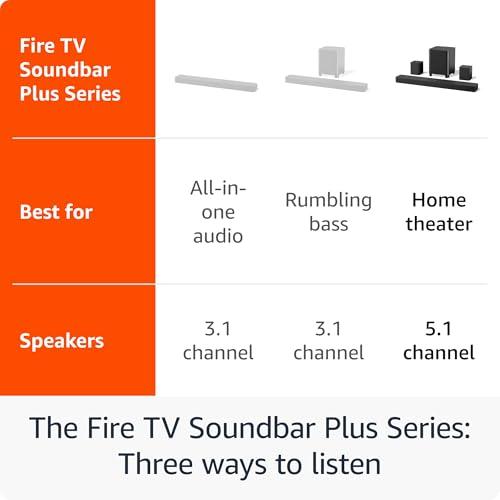
Before diving into specifics, let's clarify what we're dealing with here. A "5.1" system refers to six separate audio channels: left, center, right, left surround, right surround, plus a dedicated subwoofer (the ".1") for bass frequencies below about 120Hz. This setup creates the foundation for cinematic surround sound that can place explosions behind you, dialogue clearly in front, and ambient effects all around.
Budget 5.1 soundbars typically fall into the $200-500 range at the time of writing, targeting consumers who want theater-quality audio without the complexity of traditional home theater receivers and multiple speakers scattered around the room. The challenge these systems face is delivering genuine surround sound while maintaining the simplicity that makes soundbars appealing in the first place.
There are generally two approaches manufacturers take. Some create "virtual" surround using digital signal processing (DSP) - essentially computer algorithms that manipulate audio signals to trick your brain into perceiving sounds from different directions. Others provide discrete physical speakers for each channel, giving you true spatial separation but requiring more components and setup.
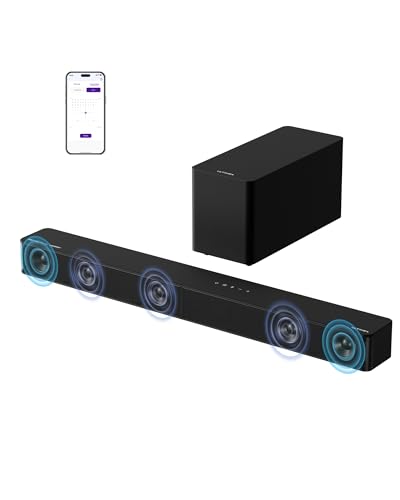
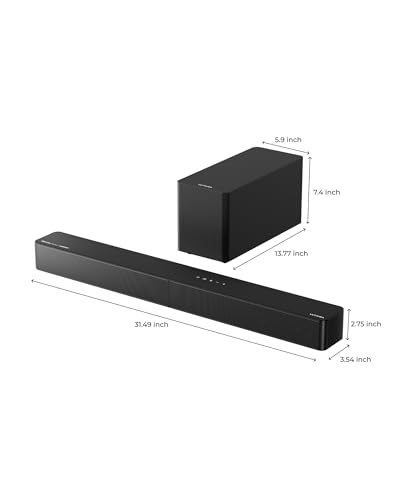
The Ultimea Poseidon M60 Boom, released in 2025, represents the cutting edge of soundbar innovation. Its most distinctive feature is a modular design where the main soundbar consists of two separate pieces that twist and lock together, creating one unified bar housing all five main channels. This approach prioritizes convenience and modern smart features while using advanced digital processing to create surround effects.
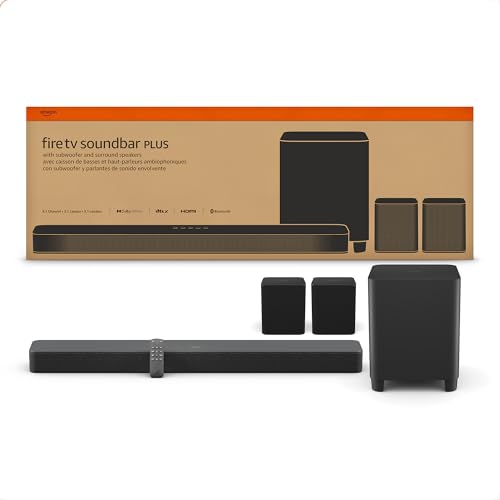
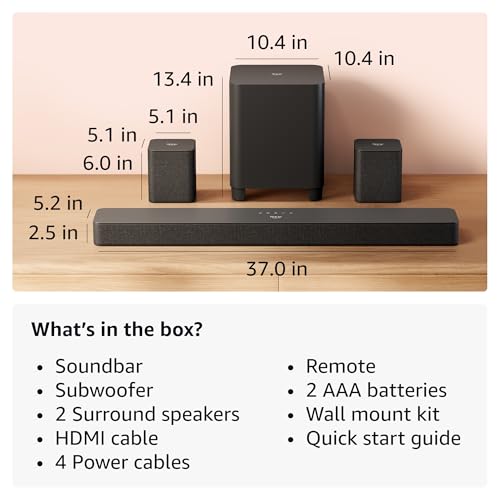
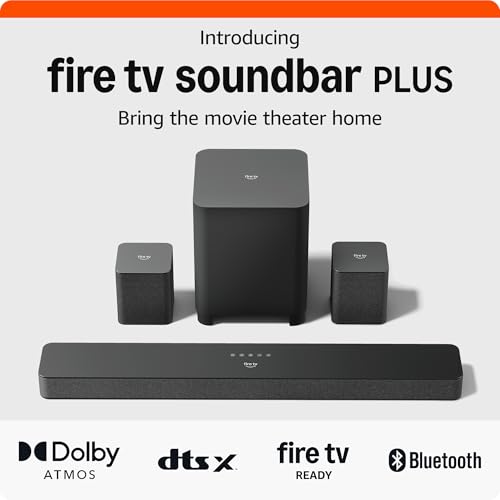
In contrast, the Amazon Fire TV Soundbar Plus, launched in 2023, takes the traditional discrete approach with a main soundbar, separate wireless subwoofer, and two wireless satellite speakers that physically place surround channels behind your listening position. Amazon's system focuses on proven surround sound principles while supporting an impressive array of high-quality audio formats.
The timing difference between these releases matters more than you might think. The Ultimea system benefits from two additional years of technological advancement, particularly in Bluetooth connectivity (version 5.4 vs standard Bluetooth) and smartphone app integration. Meanwhile, the Amazon system has had time to mature and establish a track record for reliability.
Clear dialogue is arguably the most important aspect of any TV audio system - if you can't understand what characters are saying, even the most impressive surround effects become meaningless. Both systems tackle this challenge differently.
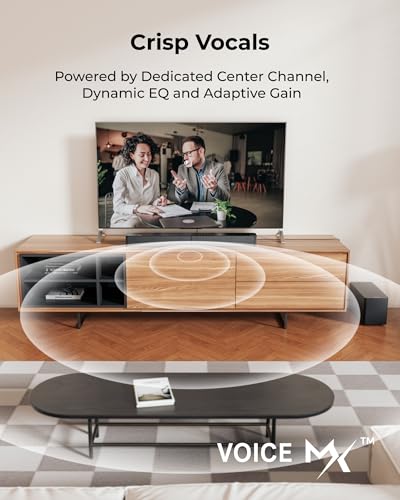
The Ultimea Poseidon M60 Boom employs what they call VoiceMX technology, which dynamically enhances the critical 300Hz to 3kHz frequency range where most human speech occurs. This frequency band contains the fundamental tones of most voices and the consonant sounds that make speech intelligible. The system uses adaptive equalization (EQ) and gain control to ensure dialogue remains clear even during complex action scenes with explosions and music competing for attention.
Our research into user feedback consistently shows the Ultimea system excels at maintaining dialogue clarity across different content types. The triple-core digital signal processing (DSP) technology - featuring two processors running at 800MHz and one at 600MHz - provides over 2000 MIPS (million instructions per second) of processing power. This computational muscle allows real-time analysis and adjustment of incoming audio, automatically balancing dialogue against background effects.
The Amazon Fire TV Soundbar Plus takes a more traditional but equally effective approach with a dedicated center channel speaker. In proper surround sound systems, the center channel handles most dialogue, and having a physical driver dedicated to this task typically produces more natural speech reproduction than virtual processing. User reviews consistently praise the Amazon system's dialogue clarity, though some note that deeper male voices can sound slightly thin due to a dip in the lower midrange frequencies.
For dialogue performance, both systems perform admirably, but they achieve clarity through different means. The Ultimea uses sophisticated processing to enhance speech, while the Amazon system relies on proper channel separation with a dedicated center speaker.
Bass performance often makes or breaks the cinematic experience. Weak bass leaves action scenes feeling flat and reduces the emotional impact of movie soundtracks. Both systems include dedicated subwoofers, but their implementations differ significantly.
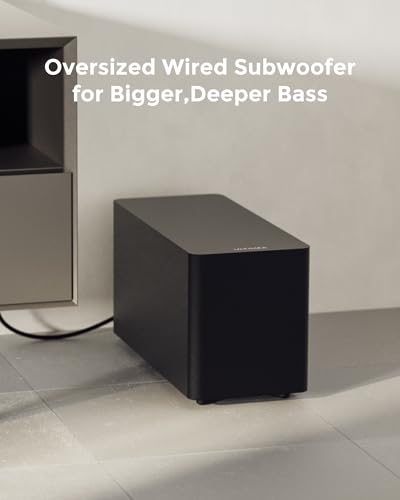
The Ultimea Poseidon M60 Boom incorporates BassMX Technology with a 5.25-inch subwoofer capable of 16mm diaphragm excursion - that's how far the speaker cone can move back and forth. More excursion generally means more air displacement and deeper, more impactful bass. The system delivers 340W of peak power, though like most manufacturers, Ultimea likely measures this under ideal conditions that don't reflect real-world continuous output.
What makes the Ultimea's bass interesting is the wired connection to the subwoofer. While this limits placement flexibility, it eliminates the potential for wireless dropouts or synchronization issues that can plague wireless subwoofers. The BassMX technology also includes cabinet optimization and digital processing to extend low-frequency response and reduce distortion.
The Amazon Fire TV Soundbar Plus uses a wireless subwoofer, providing much more flexibility in room placement. Proper subwoofer positioning can dramatically affect bass performance - sometimes moving a subwoofer just a few feet can eliminate boomy resonances or fill in dead spots. The wireless design makes it easy to experiment with placement to find the sweet spot in your room.
However, user reviews note that the Amazon system's bass can become overpowering during action scenes, sometimes masking dialogue. The system exhibits some compression when pushed to maximum volume, where the bass becomes less defined and impacts start to blur together.
For bass performance, the choice comes down to priorities: the Ultimea offers more controlled, technology-enhanced bass with zero latency, while the Amazon system provides placement flexibility that can be crucial for optimal bass response in challenging room layouts.
This is where the fundamental philosophical difference between these systems becomes most apparent, and where your room setup and expectations will heavily influence which approach works better for you.
The Ultimea Poseidon M60 Boom creates surround effects entirely through digital processing. All five main channels are housed within the modular soundbar, using advanced DSP algorithms to create the illusion of sounds coming from beside and behind you. This virtual surround processing, while impressive, depends heavily on room acoustics and your seating position relative to the soundbar.
Virtual surround works by manipulating phase relationships, timing, and frequency response to trick your brain's spatial hearing mechanisms. The effectiveness varies significantly based on factors like room size, wall surfaces, furniture placement, and even the shape of your ears. In ideal conditions with proper calibration, virtual surround can be convincingly immersive. However, it rarely matches the spatial precision of discrete physical speakers.
The Amazon Fire TV Soundbar Plus provides true discrete surround with physical satellite speakers that you position behind or to the sides of your listening area. These satellites handle the actual surround channels, creating genuine spatial separation that doesn't rely on psychoacoustic tricks. When positioned correctly, discrete satellites can precisely place effects in space - the difference between hearing a helicopter fly overhead (virtual) versus genuinely feeling like it's moving from your left side to behind you and then to your right (discrete).
User feedback strongly favors the Amazon system for surround immersion, particularly in larger rooms where the satellite speakers can be properly positioned. The physical separation creates a more convincing 360-degree soundstage that remains effective even when you're not sitting in the exact center of the room.
However, the Ultimea system has advantages in smaller spaces or apartments where running satellite speakers isn't practical. The virtual surround can still provide an engaging experience that's dramatically better than TV speakers, and the compact form factor makes it suitable for a wider range of living situations.
The difference in release years shows most clearly in connectivity and control options, representing a shift in user expectations over the past few years.
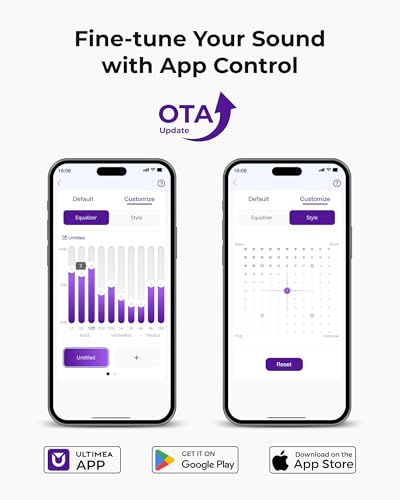
The Ultimea Poseidon M60 Boom embraces the smartphone-centric approach that's become standard in 2025. The comprehensive Ultimea app provides complete system control, including volume adjustment, input switching, detailed EQ settings, and firmware updates. This level of integration means you can fine-tune the system's sound signature to your preferences and room acoustics without hunting for a remote.
The app includes preset modes (Movie, Music, Voice, Sport, Game, Night) plus manual adjustment of bass, midrange, and treble frequencies. This granular control allows optimization for different content types - boosting dialogue clarity for news programs, enhancing bass for action movies, or reducing volume dynamics for late-night viewing.
The system also features Bluetooth 5.4, the latest version of the wireless standard that provides improved range, more stable connections, and lower latency compared to earlier Bluetooth versions. Lower latency means better lip-sync when watching video content through Bluetooth, though HDMI remains the preferred connection for serious viewing.
The Amazon Fire TV Soundbar Plus takes a more traditional approach, relying primarily on the included remote for system control. While this might seem outdated, it does have advantages - remotes don't require battery charging, won't get lost in app updates, and provide immediate access to frequently used functions without unlocking phones or navigating menus.
However, the Amazon system's lack of Wi-Fi connectivity and companion app feels increasingly dated in 2025. Basic adjustments like EQ settings require cycling through options on the remote while watching LED indicators, which isn't as intuitive as smartphone app control.
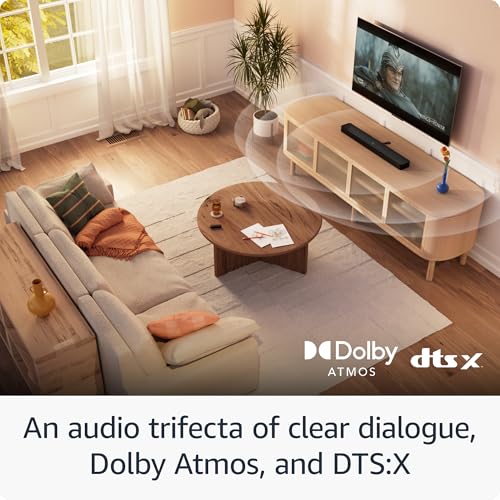
The Amazon system does excel in one connectivity area: audio format support. It handles an impressive range of high-quality formats including Dolby TrueHD, DTS-HD Master Audio, Dolby Atmos, and DTS:X. These lossless formats preserve the original studio audio quality without compression, which matters if you have a collection of Blu-ray movies or access to high-quality streaming content.
At the time of writing, both systems compete in the same general price bracket, but they deliver value in different ways that appeal to different user priorities.
The Ultimea Poseidon M60 Boom provides exceptional value for users prioritizing modern convenience features and compact installation. The smartphone app control, latest Bluetooth technology, and space-saving modular design typically appear in much more expensive soundbars. For apartment dwellers, renters who move frequently, or anyone who values simplicity, the Ultimea system delivers premium features at a budget price point.
The modular design also offers practical advantages beyond space saving. If one section develops issues, you might only need to replace part of the system rather than the entire soundbar. The wired subwoofer connection, while limiting placement options, eliminates ongoing concerns about wireless connectivity and battery management.
The Amazon Fire TV Soundbar Plus provides value through proven discrete surround technology and extensive audio format support that typically costs significantly more. True discrete 5.1 systems usually require separate receivers and multiple speakers, making Amazon's integrated approach attractive for users wanting genuine surround without complexity.
The system's extensive codec support means it can handle any high-quality audio content you throw at it, from streaming Dolby Atmos to lossless Blu-ray audio. This future-proofs your investment if you plan to upgrade your content sources or if streaming services continue improving audio quality.
Your living space dramatically influences which system will work better for your situation.
Small to Medium Rooms (Under 200 Square Feet) In smaller spaces, the Ultimea Poseidon M60 Boom often provides a more practical solution. The virtual surround processing works more effectively when you're closer to the soundbar, and the compact design doesn't overwhelm the space. The wired subwoofer is also less problematic since you likely won't need to place it far from the entertainment center.
Large Rooms and Open Floor Plans Larger spaces favor the Amazon Fire TV Soundbar Plus where the discrete satellite speakers can be properly positioned for optimal surround effects. The wireless satellites make it easier to run speakers to ideal locations without unsightly cables, and the larger soundstage helps fill bigger rooms.
Apartment Living For renters or anyone who can't run satellite speakers, the Ultimea system provides a more practical compromise. The all-in-one design eliminates concerns about satellite placement, and the sophisticated processing can still deliver engaging surround effects within the constraints of apartment living.
Choose the Ultimea Poseidon M60 Boom if: You're tech-forward and prefer smartphone app control over traditional remotes. The system suits users who value convenience, modern features, and space efficiency over absolute audio performance. It's ideal for smaller rooms, apartments, or any situation where discrete satellites aren't practical. The modular design appeals to anyone who moves frequently or values easy setup and breakdown.
The dialogue enhancement technology makes it particularly attractive for users who primarily watch TV shows, news, and dialogue-heavy content. If you're frustrated with muddy dialogue from your current TV speakers, the Ultimea's VoiceMX processing specifically addresses this common problem.
Choose the Amazon Fire TV Soundbar Plus if: You prioritize authentic surround sound immersion and have the space to properly position satellite speakers. This system suits home theater enthusiasts who watch lots of movies and want the most convincing spatial audio experience possible at this price point.
The extensive codec support makes it ideal for users with Blu-ray collections or access to high-quality streaming content. If you're already invested in the Fire TV ecosystem, the integration provides added convenience for daily use.
The system also appeals to users who prefer traditional remote control over smartphone apps, either due to simplicity preferences or concerns about app reliability and updates.
Both systems represent excellent value in their respective approaches, but they serve different user priorities and living situations.
The Ultimea Poseidon M60 Boom wins for modern convenience, compact installation, and dialogue clarity. It's the better choice for users who value smartphone integration, space efficiency, and cutting-edge features. The 2025 technology and comprehensive app control make it feel like a premium system despite its budget price point.
The Amazon Fire TV Soundbar Plus wins for authentic surround immersion and audio format support. It's the better choice for larger rooms, serious movie watching, and users who prefer traditional discrete surround sound. The physical satellite speakers and extensive codec support provide a more traditional but often more satisfying home theater experience.
Neither system is perfect - the Ultimea sacrifices true surround immersion for convenience, while the Amazon system feels dated in its control options and lacks modern smart features. However, both deliver significantly better performance than built-in TV speakers and provide genuine value in the budget soundbar market.
Your choice ultimately depends on whether you prioritize modern convenience and compact design (Ultimea) or traditional surround immersion and audio quality (Amazon). Both will transform your TV audio experience - just in different ways that appeal to different users and living situations.
| Ultimea Poseidon M60 Boom 5.1 Soundbar | Amazon Fire TV Soundbar Plus 5.1 Channel System |
|---|---|
| Surround Sound Design - Determines true immersion vs convenience | |
| Virtual 5.1 with all channels in modular soundbar | True discrete 5.1 with physical satellite speakers |
| Release Year - Affects available technology and features | |
| 2025 (latest tech and connectivity) | 2023 (proven reliability, established track record) |
| Subwoofer Connection - Impacts placement flexibility vs reliability | |
| 5.25" wired subwoofer (zero latency, limited placement) | Wireless subwoofer (flexible positioning, potential sync issues) |
| Smart Control Options - Modern convenience vs traditional operation | |
| Comprehensive smartphone app + remote control | Remote control only (no Wi-Fi or app support) |
| Bluetooth Version - Affects wireless audio quality and range | |
| Bluetooth 5.4 (latest standard, improved range/quality) | Bluetooth 5.0 (standard connectivity) |
| Audio Format Support - Important for high-quality source material | |
| Dolby Atmos (virtualized) | Dolby Atmos, DTS:X, Dolby TrueHD, DTS-HD MA (extensive lossless support) |
| Peak Power Output - Indicates maximum volume capability | |
| 340W peak power with BassMX technology | Not specified (focus on discrete channel separation) |
| Physical Design - Space requirements and installation complexity | |
| Two-piece modular soundbar that locks together | Traditional soundbar + 2 wireless satellites + wireless sub |
| Dialogue Enhancement - Critical for TV shows and movies | |
| VoiceMX technology with 300Hz-3kHz optimization | Dedicated center channel with natural speech reproduction |
| DSP Processing - Affects sound quality and customization | |
| Triple-core DSP (2x 800MHz, 1x 600MHz processors) | Standard processing with extensive codec decoding |
| EQ Control - Sound customization options | |
| 6 presets + 3-band manual EQ via smartphone app | 4 presets + basic treble/bass via remote only |
| Setup Complexity - Installation time and technical requirements | |
| Modular assembly + wired sub positioning | Pre-paired wireless components, satellite positioning required |
The Amazon Fire TV Soundbar Plus provides superior surround sound quality due to its discrete satellite speakers that physically place audio behind and around you. The Ultimea Poseidon M60 Boom uses virtual surround processing, which can be effective but doesn't match the spatial accuracy of true discrete channels. For genuine home theater immersion, the Amazon Fire TV Soundbar Plus delivers more convincing surround effects.
The key difference is their approach to surround sound: the Ultimea Poseidon M60 Boom houses all channels in a modular soundbar using digital processing, while the Amazon Fire TV Soundbar Plus uses separate wireless satellite speakers for true 5.1 channel separation. The Ultimea prioritizes convenience and modern features, while the Amazon system focuses on authentic surround sound performance.
Both systems are relatively easy to install, but in different ways. The Ultimea Poseidon M60 Boom requires less physical setup since all speakers are contained in the modular soundbar, though you'll need to position the wired subwoofer. The Amazon Fire TV Soundbar Plus involves placing satellite speakers around your room but benefits from pre-paired wireless components. Overall, the Ultimea offers simpler physical installation.
Both excel at dialogue clarity through different approaches. The Ultimea Poseidon M60 Boom uses VoiceMX technology that specifically enhances speech frequencies, making it excellent for TV shows and news. The Amazon Fire TV Soundbar Plus achieves clear dialogue through a dedicated center channel speaker. Both significantly improve speech intelligibility compared to TV speakers, with the Ultimea offering more advanced processing features.
Bass performance depends on your priorities. The Ultimea Poseidon M60 Boom features BassMX technology with a 5.25" wired subwoofer that delivers controlled, lag-free bass with 16mm excursion capability. The Amazon Fire TV Soundbar Plus uses a wireless subwoofer that offers flexible room placement for optimal bass response. The Ultimea provides more consistent bass, while the Amazon system offers better positioning flexibility.
Only the Ultimea Poseidon M60 Boom offers comprehensive smartphone app control, allowing you to adjust EQ settings, change modes, and control all functions through the Ultimea mobile app. The Amazon Fire TV Soundbar Plus relies on remote control only, with no Wi-Fi connectivity or companion app. If modern smartphone integration is important to you, the Ultimea is the clear choice.
The Ultimea Poseidon M60 Boom is generally better suited for smaller spaces due to its compact modular design and virtual surround processing that works effectively at closer distances. The Amazon Fire TV Soundbar Plus requires proper satellite speaker positioning that may be challenging in cramped spaces. For apartments or smaller living rooms, the Ultimea provides a more practical solution without sacrificing audio quality.
The Amazon Fire TV Soundbar Plus supports an extensive range of high-quality formats including Dolby Atmos, DTS:X, Dolby TrueHD, and DTS-HD Master Audio, making it excellent for Blu-ray movies and premium streaming content. The Ultimea Poseidon M60 Boom supports Dolby Atmos but focuses more on processing optimization rather than format variety. For audiophiles with lossless content collections, the Amazon system offers superior format compatibility.
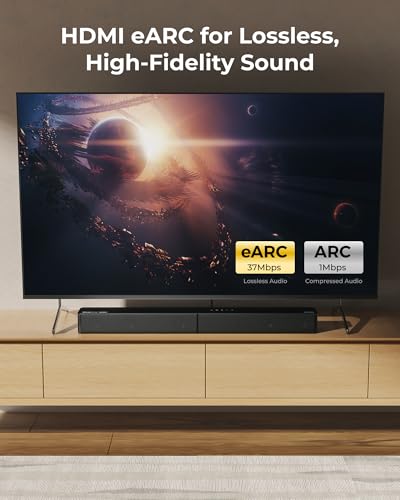
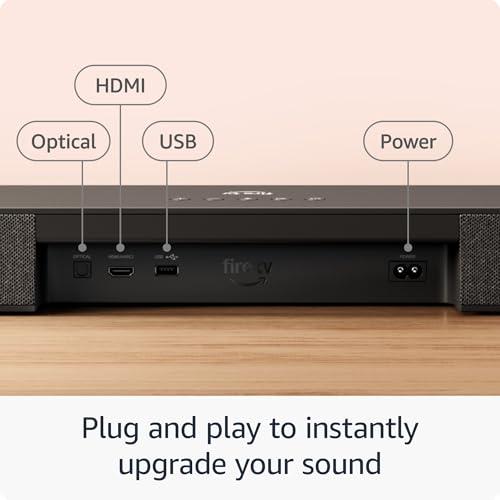
The Ultimea Poseidon M60 Boom provides more modern connectivity with Bluetooth 5.4, HDMI eARC, optical, USB, and comprehensive app control. The Amazon Fire TV Soundbar Plus includes HDMI eARC, optical, USB, and standard Bluetooth but lacks Wi-Fi and app connectivity. Both offer essential connections, but the Ultimea delivers more advanced wireless features and smartphone integration.
Both soundbars work well for gaming, but serve different needs. The Ultimea Poseidon M60 Boom features ultra-low latency Bluetooth 5.4 and dedicated gaming EQ modes accessible through the smartphone app. The Amazon Fire TV Soundbar Plus provides more immersive spatial audio for games that support surround sound, thanks to its discrete satellite speakers. Choose the Ultimea for convenience features or the Amazon system for maximum gaming immersion.
For serious movie watching, the Amazon Fire TV Soundbar Plus typically provides a more cinematic experience due to its discrete satellite speakers and extensive lossless audio format support. The physical surround channels create more convincing spatial effects for action scenes. However, the Ultimea Poseidon M60 Boom offers excellent dialogue clarity and convenient app-based sound modes. Movie enthusiasts will likely prefer the Amazon system for its authentic surround immersion.
The Ultimea Poseidon M60 Boom's main limitation is its virtual surround processing, which can't match the spatial accuracy of discrete speakers, and the wired subwoofer limits placement flexibility. The Amazon Fire TV Soundbar Plus's biggest drawback is the lack of modern smart features like app control and Wi-Fi connectivity, plus it requires proper satellite positioning that isn't always practical. Choose based on whether you prioritize authentic surround sound (Amazon) or modern convenience features (Ultimea).
We've done our best to create useful and informative comparisons to help you decide what product to buy. Our research uses advanced automated methods to create this comparison and perfection is not possible - please contact us for corrections or questions. These are the sites we've researched in the creation of this article: ultimea.com - ultimea.com - youtube.com - bestbuy.com - youtube.com - avsforum.com - youtube.com - manuals.plus - youtube.com - device.report - ultimea.com - ultimea.de - community.ultimea.com - ultimea.com - community.ultimea.com - ultimea.com - youtube.com - aliexpress.com - ultimea.com - rtings.com - cordbusters.co.uk - techradar.com - developer.amazon.com - t3.com - hometechnologyreview.com - youtube.com - hometechnologyreview.com - whathifi.com - hometechnologyreview.com - hometechnologyreview.com - youm.design - hometechnologyreview.com - dolby.com

Privacy Policy
Terms and Conditions - Affiliate Policy
Home Security
© Copyright 2008-2026.
11816 Inwood Rd #1211, Dallas, TX 75244