







Shopping for a soundbar can feel overwhelming with dozens of options promising theater-quality sound. But understanding the fundamental approaches manufacturers take helps cut through the noise. Today's soundbar market essentially splits between two philosophies: complete systems that give you everything upfront, and premium compact bars designed to grow over time.
The Ultimea Poseidon M60 Boom and Sonos Beam Gen 2 perfectly represent these opposing strategies. Released in 2025 and 2021 respectively, these soundbars show how the market has evolved—and how different approaches serve different needs.
Before diving into specifics, it helps to understand what we're dealing with. Soundbars solve the universal problem of terrible TV speakers, but they tackle it differently. Some manufacturers pack everything into one purchase—the soundbar, subwoofer, and all the processing needed for surround sound. Others focus on creating exceptional standalone performance that you can expand later.
The key considerations remain consistent: audio performance (how good it sounds), value proposition (what you get for your money), room compatibility (will it work in your space), and future expandability (can you upgrade it later). Understanding these factors helps you choose the right approach for your situation.
What's changed significantly since 2021 is processing power and connectivity standards. Newer soundbars like the Ultimea M60 benefit from faster chips that can handle more complex audio processing, while established products like the Sonos Beam Gen 2 have refined their algorithms through years of real-world use and software updates.
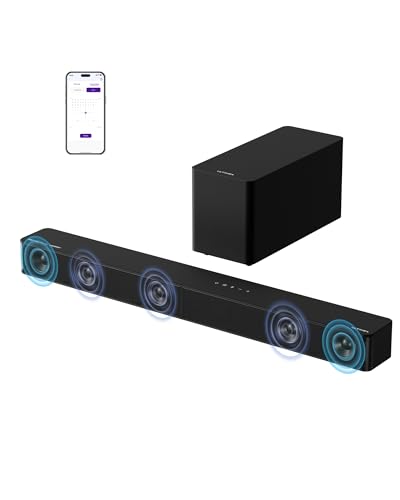
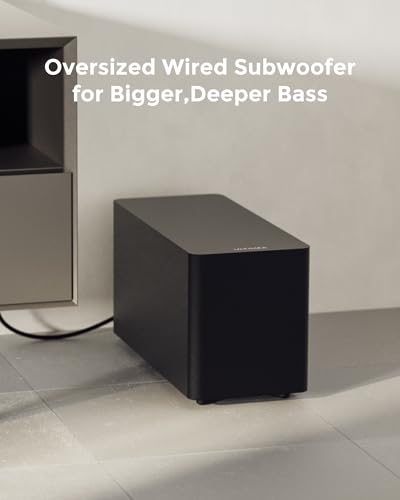
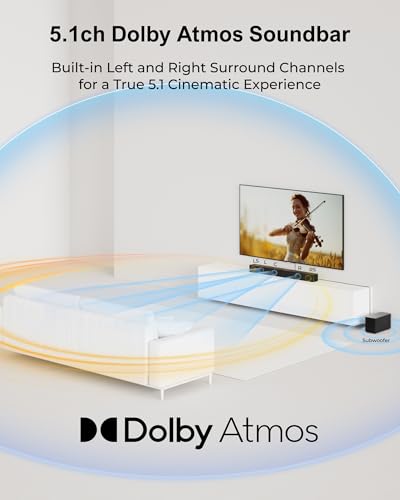
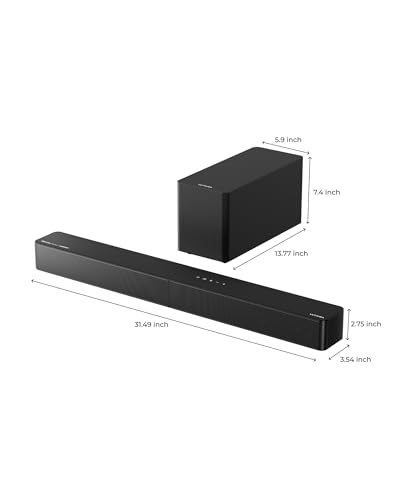
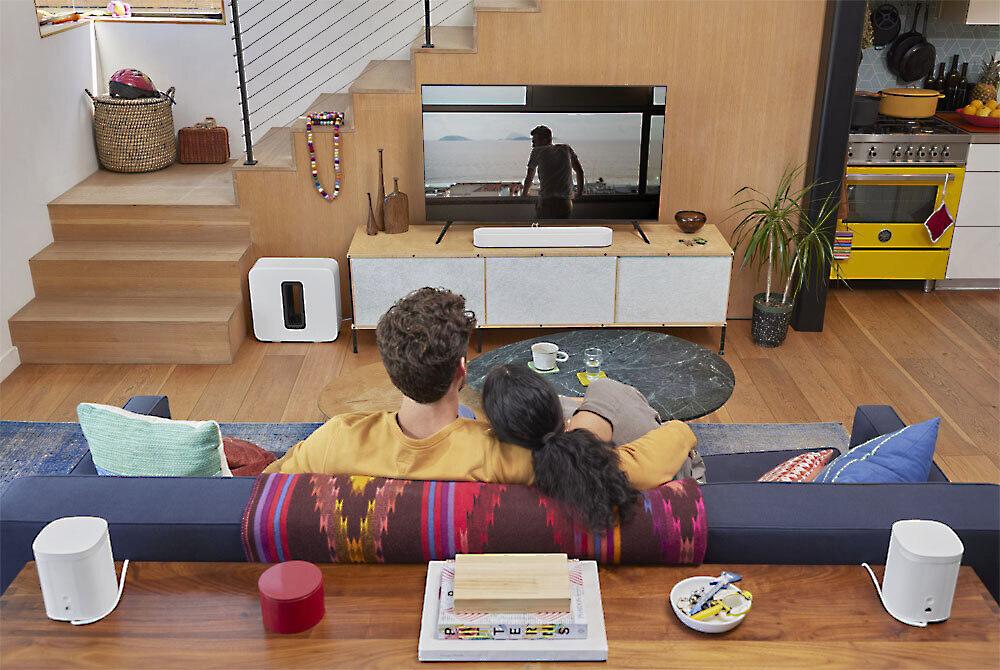
Here's where these two soundbars fundamentally differ. The Ultimea Poseidon M60 Boom arrives as a complete 5.1 surround sound system. You unbox the main soundbar with five full-range drivers plus a dedicated 5.25-inch wooden subwoofer. Everything needed for true surround sound is included—left, right, center, and both surround channels are built into the main bar itself.
This "everything included" approach means you get genuine channel separation (each audio channel comes from dedicated drivers) without buying additional components. The trade-off is less placement flexibility since you need space for both the soundbar and a wired subwoofer.
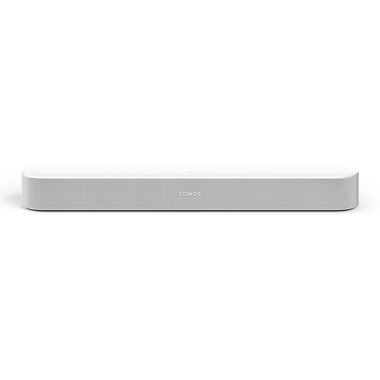
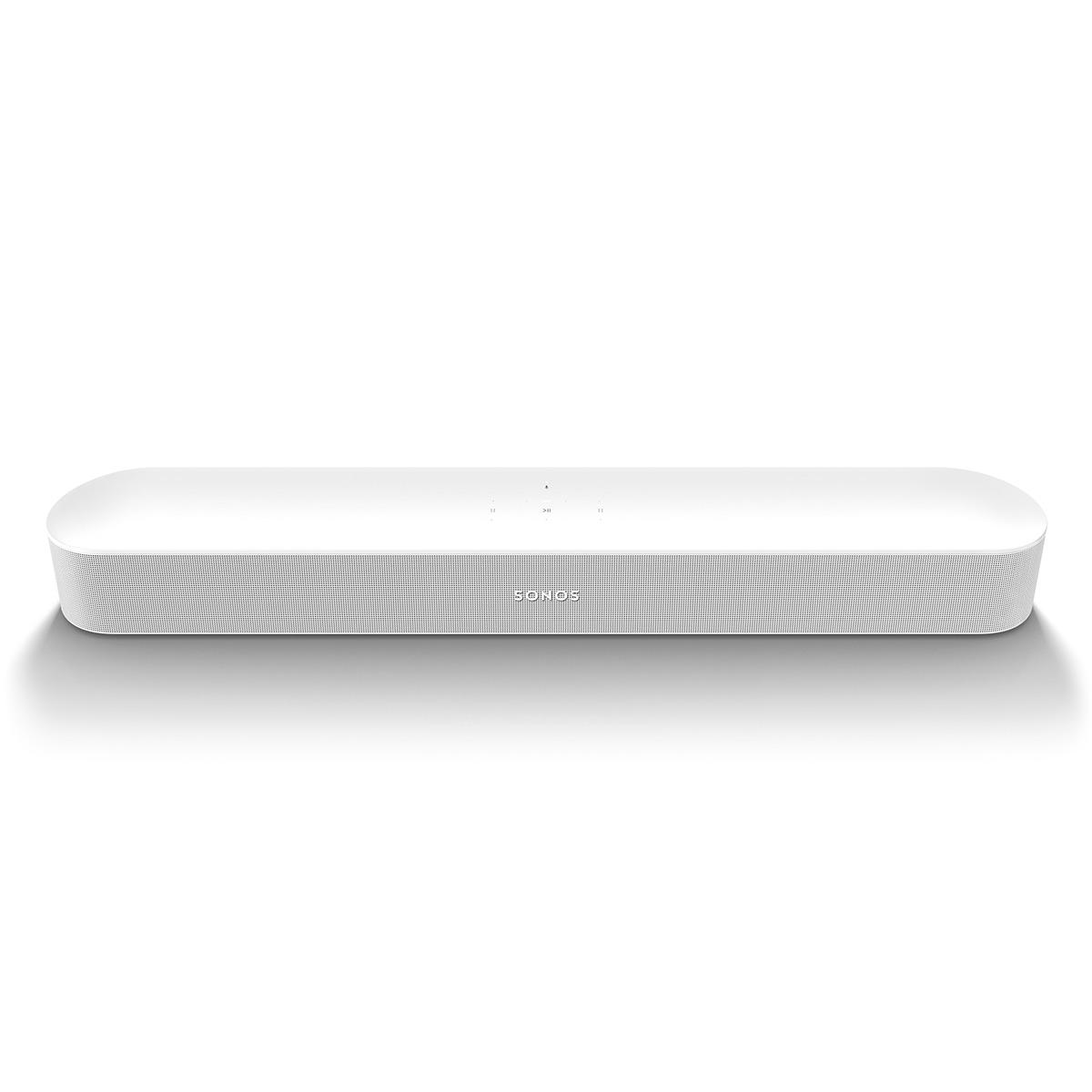
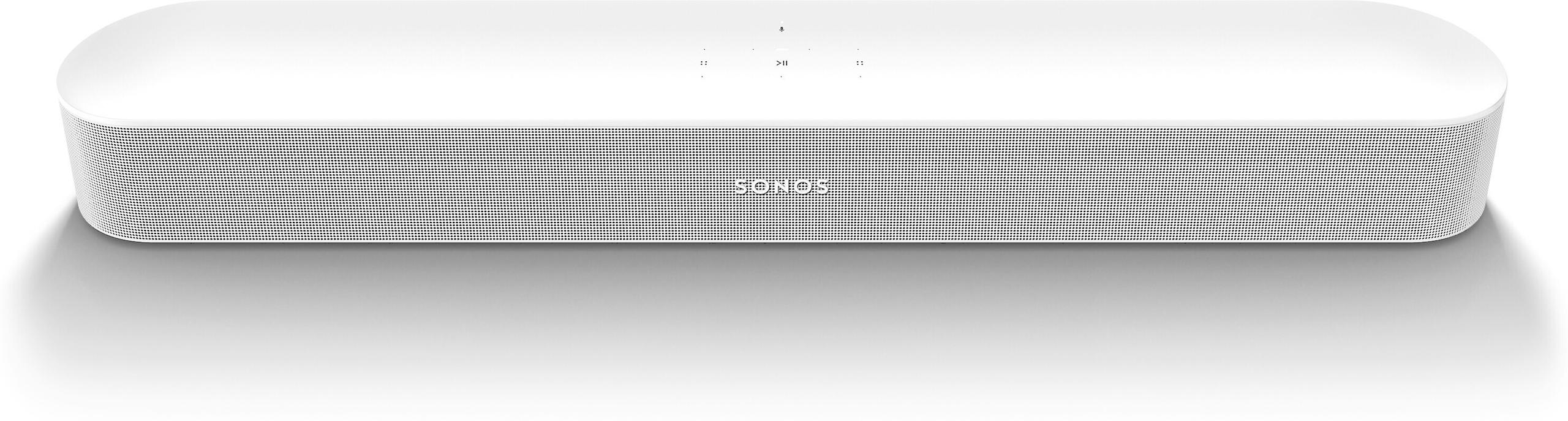
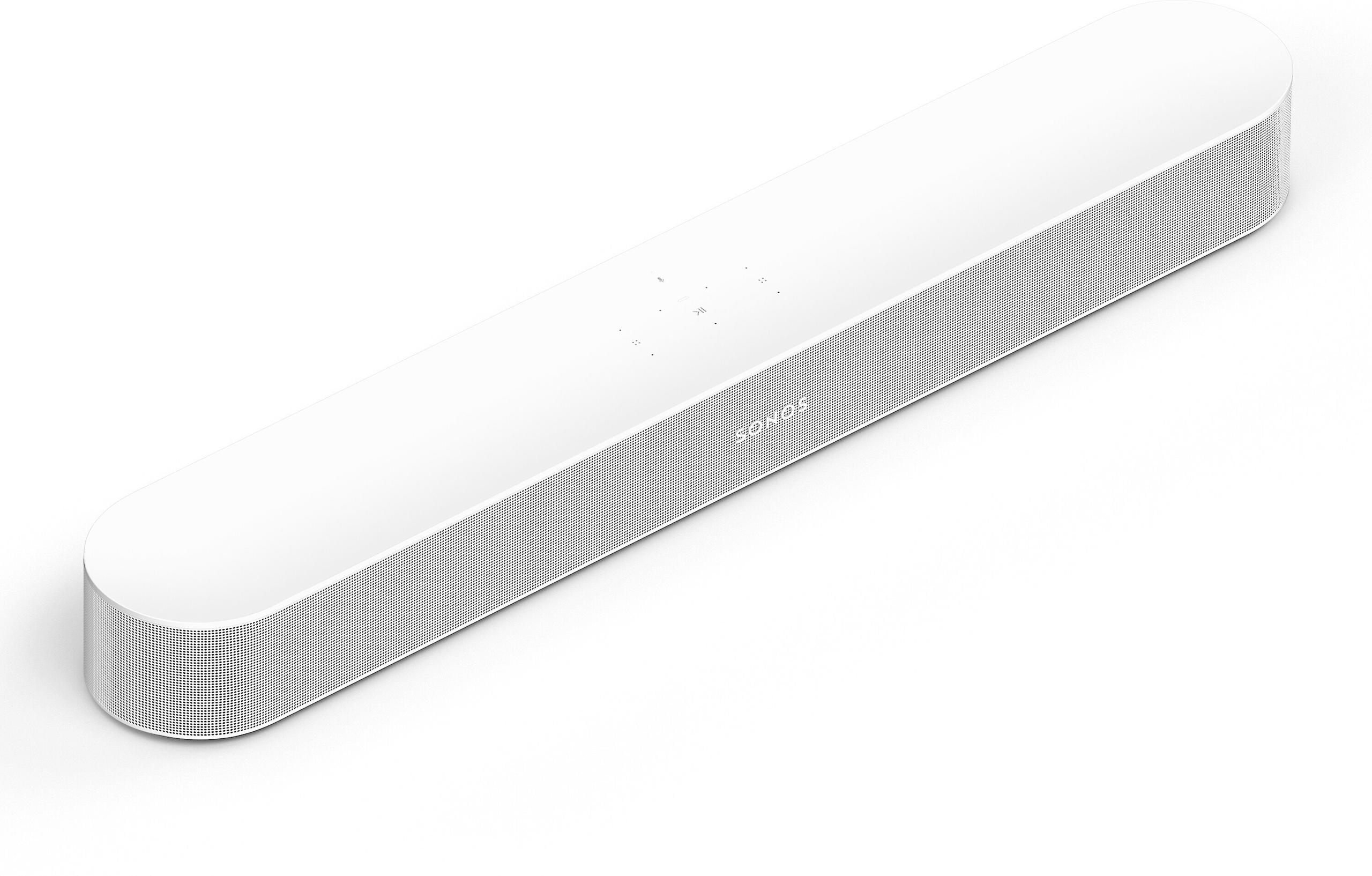
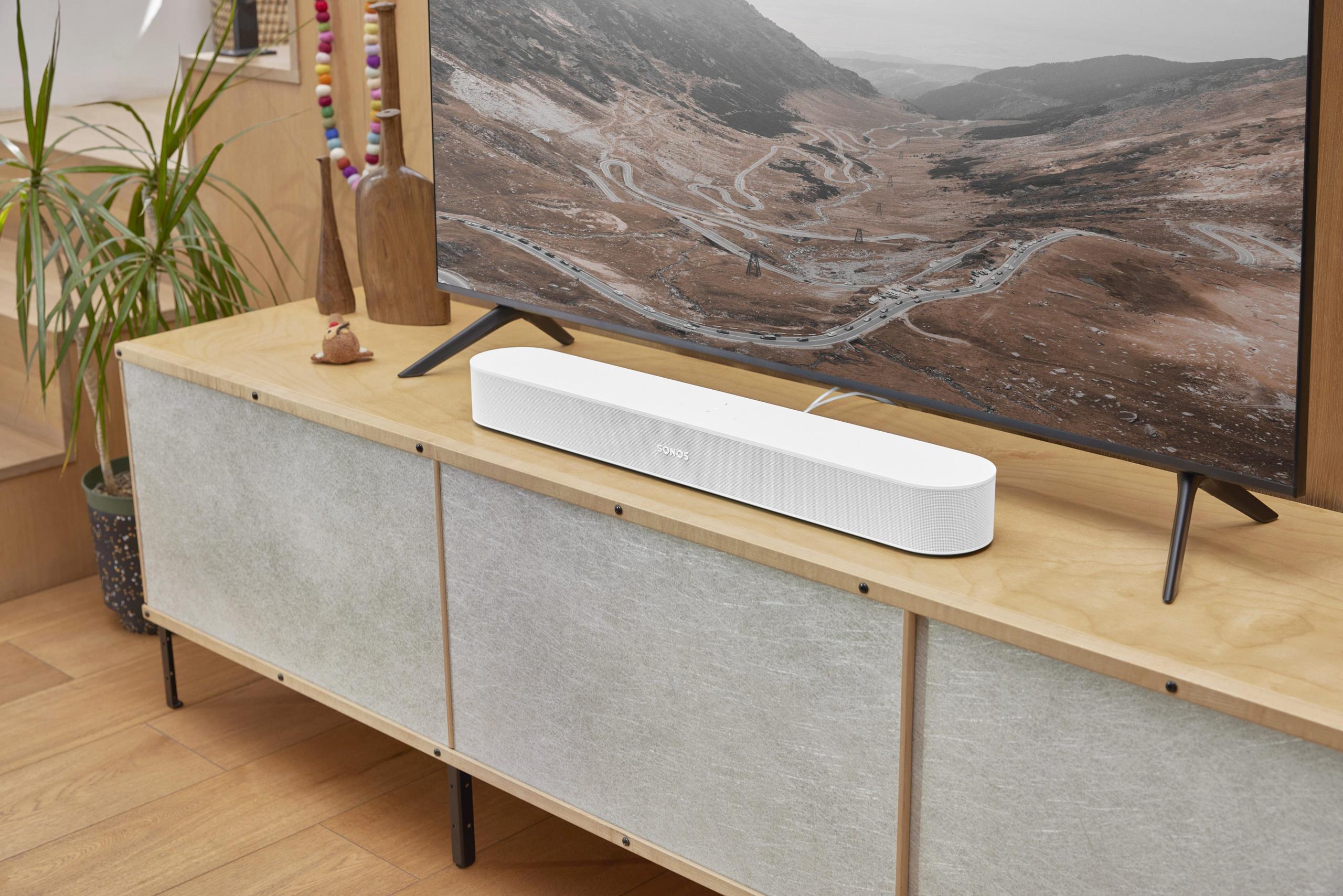
The Sonos Beam Gen 2 takes the opposite approach. It's a standalone 5.0 system with five precisely positioned drivers—four mid-woofers and one center tweeter—plus three passive radiators for bass reinforcement. The engineering focuses on maximizing performance from this compact footprint through advanced processing rather than raw driver count.
To achieve true surround sound with the Sonos, you'd purchase separate surround speakers and a subwoofer later. This modular approach costs more long-term but offers superior placement flexibility and the ability to customize your system over time.
Raw power tells only part of the story, but it matters for larger spaces. The Ultimea M60 delivers 340 watts of peak power with a maximum sound pressure level (SPL) of 99 decibels. SPL measures how loud something can get—for reference, 99 dB is roughly equivalent to a motorcycle at 25 feet.
This higher power output, combined with the dedicated subwoofer, makes the Ultimea better suited for medium to large rooms where you need serious volume and impact. If your living room is over 200 square feet or has high ceilings, this extra power becomes noticeable during action scenes or when listening to bass-heavy music.
The Sonos Beam Gen 2 produces less raw power but optimizes every watt through sophisticated digital signal processing (DSP). DSP is essentially a computer that adjusts the audio in real-time, compensating for the smaller drivers and creating surprisingly room-filling sound from a compact package.
This represents perhaps the biggest performance difference. The Ultimea's dedicated wooden subwoofer uses BassMX technology with a high-excursion driver capable of 16mm of movement. Driver excursion refers to how far the speaker cone can move back and forth—more excursion generally means deeper, more powerful bass.
The wooden cabinet isn't just for looks; wood resonates differently than plastic, adding warmth and reducing unwanted vibrations that can muddy the bass. This setup can reproduce frequencies down to 45Hz, which covers most of the bass you'll hear in movies and music.
The Sonos Beam Gen 2 relies on three passive radiators for bass reinforcement. Passive radiators are like speakers without magnets—they move in response to air pressure changes from the active drivers, extending bass response without requiring additional amplification. It's an elegant engineering solution that works well for the size, but physics limits how deep the bass can go.
From our research into user experiences, the Ultimea clearly wins for bass impact and extension. If you love feeling the rumble during explosions or the thump of electronic music, the dedicated subwoofer makes a noticeable difference.
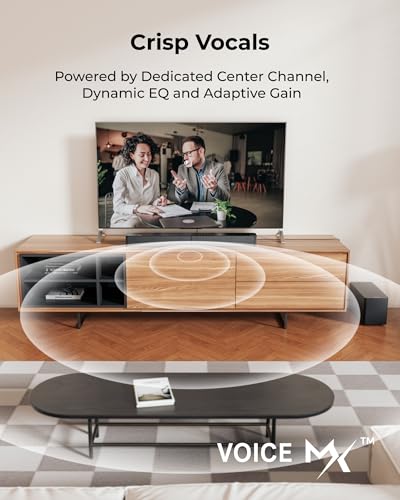
Both soundbars prioritize dialogue clarity, but they achieve it differently. The Ultimea M60 features VoiceMX technology that dynamically enhances frequencies between 300Hz and 3kHz—the range where most human speech occurs. This system uses adaptive equalization, meaning it automatically adjusts based on what you're watching.
The Sonos Beam Gen 2 employs Speech Enhancement processing that's been refined through years of acoustic research. Sonos has a reputation for exceptional vocal clarity, and reviews consistently praise how dialogue cuts through even complex soundtracks without sounding artificial.
Based on expert reviews, both perform excellently here, though they sound slightly different. The Ultimea tends to make dialogue more prominent and forward, while the Sonos maintains more natural integration with the overall soundstage.
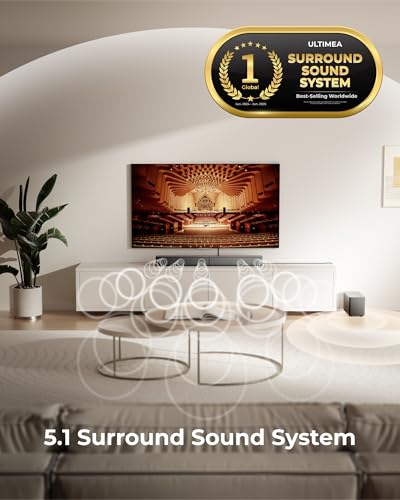
This is where the fundamental architectural differences show. The Ultimea M60 delivers genuine 5.1 surround sound because it physically separates each audio channel through dedicated drivers in the main bar. When a helicopter flies from left to right in a movie, you hear it moving across five distinct speakers.
The Sonos Beam Gen 2 creates surround effects through psychoacoustic processing—essentially tricking your brain into hearing sounds from locations where there aren't speakers. It uses phase differences and timing delays to create "phantom" surround channels. This works surprisingly well, especially in smaller rooms, but can't fully replicate the immersion of true multi-channel audio.
For home theater enthusiasts, this difference matters significantly during action sequences and immersive content. The Ultimea provides more convincing surround effects out of the box, while the Sonos requires additional speakers for comparable surround immersion.
Both soundbars support Dolby Atmos, the surround sound format that adds height channels for overhead effects. However, neither includes dedicated upward-firing drivers (speakers that bounce sound off your ceiling). Instead, they use processing to create virtual height effects.
The Ultimea's additional drivers provide more material to work with when creating these height effects, while the Sonos's faster processor (40% quicker than the original Beam) enables more sophisticated algorithms. Based on reviews, both create convincing height effects for their respective approaches, though true upward-firing speakers would provide more dramatic overhead sound.
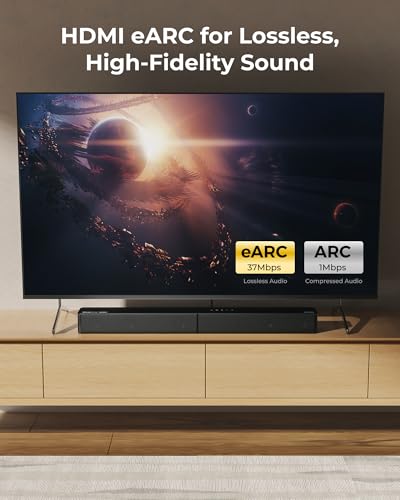
Connectivity reveals different priorities. The Ultimea Poseidon M60 offers comprehensive options: HDMI eARC (enhanced audio return channel for high-quality audio from your TV), optical input, USB, auxiliary input, and Bluetooth 5.4. Bluetooth 5.4 is the latest version, providing faster pairing, more stable connections, and ultra-low latency for gaming and video.
The Sonos Beam Gen 2 focuses on premium wired connections through HDMI eARC and includes an optical adapter, but notably lacks Bluetooth entirely. This might seem limiting, but Sonos prioritizes WiFi streaming and integration with their ecosystem over direct device pairing.
The smart features differ significantly too. The Ultimea provides app control with extensive equalization options—movie, music, voice, sport, game, and night modes, plus manual adjustment of bass, midrange, and treble. This gives you detailed control over the sound profile.
The Sonos includes built-in voice assistants (Amazon Alexa and Google Assistant) and Trueplay room calibration. Trueplay uses your iPhone's microphone to measure your room's acoustics and automatically adjusts the sound—it's remarkably effective at optimizing performance for your specific space.
At the time of writing, these products represent different value philosophies. The Ultimea M60 provides complete 5.1 surround sound in one purchase at a competitive price point. You get the main bar, subwoofer, and all the processing needed for immersive audio without additional investments.
The Sonos Beam Gen 2, while more expensive initially, offers premium build quality and the option to expand over time. However, matching the Ultimea's surround capabilities would require purchasing additional Sonos components, significantly increasing the total investment.
For budget-conscious buyers wanting immediate surround sound satisfaction, the Ultimea represents exceptional value. For those prioritizing build quality and future expandability, the Sonos offers a premium foundation that grows with your needs.
You want complete 5.1 surround sound immediately without additional purchases. This makes sense if you're setting up a new home theater and want everything working from day one. The higher power output and dedicated subwoofer also make it ideal for larger rooms where you need serious volume and bass impact.
The diverse connectivity options benefit users with multiple source devices—game consoles, streaming devices, phones, and computers can all connect easily. If you frequently switch between different audio sources or use Bluetooth regularly, the Ultimea provides more flexibility.
The Ultimea also suits users who prefer having physical control over their audio settings through the comprehensive app, rather than relying on automatic calibration.
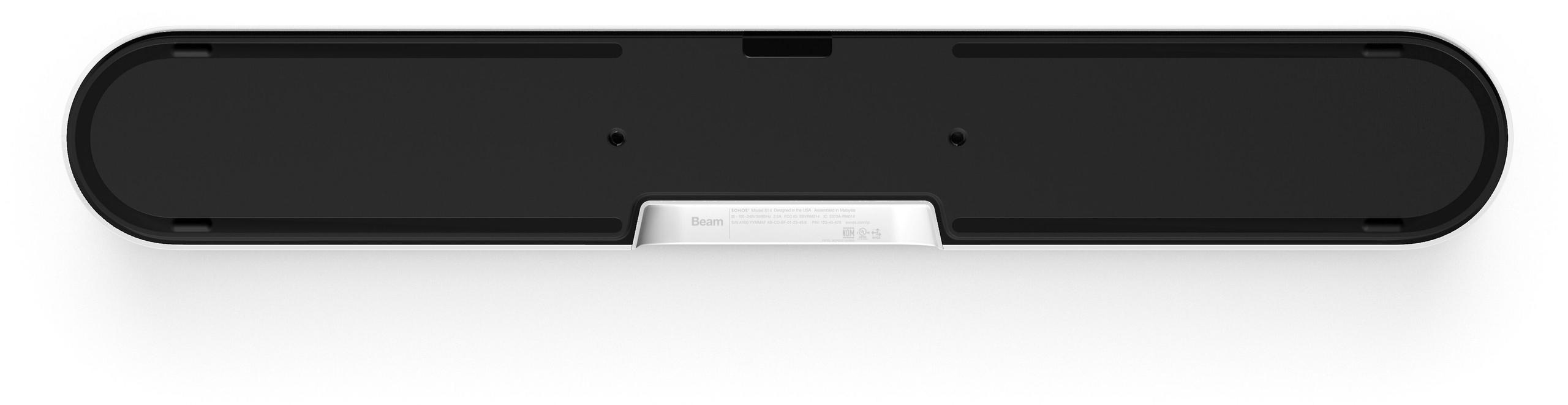
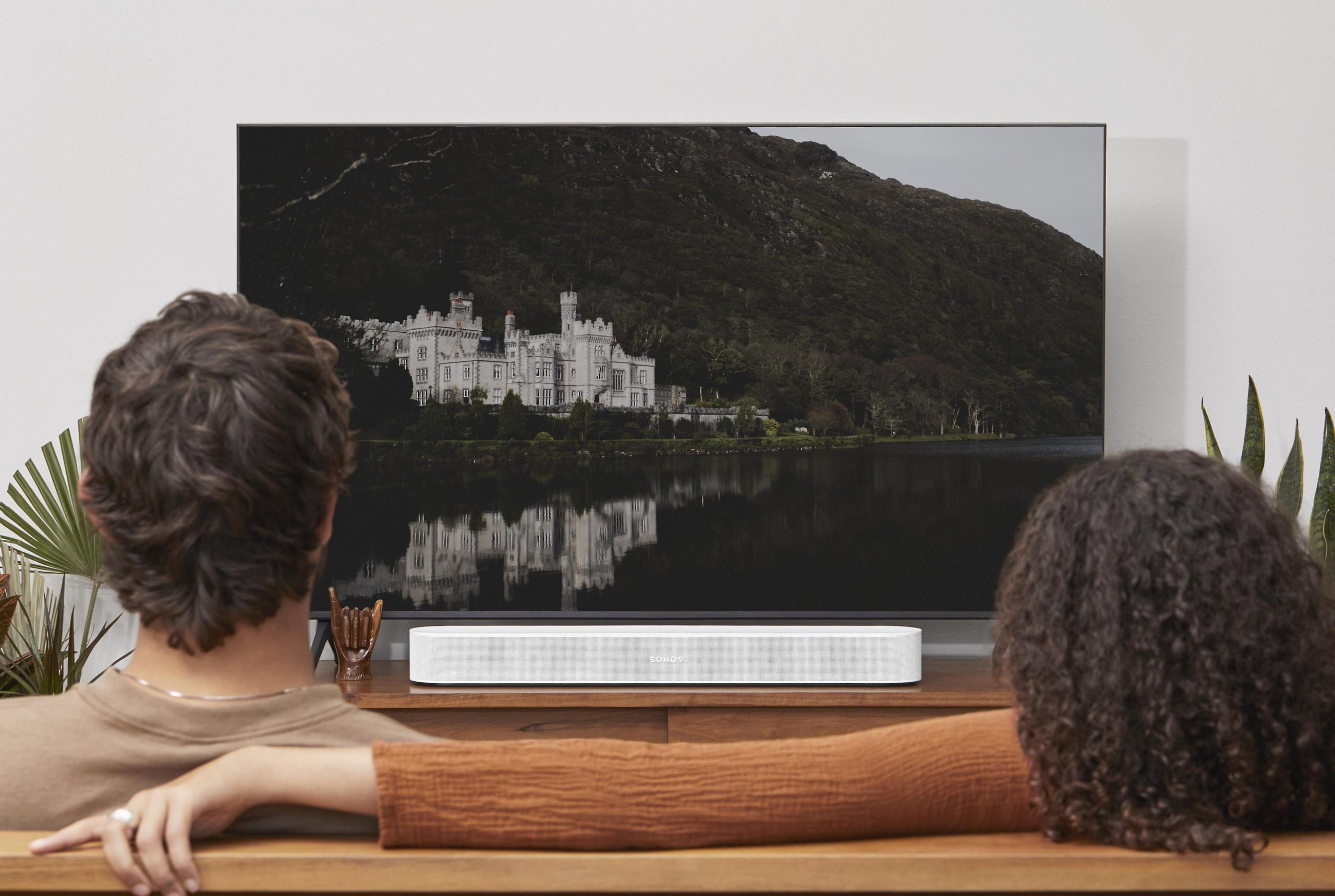
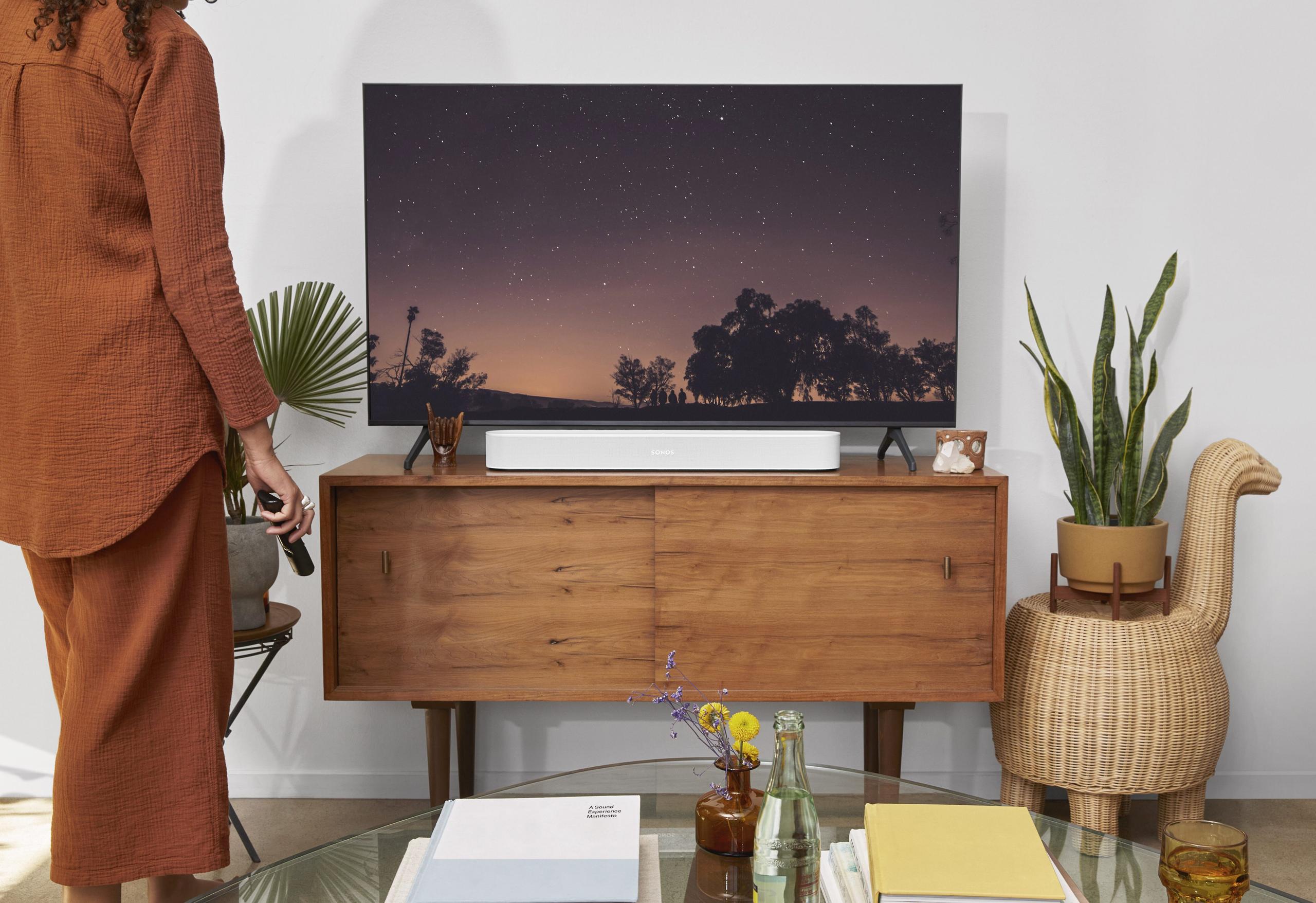
You have space constraints requiring a compact, elegant solution. The Sonos delivers exceptional performance for its size and integrates beautifully with modern decor. If your TV stand has limited space or you prefer wall mounting without dealing with a separate subwoofer, this approach works better.
Smart home enthusiasts will appreciate the built-in voice assistants and seamless integration with other smart devices. The Trueplay calibration also benefits users who want optimized sound without manual tweaking.
The Sonos makes sense for users planning to expand their audio system over time. Starting with the Beam and adding surrounds and a subwoofer later provides ultimate flexibility in system configuration and placement.
For dedicated home theater setups, room size and seating arrangement heavily influence the decision. Larger rooms with seating farther than 10 feet from the TV benefit from the Ultimea's higher power output and dedicated subwoofer. The true 5.1 channel separation also provides more convincing surround effects during action sequences.
Smaller or medium-sized rooms often work better with the Sonos Beam Gen 2's refined approach. The compact design reduces visual clutter, and the sophisticated processing creates impressive immersion despite the size constraints.
Consider your upgrade path too. If you're satisfied with good sound and don't plan to expand, the Ultimea provides everything needed. If you anticipate wanting the ultimate home theater experience eventually, starting with the Sonos and adding components later creates a more flexible foundation.
Both soundbars excel at their intended purposes. The Ultimea Poseidon M60 Boom delivers complete 5.1 surround sound value with impressive power and bass response for immediate satisfaction. The Sonos Beam Gen 2 provides exceptional compact performance with premium build quality and expansion possibilities.
Your choice depends on priorities: immediate complete surround sound value or premium compact performance with future flexibility. Both represent excellent engineering approaches to the soundbar challenge—they just solve it differently based on what matters most to their target users.
| Ultimea Poseidon M60 Boom 5.1 Soundbar | Sonos Beam Gen 2 Soundbar |
|---|---|
| System Configuration - Determines what you get out of the box | |
| Complete 5.1 system with dedicated wired subwoofer | Standalone 5.0 soundbar (expandable with separate purchases) |
| Peak Power Output - Critical for larger rooms and high volume listening | |
| 340W peak power, 99 dB max SPL | Moderate power optimized through advanced processing |
| Physical Drivers - More drivers generally mean better channel separation | |
| 5 full-range drivers in bar + 5.25" subwoofer driver | 4 mid-woofers + 1 center tweeter + 3 passive radiators |
| Bass Performance - Determines impact during action scenes and music | |
| Dedicated wooden subwoofer with BassMX tech, 45Hz-18kHz range | Integrated bass via passive radiators, less extension but cleaner setup |
| Surround Sound Implementation - Affects immersion in movies and games | |
| True 5.1 with physical channel separation built into main bar | Virtual surround via psychoacoustic processing (requires add-ons for true surround) |
| Connectivity Options - Important for connecting various devices | |
| HDMI eARC, optical, USB, AUX, Bluetooth 5.4 | HDMI eARC, optical (via adapter), WiFi streaming (no Bluetooth) |
| Smart Features - Convenience and automation capabilities | |
| App control with EQ presets and manual adjustments | Built-in Alexa/Google Assistant, Trueplay room calibration |
| Room Size Compatibility - Helps determine if it fits your space | |
| Medium to large rooms (higher power, dedicated sub placement needed) | Small to medium rooms (compact design, sophisticated processing) |
| Expansion Possibilities - Future upgrade potential | |
| Limited expansion beyond included components | Extensive Sonos ecosystem expansion (Sub, surrounds, multi-room) |
| Setup Complexity - Time and effort to get optimal performance | |
| Simple setup, works optimally out of box | Easy physical setup, benefits from Trueplay calibration |
| Value Approach - Different philosophies for getting the most for your money | |
| Maximum features and complete surround sound in single purchase | Premium compact performance with option to expand over time |
The Ultimea Poseidon M60 Boom is better suited for large rooms due to its 340W peak power output and dedicated subwoofer. The higher power handling and separate bass driver can fill bigger spaces more effectively than the compact Sonos Beam Gen 2, which excels in small to medium-sized rooms through sophisticated processing rather than raw power.
The Ultimea Poseidon M60 Boom provides true 5.1 surround sound out of the box with five dedicated drivers built into the main bar plus the subwoofer. The Sonos Beam Gen 2 creates virtual surround effects through processing, but requires separate surround speakers to achieve true multi-channel surround sound like the Ultimea M60 offers immediately.
The Ultimea Poseidon M60 Boom delivers superior bass performance with its dedicated 5.25-inch wooden subwoofer featuring BassMX technology. While the Sonos Beam Gen 2 produces clean bass through passive radiators, it cannot match the depth and impact of the Ultimea's dedicated subwoofer for action movies and bass-heavy music.
Only the Ultimea Poseidon M60 Boom supports Bluetooth connectivity (Bluetooth 5.4 with ultra-low latency). The Sonos Beam Gen 2 does not include Bluetooth capability, focusing instead on WiFi streaming and wired connections through HDMI eARC and optical inputs.
Both soundbars excel at dialogue clarity through different technologies. The Ultimea Poseidon M60 Boom uses VoiceMX technology to enhance speech frequencies, while the Sonos Beam Gen 2 employs refined Speech Enhancement processing. User reviews suggest both deliver excellent vocal clarity, with the Sonos maintaining slightly more natural integration within the overall soundstage.
Yes, both the Ultimea Poseidon M60 Boom and Sonos Beam Gen 2 support Dolby Atmos. However, neither includes dedicated upward-firing drivers, so they create virtual height effects through processing. The Ultimea M60's additional drivers provide more material for height processing compared to the compact Sonos Beam Gen 2.
The Ultimea Poseidon M60 Boom offers simpler setup as a complete system that works optimally out of the box. The Sonos Beam Gen 2 has easy physical installation but benefits significantly from Trueplay room calibration using an iOS device. Both are user-friendly, but the Ultimea requires less optimization for good performance.
The Sonos Beam Gen 2 offers extensive expansion possibilities within the Sonos ecosystem, including wireless subwoofers, surround speakers, and multi-room capabilities. The Ultimea Poseidon M60 Boom provides limited expansion options since it arrives as a complete 5.1 system, making the Sonos better for users planning future upgrades.
The Ultimea Poseidon M60 Boom is better suited for gaming due to its Bluetooth 5.4 connectivity with ultra-low latency, multiple input options, and dedicated gaming EQ mode. The true 5.1 surround sound also provides better positional audio for competitive gaming compared to the Sonos Beam Gen 2's virtual surround processing.
The Ultimea Poseidon M60 Boom delivers more powerful, bass-heavy sound with true channel separation through its complete 5.1 system. The Sonos Beam Gen 2 focuses on refined, balanced audio with exceptional clarity for its compact size. Choose the Ultimea for impact and power, or the Sonos for sophisticated, space-efficient performance.
The Sonos Beam Gen 2 provides superior smart features with built-in Amazon Alexa and Google Assistant, plus Trueplay room calibration technology. The Ultimea Poseidon M60 Boom offers comprehensive app control with multiple EQ presets but lacks voice assistant integration, making the Sonos better for smart home enthusiasts.
The Ultimea Poseidon M60 Boom offers better immediate value by providing complete 5.1 surround sound in a single purchase. The Sonos Beam Gen 2 requires additional component purchases to match the Ultimea's surround capabilities, but offers premium build quality and long-term expandability for users willing to invest in the ecosystem over time.
We've done our best to create useful and informative comparisons to help you decide what product to buy. Our research uses advanced automated methods to create this comparison and perfection is not possible - please contact us for corrections or questions. These are the sites we've researched in the creation of this article: ultimea.com - ultimea.com - youtube.com - bestbuy.com - youtube.com - avsforum.com - youtube.com - manuals.plus - youtube.com - device.report - ultimea.com - ultimea.de - community.ultimea.com - ultimea.com - community.ultimea.com - ultimea.com - youtube.com - aliexpress.com - ultimea.com - whathifi.com - en.community.sonos.com - techradar.com - youtube.com - consumerreports.org - bestbuy.com - youtube.com - sonos.com - wave-electronics.com - en.community.sonos.com - epicsystems.tech - tomsguide.com - bestbuy.com

Privacy Policy
Terms and Conditions - Affiliate Policy
Home Security
© Copyright 2008-2026.
11816 Inwood Rd #1211, Dallas, TX 75244