








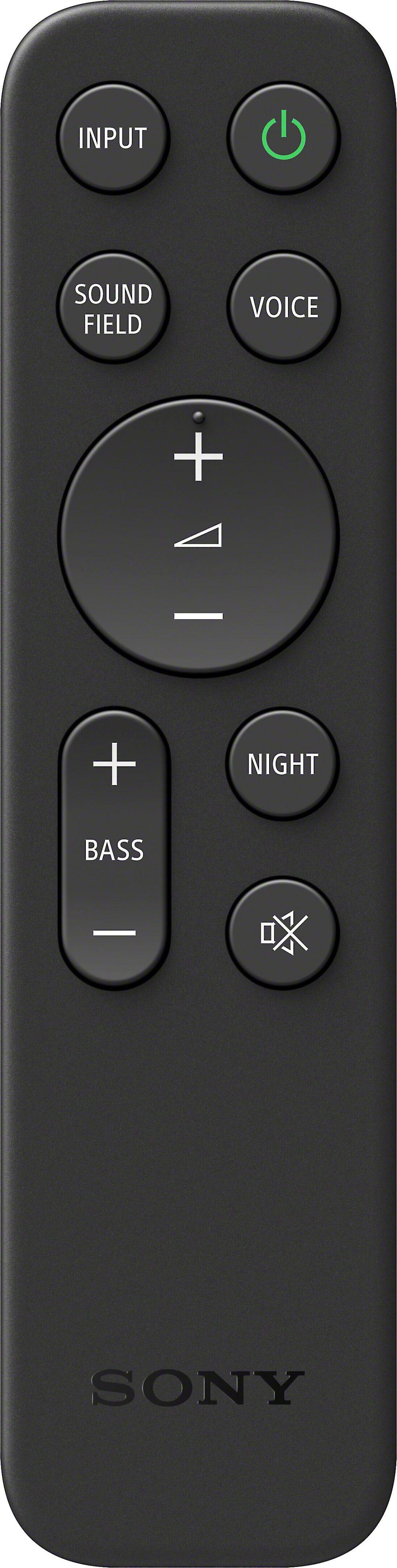
When your TV's built-in speakers aren't cutting it anymore, a soundbar can transform your entertainment experience without requiring a degree in audio engineering. But with options ranging from budget-friendly systems to premium audio processors, choosing the right one requires understanding what you're actually paying for. Today we're comparing two very different approaches: the Ultimea Poseidon M60 Boom, a budget-focused true 5.1 system, and the Sony BRAVIA Theater Bar 9, a premium virtual surround processor.
These products represent fundamentally different philosophies in soundbar design, released in 2024 with distinct target audiences in mind. The Ultimea M60 Boom takes the traditional approach of discrete channels—meaning separate, dedicated speakers for each audio channel—while the Sony Theater Bar 9 leverages advanced digital signal processing (DSP) to create virtual speakers that your brain perceives as coming from different locations.
Before diving into specifics, it's worth understanding what makes a soundbar tick. At its core, a soundbar processes audio signals from your TV or streaming device and outputs them through multiple speakers arranged in a single enclosure (or connected components). The key metrics that matter most are:
Frequency Response: How well the system reproduces different sound frequencies, measured in Hertz (Hz). Human hearing ranges from about 20Hz (deep bass) to 20,000Hz (high treble). The wider this range, the more complete your audio experience.
Sound Pressure Level (SPL): Measured in decibels (dB), this indicates how loud the system can get without distortion. For reference, normal conversation is about 60dB, while movie theaters peak around 105dB.
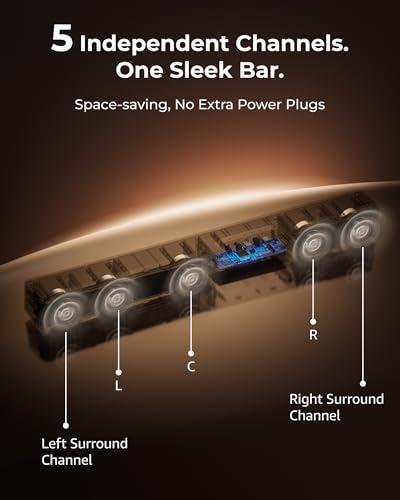
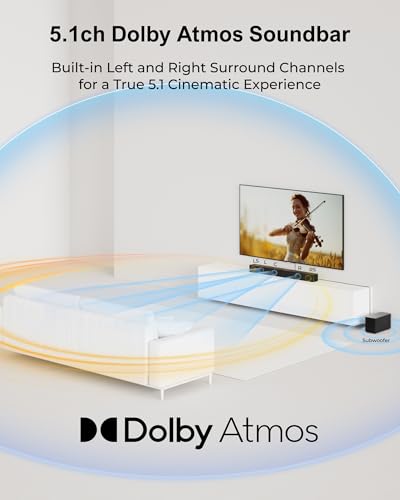
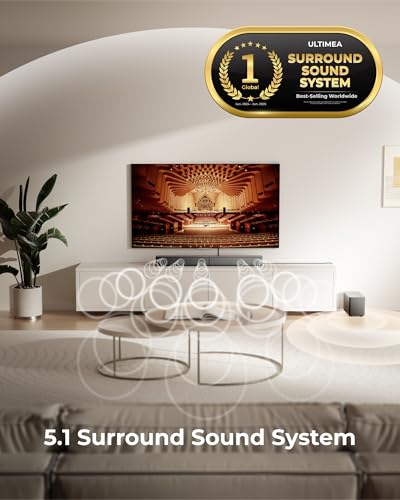
Channel Configuration: This describes how many discrete audio channels the system handles. A 5.1 system has five main channels (left, center, right, left surround, right surround) plus one subwoofer channel for deep bass. The ".1" specifically refers to that dedicated low-frequency effects (LFE) channel.
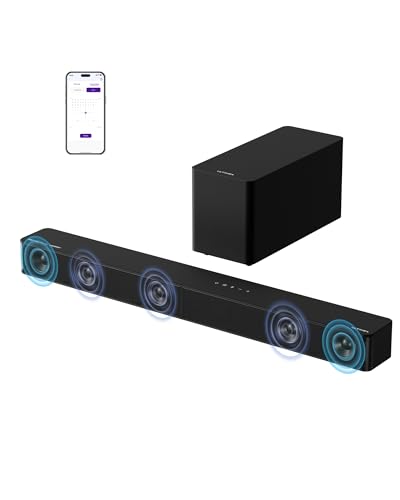
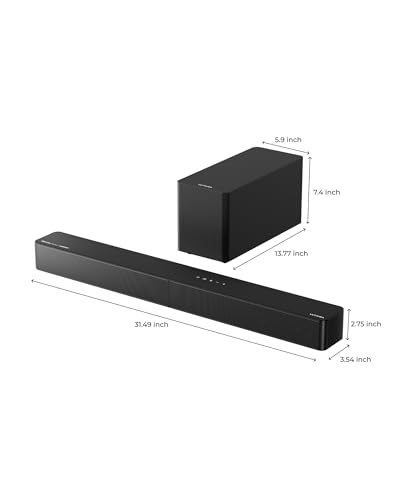
The Ultimea Poseidon M60 Boom takes what I'd call the "honest" approach to surround sound. When it claims 5.1 channels, it delivers actual discrete speakers for each channel, housed within an innovative modular design where two soundbar sections twist-lock together to form one continuous unit.
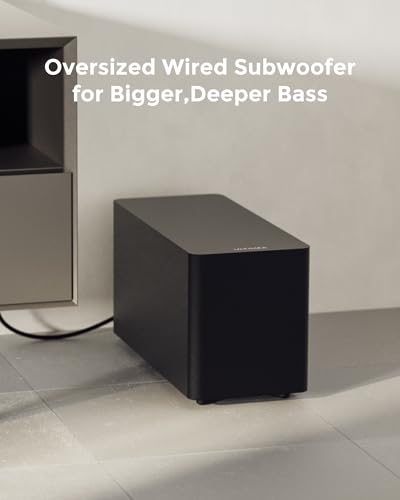
This system peaked our interest because it includes genuine BassMX technology—essentially advanced cabinet engineering that allows the included 5.25-inch subwoofer to move more air efficiently. The subwoofer can achieve up to 16mm of diaphragm excursion, which is technical speak for how far the speaker cone moves back and forth. More movement typically means deeper, more impactful bass, assuming the cabinet and amplifier can support it properly.
What sets the M60 Boom apart in its price category is the inclusion of triple-core DSP technology. Most budget soundbars use single-core processors, but this system employs two 800MHz cores and one 600MHz core, providing over 2000 MIPS (Million Instructions Per Second) of processing power. This computational muscle enables real-time parametric EQ tuning and precise channel separation—features typically reserved for higher-end systems.
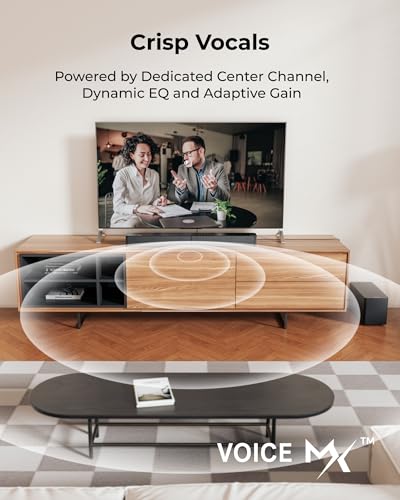
The VoiceMX technology specifically targets the 300Hz to 3kHz frequency range where human vocals live. This isn't just a simple volume boost; it's adaptive processing that analyzes incoming audio and dynamically adjusts gain and EQ to maintain dialogue clarity even during explosive action sequences.
From our research into user experiences, the Ultimea system consistently delivers on its core promise: genuine surround sound that noticeably improves upon TV speakers and basic soundbars. Users particularly appreciate the tangible bass response from the dedicated subwoofer, which creates the physical sensation that enhances action movies and gaming.
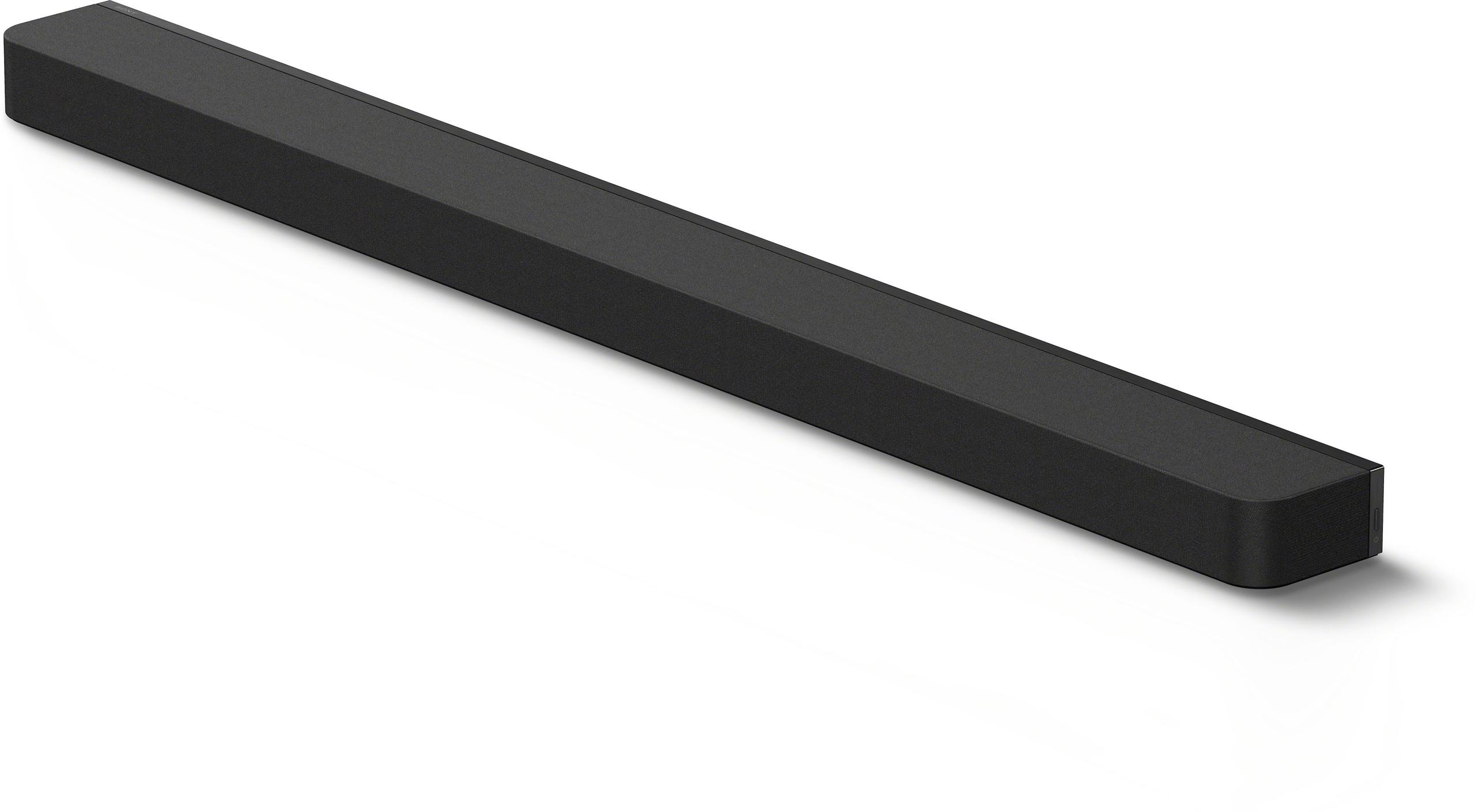
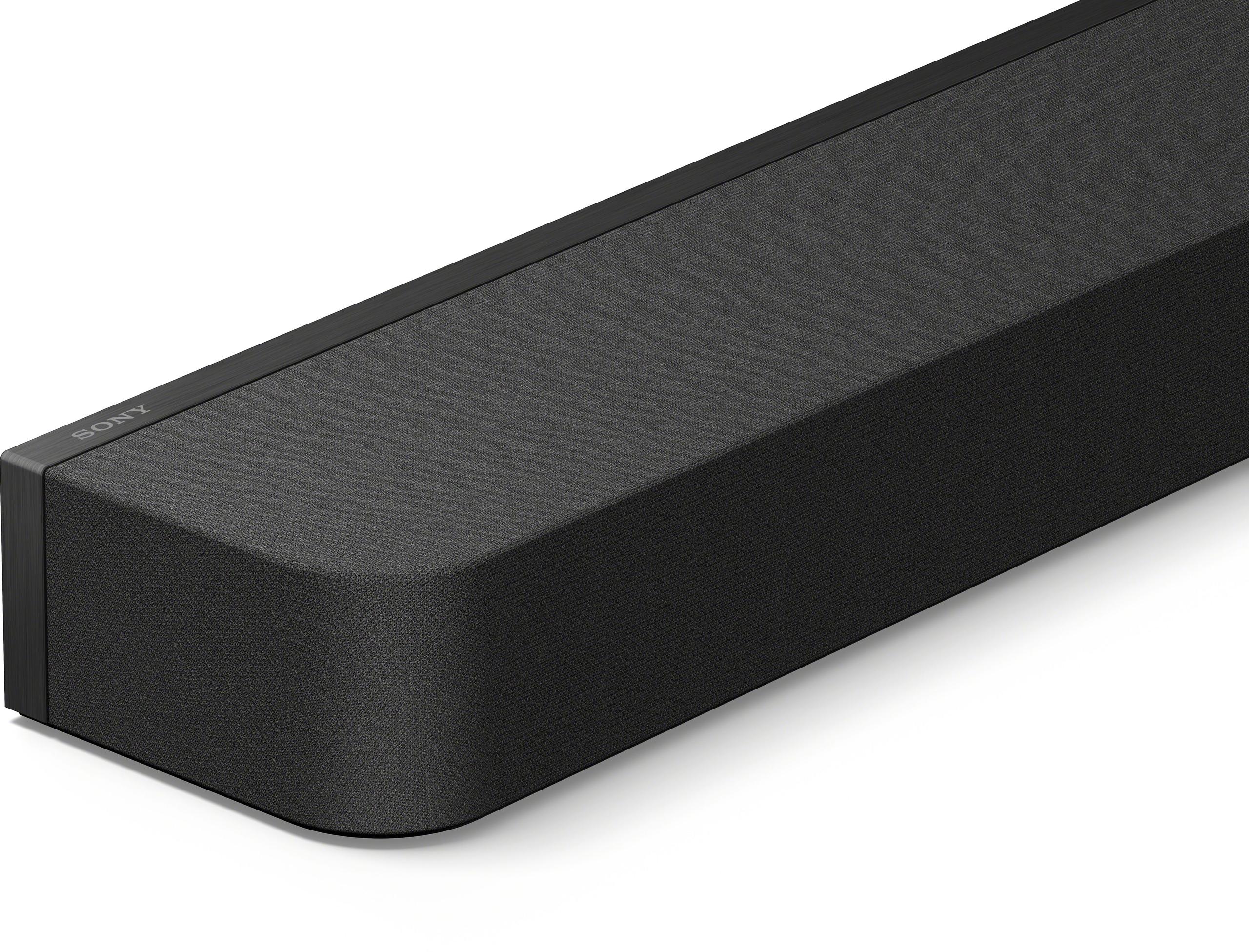
The Sony BRAVIA Theater Bar 9 represents the current pinnacle of single-soundbar surround processing. Instead of discrete rear speakers, it uses 13 carefully positioned drivers and sophisticated algorithms to create what Sony calls 360 Spatial Sound Mapping.
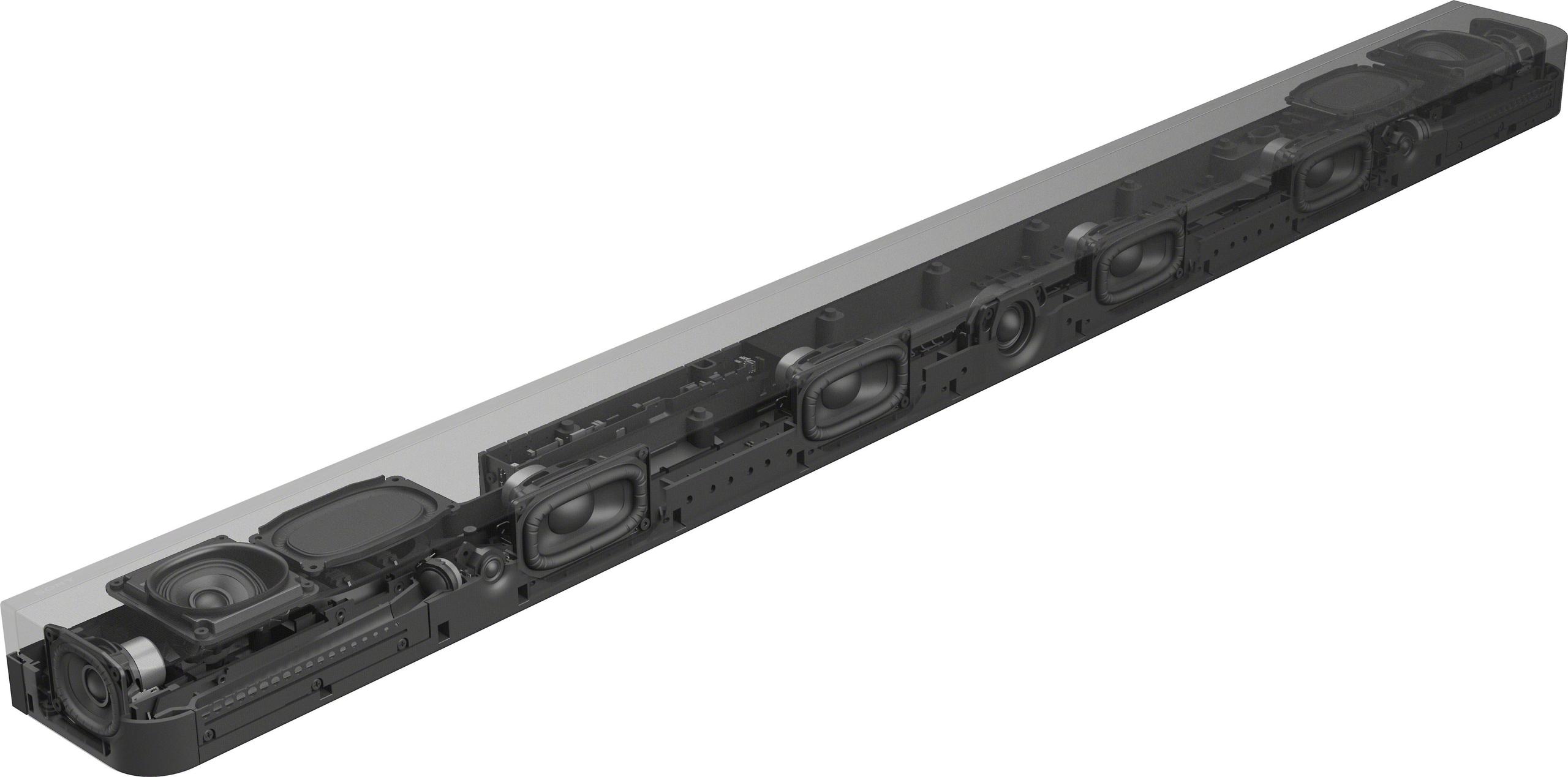
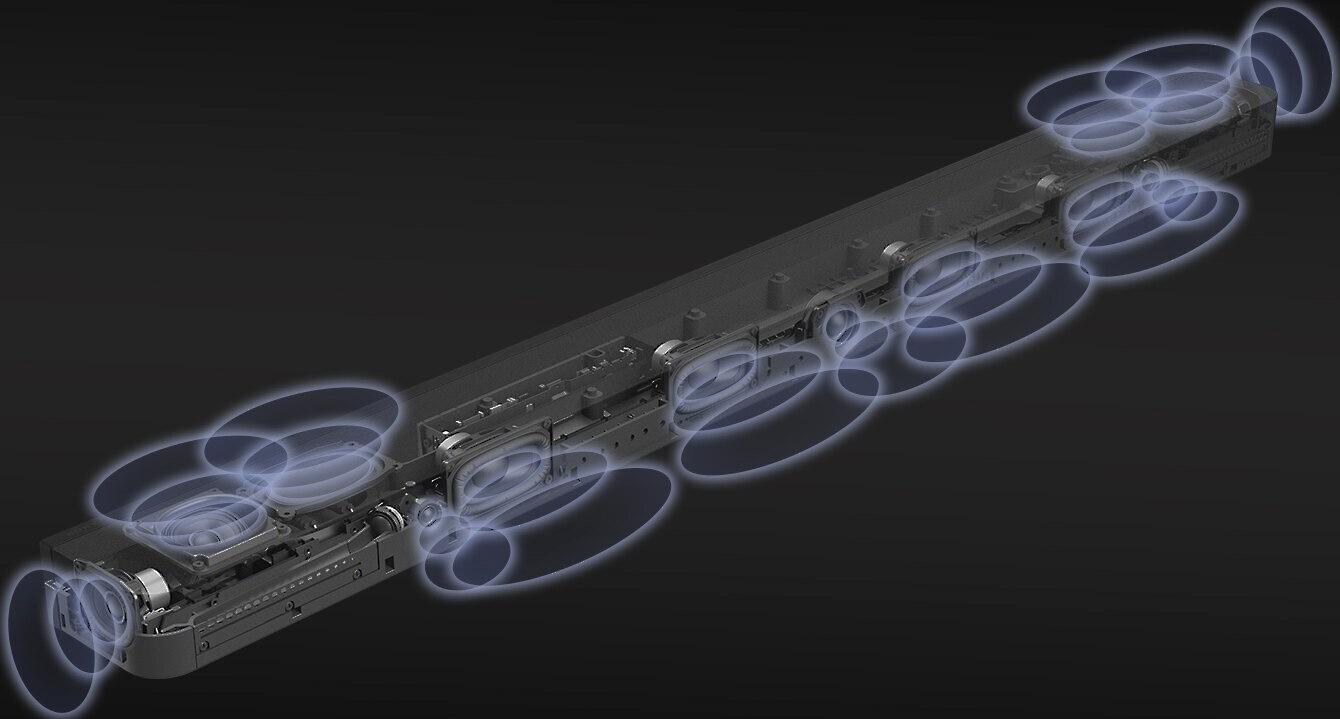
Here's where the technology gets genuinely impressive: the Sony system includes four front woofers, three tweeters (including a large center tweeter flanked by two smaller edge units), two side-firing drivers, two up-firing drivers, and four passive radiators facing upward. This array works together to bounce sound off your room's walls and ceiling, creating the illusion of speakers positioned throughout your space.
The side-firing speakers are particularly clever. They project audio toward your side walls at carefully calculated angles, and the system's processing accounts for typical room dimensions to time these reflections so they arrive at your ears as if coming from behind you. Meanwhile, the up-firing drivers reflect sound off your ceiling to create height effects—the key component of Dolby Atmos and DTS:X processing.
Sony's Acoustic Center Sync technology, available with compatible Sony TVs from 2021 onward, essentially turns your TV into part of the speaker system. The Theater Bar 9 can coordinate with your TV's built-in speakers, using them as a center channel while the soundbar handles surround duties. This creates a more cohesive soundstage where dialogue appears to come directly from the screen.
The Voice Zoom 3 feature deserves special mention. Using AI machine learning, it recognizes human speech patterns and can selectively amplify dialogue without affecting other audio elements. This is more sophisticated than traditional center channel boosting because it works regardless of how the original audio was mixed.
This is where the fundamental difference in approaches becomes most apparent. The Ultimea M60 Boom includes a dedicated 5.25-inch subwoofer with a frequency response extending down to 45Hz. In practical terms, this means you'll feel the rumble of explosions, the thump of bass drops in music, and the subtle low-frequency information that adds realism to movie soundtracks.
The Sony Theater Bar 9, despite lacking a dedicated subwoofer, achieves surprisingly deep bass through its array of woofers and passive radiators. However, the bass character differs significantly. While the Sony provides tight, controlled low frequencies that integrate seamlessly with the midrange, it can't match the physical impact of a dedicated subwoofer when it comes to the deepest frequencies.
For action movie enthusiasts or those who enjoy bass-heavy music genres, the Ultimea's approach provides more visceral impact. However, for balanced music listening or dialogue-heavy content, many users prefer the Sony's more integrated approach.
Here's where personal preference and room characteristics become crucial factors. The Ultimea system creates surround effects by housing discrete left and right surround channels within its connected soundbar modules. While this doesn't provide true rear localization, it does offer genuine channel separation that creates a wider soundstage than standard stereo soundbars.
The Sony Theater Bar 9 takes a more ambitious approach. In ideal conditions—a rectangular room with appropriate wall and ceiling surfaces—the 360 Spatial Sound Mapping can create convincingly immersive surround effects. Users report hearing distinct positional audio that seems to come from various points around the room, not just from the soundbar itself.
However, room acoustics play a critical role in the Sony's performance. Rooms with irregular shapes, excessive soft furnishings, or inappropriate dimensions may not provide the necessary reflective surfaces for optimal virtual surround. The Ultimea system is less dependent on room characteristics, making it more predictably effective across different spaces.
Both systems prioritize dialogue clarity, but through different methods. The Ultimea's VoiceMX technology provides solid vocal enhancement, particularly effective for users who struggle with muddled dialogue on standard TV speakers. The dedicated center channel in the connected soundbar ensures voices remain anchored to the screen.
The Sony's Voice Zoom 3 represents more advanced processing. Rather than simply boosting the center channel, it uses AI to identify and selectively enhance speech patterns. This results in clearer dialogue without the sometimes artificial sound of basic center channel boosting. When paired with Sony TVs using Acoustic Center Sync, the dialogue localization becomes exceptionally precise.
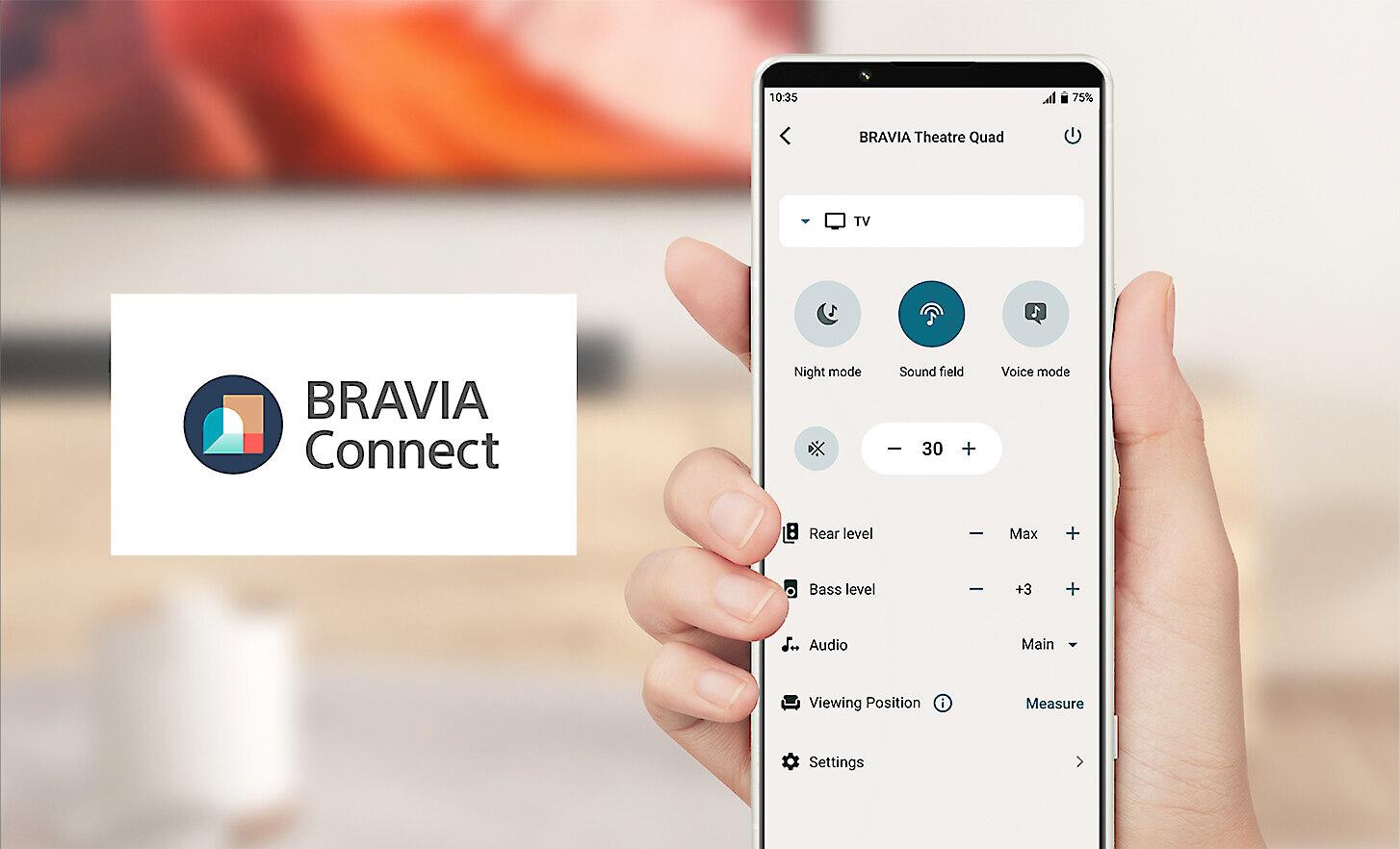
The Ultimea M60 Boom includes Bluetooth 5.4—the latest wireless standard offering improved connection stability and lower latency. The companion app provides comprehensive control over EQ settings, with both preset modes (Movie, Music, Voice, Sport, Game, Night) and manual adjustment of bass, midrange, and treble frequencies. This level of customization is uncommon at this price point and allows users to tailor the sound signature to their preferences and content.
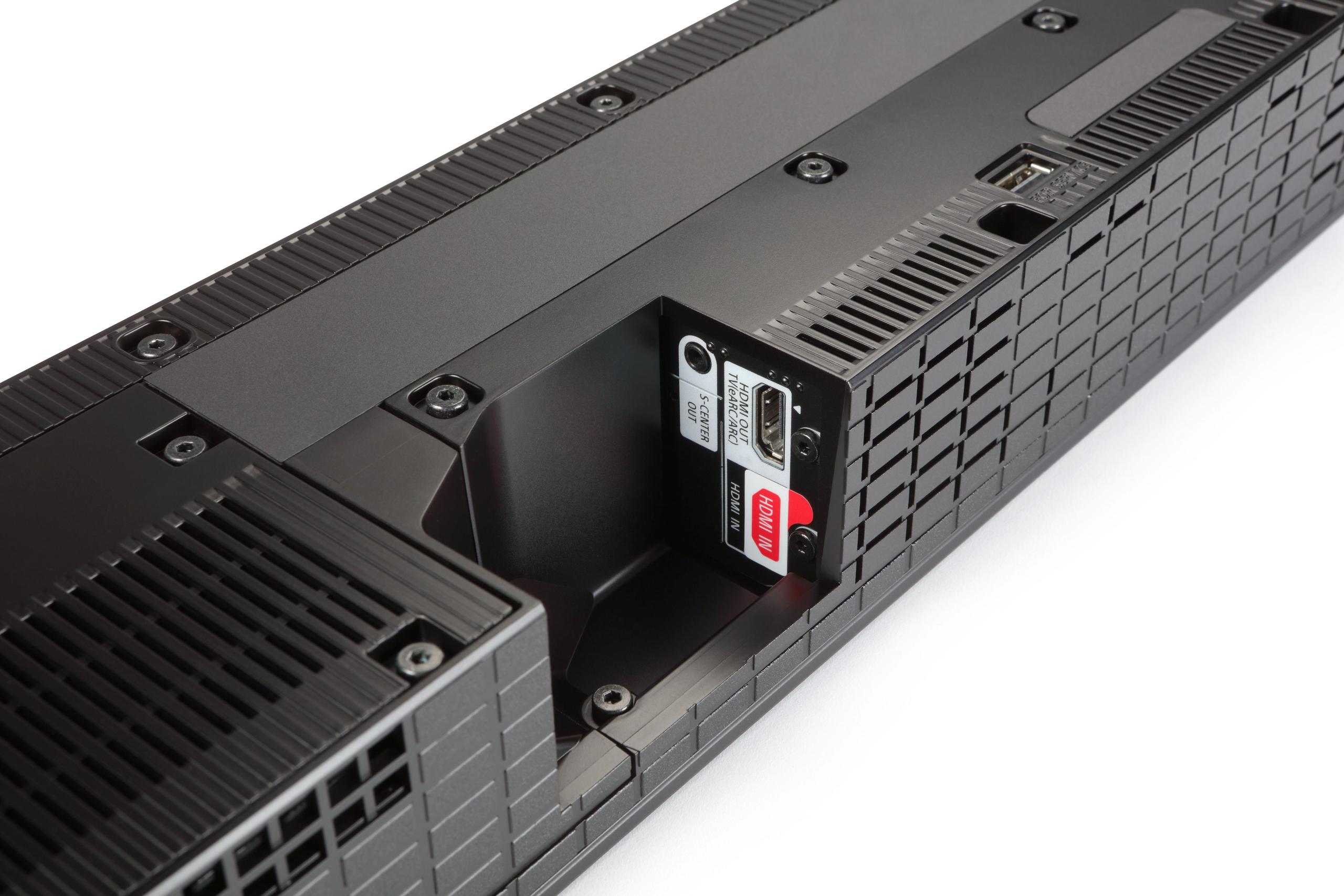
The Sony Theater Bar 9 offers more premium connectivity options, including HDMI 2.1 support for 8K HDR and 4K 120Hz pass-through. For serious gamers, this means support for Variable Refresh Rate (VRR), Auto Low Latency Mode (ALLM), and Sony's SBTM technology for optimized PlayStation 5 gaming. The system also supports Spotify Connect and Apple AirPlay 2, enabling high-quality wireless streaming from various devices.
In a dedicated home theater setup, these systems serve different roles. The Ultimea M60 Boom works exceptionally well in smaller home theaters where seating is relatively close to the screen. The discrete channels and dedicated subwoofer create a more traditional surround experience that many users find preferable for action movies and gaming.
For larger home theaters, the Sony Theater Bar 9 offers advantages in terms of room-filling capability and sophisticated processing. The 360 Spatial Sound Mapping works particularly well in rectangular rooms with standard ceiling heights, creating an enveloping soundstage that can rival more complex multi-speaker systems.
The Sony also offers expansion capabilities through optional rear speakers and subwoofer modules. This upgrade path means you can start with the soundbar and add components as budget allows, eventually creating a more comprehensive surround system.
At the time of writing, these products occupy entirely different price segments, with the Sony system commanding roughly four times the investment of the Ultimea. This price difference reflects not just build quality and brand premium, but genuinely different technological approaches and target audiences.
The Ultimea Poseidon M60 Boom represents exceptional value for users seeking authentic surround sound without premium pricing. It's particularly well-suited for budget-conscious buyers who want tangible improvement over TV speakers, those with smaller to medium-sized rooms, and users who prioritize bass impact for gaming or action movies.
The Sony BRAVIA Theater Bar 9 justifies its premium pricing through advanced processing, premium build quality, and ecosystem integration. It's ideal for users with larger rooms, those already invested in the Sony ecosystem, serious gamers requiring HDMI 2.1 features, and audio enthusiasts who want cutting-edge surround processing.
Choose the Ultimea Poseidon M60 Boom if you want authentic discrete channel surround sound at a budget-friendly price point. Its strength lies in delivering genuine 5.1 audio with impactful bass through a dedicated subwoofer, making it excellent for action movies, gaming, and music that benefits from strong low-frequency response. The modular design and comprehensive app control add convenience without complexity.
Opt for the Sony BRAVIA Theater Bar 9 if you have a larger budget and room size, prioritize the most advanced surround processing available, or are already integrated into Sony's ecosystem. Its sophisticated 360 Spatial Sound Mapping and premium connectivity options make it future-proof for evolving home entertainment standards.
The fundamental question isn't which system is "better"—it's which approach better serves your specific needs, room characteristics, and budget. Both represent excellent execution of their respective design philosophies, and either will significantly improve your audio experience compared to standard TV speakers.
Consider your primary use cases, room size, and whether you value authentic discrete channels or advanced virtual processing. The Ultimea delivers traditional surround sound fundamentals exceptionally well, while the Sony pushes the boundaries of what's possible with sophisticated audio processing. Your choice depends on which approach aligns better with your priorities and expectations.
| Ultimea Poseidon M60 Boom 5.1 Soundbar | Sony BRAVIA Theater Bar 9 Soundbar |
|---|---|
| Audio Configuration - Determines surround sound authenticity | |
| True 5.1 discrete channels with dedicated subwoofer | Virtual 7.0.2 with 13 speakers using advanced processing |
| Power Output - Affects volume and dynamic range | |
| 340W peak power with dedicated amplification | Premium amplification with S-Master HX digital processing |
| Speaker Array - Core technology for sound reproduction | |
| 5 full-range drivers + 5.25" subwoofer with BassMX technology | 13 speakers: 4 woofers, 3 tweeters, 2 side-firing, 2 up-firing, 4 passive radiators |
| Surround Technology - How immersive effects are created | |
| Physical discrete channels housed in modular connected soundbar | 360 Spatial Sound Mapping creates phantom speakers via room reflections |
| Bass Response - Critical for action movies and music impact | |
| Dedicated 5.25" subwoofer extends to 45Hz for physical bass impact | Integrated bass through multiple woofers and passive radiators, no separate sub |
| Connectivity - Future-proofing and device compatibility | |
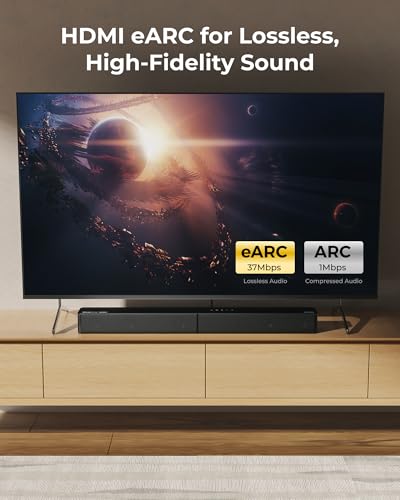
| HDMI eARC, Bluetooth 5.4, optical, USB, AUX | HDMI 2.1 with 8K/4K 120Hz, Bluetooth 5.2, Wi-Fi, Spotify Connect, AirPlay 2 |
| Smart Features - Convenience and customization options | |
| Ultimea app with full EQ control and preset modes | Voice Zoom 3 AI, Acoustic Center Sync with Sony TVs, gaming optimizations |
| Design Philosophy - Setup complexity vs. performance | |
| Modular two-piece soundbar with wired subwoofer for authentic surround | Premium single unit with sophisticated room calibration and processing |
| Room Size Suitability - Optimal performance scenarios | |
| Best for small to medium rooms where discrete channels excel | Designed for larger rooms where virtual surround can fully develop |
| Target User - Who benefits most from each approach | |
| Budget-conscious users wanting genuine 5.1 surround with strong bass | Premium buyers seeking cutting-edge processing and Sony ecosystem integration |
| Upgrade Path - Future expansion possibilities | |
| Complete system out of box, limited expansion options | Optional wireless rear speakers and subwoofer available for Theater Bar 9 |
The Ultimea Poseidon M60 Boom offers exceptional value with true 5.1 surround sound and a dedicated subwoofer at a budget-friendly price point. The Sony BRAVIA Theater Bar 9 costs significantly more but delivers premium features like 360 Spatial Sound Mapping and advanced AI processing. For most users, the Ultimea M60 Boom provides better price-to-performance ratio.
The Ultimea Poseidon M60 Boom uses true 5.1 surround with discrete speakers for each channel, creating authentic directional audio. The Sony BRAVIA Theater Bar 9 uses virtual surround technology with 13 speakers and advanced processing to simulate surround effects by bouncing sound off walls and ceilings.
The Ultimea Poseidon M60 Boom includes a dedicated 5.25-inch subwoofer that delivers deeper, more impactful bass for action movies and music. The Sony BRAVIA Theater Bar 9 produces tight, controlled bass through multiple integrated woofers but can't match the physical impact of a dedicated subwoofer.
The Ultimea Poseidon M60 Boom works effectively in small to medium rooms since it uses discrete channels rather than room reflections. The Sony BRAVIA Theater Bar 9 performs best in larger rectangular rooms where its virtual surround technology can properly utilize wall and ceiling reflections.
Both soundbars offer straightforward setup, but the Ultimea Poseidon M60 Boom has a slight edge with its simple modular connection system and wired subwoofer. The Sony BRAVIA Theater Bar 9 requires more initial calibration but offers automatic room optimization for optimal performance.
Yes, both the Ultimea Poseidon M60 Boom and Sony BRAVIA Theater Bar 9 work with any TV through HDMI, optical, or other connections. However, the Sony Theater Bar 9 offers enhanced features like Acoustic Center Sync when paired with compatible Sony TVs.
The Sony BRAVIA Theater Bar 9 excels for gaming with HDMI 2.1 support, 4K 120Hz pass-through, VRR, and ALLM features. The Ultimea Poseidon M60 Boom provides solid gaming audio with low-latency Bluetooth 5.4 but lacks the advanced gaming-specific features.
The Sony BRAVIA Theater Bar 9 offers full Dolby Atmos support with dedicated up-firing speakers for height effects. The Ultimea Poseidon M60 Boom includes Dolby Atmos processing but creates virtual height effects since it lacks dedicated up-firing drivers.
Both soundbars excel at dialogue clarity, but the Sony BRAVIA Theater Bar 9 has a slight advantage with its AI-powered Voice Zoom 3 technology that intelligently enhances speech. The Ultimea Poseidon M60 Boom uses VoiceMX technology for solid vocal enhancement at its price point.
The Sony BRAVIA Theater Bar 9 offers expansion options with optional wireless rear speakers and subwoofer modules. The Ultimea Poseidon M60 Boom comes as a complete system with limited expansion possibilities beyond the included components.
For bass-heavy music genres, the Ultimea Poseidon M60 Boom excels with its dedicated subwoofer providing physical impact. For balanced music listening across all genres, the Sony BRAVIA Theater Bar 9 offers superior clarity and detail through its sophisticated driver array and processing.
Both soundbars work well in home theater environments. The Ultimea Poseidon M60 Boom is ideal for smaller home theaters where authentic 5.1 surround and strong bass are priorities. The Sony BRAVIA Theater Bar 9 suits larger home theaters where advanced virtual surround can create an immersive experience rivaling traditional speaker systems.
We've done our best to create useful and informative comparisons to help you decide what product to buy. Our research uses advanced automated methods to create this comparison and perfection is not possible - please contact us for corrections or questions. These are the sites we've researched in the creation of this article: ultimea.com - ultimea.com - youtube.com - bestbuy.com - youtube.com - avsforum.com - youtube.com - manuals.plus - youtube.com - device.report - ultimea.com - ultimea.de - community.ultimea.com - ultimea.com - community.ultimea.com - ultimea.com - youtube.com - aliexpress.com - ultimea.com - rtings.com - residentialsystems.com - rtings.com - bestbuy.com - valueelectronics.com - sony.com - sony.co.uk - sony.co.uk - rtings.com - sony.co.in - sony.com - pocket-lint.com - sony.com - crutchfield.com

Privacy Policy
Terms and Conditions - Affiliate Policy
Home Security
© Copyright 2008-2026.
11816 Inwood Rd #1211, Dallas, TX 75244