

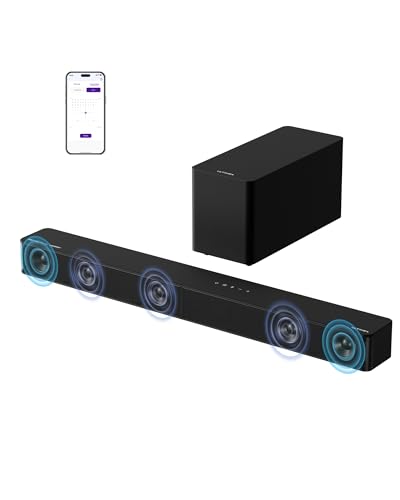

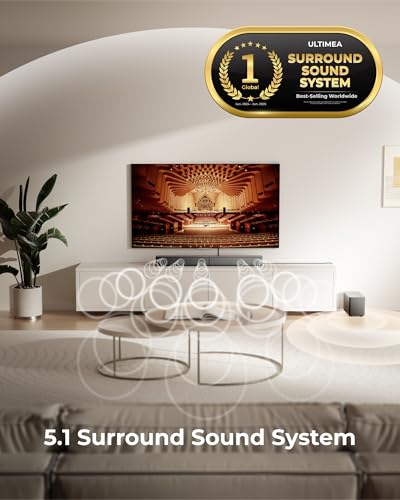
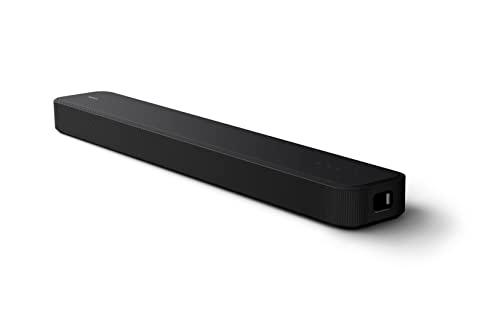

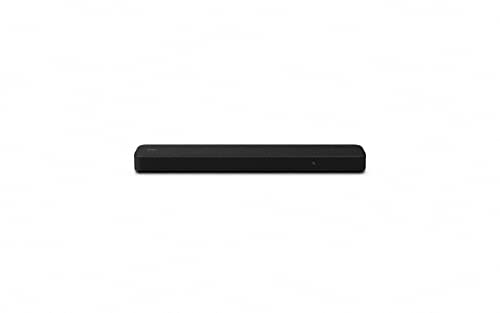
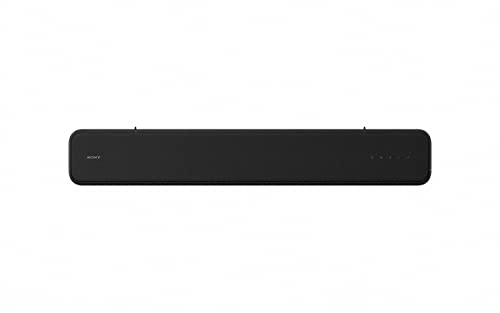
When your TV's built-in speakers sound like they're coming from inside a tin can, it's time to upgrade. But walking into the soundbar market can feel overwhelming—there are dozens of brands promising theater-quality audio at home. Today we're comparing two very different approaches to solving this problem: the Ultimea Poseidon M60 Boom, which packs true 5.1 surround sound into a single bar, and the Sony HT-S2000, which uses sophisticated processing to create virtual surround effects.
Before diving into these specific models, let's establish what makes a good soundbar. The fundamental goal is recreating the cinema experience in your living room—that means clear dialogue, impactful bass, and sound that seems to come from all around you rather than just the front wall.
Traditional home theaters achieve this with separate speakers placed throughout the room. Soundbars try to recreate this effect in a much smaller package. The challenge is physics: sound naturally spreads out from its source, so cramming multiple channels into one bar requires either physical separation (multiple drivers pointing in different directions) or clever audio processing that tricks your brain into hearing sounds from places they aren't actually coming from.
The key specs to understand are channel configuration (like 3.1 or 5.1), power output measured in watts, and the audio formats supported. Channel numbers tell you how many discrete audio streams the system can handle—a 5.1 system processes six separate channels (five main channels plus one low-frequency subwoofer channel), while a 3.1 system handles four channels.
Power output gets tricky because manufacturers measure it differently. Peak power (the maximum burst) sounds more impressive than RMS power (continuous output), but RMS gives you a better sense of real-world performance. Maximum SPL (sound pressure level) measured in decibels tells you how loud the system can get before distorting.
The Ultimea Poseidon M60 Boom, released in 2024, represents the "more speakers, better sound" philosophy. It crams five full-range drivers into its main bar to create true 5.1-channel separation, paired with a dedicated wired subwoofer. At 340W peak power, it's built for rooms that need serious sound pressure.
The Sony HT-S2000, launched in 2023, takes the "smart processing" approach. This 3.1-channel system uses Sony's decades of audio expertise to create virtual surround effects through psychoacoustic processing—basically, algorithms that understand how your ears and brain interpret sound direction and distance.
Since 2023, we've seen manufacturers increasingly focus on virtual processing improvements rather than adding more physical drivers. The challenge has shifted from "how many speakers can we fit?" to "how convincingly can we fake additional speakers?" Both approaches have merit, but they serve different priorities.
Here's where these soundbars fundamentally differ, and it matters more than any other specification.
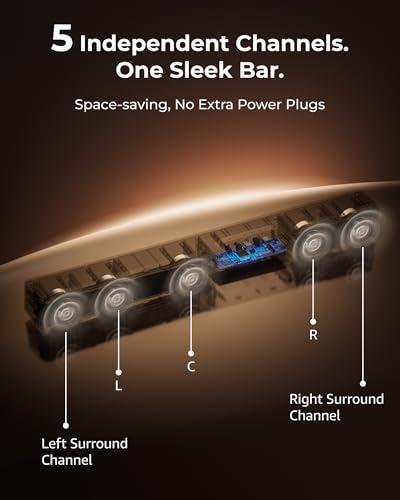
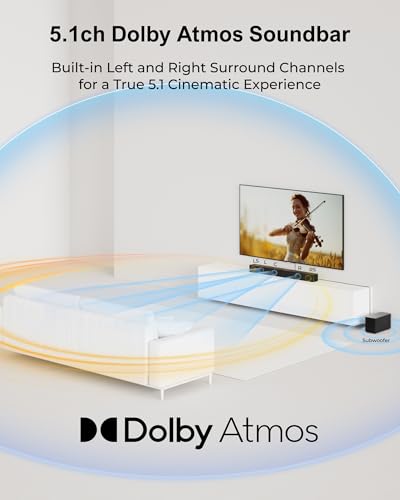
The Ultimea M60 Boom houses five discrete speakers within its main bar: left, center, right, surround left, and surround right channels. When you're watching a movie and a helicopter flies from left to right behind the characters, that sound literally moves from one physical driver to another. There's no processing involved—the helicopter sound comes from the surround right speaker because that's where the movie's sound engineer placed it.
This approach has clear advantages. Action sequences feel more immersive because explosions and gunfire have real spatial separation. Gaming benefits enormously—when someone's shooting at you from behind in Call of Duty, that sound actually comes from behind-facing drivers rather than front speakers trying to fool your ears.
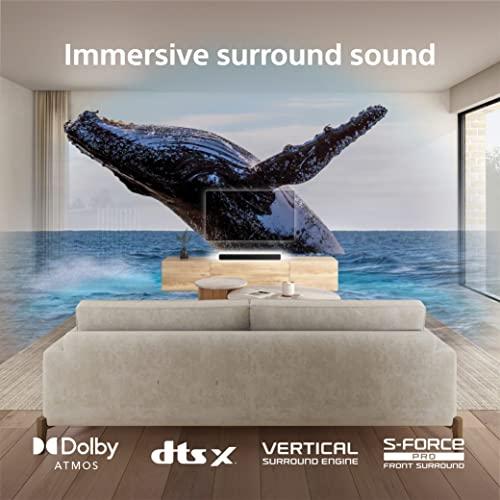
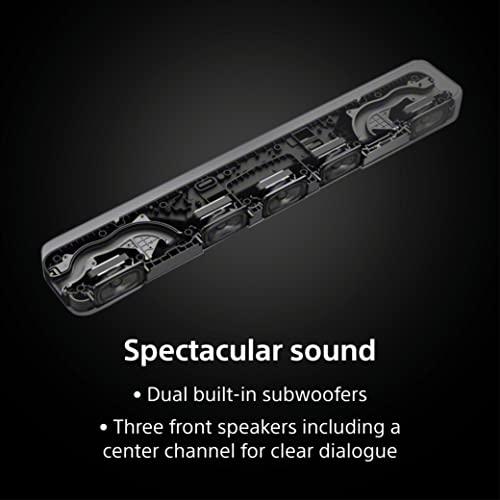
The Sony HT-S2000 works differently. Its three front-facing channels (left, center, right) handle the basic soundstage, while Sony's Vertical Surround Engine and S-Force PRO Front Surround processing create the illusion of rear and height speakers. The system analyzes incoming audio and uses phase delays, frequency adjustments, and amplitude modifications to trick your brain into hearing sounds from directions where no speakers exist.
Sony's approach works surprisingly well for many listeners. The processing algorithms, refined over decades of research, can create convincing height effects for Dolby Atmos content and reasonable rear-surround illusions. However, it's fundamentally limited by physics—you can't completely overcome the fact that all sound originates from the front of the room.
In our research across expert and user reviews, the consensus is clear: discrete speakers provide more convincing surround effects, especially for action content and gaming. The Ultimea M60 Boom's physical channel separation creates a noticeably wider soundstage and more precise directional audio compared to the Sony's virtual processing.
Bass reproduction reveals another fundamental difference in design philosophy.
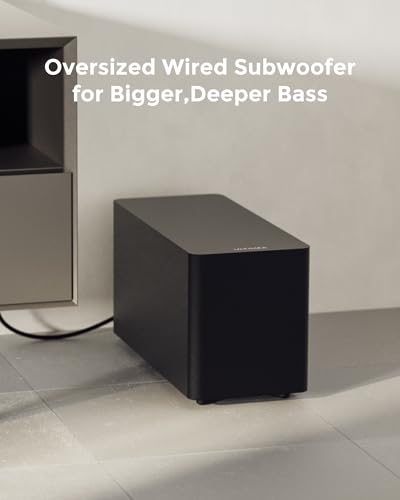
The Ultimea M60 Boom includes a separate wired subwoofer with a 5.25-inch driver and what Ultimea calls "BassMX Technology." This involves a high-excursion driver (the cone can move 16mm back and forth—that's significant travel for tight, controlled bass) housed in a wooden cabinet tuned specifically for low-frequency reproduction. The dedicated enclosure means the subwoofer can be optimized purely for bass without compromising other frequencies.
This separate subwoofer approach has physics on its side. Low frequencies need room to develop, and a dedicated cabinet with proper internal volume and port tuning will almost always outperform integrated solutions. The M60 Boom extends down to 45Hz, which covers the fundamental frequencies of most bass instruments and movie sound effects.
The Sony HT-S2000 integrates dual subwoofers directly into the soundbar using side-firing ports for bass extension. Sony's X-Balanced Speaker Units use rectangular drivers instead of traditional round ones, theoretically maximizing cone area within the limited internal space. The dual-subwoofer design helps distribute bass more evenly than a single integrated driver would.
However, integrated subwoofers face inherent limitations. The soundbar's enclosure must accommodate all frequencies, meaning compromises in internal volume and port tuning. The Sony produces respectable bass for its form factor, but it can't match the extension and impact of a dedicated subwoofer.
Based on reviews from both experts and users, the Ultimea M60 Boom delivers noticeably deeper, more impactful bass. Movie explosions have more rumble, music bass lines are fuller, and the overall dynamic range feels more expansive. The Sony HT-S2000 produces adequate bass for most content but lacks the low-end punch that makes action movies truly exciting.
Power specifications need context because manufacturers measure them differently, but they still indicate each system's capabilities.
The Ultimea M60 Boom claims 340W peak power with a maximum SPL of 99dB. Peak power represents short-burst capability—useful for explosive movie moments—while the SPL rating indicates how loud the system can play before noticeable distortion. 99dB is genuinely loud; for reference, that's approaching the volume of a motorcycle engine.
The Sony HT-S2000 delivers 250W total power through its S-Master digital amplification. Sony's specification appears more conservative but likely represents continuous rather than peak output. S-Master amplification is Sony's proprietary digital amplifier technology that reduces distortion and improves efficiency compared to traditional analog amplifiers.
Real-world performance depends on your room size and listening habits. The Ultimea has the power advantage for larger spaces—rooms over 300 square feet will benefit from its higher output capability. The additional 90W might seem modest on paper, but the difference becomes noticeable at higher volumes where dynamic range matters most.
For medium-sized living rooms (roughly 150-250 square feet), both systems provide adequate power. The Sony actually has an advantage here because its processing algorithms can create a sense of spaciousness that makes the room feel larger than it is. The virtual surround effects work best at moderate volumes in appropriately sized spaces.
Both soundbars support Dolby Atmos, but they achieve height effects very differently.
Dolby Atmos represents a fundamental shift from traditional surround sound. Instead of fixed channels, it treats sounds as objects in three-dimensional space. A helicopter doesn't just pan left-to-right; it can move overhead, behind you, and at varying heights. True Atmos systems use upward-firing speakers or ceiling-mounted speakers to create these height effects.
Neither soundbar includes upward-firing drivers, so both rely on virtualization. However, Sony has decades more experience in psychoacoustic processing.
The Sony HT-S2000's Vertical Surround Engine represents sophisticated audio engineering. It analyzes Dolby Atmos metadata and uses phase manipulation, frequency filtering, and timing delays to create height illusions. The processing works by exploiting how your brain determines sound direction—subtle differences in timing and frequency response between your ears.
The Ultimea M60 Boom supports Dolby Atmos but relies on less sophisticated processing. While it handles the format correctly, the height effects are less convincing than Sony's implementation.
For Atmos content, the Sony provides a more immersive experience despite having fewer physical channels. Rain sounds like it's falling from above, and overhead planes create a genuine sense of height. The Ultimea excels with traditional surround content but can't match Sony's height virtualization.
Both systems offer modern connectivity, but with different priorities.
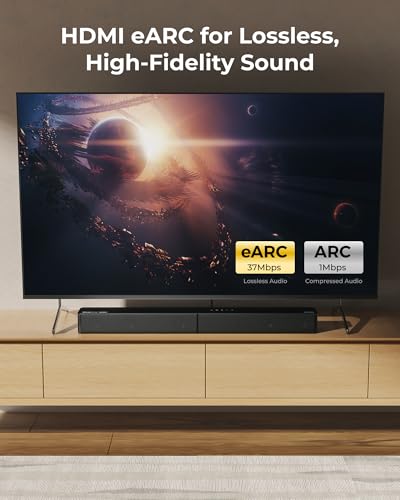
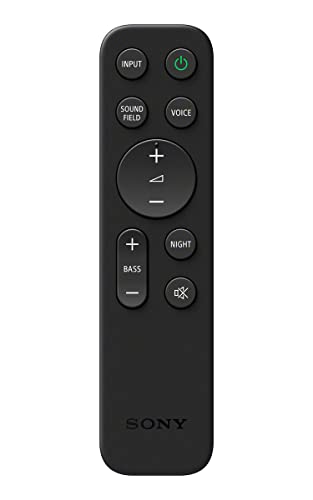
The Ultimea M60 Boom includes HDMI eARC, optical, USB, and AUX inputs plus Bluetooth 5.4—the latest wireless standard offering improved range and audio quality. The comprehensive input selection accommodates everything from game consoles to turntables. CEC (Consumer Electronics Control) support means compatible devices can control the soundbar with a single remote.
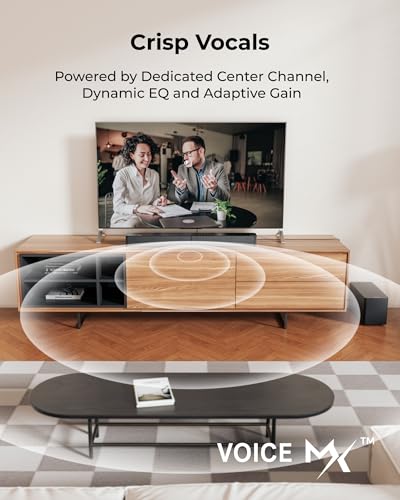
The standout feature is the smartphone app offering extensive EQ customization. Six preset modes (Movie, Music, Voice, Sport, Game, Night) plus manual bass, midrange, and treble adjustment provide genuine sound tuning capability. This level of control is unusual at this price point and appeals to listeners who want to optimize sound for different content types.
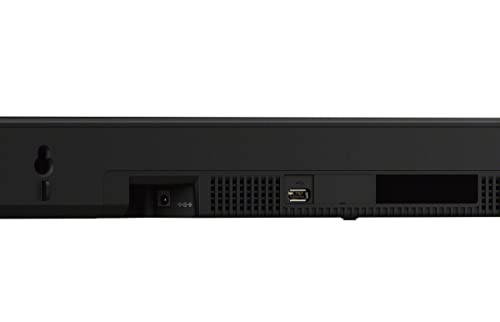
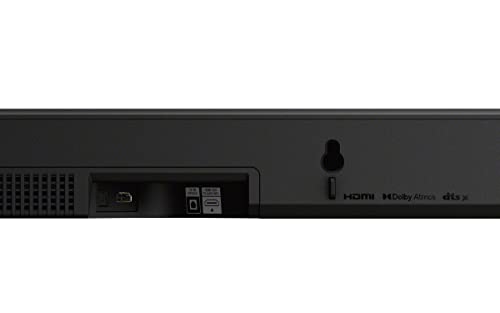
The Sony HT-S2000 offers similar basic connectivity—HDMI eARC/ARC, optical, USB, and Bluetooth 5.2—plus Wi-Fi capability. BRAVIA Sync provides seamless integration with Sony TVs, automatically adjusting settings based on content type and controlling volume with the TV remote.
Sony's app focuses on simplicity over customization. You get basic control functions and limited EQ options (essentially just subwoofer level adjustment). This reflects Sony's philosophy of providing optimized sound out-of-the-box rather than requiring user adjustment.
Physical design affects both performance and practicality.
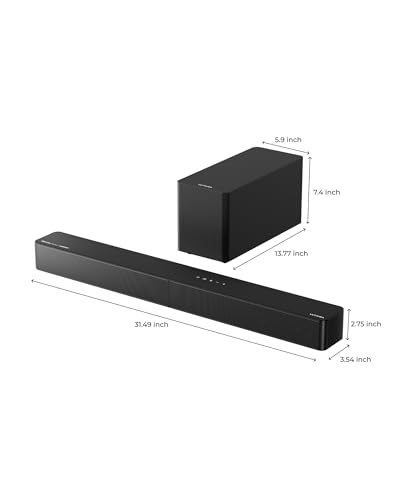
The Ultimea M60 Boom arrives in two pieces that connect to form the main soundbar, plus the separate wired subwoofer. The modular design aids shipping and initial setup, but the subwoofer cable limits placement flexibility. You'll need to plan cable routing, which might require running wires along baseboards or through walls for optimal subwoofer positioning.
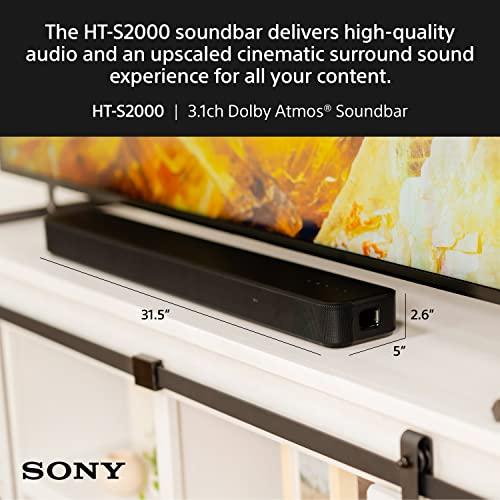
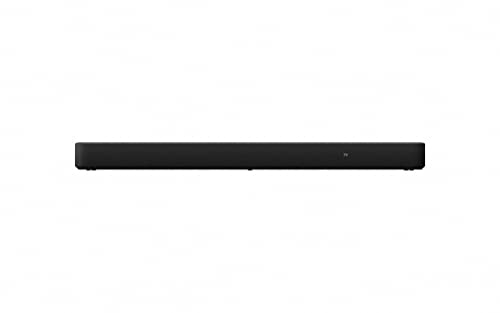
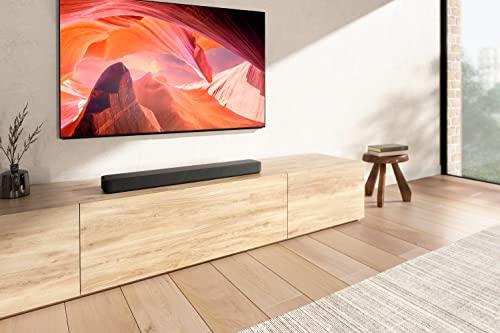
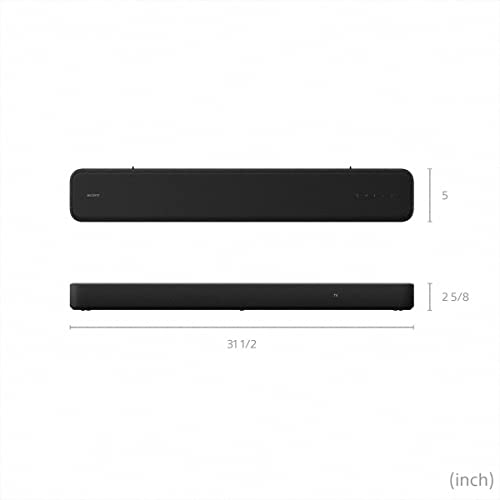
The Sony HT-S2000 measures just 31.5 inches wide and 2.6 inches tall—remarkably compact for a soundbar with built-in subwoofers. The single-unit design eliminates cable management and enables placement in entertainment centers with limited vertical space. Wall-mounting is straightforward with the included template.
Setup complexity differs significantly. The Sony embodies plug-and-play simplicity—connect one HDMI cable and you're done. The system automatically detects your TV and optimizes settings accordingly.
The Ultimea requires more involvement: positioning the subwoofer for optimal bass response, running the subwoofer cable, and using the app to adjust settings for your room and preferences. This isn't complicated, but it takes more time and consideration.
At the time of writing, these soundbars occupy similar price ranges but offer different value propositions.
The Ultimea M60 Boom delivers impressive specifications for its price point. True 5.1-channel separation, higher power output, and extensive customization options typically cost significantly more from established brands. You're getting discrete surround processing, a dedicated subwoofer, and modern connectivity in a package that punches above its price class.
However, Ultimea is a relatively new brand with limited market presence. Long-term reliability, warranty support, and software updates remain question marks compared to established manufacturers.
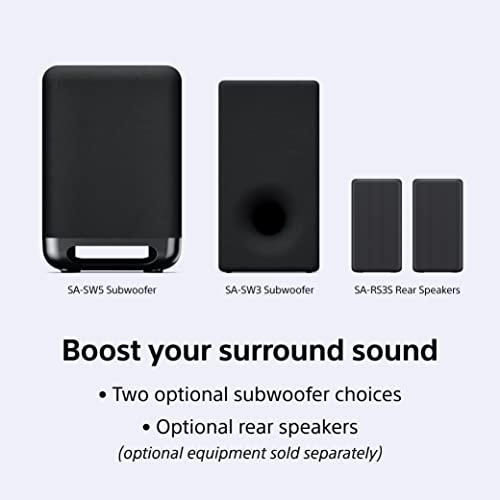
The Sony HT-S2000 costs more upfront but represents the predictable quality and support of an established audio company. Sony's processing algorithms are genuinely impressive, and the build quality feels premium. The expandability factor adds value—you can add Sony's wireless subwoofers and rear speakers later if your needs change.
The total system cost becomes relevant if you plan expansions. Adding Sony's SA-SW3 wireless subwoofer and SA-RS3S rear speakers transforms the HT-S2000 into a true surround system, but at significant additional cost. The Ultimea includes everything upfront with no expansion options.
The decision ultimately depends on your priorities and use cases.
Choose the Ultimea Poseidon M60 Boom if:
You prioritize surround sound authenticity. Gaming enthusiasts and action movie fans will appreciate the discrete channel separation. When directional audio matters—competitive gaming, action sequences, concerts—physical speakers outperform virtual processing.
Your room is medium to large. The higher power output and dedicated subwoofer shine in spaces over 200 square feet where the Sony might struggle to fill the room convincingly.
You enjoy audio customization. The comprehensive app control appeals to users who want to tune their system for different content types and personal preferences.
Value per specification matters most. You're getting discrete 5.1 processing and serious power output at a competitive price point.
Choose the Sony HT-S2000 if:
Simplicity and reliability are paramount. The plug-and-play setup and established brand support appeal to users who want guaranteed performance without complexity.
You're already in Sony's ecosystem. BRAVIA TV owners get seamless integration and unified control that enhances the overall experience.
Compact living spaces. The single-unit design and sophisticated processing work well in apartments and smaller rooms where a separate subwoofer might be impractical.
Future expandability interests you. The ability to add wireless components later provides a clear upgrade path as your needs or budget evolve.
Music listening is equally important. Sony's processing tends to handle musical content more gracefully than systems optimized primarily for movies and gaming.
Both soundbars successfully solve the "terrible TV audio" problem, but they take fundamentally different approaches.
The Ultimea Poseidon M60 Boom prioritizes authentic surround sound through physical channel separation and dedicated bass reproduction. It's the better choice for users who want the most convincing surround effects possible and don't mind a more complex setup.
The Sony HT-S2000 emphasizes convenience and smart processing over raw specifications. It's ideal for users who want excellent sound quality with minimal complexity and the reassurance of an established brand.
For pure home theater performance—especially gaming and action movies—the Ultimea provides more immersive audio. For balanced performance across all content types with premium build quality and support, the Sony offers better long-term value.
The choice reflects your priorities: maximum performance per dollar with the Ultimea, or optimized experience and reliability with the Sony. Both represent solid investments in better home audio, just with different strengths and target audiences.
| Ultimea Poseidon M60 Boom 5.1 Soundbar | Sony HT-S2000 3.1ch Dolby Atmos Soundbar |
|---|---|
| Channel Configuration - Determines surround sound authenticity | |
| True 5.1 with discrete surround channels in main bar | 3.1 with virtual surround processing |
| Power Output - Affects room-filling capability | |
| 340W peak power, 99dB max SPL | 250W total power with S-Master amplification |
| Subwoofer Design - Critical for bass impact | |
| Dedicated 5.25" wired subwoofer with BassMX Technology | Built-in dual subwoofers with side-firing ports |
| Frequency Response - Shows bass extension capability | |
| 45Hz-18kHz (deeper bass extension) | Not specified (limited by integrated design) |
| Bluetooth Version - Affects wireless audio quality | |
| Bluetooth 5.4 (latest standard) | Bluetooth 5.2 (AAC/SBC codecs) |
| Audio Processing - How surround effects are created | |
| Physical channel separation with Dolby Atmos support | Vertical Surround Engine, S-Force PRO, DTS:X |
| EQ Customization - Sound tuning flexibility | |
| 6 presets + manual bass/mid/treble via app | Limited EQ (subwoofer level only) |
| Physical Design - Installation complexity | |
| Two-piece soundbar + wired subwoofer | Single compact unit (31.5" × 2.6" × 5") |
| Expandability - Future upgrade potential | |
| Fixed configuration, no expansion options | Compatible with Sony wireless subwoofers/rear speakers |
| Brand Heritage - Support and reliability expectations | |
| Newer brand with competitive specs | Established audio manufacturer with proven track record |
| Setup Complexity - Time to optimal performance | |
| More involved setup with subwoofer placement and app tuning | Plug-and-play with automatic TV detection |
| Ideal Room Size - Where each performs best | |
| Medium to large rooms (200+ sq ft) | Small to medium rooms with space constraints |
The Ultimea Poseidon M60 Boom delivers superior surround sound through true 5.1-channel separation with five discrete speakers built into the main bar. This creates authentic directional audio where sounds physically come from different locations. The Sony HT-S2000 uses virtual processing to simulate surround effects from its 3.1 channels, which works well but can't match the spatial accuracy of physical channel separation.
The Ultimea M60 Boom features true 5.1 channels: left, center, right, surround left, and surround right speakers plus a subwoofer. This provides discrete audio separation for immersive surround sound. The Sony HT-S2000 has 3.1 channels: left, center, right speakers plus built-in dual subwoofers, relying on processing to create virtual surround effects from fewer physical speakers.
The Ultimea Poseidon M60 Boom excels for gaming due to its discrete surround channels that provide accurate directional audio—crucial for competitive gaming where hearing enemy positions matters. The physical channel separation creates a more immersive gaming experience. While the Sony HT-S2000 supports gaming with low-latency Bluetooth, its virtual surround processing can't match the spatial precision of dedicated surround speakers.
The Ultimea M60 Boom provides deeper, more impactful bass through its dedicated 5.25-inch wired subwoofer with BassMX Technology, extending down to 45Hz. The Sony HT-S2000 uses built-in dual subwoofers with side-firing ports, which produces adequate bass for most content but lacks the extension and punch of a separate subwoofer cabinet optimized specifically for low frequencies.
The Sony HT-S2000 offers plug-and-play simplicity with a single compact unit requiring just one HDMI cable connection and automatic TV detection. The Ultimea Poseidon M60 Boom requires more setup time including subwoofer placement, cable routing, and app-based sound tuning, though this complexity allows for better customization and optimal performance.
The Ultimea M60 Boom delivers 340W peak power with a maximum SPL of 99dB, making it better suited for larger rooms and higher volume levels. The Sony HT-S2000 provides 250W total power through efficient S-Master digital amplification, which is adequate for medium-sized rooms but may struggle in larger spaces compared to the Ultimea's higher output capability.
The Sony HT-S2000 comes from an established audio manufacturer with decades of experience, proven reliability, and comprehensive warranty support. Sony also provides regular firmware updates and has extensive service networks. The Ultimea Poseidon M60 Boom is from a newer brand offering competitive specifications, but long-term reliability and support remain less established compared to Sony's track record.
The Sony HT-S2000 offers expandability with compatible Sony SA-SW3/SA-SW5 wireless subwoofers and SA-RS3S rear speakers, allowing system upgrades over time. The Ultimea M60 Boom is a complete fixed system with no expansion options—what you get initially is the full system, but it already includes discrete surround channels and a dedicated subwoofer.
Both excel for movies but differently. The Ultimea Poseidon M60 Boom provides more immersive action sequences through authentic surround channel separation and deeper bass from its dedicated subwoofer. The Sony HT-S2000 offers excellent dialogue clarity and sophisticated Dolby Atmos height processing, making it particularly good for films where voice clarity and atmospheric effects matter most.
The Sony HT-S2000 provides superior Dolby Atmos height effects through its advanced Vertical Surround Engine processing, creating convincing overhead sound placement. The Ultimea Poseidon M60 Boom supports Dolby Atmos but relies on less sophisticated height virtualization. However, the Ultimea excels with traditional surround content due to its physical channel separation.
The Ultimea M60 Boom provides extensive customization through its smartphone app with six EQ presets (Movie, Music, Voice, Sport, Game, Night) plus manual bass, midrange, and treble adjustment. The Sony HT-S2000 focuses on optimized out-of-box performance with limited EQ options, primarily subwoofer level adjustment, reflecting Sony's philosophy of providing professionally tuned sound without requiring user modification.
The Ultimea Poseidon M60 Boom performs best in medium to large rooms (200+ square feet) where its higher power output and dedicated subwoofer can properly fill the space. The Sony HT-S2000 is optimized for small to medium-sized rooms where its compact design, virtual processing, and moderate power output provide excellent performance without overwhelming the space or requiring complex installation.
We've done our best to create useful and informative comparisons to help you decide what product to buy. Our research uses advanced automated methods to create this comparison and perfection is not possible - please contact us for corrections or questions. These are the sites we've researched in the creation of this article: ultimea.com - ultimea.com - youtube.com - bestbuy.com - youtube.com - avsforum.com - youtube.com - manuals.plus - youtube.com - device.report - ultimea.com - ultimea.de - community.ultimea.com - ultimea.com - community.ultimea.com - ultimea.com - youtube.com - aliexpress.com - ultimea.com - techradar.com - valueelectronics.com - youtube.com - videoandaudiocenter.com - whathifi.com - hometheaterhifi.com - youtube.com - sony.com - rtings.com - whathifi.com - rtings.com - helpguide.sony.net - electronics.sony.com - sony.com - dolby.com - sony.com - youtube.com - youtube.com

Privacy Policy
Terms and Conditions - Affiliate Policy
Home Security
© Copyright 2008-2026.
11816 Inwood Rd #1211, Dallas, TX 75244