


When you're sitting in front of your TV and the dialogue is barely audible while explosions blow out your eardrums, you know it's time to upgrade from those built-in TV speakers. The question isn't whether you need a soundbar—it's which approach will transform your living room into the entertainment hub you actually want.
Today's soundbar market presents two distinct philosophies. On one side, you have compact systems that use clever processing to simulate surround sound effects within a single unit. On the other, there are full-scale systems with speakers scattered around your room to create authentic three-dimensional audio. The Ultimea Poseidon M60 Boom and TCL Q85H Q Class perfectly represent these contrasting approaches, and understanding their differences will help you choose the right upgrade for your space and budget.
Home theater soundbars have evolved dramatically since their early days as simple audio bars. At their core, they solve the fundamental problem of modern flat-screen TVs: there's simply no room for decent speakers in those ultra-thin designs. But not all soundbars approach this challenge the same way.
The most important specification you'll encounter is channel configuration, expressed in formats like 5.1 or 7.1.4. The first number represents main speakers around you (left, center, right, plus surrounds), the second indicates subwoofers, and the optional third number shows height channels for overhead effects. More channels generally mean more immersive sound, but implementation matters more than raw numbers.
Power output, measured in watts, determines how loud and dynamic your system can get. However, don't get caught up in peak power claims—sustained power and driver quality matter more for real-world performance. A well-designed 300-watt system often outperforms a poorly tuned 500-watt setup.
The distinction between physical and virtual surround sound represents perhaps the most crucial consideration. Physical surround uses actual speakers placed around your room to create directional effects. Virtual surround relies on psychoacoustic processing—essentially audio tricks that convince your brain that sounds are coming from different directions even when they're not. Both can be effective, but they serve different needs and room types.
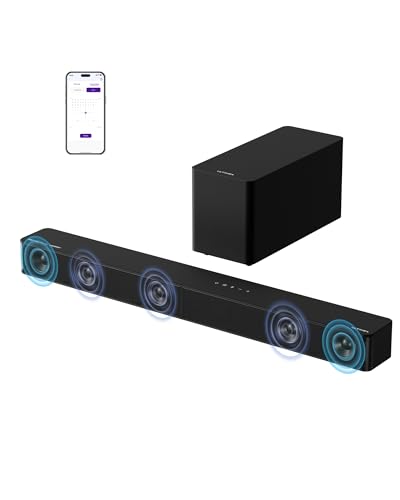
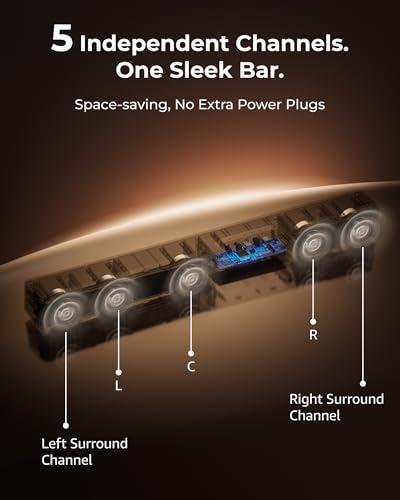
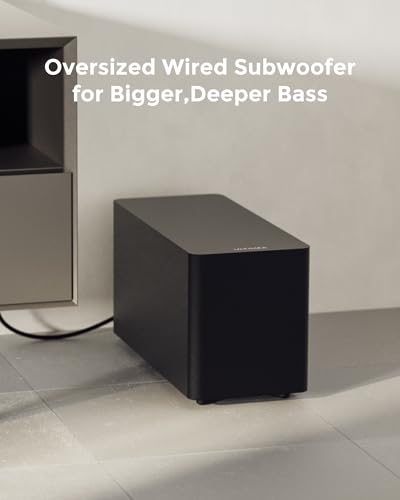
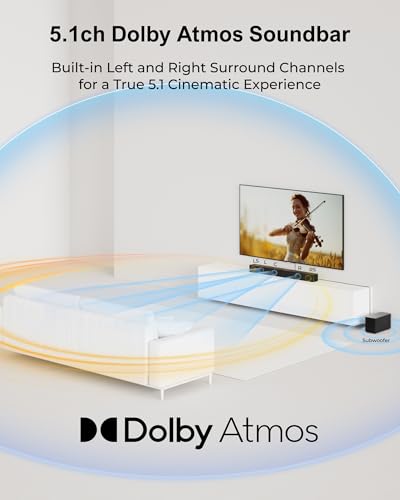
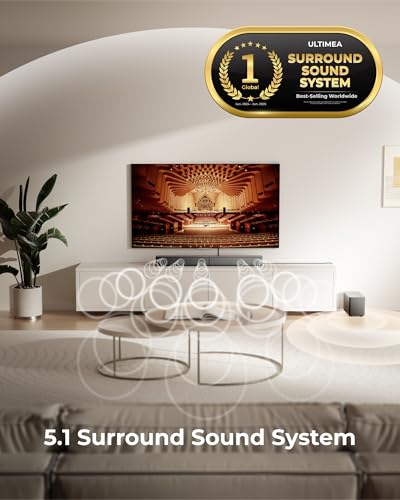
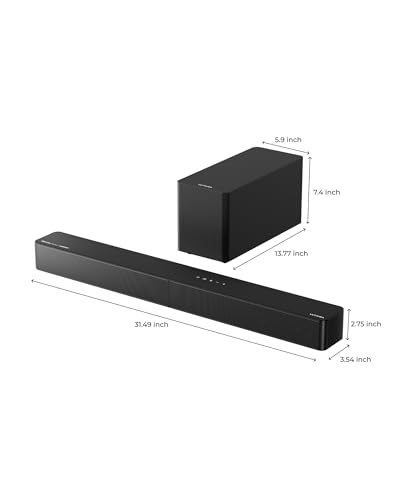
Released in 2024, the Ultimea Poseidon M60 Boom takes the streamlined approach. This 5.1 channel system integrates all surround processing within its main soundbar unit, partnering with a wired wooden subwoofer. The design philosophy prioritizes simplicity, dialogue clarity, and extensive customization options through smartphone app control.
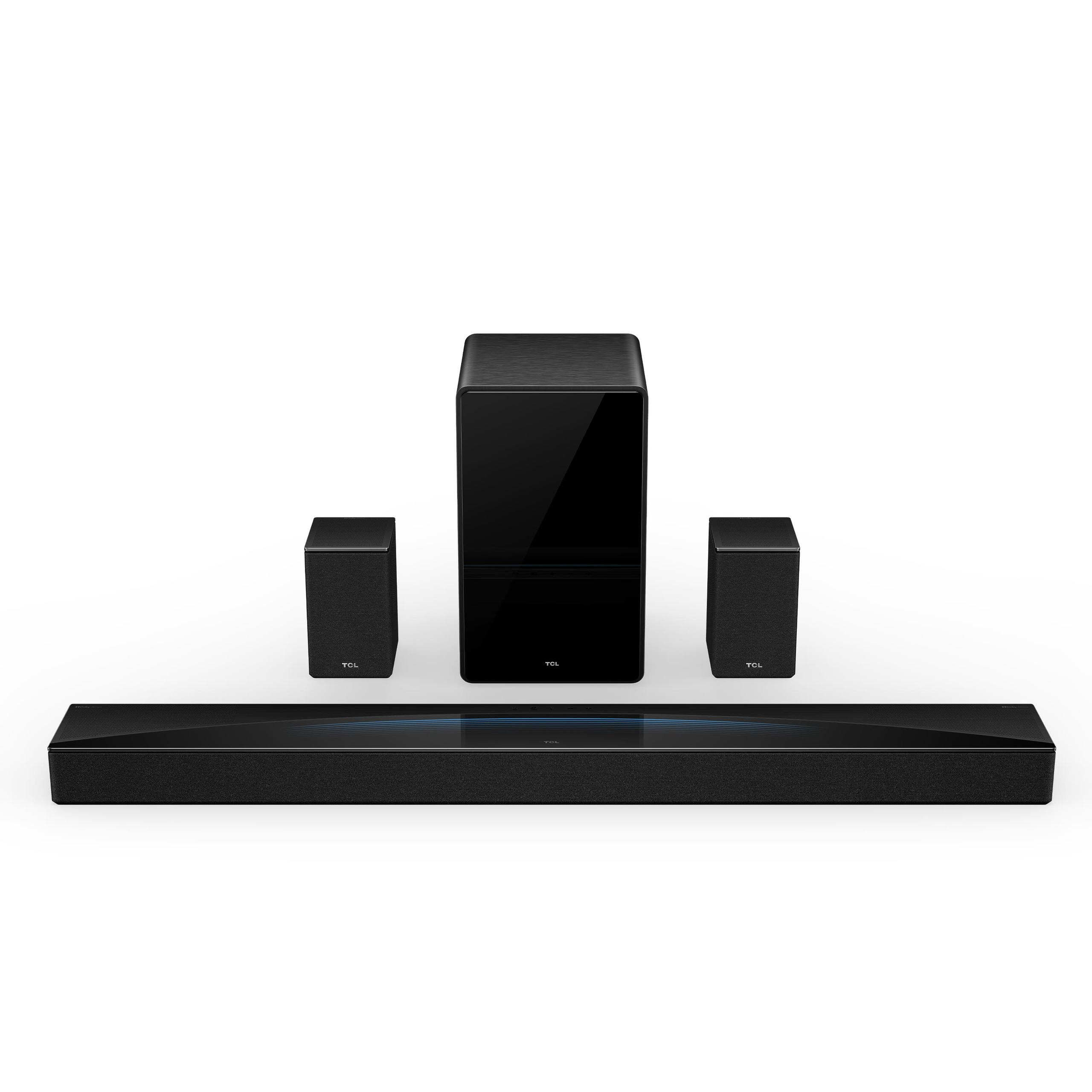
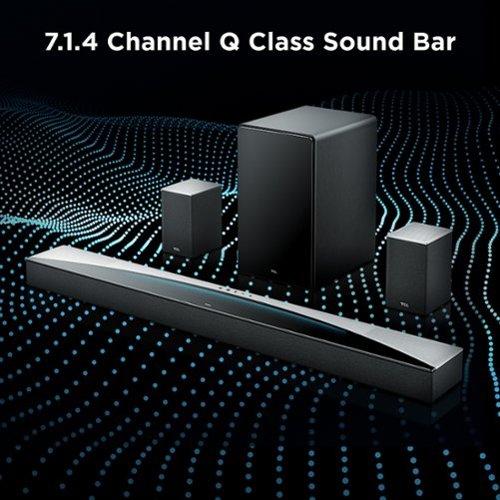
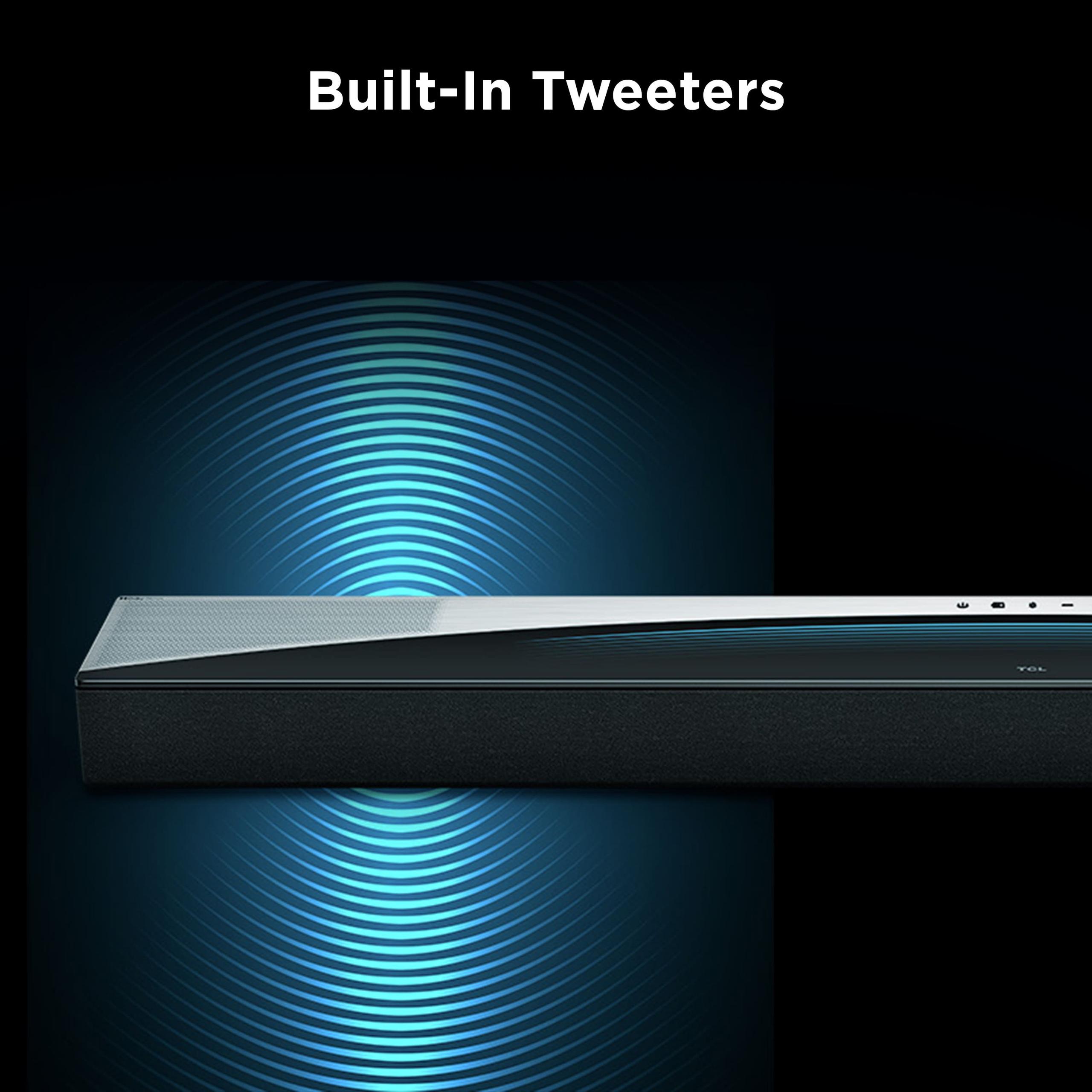
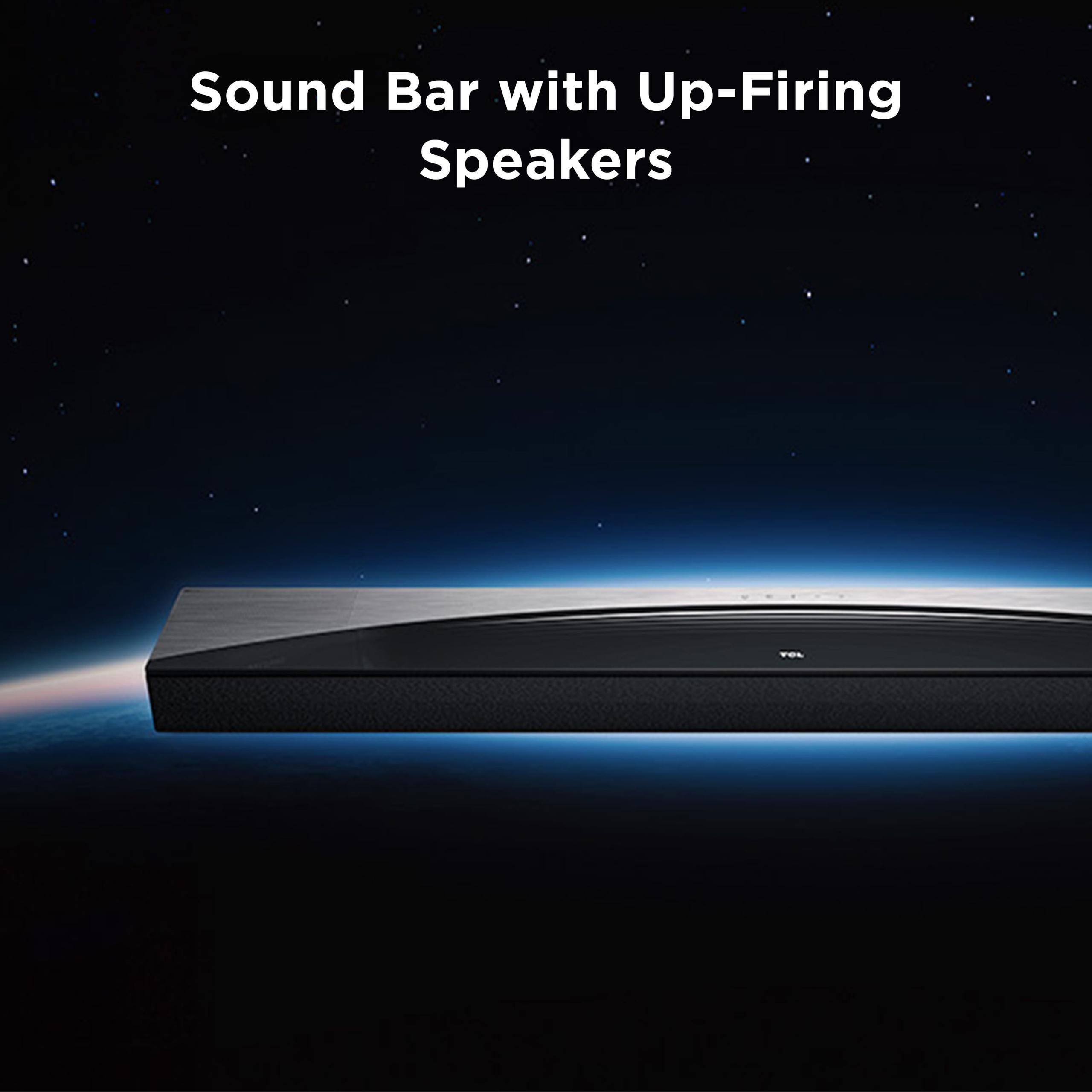
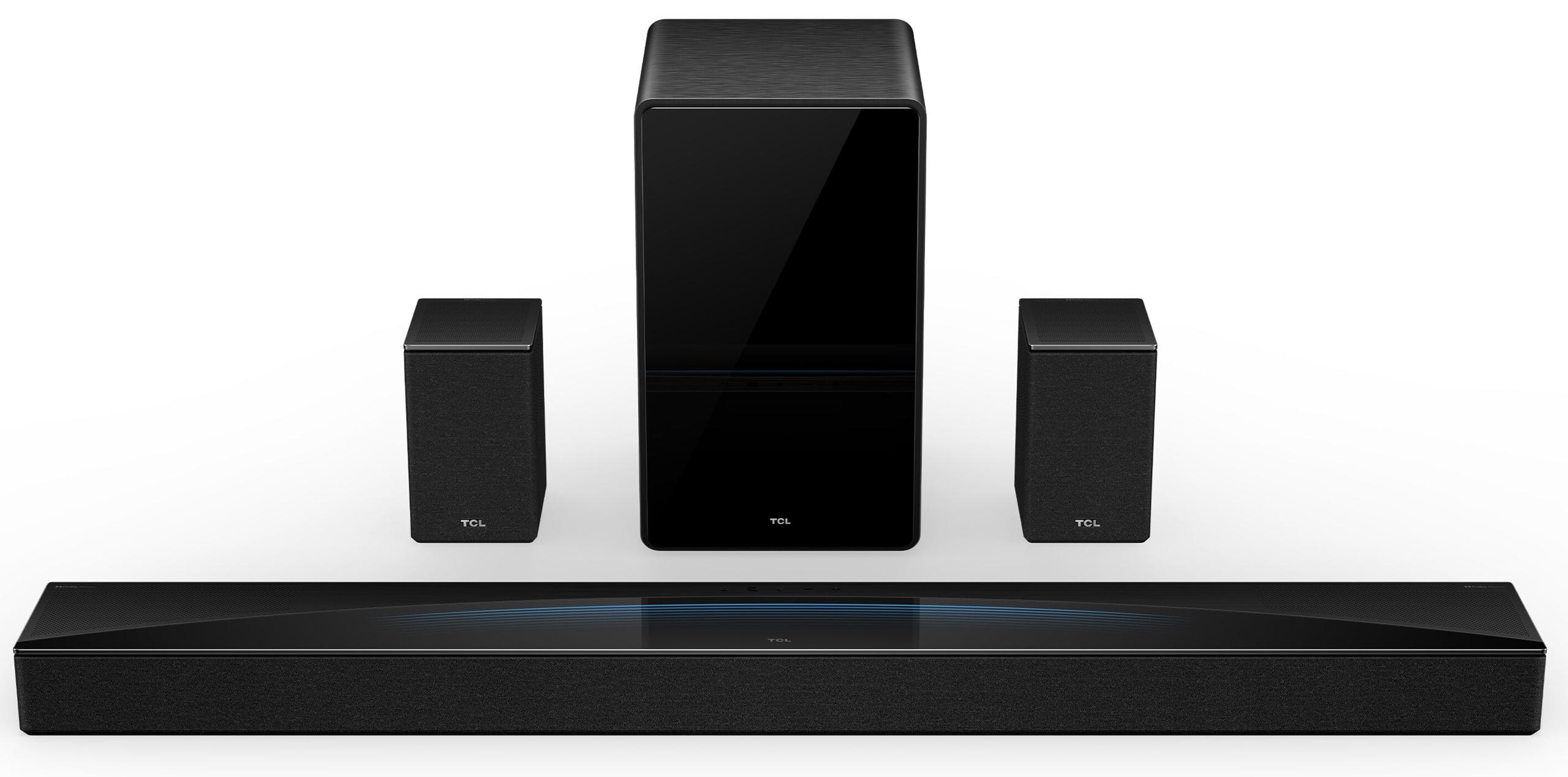
The TCL Q85H Q Class, also launching in 2024, represents the maximalist approach. This 7.1.4 channel system deploys 15 separate drivers across multiple components: the main soundbar, wireless surround speakers with their own up-firing drivers, and a wireless subwoofer. It's designed for users who want authentic multi-directional audio without compromise.
Both systems emerged during a period of significant advancement in soundbar technology. Bluetooth 5.4 connectivity, more sophisticated room calibration algorithms, and improved virtual surround processing have elevated what's possible from home audio systems. The TCL Q85H incorporates AI-powered room calibration, while the Ultimea M60 Boom leverages triple-core DSP (Digital Signal Processing) technology for real-time audio optimization.
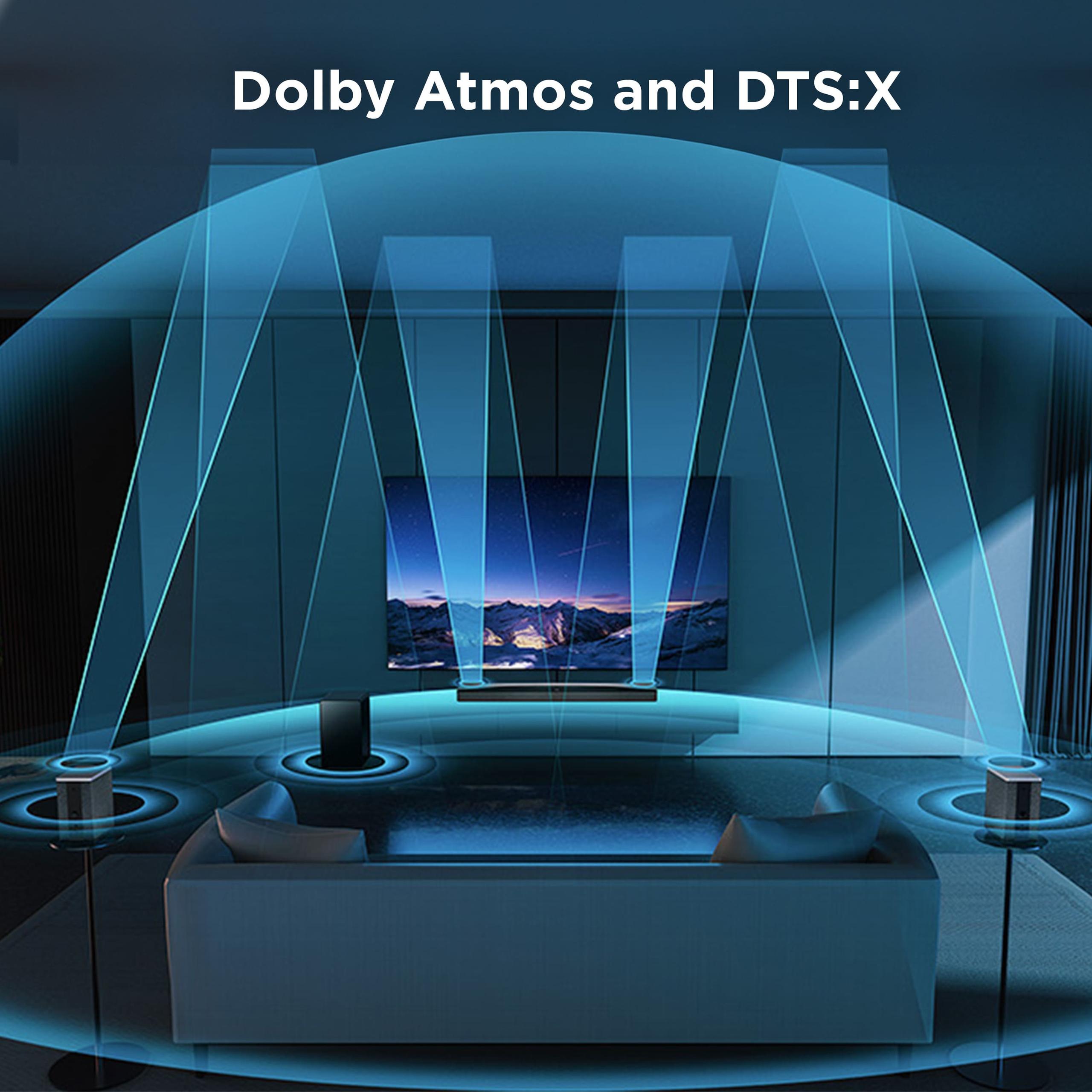
The fundamental difference between these systems lies in how they create surround sound effects. The TCL Q85H uses what's called a "true" multi-channel setup with physical speakers positioned around your listening area. Its wireless surround speakers contain both forward-firing and up-firing drivers, creating genuine overhead sound placement. When a helicopter flies across the screen in a movie, you'll hear it move through actual space above and behind you.
This physical approach delivers more convincing directional effects, especially for content mixed in Dolby Atmos or DTS:X formats. These audio codecs contain specific instructions for placing sounds in three-dimensional space, and having actual speakers in those positions produces the most authentic reproduction.
The Ultimea M60 Boom achieves its 5.1 surround effect through five full-range drivers built into the main soundbar, combined with sophisticated virtual processing. This system uses psychoacoustic techniques—manipulating timing, phase, and frequency response—to trick your brain into perceiving sounds from directions where no speakers exist. While this can create an impressively wide soundstage, it can't match the precision of physical speaker placement.
However, virtual surround has evolved significantly. The M60 Boom's triple-core DSP technology, running at combined processing power exceeding 2000 MIPS (Million Instructions Per Second), enables real-time analysis and adjustment of audio signals. This allows for dynamic optimization that adapts to different content types and listening positions.
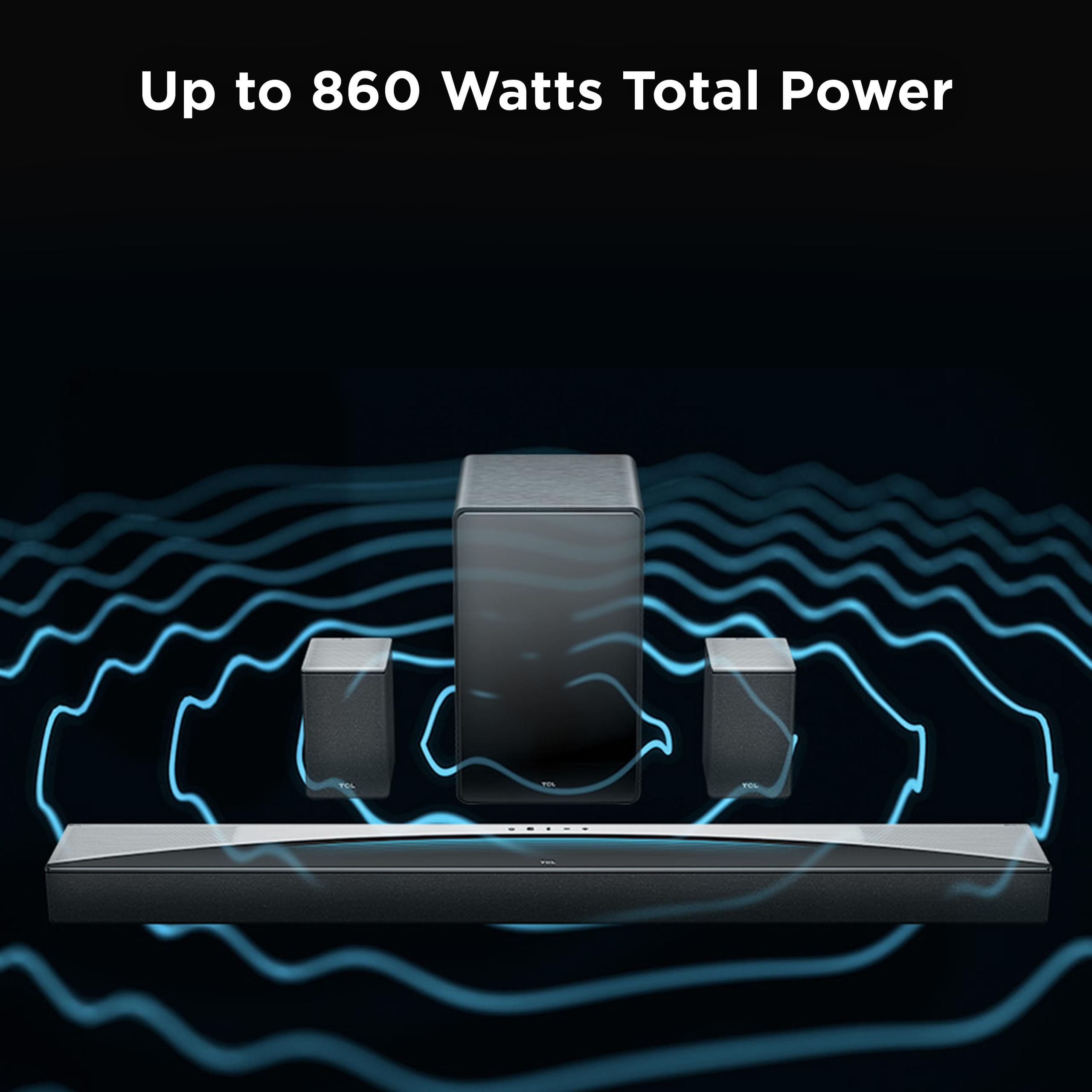
Raw power differences between these systems are substantial. The TCL Q85H delivers up to 860 watts across its 15-driver array, while the Ultimea M60 Boom provides 340 watts peak power through its more focused configuration.
But power alone doesn't tell the complete story. The TCL's power advantage shines in large rooms where you need to fill substantial space with sound. Its 6.5-inch wireless subwoofer with Bass Boost technology can produce deeper, more impactful low-frequency response that you'll feel in your chest during action scenes.
The Ultimea M60 Boom's 5.25-inch subwoofer uses BassMX technology with an impressive 16mm diaphragm excursion—that's how far the speaker cone can move back and forth. This high-excursion design allows the smaller driver to move more air and produce deeper bass than its size might suggest. The wooden cabinet construction also helps reduce unwanted resonances that can muddy bass response.
For dynamic range—the difference between the quietest and loudest sounds—both systems handle modern content well, but they excel in different scenarios. The TCL's multiple amplifiers and speakers provide more headroom for explosive sequences, while the Ultimea's focused design delivers excellent clarity across its frequency range of 45Hz to 18kHz.
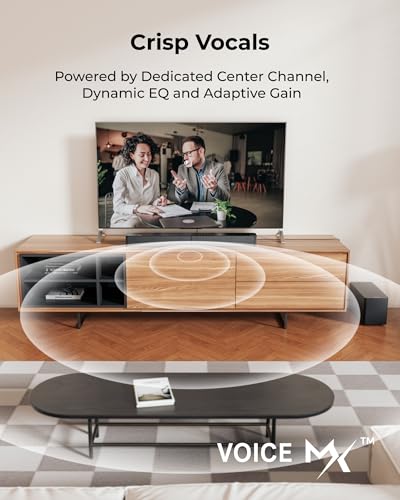
One area where the Ultimea M60 Boom consistently outperforms expectations is dialogue reproduction. Its VoiceMX technology specifically targets the 300Hz to 3kHz frequency range where most human speech occurs. This isn't just an EQ boost—it's adaptive processing that dynamically adjusts based on the content, ensuring dialogue remains intelligible even during complex scenes with lots of background noise.
This focus on speech clarity addresses one of the most common complaints about TV audio: mumbled or buried dialogue. The system can intelligently reduce background music and effects when speech is detected, then seamlessly restore full dynamics during action sequences. For anyone who finds themselves constantly adjusting volume or reaching for subtitles, this feature alone might justify the choice.
The TCL Q85H includes a dedicated center channel for dialogue, which is standard practice in home theater design. However, it lacks the specialized vocal processing found in the Ultimea system. User feedback suggests that while the TCL produces clear speech, it doesn't offer the same level of adaptive dialogue enhancement.
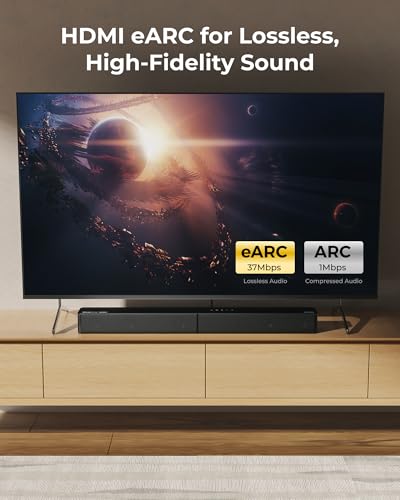
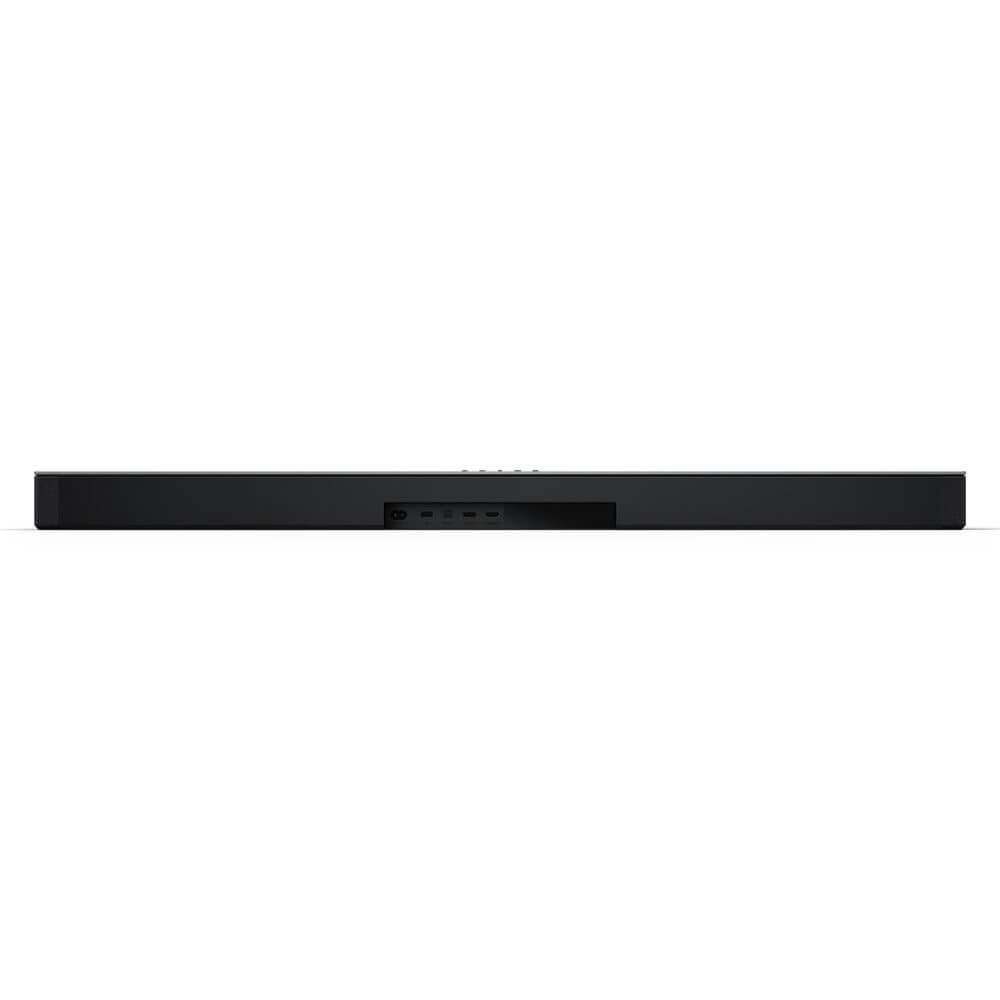
Both systems support HDMI eARC (enhanced Audio Return Channel), which allows your TV to send high-quality audio back to the soundbar without compression. However, the TCL Q85H goes further with HDMI 2.1 support, enabling features like Variable Refresh Rate (VRR) and Automatic Low Latency Mode (ALLM) for gaming applications.
The Ultimea M60 Boom counters with Bluetooth 5.4—the latest wireless standard that provides faster pairing, more stable connections, and ultra-low latency. This newer Bluetooth version is particularly beneficial for music streaming and gaming, where audio delay can be problematic.
Room calibration represents another significant difference. The TCL Q85H's AI Sonic technology automatically analyzes your room's acoustics and adjusts the system's output accordingly. This process accounts for furniture placement, wall surfaces, and room dimensions to optimize sound for your specific environment. While effective, some users report wanting more manual control over these adjustments.
The installation experience differs dramatically between these approaches. The Ultimea M60 Boom arrives as a modular two-piece soundbar that connects easily, plus the wired subwoofer. Total setup time typically runs under 30 minutes, making it ideal for renters or anyone who values simplicity.
The TCL Q85H requires considerably more planning. You'll need to position the wireless surround speakers optimally—typically behind or beside your seating area—and ensure they have access to power outlets. The wireless subwoofer offers more placement flexibility than the Ultimea's wired version, but the overall system demands more thoughtful room integration.
For apartment dwellers or smaller spaces, the compact approach often makes more sense. The Ultimea M60 Boom's virtual processing can create an impressive surround effect even in constrained spaces where rear speakers might be impractical or unwelcome to neighbors.
Larger rooms benefit from the TCL Q85H's distributed speaker approach. The physical separation between channels becomes more apparent as listening distances increase, and the additional power helps fill larger volumes with sound.
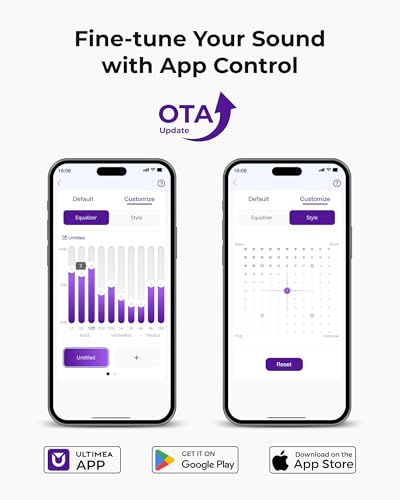
Perhaps the most surprising advantage of the Ultimea M60 Boom lies in its smartphone app integration. The dedicated app provides access to six EQ presets (movie, music, voice, sport, game, night) plus manual adjustment of bass, mid-range, and treble frequencies. This level of control allows users to fine-tune the system for different content types and personal preferences.
The night mode deserves special mention—it compresses dynamic range to keep dialogue audible while preventing loud effects from disturbing others. This feature has become essential for late-night viewing in shared living spaces.
The TCL Q85H takes a more automated approach with its AI Sonic calibration, but user feedback suggests this isn't always optimal. Some buyers express frustration with limited manual override options, particularly given the system's higher price point. The lack of detailed EQ controls can be disappointing for users who want to personalize their audio experience.
At the time of writing, these systems occupy different value segments. The Ultimea M60 Boom positions itself as a premium budget option, delivering advanced features typically found in more expensive systems. Its combination of virtual surround processing, dialogue enhancement, and comprehensive app control provides impressive bang for the buck.
The TCL Q85H commands a significant premium but justifies it with authentic multi-channel audio and substantially more power. When comparing price-to-performance ratios, the decision often comes down to whether you're paying for convenience and clever processing or investing in a more complex but potentially more rewarding audio experience.
Both systems represent substantial upgrades over TV speakers, but they serve different upgrade paths. The Ultimea offers maximum improvement for minimum complexity, while the TCL provides maximum authenticity for users willing to embrace a more involved setup.
Modern gaming has driven many soundbar innovations, and both systems address this market differently. The TCL Q85H's HDMI 2.1 support and multiple wireless components create an immersive gaming environment where directional audio cues become crucial tactical information. The overhead speakers can pinpoint enemy positions or environmental hazards with impressive accuracy.
The Ultimea M60 Boom's ultra-low latency Bluetooth 5.4 and game-specific EQ preset optimize for responsive gaming audio. While it can't match the spatial precision of physical surround speakers, its processing eliminates the audio delay that can affect competitive gaming performance.
For streaming music, both systems handle Spotify, Apple Music, and other services well, but their tuning philosophies differ. The TCL emphasizes spacious presentation and dynamic range, while the Ultimea offers more detailed customization for different musical genres.
The decision between these systems ultimately depends on your priorities, living space, and tolerance for complexity. Here's how to think through the choice:
Choose the Ultimea Poseidon M60 Boom if:
Choose the TCL Q85H Q Class if:
Both the Ultimea Poseidon M60 Boom and TCL Q85H Q Class solve the fundamental problem of poor TV audio, but they represent different philosophies about how to achieve great sound in your home.
The Ultimea excels at maximizing performance within constraints—tight budgets, small spaces, or simple setup requirements. Its virtual processing has reached the point where it can create genuinely impressive surround effects, and its dialogue enhancement addresses the most common TV audio complaint. For many users, especially those coming from basic TV speakers, the improvement will be dramatic and satisfying.
The TCL takes no shortcuts toward authentic multi-channel audio. If you have the space, budget, and desire for the most immersive home theater experience possible, its physical speaker array delivers effects that virtual processing simply cannot match. The overhead speakers create a genuinely three-dimensional soundfield that enhances properly mixed content in ways that justify the additional complexity and cost.
Neither approach is inherently superior—they serve different needs and preferences. The key is honestly assessing your space, usage patterns, and priorities before committing to either path. Both systems will dramatically improve your entertainment experience compared to TV speakers, but in distinctly different ways that align with different lifestyles and expectations.
Your choice should reflect not just what sounds good in the store, but what will integrate seamlessly into your daily entertainment routine and continue satisfying your needs as your content consumption evolves.
| Ultimea Poseidon M60 Boom 5.1 Soundbar | TCL Q85H Q Class 7.1.4 Channel Sound Bar System |
|---|---|
| Channel Configuration - Determines surround sound authenticity and immersion | |
| 5.1 channels (all integrated in main soundbar) | 7.1.4 channels (15 physical speakers across multiple units) |
| Total Power Output - Affects volume capability and dynamic range | |
| 340W peak power | Up to 860W total system power |
| Surround Speaker Setup - Impacts installation complexity and spatial audio quality | |
| Virtual surround processing, no separate rear speakers | Wireless surround speakers with up-firing drivers included |
| Subwoofer Configuration - Affects placement flexibility and bass performance | |
| 5.25" wired wooden subwoofer with BassMX technology | 6.5" wireless subwoofer with Bass Boost technology |
| Height Effects/Dolby Atmos - Creates overhead sound for cinematic immersion | |
| Virtual height processing through main bar drivers | Physical up-firing speakers in soundbar and surrounds |
| Dialogue Enhancement - Critical for speech clarity in movies and TV | |
| VoiceMX adaptive vocal processing (300Hz-3kHz optimization) | Dedicated center channel (standard approach) |
| Room Calibration - Optimizes sound for your specific space | |
| Manual EQ adjustment via smartphone app | AI Sonic automatic room calibration |
| Connectivity Standards - Determines audio quality and gaming features | |
| HDMI eARC, Bluetooth 5.4 (ultra-low latency) | HDMI 2.1 eARC, Bluetooth 5.1, Apple AirPlay |
| Customization Options - Allows personalization of sound signature | |
| 6 EQ presets + manual bass/mid/treble via app | Limited manual EQ, relies on automatic calibration |
| Installation Complexity - Time and effort required for optimal setup | |
| Simple 2-component setup (soundbar + wired sub) | Complex multi-component positioning required |
| Best Use Case - Primary scenarios where each system excels | |
| Apartments, dialogue-heavy content, budget-conscious buyers | Large rooms, movie enthusiasts, authentic surround priority |
The Ultimea Poseidon M60 Boom is a 5.1 channel system with all surround channels built into the main soundbar unit, using virtual processing for surround effects. The TCL Q85H Q Class is a true 7.1.4 channel system with 15 physical speakers spread across multiple components, including wireless surround speakers and up-firing drivers for authentic Dolby Atmos effects.
The Ultimea Poseidon M60 Boom is ideal for smaller spaces due to its compact design with just two components - the main soundbar and wired subwoofer. The TCL Q85H requires positioning multiple wireless components around the room, making it better suited for larger spaces where you have room for proper speaker placement.
Not necessarily. The Ultimea M60 Boom creates convincing surround effects through advanced virtual processing without rear speakers. However, the TCL Q85H with physical rear speakers provides more authentic directional audio, especially for movies and gaming where precise sound placement matters.
The Ultimea Poseidon M60 Boom excels at dialogue clarity with its VoiceMX technology that adaptively enhances speech frequencies (300Hz-3kHz) and can intelligently suppress background noise during dialogue scenes. The TCL Q85H has a dedicated center channel but lacks specialized vocal processing.
The TCL Q85H Q Class delivers significantly more power at up to 860 watts across its 15 speakers, making it better for large rooms. The Ultimea M60 Boom provides 340W peak power, which is sufficient for most medium-sized rooms and delivers excellent clarity within its range.
The Ultimea Poseidon M60 Boom offers much simpler setup with just the modular soundbar and wired subwoofer - typically taking under 30 minutes. The TCL Q85H requires careful positioning of multiple wireless components and takes considerably more planning and setup time.
The Ultimea M60 Boom provides extensive customization through its smartphone app with 6 EQ presets plus manual bass, mid, and treble adjustments. The TCL Q85H Q Class relies primarily on automatic AI Sonic calibration with limited manual EQ options, which some users find restrictive.
For competitive gaming, the Ultimea Poseidon M60 Boom offers ultra-low latency Bluetooth 5.4 and a dedicated game EQ preset. For immersive gaming experiences, the TCL Q85H provides superior spatial audio with HDMI 2.1 support and physical surround speakers that help pinpoint directional audio cues.
Yes, both support Dolby Atmos, but differently. The TCL Q85H Q Class provides authentic Dolby Atmos with physical up-firing speakers that bounce sound off your ceiling. The Ultimea M60 Boom processes Dolby Atmos content through virtual height effects, which is convincing but not as precise as physical height speakers.
The Ultimea Poseidon M60 Boom typically offers better value with premium features like advanced dialogue processing and comprehensive app control at a lower price point. The TCL Q85H costs more but provides authentic multi-channel surround sound that may justify the premium for serious home theater enthusiasts.
Both offer HDMI eARC for high-quality TV audio. The TCL Q85H Q Class includes HDMI 2.1, Bluetooth 5.1, and Apple AirPlay support. The Ultimea Poseidon M60 Boom features the newer Bluetooth 5.4 standard for improved wireless performance, plus optical, USB, and AUX inputs.
Choose the TCL Q85H Q Class if you have a dedicated home theater room, want authentic surround sound, and can accommodate multiple wireless speakers. Choose the Ultimea M60 Boom if you prioritize dialogue clarity, want extensive customization options, prefer simple setup, or have budget or space constraints that make a full surround system impractical.
We've done our best to create useful and informative comparisons to help you decide what product to buy. Our research uses advanced automated methods to create this comparison and perfection is not possible - please contact us for corrections or questions. These are the sites we've researched in the creation of this article: ultimea.com - ultimea.com - youtube.com - bestbuy.com - youtube.com - avsforum.com - youtube.com - manuals.plus - youtube.com - device.report - ultimea.com - ultimea.de - community.ultimea.com - ultimea.com - community.ultimea.com - ultimea.com - youtube.com - aliexpress.com - ultimea.com - gamerant.com - bestbuy.com - tcl.com - bestbuy.com - tcl.com - tcl.com - nfm.com - tcl.com - electronicexpress.com - tcl.com - tcl.com - digitaltrends.com

Privacy Policy
Terms and Conditions - Affiliate Policy
Home Security
© Copyright 2008-2026.
11816 Inwood Rd #1211, Dallas, TX 75244