

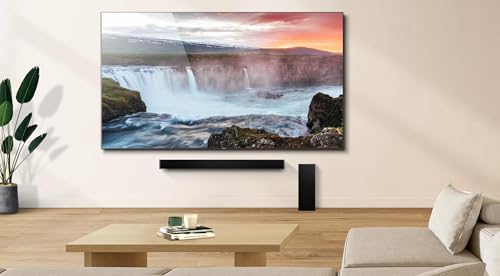
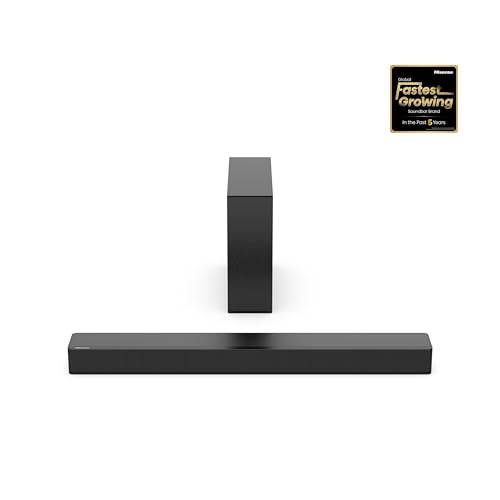

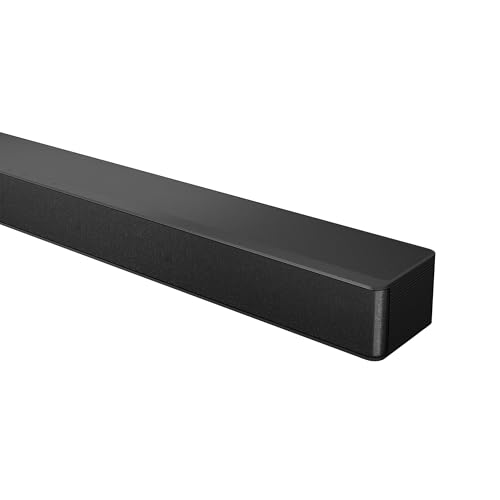
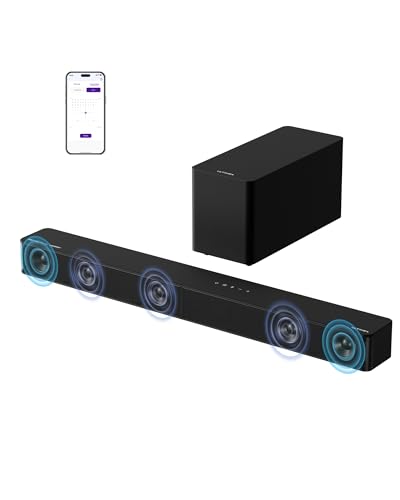

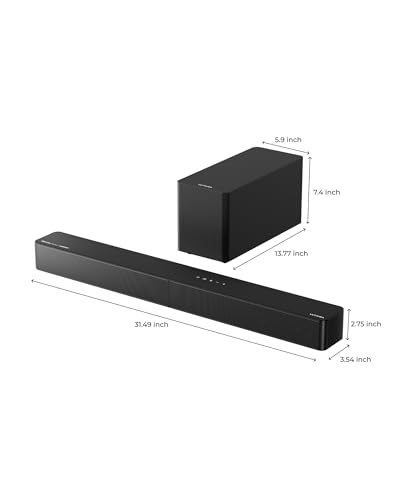
If you're tired of straining to hear dialogue over your TV's tinny speakers or missing the rumbling bass that makes action movies truly exciting, you're probably ready to upgrade to a soundbar. But with dozens of options flooding the market, choosing between a simple 2.1 system and a full 5.1 setup can feel overwhelming. Today, we're comparing two popular choices that represent different philosophies in soundbar design: the streamlined Hisense HS2100 and the feature-packed Ultimea Poseidon M60 Boom.
The soundbar market has evolved dramatically since these models launched. The Hisense HS2100 arrived in 2023 as part of Hisense's push into budget-friendly audio solutions, while the Ultimea Poseidon M60 Boom debuted in 2024 with aggressive pricing that challenged established brands. Both products emerged during a period when manufacturers began prioritizing value over premium features, making high-quality audio more accessible to mainstream consumers.
Before diving into specifics, let's establish what separates great soundbars from merely adequate ones. The most critical factors are channel configuration (how many separate audio channels the system can produce), power output (measured in watts, indicating how loud and dynamic the sound can be), and audio processing capabilities (the digital brain that optimizes sound quality).
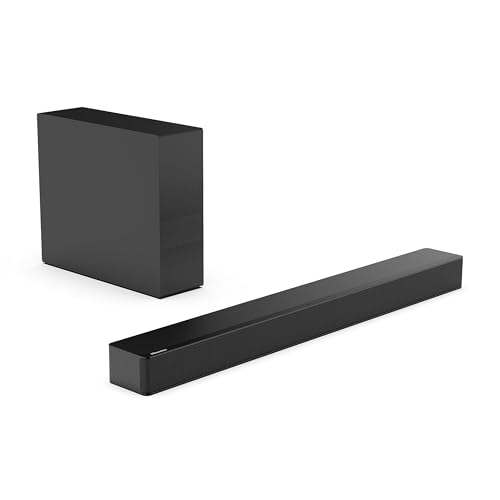
Channel configuration determines your surround sound experience. A 2.1 system like the Hisense HS2100 includes two main speakers plus one subwoofer (the ".1" represents the dedicated bass channel). This setup works well for stereo content but must use digital tricks called virtual surround processing to simulate multi-directional audio from movies and games.
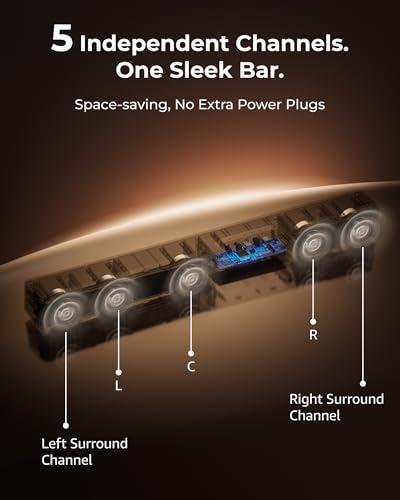
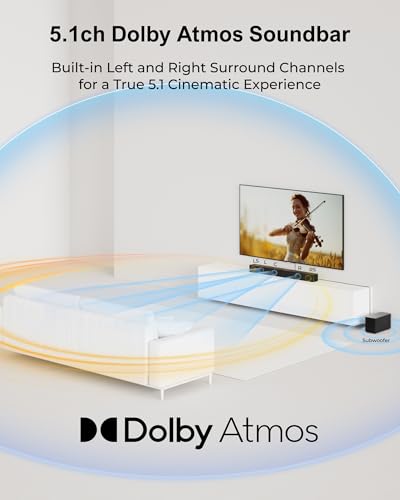
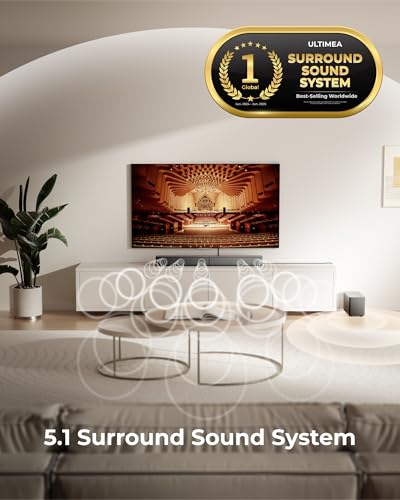
In contrast, a 5.1 system like the Ultimea M60 Boom provides five discrete speakers (left, center, right, left surround, right surround) plus a subwoofer. This configuration can place sounds exactly where filmmakers intended, creating the sensation that helicopters are actually flying overhead or that footsteps are approaching from behind you.
The difference becomes particularly noticeable during home theater use. When watching action movies or playing video games, true surround sound systems create spatial awareness that virtual processing simply cannot match. However, this comes with trade-offs in complexity and setup requirements.
The most fundamental difference between these soundbars lies in their approach to surround sound. The Hisense HS2100 relies on DTS Virtual:X technology, a sophisticated audio processing standard that analyzes incoming surround sound signals and redistributes them across just two speakers to create the illusion of multi-directional audio. Think of it like an audio magician – impressive when it works, but ultimately limited by physics.
Our research into user experiences reveals that virtual surround can expand the perceived width of audio beyond the physical soundbar, making explosions feel bigger and music sound more spacious. However, you won't experience the precise positional accuracy that makes you instinctively duck when something flies overhead in a movie.
The Ultimea M60 Boom, conversely, delivers authentic 5.1 surround sound through dedicated speakers for each channel. All five speakers are integrated into the main soundbar unit, which means you're not dealing with separate rear speakers to place around your room. This approach represents a clever compromise – you get genuine surround sound without the complexity of wireless rear speakers that need charging or positioning.
During intense movie scenes, this difference becomes stark. The Ultimea system can place the sound of breaking glass precisely to your left while maintaining dialogue clarity from the center channel, creating an immersive experience that the Hisense unit simply cannot replicate.
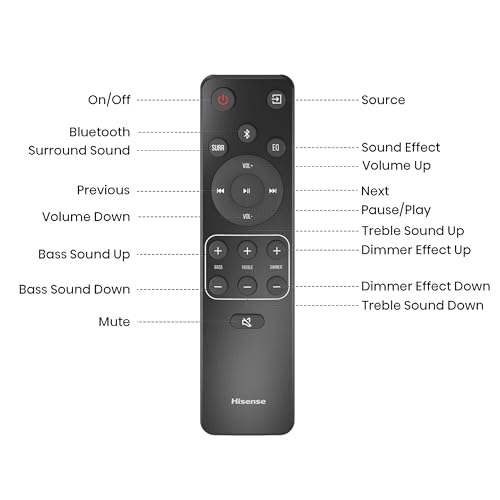
Poor dialogue clarity ranks among the most common complaints about TV audio, and both soundbars address this differently. The Hisense HS2100 takes a straightforward approach with a dedicated "News" mode that emphasizes vocal frequencies and includes basic bass/treble adjustments to help users customize speech clarity.
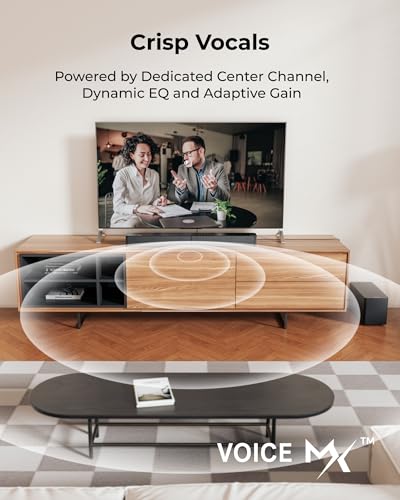
However, the Ultimea M60 Boom employs something called VoiceMX™ technology – a dynamic processing system that specifically targets the 300Hz to 3kHz frequency range where human speech lives. This isn't just an EQ preset; it's active processing that adjusts in real-time. When the system detects complex audio with competing elements, it intelligently reduces background music and effects to ensure dialogue remains intelligible.
Based on extensive user feedback analysis, this difference proves significant in practice. While both systems improve dialogue over TV speakers, the Ultimea's active voice processing consistently outperforms static EQ adjustments, especially during action-heavy scenes where explosions and music might otherwise drown out conversations.
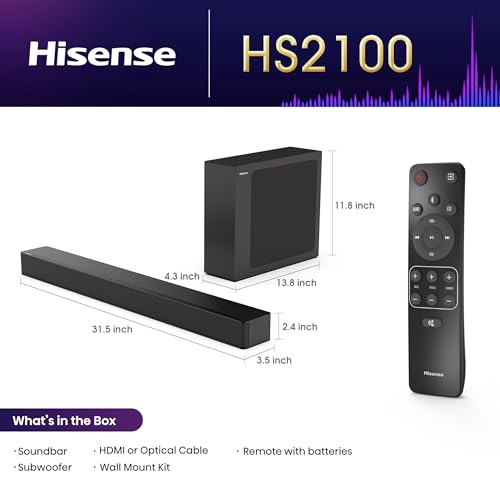
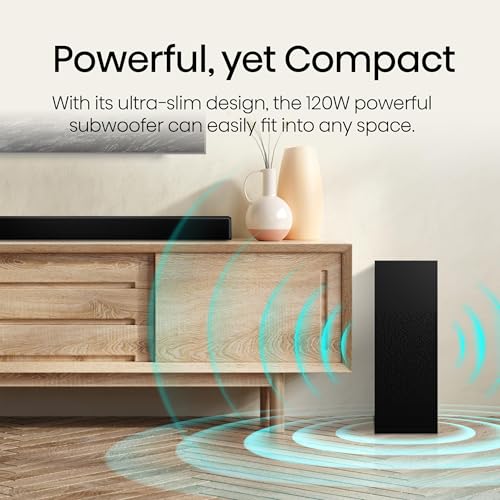
Both soundbars include dedicated subwoofers, but their implementations differ meaningfully. The Hisense HS2100 features a 120W wireless subwoofer with a 5.25-inch driver. The wireless design eliminates cable clutter and allows flexible placement, but the compact cabinet limits how deep the bass can extend. User reports indicate solid mid-bass impact suitable for most content, though electronic music and action movies may lack the deepest rumble.
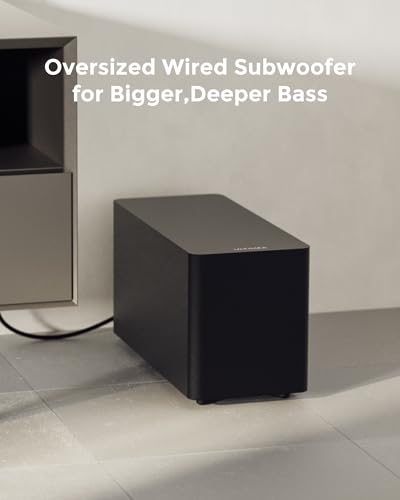
The Ultimea M60 Boom takes a different approach with its wired 5.25-inch subwoofer featuring BassMX™ technology. This system uses a wooden cabinet with high-density magnetic circuits and an 18mm high-excursion driver – technical specs that translate to tighter, more controlled bass response. The trade-off for this superior acoustic design is the need to run a cable from the soundbar to the subwoofer.
In practical terms, the Ultimea's bass feels more integrated with the main speakers and provides better definition between different low-frequency elements. You can distinguish between the rumble of thunder and the thump of explosions rather than experiencing generic "bass." The Hisense system delivers satisfying bass for casual use but may disappoint users seeking reference-quality low-end performance.
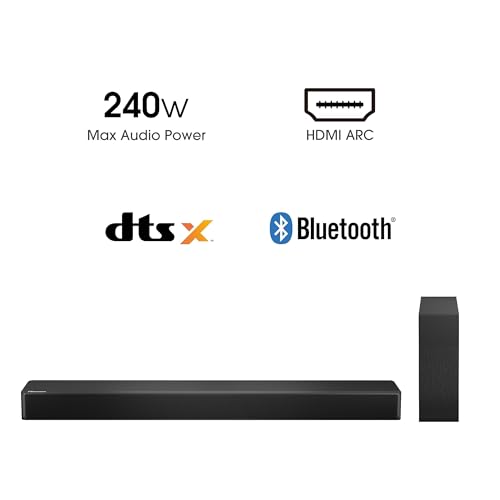
Raw power numbers only tell part of the story, but they matter for maximum volume and dynamic headroom. The Hisense HS2100 provides 240W maximum power across its 2.1 configuration, reaching approximately 90+ dB sound pressure level (SPL) – loud enough for most living rooms but with noticeable compression when pushed to maximum volume.
The Ultimea M60 Boom delivers 340W peak power distributed across five drivers plus the subwoofer, achieving 99 dB maximum SPL. More importantly, this higher power capacity means less compression at moderate volumes, resulting in cleaner, more dynamic sound during normal listening.
This difference becomes apparent during movie soundtracks with wide dynamic range – the quiet whisper followed by the explosive gunshot. The Ultimea system handles these transitions more gracefully, maintaining clarity during both soft and loud passages.
Modern soundbars are essentially specialized computers optimized for audio processing, and the sophistication of their digital signal processing (DSP) significantly impacts performance. The Hisense HS2100 includes basic DSP with six preset modes (Movie, Music, News, Sport, Game, Night) and manual bass/treble controls, providing adequate customization for most users.
The Ultimea M60 Boom incorporates triple-core DSP technology with processors running at 800MHz and 600MHz, delivering over 2000 MIPS (millions of instructions per second) of processing power. This computational muscle enables real-time parametric equalization (PEQ) – a sophisticated tuning method that can adjust specific frequencies with surgical precision rather than broad treble/bass controls.
More practically, this processing power supports the Ultimea's smartphone app, which provides a 10-band equalizer with 121 preset EQ matrices. Users can fine-tune audio response for their specific room acoustics and personal preferences, something impossible with the Hisense's simpler control scheme.
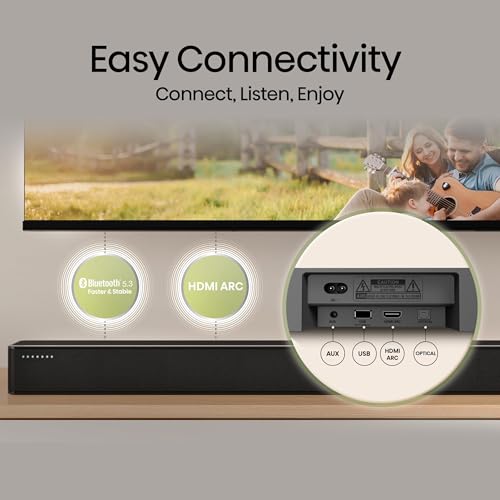
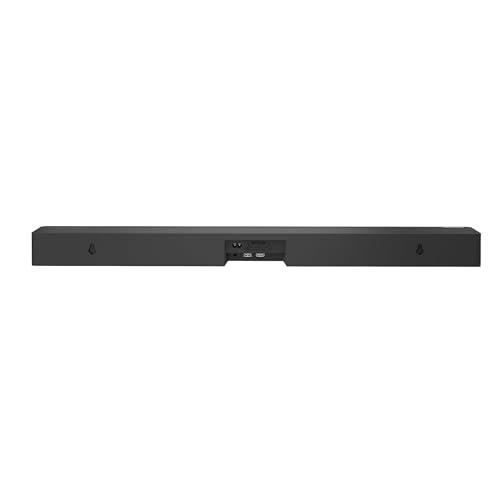
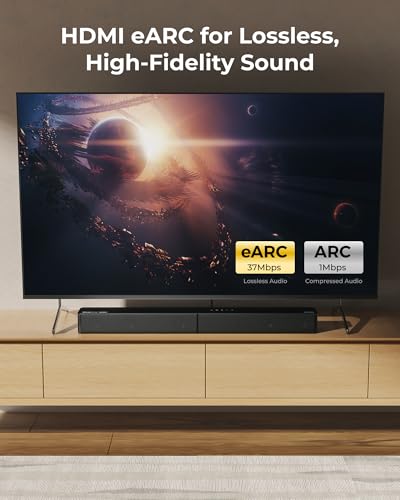
Both soundbars include HDMI eARC (enhanced Audio Return Channel), which allows high-quality digital audio transmission from your TV through a single HDMI cable. This connection method supports uncompressed audio formats and enables CEC (Consumer Electronics Control) – a feature that lets you control the soundbar volume with your TV remote.
However, the Ultimea M60 Boom supports Dolby Atmos, the latest surround sound format that adds height channels to create three-dimensional audio. While the system simulates these height effects rather than using physical upward-firing speakers, Dolby Atmos content still benefits from the advanced processing algorithms.
The Hisense HS2100 supports Dolby Digital and Dolby Digital Plus but lacks Atmos compatibility. For current content, this limitation isn't critical, but as streaming services increasingly adopt Atmos for their premium content, this becomes a future-proofing consideration.
Bluetooth connectivity also differs between the systems. The Hisense uses Bluetooth 5.3, while the Ultimea incorporates the newer 5.4 standard. In practical terms, this means faster pairing, more stable connections, and lower latency for the Ultimea system – particularly beneficial for gaming or video streaming from mobile devices.
Installation complexity varies significantly between these approaches. The Hisense HS2100 excels in simplicity – the wireless subwoofer pairs automatically, and the entire system typically connects and functions within minutes. There's no app to download, no complex configuration menu to navigate, and no cables to route around your room.
The Ultimea M60 Boom requires more initial effort. The soundbar arrives in two pieces that connect together, the subwoofer needs a wired connection to the main unit, and optimizing the system's extensive customization options through the smartphone app can take time. However, once configured, this complexity translates to superior performance and flexibility.
For users who simply want better TV audio without fuss, the Hisense approach appeals strongly. But for those willing to invest setup time for better long-term performance, the Ultimea system rewards that effort.
At the time of writing, both soundbars occupy the budget-to-mid-range segment, but they deliver different value propositions. The Hisense HS2100 prioritizes simplicity and ease of use, making it ideal for users who want a straightforward upgrade from TV speakers without complexity.
The Ultimea M60 Boom targets users seeking near-premium performance at accessible pricing. The inclusion of true 5.1 surround, Dolby Atmos support, and sophisticated processing typically costs significantly more from established brands, making this system particularly attractive for home theater enthusiasts on a budget.
The Hisense HS2100 makes sense for specific scenarios: small apartments where true surround sound isn't necessary, setups where wireless subwoofer placement provides significant advantages, or situations where maximum simplicity takes priority over ultimate performance. It's also the better choice for users who primarily watch news, talk shows, or other dialogue-heavy content where surround effects aren't crucial.
The Ultimea Poseidon M60 Boom suits users who regularly watch movies, play video games, or listen to music and want a more immersive experience. The true 5.1 surround sound, advanced dialogue processing, and superior bass control justify the additional complexity for most home theater applications.
For medium to large rooms, the Ultimea system's higher power output and better dynamics make it the clear choice. The improved dialogue clarity alone makes it worthwhile for anyone who's ever struggled to follow conversations during action scenes.
While both soundbars significantly improve upon TV speakers, they serve different priorities. The Hisense HS2100 delivers solid performance with maximum convenience, perfect for users who value simplicity above all else. However, for most people seeking meaningful audio improvement, the Ultimea Poseidon M60 Boom provides substantially better value.
The Ultimea system offers genuine surround sound, advanced processing capabilities, superior dialogue clarity, and better bass performance for only a modest increase in complexity and cost. Unless wireless setup is absolutely critical to your situation, the performance advantages make the M60 Boom the smarter long-term investment for most home theater applications.
| Hisense HS2100 2.1 Channel 240W Soundbar System | Ultimea Poseidon M60 Boom 5.1 Soundbar |
|---|---|
| Channel Configuration - Determines surround sound capability and immersion level | |
| 2.1 channels (stereo + subwoofer with virtual surround) | True 5.1 channels (dedicated left, center, right, surround speakers + subwoofer) |
| Maximum Power Output - Affects volume and dynamic range for larger rooms | |
| 240W total (adequate for small to medium rooms) | 340W peak (better headroom and dynamics for larger spaces) |
| Dolby Atmos Support - Future-proofing for premium streaming content | |
| No (supports Dolby Digital/Digital Plus only) | Yes (simulated height effects for 3D audio experience) |
| Subwoofer Design - Impacts bass quality and placement flexibility | |
| 120W wireless 5.25" driver (convenient placement, moderate bass control) | Wired 5.25" with BassMX™ technology (superior bass control, requires cable routing) |
| Audio Processing - Determines customization and sound optimization capability | |
| Basic DSP with 6 EQ presets and manual bass/treble adjustment | Triple-core DSP with 10-band EQ, 121 presets, and smartphone app control |
| Dialogue Enhancement - Critical for speech clarity during complex scenes | |
| "News" mode with basic vocal emphasis | VoiceMX™ technology with real-time 300Hz-3kHz vocal optimization |
| Bluetooth Version - Affects connection stability and audio latency | |
| Bluetooth 5.3 (good stability and range) | Bluetooth 5.4 (faster pairing, lower latency, better for gaming) |
| Setup Complexity - Time and effort required for optimal performance | |
| Simple wireless setup, auto-pairing subwoofer | Modular soundbar assembly, wired sub, app configuration recommended |
| Frequency Response - Determines bass extension and treble clarity | |
| 45Hz - 20kHz (standard range for budget systems) | 45Hz - 18kHz (similar bass extension, slightly limited treble) |
| Maximum SPL - Important for large rooms and reference-level listening | |
| ~90+ dB (sufficient for most living rooms) | 99 dB (better for larger spaces and dynamic content) |
| Smart Features - Modern convenience and integration capabilities | |
| Roku TV Ready, basic CEC support, no app | Smart app control, CEC integration, advanced EQ customization |
| Best Use Case - Who should choose each system | |
| Small rooms, simple setup priority, casual TV viewing | Home theater enthusiasts, movie/gaming focus, medium-large rooms |
The Ultimea Poseidon M60 Boom 5.1 Soundbar delivers superior surround sound with true 5.1 channels and dedicated speakers for each audio channel. The Hisense HS2100 2.1 Channel 240W Soundbar System uses virtual surround processing through DTS Virtual:X, which simulates surround effects but cannot match the immersive experience of genuine multi-channel audio.
A 2.1 system like the Hisense HS2100 has two main speakers plus a subwoofer, while a 5.1 system like the Ultimea M60 Boom includes five discrete speakers (left, center, right, left surround, right surround) plus a subwoofer. The 5.1 configuration provides authentic positional audio where sounds come from specific directions, making movies and games more immersive.
The Hisense HS2100 2.1 Channel 240W Soundbar System is significantly easier to set up with its wireless subwoofer that pairs automatically and simple plug-and-play design. The Ultimea Poseidon M60 Boom requires connecting two soundbar pieces together, routing a cable to the wired subwoofer, and downloading an app for optimal configuration.
No, only the Ultimea Poseidon M60 Boom 5.1 Soundbar supports Dolby Atmos with height effect simulation. The Hisense HS2100 supports Dolby Digital and Dolby Digital Plus but lacks Atmos compatibility, which may limit future content compatibility as streaming services adopt this format.
The Ultimea M60 Boom offers superior dialogue clarity through VoiceMX™ technology that dynamically enhances vocal frequencies in real-time during complex scenes. While the Hisense HS2100 2.1 Channel 240W Soundbar System includes a dedicated "News" mode for speech, it uses static EQ adjustments rather than active processing.
The Ultimea Poseidon M60 Boom delivers 340W peak power compared to 240W from the Hisense HS2100. This higher power output translates to better volume capabilities (99 dB vs 90+ dB maximum SPL) and improved dynamics, especially beneficial for larger rooms and reference-level listening.
The Hisense HS2100 2.1 Channel 240W Soundbar System works well for small apartments due to its wireless subwoofer that eliminates cable clutter and simpler setup. However, the Ultimea M60 Boom provides better overall performance if you can accommodate the wired subwoofer connection.
Yes, both the Hisense HS2100 and Ultimea Poseidon M60 Boom 5.1 Soundbar work with any TV brand through HDMI eARC, optical, or AUX connections. The Hisense system includes special Roku TV Ready features for enhanced integration with Roku TVs.
The Ultimea M60 Boom provides superior bass performance through its BassMX™ technology, wooden cabinet design, and 18mm high-excursion driver that delivers tighter, more controlled low-end response. The Hisense HS2100 2.1 Channel 240W Soundbar System offers solid bass but with less control and definition.
Only the Ultimea Poseidon M60 Boom 5.1 Soundbar offers smartphone app control with a 10-band equalizer and 121 preset options for advanced customization. The Hisense HS2100 uses only a physical remote control and basic TV remote integration through CEC.
The Ultimea M60 Boom excels for gaming with its true 5.1 surround sound for positional audio awareness, Bluetooth 5.4 for lower latency, and higher power output for dynamic game soundtracks. The Hisense HS2100 2.1 Channel 240W Soundbar System includes a dedicated "Game" mode but lacks the immersive surround effects crucial for competitive gaming.
The Ultimea Poseidon M60 Boom 5.1 Soundbar typically offers better value with true surround sound, Dolby Atmos support, advanced processing, and superior dialogue clarity for a modest price premium over the Hisense HS2100. Choose the Hisense system only if wireless setup and maximum simplicity are your top priorities.
We've done our best to create useful and informative comparisons to help you decide what product to buy. Our research uses advanced automated methods to create this comparison and perfection is not possible - please contact us for corrections or questions. These are the sites we've researched in the creation of this article: rtings.com - shop.hisense-usa.com - bestbuy.com - content.syndigo.com - bestbuy.com - hisensedealers.co.ke - stuff.co.za - dtc-aus-api.hisense.com - youtube.com - manuals.plus - youtube.com - bestbuy.com - youtube.com - gallifurniture.com - hisense-usa.com - manuals.plus - uk.hisense.com - device.report - youtube.com - costco.ca - elmcreekwsa.com - gallifurniture.com - ultimea.com - ultimea.com - youtube.com - bestbuy.com - youtube.com - avsforum.com - youtube.com - manuals.plus - youtube.com - device.report - ultimea.com - ultimea.de - community.ultimea.com - ultimea.com - community.ultimea.com - ultimea.com - youtube.com - aliexpress.com - ultimea.com

Privacy Policy
Terms and Conditions - Affiliate Policy
Home Security
© Copyright 2008-2026.
11816 Inwood Rd #1211, Dallas, TX 75244