












When your TV's built-in speakers sound like they're trapped in a tin can, upgrading to a soundbar becomes essential. But with options ranging from simple stereo units to complex multi-speaker systems, choosing the right one can feel overwhelming. Today we're comparing two distinctly different approaches: the budget-focused Ultimea Poseidon M60 Boom and the premium LG S90TR, both released in 2024 during a particularly competitive year for soundbar technology.
These represent fundamentally different philosophies in home audio. The Ultimea Poseidon M60 Boom packs impressive technology into an affordable, simple-to-install package. Meanwhile, the LG S90TR takes the traditional premium route with multiple wireless components and advanced processing. Understanding which approach suits your needs requires diving into what makes each system unique.
Before we compare these specific models, it's crucial to understand what separates good soundbars from great ones. The most important factor is channel configuration – essentially how many separate audio streams the system can handle. A 5.1 system has five main channels (left, center, right, left surround, right surround) plus one subwoofer channel for bass. A 7.1.3 system adds two more surround channels and three height channels for overhead sound effects.
But here's where it gets interesting: not all channels are created equal. Some soundbars use "virtual" processing to simulate surround sound from fewer physical speakers, while others place actual speakers around your room. This difference dramatically affects the listening experience and explains much of the price variation you'll see.
Power ratings, measured in watts, tell you how loud a system can get, but they don't necessarily indicate quality. A well-tuned 200W system can often sound better than a poorly designed 400W one. Frequency response – the range of sounds from deep bass to high treble – matters more for overall audio quality.
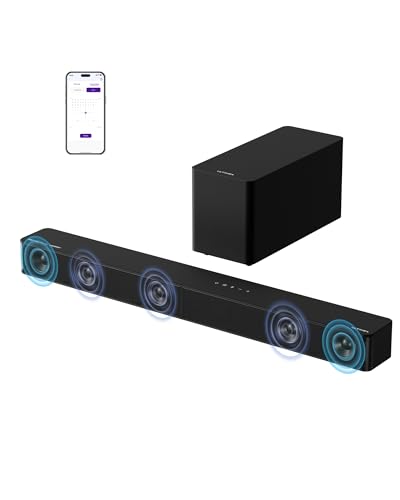
The Ultimea Poseidon M60 Boom represents what happens when a newer company applies fresh thinking to established technology. Released in 2024, it incorporates several clever design choices that maximize performance while keeping costs reasonable.
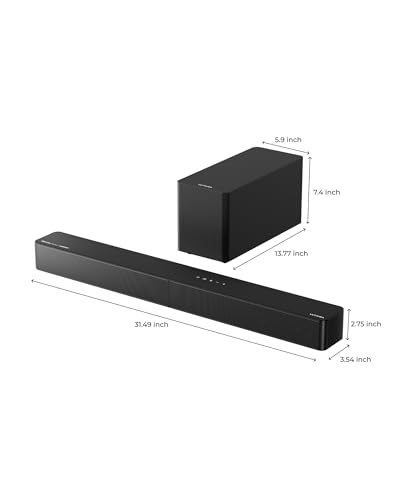
The most unique aspect is its modular soundbar design. Unlike traditional single-piece units, the Poseidon M60 Boom arrives as two sections that physically connect together. This isn't just a gimmick – it allows Ultimea to pack five discrete full-range drivers into what becomes a substantial 49-inch soundbar while making shipping and handling more manageable.
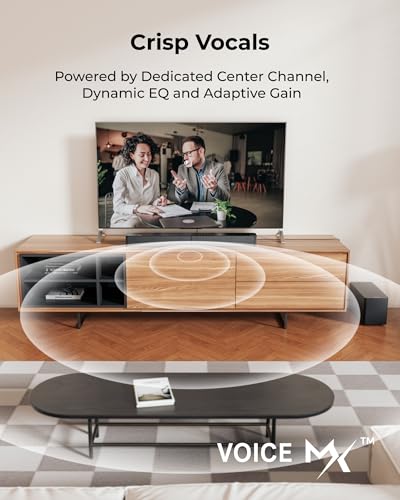
Inside this connected unit lives some impressive technology. The Triple-Core DSP (Digital Signal Processing) system uses three dedicated processors – two running at 800MHz and one at 600MHz – to handle real-time audio processing. Think of DSP as the brain that takes incoming audio and optimizes it for your specific speakers and room. This processing power enables features like VoiceMX technology, which specifically enhances dialogue frequencies between 300Hz and 3kHz, making conversations in movies crystal clear even during loud action scenes.
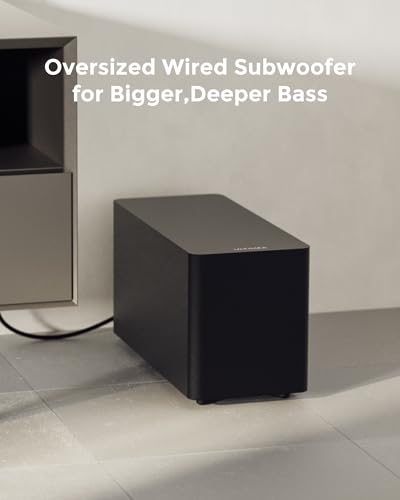
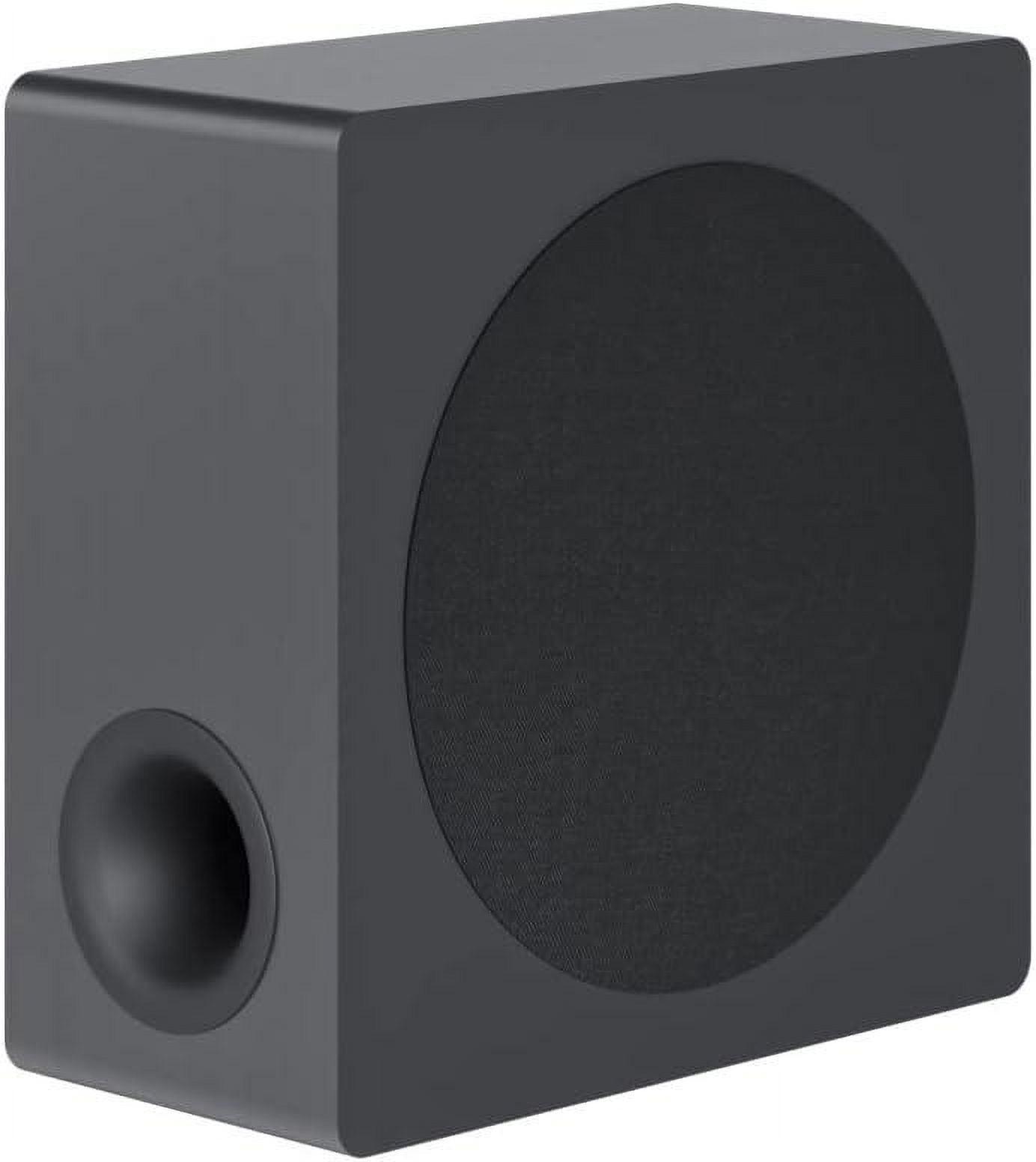
The bass duties fall to a wired 5.25-inch subwoofer featuring BassMX technology. This isn't marketing fluff – the system uses an oversized cabinet with a high-excursion driver that can move up to 16mm in and out. For context, many budget subwoofers barely manage 10mm of movement. More excursion means the driver can move more air, creating deeper, more impactful bass without distortion.
What really sets the Ultimea Poseidon M60 Boom apart is its app-based control system. The ULTIMEA Smart app provides access to detailed EQ adjustments, multiple sound modes, and real-time settings changes. You can tweak bass, midrange, and treble independently, switch between movie, music, voice, sport, game, and night modes, and even adjust individual channel levels. This level of control typically requires much more expensive systems.
The 340W peak power rating means this system can fill medium to large rooms without strain. Based on user feedback and professional reviews, the Poseidon M60 Boom consistently delivers room-filling sound that exceeds expectations for its price category, particularly excelling in dialogue clarity and bass impact.
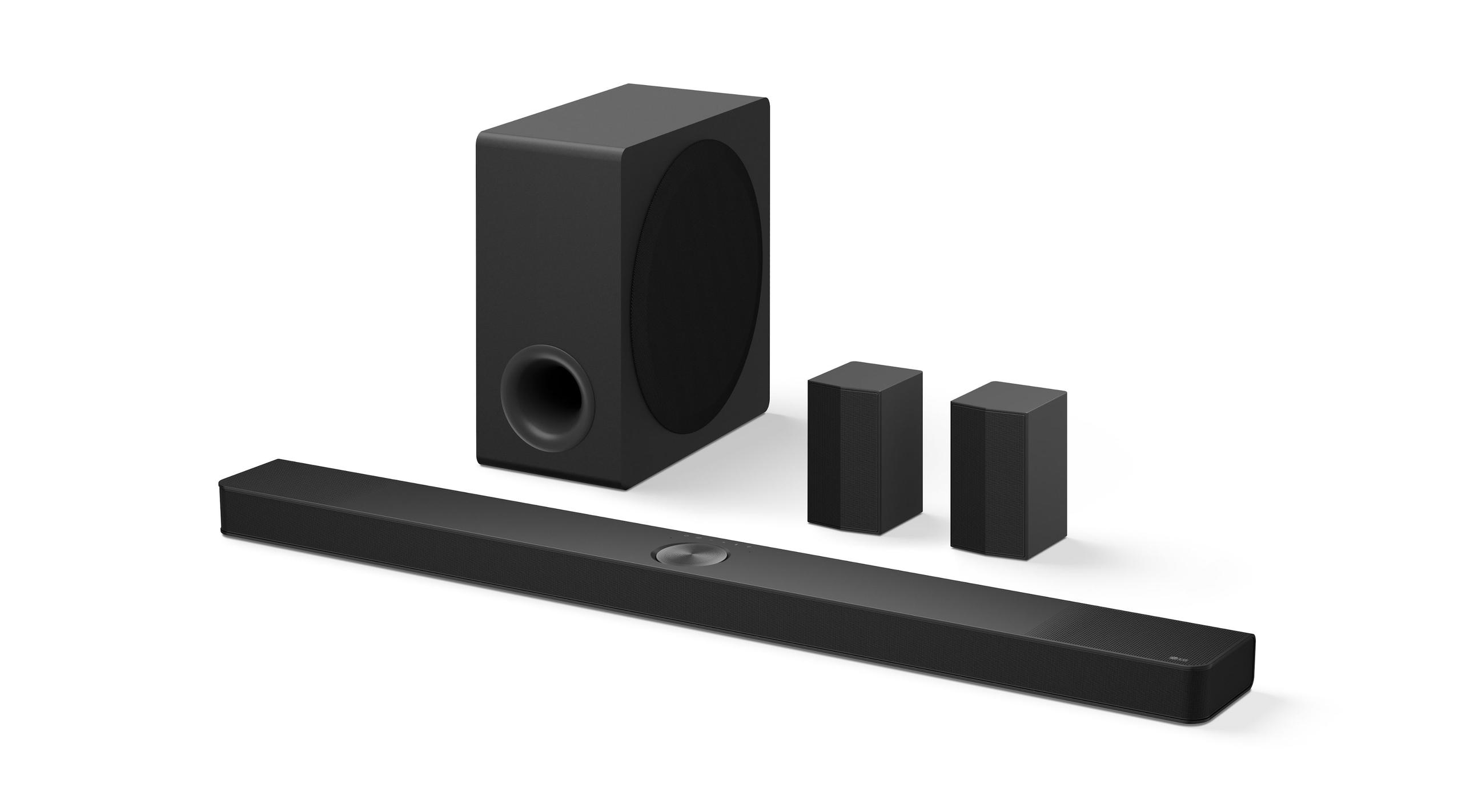
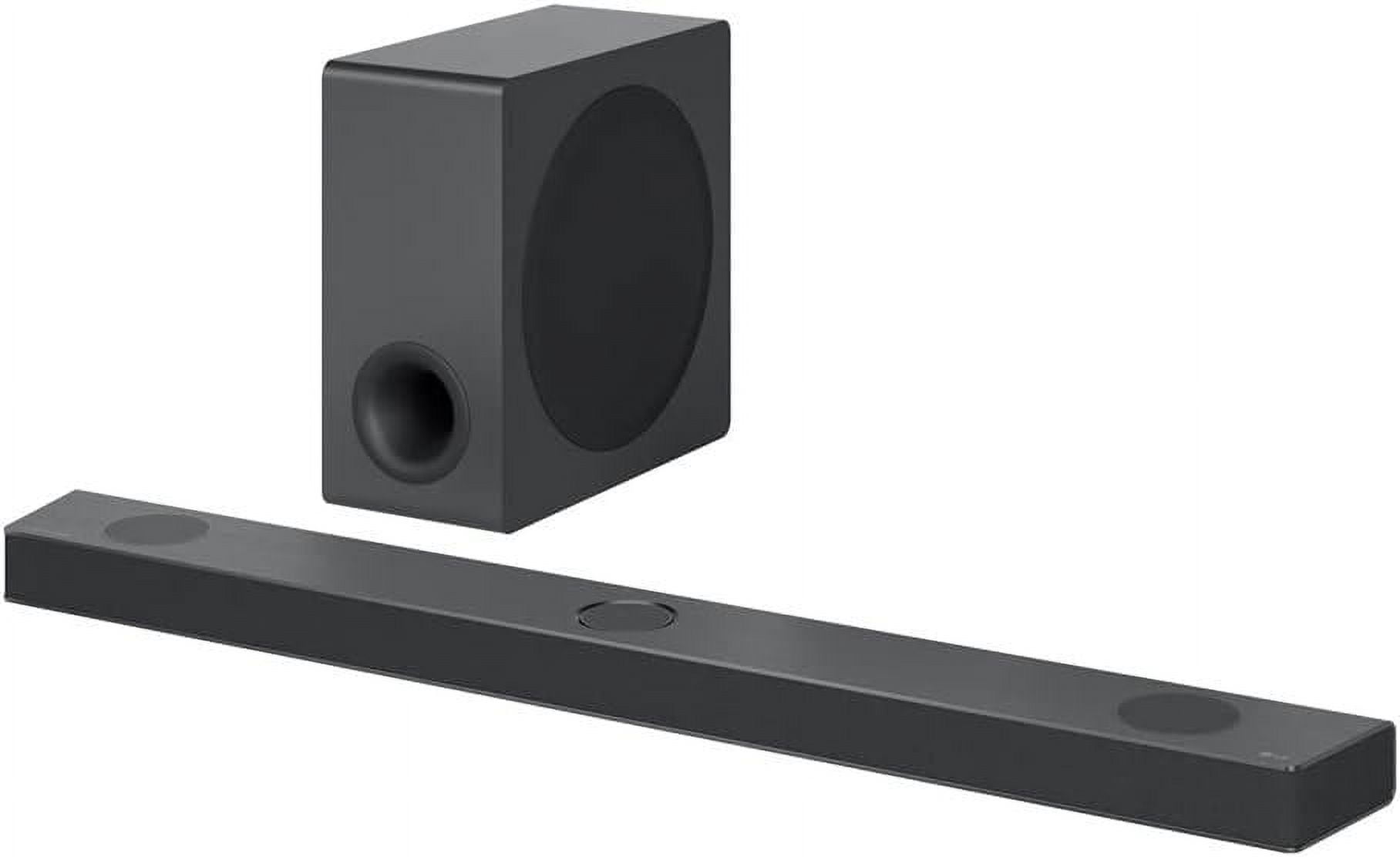
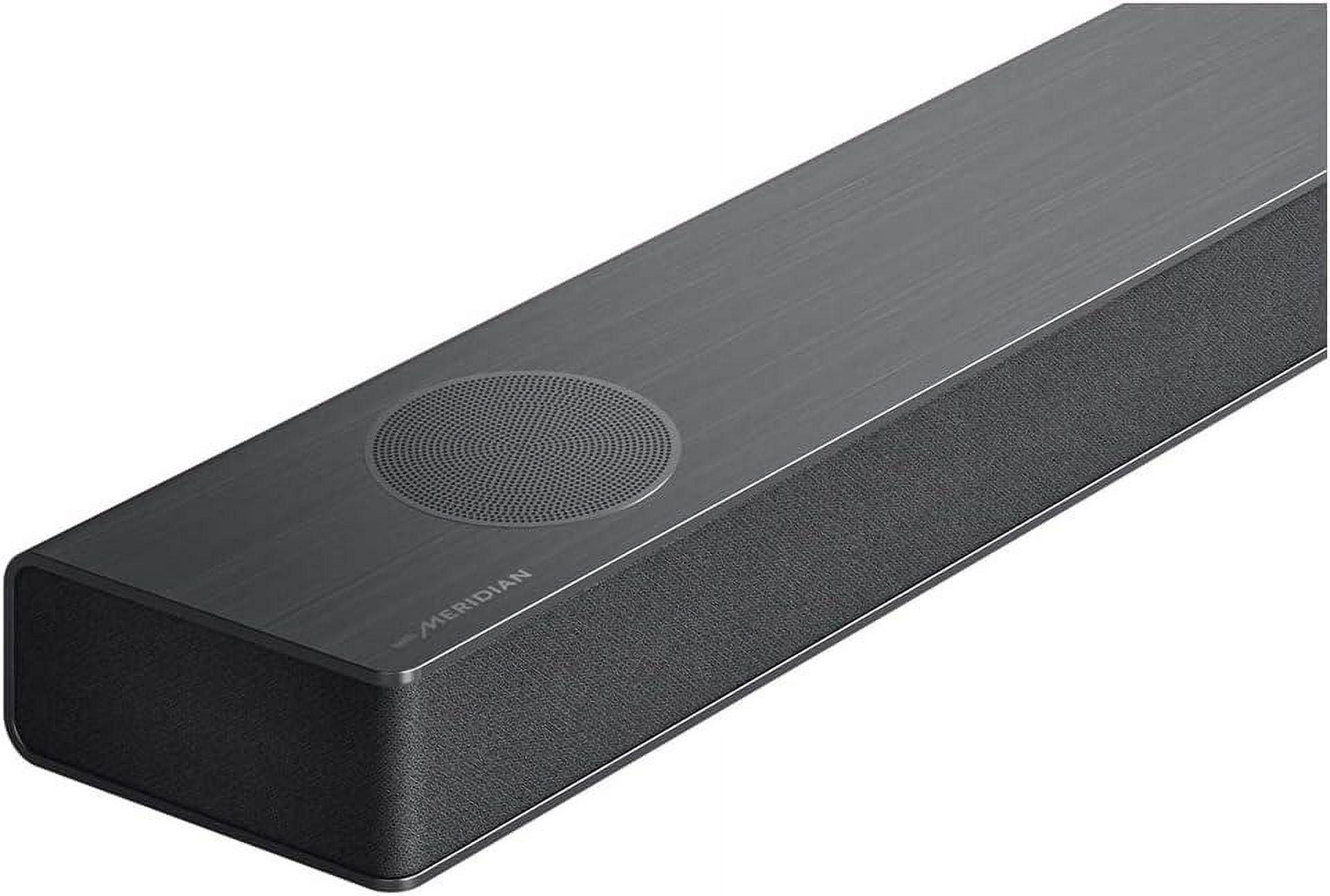
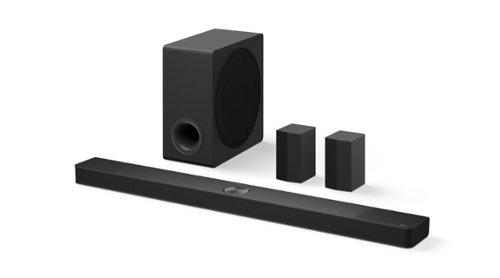
The LG S90TR takes an entirely different approach, representing traditional premium soundbar philosophy executed with modern refinements. As a 7.1.3 channel system, it includes 13 individual drivers spread across a main soundbar, wireless subwoofer, and dedicated wireless rear speakers.
This physical separation creates authentic spatial audio positioning that virtual processing simply cannot match. When a helicopter flies overhead in a movie, you'll hear it move from speaker to speaker around your room rather than experiencing a processed approximation from a single location. The three height channels use upfiring drivers that bounce sound off your ceiling to create overhead effects – a key component of modern Dolby Atmos soundtracks.
LG's AI Sound Calibration technology represents a significant advancement in automated room tuning. The system uses built-in microphones to analyze your room's acoustic properties and automatically adjusts frequency response accordingly. Rooms with hard surfaces that create echoes get different tuning than carpeted spaces that absorb sound. This happens automatically without requiring manual measurements or adjustments.
The LG S90TR integrates deeply with LG's TV ecosystem through WOW Orchestra technology. When connected to compatible LG OLED TVs, the soundbar can coordinate with the TV's built-in speakers to create an even wider soundstage. It's like having additional center channel speakers built into your TV working in harmony with the soundbar system.
However, this premium approach comes with trade-offs. The lack of HDMI 2.1 support is particularly puzzling for a system released in 2024, especially given the increasing prevalence of gaming consoles and high-refresh-rate content that benefit from this newer standard. Additionally, while the LG S90TR offers various EQ presets, it doesn't provide the granular manual control available through the Ultimea app.
Based on extensive user feedback and professional reviews, both systems deliver impressive audio quality but through different strengths. The Ultimea Poseidon M60 Boom excels in dynamic range and impact. Its 340W peak power rating translates to genuinely room-filling sound with excellent control across all volume levels. The five full-range drivers create a wide soundstage from a single location, while the BassMX subwoofer provides deep, controlled bass that enhances both movie explosions and music basslines without overwhelming dialogue.
The LG S90TR focuses more on refinement and accuracy. Its distributed driver arrangement creates precise imaging – you can pinpoint exactly where sounds originate in the soundstage. The AI calibration ensures balanced frequency response regardless of room acoustics, resulting in consistent performance across different listening environments. While specific power ratings aren't published, users report the system gets plenty loud without compression or distortion.
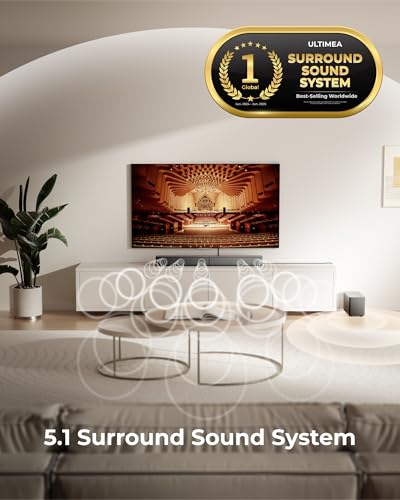
This represents the fundamental difference between these systems. The Poseidon M60 Boom uses sophisticated digital processing to create virtual surround effects from its five-driver array. The Triple-Core DSP system analyzes incoming surround sound signals and processes them to create the illusion of sounds coming from beside and behind you. For movies and gaming, this creates convincing spatial effects that significantly outperform TV speakers or basic soundbars.
However, virtual surround has physical limitations. No amount of processing can truly replicate the experience of discrete speakers positioned around your room. The LG S90TR's physical rear speakers create authentic surround positioning that places sounds precisely where filmmakers intended. When combined with the height channels, this creates genuine three-dimensional audio that envelops listeners.
The effectiveness of each approach depends heavily on room size and layout. In smaller rooms (under 200 square feet), the Ultimea system's virtual processing can be remarkably convincing. In larger spaces, the LG system's discrete speakers become increasingly advantageous.
Both systems prioritize dialogue clarity but use different methods. The Poseidon M60 Boom's VoiceMX technology actively processes the vocal frequency range in real-time, automatically adjusting levels to ensure speech remains intelligible during complex audio passages. This works particularly well for challenging content like action movies where dialogue often gets buried under sound effects.
The LG S90TR uses a dedicated center channel with tuning that emphasizes speech frequencies. This more traditional approach works well but can occasionally make higher-pitched sounds seem overly bright. The discrete center channel does provide excellent dialogue localization – voices seem to come directly from the screen rather than from the sides.
The Ultimea Poseidon M60 Boom's wired subwoofer delivers impressive low-end performance for its size. The 5.25-inch driver with 16mm excursion capability produces deep, controlled bass that enhances both movies and music. The wired connection ensures reliable operation without the dropout issues that sometimes affect wireless subwoofers.
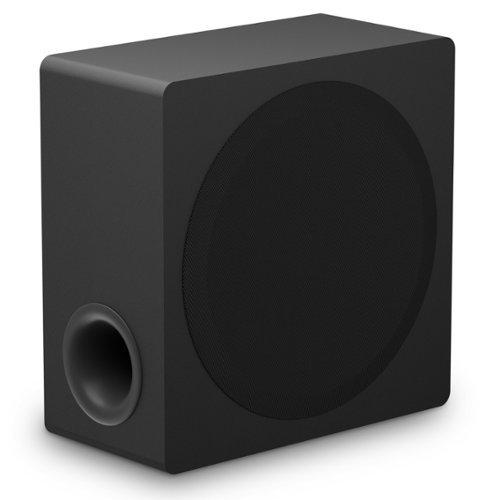
The LG S90TR's wireless subwoofer offers placement flexibility but reviews suggest slightly less impactful bass performance despite its larger enclosure. The wireless convenience allows optimal positioning for room acoustics, but some users report occasional connectivity hiccups that require reconnection.
Installation complexity differs dramatically between these systems. The Ultimea Poseidon M60 Boom truly delivers on its promise of simple setup. The two soundbar sections connect with satisfying clicks, the wired subwoofer plugs directly into the main unit, and you're typically listening within 15 minutes of unboxing. The single HDMI connection handles most modern TVs perfectly, while the comprehensive app provides immediate access to all features.
The LG S90TR requires more consideration and time. You'll need to position the main soundbar, find optimal locations for wireless rear speakers (typically behind or beside your seating), and place the wireless subwoofer where it won't overwhelm nearby neighbors. Each wireless component needs pairing, and achieving optimal performance requires attention to speaker positioning and room acoustics.
For apartment dwellers or those with limited space, the Ultimea system's integrated design offers clear advantages. For homeowners with dedicated media rooms who can optimize speaker placement, the LG system's flexibility becomes valuable.
Both systems offer comprehensive connectivity, but with different priorities. The Poseidon M60 Boom includes cutting-edge Bluetooth 5.4 support, which provides faster pairing, more stable connections, and reduced latency compared to older Bluetooth versions. This makes it excellent for music streaming and gaming applications where audio delay can be noticeable.
The LG S90TR includes Wi-Fi connectivity and deeper smart home integration but notably lacks HDMI 2.1 support. For a premium system released in 2024, this feels like a significant oversight, especially as gaming consoles increasingly support 4K/120Hz gaming and Variable Refresh Rate (VRR) technologies that benefit from HDMI 2.1's higher bandwidth.
At the time of writing, these systems occupy distinctly different price tiers. The Ultimea Poseidon M60 Boom delivers premium features at a budget-friendly price point, making advanced soundbar technology accessible to cost-conscious buyers. You're getting Dolby Atmos support, comprehensive app control, powerful bass, and excellent dialogue clarity at a fraction of traditional premium pricing.
The LG S90TR commands significantly higher pricing that reflects its authentic multi-channel audio, premium build quality, and advanced AI features. However, the lack of HDMI 2.1 support raises questions about long-term value, especially as entertainment technology continues evolving toward higher bandwidth requirements.
Choose the Ultimea Poseidon M60 Boom if you want maximum audio improvement without complexity or premium pricing. It's ideal for apartment dwellers, students, or anyone who prioritizes excellent performance with simple installation. The comprehensive app control appeals to users who enjoy tweaking settings, while the powerful bass and clear dialogue benefit all content types. Small to medium-sized rooms work best, and the virtual surround processing provides convincing spatial effects without requiring additional speakers.
The LG S90TR suits users who prioritize authentic surround sound positioning and have rooms large enough to accommodate proper speaker placement. It's the better choice for dedicated home theaters where optimal acoustic setup is possible. LG TV owners particularly benefit from ecosystem integration, and the premium build quality justifies higher investment for long-term use.
Both systems represent excellent approaches to soundbar design, but they serve different user needs and priorities. The Ultimea Poseidon M60 Boom proves that budget-friendly doesn't mean compromised performance, delivering impressive audio quality with user-friendly features that rival much more expensive systems. Its simple installation and comprehensive control make it appealing to users who want immediate gratification with room for customization.
The LG S90TR provides the authentic surround sound experience that virtual processing cannot match, justified by its premium pricing through superior spatial accuracy and build quality. However, the missing HDMI 2.1 support feels like a significant oversight that may limit its future compatibility.
For most users seeking substantial audio improvement over TV speakers, the Ultimea Poseidon M60 Boom offers exceptional value and performance. For dedicated home theater enthusiasts with larger rooms and higher budgets, the LG S90TR's authentic surround positioning provides the immersive experience that makes premium pricing worthwhile.
| Ultimea Poseidon M60 Boom | LG S90TR |
|---|---|
| Channel Configuration - Determines surround sound accuracy and immersion | |
| 5.1 channels (virtual surround from main bar) | 7.1.3 channels (discrete rear speakers + height channels) |
| Physical Speaker Layout - Affects spatial audio positioning | |
| All drivers in connected soundbar unit + wired subwoofer | Main bar + wireless subwoofer + wireless rear speakers (13 total drivers) |
| Peak Power Output - Indicates maximum volume and dynamic range | |
| 340W peak power with room-filling capability | Not specified, but gets very loud without compression |
| Subwoofer Design - Impacts bass performance and placement flexibility | |
| Wired 5.25" with 16mm excursion and BassMX technology | Wireless subwoofer with flexible room placement |
| Smart Features and Control - Affects customization and ease of use | |
| Comprehensive ULTIMEA Smart app with manual EQ control | AI Sound Calibration with automatic room tuning |
| Bluetooth Technology - Determines wireless streaming quality | |
| Bluetooth 5.4 with ultra-low latency for gaming/music | Bluetooth 5.1 standard connectivity |
| HDMI Support - Critical for future gaming and video compatibility | |
| HDMI eARC support with CEC device sync | HDMI eARC but lacks HDMI 2.1 (significant limitation for premium price) |
| Setup Complexity - Time and effort required for installation | |
| 15-minute setup with two-piece connecting soundbar | Multi-component wireless setup requiring strategic speaker placement |
| Room Size Optimization - Best performance scenarios | |
| Ideal for small to medium rooms where virtual surround excels | Best for larger rooms that accommodate proper surround speaker positioning |
| Dialogue Enhancement Technology - Critical for clear speech | |
| VoiceMX with real-time vocal frequency processing (300Hz-3kHz) | Discrete center channel with frequency emphasis on speech clarity |
| EQ and Sound Customization - User control over audio tuning | |
| Manual bass/mid/treble adjustment plus 6 preset modes via app | Multiple presets with AI calibration but limited manual control |
| Value Proposition - Performance relative to price point | |
| Exceptional features and performance at budget-friendly pricing | Premium authentic surround sound at significantly higher cost |
The Ultimea Poseidon M60 Boom is ideal for small rooms due to its integrated design and virtual surround processing. Since all drivers are contained in the connected soundbar unit, it doesn't require additional rear speakers that might overwhelm a compact space. The virtual 5.1 processing works particularly well in smaller areas where discrete speakers would be impractical.
The Ultimea Poseidon M60 Boom offers 5.1 channels (left, center, right, two surrounds, plus subwoofer) using virtual processing from the main bar. The LG S90TR provides 7.1.3 channels with physical rear speakers and height channels that bounce sound off your ceiling. The LG system creates more authentic spatial positioning, while the Ultimea offers convincing virtual surround without additional speakers.
The Ultimea Poseidon M60 Boom features a wired 5.25-inch subwoofer with 16mm excursion and BassMX technology, delivering powerful, controlled bass. The LG S90TR includes a wireless subwoofer that offers placement flexibility but may have slightly less impactful bass performance. The wired connection on the Ultimea ensures reliable operation without wireless dropouts.
The Ultimea Poseidon M60 Boom offers incredibly simple setup - just connect the two soundbar pieces, plug in the wired subwoofer, and connect via HDMI. Most users complete installation in 15 minutes. The LG S90TR requires positioning multiple wireless components around your room and pairing each one, making setup more complex but offering greater placement flexibility.
Both excel at dialogue but use different approaches. The Ultimea Poseidon M60 Boom uses VoiceMX technology that actively processes vocal frequencies in real-time, ensuring speech stays clear during loud scenes. The LG S90TR has a dedicated center channel that localizes dialogue to the screen but can sometimes make higher-pitched sounds overly bright.
Yes, both the Ultimea Poseidon M60 Boom and LG S90TR work with any TV that has HDMI or optical outputs. However, the LG system offers enhanced integration with LG TVs through WOW Orchestra technology, which coordinates the soundbar with your TV's built-in speakers for wider sound.
The Ultimea Poseidon M60 Boom provides more comprehensive manual control through its smart app, allowing detailed EQ adjustments for bass, mid, and treble, plus six preset modes. The LG S90TR focuses on automatic AI calibration with various presets but offers limited manual EQ control compared to the Ultimea system.
The Ultimea Poseidon M60 Boom includes HDMI eARC, optical, USB, and Bluetooth 5.4 with ultra-low latency. The LG S90TR offers similar connections plus Wi-Fi but notably lacks HDMI 2.1 support, which limits compatibility with newer gaming consoles and high-refresh displays.
The LG S90TR is superior for large home theaters due to its discrete rear speakers and height channels that create authentic surround positioning throughout bigger spaces. The Ultimea Poseidon M60 Boom's virtual processing works well in medium-sized rooms but cannot match the spatial accuracy of physical speakers in larger areas.
The Ultimea Poseidon M60 Boom excels for gaming with Bluetooth 5.4's ultra-low latency and comprehensive EQ control for different game types. The LG S90TR provides immersive surround for gaming but lacks HDMI 2.1 support, which limits compatibility with next-gen gaming features like 4K/120Hz and Variable Refresh Rate.
The Ultimea Poseidon M60 Boom delivers exceptional value with premium features like Dolby Atmos support, comprehensive app control, and powerful performance at a budget-friendly price. The LG S90TR justifies its premium pricing through authentic surround positioning and build quality, but the missing HDMI 2.1 support raises value concerns for future compatibility.
The Ultimea Poseidon M60 Boom is a complete system that cannot be expanded with additional speakers. The LG S90TR is also a complete system, though LG's ecosystem integration with compatible TVs can enhance the experience. Neither system supports adding extra speakers beyond what's included in the package.
We've done our best to create useful and informative comparisons to help you decide what product to buy. Our research uses advanced automated methods to create this comparison and perfection is not possible - please contact us for corrections or questions. These are the sites we've researched in the creation of this article: ultimea.com - ultimea.com - youtube.com - bestbuy.com - youtube.com - avsforum.com - youtube.com - manuals.plus - youtube.com - device.report - ultimea.com - ultimea.de - community.ultimea.com - ultimea.com - community.ultimea.com - ultimea.com - youtube.com - aliexpress.com - ultimea.com - rtings.com - abt.com - youtube.com - bestbuy.com - microcenter.com - buydig.com - bestbuy.com - videoandaudiocenter.com - oceanstateappliance.com - youtube.com - avsforum.com - lg.com

Privacy Policy
Terms and Conditions - Affiliate Policy
Home Security
© Copyright 2008-2026.
11816 Inwood Rd #1211, Dallas, TX 75244