

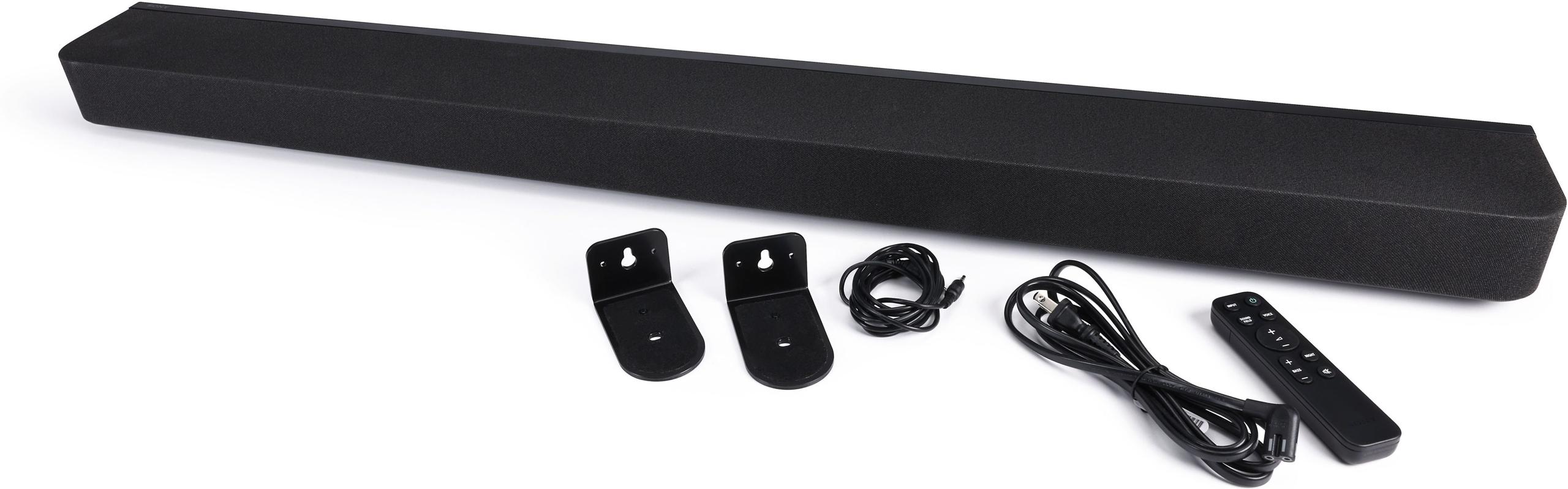
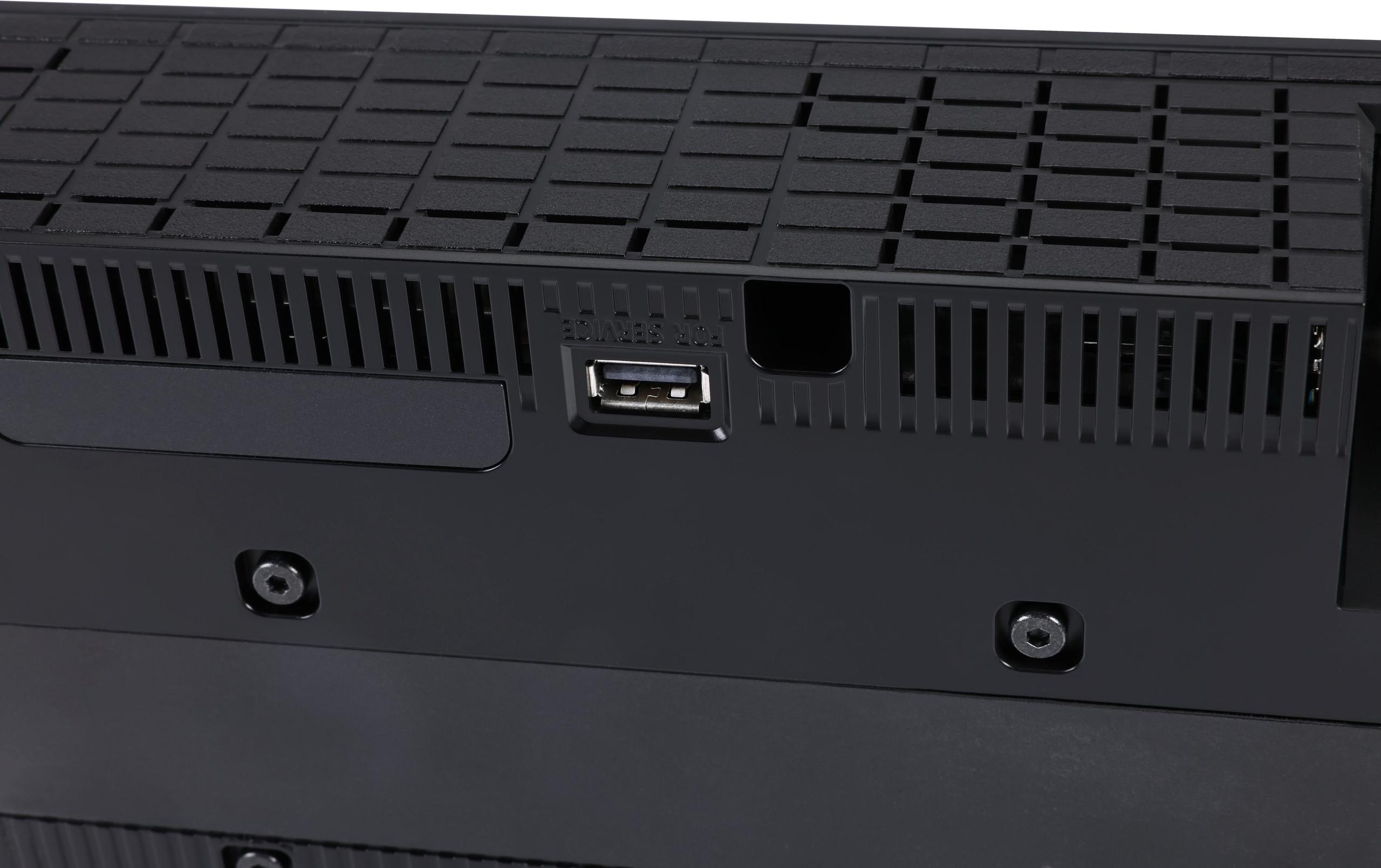
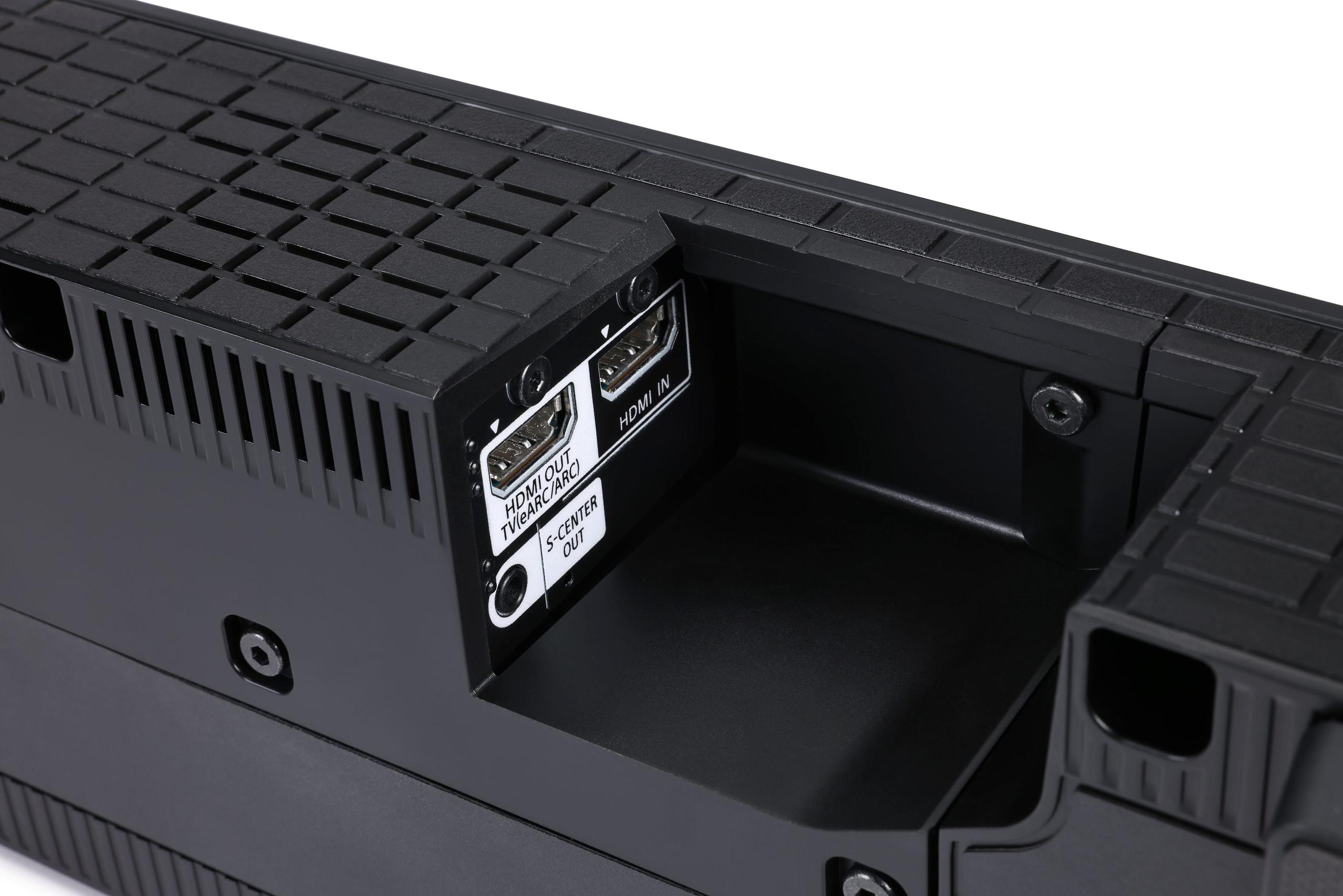

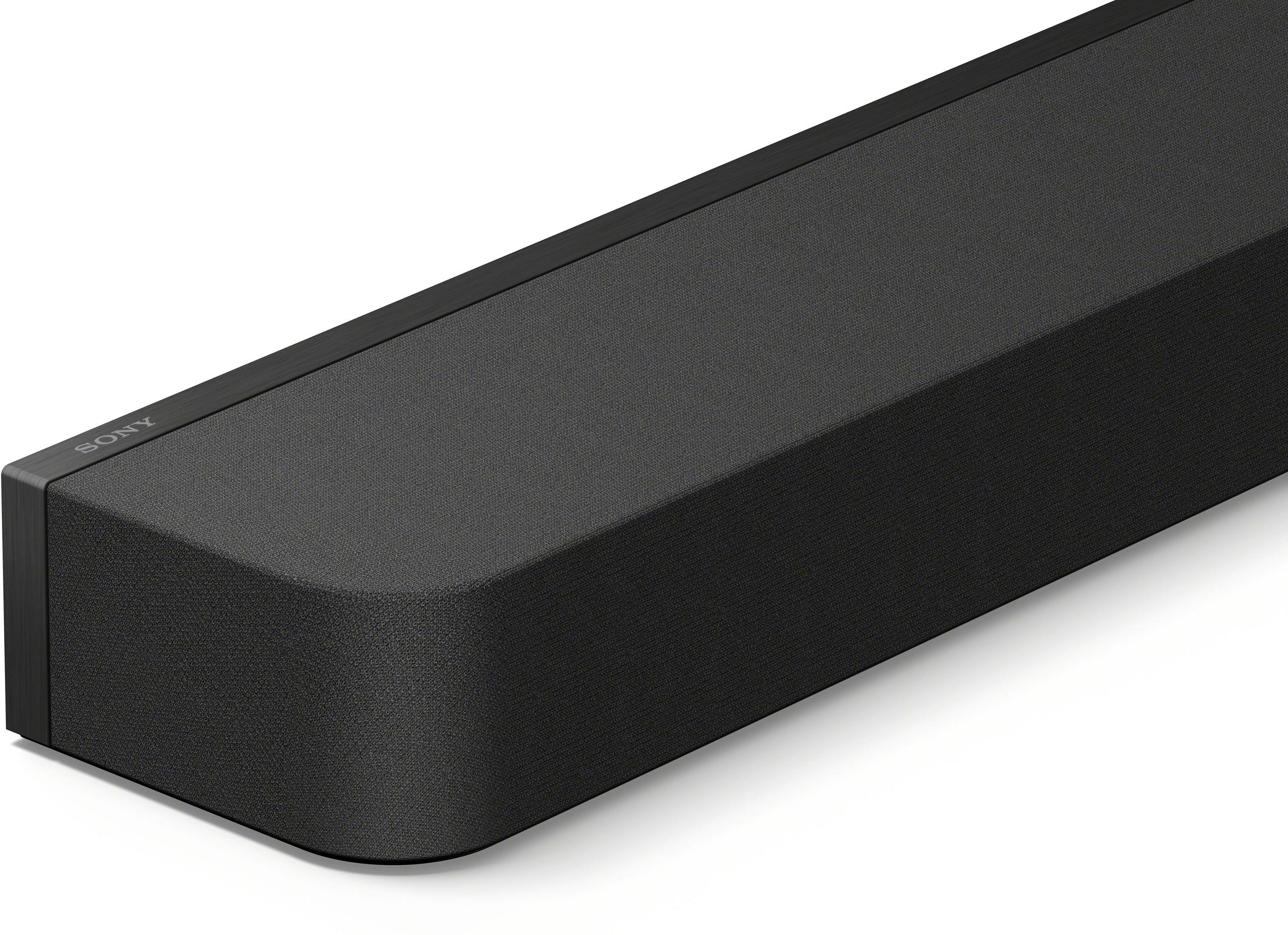

When you're trying to upgrade from your TV's built-in speakers, the soundbar world can feel overwhelming. Two very different approaches dominate the market: premium single-bar systems that use advanced processing to create virtual surround sound, and traditional multi-component setups that rely on physical speaker placement for authentic audio positioning.
The Sony HT-A8000 and Ultimea Poseidon M60 Boom represent these competing philosophies perfectly. Released in 2024 and 2025 respectively, they show how soundbar technology has evolved to serve different priorities and budgets. Understanding their fundamental differences will help you make the right choice for your living room.
Before diving into specifics, it's worth understanding what separates today's soundbars from the basic models of just a few years ago. Modern soundbars have become sophisticated audio processors that can simulate multi-dimensional sound fields, automatically adjust to your room's acoustics, and integrate seamlessly with gaming consoles and streaming devices.
The key performance metrics that matter most are dialogue clarity (how well you can understand speech), bass response (the depth and impact of low frequencies), surround sound effectiveness (how convincingly the system places sounds around you), and overall power output (how loud and dynamic the system can get without distortion).
These two soundbars take radically different approaches to achieving these goals, which makes the comparison particularly interesting.
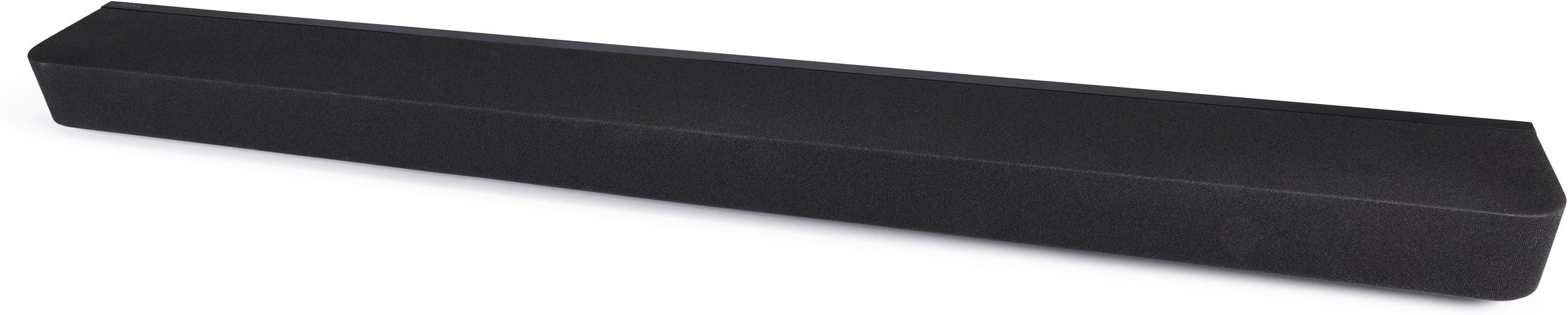
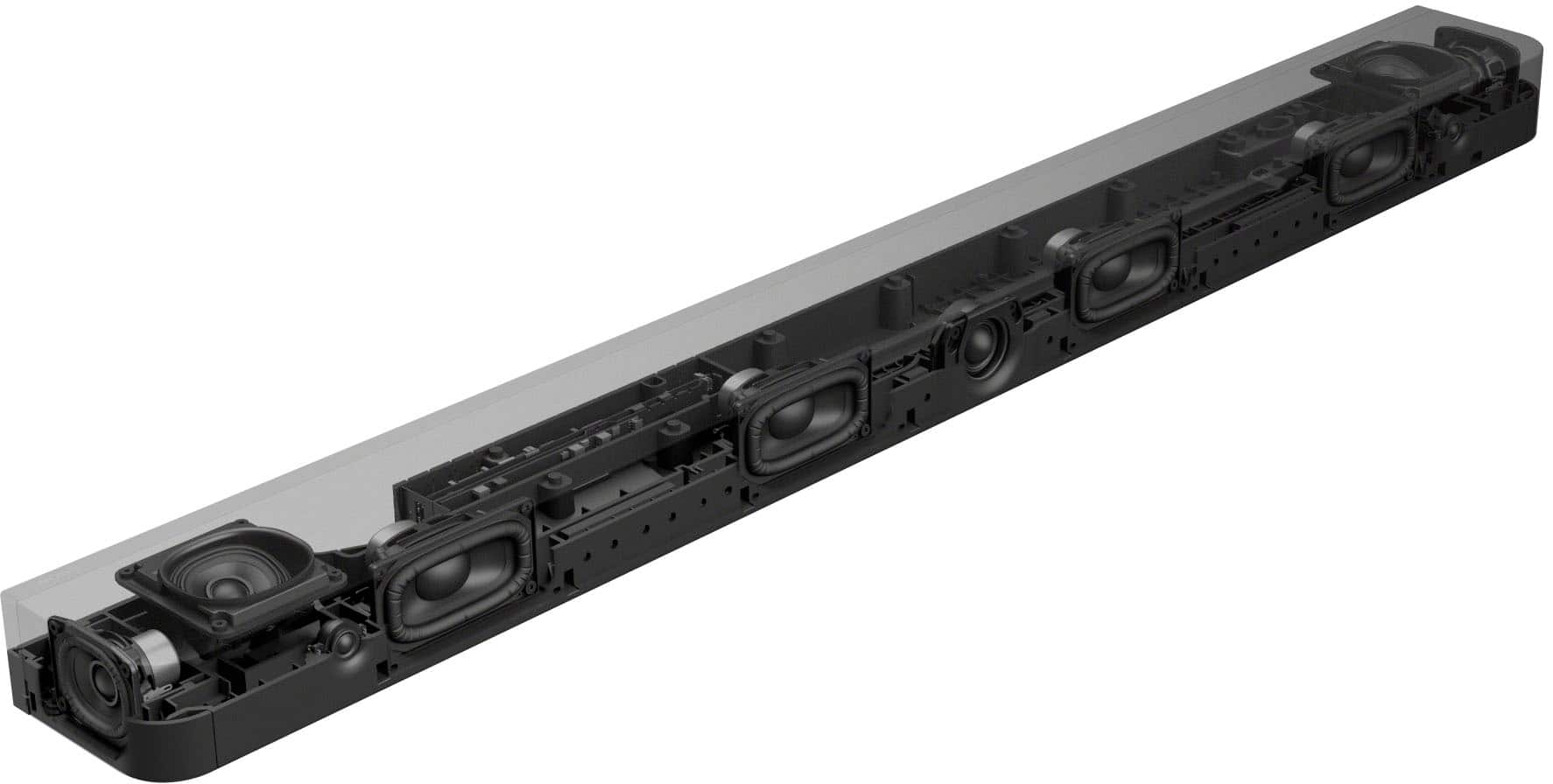
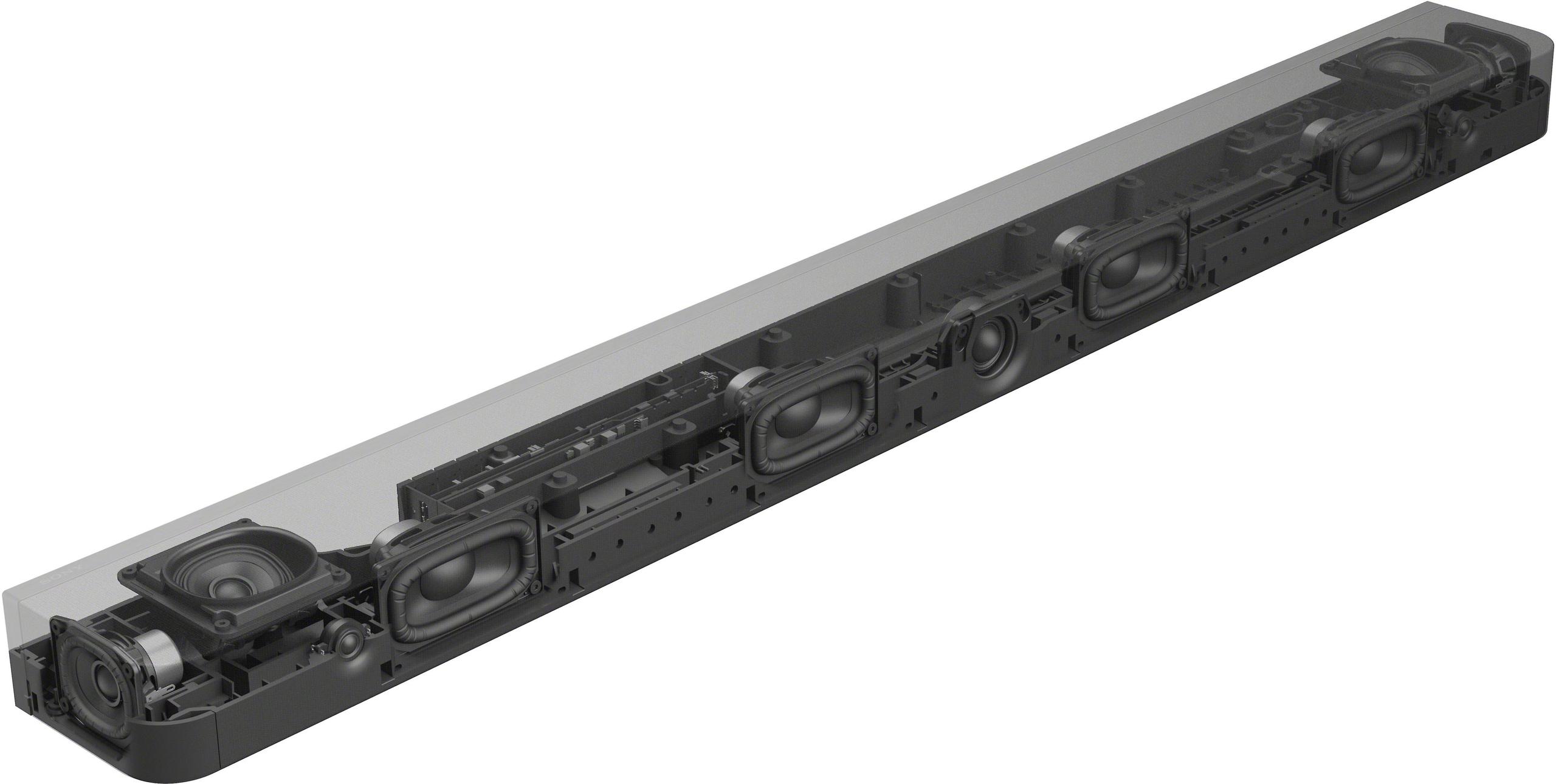
The Sony HT-A8000 embodies Sony's "invisible surround" philosophy. Instead of relying on multiple physical speakers placed around your room, it packs 11 individual drivers into a single sleek soundbar and uses sophisticated digital signal processing (DSP) – essentially computer algorithms that manipulate audio in real-time – to create the illusion of surround sound.
This approach has several compelling advantages. The 360 Spatial Sound Mapping technology analyzes your room's acoustics and creates "phantom speakers" – sound sources that appear to exist where no physical speaker is present. It's similar to how your brain can be tricked into seeing 3D images from a flat screen, but for audio. The system uses wall and ceiling reflections to bounce sound around your room, creating the impression that dialogue is coming from your TV screen while effects seem to originate from beside and behind you.
The Sound Field Optimization feature takes this further by automatically calibrating the audio based on your room's unique characteristics. Different rooms absorb and reflect sound differently – a room with hardwood floors and bare walls will sound much brighter than one with carpeting and heavy curtains. The Sony HT-A8000 measures these acoustic properties and adjusts its output accordingly, ensuring consistent performance regardless of your space.
For dialogue clarity, Sony's Voice Zoom 3 represents a significant technological advancement. This AI-powered feature actually analyzes the incoming audio stream in real-time, identifies human speech frequencies (primarily in the 300Hz to 3kHz range where most vocal intelligibility occurs), and dynamically adjusts the volume and clarity of these frequencies. It's particularly effective during complex movie scenes where dialogue might normally get lost under explosive sound effects or dramatic music.
The integration with gaming, especially PlayStation 5, showcases Sony's ecosystem approach. Auto HDR Tone Mapping synchronizes the audio processing with the console's visual output, while support for HDMI 2.1 features like Variable Refresh Rate (VRR) and Auto Low Latency Mode (ALLM) ensures that audio stays perfectly synchronized with fast-paced gaming action. VRR allows the display refresh rate to match the game's frame rate for smoother visuals, while ALLM automatically reduces input delay when gaming is detected.
However, the Sony HT-A8000 has a significant limitation: it lacks a dedicated subwoofer in the base configuration. While it includes four built-in woofers (the drivers responsible for bass frequencies), these simply cannot move enough air to produce the deep, impactful low frequencies that make action movies and music truly engaging. Sony offers optional wireless subwoofers, but at the time of writing, these add considerable cost to what's already a premium-priced system.
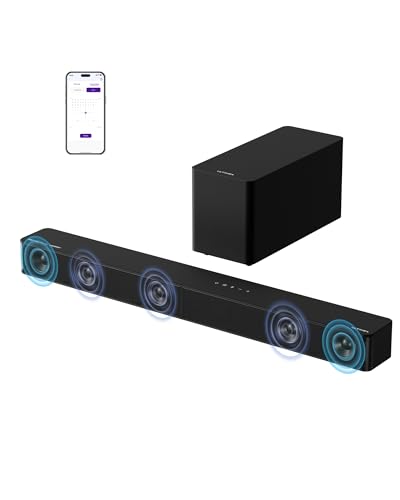
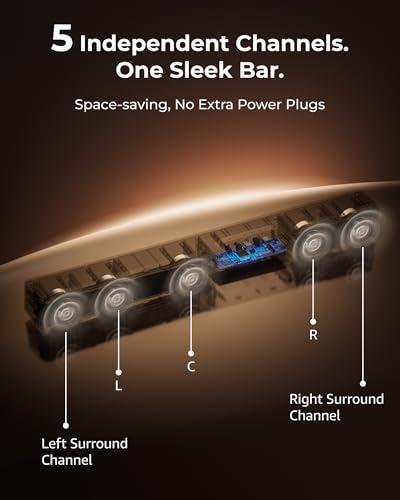
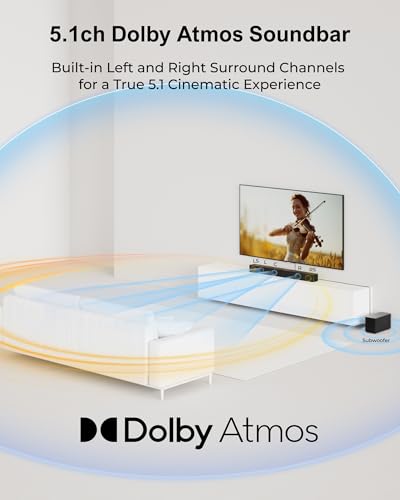
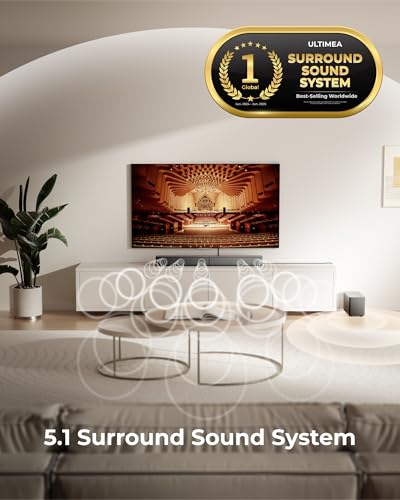
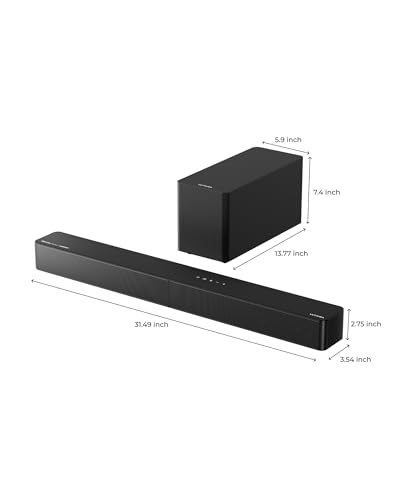
The Ultimea Poseidon M60 Boom takes the opposite approach entirely. Rather than trying to simulate surround sound through processing tricks, it provides authentic 5.1 channel audio through physical speaker separation – five full-range drivers in the main soundbar handling left, center, right, and surround channels, plus a dedicated 5.25-inch subwoofer for bass frequencies.
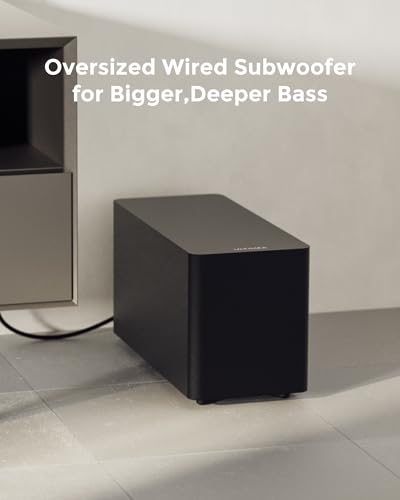
This traditional approach has some inherent advantages that no amount of processing can fully replicate. The dedicated subwoofer uses BassMX Technology, which combines an oversized wooden cabinet with a high-excursion driver – meaning the speaker cone can move up to 16mm in either direction. This physical displacement creates genuine air pressure changes that you feel as much as hear, delivering the kind of bass impact that makes explosions feel visceral and music sound full-bodied.
The Triple-Core DSP Technology in the Ultimea M60 Boom is noteworthy for a budget-focused system. With two processors running at 800MHz and one at 600MHz, providing over 2000 MIPS (Million Instructions Per Second) of processing power, it can perform real-time parametric equalization (PEQ) – precise frequency adjustments across the entire audio spectrum – while maintaining proper channel separation.
The 340W peak power output and 99dB maximum sound pressure level (SPL) specifications tell us this system can get genuinely loud without distortion. To put that in perspective, 99dB is roughly equivalent to standing next to a motorcycle or being in the front row at a rock concert. Most people will never need anywhere near this much volume, but having that headroom means the system will remain clean and dynamic even at more reasonable listening levels.
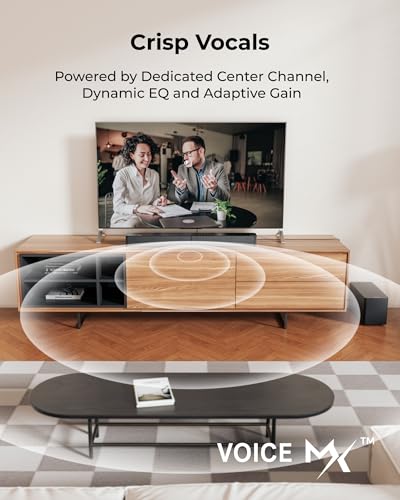
The VoiceMX vocal enhancement technology addresses dialogue clarity through a more direct approach than Sony's AI processing. It specifically boosts the 300Hz to 3kHz range where most speech intelligibility occurs, using adaptive EQ and gain control. While less sophisticated than Sony's approach, it's effective and doesn't require the complex processing that might introduce subtle delays or artifacts.
The system's Bluetooth 5.4 connectivity deserves mention for its ultra-low latency performance. Latency – the delay between when audio is sent and when you hear it – has been a persistent problem with wireless audio. The latest Bluetooth standards have largely solved this, making wireless music streaming and even gaming viable without noticeable lip-sync issues.
This is where the fundamental design differences become most apparent. The Ultimea M60 Boom's dedicated subwoofer provides genuine low-frequency extension down to 45Hz – well into the range where you feel bass as much as hear it. Movie explosions, helicopter rotors, and the lowest notes in music reproduction all benefit from having a dedicated driver designed specifically for these frequencies.
The Sony HT-A8000, despite its four built-in woofers, simply cannot compete in terms of raw bass impact. Built-in woofers face fundamental physics limitations – they're constrained by the soundbar's slim form factor and cannot move the large volumes of air needed for deep bass reproduction. This isn't a criticism of Sony's engineering; it's an inherent limitation of the single-bar approach.
However, Sony's bass response is more controlled and integrated with the rest of the frequency range. The built-in woofers are precisely tuned to work with the other drivers, creating a more cohesive overall sound signature. For content that doesn't demand earth-shaking low frequencies – dialogue-heavy dramas, news, or casual music listening – Sony's approach can actually sound more balanced.
Here, the comparison becomes more nuanced. The Ultimea M60 Boom achieves surround effects through virtual processing since all five channels are housed within the main soundbar. It doesn't have physically separate rear speakers, so it uses psychoacoustic processing – essentially tricking your brain into perceiving sounds as coming from locations where no speakers exist.
The Sony HT-A8000 uses more advanced processing for its surround effects, with its 11-speaker array providing more precise control over sound positioning. The 360 Spatial Sound Mapping can create more convincing phantom imaging, particularly for sounds that appear to come from beside or slightly behind your listening position.
Neither system will match the surround effect of having actual speakers positioned around your room, but Sony's processing is more sophisticated and generally more convincing. The trade-off is complexity – Sony's system requires more setup and calibration to achieve optimal results, while Ultimea's approach is more straightforward but potentially less immersive.
Both systems excel here, but through different methods. Sony's Voice Zoom 3 AI processing provides genuinely impressive speech enhancement, particularly in challenging content where dialogue is mixed low relative to music and effects. The system can identify speech patterns and enhance them selectively without affecting other audio elements.
The Ultimea M60 Boom's VoiceMX technology is less sophisticated but more transparent. It simply boosts the frequency range where speech clarity occurs, which can sometimes make the overall sound signature slightly forward or bright. However, many users prefer this direct approach, as it doesn't introduce the subtle processing artifacts that can sometimes occur with more complex AI systems.
For users who primarily watch dialogue-heavy content – news, documentaries, or dramatic series – both systems provide significant improvements over TV speakers, but Sony's approach is more refined and adaptive.
This category clearly favors the Sony HT-A8000, particularly for PlayStation 5 users. The Auto HDR Tone Mapping synchronization with Sony's console creates a more integrated experience, while the HDMI 2.1 features enable advanced gaming capabilities that the Ultimea M60 Boom simply doesn't support.
For casual gaming or gaming with non-Sony consoles, the differences are less pronounced. The Ultimea's Bluetooth 5.4 connectivity and dedicated game EQ mode provide solid performance, and the lower latency can actually be advantageous for wireless gaming scenarios.
At the time of writing, these systems occupy very different price segments, which significantly affects their value propositions. The Sony HT-A8000 represents a premium entry point that can become quite expensive when fully configured with optional subwoofer and rear speakers. The base soundbar alone costs significantly more than the complete Ultimea M60 Boom system.
However, direct price comparison isn't entirely fair since you're getting very different experiences. The Sony system's processing sophistication, build quality, gaming optimizations, and ecosystem integration justify higher costs for users who value these features. It's similar to comparing a luxury sedan to a well-equipped economy car – both will transport you effectively, but they target different priorities and budgets.
The Ultimea M60 Boom delivers impressive performance for its price point, particularly in bass response and overall power output. For users who prioritize immediate satisfaction and don't need advanced gaming features or ecosystem integration, it represents excellent value.
Your room's characteristics significantly influence which system will perform better. The Sony HT-A8000's room calibration technology makes it more adaptable to challenging acoustic environments – rooms with unusual shapes, excessive hard surfaces, or poor speaker placement options. The automatic calibration can compensate for many room acoustic issues that would negatively impact a more traditional system.
The Ultimea M60 Boom requires more careful consideration of subwoofer placement. The wired connection limits flexibility compared to wireless subwoofers, and optimal bass response depends on proper positioning relative to walls and corners. However, once properly positioned, the physical subwoofer provides more predictable performance across different room types.
For smaller rooms or apartments where neighbors might be a concern, Sony's more controlled bass response could be advantageous. The Ultimea M60 Boom's powerful subwoofer, while impressive, can easily overwhelm smaller spaces or cause disturbance in multi-family housing situations.
The Sony HT-A8000 makes the most sense for users who prioritize technological sophistication over raw performance metrics. If you own a PlayStation 5, appreciate premium build quality, prefer minimalist aesthetics, and plan to build a system over time with optional components, Sony's approach offers clear advantages. The room calibration and advanced dialogue processing particularly benefit users in challenging acoustic environments or those who consume primarily dialogue-heavy content.
The Ultimea Poseidon M60 Boom appeals to users seeking maximum immediate impact for their investment. If you want genuine bass response without additional purchases, prefer straightforward setup and operation, or prioritize raw performance over processing sophistication, the Ultimea system delivers compelling value. It's particularly appealing for action movie enthusiasts and music listeners who want to feel the low frequencies in their content.
For home theater applications specifically, the choice depends on your priorities. Serious movie enthusiasts who want to recreate the cinema experience will appreciate the Ultimea M60 Boom's powerful bass response and authentic channel separation. However, users who value dialogue clarity above all else, or who watch a lot of complex content where speech gets buried in the mix, might prefer Sony's intelligent processing.
Both systems succeed in their respective approaches, making the choice largely dependent on your priorities and budget. The Sony HT-A8000 represents the future of soundbar technology – sophisticated, adaptable, and seamlessly integrated with modern entertainment ecosystems. The Ultimea Poseidon M60 Boom proves that traditional multi-component approaches still have merit, particularly when executed thoughtfully at accessible price points.
If you're building a long-term system and value cutting-edge features, Sony's expandable platform offers more growth potential. If you want immediate satisfaction and maximum performance per dollar spent, Ultimea's complete system approach delivers impressive results right out of the box.
The soundbar market has evolved to serve diverse user needs, and both of these systems demonstrate that evolution effectively. Your choice should align with your specific priorities: technological sophistication and ecosystem integration, or immediate authentic surround impact and exceptional value.
| Sony HT-A8000 BRAVIA Theater Bar 8 Soundbar | Ultimea Poseidon M60 Boom 5.1 Soundbar |
|---|---|
| Channel Configuration - Determines surround sound authenticity | |
| 5.0.2 virtual surround (11 speakers in soundbar) | True 5.1 with dedicated wired subwoofer |
| Bass System - Most noticeable difference in movie impact | |
| 4 built-in woofers (requires optional $300+ subwoofer for deep bass) | Dedicated 5.25" wooden subwoofer with BassMX Technology included |
| Power Output - Affects maximum volume and dynamic range | |
| Not specified (likely lower due to compact design) | 340W peak power, 99dB maximum SPL |
| Gaming Features - Critical for console users | |
| PlayStation 5 optimized, HDMI 2.1, 4K/120Hz, VRR, ALLM | Standard gaming with Bluetooth 5.4 low latency |
| Room Adaptation - Handles challenging acoustics | |
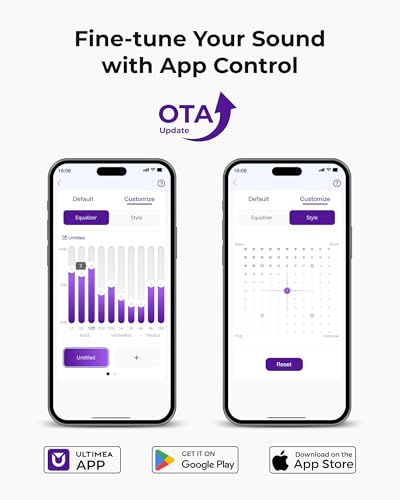
| 360 Spatial Sound Mapping with automatic calibration | Manual EQ adjustment via app (6 presets + custom) |
| Dialogue Enhancement - Essential for clear speech | |
| Voice Zoom 3 AI with real-time speech recognition | VoiceMX vocal boost in 300Hz-3kHz range |
| Connectivity Options - Affects device compatibility | |
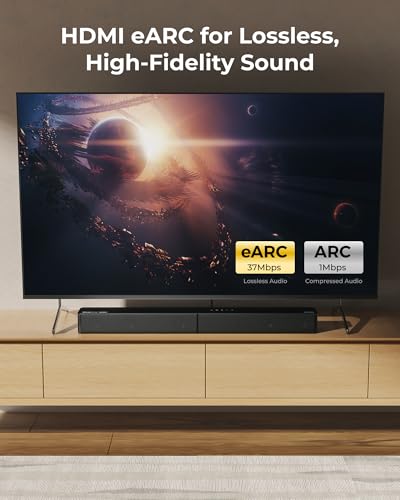
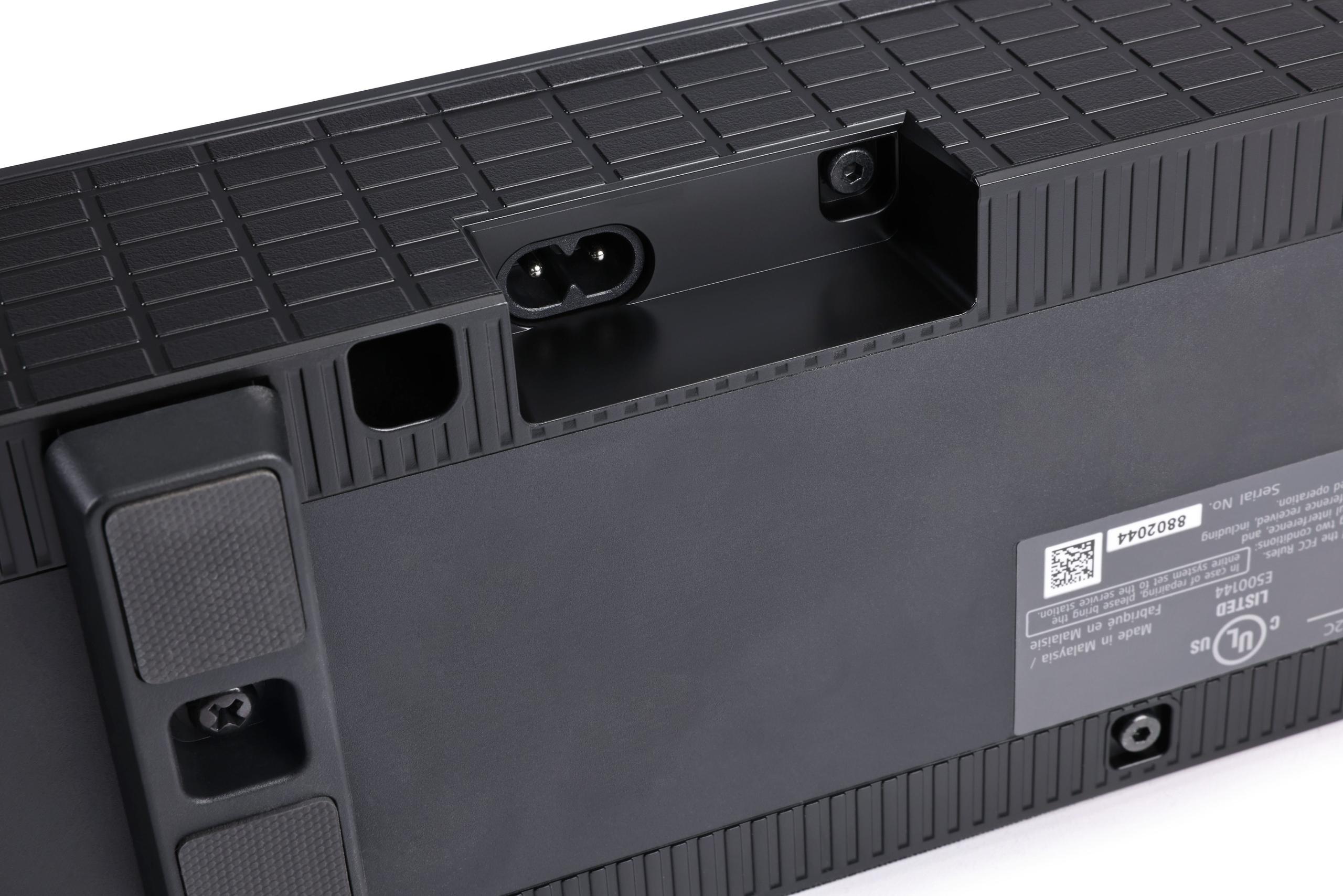
| HDMI 2.1 eARC, Wi-Fi, Bluetooth 5.2, AirPlay 2, Spotify Connect | HDMI eARC, Bluetooth 5.4, optical, USB, AUX |
| Expandability - Future upgrade potential | |
| Modular system (add wireless subwoofer and rear speakers) | Fixed configuration, no expansion options |
| Setup Complexity - Time investment required | |
| Automatic room calibration, minimal manual adjustment needed | Manual subwoofer placement, app-based EQ tuning recommended |
| Ideal Use Case - Who benefits most | |
| Premium users, PlayStation 5 gamers, dialogue-focused viewing | Bass enthusiasts, complete system seekers, budget-conscious buyers |
The Ultimea Poseidon M60 Boom is generally better for movies due to its dedicated 5.25" subwoofer that delivers deep, impactful bass for explosions and action scenes. However, the Sony HT-A8000 excels at dialogue clarity with its Voice Zoom 3 AI technology, making it ideal for dialogue-heavy films and TV shows.
The Ultimea Poseidon M60 Boom comes complete with a subwoofer included, giving you full surround sound immediately. The Sony HT-A8000 works as a standalone unit but requires an optional subwoofer purchase to match the bass performance of the Ultimea system.
The Ultimea Poseidon M60 Boom has significantly better bass since it includes a dedicated wooden subwoofer with BassMX technology. The Sony HT-A8000 only has built-in woofers that cannot produce the same deep bass impact without adding an optional subwoofer.
The Sony HT-A8000 is excellent for gaming, especially with PlayStation 5, offering HDMI 2.1 support, 4K/120Hz compatibility, and Auto HDR Tone Mapping. The Ultimea M60 Boom provides good gaming performance with Bluetooth 5.4 low latency but lacks advanced console-specific features.
The Ultimea Poseidon M60 Boom has simpler setup since it's a traditional system, though you need to position the wired subwoofer properly. The Sony HT-A8000 offers automatic room calibration that optimizes sound without manual adjustment, making it easier for users who prefer hands-off setup.
The Sony HT-A8000 excels at dialogue clarity with its AI-powered Voice Zoom 3 technology that automatically enhances speech frequencies. The Ultimea M60 Boom also provides good dialogue clarity through its VoiceMX technology, though it's less sophisticated than Sony's AI processing.
The Ultimea Poseidon M60 Boom typically offers better value since you get a complete system with subwoofer included. The Sony HT-A8000 costs more upfront and requires additional purchases for comparable bass performance, though it offers premium features and build quality.
Yes, both soundbars support Bluetooth connectivity. The Sony HT-A8000 offers Bluetooth 5.2 plus additional wireless options like AirPlay 2 and Spotify Connect. The Ultimea M60 Boom features the newer Bluetooth 5.4 standard with ultra-low latency for better wireless performance.
The Sony HT-A8000 may work better in small rooms due to its controlled bass output and automatic room calibration that adapts to your space. The Ultimea M60 Boom's powerful subwoofer can overwhelm smaller spaces, though its bass can be adjusted through the mobile app.
The Sony HT-A8000 contains 11 individual speakers within the main soundbar unit, using advanced processing to create surround effects. The Ultimea Poseidon M60 Boom has 5 full-range drivers in the soundbar plus the separate subwoofer for true 5.1 channel audio.
Both offer mobile app control, but the Ultimea M60 Boom provides more comprehensive EQ customization with multiple presets and manual bass, mid, and treble adjustments. The Sony HT-A8000 focuses more on automatic optimization rather than extensive manual control options.
The Sony HT-A8000 is designed as an expandable system where you can add wireless subwoofers and rear speakers over time. The Ultimea Poseidon M60 Boom is a fixed configuration system that cannot be expanded, but it already includes the subwoofer that Sony's system lacks.
We've done our best to create useful and informative comparisons to help you decide what product to buy. Our research uses advanced automated methods to create this comparison and perfection is not possible - please contact us for corrections or questions. These are the sites we've researched in the creation of this article: consumerreports.org - skybygramophone.com - target.com - rtings.com - bestbuy.com - rubbermonkey.co.nz - shopatsc.com - audioadvice.com - sony.com - sony.com - sony.com - shop.cosmopolitan.com - store.sony.com.my - videoandaudiocenter.com - ultimea.com - ultimea.com - youtube.com - bestbuy.com - youtube.com - avsforum.com - youtube.com - manuals.plus - youtube.com - device.report - ultimea.com - ultimea.de - community.ultimea.com - ultimea.com - community.ultimea.com - ultimea.com - youtube.com - aliexpress.com - ultimea.com

Privacy Policy
Terms and Conditions - Affiliate Policy
Home Security
© Copyright 2008-2026.
11816 Inwood Rd #1211, Dallas, TX 75244