





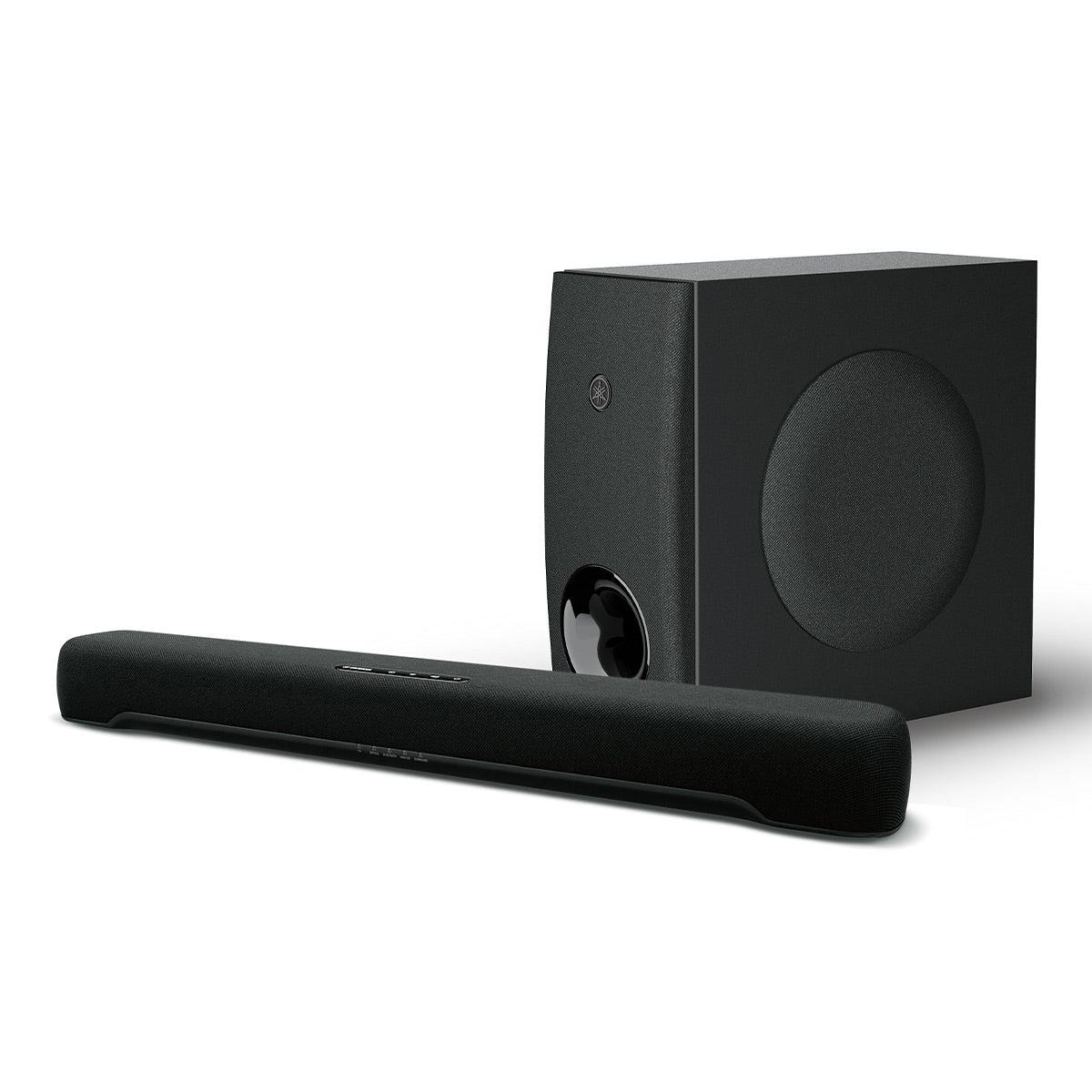
If you've been putting up with your TV's tinny built-in speakers, you're not alone. Most TVs today prioritize slim designs over audio quality, leaving their speakers as an afterthought. That's where soundbars come in—they're the most practical way to dramatically improve your TV's audio without the complexity of a full surround sound system.
But here's where it gets interesting: not all soundbars take the same approach. Today we're comparing two very different philosophies in soundbar design. The Ultimea Poseidon M60 Boom, released in 2024, represents the "give you everything for less" approach with true 5.1 surround sound. Meanwhile, the Yamaha SR-C30A, also from 2024, follows the "do fewer things exceptionally well" philosophy with refined 2.1-channel audio.
At the time of writing, these products sit in different price tiers, with the Ultimea positioned as a budget option that punches well above its weight, while the Yamaha commands a premium for brand reliability and audio refinement. The question isn't just which sounds better—it's which approach better serves your needs.
Before diving into specifics, let's establish what makes a soundbar successful. The most critical factor is channel configuration—this determines how many separate audio streams the system can handle. A 2.1 system has left and right channels plus a subwoofer (that's the ".1" part). A 5.1 system adds center, surround left, and surround right channels for true surround sound.
Power output matters, but not in the way most people think. Raw wattage doesn't guarantee better sound—it's about having enough clean power to handle dynamic peaks without distortion. More important is frequency response (how well it reproduces different pitches) and maximum sound pressure level (how loud it can get without breaking up).
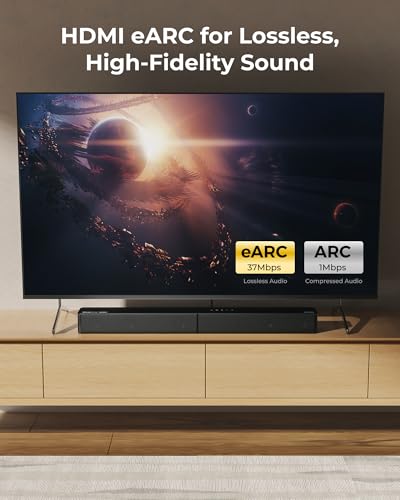
Connectivity has become crucial in 2024. HDMI eARC (enhanced Audio Return Channel) allows lossless audio transmission from your TV, preserving the original quality of Dolby Atmos and other advanced audio formats. This is a significant upgrade from older HDMI ARC, which had bandwidth limitations.
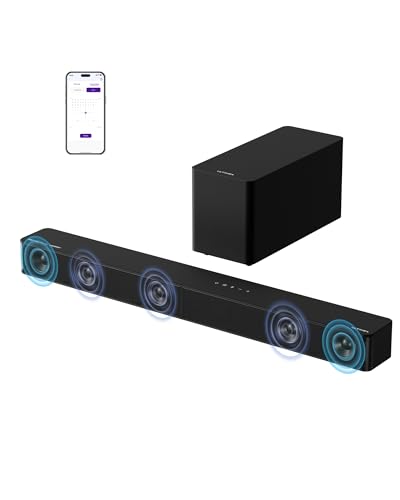
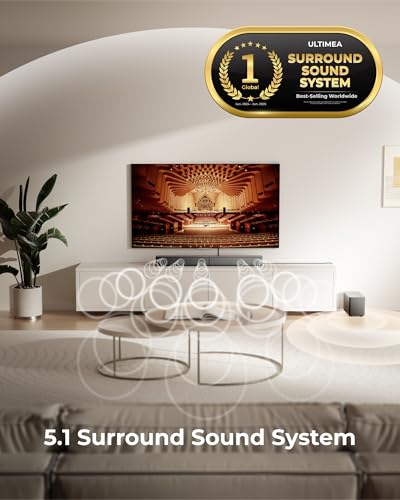
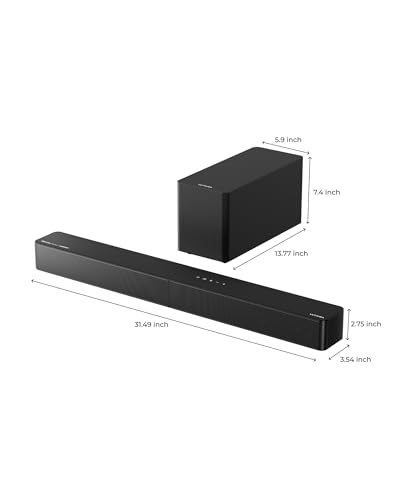
The Ultimea Poseidon M60 Boom takes an ambitious approach—cramming true 5.1-channel surround sound into a single soundbar. This isn't just marketing speak; it actually contains five separate full-range drivers handling left, center, right, surround left, and surround right channels. That's unusual in this price category, where most soundbars fake surround sound through digital processing alone.
The technical achievement here is impressive. The system uses Triple-Core DSP (Digital Signal Processing) technology—essentially three powerful computer chips dedicated to audio processing. Two run at 800MHz and one at 600MHz, providing over 2000 MIPS (Million Instructions Per Second) of processing power. To put that in perspective, that's enough computational power to perform real-time audio analysis and adjustment hundreds of times per second.
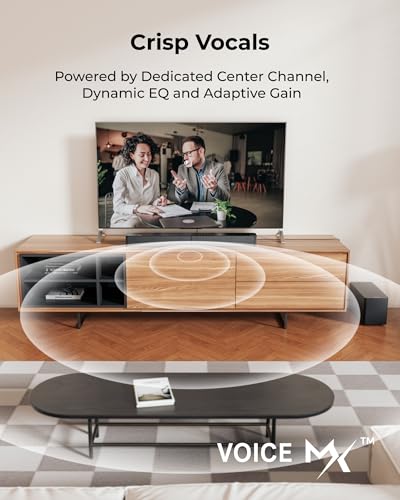
This processing power enables the Ultimea's VoiceMX technology, which dynamically monitors and enhances the 300Hz to 3kHz frequency range where human speech lives. Unlike simple bass or treble adjustments, this system continuously adapts to ensure dialogue remains clear even during explosive action sequences.
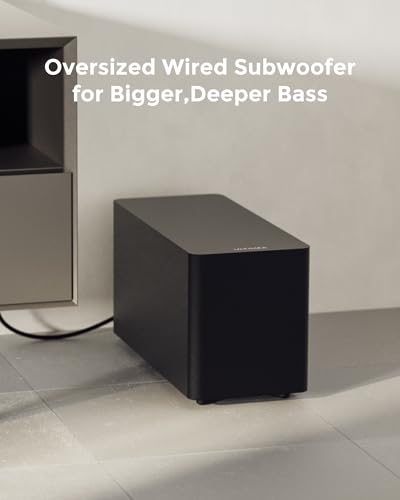
The subwoofer deserves special attention. At 5.25 inches, it's larger than typical budget offerings, but more importantly, it features BassMX technology with up to 16mm diaphragm excursion. That's the distance the speaker cone moves back and forth—more excursion means more air movement and deeper bass. The wooden enclosure and high-excursion driver design can reproduce frequencies down to 45Hz, which covers most of the bass content in movies and music.
Peak power output reaches 340W, though like all soundbar manufacturers, Ultimea likely measures this under ideal conditions. Still, the system achieves a maximum SPL of 99dB, which is genuinely loud—roughly equivalent to standing next to city traffic.
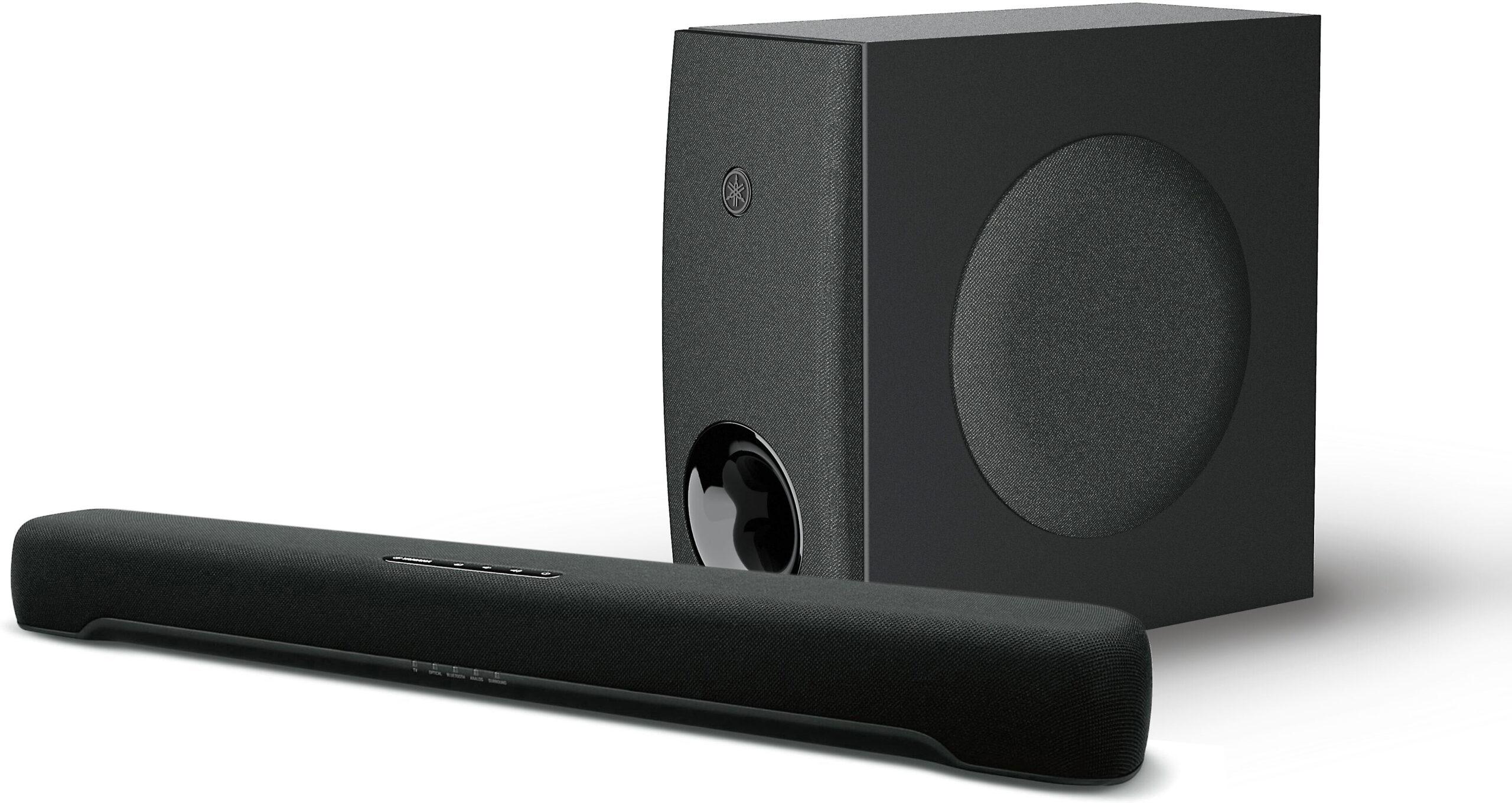
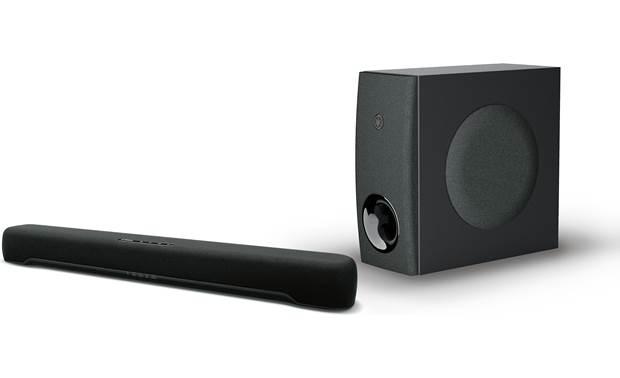
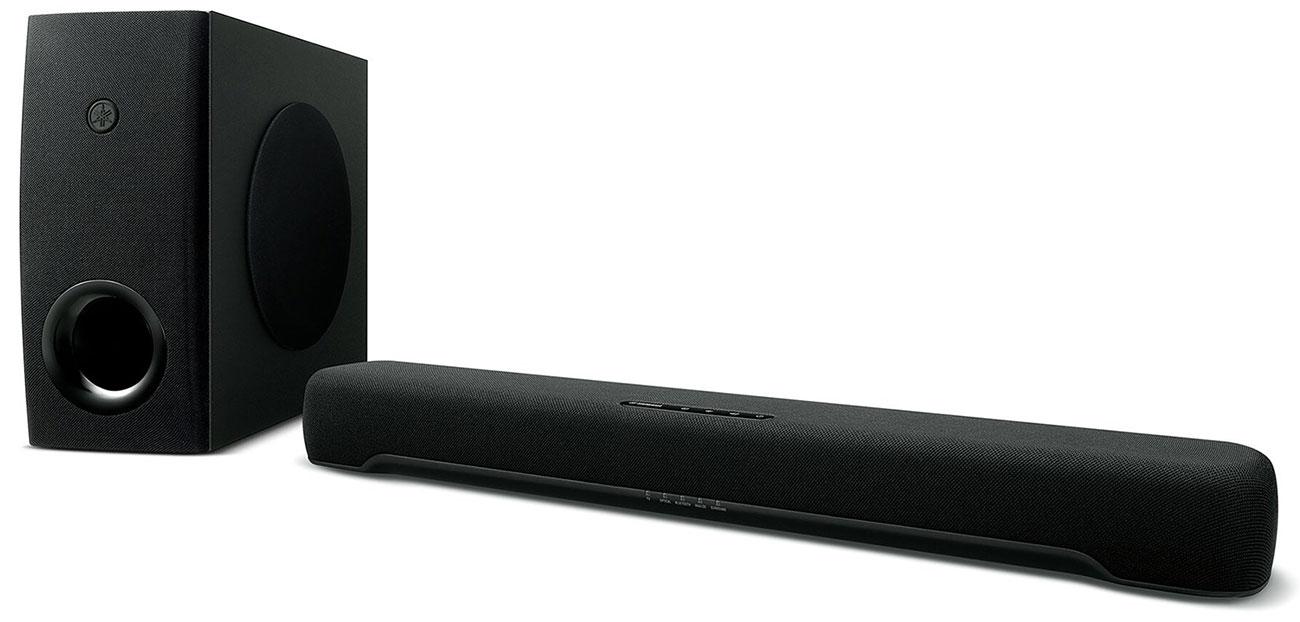
The Yamaha SR-C30A represents a completely different approach. Instead of cramming in more channels, Yamaha focused on making 2.1-channel audio sound exceptional. This reflects decades of audio engineering experience—sometimes doing fewer things really well beats trying to do everything at once.
The standout feature is Clear Voice mode, which goes beyond simple EQ adjustments. It intelligently analyzes incoming audio and boosts the 1-4kHz frequency range where speech consonants live—the sounds that help us distinguish between words. This isn't just making dialogue louder; it's making it more intelligible, which is crucial for shows with heavy accents or whispered conversations.
Yamaha's 3D Movie mode deserves explanation. While the SR-C30A only has two main drivers, it uses sophisticated processing to create the illusion of wider soundstage and some height effects. This virtual surround processing has improved dramatically since early soundbars, though it still can't match true multi-channel systems for immersion.
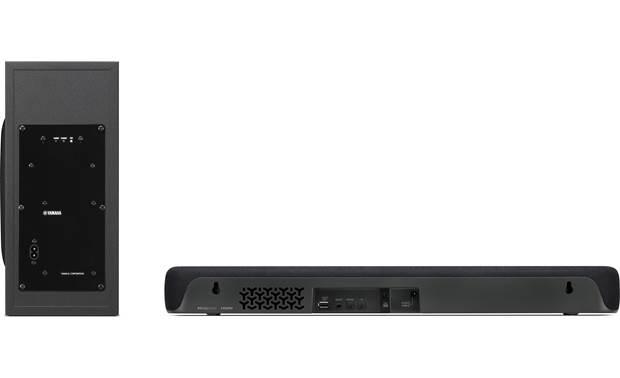
The wireless subwoofer connection represents another philosophical difference. While some argue wired connections eliminate potential audio delay, Yamaha's wireless implementation pairs automatically and maintains rock-solid synchronization. The 5.1-inch subwoofer may be smaller than the Ultimea's, but it's tuned for musical accuracy rather than maximum impact.
At 90W total power (50W to the subwoofer), the Yamaha produces less raw output than the Ultimea. However, Yamaha's power ratings tend to be conservative, and the system includes Adaptive Low Volume technology that maintains full frequency response even at quiet listening levels—something most soundbars struggle with.
This is where the fundamental difference becomes apparent. The Ultimea Poseidon M60 Boom delivers genuine 5.1-channel audio with discrete drivers for each channel. When watching movies, you'll hear dialogue from the center channel, ambient effects from the surrounds, and music from the left/right channels—just as the director intended.
The Yamaha SR-C30A, despite its processing wizardry, remains fundamentally a stereo system. The 3D Movie mode creates a convincing wider soundstage, but you won't get true surround effects like helicopter flyovers or bullets whizzing past your ears.
For home theater enthusiasts, this difference matters enormously. Action movies, sci-fi films, and gaming benefit tremendously from true surround sound. The Ultimea places you in the middle of the action in ways the Yamaha simply cannot match, regardless of processing quality.
Both systems include dedicated subwoofers, but they serve different purposes. The Ultimea's 5.25-inch wired subwoofer with BassMX technology prioritizes impact and extension. During explosion scenes or bass-heavy music, it delivers the kind of chest-thumping low-end that makes movies feel cinematic.
The Yamaha's 5.1-inch wireless subwoofer takes a more musical approach. It integrates seamlessly with the main speakers, providing clean, controlled bass that enhances rather than dominates the listening experience. For jazz, classical music, or dialogue-heavy content, this restraint works beautifully.
Based on our research into user experiences, the Ultimea wins for sheer impact—it's the system that makes your neighbors notice you're watching a movie. The Yamaha excels at bass that serves the content rather than overwhelming it.
Here's where things get nuanced. Both systems address dialogue clarity, but differently. The Ultimea's VoiceMX technology uses brute force—powerful processing to enhance vocal frequencies while dynamically managing background elements. It works, but can sometimes make the overall sound feel processed.
The Yamaha's Clear Voice mode demonstrates more finesse. It enhances speech intelligibility without making the audio feel artificial. For daily TV watching—news, sitcoms, dramas—this refined approach proves more pleasant over time.
Multiple user reviews consistently praise the Yamaha for making even poorly mixed TV shows comprehensible. The Ultimea achieves similar results but with more obvious processing artifacts.
The Ultimea Poseidon M60 Boom embraces modern connectivity with HDMI eARC, multiple inputs, and Bluetooth 5.4. The smartphone app control deserves special mention—it provides access to six EQ presets plus manual adjustment of bass, midrange, and treble. This level of customization was unthinkable in budget soundbars just a few years ago.
CEC (Consumer Electronics Control) integration means the soundbar automatically turns on with your TV and responds to your TV remote's volume controls. For a system at this price point, these convenience features add significant value.
The Yamaha SR-C30A offers essential connectivity—HDMI ARC, optical inputs, and Bluetooth—but focuses on simplicity over features. No smartphone app, no extensive customization, just reliable operation. This appeals to users who want better sound without technical complexity.
For weekend movie marathons or binge-watching series, the Ultimea creates a more immersive experience. The 5.1-channel configuration makes action sequences genuinely exciting, while the powerful subwoofer adds weight to explosions and music scores. The various EQ modes let you optimize for different content types.
The Yamaha handles movies differently—it makes them sound better rather than more exciting. Dialogue remains crystal clear, musical scores sound natural, and the overall presentation feels refined. It's the difference between "wow, that was intense" and "wow, that sounded beautiful."
For news, sitcoms, and casual viewing, both systems improve significantly over TV speakers, but the Yamaha edges ahead. Its Clear Voice mode makes anchors and actors more intelligible, while the Adaptive Low Volume feature maintains quality during late-night viewing when you can't crank the volume.
The Ultimea can feel like overkill for simple content, though its Night mode helps tame the dynamics for apartment living.
Neither system was designed primarily for music, but both handle it competently. The Ultimea provides more powerful bass and wider soundstage for rock, hip-hop, and electronic music. The Yamaha sounds more natural with acoustic music, jazz, and classical content.
Bluetooth 5.4 on the Ultimea provides better streaming quality and range compared to the Yamaha's Bluetooth 5.0, though both work reliably for casual listening.
At the time of writing, the pricing reflects each system's philosophy. The Ultimea Poseidon M60 Boom delivers remarkable value—you're getting features and performance that would have cost significantly more just a few years ago. The comprehensive app control, multiple connectivity options, and true 5.1 processing represent genuine value.
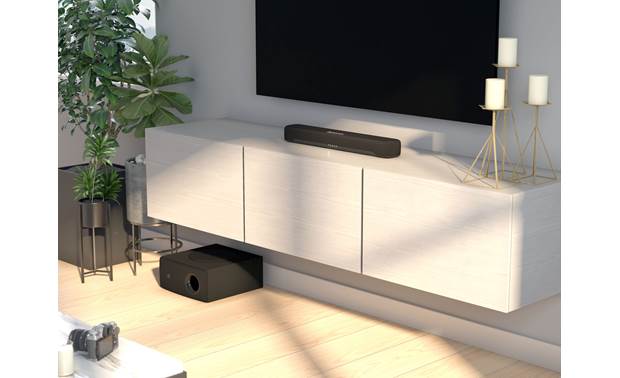
The Yamaha SR-C30A costs more but brings Yamaha's reputation for reliability and longevity. The wireless subwoofer offers placement flexibility that many users prefer over the Ultimea's wired connection. Build quality feels more premium, and the simplified operation appeals to users who prioritize ease of use.
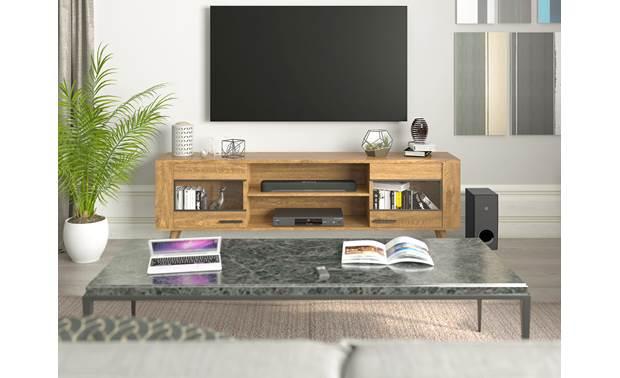
Consider the wired subwoofer issue carefully. The Ultimea requires running a cable from the soundbar to the subwoofer, which might not work in all room layouts. The Yamaha's wireless subwoofer can go anywhere within reasonable range, making room arrangement more flexible.
The decision ultimately comes down to your priorities and usage patterns. Choose the Ultimea Poseidon M60 Boom if you want maximum impact for your money. It's ideal for movie enthusiasts, gamers, and anyone seeking genuine surround sound without spending premium prices. The extensive customization options and powerful output make it perfect for dedicated entertainment rooms.
The Yamaha SR-C30A suits users who prioritize refinement over raw impact. If you mainly watch TV shows, news, and dialogue-heavy content, its superior speech clarity and natural sound signature provide daily benefits. The wireless convenience and simpler operation appeal to users who want better sound without complexity.
For small to medium-sized rooms, either system provides substantial improvement over TV speakers. In larger spaces, the Ultimea's higher power output and true surround capability become more advantageous.
Both systems represent the current state of soundbar technology—sophisticated processing, multiple connectivity options, and performance that would have required much more expensive equipment in previous years. Your choice depends on whether you prefer the Ultimea's "everything included" approach or the Yamaha's "refined essentials" philosophy. Either way, you're getting significantly better audio than what came with your TV.
| Ultimea Poseidon M60 Boom 5.1 Soundbar | Yamaha SR-C30A Soundbar with Subwoofer |
|---|---|
| Channel Configuration - Determines surround sound capability and immersion | |
| True 5.1 channels (5 drivers in soundbar + subwoofer) | 2.1 channels with virtual surround processing |
| Power Output - Affects maximum volume and dynamic range | |
| 340W peak power, 99dB max SPL | 90W total power (50W subwoofer, conservative rating) |
| Subwoofer Design - Impacts bass quality and room placement flexibility | |
| 5.25" wired subwoofer with BassMX technology | 5.1" wireless subwoofer with seamless pairing |
| Frequency Response - Shows how deep the bass extends | |
| 45Hz-18kHz (deeper bass extension) | Not specified (typical for compact systems) |
| Smart Features - Modern convenience and customization options | |
| Comprehensive smartphone app with 6 EQ modes, custom tuning | Simple remote control, 4 sound modes, minimal customization |
| Connectivity Options - Determines compatibility with devices | |
| HDMI eARC, optical, USB, AUX, Bluetooth 5.4 | HDMI ARC, 2x optical, 3.5mm analog, Bluetooth 5.0 |
| Dialogue Enhancement Technology - Critical for TV show clarity | |
| VoiceMX (300Hz-3kHz adaptive processing) | Clear Voice mode (1-4kHz intelligent boost) |
| Dolby Atmos Support - Enhanced spatial audio for movies | |
| Yes, decoded and upmixed through 5.1 drivers | Dolby Digital/Pro Logic II, 3D Movie mode |
| Physical Dimensions - Space requirements and aesthetics | |
| Compact modular design, wall-mountable | Ultra-compact (30% smaller than traditional), premium finish |
| Brand Heritage - Reliability and long-term support considerations | |
| Newer brand focused on value and features | Established audio manufacturer with proven track record |
| Target Use Case - Best suited applications | |
| Movie enthusiasts, gamers, true surround sound seekers | Daily TV viewing, dialogue-heavy content, simplicity-focused users |
The Ultimea Poseidon M60 Boom delivers true 5.1-channel surround sound with five separate drivers in the main soundbar, creating genuine surround effects for movies and games. The Yamaha SR-C30A uses 2.1 channels with virtual surround processing through its 3D Movie mode, which widens the soundstage but can't match true multi-channel immersion.
The Ultimea Poseidon M60 Boom features a larger 5.25-inch wired subwoofer with BassMX technology that delivers deeper, more impactful bass down to 45Hz. The Yamaha SR-C30A has a 5.1-inch wireless subwoofer that provides more controlled, musical bass with better integration to the main speakers.
Both excel at dialogue but differently. The Yamaha SR-C30A has superior Clear Voice mode that intelligently enhances speech frequencies without sounding processed, making it ideal for TV shows and news. The Ultimea Poseidon M60 Boom uses VoiceMX technology for clear dialogue but with more noticeable audio processing.
The Ultimea Poseidon M60 Boom offers HDMI eARC for lossless audio, plus optical, USB, AUX, and Bluetooth 5.4 connectivity. The Yamaha SR-C30A provides HDMI ARC, dual optical inputs, analog input, and Bluetooth 5.0 - covering all essential connections for most setups.
The Ultimea Poseidon M60 Boom includes comprehensive smartphone app control with six EQ presets, manual bass/mid/treble adjustment, and various sound modes. The Yamaha SR-C30A focuses on simplicity with four basic sound modes and traditional remote control operation.
The Ultimea Poseidon M60 Boom delivers 340W peak power with a maximum SPL of 99dB, providing significantly more raw output for large rooms. The Yamaha SR-C30A outputs 90W total power but uses conservative ratings and includes Adaptive Low Volume technology for better quiet listening.
The Yamaha SR-C30A works exceptionally well in smaller spaces with its compact design, wireless subwoofer placement flexibility, and refined sound that doesn't overwhelm. The Ultimea Poseidon M60 Boom can be excellent for small rooms too, especially with its Night mode for volume-conscious listening.
The Yamaha SR-C30A offers plug-and-play simplicity with automatic wireless subwoofer pairing and minimal configuration needed. The Ultimea Poseidon M60 Boom requires wired subwoofer connection and may need EQ adjustment via the app, but setup remains straightforward overall.
The Ultimea Poseidon M60 Boom provides exceptional value with true 5.1 surround sound, extensive features, and high power output at a budget-friendly price point. The Yamaha SR-C30A costs more but delivers premium build quality, brand reliability, and refined audio processing.
Both handle music competently but differently. The Ultimea Poseidon M60 Boom excels with bass-heavy genres like rock and electronic music, while the Yamaha SR-C30A sounds more natural with acoustic music, jazz, and classical content thanks to its refined tuning.
For dedicated home theater use, the Ultimea Poseidon M60 Boom provides superior immersion with true 5.1-channel surround sound, powerful bass, and multiple EQ modes for different content types. The Yamaha SR-C30A works well for casual movie watching but lacks the surround sound impact that serious home theater enthusiasts prefer.
The Ultimea Poseidon M60 Boom requires wired subwoofer connection which limits placement flexibility, and some users may find the sound processing noticeable. The Yamaha SR-C30A lacks true surround sound capabilities, has limited customization options, and costs more than competing 2.1 systems with similar features.
We've done our best to create useful and informative comparisons to help you decide what product to buy. Our research uses advanced automated methods to create this comparison and perfection is not possible - please contact us for corrections or questions. These are the sites we've researched in the creation of this article: ultimea.com - ultimea.com - youtube.com - bestbuy.com - youtube.com - avsforum.com - youtube.com - manuals.plus - youtube.com - device.report - ultimea.com - ultimea.de - community.ultimea.com - ultimea.com - community.ultimea.com - ultimea.com - youtube.com - aliexpress.com - ultimea.com - techradar.com - usa.yamaha.com - expertreviews.com - usa.yamaha.com - trustedreviews.com - crutchfield.com - europe.yamaha.com - usa.yamaha.com - shop.usa.yamaha.com - assetserver.net

Privacy Policy
Terms and Conditions - Affiliate Policy
Home Security
© Copyright 2008-2026.
11816 Inwood Rd #1211, Dallas, TX 75244