


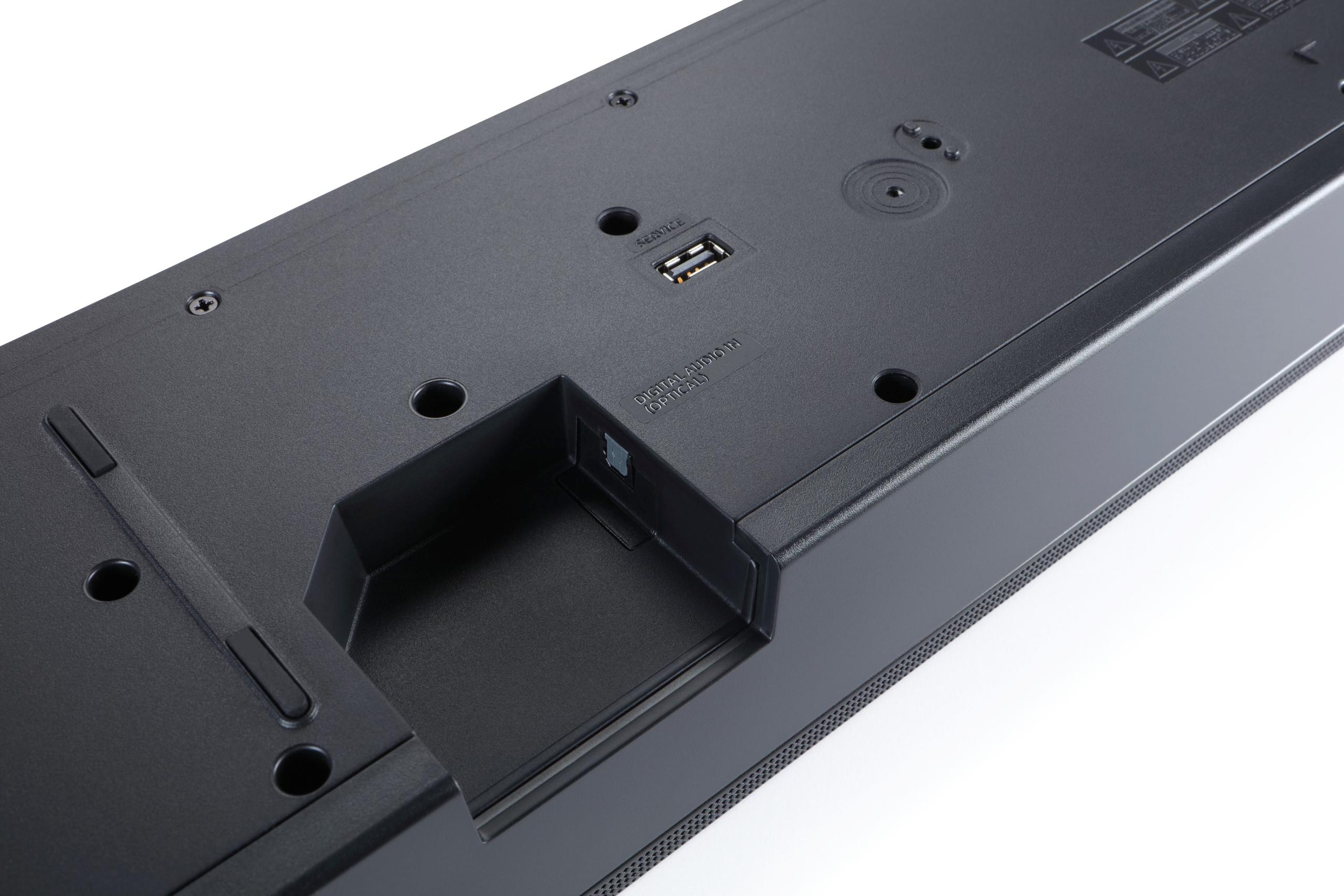
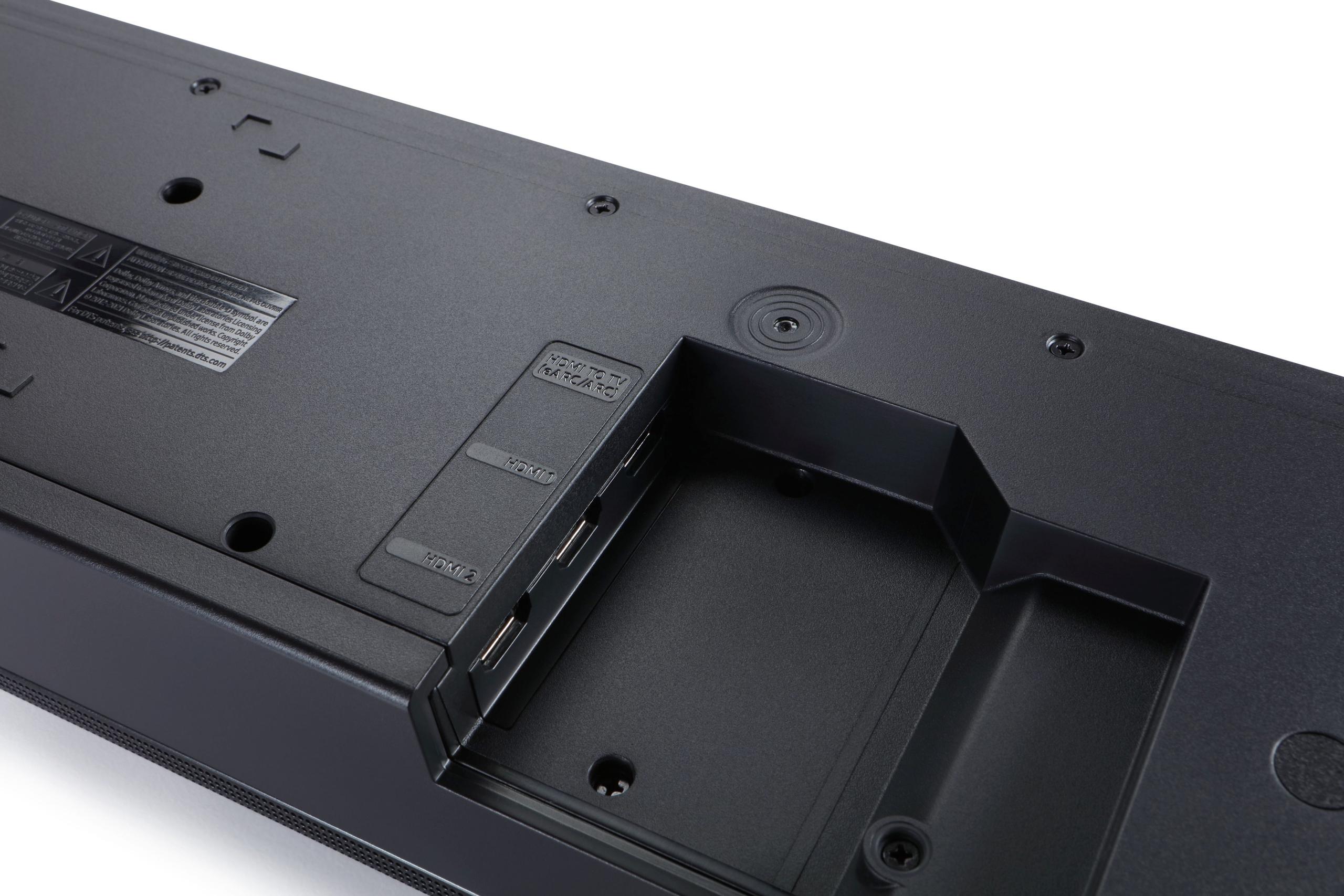
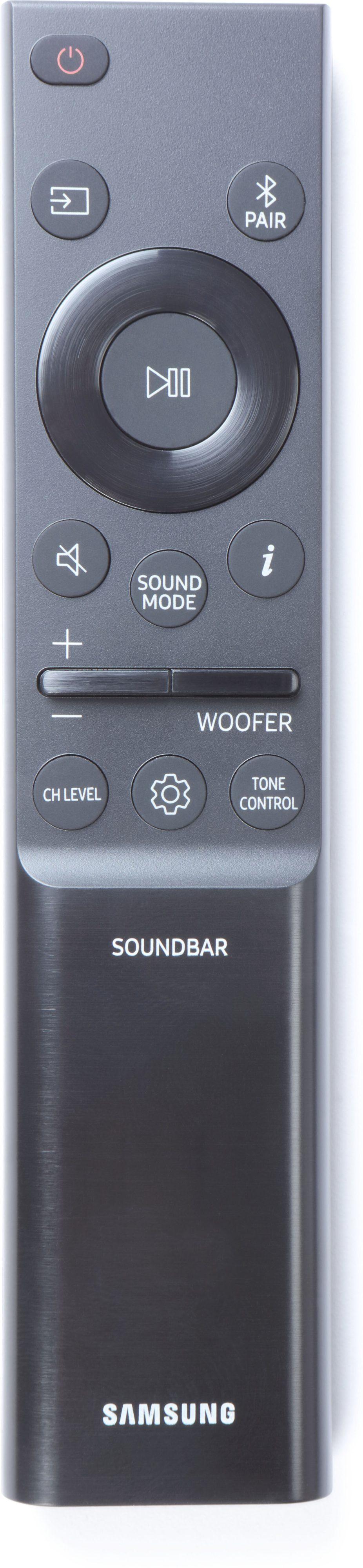
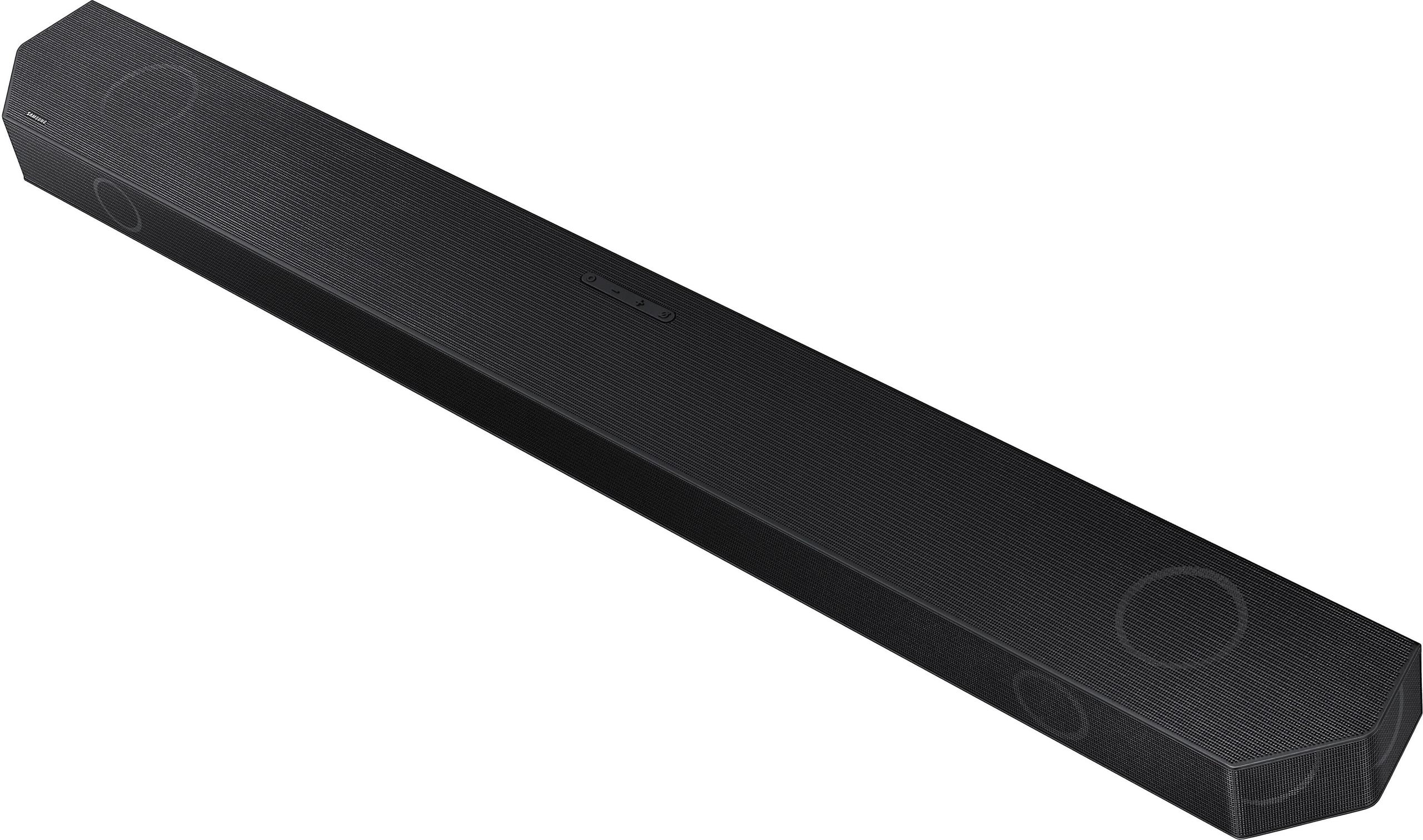


When your TV's tiny speakers make movie dialogue sound like it's coming through a tin can, you know it's time for a soundbar upgrade. But with options ranging from simple budget bars to complex multi-speaker systems, choosing the right one can feel overwhelming. Today we're comparing two soundbars that represent opposite ends of the spectrum: the Ultimea Poseidon M60 Boom, a budget-friendly 5.1 system that punches above its weight, and the Samsung HW-Q990D, a flagship 11.1.4 channel system that doesn't compromise on anything.
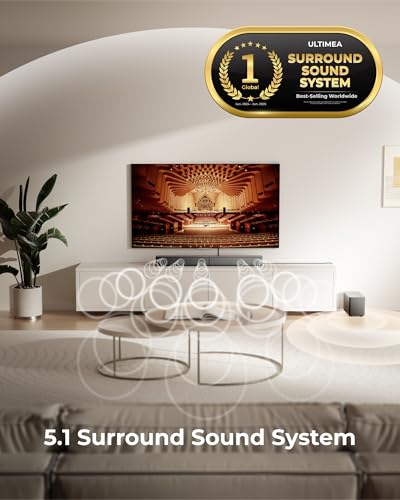
Before diving into specifics, let's talk about what actually matters when you're shopping for a soundbar. The most important factor is channel configuration – basically, how many separate audio streams the system can handle. A 5.1 system has five main speakers (left, right, center, and two surrounds) plus one subwoofer for bass. An 11.1.4 system like the Samsung HW-Q990D has eleven main channels, one subwoofer, and four "height" channels that bounce sound off your ceiling to create overhead effects.
Power output determines how loud and dynamic your audio can get, while frequency response tells you the range of sounds the system can reproduce – from deep bass rumbles to crisp high notes. DSP (Digital Signal Processing) is the brain of the system, using computer algorithms to enhance audio, separate channels, and create surround effects.
The subwoofer handles all the low-frequency sounds – explosions, music bass lines, and that rumbling you feel in movie theaters. Some soundbars have built-in subwoofers, while others use separate units that can be wired or wireless. Generally, bigger subwoofers with more power create deeper, more impactful bass.
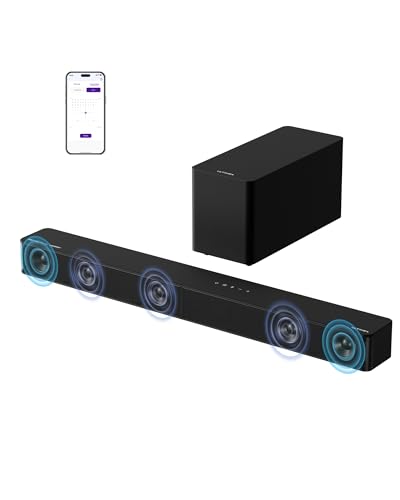
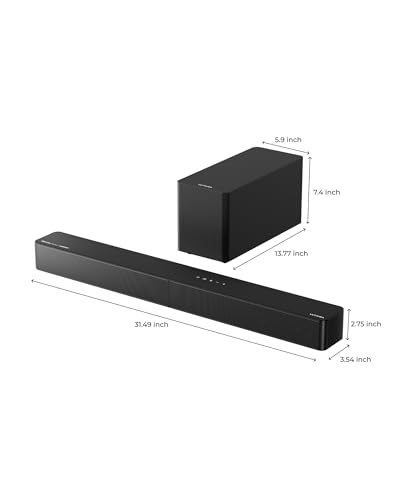
The Ultimea Poseidon M60 Boom, released in 2024, represents what we call the "smart simplicity" approach. Instead of multiple components scattered around your room, everything except the subwoofer is built into a single soundbar that splits into two connected pieces for easier installation. It uses virtual surround processing – sophisticated audio tricks that make your brain think sounds are coming from behind you, even though they're actually coming from speakers in front.
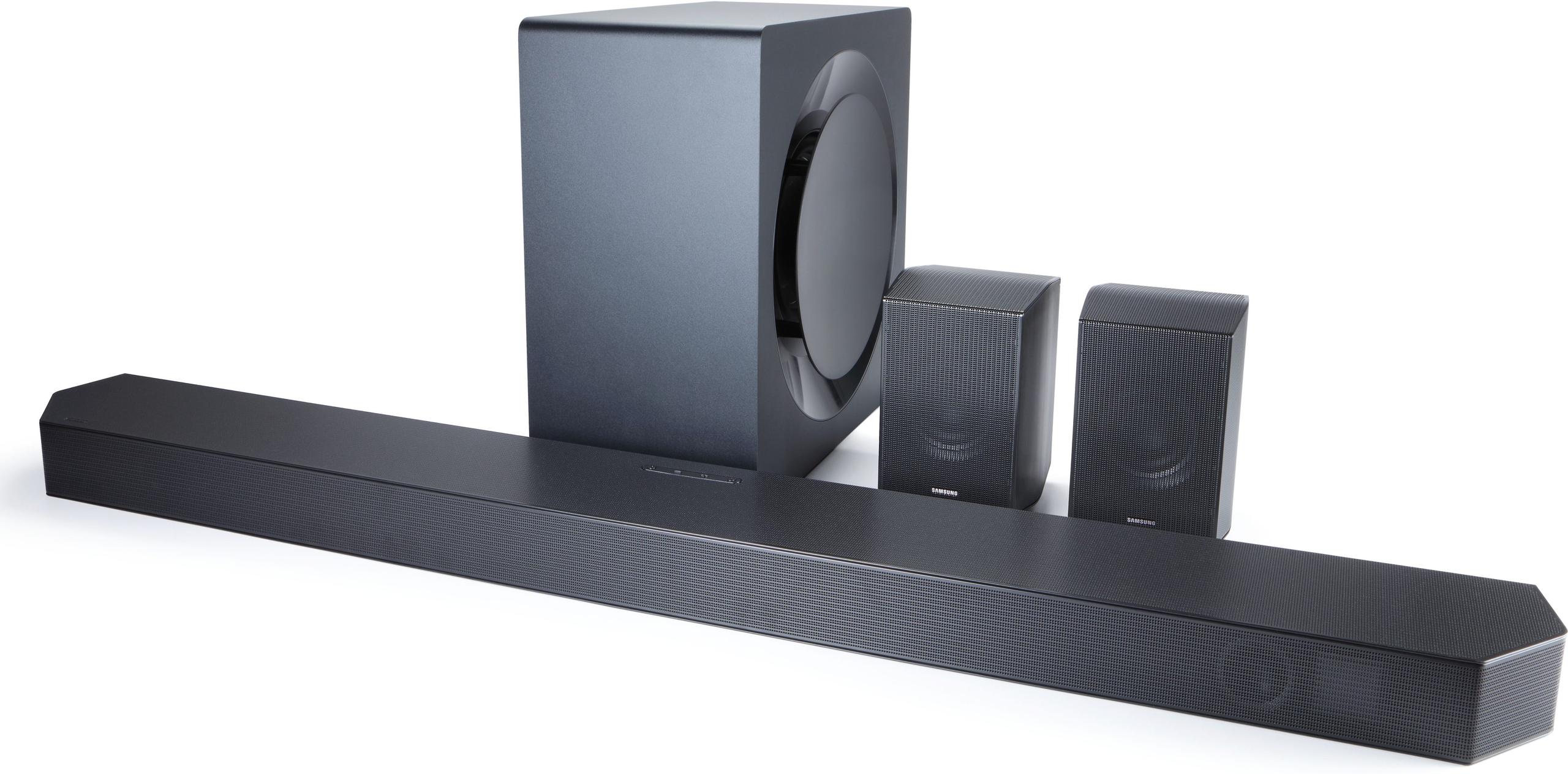
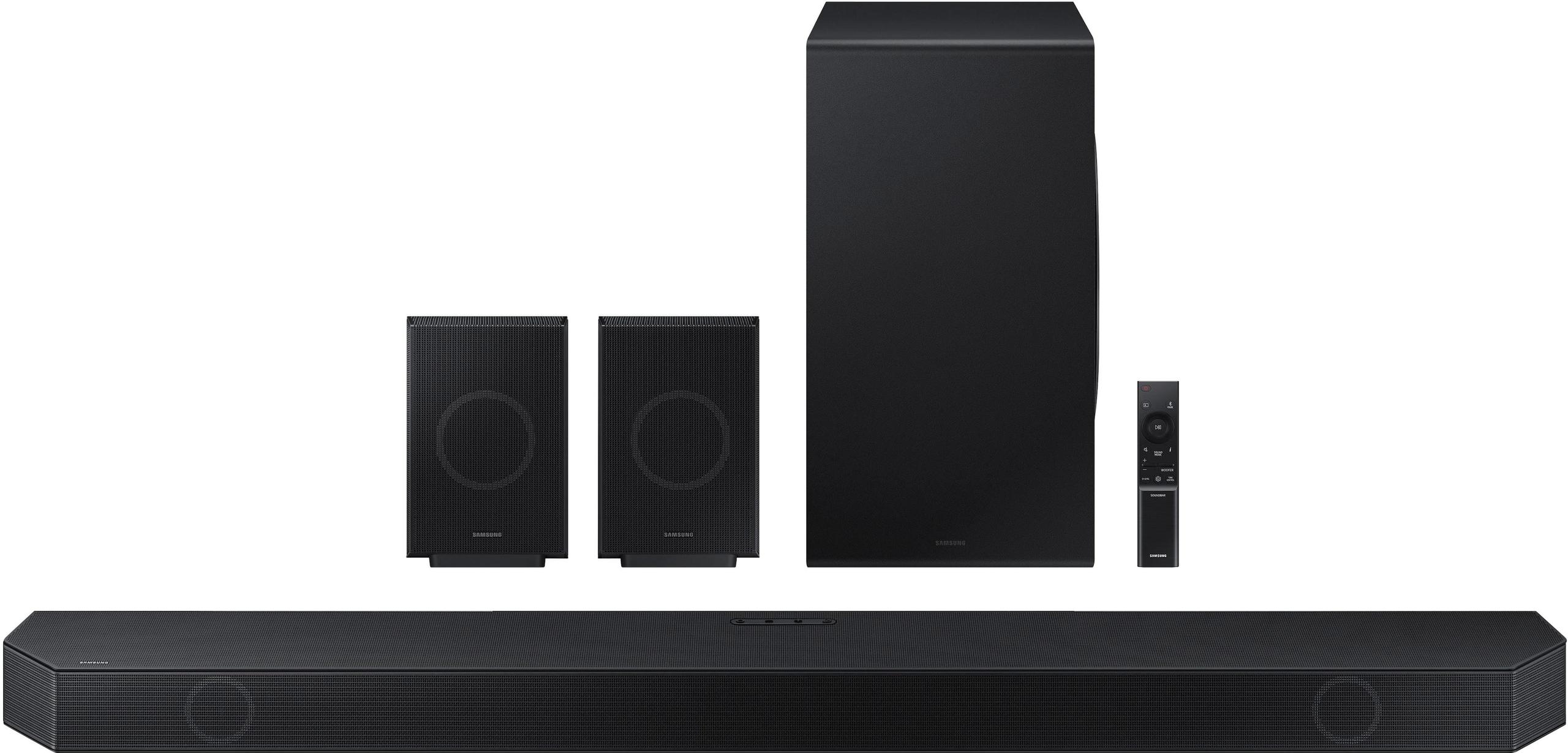
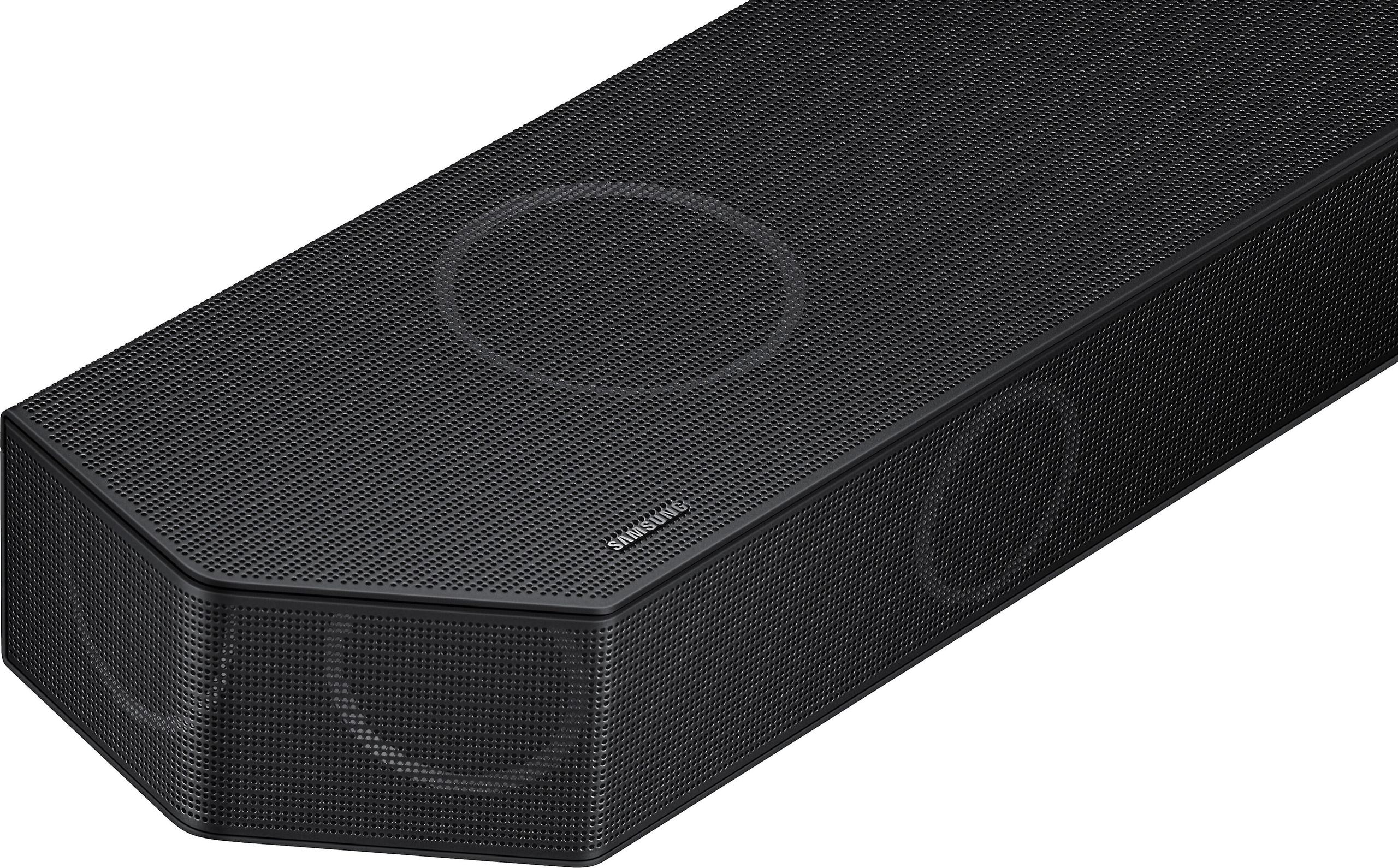
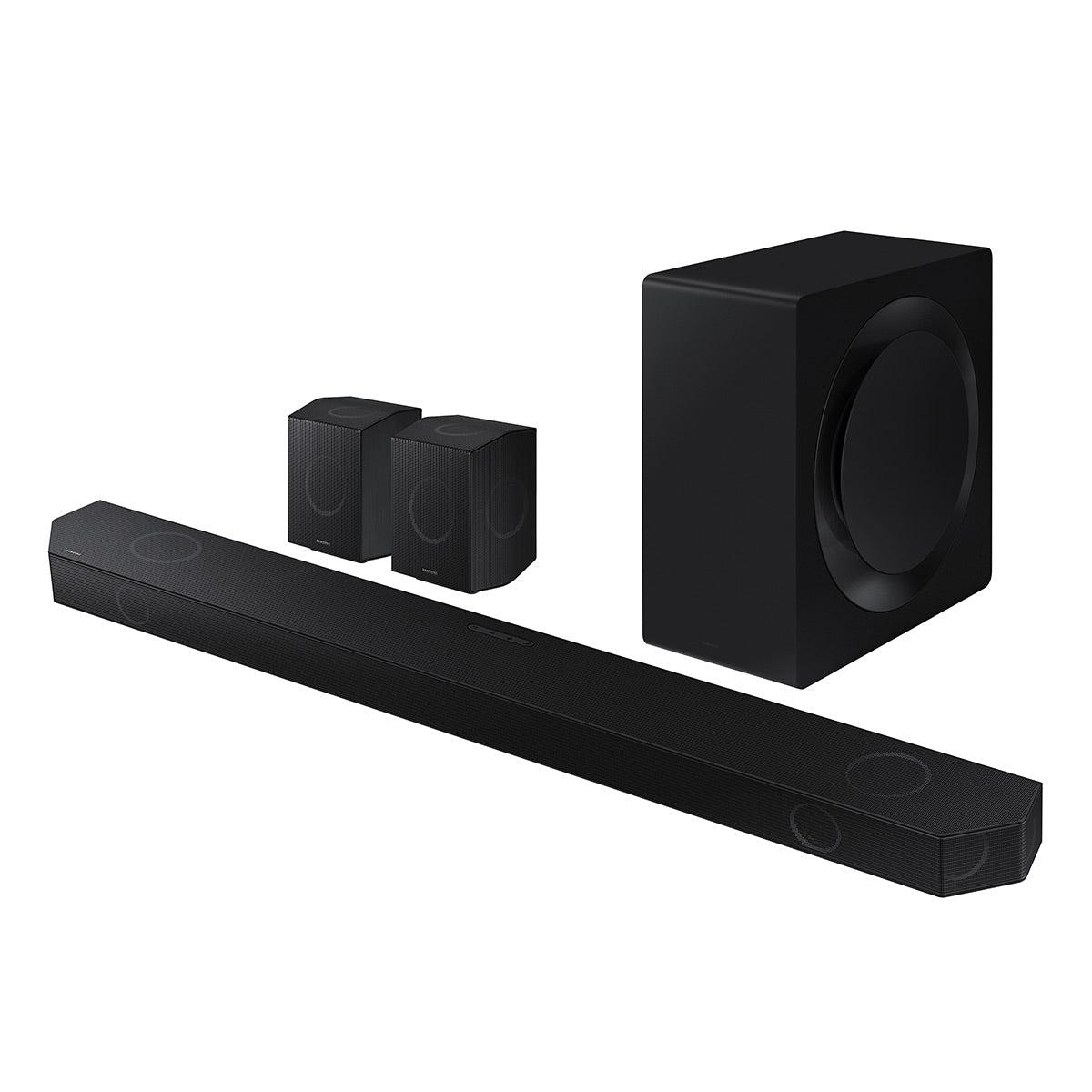
The Samsung HW-Q990D, also from 2024, takes the "no compromises" route. This system includes a main soundbar, wireless subwoofer, and separate wireless rear speakers with their own up-firing drivers for true overhead sound. It's Samsung's current flagship, incorporating years of audio engineering refinement and their latest AI-powered room optimization technology.
At the time of writing, these products sit in completely different price categories – the Ultimea costs roughly what you might spend on a nice dinner for four, while the Samsung demands a significant investment that puts it in premium territory alongside high-end audio equipment.
The Ultimea Poseidon M60 Boom delivers 340W of peak power across its five channels, with a frequency response spanning 45Hz to 18kHz. Those numbers might not mean much initially, but here's what they translate to: 340W is enough power to fill most living rooms with clear, dynamic sound, while the frequency response covers everything from deep bass notes to the crispest cymbal crashes.
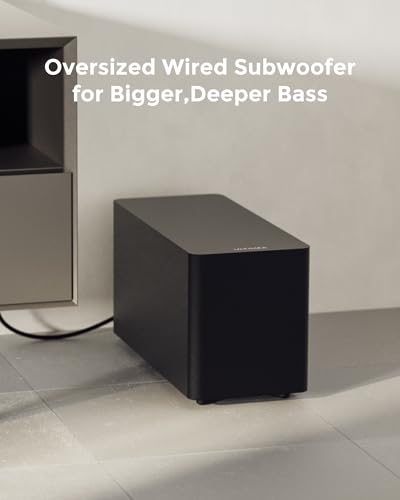
The system's BassMX technology is particularly clever – it uses an oversized cabinet design and a 5.25-inch subwoofer with 16mm of diaphragm excursion (how far the speaker cone moves back and forth). More excursion generally means deeper, more powerful bass. The wooden subwoofer cabinet also helps reduce unwanted vibrations that can muddy the sound.
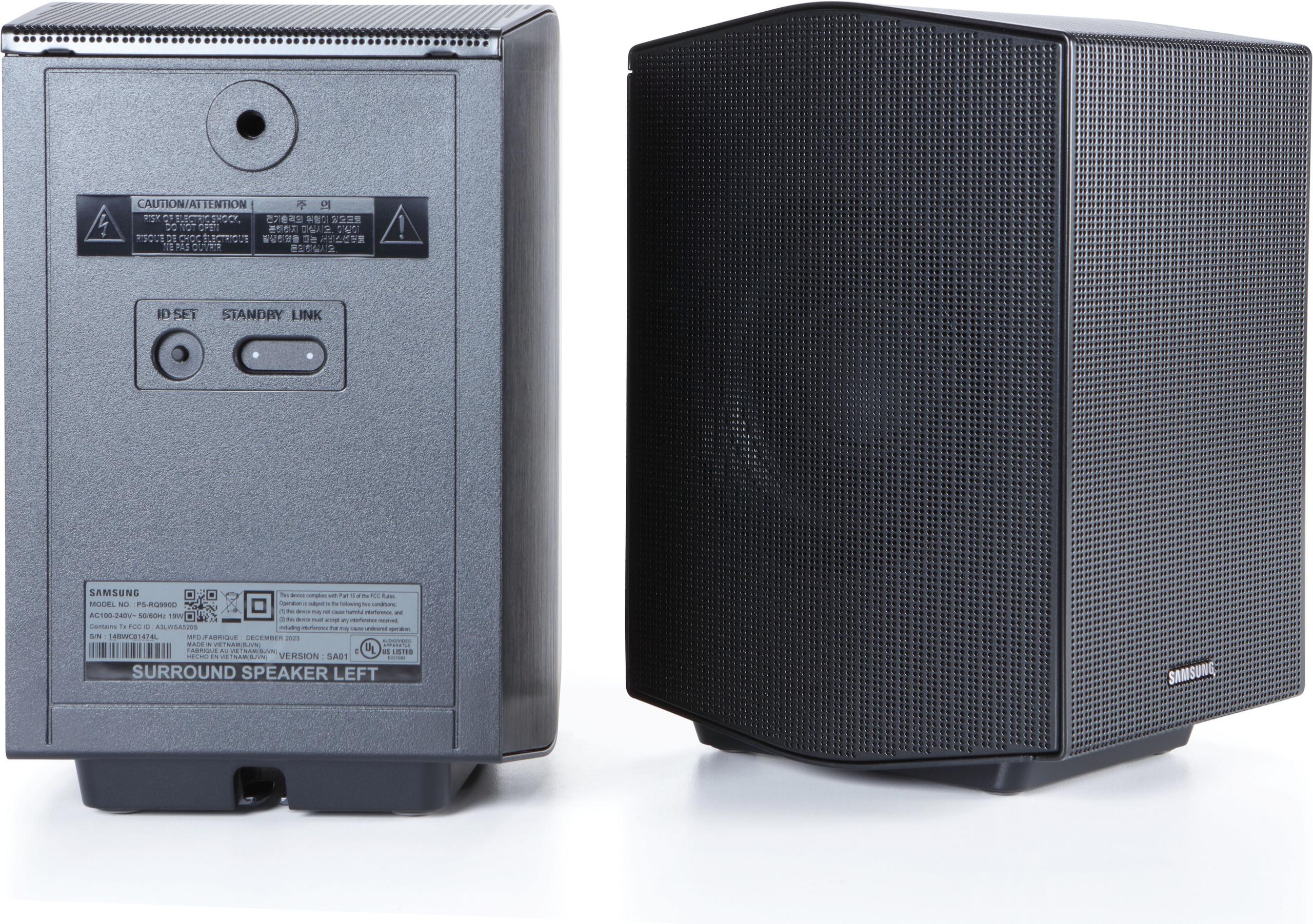
The Samsung HW-Q990D doesn't specify exact power figures, but with 22 total drivers spread across four separate components, it's clearly designed for much larger rooms and higher volume levels. The system includes six elliptical midrange drivers and three tweeters firing forward from the main bar, plus four side-firing and two up-firing drivers for surround effects. Each rear speaker contains three drivers – one firing forward, one to the side, and one upward for height effects.
Based on our research into user and expert feedback, the Samsung system delivers significantly more powerful and room-filling audio. The difference becomes most apparent at higher volumes, where the Samsung maintains clarity and control while the Ultimea may start to show strain in very large spaces.
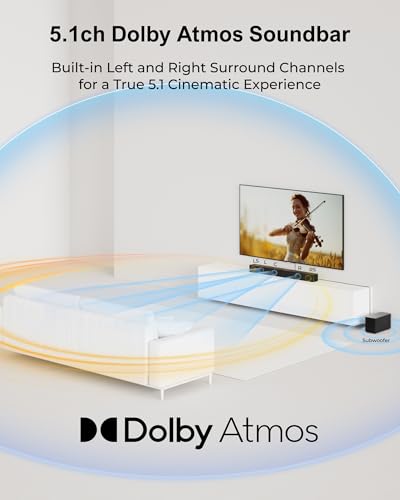
Here's where these systems diverge most dramatically. The Ultimea M60 Boom uses psychoacoustic processing – essentially audio illusions that trick your brain into perceiving surround effects from speakers positioned only in front of you. It's remarkably effective technology, especially considering all five main channels come from a single location.
The system's Triple-Core DSP Technology uses two 800MHz processors and one 600MHz processor, providing over 2000 MIPS (Million Instructions Per Second) of processing power. This computational muscle enables real-time PEQ (Parametric Equalizer) tuning, which automatically adjusts specific frequency ranges to optimize sound for your content and room.
However, virtual surround has inherent limitations. No amount of processing can truly replicate the experience of having actual speakers behind you. The Samsung HW-Q990D doesn't need these tricks because it has physical rear speakers positioned where surround sounds should naturally originate.
The Samsung system supports both Dolby Atmos and DTS:X – advanced audio formats that treat sounds as objects moving through three-dimensional space rather than fixed channels. When a helicopter flies overhead in a movie, the sound literally moves from your rear speakers, across the ceiling via the height channels, and out through the front speakers. The Ultimea system can process these formats but must simulate the height and surround effects through its front-facing drivers.
Expert reviewers consistently note that while the Ultimea creates an impressive virtual surround experience for its price category, the Samsung delivers genuinely immersive surround sound that places you inside the action rather than just in front of it.
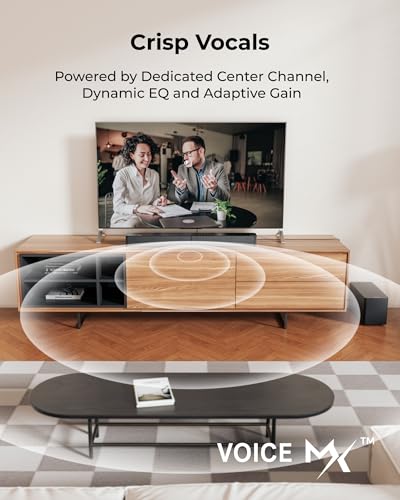
Both systems prioritize dialogue clarity, but they achieve it through different methods. The Ultimea M60 Boom features VoiceMX technology, which dynamically enhances the 300Hz to 3kHz frequency range where most human speech occurs. This technology uses adaptive EQ and gain control to ensure voices remain intelligible even during explosive action sequences or complex musical passages.
The Samsung HW-Q990D employs Active Voice Amplifier Pro, which uses AI to analyze audio content in real-time and boost dialogue when necessary. Because the Samsung system has a dedicated center channel (the speaker specifically designed for dialogue), it can more precisely separate speech from background music and effects.
From our research into user experiences, both systems excel at dialogue clarity, with the Samsung having a slight edge in the most challenging scenarios – think Christopher Nolan movies where dialogue whispers compete with thunderous explosions.
The bass comparison reveals another significant difference between these approaches. The Ultimea system's wired 5.25-inch subwoofer uses BassMX technology with a high-excursion driver and specialized cabinet tuning. Reviews consistently praise its bass quality as impressive for the price point, delivering clean, controlled low frequencies without the boomy, muddy sound common in budget systems.
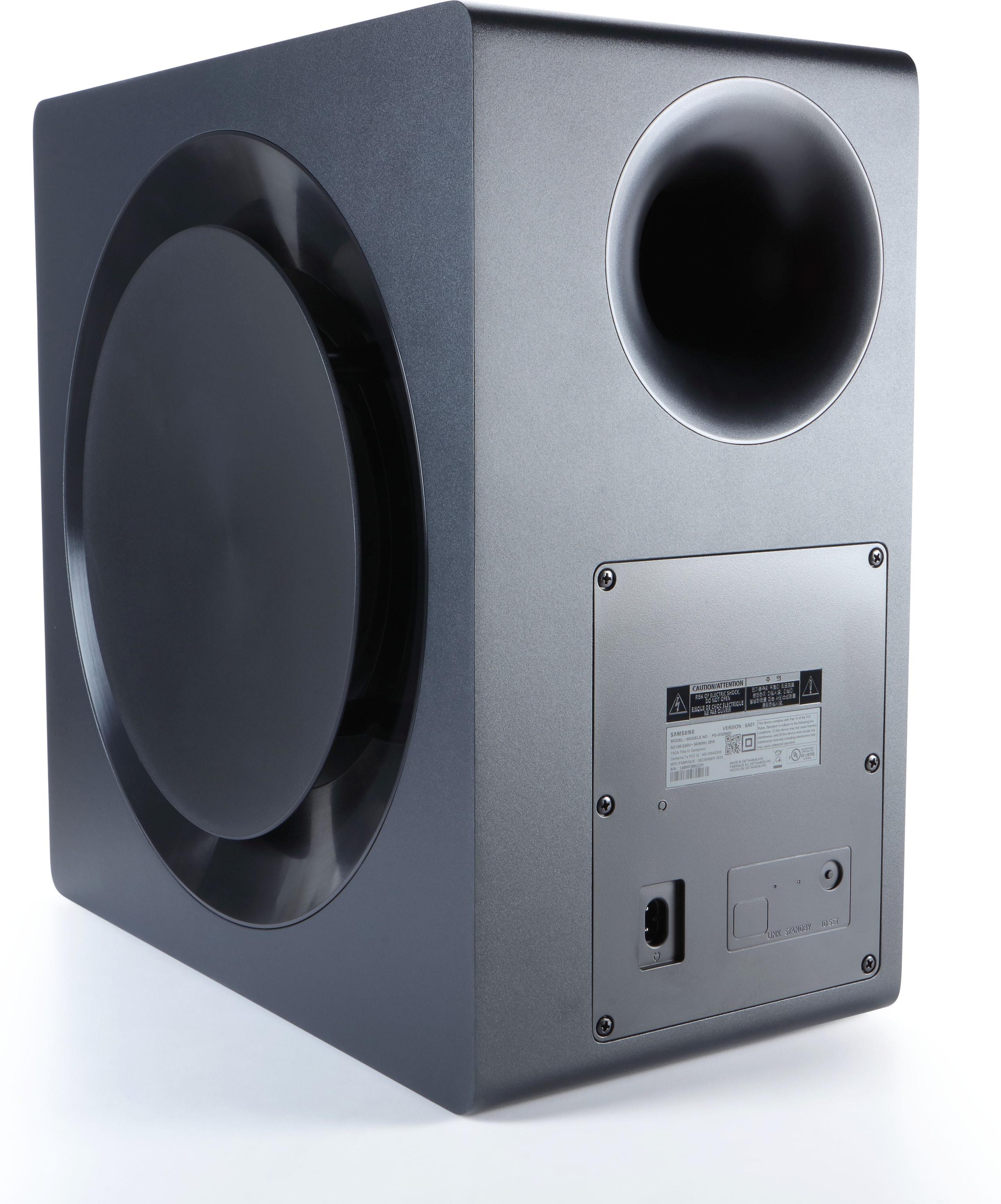
The Samsung HW-Q990D's larger 8-inch wireless subwoofer, combined with its additional bass management across eleven main channels, provides substantially more bass output and depth. Multiple reviewers note that the Samsung system can reproduce those deep, room-shaking frequencies you feel in commercial theaters – the kind that makes action scenes truly visceral.
For most content and room sizes, both systems provide satisfying bass. However, if you're someone who wants to feel every explosion and bass drop, the Samsung delivers significantly more impact and extension into the lowest frequencies.
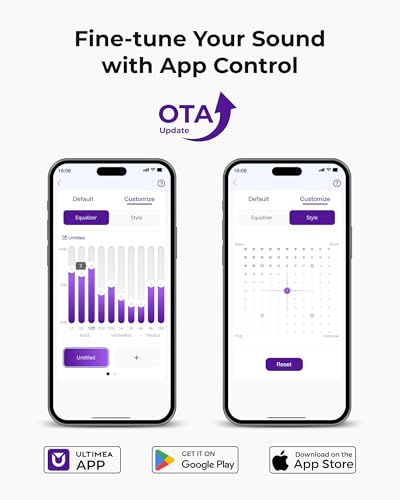
The Ultimea Poseidon M60 Boom includes six preset sound modes (movie, music, voice, sport, game, night) plus the ability to manually adjust bass, midrange, and treble through the ULTIMEA smartphone app. The system also supports CEC (Consumer Electronics Control), allowing you to control the soundbar with your TV's remote – a surprisingly convenient feature that many users appreciate.
The Samsung HW-Q990D takes smart features much further. It includes built-in Alexa, Google Assistant, and Samsung's Bixby voice assistants, turning your soundbar into a smart home hub. The SpaceFit Sound Pro technology uses built-in microphones to analyze your room's acoustics and automatically optimize sound without requiring test tones or manual setup.
Q-Symphony is perhaps the Samsung system's most interesting feature – it can synchronize with compatible Samsung TVs to use both the TV's speakers and the soundbar simultaneously, creating an even wider soundstage. Game Mode Pro automatically optimizes audio based on the game genre selected in Samsung TV gaming hubs, while Private Rear Sound mode uses only the rear speakers for late-night viewing without disturbing others.
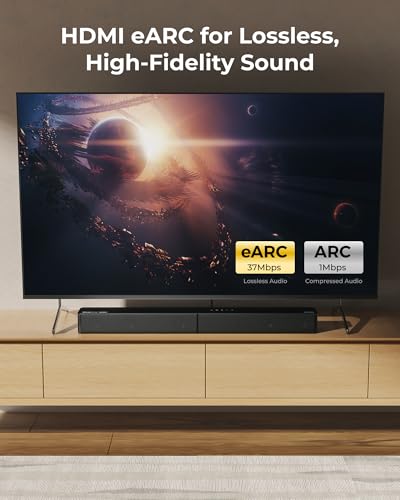
Both systems include HDMI eARC (Enhanced Audio Return Channel), which provides the highest quality audio connection between your TV and soundbar, supporting lossless audio formats without compression. The Ultimea system also includes optical digital input, USB, AUX, and Bluetooth 5.4 with ultra-low latency for wireless music streaming and gaming.
The Samsung HW-Q990D offers more comprehensive connectivity with two HDMI 2.1 inputs plus one eARC output. HDMI 2.1 supports 4K/120Hz pass-through with VRR (Variable Refresh Rate) – crucial features for next-generation gaming consoles and high-end PCs. The system also includes Wi-Fi 802.11ac, AirPlay 2, and Chromecast for streaming from various devices.
For gamers specifically, the Samsung's HDMI 2.1 support and gaming-optimized audio modes provide a significant advantage, especially when paired with PlayStation 5, Xbox Series X, or high-end gaming PCs.
The Ultimea Poseidon M60 Boom wins decisively on setup simplicity. Users consistently report installation times under 15 minutes from unboxing to enjoying enhanced audio. The soundbar's modular two-piece design makes it easier to position, though the wired subwoofer does limit placement flexibility compared to wireless alternatives.
The Samsung HW-Q990D requires more initial setup time due to its multiple wireless components, but the payoff is greater flexibility in speaker placement and automatic room optimization through SpaceFit Sound Pro. Once configured, the wireless rear speakers can be positioned optimally for your seating arrangement without cable runs.
In smaller spaces, both systems perform admirably, but for different reasons. The Ultimea system provides excellent value without overwhelming the space, while its virtual surround effects work more convincingly in compact rooms where sound reflections naturally enhance the illusion.
The Samsung HW-Q990D might actually be overkill for very small rooms, though its automatic room correction helps prevent overpowering the space. However, if you plan to move or simply want the best possible audio experience regardless of room size, the Samsung future-proofs your investment.
This is where the differences become most apparent. The Samsung system's higher power output and physical speaker placement excel in larger spaces, maintaining clarity and surround effectiveness even when you're sitting farther from the main soundbar. The wireless rear speakers ensure that surround effects remain convincing regardless of your room's layout.
The Ultimea system can still provide enjoyable audio in larger rooms, but its virtual surround effects become less convincing as you move farther from the main speakers, and it may lack the power to fill very large spaces at satisfying volume levels.
For dedicated home theater setups, the Samsung HW-Q990D offers a more authentic cinema experience. Its support for object-based audio formats, physical height channels, and higher power output create the immersive soundscape that makes movie watching truly special. The system's ability to reproduce subtle ambient details while maintaining explosive dynamic range mirrors what you'd experience in a commercial theater.
The Ultimea system still provides a significant upgrade over TV speakers and handles most movie content very well, but it can't match the spatial audio experience of the Samsung's true multi-channel setup.
You're looking for the best audio improvement per dollar spent. This system delivers probably 80% of what expensive soundbars offer at roughly 20% of the cost. It's perfect for apartment dwellers, budget-conscious buyers, or anyone who values simplicity over ultimate performance.
The Ultimea excels if you primarily watch TV shows, news, and casual content where dialogue clarity matters more than surround spectacle. Its compact design and easy setup make it ideal for bedrooms, kitchens, or secondary viewing areas.
You're serious about home theater audio and want an experience that rivals dedicated surround sound systems. The Samsung justifies its premium pricing for movie enthusiasts, gamers, and music lovers who can appreciate its technical superiority.
This system makes sense if you have a larger room, own or plan to buy a premium TV, and want features like voice control, advanced connectivity, and automatic room optimization. It's also the better choice if you frequently entertain guests and want impressive audio that showcases your home theater setup.
Both soundbars succeeded in their respective missions. The Ultimea Poseidon M60 Boom proves that excellent audio doesn't require a massive investment, delivering surprisingly sophisticated sound processing and impressive dialogue clarity at an accessible price point. Meanwhile, the Samsung HW-Q990D demonstrates what's possible when budget isn't the primary constraint, offering flagship audio performance with comprehensive smart features and future-proof connectivity.
Your choice ultimately depends on your priorities, room size, and how much audio quality improvement you're seeking. The Ultimea provides exceptional value for most users, while the Samsung delivers uncompromising performance for those who demand the best possible home theater experience. Either way, you'll enjoy a dramatic improvement over your TV's built-in speakers – just at very different price points and complexity levels.
| Ultimea Poseidon M60 Boom | Samsung HW-Q990D |
|---|---|
| Channel Configuration - More channels create better surround sound immersion | |
| 5.1 virtual surround (all speakers in main bar + subwoofer) | True 11.1.4 with physical rear speakers and height channels |
| Total Speakers - More drivers typically mean fuller, more detailed sound | |
| 5 full-range drivers + 1 subwoofer | 22 drivers across main bar, rear speakers, and subwoofer |
| Peak Power Output - Higher wattage fills larger rooms and delivers more dynamic range | |
| 340W peak power | Higher output (exact specs not disclosed, but significantly more powerful) |
| Subwoofer Type - Wireless offers more placement flexibility | |
| 5.25" wired wooden subwoofer with BassMX technology | 8" wireless subwoofer with enhanced bass management |
| Setup Complexity - Simpler setup means faster enjoyment | |
| Single bar + wired sub, 15-minute setup | Main bar + wireless sub + wireless rear speakers, more complex initial setup |
| Audio Format Support - Advanced formats provide cinema-quality surround effects | |
| Dolby Atmos (virtual processing) | Dolby Atmos, DTS:X, Dolby TrueHD (true object-based audio) |
| Smart Features - Voice control and room optimization enhance daily use | |
| ULTIMEA app control, 6 preset modes, manual EQ | Built-in Alexa/Google Assistant, SpaceFit Sound Pro room correction, Q-Symphony |
| HDMI Connectivity - More inputs reduce cable swapping for multiple devices | |
| 1 HDMI eARC port | 2 HDMI 2.1 inputs + 1 HDMI eARC output with 4K/120Hz pass-through |
| Bluetooth Version - Newer versions offer better connection stability and lower latency | |
| Bluetooth 5.4 with ultra-low latency | Bluetooth 5.2 |
| Gaming Features - Important for console and PC gamers | |
| Game mode preset | Game Mode Pro with genre-specific optimization, VRR support |
| Ideal Room Size - Determines whether the system can effectively fill your space | |
| Small to medium rooms (up to ~200 sq ft) | Medium to large rooms, open floor plans |
| Voice Assistant Integration - Hands-free control and smart home connectivity | |
| None built-in | Alexa, Google Assistant, Bixby built-in |
| Price Category - Value proposition varies significantly between budget and premium tiers | |
| Budget-friendly, exceptional value per dollar | Premium pricing, flagship performance and features |
The Ultimea Poseidon M60 Boom offers exceptional value in the budget category, delivering impressive 5.1 surround sound with clear dialogue and solid bass performance at an accessible price point. The Samsung HW-Q990D provides premium flagship performance with true 11.1.4 surround sound, but costs significantly more. For most users seeking a major upgrade over TV speakers, the Ultimea delivers outstanding bang for your buck.
The Ultimea Poseidon M60 Boom uses 5.1 surround sound, meaning five main channels (left, right, center, two surrounds) plus one subwoofer, all virtually processed through the main soundbar. The Samsung HW-Q990D features true 11.1.4 surround with eleven main channels, one subwoofer, and four height channels using physical rear speakers and up-firing drivers. This creates more immersive, three-dimensional audio with sounds actually coming from behind and above you.
The Ultimea Poseidon M60 Boom wins on simplicity with a typical 15-minute setup from unboxing to enjoying enhanced audio. It consists of just a two-piece main soundbar and wired subwoofer. The Samsung HW-Q990D requires more time due to its multiple wireless components (main bar, wireless subwoofer, and wireless rear speakers), but offers automatic room calibration once configured.
Not necessarily. The Ultimea Poseidon M60 Boom creates convincing virtual surround effects using advanced audio processing, making it seem like sounds come from behind you even though all speakers face forward. However, the Samsung HW-Q990D with physical rear speakers provides genuinely immersive surround sound that's more authentic, especially for movies and gaming.
Both work well in smaller spaces, but the Ultimea Poseidon M60 Boom is more appropriately sized and powered for compact rooms without overwhelming the space. The Samsung HW-Q990D includes automatic room correction to prevent overpowering small areas, but might be overkill unless you plan to upgrade your room size or want maximum future-proofing.
Yes, both the Ultimea Poseidon M60 Boom and Samsung HW-Q990D connect to virtually any TV through HDMI, optical, or Bluetooth connections. The Samsung offers additional benefits when paired with Samsung TVs through Q-Symphony technology, which uses both TV and soundbar speakers simultaneously for enhanced sound.
The Samsung HW-Q990D excels for gaming with HDMI 2.1 support, 4K/120Hz pass-through, Variable Refresh Rate (VRR), and Game Mode Pro that optimizes audio based on game genres. The Ultimea Poseidon M60 Boom includes a dedicated game mode and ultra-low latency Bluetooth 5.4, making it solid for casual gaming but less advanced for serious gamers.
Both support Dolby Atmos, but differently. The Ultimea Poseidon M60 Boom processes Dolby Atmos virtually through its front-facing drivers, creating simulated overhead effects. The Samsung HW-Q990D delivers true Dolby Atmos with physical height channels and up-firing speakers that bounce sound off your ceiling for authentic overhead audio placement.
Both excel at dialogue clarity. The Ultimea Poseidon M60 Boom features VoiceMX technology that enhances the vocal frequency range, while the Samsung HW-Q990D uses AI-powered Active Voice Amplifier Pro with a dedicated center channel for speech. The Samsung has a slight edge in the most challenging scenarios, but both significantly improve dialogue over TV speakers.
Yes, both offer smartphone control. The Ultimea Poseidon M60 Boom includes the ULTIMEA app for EQ adjustment and sound mode selection. The Samsung HW-Q990D provides more advanced app control plus built-in voice assistants (Alexa, Google Assistant, Bixby), making it controllable through voice commands and smart home integration.
The Samsung HW-Q990D significantly outperforms in larger spaces with its higher power output, physical rear speakers, and 22 total drivers that maintain clarity and surround effectiveness across bigger rooms. The Ultimea Poseidon M60 Boom can work in larger rooms but may lack the power and surround convincingness needed to fill expansive spaces effectively.
The Ultimea Poseidon M60 Boom uses a wired subwoofer, which limits placement flexibility but ensures reliable connection and contributes to its budget-friendly approach. The Samsung HW-Q990D features a wireless subwoofer offering complete placement freedom around your room. For most users, wireless provides better integration into home décor, though wired connections eliminate any potential wireless interference concerns.
We've done our best to create useful and informative comparisons to help you decide what product to buy. Our research uses advanced automated methods to create this comparison and perfection is not possible - please contact us for corrections or questions. These are the sites we've researched in the creation of this article: ultimea.com - ultimea.com - youtube.com - bestbuy.com - youtube.com - avsforum.com - youtube.com - manuals.plus - youtube.com - device.report - ultimea.com - ultimea.de - community.ultimea.com - ultimea.com - community.ultimea.com - ultimea.com - youtube.com - aliexpress.com - ultimea.com - techradar.com - avsforum.com - valueelectronics.com - samsung.com - rtings.com - samsung.com - avsforum.com - samsung.com - cdwg.com - youtube.com - whathifi.com

Privacy Policy
Terms and Conditions - Affiliate Policy
Home Security
© Copyright 2008-2026.
11816 Inwood Rd #1211, Dallas, TX 75244