



When your TV's built-in speakers sound like they're trapped inside a tin can, it's time for an upgrade. But choosing the right soundbar can feel overwhelming with hundreds of options spanning from basic stereo bars to complex surround sound systems. Today, we're diving deep into two very different approaches to better TV audio: the Ultimea Poseidon M60 Boom and the Bose Solo Series 2.
These soundbars couldn't be more different in their philosophies. The Ultimea Poseidon M60 Boom throws everything at the wall—5.1 surround sound, Dolby Atmos, a dedicated subwoofer, and enough power to shake your neighbor's windows. Meanwhile, the Bose Solo Series 2 takes a minimalist approach, focusing on making dialogue crystal clear while maintaining an ultra-compact design that practically disappears under your TV.
Before we dive into specifics, let's establish what we're dealing with. Soundbars exist because modern TVs, despite their stunning visuals, have terrible audio. Those razor-thin displays simply don't have room for decent speakers. A soundbar's job is to restore the audio experience without requiring a full home theater setup.
The key specifications that matter most are power output (measured in watts), frequency response (how low and high the sound goes), and channel configuration. Channel configuration uses numbers like "2.1" or "5.1"—the first number represents main speakers, while the ".1" refers to a subwoofer dedicated to bass frequencies below about 120Hz.
When evaluating soundbars, the most critical performance metrics include dialogue clarity (can you understand what actors are saying?), bass response (do explosions have impact?), soundstage width (does audio seem to come from beyond the physical bar?), and dynamic range (the difference between the quietest and loudest sounds).
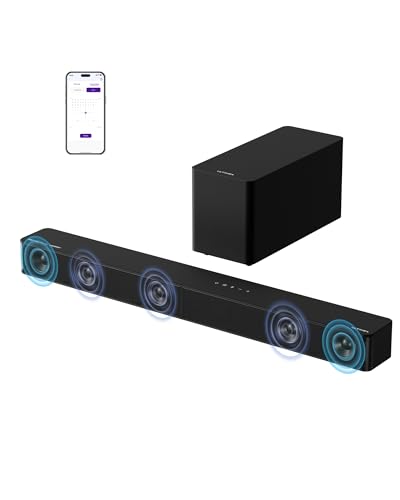
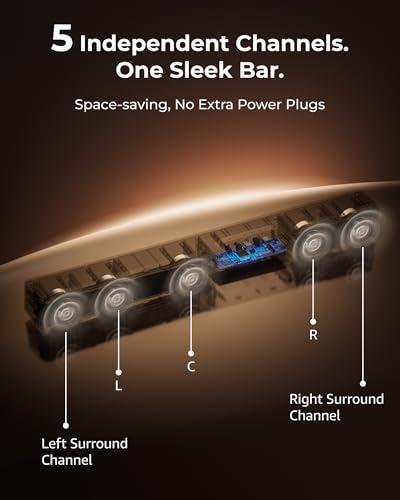
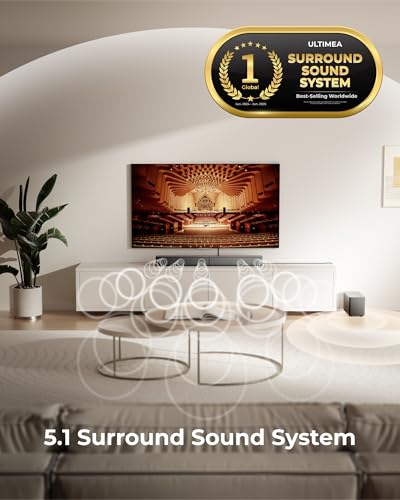
The Ultimea Poseidon M60 Boom, released in 2024, represents the "more is better" school of soundbar design. This system packs five full-range drivers into a modular two-piece soundbar that connects together, plus includes a substantial wired subwoofer. With 340 watts of peak power and support for Dolby Atmos—a surround sound format that adds height effects above your listening position—it promises true home theater audio.
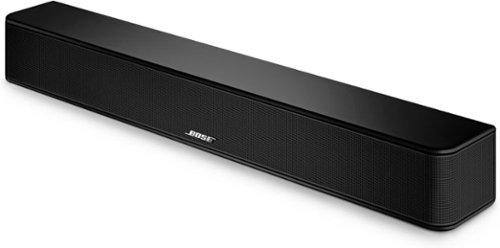
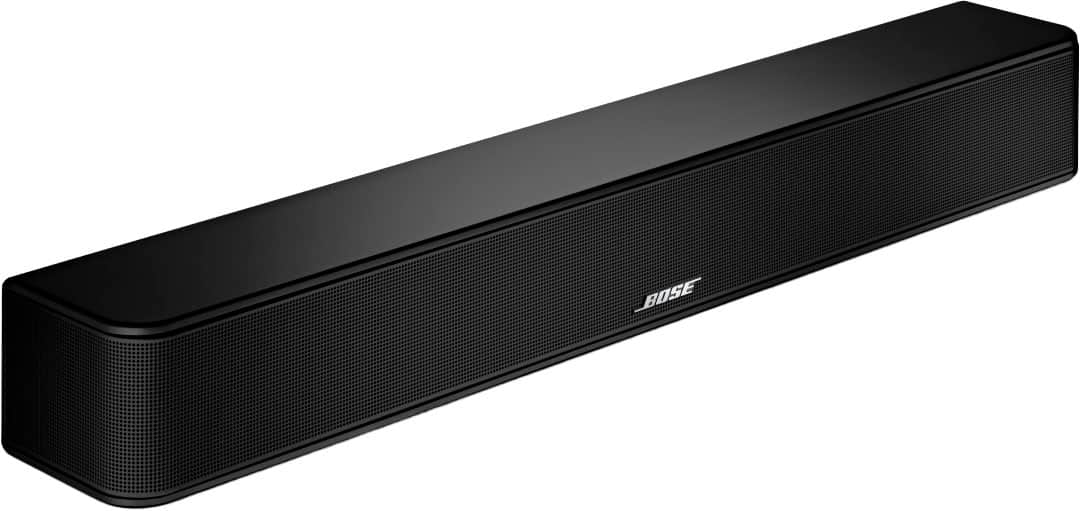
On the opposite end sits the Bose Solo Series 2, also from 2024, which embodies Bose's traditional approach of doing less, but doing it exceptionally well. This single-piece unit measures just 21.6 inches wide and focuses entirely on improving dialogue clarity and overall TV audio quality without the complexity of surround sound processing.
The price difference reflects their different missions. At the time of writing, the Ultimea Poseidon M60 Boom typically costs significantly less than the Bose Solo Series 2, despite including far more audio hardware. This pricing reality makes the comparison particularly interesting from a value perspective.
The performance gap between these systems is dramatic and tells the story of their different design goals. The Ultimea Poseidon M60 Boom delivers 340 watts of peak power through its five-driver array plus dedicated subwoofer. In practical terms, this means it can fill large rooms with authoritative sound and deliver the dynamic impact that makes action movies exciting.
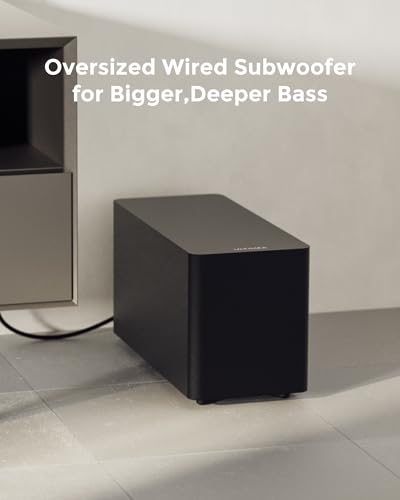
That 5.25-inch subwoofer deserves special attention. Ultimea's BassMX technology uses an 18mm high-excursion driver—meaning the speaker cone can move back and forth much further than typical drivers. This increased movement displaces more air, creating deeper, more impactful bass. The frequency response extends down to 45Hz, which captures most of the low-end content in movies and music.
The Bose Solo Series 2, by comparison, operates with just 20 watts of power through two full-range drivers. While this seems insufficient on paper, Bose's acoustic engineering makes those watts count. The company's decades of research into psychoacoustics—how humans perceive sound—allows them to create the impression of fuller sound than the specifications suggest.
However, physics ultimately wins. In larger rooms or at higher volumes, the Ultimea simply has more power reserves. During intense movie scenes with multiple sound effects competing for attention, the additional headroom prevents distortion and maintains clarity that lower-powered systems can't match.
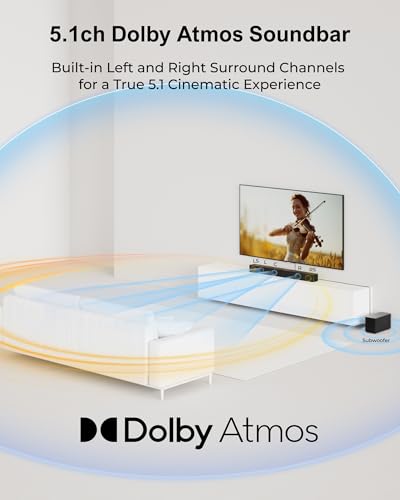
This is where the fundamental difference between these products becomes crystal clear. The Ultimea Poseidon M60 Boom processes true 5.1 channel audio with Dolby Atmos decoding. When watching a movie encoded in surround sound, the system separates dialogue, music, and sound effects into distinct channels, creating a three-dimensional soundscape.
Dolby Atmos adds another dimension by including height information. While the Ultimea doesn't have dedicated upward-firing speakers like some premium systems, it uses digital signal processing (DSP) to create the impression of sound coming from above. This virtual height effect works surprisingly well, making helicopters seem to fly overhead or rain appear to fall from the ceiling.
The Bose Solo Series 2 makes no attempt at surround sound simulation. Instead, it focuses on creating the widest possible stereo soundstage from its two-driver configuration. The drivers are angled to project sound beyond the physical boundaries of the bar, making it seem larger than it actually is.
For movie enthusiasts, this difference is substantial. Action sequences with gunfire, explosions, and moving vehicles benefit enormously from proper channel separation. The Ultimea can place a car crash in your left rear corner while maintaining clear dialogue from the center channel—something the Bose simply can't replicate.
Here's where the Bose Solo Series 2 strikes back. Despite its modest power output, this soundbar excels at the one thing most people actually care about: understanding what characters are saying on screen.
Bose's dialogue enhancement mode isn't just a simple EQ adjustment. The system uses sophisticated processing to identify and prioritize vocal frequencies, typically in the 300Hz to 3kHz range where human speech occurs. When dialogue appears, the soundbar subtly reduces competing frequencies and boosts the vocal range, ensuring conversations remain intelligible even during complex scenes.
This technology addresses a real problem. Modern movies often mix dialogue quite low compared to music and effects, assuming you have a proper surround sound system with a dedicated center channel speaker. When played through standard TV speakers or basic soundbars, dialogue gets lost in the mix.
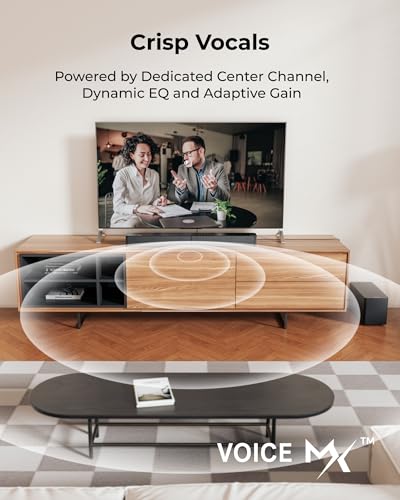
The Ultimea Poseidon M60 Boom also handles dialogue well through its five-driver array, which includes dedicated drivers handling center channel information. However, it requires more manual adjustment through its comprehensive EQ settings to achieve optimal clarity, while the Bose delivers excellent dialogue reproduction straight out of the box.
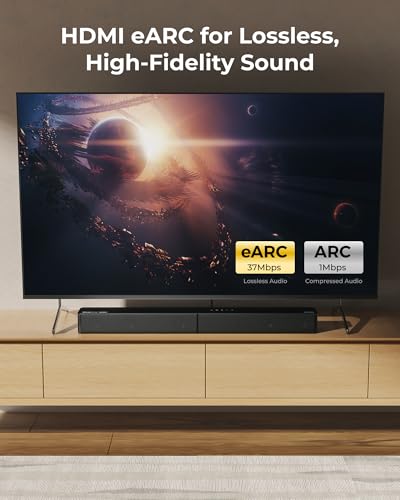
The technological divide continues in connectivity options. The Ultimea Poseidon M60 Boom embraces modern standards with HDMI eARC (enhanced Audio Return Channel), which allows lossless audio transmission between your TV and soundbar. This means you get bit-perfect audio from streaming services and Blu-ray players without any compression or quality loss.
The system also includes Bluetooth 5.4, the latest wireless standard offering improved stability and lower latency compared to older versions. Multiple input options—optical, USB, and auxiliary—ensure compatibility with virtually any audio source.
Perhaps most impressively, the Ultimea includes comprehensive smartphone app control through the Ultimea Smart App. This allows detailed EQ customization with multiple presets for movies, music, games, and sports. You can adjust bass, midrange, and treble independently, or let the system's triple-core DSP (Digital Signal Processor) handle automatic optimization.
The Bose Solo Series 2 takes a deliberately simpler approach. It lacks HDMI connectivity entirely, relying on optical and coaxial digital inputs plus Bluetooth 4.0 for wireless streaming. While this limits some advanced audio format compatibility, it ensures universal compatibility with any TV manufactured in the last decade.
Bose's design philosophy prioritizes reliability over features. There are no physical controls on the soundbar itself—everything operates through the included remote. This might frustrate tech enthusiasts, but it eliminates potential failure points and keeps the design clean.
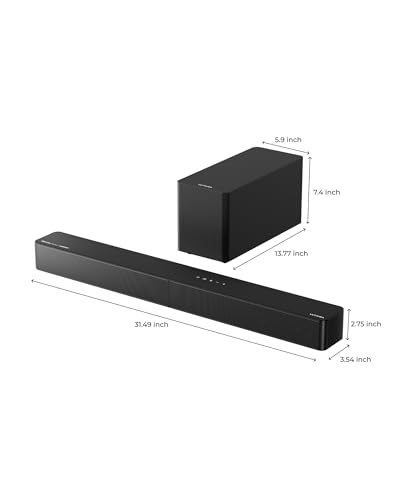
The physical design differences tell the story of each product's priorities. The Ultimea Poseidon M60 Boom arrives as a modular system requiring assembly of the two-piece soundbar plus placement of the wired subwoofer. While setup isn't difficult, it does require planning for cable routing and subwoofer positioning.
That subwoofer, while crucial for the system's bass performance, adds complexity. Being wired rather than wireless means you'll need to run a cable from the soundbar to wherever you place it. The upside is zero wireless interference or connection dropouts, but placement flexibility suffers compared to wireless alternatives.
The Bose Solo Series 2 epitomizes plug-and-play simplicity. The single unit measures just 2.8 inches tall, ensuring it won't block your TV's infrared sensor or create a visual distraction. Setup involves connecting one optical cable and plugging in power—you're literally listening to improved audio within minutes.
This compact design makes the Bose ideal for apartments, dorm rooms, or any situation where space is premium. It can also mount on walls using included hardware, something more complex with the Ultimea's multi-piece configuration.
Based on extensive research into user experiences and expert reviews, some clear patterns emerge regarding real-world performance. The Ultimea Poseidon M60 Boom consistently impresses with its raw audio capabilities, particularly considering its competitive pricing. Users frequently mention being surprised by the bass impact and overall volume capabilities.
However, some users report initial setup challenges, particularly with HDMI eARC functionality requiring specific TV settings adjustments. The comprehensive app control, while powerful, can overwhelm users who just want better TV sound without tweaking dozens of settings.
The Bose Solo Series 2 earns universal praise for its setup simplicity and immediate improvement in dialogue clarity. Users consistently report that conversations become noticeably clearer without any adjustment needed. The premium build quality also receives frequent mentions, with the solid construction feeling more substantial than its compact size suggests.
The trade-off becomes apparent during action movies or music listening, where the Bose's limited power output and lack of dedicated bass extension become noticeable. It excels at its primary mission—improving TV dialogue—but can't compete with larger systems for dynamic range or bass impact.
For dedicated home theater use, the Ultimea Poseidon M60 Boom clearly leads with its surround sound capabilities and higher power output. The system handles movie soundtracks with authority, creating an immersive experience that approaches dedicated surround sound systems costing much more.
The HDMI eARC connectivity proves particularly valuable in home theater contexts, allowing seamless integration with smart TVs and streaming devices. When properly configured, the system automatically switches audio inputs and maintains proper format compatibility across different sources.
However, serious home theater enthusiasts might find the virtual surround processing limiting compared to systems with discrete rear speakers. The Ultimea creates convincing surround effects, but they can't match the spatial accuracy of properly positioned satellite speakers.
The Bose Solo Series 2 serves better as a TV audio upgrade rather than a home theater centerpiece. Its strengths align with casual viewing—news, talk shows, documentaries—where dialogue clarity matters most. For dedicated movie rooms or serious entertainment spaces, its limitations become more apparent.
The decision ultimately comes down to your priorities and usage patterns. Choose the Ultimea Poseidon M60 Boom if you're a movie enthusiast who wants true surround sound, enjoys bass-heavy music, or has a larger room requiring more acoustic power. Its comprehensive feature set and connectivity options make it future-proof for evolving entertainment systems.
The value proposition strongly favors the Ultimea for most users. At the time of writing, you get significantly more audio hardware, modern connectivity, and advanced features compared to the Bose Solo Series 2.
However, choose the Bose Solo Series 2 if you prioritize simplicity, have space constraints, or primarily watch dialogue-heavy content. Its refined engineering delivers exactly what it promises—dramatically improved TV audio in an elegant, compact package. The premium price reflects Bose's brand reputation and the specialized engineering required to achieve such performance from such a small enclosure.
The Bose also makes sense for users who value reliability above all else. Bose's customer support and product longevity have earned customer loyalty for decades, making it a safe choice despite the higher cost per feature.
These soundbars represent two valid but fundamentally different approaches to improving TV audio. The Ultimea Poseidon M60 Boom delivers exceptional value for users wanting maximum audio performance, while the Bose Solo Series 2 commands a premium for refined engineering in an ultra-compact form factor.
For most users seeking significant audio improvement over TV speakers, the Ultimea offers more bang for the buck with its true surround sound, powerful bass, and comprehensive connectivity. However, if your priorities align with simplicity, space efficiency, and dialogue clarity above all else, the Bose justifies its premium pricing through superior execution of its focused mission.
The soundbar market continues evolving rapidly, with new technologies like spatial audio and wireless rear speakers becoming more affordable. Both products represent current thinking in their respective categories, but the fundamental choice between complexity and simplicity, power and refinement, will likely persist regardless of future technological advances.
| Ultimea Poseidon M60 Boom 5.1 Soundbar | Bose Solo Soundbar Series 2 |
|---|---|
| Audio Channels - Determines surround sound capability | |
| True 5.1 surround sound with Dolby Atmos decoding | 2.0 stereo with wide soundstage positioning |
| Power Output - Affects volume and dynamic range | |
| 340W peak power (fills large rooms with authority) | 20W (adequate for small to medium rooms) |
| Subwoofer - Critical for bass impact in movies and music | |
| Dedicated 5.25" wired subwoofer with BassMX technology | None included (limited bass extension below 80Hz) |
| Connectivity - Modern features and device compatibility | |
| HDMI eARC, Optical, USB, AUX, Bluetooth 5.4 | Optical, Coaxial, 3.5mm AUX, Bluetooth 4.0 |
| Frequency Response - How low and high the sound goes | |
| 45Hz-18kHz (captures deep bass and crisp highs) | Not specified (limited low-end without subwoofer) |
| Control Options - Customization and ease of use | |
| Ultimea Smart App with full EQ control plus remote | Remote control only (no app or physical buttons) |
| Physical Design - Space requirements and aesthetic impact | |
| Modular two-piece soundbar plus separate subwoofer | Ultra-compact single unit (21.6" x 2.8" x 3.4") |
| Dialogue Enhancement - Clarity of speech and vocals | |
| Good with manual EQ adjustment through app | Exceptional with dedicated dialogue enhancement mode |
| Setup Complexity - Installation time and technical requirements | |
| Moderate (subwoofer placement, cable routing, app setup) | Minimal (single optical cable connection) |
| Maximum SPL - Peak volume before distortion | |
| 99 dB (suitable for large rooms and loud listening) | Not specified (limited by 20W power output) |
| Wall Mounting - Installation flexibility | |
| Complex due to multi-piece design and wired subwoofer | Simple with included bracket and hardware |
| Best Use Cases - Where each product excels | |
| Home theater, gaming, bass-heavy music, large rooms | TV shows, news, dialogue-heavy content, small spaces |
The Ultimea Poseidon M60 Boom is significantly better for movies due to its true 5.1 surround sound with Dolby Atmos and dedicated subwoofer. It creates an immersive cinematic experience with proper channel separation for action scenes. The Bose Solo Series 2 excels at TV shows and dialogue-heavy content with its superior vocal clarity, but lacks the surround sound immersion that makes movies exciting.
The Ultimea Poseidon M60 Boom delivers 340W of power with deep bass extension down to 45Hz, creating room-filling sound with significant impact. The Bose Solo Series 2 focuses on refined 20W stereo sound with exceptional dialogue clarity and balanced tones, but without the power or bass response of the Ultimea.
The Bose Solo Series 2 wins for simplicity with its single-piece design requiring just one optical cable connection. The Ultimea Poseidon M60 Boom requires more setup time due to its modular soundbar assembly, subwoofer placement, and app configuration, though it offers much more customization once configured.
The Ultimea Poseidon M60 Boom includes a dedicated 5.25" subwoofer that delivers impactful bass for movies and music. The Bose Solo Series 2 has no subwoofer and limited bass extension, making it less suitable for bass-heavy content but adequate for dialogue and general TV watching.
The Ultimea Poseidon M60 Boom provides exceptional value with true surround sound, a subwoofer, modern connectivity, and high power output. The Bose Solo Series 2 costs more for its compact design and brand reputation, but offers less audio hardware and fewer features than the Ultimea.
Both soundbars support Bluetooth connectivity. The Ultimea Poseidon M60 Boom features newer Bluetooth 5.4 with ultra-low latency and more stable connections. The Bose Solo Series 2 uses Bluetooth 4.0, which works well for music streaming but may have slightly higher latency for video content.
The Bose Solo Series 2 is ideal for small spaces with its ultra-compact 21.6-inch design that fits under most TVs without visual distraction. The Ultimea Poseidon M60 Boom requires more space for its modular soundbar and separate subwoofer, making it better suited for larger rooms where it can utilize its higher power output.
Both soundbars offer universal compatibility. The Bose Solo Series 2 connects via optical or coaxial inputs found on virtually all modern TVs. The Ultimea Poseidon M60 Boom includes HDMI eARC for advanced features plus optical and other inputs, ensuring compatibility with any TV while offering more connection options.
The Bose Solo Series 2 excels at dialogue clarity with its dedicated dialogue enhancement mode that automatically prioritizes vocal frequencies. While the Ultimea Poseidon M60 Boom also handles dialogue well through its center channel processing, it requires manual EQ adjustment to match the Bose's out-of-the-box vocal performance.
The Ultimea Poseidon M60 Boom supports CEC (Consumer Electronics Control) through HDMI, allowing TV remote control when properly configured. The Bose Solo Series 2 can learn your TV remote commands and includes an included remote, but lacks HDMI CEC functionality due to its optical-only connection.
The Ultimea Poseidon M60 Boom is superior for gaming with its low-latency Bluetooth 5.4, surround sound positioning for directional audio cues, and powerful bass for explosive sound effects. For sports, both work well, but the Ultimea provides more crowd atmosphere and stadium ambiance through its surround processing.
The Bose Solo Series 2 needs minimal space at just 21.6" wide and can mount on walls easily. The Ultimea Poseidon M60 Boom requires space for its two-piece soundbar assembly plus room for the wired subwoofer, making proper placement planning essential for optimal performance in your entertainment setup.
We've done our best to create useful and informative comparisons to help you decide what product to buy. Our research uses advanced automated methods to create this comparison and perfection is not possible - please contact us for corrections or questions. These are the sites we've researched in the creation of this article: ultimea.com - ultimea.com - youtube.com - bestbuy.com - youtube.com - avsforum.com - youtube.com - manuals.plus - youtube.com - device.report - ultimea.com - ultimea.de - community.ultimea.com - ultimea.com - community.ultimea.com - ultimea.com - youtube.com - aliexpress.com - ultimea.com - rtings.com - bose.com - bose.com - assets.bose.com - bestbuy.com - youtube.com - pistonheads.com - costco.com - googlenestcommunity.com - youtube.com - discussions.apple.com

Privacy Policy
Terms and Conditions - Affiliate Policy
Home Security
© Copyright 2008-2026.
11816 Inwood Rd #1211, Dallas, TX 75244