

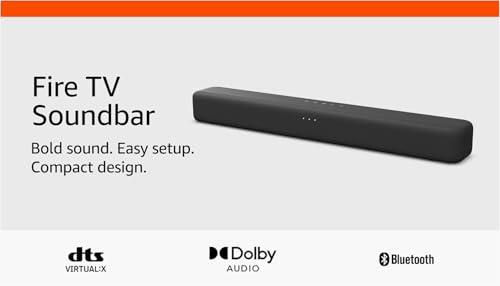
Finding the right soundbar feels overwhelming when you're staring at dozens of options with confusing specs and marketing buzzwords. Today we're breaking down two very different approaches to improving your TV's audio: the Ultimea Poseidon M60 Boom 5.1 Soundbar and the Amazon Fire TV Soundbar. These products represent opposite ends of the soundbar spectrum, and understanding their differences will help you make the right choice for your setup and budget.
Before diving into these specific models, let's establish what separates good soundbars from mediocre ones. The most important factors are channel configuration (how many separate audio channels the system can produce), power output (how loud and dynamic the sound can get), and frequency response (how well it handles everything from deep bass to crisp highs).
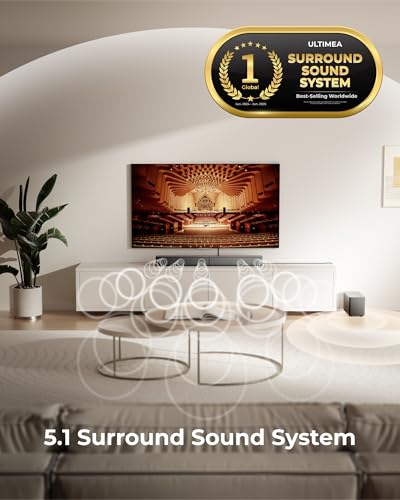
Channel configuration determines how immersive your audio experience will be. A 2.0 system has just left and right channels - basically stereo sound. A 5.1 system adds a center channel for dialogue, two surround channels for ambient effects, and a dedicated subwoofer channel for deep bass. The ".1" refers specifically to that low-frequency effects channel.
Power output, measured in watts, tells you how much electrical energy the amplifiers can deliver to the speakers. More watts generally mean louder, more dynamic sound, but the quality of those watts matters just as much as the quantity. A well-designed 100-watt system can often outperform a poorly-designed 200-watt system.
Frequency response describes which sound frequencies the system can reproduce effectively. Human hearing spans roughly 20Hz to 20,000Hz, with deep bass starting around 60Hz and going down from there. Most TV speakers struggle below 200Hz, which is why they sound thin and lack impact.
The Ultimea Poseidon M60 Boom launched in 2024 as a comprehensive surround sound solution, while the Amazon Fire TV Soundbar represents Amazon's entry-level approach to TV audio improvement. These release timelines matter because soundbar technology has advanced significantly in recent years, particularly in digital signal processing and wireless connectivity.
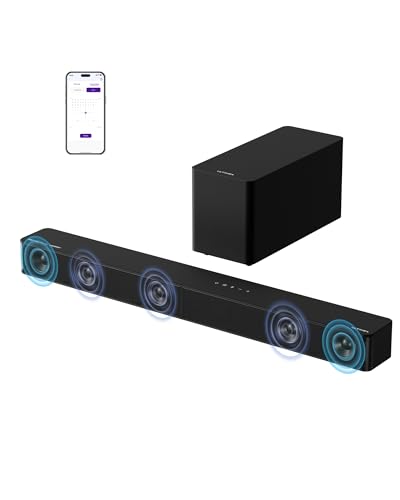
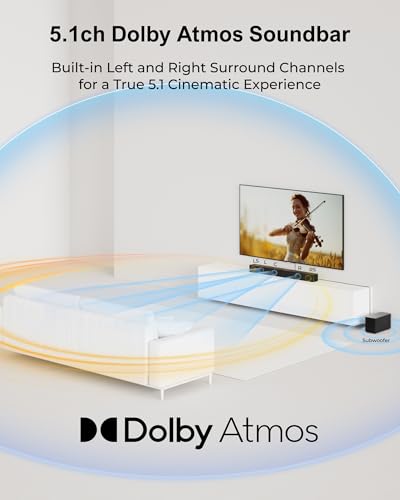
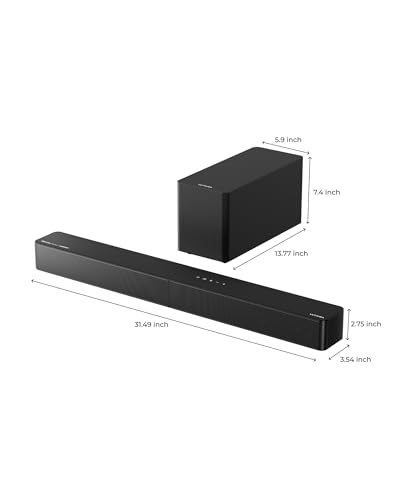
The Ultimea M60 Boom embodies the "go big or go home" philosophy with true 5.1 channel surround sound, Dolby Atmos processing, and a whopping 340 watts of peak power. It includes a dedicated 5.25-inch subwoofer and uses advanced BassMX technology for deep, controlled bass. This system aims to deliver a genuine home theater experience from what's essentially a two-piece setup.
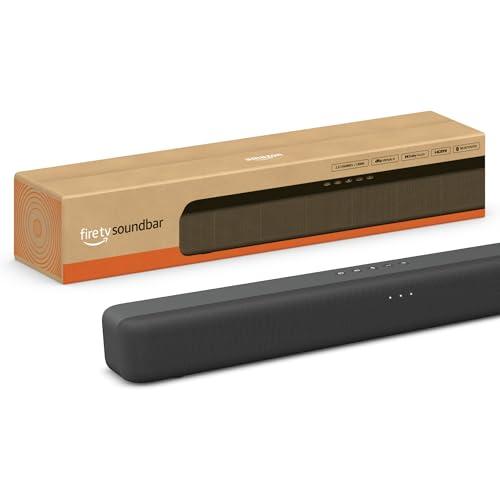
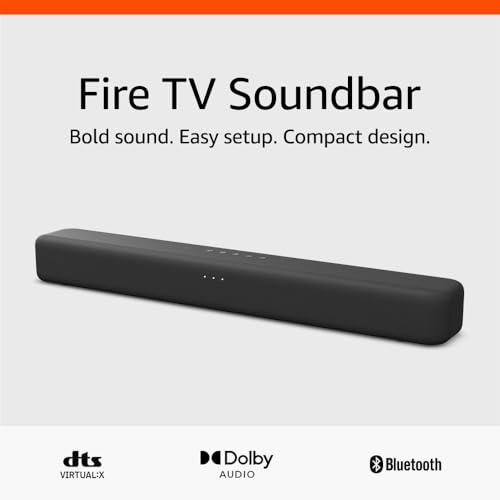
In contrast, the Amazon Fire TV Soundbar takes the minimalist approach with 2.0 stereo configuration and just 40 watts total power. It focuses on improving dialogue clarity and creating a wider soundstage than your TV's built-in speakers without adding complexity or requiring much space.
The performance gap between these systems is massive, and it starts with raw power. The Ultimea M60 Boom delivers 340 watts of peak power across multiple channels, while the Amazon soundbar manages just 40 watts total. This isn't just about volume - more power means better dynamic range, which is the difference between the quietest and loudest sounds the system can reproduce clearly.
Dynamic range matters enormously for movie watching. When an explosion happens on screen, you want to feel the impact. When characters whisper, you want to hear every word clearly. The Ultimea system can handle both extremes without distortion, while the Amazon unit will struggle with demanding content.
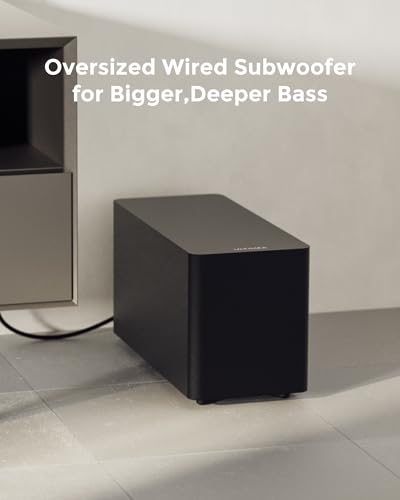
The M60 Boom's dedicated subwoofer makes a huge difference here. Bass isn't just about thumping effects - it provides the foundation that makes everything else sound fuller and more natural. The system's BassMX technology allows the 5.25-inch driver to move up to 16mm, which is exceptional excursion for a subwoofer this size. More excursion means more air movement, which translates to deeper, more impactful bass.
The Amazon Fire TV Soundbar relies on built-in bass reflex construction - essentially a tuned port that helps extend low-frequency response. This works reasonably well for dialogue and basic TV content, but it can't match the dedicated bass driver approach for movies or music with real low-end content.
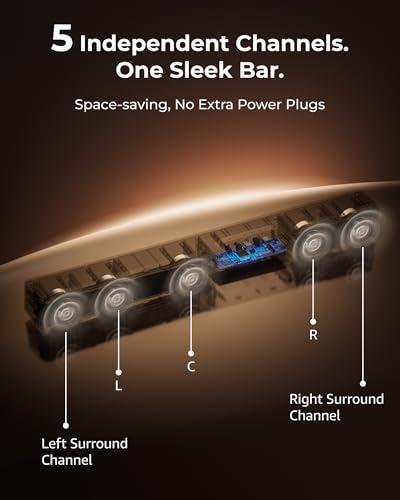
Here's where these systems diverge most dramatically. The Ultimea M60 Boom provides genuine 5.1 channel audio with discrete drivers for left, right, center, left surround, and right surround channels. All five channels are housed within the main soundbar unit through an innovative modular design where two sections twist together.
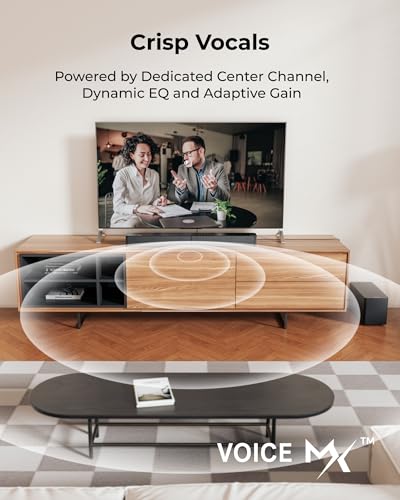
This matters because true channel separation creates accurate sound placement. When a helicopter flies overhead in a movie, you hear it move from one side to the other through properly positioned channels. When dialogue happens on screen, it comes from the center channel, making voices sound like they're actually coming from the actors' mouths rather than from speakers beside the TV.
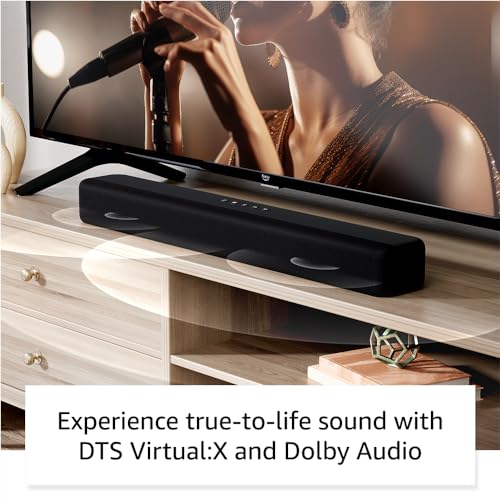
The Amazon soundbar uses DTS Virtual:X processing to simulate surround effects from its two channels. Virtual surround can create a wider soundstage than regular stereo, and modern processing has improved significantly in recent years. However, it's still a simulation. The system analyzes the audio signal and tries to trick your brain into perceiving sounds coming from locations where there are no actual speakers.
Based on extensive research into user experiences and professional reviews, the Ultimea system's real channel separation provides noticeably better spatial imaging and immersion. Virtual surround works best with specific types of content and room configurations, while discrete channels deliver consistent results across different setups.
Both systems prioritize dialogue clarity, but they achieve it differently. The M60 Boom features VoiceMX technology that dynamically enhances frequencies between 300Hz and 3,000Hz - the range where most human speech occurs. This adaptive processing boosts voice intelligibility during complex scenes without making dialogue sound artificial.
The Amazon soundbar achieves good dialogue clarity through balanced tuning rather than active processing. Its compact "Racetrack" drivers are designed to reproduce midrange frequencies clearly, and the system's overall sound signature prioritizes speech over effects.
In real-world use, both systems significantly improve dialogue clarity compared to TV speakers. However, the Ultimea system's active voice enhancement gives it an edge with challenging content like action movies where dialogue competes with explosions and music.
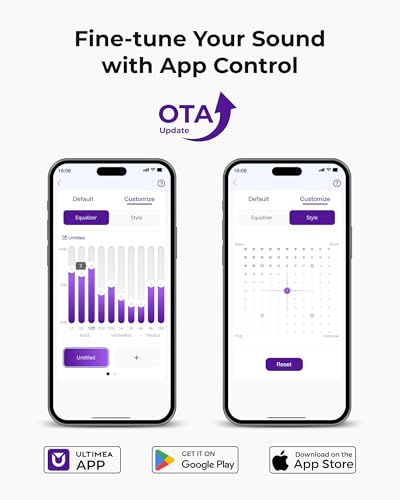
The Ultimea M60 Boom embraces smartphone integration with comprehensive app control through the Ultimea mobile app. You can adjust EQ settings, switch between six preset modes (Movie, Music, Voice, Sport, Game, Night), and fine-tune bass, midrange, and treble levels. The system also features Bluetooth 5.4 - the latest wireless standard offering improved range, stability, and ultra-low latency for gaming and video streaming.
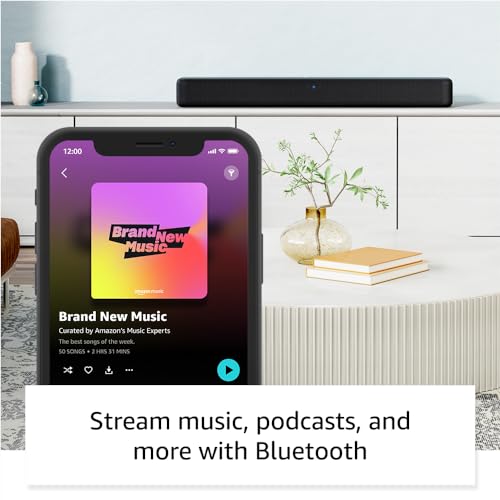
The Amazon Fire TV Soundbar takes a more traditional approach with physical touch controls and basic Bluetooth connectivity. While this simplicity appeals to users who prefer straightforward operation, it limits customization options. You can't adjust EQ settings or create custom sound profiles for different content types.
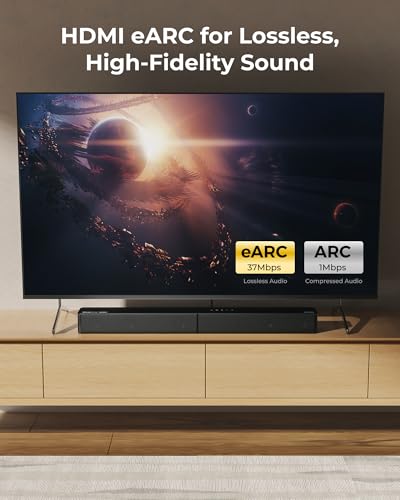
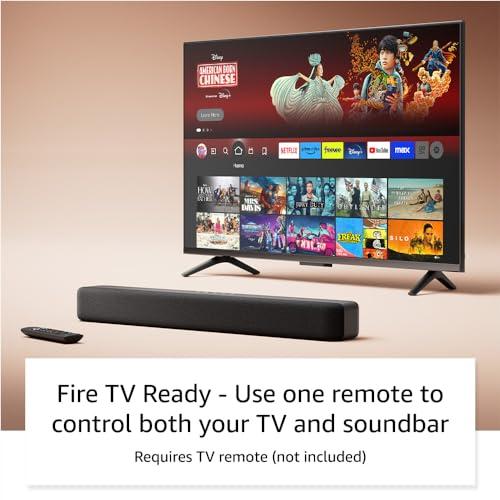
Both systems support HDMI ARC/eARC (Audio Return Channel/Enhanced Audio Return Channel), which allows high-quality audio transmission from your TV and enables control through your TV remote. eARC specifically supports higher bandwidth audio formats including uncompressed surround sound.
The M60 Boom's modular design is genuinely innovative. The two-piece soundbar connects together but can be separated for flexible placement around your TV. This approach houses all five channels while maintaining reasonable dimensions for most entertainment centers.
However, the system requires more planning. The separate subwoofer needs floor space and proper positioning for optimal bass response. The wired connection between soundbar and subwoofer, while ensuring stable signal transmission, limits placement flexibility compared to wireless alternatives.
The Amazon Fire TV Soundbar measures just 9 centimeters high and weighs 1.8 kilograms, making it ideal for wall mounting or placement in tight spaces. The integrated bass reflex design allows placement directly against walls without acoustic compromise - a real advantage in smaller rooms.
At the time of writing, these soundbars occupy different price tiers that reflect their capabilities. The Amazon Fire TV Soundbar represents solid value for basic TV audio improvement, delivering clear dialogue and wider soundstage than built-in TV speakers at an entry-level price point.
The Ultimea M60 Boom costs significantly more but delivers substantially more performance and features. True 5.1 surround sound, dedicated subwoofer, smart app control, and 340 watts of power typically require systems costing much more from established brands.
Value isn't just about initial cost - it's about long-term satisfaction. The Amazon soundbar works well for casual viewing but may leave you wanting more as you discover higher-quality content or upgrade to larger displays. The Ultimea system provides room to grow with your entertainment setup and content consumption habits.
For dedicated home theater use, the M60 Boom offers clear advantages. Its support for Dolby Atmos processing means it can decode and render modern movie soundtracks, even without dedicated upfiring drivers. The system's substantial power output and frequency response handle demanding content effectively.
The Amazon soundbar works better as a TV speaker replacement than a home theater component. Its limited power and bass response suit casual viewing but won't deliver the impact that makes action movies, concerts, or gaming truly immersive.
Looking ahead, content increasingly features sophisticated audio production. Streaming services offer Atmos soundtracks, games use advanced spatial audio, and even YouTube content benefits from better sound reproduction. The Ultimea system handles these developments naturally, while the Amazon unit represents the limits of what 2.0 processing can achieve.
Based on consensus from user reviews and professional evaluations, the M60 Boom excels with movie content, delivering room-filling sound that enhances the viewing experience significantly. Music reproduction benefits from the dedicated subwoofer and proper channel separation, though purist listeners might prefer dedicated music systems.
The Amazon soundbar performs admirably with TV shows, news, and lighter content. It creates a notably wider soundstage than TV speakers and handles dialogue well. However, it struggles with bass-heavy content and can sound strained at higher volumes.
Neither system matches the performance of premium soundbars costing significantly more, but both punch above their weight class in different ways. The Ultimea unit competes with mid-range systems from established brands, while the Amazon soundbar outperforms many budget alternatives.
Choose the Ultimea Poseidon M60 Boom if you want genuine home theater performance and have space for a subwoofer. This system works best for dedicated movie watching, gaming, and music listening. The investment makes sense if you plan to keep the system long-term and value features like app control and surround sound processing.
The Amazon Fire TV Soundbar suits users prioritizing simplicity, space efficiency, and basic audio improvement. It's ideal for apartments, bedrooms, or secondary viewing areas where full surround sound isn't necessary or practical. The system also works well for users who primarily watch TV shows and lighter content rather than action movies.
Consider your viewing habits honestly. If you mainly watch news, sitcoms, and casual streaming content, the Amazon unit provides meaningful improvement without complexity. If you regularly watch movies, play games, or listen to music through your TV, the M60 Boom's additional capabilities justify the higher investment.
Room size matters too. The Amazon soundbar works well in smaller spaces where a subwoofer would overwhelm the room. The Ultimea system needs adequate space to perform properly but rewards that space with substantially better performance.
Both soundbars represent honest approaches to different user needs. The Amazon Fire TV Soundbar succeeds as a simple, effective TV speaker replacement, while the Ultimea M60 Boom delivers genuine surround sound performance at an accessible price point. Your choice should align with your space, budget, content preferences, and long-term entertainment goals.
| Ultimea Poseidon M60 Boom 5.1 Soundbar | Amazon Fire TV Soundbar |
|---|---|
| Channel Configuration - Determines surround sound capability and immersion | |
| True 5.1 channels with discrete drivers for left, right, center, and surround effects | 2.0 stereo channels with virtual surround processing |
| Power Output - Controls maximum volume and dynamic range | |
| 340W peak power across all channels | 40W total power (2 x 20W amplifiers) |
| Subwoofer - Essential for deep bass in movies and music | |
| Dedicated 5.25" wireless subwoofer with BassMX technology | No subwoofer (relies on built-in bass reflex design) |
| Audio Format Support - Compatibility with modern content | |
| Dolby Atmos, Dolby Digital, DTS with 5.1 processing | Dolby Audio, DTS Virtual:X with stereo upmixing |
| Smart Features - Convenience and customization options | |
| Full smartphone app control with 6 EQ presets and custom tuning | Basic physical controls only, no app or advanced settings |
| Bluetooth Technology - Wireless streaming quality and latency | |
| Bluetooth 5.4 with ultra-low latency for gaming and video | Standard Bluetooth (version unspecified) |
| Physical Design - Space requirements and placement flexibility | |
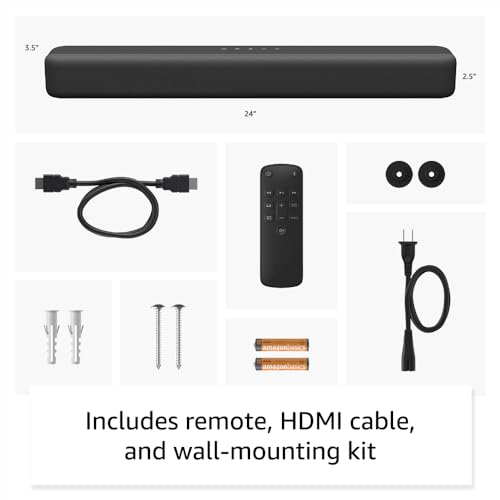
| Modular two-piece soundbar design plus separate wired subwoofer | Single compact unit (61cm x 9cm x 6.5cm), wall-mountable |
| Connectivity Options - Compatibility with different devices | |
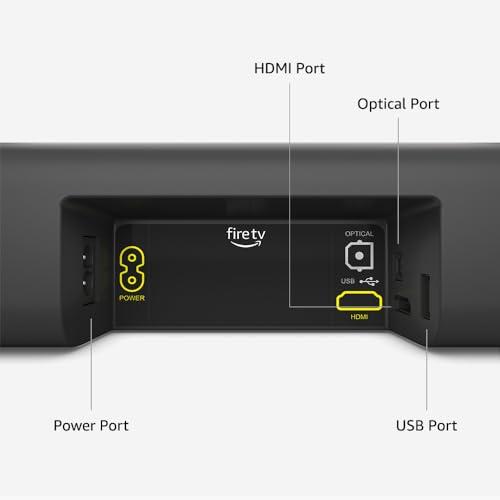
| HDMI eARC, Optical, USB, AUX inputs with CEC support | HDMI ARC/eARC, Optical input, basic connectivity |
| Setup Complexity - Time and effort required for installation | |
| Moderate setup with subwoofer positioning and app configuration | Plug-and-play simplicity with minimal setup required |
| Target Use Case - Best suited for different viewing scenarios | |
| Home theater enthusiasts wanting immersive surround sound | Casual viewers seeking basic TV audio improvement |
| Room Size Compatibility - Performance in different spaces | |
| Medium to large rooms where 340W power can be utilized effectively | Small to medium rooms, apartments, or space-constrained setups |
The Ultimea Poseidon M60 Boom 5.1 Soundbar is significantly better for movies due to its true 5.1 surround sound channels and dedicated subwoofer. It delivers immersive audio with proper channel separation for effects and dialogue. The Amazon Fire TV Soundbar works well for TV shows and casual viewing but lacks the power and bass response needed for an engaging movie experience.
The Ultimea Poseidon M60 Boom includes a dedicated 5.25-inch subwoofer for deep bass reproduction. The Amazon Fire TV Soundbar has no subwoofer and cannot connect to one - it relies on built-in bass reflex design which provides limited low-frequency response compared to a dedicated bass driver.
The Amazon Fire TV Soundbar is much easier to set up with simple plug-and-play installation and basic controls. The Ultimea M60 Boom requires more setup time including subwoofer positioning, app installation, and sound calibration, but offers much better performance once configured properly.
The Ultimea Poseidon M60 Boom delivers substantially better sound quality with 340W of power, true surround sound channels, and dedicated bass reproduction. The Amazon Fire TV Soundbar provides clear dialogue and wider soundstage than TV speakers but is limited by its 40W power output and stereo-only configuration.
The Amazon Fire TV Soundbar is better suited for small spaces due to its compact 9cm height and no separate subwoofer requirements. The Ultimea M60 Boom needs adequate room for the subwoofer and may overwhelm smaller spaces with its 340W power output, though it can be adjusted through the mobile app.
The Ultimea Poseidon M60 Boom offers full smartphone app control with EQ customization, preset modes, and system updates. The Amazon Fire TV Soundbar has no app control and must be operated through physical touch buttons or your TV remote via HDMI ARC.
The Ultimea M60 Boom is superior for gaming with its Bluetooth 5.4 ultra-low latency connection, surround sound processing for spatial audio, and powerful bass response for impact effects. The Amazon Fire TV Soundbar works for casual gaming but lacks the immersive audio and low-latency features serious gamers prefer.
The Ultimea Poseidon M60 Boom supports Dolby Atmos processing and can decode Atmos soundtracks, though it uses virtual height effects rather than dedicated upfiring speakers. The Amazon Fire TV Soundbar does not support Dolby Atmos - it's limited to Dolby Audio and DTS Virtual:X processing.
Both offer good value in their categories. The Amazon Fire TV Soundbar provides excellent value for basic TV audio improvement at an entry-level price. The Ultimea M60 Boom delivers exceptional value for true surround sound systems, offering features typically found in much more expensive soundbars.
The Amazon Fire TV Soundbar requires minimal space at just 61cm wide and can mount on walls. The Ultimea Poseidon M60 Boom needs space for both the modular soundbar and separate subwoofer positioning, requiring more room planning but offering flexible placement options.
The Ultimea M60 Boom is significantly better for music with its dedicated subwoofer, true stereo separation, and customizable EQ settings through the mobile app. The Amazon Fire TV Soundbar can play music adequately but lacks the bass response and dynamic range needed for engaging musical experiences.
The Ultimea Poseidon M60 Boom is a complete 5.1 system that cannot be expanded further, but offers comprehensive surround sound as-is. The Amazon Fire TV Soundbar also cannot be expanded - it has no subwoofer output or additional speaker connections, limiting future upgrade options.
We've done our best to create useful and informative comparisons to help you decide what product to buy. Our research uses advanced automated methods to create this comparison and perfection is not possible - please contact us for corrections or questions. These are the sites we've researched in the creation of this article: ultimea.com - ultimea.com - youtube.com - bestbuy.com - youtube.com - avsforum.com - youtube.com - manuals.plus - youtube.com - device.report - ultimea.com - ultimea.de - community.ultimea.com - ultimea.com - community.ultimea.com - ultimea.com - youtube.com - aliexpress.com - ultimea.com - rtings.com - developer.amazon.com - stereoguide.com - developer.amazon.com - techradar.com - hometechnologyreview.com - whathifi.com - youtube.com - whathifi.com - wirelessplace.com - hometechnologyreview.com - dolby.com - aboutamazon.com - developer.amazon.com - community.anker.com - youtube.com - cordbusters.co.uk

Privacy Policy
Terms and Conditions - Affiliate Policy
Home Security
© Copyright 2008-2026.
11816 Inwood Rd #1211, Dallas, TX 75244