


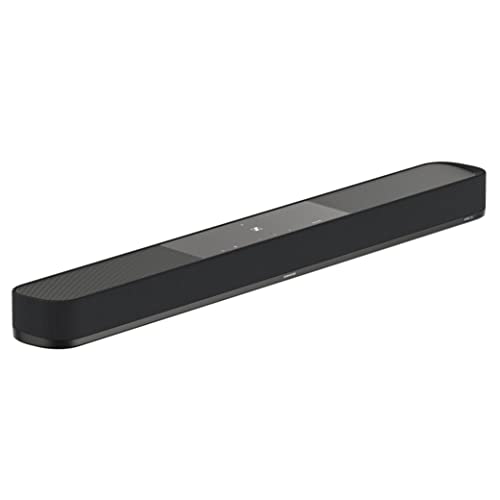

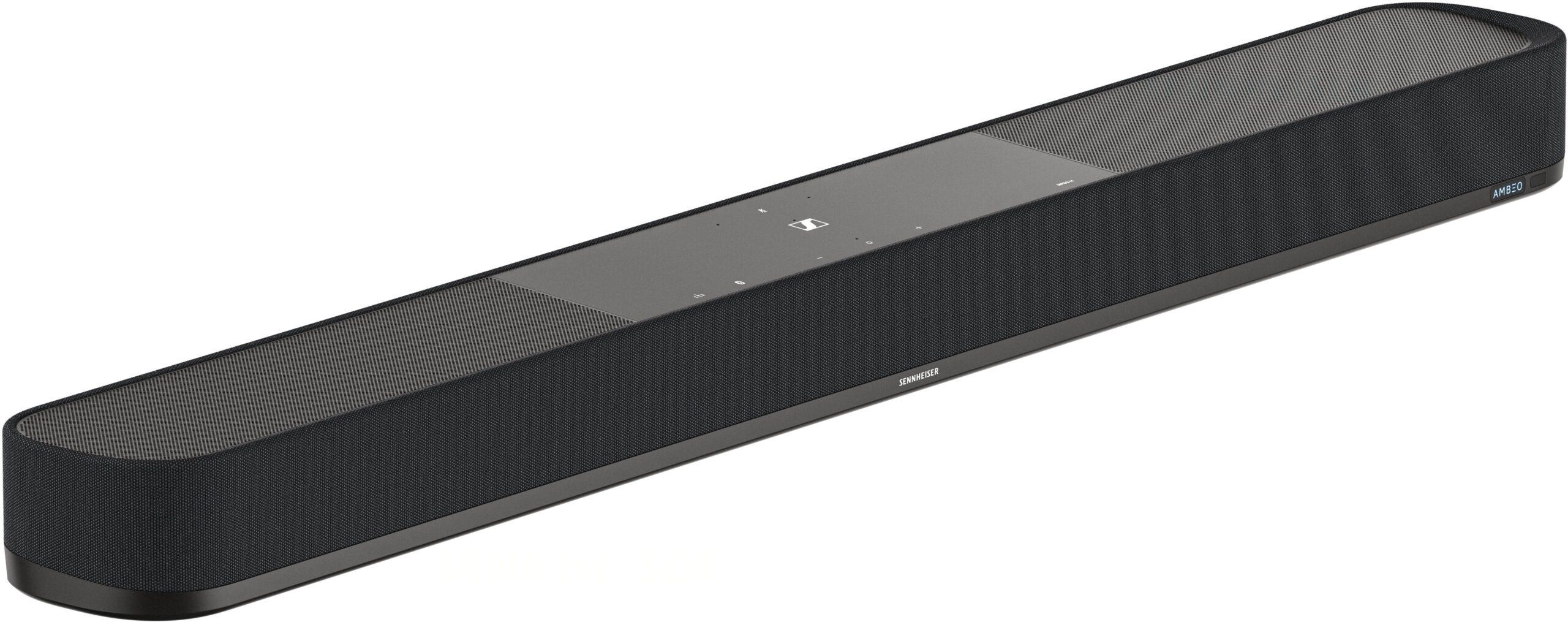

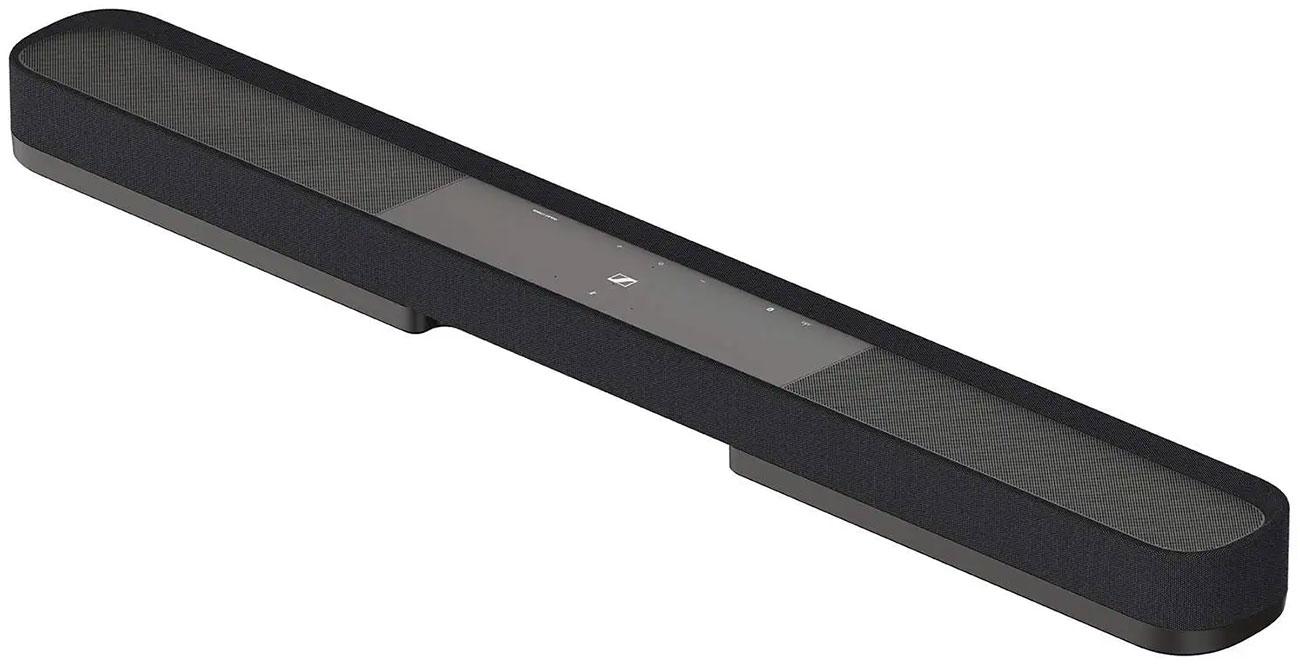
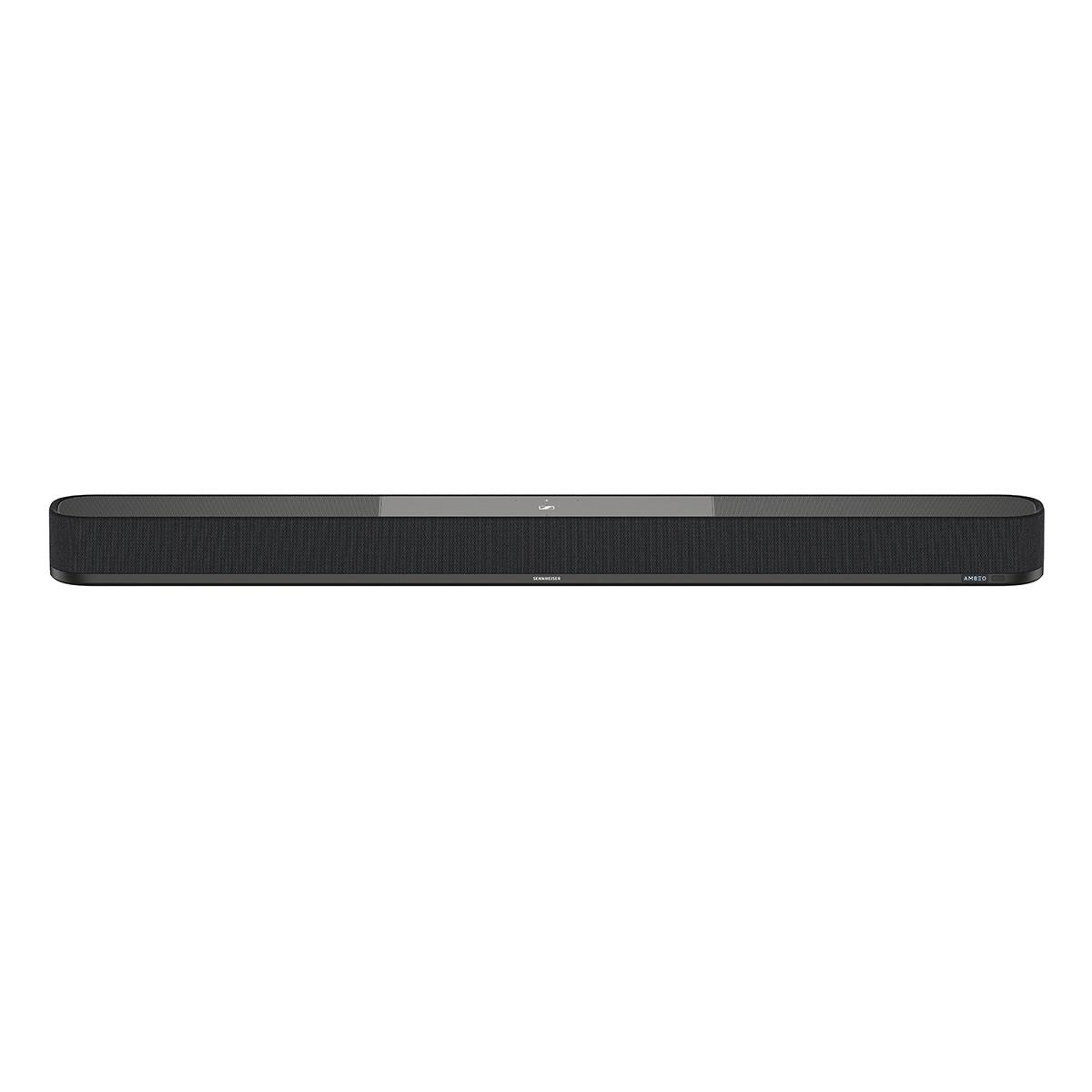
When your TV's built-in speakers just aren't cutting it anymore, a soundbar offers the simplest path to better audio. But the soundbar market has exploded in recent years, with options ranging from basic stereo units under $100 to sophisticated systems costing over $1,000. Today we're comparing two soundbars that represent opposite ends of this spectrum: the budget-friendly Ultimea Poseidon M60 Boom and the premium Sennheiser AMBEO Soundbar Plus.
The question isn't just which one sounds better—it's which one delivers the right balance of performance and value for your specific needs. After researching extensive user reviews and expert opinions, we'll help you understand what you're actually getting for your money and when it makes sense to spend more.
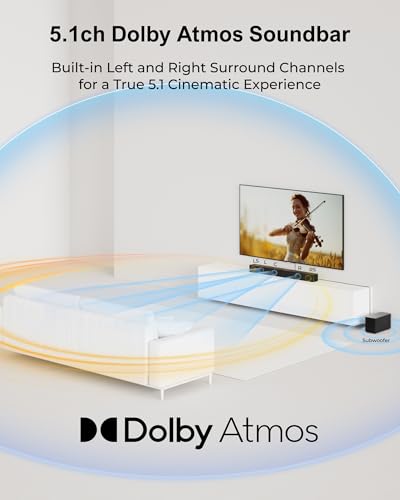
Before diving into specifics, it's worth understanding what makes today's soundbars different from the basic models of just a few years ago. The biggest game-changer has been Dolby Atmos, an audio format that adds height information to surround sound. Traditional surround sound places audio around you in a flat plane—left, right, front, back. Dolby Atmos adds a third dimension by placing sounds above you, creating a more immersive "bubble" of audio.
Both the Ultimea Poseidon M60 Boom and Sennheiser AMBEO Soundbar Plus support Dolby Atmos, but they achieve it in fundamentally different ways. This difference explains much of the price gap between them.
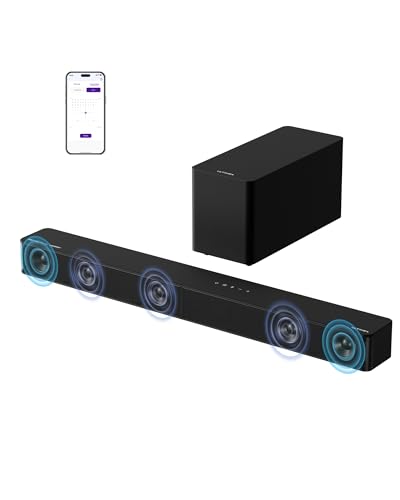
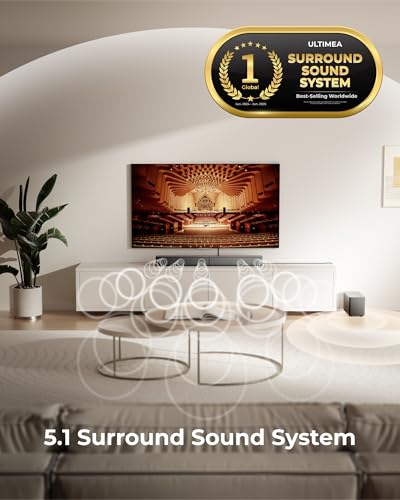
The Ultimea M60, released in 2024, uses what's called "virtual" surround processing. All five of its drivers (individual speakers) are contained within a single soundbar unit, and sophisticated digital signal processing (DSP) creates the illusion of sounds coming from different directions. It's like an audio magician's trick—your brain is convinced sounds are coming from behind and above you, even though all the speakers are in front.
The Sennheiser AMBEO Plus, also launched in 2024, takes a different approach with physical speakers dedicated to creating height effects. It uses up-firing drivers that bounce sound off your ceiling to create genuine overhead audio. This "true" Atmos implementation requires more speakers, more power, and more sophisticated processing—hence the higher price.
Audio quality is obviously the most important factor, but it's also the most complex to evaluate. Based on our research into expert reviews and user feedback, the differences between these soundbars are significant but not always in ways you might expect.
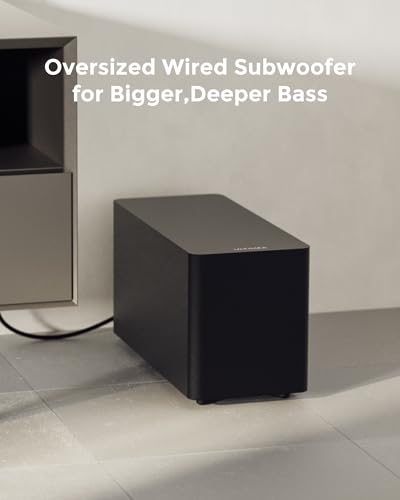
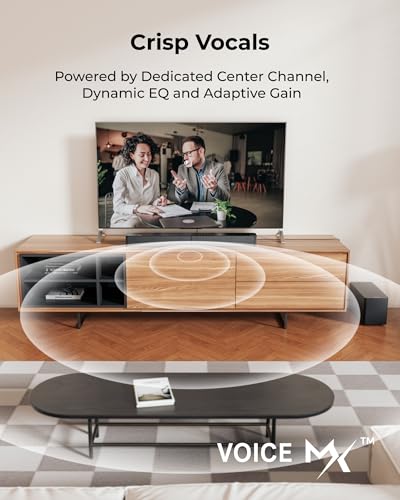
The Ultimea M60 delivers surprisingly detailed sound for its price range. Its frequency response—the range of sounds it can reproduce—extends from around 45Hz to 18kHz, which covers most of what you'll hear in movies and music. The bass response, enhanced by what Ultimea calls "BassMX Technology," provides satisfying low-end punch from its wired 5.25-inch subwoofer. For dialogue, which is often the most important element in TV and movies, the soundbar performs admirably with clear vocal reproduction.
However, the Sennheiser AMBEO Plus operates in a different league entirely. Its frequency response extends from 20Hz to 21kHz, capturing both deeper bass and more delicate high-frequency details. More importantly, it can reach much higher volume levels (110+ dB versus 99 dB for the Ultimea) while maintaining clarity. This matters because many dramatic movie scenes require both loud explosive effects and quiet dialogue to be reproduced cleanly at the same time.
The Sennheiser's advantage becomes most apparent in complex audio scenes. During action sequences with multiple sound effects, dialogue, and music all happening simultaneously, the premium soundbar maintains better separation between different audio elements. You can hear individual sounds more distinctly rather than everything blending into a wall of noise.
This is where the fundamental difference in approach becomes crucial. The Ultimea M60 creates its surround sound effects through psychoacoustic processing—essentially tricking your brain into perceiving sounds from different directions. For many listeners, especially those new to surround sound, this virtual processing is surprisingly effective. Movies with overhead helicopter sounds or rain effects do create a sense of height and space that's noticeably better than regular stereo.
The Sennheiser AMBEO Plus, with its dedicated height channels, delivers what many reviewers describe as a more authentic three-dimensional soundstage. The physical up-firing speakers create actual reflections off your ceiling, placing sounds with greater precision in the space around you. In side-by-side comparisons, most listeners can distinguish between the virtual and physical approaches, with the Sennheiser providing more convincing surround effects.
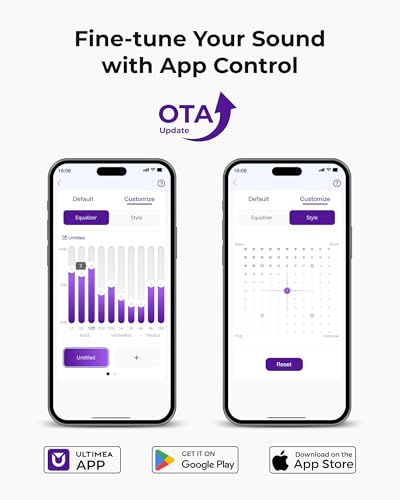
However—and this is important—the effectiveness of any Atmos system depends heavily on your room. Rooms with high ceilings, unusual shapes, or lots of soft furnishings can diminish the height effects from both systems. The Sennheiser partially addresses this with its AMBEO room calibration technology, which measures your room's acoustic properties and adjusts the sound accordingly. The Ultimea relies on manual adjustment through its smartphone app.
Bass response deserves special attention because it's often what people notice most when upgrading from TV speakers. The Ultimea M60 includes a wired 5.25-inch subwoofer that, according to user reviews, delivers satisfying bass for most content. The BassMX technology optimizes the subwoofer's performance within its physical limitations, creating more impact than you'd expect from a relatively small driver.
The Sennheiser AMBEO Plus includes a wireless 8-inch subwoofer as part of its home theater system package. The larger driver size and wireless design offer two key advantages: deeper bass extension (it can reproduce lower frequencies) and flexible placement. Since bass waves are omnidirectional, you can position the subwoofer wherever it sounds best in your room rather than being constrained by cable length.
In practical terms, the difference is most noticeable during movie scenes with deep sound effects—explosions, rumbling vehicles, or dramatic music. The Sennheiser provides the kind of visceral impact that you feel in your chest, while the Ultimea delivers satisfying but less overwhelming bass response.
At the time of writing, these soundbars represent drastically different value propositions. The Ultimea Poseidon M60 Boom typically sells for under $200, making it one of the most affordable ways to add Dolby Atmos capability to your home theater. The Sennheiser AMBEO Soundbar Plus commands a premium price in the four-figure range, competing with high-end audio components.
The value equation isn't simply about absolute performance—it's about performance relative to price and alternatives. The Ultimea delivers audio quality that would have required spending significantly more just a few years ago. Its virtual surround processing, while not perfect, creates a genuinely immersive experience that transforms most TV and movie content. For someone upgrading from basic TV speakers, the improvement is dramatic.
The Sennheiser justifies its premium pricing through superior engineering, materials, and performance. It competes not just with other soundbars but with traditional component systems that might include a separate AV receiver, multiple speakers, and subwoofer. When viewed in that context, its pricing becomes more reasonable, especially considering the simplified setup and sleek appearance.
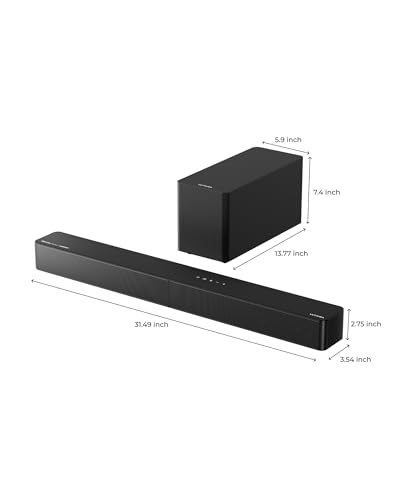
Your room and setup requirements play a crucial role in determining which soundbar makes sense. The Ultimea M60 offers a more compact solution that fits easily under most TVs. Its modular design—the soundbar arrives in two pieces that twist together—makes it easier to transport and position. However, the wired subwoofer limits placement flexibility and requires running a cable to wherever you position it.
The Sennheiser AMBEO Plus is physically larger and requires more space in your entertainment center. However, its wireless subwoofer can be placed anywhere in the room for optimal bass response. More importantly, its room calibration system adapts the sound to your specific space, potentially overcoming acoustic challenges that might limit other soundbars' performance.
For apartments or smaller rooms, the Ultimea might actually be the better choice despite its lower price. Its more compact size won't overwhelm a small space, and its wired subwoofer connection ensures reliable bass without worrying about wireless interference from neighbors' devices.
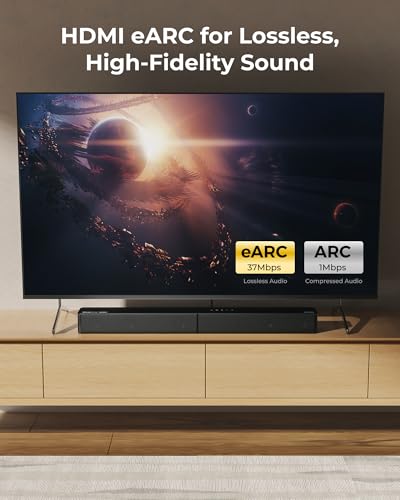
Modern soundbars need to connect to various sources, and both systems handle this differently. The Ultimea M60 covers the essentials with HDMI eARC (enhanced Audio Return Channel, which carries high-quality audio from your TV), optical input, and Bluetooth 5.4 for wireless music streaming. Its smartphone app provides control over sound modes and EQ settings, with regular firmware updates adding new features.
The Sennheiser AMBEO Plus offers more comprehensive connectivity, including multiple HDMI inputs, Wi-Fi for streaming services, Apple AirPlay 2 for wireless audio from Apple devices, and integration with voice assistants like Alexa and Google Assistant. This broader feature set provides more flexibility for complex home theater setups and smart home integration.
From a future-proofing perspective, the Sennheiser's more advanced processing power and connectivity options suggest it will remain relevant longer. However, the Ultimea's firmware update capability means it can evolve over time as well.
Based on our research into user experiences and expert reviews, the decision often comes down to priorities and expectations rather than just budget.
The Ultimea Poseidon M60 Boom makes sense for users who want a significant upgrade from TV speakers without the complexity or cost of a premium system. It's ideal for casual viewers who primarily watch streaming content, occasional movie nights, and want better dialogue clarity without overwhelming bass that might disturb neighbors. The virtual surround processing provides enough spatial enhancement to make action movies more engaging while keeping the system simple to set up and use.
The Sennheiser AMBEO Soundbar Plus targets serious home theater enthusiasts who prioritize audio quality and want an authentic cinematic experience. It's the right choice for users with larger rooms who host movie nights, appreciate subtle audio details in films, and value the convenience of a single-unit solution that rivals traditional component systems. The room calibration and physical height channels justify the premium for listeners who can distinguish and appreciate the superior performance.
The performance gap between these soundbars comes down to several key technical differences that aren't always obvious from specifications alone.
Processing power plays a crucial role. The Sennheiser uses significantly more computational resources for its AMBEO processing, room correction, and multi-channel audio decoding. This allows it to handle complex audio passages without compression or distortion that might occur in less powerful systems.
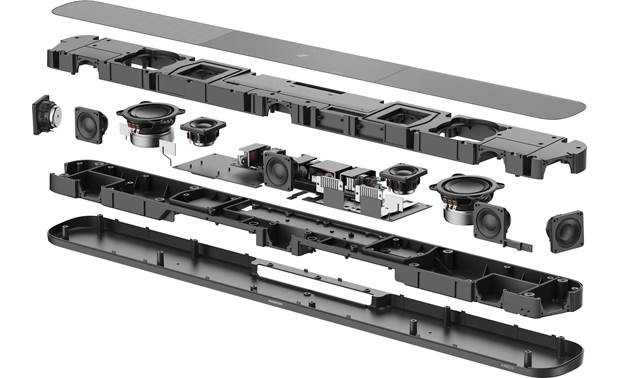
Driver quality and configuration matter enormously. While both soundbars have multiple speakers, the Sennheiser uses larger, higher-quality drivers with more powerful amplification. Each driver is optimized for its specific role—some handle midrange frequencies, others focus on height effects, and dedicated tweeters reproduce high-frequency details.
The amplification topology differs significantly between the systems. The Ultimea M60 uses efficient Class D amplifiers that provide good power output for its price range. The Sennheiser employs more sophisticated amplifier designs with greater power reserves and lower distortion, allowing it to maintain audio quality at higher volume levels.
The choice between these soundbars ultimately depends on your audio priorities, room requirements, and long-term expectations. Neither is objectively "better"—they serve different markets and use cases effectively.
Choose the Ultimea Poseidon M60 Boom if you want meaningful improvement over TV speakers at an accessible price point. Its virtual surround processing and solid build quality provide excellent value for casual to moderate home theater use. The compact design and straightforward setup make it particularly suitable for smaller rooms or secondary systems.
Choose the Sennheiser AMBEO Soundbar Plus if audio quality is a priority and you want a system that can grow with increasingly sophisticated content and higher expectations. Its authentic Dolby Atmos reproduction, room calibration, and premium construction justify the investment for serious home theater enthusiasts.
Both soundbars represent successful approaches to their respective market segments. The key is honestly assessing your needs, room characteristics, and how much you value the incremental performance improvements that come with premium pricing. In the rapidly evolving soundbar market, either choice will provide years of satisfying audio enhancement over basic TV speakers.
| Ultimea Poseidon M60 Boom 5.1 Soundbar | Sennheiser AMBEO Soundbar Plus Home Theater System |
|---|---|
| Price Range - Budget vs premium positioning affects overall value | |
| Under $200 (exceptional value for Dolby Atmos) | $900-1100 range (premium pricing for reference quality) |
| Dolby Atmos Implementation - Virtual vs physical height channels dramatically impact immersion | |
| Virtual 5.1 processing (all speakers in main bar) | True 5.1.4 with dedicated up-firing speakers |
| Total Power Output - Higher wattage enables louder, cleaner sound in larger rooms | |
| 340W peak power (adequate for small-medium rooms) | 830W total system power (fills large rooms with authority) |
| Subwoofer Configuration - Wired vs wireless affects placement flexibility and bass quality | |
| Wired 5.25" subwoofer with 10ft cable | Wireless 8" subwoofer with flexible placement |
| Room Calibration - Automatic tuning optimizes sound for your specific space | |
| Manual EQ adjustment via app | Advanced AMBEO 3D room calibration technology |
| Frequency Response - Wider range captures more audio detail, especially bass extension | |
| 45Hz-18kHz (covers most content adequately) | 20Hz-21kHz (full-range audiophile reproduction) |
| Maximum Volume - Higher SPL handles demanding content without distortion | |
| 99 dB max SPL (good for typical home use) | 110+ dB max SPL (cinema-level dynamics) |
| Connectivity Options - More inputs provide flexibility for multiple sources | |
| HDMI eARC, Optical, Bluetooth 5.4 | Multiple HDMI 2.1, Wi-Fi, AirPlay 2, voice assistant integration |
| Build Quality - Construction materials affect durability and acoustic performance | |
| Functional plastic construction | Premium aluminum and high-grade materials |
| Setup Complexity - Affects how quickly you get optimal sound | |
| Simple plug-and-play setup | Sophisticated calibration process for best results |
| Driver Configuration - More/better drivers improve sound separation and clarity | |
| 5 full-range drivers in single bar unit | 13 high-performance drivers including dedicated height channels |
| Smart Features - App control and streaming affect daily usability | |
| Ultimea app with 10-band EQ and sound modes | Advanced app, voice control, multi-room audio capabilities |
| Physical Size - Larger units may not fit all entertainment centers | |
| Compact modular design fits most setups | Wide premium soundbar requires adequate space |
The Ultimea Poseidon M60 Boom provides exceptional value in the budget category, delivering Dolby Atmos capabilities at an accessible price point. The Sennheiser AMBEO Soundbar Plus offers premium performance that justifies its higher cost for serious home theater enthusiasts who prioritize audio quality over savings.
The Ultimea Poseidon M60 Boom uses virtual Dolby Atmos processing, creating height effects through digital signal processing with all speakers in the main bar. The Sennheiser AMBEO Soundbar Plus features true Dolby Atmos with dedicated up-firing speakers that physically bounce sound off your ceiling for more authentic overhead effects.
The Ultimea Poseidon M60 Boom works well in smaller spaces due to its compact design and appropriate power output that won't overwhelm tight quarters. While the Sennheiser AMBEO Soundbar Plus can work in small rooms, its larger size and higher power output are better suited for medium to large spaces.
Yes, both include subwoofers but with key differences. The Ultimea Poseidon M60 Boom comes with a wired 5.25-inch subwoofer that requires a cable connection to the soundbar. The Sennheiser AMBEO Soundbar Plus includes a wireless 8-inch subwoofer that offers more placement flexibility and deeper bass extension.
Both soundbars excel at dialogue reproduction, but the Sennheiser AMBEO Soundbar Plus has a slight edge due to its superior driver quality and advanced processing. The Ultimea Poseidon M60 Boom still delivers clear dialogue that's significantly better than TV speakers, making conversations easy to follow in movies and shows.
The Ultimea Poseidon M60 Boom offers simple plug-and-play setup that takes just minutes to get running. The Sennheiser AMBEO Soundbar Plus requires a more involved setup process with room calibration that measures your space's acoustics, but this extra effort results in optimized sound performance.
The Sennheiser AMBEO Soundbar Plus can reach higher volume levels (110+ dB) while maintaining audio clarity, making it better for large rooms or loud movie nights. The Ultimea Poseidon M60 Boom reaches 99 dB maximum, which is adequate for most home theater setups but may struggle in very large spaces.
Yes, both the Ultimea Poseidon M60 Boom and Sennheiser AMBEO Soundbar Plus work with all major TV brands through HDMI eARC or optical connections. The Sennheiser offers more connectivity options including multiple HDMI inputs, while the Ultimea covers the essential connections most users need.
The Sennheiser AMBEO Soundbar Plus excels at music reproduction with its wider frequency response and superior driver quality, delivering audiophile-level performance. The Ultimea Poseidon M60 Boom handles music well for casual listening with good clarity and bass response that satisfies most users.
Both soundbars offer smartphone app control. The Ultimea Poseidon M60 Boom provides a functional app with EQ settings and sound modes. The Sennheiser AMBEO Soundbar Plus features a more advanced app with extensive customization options, plus voice assistant integration for hands-free control.
The Sennheiser AMBEO Soundbar Plus delivers superior bass with its larger 8-inch wireless subwoofer that can reproduce deeper frequencies and provide more impactful low-end response. The Ultimea Poseidon M60 Boom offers satisfying bass from its 5.25-inch subwoofer that's impressive for its size and price range.
Choose the Ultimea Poseidon M60 Boom if you want excellent value and significant improvement over TV speakers without breaking the budget. Opt for the Sennheiser AMBEO Soundbar Plus if you're a serious home theater enthusiast who values premium audio quality and can appreciate the performance difference that justifies the higher investment.
We've done our best to create useful and informative comparisons to help you decide what product to buy. Our research uses advanced automated methods to create this comparison and perfection is not possible - please contact us for corrections or questions. These are the sites we've researched in the creation of this article: ultimea.com - ultimea.com - youtube.com - bestbuy.com - youtube.com - avsforum.com - youtube.com - manuals.plus - youtube.com - device.report - ultimea.com - ultimea.de - community.ultimea.com - ultimea.com - community.ultimea.com - ultimea.com - youtube.com - aliexpress.com - ultimea.com - techradar.com - pocket-lint.com - moon-audio.com - stereonet.com - rtings.com - abt.com - projectorscreen.com - youtube.com - videoandaudiocenter.com - crutchfield.com - sennheiser-hearing.com - newsroom.sennheiser.com

Privacy Policy
Terms and Conditions - Affiliate Policy
Home Security
© Copyright 2008-2026.
11816 Inwood Rd #1211, Dallas, TX 75244