

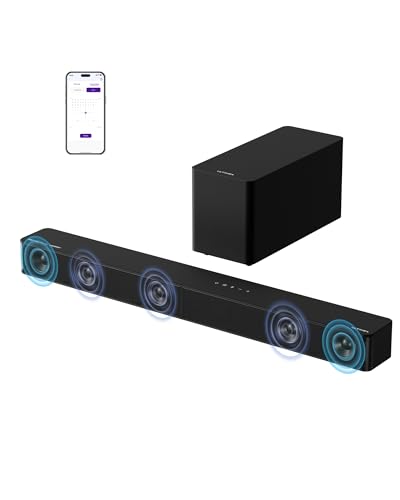
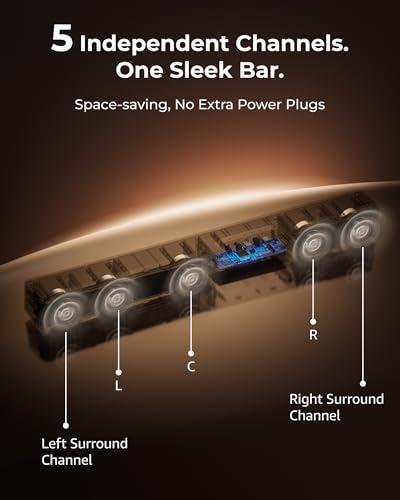
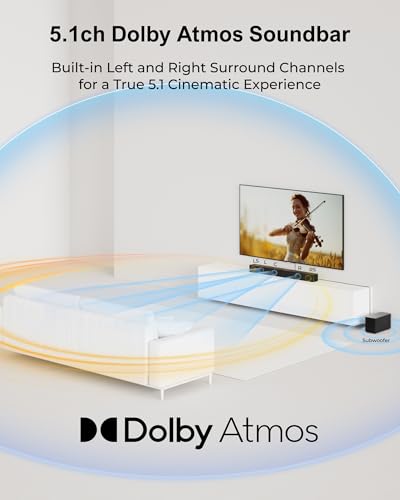





When you're tired of straining to hear dialogue over your TV's tinny speakers, a 5.1 Dolby Atmos soundbar represents the sweet spot between basic audio upgrades and full-blown home theater systems. These systems pack five discrete audio channels (left, center, right, left surround, right surround) plus a dedicated subwoofer into a relatively simple package, while Dolby Atmos adds overhead sound effects that bounce off your ceiling to create a three-dimensional audio bubble around your couch.
The Ultimea Poseidon M60 Boom and JBL Bar 700 both deliver this 5.1 Dolby Atmos experience, but they take completely different approaches to get there. Released in 2024 and 2025 respectively, these soundbars showcase two distinct philosophies: integrated simplicity versus discrete component performance. Understanding which approach fits your space, budget, and audio priorities will determine which system transforms your living room into a proper home theater.
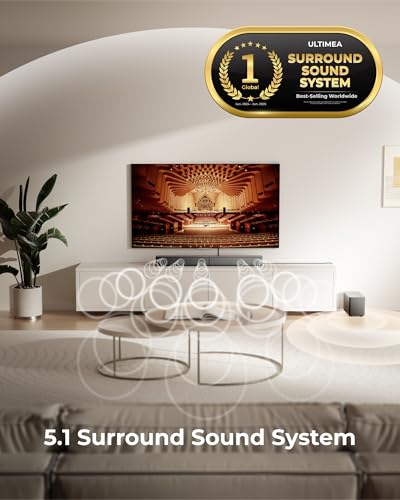
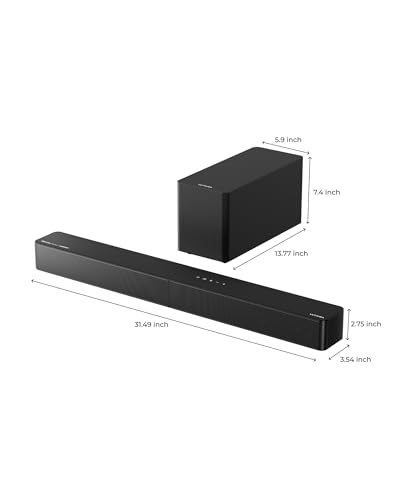
The most fundamental difference between these systems lies in how they create surround sound. The Ultimea Poseidon M60 Boom takes what I'd call the "all-in-one" approach – it packs all five surround channels directly into the main soundbar unit. This means your left surround, right surround, and center channels all come from the same sleek bar sitting under your TV. It's an elegant solution that eliminates the complexity of multiple components while still processing true 5.1 channel audio.
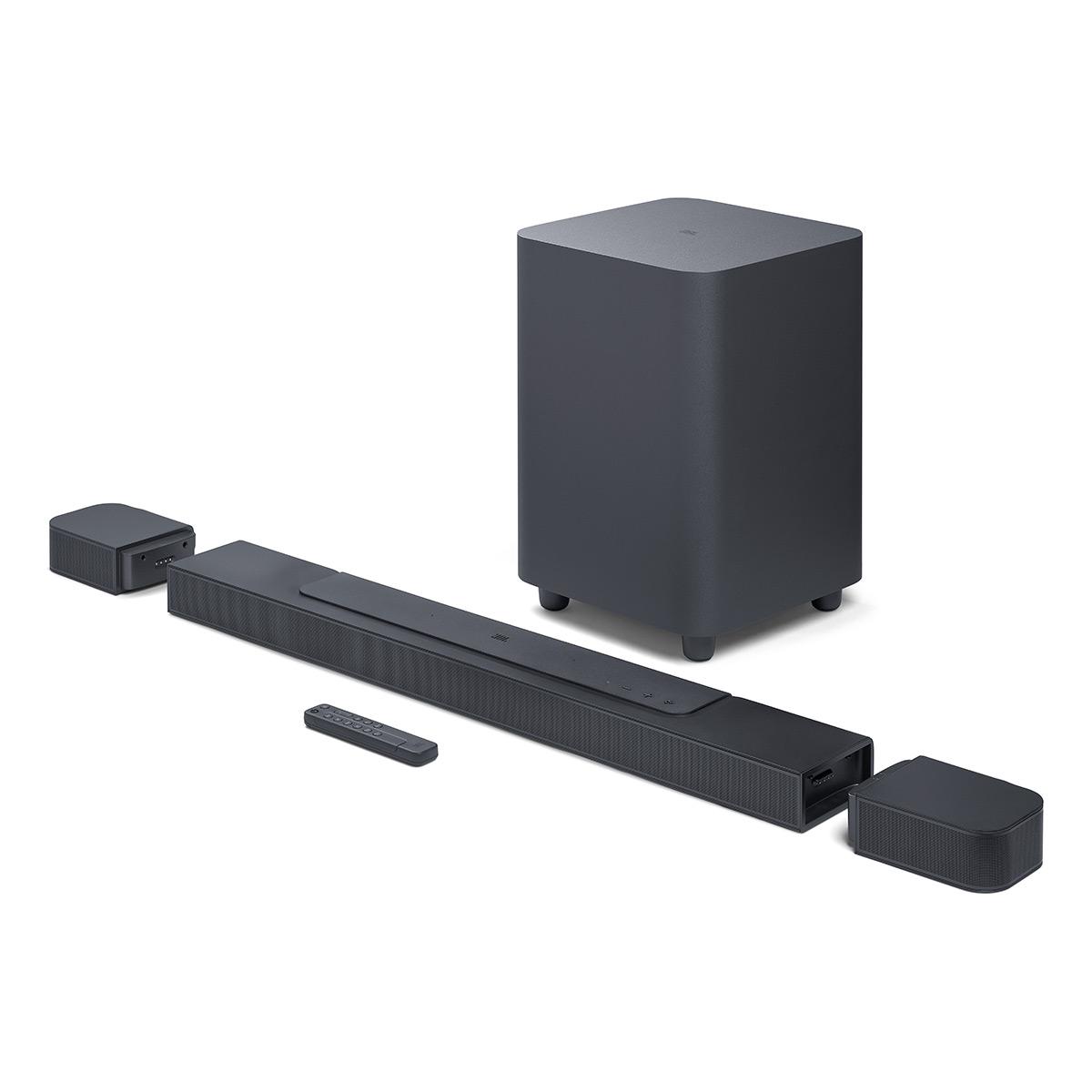
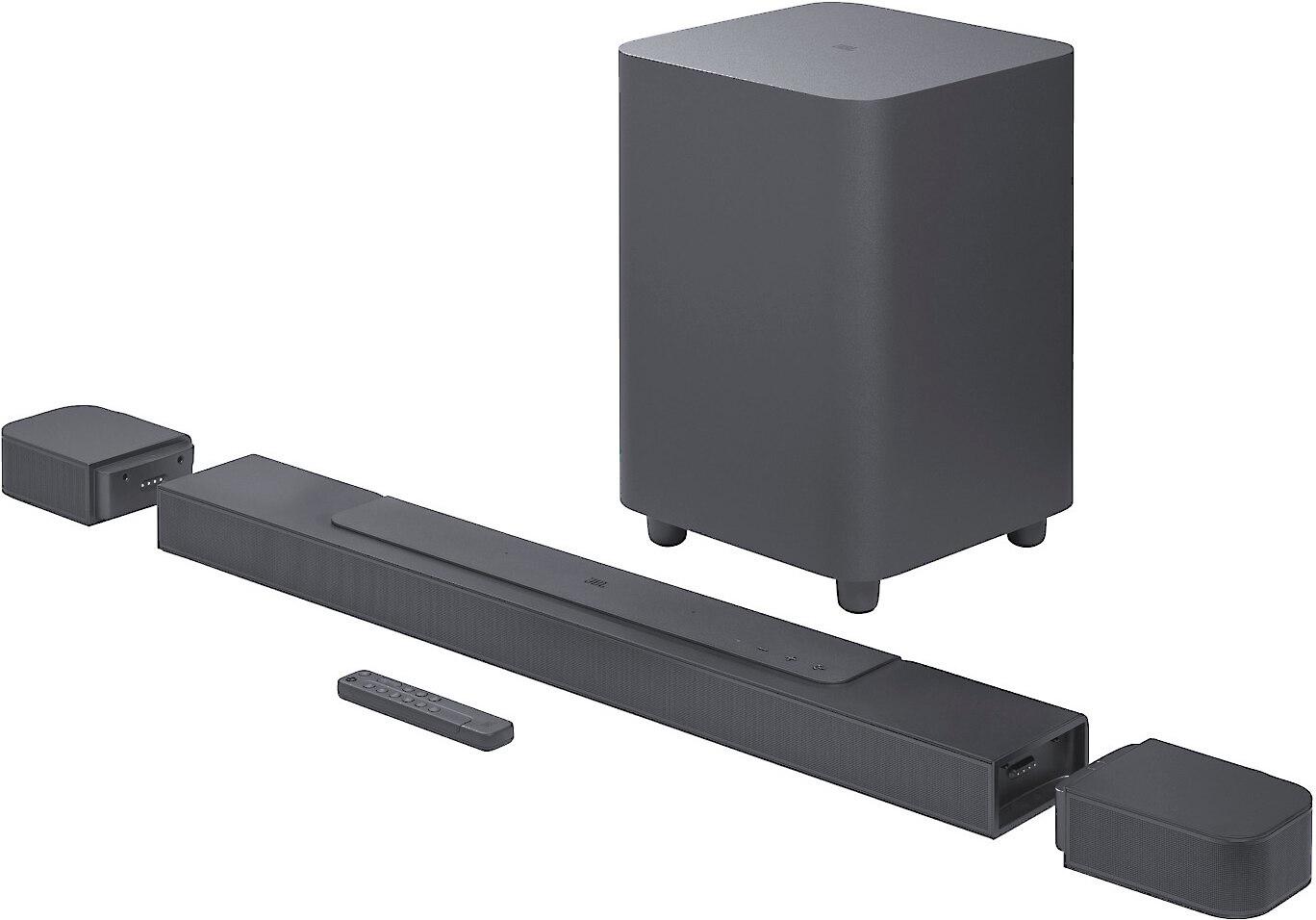
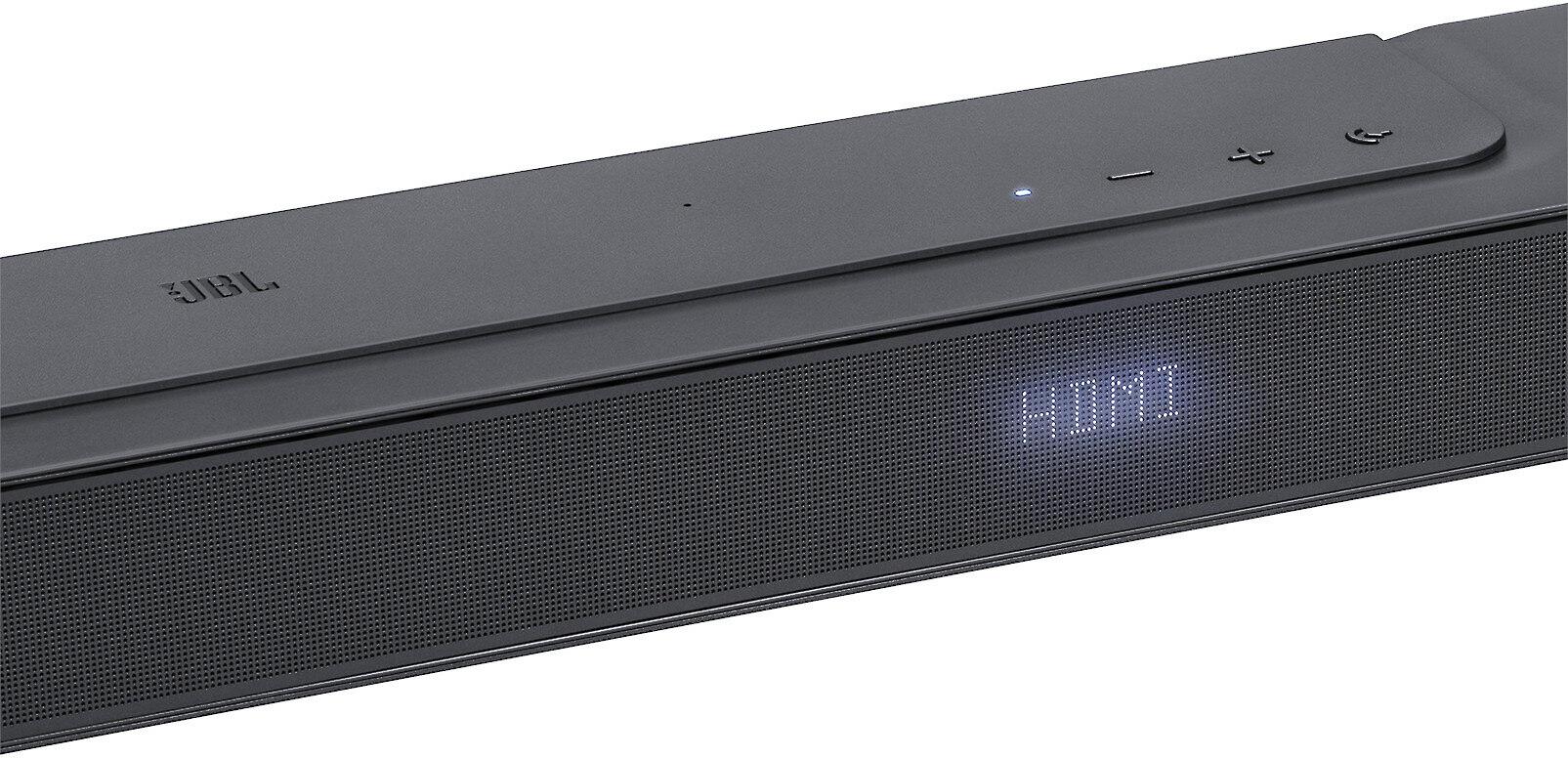
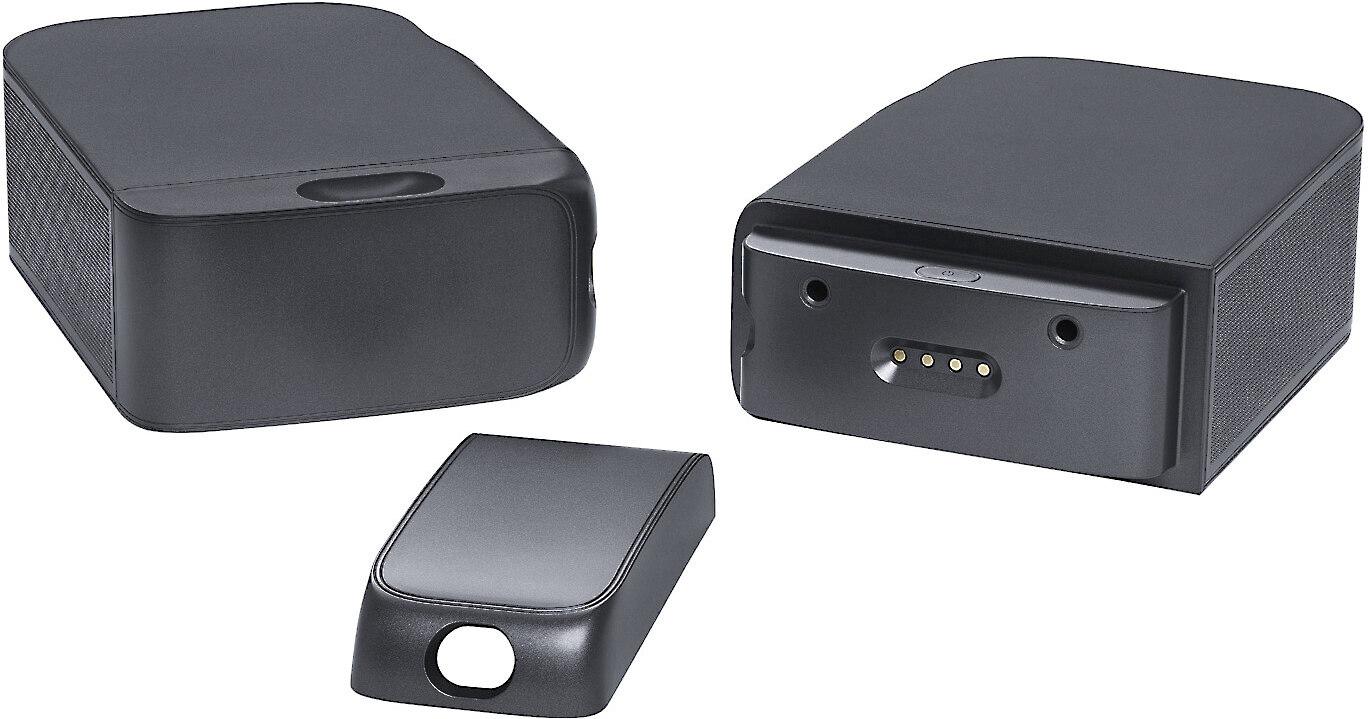
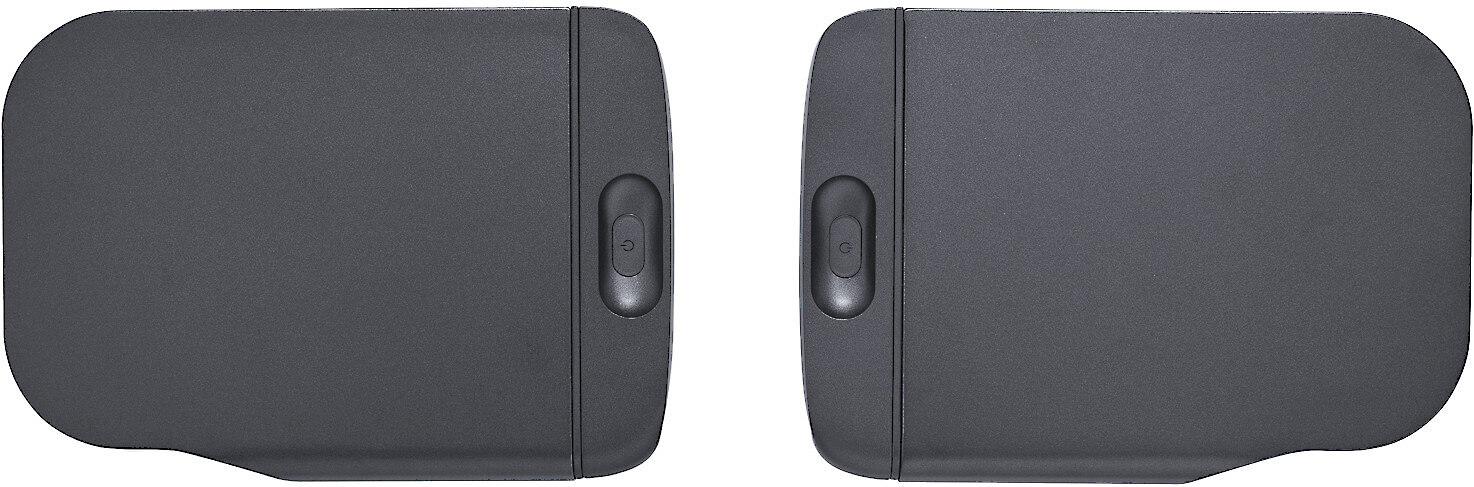
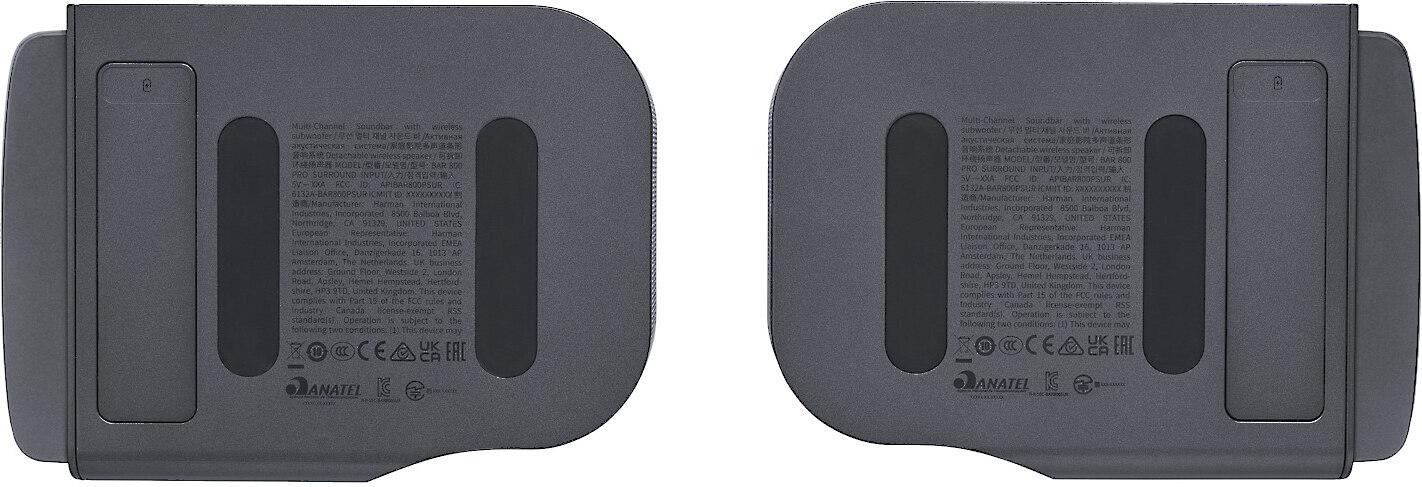
The JBL Bar 700, on the other hand, goes the traditional route with physically separate components. It includes detachable, battery-powered rear speakers that you can place behind your seating area for authentic surround sound positioning. These aren't permanently wired – they charge when docked to the main bar and communicate wirelessly when positioned around your room.
This fundamental difference ripples through every aspect of how these systems perform and how you'll interact with them daily. The Ultimea system prioritizes convenience and space efficiency, while the JBL prioritizes audio accuracy and traditional surround sound placement.
When it comes to filling your room with sound, raw power matters more than marketing specs might suggest. The Ultimea Poseidon M60 Boom delivers 340W of peak power, which translates to a maximum sound pressure level (SPL) of 99 decibels – that's loud enough to rattle windows in most living rooms. Its five full-range drivers work together to cover a frequency range from 45Hz up to 18kHz, which captures everything from deep bass rumbles to crisp dialogue.
The JBL Bar 700 brings significantly more firepower with 620W total system power distributed across its components: 240W from the main soundbar, 300W dedicated to the subwoofer, and 40W each for the rear speakers. This isn't just about getting louder – more power means better dynamic range, which is the difference between whisper-quiet dialogue and explosive action sequences.
From our research into user experiences, the power difference becomes most apparent in larger rooms over 300 square feet. The JBL system maintains clarity and impact even when filling spacious family rooms, while the Ultimea performs best in typical living rooms and bedrooms where its 340W can work more efficiently.
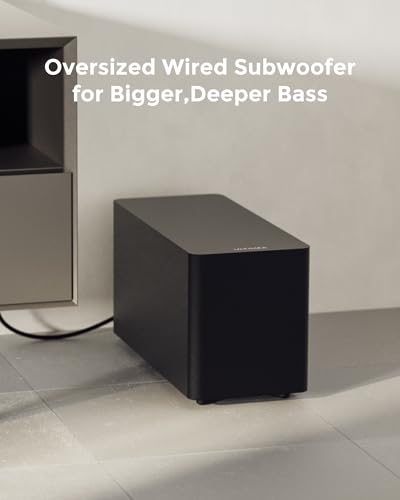
The subwoofer comparison reveals another clear philosophical divide. The Ultimea Poseidon M60 Boom includes a 5.25-inch wired subwoofer that uses what they call BassMX technology. This involves a high-excursion driver – meaning the cone can move up to 16mm back and forth – housed in an optimized wooden cabinet designed to eliminate unwanted resonances.
The JBL Bar 700 brings a much larger 10-inch down-firing subwoofer with its own dedicated 300W amplifier. Down-firing means the speaker points toward the floor, using your room's surfaces to distribute bass more evenly. The size difference is significant: a 10-inch driver moves roughly four times more air than a 5.25-inch driver, which translates directly to deeper, more impactful bass.
Based on consensus from user reviews, the bass character differs noticeably between these systems. The Ultimea's smaller subwoofer produces tight, controlled bass that integrates well with the main soundbar – perfect for dialogue-heavy content and most music. The JBL's larger subwoofer delivers the kind of deep, room-shaking bass that makes action movies visceral experiences, though some users find it requires careful placement and EQ adjustment to avoid overwhelming smaller rooms.
This is where the design philosophy differences create the most dramatic performance gap. The Ultimea Poseidon M60 Boom creates its surround sound effect through advanced digital signal processing (DSP) and careful driver positioning within the soundbar. It uses three separate DSP cores – two running at 800MHz and one at 600MHz – to process over 2000 million instructions per second. This computational power enables real-time audio processing that simulates surround effects by precisely controlling how sound reflects off your room's walls.
The JBL Bar 700 takes the more straightforward approach of actually placing speakers behind you. Its detachable rear speakers create genuine surround sound by producing left and right surround channels from their actual positions in your room. This eliminates the guesswork of acoustic reflections and room-dependent performance that virtual surround systems rely on.
From our analysis of user feedback, the difference is most pronounced with movie soundtracks designed to showcase surround effects. The JBL system excels at creating that "helicopter flying overhead" experience or placing footsteps precisely around your listening position. The Ultimea system creates a convincing surround illusion in most rooms, but the effect varies significantly based on room acoustics, furniture placement, and seating position.
For Dolby Atmos overhead effects, both systems rely on virtual processing since neither includes upward-firing drivers. The JBL uses what they call MultiBeam technology to bounce sound off your ceiling, while the Ultimea handles height effects through its sophisticated DSP processing.
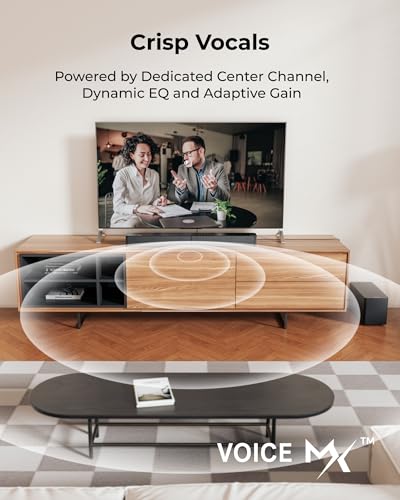
Nothing ruins a movie night like constantly adjusting volume to catch dialogue, and both systems tackle this universal frustration differently. The Ultimea Poseidon M60 Boom employs VoiceMX technology, which uses adaptive equalization targeting the 300Hz to 3kHz frequency range where most human speech occurs. This system can automatically boost dialogue levels relative to background music and effects, ensuring conversations remain intelligible even during complex audio scenes.
The JBL Bar 700 uses PureVoice dialogue enhancement, which takes a more comprehensive approach by analyzing the entire audio mix in real-time. It can selectively enhance center channel content (where dialogue typically lives) while maintaining the balance of the overall soundtrack.
Both approaches work well according to user reviews, but they handle different listening scenarios better. The Ultimea system excels with late-night viewing when you need dialogue clarity at lower volumes, while the JBL system maintains dialogue intelligibility even at higher volumes during action-heavy scenes.
The connectivity differences reflect each system's target user. The Ultimea Poseidon M60 Boom focuses on essential connections: HDMI eARC for lossless audio from your TV, Bluetooth 5.4 for wireless music streaming, plus optical and USB inputs for legacy devices. The Bluetooth 5.4 implementation is notably advanced, offering ultra-low latency that keeps audio perfectly synced with video – crucial for gaming and streaming content.
The JBL Bar 700 goes much further with built-in Wi-Fi 802.11ax (the latest WiFi 6E standard), AirPlay 2 for seamless Apple device integration, Google Cast for Android users, and Chromecast built-in for direct streaming from hundreds of services. This connectivity suite essentially turns the soundbar into a smart speaker system that can stream music independently of your TV.
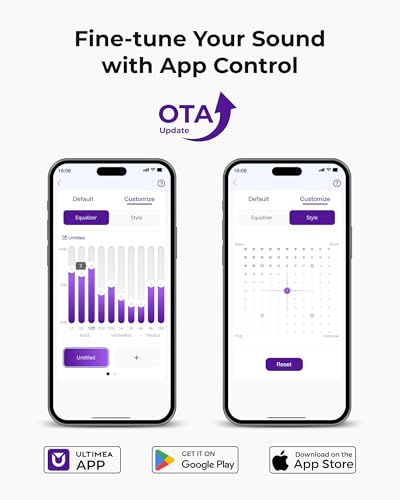
The control apps reflect these different approaches too. The Ultimea app provides straightforward access to six EQ presets (Movie, Music, Voice, Sport, Game, Night) plus manual bass, midrange, and treble adjustments. It's designed for quick setup and occasional tweaking. The JBL One app offers comprehensive system management including room correction, streaming service integration, and detailed sound customization that can adapt the system's performance to your specific room acoustics.
Setting up the Ultimea Poseidon M60 Boom takes about ten minutes. The soundbar arrives in two pieces that connect easily, you plug in the wired subwoofer, connect one HDMI cable to your TV, and you're done. The system's compact design means it fits under most TVs without overwhelming your entertainment center.
The JBL Bar 700 requires more thoughtful setup. Beyond the main soundbar and wireless subwoofer placement, you need to position the rear speakers optimally and establish a charging routine. The rear speakers offer up to 10 hours of battery life, but managing their charging cycle becomes part of your daily routine – though they automatically charge when docked to the main bar.
From a long-term ownership perspective, the Ultimea system is essentially maintenance-free once positioned, while the JBL system requires occasional attention to battery management and potentially more complex troubleshooting if wireless connections become unstable.
At the time of writing, these systems occupy different price tiers that reflect their design philosophies. The Ultimea Poseidon M60 Boom positions itself as a high-performance value option, delivering impressive Dolby Atmos experiences without premium pricing. When you calculate performance per dollar, particularly in dialogue clarity and overall sound quality improvement over TV speakers, it's difficult to find better value in the 5.1 soundbar category.
The JBL Bar 700 commands premium pricing that reflects its comprehensive feature set, superior power output, and true discrete surround sound capability. The value proposition here focuses on future-proofing and maximum performance rather than cost efficiency.
Both approaches make sense for different buyers. The Ultimea system appeals to users who want significant audio improvement without complexity or premium investment. The JBL system targets users willing to pay for maximum performance and comprehensive smart features.
For dedicated home theater use, the differences become more pronounced. The JBL Bar 700 integrates more naturally into serious home theater setups thanks to its discrete component design, room correction capabilities, and higher power output. Its 4K Dolby Vision pass-through ensures compatibility with the latest video standards, while its room correction system adapts performance to your specific acoustics.
The Ultimea system works excellently for most home theater applications, particularly in rooms where aesthetic simplicity matters as much as audio performance. Its virtual surround processing has improved significantly since 2024, and current implementations create convincing surround effects in most typical living room configurations.
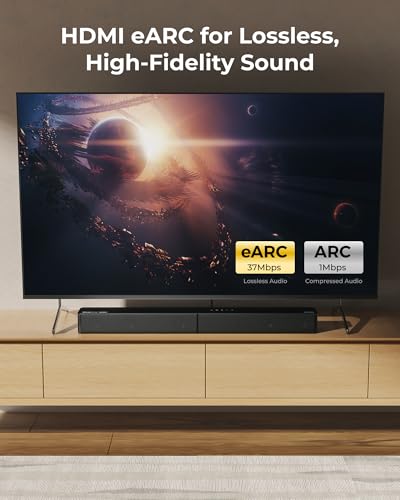
Both systems support HDMI eARC, which enables lossless audio transmission from compatible TVs and delivers the full Dolby Atmos experience without compression. This connection also allows single-remote operation through CEC (Consumer Electronics Control), so your TV remote can control basic soundbar functions.
Choose the Ultimea Poseidon M60 Boom if you prioritize simplicity, space efficiency, and exceptional value. It's ideal for apartment living, bedrooms, smaller family rooms, and any situation where you want dramatically better audio without component complexity. The system excels when your primary content includes dialogue-heavy shows, most music, and moderate movie watching. Its virtual surround processing works well in typical rectangular rooms with standard furniture placement.
Choose the JBL Bar 700 if you want maximum performance, authentic surround sound placement, and comprehensive smart features. It's the better choice for larger rooms, serious movie watching, and situations where audio quality takes priority over convenience. The system shines with action movies, gaming, and any content that benefits from precise surround sound positioning. Its streaming capabilities and room correction make it ideal for tech-forward homes where the soundbar might serve double duty as a music system.
The JBL system also makes more sense if you're building a setup you expect to keep for many years, as its feature completeness and higher power output provide more room for changing needs and room configurations.
Neither system is wrong – they're optimized for different priorities and use cases. The Ultimea Poseidon M60 Boom proves that virtual surround can deliver satisfying results when implemented thoughtfully, while the JBL Bar 700 demonstrates why traditional discrete surround sound placement remains the gold standard for serious home theater applications.
Your room size, budget, and tolerance for complexity will likely make the decision clear. Both systems represent significant upgrades over TV speakers and deliver the cinematic experience that makes staying home for movie night genuinely compelling.
| Ultimea Poseidon M60 Boom | JBL Bar 700 |
|---|---|
| Total System Power - Determines maximum volume and room coverage | |
| 340W peak power (adequate for most living rooms) | 620W total system power (fills large rooms with authority) |
| Surround Speaker Design - Affects audio positioning accuracy and setup complexity | |
| All channels integrated in main soundbar (virtual surround) | Detachable battery-powered rear speakers (true discrete surround) |
| Subwoofer - Controls bass depth and impact for movies and music | |
| 5.25" wired subwoofer with BassMX technology | 10" wireless down-firing subwoofer with 300W dedicated amplifier |
| Connectivity Options - Determines streaming flexibility and device compatibility | |
| Bluetooth 5.4, HDMI eARC, optical, USB | Built-in Wi-Fi, AirPlay 2, Chromecast, Google Cast, HDMI eARC |
| Setup Complexity - Time and effort required for installation | |
| Simple 2-piece assembly with wired subwoofer | Multi-component system requiring speaker positioning and battery management |
| Dialogue Enhancement - Critical for clear speech in movies and TV | |
| VoiceMX technology targeting 300Hz-3kHz vocal range | PureVoice dialogue enhancement with real-time audio analysis |
| Smart Features - Advanced functionality beyond basic audio | |
| Basic smartphone app with 6 EQ presets | JBL One app with room correction and 300+ streaming services |
| Physical Footprint - Space requirements in your room | |
| Compact single-bar design ideal for smaller spaces | Larger system with multiple components requiring strategic placement |
| DSP Processing - Audio processing power for sound optimization | |
| Triple-core DSP (2x 800MHz + 1x 600MHz) with 2000+ MIPS | Standard processing with MultiBeam virtual height technology |
| Dolby Atmos Implementation - How overhead sound effects are created | |
| Virtual height effects through advanced DSP processing | Virtual height via MultiBeam technology plus discrete rear channels |
| Maximum SPL - Loudest clean volume without distortion | |
| 99 dB maximum (suitable for typical home theater use) | Higher output capability due to 620W total power (exact SPL not specified) |
| Frequency Response - Range of sounds the system can reproduce | |
| 45Hz - 18kHz (captures most movie and music content) | 35Hz - 20kHz (extends deeper into bass and higher treble) |
| Battery Life (Rear Speakers) - Convenience factor for wireless components | |
| N/A (no battery-powered components) | Up to 10 hours per charge (requires periodic charging routine) |
The Ultimea Poseidon M60 Boom is better suited for small to medium-sized rooms due to its compact all-in-one design and 340W power output. Its virtual surround sound works well in typical living rooms without requiring separate rear speakers. The JBL Bar 700 with its 620W power and discrete components may overpower smaller spaces and requires more room for optimal speaker placement.
Not necessarily. The Ultimea Poseidon M60 Boom creates convincing surround effects through advanced DSP processing and strategic driver placement within the main soundbar. However, the JBL Bar 700 with its detachable rear speakers provides more accurate surround positioning, especially for movies with complex audio effects. For most users, the Ultimea system offers sufficient surround sound without the complexity.
The JBL Bar 700 delivers superior bass with its 10-inch wireless subwoofer and 300W dedicated amplifier, extending down to 35Hz. This creates deeper, more impactful bass for action movies and music. The Ultimea Poseidon M60 Boom features a 5.25-inch subwoofer with BassMX technology that produces tight, controlled bass reaching 45Hz, which is adequate for most content but less room-filling than the JBL system.
The Ultimea Poseidon M60 Boom offers simpler setup with just two main pieces to connect plus a wired subwoofer - typically taking 10 minutes. The JBL Bar 700 requires more complex installation involving positioning the wireless subwoofer, placing detachable rear speakers optimally, and managing battery charging for the wireless components.
The JBL Bar 700 excels for music streaming with built-in Wi-Fi, AirPlay 2, Chromecast, and Google Cast supporting over 300 streaming services. The Ultimea Poseidon M60 Boom offers basic Bluetooth 5.4 connectivity for wireless music but lacks the comprehensive streaming ecosystem of the JBL system.
Both systems excel at dialogue clarity through different approaches. The Ultimea Poseidon M60 Boom uses VoiceMX technology with adaptive EQ targeting vocal frequencies, while the JBL Bar 700 employs PureVoice enhancement with real-time audio analysis. Both effectively prevent dialogue from getting lost in complex movie soundtracks.
The Ultimea Poseidon M60 Boom typically offers better value for budget-conscious buyers, delivering impressive Dolby Atmos performance without premium pricing. The JBL Bar 700 commands higher pricing but justifies it with superior power, true discrete surround speakers, and comprehensive smart features. Value depends on whether you prioritize cost efficiency or maximum performance.
The JBL Bar 700 is better suited for large rooms with its 620W total power output and ability to maintain clarity at higher volumes. The discrete rear speakers also work more effectively in spacious areas. The Ultimea Poseidon M60 Boom works best in typical living rooms but may struggle to fill very large spaces with adequate volume and bass impact.
Both systems support Dolby Atmos but implement it differently. The Ultimea Poseidon M60 Boom creates height effects through sophisticated DSP processing and driver positioning. The JBL Bar 700 uses MultiBeam technology plus its discrete rear speakers for more authentic surround placement, though both rely on virtual processing for overhead effects since neither includes upward-firing drivers.
The Ultimea Poseidon M60 Boom requires virtually no maintenance once installed, with no batteries to manage or wireless connections to troubleshoot. The JBL Bar 700 needs periodic charging of the detachable rear speakers (up to 10 hours per charge) and occasional wireless connection management, making it slightly more demanding for daily use.
Yes, both the Ultimea Poseidon M60 Boom and JBL Bar 700 feature HDMI eARC connections for lossless audio transmission from compatible TVs. Both also support 4K passthrough and CEC control, allowing your TV remote to control basic soundbar functions. The JBL system additionally offers more legacy connection options.
The Ultimea Poseidon M60 Boom offers excellent gaming performance with ultra-low latency Bluetooth 5.4 and a dedicated Game EQ mode. The JBL Bar 700 provides more immersive gaming audio with its discrete rear speakers and higher power output, plus comprehensive connectivity options. Both handle gaming well, but the JBL system delivers more spatial accuracy for competitive gaming.
We've done our best to create useful and informative comparisons to help you decide what product to buy. Our research uses advanced automated methods to create this comparison and perfection is not possible - please contact us for corrections or questions. These are the sites we've researched in the creation of this article: ultimea.com - ultimea.com - youtube.com - bestbuy.com - youtube.com - avsforum.com - youtube.com - manuals.plus - youtube.com - device.report - ultimea.com - ultimea.de - community.ultimea.com - ultimea.com - community.ultimea.com - ultimea.com - youtube.com - aliexpress.com - ultimea.com - crutchfield.com - harmanaudio.com - target.com - jbl.com - walmart.com - dell.com - jbl.com

Privacy Policy
Terms and Conditions - Affiliate Policy
Home Security
© Copyright 2008-2026.
11816 Inwood Rd #1211, Dallas, TX 75244