




When it comes to upgrading your TV's audio without filling your living room with speakers and wires, soundbars have become the clear winner for most people. But choosing between different approaches can be tricky, especially when comparing products from different price tiers that take fundamentally different approaches to solving the same problem.
Today we're looking at two soundbars that represent distinct philosophies in home theater audio: the Ultimea Poseidon M60 Boom and the Sony HT-A5000. The Ultimea, released in 2023, focuses on delivering traditional 5.1 surround sound with a separate subwoofer at an aggressive price point. The Sony, which hit the market in late 2021, represents a premium all-in-one approach with advanced spatial audio technologies built into a single sleek unit.
Before diving into specifics, let's talk about what actually matters when you're shopping for a soundbar. The most important considerations are channel configuration (how many separate audio channels the system can reproduce), bass performance (how well it handles low frequencies), connectivity options (what devices it can connect to and how), and overall value for your specific needs and budget.
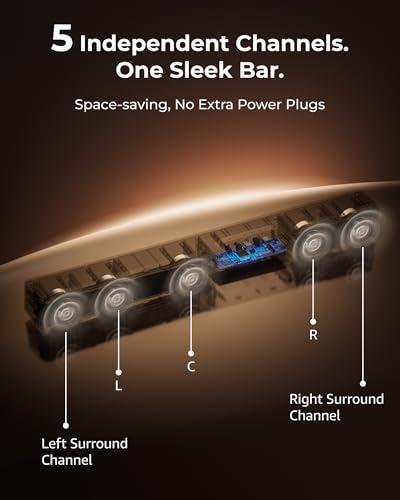
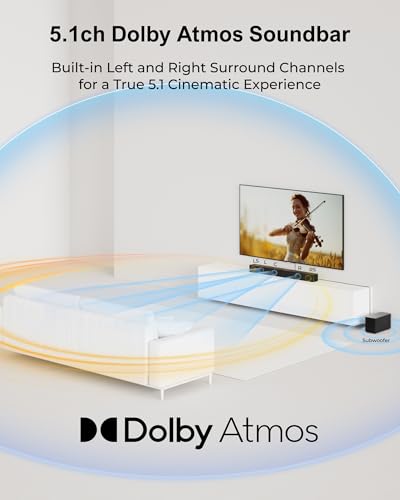
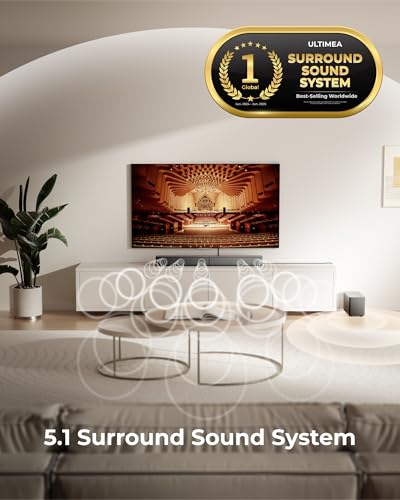
Channel configuration is probably the most misunderstood aspect of soundbars. When you see "5.1," that means five main channels (front left, center, front right, rear left, rear right) plus one subwoofer channel for bass. The Sony HT-A5000 goes further with "5.1.2," where those last two numbers represent height channels that create overhead sound effects. This is crucial for formats like Dolby Atmos, which places sounds in three-dimensional space around you.
The challenge is that many soundbars, including the Ultimea M60 Boom, achieve their surround sound through virtual processing rather than discrete speakers for each channel. This means they use digital signal processing (DSP) to trick your ears into hearing sounds from directions where there aren't actually any speakers. It works surprisingly well, but there are limits compared to systems with dedicated speakers for each channel.
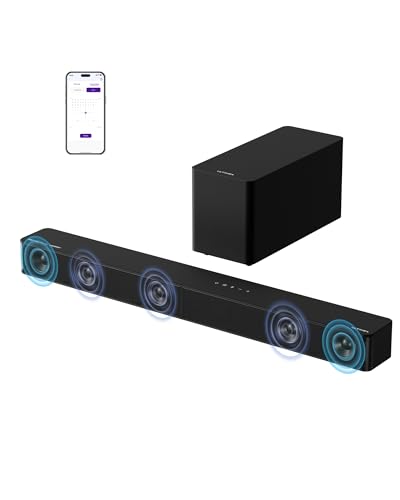
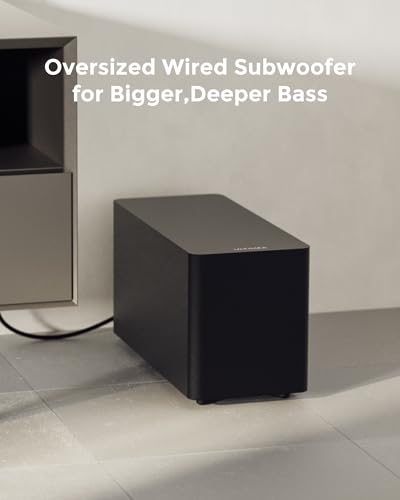
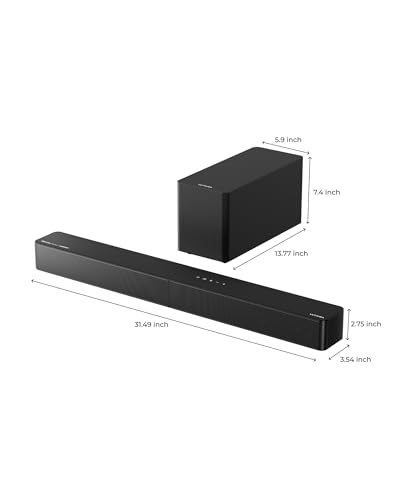
The Ultimea Poseidon M60 Boom takes what many would consider the "old school" approach to soundbar design. Instead of cramming everything into one sleek bar, it splits into two main components: a modular soundbar that actually consists of two pieces that connect together, and a substantial 5.25-inch wired subwoofer housed in a wooden cabinet.
This design philosophy has some real advantages. That separate subwoofer, powered by what Ultimea calls BassMX technology, can move significantly more air than anything you could fit inside a soundbar. With 16mm of driver excursion (how far the speaker cone can move back and forth), it delivers the kind of deep, room-shaking bass that makes action movies feel visceral and music sound full and rich.
The modular soundbar design is interesting too. Rather than one long bar, you get two separate speaker units that connect together. This gives you some flexibility in placement and potentially better stereo separation, since the left and right channels can be physically separated more than they would be in a traditional single-bar design.
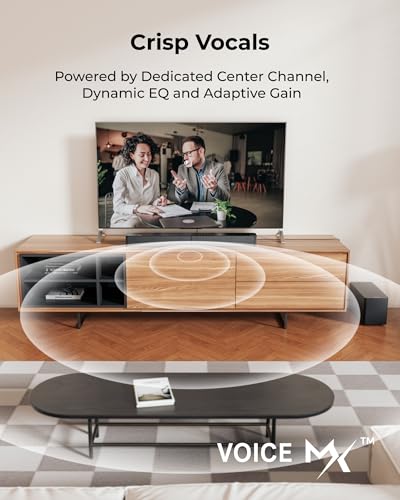
Where the Ultimea M60 Boom shows its budget-friendly approach is in its processing. It uses what the company calls VoiceMX technology to enhance dialogue clarity in the 300Hz to 3kHz range, which is where most speech occurs. This adaptive equalization (EQ) system dynamically adjusts the sound to make sure voices cut through even during loud scenes.
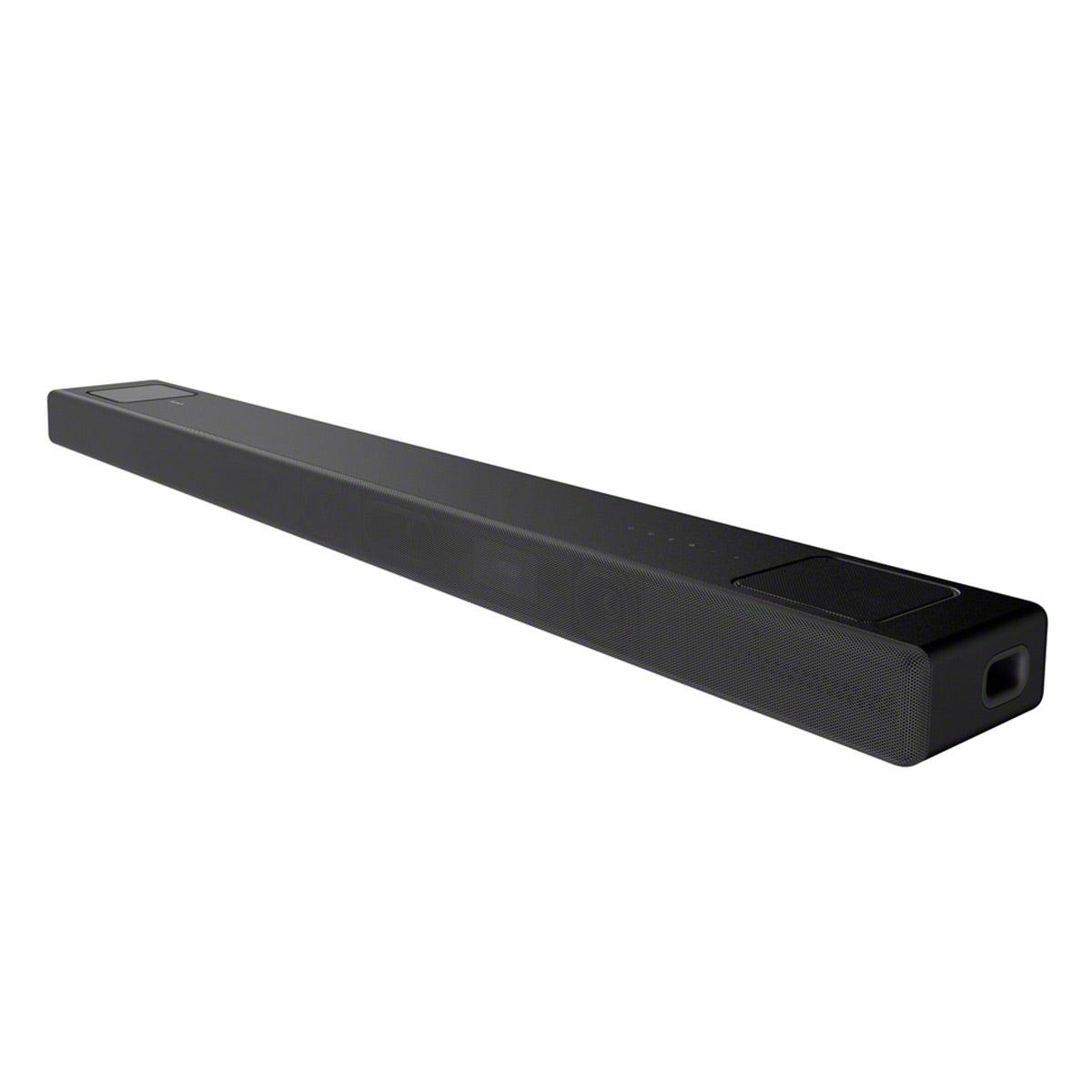
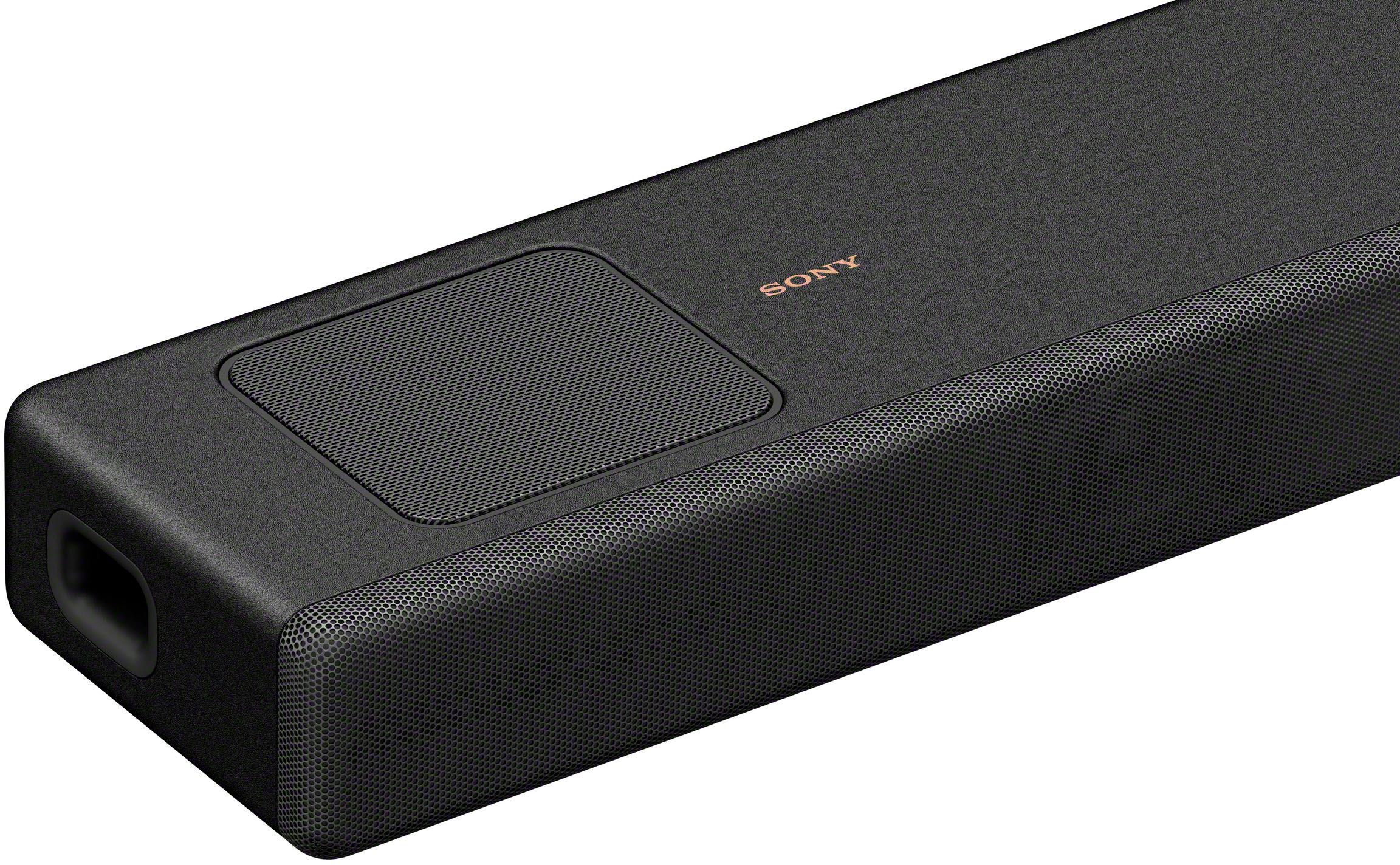
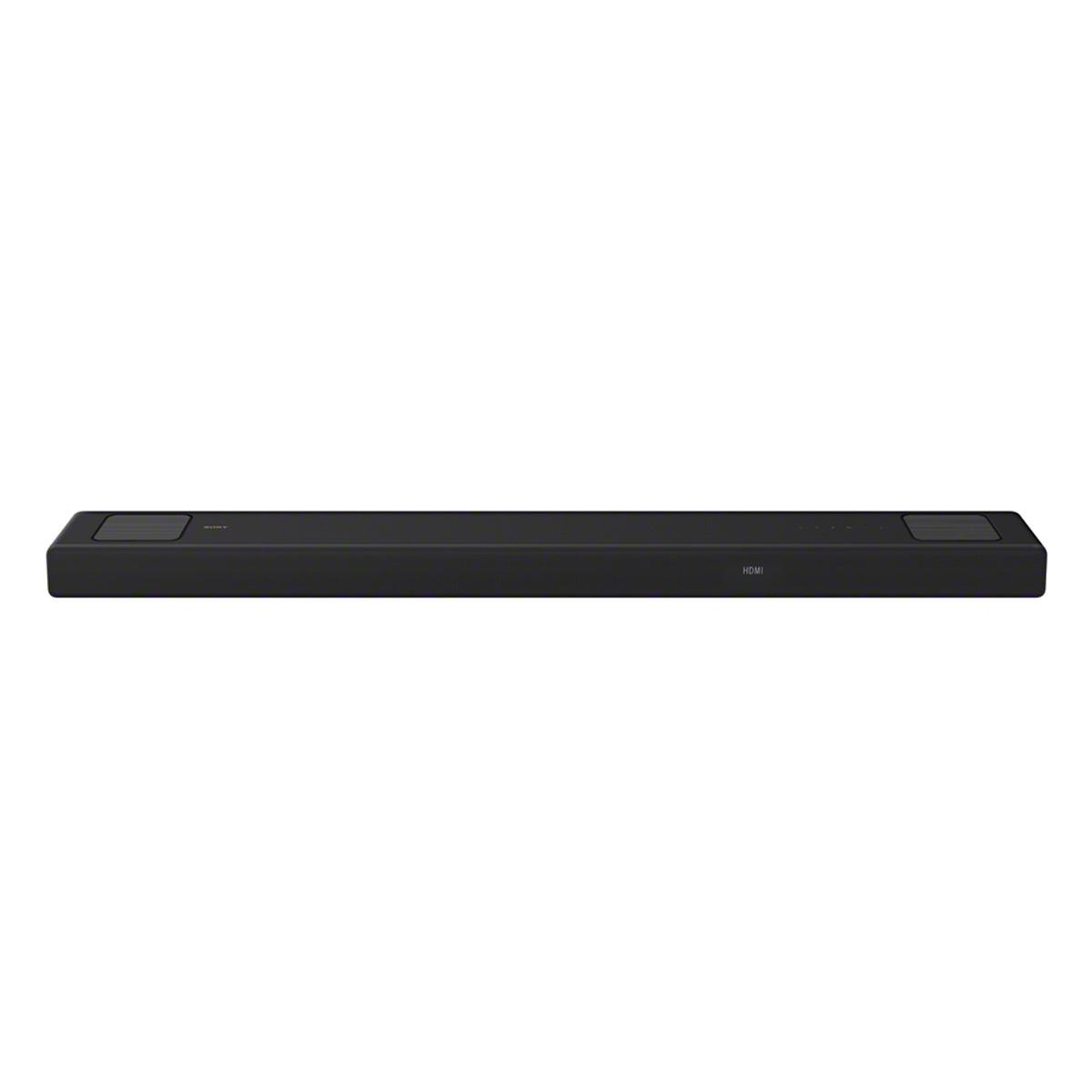
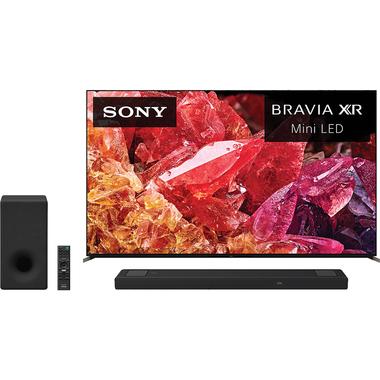
The Sony HT-A5000 represents a completely different approach. Instead of separate components, Sony has engineered everything into a single 47.75-inch soundbar that weighs 13.5 pounds and houses an impressive array of technology.
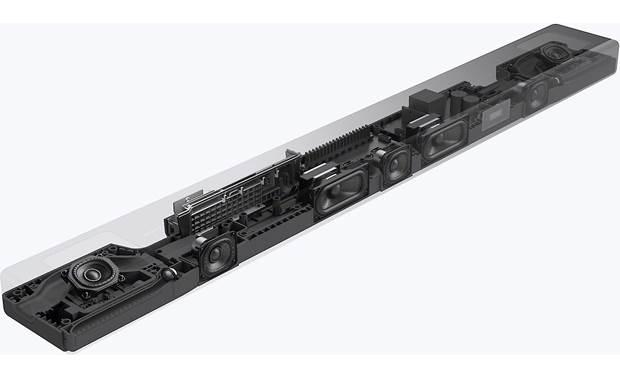
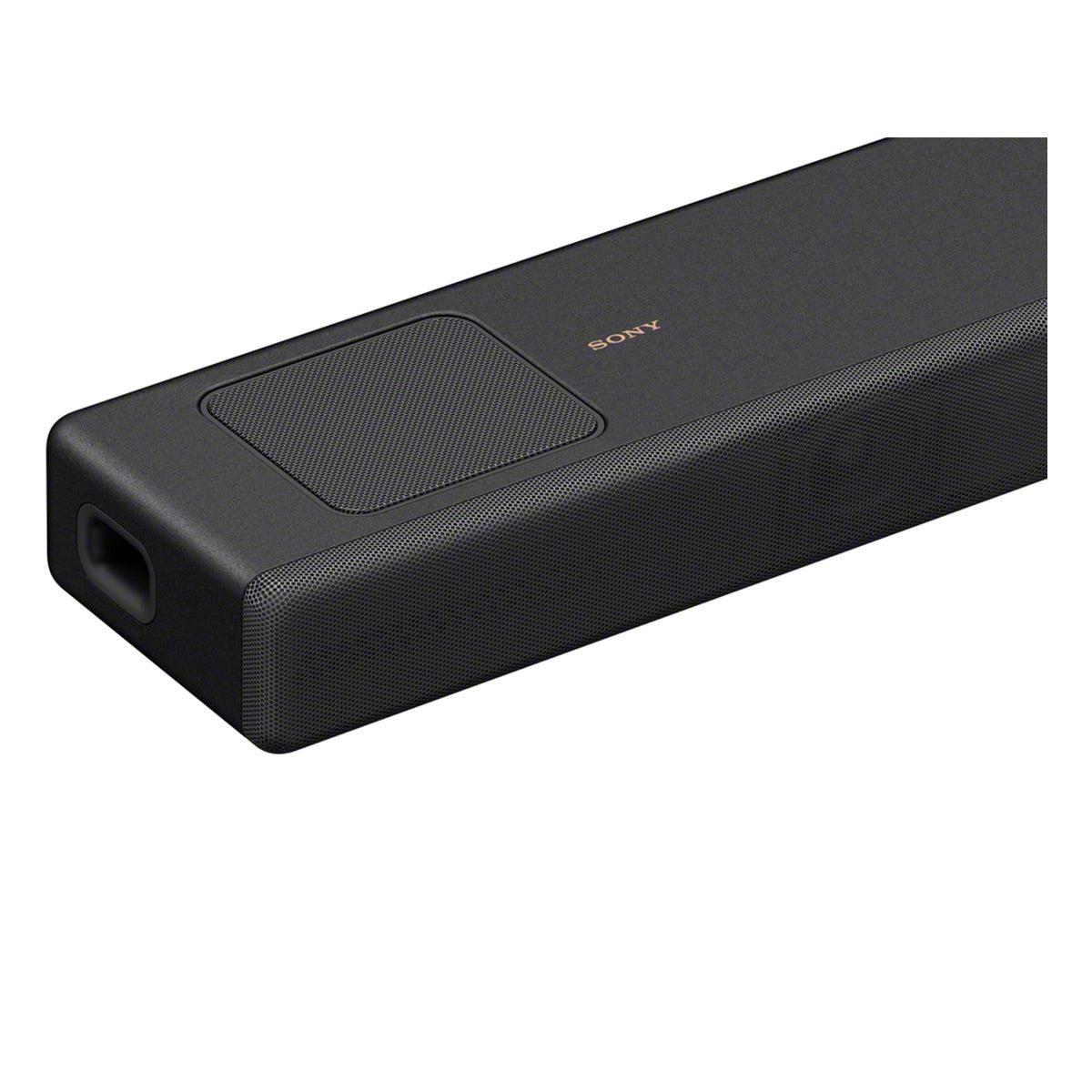
The key innovation here is Sony's use of nine separate drivers within that single bar: five front-firing speakers, two side-firing beam tweeters, and two up-firing speakers, plus two built-in X-balanced subwoofers. Those up-firing speakers are crucial—they bounce sound off your ceiling to create genuine overhead effects for Dolby Atmos content.
Sony's Vertical Surround Engine is the secret sauce that makes this work. This processing technology analyzes incoming audio and determines how to best use all those drivers to create the illusion of sounds coming from all around you, including above. Combined with S-Force Pro Front Surround technology, the Sony HT-A5000 can create what Sony calls "phantom speakers"—the perception of audio sources that don't physically exist.
The integrated subwoofers use Sony's X-balanced driver design, which maximizes the surface area of the speaker cone within the available space. While they can't match the sheer output of the Ultimea's separate 5.25-inch subwoofer, they eliminate the need for additional cables and components while still providing respectable bass response.
This is where the fundamental design differences really show. The Ultimea M60 Boom's separate subwoofer approach pays dividends in bass performance. That 5.25-inch driver in its ported wooden cabinet can extend deeper and play louder than the Sony's integrated bass drivers.
In practical terms, this means movies with intense low-frequency effects—think the rumble of spacecraft engines or the impact of explosions—will have more physical presence with the Ultimea system. Music with deep bass, particularly electronic genres or orchestral pieces with prominent timpani and bass instruments, will sound fuller and more impactful.
However, the Sony HT-A5000's dual integrated subwoofers aren't just about convenience. Sony's engineering team has optimized them to work in conjunction with the main drivers to create a more seamless frequency response. While they won't shake your room like the Ultimea's separate subwoofer, they provide tight, controlled bass that integrates well with the rest of the frequency spectrum.
The trade-off is really about what you prioritize. If you want maximum bass impact and don't mind having a separate subwoofer component, the Ultimea is the clear winner. If you prefer a cleaner setup with good (but not earth-shaking) bass, the Sony makes more sense.
Here's where the Sony HT-A5000 really shows its premium credentials. Those up-firing speakers enable true height channels, which means when you're watching a movie with Dolby Atmos audio, sounds can genuinely appear to come from above you. Rain falling, helicopters flying overhead, or debris falling from the ceiling in an action sequence all gain a three-dimensional quality that the Ultimea system simply can't match.
The Ultimea M60 Boom does support Dolby Atmos decoding, but it processes all that spatial information through its five front-firing drivers. It's essentially taking a three-dimensional audio mix and flattening it into a front-facing soundstage. The result is still significantly better than TV speakers, and the system does create a convincing sense of width and some depth, but you're not getting true overhead effects.
For traditional 5.1 content (which is still the majority of movies and TV shows), both systems perform well, but with different strengths. The Ultimea focuses on creating clear left-center-right separation and solid dialogue clarity. The Sony uses its side-firing tweeters and sophisticated processing to create a wider, more enveloping soundstage.
Both systems recognize that clear dialogue is crucial for enjoying movies and TV shows, but they take different approaches to achieving it. The Ultimea's VoiceMX technology specifically targets the frequency range where human speech occurs, using adaptive processing to ensure voices remain intelligible even during complex scenes with lots of background noise.
The Sony HT-A5000 uses a dedicated center channel approach combined with its Voice Mode setting to enhance dialogue. Sony's advantage here is that it has more drivers to work with, allowing for better separation between dialogue and other audio elements.
In practice, both systems deliver significantly clearer speech than you'll get from TV speakers, but the Sony's approach tends to sound more natural since it's not as aggressively processing the vocal frequencies.
This is where the release timing difference between these products becomes important. The Sony HT-A5000, despite being older (2021 vs 2023), actually offers more advanced connectivity because it targets a premium market segment where future-proofing is essential.
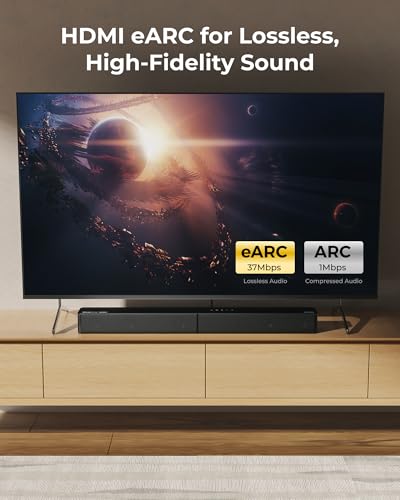
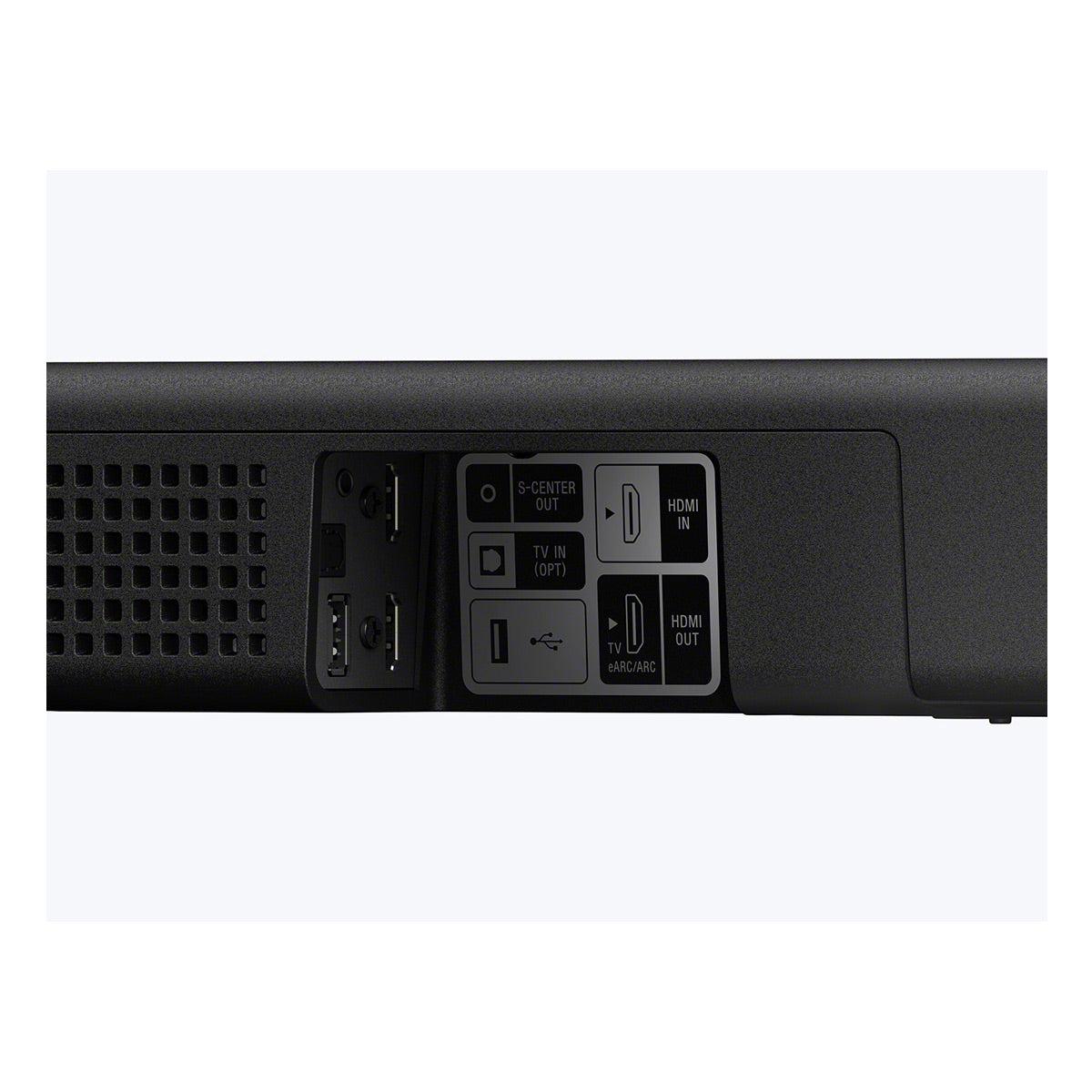
The Sony supports HDMI 2.1 with full 8K/60Hz and 4K/120Hz pass-through, which is crucial if you're gaming on a PlayStation 5, Xbox Series X, or planning to upgrade to 8K content in the future. It also includes eARC (enhanced Audio Return Channel) support, which allows for full-bandwidth audio transmission from your TV back to the soundbar.
The Ultimea M60 Boom supports HDMI eARC but sticks with more basic video pass-through capabilities. However, it does include Bluetooth 5.4, which is actually newer than the Sony's Bluetooth 5.0 implementation. This means potentially better wireless audio quality and lower latency when streaming from phones or tablets.
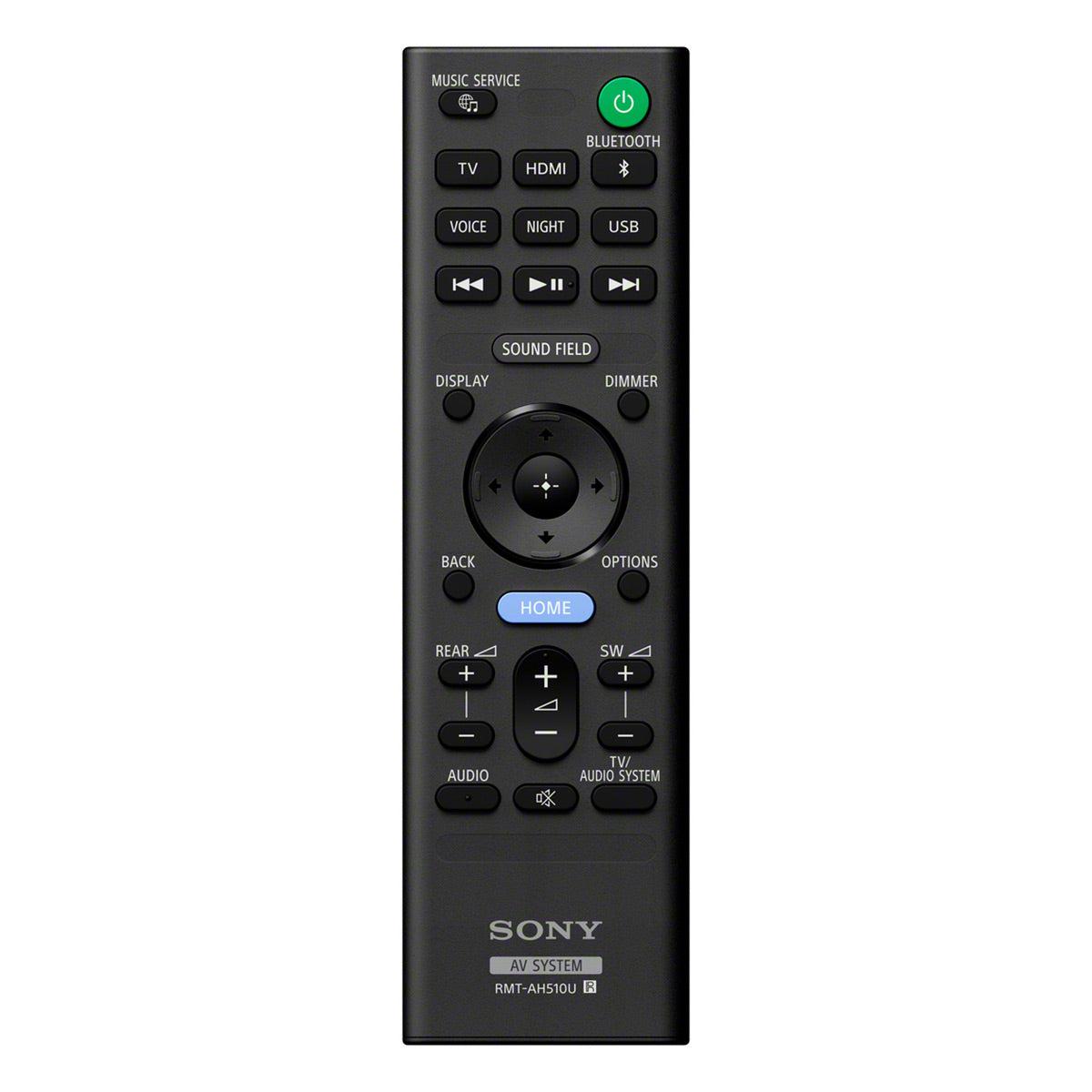
Smart features heavily favor the Sony. It includes built-in Wi-Fi, Chromecast support, Apple AirPlay 2, and integration with multiple streaming services. The Sound Field Optimization feature uses built-in microphones to automatically calibrate the audio to your room's acoustics—a premium feature that can make a noticeable difference in sound quality.
The Ultimea keeps things simpler with its ULTIMEA smartphone app that provides EQ customization and system control, but it doesn't offer the extensive smart home integration or automatic room correction of the Sony.
At the time of writing, these two products occupy different price tiers, with the Ultimea M60 Boom typically costing 40-50% less than the Sony HT-A5000. This price difference is crucial to understanding their value propositions.
The Ultimea represents exceptional value in the budget-to-mid-range category. You're getting genuine 5.1 surround sound processing, a substantial separate subwoofer, and solid build quality at a price point where many competitors offer only basic stereo soundbars or virtual surround systems with integrated bass that can't match the Ultimea's low-frequency performance.
The Sony justifies its premium pricing through advanced technologies that genuinely improve the audio experience. True height channels, sophisticated room optimization, comprehensive smart features, and premium build quality all contribute to a product that feels worth the extra investment if you can afford it.
You're working with a tighter budget but still want a significant upgrade over TV speakers. The Ultimea M60 Boom is particularly appealing if you're someone who really values bass response—maybe you watch a lot of action movies or listen to music with prominent low-frequency content.
It's also the better choice if you're setting up a system in a larger room where you can take advantage of flexible subwoofer placement. That separate bass module can go wherever it sounds best, rather than being locked to the position of your TV.
The modular design appeals to people who like having discrete components and don't mind the additional cable management that comes with a separate subwoofer.
You're willing to invest in premium features and want a more sophisticated audio experience. The Sony HT-A5000 is the clear choice if you consume a lot of Dolby Atmos content—whether that's streaming from Netflix, Disney+, or Ultra HD Blu-rays.
It's particularly appealing for gamers who want to take advantage of 4K/120Hz gaming on current-generation consoles, or anyone who's thinking about 8K content in the future.
The integrated design is perfect for minimalist setups where you want maximum performance without additional components cluttering your entertainment center.
For dedicated home theater use, both systems offer advantages, but for different reasons. The Ultimea delivers the kind of impactful bass that makes movie soundtracks feel visceral, which is crucial for the cinematic experience. However, the Sony provides more accurate spatial representation of movie soundtracks, especially for newer films mixed in Dolby Atmos.
If your home theater focuses on traditional movie watching with occasional gaming, the Ultimea might be the better value. But if you're building a more complete entertainment system that includes next-generation gaming and streaming the latest content, the Sony's advanced features become more valuable.
The choice between these systems ultimately comes down to your priorities and budget. The Ultimea Poseidon M60 Boom offers exceptional performance per dollar, particularly if powerful bass and traditional surround sound meet your needs. It's a straightforward, effective solution that focuses on doing the fundamentals very well.
The Sony HT-A5000 commands a premium because it pushes the boundaries of what's possible with a single-bar design. If you value cutting-edge features, true spatial audio, and future-proof connectivity, it's worth the extra investment.
Both represent solid choices in their respective categories, but your decision should be based on how much you're willing to spend and which features matter most to your specific setup and content preferences.
| Ultimea Poseidon M60 Boom 5.1 Soundbar | Sony HT-A5000 5.1.2 Channel Home Theater Soundbar |
|---|---|
| Channel Configuration - Determines surround sound capability and overhead effects | |
| 5.1 channels with virtual processing (no true height channels) | 5.1.2 channels with dedicated up-firing speakers for true overhead sound |
| Power Output - Affects maximum volume and dynamic range | |
| 340W peak power | 450W total system power with S-Master HX amplification |
| Subwoofer Design - Critical for bass impact and room flexibility | |
| Separate wired 5.25" subwoofer with BassMX technology | Dual built-in X-balanced subwoofers integrated into main bar |
| Driver Configuration - Determines sound quality and spatial accuracy | |
| Five full-range drivers in modular two-piece soundbar | Nine drivers: 5 front-firing, 2 side beam tweeters, 2 up-firing |
| HDMI Support - Important for gaming and future content compatibility | |
| HDMI eARC support (standard video pass-through) | HDMI 2.1 with 8K/60Hz and 4K/120Hz pass-through plus eARC |
| Bluetooth Version - Affects wireless audio quality and connection stability | |
| Bluetooth 5.4 (latest standard with improved latency) | Bluetooth 5.0 |
| Smart Features - Convenience and integration capabilities | |
| Ultimea app control with EQ customization | Chromecast built-in, AirPlay 2, Voice Assistant support, streaming services |
| Room Optimization - Automatic setup and sound calibration | |
| Manual EQ adjustment via app | Sound Field Optimization with built-in microphones for automatic calibration |
| Physical Design - Setup complexity and aesthetic considerations | |
| Modular two-piece bar + separate wired subwoofer | Single integrated unit (47.75" × 2.75" × 5.62", 13.5 lbs) |
| Dolby Atmos Processing - How overhead sound effects are handled | |
| Virtual Dolby Atmos processing through front drivers | True Dolby Atmos with dedicated height channels and Vertical Surround Engine |
| Expansion Options - Ability to add components later | |
| No expansion capability | Compatible with optional wireless rear speakers (SA-RS3S/SA-RS5) |
| Target Market - Best suited buyer profile | |
| Budget-conscious users wanting powerful bass and traditional surround | Premium buyers seeking advanced spatial audio and integrated smart features |
The Ultimea Poseidon M60 Boom delivers more powerful bass through its separate 5.25-inch wired subwoofer with BassMX technology and 16mm driver excursion. The Sony HT-A5000 uses dual built-in X-balanced subwoofers that provide good bass but can't match the depth and impact of the Ultimea's dedicated subwoofer. If bass is your priority, the Ultimea is the clear winner.
Both soundbars support Dolby Atmos, but handle it differently. The Sony HT-A5000 offers true Dolby Atmos with dedicated up-firing speakers that bounce sound off your ceiling for genuine overhead effects. The Ultimea M60 Boom processes Dolby Atmos virtually through its front-firing drivers, which improves the soundstage but doesn't create actual height channels.
The Sony HT-A5000 is superior for gaming due to its HDMI 2.1 support with 4K/120Hz and 8K/60Hz pass-through capabilities, making it compatible with PlayStation 5 and Xbox Series X high-refresh gaming. The Ultimea Poseidon M60 Boom offers basic HDMI eARC but lacks advanced gaming features, though it does have newer Bluetooth 5.4 for wireless gaming audio.
The Sony HT-A5000 contains nine individual drivers: five front-firing speakers, two side beam tweeters, and two up-firing speakers, plus dual built-in subwoofers. The Ultimea M60 Boom features five full-range drivers housed in a modular two-piece design, plus a separate subwoofer with its own driver.
The Sony HT-A5000 offers comprehensive smart features including Chromecast built-in, Apple AirPlay 2, voice assistant compatibility, and automatic Sound Field Optimization. The Ultimea Poseidon M60 Boom provides basic smart functionality through its mobile app for EQ customization and control, but lacks advanced streaming integration and room correction features.
The Ultimea M60 Boom requires more setup with its separate wired subwoofer and modular two-piece soundbar design, but offers placement flexibility for the bass unit. The Sony HT-A5000 is simpler to install as a single integrated unit with automatic room optimization, making it more convenient for users who prefer minimal setup complexity.
Both excel at dialogue clarity, but use different approaches. The Ultimea Poseidon M60 Boom uses VoiceMX technology that specifically enhances the 300Hz-3kHz vocal frequency range. The Sony HT-A5000 employs dedicated center channel processing and Voice Mode for natural-sounding dialogue enhancement. Both significantly outperform TV speakers for speech intelligibility.
The Ultimea M60 Boom works better in larger spaces due to its separate subwoofer placement flexibility and 340W of peak power focused on traditional surround sound. The Sony HT-A5000 with 450W total power and sophisticated processing can fill large rooms effectively, but its integrated design limits bass placement options compared to the Ultimea's separate subwoofer.
The Ultimea Poseidon M60 Boom provides exceptional value with genuine 5.1 surround sound and powerful separate subwoofer performance. The Sony HT-A5000 offers premium value through advanced spatial audio technologies, extensive smart features, and future-proof connectivity. Your choice depends on whether you prioritize maximum performance per dollar or cutting-edge features.
The Sony HT-A5000 supports expansion with optional wireless rear speakers (SA-RS3S or SA-RS5) for enhanced surround sound and 360 Spatial Sound Mapping. The Ultimea M60 Boom doesn't offer official expansion options, as it's designed as a complete system with its separate subwoofer providing the full intended experience.
The Sony HT-A5000 features premium build quality with its sleek aluminum construction, precision-engineered drivers, and sophisticated internal components. The Ultimea Poseidon M60 Boom offers solid build quality for its price point with a wooden subwoofer cabinet and durable modular soundbar design, but doesn't match the premium materials and finish of the Sony.
The Sony HT-A5000 provides extensive connectivity including HDMI 2.1 with eARC, built-in Wi-Fi, Bluetooth 5.0, optical input, and USB. The Ultimea M60 Boom offers HDMI eARC, Bluetooth 5.4, optical, AUX, and USB inputs. While the Sony has more advanced video features, the Ultimea includes the newer Bluetooth standard for improved wireless audio.
We've done our best to create useful and informative comparisons to help you decide what product to buy. Our research uses advanced automated methods to create this comparison and perfection is not possible - please contact us for corrections or questions. These are the sites we've researched in the creation of this article: ultimea.com - ultimea.com - youtube.com - bestbuy.com - youtube.com - avsforum.com - youtube.com - manuals.plus - youtube.com - device.report - ultimea.com - ultimea.de - community.ultimea.com - ultimea.com - community.ultimea.com - ultimea.com - youtube.com - aliexpress.com - ultimea.com - whathifi.com - electronics.sony.com - costco.com - sony.com - expertreviews.co.uk - crutchfield.com - audioadvice.com - sony.com - sony.com - bestbuy.com - videoandaudiocenter.com - community.sony.co.uk

Privacy Policy
Terms and Conditions - Affiliate Policy
Home Security
© Copyright 2008-2026.
11816 Inwood Rd #1211, Dallas, TX 75244