

























If you've been suffering through your TV's built-in speakers, you already know how much they can ruin even the best movies and shows. Dialogue gets lost in action scenes, explosions sound like tin cans, and forget about feeling any real bass. The good news? A quality soundbar can transform your living room into something approaching a real home theater experience.
But here's where it gets tricky: the soundbar market spans from under $200 budget options to premium systems costing well over $500. Two products that perfectly illustrate this range are the Ultimea Poseidon M60 Boom and the Sonos Arc. At the time of writing, these represent very different approaches to solving the same problem—your TV sounds terrible and you want better audio without the complexity of a full surround sound system.
Before diving into specifics, let's talk about what actually matters in a soundbar. The most important factor is channel configuration—this tells you how many separate audio streams the system can handle. A 5.1 system means five main channels (front left, center, right, and two surrounds) plus one subwoofer channel for bass. The more channels you have, the more realistic your surround sound experience becomes.
Peak power output, measured in watts, gives you an idea of how loud and dynamic the system can get, though higher numbers don't automatically mean better sound quality. Frequency response—the range of sounds from deep bass to high treble that the system can reproduce—is equally crucial. Human hearing typically ranges from 20Hz to 20,000Hz, so you want a system that covers as much of this range as possible.
The newest buzzword in soundbars is Dolby Atmos, a technology that adds height information to create a more three-dimensional sound experience. Traditional surround sound moves audio left and right, front and back. Atmos adds up and down, theoretically placing sounds above and around you. However, not all Atmos implementations are created equal, especially in soundbars.
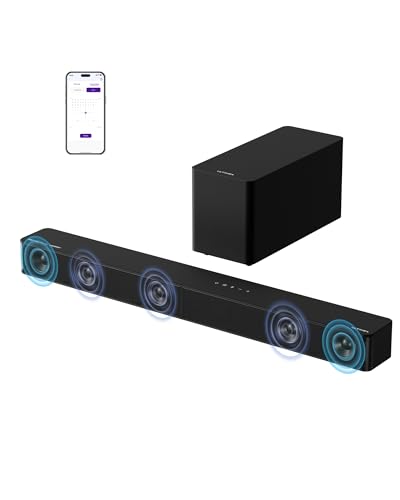
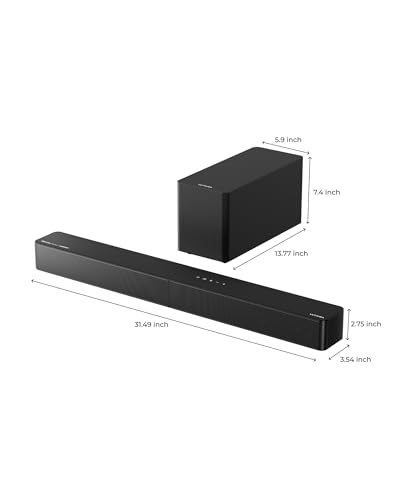
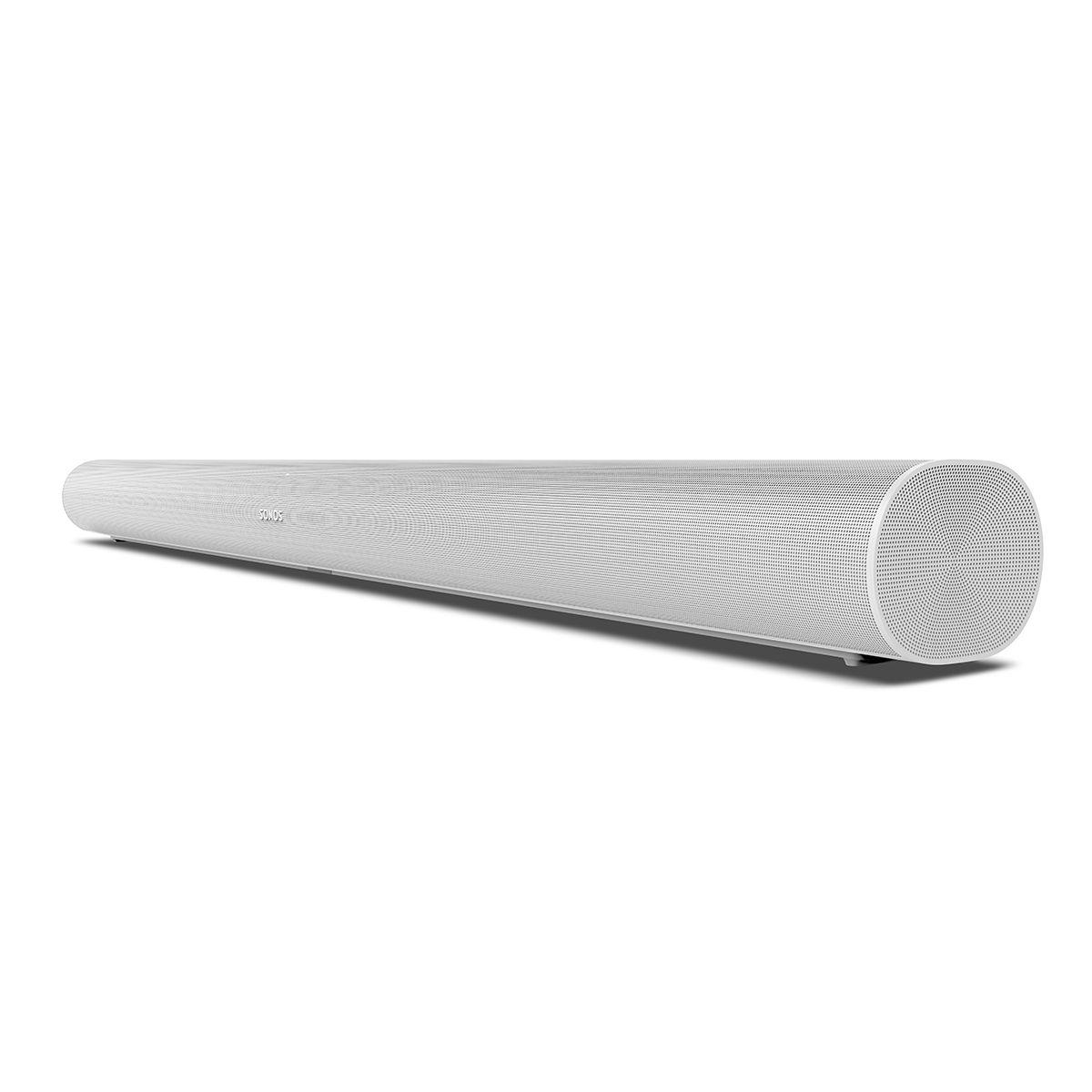
The Ultimea Poseidon M60 Boom, released in 2024, represents the "more hardware for less money" philosophy. This system gives you genuine 5.1 channel separation with five full-range drivers built into the main soundbar plus a dedicated wireless subwoofer. The Sonos Arc, which debuted in 2020, takes the "premium single-unit solution" approach, packing 11 drivers into one sleek bar and using sophisticated processing to create virtual surround sound.
These different philosophies matter more than you might think. The Ultimea system physically separates your audio channels—when a helicopter flies from left to right in a movie, different physical speakers handle that movement. The Sonos Arc uses advanced digital signal processing (DSP) to trick your ears into thinking sounds are coming from different locations, even though they're all originating from drivers in one bar.
The Ultimea Poseidon M60 Boom delivers 340W of peak power output, which is genuinely impressive for its price category. More importantly, that power gets distributed across a true 5.1 system with a dedicated subwoofer. In practical terms, this means the system can get quite loud without distortion—reaching maximum sound pressure levels of 99dB—and handle the dynamic swings between whisper-quiet dialogue and explosive action sequences.
The Sonos Arc takes a different approach, using 11 individually amplified drivers with Class-D amplification. Class-D amps are more efficient and generate less heat than traditional designs, allowing Sonos to pack more drivers into a smaller space. While Sonos doesn't publish specific wattage numbers, expert testing suggests the Arc can reach similar volume levels to the Ultimea system, but with different characteristics.
Here's where the fundamental design differences become most apparent. The Ultimea system includes a dedicated 5.25-inch wireless subwoofer with BassMX technology—essentially a larger cabinet with enhanced internal construction that allows the driver to move more air and produce deeper bass. With a frequency response reaching down to 45Hz, this system can reproduce the kind of low-end impact that makes movie explosions feel visceral.
The Sonos Arc, being a single-bar solution, relies on eight elliptical woofers built into the main unit. While these are well-engineered drivers, they simply can't move as much air as a dedicated subwoofer. The Arc produces respectable bass for a single unit, but it lacks the deep, room-shaking low end that a separate subwoofer provides. Sonos does offer an optional Sub, but that's an additional purchase that significantly increases the total system cost.
This is perhaps the most important difference between these systems. The Ultimea Poseidon M60 Boom achieves surround sound through physical separation—when audio pans from front to back, it's actually moving between different drivers positioned at different points along the soundbar. This creates more convincing positional audio, especially in larger rooms where the listener might be sitting further from the soundbar.
The Sonos Arc creates its 5.0.2 Dolby Atmos experience through virtual processing. Up-firing drivers bounce sound off your ceiling to simulate height channels, while sophisticated DSP algorithms create the illusion of sounds coming from beside and behind you. This works surprisingly well in properly configured rooms—especially smaller to medium-sized spaces with appropriate ceiling height and reflective surfaces. However, in larger rooms or spaces with high or non-reflective ceilings, the virtual effect becomes less convincing.
Both systems recognize that dialogue clarity is arguably the most crucial aspect of any home theater system. Nothing ruins a movie like having to constantly adjust volume or turn on subtitles because you can't understand what characters are saying.
The Ultimea system uses VoiceMX technology, which dynamically enhances the 300Hz-3kHz frequency range where most human speech occurs. The system uses adaptive equalization and gain control to ensure dialogue remains clear even during complex scenes with lots of background action and music.
The Sonos Arc includes a dedicated Speech Enhancement feature that boosts vocal frequencies and includes adjustable bass and treble controls through the app. The Arc's three precisely angled silk-dome tweeters are specifically positioned to optimize dialogue reproduction, and in our research of user experiences, dialogue clarity consistently receives praise.
The Ultimea Poseidon M60 Boom focuses on essential connectivity with modern conveniences. HDMI eARC (enhanced Audio Return Channel) support means you can connect directly to your TV and receive lossless audio signals, including uncompressed Dolby Atmos tracks from streaming services or Blu-ray players. The system also includes Bluetooth 5.4—a significant upgrade from older Bluetooth versions that provides faster pairing, more stable connections, and notably lower latency for gaming and video watching.
The Smart APP Control system lets you customize EQ settings, choose between six preset modes (movie, music, voice, sport, game, and night), and manually adjust bass, mid, and treble frequencies. This level of control is unusual in budget-friendly soundbars and allows users to fine-tune the sound to their room and preferences.
The Sonos Arc represents a completely different philosophy toward smart features. Built-in Google Assistant and Amazon Alexa mean the soundbar doubles as a smart speaker, capable of controlling smart home devices, answering questions, and streaming music even when your TV is off. Apple AirPlay 2 support allows seamless streaming from iOS devices, and the system integrates into Sonos's multi-room audio ecosystem.
The Arc's TruePlay technology deserves special attention—this feature uses an iOS device's microphone to measure your room's acoustics and automatically adjusts the soundbar's output to optimize performance for your specific space. It's genuinely sophisticated technology that can make a noticeable difference in sound quality, though it requires an Apple device to function.
At the time of writing, these systems occupy very different price tiers, with the Ultimea Poseidon M60 Boom positioned as a budget-friendly option and the Sonos Arc commanding premium pricing. This price difference—roughly three-to-one in favor of the Ultimea—reflects their different target markets and design philosophies.
The Ultimea system delivers remarkable value by providing genuine 5.1 surround sound with physical channel separation at a fraction of premium soundbar costs. You're getting a complete system with dedicated subwoofer, extensive connectivity options, and sophisticated DSP processing. For users who prioritize audio performance per dollar spent, this represents exceptional value.
The Sonos Arc justifies its premium pricing through superior build quality, advanced smart home integration, automatic room calibration, and the convenience of a single-unit solution. The engineering that goes into creating convincing virtual surround from one bar is genuinely impressive, and the long-term software support Sonos provides means the system will likely gain features over time.
The Ultimea Poseidon M60 Boom makes the most sense for users who want maximum audio performance without premium pricing. If you have a larger living room—say, over 200 square feet—the physical channel separation becomes more important because virtual surround effects are less convincing at greater listening distances.
This system also suits home theater enthusiasts who understand that dedicated subwoofers simply produce better bass than soundbar-integrated drivers. The wireless subwoofer gives you placement flexibility while delivering the kind of low-end impact that makes action movies genuinely exciting.
Budget-conscious users who still want sophisticated features will appreciate the extensive EQ customization and multiple sound modes. The Smart APP Control provides the kind of fine-tuning typically found in much more expensive systems.
The Sonos Arc excels for users who prioritize convenience, aesthetics, and smart home integration. If you want a single, elegant solution that automatically optimizes itself for your room and integrates seamlessly with your existing smart home setup, the Arc delivers.
The system works particularly well in smaller to medium-sized rooms where virtual surround processing can be most effective. If your listening position is relatively close to the soundbar—within about 8-10 feet—the virtual effects become much more convincing.
For users already invested in the Sonos ecosystem, the Arc serves as an excellent foundation that can be expanded with rear speakers and a subwoofer over time. The multi-room capabilities mean you can play synchronized music throughout your home, something the Ultimea system simply can't do.
The Ultimea Poseidon M60 Boom does have some constraints worth considering. The wireless subwoofer still requires a power outlet, which can limit placement options in some rooms. While the system includes extensive EQ controls, it lacks the automatic room calibration that premium systems provide.
Some users report occasional connectivity issues with HDMI ARC and Bluetooth, though these appear to be relatively uncommon based on user feedback patterns. The system also can't match the sophisticated multi-room capabilities of premium ecosystems like Sonos.
The Sonos Arc's single-bar design, while elegant, inherently limits bass response compared to systems with dedicated subwoofers. In larger rooms, the virtual surround effects become less convincing, and some users find themselves wanting to add rear speakers for more immersive surround sound.
The TruePlay calibration requires an iOS device, which excludes Android users from this optimization feature. The premium pricing also means you're paying significantly more for convenience and smart features rather than pure audio performance.
The choice between these systems ultimately comes down to your priorities, room size, and budget. If you want the most audio performance for your money and don't mind managing multiple components, the Ultimea Poseidon M60 Boom delivers exceptional value with genuine surround sound and powerful bass response.
If you prefer a premium, single-unit solution with sophisticated smart features and automatic room optimization, the Sonos Arc justifies its higher price through convenience, build quality, and ecosystem integration.
Consider the Ultimea system if you have a larger room, prioritize bass response, or want maximum performance per dollar. Choose the Sonos Arc if you have a smaller to medium room, value aesthetics and simplicity, or want comprehensive smart home integration.
Both systems represent significant upgrades over TV speakers, but they achieve that improvement through fundamentally different approaches. The Ultimea gives you more hardware for less money, while the Sonos provides more sophistication and convenience at a premium price. Understanding these trade-offs will help you choose the system that best matches your needs and expectations.
| Ultimea Poseidon M60 Boom 5.1 Soundbar | Sonos Arc Wireless Sound Bar |
|---|---|
| Channel Configuration - Determines authenticity of surround sound experience | |
| True 5.1 with physical channel separation | Virtual 5.0.2 Dolby Atmos from single unit |
| Subwoofer Setup - Critical for bass response and room impact | |
| Dedicated 5.25" wireless subwoofer with BassMX technology included | No subwoofer included; optional Sub available separately |
| Peak Power Output - Affects maximum volume and dynamic range | |
| 340W peak power across all channels | Individual Class-D amplifiers (power not specified) |
| Frequency Response - Shows bass depth and treble extension | |
| 45Hz-18kHz (deeper bass capability) | Not specified (limited by single-bar design) |
| Driver Count - More drivers can mean better sound separation | |
| 5 full-range drivers plus subwoofer | 11 high-performance drivers (3 tweeters, 8 woofers) |
| Smart Features - Voice control and ecosystem integration | |
| Smart app control with extensive EQ customization | Built-in Google Assistant, Amazon Alexa, Apple AirPlay 2 |
| Room Calibration - Automatic sound optimization for your space | |
| Manual EQ adjustment through app | TruePlay automatic room calibration (requires iOS device) |
| Connectivity Options - How you connect to TV and devices | |
| HDMI eARC, Bluetooth 5.4, Optical, USB, AUX | HDMI eARC, WiFi, Apple AirPlay 2, Optical adapter included |
| Physical Design - Space requirements and aesthetics | |
| Soundbar + separate wireless subwoofer | Single 45" soundbar (no separate components) |
| Multi-Room Audio - Expanding to other rooms in your home | |
| Not supported | Full Sonos ecosystem integration with multi-room sync |
| Setup Complexity - Time and effort required for installation | |
| Quick setup with wireless subwoofer placement consideration | Ultra-simple single-unit setup with automatic optimization |
| Ideal Room Size - Where each system performs best | |
| Large rooms (200+ sq ft) where physical separation matters | Small to medium rooms where virtual surround is effective |
| Best Value Proposition - What you get for your investment | |
| Maximum audio performance per dollar with genuine 5.1 surround | Premium convenience with sophisticated virtual processing and smart features |
The Ultimea Poseidon M60 Boom delivers exceptional value by providing true 5.1 surround sound with a dedicated subwoofer at a budget-friendly price point. The Sonos Arc offers premium features like automatic room calibration and voice control but costs significantly more. For pure audio performance per dollar, the Ultimea system wins on value.
The Ultimea Poseidon M60 Boom uses true 5.1 surround with physical channel separation across five drivers plus a subwoofer. The Sonos Arc creates virtual surround through advanced processing from 11 drivers in one bar. Real surround provides more convincing positional audio, especially in larger rooms, while virtual surround offers a cleaner aesthetic with no separate components.
The Ultimea Poseidon M60 Boom includes a dedicated 5.25" wireless subwoofer with BassMX technology, delivering deeper bass down to 45Hz. The Sonos Arc relies on eight built-in woofers without a separate subwoofer. For impactful, room-filling bass, the Ultimea system has a clear advantage unless you purchase Sonos's optional Sub separately.
Yes, both the Ultimea Poseidon M60 Boom and Sonos Arc support Dolby Atmos. However, they achieve it differently - the Ultimea system processes Atmos through its 5.1 configuration, while the Sonos Arc uses up-firing drivers and virtual processing to create height effects for a true 5.0.2 Atmos experience.
The Sonos Arc offers simpler setup as a single unit that automatically calibrates to your room using TruePlay technology. The Ultimea Poseidon M60 Boom requires positioning both the soundbar and wireless subwoofer but still sets up quickly in minutes. Both systems connect via HDMI eARC for easy TV integration.
The Sonos Arc includes built-in Google Assistant and Amazon Alexa voice control, plus Apple AirPlay 2 for wireless streaming. The Ultimea Poseidon M60 Boom offers smart app control with extensive EQ customization and Bluetooth 5.4 connectivity. The Sonos system provides more comprehensive smart home integration.
The Ultimea Poseidon M60 Boom performs better in large rooms due to its true 5.1 channel separation and dedicated subwoofer. Physical surround sound remains convincing at greater listening distances. The Sonos Arc works best in small to medium rooms where virtual surround processing can be most effective.
The Sonos Arc can be expanded within the Sonos ecosystem by adding rear speakers and a subwoofer for enhanced surround sound. The Ultimea Poseidon M60 Boom is a complete system that cannot be expanded, but already includes true 5.1 surround with a subwoofer in the base package.
For dedicated home theater use, the Ultimea Poseidon M60 Boom excels with genuine 5.1 surround sound, powerful bass response, and extensive EQ customization for movie optimization. The Sonos Arc offers excellent dialogue clarity and Dolby Atmos processing but may require additional components for the most immersive home theater experience.
Both soundbars support HDMI eARC for high-quality TV connection. The Ultimea Poseidon M60 Boom includes Bluetooth 5.4, optical, USB, and AUX inputs. The Sonos Arc offers WiFi, Apple AirPlay 2, and optical connectivity. The Ultimea system provides more wired connection options, while the Sonos Arc focuses on wireless streaming.
Both systems prioritize dialogue clarity with dedicated voice enhancement features. The Ultimea Poseidon M60 Boom uses VoiceMX technology to boost vocal frequencies, while the Sonos Arc includes Speech Enhancement and precisely angled tweeters. Both deliver clear dialogue, with the Sonos Arc having a slight edge in processing sophistication.
Choose the Ultimea Poseidon M60 Boom if you want maximum audio performance per dollar, genuine surround sound, and powerful bass without premium pricing. Select the Sonos Arc if you prefer a sleek single-unit design, automatic room calibration, comprehensive smart features, and plan to build a multi-room audio system over time.
We've done our best to create useful and informative comparisons to help you decide what product to buy. Our research uses advanced automated methods to create this comparison and perfection is not possible - please contact us for corrections or questions. These are the sites we've researched in the creation of this article: ultimea.com - ultimea.com - youtube.com - bestbuy.com - youtube.com - avsforum.com - youtube.com - manuals.plus - youtube.com - device.report - ultimea.com - ultimea.de - community.ultimea.com - ultimea.com - community.ultimea.com - ultimea.com - youtube.com - aliexpress.com - ultimea.com - whathifi.com - soundandvision.com - en.community.sonos.com - cnet.com - worldwidestereo.com - abt.com - creativeaudio.net - target.com - sonos.com - worldwidestereo.com - businessinsider.com - en.community.sonos.com - youtube.com

Privacy Policy
Terms and Conditions - Affiliate Policy
Home Security
© Copyright 2008-2026.
11816 Inwood Rd #1211, Dallas, TX 75244