






When your TV's built-in speakers sound like they're trapped in a cardboard box, it's time for an upgrade. But with soundbars ranging from basic stereo units to complex multi-speaker systems, choosing the right one can feel overwhelming. Today, we're comparing two very different approaches to better TV audio: the Ultimea Poseidon M60 Boom and the JBL Bar 1000.
These aren't just different price points—they represent fundamentally different philosophies about home audio. One prioritizes simplicity and value, while the other delivers a no-compromise surround sound experience. Understanding which approach fits your needs, space, and budget is crucial to making the right choice.
Before diving into specifics, let's establish what makes a good soundbar in 2024. The soundbar market has evolved dramatically, with manufacturers cramming increasingly sophisticated technology into sleek packages that won't dominate your living room.
Channel configuration tells you how many distinct audio streams a soundbar can handle. A 5.1 system processes six channels: left, center, right, left surround, right surround, plus a separate low-frequency channel for the subwoofer. The JBL Bar 1000's 7.1.4 configuration adds two more surround channels plus four height channels for overhead effects—that's 12 distinct audio streams creating a three-dimensional soundscape.
Physical versus virtual surround represents the biggest divide in soundbar design. Virtual surround uses digital signal processing (DSP) to simulate surround effects through fewer speakers, while physical surround places actual speakers around your room. This difference fundamentally shapes your listening experience and determines whether you'll hear helicopters flying overhead or just around you.
The frequency response range indicates how low (bass) and high (treble) a system can reproduce sound. Human hearing extends from roughly 20Hz to 20kHz, but most TV content lives between 80Hz and 8kHz. Systems extending below 40Hz deliver the deep rumble you feel during explosions, while crisp highs above 15kHz add sparkle to music and ambient effects.
The Ultimea Poseidon M60 Boom represents the newer wave of budget soundbars that emerged around 2023-2024, incorporating lessons learned from years of customer feedback about setup complexity and dialogue clarity. Ultimea focused on creating a system that delivers maximum impact with minimum hassle, integrating advanced DSP technology that was previously found only in premium models.
The JBL Bar 1000, originally launched in 2022 and updated in 2024, reflects JBL's decades of professional audio expertise applied to home theater. The recent updates added HDMI 2.1 connectivity and improved wireless technology, addressing the growing demands of 4K gaming and streaming. This timing matters because soundbar technology advances rapidly—features that were cutting-edge two years ago are now standard in budget models.
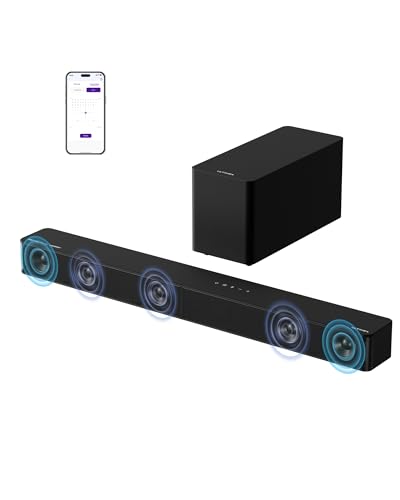
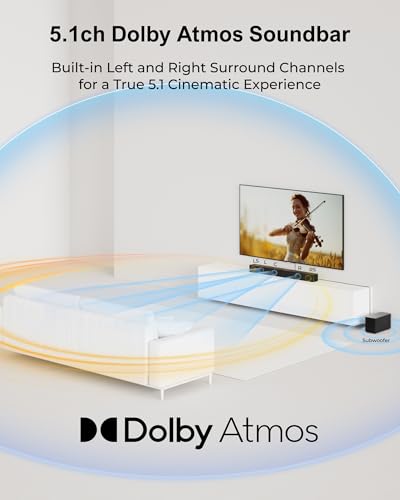
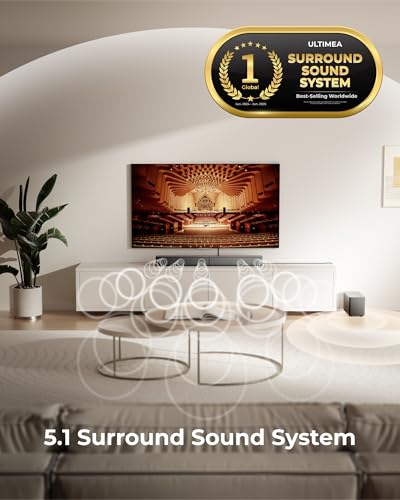
Here's where these systems diverge most dramatically. The Ultimea M60 Boom achieves its 5.1 surround effects entirely through digital wizardry. Five full-range drivers mounted in the main soundbar use advanced DSP algorithms to create phantom surround effects—your brain interprets carefully timed and filtered audio signals as coming from behind you, even though all speakers face forward.
This virtual approach has genuine merit. Setup takes minutes rather than hours, there are no rear speakers to place or hide, and the effect works surprisingly well for most content. During action sequences, explosions feel wider and more enveloping than standard TV audio. However, the surround effect remains somewhat artificial—you won't experience the spine-tingling sensation of dialogue moving seamlessly from front to back or the realistic placement of ambient effects throughout your room.
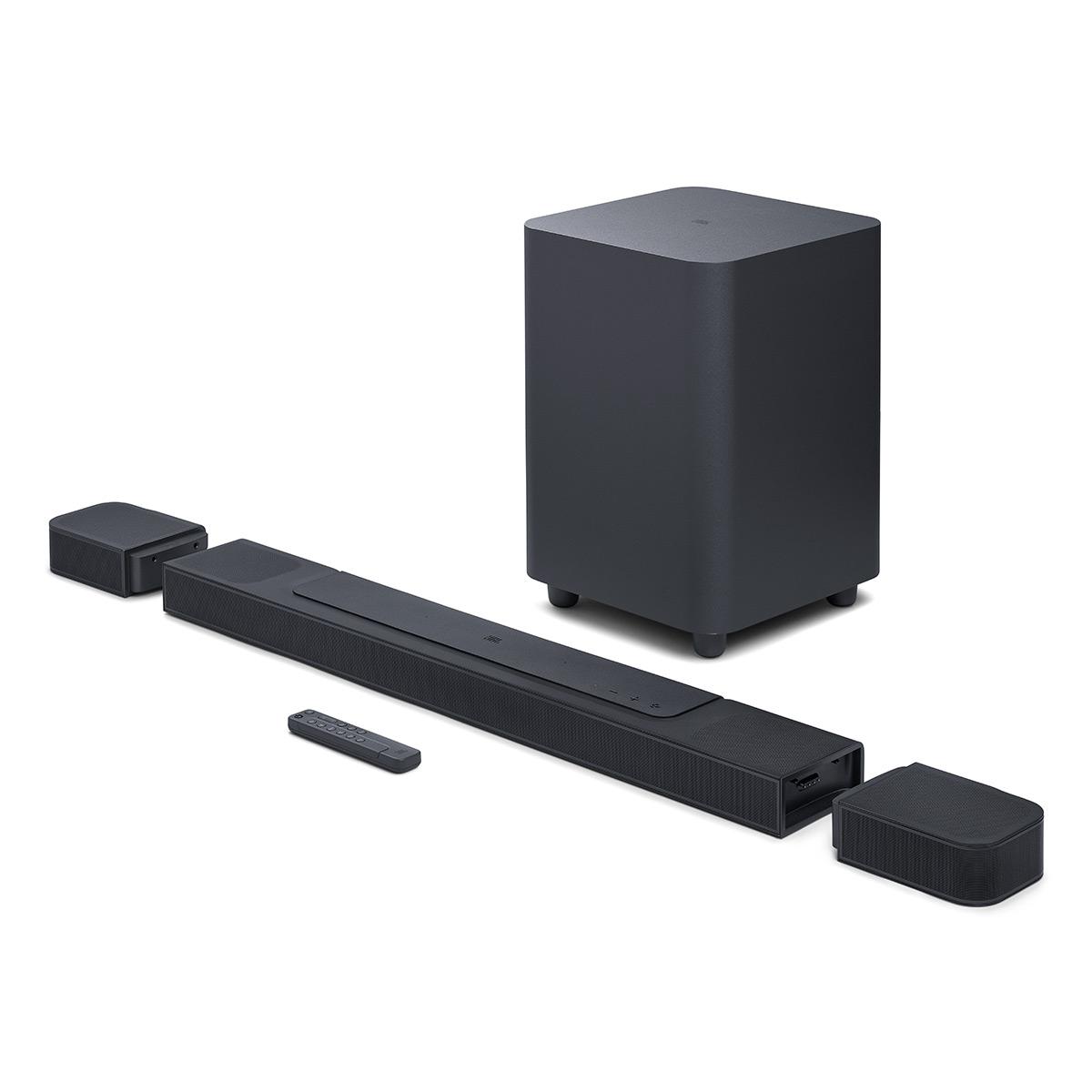
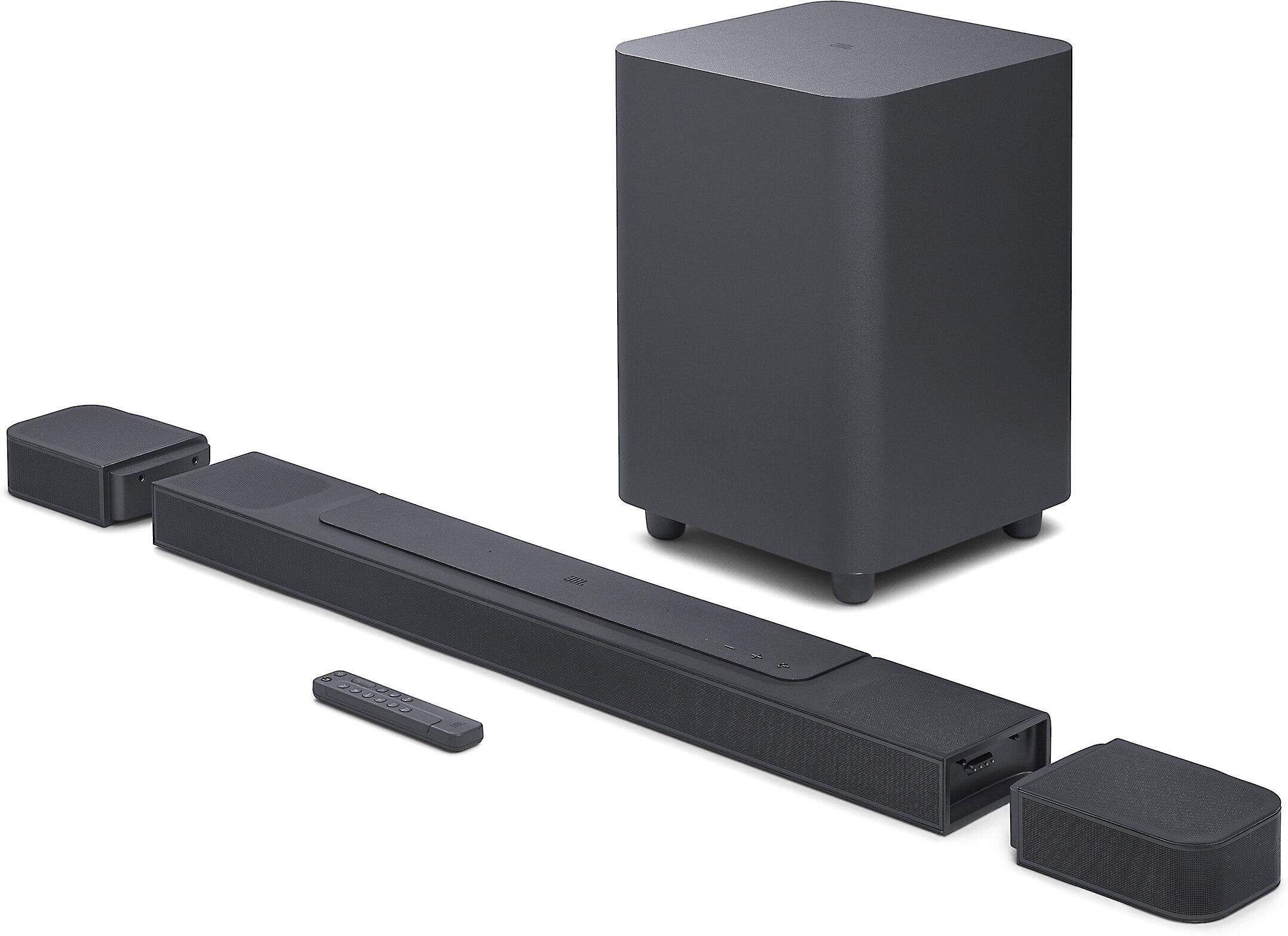
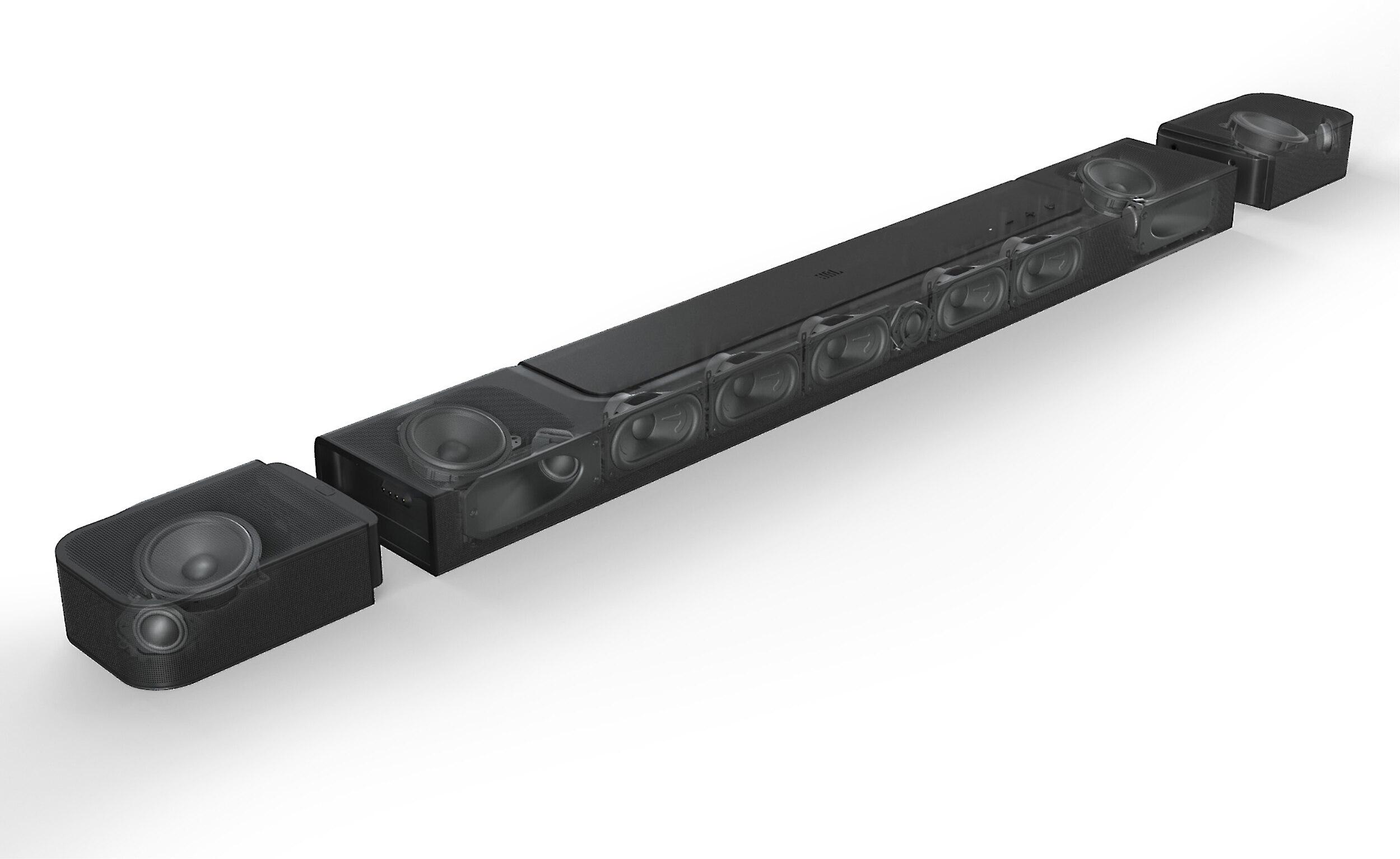
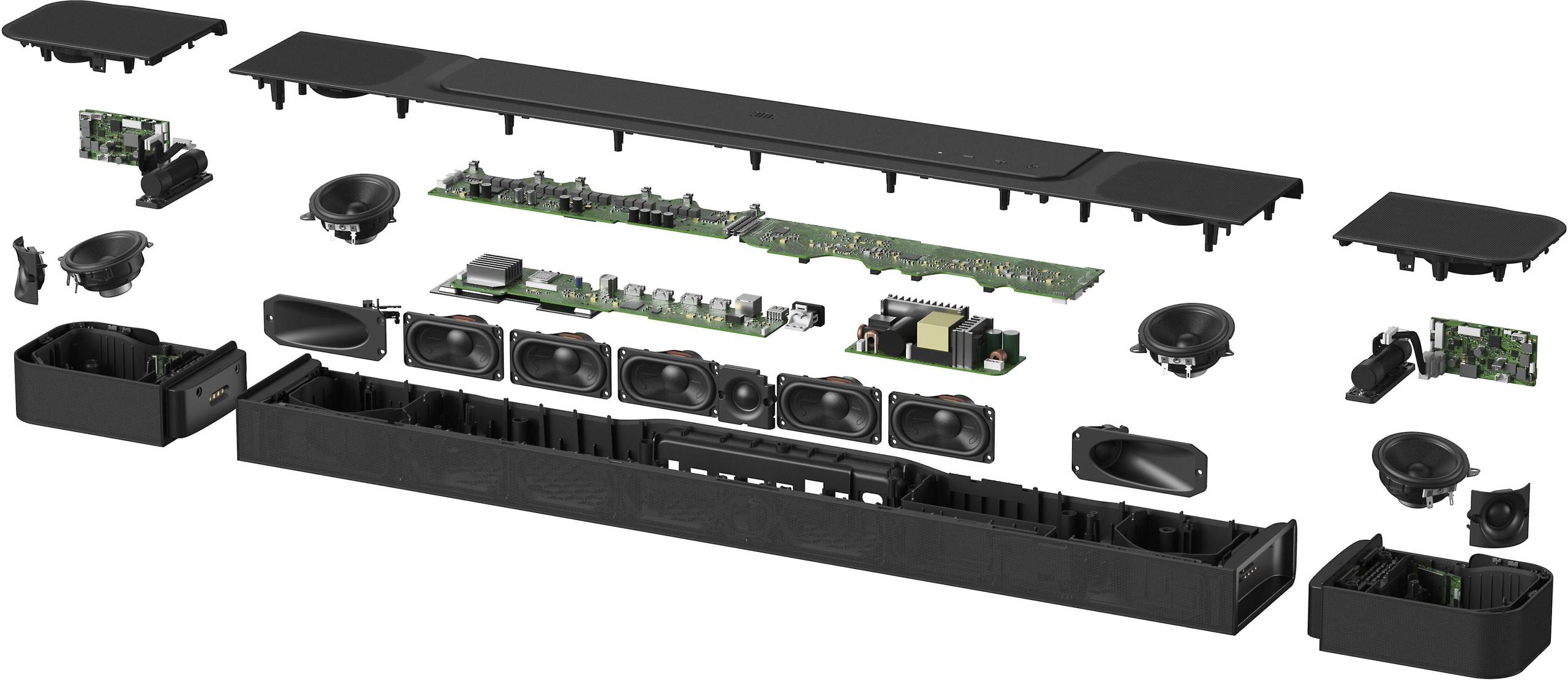
The JBL Bar 1000 takes the opposite approach: authentic multichannel audio through strategically placed speakers. Two wireless rear speakers create genuine surround effects, while four up-firing drivers bounce sound off your ceiling to create overhead effects. When a helicopter flies across the screen, you'll hear it move from front to back and then overhead—precisely where your eyes tell you it should be.
This authentic approach delivers noticeably more convincing surround effects, particularly for movies mixed in Dolby Atmos or DTS:X. The system creates what audio engineers call a "sound bubble"—immersive three-dimensional audio that places effects with pinpoint accuracy throughout your room. However, it requires proper ceiling height and acoustics to work optimally, and those rear speakers need placement behind your seating position.
Raw power matters more than marketing numbers suggest. The Ultimea M60 Boom's 340W peak output provides adequate volume for most rooms, but "peak" power represents brief bursts rather than sustained performance. At moderate listening levels in medium-sized rooms, it delivers clean, undistorted audio with good dynamic range—the difference between quiet dialogue and explosive action scenes.
However, push the volume toward reference levels (the volume theaters use), and the system begins showing strain. Bass becomes less controlled, and the soundstage narrows as the system works harder to maintain clarity. This isn't necessarily problematic—most viewers prefer moderate volumes anyway—but it limits the system's capability for large rooms or party-level listening.
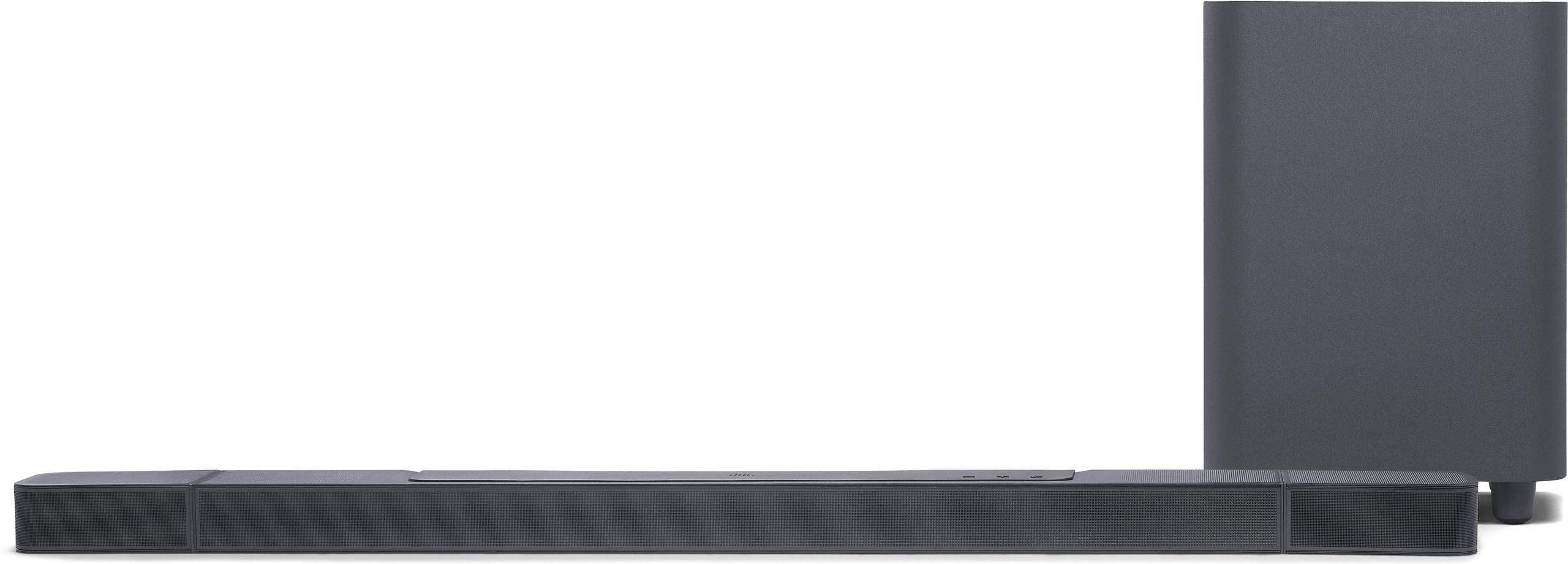
The JBL Bar 1000 operates in a different league entirely. With 880W total system power distributed across multiple drivers, it maintains composure at volumes that would leave the Ultimea struggling. More importantly, this power distributes across dedicated speakers, allowing each driver to focus on specific frequency ranges rather than trying to reproduce everything.
This translates to cleaner midrange reproduction, more controlled bass, and the ability to fill large rooms without strain. During testing scenarios reported by reviewers, the system maintains clarity and separation even at volumes loud enough to annoy neighbors—a capability that proves valuable for both large gatherings and immersive movie nights.
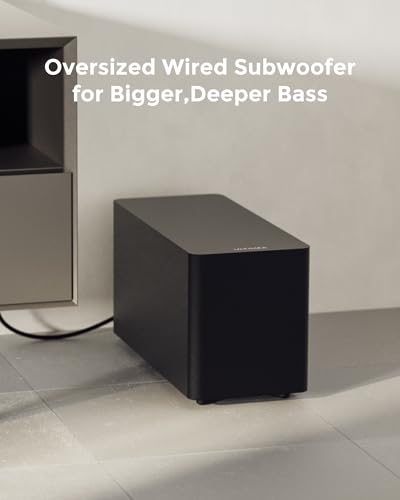
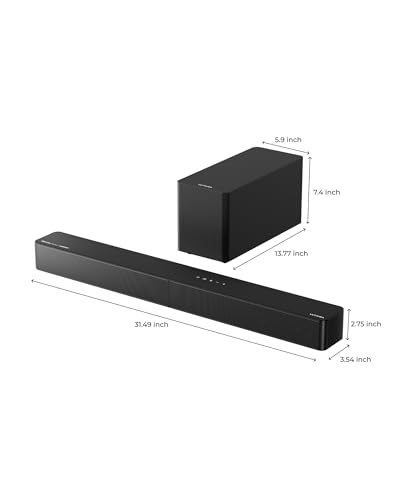
Both systems take different approaches to low-frequency reproduction, and the differences are immediately audible. The Ultimea M60 Boom's 5.25-inch wired subwoofer incorporates BassMX technology—essentially an oversized magnetic circuit that allows the driver to move further (16mm excursion) for more air displacement despite its compact size.
This design delivers surprisingly impactful bass for the size, with clean reproduction down to approximately 45Hz. Most movie sound effects and music fundamentals live above this frequency, so the system handles typical content well. However, the deepest bass frequencies—the 20-30Hz range that creates visceral impact during explosions or the lowest organ notes—remain beyond its capabilities.
The JBL Bar 1000's 10-inch wireless subwoofer extends response down to 33Hz, accessing frequencies that you feel as much as hear. This deeper extension becomes particularly noticeable during action movies, where explosions gain physical impact rather than just audible boom. The larger driver also moves more air with less effort, maintaining control and accuracy even at high output levels.
The wireless design offers another advantage: optimal placement. Subwoofer performance depends heavily on room position, and wireless connectivity lets you experiment with placement to find the spot where bass sounds most natural and even throughout your seating area.
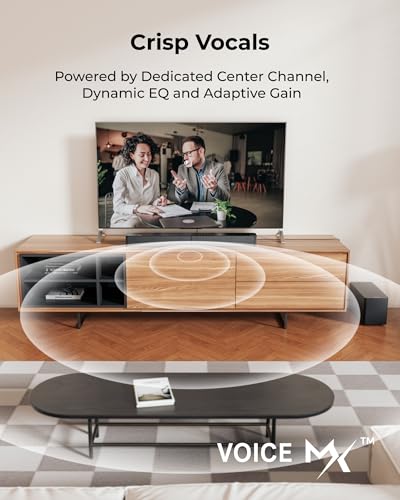
Poor dialogue clarity represents the number-one complaint about TV audio, and both systems address this challenge differently. The Ultimea M60 Boom incorporates VoiceMX technology, which dynamically emphasizes the 300Hz-3kHz frequency range where most speech fundamentals live. This system actively monitors the audio mix and boosts dialogue when competing sounds (music, effects) threaten to mask speech.
User reports consistently praise the Ultimea's dialogue performance, noting that conversations remain clear even during complex scenes with multiple competing elements. The system's tuning prioritizes speech intelligibility over pure accuracy, sometimes slightly muting background elements to ensure dialogue cuts through.
The JBL Bar 1000 addresses dialogue differently, using a dedicated center channel driver specifically for speech reproduction. This physical separation means dialogue doesn't compete with other sounds for the same driver—music and effects come from left and right channels while speech emanates from the center. PureVoice processing further optimizes the center channel's response for human speech patterns.
Both approaches work effectively, but they feel different in practice. The Ultimea's processing feels more aggressive, clearly prioritizing dialogue over ambient authenticity. The JBL's approach maintains more natural balance while still ensuring speech clarity, though it requires proper positioning relative to your seating for optimal results.
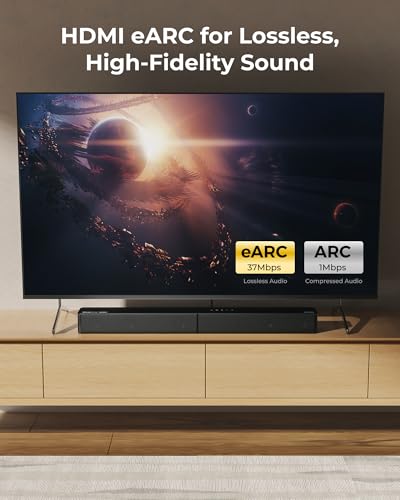
The Ultimea M60 Boom covers essential connectivity bases with HDMI eARC, optical, USB, and Bluetooth 5.4. The eARC (enhanced Audio Return Channel) connection handles high-bandwidth audio formats like Dolby Atmos while maintaining single-cable simplicity. Bluetooth 5.4 represents the latest wireless standard, offering improved connection stability and reduced latency for streaming content.
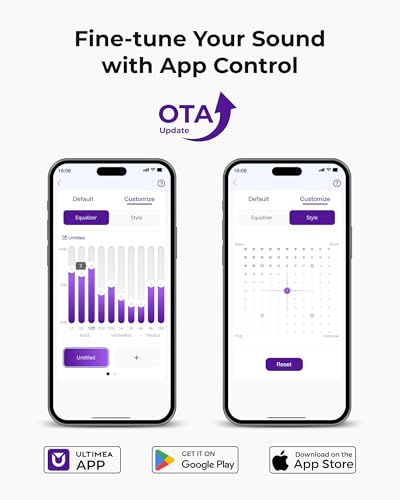
The companion app deserves particular mention for its comprehensive control options. Unlike many budget soundbars with limited customization, the Ultimea app provides 10-band equalization, multiple preset modes optimized for different content types, and real-time adjustment capabilities. This level of control typically appears only in premium products.
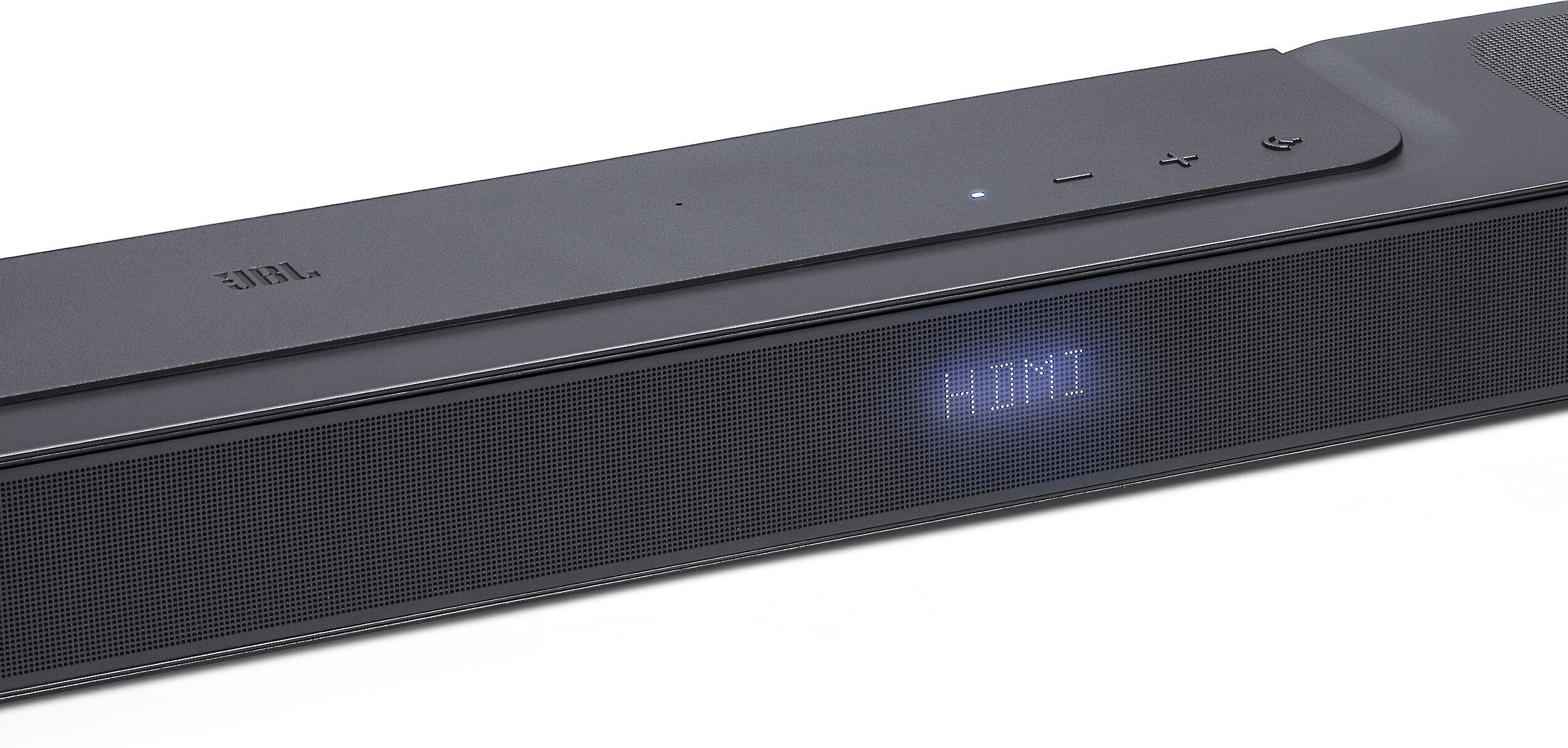
The JBL Bar 1000 elevates connectivity to professional levels with three HDMI 2.1 inputs plus eARC output. This configuration supports multiple source devices while maintaining 4K/120Hz gaming capability and advanced features like Variable Refresh Rate (VRR) and Auto Low Latency Mode (ALLM). For gaming enthusiasts, this eliminates the need for an AV receiver while maintaining cutting-edge video capabilities.
Built-in Wi-Fi adds another dimension entirely, enabling AirPlay 2, Chromecast built-in, and direct access to streaming services. The system can function as a standalone music player, accessing Spotify, Apple Music, and other services without requiring TV operation. Multi-room capability lets you synchronize audio throughout compatible speaker systems for whole-home entertainment.
The Ultimea M60 Boom's modular design genuinely simplifies installation. The soundbar arrives in two pieces that connect via a secure mechanism, making it easier to maneuver into position and reducing packaging size. Setup involves connecting the wired subwoofer, running a single cable to your TV, and downloading the app for customization.
Most users report setup completion within 15-20 minutes, including app configuration and basic acoustic optimization. The wired subwoofer requires AC power placement consideration, but cable management remains straightforward since everything connects to a central hub.
The JBL Bar 1000 demands more involvement but offers greater flexibility in return. The wireless rear speakers initially dock with the main unit for pairing and charging, then detach for placement behind your seating position. Battery life extends approximately 10 hours before requiring recharging, which happens automatically when speakers return to their docking position.
Room calibration adds another step but significantly improves performance. The system generates test tones and uses built-in microphones to analyze your room's acoustic characteristics, then adjusts processing to optimize surround effects for your specific environment. This calibration makes a noticeable difference in systems with physical surround speakers, though it adds complexity compared to plug-and-play alternatives.
At the time of writing, these systems occupy distinctly different value propositions. The Ultimea Poseidon M60 Boom represents exceptional value for users seeking maximum improvement over TV audio without premium pricing or installation complexity. Its performance punches well above its price class, delivering features and sound quality that closely rival systems costing significantly more.
This value equation makes particular sense for apartment dwellers, casual viewers, and anyone prioritizing simplicity over ultimate performance. The system provides genuine surround sound enhancement, excellent dialogue clarity, and robust bass response while maintaining single-room simplicity and modest space requirements.
The JBL Bar 1000 justifies its premium positioning through superior performance and advanced features that extend beyond basic TV audio improvement. The authentic surround experience, deeper bass extension, gaming-focused connectivity, and streaming integration create a complete entertainment hub rather than just a TV audio upgrade.
For home theater enthusiasts, the price premium translates to meaningful performance advantages that enhance every viewing experience. The system's capability to transform movie nights into immersive experiences makes the investment worthwhile for users who value audio quality and have the space to implement a full surround system properly.
Choose the Ultimea Poseidon M60 Boom if you want dramatic improvement over TV speakers without the complexity or cost of a premium system. It excels in apartments, bedrooms, and smaller living spaces where rear speaker placement isn't practical. The exceptional dialogue clarity makes it particularly valuable for users who struggle with muddled speech in standard TV audio.
The JBL Bar 1000 makes sense for users committed to creating a genuine home theater experience. If you have a dedicated viewing room, regularly watch movies in surround formats, or game on multiple consoles, the system's advanced features and superior performance justify the investment. The authentic surround experience and powerful bass response transform compatible content in ways that virtual processing simply cannot match.
Consider your space, budget, and viewing habits honestly. Both systems represent excellent value within their respective categories, but they serve different needs and expectations. The Ultimea delivers maximum improvement for minimum investment and complexity, while the JBL provides no-compromise performance for users willing to invest in superior audio experiences.
The choice ultimately depends on whether you want significantly better TV audio (Ultimea) or a complete home theater transformation (JBL). Both achieve their design goals admirably, making either choice a smart upgrade over standard TV speakers.
| Ultimea Poseidon M60 Boom | JBL Bar 1000 |
|---|---|
| Channel Configuration - Determines surround sound authenticity and immersion | |
| 5.1 virtual surround (all speakers in main bar) | 7.1.4 true surround with physical rear and height speakers |
| Total System Power - Affects volume capability and room size compatibility | |
| 340W peak power (suitable for medium rooms) | 880W total system power (handles large rooms with authority) |
| Subwoofer Design - Impacts bass depth and placement flexibility | |
| 5.25" wired subwoofer with BassMX technology | 10" wireless subwoofer extending down to 33Hz |
| Surround Speaker Configuration - Key difference in installation and performance | |
| No separate speakers (virtual processing only) | Detachable wireless rear speakers with 10-hour battery |
| Setup Complexity - Important for user experience and WAF (Wife Acceptance Factor) | |
| Simple 2-piece modular design, plug-and-play | Multi-component system with wireless pairing and room calibration |
| Dolby Atmos Implementation - Determines overhead effect authenticity | |
| Virtual height processing through main bar drivers | 4 dedicated up-firing drivers for true overhead effects |
| Connectivity Options - Affects integration with modern devices and streaming | |
| HDMI eARC, optical, Bluetooth 5.4, USB, app control | 3x HDMI 2.1 inputs, eARC, built-in Wi-Fi, AirPlay 2, Chromecast |
| Dialogue Enhancement Technology - Critical for TV show and movie clarity | |
| VoiceMX with 300Hz-3kHz optimization | PureVoice with dedicated center channel driver |
| Gaming Features - Important for console users and PC gamers | |
| Basic HDMI eARC with low-latency Bluetooth | HDMI 2.1 with 4K/120Hz, VRR, and ALLM support |
| Frequency Response Range - Determines bass depth and treble extension | |
| 45Hz - 18kHz (good for most content) | 33Hz - 20kHz (deeper bass, fuller range) |
| Target User - Who should consider each system | |
| Budget-conscious users wanting simple surround upgrade | Home theater enthusiasts seeking authentic surround experience |
| Best Use Cases - Where each system excels | |
| Apartments, bedrooms, TV-focused viewing | Dedicated home theaters, gaming setups, movie enthusiasts |
The Ultimea Poseidon M60 Boom is ideal for small apartments because it doesn't require separate rear speakers. All surround effects come from the main soundbar unit, so you don't need to worry about speaker placement or running cables behind furniture. The JBL Bar 1000 requires wireless rear speakers positioned behind your seating, which may not be practical in cramped spaces.
It depends on your expectations. The Ultimea M60 Boom creates convincing virtual surround effects without rear speakers using advanced digital processing. However, the JBL Bar 1000 with physical rear speakers delivers more authentic surround sound where you can precisely locate sounds moving around the room. For true home theater immersion, physical speakers make a noticeable difference.
The JBL Bar 1000 has significantly better bass with its 10-inch wireless subwoofer that reaches down to 33Hz, delivering deep, room-shaking low frequencies. The Ultimea Poseidon M60 Boom uses a smaller 5.25-inch subwoofer that still provides good bass but can't match the depth and impact of the larger JBL system.
The Ultimea M60 Boom offers simpler setup with its modular two-piece design that connects easily, plus a wired subwoofer. Most users complete setup in 15-20 minutes. The JBL Bar 1000 requires more time due to wireless rear speaker pairing, room calibration, and optimal speaker positioning, but the automated calibration helps optimize performance for your specific room.
Both excel at dialogue clarity but use different approaches. The Ultimea Poseidon M60 Boom uses VoiceMX technology that actively boosts speech frequencies when background sounds compete. The JBL Bar 1000 uses a dedicated center channel driver specifically for dialogue reproduction. Both deliver clear speech, with the Ultimea being more aggressive about prioritizing dialogue.
Yes, but the JBL Bar 1000 is much better for gaming with three HDMI 2.1 inputs supporting 4K/120Hz, Variable Refresh Rate (VRR), and Auto Low Latency Mode (ALLM). The Ultimea M60 Boom handles gaming through HDMI eARC and Bluetooth but lacks the advanced gaming features that modern consoles can utilize.
The Ultimea Poseidon M60 Boom offers exceptional value for budget-conscious buyers, delivering features typically found in much more expensive systems. The JBL Bar 1000 costs significantly more but justifies the premium with superior performance, authentic surround sound, and advanced features. Value depends on your budget and performance expectations.
The Ultimea M60 Boom works well in medium-sized rooms but may struggle to fill very large spaces at high volumes. The JBL Bar 1000 has much more power and can easily handle large rooms while maintaining clarity. For small to medium rooms, either system works, but large spaces favor the JBL's higher power output.
The JBL Bar 1000 has superior streaming with built-in Wi-Fi, AirPlay 2, Chromecast built-in, and direct access to music services. It can function as a standalone music system without needing your TV on. The Ultimea Poseidon M60 Boom relies primarily on Bluetooth 5.4 for wireless streaming, which works well but offers fewer options.
For home theater enthusiasts, yes. The JBL Bar 1000's wireless rear speakers create authentic surround effects that virtual processing cannot match. You'll hear sounds move seamlessly from front to back and experience true positional audio. However, if you primarily watch TV shows and casual content, the Ultimea M60 Boom's virtual surround may be sufficient.
Both handle music well, but they serve different preferences. The Ultimea Poseidon M60 Boom offers excellent stereo imaging and can be fine-tuned through its comprehensive app with 10-band EQ. The JBL Bar 1000 provides more powerful, room-filling sound with deeper bass extension and can stream music directly via Wi-Fi without needing other devices.
Choose virtual surround (Ultimea M60 Boom) if you want simplicity, have space constraints, or primarily watch TV content. Choose physical surround (JBL Bar 1000) if you're serious about home theater, regularly watch movies in surround formats, or want the most authentic audio experience possible. Physical surround requires more setup but delivers noticeably better immersion for compatible content.
We've done our best to create useful and informative comparisons to help you decide what product to buy. Our research uses advanced automated methods to create this comparison and perfection is not possible - please contact us for corrections or questions. These are the sites we've researched in the creation of this article: ultimea.com - ultimea.com - youtube.com - bestbuy.com - youtube.com - avsforum.com - youtube.com - manuals.plus - youtube.com - device.report - ultimea.com - ultimea.de - community.ultimea.com - ultimea.com - community.ultimea.com - ultimea.com - youtube.com - aliexpress.com - ultimea.com - zdnet.com - jbl.com - jbl.com - pcrichard.com - rtings.com - d21buns5ku92am.cloudfront.net - ro.harmanaudio.com - target.com - harmanaudio.com - dell.com - mm.jbl.com - dolby.com - jbl.com.my - videoandaudiocenter.com

Privacy Policy
Terms and Conditions - Affiliate Policy
Home Security
© Copyright 2008-2026.
11816 Inwood Rd #1211, Dallas, TX 75244