







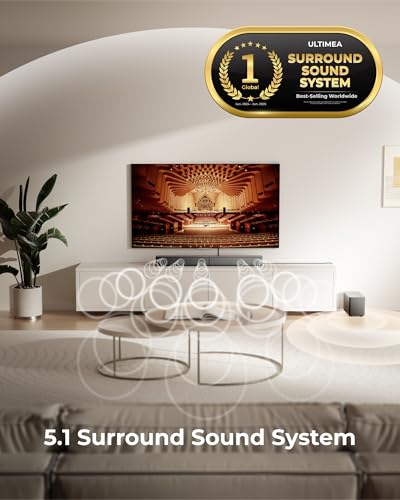

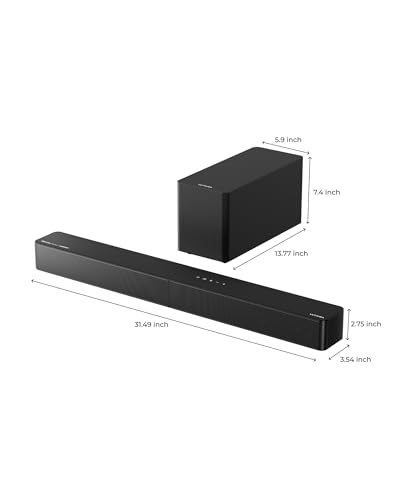
When it comes to upgrading from basic TV speakers, 5.1 channel soundbars represent the perfect middle ground between convenience and true home theater audio. But not all 5.1 systems are created equal. Two recent releases from Ultimea—the Poseidon D50 and the Poseidon M60 Boom—showcase fundamentally different approaches to achieving surround sound, each with distinct advantages depending on your setup and preferences.
Both soundbars launched in 2025, arriving at a time when consumers are increasingly demanding both convenience and audio quality. The landscape has evolved significantly since the early days of soundbars, when most systems simply tried to make dialogue louder. Today's systems incorporate sophisticated digital signal processing (DSP)—essentially computer chips that can manipulate audio in real-time—and support for advanced formats like Dolby Atmos, which creates the illusion of sound moving around and above you.
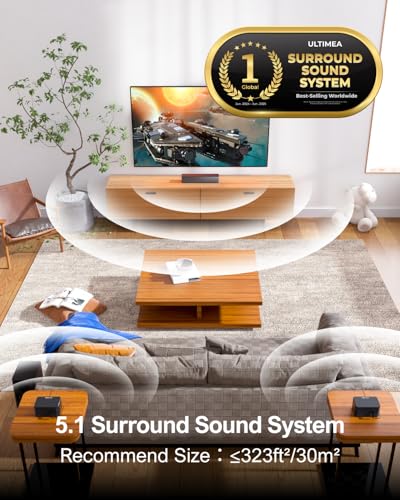
Before diving into specifics, it's worth understanding what separates these systems from simpler soundbars. A true 5.1 setup includes five discrete audio channels: left front, center, right front, left rear, and right rear, plus a dedicated subwoofer (the ".1") for bass frequencies below about 80Hz. This configuration allows filmmakers to place specific sounds in precise locations around your room.
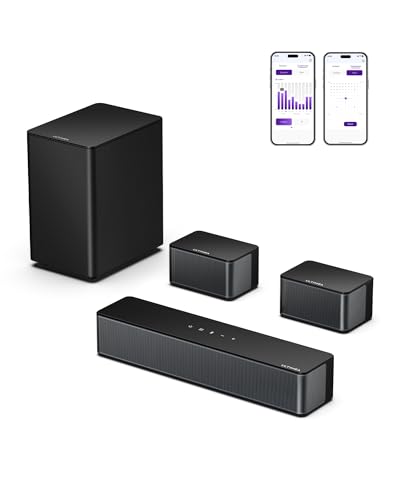
The critical difference between the Poseidon D50 and Poseidon M60 Boom lies in how they achieve this surround effect. The D50 uses actual physical speakers positioned behind you, while the M60 Boom relies on advanced processing to create virtual rear channels from drivers housed entirely within the main soundbar.
This distinction matters more than you might expect. When a helicopter flies overhead in a movie, physical rear speakers can actually place that sound behind your head. Virtual processing, no matter how sophisticated, must use psychoacoustic tricks—essentially fooling your brain about where sounds originate—to create the same illusion.
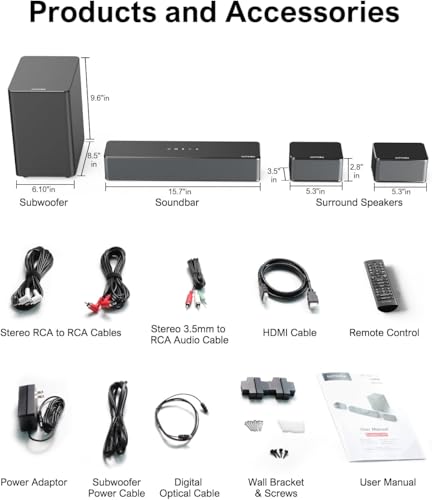
The Poseidon D50 takes the traditional route with two compact satellite speakers that connect via 19.6-foot cables to create genuine rear channel effects. These 2.25-inch drivers might seem small, but they're specifically tuned for surround duties rather than full-range reproduction. Their job is to handle ambient effects, directional cues, and the spatial information that makes movie soundtracks come alive.
What sets the D50 apart is its SurroundX™ algorithm, which can take standard stereo (2.0 PCM) audio and intelligently distribute it across all five channels. This means even older content that wasn't originally mixed for surround sound gets enhanced spatial processing. The integrated DSP chip analyzes incoming audio in real-time, identifying elements that would benefit from placement in specific channels.
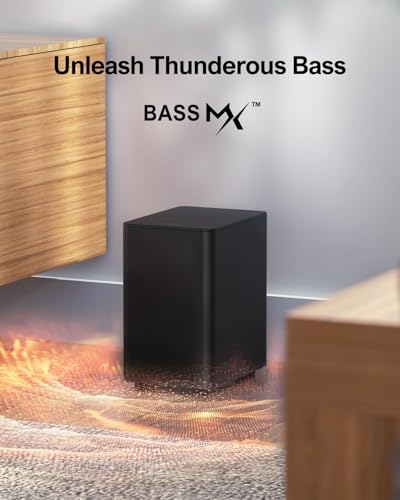
The wireless subwoofer incorporates BassMX™ technology, which optimizes the magnetic circuit design and allows for a 15mm diaphragm excursion—essentially how far the speaker cone can move back and forth. More excursion typically means deeper, more impactful bass, though it must be balanced with control to avoid distortion.
Perhaps most impressively, the D50 offers independent volume control for the satellite speakers. This feature proves invaluable for room tuning, as different spaces require different surround level balancing. You can even mute the rear channels entirely if you prefer a more traditional front-focused sound.
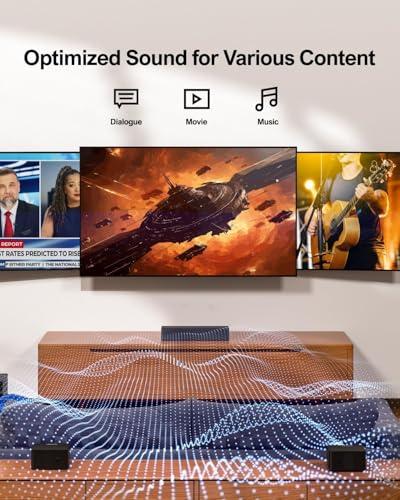
The customization options border on excessive in the best way possible. With 121 preset EQ matrices and a 10-band equalizer accessible through the smart app, users can fine-tune frequency response with granular control typically reserved for much more expensive systems. The three primary modes—Movie, Dialogue, and Music—provide starting points, but the deep customization allows for precise tailoring to room acoustics and personal preferences.
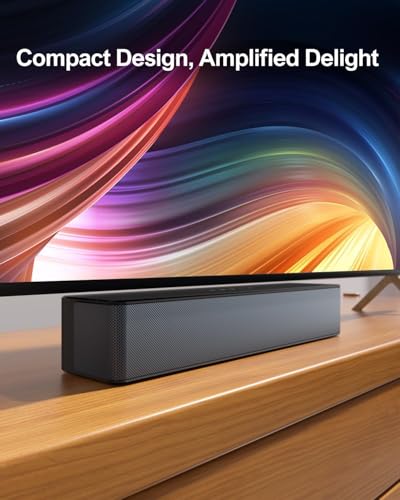
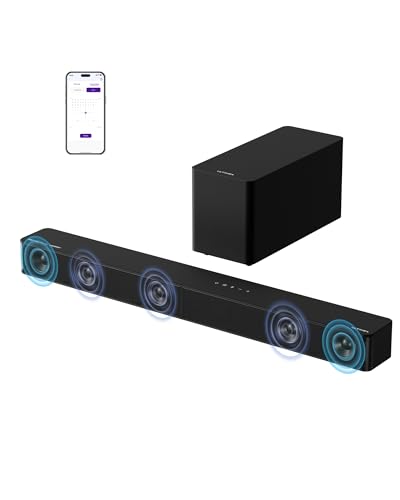
The Poseidon M60 Boom represents a more modern approach, consolidating all five channels within the main soundbar while adding genuine Dolby Atmos processing. This isn't just marketing speak—the system includes dedicated decoding for Dolby's object-based audio format, which treats sounds as independent objects that can be precisely positioned in three-dimensional space.
The heart of the M60 Boom is its triple-core DSP system: two processors running at 800MHz and one at 600MHz, delivering over 2000 MIPS (Million Instructions Per Second) of processing power. To put this in perspective, that's roughly equivalent to a mid-range smartphone processor dedicated entirely to audio manipulation. This computational muscle enables real-time parametric EQ adjustments and sophisticated channel virtualization.
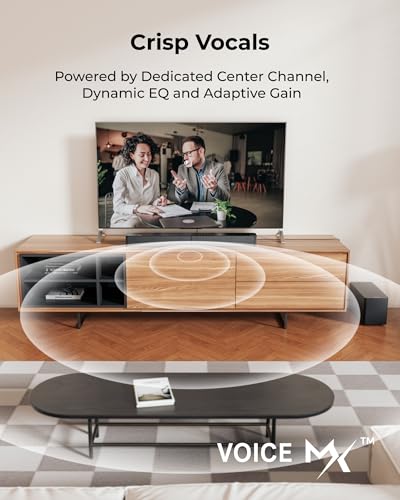
VoiceMX™ technology specifically targets the 300Hz to 3kHz frequency range where most human speech occurs. Using adaptive EQ and gain control, the system dynamically adjusts this critical range to ensure dialogue remains intelligible even during complex action sequences. Based on our research into user feedback, this feature proves particularly valuable for viewers who struggle with muddled dialogue on standard TV speakers.
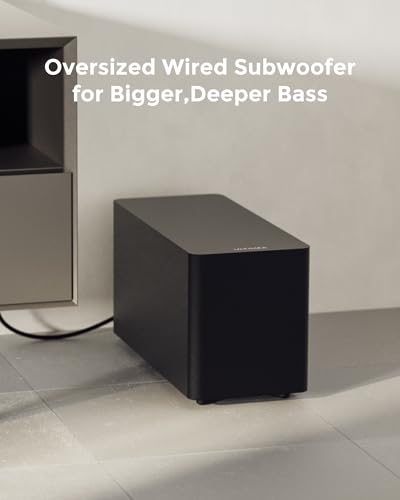
The subwoofer deserves special mention for its wooden construction—a material choice typically associated with higher-end audio equipment. Wood provides superior acoustic damping compared to plastic or MDF, reducing unwanted resonances that can muddy bass response. The 18mm diaphragm excursion exceeds the D50's specification, and combined with the enhanced cabinet design, delivers what reviewers consistently describe as tighter, more controlled bass.
Bluetooth 5.4 connectivity represents the latest wireless standard, offering improved range, faster pairing, and notably reduced latency. For gaming or streaming video content, this translates to better audio-video synchronization and more reliable connections.
The fundamental performance difference between these systems lies in surround sound reproduction. The D50 provides what audio enthusiasts call "discrete channel separation"—each channel originates from a physically separate speaker. When a sound effect is mixed for the left rear channel, it actually comes from a speaker positioned to your left rear.
This physical separation creates several advantages. First, it eliminates processing artifacts that can occur with virtual surround systems. Second, it provides consistent surround effects regardless of your seating position within reason. Third, it offers true channel separation without the frequency response compromises that virtual processing sometimes introduces.
However, the M60 Boom shouldn't be dismissed for its virtual approach. Modern psychoacoustic processing has become remarkably sophisticated, and Dolby Atmos adds genuine three-dimensional positioning that the D50 cannot match. Object-based audio allows sounds to move smoothly around and above the listener, creating effects that even physical rear speakers cannot replicate without additional height channels.
The effectiveness of virtual surround depends heavily on room acoustics and seating position. In a well-damped room with the listener positioned optimally, the M60 Boom can create convincing surround effects. However, this illusion tends to break down if you move significantly off-axis or if your room has challenging acoustics.
Both systems employ 5.25-inch subwoofers, but their implementations differ significantly. The D50 delivers 320W peak power across all channels, while the M60 Boom pushes 340W. However, power specifications only tell part of the story.
The M60 Boom's wooden subwoofer enclosure provides superior acoustic properties, and its higher excursion capability (18mm vs 15mm) allows for greater air displacement. This translates to deeper bass extension and higher maximum output levels. The system achieves a maximum SPL of 99dB compared to the D50's ≥87dB specification—a difference that becomes significant at higher volume levels.
The D50's wireless subwoofer offers placement flexibility that can optimize bass response for your specific room. Bass frequencies interact strongly with room boundaries, and the ability to position the subwoofer optimally can significantly improve performance. The M60 Boom's wired subwoofer limits this flexibility but ensures a completely reliable connection without potential wireless interference.
Both systems excel at dialogue reproduction, but through different approaches. The D50 dedicates the center channel primarily to dialogue and offers extensive EQ customization to optimize speech intelligibility. The 10-band equalizer allows precise tuning of the midrange frequencies where dialogue occurs.
The M60 Boom takes a more automated approach with VoiceMX™ technology. This system actively monitors and adjusts the vocal frequency range, providing consistent dialogue clarity without manual intervention. User reviews consistently highlight the M60 Boom's exceptional speech intelligibility, often noting that it makes following dialogue effortless even during complex scenes.
The M60 Boom's specified frequency response of 45Hz-18kHz suggests excellent extension at both extremes. The low-end extension to 45Hz means it can reproduce the fundamental frequencies of most bass content without relying entirely on the subwoofer for midrange bass.
The installation experience differs dramatically between these systems. The Poseidon D50 requires planning for satellite speaker placement and cable routing. While the included 19.6-foot cables provide reasonable flexibility, you'll need to consider furniture arrangement and potentially invest in cable management solutions for a clean installation.
The wireless subwoofer simplifies part of the setup, requiring only power connectivity. This allows for optimal placement based on room acoustics rather than cable length limitations. Finding the best subwoofer position often involves testing multiple locations, listening for even bass response across your seating area.
The M60 Boom arrives as a two-part soundbar that connects easily, then requires only power and audio connections. Setup typically takes minutes rather than the hour or more that D50 installation might require. However, the wired subwoofer must be positioned within cable reach of the main unit, limiting placement options.
For apartment dwellers or renters, the M60 Boom's simplified setup proves advantageous. There's no need to run cables across walls or around furniture, and the entire system can be easily relocated if needed.
At the time of writing, both systems represent exceptional value within the 5.1 soundbar category, though they target slightly different use cases. The Poseidon D50 offers features typically found in systems costing significantly more, particularly the physical rear speakers and extensive customization options. True 5.1 systems with discrete rear channels often command premium pricing, making the D50's positioning particularly competitive.
The M60 Boom delivers Dolby Atmos processing and premium construction elements (like the wooden subwoofer) at a price point that makes these features accessible to mainstream consumers. The convenience factor adds significant value for users who want high-quality audio without complex installation requirements.
Both systems include smart app control—a feature that was once exclusive to high-end models. This allows for easy adjustment of EQ settings, sound modes, and system configuration from your smartphone, eliminating the need to navigate complex on-screen menus or tiny remote control buttons.
The decision between these systems ultimately depends on your priorities and constraints. Choose the Poseidon D50 if you're committed to achieving the most authentic surround sound experience possible within this price range. The physical rear speakers provide an immersion level that virtual processing cannot fully replicate, and the extensive customization options appeal to audio enthusiasts who enjoy fine-tuning their systems.
The D50 excels in larger rooms where the surround effect has space to develop naturally. It's also ideal for content consumption focused on movies and TV shows, where the discrete channel separation enhances the cinematic experience. If you're upgrading from a basic 2.1 soundbar and want to experience true surround sound, the D50 delivers that authentic step up in audio immersion.
Conversely, the M60 Boom makes more sense for modern lifestyles where convenience and advanced processing matter more than traditional surround sound authenticity. The Dolby Atmos support proves particularly valuable for streaming content from Netflix, Disney+, and other services that increasingly offer object-based audio mixes.
The M60 Boom suits apartment living, rental situations, or any scenario where running rear speaker cables isn't practical. It's also excellent for users who consume a mix of content types—movies, music, gaming, and streaming—and want a system that performs well across all categories without requiring extensive setup or adjustment.
For home theater enthusiasts with dedicated viewing rooms, the D50 typically provides the more satisfying long-term solution. The authentic surround sound experience, combined with the extensive customization capabilities, creates a system that grows with your appreciation for audio quality.
For most mainstream users seeking a significant upgrade from TV speakers or basic soundbars, the M60 Boom offers the better balance of performance, convenience, and modern features. The Dolby Atmos processing and simplified setup make it accessible while still delivering impressive audio quality.
Both systems represent the evolution of soundbar technology from simple volume boosters to genuine home theater solutions. Your choice depends on whether you prioritize the authenticity of physical surround speakers or the convenience and advanced processing of modern virtual surround technology.
| Ultimea Poseidon D50 5.1 Soundbar Home Theater (2025) | Ultimea Poseidon M60 Boom 5.1 Soundbar |
|---|---|
| Surround Sound Implementation - The fundamental difference affecting immersion | |
| True 5.1 with physical rear satellite speakers (2.25" drivers) | Virtual 5.1 with all drivers in main bar, Dolby Atmos processing |
| Peak Power Output - Determines maximum volume and dynamic range | |
| 320W (sufficient for most rooms) | 340W (slightly more headroom for larger spaces) |
| Subwoofer Design - Affects bass quality and placement flexibility | |
| 5.25" wireless with BassMX™ technology (flexible placement) | 5.25" wired wooden construction (superior acoustics, limited placement) |
| Audio Customization - Important for fine-tuning sound to your preferences | |
| Extensive: 121 preset EQ matrices, 10-band equalizer | Standard: 6 preset modes with basic treble/bass adjustment |
| Setup Complexity - Consider your installation preferences and constraints | |
| Complex: Requires positioning and wiring rear speakers (19.6ft cables) | Simple: All-in-one design, plug-and-play setup |
| Advanced Audio Format Support - Matters for modern streaming content | |
| SurroundX™ technology, converts 2.0 to 5.1 | Native Dolby Atmos decoding and processing |
| Bluetooth Version - Affects wireless connection quality and latency | |
| Bluetooth 5.3 | Bluetooth 5.4 (faster pairing, lower latency) |
| Maximum Sound Pressure Level - Indicates how loud the system can play cleanly | |
| ≥87dB | 99dB (significantly louder capability) |
| Satellite Speaker Control - Useful for balancing surround effects | |
| Independent volume control for rear speakers | N/A (no physical rear speakers) |
| Subwoofer Excursion - More movement generally means deeper, more impactful bass | |
| 15mm diaphragm excursion | 18mm diaphragm excursion (deeper bass potential) |
| Processing Power - Affects real-time audio enhancement capabilities | |
| Standard DSP with SurroundX™ algorithm | Triple-core DSP (2000+ MIPS processing power) |
| Best Use Case - Who should choose each system | |
| Home theater enthusiasts wanting authentic surround sound | Users prioritizing convenience and modern audio formats |
The key difference is how they create surround sound. The Ultimea Poseidon D50 uses actual physical rear speakers that you place behind your seating area for true 5.1 surround sound. The Ultimea Poseidon M60 Boom keeps all speakers in the main soundbar and uses virtual processing with Dolby Atmos to simulate surround effects.
The Ultimea Poseidon M60 Boom is much easier to install. It's essentially plug-and-play with just the main soundbar and a wired subwoofer. The Ultimea Poseidon D50 requires positioning and connecting two rear satellite speakers with 19.6-foot cables, making setup more complex but delivering authentic surround sound.
Only the Ultimea Poseidon M60 Boom has native Dolby Atmos decoding and processing. The Ultimea Poseidon D50 uses SurroundX™ technology to convert standard stereo audio to 5.1 surround but doesn't specifically support Dolby Atmos formats.
Both use 5.25-inch subwoofers, but the Ultimea Poseidon M60 Boom has advantages with its wooden subwoofer construction, 18mm diaphragm excursion, and higher maximum volume (99dB). The Ultimea Poseidon D50 offers a wireless subwoofer that can be positioned anywhere in your room for optimal bass response.
The Ultimea Poseidon D50 offers extensive customization with 121 preset EQ matrices and a 10-band equalizer through its smart app. The Ultimea Poseidon M60 Boom provides standard preset modes (movie, music, voice, sport, game, night) with basic bass and treble adjustments.
The Ultimea Poseidon M60 Boom is ideal for apartments since it doesn't require rear speaker placement or cable running. The compact all-in-one design fits easily into smaller spaces. The Ultimea Poseidon D50 needs room for rear speakers and may not be practical in space-constrained environments.
The Ultimea Poseidon M60 Boom delivers 340W peak power compared to the Ultimea Poseidon D50's 320W. While both provide sufficient power for most rooms, the M60 Boom has slightly more headroom for larger spaces or higher volume levels.
Both excel at dialogue, but through different methods. The Ultimea Poseidon M60 Boom uses VoiceMX™ technology that automatically enhances the vocal frequency range. The Ultimea Poseidon D50 offers a dedicated Dialogue EQ mode and extensive customization options to optimize speech clarity manually.
No, only the Ultimea Poseidon D50 has a wireless subwoofer, allowing flexible placement anywhere in your room. The Ultimea Poseidon M60 Boom uses a wired subwoofer that must be positioned near the main soundbar, though this ensures a completely reliable connection.
For dedicated home theater setups, the Ultimea Poseidon D50 typically provides a more immersive experience with its physical rear speakers creating authentic surround effects. However, the Ultimea Poseidon M60 Boom offers excellent convenience and Dolby Atmos support that works well for modern streaming content.
Yes, the Ultimea Poseidon D50 allows independent volume control for the satellite speakers, letting you adjust the surround effect or even mute the rear channels entirely. The Ultimea Poseidon M60 Boom doesn't have physical rear speakers, so this feature isn't applicable.
Both Ultimea Poseidon D50 and Ultimea Poseidon M60 Boom offer excellent value in their respective categories. The D50 provides true 5.1 surround sound with physical rear speakers at a competitive price point. The M60 Boom delivers Dolby Atmos processing and premium features like a wooden subwoofer with maximum convenience. Your choice depends on whether you prioritize authentic surround sound or modern processing with simple setup.
We've done our best to create useful and informative comparisons to help you decide what product to buy. Our research uses advanced automated methods to create this comparison and perfection is not possible - please contact us for corrections or questions. These are the sites we've researched in the creation of this article: youtube.com - eu.ultimea.com - newegg.com - tvsbook.com - youtube.com - provantage.com - ultimea.com - techradar.com - community.ultimea.com - homedepot.com - community.ultimea.com - ultimea.com - ultimea.de - youtube.com - medisamhealthcenter.com - ultimea.com - youtube.com - walmart.com - ultimea.com - ultimea.com - youtube.com - bestbuy.com - youtube.com - avsforum.com - youtube.com - manuals.plus - youtube.com - device.report - ultimea.com - ultimea.de - community.ultimea.com - ultimea.com - community.ultimea.com - ultimea.com - youtube.com - aliexpress.com - ultimea.com

Privacy Policy
Terms and Conditions - Affiliate Policy
Home Security
© Copyright 2008-2026.
11816 Inwood Rd #1211, Dallas, TX 75244