

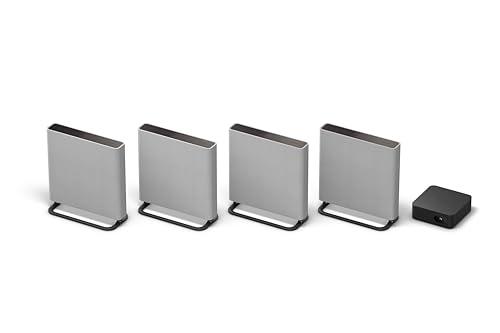




When it comes to upgrading your TV's audio, you're looking at two completely different philosophies. The Sony HT-A9M2 BRAVIA Theater Quad, released in 2024 as an evolution of Sony's groundbreaking wireless theater concept, represents the premium end of home audio—a system that tries to replicate a full surround sound setup without running speaker wires throughout your room. On the other side, the ULTIMEA Poseidon M60 Boom takes the traditional soundbar approach, packing everything into a sleek bar that sits under your TV with a separate subwoofer for the low-end punch.
These aren't just different products; they're fundamentally different approaches to solving the same problem: how to get great sound from your TV without turning your living room into a recording studio. Understanding which approach works better for your situation, room, and budget will save you from buyer's remorse and ensure you get the audio experience you're actually looking for.
The home theater audio market has evolved dramatically over the past few years. Traditional surround sound systems required an AV receiver (a central hub that processes and amplifies audio signals) plus five or seven speakers placed around your room, connected by speaker wire. This setup delivered authentic surround sound but required significant installation effort and room modification.
Soundbars emerged as a simpler solution, using psychoacoustic tricks—essentially fooling your brain through carefully timed audio reflections—to create the illusion of surround sound from a single unit. The best soundbars add a separate subwoofer (a speaker dedicated to low-frequency sounds like explosions and bass lines) to handle the deep bass that smaller drivers can't reproduce effectively.
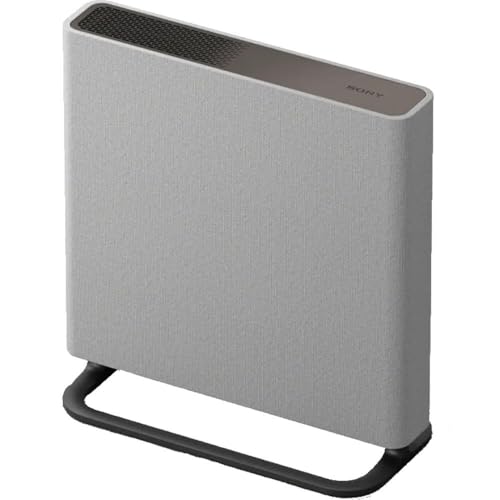
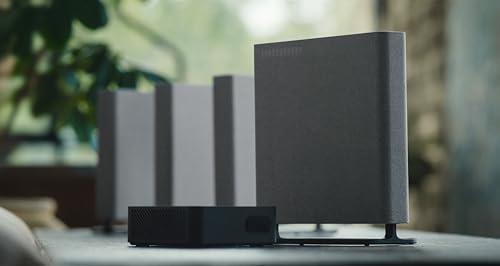
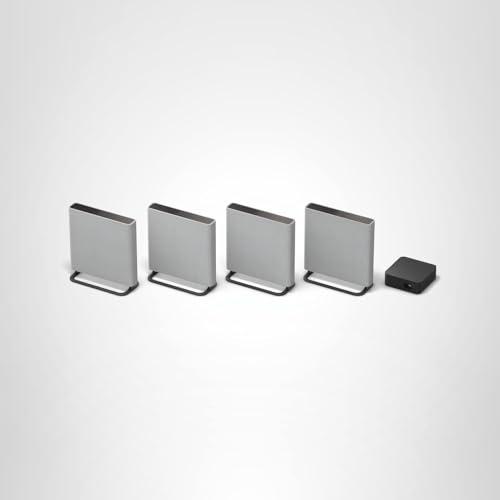
The Sony HT-A9M2 represents a newer category: wireless multi-speaker systems that bridge the gap between convenience and authenticity. Instead of one soundbar creating virtual surround, you get four actual speakers positioned around your room, but they connect wirelessly to avoid the installation complexity of traditional systems.
What matters most in either approach is how well the system creates spatial audio—the sense that sounds are coming from specific locations around and above you, rather than just from the TV. This spatial element is what transforms watching a movie from hearing dialogue and effects to feeling like you're inside the action.
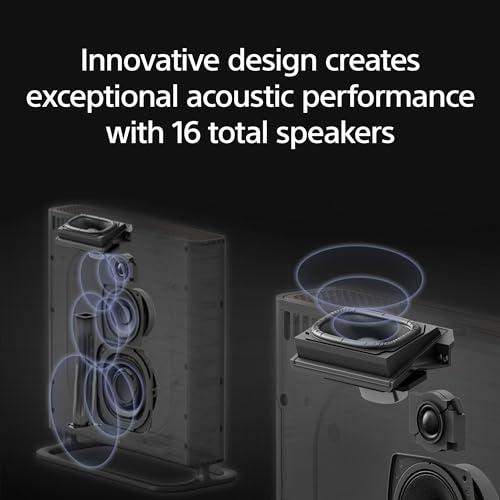
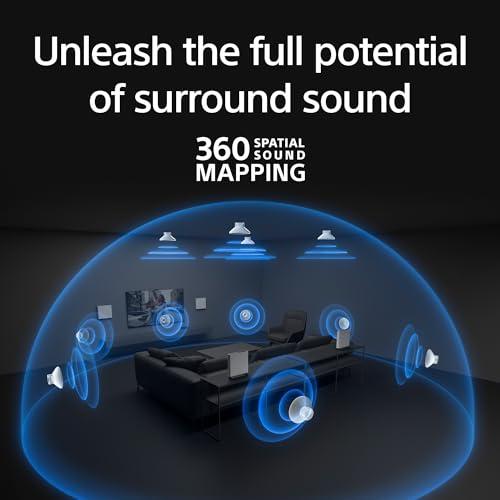
The difference between these systems becomes immediately apparent when you understand how they create surround effects. The Sony HT-A9M2 uses what Sony calls "360 Spatial Sound Mapping," which sounds like marketing speak but is actually quite clever. Each of the four speakers contains four individual drivers (the actual components that move air to create sound): a full-range driver for general audio, a dedicated woofer for mid-bass, a tweeter for high frequencies, and an upfiring driver that bounces sound off your ceiling to create height effects.
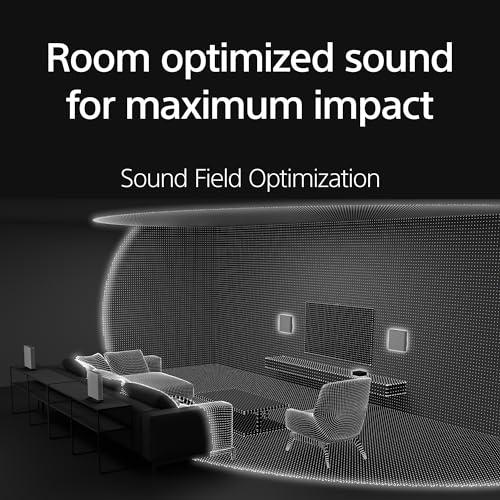
This 16-driver array, powered by 504 watts of total amplification, creates what Sony calls "phantom speakers"—virtual sound sources that your brain perceives as coming from locations where no physical speaker exists. During setup, the system uses microphones built into each speaker to measure your room's acoustic properties, then adjusts timing and frequency response to optimize the surround effect for your specific space.
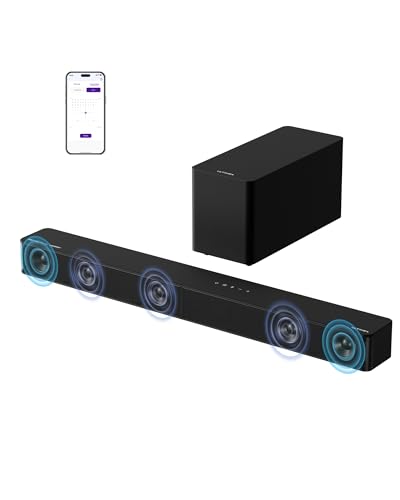
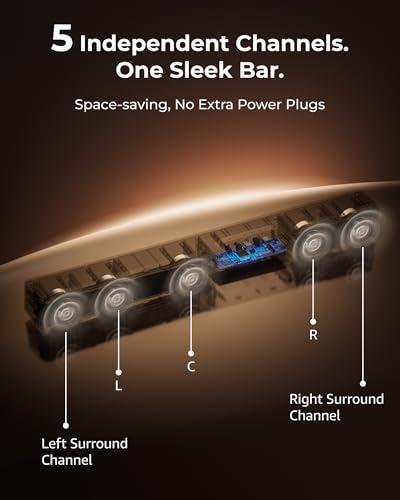
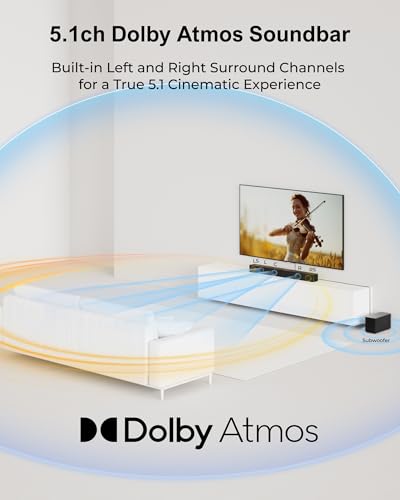
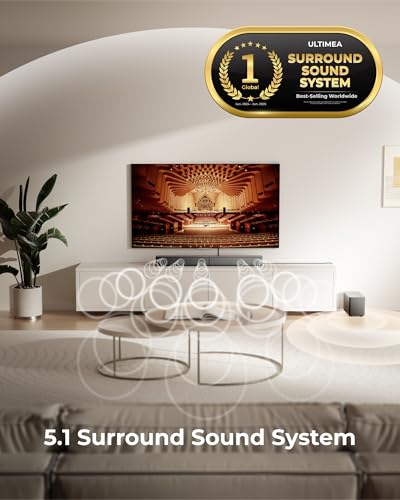
The ULTIMEA M60 Boom, by contrast, relies on five drivers within the soundbar itself to create its surround illusion. It uses side-firing drivers (speakers that point sideways rather than directly at you) to bounce sound off your side walls, creating the perception of surround channels. This approach can work surprisingly well, but it's fundamentally limited by physics—you're still getting all your sound from one location, even if clever processing makes it seem like it's coming from elsewhere.
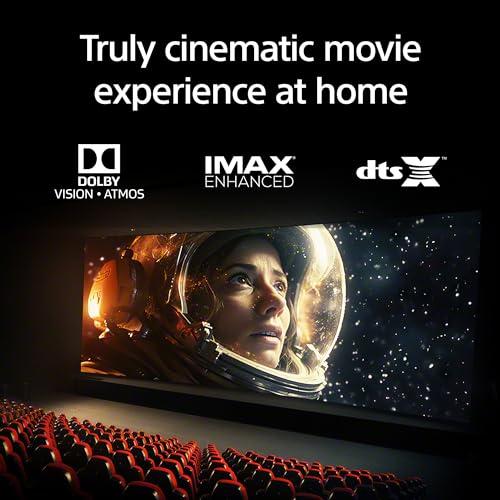
In practice, this difference is dramatic. Based on professional and user reviews, the Sony system creates a genuine 360-degree sound bubble that envelops your seating area. When a helicopter flies overhead in a movie, you hear it move in three-dimensional space above and around you. The ULTIMEA soundbar can create a convincing left-to-right surround effect and some sense of spaciousness, but it can't replicate the same level of immersion, particularly for overhead effects.
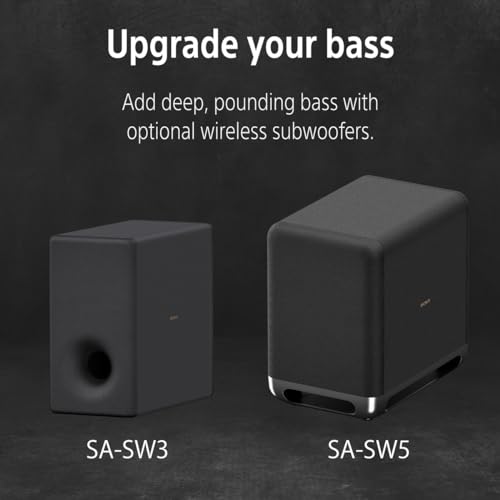
Here's where things get interesting from a value perspective. The Sony HT-A9M2 ships as a 4.0.4 system—meaning four main channels and four height channels, but no dedicated subwoofer. Each speaker includes mid-bass drivers, but professional reviews consistently note that the system really needs Sony's optional wireless subwoofer to deliver the kind of low-frequency impact you expect from a premium home theater system.
This isn't unusual for high-end audio companies, which often sell components separately to let users customize their systems. However, it means the Sony system's effective cost increases significantly if you want full-range performance. The X-Balanced Speaker Units in each satellite use rectangular diaphragms instead of traditional round ones, which Sony claims increases cone area and reduces distortion, but they simply can't move enough air to reproduce deep bass at high volumes.
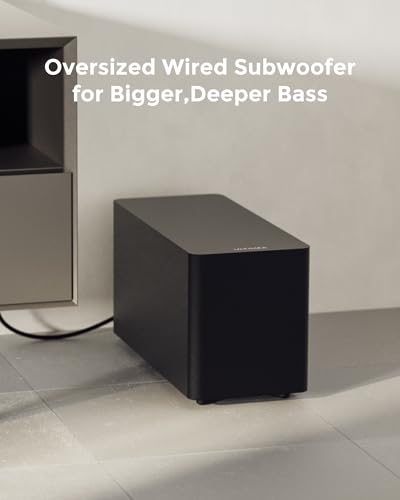
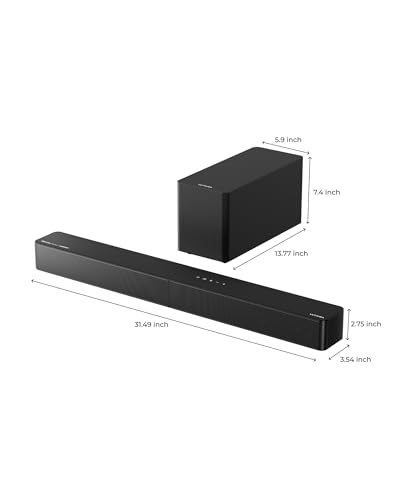
The ULTIMEA M60 Boom takes the opposite approach, including a dedicated 5.25-inch subwoofer with what the company calls BassMX technology. This involves a high-excursion driver (one that can move back and forth up to 16mm, which is quite a bit for a compact sub) housed in a 5.3-liter ported enclosure tuned to extend bass response down to 45Hz. While this won't match the earth-shaking performance of larger dedicated subwoofers, it provides solid foundational bass for movies and music right out of the box.
The practical difference is significant. With the Sony system, you get incredibly clear, detailed sound with precise imaging, but explosions and bass-heavy music might feel lightweight until you add a subwoofer. The ULTIMEA system delivers immediate impact and fullness across the frequency spectrum, though it can't match the Sony's clarity and spatial precision in the mid and high frequencies.
Poor dialogue clarity is the number one complaint about TV audio, and it's often why people shop for audio upgrades in the first place. Both systems address this problem, but through different approaches.
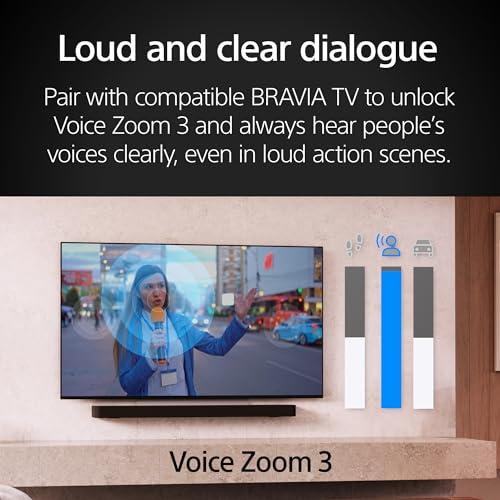
The Sony HT-A9M2 doesn't include a dedicated center channel speaker (the speaker traditionally responsible for dialogue). Instead, it creates a "phantom center" by processing center channel information across the front speakers and using room calibration to lock dialogue to the screen position. This works remarkably well when properly set up, and Sony's Voice Zoom 3 technology uses AI processing to identify and enhance human voices within the audio mix, separating dialogue from background effects for cleaner reproduction.
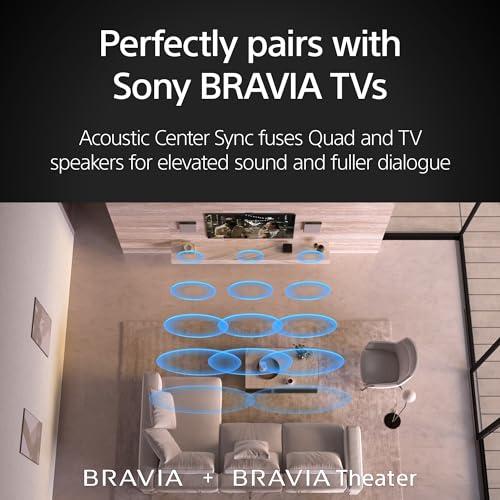
When paired with a compatible Sony BRAVIA TV, the system can use Acoustic Center Sync, which allows the TV's built-in speakers to function as a physical center channel. This anchors dialogue directly to the screen, potentially improving localization and intelligibility.
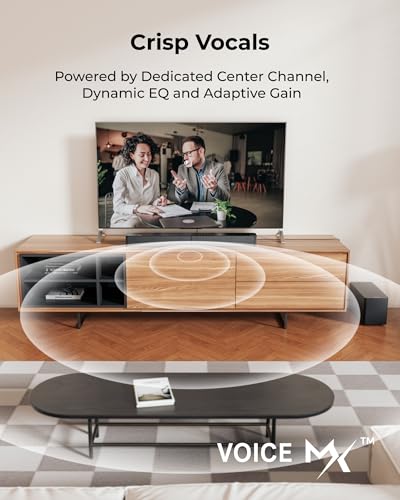
The ULTIMEA M60 Boom uses VoiceMX technology, which specifically targets the 300Hz to 3kHz frequency range where most human speech occurs. This adaptive EQ processing can automatically reduce background music and effects when dialogue is detected, ensuring conversations remain audible even during complex scenes. The soundbar also includes a dedicated Voice mode among its six EQ presets, allowing users to optimize for speech-heavy content.
From a practical standpoint, the ULTIMEA system provides more consistent dialogue placement since it's always coming from the same physical location. The Sony system can potentially offer superior dialogue quality when properly calibrated, but its phantom center approach may be less focused if your seating position is significantly off-axis.
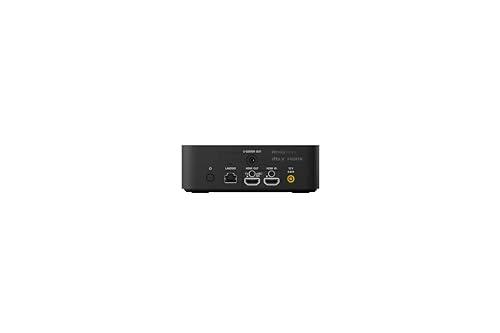
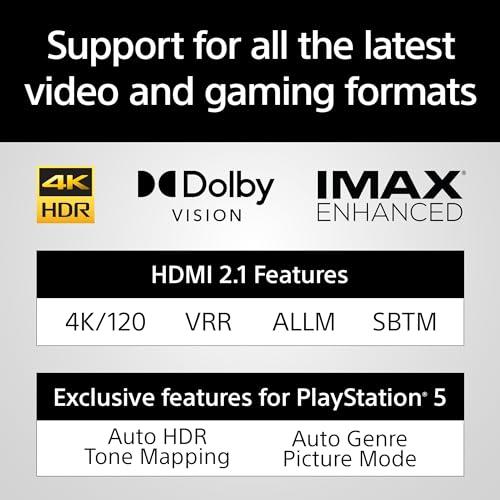
This is where the Sony HT-A9M2 shows its premium positioning most clearly. The system's control hub supports the full HDMI 2.1 specification, including Variable Refresh Rate (VRR), Auto Low Latency Mode (ALLM), and passthrough of 4K at 120Hz and 8K at 60Hz signals. For serious gamers, particularly those with PlayStation 5 or Xbox Series X consoles, these features reduce input lag and eliminate screen tearing for more responsive gameplay.
The Sony system also includes specific PlayStation 5 optimizations like Auto HDR Tone Mapping and Auto Genre Picture Mode, which automatically adjust both video and audio settings based on the content type. This level of integration reflects Sony's position across multiple entertainment categories—they make the TV, the audio system, and the gaming console, so they can optimize the entire signal chain.
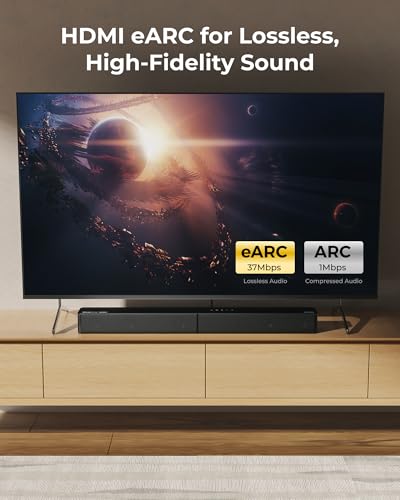
The ULTIMEA M60 Boom takes a more basic approach with HDMI eARC support for lossless audio transmission, but it lacks the advanced gaming features. However, it compensates with broader input flexibility, including optical, USB, and AUX connections alongside Bluetooth 5.4. The newer Bluetooth version provides faster pairing and lower latency than the Sony's Bluetooth 5.2, which can be beneficial for wireless music streaming and casual gaming.
At the time of writing, these products occupy completely different price tiers, with the Sony system costing roughly fifteen to twenty times more than the ULTIMEA soundbar. This dramatic price difference means they're solving different problems for different users.
The Sony HT-A9M2 targets serious home theater enthusiasts who want to approach the performance of dedicated component systems without the installation complexity. When you factor in the likely need for an additional subwoofer, you're looking at a significant investment that puts this system in competition with mid-range AV receivers and speaker packages.
However, the Sony system offers something those traditional setups can't: the ability to achieve high-end surround performance in rooms where running speaker wire isn't practical or desired. The wireless connectivity and automatic room calibration mean you can get reference-quality sound without hiring an installer or extensively modifying your living space.
The ULTIMEA M60 Boom represents exceptional value in the budget soundbar category. At its price point, you're getting Dolby Atmos processing, a wireless subwoofer, app-based control, and multiple connectivity options—features that would have been flagship-level just a few years ago. The system's triple-core DSP processing (digital signal processors running at 800MHz and 600MHz) provides over 2000 MIPS of computational power for real-time audio optimization, which is genuinely impressive at this price level.
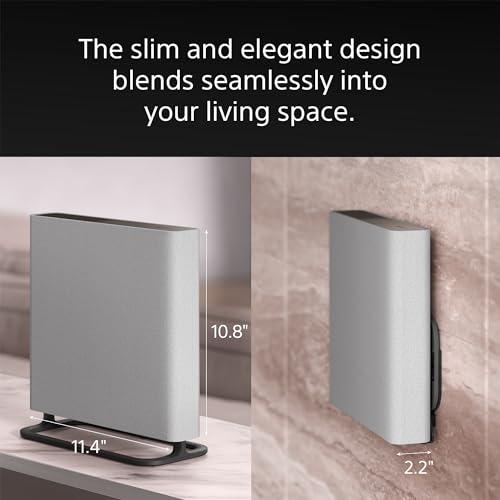
The Sony HT-A9M2 requires thoughtful placement to achieve its full potential. You need at least four locations around your seating area where the speakers can be positioned, either on furniture or wall-mounted. The system's Sound Field Optimization technology can compensate for less-than-ideal placement, but you'll get the best results when speakers can be positioned roughly equal distances from your primary listening position.
This system excels in dedicated home theater rooms or living rooms where furniture can be arranged to accommodate the speakers. It's less suitable for apartments or spaces where speaker placement is severely constrained by layout or rental restrictions.
The ULTIMEA M60 Boom works in virtually any room configuration. The soundbar needs only a flat surface below or near your TV, and the wireless subwoofer can be tucked away wherever convenient. This flexibility makes it ideal for apartments, bedrooms, or any space where a full surround setup isn't practical.
Based on professional reviews and user feedback, the ULTIMEA system performs best in small to medium-sized rooms. In very large spaces, the single soundbar approach struggles to fill the room with convincing surround effects, while the Sony system's distributed speakers maintain their immersive bubble regardless of room size.
The Sony HT-A9M2 represents the second generation of Sony's wireless theater concept, with significant improvements over the original HT-A9 released in 2021. The new model increases wireless transmission power by approximately 2.5 times and adds dual antenna systems with frequency hopping to eliminate the occasional dropouts that affected the first generation. Sony also refined the speaker design, moving from cylindrical enclosures to flatter rectangular ones that blend better with home décor while improving acoustic performance.
The ULTIMEA M60 Boom reflects the democratization of advanced audio technologies that were previously exclusive to high-end products. Features like Dolby Atmos processing, wireless subwoofers, and smartphone app control have trickled down to budget products as the underlying chips and processing power have become cheaper and more readily available.
The Sony HT-A9M2 makes sense for a specific type of user: someone who values audio quality above convenience and cost, has a suitable room layout, and wants to future-proof their investment with advanced connectivity. If you're building a dedicated home theater, own or plan to buy Sony ecosystem products (BRAVIA TVs, PlayStation 5), and understand that you'll likely need to add a subwoofer for complete performance, this system can deliver genuinely impressive results that approach much more expensive component systems.
The ULTIMEA Poseidon M60 Boom is the clear choice for users who want dramatic improvement over TV speakers without the complexity, cost, or room requirements of a full surround system. It's particularly compelling for apartment dwellers, budget-conscious buyers, or anyone who wants immediate gratification from their audio upgrade.
From a performance-per-dollar standpoint, the ULTIMEA system is hard to beat. While it can't match the Sony system's spatial immersion or ultimate audio fidelity, it delivers 80% of the experience at a fraction of the cost and complexity. For many users, that's exactly the right trade-off.
The Sony system is the choice when audio performance is the priority and budget is secondary. It's for users who understand that great sound requires investment and are willing to optimize their room layout to achieve it. When properly set up, it can deliver an immersive experience that makes you forget you're listening to only four speakers.
Ultimately, both products excel within their respective categories. The ULTIMEA M60 Boom proves that impressive audio experiences don't require massive investments, while the Sony HT-A9M2 demonstrates how wireless technology can deliver premium performance without traditional installation constraints. Your choice should align with your room situation, audio priorities, and willingness to invest in the complete experience versus immediate, accessible enhancement.
| Sony HT-A9M2 BRAVIA Theater Quad | ULTIMEA Poseidon M60 Boom |
|---|---|
| System Architecture - Determines setup complexity and authentic surround capability | |
| Four wireless satellite speakers with 16 total drivers (4 per speaker) | Single soundbar with 5 drivers plus separate wireless subwoofer |
| Channel Configuration - More channels create better spatial audio separation | |
| True 4.0.4 (4 main + 4 height channels) with discrete amplification | Virtual 5.1 from soundbar drivers (no physical rear or height speakers) |
| Total Power Output - Higher wattage enables louder, cleaner sound in larger rooms | |
| 504W total (31.5W per driver × 16 drivers) | 340W peak power from soundbar and subwoofer combined |
| Bass Performance - Critical for movie impact and music enjoyment | |
| No subwoofer included; relies on 85×85mm woofers in each speaker | Dedicated 5.25" wireless subwoofer with BassMX technology included |
| Spatial Audio Technology - Creates the "surround sound bubble" effect | |
| 360 Spatial Sound Mapping with phantom speaker generation | Virtual surround using side-firing drivers and DSP processing |
| Room Calibration - Automatically optimizes sound for your specific space | |
| Sound Field Optimization with built-in microphones in each speaker | Manual EQ adjustment via app with 6 preset modes |
| Gaming Features - Important for console gamers seeking low latency | |
| Full HDMI 2.1: 4K120, 8K60, VRR, ALLM, PS5 optimizations | Basic HDMI eARC only; Bluetooth 5.4 for wireless gaming |
| Connectivity Options - More inputs mean fewer device juggling | |
| HDMI eARC, Bluetooth 5.2 with LDAC, Wi-Fi streaming | HDMI eARC, Optical, USB, AUX, Bluetooth 5.4 |
| Setup Requirements - Affects where and how you can use the system | |
| Four speaker placement positions required around room | Single soundbar placement under TV, subwoofer anywhere |
| Smart TV Integration - Enhances control and audio anchoring | |
| Deep Sony BRAVIA integration with Acoustic Center Sync | Universal CEC compatibility with any TV brand |
| Dialogue Enhancement - Critical for clear speech in movies and shows | |
| Voice Zoom 3 AI processing; phantom center channel | VoiceMX vocal range optimization (300Hz-3kHz) |
| Frequency Response - Determines how full and detailed the sound will be | |
| Not specified; depends on room acoustics and calibration | 45Hz-18kHz with 99dB maximum SPL |
The Sony HT-A9M2 BRAVIA Theater Quad is a premium wireless multi-speaker system with four separate satellite speakers that you place around your room, while the ULTIMEA Poseidon M60 Boom is a traditional soundbar that sits under your TV with a separate subwoofer. The Sony system creates true surround sound with physical speakers in different locations, while the ULTIMEA uses virtual surround processing from a single bar.
The ULTIMEA Poseidon M60 Boom is significantly easier to set up. You simply place the soundbar under your TV, position the subwoofer anywhere in the room, and connect via HDMI. The Sony HT-A9M2 requires finding four suitable locations around your seating area for the wireless speakers, though it does include automatic room calibration to optimize the sound.
The ULTIMEA M60 Boom includes a 5.25-inch wireless subwoofer in the package, so you get complete bass performance out of the box. The Sony HT-A9M2 doesn't include a subwoofer and professional reviews consistently recommend adding Sony's optional wireless subwoofer for full cinematic impact, especially for action movies.
For authentic surround sound immersion, the Sony HT-A9M2 delivers superior performance with its four discrete speakers creating a true 360-degree sound field around your seating area. The ULTIMEA Poseidon M60 Boom provides excellent virtual surround effects and immediate bass impact, but can't match the spatial realism of the Sony's distributed speaker approach.
Yes, both systems work with any TV that has HDMI ARC or eARC. The ULTIMEA M60 Boom also includes optical and AUX inputs for older TVs. The Sony HT-A9M2 offers special integration features with Sony BRAVIA TVs, including the ability to use your TV's speakers as a center channel for enhanced dialogue clarity.
The Sony HT-A9M2 is superior for serious gaming, supporting full HDMI 2.1 features like 4K at 120Hz, Variable Refresh Rate, and Auto Low Latency Mode. It includes specific PlayStation 5 optimizations. The ULTIMEA Poseidon M60 Boom handles basic gaming well with its ultra-low latency Bluetooth 5.4, but lacks advanced gaming features.
The ULTIMEA M60 Boom works in any room size and only needs space for a 31.5-inch soundbar under your TV. The Sony HT-A9M2 requires a medium to large room with furniture arrangements that allow four speaker placements around your seating area. It's not suitable for very small spaces or rooms where speaker placement is severely limited.
The ULTIMEA Poseidon M60 Boom offers exceptional value, delivering Dolby Atmos processing, wireless subwoofer, and app control at a budget-friendly price point. The Sony HT-A9M2 costs significantly more but provides premium performance that approaches dedicated component systems for users who prioritize audio quality over cost.
Yes, both offer smartphone control. The ULTIMEA M60 Boom includes a dedicated app for EQ customization, sound modes, and system settings. The Sony HT-A9M2 uses the Sony BRAVIA Connect app and can also be controlled through compatible Sony TV interfaces for seamless integration.
Both handle music well but differently. The Sony HT-A9M2 excels with Hi-Res Audio support, LDAC Bluetooth codec, and wide stereo imaging from separated speakers. The ULTIMEA M60 Boom provides good musical performance with its included subwoofer delivering immediate bass impact, making it better for bass-heavy genres right out of the box.
Yes, both support Dolby Atmos but implement it differently. The Sony HT-A9M2 uses dedicated upfiring drivers in each speaker plus 360 Spatial Sound Mapping for true three-dimensional effects. The ULTIMEA Poseidon M60 Boom processes Dolby Atmos virtually through its soundbar drivers, creating height effects without physical upfiring speakers.
Choose the Sony HT-A9M2 if you have a dedicated theater room, prioritize authentic surround sound, and budget allows for premium performance. The ULTIMEA Poseidon M60 Boom is ideal if you want significant audio improvement over TV speakers, have space constraints, or prefer simple setup with immediate bass impact for movie watching.
We've done our best to create useful and informative comparisons to help you decide what product to buy. Our research uses advanced automated methods to create this comparison and perfection is not possible - please contact us for corrections or questions. These are the sites we've researched in the creation of this article: bestbuy.com - whathifi.com - whathifi.com - youtube.com - rtings.com - audiosciencereview.com - bhphotovideo.com - skybygramophone.com - sony.com - manuals.plus - audioadvice.com - dell.com - valueelectronics.com - youtube.com - merlinstv.com - videoandaudiocenter.com - electronics.sony.com - sony.com - bestbuy.com - beachcamera.com - sony.com - win.consulting - sony.com - ultimea.com - ultimea.com - youtube.com - bestbuy.com - youtube.com - avsforum.com - youtube.com - manuals.plus - youtube.com - device.report - ultimea.com - ultimea.de - community.ultimea.com - ultimea.com - community.ultimea.com - ultimea.com - youtube.com - aliexpress.com - ultimea.com

Privacy Policy
Terms and Conditions - Affiliate Policy
Home Security
© Copyright 2008-2026.
11816 Inwood Rd #1211, Dallas, TX 75244