







When your TV's built-in speakers sound like they're coming from inside a tin can, it's time for an upgrade. Soundbars have become the go-to solution because they dramatically improve your audio experience without turning your living room into a speaker maze. But choosing the right one means understanding what you actually need versus what sounds impressive on paper.
Today's soundbar market offers everything from basic stereo upgrades to full surround sound systems that rival traditional home theaters. The key is matching the technology to your space, content preferences, and setup tolerance. We're comparing two fundamentally different approaches: the Ultimea Poseidon M60 Boom, which delivers true 5.1 surround sound with a separate subwoofer, and the Yamaha SR-B30A, an all-in-one design with built-in bass drivers.
Before diving into specifics, let's clarify what makes a soundbar worth your money. The most important factors are audio performance (how good it sounds), surround sound capability (whether it creates that immersive theater feeling), connectivity options (how easily it works with your devices), physical design considerations (will it fit your space), brand reliability (will it last and get support), and overall value proposition.
The Ultimea Poseidon M60 Boom launched in 2024 as part of the wave of affordable soundbars offering premium features. It represents how newer audio companies are disrupting established players by packing high-end specifications into budget-friendly packages. Meanwhile, the Yamaha SR-B30A, also released in 2024, showcases Yamaha's approach of refined engineering within practical constraints—delivering reliable performance without overwhelming users with complexity.
Raw power output often gets the most attention in soundbar marketing, but it's not the whole story. The Ultimea M60 Boom claims 340W peak power versus the Yamaha SR-B30A's 120W total output. That's a massive difference on paper, but peak power ratings can be misleading since they represent maximum theoretical output rather than sustained performance.
What matters more is how that power translates to real-world performance. The M60 Boom distributes its power across five discrete full-range drivers plus a dedicated subwoofer with an 18mm high-excursion driver. High-excursion means the speaker cone can move further back and forth, pushing more air and creating deeper bass. The system can reach a maximum sound pressure level (SPL) of 99 dB, which is loud enough to fill even large living rooms without distortion.
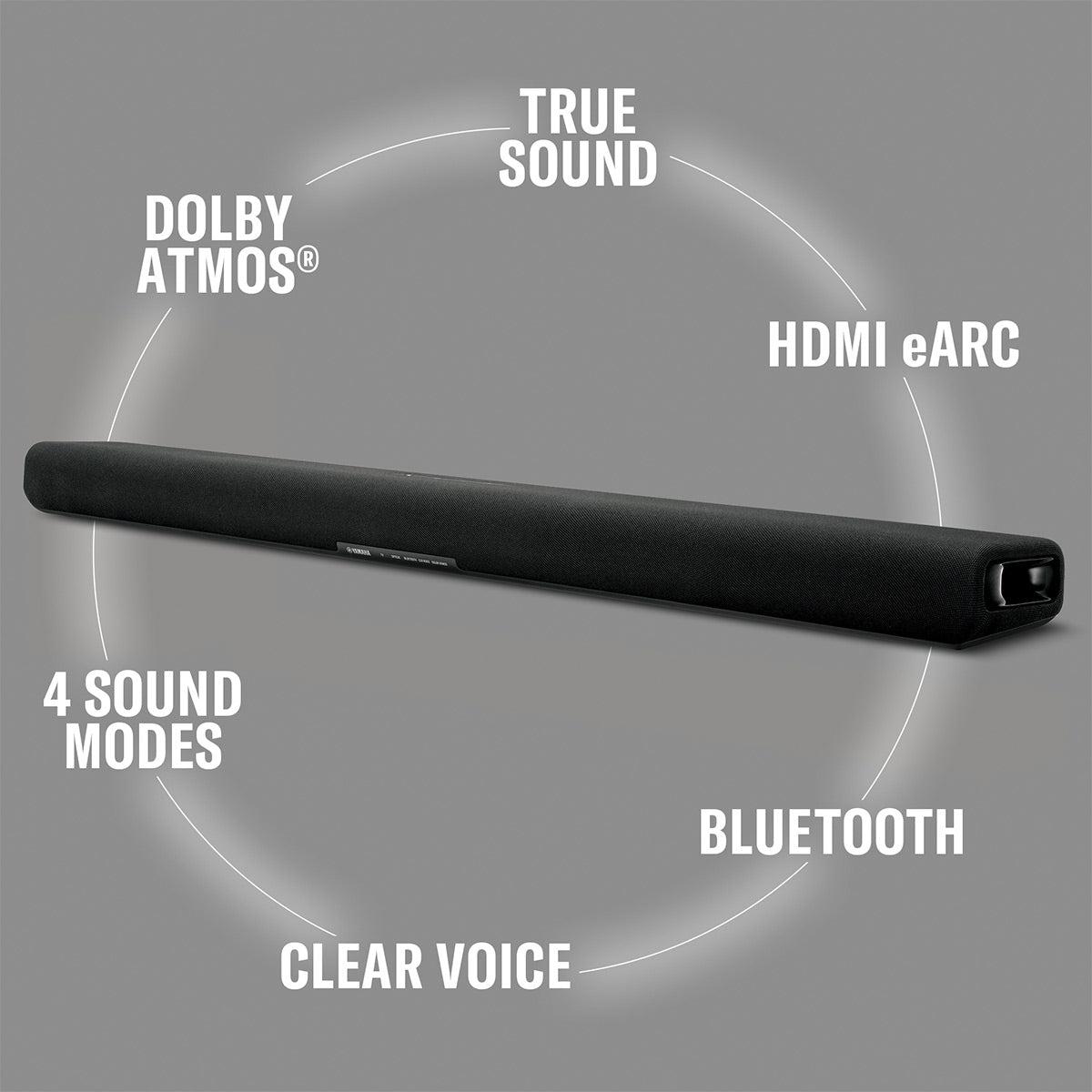
The Yamaha SR-B30A takes a more conservative approach, dedicating 30W to each front channel and 60W to its built-in bass drivers. Yamaha's True Sound engineering philosophy focuses on optimizing every watt rather than maximizing raw output. In practice, this means cleaner sound at moderate volumes and better tonal balance across different content types.
For most living rooms, the Yamaha's power is perfectly adequate for TV watching and casual music listening. However, if you're planning movie nights with explosive action scenes or want to feel the rumble in your chest during gaming sessions, the Ultimea's higher power output becomes genuinely beneficial.
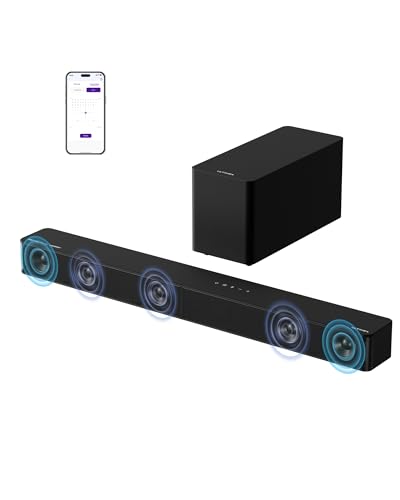
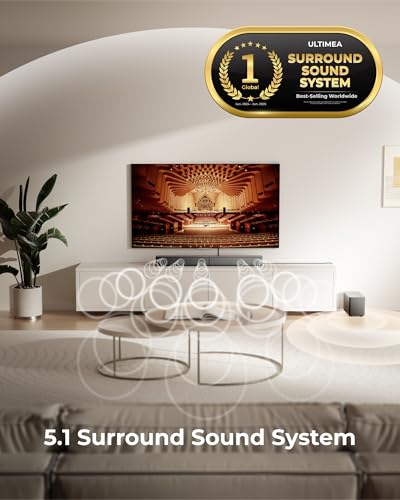
Here's where these soundbars diverge most significantly. The Ultimea Poseidon M60 Boom delivers genuine 5.1 surround sound through five discrete speakers housed in its unique modular design. When we say "discrete," we mean separate, dedicated speakers for left, right, center, left surround, and right surround channels, plus that dedicated subwoofer for the ".1" low-frequency effects channel.
This modular approach means the soundbar actually consists of two sections that connect together, creating a wider array of drivers for better channel separation. Channel separation is crucial because it allows sound effects to move convincingly around your room—helicopters actually sound like they're flying overhead, and footsteps can be positioned precisely to your left or right.
The Yamaha SR-B30A uses virtual surround processing, which is essentially audio trickery that makes two speakers sound like more. It's sophisticated trickery—Yamaha has decades of experience in psychoacoustic processing (the science of how our brains interpret sound)—but it can't completely replicate the precise positioning that discrete speakers provide.
However, virtual surround has its own advantages. It's less dependent on your seating position and room acoustics. With true surround systems, sitting too far left or right can throw off the effect. Virtual processing adapts better to different listening positions, making it more forgiving for households where people don't always sit in the "sweet spot."
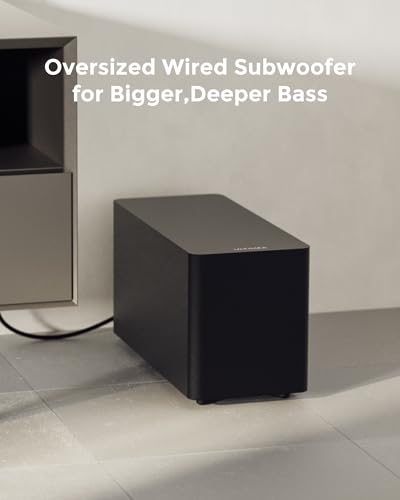
Bass reproduction reveals another fundamental difference in approach. The Ultimea M60 Boom includes a dedicated wooden subwoofer cabinet with BassMX Technology. This isn't marketing fluff—the larger cabinet allows for better bass extension (reaching lower frequencies) and the wooden construction helps control resonances that can make bass sound boomy or muddy.
The subwoofer uses a high-excursion driver capable of 16mm movement, which is impressive for this price category. More driver movement means more air displacement, and more air displacement equals deeper, more impactful bass. The system reaches down to 45 Hz, which captures most of the low-frequency content in movies and music.
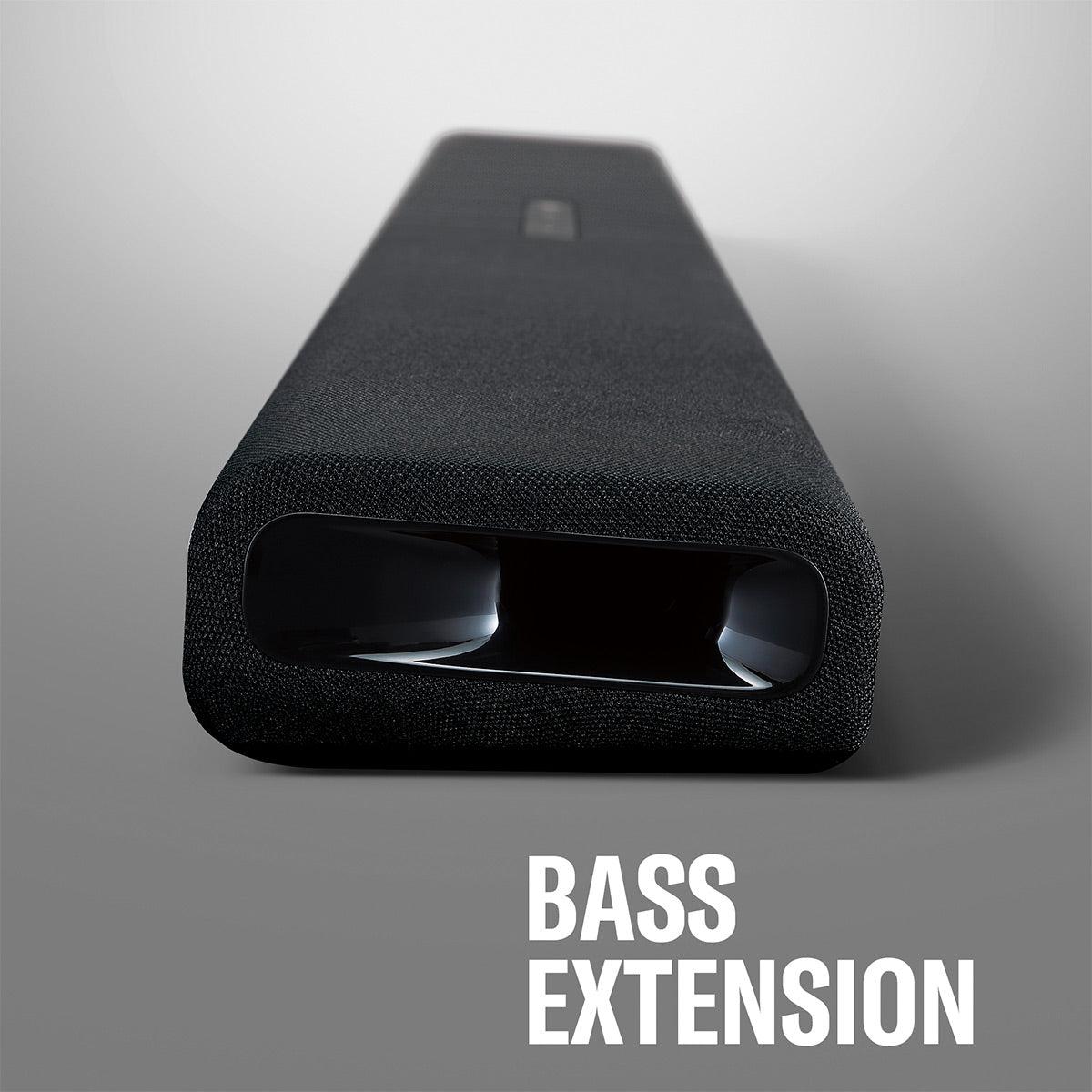
The Yamaha SR-B30A takes an entirely different approach with dual 3-inch built-in subwoofer drivers and a ported bass-reflex design. Bass-reflex ports are essentially tuned openings that reinforce certain frequencies, allowing smaller drivers to produce more bass than they could in a sealed enclosure. Yamaha's Bass Extension feature further enhances this effect through digital processing.
While the Yamaha's built-in approach can't match the sheer depth and impact of a dedicated subwoofer, it offers significant practical advantages. There's no additional component to place, no extra cables to run, and no risk of overwhelming your neighbors in an apartment setting. The bass integration is also typically more seamless since everything is tuned together as a complete system.
Most of your soundbar listening will probably involve dialogue-heavy content like TV shows, news, and streaming series. This is where the Yamaha SR-B30A shows its engineering maturity with Clear Voice technology. This feature dynamically adjusts the vocal frequency range (roughly 300Hz to 3kHz, where most speech occurs) to ensure dialogue cuts through background music and sound effects.
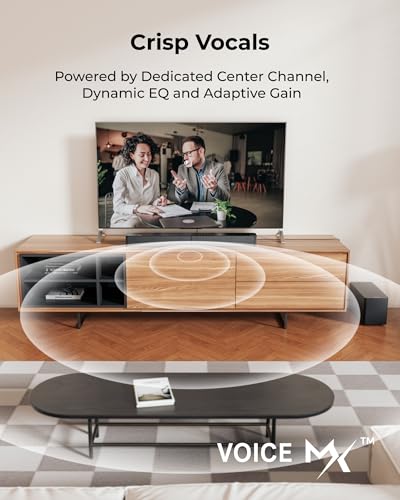
The Ultimea M60 Boom includes VoiceMX processing that targets similar frequencies, but Yamaha's decades of experience in audio processing show here. Users consistently report that the Yamaha makes it easier to follow conversations in complex soundtracks, reducing the need to constantly adjust volume or rewind to catch missed dialogue.
This might seem like a minor feature, but poor dialogue clarity is one of the most common complaints about modern TV and movie audio. Streaming services often compress audio in ways that muddy speech, and many content creators mix audio assuming you have a full surround system. A soundbar that excels at dialogue clarity will genuinely improve your daily viewing experience.
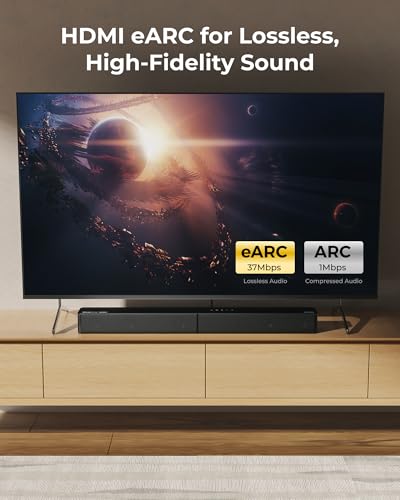
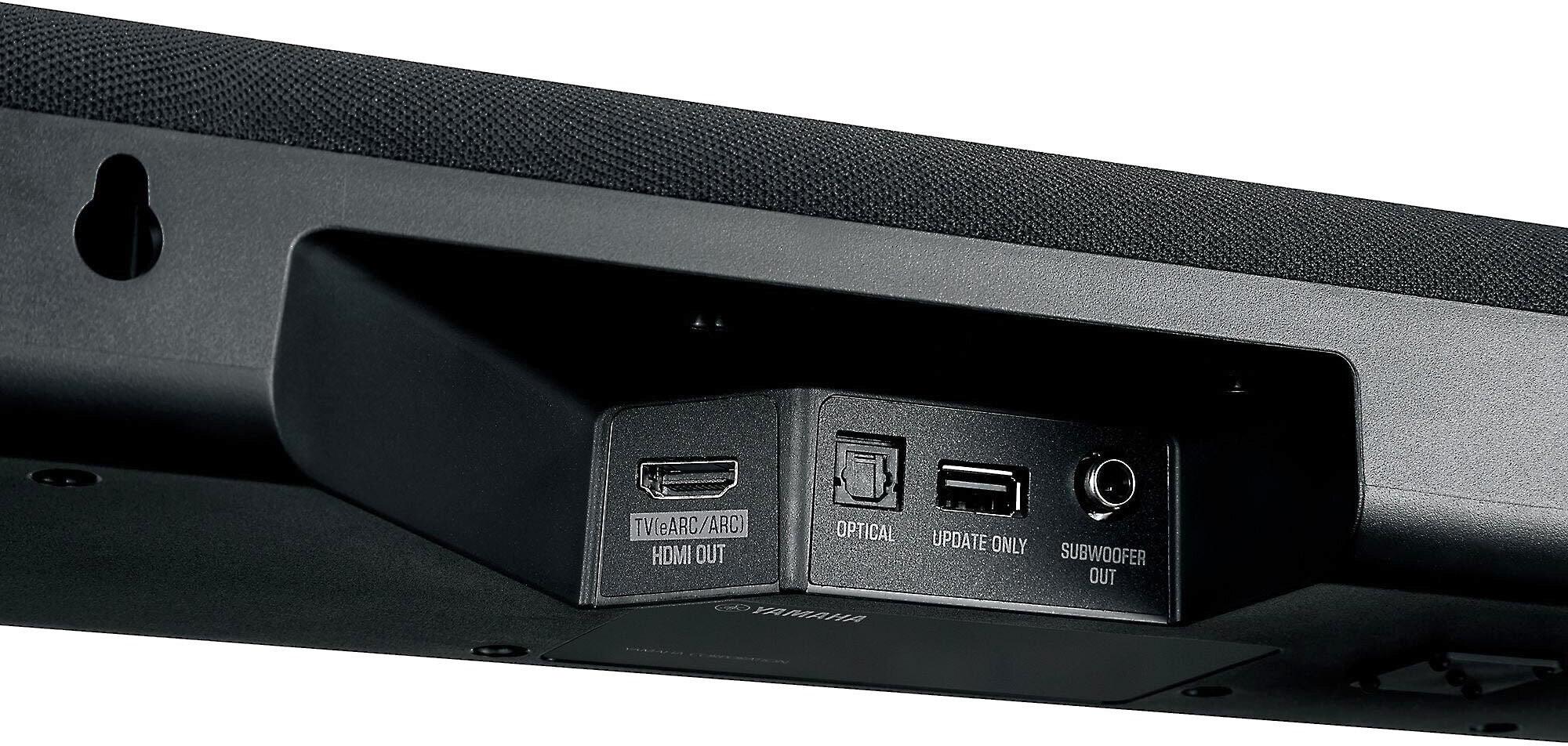
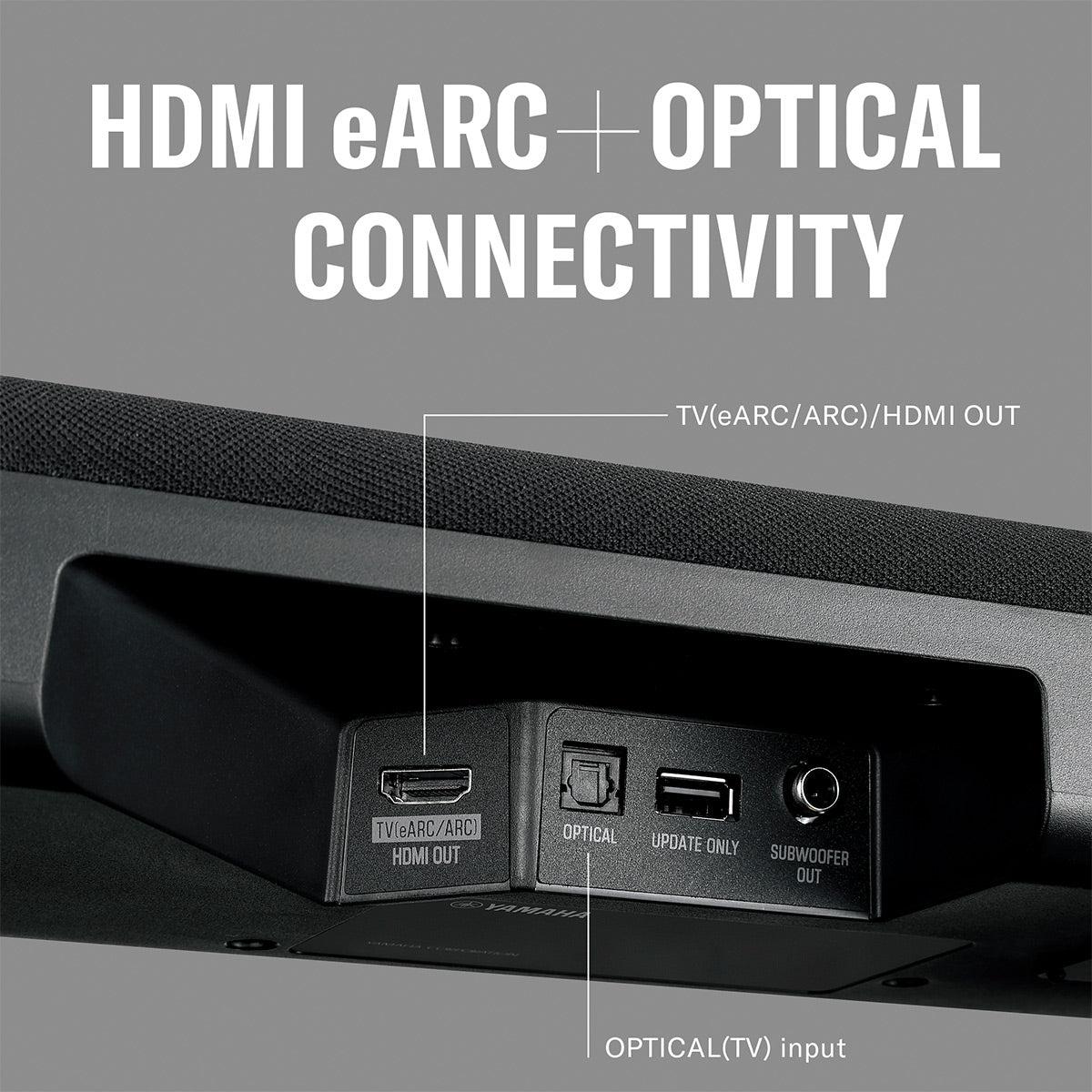
Both soundbars support HDMI eARC (enhanced Audio Return Channel), which is crucial for getting the best audio quality from your TV. eARC allows for higher bandwidth audio transmission, including uncompressed Dolby Atmos tracks. This means you're not losing audio quality due to compression when sound travels from your streaming device through your TV to your soundbar.
The Ultimea M60 Boom includes Bluetooth 5.4, the latest version at the time of writing, which offers faster pairing, more stable connections, and lower latency (the delay between audio and video). This is particularly important for gaming or watching content where audio sync matters. The Yamaha SR-B30A uses Bluetooth 5.1, which is still excellent but not quite cutting-edge.
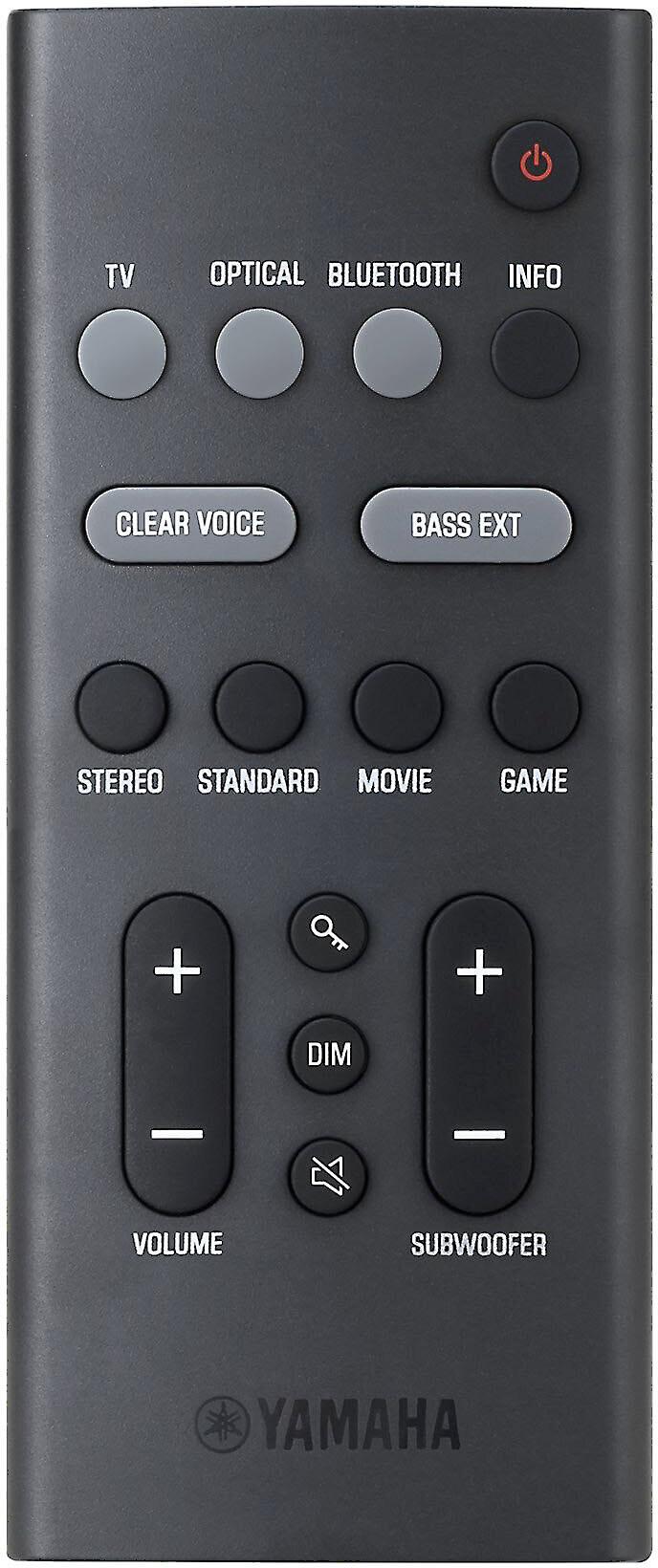
Both systems include smartphone apps for control and customization. The Ultimea app provides access to EQ settings and various sound modes, while Yamaha's Sound Bar Remote app offers four preset modes (Stereo, Standard, Game, Movie) plus detailed tone controls. App control has become essential because soundbar remotes are typically small and hard to use, especially in dim lighting.
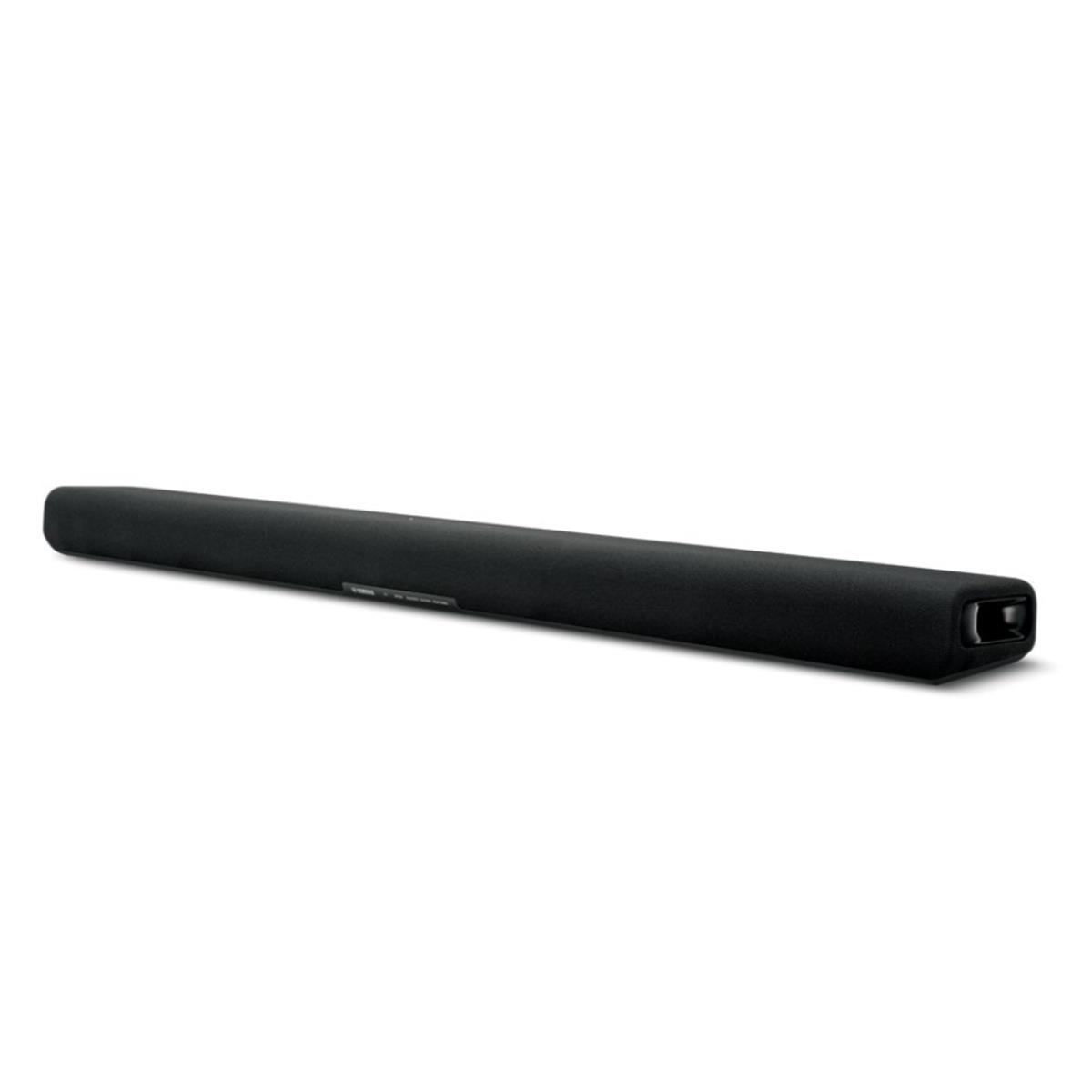
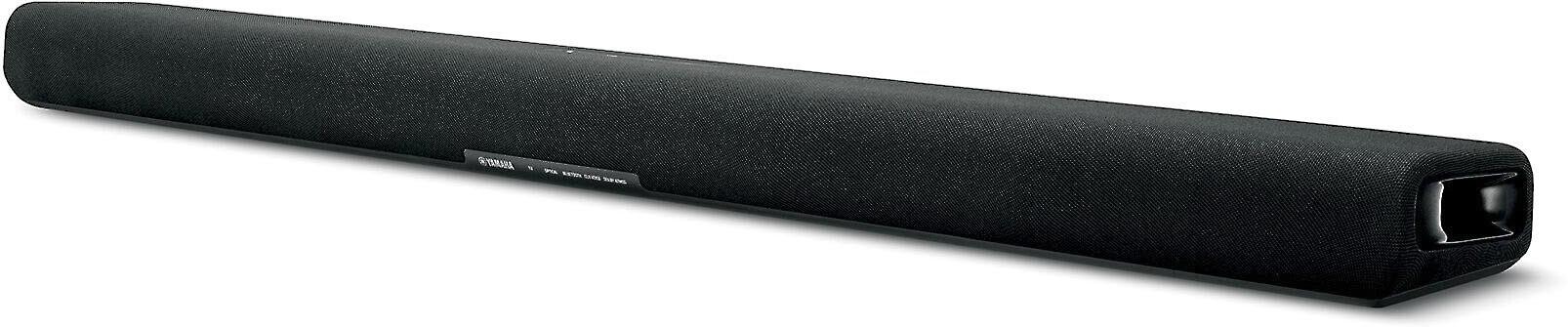
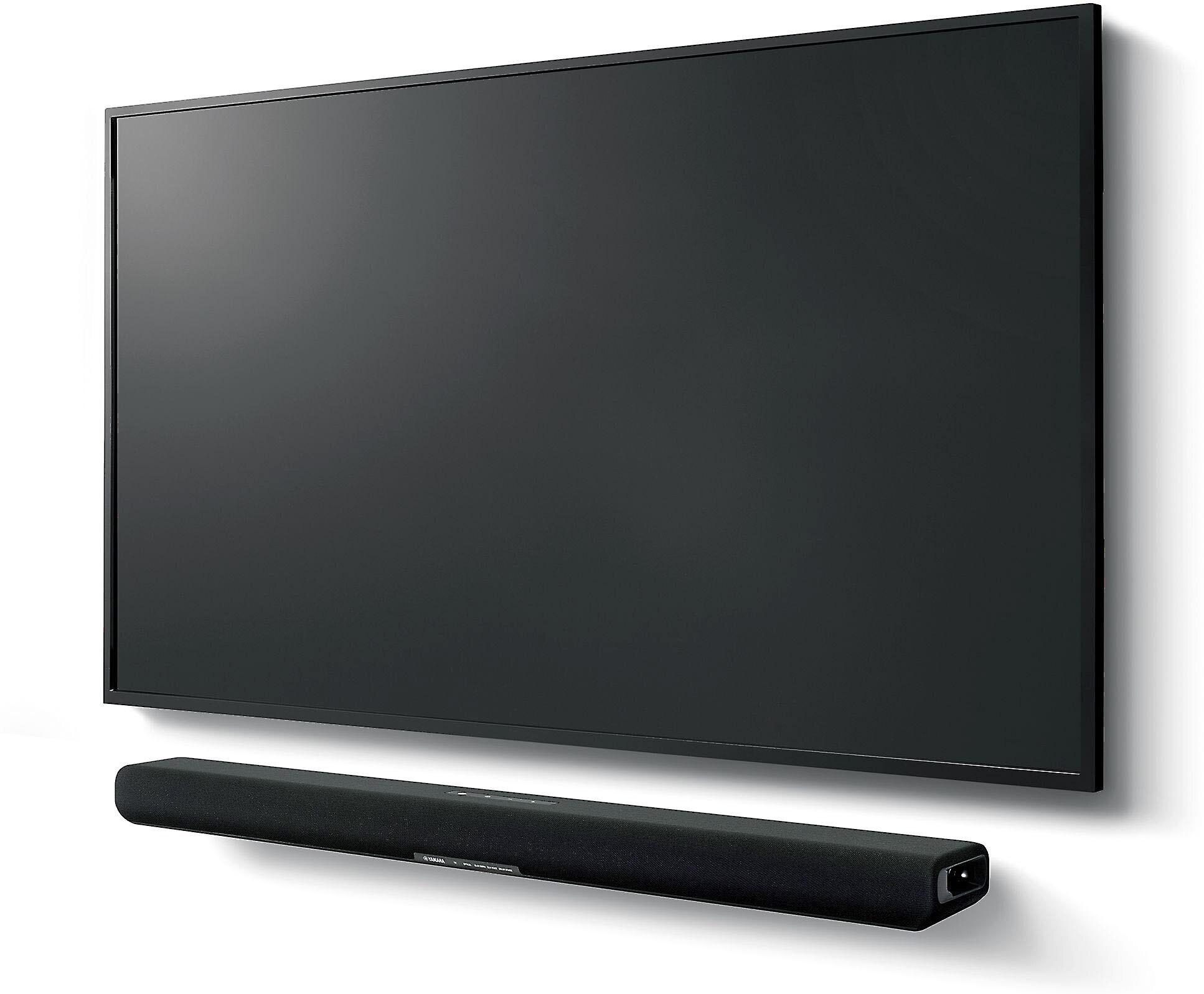
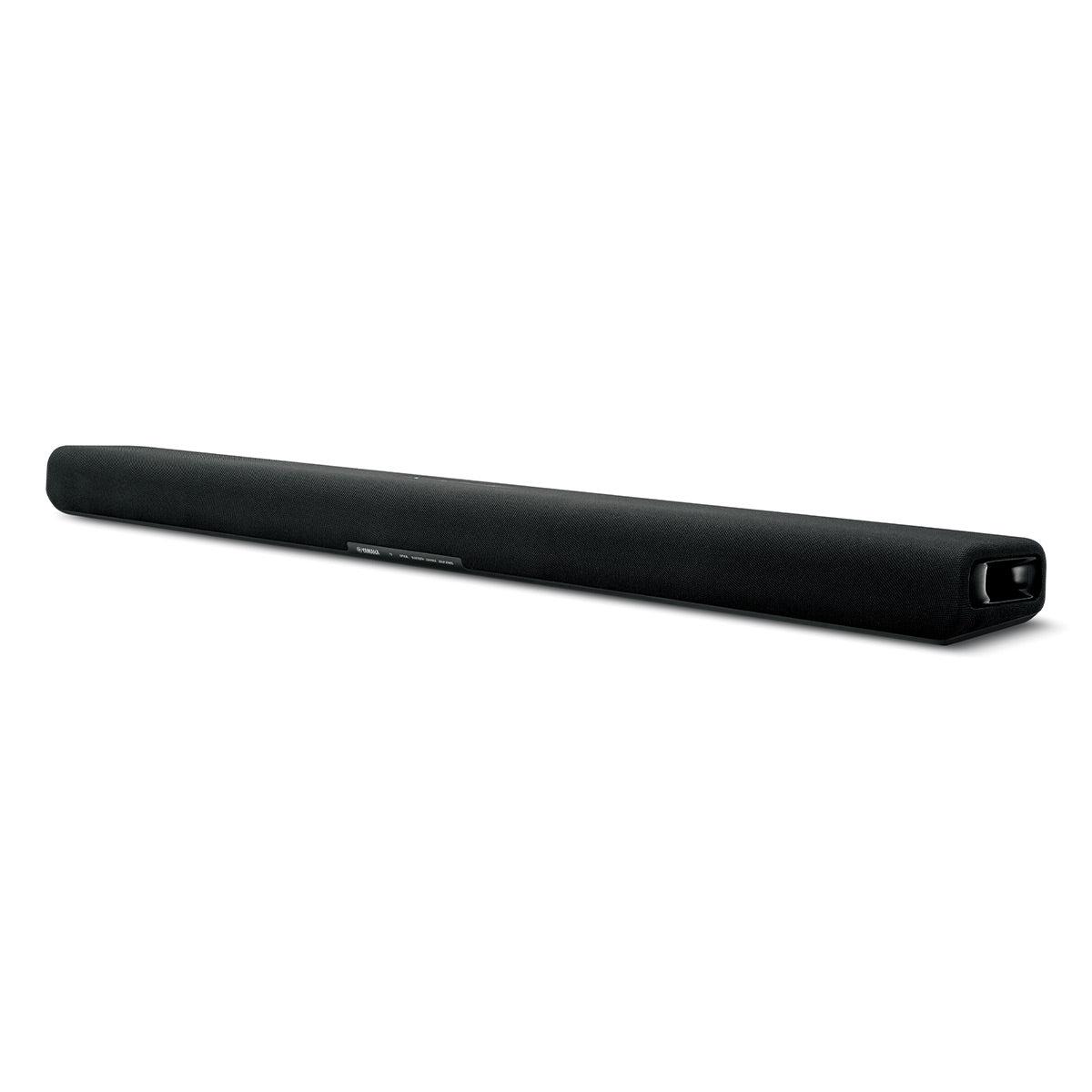
The Yamaha SR-B30A wins decisively for simplicity. At 35-7/8 inches long and 8.6 pounds, it's compact enough for most TV stands and includes built-in keyholes for wall mounting. Setup involves connecting one cable to your TV and you're done. This makes it ideal for bedrooms, smaller living rooms, or anyone who wants better sound without any complexity.
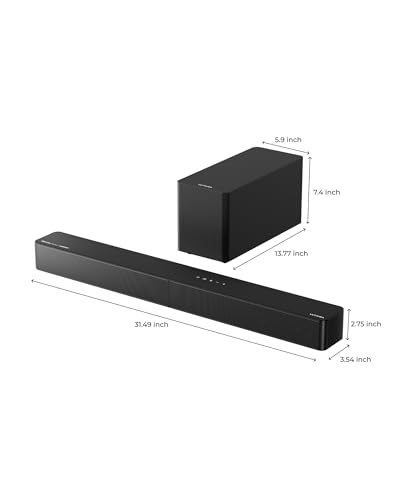
The Ultimea Poseidon M60 Boom requires more consideration. The modular soundbar design means connecting two sections together, and the separate subwoofer needs placement somewhere in your room. The subwoofer is wired, which can limit placement options but ensures reliable connection and power delivery. You'll need to find a spot where the cable can reach and where the subwoofer won't overwhelm your space or neighbors.
However, this extra complexity pays dividends in performance. The wider driver array creates a more convincing soundstage (the perceived width and depth of the sound), and the dedicated subwoofer delivers bass impact that built-in drivers simply cannot match.
When evaluating soundbars, focus on these key performance indicators: frequency response (how well it reproduces different frequencies), maximum SPL without distortion (how loud it can get cleanly), channel separation (how well it positions different sounds), dialogue intelligibility (how clearly you can understand speech), and bass extension (how deep the low frequencies go).
The Ultimea M60 Boom's 45 Hz–18 kHz frequency response covers the full range of most content, while its 99 dB maximum SPL provides adequate headroom for dynamic content. The discrete 5.1 configuration offers genuine channel separation that virtual processing can't fully replicate.
The Yamaha SR-B30A's 54-22 kHz response actually extends higher in the treble range, though the limited low-end extension (54 Hz vs. 45 Hz) means less deep bass impact. However, Yamaha's tuning philosophy often prioritizes tonal balance over raw extension, which can result in more natural-sounding audio across different content types.
If you're building or upgrading a dedicated home theater space, the Ultimea M60 Boom makes more sense. The true 5.1 configuration provides the immersive experience that makes movies and games more engaging. The higher power output also suits larger rooms where you need to fill more space with sound.
For casual viewing in mixed-use living spaces, the Yamaha SR-B30A often proves more practical. Its dialogue-focused tuning works well for the TV shows and streaming content that dominate most people's viewing, and the compact design doesn't dominate the room visually.
Room acoustics play a crucial role too. Hard surfaces like tile floors and large windows can make bass overwhelming, favoring the Yamaha's more controlled approach. Carpeted rooms with soft furnishings can absorb sound, making the Ultimea's extra power and dedicated subwoofer more beneficial.
Yamaha brings over 130 years of audio engineering experience and established customer support networks. When something goes wrong, you're more likely to find service centers and replacement parts. The SR-B30A represents conservative engineering that prioritizes longevity over impressive specifications.
Ultimea is a newer player in the audio market, but that's not necessarily negative. Newer companies often offer better value propositions because they can't rely on brand recognition alone. The M60 Boom includes features typically found in much more expensive systems, though long-term reliability remains somewhat unknown.
At the time of writing, both soundbars occupy similar price segments but deliver that value differently. The Ultimea offers more impressive specifications and features for the money, while the Yamaha provides proven engineering and brand reliability.
Choose the Ultimea Poseidon M60 Boom if you want the most immersive audio experience possible at this price point. It's ideal for movie enthusiasts, gamers, and anyone with a larger room who can accommodate the separate subwoofer. The true 5.1 surround and powerful bass make action movies, games, and music significantly more engaging.
Choose the Yamaha SR-B30A if you prioritize simplicity, reliability, and dialogue clarity. It's perfect for smaller spaces, apartment living, or anyone who primarily watches TV shows and streaming content. The all-in-one design eliminates complexity while still providing a substantial upgrade over TV speakers.
The decision ultimately comes down to your priorities: maximum performance and features versus proven reliability and simplicity. Both represent solid value in their respective approaches, but they serve different needs and preferences. Consider your space, your typical content, and your tolerance for setup complexity when making your choice.
| Ultimea Poseidon M60 Boom 5.1 Soundbar | Yamaha SR-B30A Sound Bar with Built-In Subwoofers |
|---|---|
| Channel Configuration - Determines surround sound authenticity and immersion | |
| True 5.1 with discrete speakers for each channel | 2.1 with virtual surround processing |
| Total Power Output - Affects volume capability and dynamic range | |
| 340W peak power (room-filling performance) | 120W total (30W per front channel, 60W bass) |
| Subwoofer Design - Critical for bass impact and placement flexibility | |
| Dedicated wooden subwoofer with 18mm high-excursion driver | Dual built-in 3" subwoofer drivers |
| Frequency Response - Shows how deep the bass goes and treble extension | |
| 45 Hz–18 kHz (deeper bass, standard treble) | 54 Hz–22 kHz (less bass depth, extended treble) |
| Physical Design - Impacts setup complexity and space requirements | |
| Modular two-piece soundbar plus separate wired subwoofer | Single compact unit (35-7/8" × 2-5/8" × 5-1/4", 8.6 lbs) |
| Bluetooth Version - Affects connection stability and audio latency | |
| Bluetooth 5.4 (latest standard, ultra-low latency) | Bluetooth 5.1 (reliable but not cutting-edge) |
| Dialogue Enhancement - Essential for clear speech in TV shows and movies | |
| VoiceMX technology with 300Hz–3kHz vocal range optimization | Clear Voice technology with dynamic vocal enhancement |
| Sound Modes and Customization - Tailors audio to different content types | |
| Movie, music, voice, sport, game, night modes via app | Four presets (Stereo, Standard, Game, Movie) plus tone controls |
| Maximum SPL - Determines how loud it can play without distortion | |
| 99 dB (suitable for large rooms and dynamic content) | Not specified (likely lower due to conservative power approach) |
| Connectivity Options - Ensures compatibility with your devices | |
| HDMI eARC, optical, USB, AUX, CEC support | HDMI eARC, optical, CEC support |
| Brand Heritage - Affects long-term support and reliability expectations | |
| Emerging audio brand focused on value and features | Established 130+ year audio engineering company |
| Setup Complexity - Time and effort required for installation | |
| Moderate (connect soundbar sections, place subwoofer, run cable) | Minimal (single unit, one cable connection to TV) |
| Bass Extension Feature - Enhances low-frequency performance beyond hardware limits | |
| BassMX Technology with oversized cabinet and high-density magnetic circuit | Bass Extension processing for enhanced low-end presence |
The Ultimea Poseidon M60 Boom is better for movies and gaming due to its true 5.1 surround sound with discrete speakers and 340W of power. This creates more immersive audio with precise sound positioning for action scenes and gaming effects. The Yamaha SR-B30A uses virtual surround processing, which works well but can't match the authenticity of separate channel speakers.
The Ultimea Poseidon M60 Boom comes with a dedicated wired subwoofer that provides deeper bass impact. The Yamaha SR-B30A has built-in dual 3" subwoofer drivers, so no separate subwoofer is required. If you want maximum bass performance and have space, the Ultimea offers more impact, while the Yamaha provides convenience with adequate bass for most users.
The Yamaha SR-B30A is significantly easier to set up as it's a single compact unit requiring just one cable connection to your TV. The Ultimea Poseidon M60 Boom has a modular design requiring you to connect two soundbar sections and place a separate subwoofer, making setup more complex but delivering better performance.
The Ultimea Poseidon M60 Boom delivers more powerful, room-filling sound with true 5.1 surround and deeper bass extension down to 45Hz. The Yamaha SR-B30A focuses on refined audio processing with excellent dialogue clarity and balanced sound, though with less overall power and bass depth. The Ultimea excels in dynamic content while the Yamaha optimizes everyday TV viewing.
The Yamaha SR-B30A is ideal for small rooms and apartments due to its compact all-in-one design and built-in bass drivers that won't overwhelm neighbors. The Ultimea Poseidon M60 Boom may produce too much bass for small spaces and requires room for a separate subwoofer, making the Yamaha the better choice for space-constrained living.
The Yamaha SR-B30A excels at dialogue clarity with its dedicated Clear Voice technology that enhances speech frequencies. The Ultimea Poseidon M60 Boom includes VoiceMX processing for vocal enhancement, but Yamaha's decades of audio engineering experience show in superior dialogue reproduction for TV shows and streaming content.
Both soundbars offer HDMI eARC and optical inputs, but the Ultimea Poseidon M60 Boom includes more connection options with USB, AUX, and newer Bluetooth 5.4 for lower latency. The Yamaha SR-B30A uses Bluetooth 5.1 and focuses on essential connections. The Ultimea provides more versatility for different audio sources.
The Ultimea Poseidon M60 Boom offers better music performance with its higher power output, dedicated subwoofer, and wider frequency response extending to 45Hz for deeper bass. The Yamaha SR-B30A provides more balanced, refined music reproduction with Yamaha's audio tuning expertise, making both suitable for music but with different strengths.
The Yamaha SR-B30A likely offers better long-term reliability due to Yamaha's 130+ year history in audio engineering and established customer support network. The Ultimea Poseidon M60 Boom is from a newer company offering impressive features at competitive prices, but with less proven track record for long-term support and reliability.
The Yamaha SR-B30A is easier to wall mount with built-in keyholes and weighs only 8.6 pounds. The Ultimea Poseidon M60 Boom can be wall mounted but requires mounting both modular sections and doesn't eliminate the need for subwoofer placement. The Yamaha offers simpler wall mounting for clean installations.
The Ultimea Poseidon M60 Boom typically offers better specifications per dollar with true 5.1 surround, higher power output, and premium features at competitive pricing. The Yamaha SR-B30A provides value through proven engineering, brand reliability, and optimized performance within its design constraints. Your choice depends on whether you prioritize raw features or established quality.
The Ultimea Poseidon M60 Boom suits larger rooms better with its 340W power output and room-filling 99dB maximum volume capability. The Yamaha SR-B30A works well in small to medium rooms where its 120W output and compact design are adequate. For spacious living rooms or home theaters, the Ultimea provides the power needed, while the Yamaha excels in intimate spaces.
We've done our best to create useful and informative comparisons to help you decide what product to buy. Our research uses advanced automated methods to create this comparison and perfection is not possible - please contact us for corrections or questions. These are the sites we've researched in the creation of this article: ultimea.com - ultimea.com - youtube.com - bestbuy.com - youtube.com - avsforum.com - youtube.com - manuals.plus - youtube.com - device.report - ultimea.com - ultimea.de - community.ultimea.com - ultimea.com - community.ultimea.com - ultimea.com - youtube.com - aliexpress.com - ultimea.com - usa.yamaha.com - worldwidestereo.com - audiolab.com - shop.sg.yamaha.com - consumerreports.org - usa.yamaha.com - vinylsound.ca - bestbuy.com - modernappliancewoodward.com - bluestardist.com - target.com - my.yamaha.com

Privacy Policy
Terms and Conditions - Affiliate Policy
Home Security
© Copyright 2008-2026.
11816 Inwood Rd #1211, Dallas, TX 75244