






If you've ever tried watching an action movie on your TV's built-in speakers, you know the frustration. Dialogue gets lost in explosions, bass lines sound thin, and you're constantly adjusting the volume. That's where soundbars come in—they're designed to transform your TV's audio without requiring a degree in home theater engineering.
Today we're comparing two soundbars that take very different approaches to solving this problem: the budget-focused Ultimea Poseidon M60 Boom and the premium Samsung HW-Q800D. Both promise immersive surround sound, but they achieve it in fundamentally different ways.
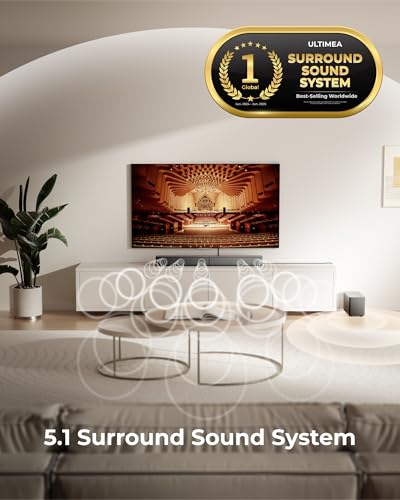
Before diving into specifics, let's talk about what actually matters when choosing a soundbar. The most critical factor is channel configuration—this tells you how many separate audio channels the system can reproduce. A 5.1 system has five main speakers (left, center, right, and two surround) plus one subwoofer (the ".1" part) for bass. The Samsung HW-Q800D goes further with a 5.1.2 setup, where those extra ".2" channels create overhead sound effects.
Power output determines how loud your system can go and how well it handles dynamic range—the difference between whisper-quiet dialogue and thunderous explosions. But raw wattage numbers can be misleading; what matters more is how that power translates into actual sound quality and room-filling capability.
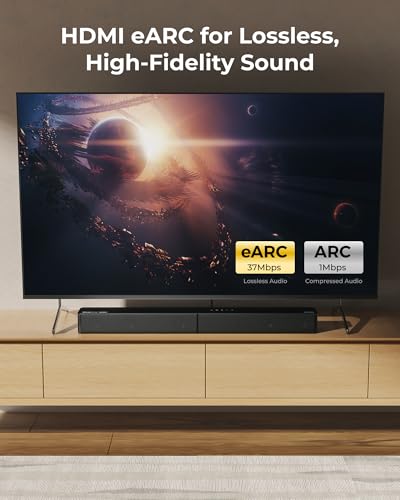
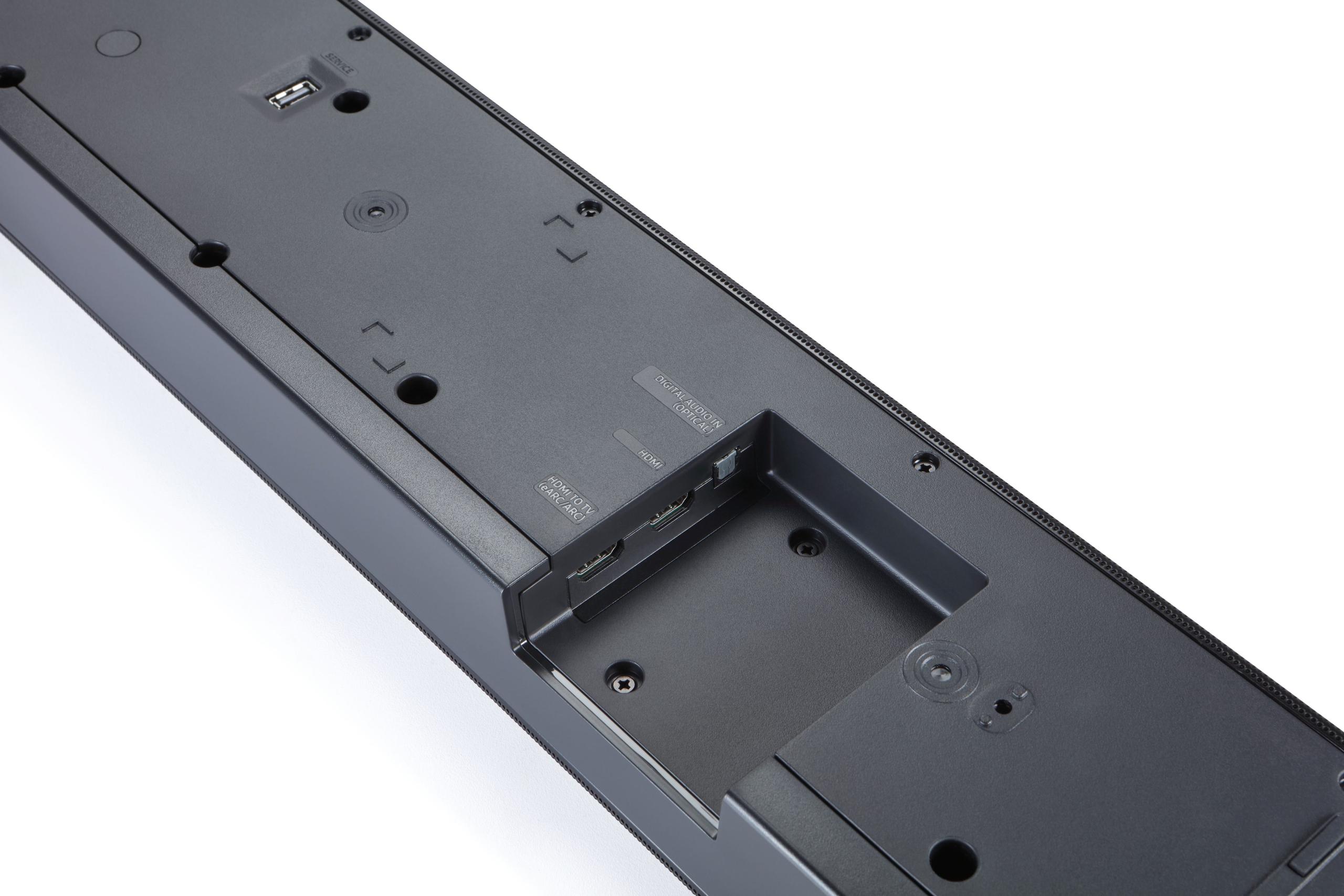
Connectivity has become increasingly important as streaming dominates our viewing habits. HDMI eARC (enhanced Audio Return Channel) provides the highest quality connection to your TV, allowing lossless audio transmission. This technology essentially creates a two-way highway between your TV and soundbar, enabling features like automatic volume control and seamless device switching.
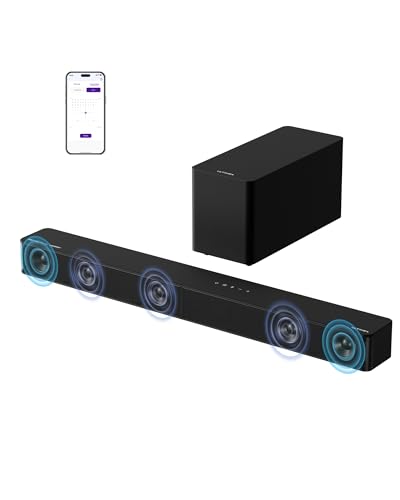
The Ultimea Poseidon M60 Boom, released in 2024, represents the "maximum value" approach to soundbar design. Ultimea packed serious hardware into an affordable package, including a 340W peak power output and their proprietary BassMX technology. This system uses virtual processing to create surround sound effects from five drivers housed entirely within the main soundbar unit.
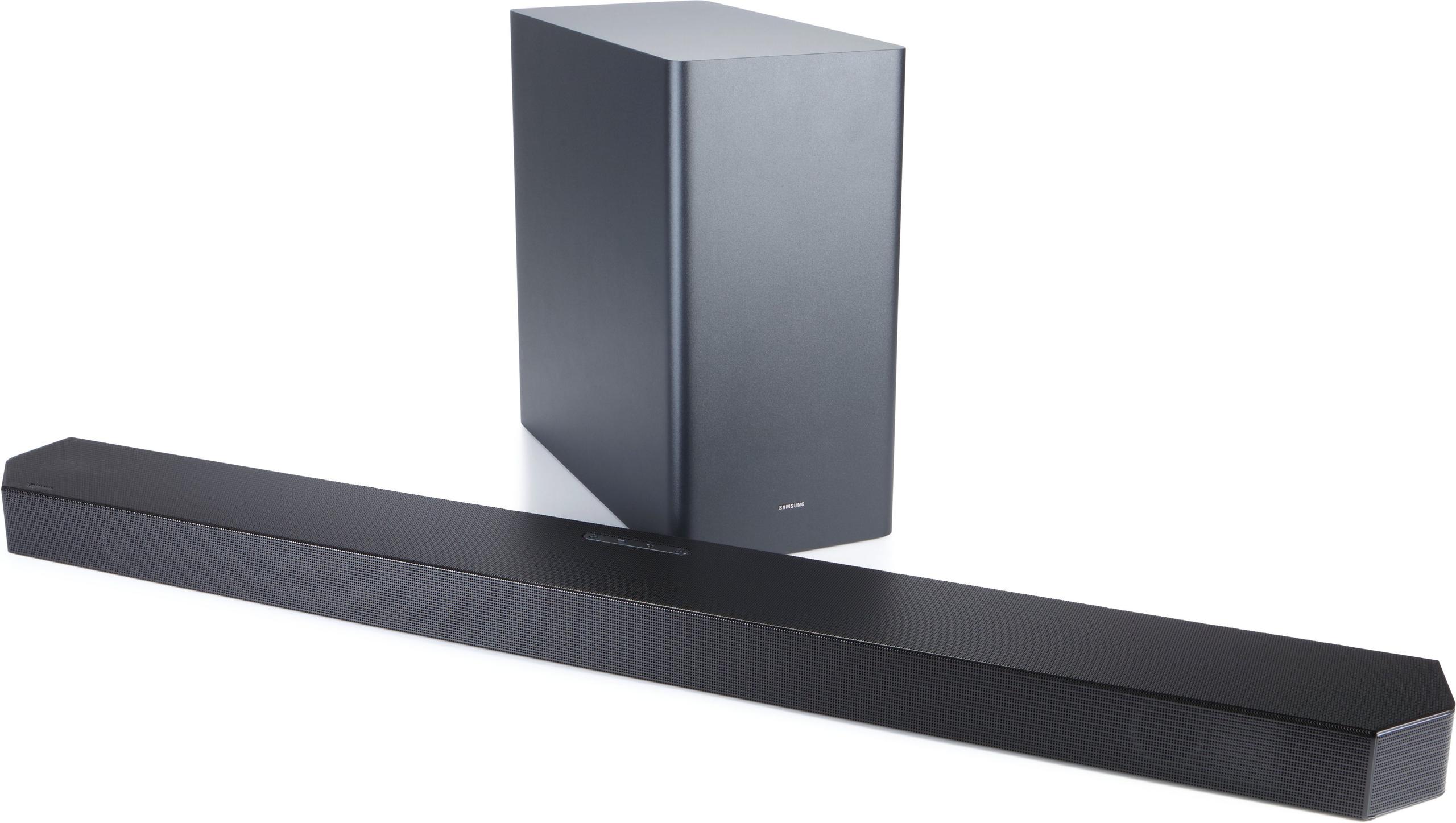
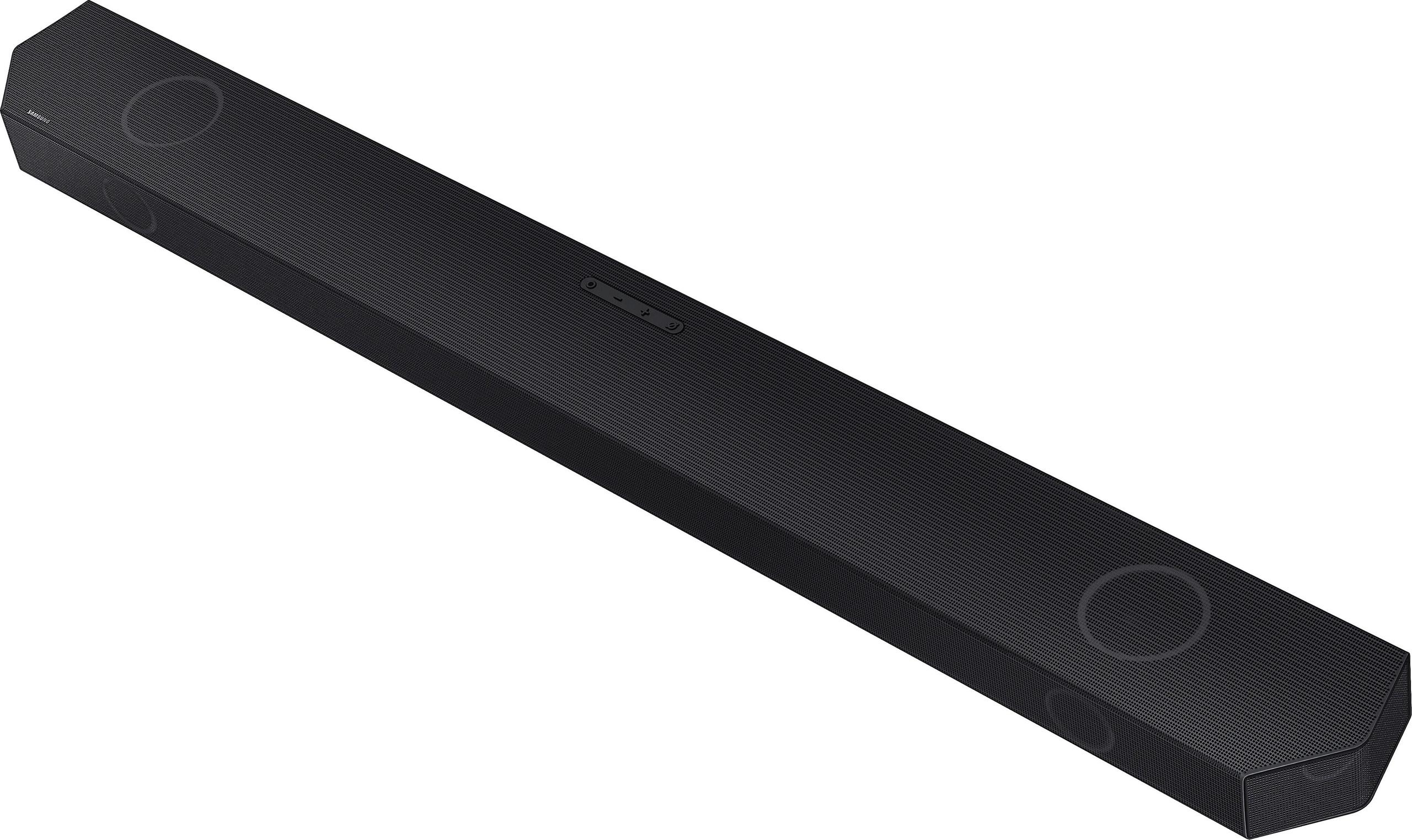
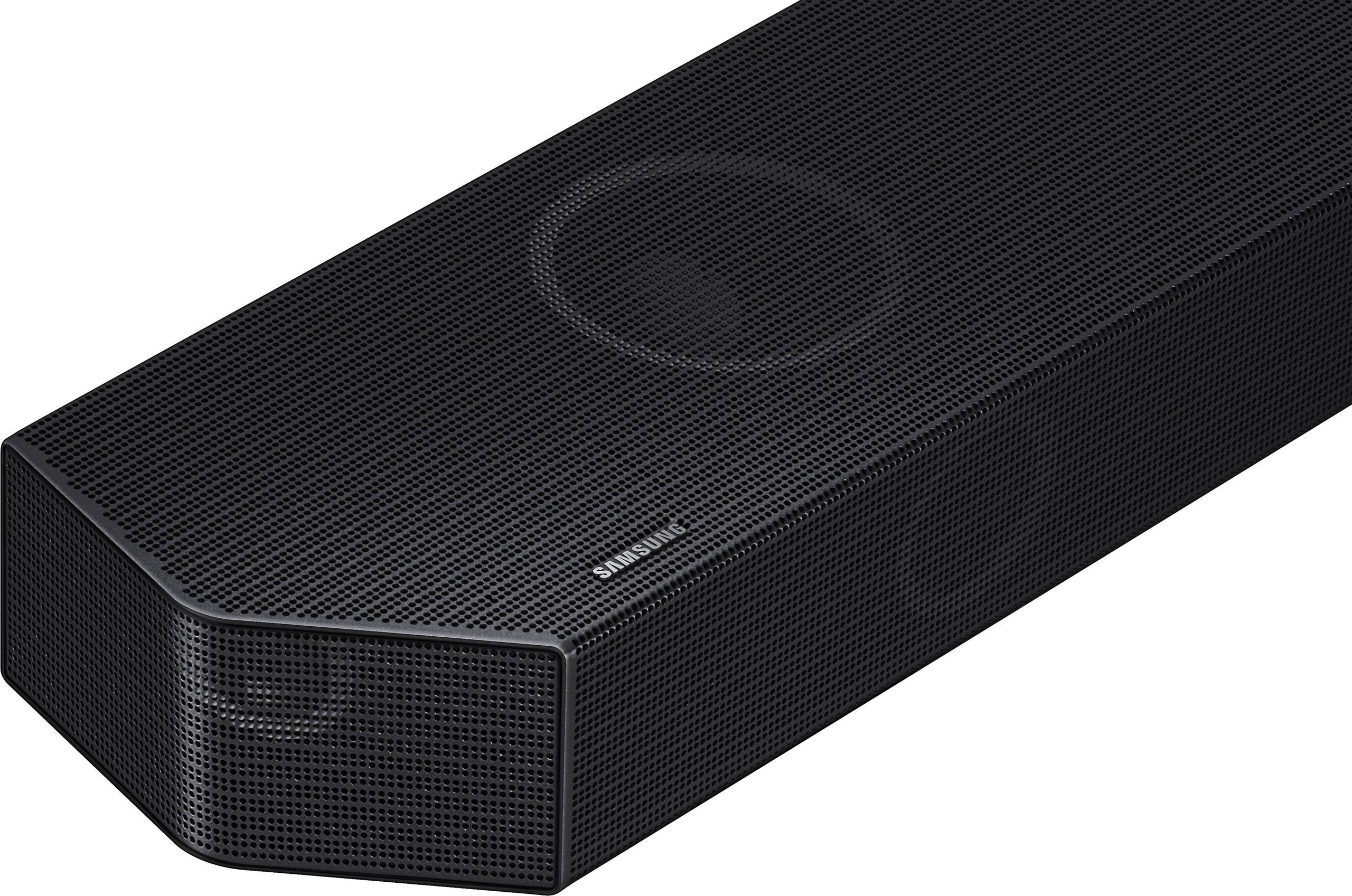
The Samsung HW-Q800D, also from 2024, takes the premium route with true 5.1.2 channel audio. Samsung built this system with dedicated upfiring speakers that physically bounce sound off your ceiling to create overhead effects. It's part of Samsung's Q-series lineup, which has evolved significantly since the company first introduced object-based audio processing in their soundbars around 2018.
Raw power tells only part of the story, but it's still crucial for understanding what each system can deliver. The Ultimea M60 Boom claims 340W peak power, which is impressive for its price point. Peak power refers to the maximum wattage the system can handle in short bursts—think of it as the difference between a car's horsepower and its sustained cruising ability.
What makes this power meaningful is how Ultimea distributes it. The system uses triple-core DSP (Digital Signal Processing) technology running at 800MHz and 600MHz. DSP is essentially the brain of modern audio systems, taking digital audio signals and manipulating them in real-time to optimize sound quality. With over 2000 MIPS (Million Instructions Per Second) of processing power, the M60 Boom can perform complex audio calculations that would have required rack-mounted equipment just a few years ago.
The Samsung HW-Q800D lists 360W total power, but Samsung's approach differs fundamentally. Rather than maximizing peak output, Samsung focuses on sustained, clean power delivery across all channels. The system includes a dedicated 200W amplifier built into the soundbar itself, separate from the wireless subwoofer's amplification. This design philosophy prioritizes consistent performance over maximum volume, which typically results in better audio quality at moderate listening levels.
In practical terms, both systems can easily fill a typical living room with sound, but they behave differently at the extremes. The Ultimea system can likely play louder without obvious distortion, making it better for larger rooms or users who prefer higher volume levels. The Samsung model maintains better tonal balance across its volume range, which becomes noticeable during quieter scenes where subtle details matter.
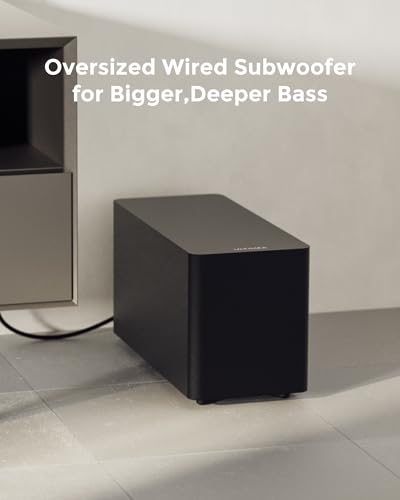
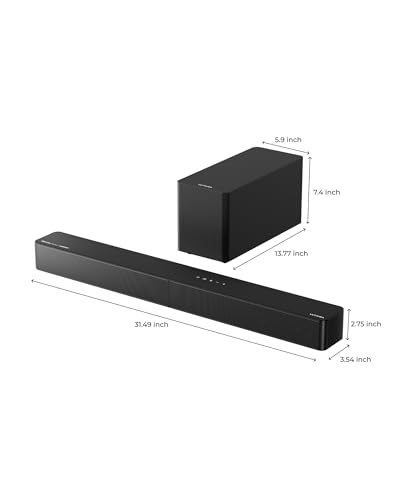
Bass performance often determines whether a soundbar sounds convincing or remains obviously inferior to a full theater setup. The Ultimea M60 Boom addresses this with BassMX technology, which combines an oversized wooden subwoofer cabinet with a high-excursion driver. The 16mm diaphragm excursion means the subwoofer cone can move much further than typical budget systems, displacing more air and creating deeper, more impactful bass.
This wooden cabinet isn't just for aesthetics—wood resonates differently than plastic, typically producing warmer, more natural bass tones. The trade-off is that the subwoofer connects via cable rather than wirelessly, limiting placement options. You'll need to position it within cable reach of the main soundbar, which might not always align with optimal acoustic placement.
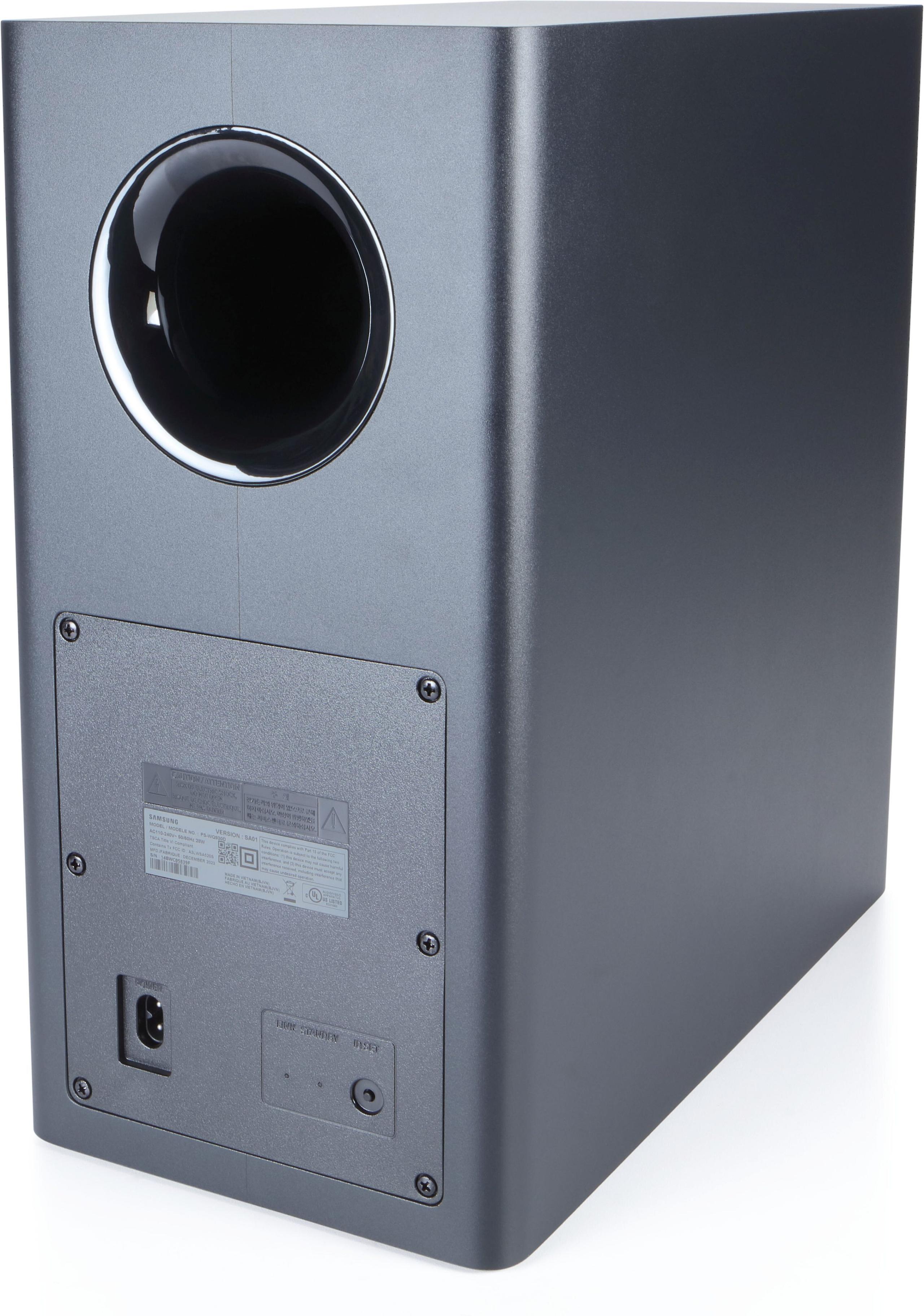
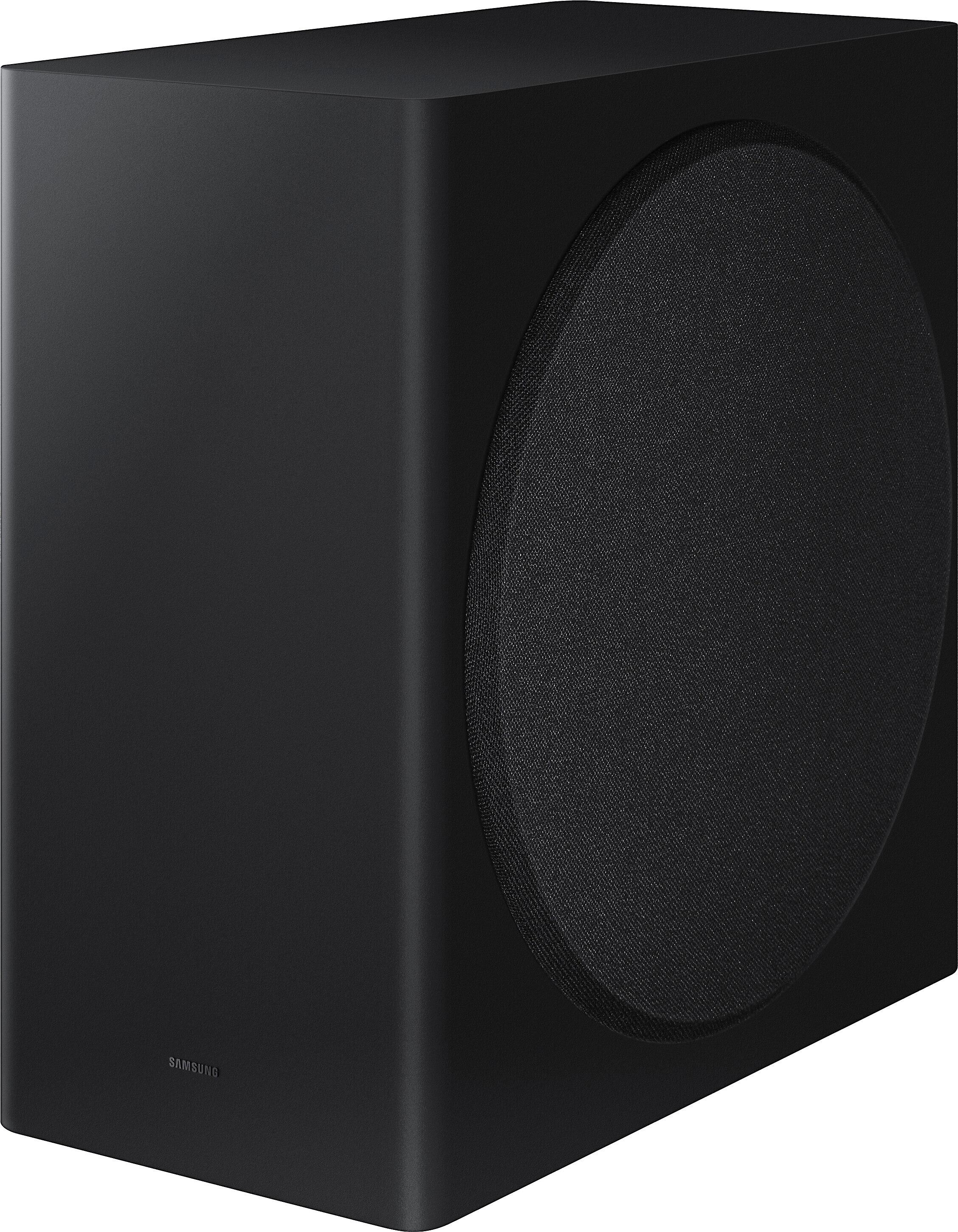
The Samsung HW-Q800D uses a different approach with its wireless 8-inch bass-reflex subwoofer. Bass-reflex design includes a port that allows air to move in and out of the cabinet, effectively extending the low-frequency response beyond what the driver alone could achieve. While Samsung's specifications don't mention excursion distance, the larger 8-inch driver and bass-reflex design typically produce more controlled, accurate bass reproduction.
The wireless connection offers significant practical advantages. You can place the subwoofer wherever it sounds best in your room—often in a corner or along a wall where room acoustics naturally amplify bass response. This flexibility often results in better overall sound quality despite potentially less raw output than the Ultimea's wired approach.
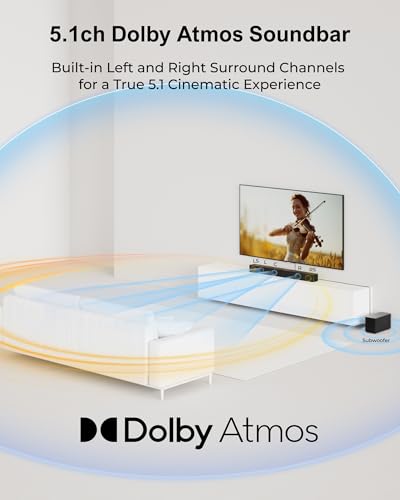
This represents the most significant philosophical difference between these systems. The Ultimea M60 Boom creates its 5.1 surround sound entirely through processing—all five main channels come from drivers located in the soundbar itself. The system uses psychoacoustic processing to trick your brain into perceiving sounds as coming from different locations around the room.
Modern virtual surround processing has become surprisingly sophisticated. The M60 Boom analyzes incoming audio signals and applies complex algorithms that consider human hearing characteristics, room acoustics, and speaker positioning to create convincing spatial effects. For many listeners, especially those upgrading from basic TV speakers, this virtual approach provides a dramatic improvement in immersion.
However, virtual surround has inherent limitations. Without physical speakers behind you, rear-channel effects remain suggestions rather than discrete sound sources. The system can make helicopter sounds seem to move around you, but it can't replicate the sensation of having that helicopter actually pass overhead and behind your position.
The Samsung HW-Q800D addresses this limitation with true 5.1.2 channel audio. The ".2" channels represent dedicated upfiring speakers that physically bounce sound off your ceiling to create overhead effects. This approach, fundamental to Dolby Atmos technology, creates genuine three-dimensional sound staging.
When configured properly, the Samsung system can place individual sound objects—raindrops, flying bullets, or ambient forest sounds—in specific three-dimensional locations around your listening position. The effect is particularly noticeable in well-mixed Dolby Atmos content, where sound designers intentionally place effects in the overhead channels.
The caveat is that upfiring speakers require appropriate room conditions to work effectively. Low ceilings, angled ceilings, or highly absorbent ceiling materials can diminish the effect. In ideal conditions with 8-10 foot flat ceilings and moderately reflective surfaces, the difference between virtual and physical overhead audio becomes immediately apparent.
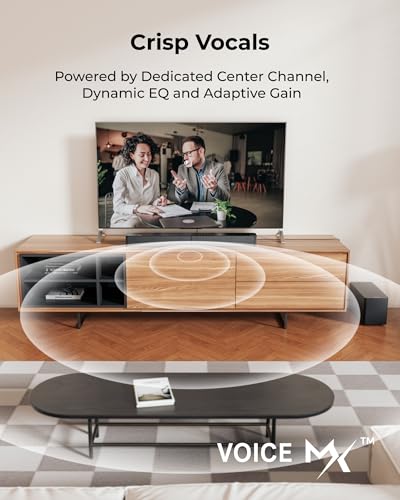
Poor dialogue clarity kills the viewing experience faster than any other audio flaw. Both systems address this challenge but use different approaches. The Ultimea M60 Boom employs VoiceMX technology, which dynamically processes the 300Hz to 3kHz frequency range where most human speech occurs.
This processing adapts in real-time, automatically boosting dialogue during complex scenes while maintaining natural sound during quieter moments. The system can actually recognize speech patterns and temporarily reduce background music or effects to ensure dialogue remains intelligible. This adaptive approach works particularly well for users who struggle with traditional soundbar dialogue reproduction.
The Samsung HW-Q800D takes a more traditional but proven approach with its dedicated center channel and Active Voice Amplifier (AVA) technology. A dedicated center channel means dialogue gets its own physical speaker rather than sharing with music and effects. This separation typically produces cleaner, more focused speech reproduction.
AVA works by analyzing incoming audio and applying targeted amplification to vocal frequencies while maintaining overall tonal balance. Combined with the discrete center channel, this approach often produces more natural-sounding dialogue enhancement compared to more aggressive processing methods.
Modern soundbars increasingly serve as smart home hubs, and connectivity options can significantly impact long-term satisfaction. The Ultimea M60 Boom includes HDMI eARC support, which enables two-way communication between your TV and soundbar. This connection allows the soundbar to automatically turn on when you start your TV, match volume changes, and receive uncompressed audio signals.
The system also features Bluetooth 5.4, the latest version of the wireless standard at the time of writing. Bluetooth 5.4 offers improved connection stability, faster pairing, and reduced latency compared to older versions. Lower latency is particularly important for gaming or watching videos, where audio-visual sync becomes noticeable if delayed.
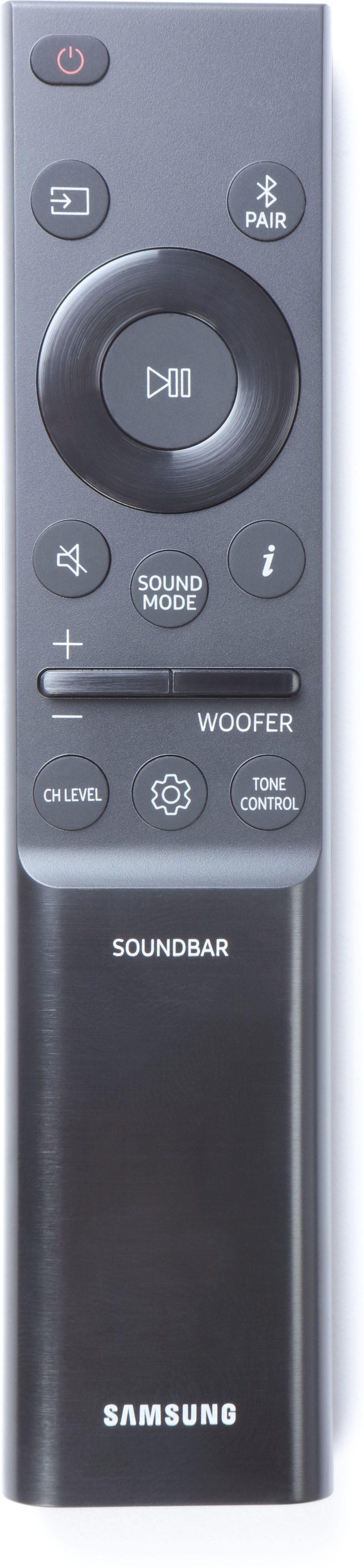
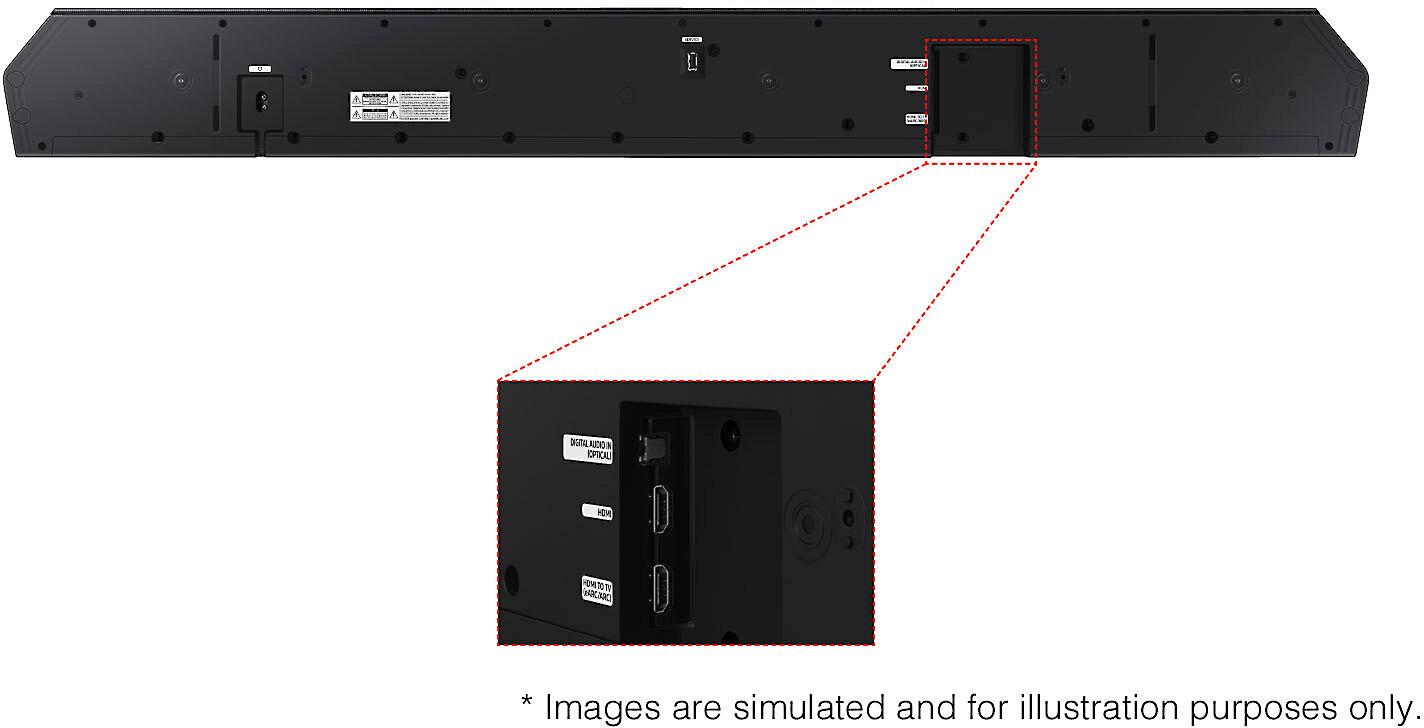
The Samsung HW-Q800D goes significantly further with smart connectivity. Beyond HDMI 2.1 with 4K/60Hz passthrough, it includes AirPlay 2 for seamless iPhone and iPad connectivity, Google Cast for Android devices, and built-in Alexa voice control. This comprehensive approach means you can control the soundbar through voice commands, smartphone apps, or traditional remotes.
Samsung's Q-Symphony technology represents a unique advantage for Samsung TV owners. This feature synchronizes the soundbar with compatible Samsung TV speakers, effectively creating a larger speaker array. Rather than disabling your TV speakers, Q-Symphony uses them as additional channels, typically improving center channel performance and overall soundstage width.
The SpaceFit Sound Pro feature automatically analyzes your room acoustics using built-in microphones and optimizes the audio output accordingly. This room correction technology, common in high-end audio systems, adjusts frequency response and timing to compensate for your specific listening environment.
Based on extensive review analysis and user feedback, both systems deliver meaningful upgrades over basic TV audio, but they excel in different scenarios. The Ultimea M60 Boom consistently impresses users with its immediate impact—the combination of powerful output and enhanced bass creates an obvious improvement that's immediately noticeable.
Users particularly praise the system's ability to handle action movies and music with heavy bass content. The BassMX technology delivers the kind of low-frequency impact that makes explosions feel visceral and music basslines sound full and defined. The dialogue clarity also receives consistent positive feedback, with many users noting they can finally understand dialogue without constantly adjusting volume.
However, some users report that the virtual surround effects, while convincing, don't quite match systems with dedicated surround speakers. The effect works best when sitting directly in front of the soundbar and becomes less convincing from off-axis listening positions.
The Samsung HW-Q800D receives praise for its sophisticated feature set and authentic surround sound capabilities. Users with proper room setups consistently report impressive overhead effects and precise sound placement. The wireless subwoofer placement flexibility also receives frequent mentions as a practical advantage.
Some users find the extensive feature set overwhelming initially, and the system requires more setup time to achieve optimal performance. The automatic room calibration helps, but users often need to experiment with placement and settings to maximize the spatial effects.
For dedicated home theater setups, these systems serve different roles. The Ultimea M60 Boom works well as a significant upgrade that maintains simplicity. Its straightforward setup and reliable performance make it suitable for users who want better audio without complexity.
The system's HDMI eARC support integrates well with modern streaming devices and gaming consoles, though it lacks some advanced features like variable refresh rate support that serious gamers might appreciate.
The Samsung HW-Q800D fits better into more sophisticated home theater setups. Its HDMI 2.1 support handles modern gaming consoles and streaming devices without compatibility concerns. The comprehensive smart features also integrate well with existing Samsung ecosystems—if you own Samsung TVs, phones, or smart home devices, the unified control experience provides genuine convenience.
For users planning to expand their systems eventually, neither soundbar prevents future upgrades, but they suggest different upgrade paths. The Ultimea system might eventually be replaced entirely with a more comprehensive system, while the Samsung soundbar could potentially integrate with additional Samsung components for expanded capabilities.
The choice between these systems ultimately depends on your priorities and circumstances. Choose the Ultimea Poseidon M60 Boom if you want maximum audio improvement per dollar spent. This system works particularly well for users upgrading from basic TV speakers who want immediate, obvious improvement without complexity or premium pricing.
The M60 Boom also suits users who prioritize bass performance and volume capability over feature sophistication. If you primarily watch action movies, listen to music with strong bass content, or need to fill a larger room with sound, the Ultimea's power advantage becomes meaningful.
Consider the wired subwoofer requirement carefully—if your room layout accommodates the cable connection and you won't need to move the subwoofer frequently, this limitation becomes less significant than the performance advantages.
Choose the Samsung HW-Q800D if you want authentic surround sound capabilities and are willing to pay for sophisticated features. This system works best for users who appreciate the difference between virtual and physical surround effects and have room setups that support upfiring speaker technology.
Samsung TV owners should strongly consider this system for its Q-Symphony integration alone—the enhanced performance from utilizing TV speakers alongside the soundbar often justifies the premium price. The comprehensive smart features also provide better future-proofing for evolving streaming and gaming requirements.
Both soundbars succeed at their intended purposes, but they target different user needs and price points. At the time of writing, the Ultimea M60 Boom offers exceptional value for users seeking maximum performance improvement at moderate cost. Its powerful bass output and effective virtual surround processing provide a compelling upgrade path from basic TV audio.
The Samsung HW-Q800D justifies its premium positioning with sophisticated features and authentic surround sound capabilities that work particularly well for users who want the closest approximation to dedicated home theater systems without the complexity.
Your choice should align with your audio priorities, room setup, and budget constraints. Either system will significantly improve your viewing experience compared to TV speakers, but they'll do so in distinctly different ways that suit different preferences and use cases.
| Ultimea Poseidon M60 Boom 5.1 Soundbar | Samsung HW-Q800D 5.1.2 Channel Soundbar |
|---|---|
| Channel Configuration - Determines surround sound authenticity | |
| 5.1 virtual surround (all drivers in main bar) | True 5.1.2 with dedicated upfiring speakers |
| Peak Power Output - Affects maximum volume and dynamic range | |
| 340W peak power with BassMX technology | 360W total with 200W built-in amplifier |
| Subwoofer Connection - Impacts placement flexibility | |
| Wired wooden subwoofer with enhanced bass response | Wireless 8-inch subwoofer for flexible positioning |
| Dolby Atmos Implementation - Critical for overhead sound effects | |
| Virtual processing creates simulated overhead effects | Physical upfiring speakers bounce sound off ceiling |
| HDMI Support - Affects gaming and streaming compatibility | |
| HDMI eARC for lossless audio transmission | HDMI 2.1 with 4K/60Hz passthrough and eARC |
| Smart Features - Determines ease of use and integration | |
| Smart app control, Bluetooth 5.4, basic CEC | Q-Symphony, SpaceFit Sound Pro, AirPlay 2, Alexa built-in |
| Room Calibration - Automatically optimizes sound for your space | |
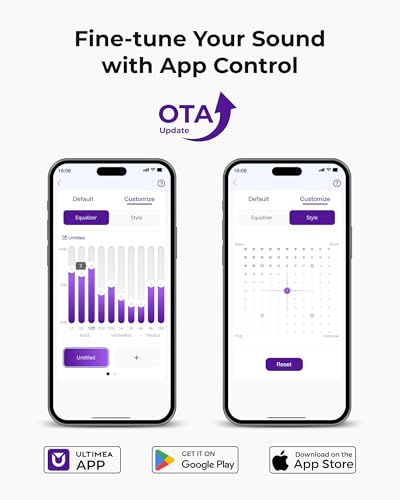
| Manual EQ adjustment via app | SpaceFit Sound Pro analyzes and optimizes automatically |
| TV Integration - Enhanced performance with compatible TVs | |
| Standard compatibility with all TV brands | Q-Symphony technology enhances Samsung TV audio |
| Driver Configuration - Affects sound separation and clarity | |
| 5 full-range drivers plus subwoofer | 10 discrete drivers plus 8-inch subwoofer |
| Dialogue Enhancement - Critical for speech clarity | |
| VoiceMX technology with adaptive processing | Active Voice Amplifier with dedicated center channel |
The Ultimea Poseidon M60 Boom offers exceptional value with 340W peak power and BassMX bass technology at a budget-friendly price point. The Samsung HW-Q800D costs more but includes premium features like true Dolby Atmos with upfiring speakers and wireless subwoofer. For maximum performance per dollar, the Ultimea M60 Boom wins, while the Samsung HW-Q800D justifies its higher price with sophisticated features.
Yes, both support Dolby Atmos but implement it differently. The Ultimea Poseidon M60 Boom uses virtual processing to simulate overhead effects from its five drivers. The Samsung HW-Q800D features true 5.1.2 Dolby Atmos with dedicated upfiring speakers that physically bounce sound off your ceiling for authentic three-dimensional audio.
The Ultimea M60 Boom delivers more impactful bass with its BassMX technology and high-excursion wooden subwoofer, making it excellent for action movies and music. The Samsung HW-Q800D offers more controlled and accurate bass with its wireless 8-inch bass-reflex subwoofer. For raw bass power, choose the Ultimea; for balanced bass quality, choose the Samsung.
Both soundbars work with any TV brand through HDMI, optical, or Bluetooth connections. However, the Samsung HW-Q800D offers enhanced integration with Samsung TVs through Q-Symphony technology, which uses your TV speakers alongside the soundbar for improved performance. The Ultimea Poseidon M60 Boom provides standard compatibility across all TV brands.
The Ultimea M60 Boom offers simpler plug-and-play setup with straightforward app control and minimal configuration required. The Samsung HW-Q800D includes more sophisticated features like SpaceFit Sound Pro room calibration, which provides better optimization but requires more initial setup time. For simplicity, choose the Ultimea.
No, only the Samsung HW-Q800D includes a wireless subwoofer, offering flexible placement options. The Ultimea Poseidon M60 Boom features a wired wooden subwoofer that delivers powerful bass but limits placement to within cable reach of the main soundbar.
Both excel at dialogue clarity but use different approaches. The Ultimea M60 Boom uses VoiceMX technology with adaptive processing to enhance speech intelligibility. The Samsung HW-Q800D features a dedicated center channel and Active Voice Amplifier for focused dialogue reproduction. The Samsung typically provides more natural dialogue enhancement.
Both work well for gaming, but the Samsung HW-Q800D offers advantages with HDMI 2.1 support for modern gaming consoles and ultra-low latency features. The Ultimea Poseidon M60 Boom provides Bluetooth 5.4 connectivity and good directional audio for gaming. Serious gamers should consider the Samsung for its advanced connectivity features.
The Ultimea M60 Boom handles large rooms better with its higher 340W peak power output and room-filling sound capability. The Samsung HW-Q800D offers 360W total power with better sound distribution across channels. For maximum volume in large spaces, the Ultimea has the advantage, while the Samsung provides more balanced coverage.
Yes, both offer smartphone control. The Ultimea Poseidon M60 Boom includes a smart app for EQ settings, sound modes, and basic controls. The Samsung HW-Q800D provides comprehensive app control plus integration with Samsung SmartThings, AirPlay 2, and voice control through built-in Alexa. The Samsung offers more advanced smart home integration.
The Samsung HW-Q800D delivers more authentic surround sound with its true 5.1.2 configuration and physical upfiring speakers that create genuine overhead effects. The Ultimea Poseidon M60 Boom uses virtual processing to simulate surround effects, which is convincing but not as authentic as discrete channels. For true surround immersion, choose the Samsung.
The key difference is approach: the Ultimea M60 Boom maximizes performance value with powerful virtual surround processing and exceptional bass at a lower price. The Samsung HW-Q800D provides premium features including true Dolby Atmos with upfiring speakers, wireless subwoofer, and advanced smart connectivity. Choose the Ultimea for best value or the Samsung for premium features.
We've done our best to create useful and informative comparisons to help you decide what product to buy. Our research uses advanced automated methods to create this comparison and perfection is not possible - please contact us for corrections or questions. These are the sites we've researched in the creation of this article: ultimea.com - ultimea.com - youtube.com - bestbuy.com - youtube.com - avsforum.com - youtube.com - manuals.plus - youtube.com - device.report - ultimea.com - ultimea.de - community.ultimea.com - ultimea.com - community.ultimea.com - ultimea.com - youtube.com - aliexpress.com - ultimea.com - techradar.com - valueelectronics.com - samsung.com - rtings.com - samsung.com - crutchfield.com - samsung.com - samsung.com - samsung.com - shidirect.com

Privacy Policy
Terms and Conditions - Affiliate Policy
Home Security
© Copyright 2008-2026.
11816 Inwood Rd #1211, Dallas, TX 75244