








Your TV's built-in speakers are terrible. There, I said it. Those paper-thin drivers crammed behind a sleek screen simply cannot deliver the rich, immersive audio that modern movies and shows deserve. The good news? A quality soundbar can transform your viewing experience without the complexity of a full surround sound system. But choosing the right one means understanding what you're actually getting for your money.
Today we're comparing two fundamentally different approaches to better TV audio: the Ultimea Poseidon M60 Boom 5.1 Soundbar and the JBL Bar 300 5.0 Soundbar. These aren't just different brands - they represent entirely different philosophies about how to create great sound. One focuses on authentic multi-channel audio with dedicated hardware, while the other emphasizes convenience and clever virtual processing. Let me help you figure out which approach makes sense for your setup.
Before diving into specifics, let's establish what separates good soundbars from mediocre ones. The key factors that actually matter are audio performance (how good it sounds), setup complexity (how easy it is to get working), room compatibility (whether it fits your space), and overall value (what you get for your money).
The numbers on the box - like "5.1 channels" or "340 watts" - can be misleading without context. A soundbar claiming 5.1 channels might have all drivers crammed into one bar, creating virtual surround effects, or it might include separate speakers that create true positional audio. Similarly, 340 watts from a cheap amplifier won't necessarily sound better than 260 watts from high-quality components.
What really matters is how these systems handle dialogue clarity (can you understand what actors are saying?), bass response (do explosions and music have impact?), and spatial audio (does the sound feel like it's coming from different directions?). These performance characteristics determine whether you'll be satisfied with your purchase long-term.
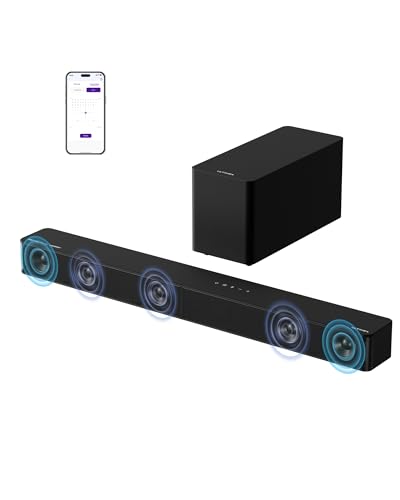
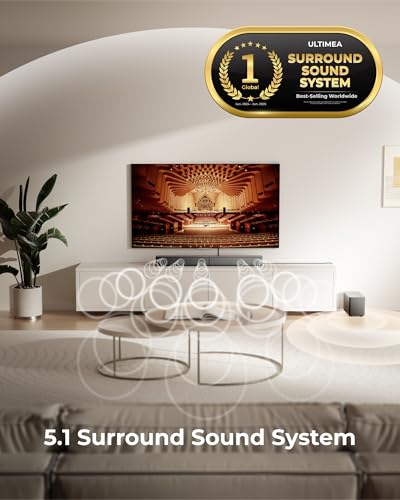
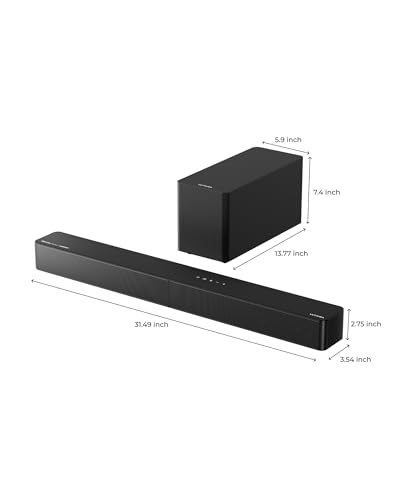
The Ultimea Poseidon M60 Boom, released in 2025, represents the "authentic hardware" approach. This system delivers true 5.1 surround sound through an innovative modular design where two soundbar sections connect together, plus a dedicated 5.25-inch wooden subwoofer. With 340 watts of peak power distributed across six separate drivers, it's designed for users who want the most genuine surround experience possible without installing speakers around their room.
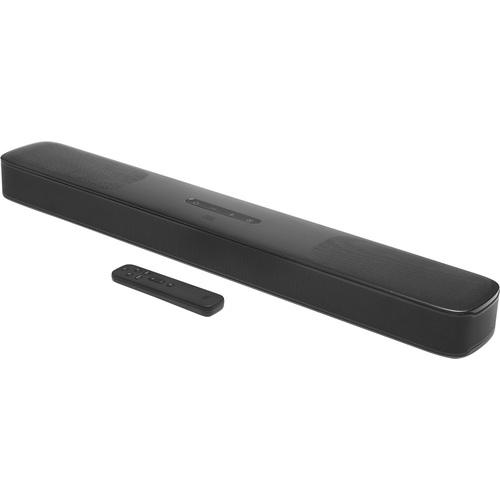
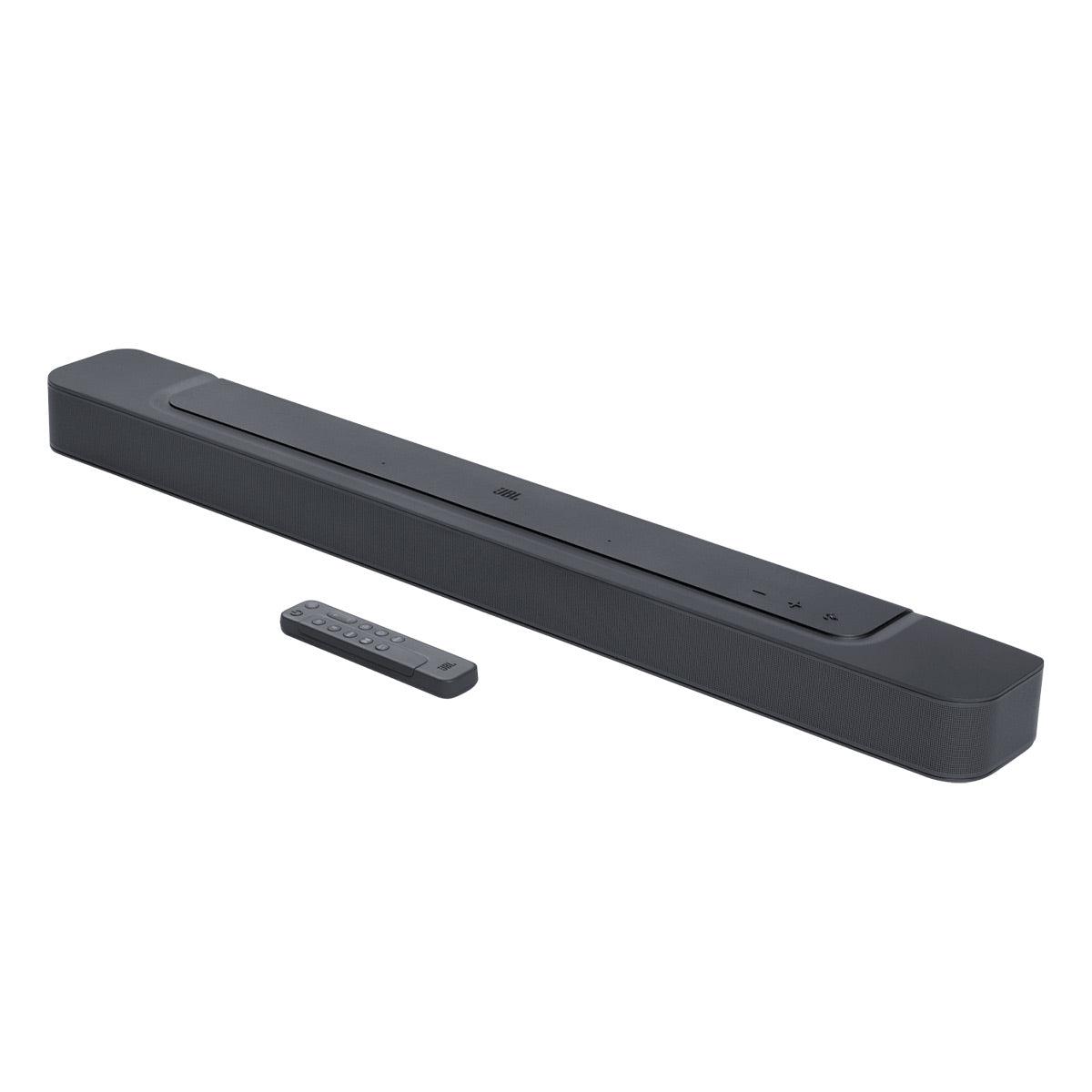
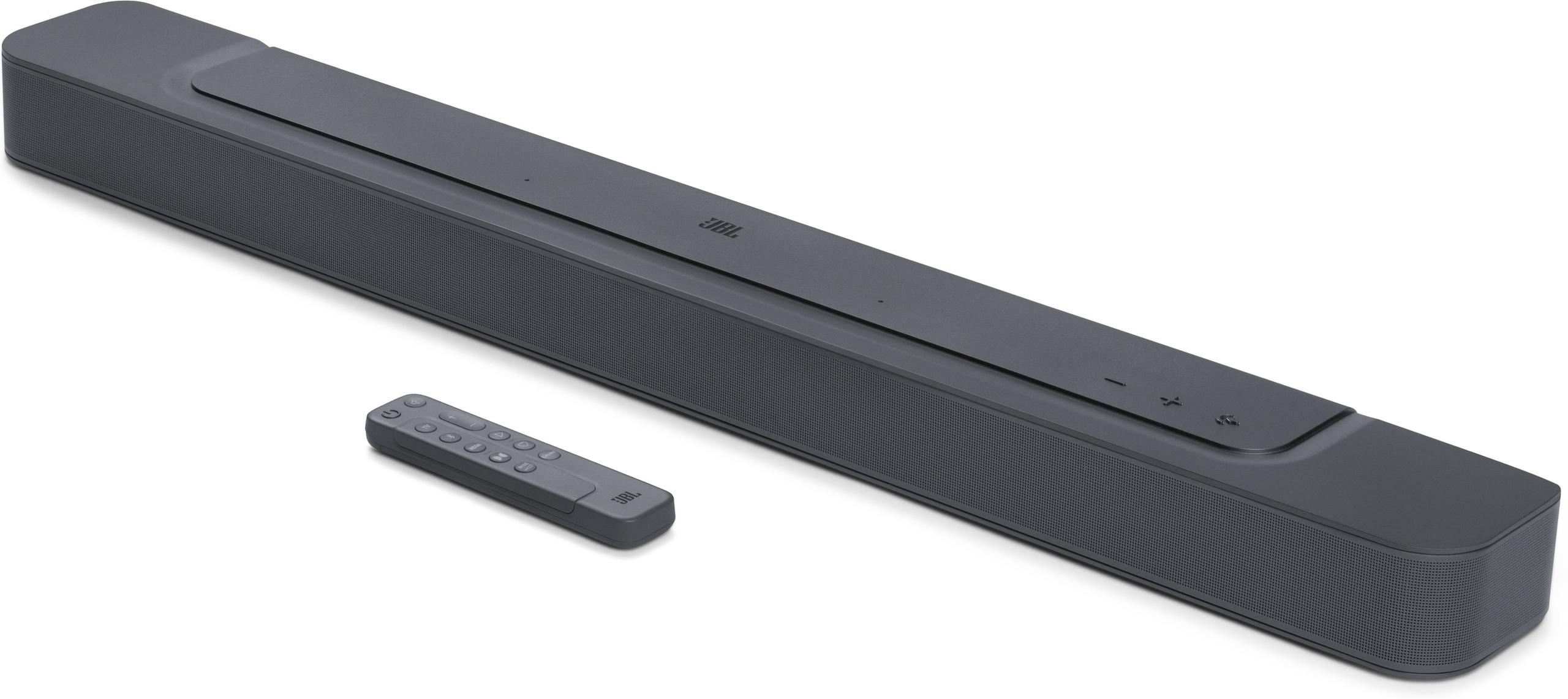
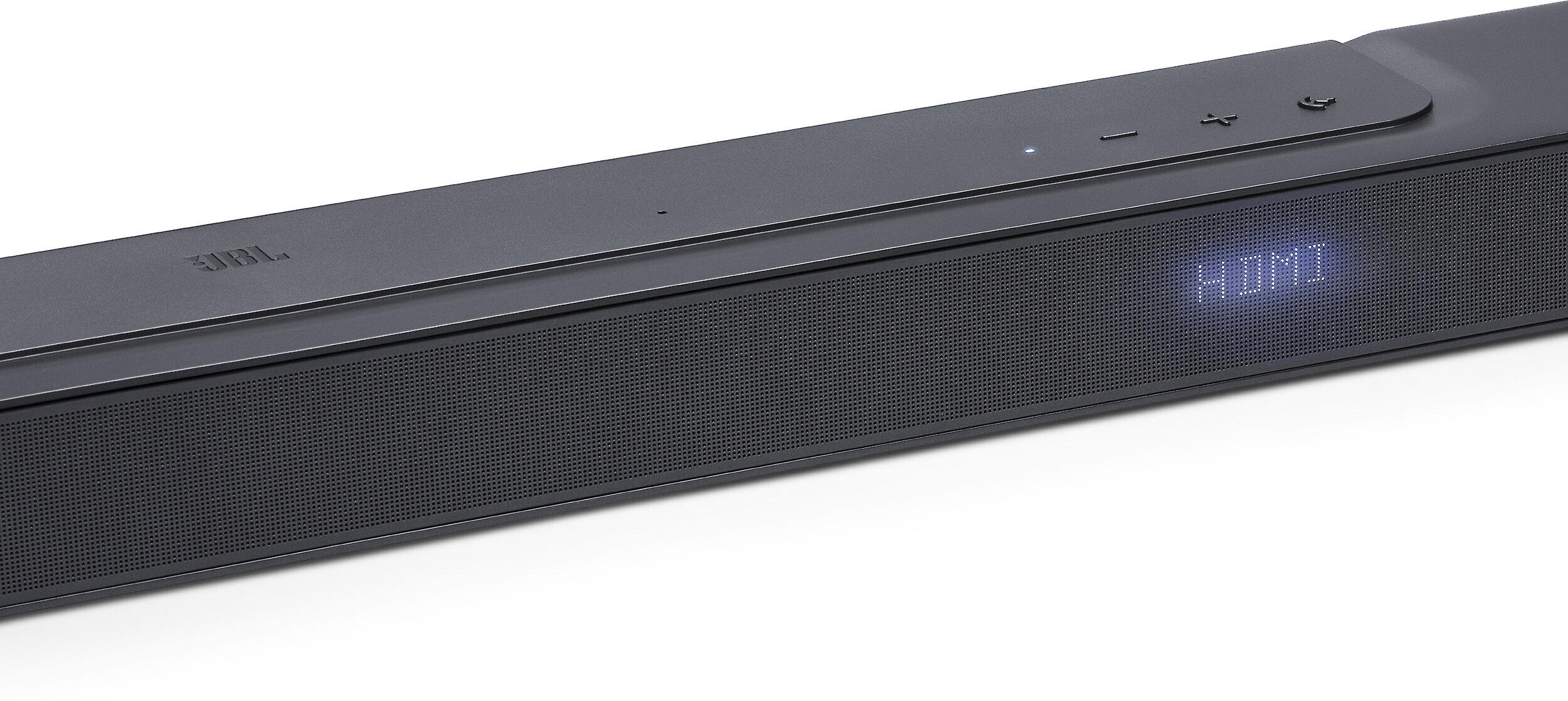
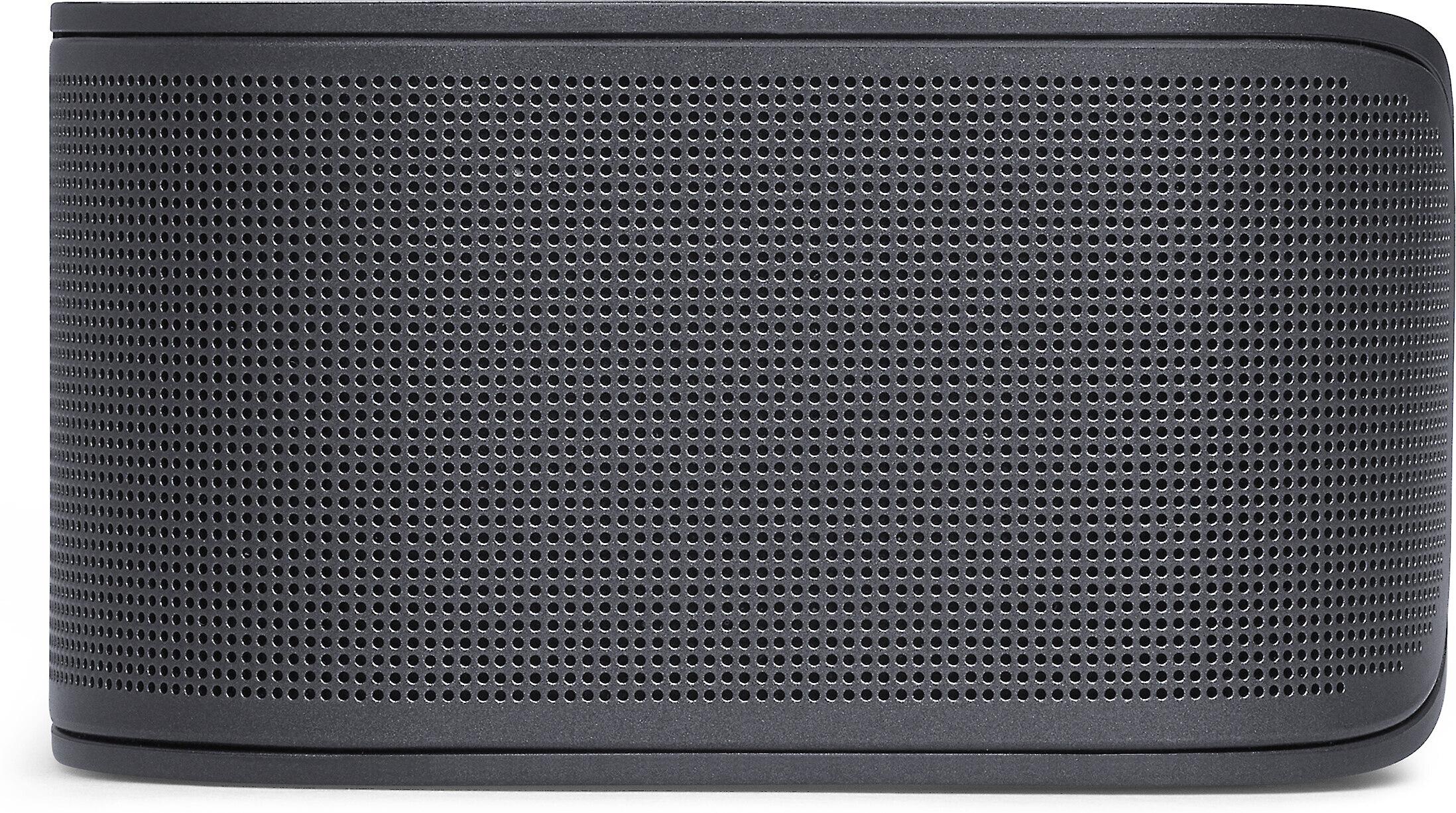
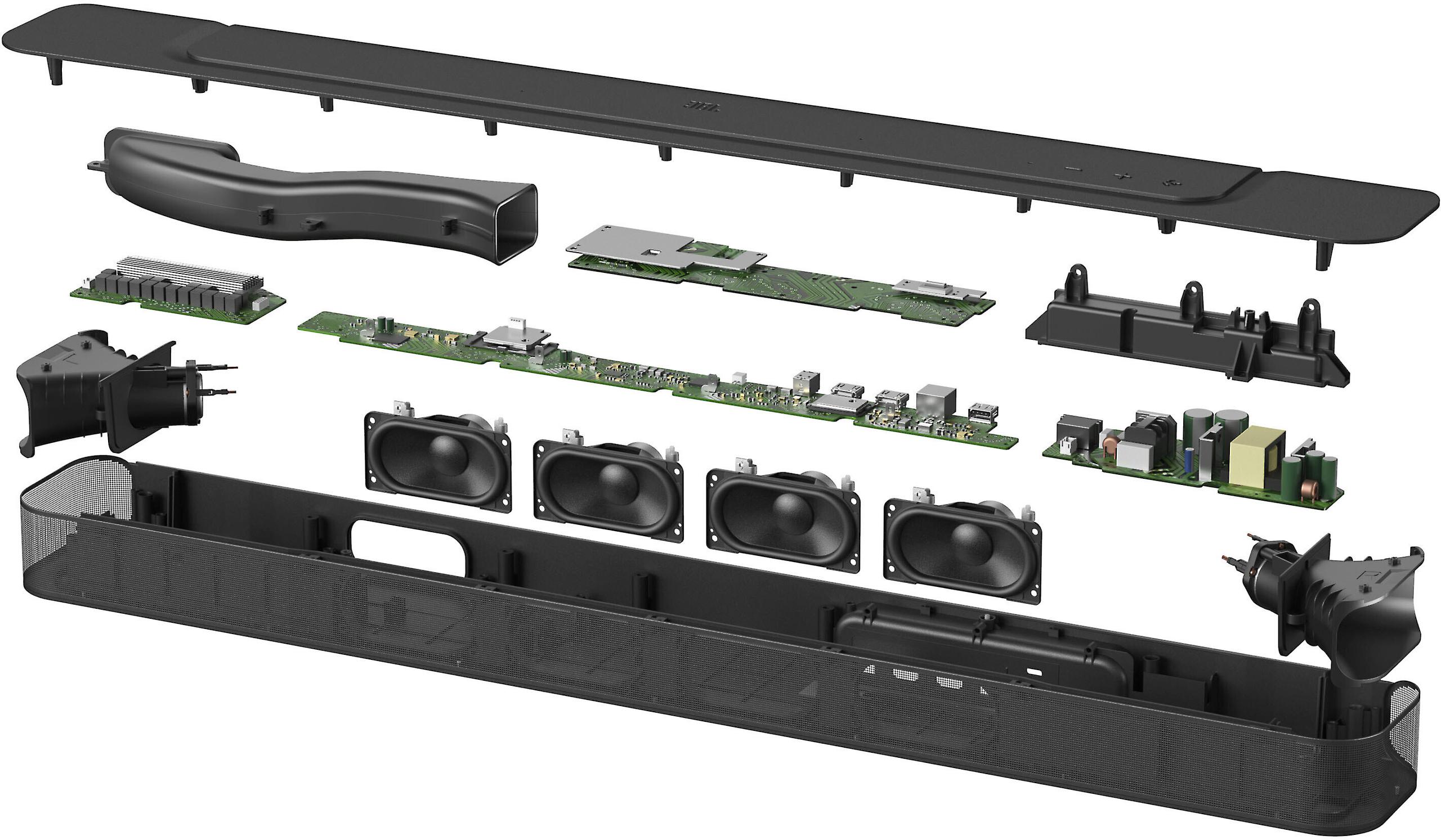
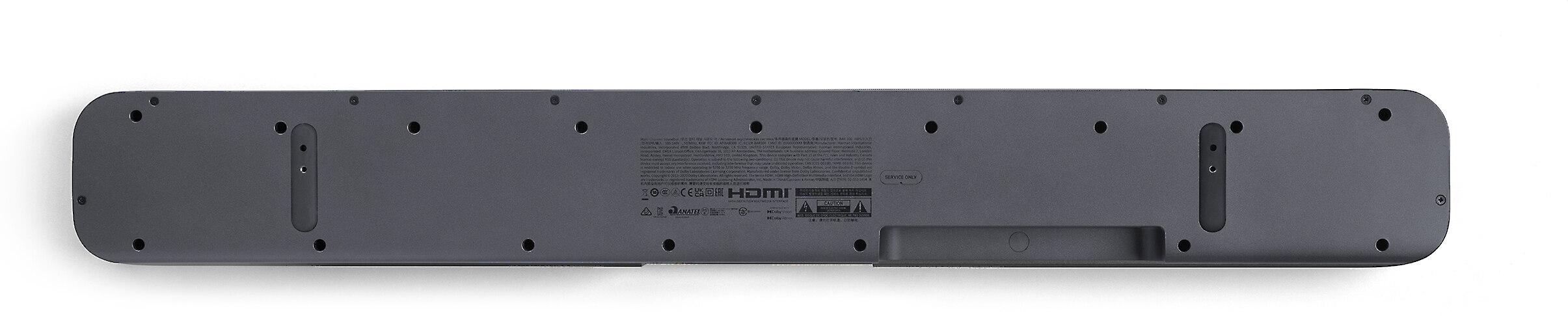
Meanwhile, the JBL Bar 300, launched in early 2024, embodies the "smart simplicity" philosophy. This single-unit system creates virtual 5.0 surround sound using advanced processing and clever driver positioning, while packing in Wi-Fi streaming, voice control, and automatic room calibration. At just 32 inches long and 5.5 pounds, it's built for users who want premium features without any setup headaches.
The timing of these releases matters. The JBL Bar 300 arrived as streaming services were emphasizing spatial audio formats like Dolby Atmos, while Wi-Fi 6 technology was becoming standard for stable, high-quality wireless streaming. The newer Ultimea M60 Boom benefits from 2025's improved Bluetooth 5.4 standard and more sophisticated DSP (Digital Signal Processing) chips that can handle real-time audio adjustments.
The Ultimea M60 Boom's 340-watt peak power output isn't just marketing fluff - it's distributed across five full-range drivers in the modular soundbar plus that dedicated subwoofer. This matters because each driver can focus on specific frequency ranges without being overworked. The system's frequency response spans from 45Hz to 18kHz with a maximum sound pressure level (SPL) of 99 decibels - technical specs that translate to deeper bass and cleaner highs at higher volumes.
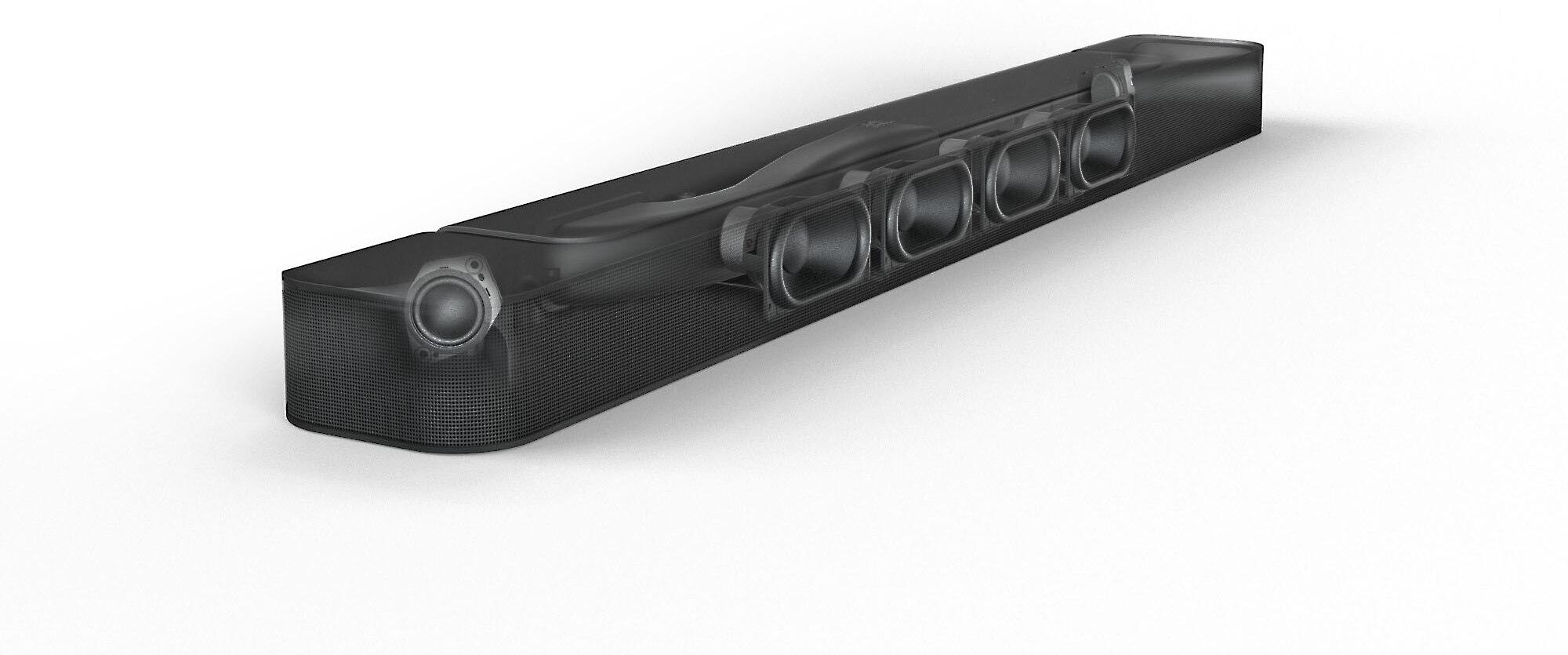
The JBL Bar 300's 260 watts might seem lower, but it's not necessarily worse. JBL's drivers are engineered for efficiency, with four racetrack-shaped drivers and two 20mm tweeters that create a balanced soundstage. The racetrack design allows for larger surface area in a compact space, moving more air for better mid-range response. However, without a dedicated subwoofer, this system relies on bass reflex ports - essentially tuned holes that enhance lower frequencies but can't match the impact of a real subwoofer driver.
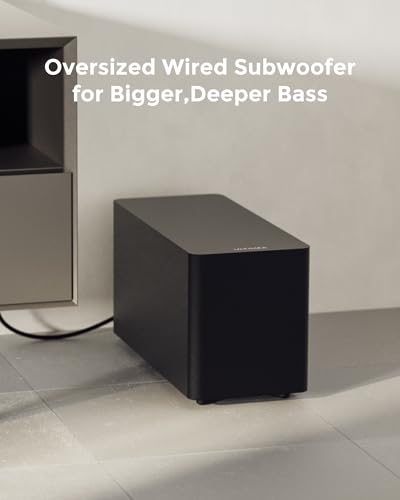
Here's where these systems diverge most dramatically. The Ultimea M60 Boom's 5.25-inch subwoofer uses BassMX technology, which combines an oversized cabinet with a high-excursion driver (meaning the cone can move up to 16mm back and forth). This creates the kind of deep, controlled bass that makes action scenes feel visceral and music sound full-bodied.
I've found that most people underestimate how much proper bass affects their enjoyment of content. It's not just about explosions - good bass adds weight to dialogue, makes music more engaging, and creates that "theater-like" feeling that transforms your living room experience. The JBL Bar 300's built-in bass enhancement works adequately for casual viewing, but it simply cannot compete with dedicated hardware during intense scenes.
That said, the JBL's approach has merit for many users. If you live in an apartment with thin walls or watch TV primarily late at night, a powerful subwoofer might be overkill. The Bar 300's more restrained bass response could actually be preferable in noise-sensitive environments.
This is where understanding the technology becomes crucial. The Ultimea M60 Boom creates true 5.1 surround sound with five discrete channels built into its connected soundbar sections. When a helicopter flies from left to right in a movie, you're hearing actual separate audio streams positioned across the soundbar's width. The system's Triple-Core DSP technology (three dedicated computer chips running at 800MHz and 600MHz) processes these channels in real-time to maintain precise separation.
The JBL Bar 300 uses MultiBeam technology to create virtual surround effects. This system bounces sound off your room's walls and ceiling to simulate surround speakers that aren't actually there. When it works well - in rooms with hard surfaces and proper dimensions - the effect can be surprisingly convincing. But it's fundamentally dependent on your room's acoustics in ways that true multi-channel audio isn't.
Our research into user experiences reveals that virtual surround works best in smaller, rectangular rooms with hard surfaces like drywall and minimal soft furnishings. If your living room has lots of carpet, curtains, or unusual shapes, the Ultimea's direct approach will likely sound more consistent.
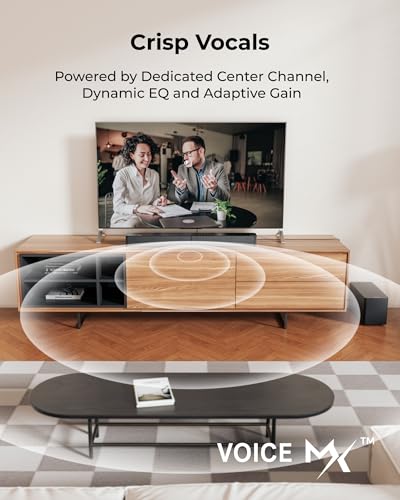
Both systems incorporate dialogue enhancement technology, but they take different approaches. The Ultimea's VoiceMX technology dynamically boosts the 300Hz-3kHz frequency range where human voices live, using adaptive EQ (equalization) to keep speech clear even during loud scenes.
The JBL Bar 300's PureVoice technology goes further, using algorithmic processing to identify and prioritize dialogue in the audio mix. Based on expert reviews and user feedback, the JBL tends to excel here, particularly for TV shows and news where clear speech is paramount. This makes sense given JBL's focus on daily usability over pure home theater performance.
The JBL Bar 300 absolutely dominates in the convenience category. Its built-in Wi-Fi 6 connectivity supports AirPlay, Chromecast, and Alexa Multi-Room Music, giving you access to over 300 streaming services without any additional devices. This matters more than you might think - instead of juggling multiple remotes and switching inputs, you can simply ask Alexa to play music or stream directly from your phone.
The system's automatic room calibration deserves special mention. Using an embedded microphone, the JBL Bar 300 analyzes your room's acoustics and adjusts its output accordingly. This isn't just marketing gimmickry - it genuinely improves performance by compensating for room-specific acoustic challenges.
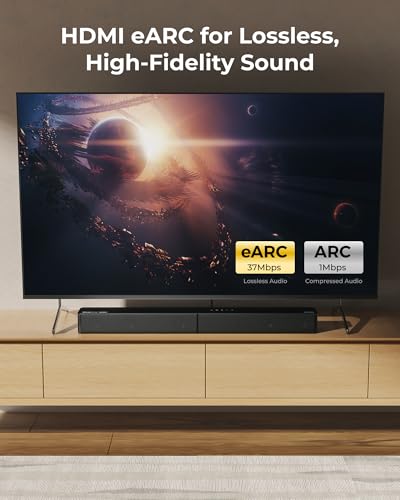
The Ultimea M60 Boom offers more basic connectivity with HDMI eARC, Bluetooth 5.4, and optical inputs, plus a dedicated smartphone app for control. The app provides extensive customization with 10-band EQ settings and 121 preset sound profiles, but it lacks the seamless streaming integration that makes the JBL so user-friendly.
However, our research uncovered some connectivity concerns with the Ultimea system. Several users reported issues with HDMI ARC functionality, particularly with certain TV brands. While these problems aren't universal, they highlight the complexity that comes with more sophisticated hardware.
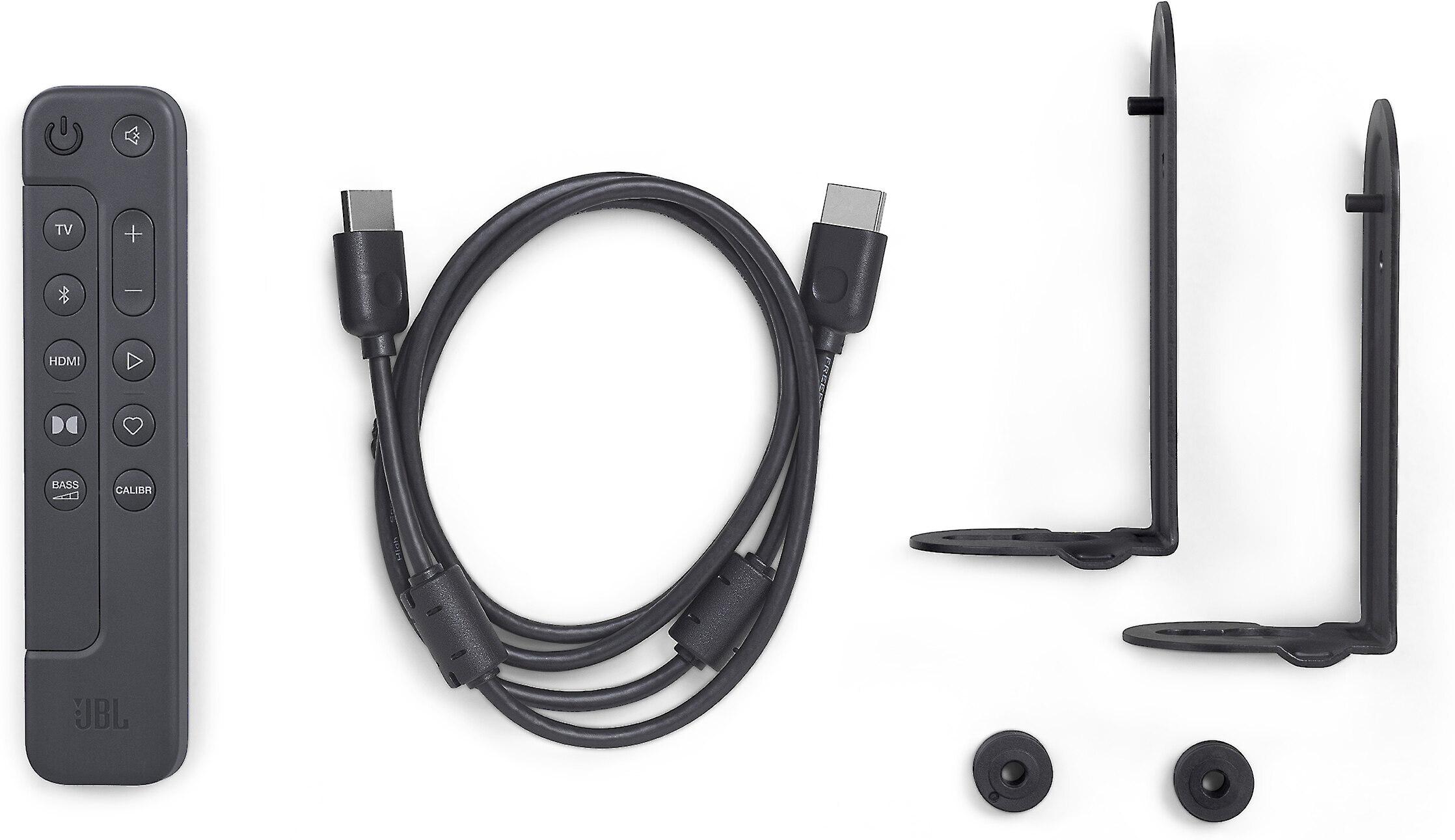
The JBL Bar 300 wins hands-down for ease of setup. You literally connect one HDMI cable, run the automatic calibration, and you're done. The system's compact 32-inch footprint fits under most TVs without overwhelming smaller entertainment centers.
Setting up the Ultimea M60 Boom requires more planning. You need to connect the two soundbar sections, find placement for the wired subwoofer, and run the necessary cables. The subwoofer's wired connection limits placement flexibility compared to wireless alternatives, though it does eliminate potential connectivity issues and audio lag.
For most people, I'd recommend considering your long-term satisfaction versus short-term convenience. Yes, the Ultimea system takes longer to set up initially, but if you're someone who gets frustrated by mediocre bass response six months later, that extra setup time pays dividends.
Room size significantly impacts which system will work better for you. The Ultimea M60 Boom really shines in medium to large rooms (roughly 200+ square feet) where its 340-watt power output and dedicated subwoofer can fill the space effectively. In smaller rooms, all that power might actually work against you, creating overwhelming bass or requiring constant volume adjustments.
The JBL Bar 300 is optimized for smaller to medium spaces where its virtual surround processing works most effectively. The MultiBeam technology needs walls to bounce sound off of, and it works best when you're sitting within a reasonable distance of the soundbar.
Consider your primary use cases too. If you're mainly watching TV shows, documentaries, and news, the JBL's superior dialogue clarity and convenience features make it the better choice. But if you're building a dedicated home theater setup for movies and gaming, the Ultimea's authentic surround sound and powerful bass create a more immersive experience.
At the time of writing, the JBL Bar 300 represents exceptional value in the premium soundbar category, offering features typically found in much more expensive systems. The combination of streaming capabilities, automatic calibration, and brand reliability makes it a smart purchase for most users.
The Ultimea M60 Boom positions itself in a higher tier with its dedicated hardware approach. While it requires more investment upfront, it delivers audio performance that approaches dedicated component systems without the complexity of installing separate speakers around your room.
After extensively researching both systems, I believe the choice comes down to your priorities and living situation.
Choose the Ultimea Poseidon M60 Boom if you have a dedicated home theater space, regularly watch action movies or play games, and want the most authentic surround sound experience possible from a soundbar system. The dedicated subwoofer and true multi-channel audio create an immersive experience that virtual processing simply cannot match. You should also have patience for more complex setup and the space to properly position the subwoofer.
Choose the JBL Bar 300 if you want maximum convenience with premium features, live in a smaller space, primarily watch dialogue-heavy content, or value streaming capabilities and smart home integration. The superior dialogue clarity, effortless setup, and extensive connectivity options make it ideal for daily TV viewing, while the compact design works well in apartments or smaller rooms.
Both systems will dramatically improve your TV audio experience, but they excel in different scenarios. The Ultimea is for audio enthusiasts who want the best possible sound quality from a soundbar format, while the JBL is for users who want premium features and performance without any hassles.
Consider your space, viewing habits, and tech comfort level carefully. The right choice will serve you well for years, while the wrong one might leave you frustrated with compromises you didn't anticipate. In the end, both represent significant upgrades over TV speakers - it's just a matter of which approach aligns better with your specific needs and preferences.
| Ultimea Poseidon M60 Boom 5.1 Soundbar | JBL Bar 300 5.0 Soundbar |
|---|---|
| Power Output - Determines maximum volume and dynamic range | |
| 340W peak power across 6 drivers | 260W total across 6 drivers |
| Channel Configuration - True vs virtual surround sound | |
| True 5.1 channels with discrete positioning | Virtual 5.0 channels via MultiBeam processing |
| Subwoofer - Critical for bass impact and movie immersion | |
| Dedicated 5.25" wired wooden subwoofer with BassMX technology | Built-in bass reflex ports (no separate subwoofer) |
| Frequency Response - Range of sounds the system can reproduce | |
| 45Hz - 18kHz (-6dB) with deeper bass extension | 50Hz - 20kHz (-6dB) with wider treble range |
| Maximum SPL - How loud it can get without distortion | |
| 99 dB (suitable for large rooms) | Not specified (optimized for smaller spaces) |
| Design Configuration - Setup complexity and space requirements | |
| Modular 2-piece soundbar + wired subwoofer | Single 32" soundbar unit (5.5 lbs) |
| Dolby Atmos Processing - How height effects are created | |
| Hardware-based decoding with Triple-Core DSP | Virtual processing via MultiBeam technology |
| Smart Features - Streaming and voice control capabilities | |
| Basic app control with 10-band EQ | Built-in Wi-Fi 6, AirPlay, Chromecast, voice assistant support |
| Connectivity Options - How you connect devices and stream content | |
| HDMI eARC, Bluetooth 5.4, optical, USB | HDMI eARC, Wi-Fi 6, Bluetooth 5.0, optical, 300+ streaming services |
| Room Calibration - Automatic sound optimization | |
| Manual EQ adjustment via app | Automatic room calibration with embedded microphone |
| Dialogue Enhancement - Clarity of speech and vocals | |
| VoiceMX technology targeting 300Hz-3kHz range | PureVoice algorithmic dialogue optimization |
| Release Year - Technology generation and feature maturity | |
| 2025 (latest Bluetooth 5.4 and DSP technology) | Early 2024 (mature Wi-Fi 6 and streaming integration) |
| Best Room Size - Optimal performance environment | |
| Medium to large rooms (200+ sq ft) | Small to medium rooms (under 200 sq ft) |
| Primary Use Case - Where each system excels most | |
| Home theater with movies, gaming, bass-heavy content | Daily TV viewing, streaming, dialogue-heavy content |
The Ultimea Poseidon M60 Boom is superior for movies and gaming due to its dedicated 5.25" subwoofer and true 5.1 surround sound channels. The dedicated bass driver delivers impactful explosions and deep sound effects, while the authentic channel separation creates genuine positional audio for a more immersive experience. The JBL Bar 300 uses virtual surround processing which works well but cannot match the impact of dedicated hardware for action-packed content.
The Ultimea M60 Boom offers true 5.1 channels with five discrete audio channels plus a dedicated subwoofer (.1), creating authentic surround sound positioning. The JBL Bar 300 provides virtual 5.0 surround sound, using five channels to simulate surround effects without a separate subwoofer. True 5.1 systems generally provide more convincing surround effects and better bass response.
The JBL Bar 300 is significantly easier to set up, requiring just one HDMI cable connection and automatic room calibration. The Ultimea Poseidon M60 Boom has moderate setup complexity due to its modular design where two soundbar sections connect together, plus positioning and wiring the separate subwoofer.
Yes, a dedicated subwoofer makes a substantial difference in bass quality. The Ultimea M60 Boom's 5.25" subwoofer with BassMX technology delivers deeper, more impactful bass than the JBL Bar 300's built-in bass ports. However, if you live in an apartment or prefer more subtle bass, the JBL's integrated approach might be preferable.
The JBL Bar 300 is better suited for smaller rooms due to its compact 32-inch design and virtual surround technology that's optimized for closer listening distances. The Ultimea Poseidon M60 Boom performs best in medium to large rooms where its 340W power output and dedicated subwoofer can properly fill the space without overwhelming the listener.
The JBL Bar 300 excels in streaming with built-in Wi-Fi 6, AirPlay, Chromecast, and access to over 300 streaming services directly from the soundbar. The Ultimea M60 Boom offers basic Bluetooth 5.4 connectivity and app control but requires external devices for most streaming services.
Both soundbars feature dialogue enhancement, but the JBL Bar 300 generally provides superior speech clarity through its PureVoice technology, which uses algorithmic processing to prioritize dialogue. The Ultimea Poseidon M60 Boom uses VoiceMX technology that's effective but focuses more on overall audio performance than speech optimization.
The Ultimea M60 Boom delivers 340W peak power across six drivers, while the JBL Bar 300 provides 260W total power. However, power output alone doesn't determine sound quality - the Ultimea's higher wattage is distributed across more drivers including the dedicated subwoofer, making it better for larger rooms and bass-heavy content.
Both the Ultimea Poseidon M60 Boom and JBL Bar 300 support HDMI eARC connection, allowing high-quality audio transmission through a single HDMI cable. The JBL also offers additional convenience with CEC control, letting you control the soundbar with your TV remote.
The JBL Bar 300 typically offers exceptional value with premium features like Wi-Fi streaming, automatic calibration, and voice control at a competitive price point. The Ultimea M60 Boom positions itself as a higher-end option with dedicated hardware components, offering better audio performance for those willing to invest more.
The JBL Bar 300 has extensive voice assistant integration, working with Alexa, Google Assistant, and Siri for hands-free control and music streaming. The Ultimea Poseidon M60 Boom can work with voice assistants through connected devices but doesn't have built-in voice control capabilities.
Choose the Ultimea Poseidon M60 Boom for a dedicated home theater setup where you want authentic surround sound and powerful bass for movies and gaming. Select the JBL Bar 300 if you want a versatile soundbar for daily TV viewing with premium streaming features and easy setup, especially in smaller spaces where convenience matters more than maximum audio performance.
We've done our best to create useful and informative comparisons to help you decide what product to buy. Our research uses advanced automated methods to create this comparison and perfection is not possible - please contact us for corrections or questions. These are the sites we've researched in the creation of this article: ultimea.com - ultimea.com - youtube.com - bestbuy.com - youtube.com - avsforum.com - youtube.com - manuals.plus - youtube.com - device.report - ultimea.com - ultimea.de - community.ultimea.com - ultimea.com - community.ultimea.com - ultimea.com - youtube.com - aliexpress.com - ultimea.com - whathifi.com - safeandsoundhq.com - youtube.com - cnet.com - mm.jbl.com - jbl.com - bestbuy.com - support.jbl.com - dell.com - walmart.com

Privacy Policy
Terms and Conditions - Affiliate Policy
Home Security
© Copyright 2008-2026.
11816 Inwood Rd #1211, Dallas, TX 75244