







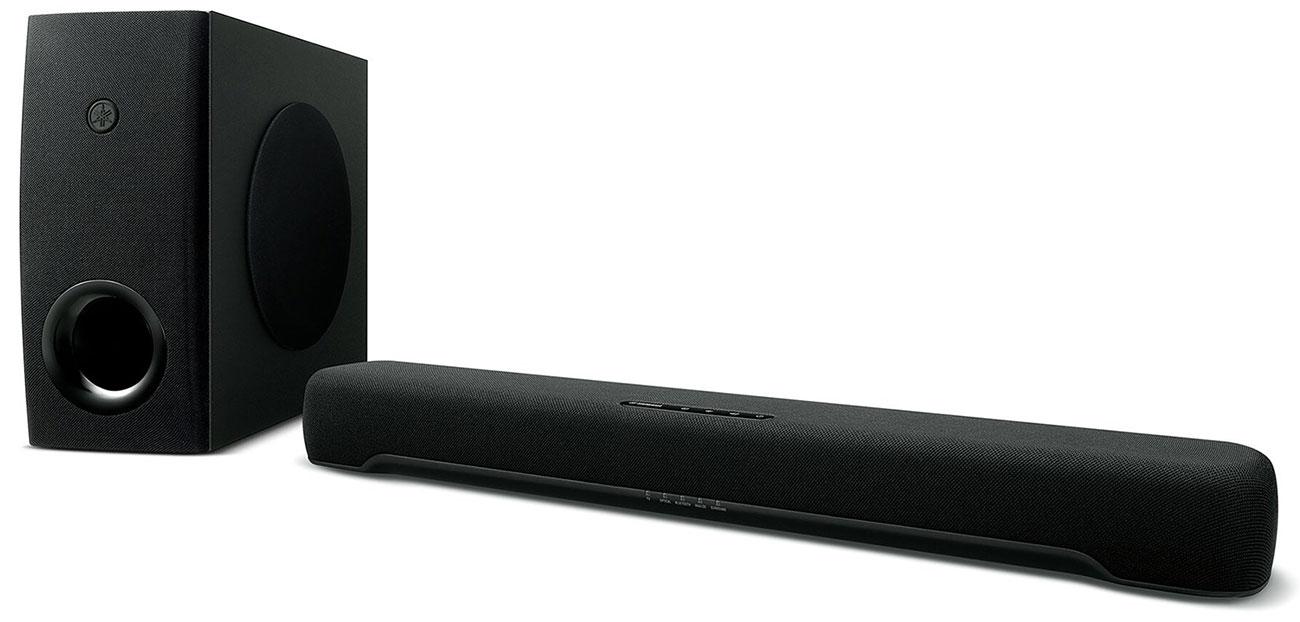

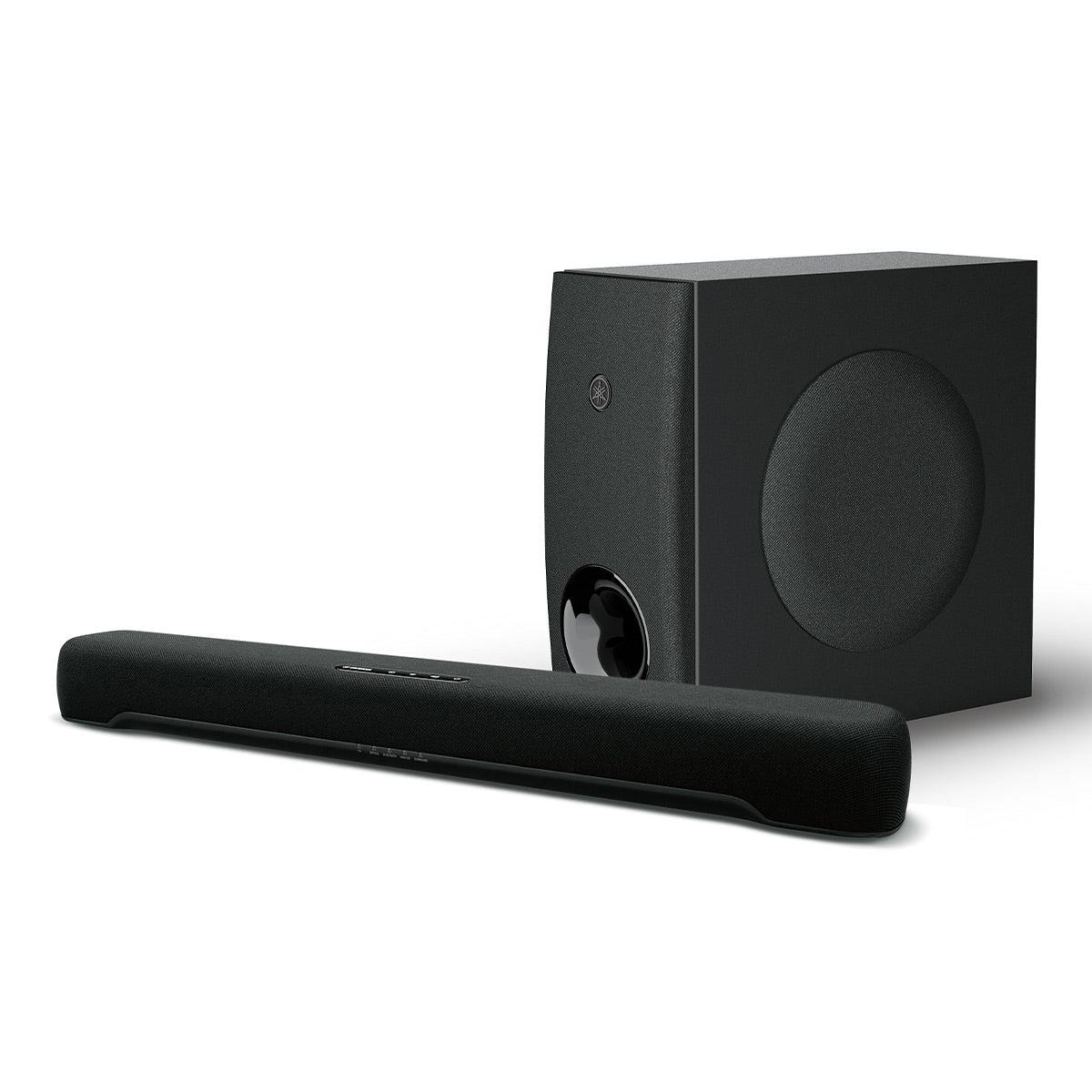
If you've been frustrated with your TV's thin, weak audio, you're definitely not alone. Most modern TVs have terrible built-in speakers because manufacturers prioritize making screens thinner over delivering quality sound. That's where soundbars come in—they're designed to give you dramatically better audio without the complexity of a full surround sound system with wires running everywhere.
But here's the thing: not all soundbars are created equal. The LG S90TR ($797) and Yamaha SR-C30A ($180) represent two completely different approaches to solving your TV audio problems, and choosing between them depends heavily on what you're trying to achieve and how much you want to spend.
Before diving into these specific models, it's worth understanding what separates a basic soundbar from a premium one. The main differences come down to channel configuration, supported audio formats, and physical design.
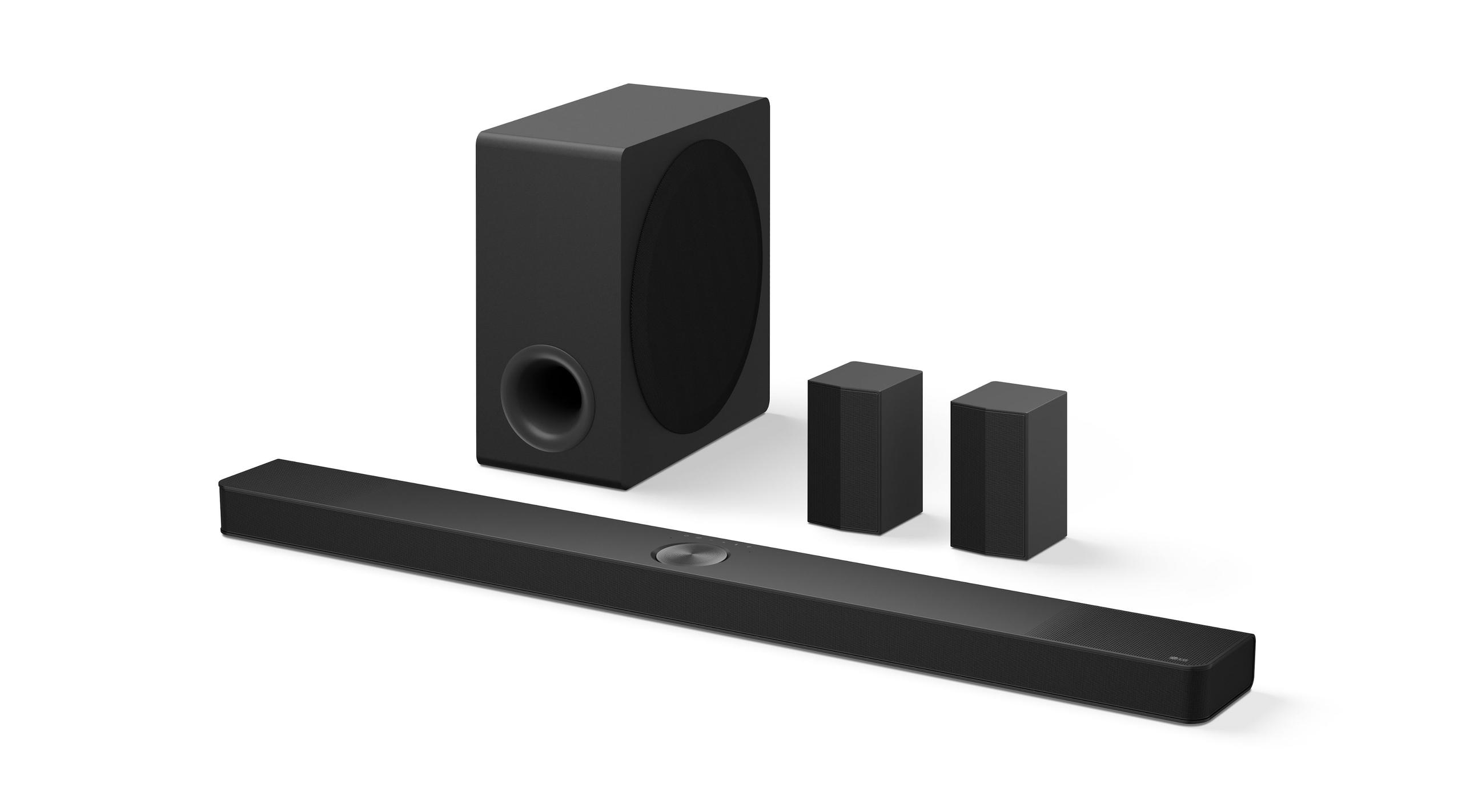
Channel configuration refers to how many separate audio streams a soundbar can handle. A 2.1 system has left and right speakers plus a subwoofer (that's what the ".1" means). A 7.1.3 system like the LG has seven main channels, one subwoofer, and three height channels that fire sound upward to bounce off your ceiling—creating that surround sound effect where you hear helicopters flying overhead in movies.
Audio formats like Dolby Atmos and DTS:X are essentially instructions that tell your soundbar exactly where each sound should appear in 3D space around you. Think of them as GPS coordinates for sound. Without these formats, you're limited to basic left-right stereo or simulated surround effects.
The key considerations when choosing any soundbar are room size, your primary content type (movies vs TV shows), budget, and how much setup complexity you can handle. These two products sit at opposite ends of most of these spectrums.
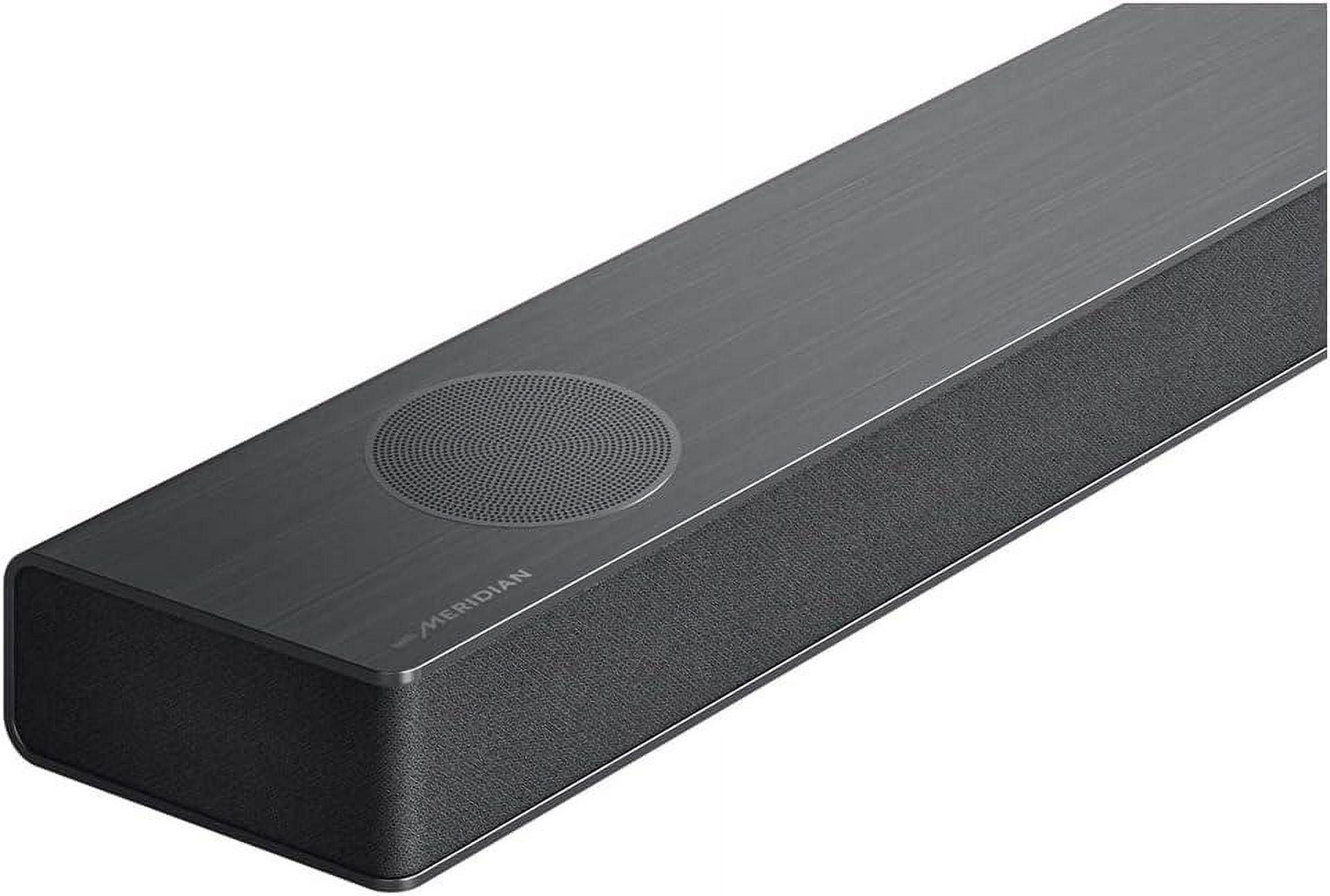
The LG S90TR launched in January 2025 as part of LG's updated soundbar lineup, incorporating lessons learned from their previous S95TR flagship model. It represents LG's push toward making true Dolby Atmos more accessible while maintaining premium build quality and wireless convenience.
The Yamaha SR-C30A, released in mid-2024, takes the opposite approach. Yamaha looked at what most people actually do with soundbars—primarily improve TV dialogue and add some bass—and built a compact, affordable system focused on doing those basics exceptionally well.
Since the Yamaha's release, we've seen incremental improvements in its Bluetooth connectivity and app functionality through firmware updates. The LG, being newer, launched with more advanced processing and better wireless technology from day one, including Wi-Fi 6 support that wasn't common in soundbars even a year ago.
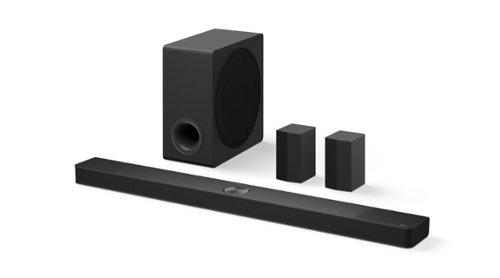
This is where these two products diverge most dramatically. The LG S90TR creates what I can only describe as an audio bubble around your seating area. Its 7.1.3 configuration means you get seven main audio channels (front left/right, center, side surrounds, rear surrounds), one subwoofer channel, and three height channels that fire sound toward your ceiling.
When you're watching a movie with Dolby Atmos soundtrack—think Top Gun: Maverick or Mad Max: Fury Road—the LG can place sounds with pinpoint accuracy. Rain falls from above, cars race from behind you to in front of you, and explosions seem to happen in your room rather than just coming from the TV area. This isn't marketing hype; it's a genuinely different listening experience that makes movies more engaging.
The AI room calibration feature deserves special mention here. The soundbar plays test tones and uses built-in microphones to measure how sound bounces around your specific room, then adjusts its output accordingly. Rooms with high ceilings, hard floors, or lots of furniture all affect how sound travels, and this automatic tuning helps optimize performance without requiring you to become an audio engineer.
The Yamaha SR-C30A, by contrast, works within the limitations of a 2.1 system but does so quite cleverly. Its "3D Movie" mode uses digital signal processing to create the impression of wider soundstage and some height effects, but it's essentially an audio illusion rather than true spatial sound. It's similar to how headphones can simulate surround sound—it works to some degree, but it's not the same as having actual speakers positioned around you.
Raw power numbers tell only part of the story, but they matter more than many people realize. The LG S90TR's 760W total output isn't just about playing louder—it's about having enough headroom to handle the dynamic range in modern movie soundtracks without distortion.
Movie soundtracks often have enormous differences between quiet dialogue scenes and explosive action sequences. Having adequate power means the soundbar doesn't struggle or compress the audio during those intense moments. I've noticed this particularly with Marvel movies, where the difference between Tony Stark having a quiet conversation and Iron Man's suit powering up can be dramatic.
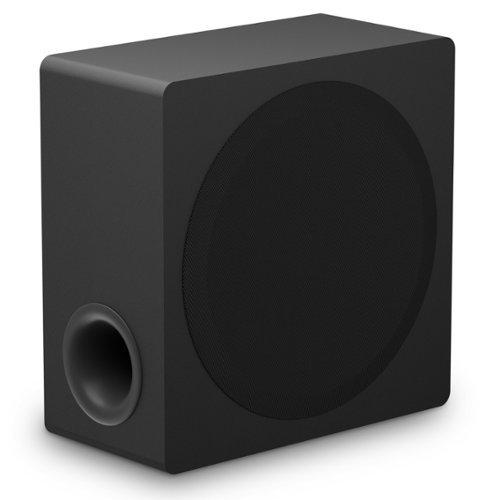
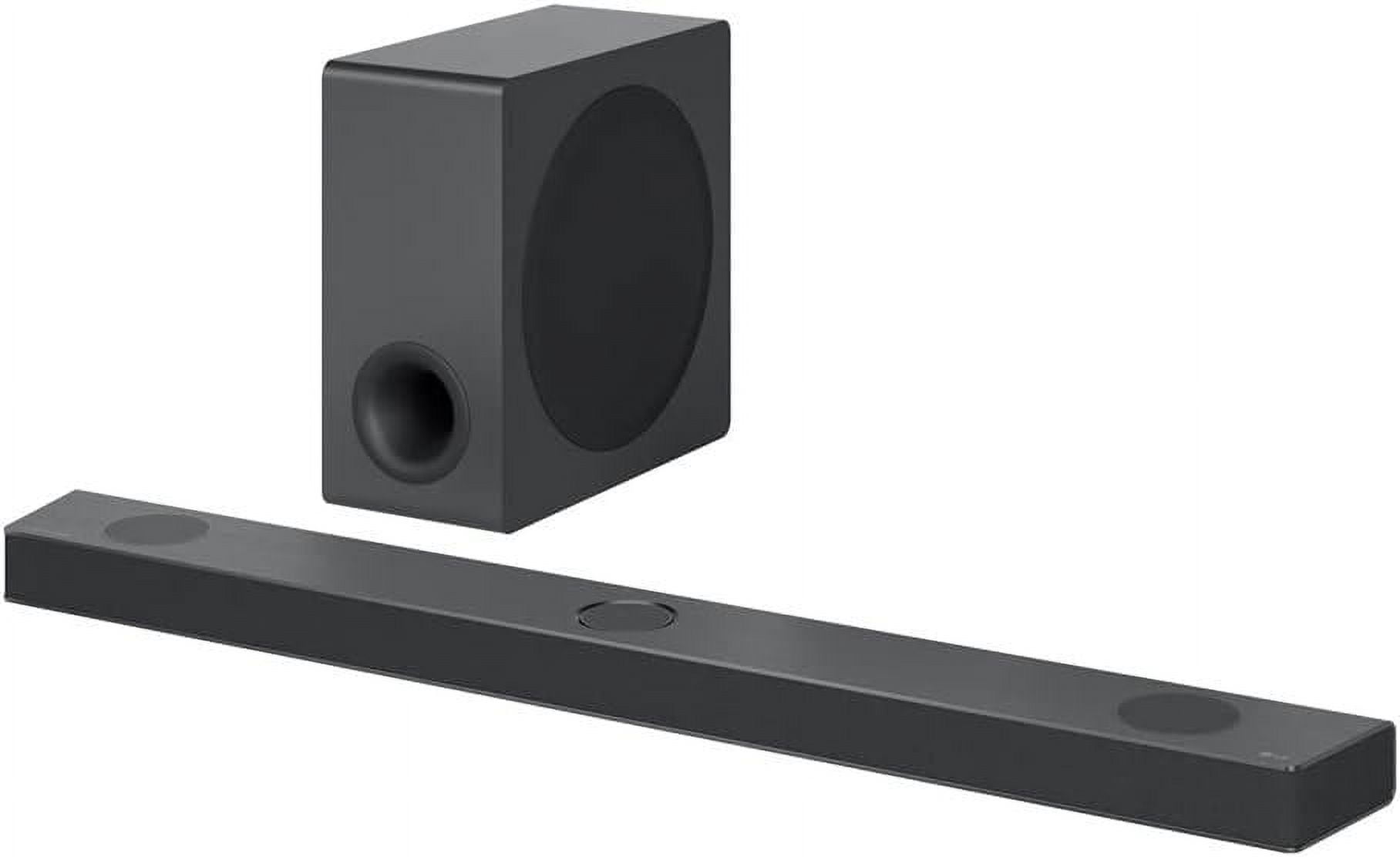
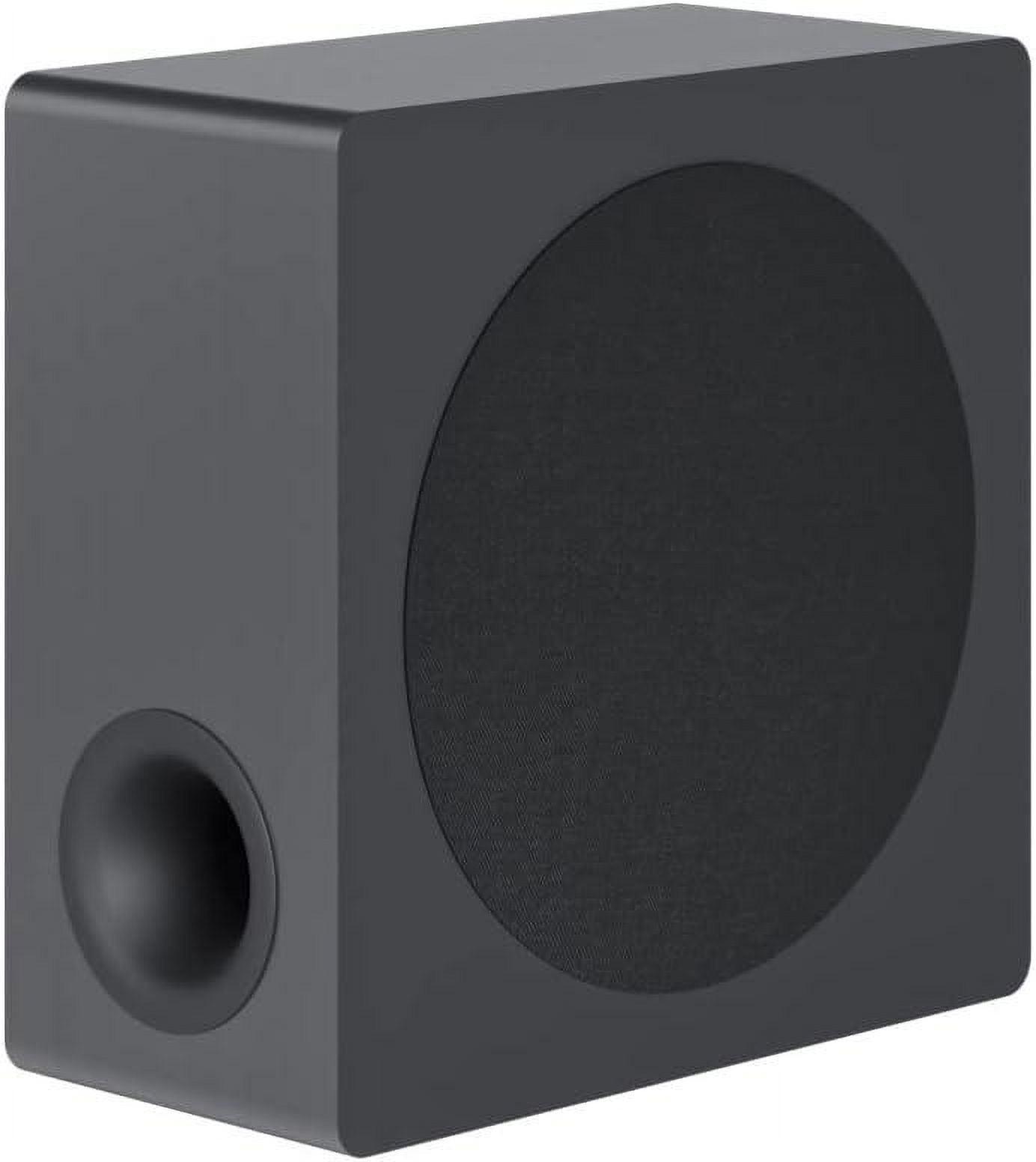
The LG's wireless subwoofer adds substantial low-end extension that you feel as much as hear. This isn't just about making explosions louder—it's about feeling the rumble of a train passing by, or the subtle low-frequency effects that add weight to a dramatic score. The subwoofer connects wirelessly to the main soundbar, which eliminates the need to run cables across your room.
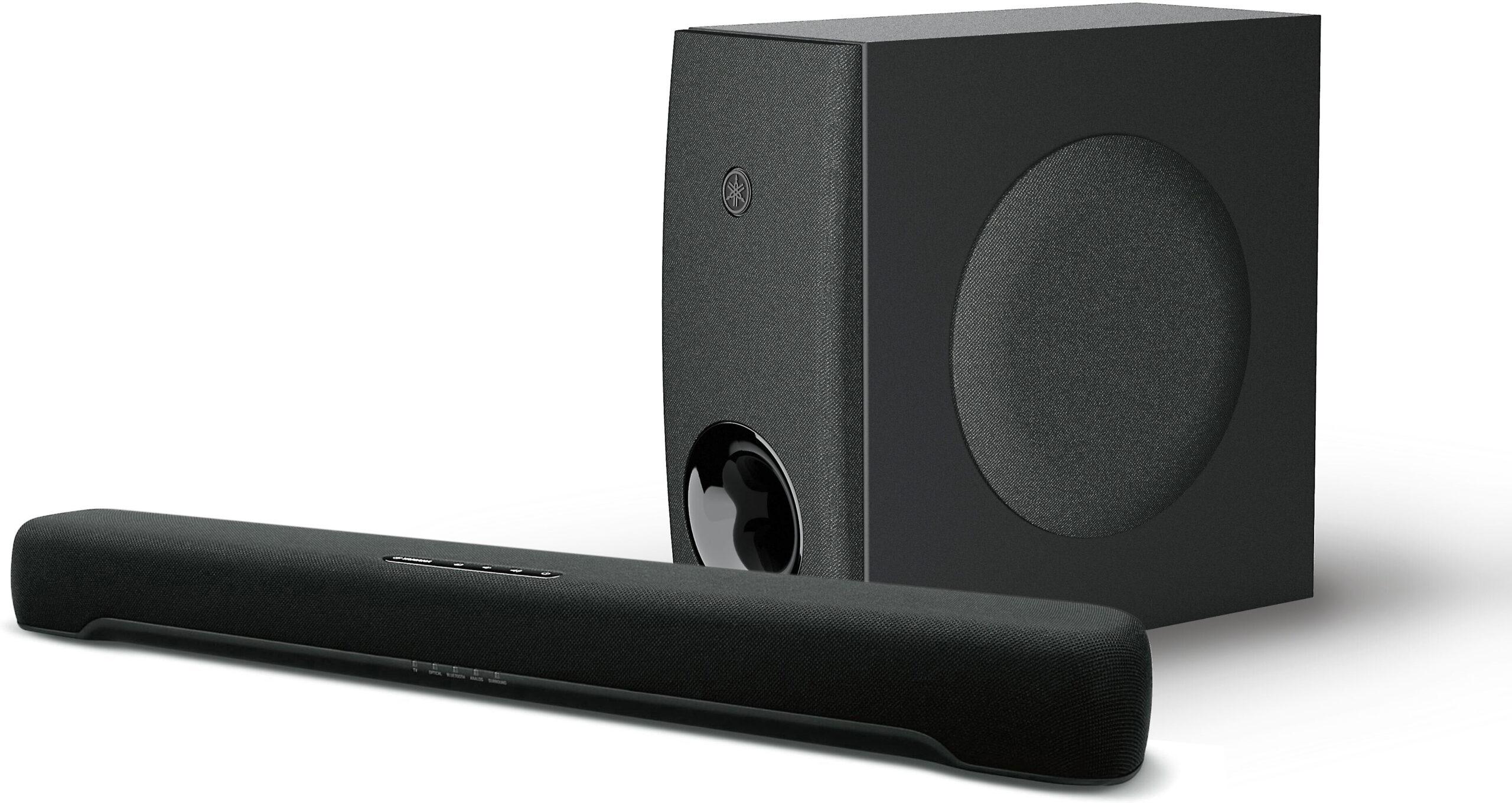
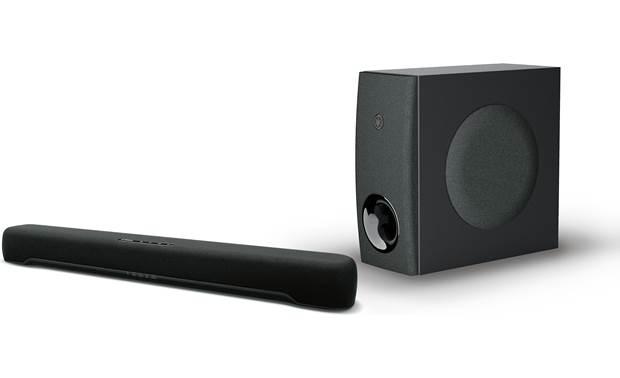
The Yamaha SR-C30A works with roughly 100W total output and a 5.1-inch wireless subwoofer producing 50W. These numbers might seem modest, but Yamaha has engineered this system specifically for smaller spaces where excessive power would actually be counterproductive. In an apartment or smaller living room, this combination provides satisfying bass extension without overwhelming the space or annoying neighbors.
What impressed me about the Yamaha is how well-balanced its sound signature is. Rather than trying to create artificial excitement with boosted bass or treble, it maintains natural frequency response that makes both music and dialogue sound accurate. This approach works particularly well for TV shows and news, where clarity matters more than impact.
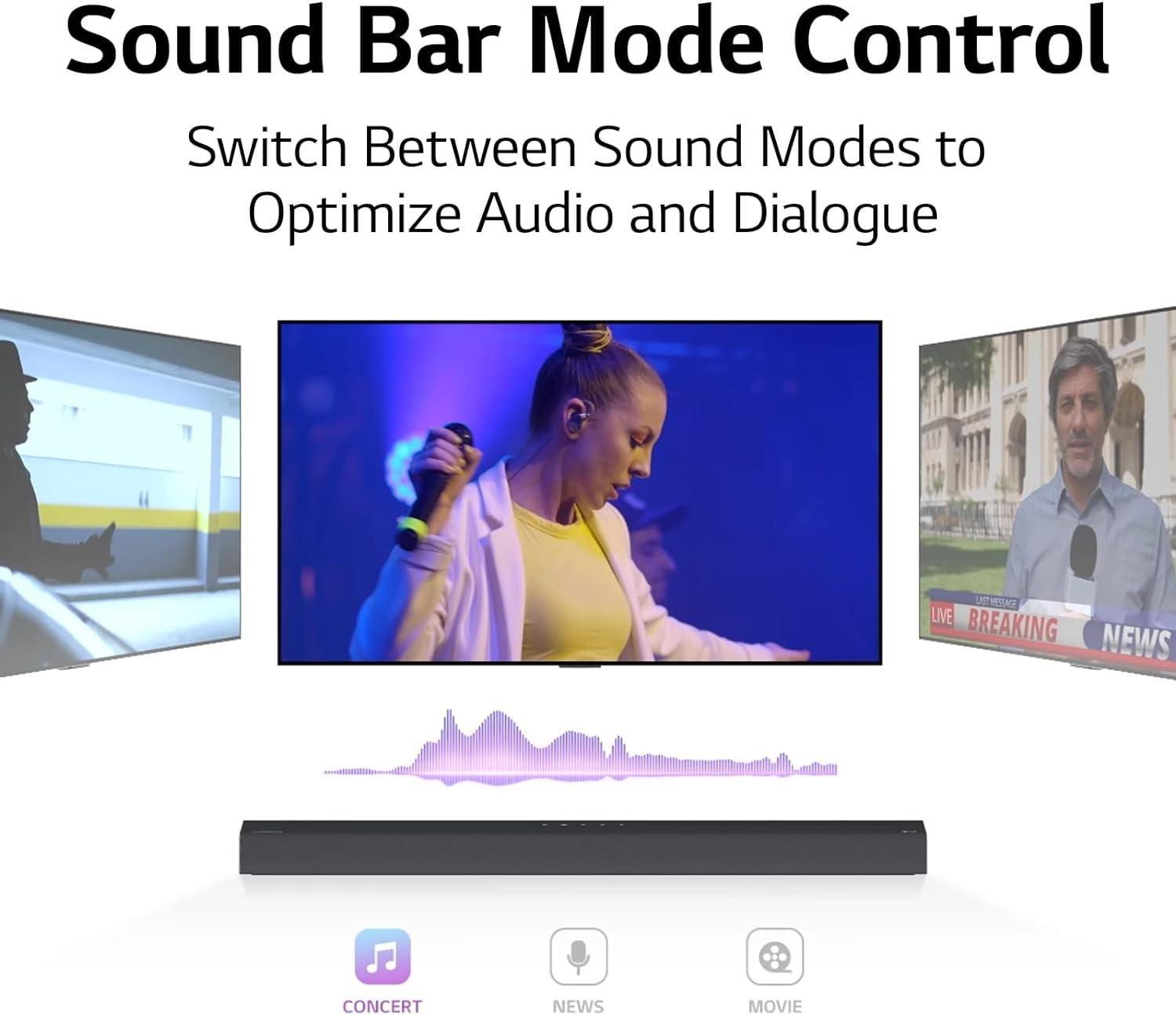
Here's where things get interesting, because dialogue clarity might be the most important factor for many users, even if they don't realize it initially. The Yamaha SR-C30A absolutely excels in this area with its dedicated Clear Voice mode, which uses sophisticated processing to isolate and enhance human speech frequencies.
The technology works by analyzing the audio signal in real-time, identifying speech patterns, and boosting those specific frequencies while reducing competing sounds. It's particularly effective with streaming content, where dialogue often gets buried under background music or sound effects due to how the content is mixed for different playback scenarios.
The LG S90TR handles dialogue well through its dedicated center channel and room calibration, but its more complex processing occasionally works against it. With 13 separate speaker drivers and multiple audio processing algorithms working simultaneously, there are more opportunities for dialogue to get lost in the mix during complex scenes. The soundbar does include a dialogue enhancement mode, but it's not as refined as Yamaha's implementation.
This difference becomes apparent during everyday TV watching. News programs, sitcoms, and drama series all benefit significantly from the Yamaha's dialogue-focused approach. The LG shines with movie content but requires more adjustment when switching between different types of programming.
The technological gap between these products becomes apparent when examining their connectivity options. The LG S90TR includes Wi-Fi connectivity with support for AirPlay 2, Chromecast built-in, and Spotify Connect. This means you can stream music directly from your phone, tablet, or computer without using Bluetooth, which typically offers better audio quality and doesn't require staying within Bluetooth range.
The WOW Orchestra feature deserves special explanation because it's genuinely innovative. When connected to compatible LG TVs, the soundbar can use the TV's built-in speakers as additional channels, creating an even more immersive experience. Instead of the TV speakers being redundant, they become part of a larger audio system. It's like having extra surround speakers without buying additional hardware.
HDMI eARC (enhanced Audio Return Channel) support means the LG can handle uncompressed audio formats and communicate bidirectionally with your TV. This enables features like automatic volume control and the ability to use your TV remote to control soundbar functions seamlessly.
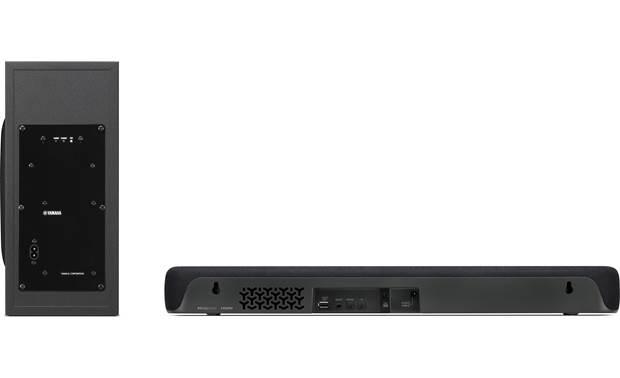
The Yamaha SR-C30A keeps things simpler with Bluetooth 5.0 connectivity that includes multi-point functionality—meaning you can pair two devices simultaneously and switch between them easily. While it lacks Wi-Fi streaming capabilities, the included analog input means you can connect older devices or gaming systems that might not have digital outputs.
Physical setup requirements often determine which soundbar works better in practice, regardless of technical specifications. The LG S90TR requires thoughtful placement of its wireless rear speakers, which need to be positioned behind your primary listening area and plugged into power outlets. This can be challenging in some room layouts, particularly if you have limited electrical outlets or furniture placement constraints.
The soundbar itself measures nearly 50 inches wide, making it suitable for TVs 55 inches and larger. Smaller TVs would look disproportionate with this soundbar, and the wide driver spacing wouldn't work as well in close listening situations.
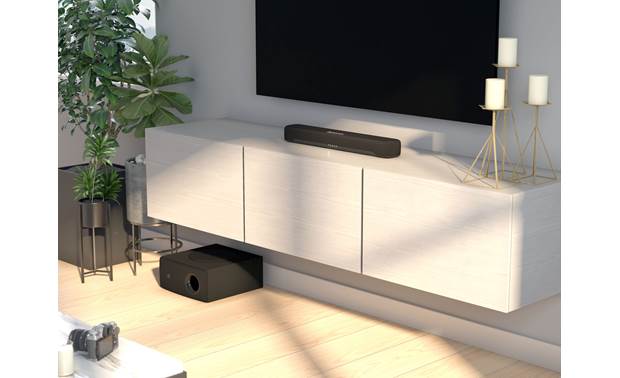
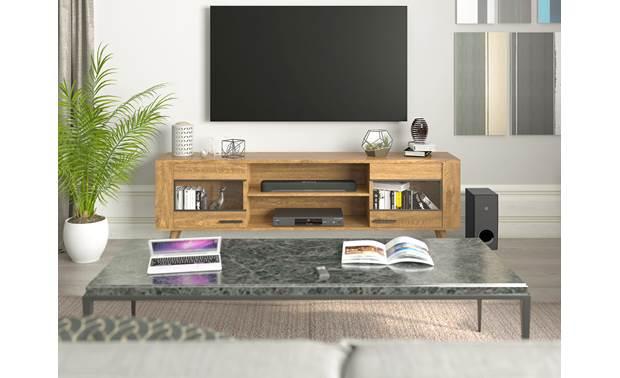
The Yamaha SR-C30A, at just 23.6 inches wide, works well with TVs as small as 32 inches and fits comfortably in spaces where the LG would be overwhelming. Its compact wireless subwoofer can be placed flexibly since it doesn't require precise positioning to work effectively.
I've found that the Yamaha works particularly well in apartments or smaller homes where the LG's rear speakers would be impractical. The wireless subwoofer pairs reliably and doesn't suffer from the connection issues that sometimes plague multi-component systems.
The price difference between these products—$797 vs $180—represents more than just feature differences; it reflects entirely different target markets and use cases.
The LG S90TR justifies its premium pricing through genuine technological advancement. True Dolby Atmos processing, wireless rear speakers, AI room calibration, and extensive connectivity options represent meaningful improvements over basic soundbar functionality. For home theater enthusiasts or anyone who regularly watches movies, the enhanced experience can genuinely transform how you enjoy content.
However, that $617 price difference buys a lot of other home theater improvements. You could get the Yamaha SR-C30A plus a 4K Blu-ray player, or upgrade your streaming device, and still have money left over.
The Yamaha's value proposition centers on doing the basics exceptionally well at an accessible price point. Its dialogue clarity improvements alone can make TV watching more enjoyable, and the wireless subwoofer adds bass impact that most TV speakers completely lack. For many users, these improvements address their primary audio complaints without introducing complexity they don't need.
In a dedicated home theater setup, the LG S90TR makes more sense because it supports the audio formats that make modern movie soundtracks special. Dolby Atmos and DTS:X aren't just marketing buzzwords—they're genuinely different technologies that create more engaging movie experiences when implemented properly.
The soundbar's 4K/120Hz passthrough capability also matters for gaming, particularly with PlayStation 5 or Xbox Series X systems that can output high refresh rate gaming content. This feature ensures you don't lose video quality when connecting gaming systems through the soundbar rather than directly to your TV.
For future-proofing considerations, the LG includes more advanced processing capabilities and wireless standards that should remain relevant longer. Wi-Fi 6 support and HDMI 2.1 features position it better for whatever new technologies emerge in the next few years.
The Yamaha SR-C30A takes a different approach to longevity by focusing on fundamentals that don't change—clear dialogue and balanced sound reproduction. While it may not support the latest audio formats, it does what it does so well that it should remain satisfying for many years.
Choose the LG S90TR if you have a medium to large room, regularly watch movies, own or plan to buy an LG TV, and want an experience that approaches what you'd get in a commercial movie theater. The rear speakers and Dolby Atmos processing create genuinely immersive experiences that make action movies, nature documentaries, and concert films significantly more engaging.
Choose the Yamaha SR-C30A if you primarily watch TV shows and news, live in a smaller space, need something simple and reliable, or want the best possible dialogue clarity at an affordable price. It excels at making everyday TV watching more enjoyable without requiring significant changes to your room layout or entertainment setup.
The decision ultimately comes down to matching your actual usage patterns with the strengths of each product. Both soundbars succeed at their intended purposes—the LG creates cinema-like experiences for movie enthusiasts, while the Yamaha provides practical improvements for everyday TV watching. Understanding which category you fall into will guide you toward the right choice for your situation and budget.
| LG S90TR ($797) | Yamaha SR-C30A ($180) |
|---|---|
| Audio Channels - Determines surround sound capability and immersion level | |
| 7.1.3 channels with dedicated height speakers | 2.1 channels (stereo plus subwoofer) |
| Dolby Atmos Support - Essential for 3D movie theater sound experience | |
| Yes, true Atmos with up-firing height speakers | No, simulated 3D Movie mode only |
| Total System Power - Affects volume capability and dynamic range | |
| 760W total system power | ~100W total output |
| Rear Speakers - Creates genuine surround sound bubble around listeners | |
| Wireless rear speakers included | Not supported |
| Room Calibration - Automatically optimizes sound for your specific space | |
| AI-powered automatic room calibration | Manual sound mode selection only |
| Connectivity Options - Determines streaming and device compatibility | |
| Wi-Fi, AirPlay 2, Chromecast, Bluetooth 5.1, HDMI eARC | Bluetooth 5.0, HDMI ARC, optical inputs |
| Soundbar Dimensions - Must fit your TV size and room layout | |
| 49.2" wide (best for 55"+ TVs) | 23.6" wide (works with smaller TVs) |
| Setup Complexity - Affects installation time and room requirements | |
| Moderate (requires rear speaker placement and multiple outlets) | Simple (soundbar + wireless sub only) |
| Dialogue Enhancement - Critical for clear TV show and movie speech | |
| Center channel with room calibration | Dedicated Clear Voice mode (excellent) |
| Best Use Case - Who should buy each product | |
| Home theater enthusiasts, large rooms, movie lovers | Budget buyers, small spaces, TV-focused use |
| Value Proposition - Cost vs benefit analysis | |
| Premium pricing for true cinema experience | Exceptional value for basic audio upgrade |
The LG S90TR ($797) is significantly better for movies due to its 7.1.3 channel configuration with Dolby Atmos support and wireless rear speakers. This creates true surround sound with overhead effects, making action scenes and dramatic soundtracks much more immersive. The Yamaha SR-C30A ($180) only offers basic 2.1 stereo sound, which works fine for casual movie watching but lacks the cinematic experience.
The primary difference is immersion level and complexity. The LG S90TR is a premium 7.1.3 system with rear speakers that creates theater-like surround sound, while the Yamaha SR-C30A is a compact 2.1 system focused on improving TV dialogue and adding bass. The LG costs about 4x more but delivers a fundamentally different audio experience.
The Yamaha SR-C30A ($180) is ideal for small spaces. At just 23.6 inches wide, it fits with smaller TVs and doesn't overwhelm compact rooms. Its wireless subwoofer provides adequate bass without being excessive. The LG S90TR requires rear speaker placement and works best in medium to large rooms where its 49.2-inch width won't look disproportionate.
Only the LG S90TR ($797) supports true Dolby Atmos with dedicated height channels that bounce sound off your ceiling. The Yamaha SR-C30A doesn't support Dolby Atmos but includes a "3D Movie" mode that simulates some surround effects through digital processing, though it's not comparable to real Atmos.
The Yamaha SR-C30A ($180) is much easier to set up, requiring only the soundbar and wireless subwoofer placement. The LG S90TR involves positioning wireless rear speakers behind your seating area and ensuring multiple power outlets are available, making setup more complex but ultimately more rewarding for the audio experience.
The Yamaha SR-C30A ($180) excels at dialogue clarity with its dedicated Clear Voice mode that specifically enhances speech frequencies. This makes it excellent for TV shows, news, and dialogue-heavy content. The LG S90TR handles dialogue well but is optimized more for movie soundtracks and complex audio mixing rather than pure speech clarity.
The LG S90TR ($797) costs about $617 more than the Yamaha SR-C30A ($180). The LG is worth the premium if you want true home theater immersion, have a suitable room size, and regularly watch movies. For basic TV audio improvement and dialogue clarity, the Yamaha offers exceptional value and addresses most people's primary audio complaints.
The LG S90TR ($797) is better for gaming due to its HDMI eARC support with 4K/120Hz passthrough, making it ideal for PlayStation 5 or Xbox Series X. The surround sound also enhances gaming immersion. The Yamaha SR-C30A works fine for gaming but only offers basic HDMI ARC and stereo sound without the spatial audio benefits.
Yes, both the LG S90TR and Yamaha SR-C30A include wireless subwoofers. However, the LG's subwoofer is more powerful and designed for larger rooms, while the Yamaha's 5.1-inch subwoofer is compact and suitable for smaller spaces. Both eliminate the need for subwoofer cables across your room.
The LG S90TR ($797) offers better music performance with its wider soundstage, multiple drivers, and support for high-resolution audio formats. It also supports Wi-Fi streaming through AirPlay 2 and Chromecast. The Yamaha SR-C30A provides good music quality with balanced sound but is limited to Bluetooth streaming and basic stereo reproduction.
Both soundbars work with any TV brand through HDMI or optical connections. However, the LG S90TR ($797) offers special integration features like WOW Orchestra when paired with LG TVs, allowing the TV's speakers to work alongside the soundbar. The Yamaha SR-C30A provides universal compatibility without brand-specific enhancements.
For a dedicated home theater, choose the LG S90TR ($797) if you have adequate space and budget. Its Dolby Atmos support, rear speakers, and powerful output create a cinema-like experience perfect for movie nights. Choose the Yamaha SR-C30A ($180) if you want significant audio improvement over TV speakers without the complexity, cost, or space requirements of a full surround system.
We've done our best to create useful and informative comparisons to help you decide what product to buy. Our research uses advanced automated methods to create this comparison and perfection is not possible - please contact us for corrections or questions. These are the sites we've researched in the creation of this article: rtings.com - abt.com - youtube.com - bestbuy.com - microcenter.com - buydig.com - bestbuy.com - videoandaudiocenter.com - oceanstateappliance.com - youtube.com - avsforum.com - lg.com - techradar.com - usa.yamaha.com - expertreviews.com - usa.yamaha.com - trustedreviews.com - crutchfield.com - europe.yamaha.com - usa.yamaha.com - shop.usa.yamaha.com - assetserver.net

Privacy Policy
Terms and Conditions - Affiliate Policy
Home Security
© Copyright 2008-2026.
11816 Inwood Rd #1211, Dallas, TX 75244