


If you've ever found yourself cranking up your TV volume just to understand what characters are saying, or missed the rumbling impact of an explosion scene, you're experiencing the limitations of built-in TV speakers. Modern televisions prioritize thin designs over audio quality, leaving many of us with tinny, weak sound that doesn't match the visual experience we're getting from our screens.
Budget soundbars promise to fix this problem without breaking the bank or requiring a complete home theater overhaul. But with hundreds of options available, choosing between different approaches can feel overwhelming. Today, we're diving deep into two popular budget options that represent fundamentally different philosophies: the ultra-simple Amazon Fire TV Soundbar and the more traditional Yamaha SR-C30A soundbar-plus-subwoofer system.
At the time of writing, these products sit at opposite ends of the budget soundbar spectrum, with the Amazon Fire TV Soundbar targeting the ultra-affordable market while the Yamaha SR-C30A costs nearly three times as much. This price gap isn't arbitrary—it reflects completely different approaches to solving your TV audio problems.
Before we compare these specific products, it's worth understanding what you're actually buying when you purchase a soundbar. At its core, a soundbar is a collection of small speakers arranged in a single enclosure designed to sit in front of or below your TV. The goal is to create a wider, clearer soundstage than your TV's built-in speakers can manage while maintaining the simplicity of a single component.
The magic happens through a combination of driver placement (the actual speakers inside the bar), digital signal processing (DSP—basically computer algorithms that manipulate the audio), and sometimes acoustic tricks like bouncing sound off your ceiling or walls. When done well, a good soundbar can create the impression of sound coming from multiple directions, even though all the speakers are pointing straight at you.
The two main approaches in budget soundbars are single-unit designs that try to do everything in one package, and soundbar-plus-subwoofer systems that split duties between a main bar handling dialogue and higher frequencies, and a separate subwoofer dedicated to bass. Each approach has distinct advantages and trade-offs that become crucial when deciding what works best for your space and preferences.
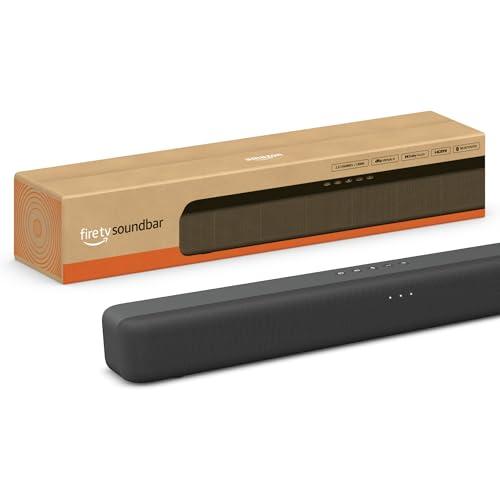
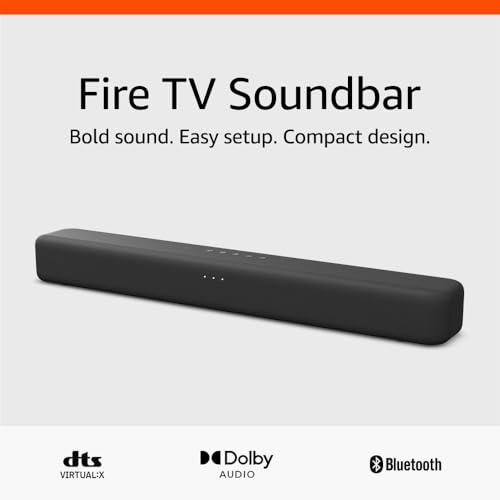
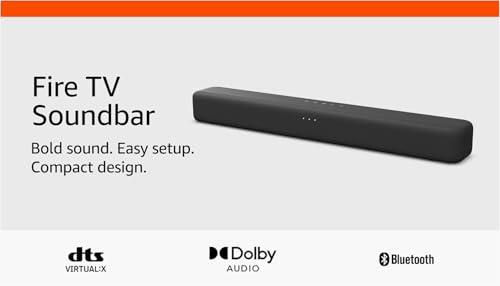
Released in 2023, the Amazon Fire TV Soundbar represents Amazon's entry into the ultra-budget soundbar market. Despite the "Fire TV" branding that might suggest smart TV integration, this is actually a conventional 2.0-channel soundbar with no Alexa functionality or streaming capabilities. The naming is somewhat misleading—while it works well with Fire TV devices, it doesn't offer any special integration features.
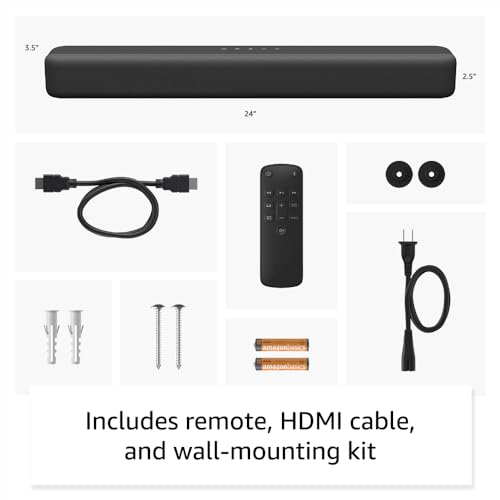
What the Amazon Fire TV Soundbar does offer is simplicity taken to its logical extreme. At just 24 inches wide and 2.6 inches tall, it's designed to disappear below your TV while providing a meaningful but modest upgrade over built-in speakers. The internal design uses two "Racetrack" drivers—oval-shaped speakers that maximize surface area within the compact form factor—powered by 20 watts each.
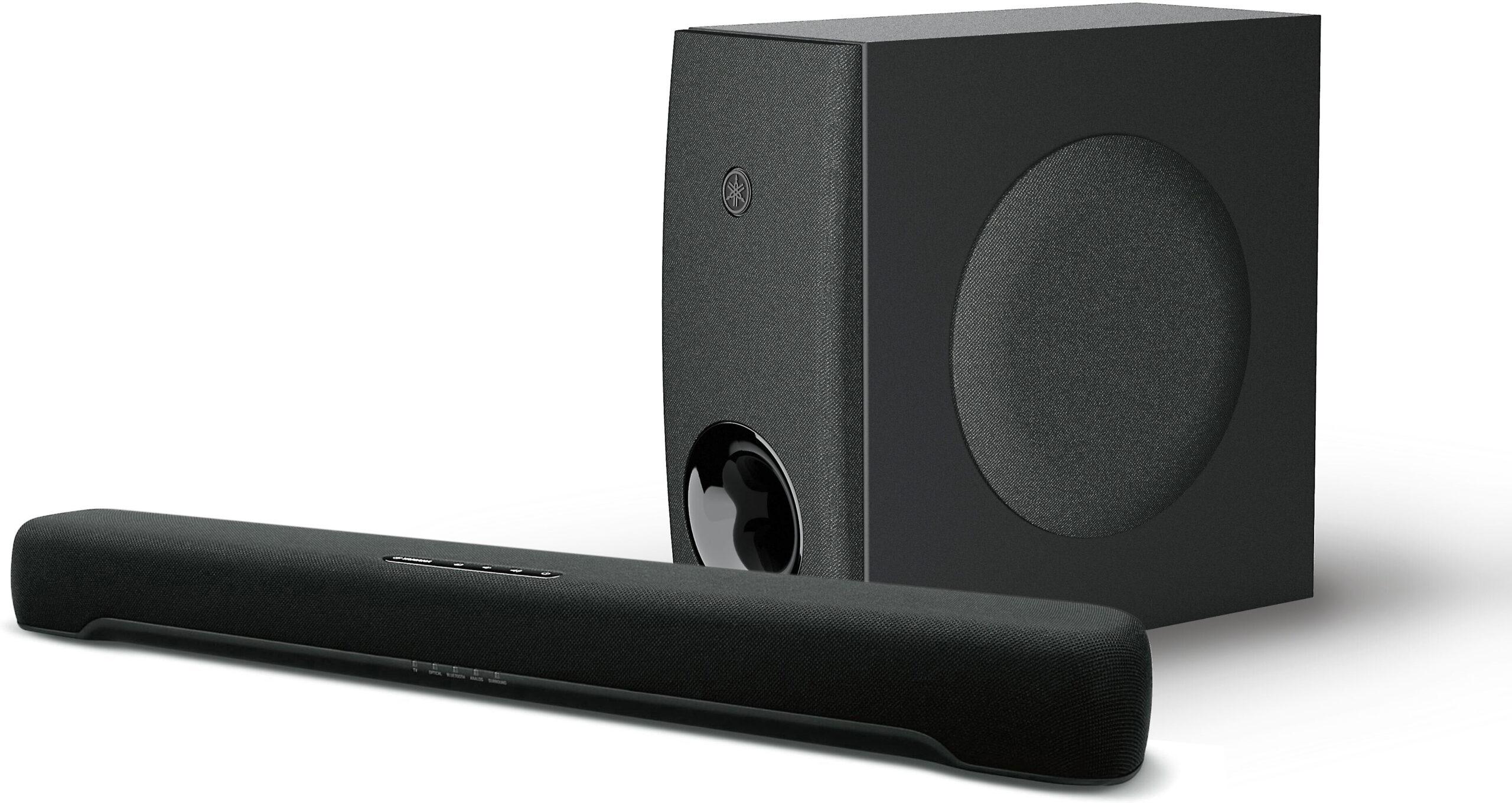
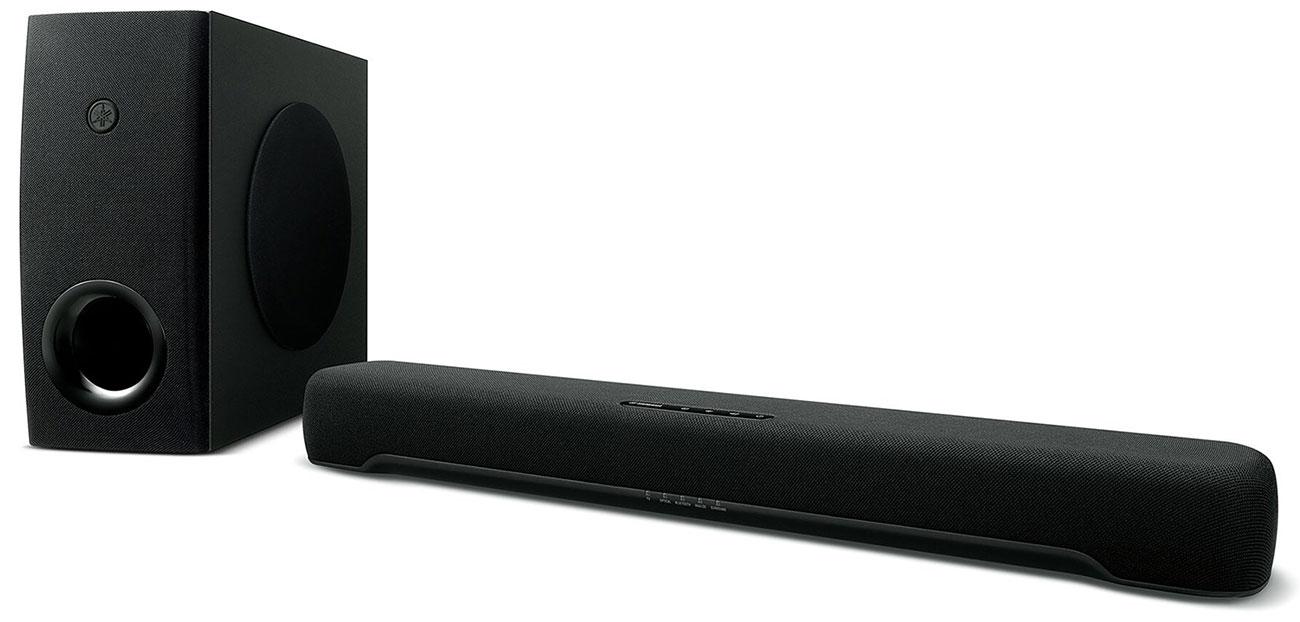
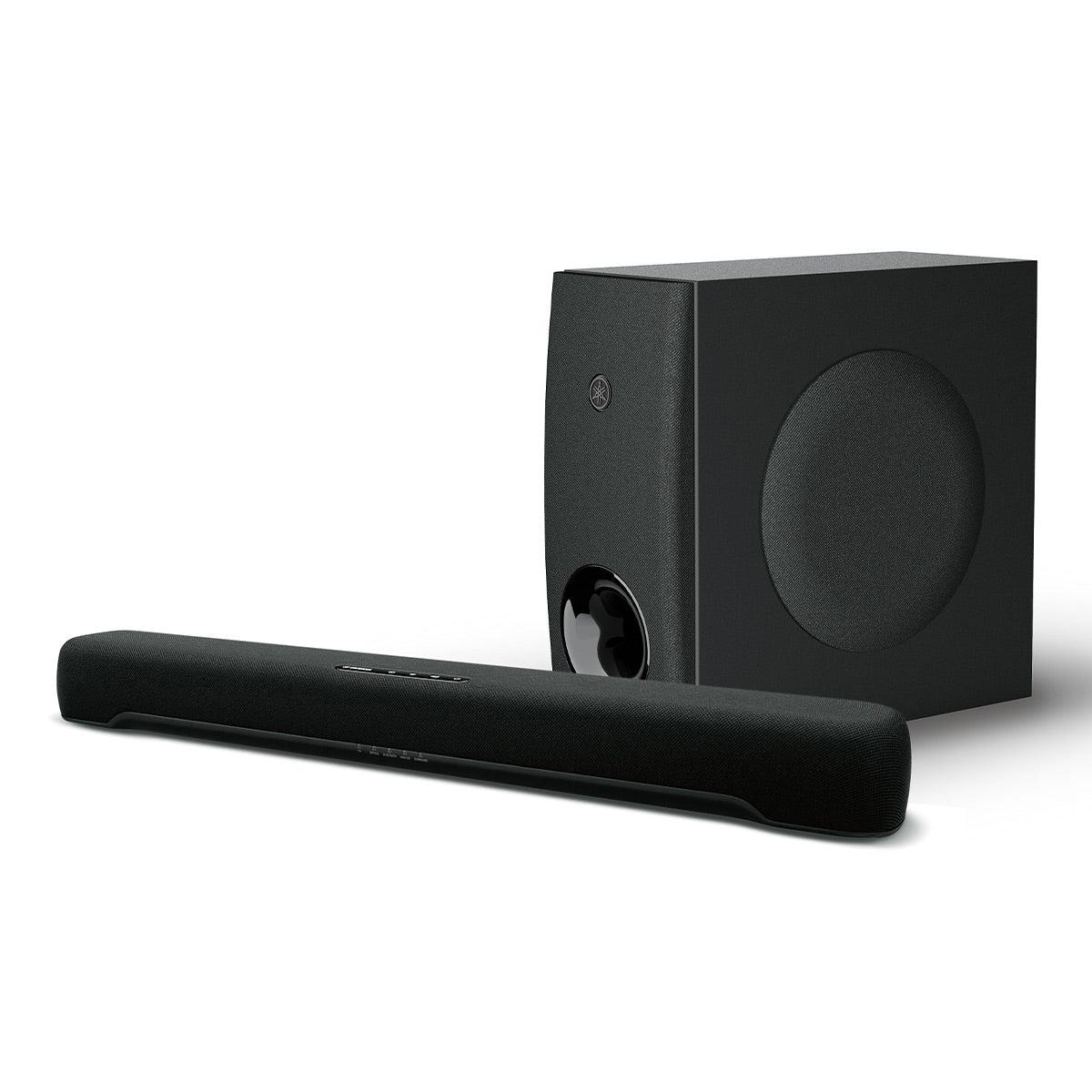
The Yamaha SR-C30A, also released in 2023, takes the more traditional approach of pairing a compact soundbar with a wireless subwoofer. Yamaha, with decades of audio engineering experience, designed this system to provide genuine full-range audio improvement rather than just dialogue enhancement. The main bar handles midrange and treble frequencies through dual 1.8-inch cone drivers, while a separate wireless subwoofer with a 5.1-inch side-mounted driver takes care of bass frequencies below roughly 150Hz.
This division of labor is crucial to understanding why these products sound so different despite similar dimensions for their main units. When you dedicate an entire separate component to bass reproduction, you can achieve low-frequency response that's simply impossible from a single compact unit.
The most significant difference between these products comes down to bass response, and here's where physics becomes unavoidable. Bass frequencies require either large drivers, large enclosures, or clever acoustic engineering to reproduce convincingly. The Amazon Fire TV Soundbar attempts to overcome these limitations through digital signal processing and its bass reflex design (a tuned port that enhances low-frequency output), but there's only so much you can accomplish in a 24-inch enclosure.
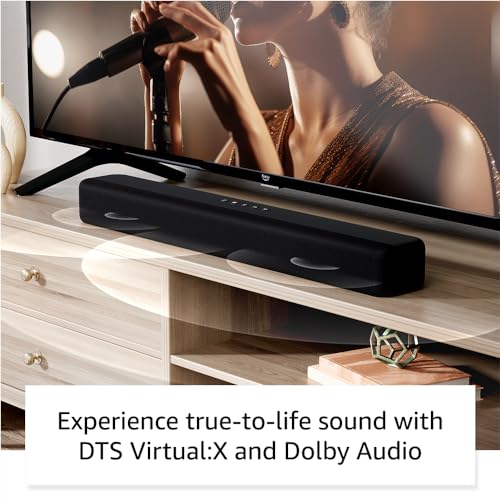
In practice, this means the Amazon Fire TV Soundbar delivers respectable performance for dialogue, music, and the mid-frequency content that makes up most TV audio. The DTS Virtual:X processing—a technology that uses psychoacoustic principles to create the impression of surround sound from just two speakers—does provide some spatial enhancement, though without upfiring drivers or true surround speakers, the effect is subtle.
Where the Amazon Fire TV Soundbar struggles is with movie soundtracks, particularly action sequences where bass response becomes crucial for immersion. Explosions lack impact, music feels thin, and the overall dynamic range (the difference between quiet and loud moments) remains constrained by the physical limitations of small drivers in a compact enclosure.
The Yamaha SR-C30A transforms this equation entirely through its wireless subwoofer. Bass frequencies below 150Hz get handed off to a dedicated 5.1-inch driver in a properly sized enclosure, while the main soundbar focuses on frequencies it can reproduce well. This specialization results in dramatically better performance across the frequency spectrum.
During movie scenes, the difference is immediately apparent. The rumble of thunder, the impact of explosions, and the full weight of orchestral scores come through with authority that the single-unit Amazon Fire TV Soundbar simply cannot match. Music reproduction also benefits significantly, with better definition between bass lines and other instruments.
However, this improvement comes with trade-offs. Several professional reviews note that the Yamaha SR-C30A's 3D Movie mode, intended to create surround effects, actually makes the soundstage feel disjointed rather than immersive. The Clear Voice dialogue enhancement, while effective, can sometimes make voices sound slightly disconnected from the rest of the audio when the subwoofer is active.
Both products support Dolby Digital, the standard surround sound format for most TV content, though they handle it differently. The Amazon Fire TV Soundbar includes DTS Virtual:X processing, which attempts to create height and surround effects from its two front-facing drivers. While this doesn't approach true surround sound, it does provide some spatial enhancement that makes the soundstage feel wider than most TV speakers.
Interestingly, the more expensive Yamaha SR-C30A lacks DTS Virtual:X processing entirely, instead offering various listening modes including Stereo, Standard, 3D Movie, and Game presets. This decision reflects Yamaha's focus on straightforward stereo reproduction and bass enhancement rather than virtual surround processing.
The Amazon Fire TV Soundbar includes three EQ presets (Movie, Music, Dialog) and three bass adjustment levels, providing basic customization for different content types. The Yamaha SR-C30A offers more sophisticated control through its dedicated subwoofer volume adjustment and more comprehensive preset options.
One unique feature of the Yamaha SR-C30A is its Adaptive Low Volume technology, which maintains full-range sound reproduction even at low listening levels. Traditional "night mode" features often compress dynamic range and reduce bass to avoid disturbing others, but Yamaha's approach preserves audio quality while keeping overall volume manageable.
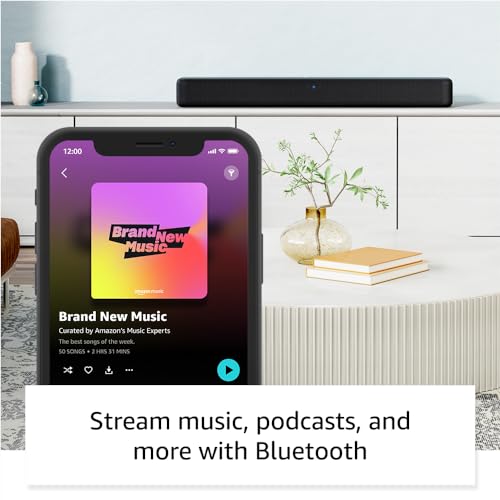
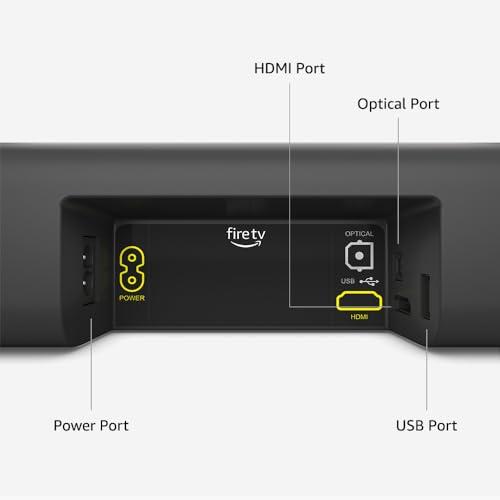
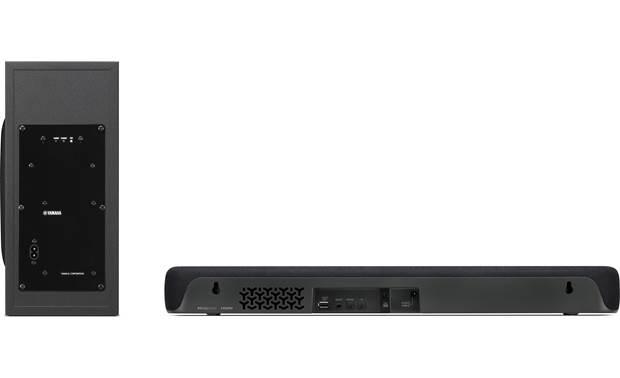
Both soundbars prioritize simplicity in their connectivity approach, though the Yamaha SR-C30A offers more options. The Amazon Fire TV Soundbar provides HDMI ARC (Audio Return Channel—a feature that lets your TV send audio back to the soundbar through the same cable), optical digital input for older TVs, and Bluetooth for wireless music streaming. Setup is genuinely plug-and-play: connect one cable, and you're done.
The Yamaha SR-C30A expands on this with dual optical inputs, allowing you to connect multiple sources simultaneously, plus a 3.5mm analog input for gaming consoles or other devices. The wireless subwoofer eliminates cable runs between components while still requiring you to position and power both units.
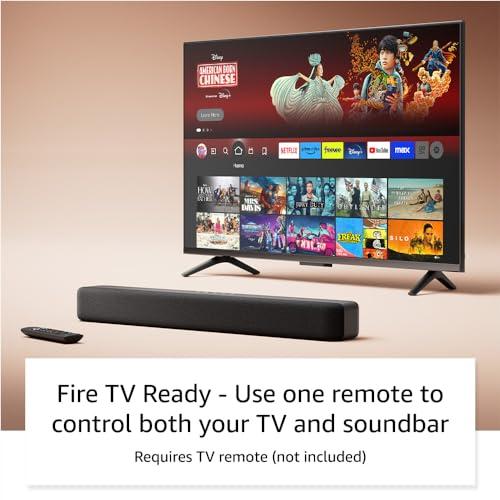
Where the Amazon Fire TV Soundbar disappoints is in its lack of smart features despite the Fire TV branding. There's no Alexa integration, no built-in streaming capabilities, and no special compatibility with Fire TV devices beyond standard HDMI ARC functionality. This feels like a missed opportunity given Amazon's ecosystem of smart home products.
The single-unit design of the Amazon Fire TV Soundbar makes it incredibly flexible for placement. At just 24 inches wide, it works well with TVs from 40-55 inches, and its low profile means it won't block your TV's infrared sensor or lower screen area. The included wall-mounting hardware and keyhole slots make wall installation straightforward.
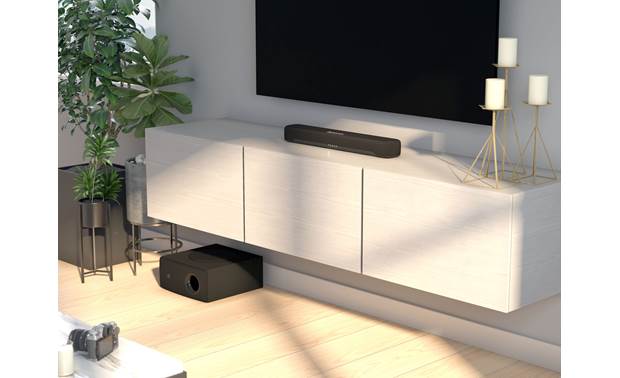
The Yamaha SR-C30A requires more planning due to its two-component design. While the main soundbar is similarly compact at 23.6 inches wide, you need to accommodate the wireless subwoofer somewhere in your room. Fortunately, the subwoofer's relatively narrow profile (6.3 inches wide) allows it to fit beside most furniture, and the wireless connection provides flexibility in placement.
Bass frequencies are omnidirectional, meaning the subwoofer doesn't need to be aimed directly at your listening position. However, corner placement can boost bass output through boundary reinforcement (walls and floors naturally amplify low frequencies), while placement away from walls provides more controlled bass response.
At the time of writing, the Amazon Fire TV Soundbar represents exceptional value for users seeking modest TV audio improvement. You're getting exactly what you pay for: a meaningful upgrade over built-in TV speakers with dead-simple setup and operation. The limitation is that "meaningful" doesn't extend to true bass response or immersive audio experiences.
The Yamaha SR-C30A costs significantly more but delivers substantially better audio performance, particularly for bass response and overall dynamic range. However, at its price point, it competes against more accomplished options from brands like Klipsch and Sony that may offer better overall value. Professional reviews consistently note that while the Yamaha SR-C30A is competent, it's not necessarily the best performer at its price level.
This creates an interesting value proposition gap. The Amazon Fire TV Soundbar maximizes value at the ultra-budget level, while the Yamaha SR-C30A provides genuine performance improvement but faces stiff competition in its price range.
Neither product is designed for expansion into full surround sound systems, but they serve different roles in home theater setups. The Amazon Fire TV Soundbar works well as a bedroom or secondary room solution where modest improvement is sufficient. Its compact size and simple operation make it ideal for spaces where a full audio system would be overkill.
The Yamaha SR-C30A can serve as the primary audio system for smaller living rooms or apartments where a full 5.1 setup isn't practical. The wireless subwoofer provides most of what users miss from TV speakers—genuine bass response and improved dialogue clarity—without the complexity of multiple surround speakers and additional amplification.
For future-proofing considerations, both products support the audio formats you're likely to encounter from streaming services and broadcast TV. However, neither offers advanced features like Dolby Atmos height channels or room correction that are becoming more common in higher-end products.
The Amazon Fire TV Soundbar makes sense for specific scenarios and user types. If you're on a strict budget, live in a small space where a subwoofer isn't practical, or primarily watch dialogue-heavy content like news and talk shows, its simplicity and modest improvement over TV speakers provide good value. It's also excellent for secondary rooms, bedrooms, or rental situations where you can't make permanent installations.
The Yamaha SR-C30A targets users who can accommodate a separate subwoofer and value audio quality improvements that justify spending significantly more. If you watch action movies, play video games, or listen to music through your TV system regularly, the bass response difference is transformative. However, you need space for two components and should be prepared for slightly more complex setup and operation.
Based on our research into professional reviews and user feedback, the choice between these products comes down to your priorities and constraints. The Amazon Fire TV Soundbar succeeds brilliantly at its intended mission: providing maximum TV audio improvement per dollar spent while maintaining absolute simplicity. Its limitations are physics-based rather than design flaws.
The Yamaha SR-C30A delivers genuinely better audio performance, particularly for bass response and overall dynamic range. However, at its price point, it faces competition from alternatives that may offer better overall value or more features.
For most users, I'd recommend starting with a clear assessment of your space and usage patterns. If you can accommodate a subwoofer and regularly watch content that benefits from bass response, the Yamaha SR-C30A provides a more complete audio solution. If simplicity, budget constraints, or space limitations are primary concerns, the Amazon Fire TV Soundbar offers exceptional value within its limitations.
The key insight is recognizing that these products solve different problems rather than competing directly. One prioritizes simplicity and value, while the other focuses on audio quality improvement. Understanding which approach better matches your needs and constraints will lead you to the right choice for your home entertainment setup.
| Amazon Fire TV Soundbar | Yamaha SR-C30A Soundbar with Subwoofer |
|---|---|
| Configuration - Determines bass response and setup complexity | |
| 2.0 channel single unit (no subwoofer) | 2.1 channel with wireless subwoofer |
| Driver Setup - Affects sound quality and frequency range | |
| Two 20W "Racetrack" drivers in main bar | Two 1.8" cone drivers + separate 5.1" subwoofer |
| Total Power Output - Impacts volume and dynamic range | |
| 40W total (2 x 20W) | 90W total (40W soundbar + 50W subwoofer) |
| Dimensions (Main Unit) - Space requirements and TV compatibility | |
| 24" x 2.6" x 3.7" (fits 40-55" TVs well) | 23.6" x 2.6" x 3.8" (similar TV compatibility) |
| Audio Processing - Virtual surround and enhancement features | |
| DTS Virtual:X, Dolby Audio, 3 EQ modes | Dolby Digital, 3D Movie mode, Clear Voice mode |
| Connectivity Options - Determines device compatibility | |
| HDMI ARC, Optical, Bluetooth, USB | HDMI ARC, 2x Optical, 3.5mm analog, Bluetooth 5.0 |
| Setup Complexity - Installation and daily use considerations | |
| Single unit, wall mountable, one cable setup | Two-component system requiring subwoofer placement |
| Bass Response - Critical for movies, music, and gaming | |
| Limited by compact design, bass reflex tuning | Dedicated 5.1" subwoofer provides genuine low-end extension |
| Smart Features - Integration with streaming and voice assistants | |
| None (despite Fire TV branding) | None |
| Best Use Cases - Optimal scenarios for each product | |
| Small spaces, budget-focused, dialogue enhancement | Movies, gaming, music, users wanting real bass improvement |
| Value Proposition - Performance per dollar considerations | |
| Maximum simplicity and TV speaker upgrade per dollar | Significantly better audio quality at higher price point |
The Amazon Fire TV Soundbar is ideal for small apartments due to its single-unit design that requires no additional components or floor space. At just 24 inches wide, it fits easily in compact living spaces without the need to accommodate a separate subwoofer like the Yamaha SR-C30A.
While not essential, a subwoofer dramatically improves bass response for movies, music, and gaming. The Yamaha SR-C30A Soundbar with Subwoofer includes a dedicated wireless subwoofer that provides genuine low-frequency extension that the single-unit Amazon Fire TV Soundbar cannot match due to physical limitations.
The Amazon Fire TV Soundbar offers simpler setup with just one HDMI cable connection and no additional components to position. The Yamaha SR-C30A requires placing both the main soundbar and wireless subwoofer, though the wireless connection eliminates cable runs between components.
The Yamaha SR-C30A delivers significantly better sound quality, particularly for bass response and overall dynamic range, thanks to its dedicated subwoofer. The Amazon Fire TV Soundbar provides clear dialogue improvement over TV speakers but lacks the full-range audio performance of the Yamaha system.
The Yamaha SR-C30A Soundbar with Subwoofer excels for movie watching due to its wireless subwoofer that reproduces the low-frequency effects crucial for action scenes and immersive audio. The Amazon Fire TV Soundbar improves dialogue clarity but cannot deliver the impactful bass that enhances the cinematic experience.
Both the Amazon Fire TV Soundbar and Yamaha SR-C30A work with any TV that has HDMI ARC or optical audio outputs. Despite its name, the Amazon model doesn't require Fire TV devices and functions as a standard soundbar with universal TV compatibility.
Value depends on your needs: the Amazon Fire TV Soundbar maximizes improvement per dollar for basic TV audio enhancement, while the Yamaha SR-C30A provides substantially better audio performance at a higher price point, making it better value for users prioritizing sound quality.
Both soundbars support Bluetooth wireless streaming from smartphones and tablets. The Yamaha SR-C30A features Bluetooth 5.0 with multi-point connectivity for seamless device switching, while the Amazon Fire TV Soundbar offers standard Bluetooth music streaming capabilities.
The Yamaha SR-C30A Soundbar with Subwoofer provides a better gaming experience due to its dedicated Game mode and subwoofer that delivers impactful bass for explosions and environmental effects. The Amazon Fire TV Soundbar offers basic audio improvement but lacks the dynamic range that enhances gaming immersion.
The Amazon Fire TV Soundbar requires minimal space at just 24 inches wide and can mount on walls. The Yamaha SR-C30A needs space for both the 23.6-inch main bar and the wireless subwoofer, which measures 6.3 inches wide and can be placed flexibly around your room.
Both soundbars significantly improve dialogue clarity over TV speakers. The Yamaha SR-C30A includes a dedicated Clear Voice mode for enhanced speech reproduction, while the Amazon Fire TV Soundbar offers a Dialog EQ mode that emphasizes vocal frequencies for clearer conversation.
Neither the Amazon Fire TV Soundbar nor the Yamaha SR-C30A Soundbar with Subwoofer can be expanded with additional speakers for true surround sound. Both are complete systems designed to provide optimal performance in their current configurations without upgrade paths to larger home theater setups.
We've done our best to create useful and informative comparisons to help you decide what product to buy. Our research uses advanced automated methods to create this comparison and perfection is not possible - please contact us for corrections or questions. These are the sites we've researched in the creation of this article: rtings.com - developer.amazon.com - stereoguide.com - developer.amazon.com - techradar.com - hometechnologyreview.com - whathifi.com - youtube.com - whathifi.com - wirelessplace.com - hometechnologyreview.com - dolby.com - aboutamazon.com - developer.amazon.com - community.anker.com - youtube.com - cordbusters.co.uk - techradar.com - usa.yamaha.com - expertreviews.com - usa.yamaha.com - trustedreviews.com - crutchfield.com - europe.yamaha.com - usa.yamaha.com - shop.usa.yamaha.com - assetserver.net

Privacy Policy
Terms and Conditions - Affiliate Policy
Home Security
© Copyright 2008-2026.
11816 Inwood Rd #1211, Dallas, TX 75244