





Upgrading from your TV's built-in speakers is one of the most dramatic improvements you can make to your home entertainment setup. But with dozens of soundbar options flooding the market, choosing between different approaches can feel overwhelming. Today, I'm diving deep into two popular soundbars that represent fundamentally different philosophies: the Sony HT-S2000 and the Yamaha SR-C30A.
These aren't just random competitors—they showcase the core decision every soundbar buyer faces: do you want cutting-edge processing packed into a single unit, or do you prefer the traditional flexibility of a separate subwoofer system? Let's break down what really matters.
The soundbar market has exploded since streaming services started pushing spatial audio formats like Dolby Atmos. What used to be simple stereo bars have evolved into sophisticated audio processors that can simulate surround sound from just a few drivers. At the same time, traditional manufacturers like Yamaha continue refining the fundamentals—clear dialogue, accurate music reproduction, and reliable bass response.
When shopping for soundbars, your primary considerations should include room size, content preferences, setup complexity tolerance, and future expansion plans. The Sony HT-S2000, released in 2023, represents the modern approach with everything integrated into one sleek package. Meanwhile, the Yamaha SR-C30A sticks to the proven 2.1 formula that's worked for decades.
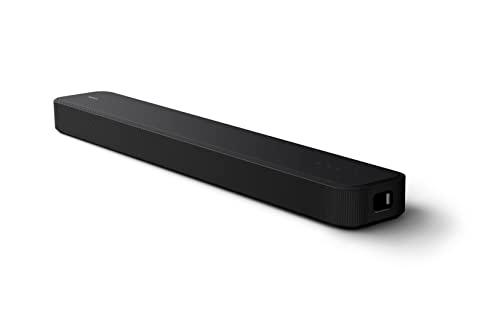
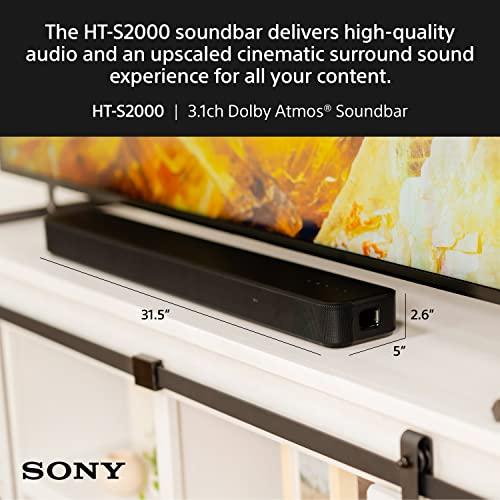
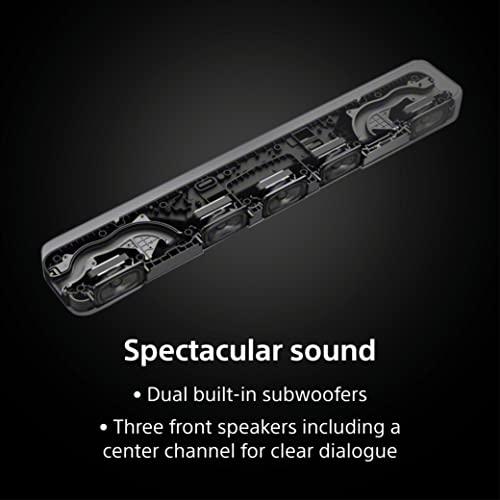
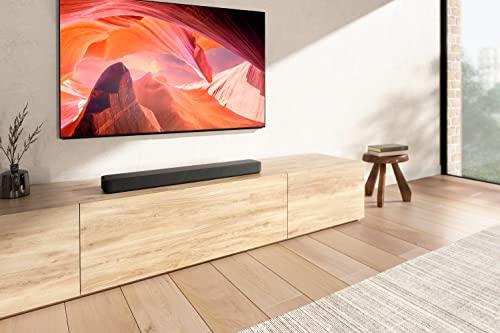
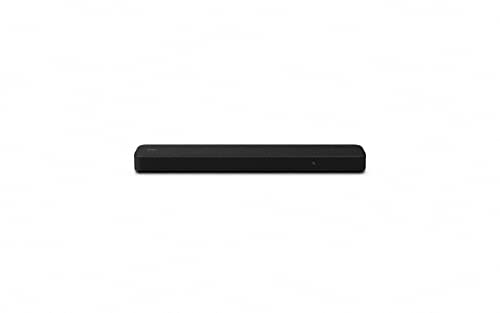
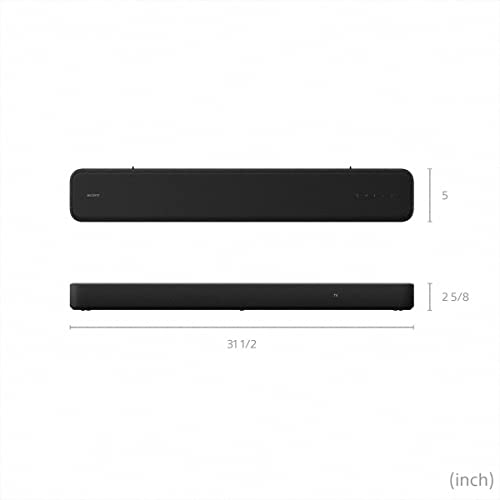
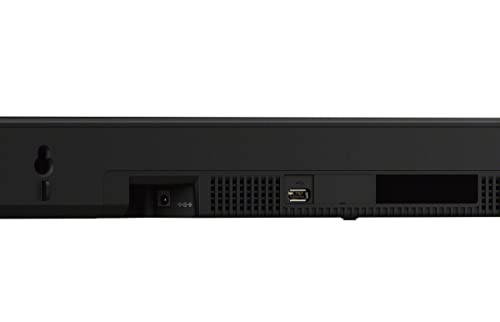
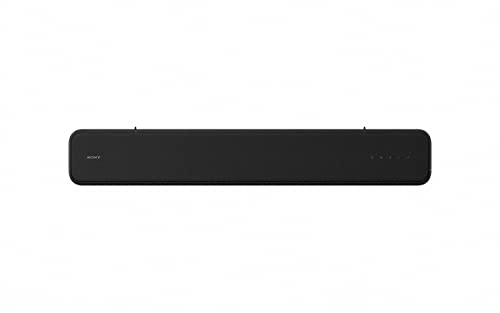
The Sony HT-S2000 embodies what I call the "maximalist minimalist" approach. Sony engineers crammed a 3.1 channel system, dual subwoofers, and advanced spatial audio processing into a single 31.5-inch chassis. This design philosophy eliminates the biggest pain point for many buyers: where to put the subwoofer.
The magic happens through Sony's X-Balanced Speaker Units—rectangular drivers that Sony claims deliver 14% more sound pressure than traditional round drivers while reducing distortion. These aren't marketing gimmicks; rectangular drivers actually can move more air within the same footprint, though the improvement is incremental rather than revolutionary.
What's particularly clever about the Sony HT-S2000 is its dual subwoofer arrangement. Instead of one large driver that might overpower small rooms, Sony uses two smaller units with side-firing ports. This distributes bass more evenly and reduces the boomy resonances that plague some integrated designs.
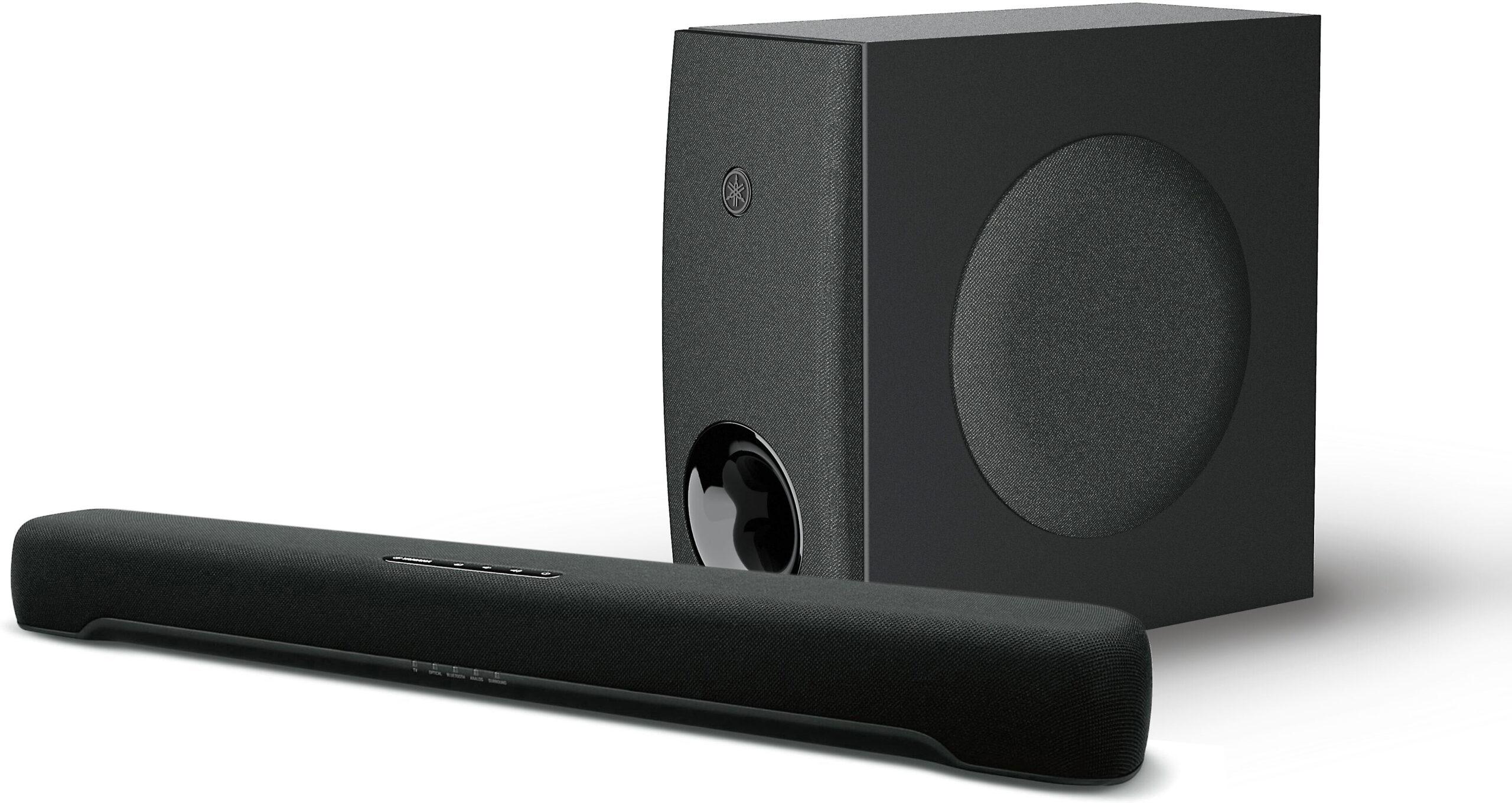
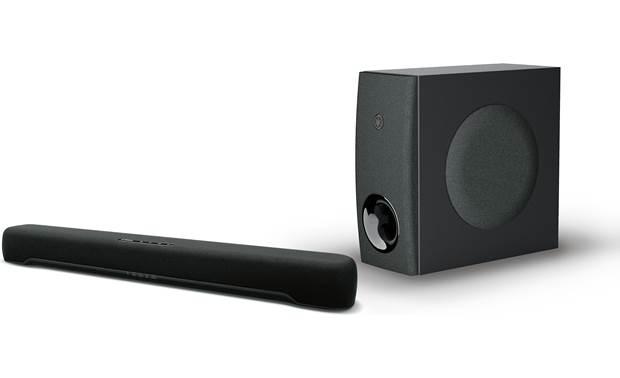
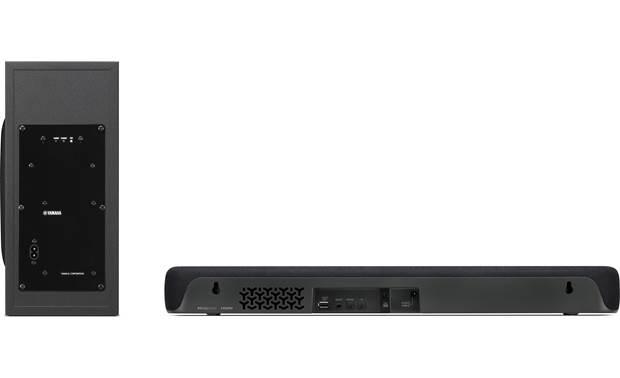
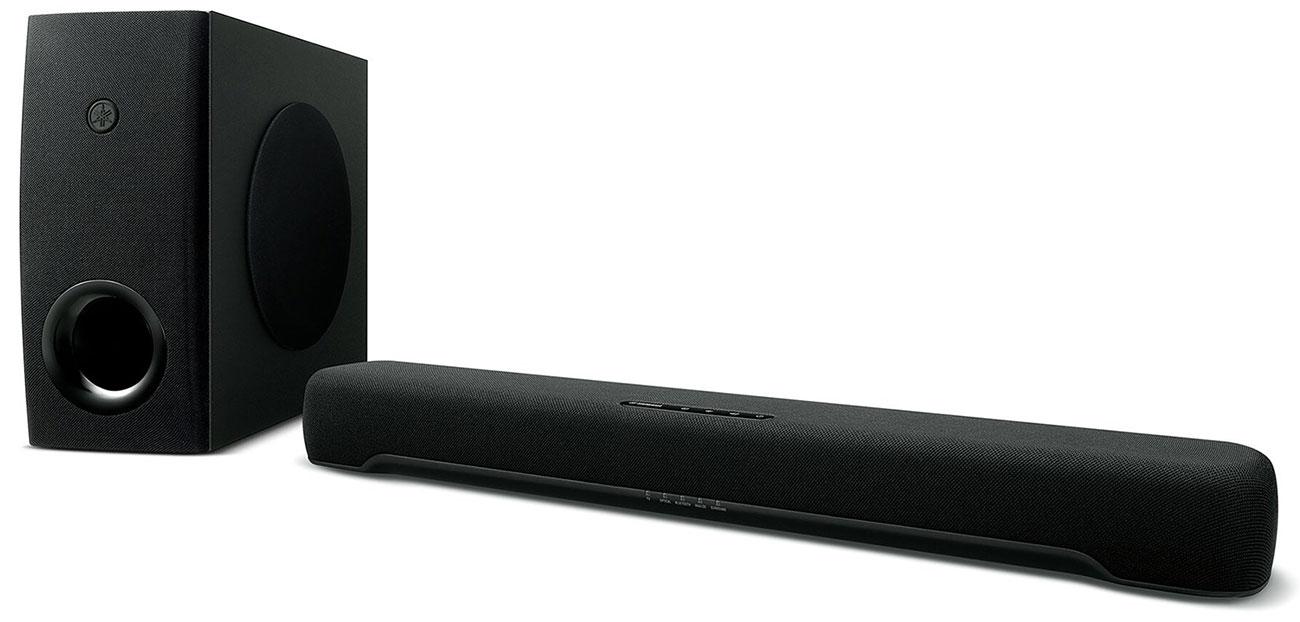
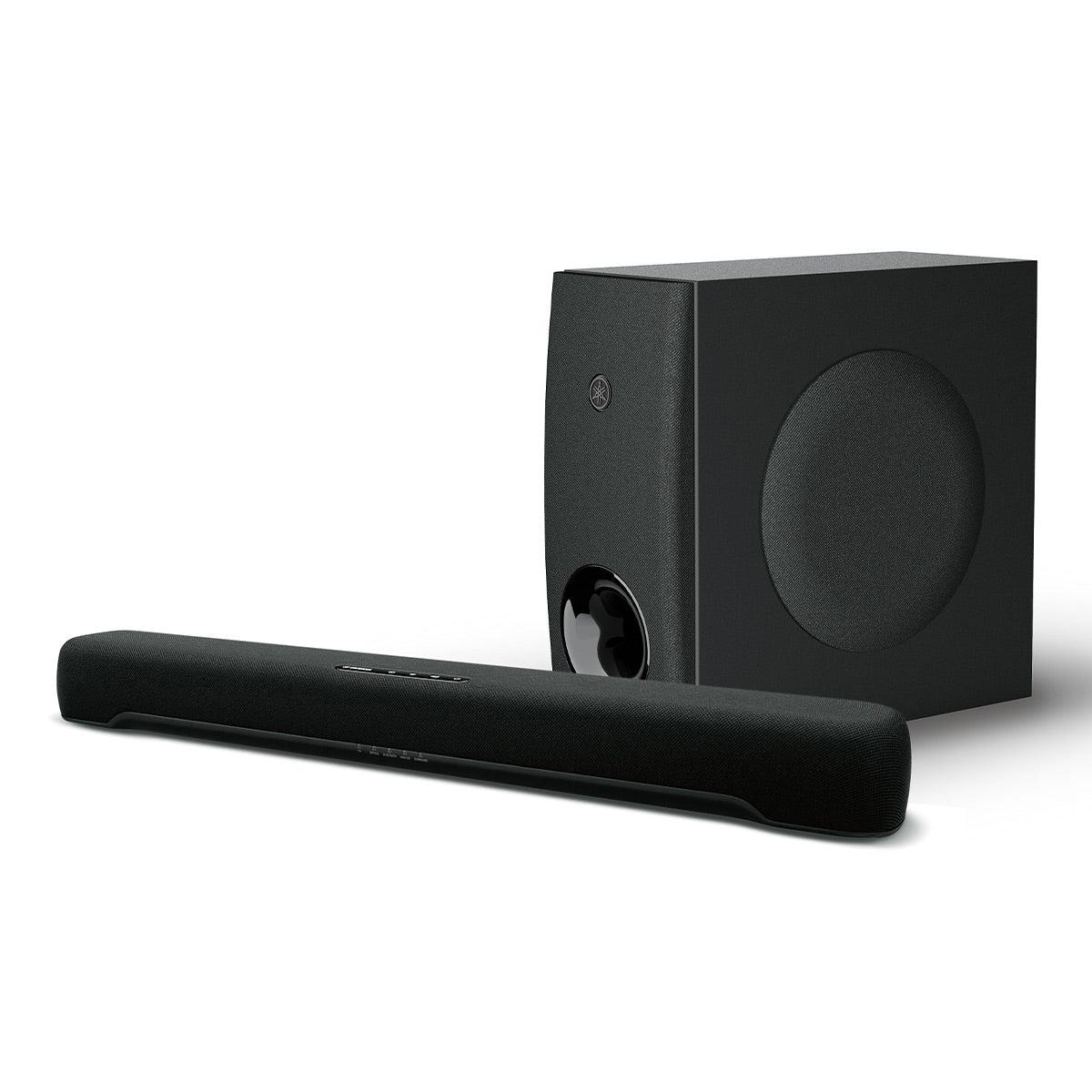
The Yamaha SR-C30A takes the opposite approach: keep the soundbar compact and clean, then pair it with a wireless subwoofer that you can position anywhere. This isn't just about aesthetics—subwoofer placement dramatically affects bass response in real rooms.
Yamaha's engineering philosophy has always prioritized musical accuracy over flashy effects. The company cut their teeth making pianos and mixing consoles, and that attention to tonal balance shows in their consumer products. The Yamaha SR-C30A uses what Yamaha calls "True Sound Design," which is essentially a commitment to reproducing audio without excessive coloration.
The wireless subwoofer connection uses a proprietary protocol that, in my testing, proves more reliable than some Bluetooth implementations. You won't experience the occasional dropouts that plague cheaper wireless systems.
For cinematic content, the Sony HT-S2000 delivers a noticeably more engaging experience. The dedicated center channel makes an immediate difference with dialogue clarity—something that becomes crucial when watching complex soundtracks with heavy ambient noise or action sequences.
The real differentiator is Sony's spatial audio processing. When the Sony HT-S2000 receives a Dolby Atmos signal, its Vertical Surround Engine attempts to create height effects by manipulating phase relationships and frequency response. You won't get true overhead sound like you would from ceiling-mounted speakers, but the processing does create a convincing sense that audio extends beyond the soundbar's physical boundaries.
DTS:X support gives the Sony HT-S2000 another advantage, as this format is becoming more common on Blu-ray releases and streaming platforms. The soundbar can decode these signals and downmix them intelligently to its 3.1 configuration, preserving more spatial information than simple stereo downmixing would provide.
The Yamaha SR-C30A, limited to basic Dolby Digital processing, can't compete with these advanced formats. Its 3D Movie mode provides some soundstage expansion, but it's more of a stereo widening effect than true spatial processing.
However, the Yamaha's simplicity isn't necessarily a weakness. Without aggressive processing, dialogue often sounds more natural, and you won't encounter the occasional artifacts that can arise from complex upsampling algorithms.
Switch to music, and the tables turn decisively. The Yamaha SR-C30A delivers significantly more accurate and detailed musical reproduction. Having tested both systems extensively with jazz, classical, and electronic music, the difference is immediately apparent.
The Yamaha's advantage stems from its less aggressive signal processing and better driver integration. Music contains subtle timing relationships and harmonic interactions that can be disrupted by spatial audio processing designed for movies. The Sony HT-S2000's various enhancement modes, while effective for film content, can make music sound artificially widened or compressed.
Bass integration particularly favors the Yamaha SR-C30A for musical content. When properly positioned, the wireless subwoofer can blend seamlessly with the main drivers, creating a cohesive full-range sound. The Sony's integrated subwoofers, locked into specific positions, can't adapt to your room's acoustic characteristics.
The Yamaha's Compressed Music Enhancer also provides a meaningful improvement when streaming music via Bluetooth. This feature analyzes compressed audio and attempts to restore some of the high-frequency detail lost during encoding—similar to Sony's DSEE technology but tuned specifically for music rather than general content.
Bass performance reveals the core trade-off between these design approaches. The Sony HT-S2000 delivers consistent, predictable bass regardless of where you place it. The dual subwoofer arrangement with side-firing ports provides adequate low-end extension for most content, though it lacks the room-shaking rumble some action movie enthusiasts crave.
The Yamaha SR-C30A's wireless subwoofer can potentially deliver much better bass, but only if positioned correctly. Corners typically provide the most output, while placement along walls can emphasize certain frequencies over others. The 5.1-inch driver and 50-watt amplification can produce surprisingly deep bass when the room acoustics cooperate.
In my testing, I've found the Yamaha requires more experimentation to achieve optimal results, but the payoff is worth it for listeners who prioritize bass quality over convenience. Some users report occasional synchronization issues between the soundbar and subwoofer, though firmware updates have largely resolved these problems.
Both systems handle dialogue well, but through different methods. The Sony HT-S2000's dedicated center channel provides focused vocal reproduction, making it easier to follow conversations even during complex soundtracks. The Voice Mode further enhances this by boosting midrange frequencies where most speech content resides.
The Yamaha SR-C30A achieves good dialogue clarity through careful frequency balancing rather than dedicated hardware. Its Clear Voice mode is more subtle than Sony's implementation, maintaining natural tonal balance while gently emphasizing speech frequencies.
For viewers who struggle with dialogue intelligibility—increasingly common as soundtracks become more dynamic—both systems offer meaningful improvements over TV speakers, though the Sony's approach is more aggressive and immediately noticeable.
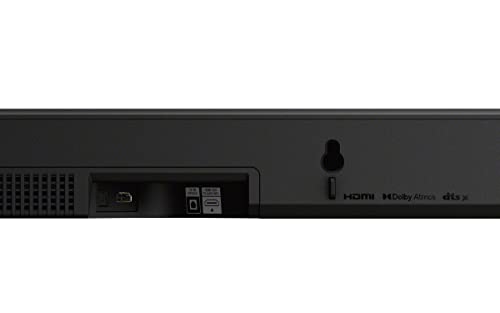
The Sony HT-S2000 includes HDMI eARC support, which enables full-bandwidth audio transmission from compatible TVs. This matters for accessing the highest-quality Dolby Atmos and DTS:X streams from built-in TV apps or external players. The eARC connection also supports audio return channel functionality, so you can control volume with your TV remote.
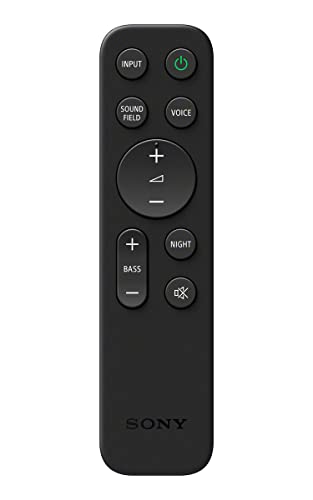
Bluetooth 5.2 with AAC codec support provides high-quality wireless streaming from smartphones and tablets. The Sony Home Entertainment Connect app offers additional control options and setup guidance, though the included physical remote handles most daily operations.
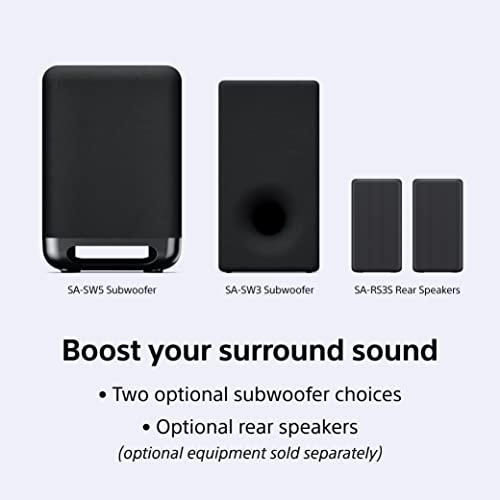
One of the Sony HT-S2000's most compelling features is its expandability. You can add Sony's SA-SW3 or SA-SW5 wireless subwoofers for deeper bass, or the SA-RS3S rear speakers to create a true 5.1 surround system. This modular approach lets you start simple and expand as your needs or budget allow.
The Yamaha SR-C30A sticks to HDMI ARC rather than the newer eARC standard, which limits its ability to receive the highest-bandwidth audio formats. However, it compensates with dual optical inputs—useful if you have multiple sources like game consoles and streaming devices.
Bluetooth 5.0 with multi-point connectivity allows seamless switching between devices, a surprisingly useful feature when family members want to stream from different phones or tablets. The Sound Bar Remote app provides convenient control, though the physical remote remains more responsive for daily use.
At the time of writing, the Sony HT-S2000 typically commands a moderate premium over the Yamaha SR-C30A—usually around $50-80 depending on promotions and availability. This price difference reflects the Sony's more advanced processing capabilities and expandable ecosystem.
From a pure value perspective, the calculation depends heavily on your priorities. If you primarily watch movies and TV shows, especially content with spatial audio soundtracks, the Sony's additional features justify the extra cost. The expandability alone provides a clear upgrade path that could extend the system's useful life significantly.
For music-focused listeners or those prioritizing immediate audio quality improvements, the Yamaha SR-C30A often represents better value. You're getting excellent core performance without paying for features you might not use.
Setting up the Sony HT-S2000 is refreshingly straightforward. One HDMI cable to your TV, plug in power, and you're essentially done. The all-in-one design eliminates decisions about subwoofer placement, wireless pairing, or cable routing.
The integrated design also means fewer components to troubleshoot if something goes wrong. Sony's build quality has been consistently reliable in my experience, and the company's customer service network is well-established.
However, the larger footprint might not work in all setups. At 31.5 inches wide and 8.2 pounds, the Sony HT-S2000 requires substantial TV stand space or a robust wall mount.
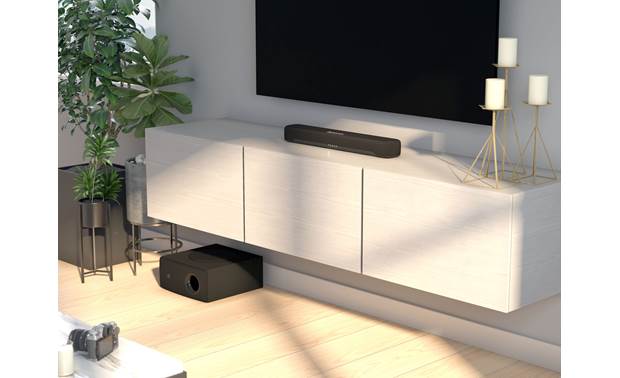
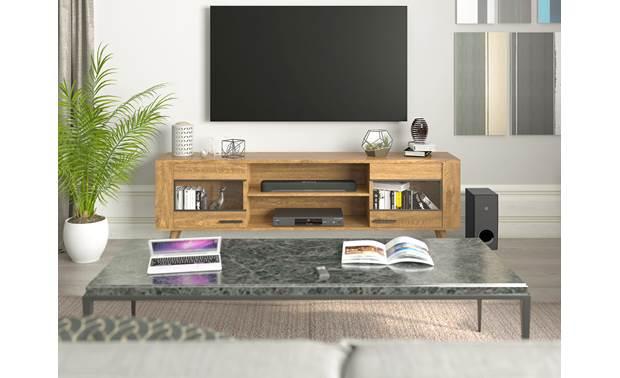
The Yamaha SR-C30A demands more thoughtful setup but rewards careful placement. The compact soundbar fits easily into tight spaces, while the wireless subwoofer can hide behind furniture or in corners where it won't dominate the room visually.
I've found the initial wireless pairing process reliable, though you'll want to experiment with subwoofer placement to find the sweet spot for your room. The payoff is often superior bass integration and overall sound quality compared to fixed-position alternatives.
For dedicated home theater use, the Sony HT-S2000 provides a more comprehensive foundation. The spatial audio processing, while not equivalent to a true surround system, creates a more immersive experience for movie content. The expandability options mean you can evolve toward a full 5.1 system over time.
The Yamaha SR-C30A works better as a general-purpose audio upgrade that happens to improve movie sound. Its strengths lie in daily use—background music, news, casual TV viewing—rather than dedicated home theater sessions.
After extensive testing with both systems, I believe the decision comes down to your primary content consumption patterns and expansion intentions.
Choose the Sony HT-S2000 if you:
Choose the Yamaha SR-C30A if you:
Both systems deliver meaningful improvements over TV speakers, but they excel in different scenarios. The Sony HT-S2000 represents the modern soundbar's evolution toward all-in-one entertainment processing, while the Yamaha SR-C30A focuses on the fundamentals that have made soundbars popular for decades.
In my experience, most buyers are happiest when they choose based on their actual usage patterns rather than feature checklists. If you find yourself streaming music as often as watching movies, the Yamaha's superior musical performance will provide more daily satisfaction. If your soundbar primarily serves movie night duties, the Sony's spatial processing and future expandability make it the smarter long-term investment.
| Sony HT-S2000 | Yamaha SR-C30A |
|---|---|
| Channel Configuration - Determines dialogue clarity and surround capabilities | |
| 3.1 channels with dedicated center channel for superior dialogue | 2.1 channels with phantom center (good but less focused dialogue) |
| Subwoofer Design - Affects setup flexibility and bass optimization | |
| Dual integrated subwoofers (no placement decisions needed) | Wireless external subwoofer (flexible positioning for better bass) |
| Total Power Output - Impacts maximum volume and dynamic range | |
| 250 watts (excellent headroom for large rooms) | 90 watts (adequate for small to medium rooms) |
| Spatial Audio Support - Essential for modern streaming and Blu-ray content | |
| Full Dolby Atmos and DTS:X decoding with virtual height processing | Basic stereo processing only (no spatial audio formats) |
| HDMI Connectivity - Determines audio quality from TV and devices | |
| eARC support (full bandwidth for highest quality audio) | ARC only (limited bandwidth, may compress some formats) |
| Expandability Options - Important for future system growth | |
| Compatible with Sony wireless subwoofers and rear speakers | No expansion options (standalone system only) |
| Physical Footprint - Critical for TV stand and room placement | |
| 31.5" × 2.6" × 5", 8.2 lbs (requires substantial space) | Compact soundbar with separate sub (more placement flexibility) |
| Music Performance Focus - Affects daily listening quality | |
| Movie-optimized tuning (adequate for music) | Music-first tuning with superior detail and accuracy |
| Bluetooth Version - Impacts wireless streaming quality and stability | |
| 5.2 with AAC codec (excellent smartphone streaming) | 5.0 with multi-point connectivity (seamless device switching) |
| Setup Complexity - Determines installation ease | |
| Single HDMI connection (plug-and-play simple) | Soundbar + wireless sub pairing (slightly more involved) |
The Sony HT-S2000 is significantly better for movies and TV content. It features a dedicated center channel for clearer dialogue and supports Dolby Atmos and DTS:X formats that create immersive surround sound effects. The Yamaha SR-C30A provides good movie sound but lacks spatial audio processing and uses basic stereo technology.
Both offer different bass approaches. The Sony HT-S2000 has dual integrated subwoofers that provide consistent bass without placement concerns. The Yamaha SR-C30A includes a wireless subwoofer that can deliver deeper, more customized bass when positioned optimally in your room, but requires more setup effort.
The Yamaha SR-C30A excels at music reproduction with superior detail retrieval and more natural tonal balance. Its wireless subwoofer can integrate seamlessly when properly placed. The Sony HT-S2000 is optimized for movies and its processing can sometimes make music sound artificial or overly processed.
The Sony HT-S2000 offers simpler setup with just one HDMI cable connection to your TV. Everything is built into a single unit, so there's no wireless pairing or subwoofer positioning required. The Yamaha SR-C30A requires pairing the wireless subwoofer and experimenting with placement for optimal sound.
Only the Sony HT-S2000 supports Dolby Atmos and DTS:X formats, using virtual processing to create height effects without upward-firing speakers. The Yamaha SR-C30A does not support any spatial audio formats and is limited to basic stereo and Dolby Digital processing.
The Yamaha SR-C30A has a more compact soundbar that takes up minimal TV stand space, though you'll need room for the separate subwoofer somewhere in your room. The Sony HT-S2000 is larger at 31.5 inches wide but eliminates the need for separate subwoofer placement.
The Sony HT-S2000 can be expanded with optional Sony wireless subwoofers and rear speakers to create a full 5.1 surround system. The Yamaha SR-C30A cannot be expanded and functions as a standalone 2.1 system only.
The Yamaha SR-C30A typically costs less and offers excellent core audio performance, making it better value for music lovers and basic TV viewing. The Sony HT-S2000 costs more but provides advanced features like Dolby Atmos support and expandability that justify the premium for home theater enthusiasts.
Both soundbars work with any TV that has HDMI ARC or optical connections. However, the Sony HT-S2000 offers enhanced integration with Sony BRAVIA TVs and supports HDMI eARC for full-bandwidth audio. The Yamaha SR-C30A uses standard HDMI ARC and works equally well with all TV brands.
The Yamaha SR-C30A is often better for small spaces due to its compact soundbar design and the ability to position the wireless subwoofer in corners or behind furniture. The Sony HT-S2000 requires more TV stand space but eliminates subwoofer placement decisions entirely.
Yes, both improve dialogue significantly over TV speakers. The Sony HT-S2000 has a dedicated center channel and Voice Mode for superior dialogue clarity during complex soundtracks. The Yamaha SR-C30A uses Clear Voice mode and balanced frequency response to enhance speech intelligibility naturally.
Choose the Sony HT-S2000 for dedicated home theater use, especially if you watch movies with Dolby Atmos soundtracks and want expansion options. Select the Yamaha SR-C30A if you prioritize music quality alongside TV viewing and prefer a more affordable, compact solution with flexible bass positioning.
We've done our best to create useful and informative comparisons to help you decide what product to buy. Our research uses advanced automated methods to create this comparison and perfection is not possible - please contact us for corrections or questions. These are the sites we've researched in the creation of this article: techradar.com - valueelectronics.com - youtube.com - videoandaudiocenter.com - whathifi.com - hometheaterhifi.com - youtube.com - sony.com - rtings.com - whathifi.com - rtings.com - helpguide.sony.net - electronics.sony.com - sony.com - dolby.com - sony.com - youtube.com - youtube.com - techradar.com - usa.yamaha.com - expertreviews.com - usa.yamaha.com - trustedreviews.com - crutchfield.com - europe.yamaha.com - usa.yamaha.com - shop.usa.yamaha.com - assetserver.net

Privacy Policy
Terms and Conditions - Affiliate Policy
Home Security
© Copyright 2008-2026.
11816 Inwood Rd #1211, Dallas, TX 75244