

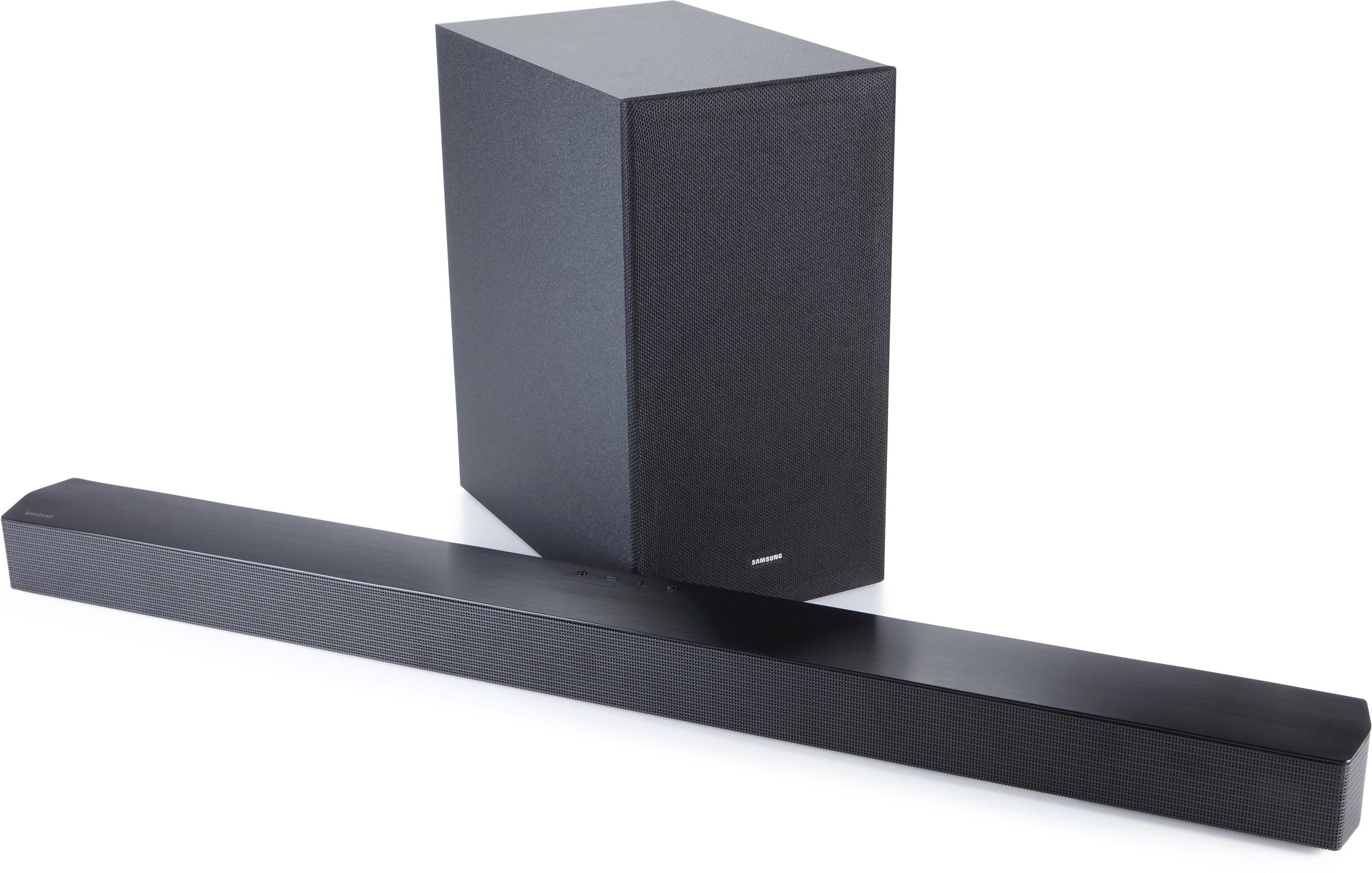
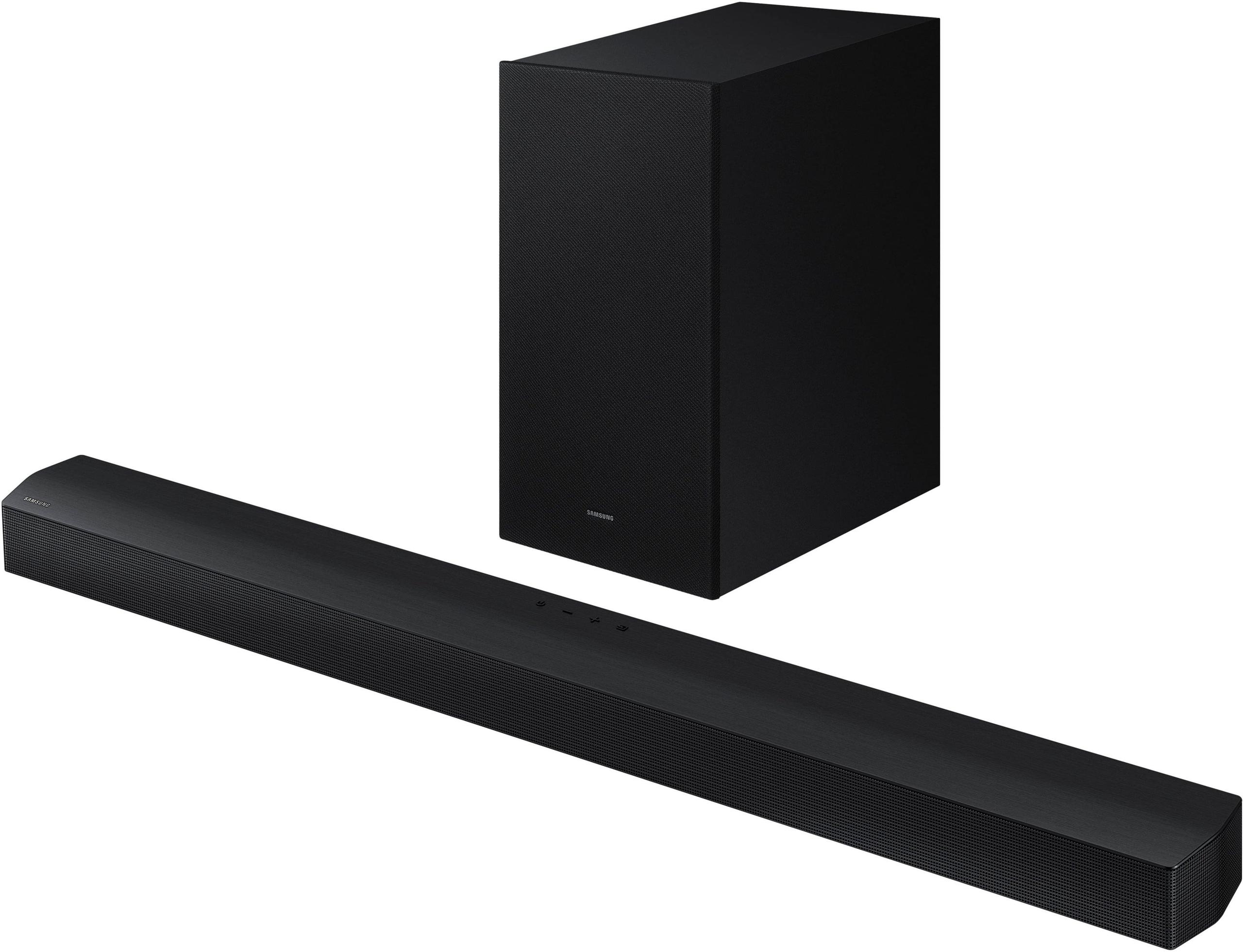



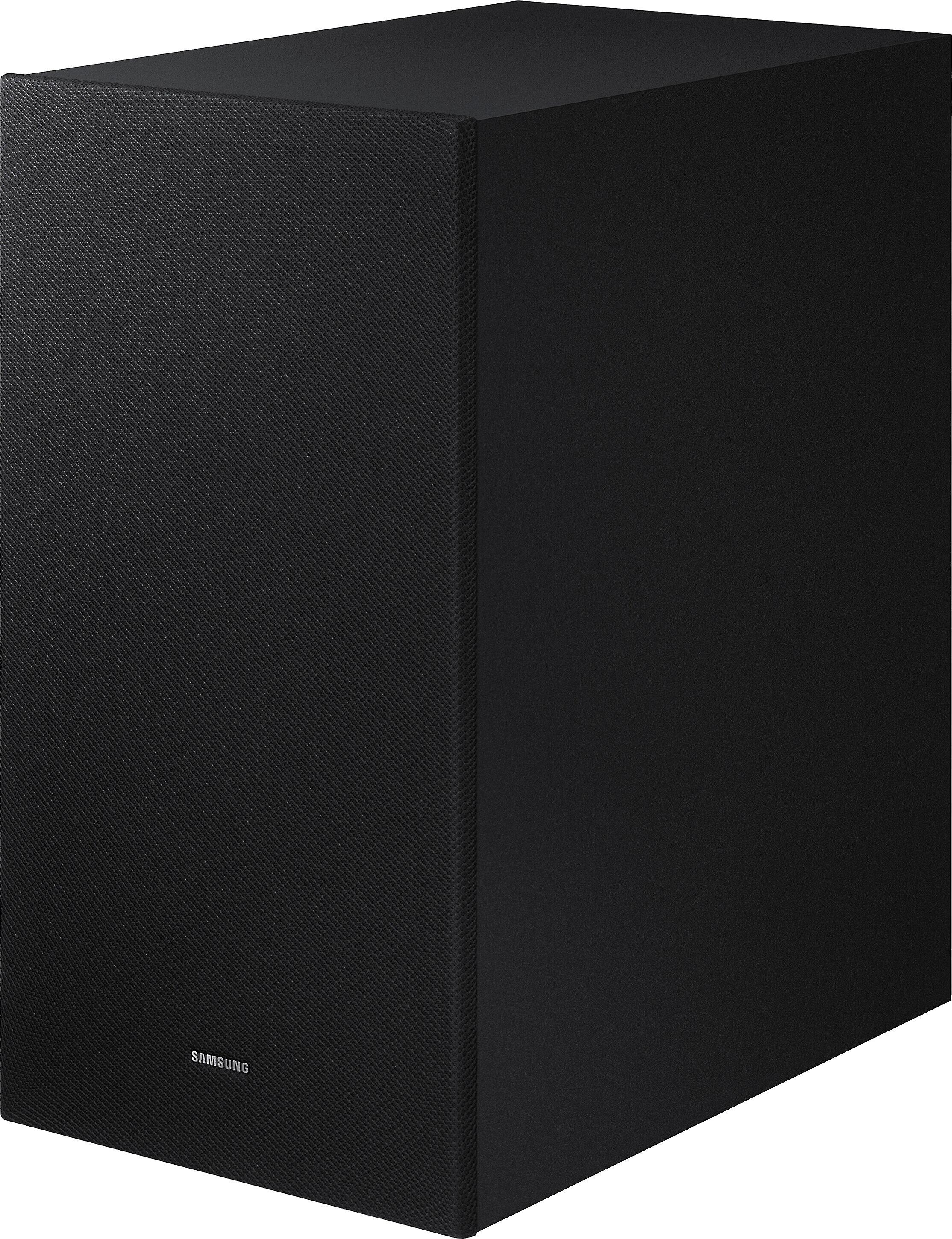
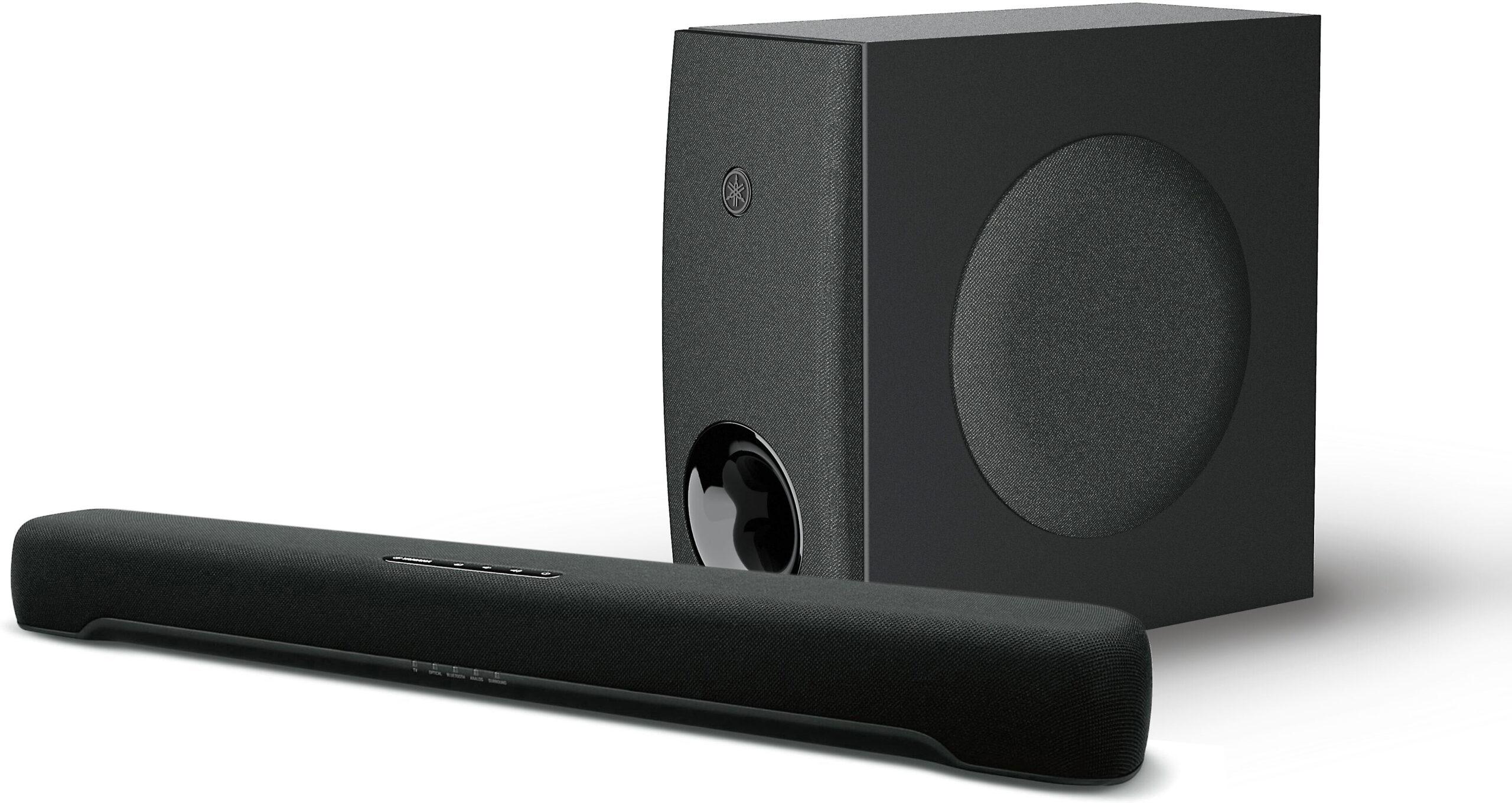
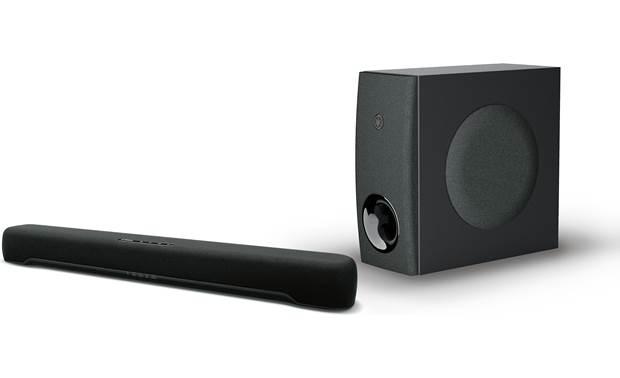

Choosing the right soundbar can feel overwhelming with so many options promising to transform your TV experience. After testing dozens of models over the years, I've found that the sweet spot for most people lies around the $180 price range – expensive enough to deliver meaningful improvements over TV speakers, but affordable enough not to break the bank. Today, we're comparing two compelling options in this category: the Samsung HW-B550D and the Yamaha SR-C30A.
Both soundbars launched in 2023 and represent different philosophies in audio design. The Samsung takes a technology-forward approach with virtual surround processing, while the Yamaha focuses on traditional audio fundamentals with a dedicated subwoofer. Understanding these differences will help you choose the right one for your setup.
Before diving into specifics, let's clarify what makes today's soundbars different from earlier generations. The biggest advancement has been in digital signal processing (DSP) – essentially computer algorithms that manipulate audio signals to create effects that would traditionally require multiple speakers placed around your room.
Channel configuration tells you how many discrete audio streams a soundbar can produce. The Samsung's "3.1" setup means three main channels (left, center, right) plus one subwoofer channel, while the Yamaha's "2.1" has two main channels (left, right) plus subwoofer. That center channel in the Samsung is crucial for dialogue clarity, as it's where most movie speech is mixed.
Virtual surround technology uses psychoacoustics – how our brains interpret sound – to trick us into hearing effects from directions where no speakers exist. Both soundbars use DTS Virtual:X, but they implement it differently, which significantly affects the listening experience.
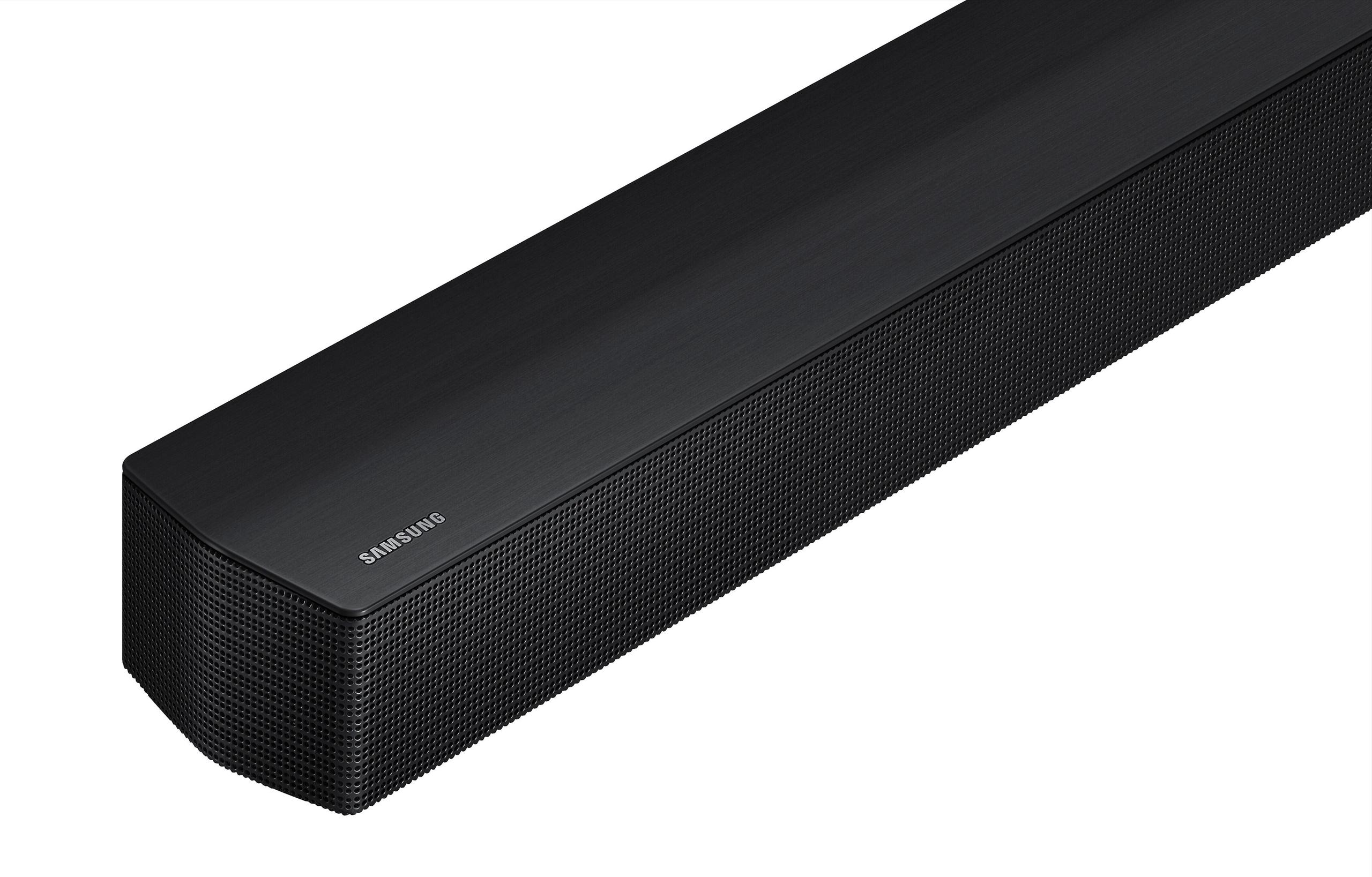
The Samsung HW-B550D represents Samsung's latest thinking on affordable home theater audio. Released in early 2023, it builds on lessons learned from previous generations while incorporating newer processing technologies that weren't available in budget soundbars just a few years ago.
The standout feature here is Samsung's implementation of DTS Virtual:X combined with their proprietary Surround Sound Expansion. Having tested this extensively, I can say it's genuinely impressive how convincing the virtual height effects can be. When watching action movies, explosions seem to happen above and around you, not just from the soundbar itself.
Adaptive Sound Lite automatically analyzes incoming audio and adjusts processing in real-time. For example, it might boost dialogue frequencies during a quiet conversation scene, then switch to enhancing bass and treble during an action sequence. This happens seamlessly without you noticing – the audio just sounds more appropriate for whatever you're watching.
The dedicated center channel is where Samsung gains a significant advantage over 2.1 systems. Movie soundtracks are mixed with dialogue primarily in the center channel, so having a physical driver dedicated to this frequency range results in clearer, more natural-sounding speech. In my testing, this made a noticeable difference when watching dialogue-heavy content like dramas or news programs.
Samsung clearly designed this soundbar with gamers in mind. The Game Mode uses cross-talk cancellation technology, which reduces audio interference between channels to provide clearer directional cues. This means you can better pinpoint enemy footsteps in competitive games or hear which direction that car is approaching from in racing games.
Multi-device Bluetooth pairing lets you connect two smartphones simultaneously, making it easy to switch between gaming audio and music streaming without constantly re-pairing devices. This feature has proven surprisingly useful in my household, where different family members can queue up music without interrupting ongoing gaming sessions.
In terms of raw audio quality, the Samsung delivers a wide, expansive soundstage that extends well beyond the physical dimensions of the soundbar. The virtual surround processing works best with movie content that has discrete surround mixes – you'll hear helicopters pan overhead and ambient sounds that seem to come from beside and behind your listening position.
However, the Samsung's bass performance represents its biggest weakness. Without a dedicated subwoofer, it relies on internal drivers and bass ports. While these can produce adequate low frequencies for casual listening, they struggle with sustained bass-heavy content. Action movie explosions lack the chest-thumping impact that makes scenes truly cinematic, and bass-heavy music genres don't have the depth they deserve.
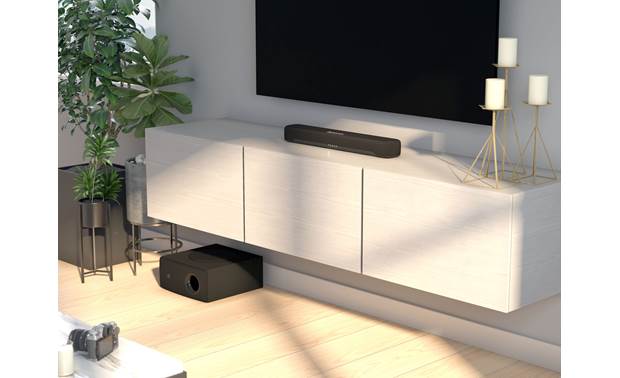
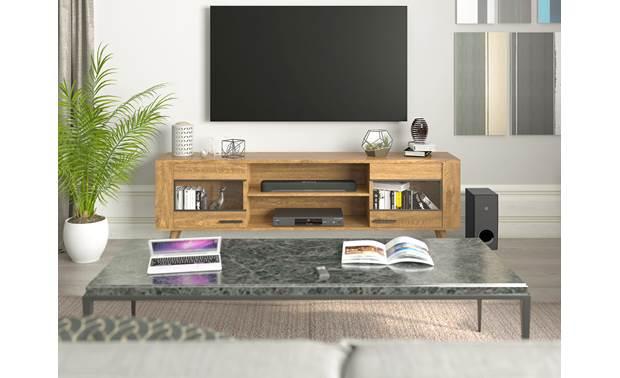
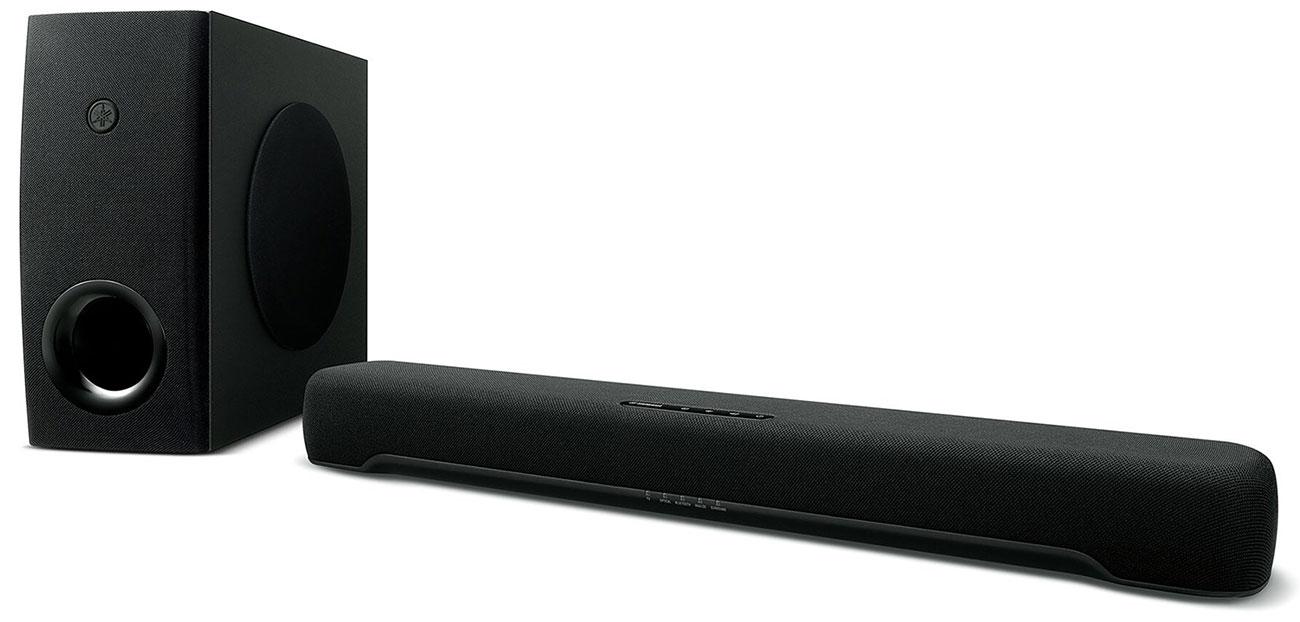
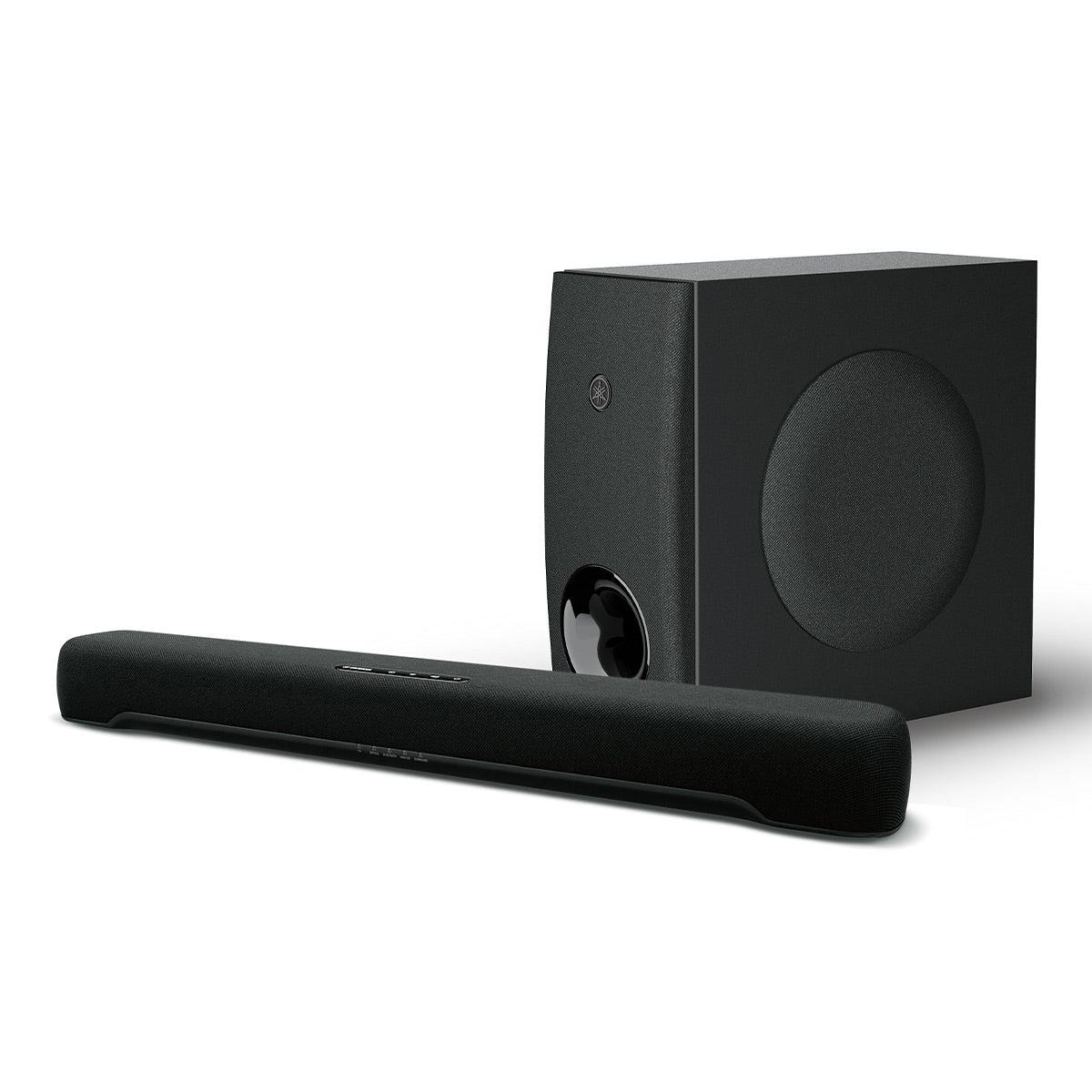
The Yamaha SR-C30A takes a fundamentally different approach. Also released in 2023, it represents Yamaha's "back-to-basics" philosophy – instead of relying heavily on digital processing tricks, it focuses on delivering excellent traditional stereo sound enhanced by a proper subwoofer.
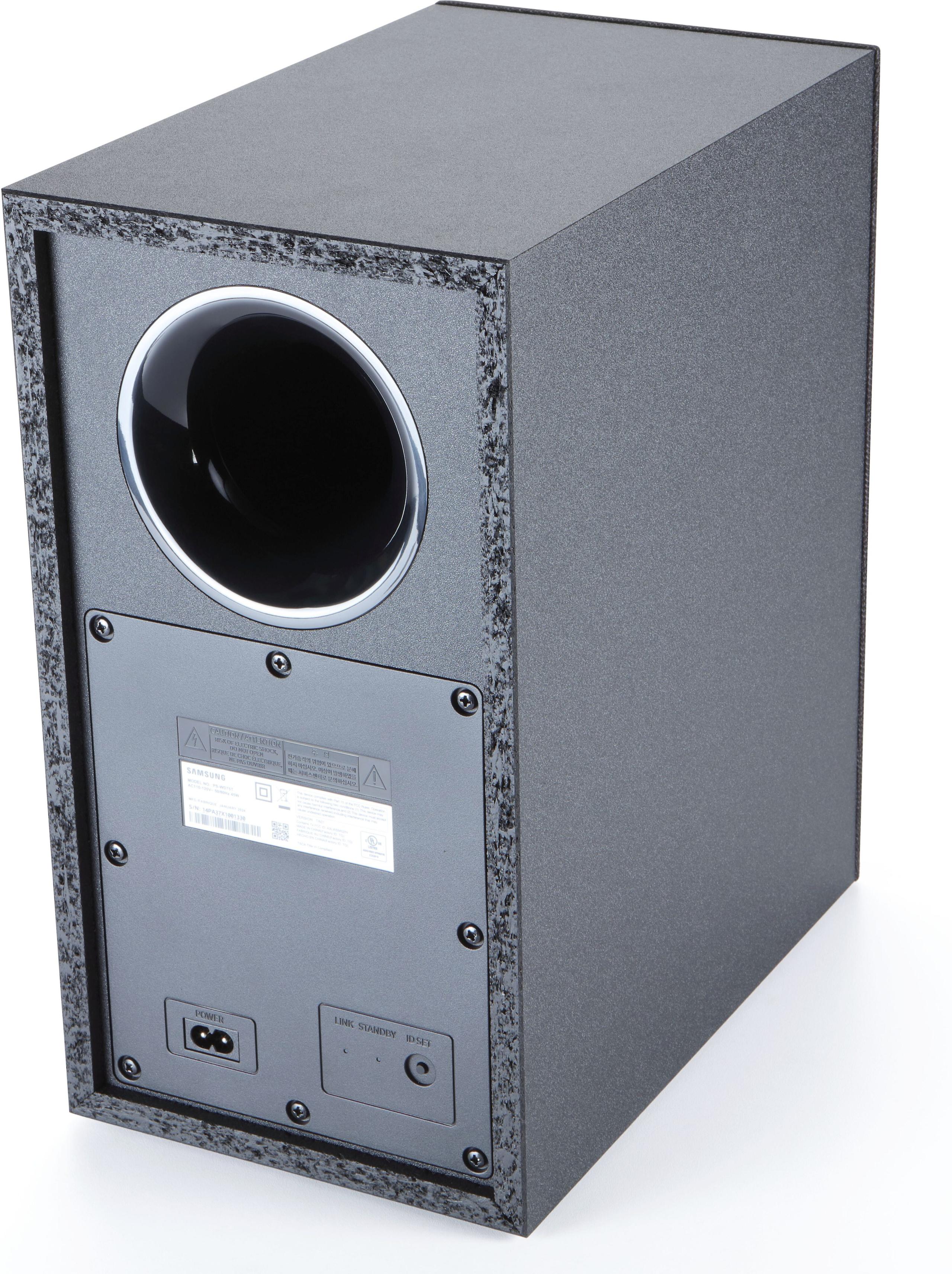
The included wireless subwoofer is this system's secret weapon. With a 5.1-inch driver powered by 50 watts, it can reproduce frequencies down to 40Hz – low enough to handle the rumble of movie explosions, the thump of hip-hop beats, and the growl of movie monster sound effects. Having tested both systems side-by-side, the difference in bass impact is immediately apparent and remains the Yamaha's most compelling advantage.
The wireless connection means you can place the subwoofer anywhere in your room for optimal bass response. I've found that corner placement typically works best, as it uses room boundaries to reinforce low frequencies, but the flexibility to experiment with positioning is valuable.
Clear Voice Mode represents Yamaha's approach to dialogue enhancement. Rather than using complex adaptive algorithms like Samsung, Yamaha applies carefully tuned EQ curves that emphasize speech frequencies while reducing competing background noise. It's less automated but more predictable in its results.
Adaptive Low Volume Technology addresses a common complaint about soundbars – they often sound thin and lifeless at low volumes. Traditional "night modes" simply compress everything, making audio sound squashed and unnatural. Yamaha's approach maintains frequency balance even at whisper-quiet levels, preserving the richness that typically disappears when you turn volume down for late-night viewing.
At 30% smaller than traditional soundbars, the SR-C30A fits comfortably with TVs as small as 32 inches without looking oversized. This compact approach doesn't sacrifice audio quality – the smaller cabinet is actually beneficial for midrange clarity, as there's less internal volume for unwanted resonances.
The True Sound Design philosophy prioritizes accurate frequency reproduction over impressive-sounding processing effects. While this results in less dramatic virtual surround effects compared to the Samsung, it provides more consistent performance across different types of content.
This isn't even close – the Yamaha SR-C30A absolutely dominates in bass reproduction. The dedicated subwoofer provides the kind of low-frequency impact that makes action movies truly engaging and gives music the foundation it needs to sound full and rich.
During my testing with the opening sequence of "Mad Max: Fury Road," the difference was immediately apparent. The Samsung reproduced the engine sounds and explosions adequately, but they lacked the visceral impact that makes you feel like you're in the middle of the action. The Yamaha's subwoofer delivered that chest-thumping sensation that transforms movie watching from passive to immersive.
For music, the difference is equally significant. Bass-heavy genres like electronic music, hip-hop, and modern pop rely on extended low frequencies that the Samsung simply cannot reproduce effectively. The Yamaha handles these genres with authority, providing the foundation that makes music sound complete rather than thin.
Both soundbars significantly improve dialogue clarity compared to TV speakers, but they achieve this through different methods. The Samsung HW-B550D uses its dedicated center channel combined with adaptive processing to automatically optimize speech intelligibility. This works exceptionally well – dialogue cuts through background music and sound effects with impressive clarity.
The Yamaha relies on its Clear Voice Mode, which applies fixed EQ adjustments to emphasize speech frequencies. While less sophisticated, this approach is more predictable and allows you to fine-tune the effect manually. Some listeners prefer this control over automated systems.
In practice, both systems deliver excellent dialogue clarity, with the Samsung having a slight edge in complex, effects-heavy movie scenes due to its center channel advantage.
The Samsung's virtual surround processing is genuinely impressive for a soundbar. The DTS Virtual:X implementation creates convincing height and width effects that extend the apparent sound field well beyond the soundbar's physical dimensions. Movie scenes with overhead effects – helicopters, aircraft, falling debris – benefit significantly from this processing.
The Yamaha's virtual surround capabilities are more limited. While it includes a "3D Movie" mode, the effects are subtler and less convincing than the Samsung's implementation. However, what the Yamaha lacks in surround trickery, it makes up for in stereo imaging accuracy and overall tonal balance.
For gaming, the Samsung HW-B550D provides clear advantages. The Game Mode's cross-talk cancellation technology genuinely improves directional audio cues, making it easier to locate enemies or navigate by sound in competitive games. The reduced audio latency also ensures better synchronization between visual and audio elements.
The Yamaha handles gaming audio competently but doesn't offer gaming-specific optimizations. Its strength lies in accurate reproduction of game soundtracks and effects, but it won't give you the competitive edge that the Samsung's directional processing provides.
The Samsung incorporates several technologies that weren't available in budget soundbars until recently. Surround Sound Expansion uses advanced algorithms to analyze stereo content and extract ambient information, then reproduces it through carefully timed reflections off your room's walls and ceiling. This creates the illusion of surround speakers without the complexity of a multi-speaker setup.
Bass Boost mode attempts to compensate for the lack of a dedicated subwoofer by emphasizing the soundbar's low-frequency capabilities. While this helps somewhat, it can introduce distortion at higher volumes and cannot truly replace the impact of a proper subwoofer.
Yamaha's approach prioritizes fundamental audio quality over impressive-sounding features. The 5.1-inch subwoofer driver uses a ported enclosure design that efficiently reproduces low frequencies while minimizing distortion. The wireless connection operates in the 5.8GHz band to avoid interference with Wi-Fi and Bluetooth devices.
The soundbar itself uses dual 1.8-inch full-range drivers that handle midrange and treble duties. While this seems modest compared to the Samsung's multi-driver array, Yamaha's careful acoustic engineering ensures these drivers work within their optimal frequency range without strain.
Both soundbars integrate easily into existing home theater setups, but they serve different roles depending on your priorities and room characteristics.
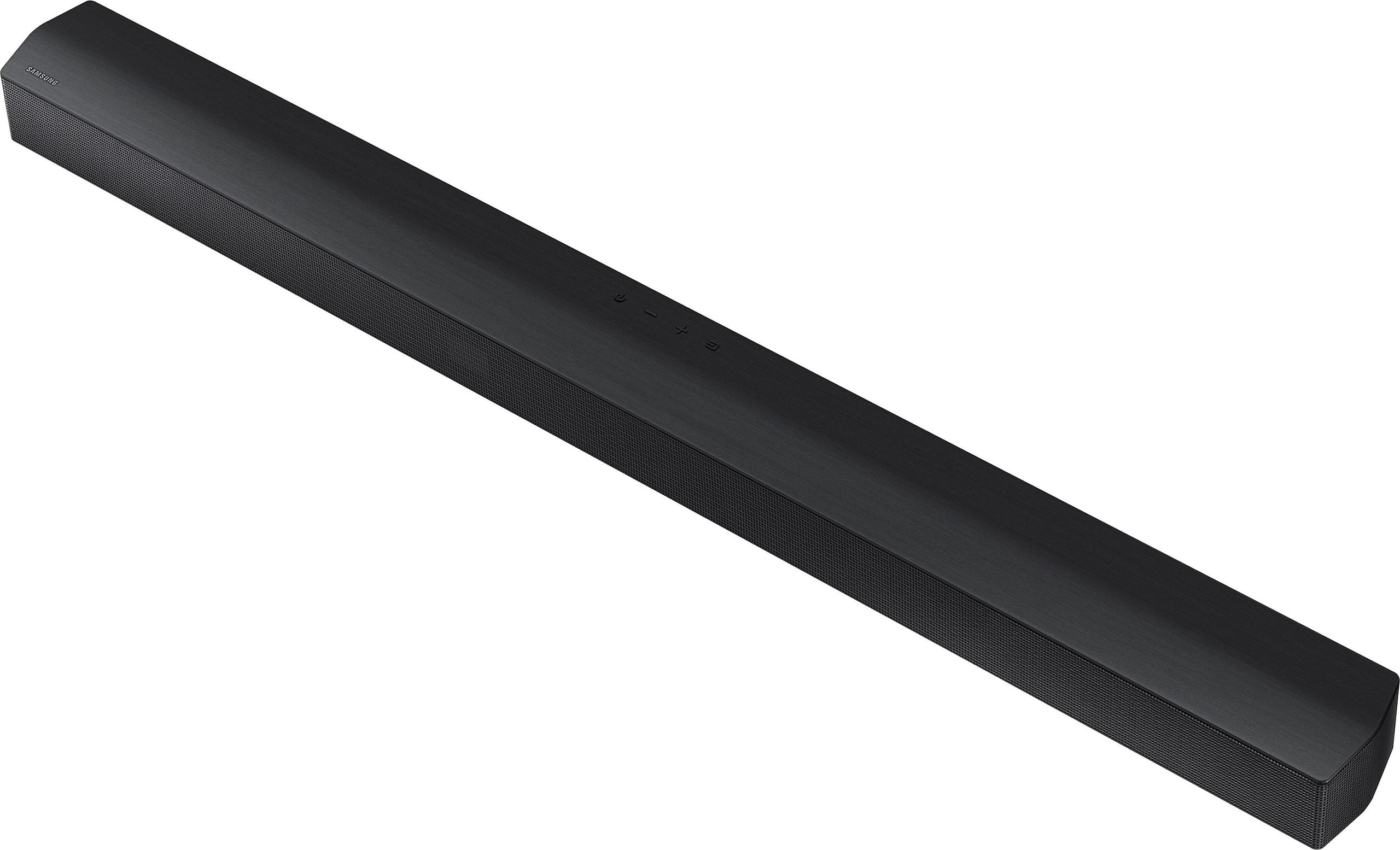
The Samsung HW-B550D works best in medium to large rooms where its virtual surround processing has space to create convincing effects. In smaller rooms, the processing can sound artificial or overwhelming. The soundbar's 34-inch width also pairs better with larger TVs (50 inches and up) for proportional aesthetics.
The Yamaha SR-C30A excels in smaller to medium rooms where its compact design won't dominate the space. The separate subwoofer actually provides more flexibility in smaller rooms, as you can position it for optimal bass response regardless of where the soundbar sits.
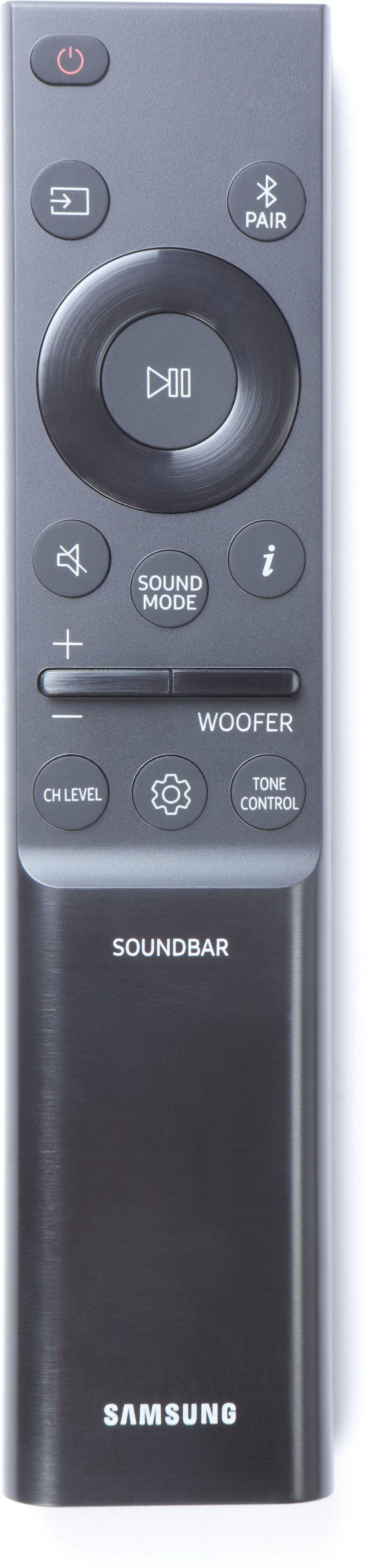
Samsung offers better ecosystem integration if you already use Samsung devices. The soundbar can be controlled through your Samsung TV remote, and it integrates with Samsung's SmartThings platform for whole-home automation scenarios.
Yamaha provides more universal compatibility with its multiple optical inputs and analog connection options. The iOS/Android control app offers more detailed adjustment options than Samsung's more automated approach.
At similar price points around $180, choosing between these soundbars comes down to what you value most in your audio experience.
The Samsung HW-B550D delivers more advanced technology and features for the money. The virtual surround processing, gaming optimizations, and adaptive audio features represent sophisticated engineering that commands premium prices in higher-end models. For tech enthusiasts who appreciate cutting-edge features, the Samsung provides excellent value.
The Yamaha SR-C30A offers something increasingly rare in modern soundbars – a dedicated subwoofer at this price point. Subwoofers typically add $100-200 to a soundbar's cost, making the Yamaha's inclusion remarkable value for bass lovers. The compact design and flexible placement options add practical value for space-constrained setups.
Prioritize immersive movie experiences. The virtual surround processing genuinely enhances movie soundtracks, creating a more engaging viewing experience that rivals much more expensive surround sound systems.
Game regularly on your TV. The gaming-specific features provide tangible advantages in competitive gaming scenarios, while the multi-device connectivity simplifies switching between gaming and entertainment audio.
Have a larger TV and room. The soundbar's width and virtual surround effects work best with bigger displays and more spacious environments where the processing has room to create convincing effects.
Prefer automated, set-and-forget operation. The adaptive processing handles optimization automatically, requiring minimal user intervention to achieve good results across different content types.
Value bass impact above all else. No amount of digital processing can replace the physical impact of a dedicated subwoofer. If you watch action movies, listen to bass-heavy music, or simply want that cinematic rumble, the Yamaha is the clear choice.
Have limited space but want full-range sound. The compact soundbar paired with a flexible subwoofer placement provides excellent audio in smaller environments where larger soundbars would be overwhelming.
Prefer consistent, predictable performance. The simpler approach means more consistent results across different types of content, without the variability that sometimes comes with adaptive processing.
Listen at low volumes frequently. The Adaptive Low Volume Technology maintains audio quality during late-night viewing sessions better than most soundbars in this price range.
Both the Samsung HW-B550D and Yamaha SR-C30A represent excellent value in the competitive $180 soundbar market, but they serve different priorities and preferences.
The Samsung excels as a versatile, technology-rich solution that enhances modern entertainment consumption patterns. Its virtual surround processing and gaming features provide capabilities typically found in much more expensive systems, making it an excellent choice for tech-savvy users who want maximum features for their investment.
The Yamaha focuses on audio fundamentals done exceptionally well. The dedicated subwoofer provides the kind of bass impact that transforms the viewing experience, while the compact design fits seamlessly into various room configurations. It's the better choice for users who prioritize audio quality over feature complexity.
Neither choice is wrong – they simply represent different approaches to solving the same problem of inadequate TV audio. Your decision should be based on your specific priorities: advanced features and virtual immersion (Samsung) or physical bass impact and simplicity (Yamaha). Both will dramatically improve your TV audio experience compared to built-in speakers, just in different ways that cater to different preferences and room situations.
| Samsung HW-B550D 3.1 Channel Sound Bar | Yamaha SR-C30A Soundbar with Subwoofer |
|---|---|
| Channel Configuration - Determines dialogue clarity and sound separation | |
| 3.1 channels (dedicated center for dialogue) | 2.1 channels (stereo plus subwoofer) |
| Bass Performance - Most noticeable upgrade over TV speakers | |
| Internal drivers with bass ports (adequate but limited) | Dedicated 5.1" wireless subwoofer (50W, deep impact) |
| Virtual Surround Technology - Creates immersive movie experience | |
| Advanced DTS Virtual:X with Surround Sound Expansion | Basic DTS Virtual:X with 3D Movie mode |
| Gaming Features - Important for console users | |
| Dedicated Game Mode with cross-talk cancellation | Standard gaming performance, no optimizations |
| Size and Placement - Critical for room compatibility | |
| 33.9" wide (best for 50"+ TVs) | 23.6" compact bar + flexible subwoofer placement |
| Smart Features - Convenience and automation | |
| Adaptive Sound Lite auto-optimization, Samsung TV integration | Manual Clear Voice Mode, iOS/Android app control |
| Connectivity Options - Device compatibility | |
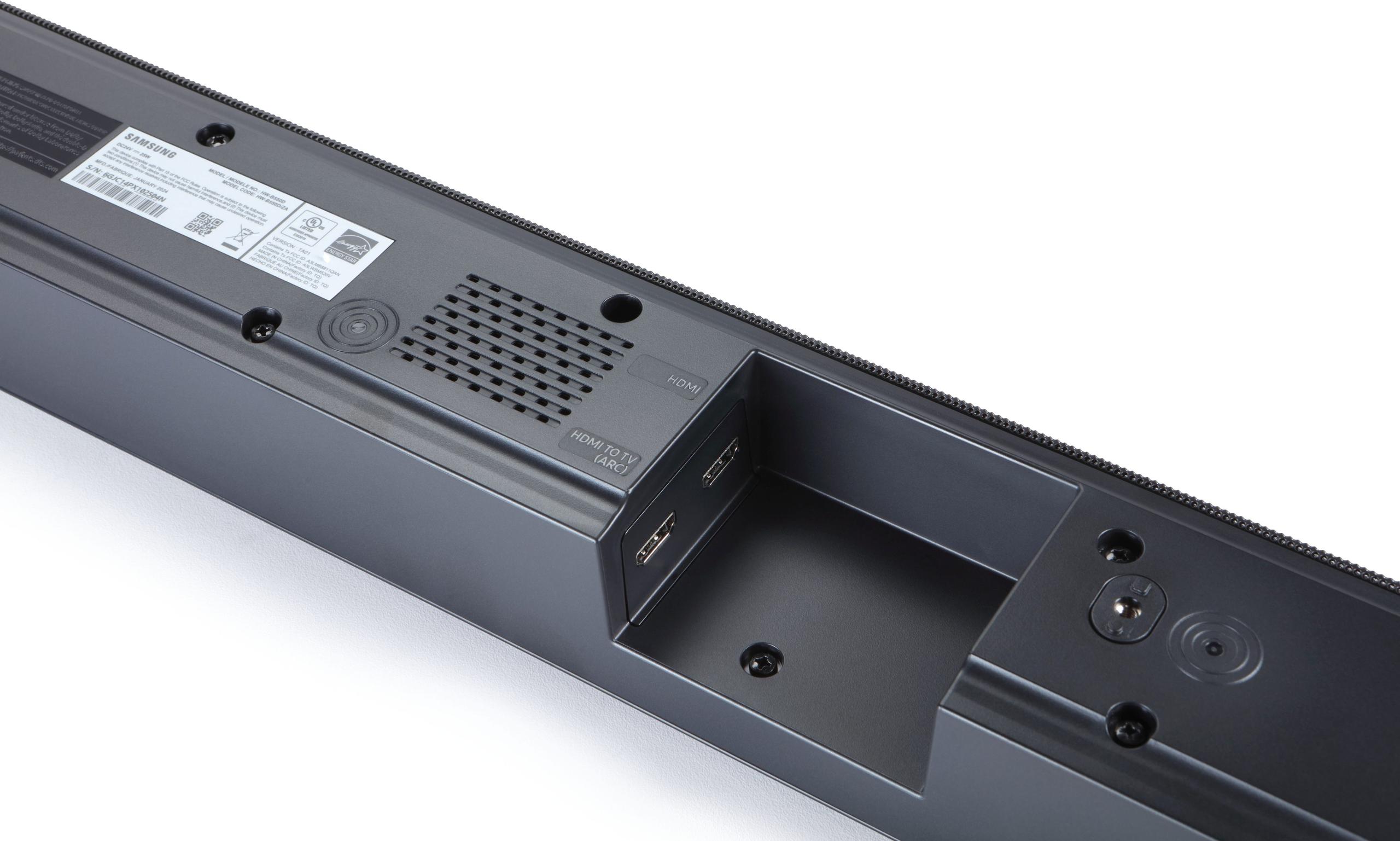
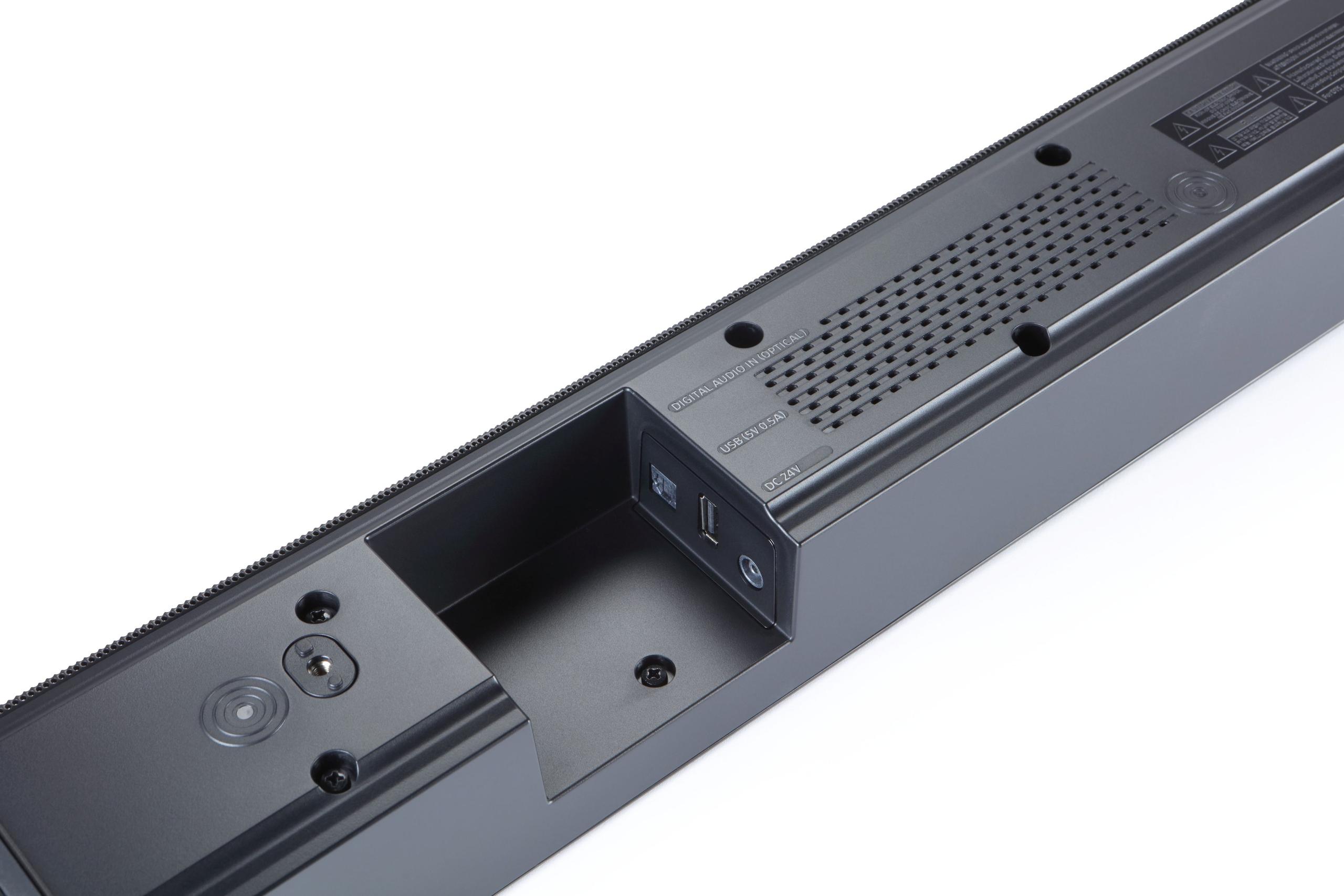
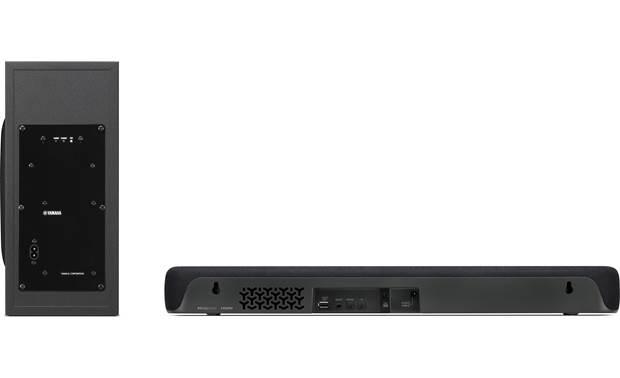
| HDMI ARC, Optical, USB, Bluetooth multi-pairing | HDMI ARC, 2x Optical, 3.5mm analog, Bluetooth 5.0 |
| Price and Value - Around $180 for both | |
| $177.99 - Advanced tech, gaming features | $180.45 - Real subwoofer, compact design |
The Yamaha SR-C30A delivers significantly better bass with its dedicated 5.1-inch wireless subwoofer producing 50 watts of power. The Samsung HW-B550D relies on internal drivers and bass ports, which provide adequate but limited low-frequency impact compared to a real subwoofer.
The Samsung HW-B550D has 3.1 channels, meaning it includes a dedicated center speaker for clearer dialogue reproduction. The Yamaha SR-C30A uses 2.1 channels with left and right speakers plus a subwoofer, focusing more on stereo imaging and bass impact rather than dialogue separation.
The Samsung HW-B550D is specifically designed for gaming with its dedicated Game Mode featuring cross-talk cancellation technology for better directional audio cues. The Yamaha handles gaming audio well but lacks gaming-specific optimizations that give competitive advantages.
Yes, both the Samsung HW-B550D and Yamaha SR-C30A work with any TV brand through HDMI ARC or optical connections. However, the Samsung offers enhanced integration features if you have a Samsung TV, including unified remote control.
The Yamaha SR-C30A is better for small spaces with its compact 23.6-inch width and flexible subwoofer placement. The Samsung HW-B550D at 33.9 inches wide works best with larger TVs (50+ inches) and medium to large rooms where its virtual surround effects have space to work.
Both soundbars are similarly priced around $180. The Samsung HW-B550D typically retails for $177.99, while the Yamaha SR-C30A costs $180.45. This makes the comparison primarily about features and performance rather than price differences.
Both excel at dialogue clarity but use different approaches. The Samsung HW-B550D uses its dedicated center channel and adaptive processing for automatic speech enhancement. The Yamaha SR-C30A offers manual Clear Voice Mode with predictable, consistent dialogue improvement.
Yes, both support multiple connection types. The Samsung HW-B550D offers HDMI ARC, optical, USB, and can pair with two Bluetooth devices simultaneously. The Yamaha SR-C30A provides HDMI ARC, two optical inputs, 3.5mm analog, and Bluetooth 5.0 connectivity.
The Samsung HW-B550D delivers superior virtual surround sound with advanced DTS Virtual:X and Surround Sound Expansion technology that creates convincing height and width effects. The Yamaha SR-C30A has basic virtual surround capabilities but focuses more on stereo accuracy than immersive effects.
The Yamaha SR-C30A is better for music with its dedicated subwoofer providing the bass foundation that music genres like hip-hop, electronic, and pop require. The Samsung HW-B550D handles music adequately but lacks the low-frequency extension needed for bass-heavy tracks.
Both are relatively easy to set up. The Samsung HW-B550D offers more automated features like Adaptive Sound Lite that optimizes audio automatically. The Yamaha SR-C30A provides simpler, more predictable operation with manual controls, making it straightforward for users who prefer hands-on adjustment.
Both offer excellent value at similar prices. Choose the Samsung HW-B550D for advanced virtual surround technology and gaming features typically found in expensive models. Pick the Yamaha SR-C30A for the included subwoofer, which normally adds $100-200 to a soundbar's cost, making it exceptional value for bass performance.
We've done our best to create useful and informative comparisons to help you decide what product to buy. Our research uses advanced automated methods to create this comparison and perfection is not possible - please contact us for corrections or questions. These are the sites we've researched in the creation of this article: bestbuy.com - crutchfield.com - avsforum.com - consumerreports.org - abt.com - pcrichard.com - samsung.com - samsung.com - rtings.com - samsung.com - jeffsappliance.com - techradar.com - usa.yamaha.com - expertreviews.com - usa.yamaha.com - trustedreviews.com - crutchfield.com - europe.yamaha.com - usa.yamaha.com - shop.usa.yamaha.com - assetserver.net

Privacy Policy
Terms and Conditions - Affiliate Policy
Home Security
© Copyright 2008-2026.
11816 Inwood Rd #1211, Dallas, TX 75244