


Shopping for a soundbar can feel overwhelming when you're comparing products that seem to be in completely different leagues. Take the Hisense HT Saturn and Yamaha SR-C30A—at first glance, they're both "soundbars," but they represent fundamentally different philosophies about home audio. One costs roughly six times more than the other, and honestly, that price difference tells you almost everything you need to know about which direction each company went.
The soundbar market has exploded over the past decade, and for good reason. Most TV speakers are terrible—they're thin, lack bass, and make dialogue hard to follow. But the solutions range from simple stereo bars that just make things louder and clearer, all the way up to complex wireless surround systems that can rival traditional home theaters. Understanding where these two products fit helps you figure out what you actually need.
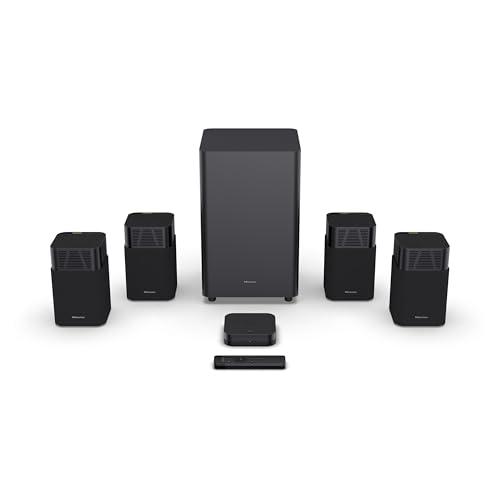
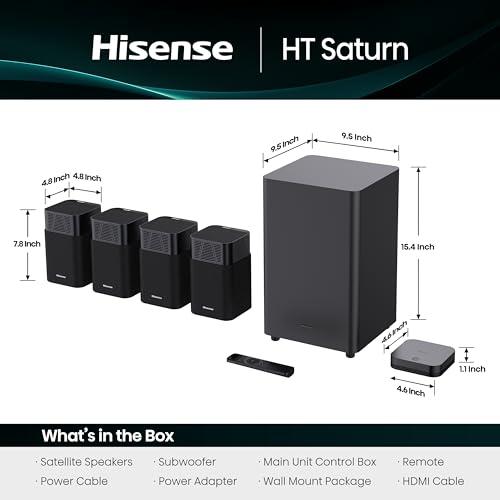
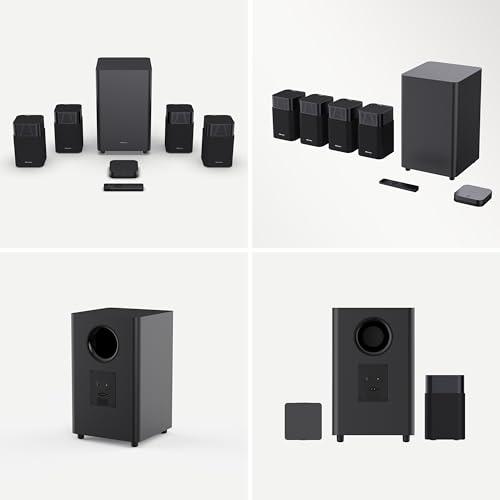
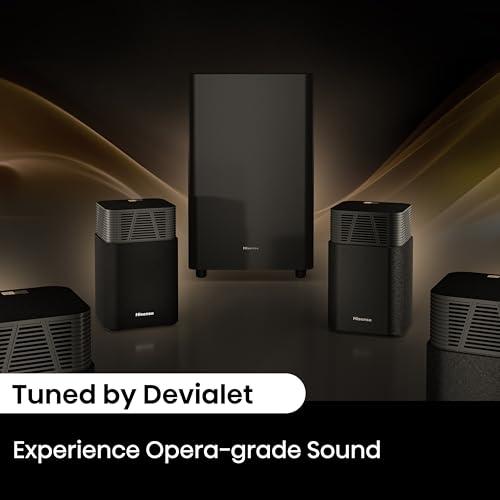
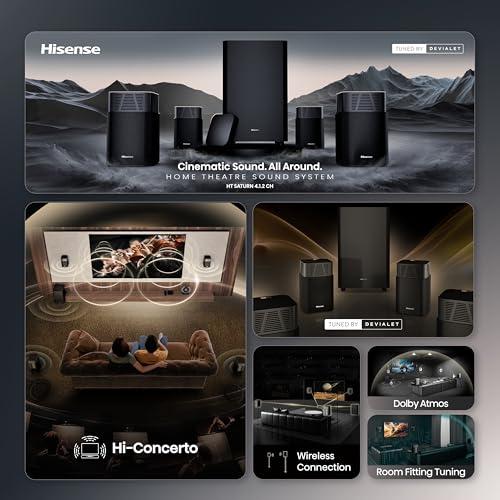
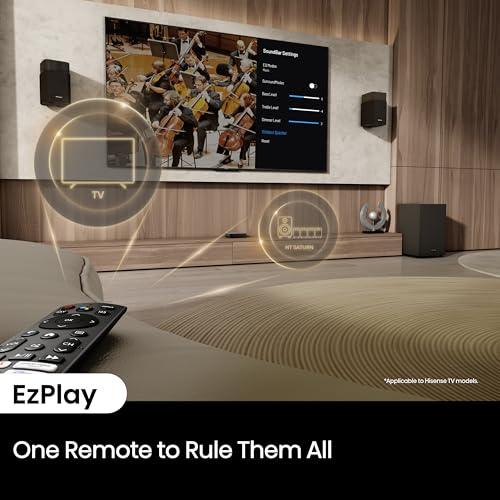
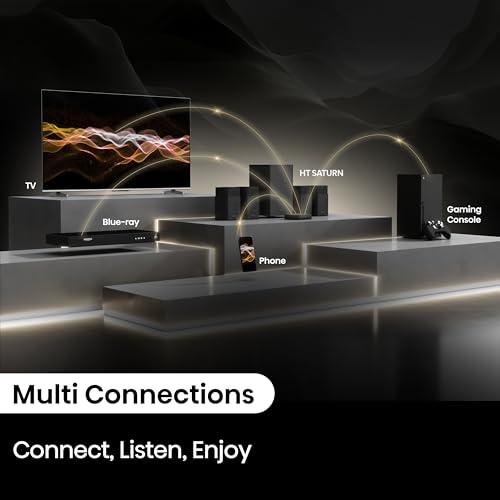
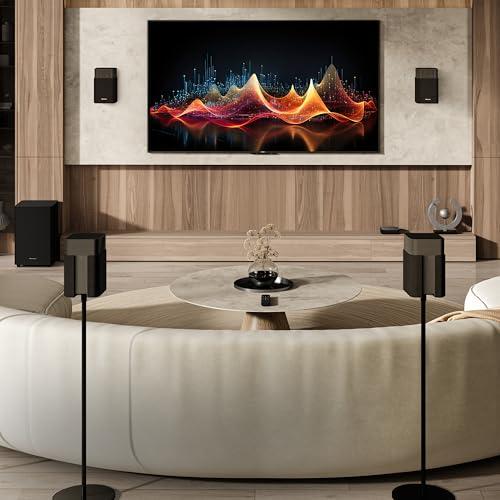
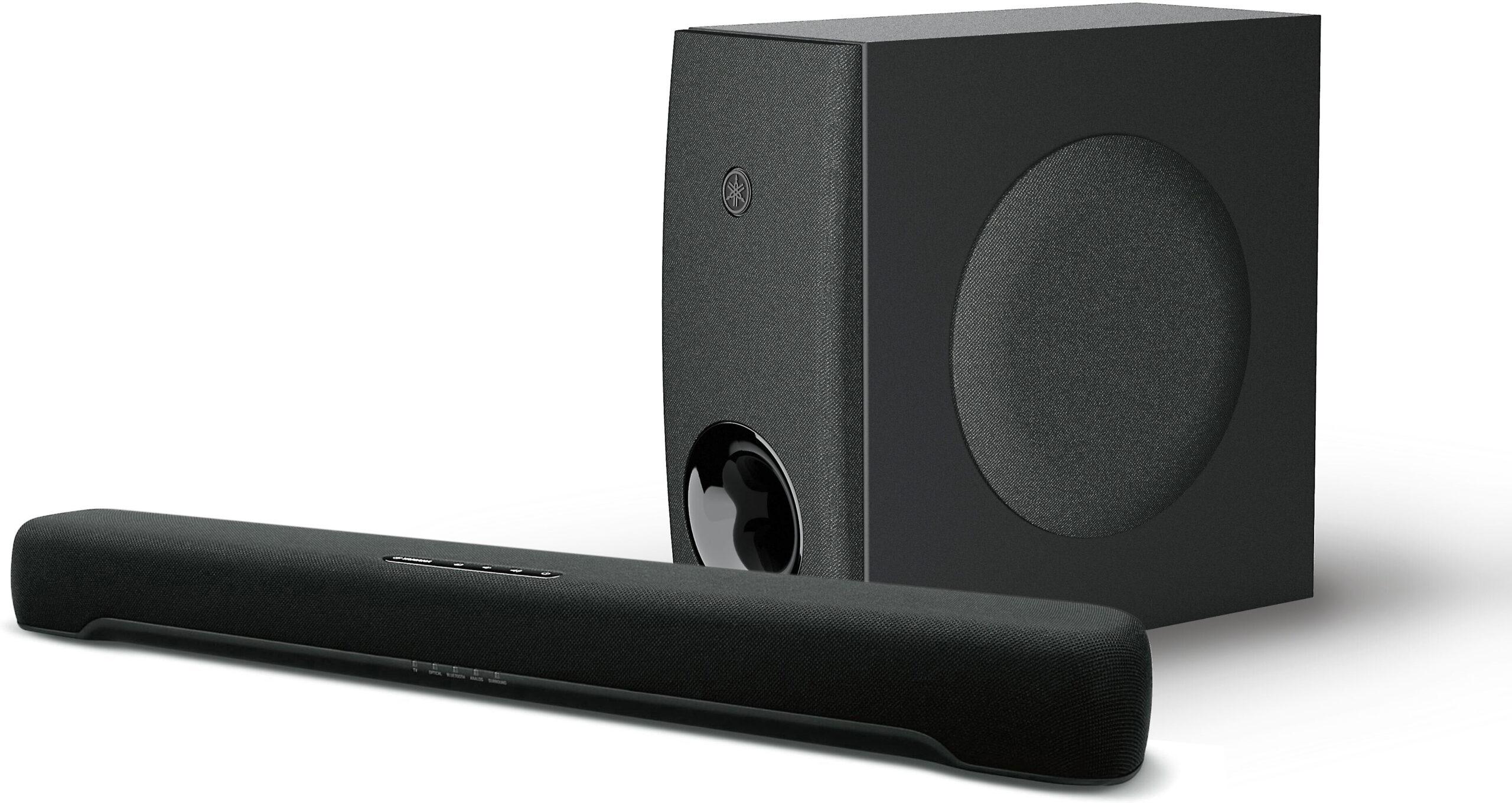
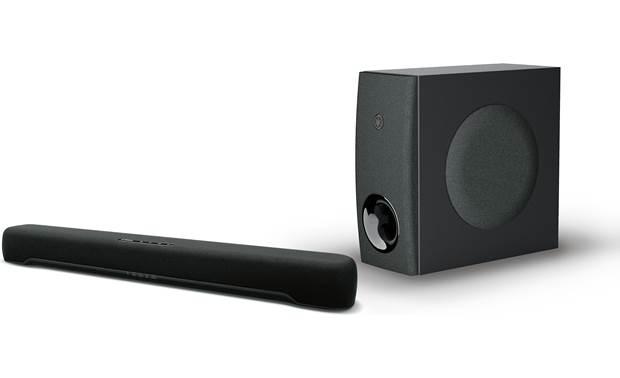
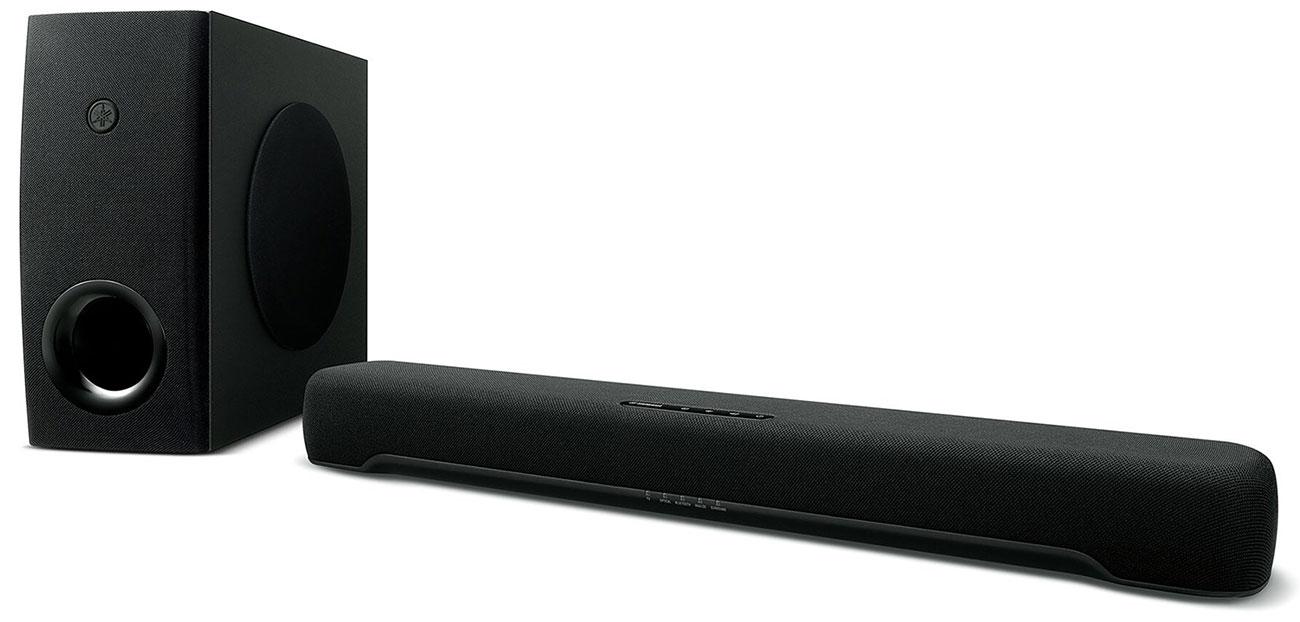
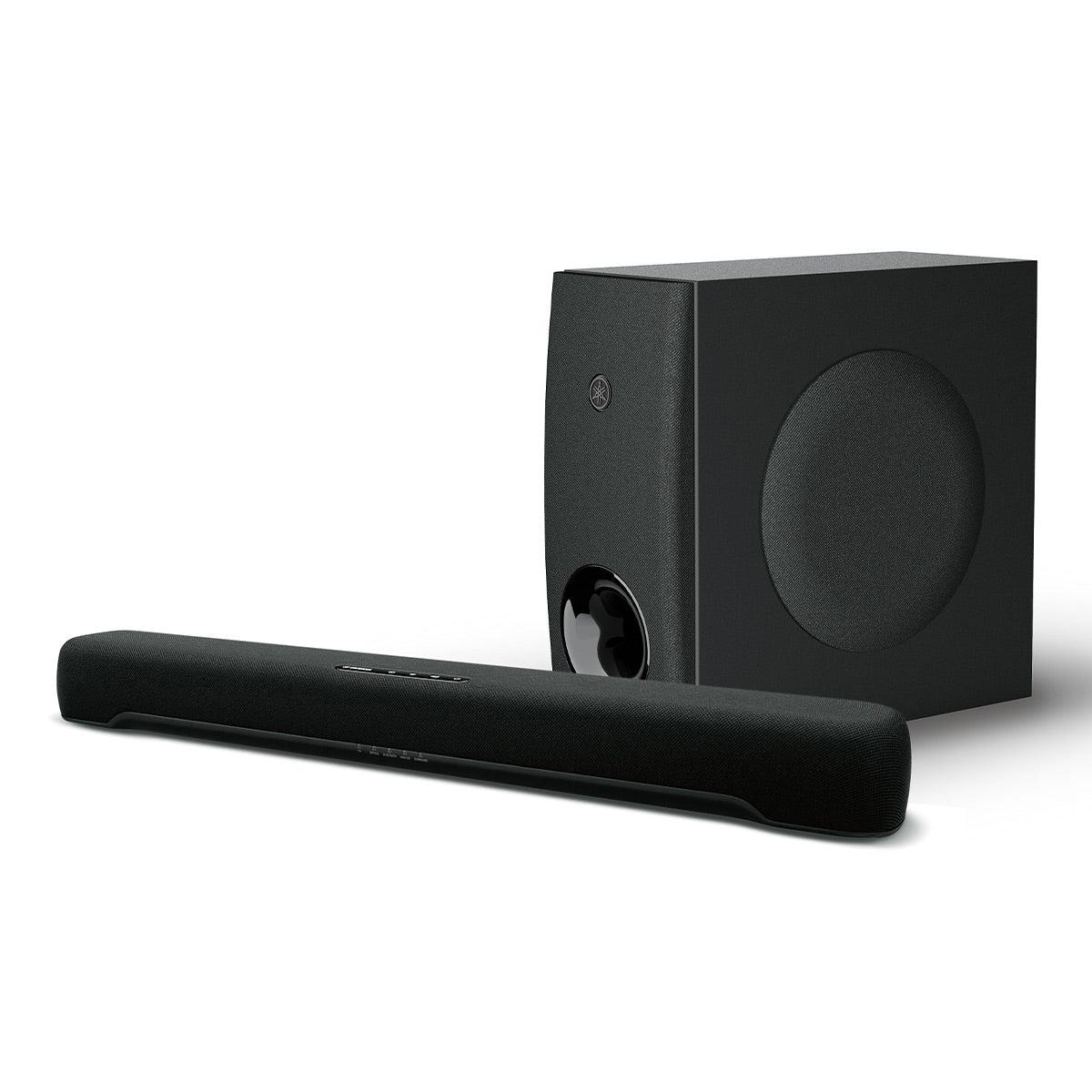
The Hisense HT Saturn, released in 2025, isn't really a soundbar at all—it's a complete wireless home theater system that happens to replace your soundbar. Instead of one long bar under your TV, you get four small satellite speakers, a wireless subwoofer, and a central control hub. The Yamaha SR-C30A, from 2023, takes the traditional approach: one compact soundbar plus a wireless subwoofer, designed to be simple and effective.
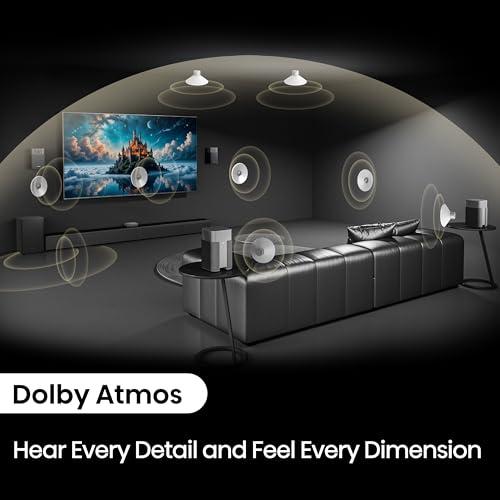
This difference in approach affects everything else about how these systems work. The Hisense system uses what's called a "4.1.2 channel" configuration, which means four main speakers (front left, front right, rear left, rear right), one subwoofer for bass, and two "height" channels that bounce sound off your ceiling. The Yamaha is a "2.1" system—left speaker, right speaker, and subwoofer—that uses digital processing to simulate surround sound effects.
When audio enthusiasts talk about "true surround sound" versus "virtual surround," this is exactly what they mean. True surround uses physical speakers placed around the room to create genuine directional effects—you literally hear sounds coming from behind you because there are speakers behind you. Virtual surround uses clever audio processing to trick your brain into thinking sounds are coming from different directions, even though they're all coming from the front.
The performance gap between these systems becomes obvious the moment you play anything with surround sound effects. The Hisense HT Saturn creates what reviewers consistently describe as a "bubble of sound" around the listening position. When a helicopter flies overhead in a movie, you hear it move across the ceiling above you. When characters speak off-screen, their voices seem to come from the correct location in the room.
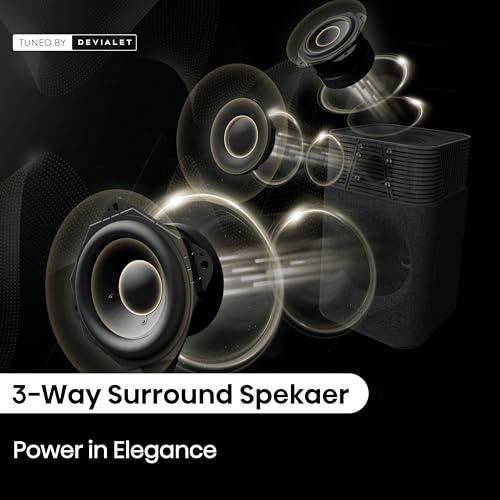
This happens because the system has 13 individual speakers working together—each satellite speaker contains multiple drivers (the individual speakers inside the enclosure) plus dedicated tweeters for high frequencies. The upward-firing drivers in the front satellites bounce sound off your ceiling to create height effects, while the rear satellites handle surround channels. It's engineered to fill a room with dimensionally accurate sound.
The Yamaha SR-C30A takes a completely different approach that works surprisingly well within its limitations. Instead of multiple speakers, it uses two drivers in the main bar plus digital signal processing to create the illusion of wider, more spacious sound. The system analyzes the audio signal and applies delays, phase shifts, and frequency adjustments to make stereo content feel bigger than it actually is.
Where the Yamaha particularly shines is with dialogue clarity. Its "Clear Voice" mode boosts the frequency range where most human speech occurs, making conversations easier to follow even during loud action scenes. This matters more than you might think—if you're constantly reaching for the remote to adjust volume because you can't hear what characters are saying, even the fanciest surround system isn't doing its job.
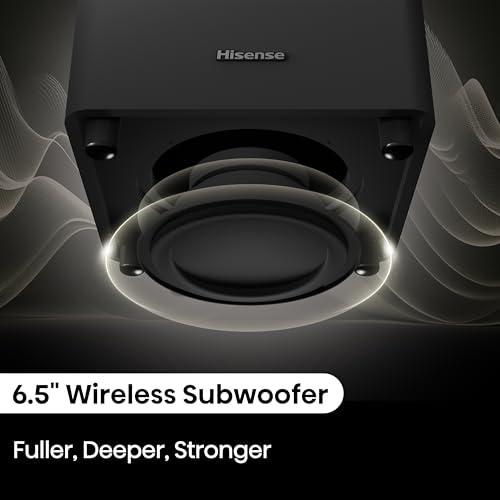
The bass performance tells a similar story of different priorities. The Hisense's 6.5-inch wireless subwoofer is designed to fill larger spaces with room-shaking low-end effects. It extends down to 40Hz, which covers most of the deep bass in movies and music. The Yamaha's 5.1-inch subwoofer focuses on tight, controlled bass that doesn't overwhelm smaller rooms. It won't rattle your walls, but it adds the foundation that TV speakers completely lack.
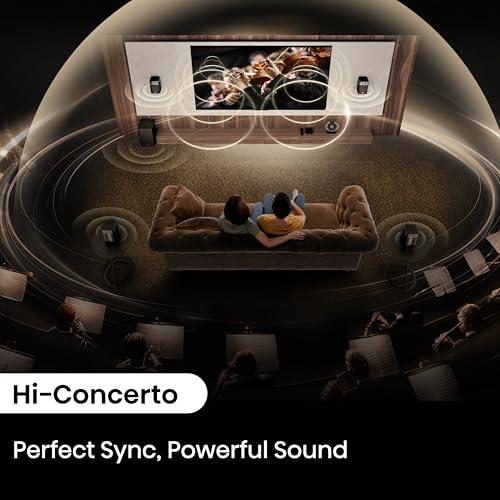
Here's where things get interesting with the Hisense HT Saturn. If you own a large Hisense TV (85 inches or bigger), this system transforms into something much more sophisticated than the sum of its parts. The "Hi-Concerto" technology allows the TV's built-in speakers to work simultaneously with the soundbar system, effectively adding more channels and creating an even wider soundstage.
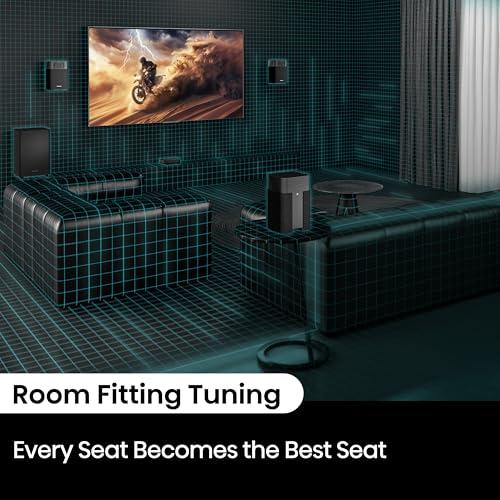
The "Room Fitting Tuning" feature goes further, using the TV's interface to analyze your room's acoustics and automatically adjust the audio output. This is similar to what high-end AV receivers do with room correction, but integrated into a much simpler package. The system sends out test tones, measures how they reflect off your walls and furniture, then adjusts timing and frequency response to compensate for your room's specific characteristics.
The Yamaha SR-C30A offers the opposite philosophy—universal compatibility. It works exactly the same whether you connect it to a Samsung, LG, Sony, or any other brand TV. There's something refreshing about this simplicity, especially if you're the type of person who doesn't want to think about brand ecosystems when buying electronics.
The Hisense system supports the latest audio formats that streaming services and Blu-ray discs use for premium content. Dolby Atmos and DTS:X are "object-based" audio formats, meaning sound engineers can place individual effects anywhere in a three-dimensional space, not just in traditional speaker locations. The system's physical height channels can reproduce these effects as intended.
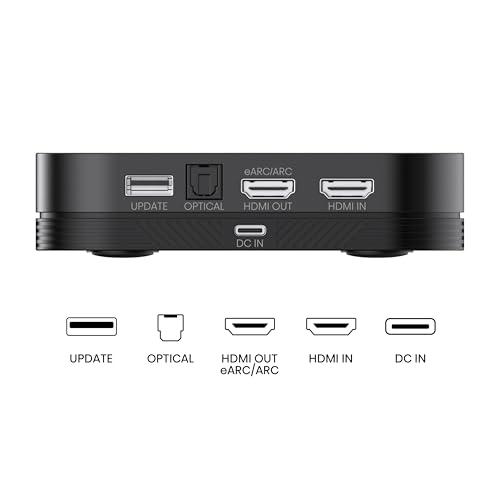
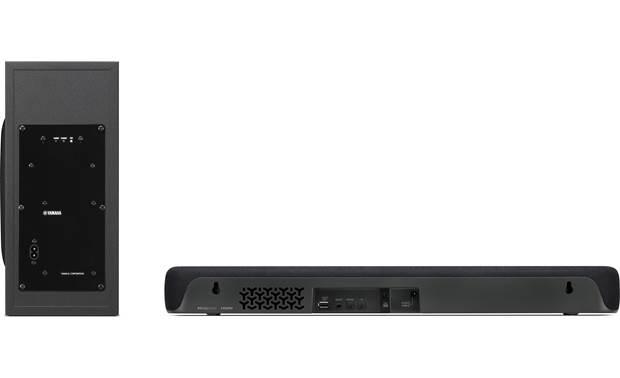
The HDMI eARC (enhanced Audio Return Channel) connection is crucial here. Regular HDMI ARC, which the Yamaha uses, has limited bandwidth and can't pass through the highest-quality lossless audio formats. eARC removes these restrictions, ensuring you get bit-perfect audio from your TV's streaming apps or connected devices.
The Yamaha's approach prioritizes reliability and compatibility over cutting-edge features. Its Dolby Digital support handles the vast majority of content you'll encounter, from Netflix streams to cable TV. The Bluetooth 5.0 connectivity includes AAC codec support, which means better wireless audio quality from iPhones and iPads compared to older Bluetooth implementations.
Based on extensive review analysis, the Hisense HT Saturn excels with content that benefits from surround sound—action movies, gaming, and music with complex arrangements. Users consistently praise its ability to create convincing spatial effects, with many noting they forget they're not using a traditional multi-speaker home theater setup.
The system's phantom center channel deserves special mention. Despite not having a dedicated center speaker (which typically handles most dialogue), the Hisense creates remarkably stable voice positioning through careful signal processing and speaker placement. This is technically impressive and practically important—center channel problems are one of the most common complaints about soundbar systems.
Gaming performance particularly stands out with the Hisense system. The precise positional audio helps with competitive gaming, while the immersive surround effects enhance single-player experiences. The low latency ensures audio stays synchronized with fast-paced action.
The Yamaha SR-C30A earns praise for different reasons. Users appreciate its consistent performance across all content types and its ability to make everything sound better without being overly dramatic about it. The "Adaptive Low Volume" technology maintains full-range sound even at whisper-quiet levels—perfect for late-night viewing in apartments or when kids are sleeping.
Music playback reveals another key difference. The Hisense can sound spectacular with well-recorded music, but its surround processing might add artificial spaciousness that purists find distracting. The Yamaha delivers clean, uncolored stereo reproduction that many find more natural for music listening.
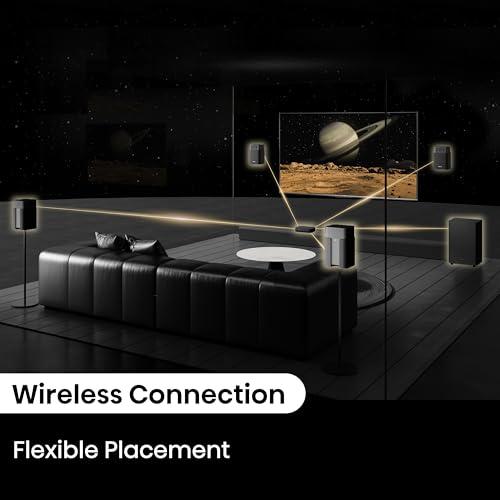
The Hisense HT Saturn requires commitment. You need to find suitable locations for four satellite speakers around your room, each needing power outlets. The wireless connectivity uses three frequency bands to maintain stable connections, but you're still dealing with five separate components that need to work together seamlessly.
The payoff is worth it if you have the space and inclination. The system's automatic setup process pairs all components quickly, and the sophisticated room tuning can optimize performance for your specific environment. But this isn't a plug-and-play solution—it's a project.
The Yamaha SR-C30A represents the opposite extreme. Connect one cable to your TV, plug in the soundbar and subwoofer, and you're done. The subwoofer pairs automatically, and there's minimal configuration needed. This simplicity extends to daily use—one remote controls everything, and the system behaves predictably.
At the time of writing, the Hisense HT Saturn costs roughly six times more than the Yamaha SR-C30A, which raises obvious questions about value. The price difference reflects genuinely different capabilities rather than just brand premium or fancy marketing.
The Hisense system delivers experiences that simply aren't possible with traditional soundbars. If you regularly watch movies with surround sound, play games, or want that "home theater" feeling, it provides something genuinely unique in the soundbar category. The Devialet tuning and advanced features justify the premium for users who will appreciate the difference.
The Yamaha represents exceptional value in the entry-level category. It solves the fundamental problem—terrible TV audio—without unnecessary complexity or features most people won't use. For the majority of users whose primary goal is clearer dialogue and better overall sound, it delivers most of the benefits you'd notice from any soundbar upgrade.
For dedicated home theater use, the Hisense HT Saturn functions essentially as a complete surround system. Its ability to decode and reproduce Dolby Atmos and DTS:X makes it suitable for serious movie watching. The multiple placement options for satellite speakers let you optimize for your room's layout, and the room correction helps achieve consistent performance.
The Yamaha SR-C30A works better as a TV enhancement than a home theater centerpiece. Its strengths align with typical TV viewing—clearer dialogue, better overall balance, and adequate bass reinforcement. For dedicated movie nights or critical music listening, its limitations become more apparent.
The decision ultimately comes down to matching system capabilities with your actual needs and preferences.
Choose the Hisense HT Saturn if you have a larger room where surround speakers make sense, regularly consume content that benefits from true surround sound, and don't mind the complexity of a multi-component system. It's particularly compelling if you own or plan to buy a large Hisense TV that can take advantage of the ecosystem integration features.
The system makes less sense in smaller spaces where satellite speakers would be cramped, or if you primarily watch news, sports, or talk shows where virtual surround provides minimal benefit. The price premium requires justification through regular use of its advanced capabilities.
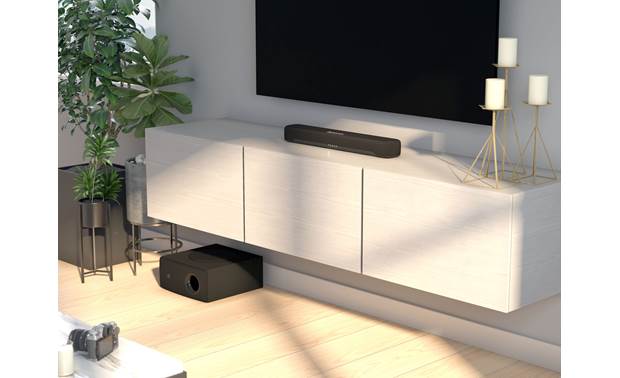
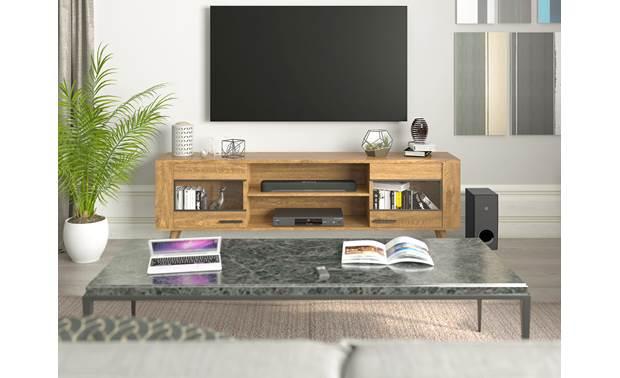
Choose the Yamaha SR-C30A if you want immediate, hassle-free improvement over TV speakers without complexity or significant expense. It's ideal for smaller rooms, secondary viewing areas, or as a first soundbar to understand whether you want to invest more in audio equipment later.
The Yamaha becomes less appealing if you frequently watch action movies, play immersive games, or listen to music where its limitations become obvious. It solves the TV audio problem elegantly but can't create experiences beyond its fundamental 2.1 design.
These products succeed in their respective categories but serve fundamentally different purposes. The Hisense HT Saturn is a premium home theater system that happens to be sold as a soundbar, while the Yamaha SR-C30A is exactly what most people picture when they think "soundbar upgrade."
Neither is objectively better—they're optimized for different priorities, budgets, and room situations. The Hisense offers experiences impossible with traditional soundbars, while the Yamaha provides excellent value for typical TV enhancement needs. Understanding which category matches your situation makes the choice straightforward.
The soundbar market will continue evolving, with more wireless surround systems like the Hisense challenging traditional form factors, while refined simple solutions like the Yamaha prove that sometimes the basic approach done well is exactly what people need. Both have earned their place in the market by solving real problems for different types of users.
| Hisense HT Saturn HTSATURN 4.1.2Ch Sound Bar System | Yamaha SR-C30A Soundbar with Subwoofer |
|---|---|
| Channel Configuration - Determines surround sound capability and immersion | |
| True 4.1.2 physical surround with 4 wireless satellite speakers + subwoofer + height channels | 2.1 stereo soundbar + wireless subwoofer with virtual surround processing |
| Total Speaker Count - More drivers enable better frequency separation and room filling | |
| 13 speakers total (8 full-range, 4 tweeters, 1 subwoofer driver) | 3 speakers total (2 main drivers, 1 subwoofer driver) |
| Audio Power Output - Higher wattage supports larger rooms and dynamic content | |
| 500-720W total system power (conflicting specs in documentation) | 90W total (50W subwoofer, 40W combined for main drivers) |
| Dolby Atmos Support - Essential for 3D movie audio and streaming content | |
| True Dolby Atmos/DTS:X with physical height channels for overhead effects | Virtual Dolby Atmos processing only (no physical height speakers) |
| Subwoofer Size - Larger drivers produce deeper bass and handle higher volumes | |
| 6.5" wireless subwoofer (40Hz frequency response) | 5.1" wireless subwoofer (frequency response not specified) |
| HDMI Connectivity - eARC supports lossless audio formats vs basic ARC | |
| HDMI eARC + HDMI IN with 4K 60Hz pass-through | HDMI ARC only (no input port, limited audio bandwidth) |
| Setup Complexity - Time investment vs immediate usability | |
| Multi-component system requiring placement of 4 satellite speakers around room | Simple 2-piece setup with automatic subwoofer pairing |
| Room Size Optimization - Effectiveness varies significantly with space | |
| Designed for larger rooms (200+ sq ft) where satellites can be properly positioned | Ideal for small to medium rooms, compact living spaces |
| TV Brand Integration - Enhanced features vs universal compatibility | |
| Hisense HT Saturn: Hi-Concerto TV speaker integration, Room Fitting Tuning (Hisense TVs only) | Yamaha SR-C30A: Universal compatibility with all TV brands |
| Audio Tuning - Professional optimization vs manufacturer standard | |
| Tuned by Devialet (premium French audio brand) for "opera-grade" sound | Yamaha's in-house audio engineering with Clear Voice dialogue enhancement |
| Wireless Technology - Connection stability and interference resistance | |
| Triple-band wireless (2.4G/5.2G/5.8G) with Bluetooth 5.3 | Single-band wireless connection with Bluetooth 5.0 |
| Price Category - Investment level and target market | |
| Premium home theater system pricing (6x+ more expensive) | Budget-friendly entry-level soundbar pricing |
The Hisense HT Saturn is significantly better for movies and home theater use. It provides true 4.1.2 surround sound with physical satellite speakers placed around your room, creating authentic directional audio effects. The Yamaha SR-C30A only offers virtual surround processing from a single soundbar, which can't match the immersive experience of actual rear speakers for movie watching.
The key difference is that the Hisense HT Saturn is actually a complete wireless home theater system with four satellite speakers, while the Yamaha SR-C30A is a traditional soundbar-plus-subwoofer setup. The Hisense creates true surround sound, while the Yamaha simulates surround effects using digital processing.
The Yamaha SR-C30A is much easier to set up. It's a simple two-piece system that connects automatically and requires minimal configuration. The Hisense HT Saturn requires positioning four satellite speakers around your room and connecting five separate wireless components, making setup more complex but ultimately more rewarding for surround sound.
Yes, the Hisense HT Saturn works best in larger rooms (200+ square feet) where you can properly position the four satellite speakers for optimal surround effects. The Yamaha SR-C30A is better suited for smaller rooms, apartments, or spaces where multiple speakers aren't practical.
Both systems handle dialogue well but differently. The Yamaha SR-C30A has a dedicated Clear Voice mode that specifically enhances speech frequencies, making it excellent for TV shows and news. The Hisense HT Saturn creates a stable phantom center channel for dialogue despite lacking a dedicated center speaker, which works very well for movies.
The Yamaha SR-C30A works universally with any TV brand. The Hisense HT Saturn also works with any TV, but you get additional features like Hi-Concerto integration and Room Fitting Tuning only when paired with compatible Hisense TVs (85" and larger models).
The Yamaha SR-C30A is generally preferred for music because it delivers clean, uncolored stereo sound without artificial surround processing that can make music sound unnatural. The Hisense HT Saturn can sound spectacular with well-recorded music but may add spatial effects that some listeners find distracting for pure music enjoyment.
Yes, both support Dolby Atmos but very differently. The Hisense HT Saturn provides true Dolby Atmos with physical upward-firing speakers that reflect sound off your ceiling for genuine overhead effects. The Yamaha SR-C30A only offers virtual Dolby Atmos processing, which simulates height effects without actual height speakers.
This depends on your needs and budget. The Yamaha SR-C30A offers exceptional value for basic TV audio improvement at an entry-level price point. The Hisense HT Saturn costs significantly more but delivers genuine home theater experiences impossible with traditional soundbars. Choose based on whether you want simple enhancement or true surround sound.
The Hisense HT Saturn has a larger 6.5" wireless subwoofer designed for room-filling bass impact, extending down to 40Hz. The Yamaha SR-C30A features a 5.1" subwoofer that provides adequate bass for smaller rooms but won't deliver the same deep, powerful low-end effects in larger spaces.
The Hisense HT Saturn is superior for gaming due to its precise positional audio from true surround speakers, which helps with competitive gaming and creates more immersive single-player experiences. The Yamaha SR-C30A provides basic audio enhancement but can't deliver the directional accuracy that serious gamers appreciate.
Neither system allows adding extra speakers. The Hisense HT Saturn is a complete 4.1.2 system as designed, while the Yamaha SR-C30A is fixed as a 2.1 configuration. If you think you'll want to expand your audio setup in the future, consider whether the Hisense system already provides the surround sound experience you're looking for.
We've done our best to create useful and informative comparisons to help you decide what product to buy. Our research uses advanced automated methods to create this comparison and perfection is not possible - please contact us for corrections or questions. These are the sites we've researched in the creation of this article: bestbuy.com - youtube.com - blog.son-video.com - youtube.com - youtube.com - techradar.com - ecoustics.com - jbhifi.com.au - shop.hisense-usa.com - bhphotovideo.com - bestbuy.com - digitalreviews.net - hisense-usa.com - projectorscreenstore.com - valueelectronics.com - dolby.com - giftpack.ai - techradar.com - usa.yamaha.com - expertreviews.com - usa.yamaha.com - trustedreviews.com - crutchfield.com - europe.yamaha.com - usa.yamaha.com - shop.usa.yamaha.com - assetserver.net

Privacy Policy
Terms and Conditions - Affiliate Policy
Home Security
© Copyright 2008-2026.
11816 Inwood Rd #1211, Dallas, TX 75244