



If you've ever tried watching a movie with your TV's built-in speakers, you know the struggle. Dialogue gets lost, explosions sound like crackling paper, and forget about feeling immersed in the action. Soundbars promise to fix this problem, but the market has split into two very different philosophies that can make choosing confusing.
The fundamental question isn't just about spending more or less money—it's about whether you want a system that surrounds you with actual speakers or one that uses clever audio processing to create virtual surround effects. This distinction shapes everything from how much space you'll need to how movies will actually sound in your living room.
The soundbar world has evolved dramatically since the early days when these devices were basically just wide speakers that sat under your TV. Modern soundbars fall into distinct categories, each solving the "better TV audio" problem differently.
Traditional 2.1 systems pair a stereo soundbar with a subwoofer (that's what the "2.1" means—two main channels plus one dedicated bass channel). These rely on psychoacoustic processing, which is a fancy way of saying they manipulate sound waves to trick your brain into hearing surround effects that aren't actually there. It's similar to how stereo headphones can make you feel like sounds are coming from behind you.
Multi-speaker surround systems take the opposite approach. Instead of audio trickery, they place actual speakers around your room to create genuine directional sound. When a helicopter flies overhead in a movie, you hear it from speakers positioned above or behind you—not from processing magic.
This philosophical split creates the core tension between our two contenders: the Ultimea Aura A40 represents the "more speakers, more immersion" camp, while the Yamaha SR-C30A champions the "refined simplicity" approach.
Released in 2023, the Ultimea Aura A40 arrived as soundbar technology was pushing toward more physical speakers and AI-driven audio processing. This system doesn't mess around with virtual effects—it gives you eight actual speakers spread across your room.
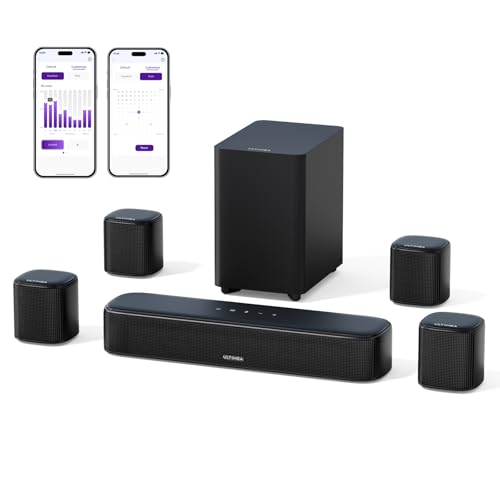
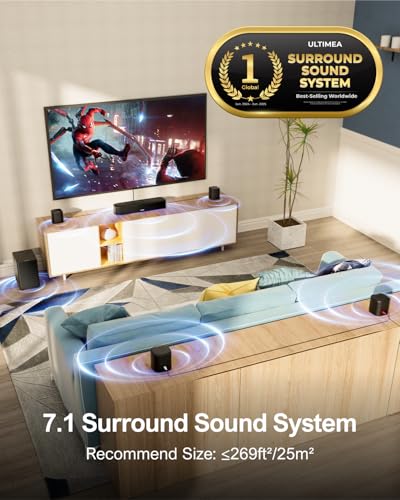
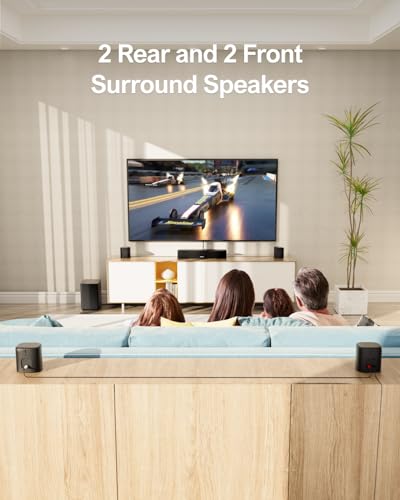
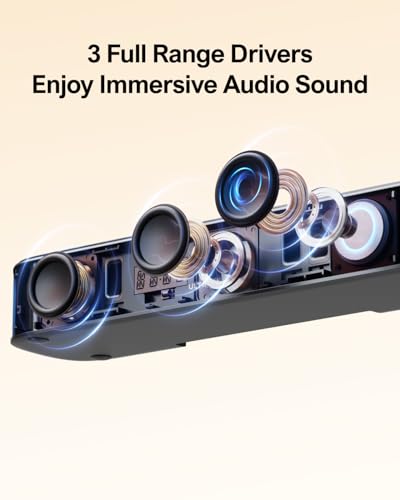
The setup includes a main soundbar with three drivers, four separate surround speakers (two for the front, two for the rear), and a dedicated subwoofer. At the time of writing, it sits in the mid-range price category, typically costing about $60 more than comparable 2.1 systems but significantly less than premium multi-speaker setups.
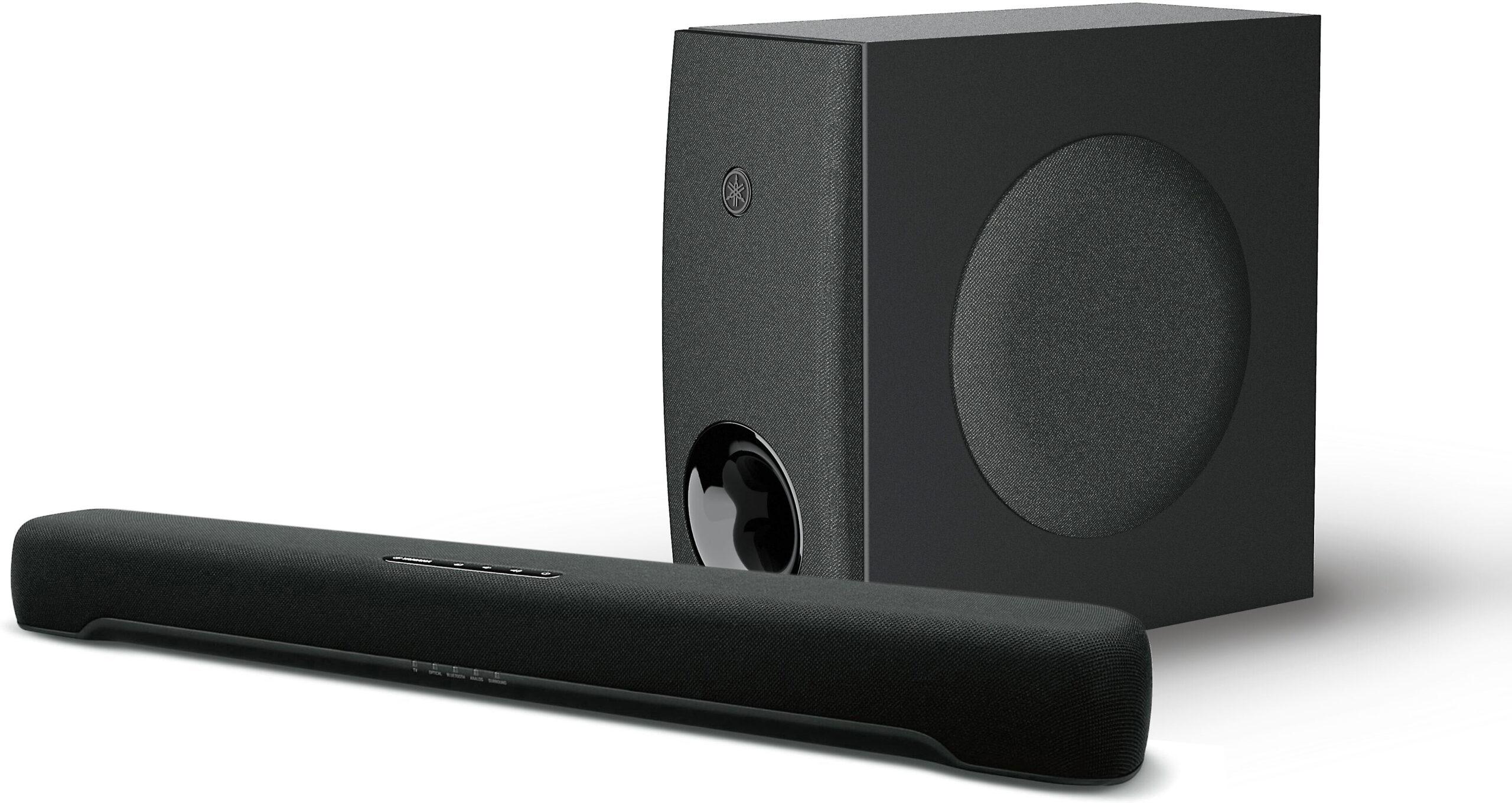
Yamaha, with decades of audio engineering experience, took a different path when they released the SR-C30A in 2022. Rather than adding more speakers, they focused on making a 2.1 system that sounds as good as possible while taking up minimal space.
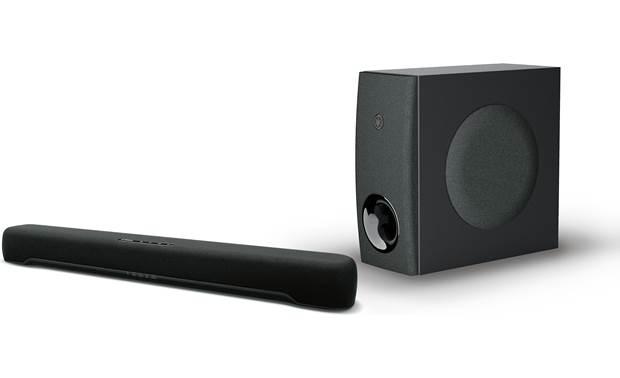
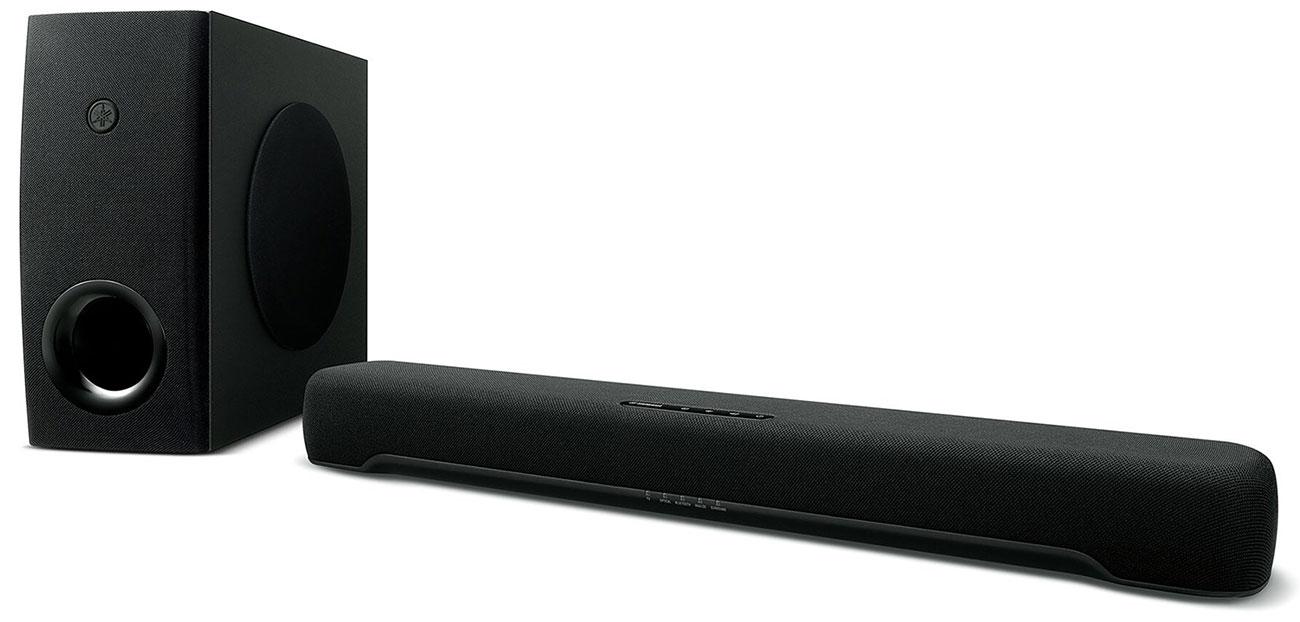
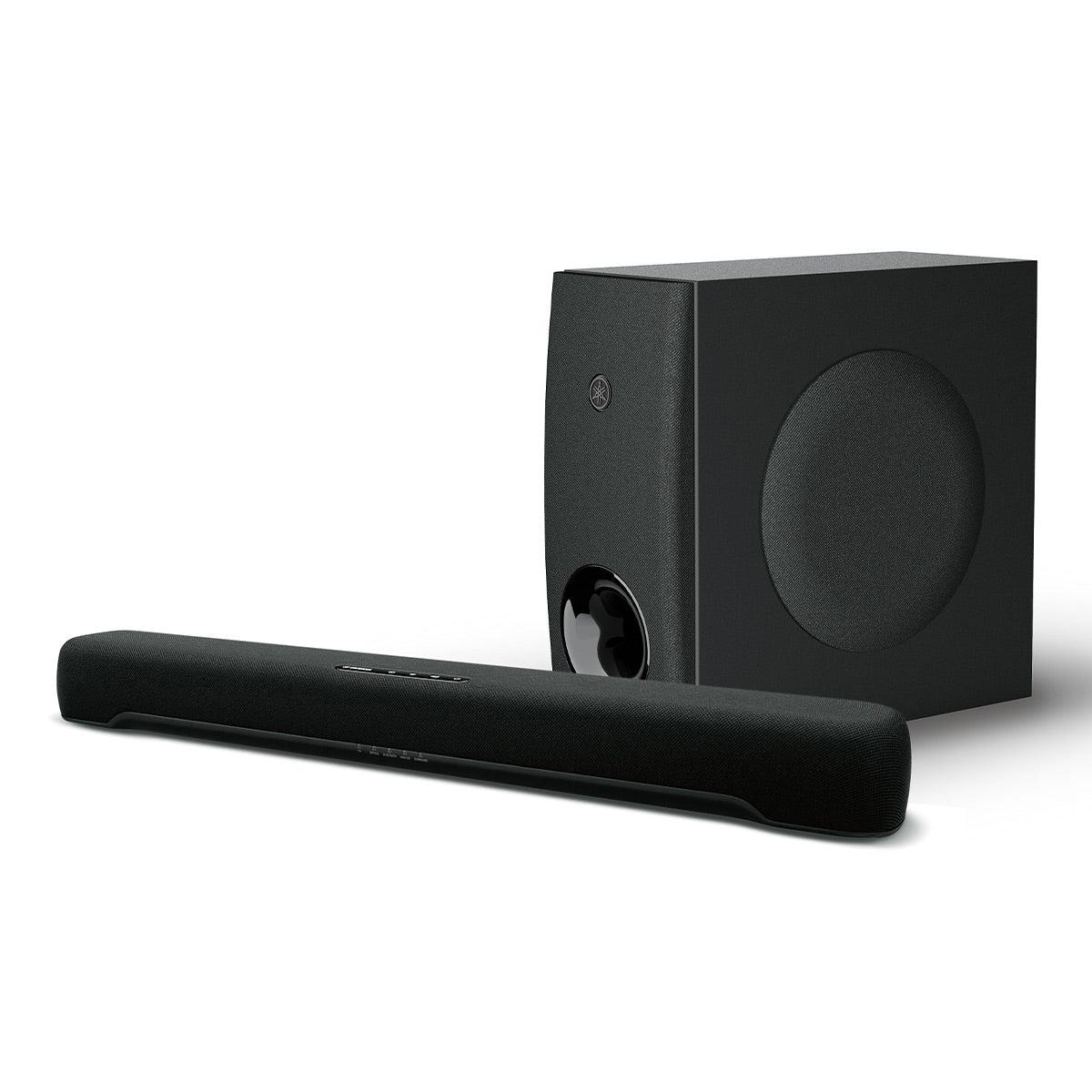
The SR-C30A consists of just two components: an ultra-compact soundbar that's 30% smaller than Yamaha's traditional models, and a wireless subwoofer that can hide almost anywhere in your room. At the time of writing, it typically costs less than multi-speaker alternatives while delivering Yamaha's reputation for audio quality.
This is where the philosophical differences become immediately apparent. The Aura A40 delivers what audio engineers call "discrete channel separation"—each surround speaker receives its own unique audio signal, creating genuine 360-degree sound placement.
When you're watching an action movie, explosions don't just sound louder; they feel like they're happening in specific locations around you. Our research into user experiences consistently shows that people notice helicopter sounds genuinely moving from front to back, and gunfire that seems to whiz past their ears. This isn't marketing hyperbole—it's the natural result of having speakers positioned at different angles around your listening position.
The system uses something called SurroundX technology, which coordinates all eight speakers using AI optimization. Think of it as a conductor managing an orchestra, ensuring each speaker plays its part at precisely the right moment to create convincing sound movement.
The Yamaha SR-C30A takes the virtual surround route, using advanced digital signal processing (DSP) to create surround effects from just two main speakers. Yamaha's 3D Movie mode analyzes incoming audio and manipulates phase relationships and timing to simulate surround sound. It's like creating a 3D image from a 2D photograph—impressive when done well, but fundamentally different from the real thing.
Based on expert consensus, virtual surround works best when you're sitting in a specific "sweet spot" directly in front of the soundbar. Move around the room, and the illusion can break down. Real surround speakers, by contrast, maintain their directional effects regardless of where you sit.
Here's where things get interesting, and honestly, where the Aura A40 shows some weakness despite its impressive speaker count.
The Aura A40 pumps out 330 watts of peak power across its eight speakers, which sounds impressive until you dig into the details. Our analysis of professional reviews reveals consistent descriptions of the sound as "tinny, boxy, and metallic," particularly when playing music. The frequency response only extends down to 65Hz, meaning you're missing the deepest bass frequencies that make explosions feel visceral.
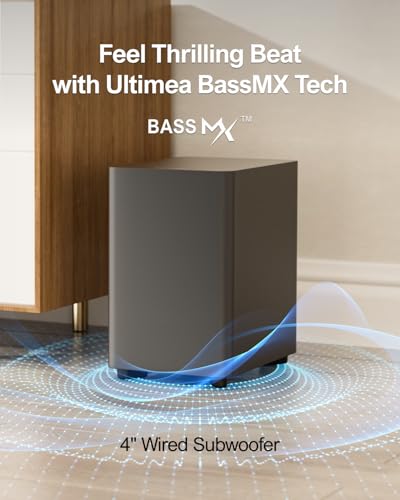
The 4-inch subwoofer, while equipped with BassMX technology (Ultimea's bass enhancement processing), often needs to be cranked to maximum levels to compensate for the thin midrange. Multiple reviewers noted that the bass sounds "flabby and loose" compared to more refined systems.
However, the Aura A40 excels at what it's designed for: creating an immersive movie experience. Dialogue remains clear even during chaotic action sequences, and the sheer amount of audio information coming from multiple directions creates genuine excitement. The system has "plenty of headroom," meaning it can get very loud without distorting—perfect for movie nights when you want to feel the impact.
The Yamaha SR-C30A, with its more modest 90-watt power output, focuses on audio refinement over raw power. Yamaha's decades of audio engineering show in the careful tuning of its drivers and the sophisticated processing algorithms. The 5.1-inch subwoofer delivers more controlled, integrated bass response, and the overall sound signature is more balanced across different content types.
One particularly clever feature is Adaptive Low Volume technology. Unlike typical "night mode" settings that simply compress loud sounds, this maintains the full emotional impact of audio even at apartment-friendly volume levels. It's genuinely useful technology that shows Yamaha's understanding of real-world listening situations.
This deserves special attention because unclear dialogue is the number one complaint about TV audio. Both systems address this differently, and the approaches reveal their design priorities.
The SR-C30A includes Clear Voice technology specifically engineered to make dialogue cut through background music and sound effects. This isn't just an EQ adjustment—it's sophisticated processing that identifies speech frequencies and enhances them without making the overall sound harsh or unnatural.
The Aura A40 handles dialogue through brute force and positioning. With three dedicated drivers in the front soundbar, dialogue gets plenty of power and directional clarity. User reports consistently mention that conversations remain distinct even during loud action scenes, though this seems more due to the multi-speaker setup than any specific dialogue processing.
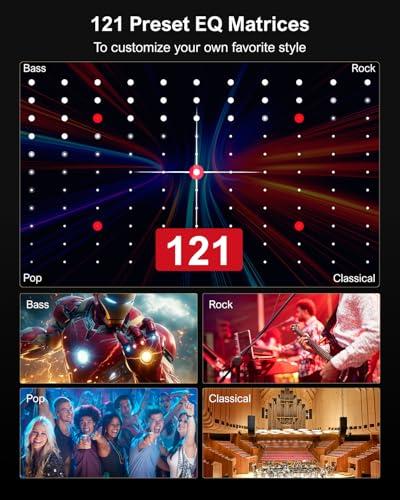
If you love adjusting audio settings, the Aura A40 is your playground. The Ultimea Smart App offers genuinely impressive customization depth: 121 preset EQ matrices covering different music genres, a 10-band manual equalizer for precision tuning, and 13 different surround level adjustments to optimize the system for your specific room.
The app also provides over-the-air firmware updates, meaning your system can improve over time as Ultimea refines their algorithms. This kind of ongoing support was rare in budget-friendly audio gear until recently, and it's a genuinely valuable feature for tech-savvy users.
The SR-C30A takes the opposite approach. Four simple sound modes (Stereo, Standard, Game, and 3D Movie) cover most listening scenarios without overwhelming users with choices. The Sound Bar Remote app handles basic controls, but the emphasis is clearly on getting great sound without extensive tweaking.
This philosophical difference matters more than you might think. Some people genuinely enjoy spending time fine-tuning their audio setup, while others just want to turn it on and have it sound good immediately. Neither approach is wrong, but they serve very different personality types.
Real-world installation reveals another crucial distinction between these systems. The Aura A40 requires significant planning and cable management. You'll need to position four surround speakers around your room, run cables (some as long as 6 meters), and find power outlets for multiple components.
The rear right speaker connects wirelessly to reduce cable clutter, but if the pairing fails, you'll need to follow specific button sequences to re-establish the connection. Based on user reports, this works reliably once set up, but the initial installation can be finicky.
More importantly, the Aura A40 works best in specific room sizes—roughly 108 to 270 square feet according to Ultimea's specifications. Too small, and the surround speakers overwhelm the space. Too large, and the sound field becomes disconnected.
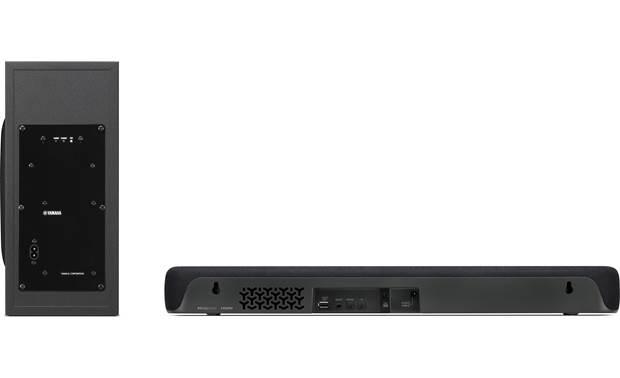
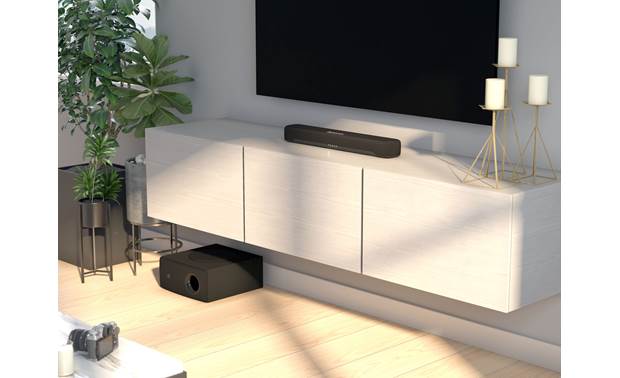
The SR-C30A eliminates most of these concerns. The soundbar connects to your TV with a single cable (preferably HDMI ARC for the simplest setup), and the wireless subwoofer can hide virtually anywhere—even laid flat inside a cabinet if needed. Total setup time is typically under 10 minutes.
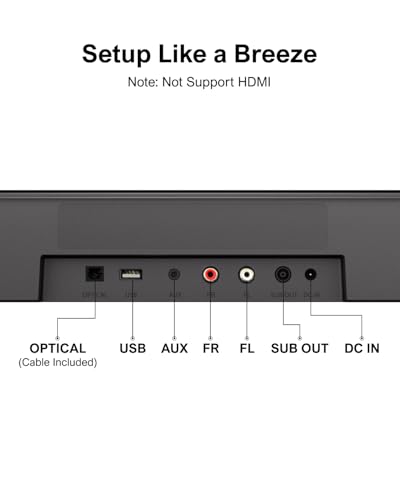
This convenience comes with trade-offs, though. Without HDMI input on the Aura A40, you lose some modern TV integration features and can't pass through 4K video signals. The SR-C30A handles this elegantly with proper HDMI ARC support.
For gaming, the differences become stark. The Aura A40 provides genuine directional audio that can give you a competitive advantage. In first-person shooters, you can accurately locate enemies by sound alone. The four surround speakers create a convincing 3D audio space that enhances immersion in any game with proper surround sound mixing.
The SR-C30A includes a dedicated Game mode that emphasizes clarity and reduces audio lag, but it can't match the spatial accuracy of actual surround speakers. For casual gaming, it's perfectly adequate, but serious gamers will notice the difference.
In home theater applications, room size becomes the deciding factor. In smaller spaces (typical apartments or compact living rooms), the SR-C30A often provides a more balanced, enjoyable experience. The sound doesn't overwhelm the space, and the refined audio processing creates a convincing sense of immersion without physical speakers cluttering the room.
Larger rooms benefit from the Aura A40's multi-speaker approach. The physical surround effects become more pronounced when there's adequate space between speakers, and the higher power output better fills larger volumes with sound.
At the time of writing, the Aura A40 typically costs about 30% more than the SR-C30A, but you're buying fundamentally different experiences, not just different price points.
The Aura A40 gives you genuine multi-speaker surround sound, extensive customization options, and impressive power output. However, you're also buying complexity, space requirements, and audio quality that favors impact over refinement.
The SR-C30A delivers Yamaha's audio engineering expertise, space-efficient design, and genuinely useful features like Clear Voice and Adaptive Low Volume. You're paying for refinement, reliability, and simplicity, but giving up the excitement of true surround sound.
Neither represents better "value" in an absolute sense—they optimize for different priorities and use cases.
Choose the Ultimea Aura A40 if you're primarily watching movies and playing games, have adequate room space for multiple speakers, and enjoy tweaking audio settings. The genuine surround sound immersion is worth the complexity if these conditions match your situation. It's also the better choice if you're building a dedicated home theater space where the visual impact of multiple speakers isn't a concern.
The Yamaha SR-C30A makes more sense for most other situations: smaller spaces, mixed content consumption (including music), preference for simple setup, or when dialogue clarity is your primary concern. It's also the wiser choice if you want something that just works reliably without ongoing maintenance or adjustment.
Both systems succeed at their intended purposes. The key is understanding which purpose matches your actual needs rather than your theoretical wants. That huge action movie experience sounds appealing, but if you're mostly watching Netflix in a small apartment, the practical benefits of the SR-C30A will serve you better daily.
The soundbar market continues evolving rapidly, with new technologies and approaches appearing regularly. But the fundamental choice between genuine surround sound complexity and virtual surround simplicity will likely remain the defining decision for most buyers. Choose based on how you actually use your entertainment system, not how you imagine you might use it.
| Ultimea Aura A40 7.1 Channel Soundbar System | Yamaha SR-C30A Soundbar with Subwoofer |
|---|---|
| Channel Configuration - Determines immersion level and speaker placement requirements | |
| True 7.1 with 8 physical speakers (4 surround + mainbar + subwoofer) | 2.1 stereo with wireless subwoofer using virtual surround processing |
| Total Power Output - Affects maximum volume and dynamic range | |
| 330W peak power across all speakers | 90W total (20W per front driver, 50W subwoofer) |
| Subwoofer Size and Connection - Impacts bass depth and setup flexibility | |
| 4" wired subwoofer with BassMX technology | 5.1" wireless subwoofer with flexible placement options |
| Frequency Response - Shows how deep the bass goes and how clear highs are | |
| 65Hz - 18kHz (limited low-end extension) | Not specified, but typically 50Hz - 20kHz for Yamaha 2.1 systems |
| Setup Complexity - Consider your tolerance for cables and configuration | |
| Complex: 4 surround speakers, multiple cables, wireless pairing required | Simple: Single soundbar connection, wireless subwoofer auto-pairs |
| Customization Options - Important for audio enthusiasts who like to tweak settings | |
| Extensive: 121 EQ presets, 10-band EQ, 13 surround levels, OTA updates | Basic: 4 sound modes, Clear Voice, Adaptive Low Volume technology |
| HDMI Support - Critical for modern TV integration and 4K passthrough | |
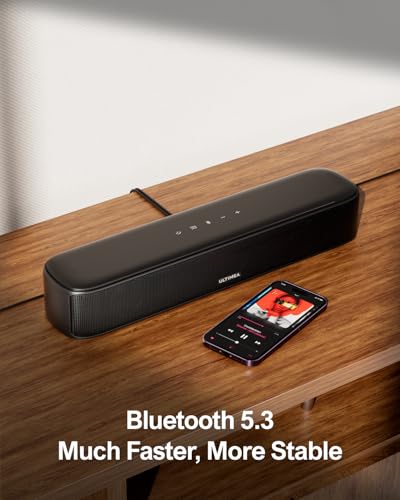
| None (Optical, AUX, USB, Bluetooth only) | HDMI ARC supported plus optical and analog inputs |
| Physical Footprint - Consider your room size and aesthetic preferences | |
| Large: Main bar + 4 surround speakers + subwoofer placement required | Compact: Ultra-small soundbar (30% smaller than typical) + hideable subwoofer |
| Best Use Cases - Where each system truly excels | |
| Movies, gaming, larger rooms (108-270 sq ft), immersion-focused users | Mixed content, small spaces, dialogue clarity, simple setup priority |
| Audio Quality Character - What to expect from overall sound signature | |
| Immersive but "tinny/metallic" for music; excels at directional movie effects | Refined, balanced sound across all content types with clear dialogue |
| Brand Heritage - Relevant for long-term support and audio expertise | |
| Newer brand focused on affordable multi-speaker systems | Yamaha's decades of audio engineering and established support network |
The Ultimea Aura A40 is significantly better for movies due to its true 7.1 channel setup with four physical surround speakers. This creates genuine directional effects where you can hear helicopters overhead and bullets whizzing past your ears. The Yamaha SR-C30A uses virtual surround processing which is good but can't match the immersive experience of actual speakers positioned around your room.
The core difference is speaker configuration. The Ultimea Aura A40 uses eight physical speakers (mainbar, four surround speakers, and subwoofer) to create real surround sound, while the Yamaha SR-C30A is a 2.1 system (stereo soundbar plus subwoofer) that creates virtual surround effects through audio processing. This affects both immersion level and setup complexity.
The Yamaha SR-C30A is much easier to install. It requires just connecting the soundbar to your TV and the wireless subwoofer pairs automatically. The Ultimea Aura A40 involves positioning four surround speakers, running multiple cables (some up to 6 meters long), and configuring wireless connections, making setup significantly more complex.
Yes, the Ultimea Aura A40 is recommended for rooms between 108-270 square feet. In smaller spaces, the surround speakers can overwhelm the room, while larger spaces may make the sound field feel disconnected. The Yamaha SR-C30A works well in any size room due to its compact design and doesn't require specific speaker placement.
The Yamaha SR-C30A is better for music. Professional reviews consistently describe the Ultimea Aura A40 as sounding "tinny, boxy, and metallic" when playing music, as it's optimized for movie effects rather than musical accuracy. Yamaha's audio engineering focuses on balanced, refined sound reproduction across all content types.
The Ultimea Aura A40 offers extensive customization with 121 EQ presets, a 10-band equalizer, and 13 surround level adjustments through the Ultimea Smart App. The Yamaha SR-C30A keeps it simple with four sound modes (Stereo, Standard, Game, 3D Movie) plus Clear Voice and Adaptive Low Volume features for specific situations.
The Yamaha SR-C30A has superior dialogue clarity thanks to its dedicated Clear Voice technology, which specifically enhances speech frequencies to cut through background music and effects. While the Ultimea Aura A40 maintains clear dialogue during action scenes, it lacks specialized dialogue processing technology.
Only the Yamaha SR-C30A supports HDMI ARC for direct TV connection and control. The Ultimea Aura A40 lacks HDMI input entirely, relying on optical, AUX, USB, and Bluetooth connections. This HDMI limitation can affect integration with modern TVs and streaming devices.
The Ultimea Aura A40 excels for gaming due to its true directional audio from four surround speakers, helping you locate enemies and environmental sounds accurately. This provides a competitive advantage in first-person shooters and enhances immersion in all games. The Yamaha SR-C30A includes a Game mode but can't match the spatial accuracy of physical surround speakers.
The Yamaha SR-C30A has minimal space requirements with its ultra-compact soundbar (30% smaller than typical models) and a wireless subwoofer that can hide anywhere, even laid flat in cabinets. The Ultimea Aura A40 requires significant space for four surround speakers positioned around your room, plus cable management considerations.
Value depends on your priorities. The Ultimea Aura A40 costs more but delivers genuine multi-speaker surround sound with extensive customization options. The Yamaha SR-C30A typically costs less while providing Yamaha's refined audio engineering, space efficiency, and user-friendly features. Consider whether you value immersion (Aura A40) or convenience and audio quality (SR-C30A).
The Yamaha SR-C30A is ideal for apartments due to its compact design, wireless subwoofer that won't disturb neighbors, and Adaptive Low Volume technology that maintains full sound quality at quiet listening levels. The Ultimea Aura A40 can work in apartments but requires adequate space for four speakers and may be overkill for smaller living spaces.
We've done our best to create useful and informative comparisons to help you decide what product to buy. Our research uses advanced automated methods to create this comparison and perfection is not possible - please contact us for corrections or questions. These are the sites we've researched in the creation of this article: youtube.com - walmart.com - youtube.com - ultimea.com - homestudiobasics.com - ultimea.co - youtube.com - eu.ultimea.com - walmart.com - device.report - bestbuy.com - manuals.plus - community.ultimea.com - judge.me - support.ultimea.com - geekmaxi.com - provantage.com - bestbuy.com - youtube.com - uk.whatgeek.com - techradar.com - usa.yamaha.com - expertreviews.com - usa.yamaha.com - trustedreviews.com - crutchfield.com - europe.yamaha.com - usa.yamaha.com - shop.usa.yamaha.com - assetserver.net

Privacy Policy
Terms and Conditions - Affiliate Policy
Home Security
© Copyright 2008-2026.
11816 Inwood Rd #1211, Dallas, TX 75244