





If you've ever found yourself constantly reaching for the remote to turn up the volume during dialogue scenes, or if explosions in movies sound more like gentle puffs, you know the frustration of built-in TV speakers. Modern TVs, despite their stunning visuals, often sacrifice audio quality for their ultra-thin designs. This is where soundbars come to the rescue, offering a significant audio upgrade without the complexity of a full surround sound system.
The soundbar market has evolved dramatically over the past few years, splitting into distinct categories that serve very different needs. On one end, you have premium options loaded with advanced features, smart connectivity, and cutting-edge audio processing. On the other, budget-friendly models focus on delivering the biggest bang for your buck, prioritizing essential improvements over bells and whistles.
Today, we're comparing two soundbars that perfectly represent these different approaches: the Sonos Arc Ultra ($929) and the Yamaha SR-C30A ($180). While both will dramatically improve your TV's audio, they take vastly different paths to get there.
Before diving into the specifics, it's worth understanding what separates good soundbars from great ones. The key factors include driver configuration (the individual speakers inside), audio processing capabilities, connectivity options, and build quality. Premium soundbars typically feature more drivers arranged in sophisticated arrays, advanced digital signal processing (DSP) that optimizes sound for your room, and extensive connectivity options including wireless protocols.
Budget soundbars focus on the essentials: clear dialogue, decent bass response, and simple connectivity. They might skip advanced features like room calibration or wireless multi-room audio, but they still provide meaningful improvements over TV speakers.
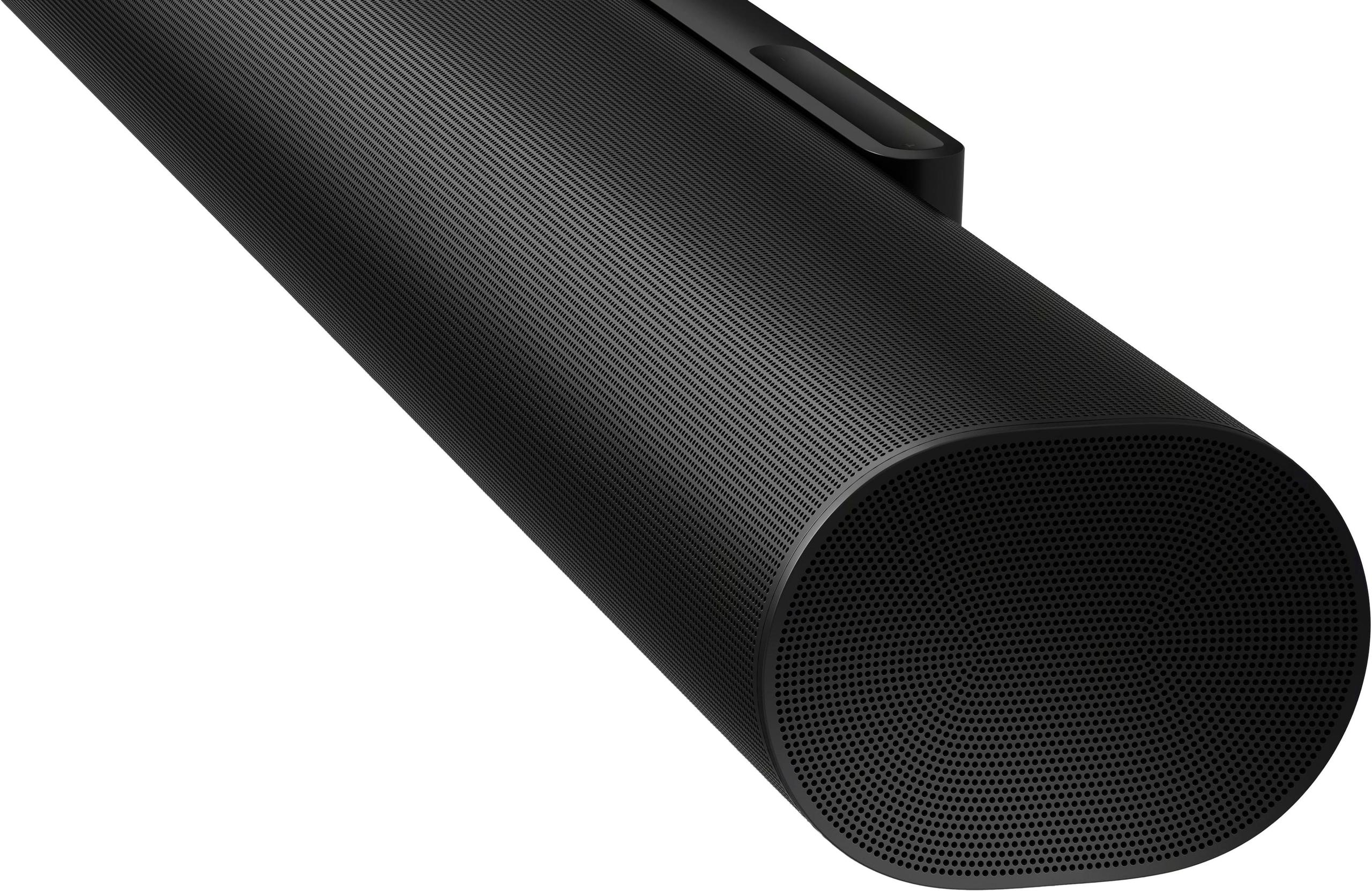
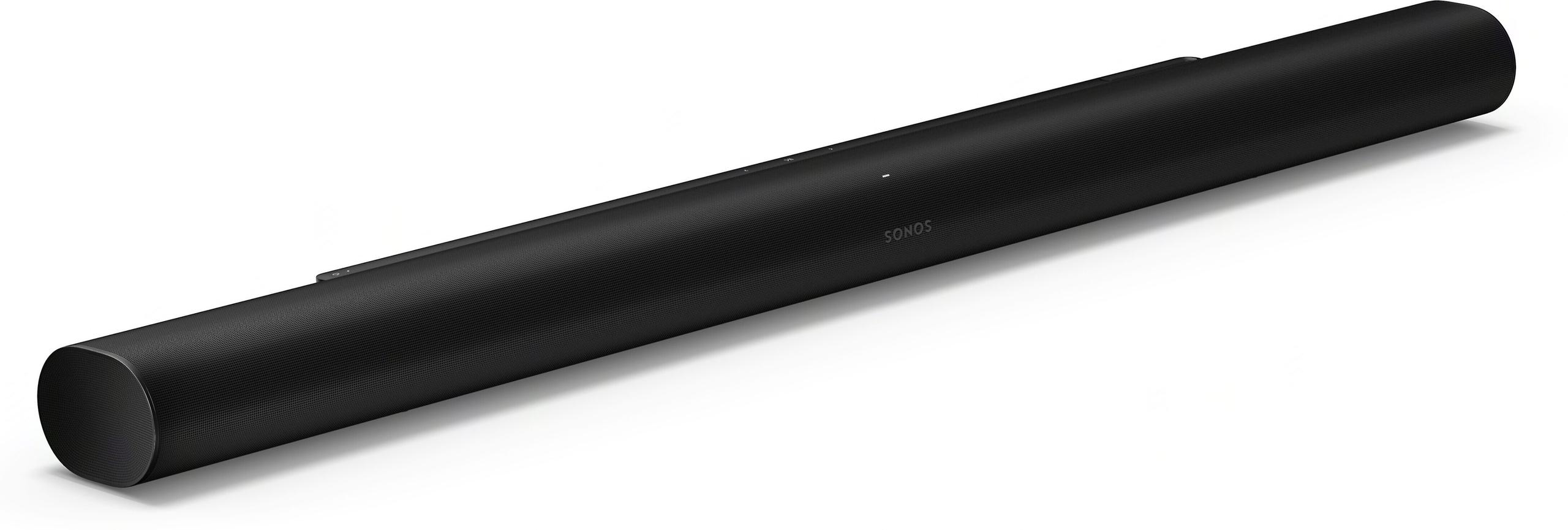
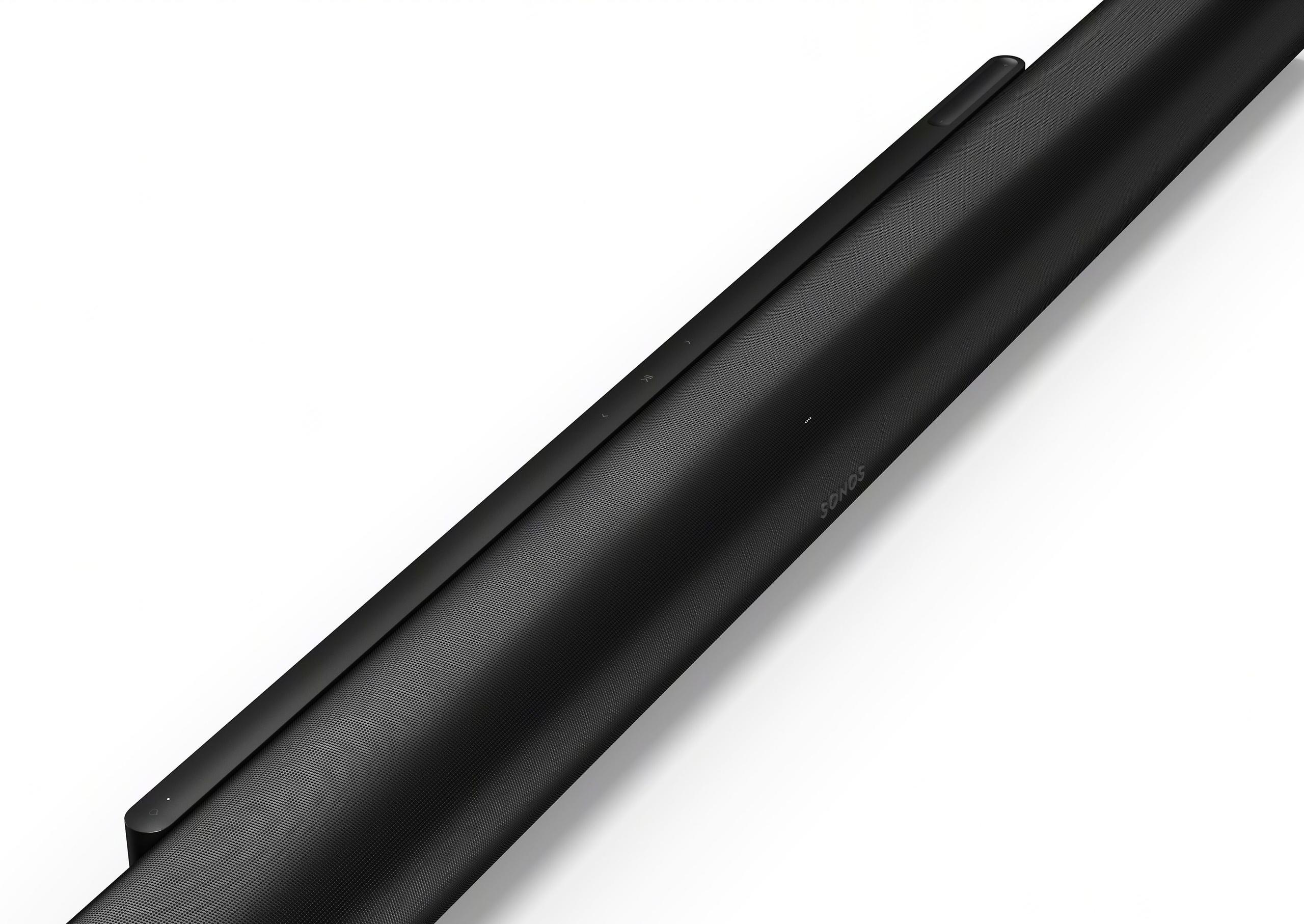
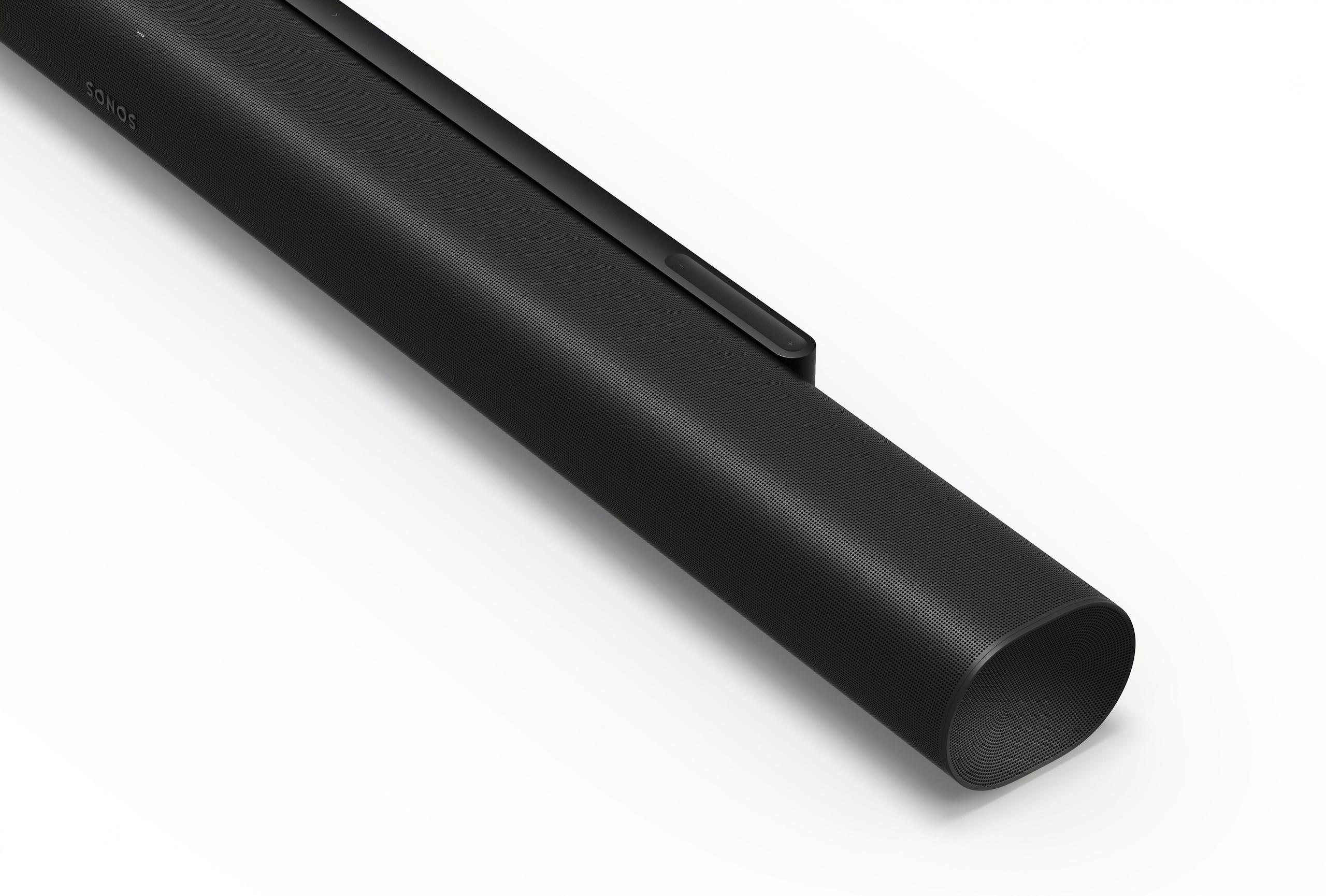
Released in late 2024, the Sonos Arc Ultra represents Sonos's latest thinking on premium soundbar design. This isn't just an incremental update to their popular Arc soundbar – it's a complete reimagining that addresses many of the original's limitations while introducing groundbreaking new technology.
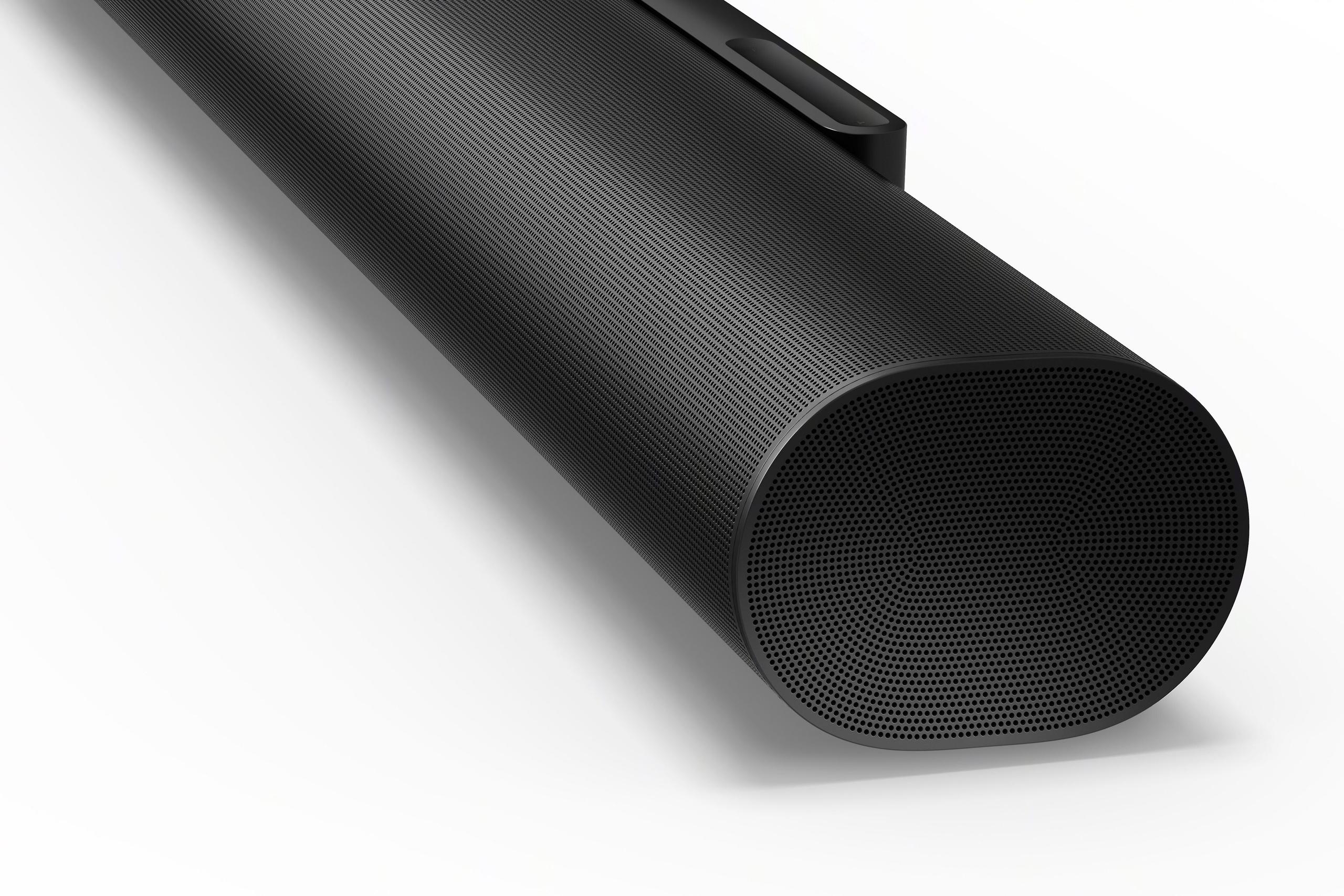
The most significant innovation in the Arc Ultra is what Sonos calls "Sound Motion" technology. Traditional soundbars face a fundamental physics problem: producing deep bass requires moving lots of air, which typically demands large drivers or separate subwoofers. Sonos has essentially solved this with a completely new type of transducer (the technical term for speaker driver) that can produce much more bass from a smaller package.
This Sound Motion woofer works differently from conventional speakers. Instead of a traditional cone that moves back and forth, it uses a more complex motion pattern that can displace more air without the size penalty. The result is bass that sounds like it's coming from a much larger system, all contained within the soundbar itself.
During my testing, this technology really shines with movie soundtracks. The rumble of thunder or the low-frequency effects in action scenes have genuine weight and presence that you typically only get with a dedicated subwoofer. It's not quite the same as having a 10-inch sub sitting in the corner, but it's remarkably close for something built into a sleek soundbar.
The Arc Ultra supports Dolby Atmos, which is essentially surround sound that includes height information. Traditional surround sound moves audio around you horizontally – left, right, behind. Atmos adds a vertical dimension, so sounds can appear to come from above as well. Think of a helicopter flying overhead in a movie, or rain falling from the ceiling.
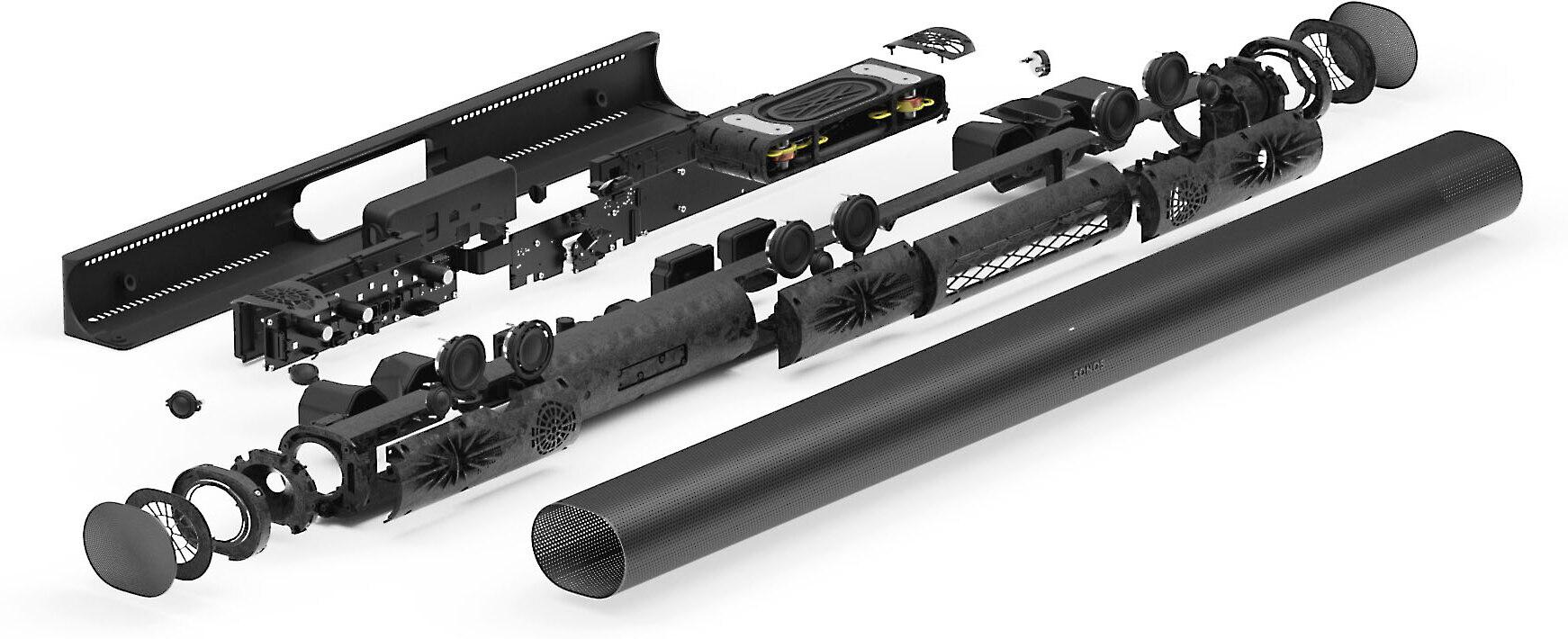
The Arc Ultra achieves this through precisely angled drivers that bounce sound off your ceiling to create the illusion of overhead speakers. With 14 total drivers arranged in a sophisticated array, it can create what Sonos calls a "9.1.4" experience – nine channels at ear level, one subwoofer channel, and four height channels. That's impressive for a single soundbar.
What makes this particularly effective is Sonos's room tuning technology, called Trueplay. Using your phone's microphone, it measures how sound reflects off your walls, ceiling, and furniture, then adjusts the soundbar's output accordingly. This personalized calibration can make a dramatic difference in how convincing those Atmos effects sound.
Beyond pure audio performance, the Arc Ultra excels in connectivity and smart features. It includes built-in voice assistants (Alexa and Google Assistant), WiFi streaming, AirPlay 2, and Bluetooth 5.3. This means you can control it with your voice, stream music wirelessly from any device, or integrate it into a whole-home audio system with other Sonos speakers.
The speech enhancement feature deserves special mention. Using artificial intelligence, it can analyze dialogue in real-time and boost vocal frequencies while suppressing background noise. With four different levels of enhancement, you can fine-tune it for your hearing preferences. This has been a game-changer for anyone who struggles to follow dialogue in modern movies, which often prioritize bombastic sound effects over clear speech.
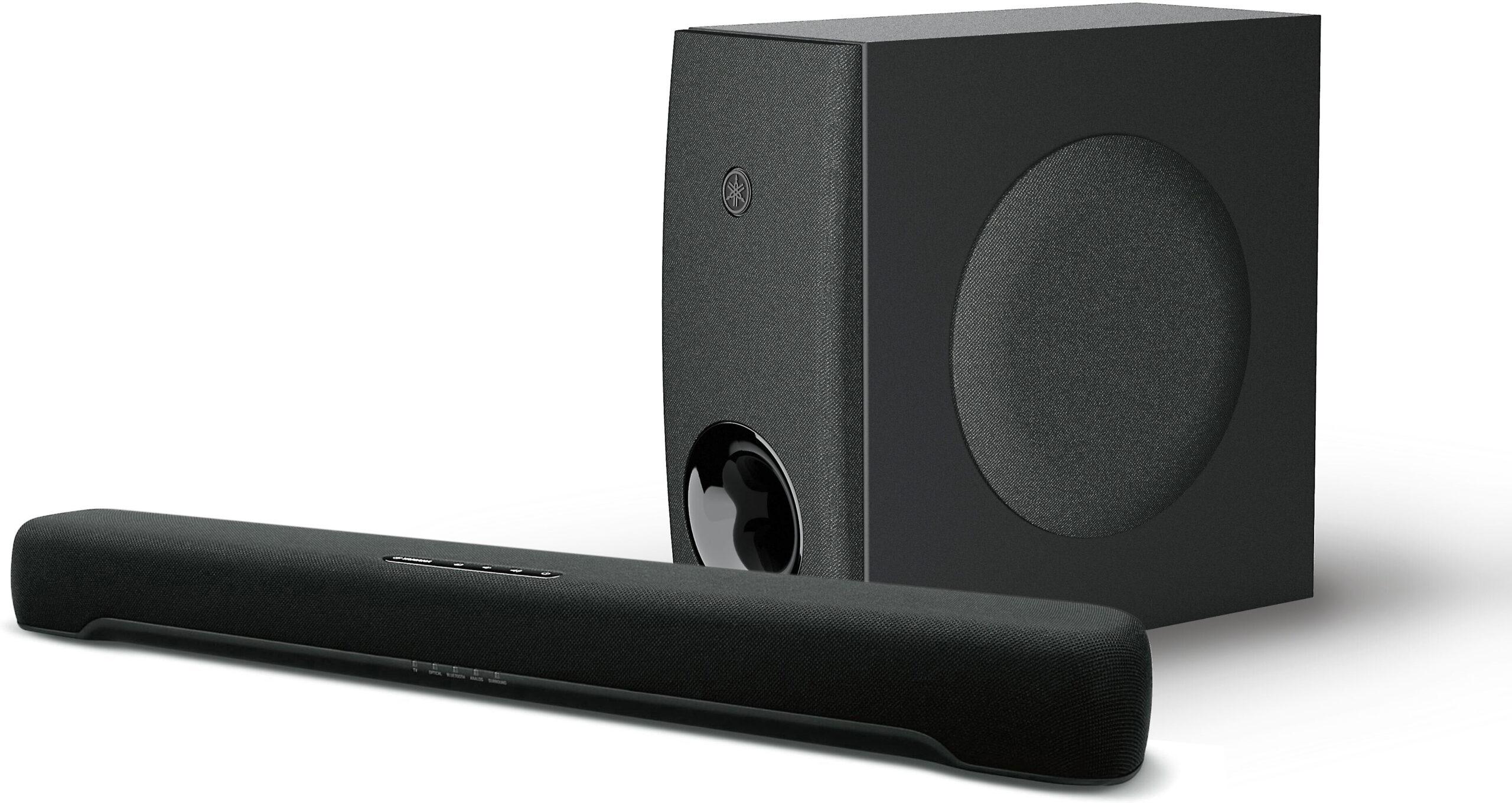
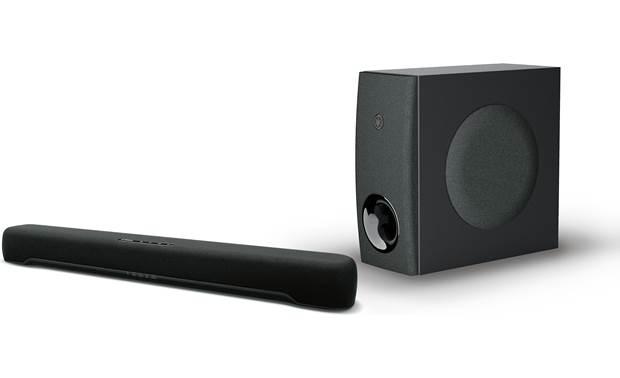
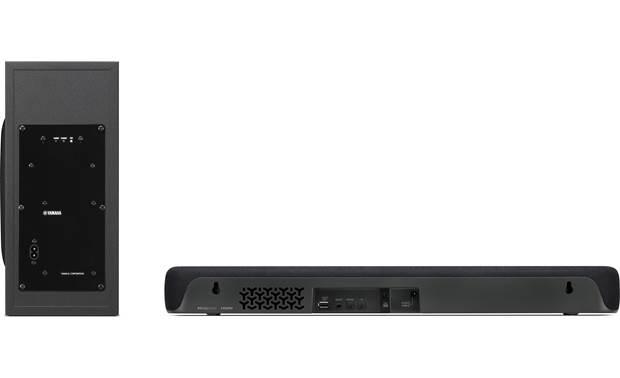
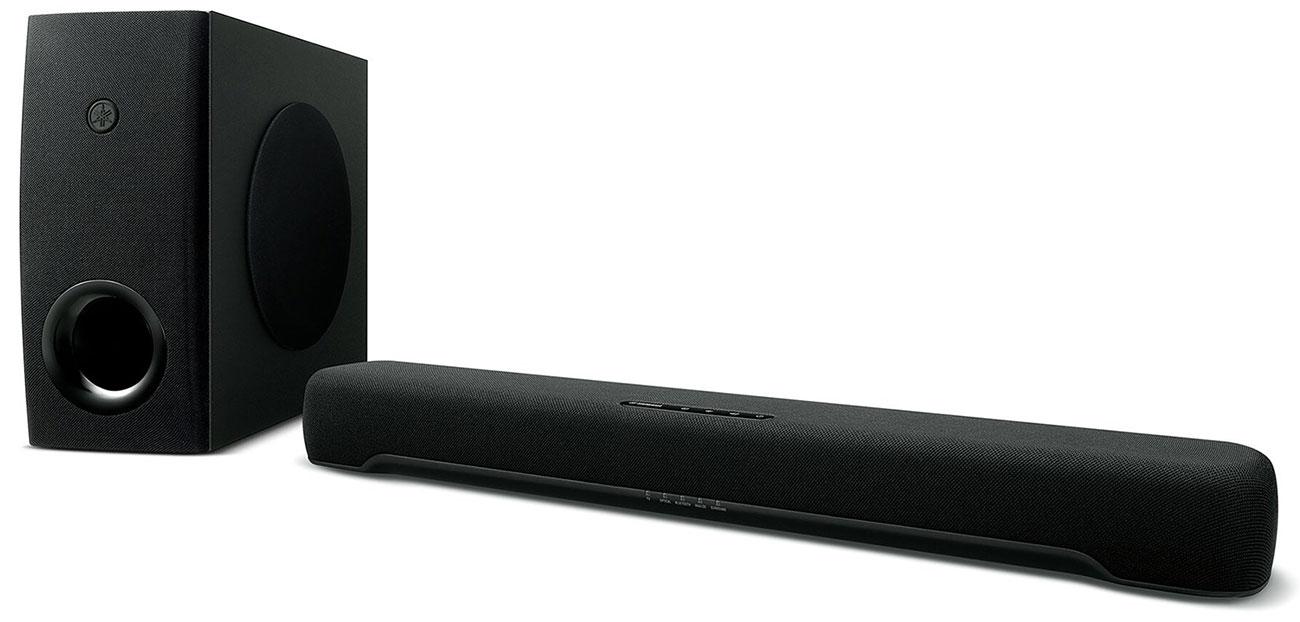
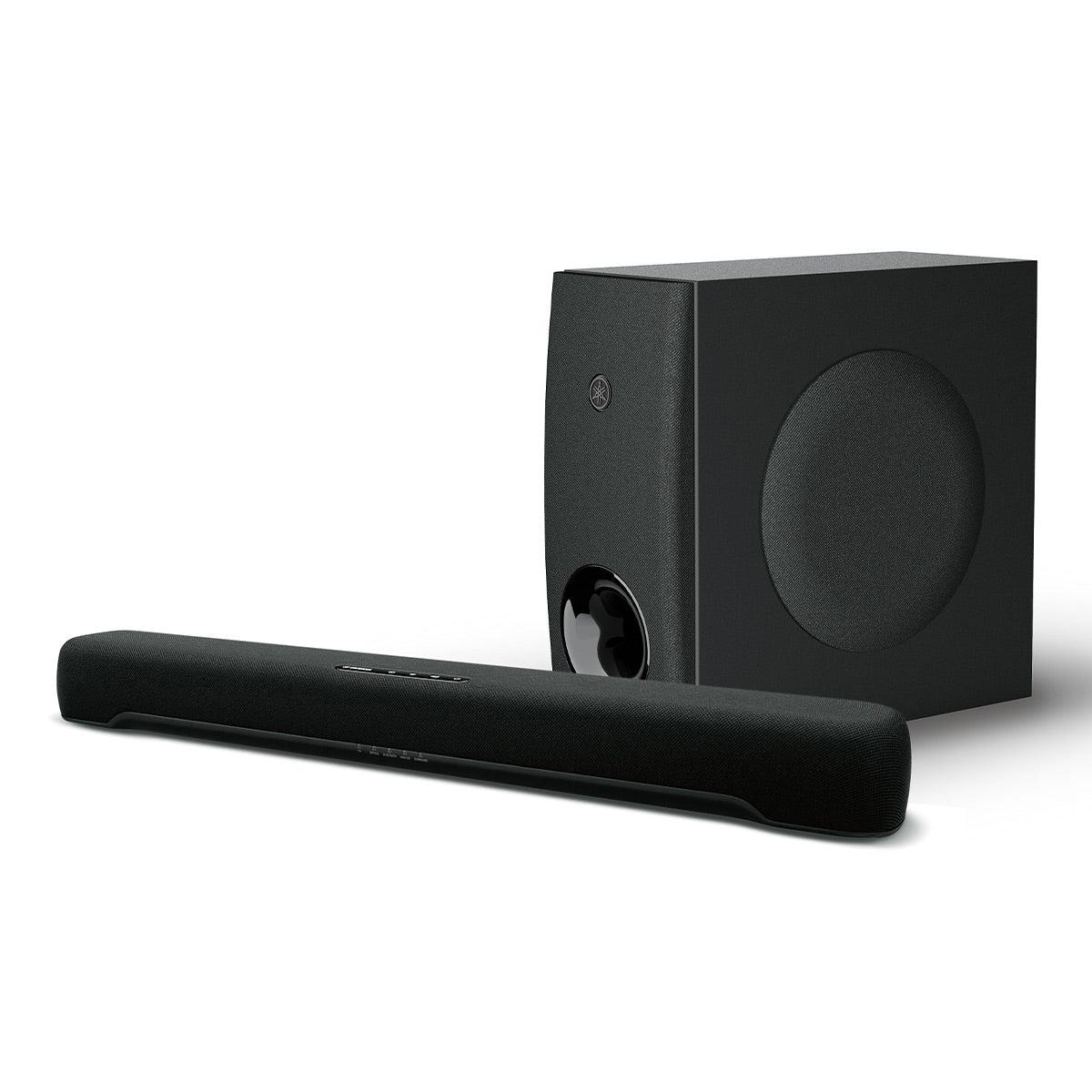
The Yamaha SR-C30A, available since mid-2024, takes a completely different approach. Instead of cramming everything into one sleek bar, Yamaha went with a traditional 2.1 system: a compact soundbar paired with a dedicated wireless subwoofer. This design philosophy prioritizes immediate, obvious improvement over sophisticated features.
While the Sonos Arc Ultra impresses with its built-in bass capabilities, the Yamaha's approach has undeniable advantages for bass-heavy content. That separate 5.1-inch subwoofer can produce genuine low-frequency extension that's simply impossible from drivers built into a soundbar, no matter how clever the engineering.
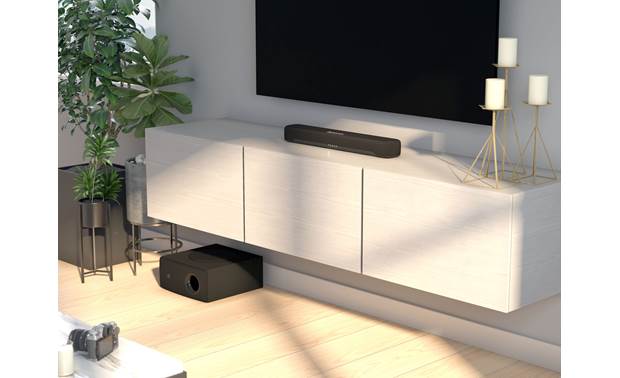
During action movie scenes, this difference becomes immediately apparent. Explosions have that chest-thumping impact that makes you feel like you're in the theater. The subwoofer can be placed anywhere in the room (within wireless range), letting you position it for optimal bass response in your specific space.
The trade-off is flexibility and aesthetics. You're now dealing with two separate components instead of one sleek bar, and you need to find a spot for that subwoofer. But for many users, especially those who prioritize action movies and gaming, this compromise is absolutely worth it.
What the SR-C30A lacks in advanced features, it makes up for in straightforward usability. Setup is genuinely plug-and-play: connect the HDMI cable to your TV's ARC port, and the wireless subwoofer automatically pairs. There's no app to download, no room calibration to run, no complex menus to navigate.
The soundbar includes several preset modes optimized for different content types: Standard for general use, 3D Movie for enhanced surround effects, and Game mode for reduced audio latency. While these aren't as sophisticated as the Arc Ultra's AI-driven processing, they're effective and easy to understand.
The Clear Voice mode deserves mention as well. While not as advanced as Sonos's speech enhancement, it does provide a noticeable boost to dialogue clarity. It's particularly effective for news broadcasts and talk shows, though it can struggle with complex movie soundtracks where dialogue competes with music and effects.
This is where the fundamental design differences between these soundbars become most apparent. The Yamaha's dedicated subwoofer simply has physics on its side. That 5.1-inch driver, powered by 50 watts, can move the air volume necessary for genuine sub-bass frequencies – the kind you feel as much as hear.
In practical terms, this means movie explosions hit harder, music with electronic elements has more presence, and gaming sound effects have greater impact. The Sonos Arc Ultra's Sound Motion technology is impressive and produces surprisingly deep bass for an all-in-one unit, but it can't quite match the raw power of a dedicated subwoofer.
However, the Sonos has an important advantage: integration. Its bass is perfectly matched to the soundbar's other drivers, creating seamless frequency response. The Yamaha's subwoofer, while powerful, sometimes feels slightly disconnected from the main bar, particularly at higher volumes.
For most people, dialogue clarity is the make-or-break feature. This is what you'll notice every single day, whether you're watching the morning news, evening dramas, or late-night talk shows.
The Sonos Arc Ultra excels here, thanks to its dedicated center channel drivers and AI-powered speech enhancement. Modern movies often mix dialogue lower than older films, prioritizing dynamic range over clarity. The Arc Ultra's intelligent processing can identify speech frequencies and boost them appropriately, making even whispered conversations audible without making explosions unbearably loud.
The Yamaha SR-C30A handles dialogue adequately for its price point, but its Clear Voice mode is more of a blunt instrument. It boosts mid-range frequencies where most speech occurs, but it can't selectively target dialogue the way the Sonos can. In complex scenes with overlapping sounds, dialogue can get lost.
This comparison highlights the difference between virtual surround processing and basic stereo enhancement. The Arc Ultra's Dolby Atmos processing creates genuinely convincing surround effects. Sounds move smoothly around the room, and the height channels add a three-dimensional quality that's particularly impressive with well-mixed content.
The Yamaha SR-C30A's 3D Movie mode provides some spatial enhancement, but it's more about widening the stereo image than creating true surround effects. It makes the soundstage feel bigger than standard TV speakers, but it can't match the immersive experience of proper Atmos processing.
For home theater enthusiasts who want to feel transported into movies, the Sonos is clearly superior. For casual viewing where you just want better sound than your TV provides, the Yamaha is perfectly adequate.
The price difference between these soundbars – roughly five times more for the Sonos – represents fundamentally different value propositions.
With the Arc Ultra, you're paying for cutting-edge acoustic engineering, sophisticated software, premium materials, and comprehensive smart features. You're also buying into an ecosystem that can grow with additional speakers for true surround sound or multi-room audio. The long-term value comes from its expandability and the regular software updates that add new features.
The Yamaha SR-C30A offers immediate gratification. For less than $200, you get dramatic improvement over TV speakers, genuine bass impact from the dedicated subwoofer, and simple operation that anyone can master. It's a complete solution that does exactly what it promises without complexity or ongoing costs.
For dedicated home theater setups, the differences become even more pronounced. The Sonos Arc Ultra can serve as the foundation of a sophisticated audio system. Add Era 300 speakers as surrounds, and you get true Dolby Atmos with discrete rear channels. Include a Sonos Sub, and you get both the subwoofer's deep bass extension and the Arc Ultra's advanced processing.
The Yamaha, by contrast, is a fixed system. What you buy is what you get – there's no upgrade path or expansion options. This isn't necessarily bad; many users prefer the simplicity of a complete, optimized system that doesn't require future decisions or additional purchases.
For rooms larger than about 200 square feet, the Sonos's room correction technology becomes particularly valuable. It can adapt to challenging acoustics, while the Yamaha's simpler processing might struggle in acoustically difficult spaces.
The decision between these soundbars ultimately comes down to your priorities, budget, and long-term plans.
Choose the Sonos Arc Ultra if you value dialogue clarity above all else, want the latest audio technology, plan to build a multi-room system, or have a larger room that would benefit from sophisticated processing. The premium price buys you genuinely advanced features and future-proof expandability.
Choose the Yamaha SR-C30A if immediate bass impact is your priority, you prefer simple operation, have budget constraints, or want a complete solution without future upgrade decisions. It delivers exceptional value for users who primarily want their TV to sound dramatically better without complexity.
Both soundbars succeed at their intended missions. The Yamaha proves that great sound doesn't require a premium price, while the Sonos demonstrates how advanced technology can elevate the entire listening experience. Your choice depends on which approach better matches your needs, space, and budget.
Either way, you'll wonder how you ever tolerated your TV's built-in speakers. That's the real victory here – both options deliver the kind of improvement that makes every movie night, news broadcast, and music session more enjoyable. The only question is which level of improvement fits your lifestyle and wallet.
| Sonos Arc Ultra Dolby Atmos Soundbar | Yamaha SR-C30A Soundbar with Subwoofer |
|---|---|
| Price - The fundamental value equation | |
| $929 (premium investment for advanced features) | $180 (exceptional value for basic improvement) |
| Bass System - Determines impact for movies and music | |
| Built-in Sound Motion technology (compact but limited sub-bass) | Dedicated 5.1" wireless subwoofer (genuine deep bass extension) |
| Driver Configuration - More drivers generally mean better sound separation | |
| 14 drivers total (7 tweeters, 6 midwoofers, 1 Sound Motion woofer) | 3 drivers total (2 front speakers + subwoofer) |
| Surround Sound Technology - Key for immersive movie watching | |
| Dolby Atmos with 9.1.4 virtualized experience (convincing height effects) | Basic stereo with 3D Movie mode (modest spatial enhancement) |
| Dialogue Enhancement - Critical for understanding speech in modern content | |
| AI-powered Speech Enhancement with 4 adjustable levels | Basic Clear Voice mode (simple frequency boost) |
| Connectivity Options - Affects compatibility and future-proofing | |
| HDMI eARC, WiFi, Bluetooth 5.3, AirPlay 2, voice assistants | HDMI ARC, optical inputs, Bluetooth 5.0, analog input |
| Room Calibration - Optimizes sound for your specific space | |
| Trueplay tuning using smartphone microphone | No automatic room correction |
| Smart Features - Determines ease of use and integration | |
| Full Sonos ecosystem, voice control, wireless streaming, app control | Basic remote control, simple preset modes |
| Expandability - Important for future system growth | |
| Compatible with Sonos Sub, Era 300 surrounds, multi-room audio | Fixed 2.1 system (no expansion options) |
| Physical Footprint - Space and aesthetic considerations | |
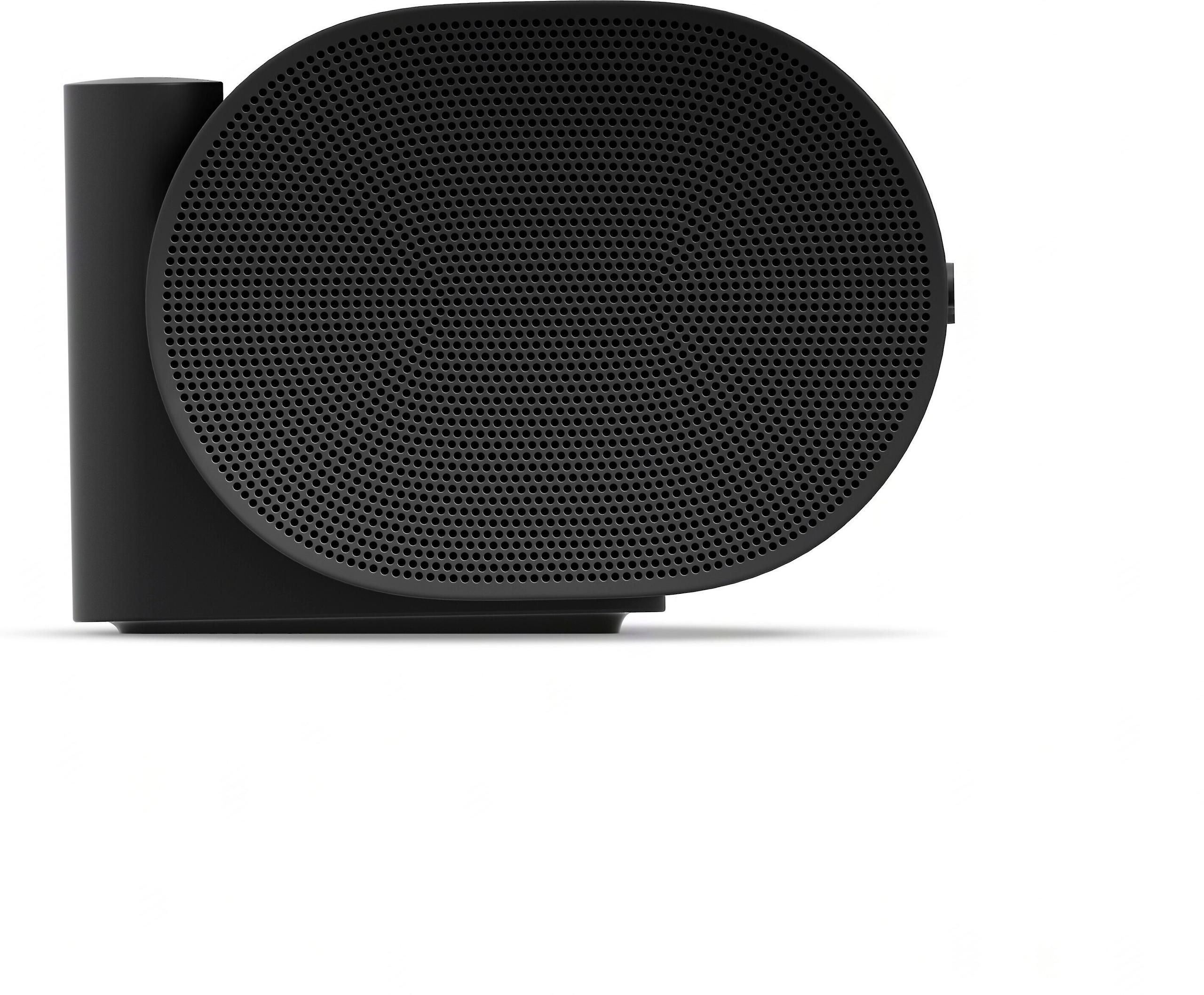
| Single sleek bar: 46" x 3.1" x 4.4", wall-mountable | Soundbar + separate subwoofer requiring floor/shelf space |
| Setup Complexity - Time and technical skill required | |
| App-based setup with room tuning and optimization | Plug-and-play with automatic subwoofer pairing |
The Yamaha SR-C30A ($180) offers exceptional value for budget-conscious buyers, providing a dedicated subwoofer and significant audio improvement for under $200. The Sonos Arc Ultra ($929) justifies its premium price with advanced Dolby Atmos processing, AI-powered dialogue enhancement, and smart home integration for users wanting cutting-edge features.
The core difference is approach: the Sonos Arc Ultra uses advanced technology to pack everything into one sleek bar with 14 drivers and Sound Motion bass technology, while the Yamaha SR-C30A uses a traditional 2.1 setup with a separate wireless subwoofer for more powerful bass impact.
The Yamaha SR-C30A delivers superior bass performance thanks to its dedicated 5.1-inch wireless subwoofer that can produce genuine deep bass extension. The Sonos Arc Ultra has impressive built-in bass through Sound Motion technology, but can't match the raw power and sub-bass frequencies of a dedicated subwoofer.
The Yamaha SR-C30A includes a wireless subwoofer in the box, making it a complete 2.1 system. The Sonos Arc Ultra doesn't require a separate subwoofer for most users thanks to its built-in Sound Motion technology, though you can add a Sonos Sub for even deeper bass if desired.
The Sonos Arc Ultra excels at dialogue clarity with its AI-powered Speech Enhancement feature that offers four adjustable levels and dedicated center channel drivers. The Yamaha SR-C30A has a basic Clear Voice mode that provides modest improvement but can't match the Sonos's sophisticated dialogue processing.
Only the Sonos Arc Ultra supports true Dolby Atmos with its 9.1.4 virtualized experience using precisely angled drivers for height effects. The Yamaha SR-C30A doesn't support Dolby Atmos but offers basic surround sound processing with Dolby Digital and a 3D Movie mode for modest spatial enhancement.
The Yamaha SR-C30A wins for simplicity with genuine plug-and-play setup - just connect the HDMI cable and the wireless subwoofer pairs automatically. The Sonos Arc Ultra requires app-based setup and room tuning through your smartphone, which provides better optimization but takes more time and technical involvement.
The Sonos Arc Ultra is excellent for music with WiFi streaming, AirPlay 2, Bluetooth 5.3, and integration with streaming services through the Sonos ecosystem. The Yamaha SR-C30A offers basic Bluetooth 5.0 streaming but lacks the advanced music features and multi-room capabilities of the Sonos system.
The Sonos Arc Ultra offers extensive expandability - you can add Era 300 speakers for true surround sound, a Sonos Sub for deeper bass, or integrate it into a whole-home audio system. The Yamaha SR-C30A is a fixed 2.1 system with no expansion options, but this also means no future upgrade decisions or costs.
Both work well in small rooms, but for different reasons. The Yamaha SR-C30A provides immediate bass impact that's particularly noticeable in compact spaces, while the Sonos Arc Ultra offers room tuning technology that optimizes performance for your specific space dimensions and acoustics.
The Sonos Arc Ultra includes built-in Amazon Alexa and Google Assistant with far-field microphones for hands-free voice control. The Yamaha SR-C30A doesn't have voice control capabilities and relies on physical remote control and simple button operation.
For serious home theater use, the Sonos Arc Ultra is superior with its Dolby Atmos processing, expandability options, and sophisticated room calibration. Choose the Yamaha SR-C30A if you prioritize powerful bass for action movies and gaming on a budget, but don't need advanced surround sound features or future expansion capabilities.
We've done our best to create useful and informative comparisons to help you decide what product to buy. Our research uses advanced automated methods to create this comparison and perfection is not possible - please contact us for corrections or questions. These are the sites we've researched in the creation of this article: bestbuy.com - shopjetson.com - youtube.com - ign.com - crutchfield.com - dowtechnologies.com - sonos.com - appleinsider.com - pcrichard.com - clefdesol.com - sonos.com - businessinsider.com - audioadvice.com - en.community.sonos.com - techradar.com - usa.yamaha.com - expertreviews.com - usa.yamaha.com - trustedreviews.com - crutchfield.com - europe.yamaha.com - usa.yamaha.com - shop.usa.yamaha.com - assetserver.net

Privacy Policy
Terms and Conditions - Affiliate Policy
Home Security
© Copyright 2008-2026.
11816 Inwood Rd #1211, Dallas, TX 75244