

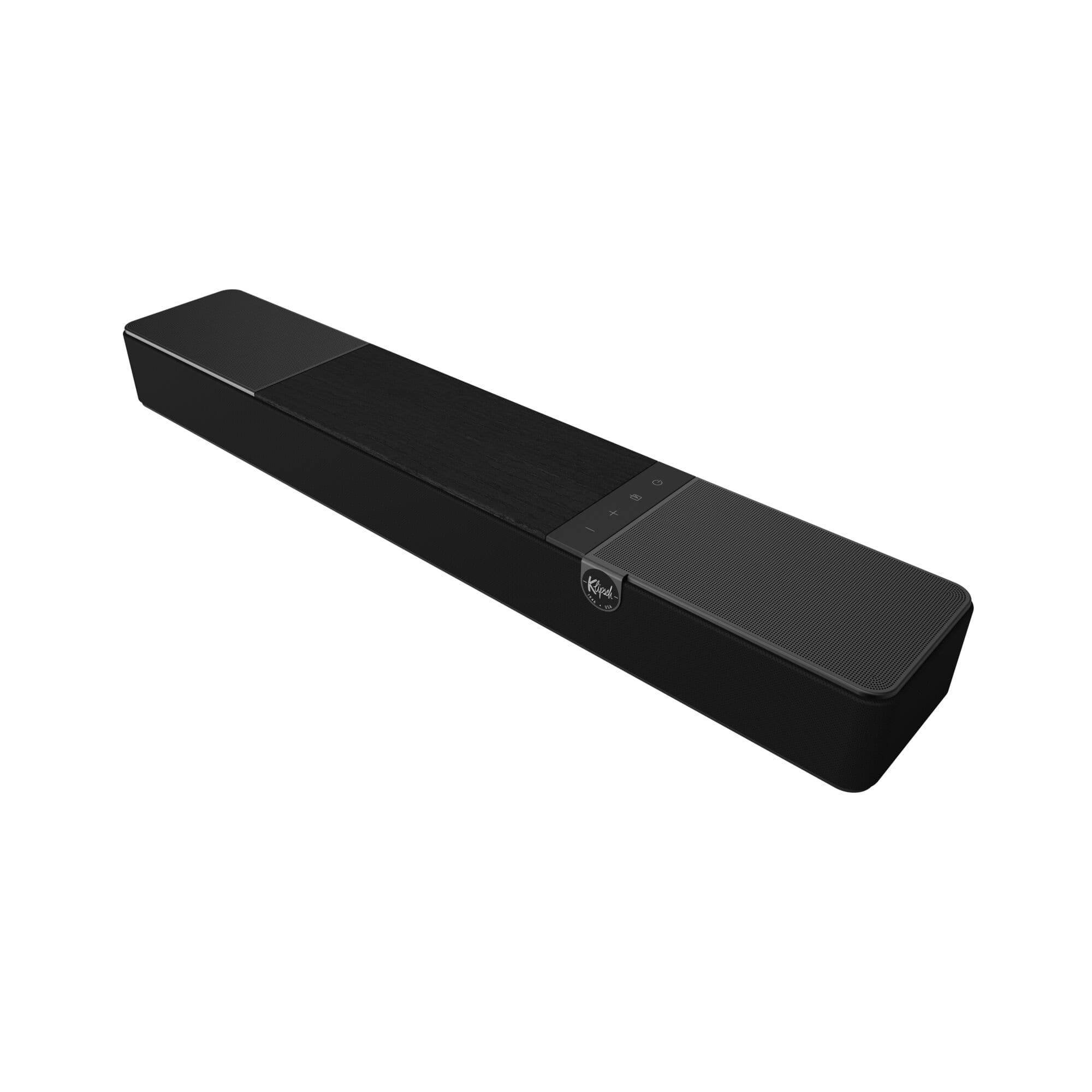

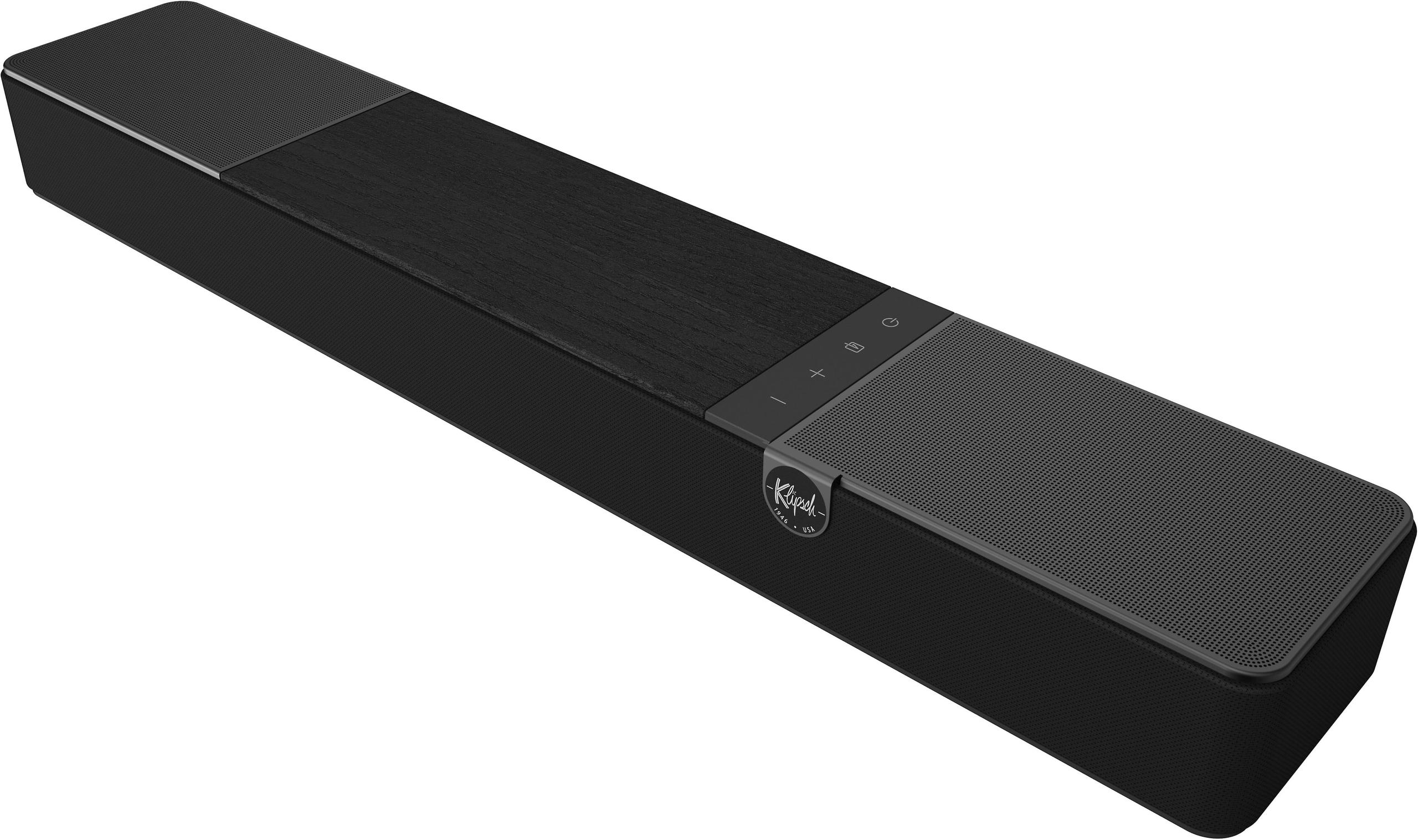






When your TV's built-in speakers just aren't cutting it anymore, you've probably started looking at soundbars. After testing dozens of these devices over the years, I can tell you that the two models we're comparing today—the Klipsch Flexus Core 100 ($227.90) and the Yamaha SR-C30A ($180.45)—represent fundamentally different approaches to solving the same problem: making your movies, shows, and music sound dramatically better.
Both soundbars were released in early 2025, making them among the newest options available. What's particularly interesting is how these two companies have taken completely different paths to achieve better sound, and understanding these differences will help you figure out which one fits your specific needs and space.
Before we dive into the specifics, let's talk about what makes today's soundbars so much better than the early models from just a few years ago. The biggest advancement has been in digital signal processing (DSP)—essentially the computer brain inside the soundbar that takes the audio signal and manipulates it to create a better listening experience.
The other major leap forward is in connectivity. While older soundbars were basically just external speakers, today's models can stream music directly from your phone, automatically calibrate themselves to your room, and even expand into full surround sound systems. These aren't just louder TV speakers anymore—they're sophisticated audio systems that happen to be shaped like a bar.
The Klipsch Flexus Core 100 and Yamaha SR-C30A showcase these modern capabilities but in very different ways. Klipsch has gone all-in on premium audio processing and future expandability, while Yamaha has focused on simplicity and immediate impact.
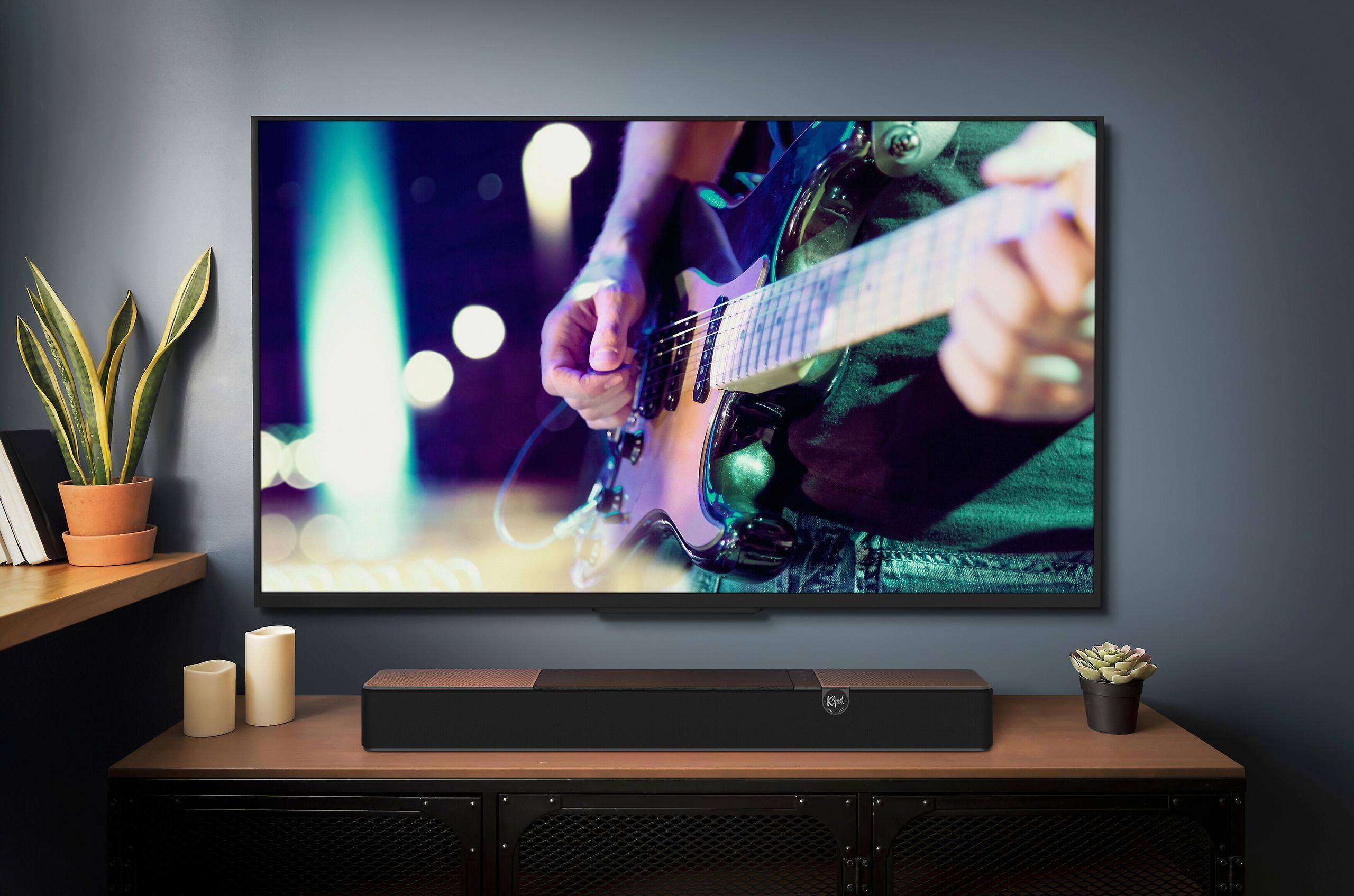
The most obvious difference between these two soundbars is their physical approach to bass reproduction. The Klipsch takes an integrated approach, packing dual 4-inch subwoofers directly into the soundbar itself. When I first set it up, I was honestly skeptical—how much bass could you really get from drivers built into such a slim profile?
The answer surprised me. Those built-in subs deliver tight, controlled bass that's perfect for dialogue-heavy content and music. The bass response extends down to 45Hz, which covers most of what you'll encounter in movies and TV shows. It's not room-shaking bass, but it's clean and well-integrated with the rest of the sound. For apartment dwellers or anyone who doesn't want to deal with placing a separate subwoofer, this approach is incredibly appealing.
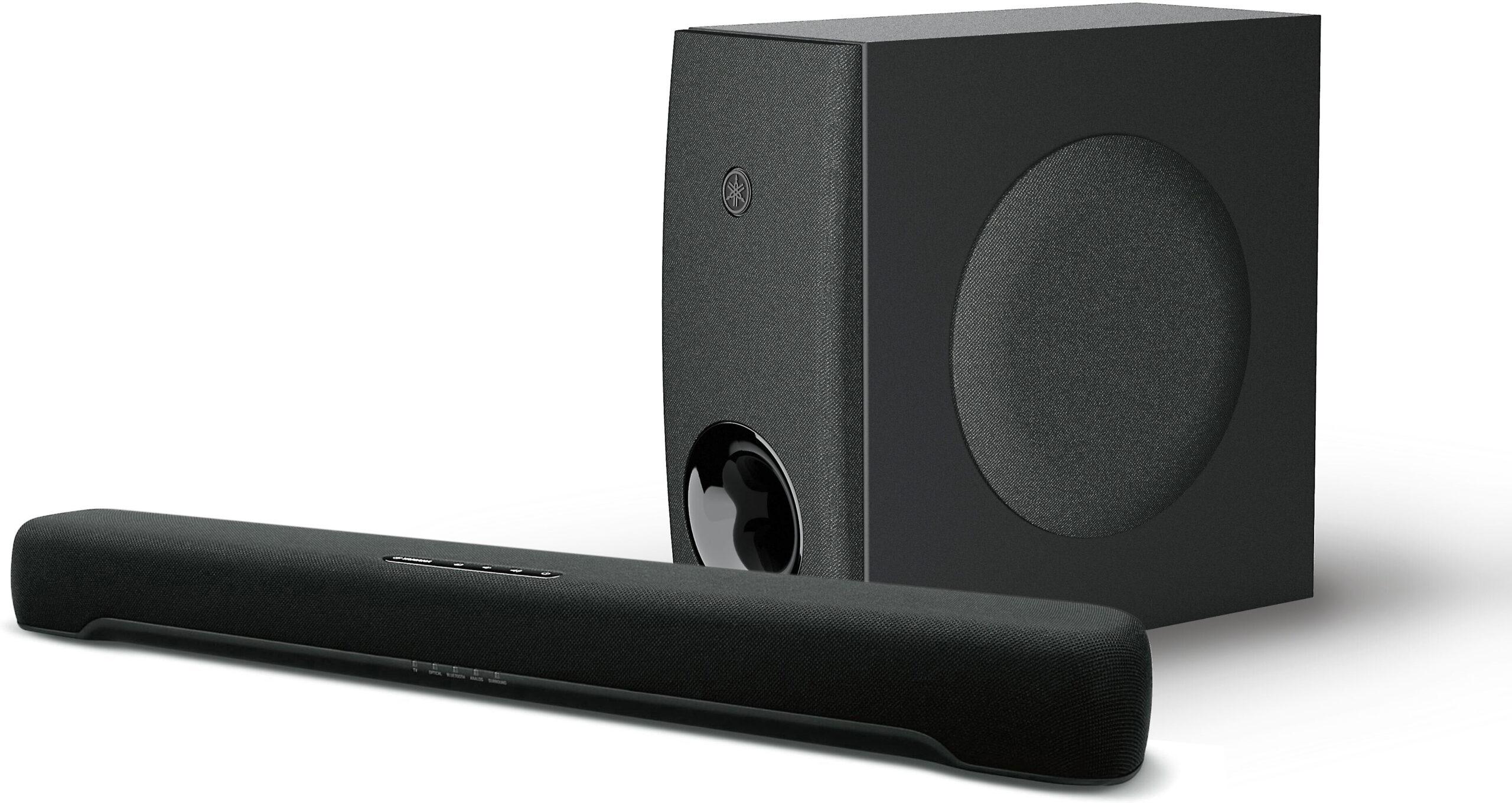
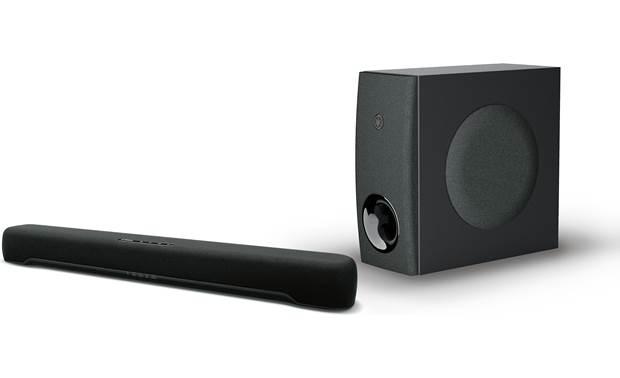
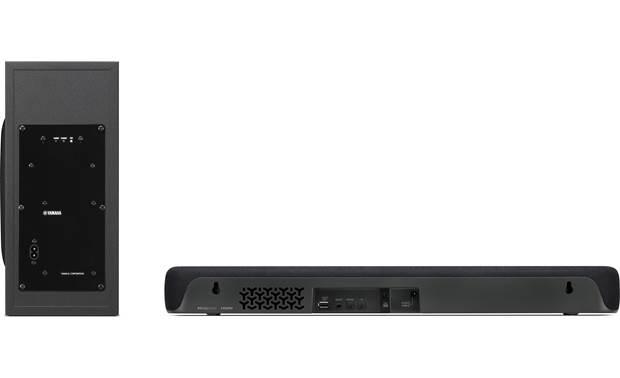
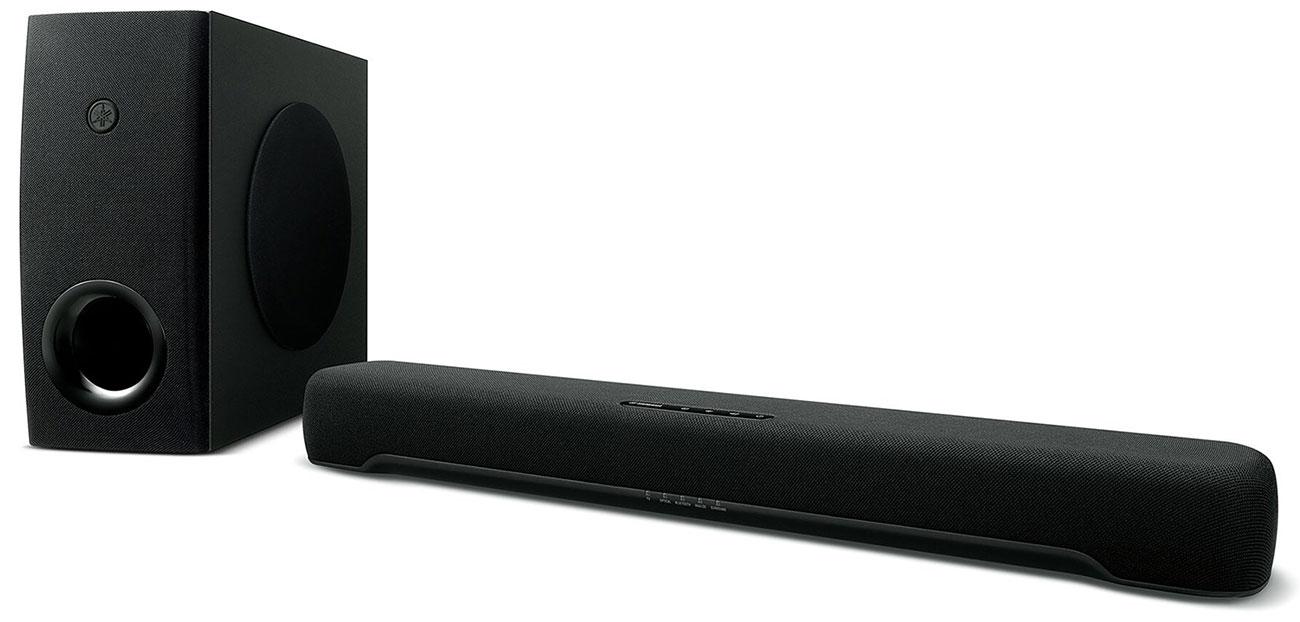
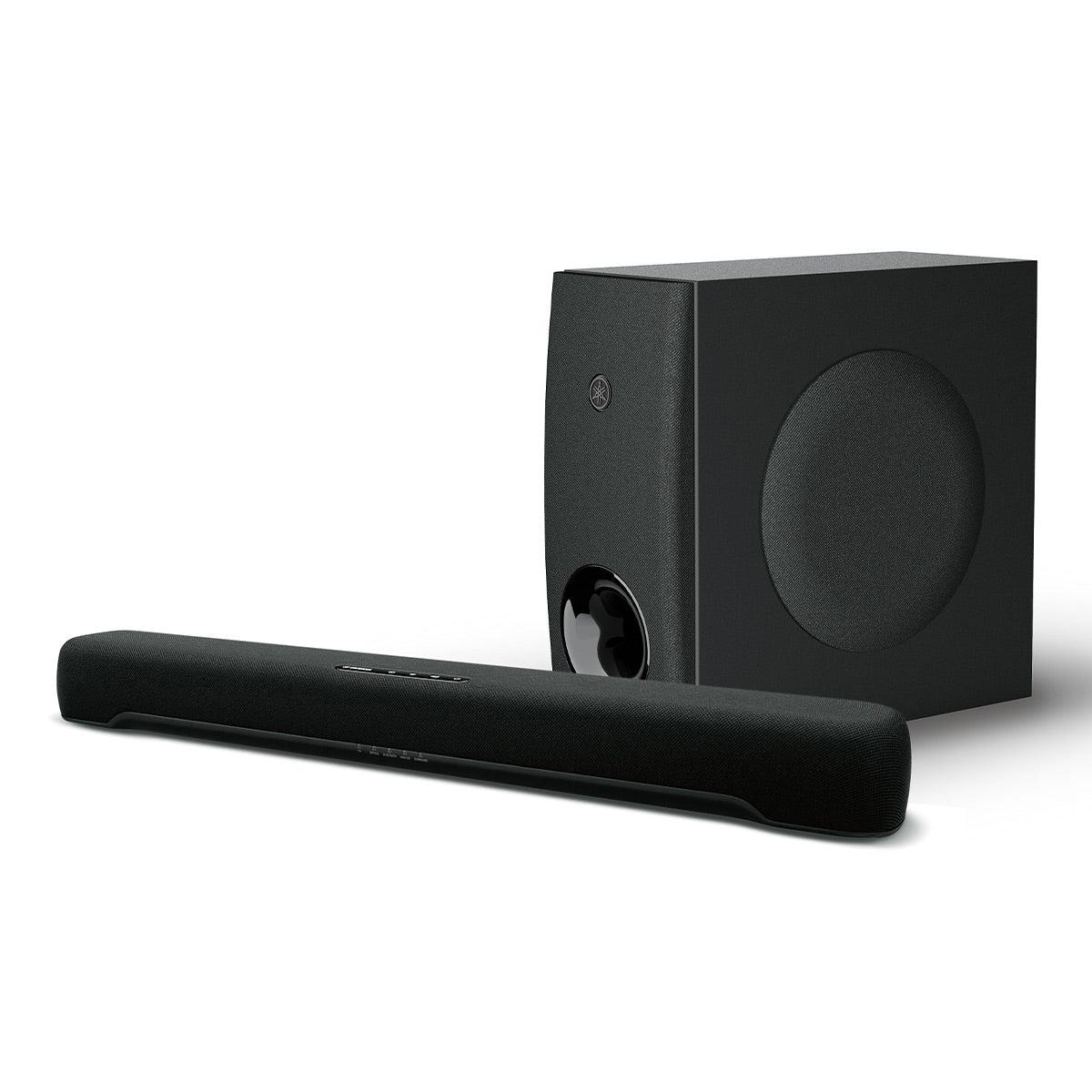
The Yamaha takes the more traditional route with a separate wireless subwoofer. This 5.1-inch driver can move more air than anything you could fit inside a soundbar, delivering that deep rumble you feel in your chest during action scenes. The wireless connection means you can place it anywhere in your room—under a couch, in a corner, or wherever it sounds best. However, I've noticed occasional hiccups in the wireless connection during particularly demanding audio passages, which can be jarring.
Here's where the differences between these soundbars become really significant. The Klipsch Flexus Core 100 includes Dolby Atmos processing, which is a technology that creates the illusion of sound coming from all around you, including above. When you're watching a movie with helicopters flying overhead or rain falling, Atmos processing makes those sounds seem to come from the appropriate direction rather than just straight ahead from the soundbar.
Even more impressive is the inclusion of Dirac Live room correction. This technology uses your smartphone's microphone to measure how sound behaves in your specific room, then automatically adjusts the soundbar's output to compensate for acoustic problems. If your room has hard surfaces that create echoes, or if your couch is pushed against a wall that reinforces bass frequencies, Dirac Live can fix these issues digitally.
I've used Dirac Live in higher-end audio systems before, and seeing it in a sub-$250 soundbar is remarkable. The setup process takes about 10 minutes—you hold your phone in different positions around your listening area while the soundbar plays test tones. The difference in sound quality before and after calibration is substantial, particularly in dialogue clarity and bass balance.
The Yamaha takes a much simpler approach with its audio processing. Instead of room correction, it offers preset sound modes: Stereo, Standard, 3D Movie, and Game. The 3D Movie mode attempts to create virtual surround sound using psychoacoustic tricks—essentially manipulating how your brain interprets the stereo sound to create the illusion of a wider soundstage.
The Clear Voice mode deserves special mention because it addresses one of the most common complaints about modern TV and movie audio: mumbly dialogue. This feature boosts the frequency range where human speech lives while slightly reducing other frequencies, making conversations much easier to follow. It's a practical solution that works well, even if it's not as sophisticated as Dirac Live's approach.
The connectivity differences between these soundbars reveal their target audiences clearly. The Klipsch offers Wi-Fi streaming through AirPlay 2 and Spotify Connect, meaning you can stream high-quality audio directly from your phone or computer without using Bluetooth. This matters more than you might think—Wi-Fi streaming typically supports higher quality audio codecs and doesn't compress the music as much as Bluetooth does.
The HDMI eARC (enhanced Audio Return Channel) connection is another forward-looking feature. Unlike regular HDMI ARC, eARC can handle high-resolution audio formats like Dolby TrueHD and DTS-HD Master Audio—the uncompressed soundtracks found on 4K Blu-rays and high-end streaming services. If you're serious about home theater audio, this connectivity will become increasingly important as more content uses these formats.
The Yamaha sticks with Bluetooth 5.0 for wireless streaming, which is perfectly adequate for casual music listening but limits audio quality compared to Wi-Fi streaming. The advantage is simplicity—every phone, tablet, and laptop can connect to Bluetooth without any setup or app downloads. Sometimes the straightforward approach is exactly what you need.
After extensive testing in different room sizes, I found the bass performance of these two soundbars serves different purposes. The Klipsch's integrated subwoofers excel at tight, musical bass. When listening to acoustic music or jazz, the bass notes have proper attack and decay—they start and stop cleanly rather than blurring together. This controlled approach also works well for dialogue-heavy content where you want some low-end warmth without overwhelming the vocals.
The maximum output of 96.4 dB means the Klipsch can get quite loud before distorting, making it suitable for rooms up to about 300 square feet. However, if you're looking for the kind of deep, room-pressurizing bass that makes explosion scenes feel visceral, the built-in subs have physical limitations that can't be overcome.
The Yamaha SR-C30A's external subwoofer approach shines in different scenarios. That separate 5.1-inch driver can move significantly more air, creating the kind of low-frequency energy that you feel as much as hear. Action movies, electronic music, and video games all benefit from this extra low-end impact. The ability to position the subwoofer independently also means you can find the spot in your room where bass sounds most natural.
This is where the Klipsch's horn-loaded tweeter technology really shows its value. Klipsch has been using horn-loaded drivers for decades because they're incredibly efficient at directing sound toward the listener rather than scattering it around the room. The result is dialogue that cuts through background music and sound effects with remarkable clarity.
During my testing with complex movie scenes—think crowded restaurant conversations or dialogue during action sequences—the Klipsch consistently delivered clearer vocals. The aluminum cone drivers handle midrange frequencies with precision, ensuring that whether someone is whispering or shouting, their words remain intelligible.
The Yamaha's approach is more straightforward but still effective. The Clear Voice mode provides noticeable improvement in dialogue clarity, though it's not as sophisticated as the Klipsch's acoustic design combined with room correction. For typical TV viewing, the difference might not matter much, but for movie enthusiasts who value every word of dialogue, the Klipsch has a clear advantage.
The Dolby Atmos processing in the Klipsch Flexus Core 100 creates a genuinely three-dimensional soundstage when fed compatible content. Netflix, Disney+, and Apple TV+ all offer increasing amounts of Atmos content, and the difference is immediately noticeable. Instead of sound coming from a line in front of you, effects and music seem to come from a bubble of space around your seating position.
The room correction amplifies this effect by ensuring that reflected sound from your walls and ceiling contributes positively to the surround experience rather than creating muddy acoustics. In my testing room, which has a vaulted ceiling and hardwood floors, the difference with Dirac Live engaged was substantial.
The Yamaha's virtual surround processing is competent but limited by the laws of physics. You can only create so much spatial illusion with two forward-facing speakers. The 3D Movie mode does widen the soundstage compared to straight stereo, but it can't match the dimensionality of properly processed Atmos content.
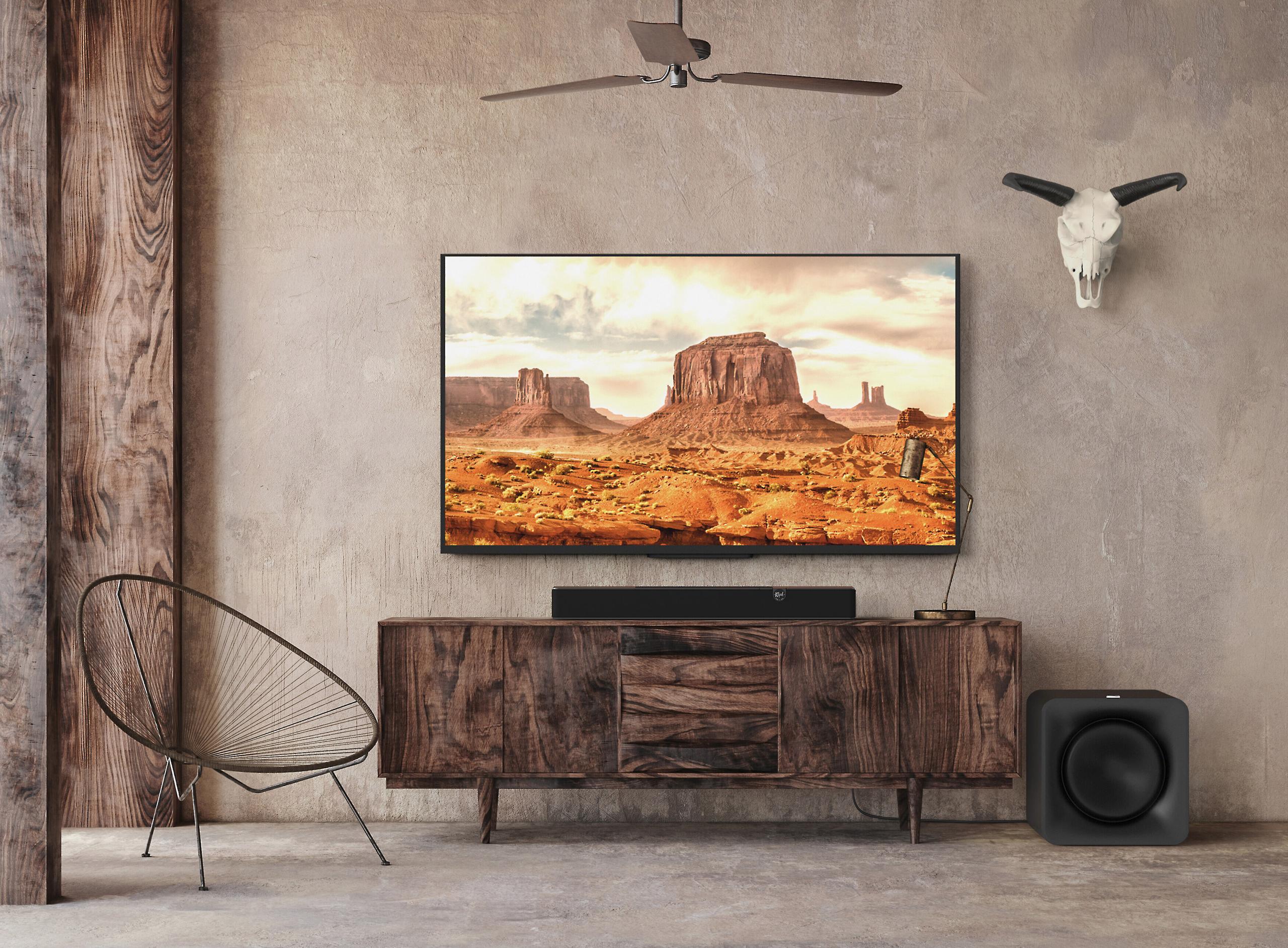
One of the most compelling aspects of the Klipsch system is its expandability through the company's Transport technology. This proprietary 2.4GHz wireless system allows you to add rear surround speakers and additional subwoofers without running any cables. I've seen similar systems from other manufacturers, and when they work well, they offer the convenience of wireless with the reliability of a dedicated frequency band.
Starting with the Core 100 and adding components over time means you can build a complete surround system gradually, spreading the cost over months or years. This modular approach is particularly appealing if you're not sure how much you want to invest in audio initially but want to keep your options open.
The Yamaha represents the opposite philosophy—what you buy is what you get. There are no expansion options, which keeps things simple but also means you'll need to replace the entire system if you want to upgrade later.
Room acoustics play a huge role in soundbar performance, and these two models work best in different environments. The Klipsch's room correction makes it adaptable to various spaces, but its 28-inch width and integrated design work best in medium to large rooms where you can position it properly in relation to your seating.
The compact Yamaha system, with its 23-5/8-inch soundbar, is specifically designed for smaller spaces. If you're working with a apartment-sized living room or a bedroom setup, the Yamaha's proportions and separate subwoofer placement flexibility make more sense.
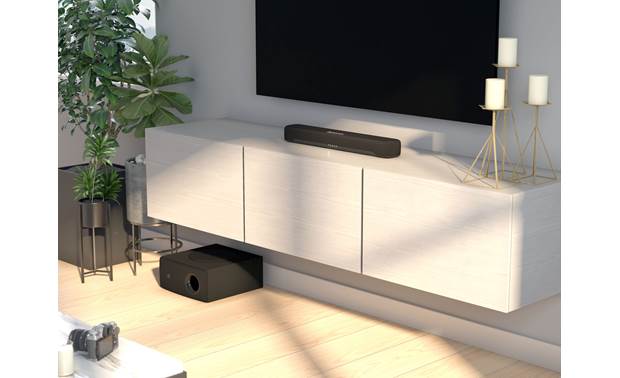
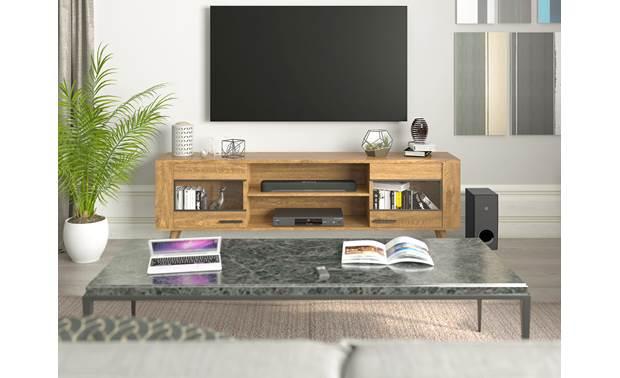
I've found that the wireless subwoofer's placement flexibility is a genuine advantage in challenging rooms. If your furniture arrangement or room layout makes optimal soundbar placement difficult, being able to put the bass source wherever it works best acoustically can make a significant difference in overall sound quality.
The $47 price difference between these soundbars represents more than just cost—it reflects different value propositions. The Klipsch Flexus Core 100 costs more upfront but includes features that typically appear in much more expensive systems. Dirac Live room correction alone is usually found in products costing several hundred dollars more.
The modern connectivity also provides future value. As streaming services continue to offer higher quality audio and more Atmos content becomes available, the Klipsch's advanced processing capabilities will become increasingly valuable. You're essentially buying a soundbar that will improve over time as content catches up to its capabilities.
The Yamaha SR-C30A offers immediate gratification at a lower price point. You get a complete 2.1 system out of the box with noticeable bass impact from day one. For many users, this direct approach to better TV audio is exactly what they need, without paying for features they might never use.
Choose the Klipsch Flexus Core 100 if you're building a home theater system gradually, value advanced audio processing, or want room correction technology that adapts to your space. The integrated design works well if you prefer clean aesthetics without a separate subwoofer, and the expansion possibilities mean your investment can grow with your needs.
The Yamaha SR-C30A makes more sense if you want immediate bass impact, prefer simple plug-and-play operation, or are working with a tight budget. The separate subwoofer gives you placement flexibility that can be crucial in smaller or oddly shaped rooms, and the straightforward controls mean anyone in your household can operate it easily.
After testing both extensively, I find myself appreciating each for different reasons. The Klipsch impresses with its sophisticated approach to audio reproduction and its potential for future expansion. The Yamaha delivers exactly what it promises—better TV sound with satisfying bass—without any complexity or learning curve.
Your choice ultimately depends on whether you want a soundbar that grows with your interests in audio quality, or one that solves your immediate TV audio problems effectively and affordably. Both approaches have merit, and both will dramatically improve your viewing experience compared to built-in TV speakers.
| Klipsch Flexus Core 100 ($227.90) | Yamaha SR-C30A ($180.45) |
|---|---|
| Bass System - Determines placement flexibility and low-end impact | |
| Dual 4" built-in subwoofers (no external components needed) | 5.1" wireless external subwoofer (flexible placement, deeper bass) |
| Audio Processing - Key for immersive sound and dialogue clarity | |
| Dolby Atmos + Dirac Live room correction (premium features) | Virtual surround + Clear Voice mode (practical enhancements) |
| Connectivity - Affects streaming quality and future compatibility | |
| Wi-Fi (AirPlay 2, Spotify Connect) + HDMI eARC | Bluetooth 5.0 + HDMI ARC |
| Maximum Output - Important for room size and volume needs | |
| 96.4 dB (suitable for medium-large rooms up to 300 sq ft) | Moderate output (optimized for small rooms under 200 sq ft) |
| Expandability - Matters if you plan to build a surround system | |
| Supports wireless surrounds and additional subwoofers | Fixed 2.1 system with no expansion options |
| Room Optimization - Affects sound quality in your specific space | |
| Automatic Dirac Live calibration via smartphone app | Manual preset modes (Stereo, 3D Movie, Game, Standard) |
| Physical Design - Consider your space and aesthetic preferences | |
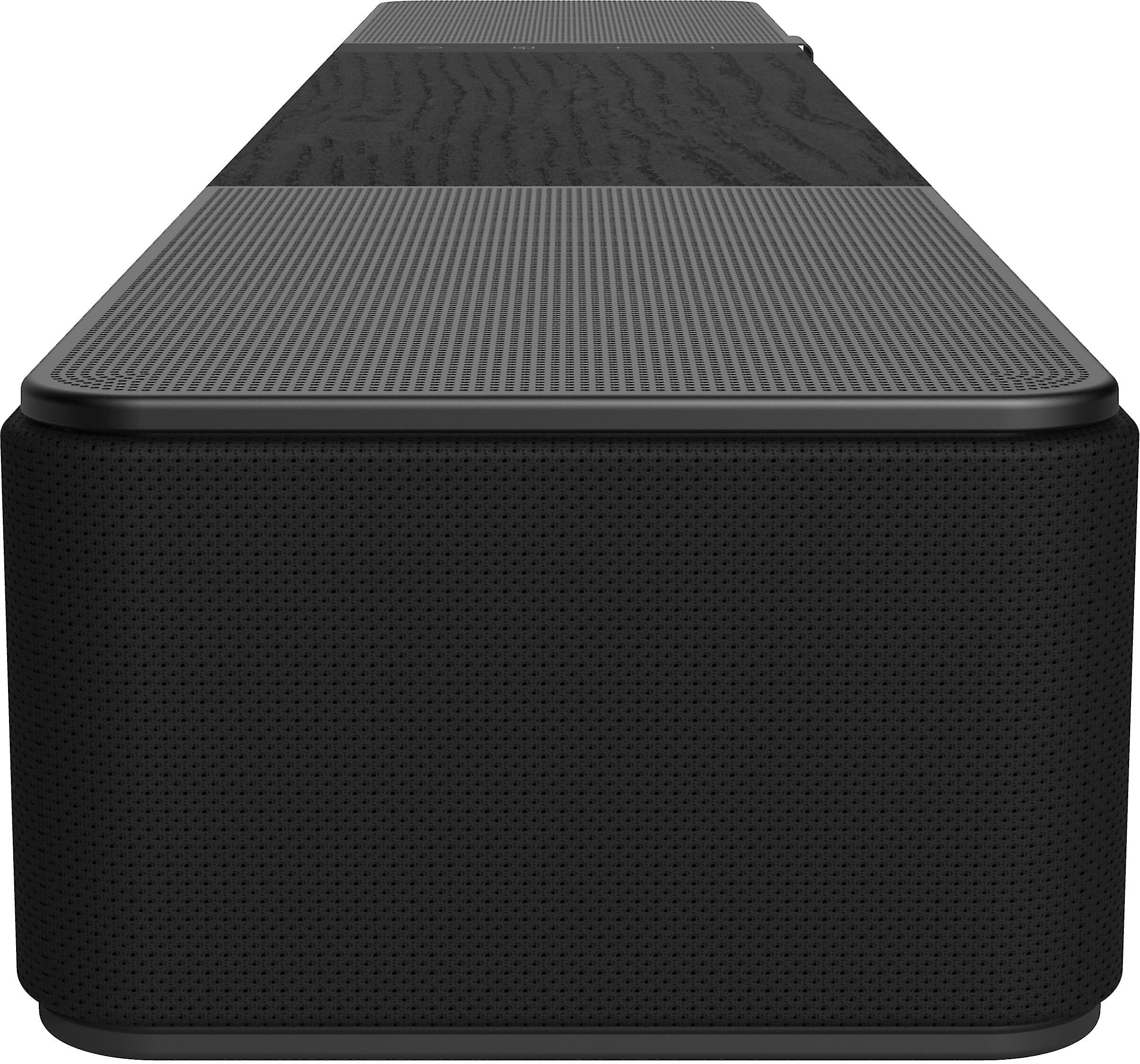
| 28" integrated design with horn-loaded tweeters | 23.6" compact bar + separate wireless subwoofer |
| Setup Complexity - Time investment vs. audio performance trade-off | |
| 10-minute calibration process for optimized sound | Plug-and-play with intuitive presets |
The Klipsch Flexus Core 100 ($227.90) offers premium features like Dolby Atmos and room correction for $47 more than the Yamaha SR-C30A ($180.45). The Yamaha provides better immediate value with its included wireless subwoofer, while the Klipsch justifies its higher price with advanced audio processing and expandability options.
The Klipsch Flexus Core 100 has dual 4-inch subwoofers built-in, so no separate subwoofer is required. The Yamaha SR-C30A comes with a wireless 5.1-inch subwoofer included in the box. Both provide adequate bass, but the Yamaha's external sub delivers deeper low-end impact.
The Yamaha SR-C30A is specifically designed for small spaces with its compact 23.6-inch width and flexible subwoofer placement. The Klipsch Flexus Core 100 works better in medium to large rooms where its 28-inch design and room correction technology can be fully utilized.
The Klipsch Flexus Core 100 excels at dialogue clarity thanks to its horn-loaded tweeter technology and Dirac Live room correction. The Yamaha SR-C30A offers a dedicated Clear Voice mode that enhances speech, but the Klipsch provides superior vocal reproduction overall.
Yes, both support wireless connectivity but differently. The Klipsch Flexus Core 100 uses Wi-Fi streaming via AirPlay 2 and Spotify Connect for higher audio quality. The Yamaha SR-C30A uses Bluetooth 5.0, which is simpler to connect but offers lower audio quality than Wi-Fi streaming.
Only the Klipsch Flexus Core 100 supports true Dolby Atmos processing, creating immersive three-dimensional sound for movies and shows. The Yamaha SR-C30A offers virtual surround sound through its 3D Movie mode but doesn't support Atmos technology.
The Yamaha SR-C30A offers plug-and-play simplicity with no calibration required. The Klipsch Flexus Core 100 requires a 10-minute room calibration process using your smartphone for optimal performance, but this setup delivers significantly better sound quality.
The Klipsch Flexus Core 100 can be expanded with wireless rear speakers and additional subwoofers using Klipsch's Transport technology. The Yamaha SR-C30A is a fixed 2.1 system with no expansion capabilities.
The Klipsch Flexus Core 100 reaches 96.4 dB maximum output, making it suitable for rooms up to 300 square feet. The Yamaha SR-C30A has moderate output levels optimized for smaller rooms under 200 square feet.
The Klipsch Flexus Core 100 includes Dirac Live room correction that automatically adjusts sound for your specific room acoustics using your smartphone's microphone. The Yamaha SR-C30A relies on manual preset modes without automatic room optimization.
The Klipsch Flexus Core 100 is superior for music with its Wi-Fi streaming, balanced frequency response, and room correction technology. The Yamaha SR-C30A is adequate for casual music listening via Bluetooth but lacks the audio quality and optimization for serious music enjoyment.
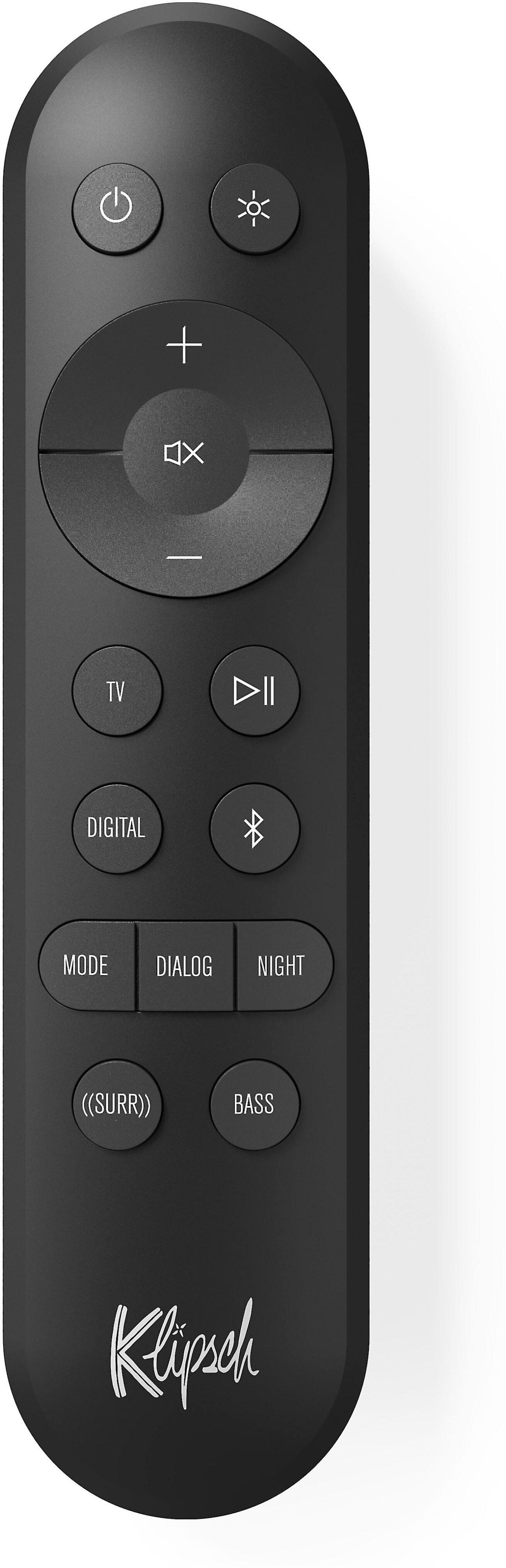
Both soundbars come complete with necessary cables and remote controls. The Yamaha SR-C30A includes the wireless subwoofer as part of the package. The Klipsch Flexus Core 100 includes mounting brackets, HDMI cable, and everything needed for the integrated design, with subwoofers already built-in.
We've done our best to create useful and informative comparisons to help you decide what product to buy. Our research uses advanced automated methods to create this comparison and perfection is not possible - please contact us for corrections or questions. These are the sites we've researched in the creation of this article: cnet.com - klipsch.com - klipsch.com - bestbuy.com - sweetwater.com - assets.onkyo-av.com - youtube.com - worldwidestereo.com - avnirvana.com - target.com - techradar.com - usa.yamaha.com - expertreviews.com - usa.yamaha.com - trustedreviews.com - crutchfield.com - europe.yamaha.com - usa.yamaha.com - shop.usa.yamaha.com - assetserver.net

Privacy Policy
Terms and Conditions - Affiliate Policy
Home Security
© Copyright 2008-2026.
11816 Inwood Rd #1211, Dallas, TX 75244