






When your TV's built-in speakers sound like they're trapped in a tin can, upgrading to a soundbar becomes essential. But the soundbar world has evolved dramatically, offering everything from simple stereo bars to complex multi-speaker systems that rival traditional home theater setups. Today, we're comparing two fundamentally different approaches: the Ultimea Poseidon D50 5.1 Soundbar Home Theater (2025) and the Yamaha SR-C30A Soundbar with Subwoofer.
These products represent opposite ends of the complexity spectrum while both aiming to solve the same problem – making your movies, shows, and games sound dramatically better than basic TV speakers.
The soundbar category has matured significantly since the early 2010s when most options were basic stereo bars that barely improved over TV speakers. Today's systems range from minimalist 2.0 stereo setups to elaborate 7.1.2 Atmos systems with height speakers. The key decision points haven't changed much: how much audio performance do you want versus how simple do you need the setup to be?
Channel configuration remains the most important specification. A 2.1 system means two main channels (left and right) plus a subwoofer (.1) for bass. A 5.1 system adds a center channel for dialogue and two rear surround channels, creating true positional audio where sounds can move around the room. The difference isn't subtle – it's the gap between hearing a helicopter fly by and feeling like it's actually circling overhead.
Virtual surround processing has improved dramatically in recent years, using psychoacoustic algorithms (basically audio tricks that fool your brain) to simulate surround effects from just two speakers. However, physics still matters – virtual surround can't match the precision of dedicated rear speakers placed behind your listening position.
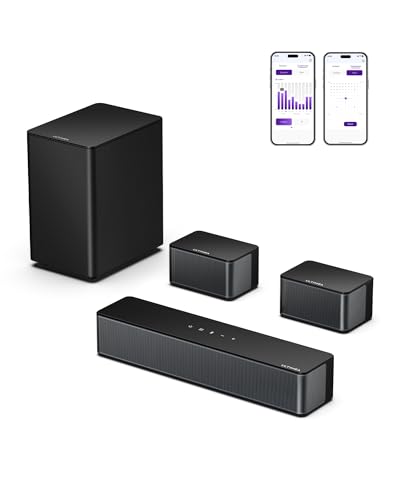
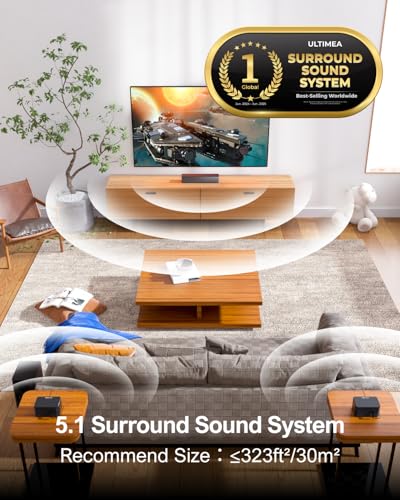
The Ultimea Poseidon D50, released in 2025, represents the "go big or go home" philosophy. It's a true 5.1-channel system with physical satellite speakers that must be positioned behind your seating area, connected via nearly 20-foot cables. This isn't a casual upgrade – it's a commitment to authentic surround sound.
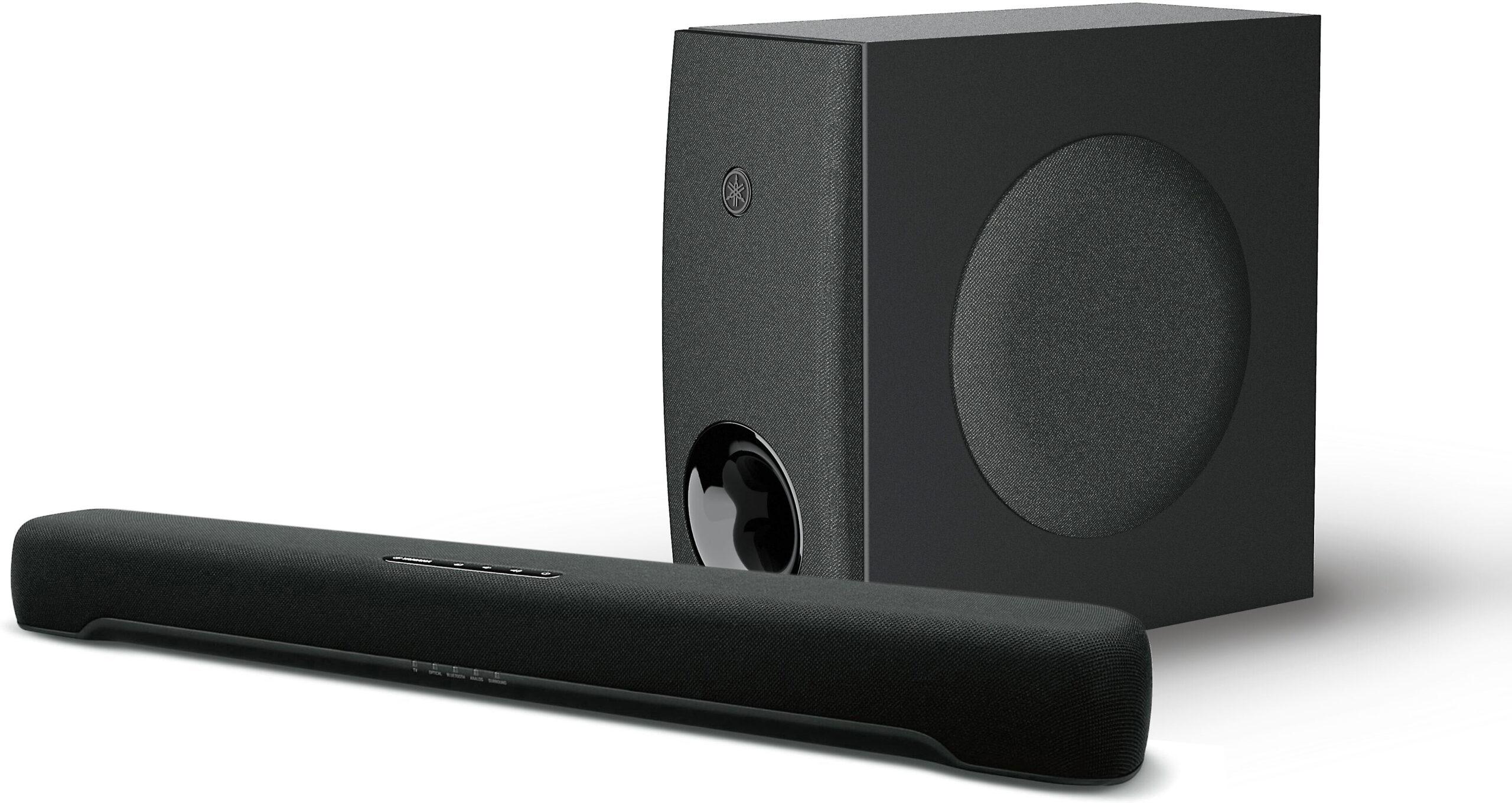
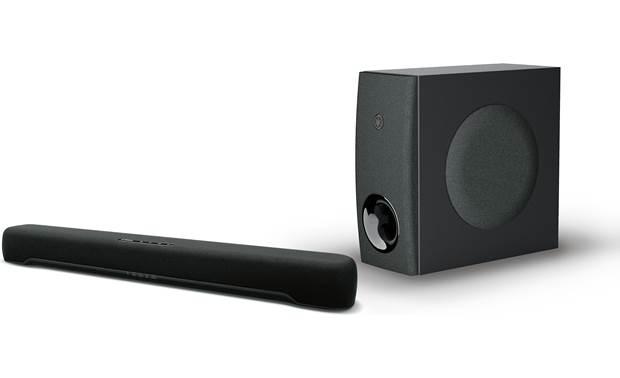
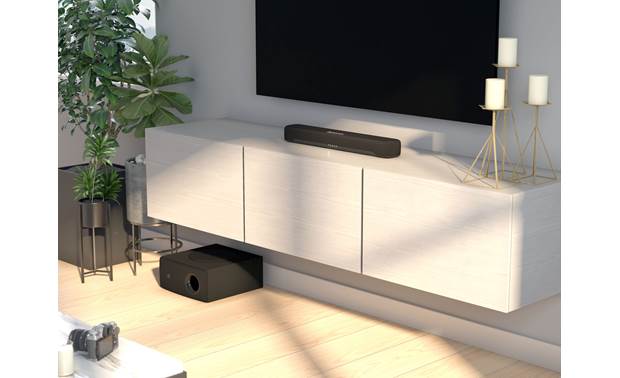
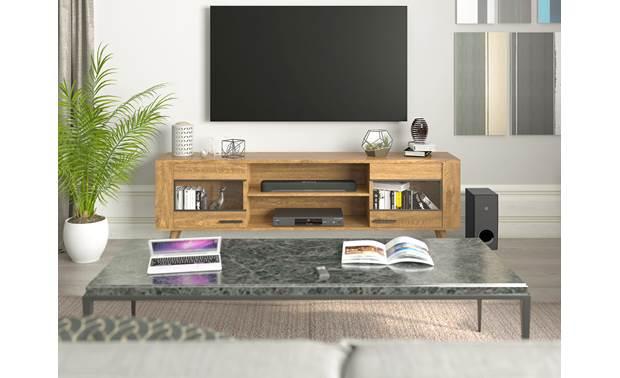
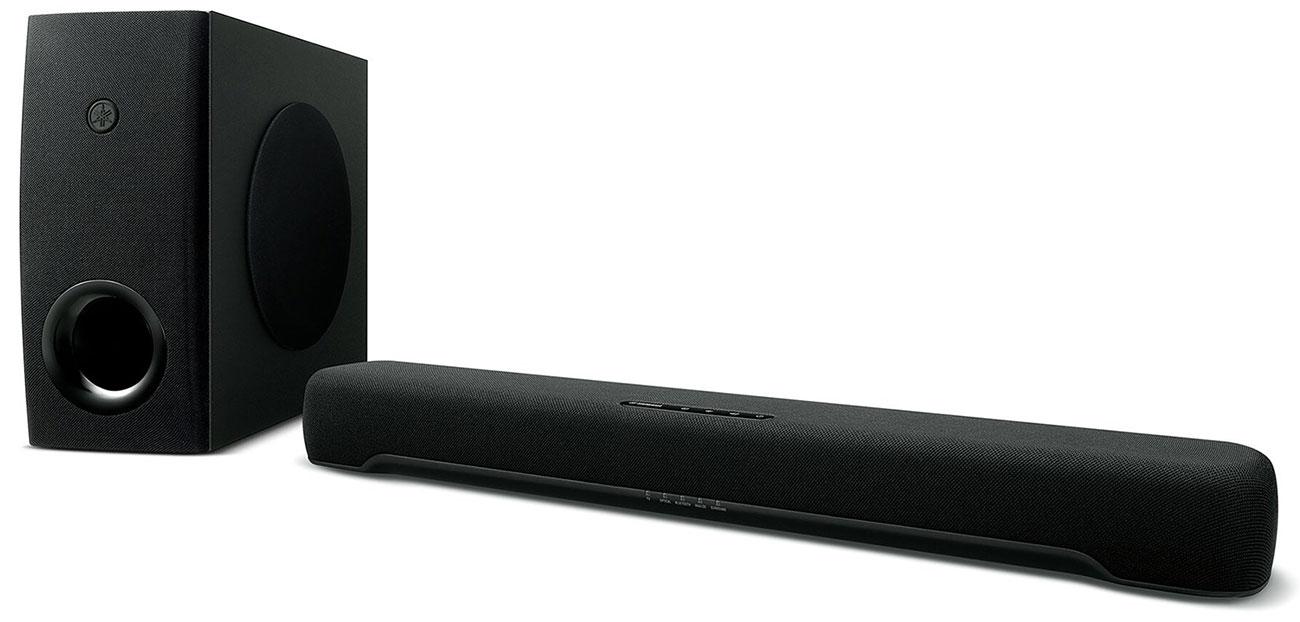
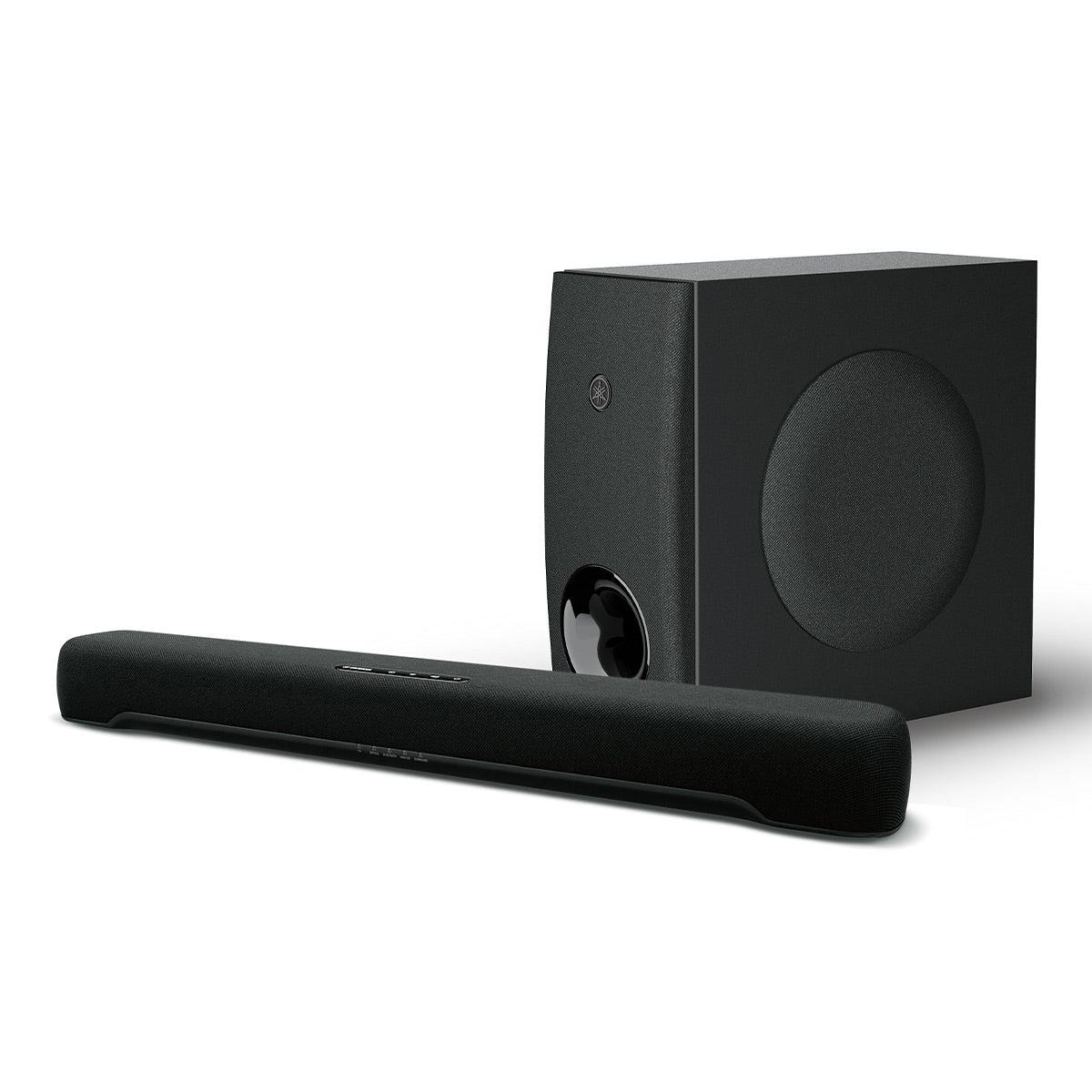
The Yamaha SR-C30A, part of Yamaha's compact soundbar lineup, takes the opposite approach. Released as Yamaha's answer to space-constrained setups, it delivers virtual surround processing through just a main bar and wireless subwoofer. The engineering focus here is maximizing performance within strict size and complexity limits.
This is where these systems diverge most dramatically. The Ultimea Poseidon D50 creates genuine 5.1 surround sound through its physical rear speakers. When a character walks across the screen in a movie, you hear their footsteps move from the front soundbar to the rear satellites. When bullets whiz past in an action scene, they actually travel through the acoustic space around you. This isn't an approximation – it's authentic positional audio.
The system's SurroundX™ technology adds another layer of sophistication. This digital signal processing (DSP) chip converts standard stereo audio into genuine 5.1 multi-channel output, meaning even older movies and shows get enhanced with surround positioning. Think of it as an intelligent audio translator that knows how to spread two-channel sound across five speakers in realistic ways.
The Yamaha SR-C30A approaches surround differently through virtual processing. Its 3D Movie mode uses advanced algorithms to create the impression of surround sound from just the front-firing drivers. Yamaha's decades of acoustic research shows here – the virtual surround is more convincing than most budget competitors. However, the laws of physics still apply. You can't create true rear-positioned audio without rear speakers.
Where the Yamaha excels is in dialogue clarity and overall tonal balance. The Clear Voice mode specifically enhances speech frequencies, making it easier to follow conversations without constantly adjusting volume. This feature addresses one of the most common TV audio complaints – mumbling actors and inconsistent dialogue levels.
The power difference between these systems is substantial. The Ultimea Poseidon D50 delivers 320 watts of peak power across six drivers – significantly more than most soundbars in any price category. This isn't just about volume; higher power means better dynamic range (the difference between quiet and loud sounds) and less distortion when things get intense.
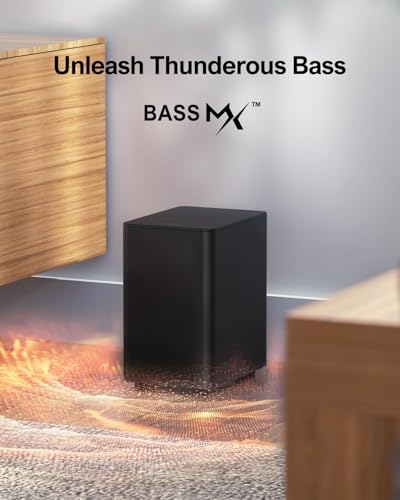
The system's BassMX™ technology deserves particular attention. This isn't marketing fluff – it represents genuine engineering improvements to the subwoofer's magnetic circuit and driver excursion (how far the speaker cone moves). The 5.25-inch subwoofer can push its diaphragm 15mm in each direction, creating deeper bass with less distortion than conventional designs. In practical terms, this means movie explosions hit with visceral impact while maintaining clarity in dialogue and mid-range frequencies.
The Yamaha SR-C30A takes a more measured approach with 90 watts total system power. This might seem modest compared to the Ultimea, but Yamaha's True Sound technology optimizes every aspect of the acoustic design. The company's decades of speaker engineering experience shows in how efficiently this system uses its available power.
The 5.125-inch subwoofer might be smaller than the Ultimea's, but Yamaha's Bass Extended processing maximizes low-frequency output without overwhelming the system. More importantly, the integration between the soundbar and subwoofer is seamless – there's no obvious handoff point where the sub takes over from the main speakers.
Here's where the Ultimea Poseidon D50 shows its 2025 design philosophy. The dedicated smartphone app provides unprecedented control with 121 preset EQ matrices and a 10-band manual equalizer. This isn't just about bass and treble – you can sculpt the entire frequency response to match your room acoustics, personal preferences, or content type.
The independent rear speaker volume control proves particularly valuable. Room layouts vary dramatically, and the ability to fine-tune surround balance ensures optimal performance whether your seating is close to the rear speakers or across a large room. The six EQ modes (Movie, Music, Game, etc.) provide starting points that most users will find satisfactory without diving into manual adjustments.
The Yamaha SR-C30A offers fewer options but implements them thoughtfully. The four sound modes target specific content types, while features like Adaptive Low Volume address real-world usage scenarios. This technology maintains full frequency response at low volumes – crucial for late-night viewing when you can't crank the system up.
The Clear Voice feature deserves special mention. Rather than simply boosting treble frequencies, it specifically enhances the frequency ranges where human speech occurs while maintaining overall tonal balance. It's subtle but effective, particularly valuable for users with hearing difficulties or in noisy environments.
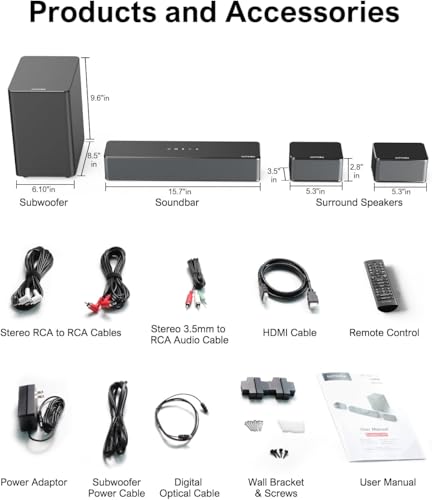
Installing the Ultimea Poseidon D50 requires commitment. Those 19.6-foot rear speaker cables must cross your room somehow – under carpet, along baseboards, or through walls if you're ambitious. Cable management becomes a significant consideration, and not every room layout accommodates rear speakers gracefully.
However, proper rear speaker placement transforms the audio experience. The difference between virtual and physical surround becomes immediately obvious during action scenes, gaming, or any content with dynamic sound design. The spatial accuracy is simply impossible to achieve through front-firing speakers alone.
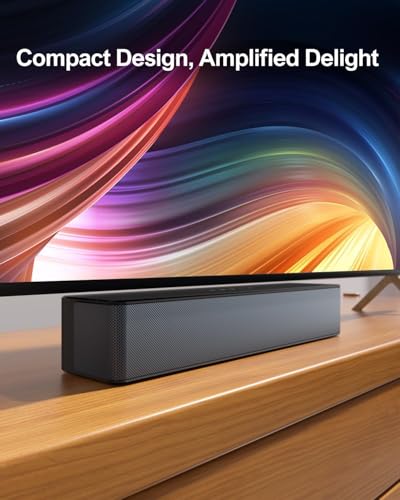
The Yamaha SR-C30A installation takes minutes. Position the wireless subwoofer somewhere reasonable (it's omnidirectional, so placement flexibility is good), connect the soundbar to your TV via HDMI or optical cable, and you're done. The compact design – over 30% smaller than traditional soundbars – fits spaces where larger systems simply won't work.
Both systems handle modern connectivity well, but with different emphases. The Ultimea Poseidon D50 includes HDMI eARC support, which matters more than you might think. eARC (enhanced Audio Return Channel) supports higher-quality audio formats and provides better lip-sync correction compared to standard ARC. It's also more reliable for controlling the soundbar with your TV remote.
The Bluetooth 5.3 implementation offers improved range and connection stability compared to older Bluetooth versions. The multiple input options (optical, AUX, USB) ensure compatibility with virtually any source device.
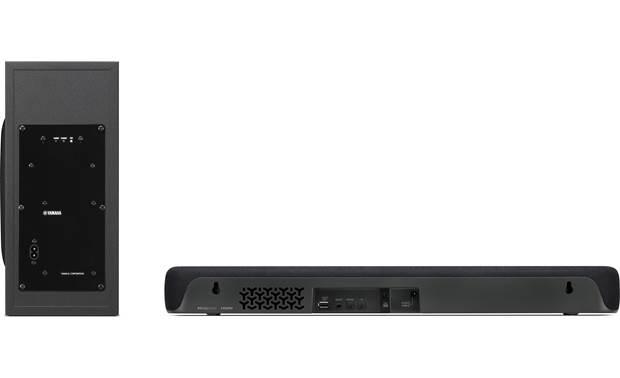
The Yamaha SR-C30A sticks with HDMI ARC (not eARC), which handles most content adequately but lacks some advanced format support. The dual optical inputs prove valuable for users with multiple source devices, and the 3.5mm analog input accommodates gaming handhelds or older devices.
Room acoustics significantly impact soundbar performance, and these systems target different spaces. The Ultimea Poseidon D50 works best in medium to large rooms (250-380 square feet) where its higher power output can breathe and the rear speakers have proper positioning distance.
In smaller rooms, the system's power might overwhelm the space, and rear speaker placement becomes more challenging. However, the extensive EQ options allow compensation for difficult acoustics – something impossible with simpler systems.
The Yamaha SR-C30A excels in smaller spaces, apartments, or rooms where aesthetic considerations limit speaker placement options. The virtual surround processing works better in smaller rooms where reflection paths are shorter and more predictable.
When evaluating soundbars, certain specifications matter more than others. Peak power ratings can be misleading – RMS (continuous) power provides a better indication of real-world performance. Dynamic range capability affects how well the system handles both quiet dialogue and explosive action sequences without compression.
Bass extension (how low the subwoofer can play) impacts movie immersion significantly. The Ultimea Poseidon D50's larger subwoofer and advanced driver technology deliver deeper, more impactful low frequencies. However, bass integration and timing matter as much as raw extension – poorly integrated bass sounds boomy and distracting.
Dialogue clarity remains the most important practical consideration for most users. Both systems address this differently – the Ultimea through comprehensive EQ control and center channel isolation, the Yamaha through specialized voice processing algorithms.
Modern gaming benefits enormously from proper surround sound, and the Ultimea Poseidon D50 delivers authentic positional audio that enhances gameplay. First-person shooters, racing games, and adventure titles all benefit from accurate spatial audio cues. The low-latency processing ensures audio stays synchronized with visual action.
The Yamaha SR-C30A includes a dedicated Game mode that optimizes processing for interactive content, reducing latency and enhancing directional cues within its virtual surround limitations. While not matching true surround accuracy, it's sufficient for casual gaming.
Reliability and longevity factors into any audio purchase. Yamaha's reputation for build quality spans decades, and the SR-C30A benefits from this engineering heritage. The simpler design with fewer components reduces potential failure points.
The Ultimea Poseidon D50 represents newer technology with more complex multi-channel processing and app-based control. While this provides more functionality, it also introduces more potential points of failure. The wired rear speakers, however, avoid the connectivity issues that plague some wireless surround systems.
Software updates matter increasingly in modern audio equipment. The Ultimea's app-based control allows for feature updates and bug fixes, while the Yamaha relies more on stable, proven hardware-based processing.
The decision ultimately comes down to priorities and constraints. Choose the Ultimea Poseidon D50 if you want authentic surround sound, have adequate space for rear speaker placement, and don't mind a more complex setup. The performance advantage is substantial – true surround positioning, powerful bass, and extensive customization options that rival much more expensive systems.
At the time of writing, the value proposition strongly favors the Ultimea for users seeking maximum audio performance. The feature set and power output typically cost significantly more from established brands.
Select the Yamaha SR-C30A if simplicity, reliability, and space constraints are primary concerns. The acoustic engineering is excellent, the virtual surround processing is among the best available, and the user experience is refined and trouble-free. For smaller rooms or users who prioritize ease of use, it represents the better choice.
The Yamaha also makes sense for users who frequently adjust volume for late-night viewing, thanks to its Adaptive Low Volume technology. The brand reputation provides additional confidence for long-term ownership.
Neither choice is wrong – they solve the same problem through fundamentally different approaches. The Ultimea maximizes performance for users willing to handle complexity, while the Yamaha optimizes the experience within strict simplicity constraints. Your room, technical comfort level, and audio priorities should guide the decision.
Both systems represent significant upgrades over TV speakers and will transform your viewing experience. The question is whether you want the full cinema experience with all its setup requirements, or the refined simplicity of a well-engineered compact system.
| Ultimea Poseidon D50 5.1 Soundbar Home Theater (2025) | Yamaha SR-C30A Soundbar with Subwoofer |
|---|---|
| Channel Configuration - Determines if you get true surround sound or virtual processing | |
| True 5.1 with physical rear satellite speakers | 2.1 with virtual surround processing |
| Total Power Output - Affects volume levels and dynamic range for larger rooms | |
| 320W peak power across 6 drivers | 90W RMS (20W per front channel, 50W subwoofer) |
| Subwoofer Size & Technology - Bigger drivers typically mean deeper, more impactful bass | |
| 5.25" wireless subwoofer with BassMX™ technology | 5.125" wireless subwoofer with Bass Extended processing |
| Setup Complexity - Consider your room layout and cable management tolerance | |
| Requires 19.6ft rear speaker cables across room | Simple wireless subwoofer placement only |
| Audio Customization - More options mean better room optimization but added complexity | |
| 121 EQ presets, 10-band equalizer, smartphone app control | 4 sound modes, Clear Voice, Adaptive Low Volume |
| HDMI Connectivity - eARC supports higher quality audio formats than standard ARC | |
| HDMI eARC with advanced format support | HDMI ARC (standard, no eARC) |
| Bluetooth Version - Newer versions offer better range and connection stability | |
| Bluetooth 5.3 with enhanced connectivity | Bluetooth 5.0 with multi-point device switching |
| Recommended Room Size - Ensures optimal performance for your space | |
| Medium to large rooms (250-380 sq ft) | Small to medium rooms, ideal for apartments |
| Physical Footprint - Consider available space and aesthetic preferences | |
| Multiple components: soundbar + subwoofer + 2 satellites | Compact bar (30% smaller than traditional) + subwoofer |
| Dialogue Enhancement - Critical for understanding speech in movies and shows | |
| Center channel isolation plus EQ customization | Dedicated Clear Voice processing mode |
| Brand Heritage & Reliability - Affects long-term ownership confidence | |
| Newer brand with advanced features and app updates | Established Yamaha acoustic engineering since 1887 |
| Best Use Cases - Who should choose each system | |
| Home theater enthusiasts wanting authentic surround | Users prioritizing simplicity and proven reliability |
The Ultimea Poseidon D50 5.1 Soundbar delivers superior surround sound with true 5.1 channels using physical rear satellite speakers. This creates authentic positional audio where sounds actually move around your room. The Yamaha SR-C30A uses virtual surround processing, which simulates surround effects but cannot match the precision of dedicated rear speakers.
The Yamaha SR-C30A offers much simpler setup with just a wireless subwoofer to position. The Ultimea Poseidon D50 5.1 requires running 19.6-foot cables to rear speakers across your room, making installation more complex but delivering authentic surround sound in return.
The Ultimea Poseidon D50 5.1 Soundbar provides significantly more power at 320W peak output, making it better suited for medium to large rooms up to 380 square feet. The Yamaha SR-C30A delivers 90W total power, which works well for smaller spaces and apartments.
Yes, both include wireless subwoofers. The Ultimea Poseidon D50 features a 5.25-inch subwoofer with BassMX™ technology for deeper bass, while the Yamaha SR-C30A includes a 5.125-inch subwoofer with Yamaha's Bass Extended processing for optimized low-frequency response.
The Ultimea Poseidon D50 5.1 provides more advanced connectivity with HDMI eARC, Bluetooth 5.3, optical, AUX, and USB inputs. The Yamaha SR-C30A offers HDMI ARC (not eARC), Bluetooth 5.0, dual optical inputs, and 3.5mm analog input - sufficient for most setups but less advanced.
The Ultimea Poseidon D50 5.1 Soundbar includes comprehensive smartphone app control with 121 EQ presets and extensive customization options. The Yamaha SR-C30A offers a basic remote app but focuses more on physical remote and TV remote integration.
The Yamaha SR-C30A is ideal for small apartments due to its compact design (30% smaller than traditional soundbars) and simple wireless-only setup. The Ultimea Poseidon D50 5.1 requires rear speaker placement that may be challenging in smaller spaces.
Both excel at dialogue but differently. The Yamaha SR-C30A features dedicated Clear Voice processing that specifically enhances speech frequencies. The Ultimea Poseidon D50 5.1 uses a dedicated center channel for dialogue plus extensive EQ options for customization.
The Yamaha SR-C30A benefits from Yamaha's decades of audio engineering expertise and reputation for reliability. The Ultimea Poseidon D50 5.1 Soundbar offers newer technology with app-based features but represents a less established brand in the premium audio space.
The Ultimea Poseidon D50 5.1 excels for gaming with true positional audio that enhances spatial awareness in competitive games. The Yamaha SR-C30A includes a dedicated Game mode with low latency processing, suitable for casual gaming but without authentic surround positioning.
For dedicated home theater setups, the Ultimea Poseidon D50 5.1 Soundbar typically offers exceptional value with true 5.1 surround sound and high power output that would cost significantly more from established brands. The Yamaha SR-C30A provides excellent value for users prioritizing simplicity and brand reliability.
Yes, both soundbars support wall mounting. The Yamaha SR-C30A offers simple wall mounting with built-in keyhole slots and compact design. The Ultimea Poseidon D50 5.1 can be wall-mounted but you'll still need to position the rear satellite speakers properly for optimal surround sound performance.
We've done our best to create useful and informative comparisons to help you decide what product to buy. Our research uses advanced automated methods to create this comparison and perfection is not possible - please contact us for corrections or questions. These are the sites we've researched in the creation of this article: youtube.com - eu.ultimea.com - newegg.com - tvsbook.com - youtube.com - provantage.com - ultimea.com - techradar.com - community.ultimea.com - homedepot.com - community.ultimea.com - ultimea.com - ultimea.de - youtube.com - medisamhealthcenter.com - ultimea.com - youtube.com - walmart.com - techradar.com - usa.yamaha.com - expertreviews.com - usa.yamaha.com - trustedreviews.com - crutchfield.com - europe.yamaha.com - usa.yamaha.com - shop.usa.yamaha.com - assetserver.net

Privacy Policy
Terms and Conditions - Affiliate Policy
Home Security
© Copyright 2008-2026.
11816 Inwood Rd #1211, Dallas, TX 75244