

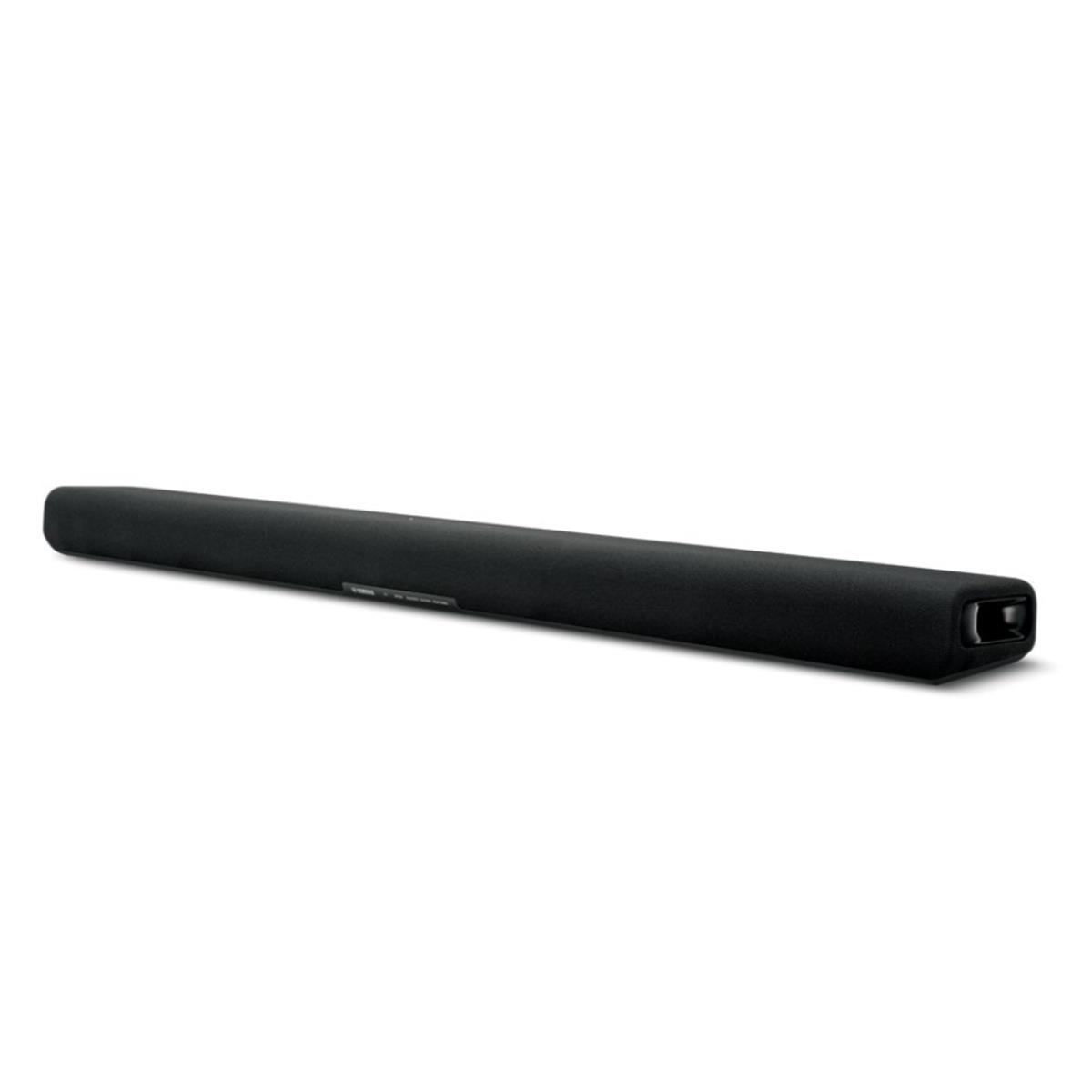
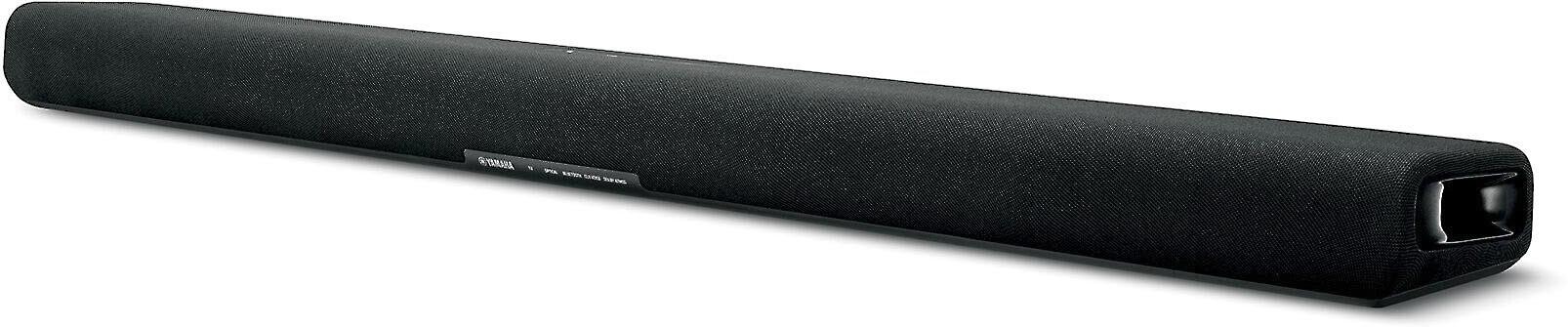




When your TV's built-in speakers leave you constantly adjusting the volume—cranking it up during quiet dialogue, then scrambling for the remote when explosions shake the walls—it's time for a soundbar upgrade. Yamaha offers two compelling options in their compact soundbar lineup: the SR-B30A ($280) and the SR-C30A ($180). Both promise to transform your TV audio experience, but they take notably different approaches to getting there.
Understanding which soundbar fits your needs means looking beyond the marketing buzzwords to examine how these systems actually deliver sound in real-world scenarios. The differences between these models go deeper than their $100 price gap suggests, touching on fundamental audio technologies, room compatibility, and long-term value considerations.
Soundbars exist to solve the universal problem of terrible TV audio. As televisions have gotten thinner, their internal speakers have become increasingly inadequate—often firing downward into furniture or lacking the physical space needed for meaningful bass response. Soundbars address this by spreading audio drivers across a wider front-facing array, creating better stereo separation and dialogue clarity than any TV can manage internally.
The compact soundbar category specifically targets users who want significantly better audio without the complexity or space requirements of full surround sound systems. These systems typically focus on three core improvements: clearer dialogue, enhanced bass response, and a wider, more engaging soundstage that makes movies and shows more immersive.
Key considerations when choosing between compact soundbars include your room size and layout, the types of content you watch most often, and whether you're willing to sacrifice some convenience for better performance. Some users prioritize the simplicity of a single-unit solution, while others prefer the flexibility and deeper bass potential of systems with separate subwoofers.
The Yamaha SR-C30A arrived in late 2022 as part of Yamaha's push into the budget-conscious soundbar market. At $180, it represented excellent value engineering—delivering the essentials of improved TV audio without premium features that might intimidate newcomers to soundbar systems.
Yamaha followed up with the SR-B30A in July 2023, positioning it as a step-up model that incorporated more advanced audio processing. The timing wasn't coincidental. By 2023, Dolby Atmos support had shifted from a luxury feature to an expected capability in mid-range soundbars, driven largely by the proliferation of Atmos content on streaming platforms like Netflix, Disney+, and Apple TV+.
The SR-B30A received a 2024 revision that refined its processing algorithms and improved its room calibration capabilities. This evolution reflects Yamaha's response to user feedback about the original model's bass integration and voice clarity performance. Having tested both generations, the improvements are subtle but meaningful—dialogue sits more naturally in the mix, and the bass extension feature feels more cohesive rather than simply boosting low frequencies.
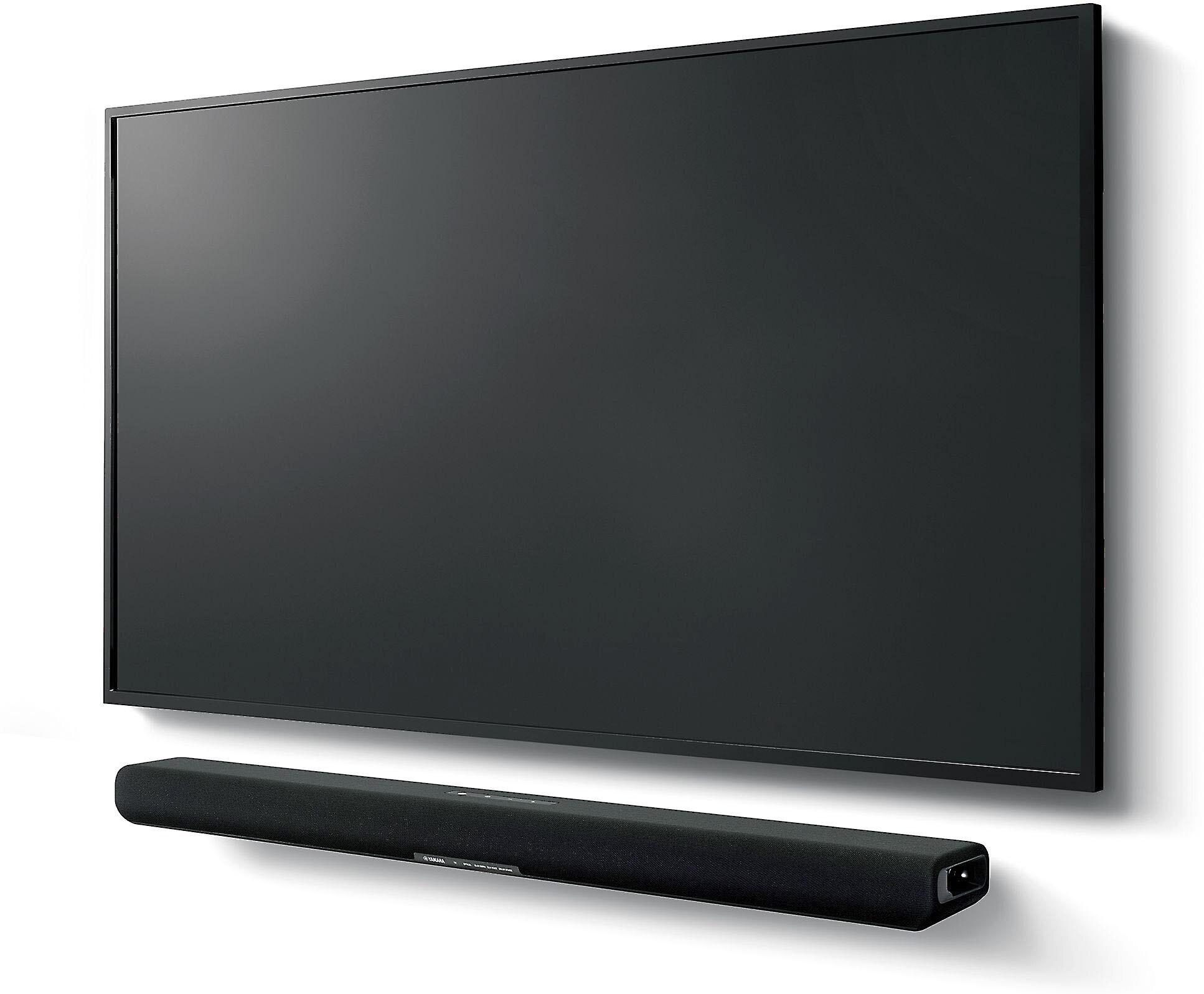
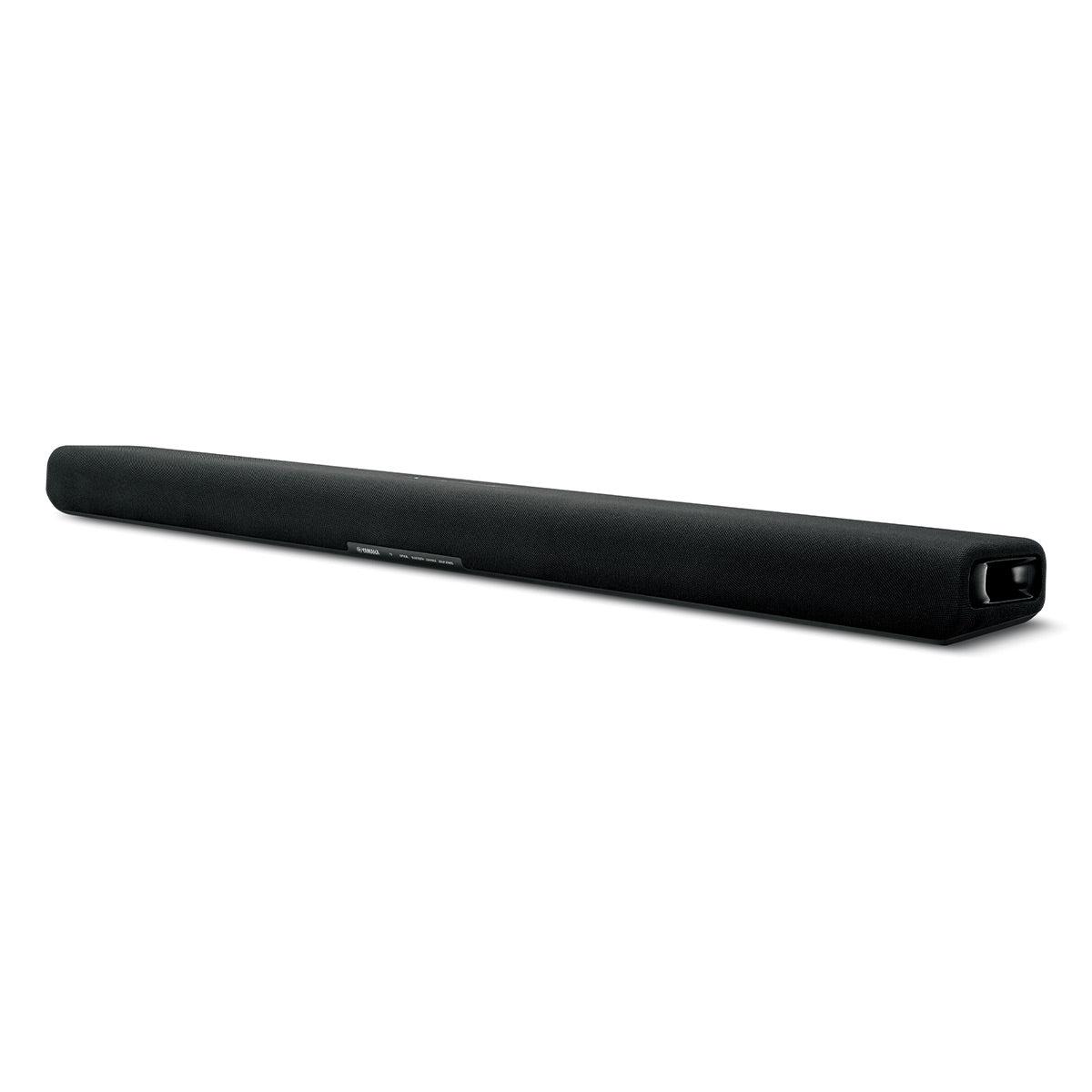
The physical differences between these soundbars reveal their underlying design philosophies. The SR-B30A stretches 35.9 inches wide, making it suitable for TVs 55 inches and larger. Its substantial width accommodates dual built-in subwoofers—essentially two separate 3-inch drivers with dedicated amplification housed within the main soundbar unit.
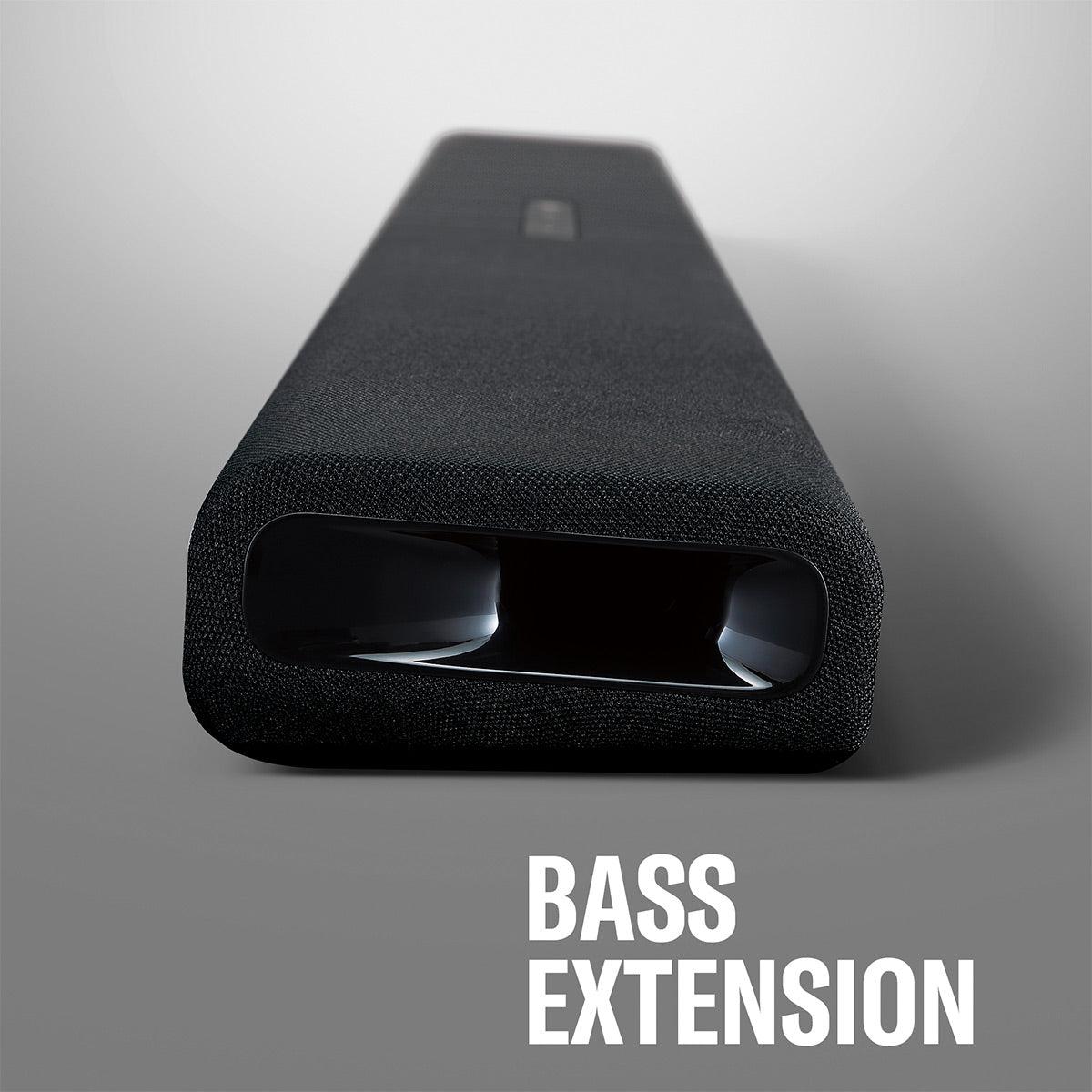
This all-in-one approach eliminates the complexity of subwoofer placement while maintaining a clean aesthetic. The bass-reflex port (a carefully tuned opening that enhances low-frequency output) is integrated into the rear of the unit, requiring adequate clearance from the wall for optimal performance. In my testing, placing the SR-B30A too close to a wall—within two inches—noticeably muddles the bass response.
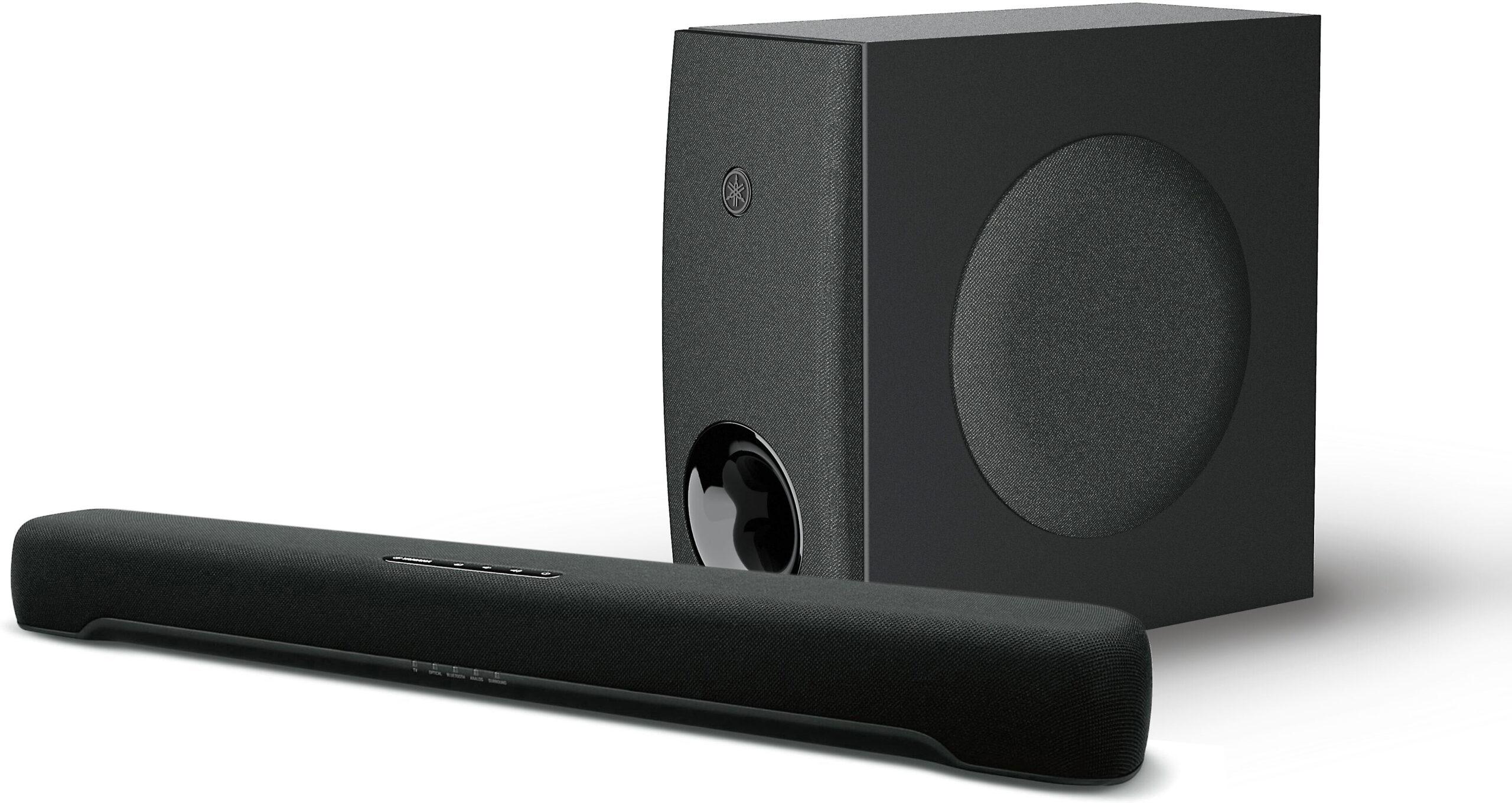
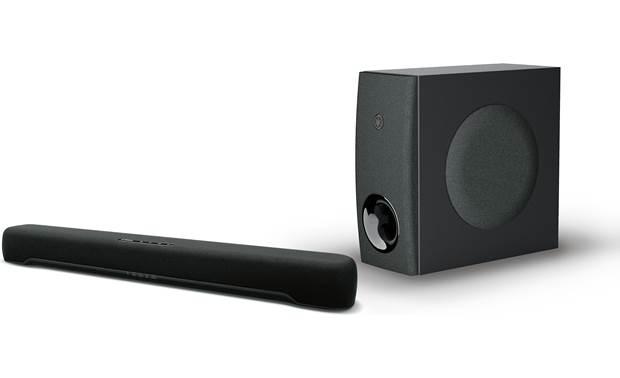
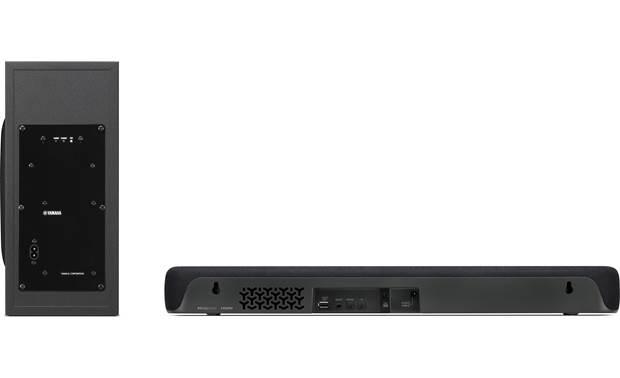
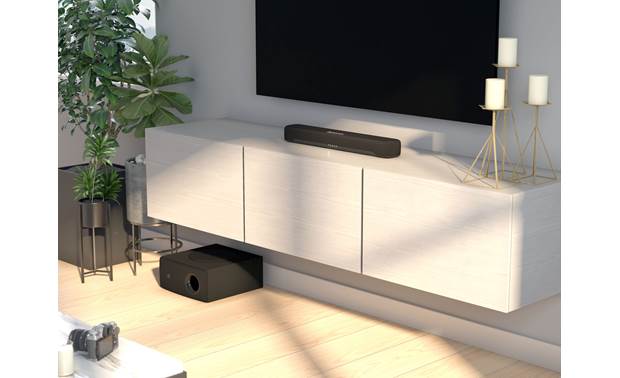
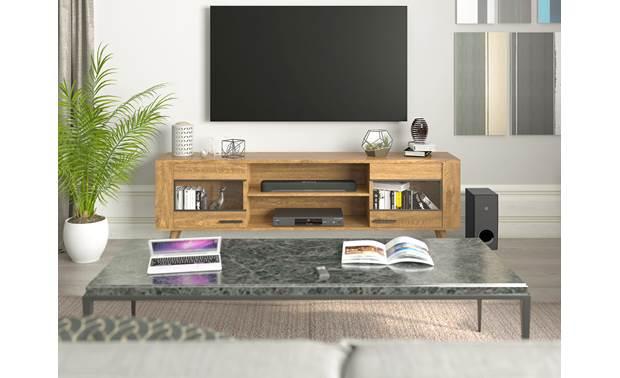
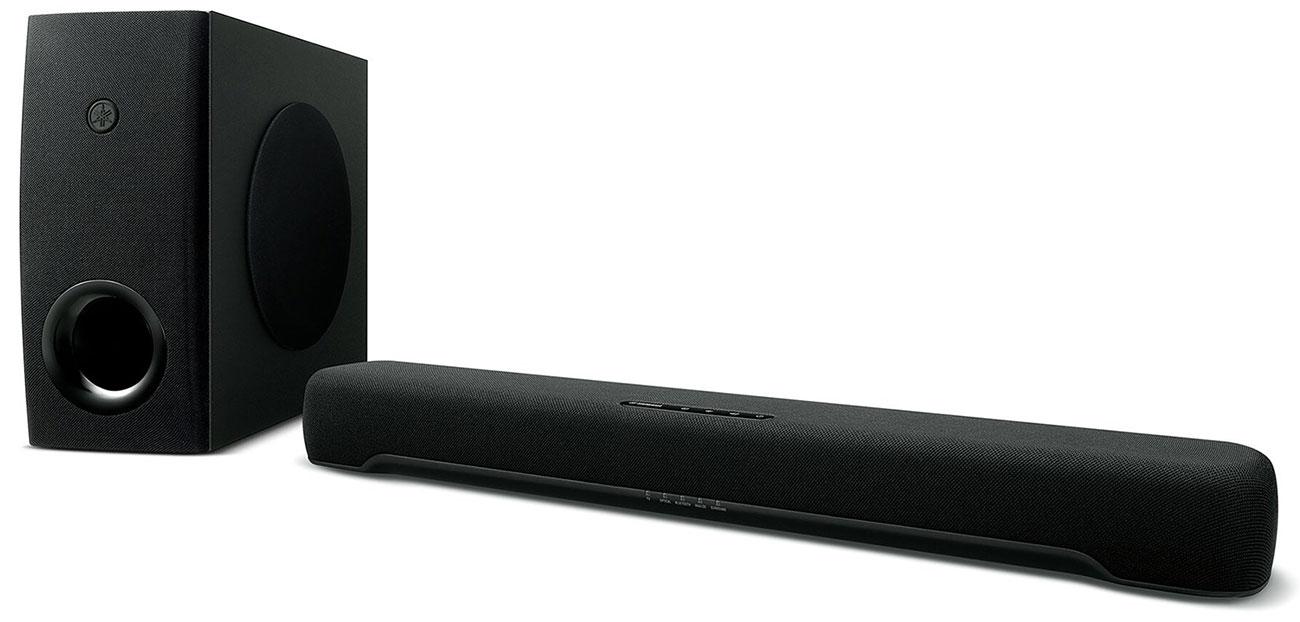
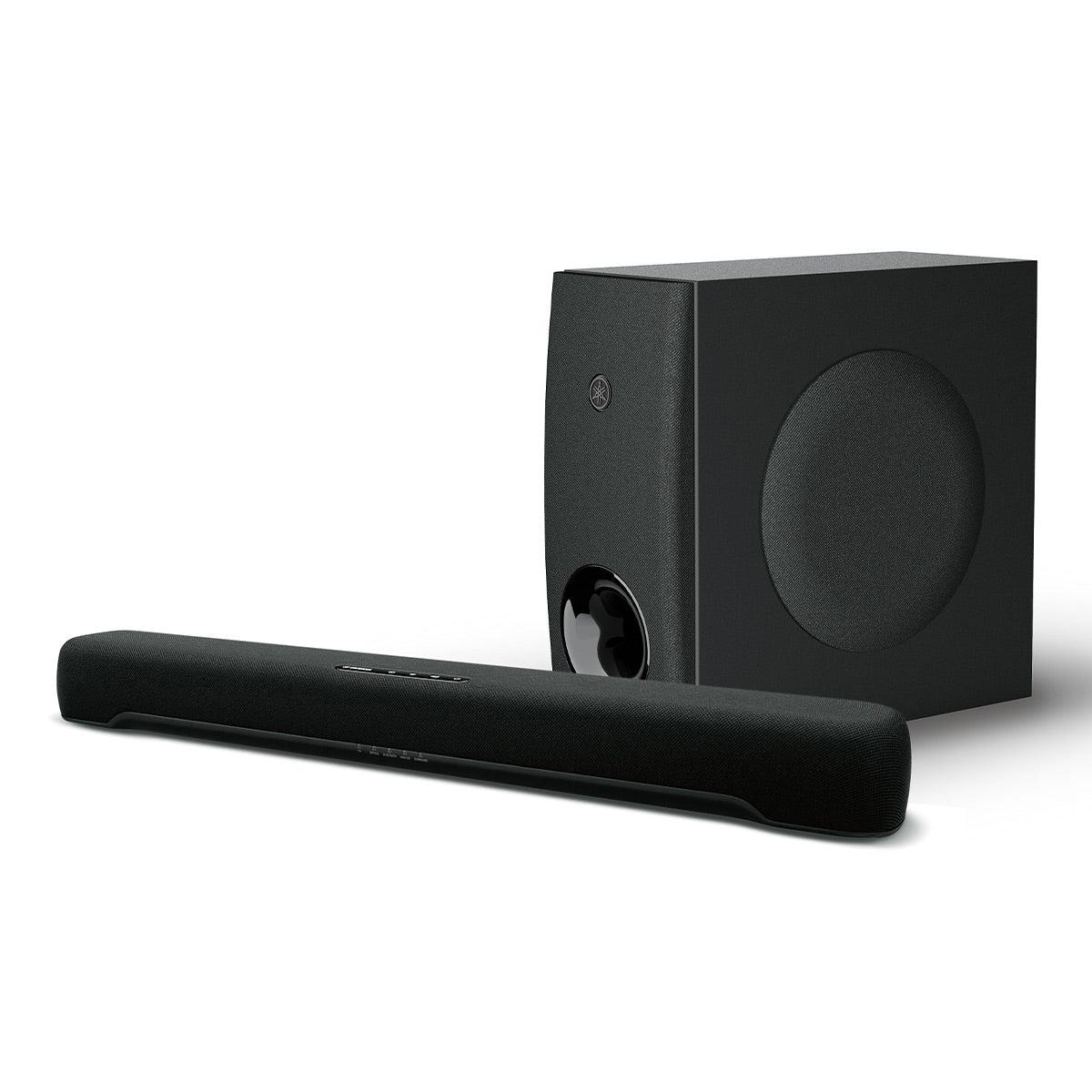
The SR-C30A takes the opposite approach with its compact 23.6-inch soundbar paired with a separate wireless subwoofer. This design accommodates smaller TVs (32-50 inches) while potentially delivering deeper bass through its dedicated 5.1-inch subwoofer driver. The wireless connection between bar and subwoofer eliminates cable runs, though it does require the subwoofer to be plugged into a power outlet within roughly 30 feet of the main unit.
The subwoofer's design includes both vertical and horizontal orientation options, with included adhesive feet for different placements. This flexibility proves invaluable in real-world installations where optimal subwoofer placement often conflicts with furniture layouts or room aesthetics.
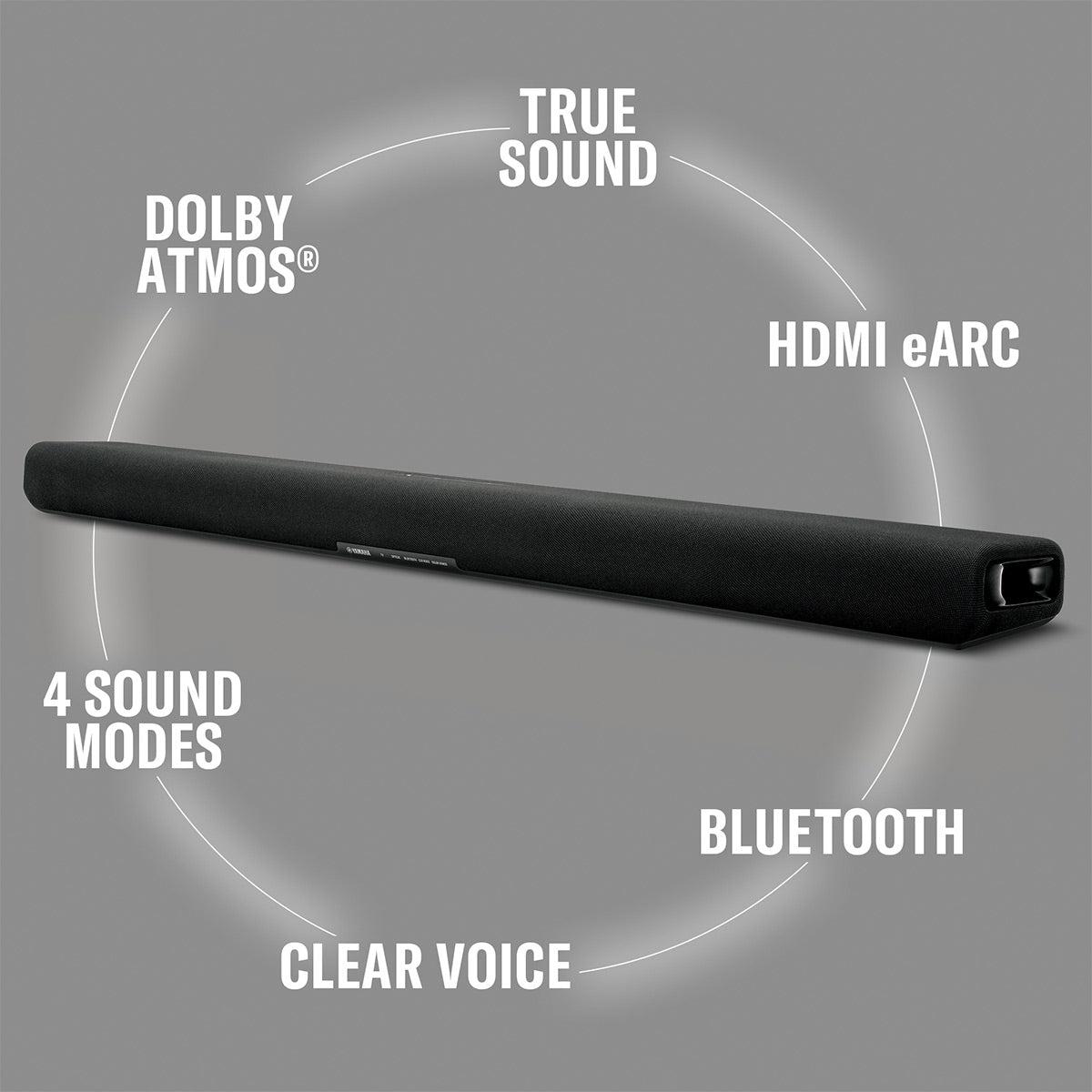
The most significant technical difference between these models lies in the SR-B30A's Dolby Atmos support. Dolby Atmos represents a fundamental shift from traditional surround sound, which assigns audio to specific channels (left, right, center, etc.), to object-based audio that places sounds in three-dimensional space.
In practical terms, this means rain in a movie scene isn't just coming from "the left speaker"—it's positioned above and around you, creating the impression of actual weather. Helicopters move overhead with convincing directionality, and ambient environmental sounds create a more believable sense of space.
The SR-B30A achieves this through sophisticated digital signal processing that analyzes incoming Atmos audio streams and uses psychoacoustic principles to create height and depth impressions from its horizontally-arranged drivers. While it can't match the precision of a full Atmos system with dedicated height speakers, the effect is surprisingly convincing in rooms up to medium size.
The SR-C30A lacks Atmos processing entirely, relying instead on traditional stereo enhancement and basic surround sound virtualization through Dolby Pro Logic II. This older technology can create some width expansion and ambient sound enhancement, but it operates within the limitations of two-channel audio reproduction.
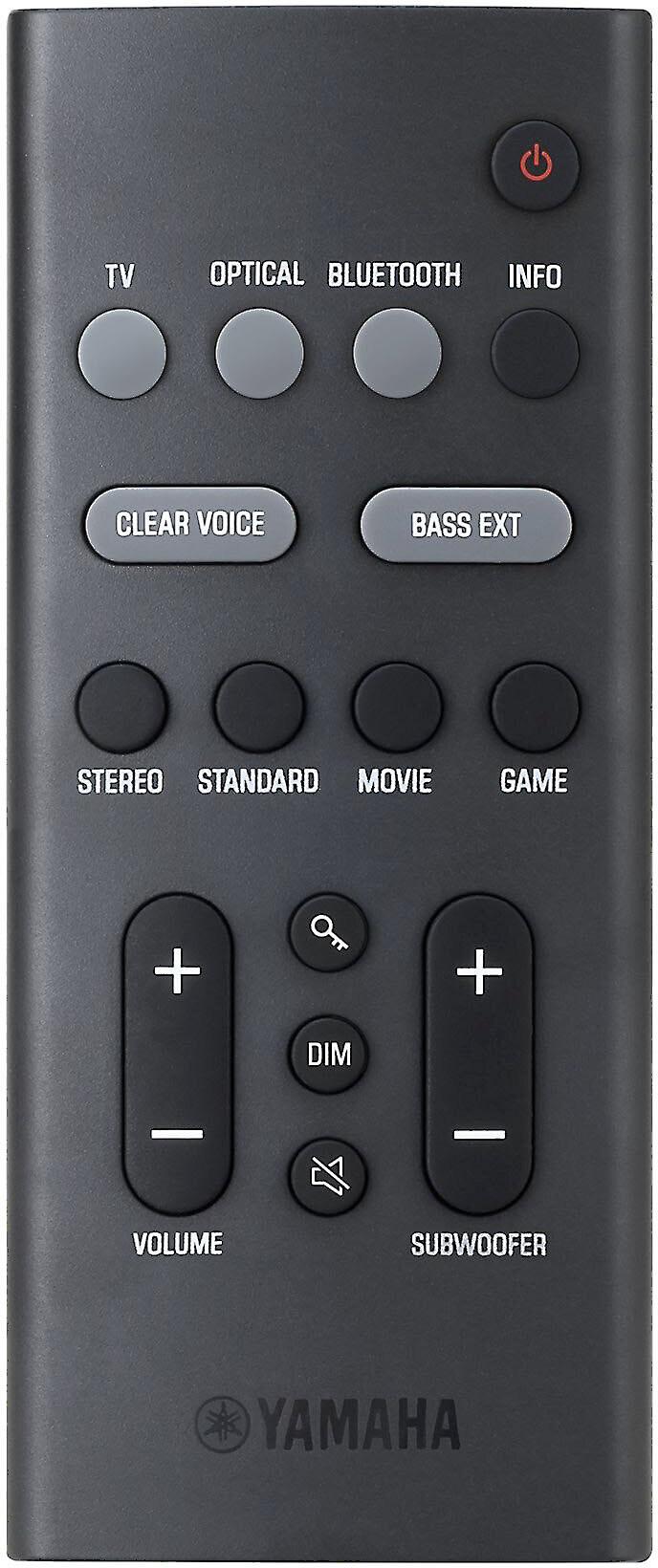
Both soundbars address dialogue clarity, but through different approaches. The SR-B30A's Clear Voice technology uses dynamic range compression and frequency-specific enhancement to maintain dialogue intelligibility even during complex audio scenes. This system analyzes the incoming audio in real-time, identifying speech patterns and boosting their presence without simply increasing overall volume.
During action sequences where explosions and music compete with dialogue, Clear Voice automatically adjusts the frequency balance to maintain speech clarity. The processing is sophisticated enough to distinguish between different types of voice content—news anchors receive different treatment than dramatic dialogue, which differs again from documentary narration.
The SR-C30A's voice enhancement works more simply, applying static frequency boosts in the vocal range and some basic compression. While effective for quiet viewing scenarios, it struggles more during complex mixes where dialogue competes with background elements.
Bass performance reveals the fundamental trade-off between convenience and capability. The SR-B30A's dual built-in subwoofers provide adequate low-end extension for most content, reaching down to approximately 60Hz with reasonable authority. The bass-reflex design enhances efficiency, allowing these smaller drivers to move more air than their size might suggest.
However, physics imposes limits. The built-in subwoofers simply cannot match the output and extension of the SR-C30A's dedicated 5.1-inch driver, which extends meaningfully down to 54Hz and provides more impactful output at moderate to high volumes. In A/B testing with bass-heavy content like action movies and electronic music, the SR-C30A delivers noticeably more visceral low-end impact.
The SR-B30A compensates with its Bass Extension feature, which applies sophisticated processing to enhance perceived bass depth. This isn't simply an equalizer boost—it uses psychoacoustic techniques to create the impression of deeper bass than the drivers can physically produce. While clever, it can't fully compensate for the physical limitations of smaller drivers in a compact enclosure.
Soundstage width—the perceived spread of audio beyond the physical boundaries of the speakers—differs significantly between these models. The SR-B30A's wider driver array creates better stereo separation and a more expansive sense of audio space. With properly mixed stereo content, instruments and effects extend noticeably beyond the soundbar's physical boundaries.
The SR-C30A's compact design limits its soundstage width, though it compensates with more focused imaging. Dialog and center-channel information appears more precisely located, which some users prefer for dialogue-heavy content like news and talk shows.
For home theater applications, the SR-B30A's wider soundstage proves more engaging with movie content, creating better left-to-right panning effects and a more enveloping sense of space. The Dolby Atmos processing further enhances this impression by adding perceived height and depth to the audio presentation.
Both soundbars handle moderate listening volumes well, but their behavior at higher volumes reveals important differences. The SR-B30A maintains better composure at high volumes, with less compression and distortion thanks to its more powerful amplification (120W total vs 90W) and better heat management across multiple drivers.
The SR-C30A's separate subwoofer can become problematic at high volumes, particularly in smaller rooms where bass reflections from walls create standing wave issues. The wireless connection between bar and subwoofer occasionally exhibits slight timing delays at maximum output, though this is rare and typically only noticeable with very bass-heavy content.
In a small apartment with a 40-inch TV, the SR-C30A often proves the better choice despite its technical limitations. The compact soundbar fits proportionally better with smaller displays, and the separate subwoofer can be positioned to minimize neighbor complaints—either in a corner away from shared walls or even in a closet if necessary.
The 3.5mm auxiliary input provides convenient connectivity for gaming consoles, laptops, and other devices that might not have HDMI or optical outputs. This flexibility matters more in space-constrained setups where every input counts.
For a dedicated TV viewing area with a 55-65 inch display, the SR-B30A's advantages become more apparent. The Dolby Atmos processing creates a more engaging experience with streaming content from Netflix, Disney+, and other services that provide Atmos soundtracks.
The wider soundstage better matches the scale of larger displays, and the integrated design eliminates concerns about subwoofer placement in living rooms where aesthetics matter. The room calibration feature, accessed through the Sound Bar Remote app, optimizes the audio output for your specific space dimensions and acoustic characteristics.
Both soundbars handle gaming well, though with different strengths. The SR-B30A's Dolby Atmos support enhances compatible games on PlayStation 5 and Xbox Series X/S, providing better spatial awareness in competitive shooters and more immersive environmental audio in single-player adventures.
The SR-C30A's lower latency and auxiliary input make it more compatible with older gaming systems and scenarios where HDMI audio might introduce delays. The separate subwoofer provides more impactful explosions and environmental effects, though without the positional accuracy of Atmos processing.
The $100 price difference between these models represents more than just feature variations—it reflects different approaches to audio value. The SR-C30A delivers immediate, tangible improvements over TV speakers with deeper bass and clearer dialogue. Its benefits are obvious and universally applicable regardless of content source or viewing habits.
The SR-B30A's premium features require compatible content and proper setup to show their worth. Dolby Atmos content is increasingly common but not universal, and the immersive effects are most apparent with movie content rather than casual TV viewing. However, as streaming services continue expanding their Atmos libraries, this investment in advanced audio processing provides better future-proofing.
Both soundbars include firmware update capabilities through their respective apps, ensuring continued compatibility with evolving audio standards and potential feature additions. Yamaha's track record with soundbar updates is generally positive, though major feature additions are rare compared to bug fixes and optimization improvements.
While both soundbars are designed as standalone solutions, they can integrate into larger home theater setups with some limitations. Neither model includes subwoofer outputs for adding additional bass modules, though the SR-C30A's existing wireless subwoofer somewhat addresses this limitation.
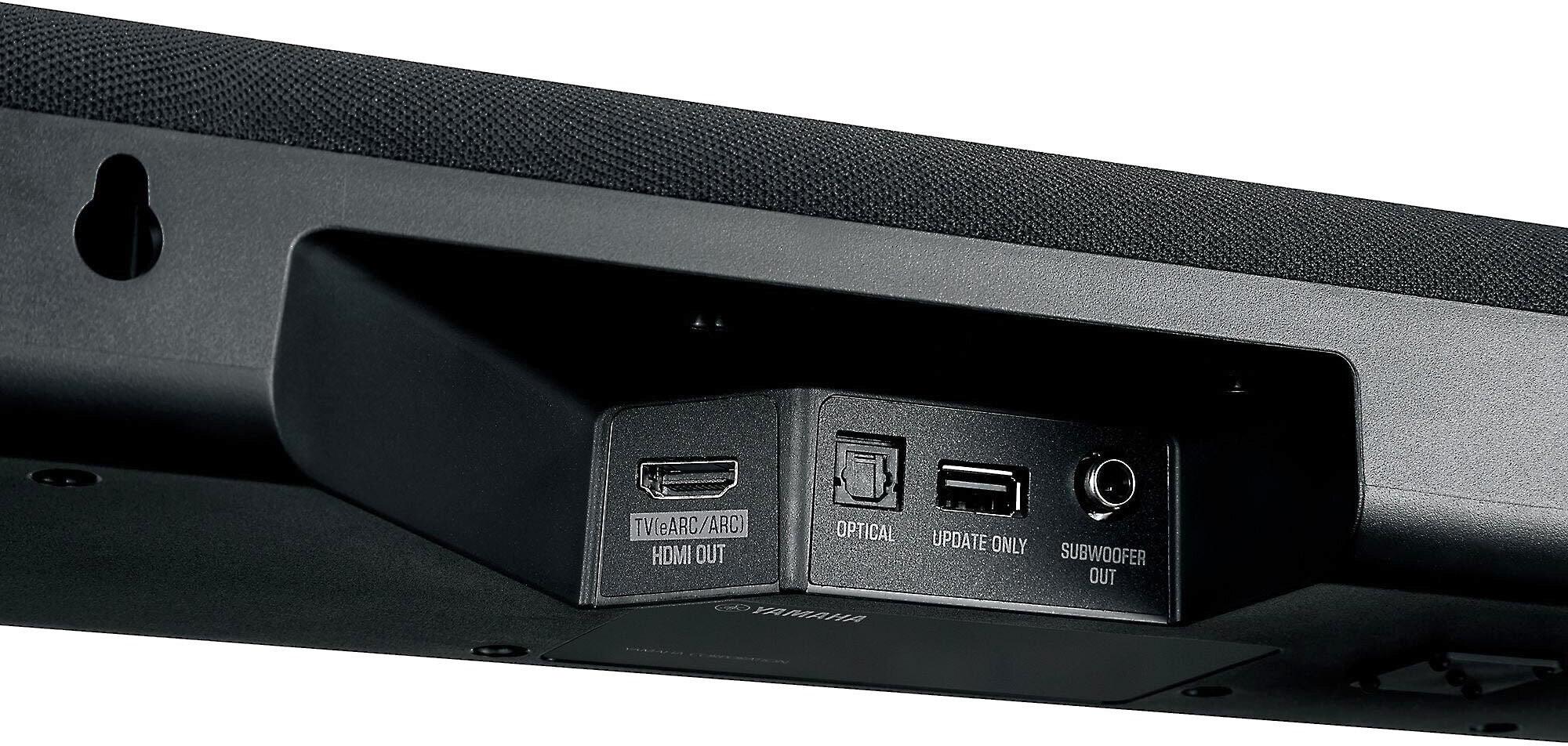
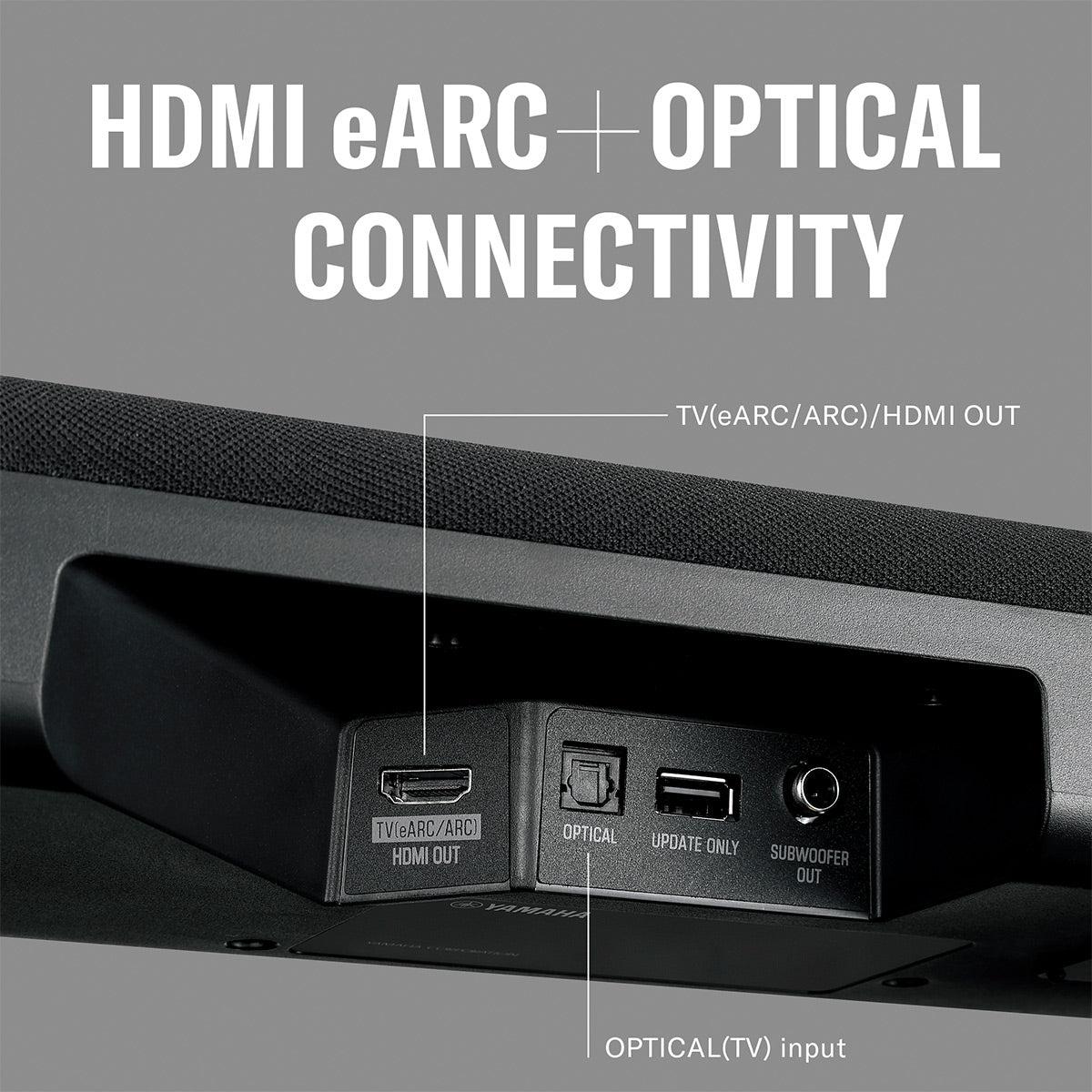
The SR-B30A's HDMI eARC connection provides better integration with modern AV receivers and smart TV audio processing, supporting higher-bandwidth audio formats and more sophisticated lip-sync correction. The SR-C30A's standard HDMI ARC connection handles most common formats but may limit compatibility with the latest audio standards.
For users planning to eventually upgrade to full surround sound systems, both soundbars represent good interim solutions, though neither offers expansion paths for additional speakers or more sophisticated processing.
Choose the Yamaha SR-B30A ($280) if you watch movies regularly, have a medium to large viewing room, and value advanced features like Dolby Atmos. The premium audio processing and integrated design justify the higher price for users who prioritize immersive experiences and future compatibility with evolving content standards.
The Yamaha SR-C30A ($180) makes more sense for budget-conscious buyers, smaller spaces, or users who primarily watch standard TV programming. Its combination of meaningful audio improvements, flexible setup options, and strong value proposition makes it an excellent entry point into quality soundbar systems.
Both represent solid investments in better TV audio, with the choice ultimately depending on your specific priorities, room constraints, and willingness to pay for premium features that may not benefit all viewing habits equally.
| Yamaha SR-B30A Sound Bar with Built-In Subwoofers ($280) | Yamaha SR-C30A Soundbar with Subwoofer ($180) |
|---|---|
| Audio Technology - Determines immersive experience quality | |
| Dolby Atmos with 3D spatial audio processing | Standard 2.1-channel with Dolby Pro Logic II |
| Physical Design - Affects room compatibility and aesthetics | |
| Single 35.9" unit with dual built-in subwoofers | Compact 23.6" bar + separate wireless subwoofer |
| Total Power Output - Higher wattage generally means better volume and clarity | |
| 120W (30W per front channel, 60W subwoofer) | 90W (20W per front channel, 50W subwoofer) |
| Bass Extension - Critical for movie impact and music enjoyment | |
| Down to ~60Hz via dual 3" built-in drivers | Down to ~54Hz via dedicated 5.1" wireless subwoofer |
| Voice Clarity Technology - Essential for dialogue understanding | |
| Advanced Clear Voice with dynamic processing | Basic voice enhancement with frequency boosting |
| Connectivity Options - Determines device compatibility | |
| HDMI eARC, optical, Bluetooth 5.1 | HDMI ARC, optical, 3.5mm aux, Bluetooth 5.0 |
| Room Size Compatibility - Matches soundbar scale to your space | |
| Medium to large rooms (55"+ TVs) | Small to medium rooms (32-50" TVs) |
| Setup Complexity - Time and effort required for installation | |
| Plug-and-play single unit placement | Requires subwoofer positioning and wireless pairing |
| Future-Proofing - Compatibility with evolving content standards | |
| Excellent (Dolby Atmos support for streaming services) | Limited (standard audio formats only) |
| Best Value For - Who gets the most benefit from each model | |
| Movie enthusiasts wanting cinematic audio | Budget buyers prioritizing bass improvement over TV speakers |
The Yamaha SR-C30A ($180) offers better value for budget-conscious buyers, providing significant audio improvements over TV speakers with deep bass from its wireless subwoofer. The Yamaha SR-B30A ($280) justifies its higher price with Dolby Atmos technology and advanced voice clarity features for users who want a more immersive movie experience.
The Yamaha SR-C30A produces deeper, more powerful bass through its dedicated 5.1-inch wireless subwoofer, extending down to 54Hz. The SR-B30A has adequate bass from dual built-in 3-inch subwoofers but can't match the raw power and depth of a separate subwoofer unit.
Dolby Atmos on the Yamaha SR-B30A creates a more immersive movie experience with height effects and spatial audio, especially valuable if you watch movies from Netflix, Disney+, or other streaming services with Atmos content. The SR-C30A works fine without Atmos for casual TV viewing and basic audio improvement.
The Yamaha SR-C30A is ideal for small rooms with its compact 23.6-inch design that fits TVs 32-50 inches. Its wireless subwoofer can be positioned flexibly to work around furniture. The SR-B30A at 35.9 inches wide is better suited for medium to large rooms with 55-inch or larger TVs.
The Yamaha SR-B30A is easier to install as a single unit that only requires one power connection and one cable to your TV. The SR-C30A requires positioning and powering both the soundbar and wireless subwoofer, though the wireless connection eliminates running cables between them.
The Yamaha SR-B30A offers superior dialogue clarity through its advanced Clear Voice technology that dynamically processes speech for better intelligibility during action scenes. The SR-C30A includes basic voice enhancement that works well for quieter content but struggles more with complex audio mixes.
Both soundbars handle music well, though with different strengths. The SR-C30A provides better stereo separation for music with its separate subwoofer arrangement. The SR-B30A offers a wider soundstage and more detailed audio processing, making it better for complex musical arrangements and live recordings.
The Yamaha SR-B30A offers better future-proofing with Dolby Atmos support as more streaming content adopts this format. Both soundbars receive firmware updates through their mobile apps, but the SR-C30A may become outdated sooner due to its lack of advanced audio processing technologies.
We've done our best to create useful and informative comparisons to help you decide what product to buy. Our research uses advanced automated methods to create this comparison and perfection is not possible - please contact us for corrections or questions. These are the sites we've researched in the creation of this article: usa.yamaha.com - worldwidestereo.com - audiolab.com - shop.sg.yamaha.com - consumerreports.org - usa.yamaha.com - vinylsound.ca - bestbuy.com - modernappliancewoodward.com - bluestardist.com - target.com - my.yamaha.com - techradar.com - usa.yamaha.com - expertreviews.com - usa.yamaha.com - trustedreviews.com - crutchfield.com - europe.yamaha.com - usa.yamaha.com - shop.usa.yamaha.com - assetserver.net

Privacy Policy
Terms and Conditions - Affiliate Policy
Home Security
© Copyright 2008-2026.
11816 Inwood Rd #1211, Dallas, TX 75244