




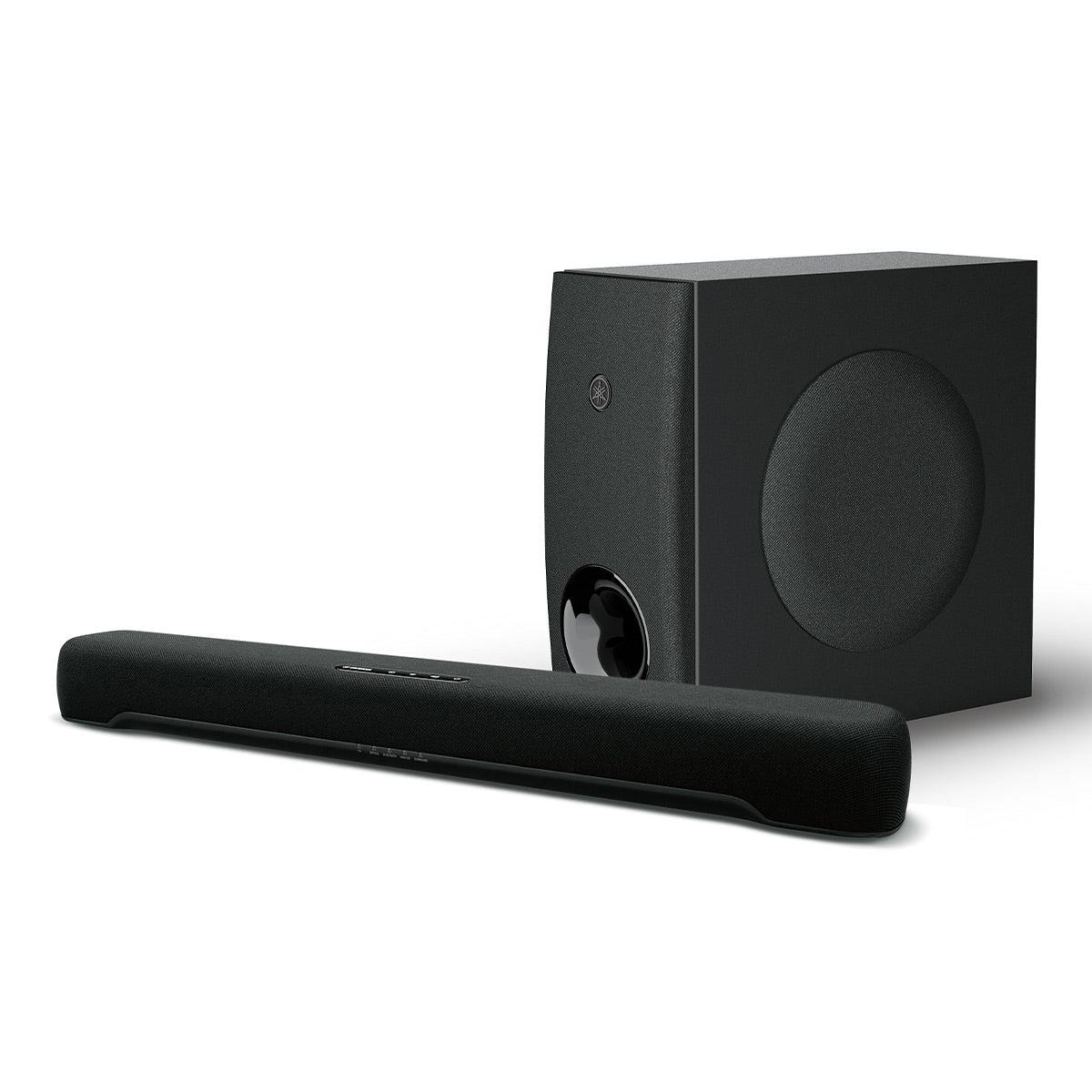
If you're tired of constantly adjusting your TV volume or asking "what did they say?" during every movie night, you're not alone. Most TVs today are incredibly thin, which means there's barely any room for decent speakers inside them. That's where soundbars come in – they're designed to dramatically improve your TV's audio without the complexity of a full surround sound system.
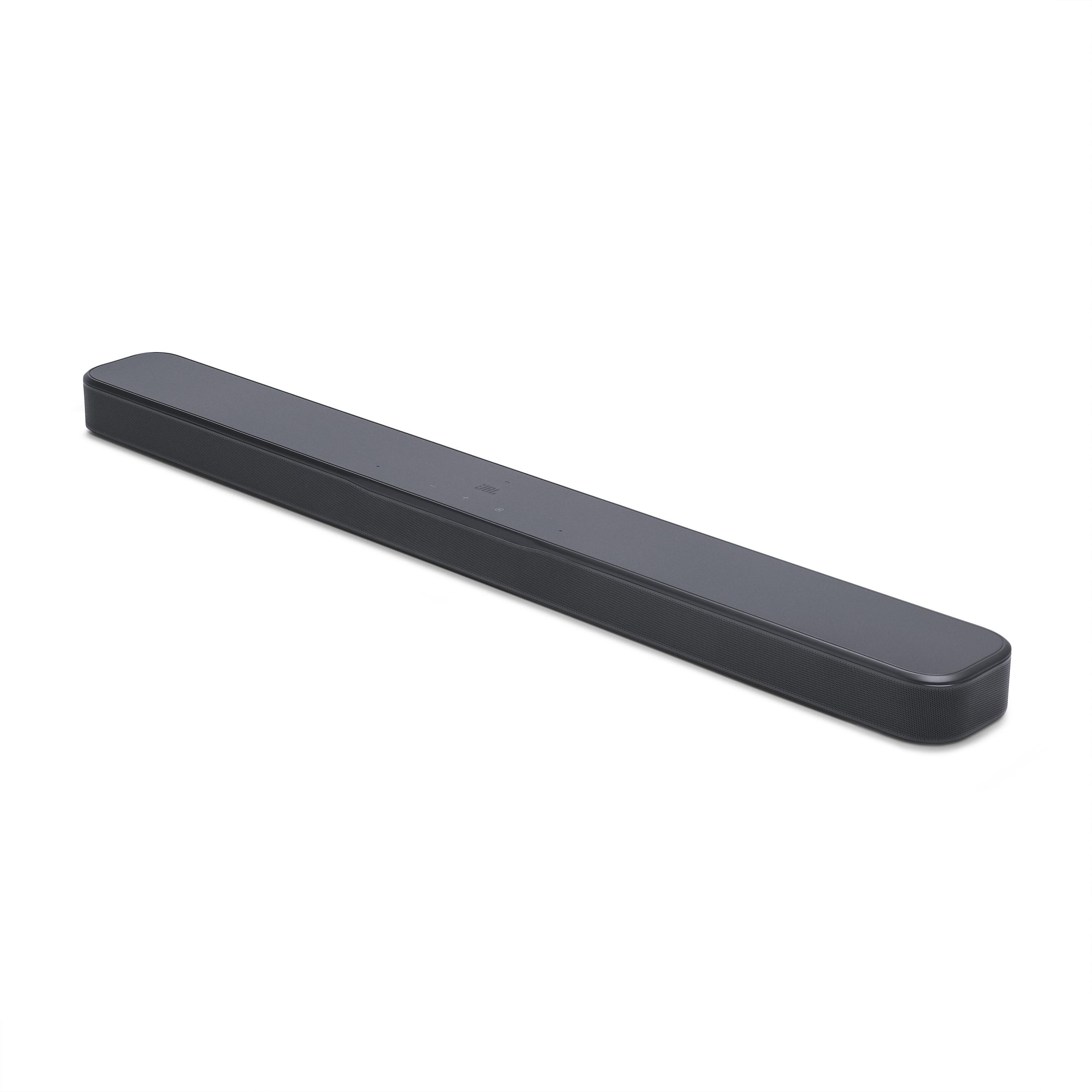
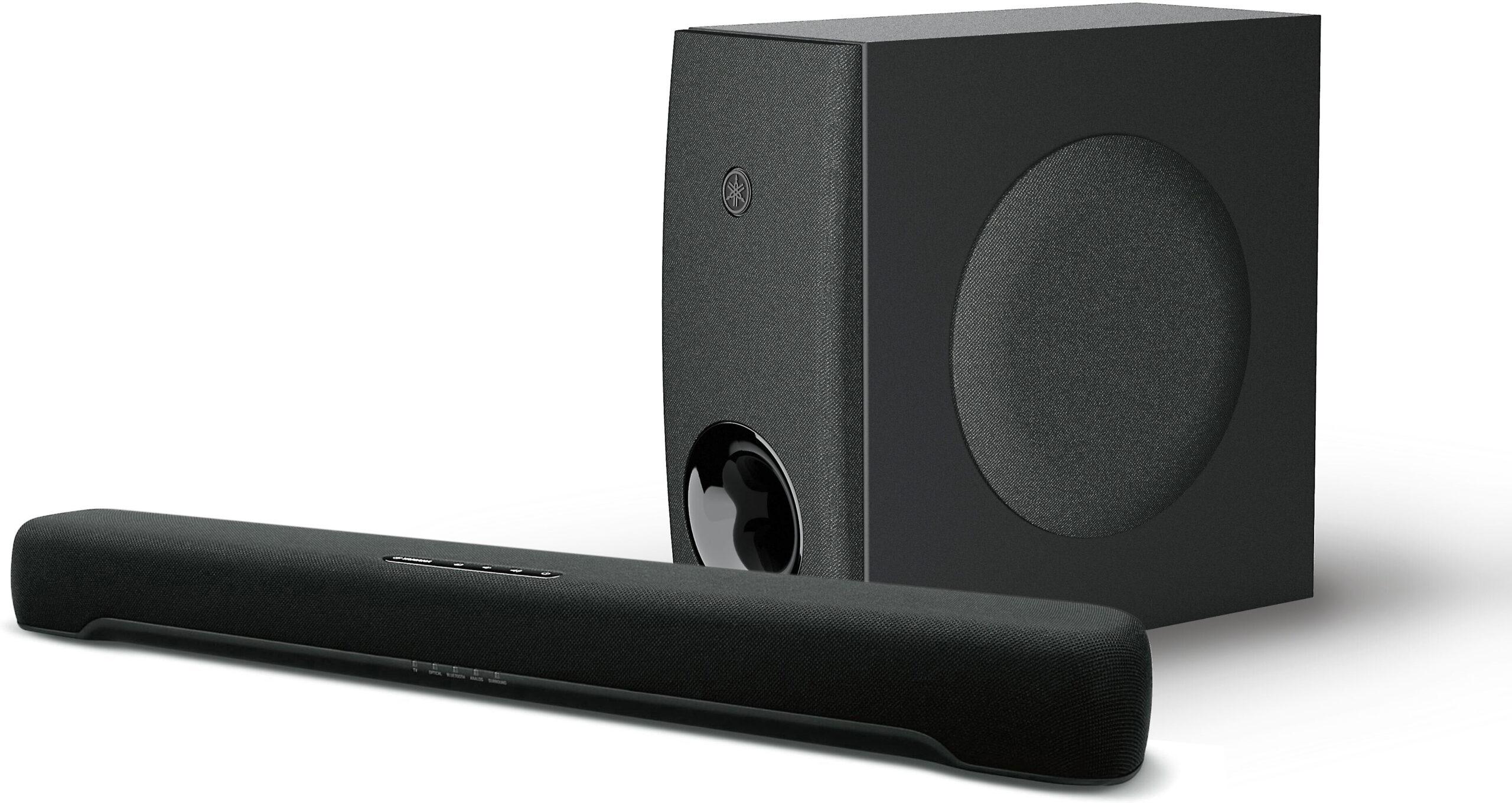
But here's the thing: not all soundbars are created equal. Today we're comparing two very different approaches to better TV sound – the JBL Bar 300 MK2 at $449.95 and the Yamaha SR-C30A at $180.45. One focuses on cutting-edge virtual surround technology, while the other takes the traditional route with a separate subwoofer. Let's dive into which one might be right for your setup.
The soundbar market has really matured over the past few years. Gone are the days when your only choice was a basic bar that made dialogue slightly clearer. Now we've got everything from budget 2.1 systems (that's a soundbar plus subwoofer) to premium setups that can simulate a full theater experience using just advanced processing and clever speaker placement.
When shopping for a soundbar, you'll want to consider several key factors. Room size matters more than you might think – a powerful system can sound overwhelming in a small apartment, while a compact bar might get lost in a large living room. Your content preferences also play a huge role. If you're mainly watching Netflix and cable TV, dialogue clarity is probably your top priority. Movie buffs who love action films will want something that can handle explosive sound effects and create that immersive surround experience.
Setup complexity is another big consideration. Some people want to plug it in and forget about it, while others enjoy tweaking settings and integrating with smart home systems. Finally, there's the budget versus future-proofing balance – do you want something that works great right now, or are you willing to invest more for features that'll keep your system relevant as streaming technology evolves?
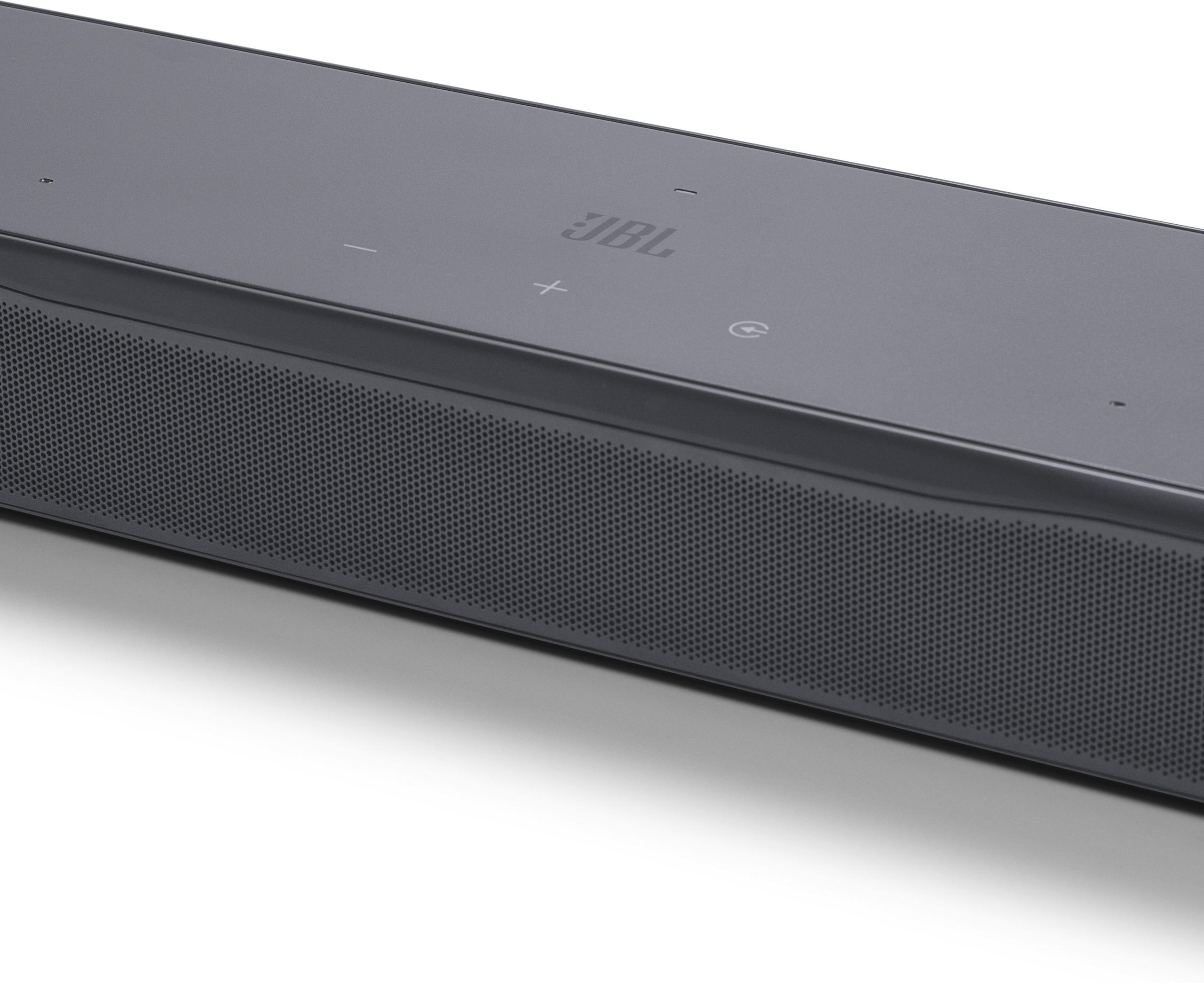
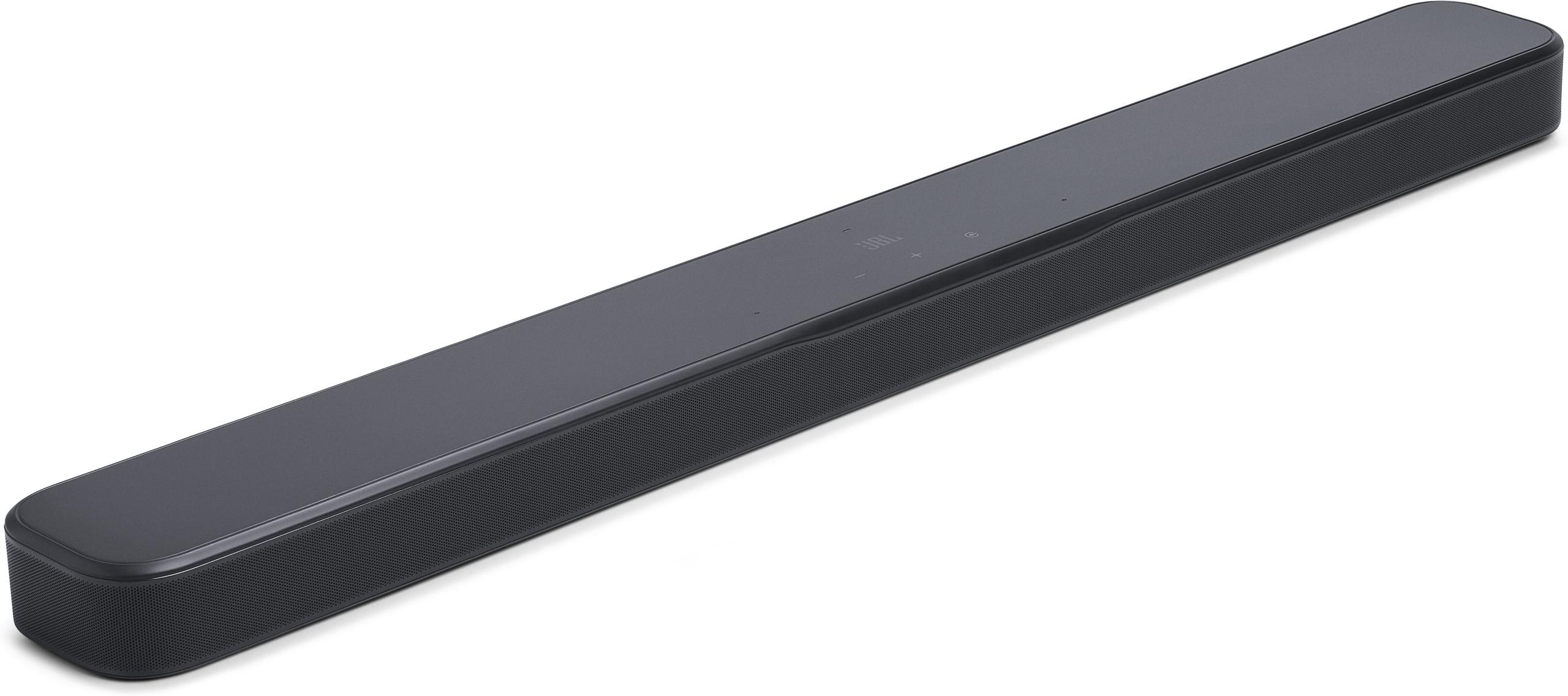
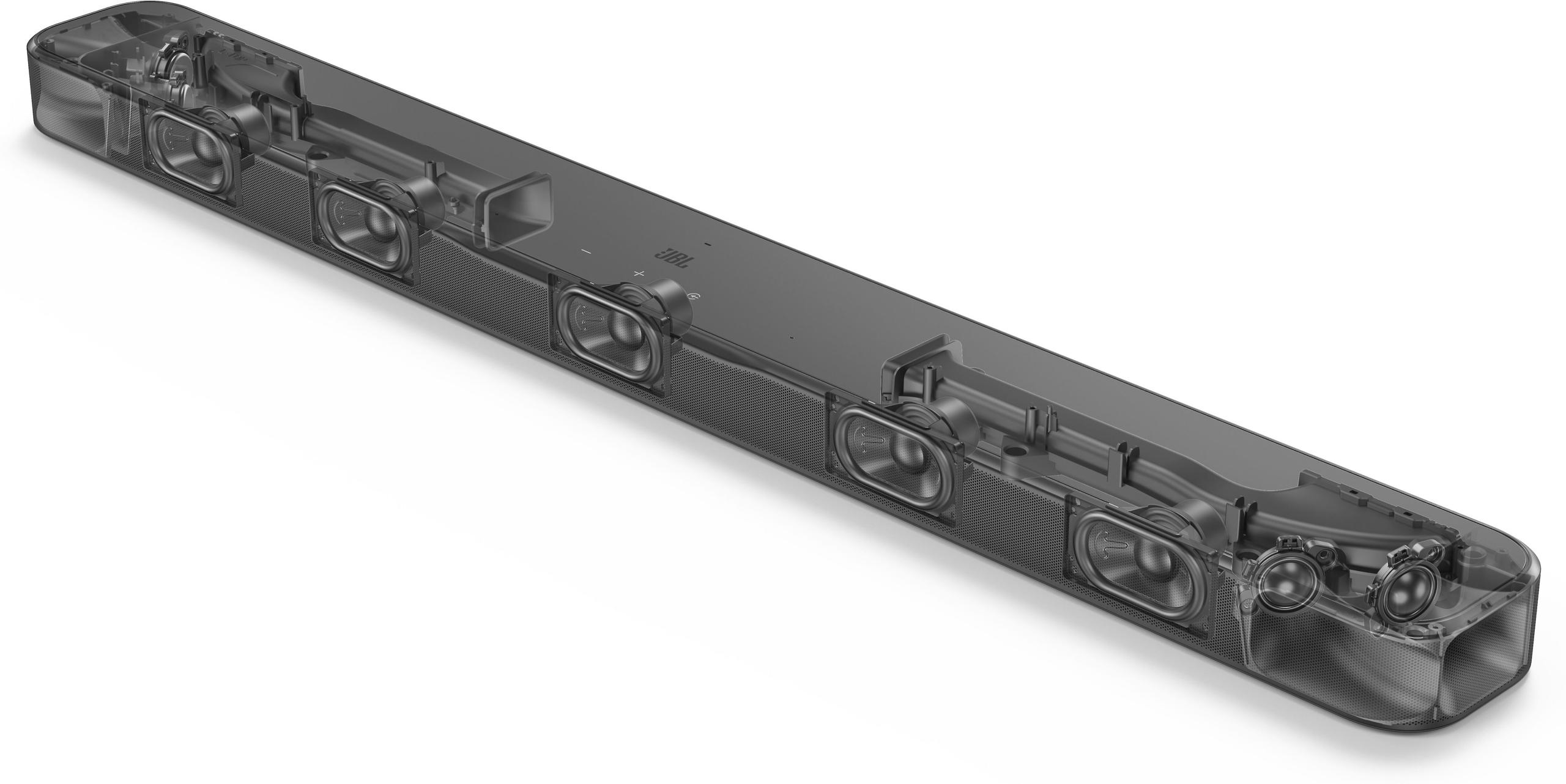
The JBL Bar 300 MK2 hit the market in late 2023 as part of JBL's updated soundbar lineup. It's actually the second generation of the Bar 300, and JBL made some significant improvements based on user feedback from the original. The "MK2" designation isn't just marketing – they genuinely upgraded the MultiBeam technology to version 3.0, enhanced the dialogue processing with PureVoice 2.0, and bumped up the power output considerably.
What's interesting about JBL's approach is how they've doubled down on the all-in-one concept. Instead of adding a separate subwoofer like most competitors, they've focused on making a single bar that can do everything through advanced digital processing and carefully designed drivers.
The Yamaha SR-C30A, on the other hand, launched in early 2024 with a completely different philosophy. Yamaha looked at the market and said, "You know what? Sometimes the traditional approach just works better." They built a compact 2.1 system that prioritizes simplicity and authentic bass response over flashy features.
Since its release, the Yamaha has seen some nice price drops – it originally launched at $249 but can now be found for around $180, making it an even more compelling value proposition.
This is probably the biggest difference between these two systems, and it really comes down to physics versus processing power.
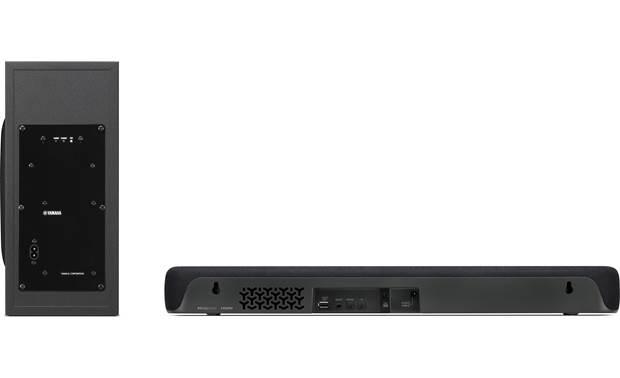
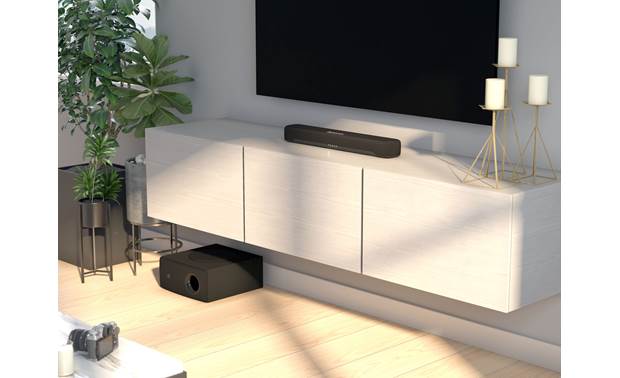
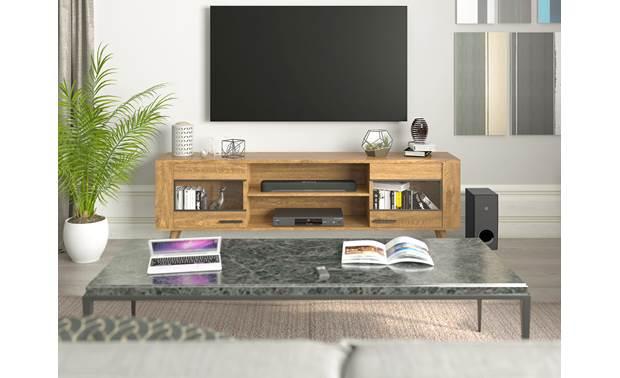
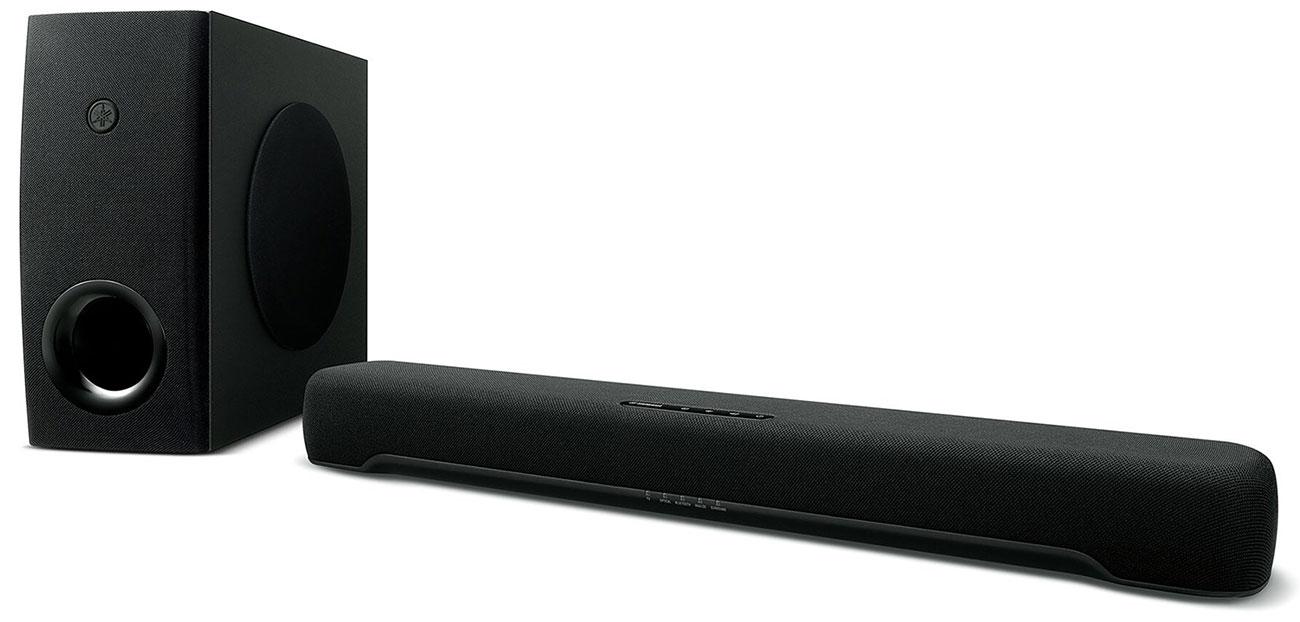
The Yamaha SR-C30A's approach is straightforward – it includes a dedicated 5.1-inch subwoofer that's specifically designed to move air and create those low-frequency rumbles you feel in your chest during action scenes. When a T-Rex stomps across the screen in Jurassic Park, or when the bass drops in your favorite song, that physical driver can push enough air to create genuine impact. The subwoofer connects wirelessly to the main bar, so you can place it wherever it sounds best in your room – usually in a corner where the walls help amplify the bass response.
I've found that this traditional approach really shines with content that has a lot of low-end energy. Whether it's the engine roar in Fast & Furious movies or the kick drums in rock music, having that dedicated driver makes a noticeable difference. The bass feels more natural and less processed.
The JBL Bar 300 MK2 takes a completely different approach. Instead of a separate subwoofer, it uses what's called "virtual bass enhancement" combined with specially designed racetrack drivers (these are oval-shaped speakers that can move more air than traditional round ones) and built-in bass ports. The system essentially tricks your ears into thinking there's more bass than there actually is through digital signal processing.
While JBL's engineers have done impressive work here, there are physical limitations you can't overcome with software. The Bar 300 MK2 can produce clean, adequate bass for most content, but it simply cannot match the chest-thumping impact of a physical subwoofer during explosive movie scenes or bass-heavy music.
Both systems recognize that clear dialogue is crucial – after all, what's the point of better sound if you still can't understand what characters are saying?
The JBL Bar 300 MK2 uses something called PureVoice 2.0, which is essentially an AI-powered system that analyzes the audio in real-time and dynamically adjusts the frequency response to make voices more prominent. It's particularly clever during complex scenes where there might be background music, sound effects, and dialogue all competing for your attention. The system can identify which frequencies contain the speech and boost them while simultaneously reducing competing sounds.
What's really impressive is how this works with the MultiBeam technology. Since the JBL creates a wider soundstage (I'll explain this more in the next section), voices often sound like they're coming from a more natural position relative to the action on screen, rather than just from directly below your TV.
The Yamaha SR-C30A uses a more traditional approach called Clear Voice mode. Instead of real-time AI processing, it applies a preset EQ curve that emphasizes the frequency range where most speech occurs (roughly 1-4 kHz). It's simpler but still effective – dialogue becomes noticeably clearer and more forward in the mix.
Both systems do a good job here, but the JBL's more sophisticated processing gives it a slight edge, especially with challenging content like British period dramas where accents and background music can make dialogue harder to follow.
This is where the biggest performance gap appears between these two systems.
The JBL Bar 300 MK2 supports Dolby Atmos, which is the current gold standard for immersive audio. Now, it's important to understand that this isn't "true" Dolby Atmos like you'd get in a movie theater – it's virtual Dolby Atmos. The bar uses advanced processing to analyze the spatial information in Dolby Atmos soundtracks and then uses its MultiBeam 3.0 technology to bounce sound off your walls and ceiling to create the illusion of sound coming from all around you.
MultiBeam is really the secret sauce here. The soundbar has multiple drivers that can fire audio in different directions. By carefully timing and processing these sound waves, it can make it seem like helicopters are flying overhead, or that rain is falling all around you. The effect works best in rooms with typical ceiling heights and reasonably reflective surfaces – it's less effective in rooms with vaulted ceilings or lots of sound-absorbing materials.
I've been genuinely impressed by what the JBL can achieve in the right room. During the opening scene of Saving Private Ryan, you can actually hear bullets whizzing past your head, and aircraft sounds seem to move realistically across the room. It's not quite the same as having actual rear speakers, but it's remarkably convincing.
The Yamaha SR-C30A, by contrast, is essentially a very good stereo system. It does have some surround processing through Dolby Pro Logic II, which can extract surround information from stereo sources and create a slightly wider soundstage, but it can't create height effects or convincing rear surround. What it does, it does well – the stereo separation is clean and the imaging is precise – but it's fundamentally limited to left and right channel information.
How these systems handle music reveals a lot about their different design philosophies.
The Yamaha SR-C30A often sounds more natural with music, particularly genres that rely heavily on bass. The dedicated subwoofer provides authentic low-end extension that's crucial for hip-hop, electronic music, and rock. The simpler signal path also means less digital processing is coloring the sound, which some critical listeners prefer.
I've found the Yamaha particularly enjoyable for jazz and acoustic music, where the clear stereo imaging helps you pick out individual instruments in the mix. The bass response is tight and controlled rather than boomy, which is exactly what you want for music listening.
The JBL Bar 300 MK2 takes a different approach. Its wider soundstage can make some music feel more spacious and enveloping, which works well for orchestral pieces or live recordings where you want to feel like you're in the venue. However, the virtual bass processing can sometimes make certain genres sound a bit artificial, particularly electronic music where the bass is supposed to be tight and punchy.
That said, the JBL's streaming capabilities give it a significant advantage for music discovery and convenience. With built-in Wi-Fi and support for practically every streaming service, you can easily access high-quality streams from Spotify, Tidal, Amazon Music, and others without needing to use your TV as an intermediary.
This is where the biggest philosophical difference between these products becomes apparent.
The JBL Bar 300 MK2 is designed to be a connected device that integrates into modern smart homes. It has built-in Wi-Fi that supports both 2.4GHz and 5GHz networks, which means it can handle high-quality streaming without dropouts. The system supports AirPlay 2 (for Apple users), Chromecast built-in (for Android users), and Alexa Multi-Room Music, so you can easily stream music from your phone or integrate it into whole-home audio systems.
The JBL One app deserves special mention – it's actually quite good compared to many manufacturer apps. You can adjust EQ settings, manage multiple JBL speakers throughout your home, and even get firmware updates that add new features over time. JBL has already announced that DTS Virtual:X support is coming via a software update in late 2025, which shows how these connected features can extend the product's lifespan.
The voice assistant integration is also handy if you're already invested in that ecosystem. While the soundbar doesn't have built-in microphones, it works seamlessly with Alexa or Google Assistant devices you might already have, letting you control volume, switch inputs, or start music playback with voice commands.
The Yamaha SR-C30A takes the opposite approach. It has Bluetooth 5.0 for wireless music streaming, and that's about it for smart features. There's no Wi-Fi, no app-based streaming services, and no smart home integration. What it does have is Bluetooth multipoint, which lets you connect two devices simultaneously and easily switch between them – handy if you want to share music duties between a phone and tablet.
Some people will see this as a limitation, but others will appreciate the simplicity. There's no network setup, no account creation, no privacy concerns about always-connected devices. You plug it in, pair your phone, and you're done.
Your room size and layout play a huge role in how these systems will perform.
Small rooms (under 150 square feet) like apartments, bedrooms, or home offices actually favor the Yamaha SR-C30A. In these spaces, the subwoofer's impact is more noticeable because you're sitting closer to it, and the soundbar's more focused dispersion pattern isn't a disadvantage because you don't need to fill a large space. The 90 watts of total power is plenty for near-field listening.
Medium-sized rooms (150-300 square feet) are where the JBL Bar 300 MK2 starts to show its advantages. The MultiBeam technology really comes into play here, creating a wider soundstage that can fill the space more effectively. The virtual surround effects work best at this scale – close enough for the processing to be convincing, but far enough away that you're not just hearing individual drivers.
Large rooms (over 300 square feet) really demand the JBL's higher power output and wide dispersion capabilities. The Yamaha's 90 watts and narrower soundstage will struggle to fill larger spaces adequately, and you'll find yourself turning up the volume to uncomfortable levels just to get adequate sound at your seating position.
If you're building a dedicated home theater setup, several additional factors come into play.
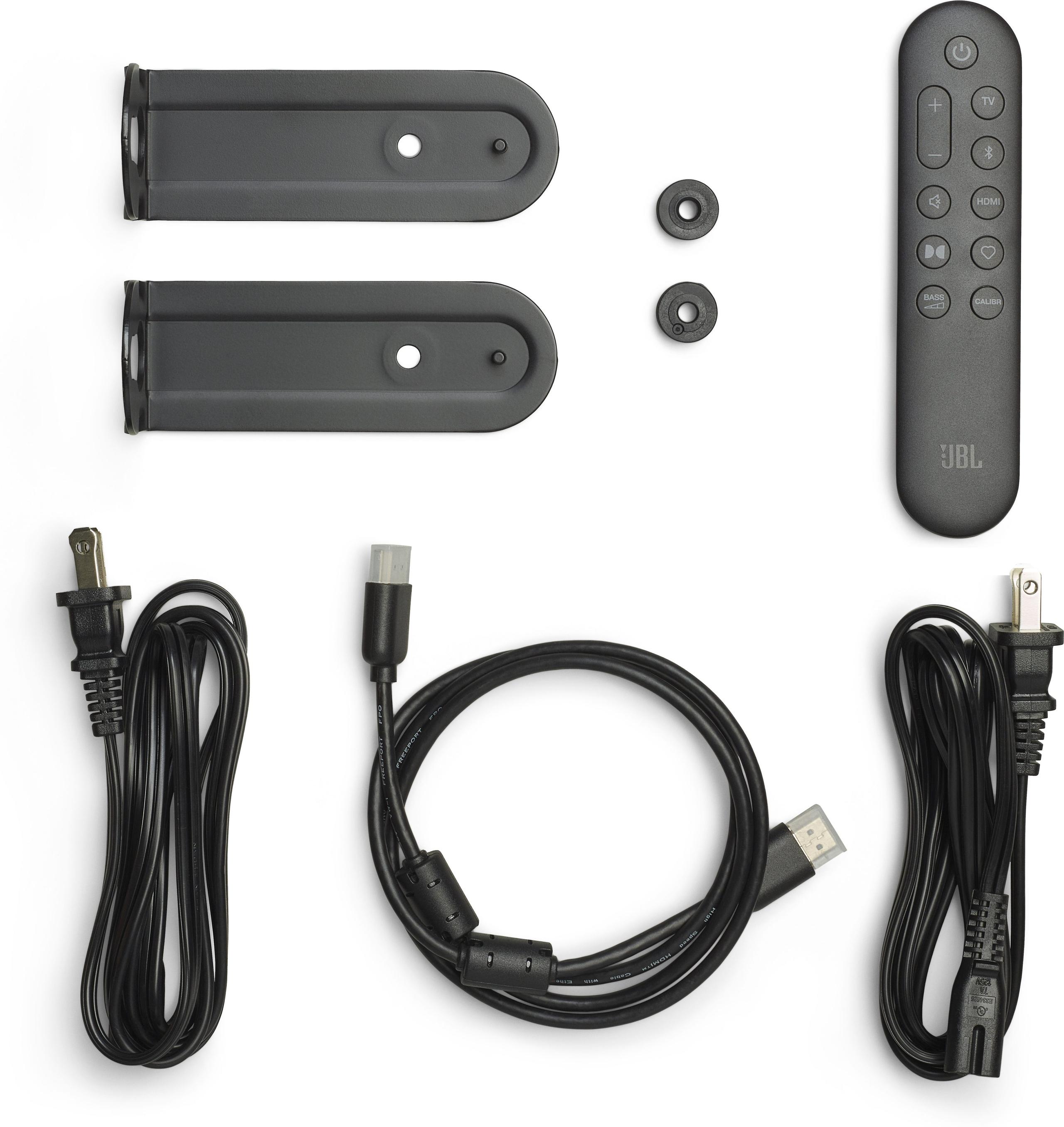
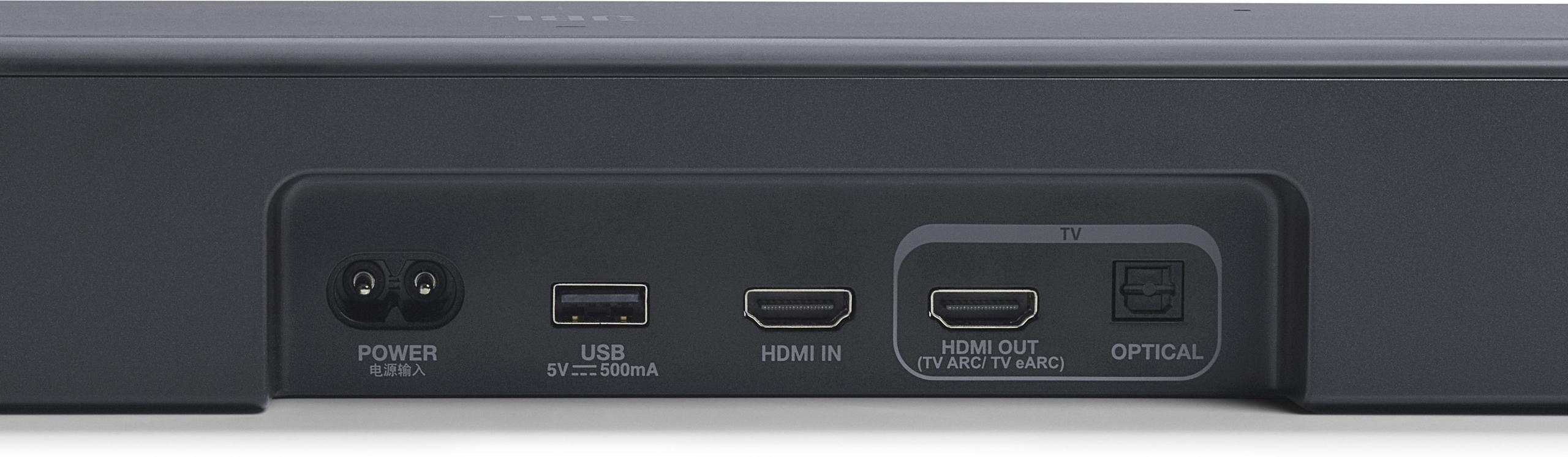
The JBL Bar 300 MK2 is clearly the better choice for a proper home theater experience. Dolby Atmos support means it can properly decode and render the spatial audio tracks that are becoming standard on 4K Blu-rays and streaming services like Netflix and Disney+. The HDMI eARC connection ensures you're getting full-quality audio from your TV or media player, and it can pass through 4K video with HDR10 and Dolby Vision support.
For gaming, the JBL also has advantages. Many newer games include Dolby Atmos soundtracks, and the virtual surround processing can enhance the spatial awareness that's crucial in competitive gaming. The lower input lag through HDMI eARC also means audio stays synchronized with fast-paced action.
The Yamaha SR-C30A can certainly improve your home theater experience over TV speakers, but it's more of a fundamental upgrade than a premium experience. You'll get clearer dialogue and much better bass response, but you'll miss out on the immersive surround effects that modern content is designed around.
At current pricing, both systems offer compelling value, but for different reasons.
The Yamaha SR-C30A at $180.45 represents exceptional value for what it delivers. You're getting authentic bass response from a dedicated subwoofer, clear dialogue enhancement, and simple setup that just works. For someone looking to make their TV sound significantly better without breaking the bank or dealing with complexity, it's hard to beat.
The JBL Bar 300 MK2 at $449.95 is asking for significantly more money, but it's also delivering premium features that weren't available at any price just a few years ago. Dolby Atmos processing, smart streaming integration, and sophisticated room-filling technology represent genuine value for users who want a more complete entertainment upgrade.
The question isn't really which offers better value – it's which type of value matches your needs and priorities.
Choose the Yamaha SR-C30A if:
Choose the JBL Bar 300 MK2 if:
Both of these soundbars succeed at their intended purposes, but they're solving different problems for different users. The Yamaha SR-C30A is the smart choice for anyone who wants to dramatically improve their TV's sound quality without spending a fortune or dealing with complexity. It delivers authentic bass response and clear dialogue in a simple, reliable package.
The JBL Bar 300 MK2 is the investment choice for users who want to transform their viewing experience with cutting-edge audio technology. It's future-ready, feature-rich, and capable of delivering the kind of immersive experience that makes you want to rewatch your favorite movies just to hear them in a new way.
Your room size, content preferences, and technology comfort level should guide your decision more than price alone. Both represent solid value in their respective categories – you just need to decide which category fits your life better.
| JBL Bar 300 MK2 Soundbar | Yamaha SR-C30A Soundbar with Subwoofer |
|---|---|
| Price - Current market value for budget planning | |
| $449.95 (premium positioning) | $180.45 (exceptional value, down from $249) |
| Audio Configuration - Determines bass response and expandability | |
| 5.0-channel all-in-one (no separate subwoofer) | 2.1-channel with dedicated wireless subwoofer |
| Total Power Output - Affects volume levels and room-filling capability | |
| 260W (suitable for medium to large rooms) | 90W (ideal for small to medium rooms) |
| Dolby Atmos Support - Essential for immersive movie experiences | |
| Yes, virtual Dolby Atmos with height simulation | No, limited to stereo with basic surround processing |
| Smart Features - Streaming convenience and future updates | |
| Wi-Fi, AirPlay 2, Chromecast, Alexa integration, JBL One app | Bluetooth 5.0 only, basic Sound Bar Remote app |
| Bass Response - Critical for action movies and music impact | |
| Virtual bass enhancement with built-in ports | Physical 5.1" subwoofer with authentic low-end impact |
| Room Optimization Technology - Adapts sound to your space | |
| MultiBeam 3.0 for wide soundstage and wall reflection | Standard stereo dispersion with manual subwoofer placement |
| Connectivity Options - Determines device compatibility | |
| HDMI eARC, optical, USB, Wi-Fi, Bluetooth | HDMI ARC, 2x optical, analog input, Bluetooth |
| Setup Complexity - Time and effort required for installation | |
| Moderate (Wi-Fi setup, app configuration required) | Minimal (plug-and-play with automatic subwoofer pairing) |
| Dialogue Enhancement - Crucial for clear speech in movies/TV | |
| PureVoice 2.0 with AI-powered real-time processing | Clear Voice mode with preset frequency boosting |
| Dimensions - Space requirements for your entertainment center | |
| 32.3" x 2.2" x 4.1" (single compact unit) | 23.6" x 2.6" x 3.8" bar + separate 13.3" x 6.3" x 14.4" subwoofer |
| Best Use Case - Who should choose this option | |
| Medium/large rooms, premium content, smart home users | Small/medium rooms, budget-conscious, simplicity seekers |
The Yamaha SR-C30A at $180.45 offers exceptional value for basic TV audio improvement, especially with its dedicated subwoofer providing authentic bass response. The JBL Bar 300 MK2 at $449.95 costs significantly more but delivers premium features like Dolby Atmos and smart streaming that justify the higher price for users wanting a complete entertainment upgrade.
The Yamaha SR-C30A has superior bass response thanks to its dedicated 5.1-inch wireless subwoofer that can physically move air and create chest-thumping impact. The JBL Bar 300 MK2 uses virtual bass enhancement and built-in ports, which sound decent but cannot match the authentic low-end power of a physical subwoofer.
The Yamaha SR-C30A is ideal for small rooms under 150 square feet, where its 90W output is sufficient and the subwoofer's impact is more noticeable in confined spaces. The JBL Bar 300 MK2 may be overkill for very small rooms, though its compact single-unit design takes up less visual space.
Only the JBL Bar 300 MK2 supports Dolby Atmos, using virtual processing and MultiBeam technology to create immersive surround effects with height simulation. The Yamaha SR-C30A does not support Dolby Atmos, limiting it to stereo sound with basic Dolby Pro Logic II surround processing.
The JBL Bar 300 MK2 is the clear winner for smart features, offering built-in Wi-Fi, AirPlay 2, Chromecast, Alexa integration, and access to 300+ streaming services through the JBL One app. The Yamaha SR-C30A only offers basic Bluetooth 5.0 connectivity with no Wi-Fi or smart home integration.
Both soundbars enhance dialogue effectively. The JBL Bar 300 MK2 uses advanced PureVoice 2.0 technology with AI-powered real-time processing to isolate and boost speech frequencies. The Yamaha SR-C30A uses a simpler Clear Voice mode that applies preset EQ adjustments to emphasize dialogue frequencies.
The Yamaha SR-C30A is much easier to set up with plug-and-play simplicity - just connect via HDMI ARC and the subwoofer pairs automatically. The JBL Bar 300 MK2 requires Wi-Fi network setup, app configuration, and more initial tweaking, though this complexity enables its advanced features.
The JBL Bar 300 MK2 outputs 260W total power, making it better suited for medium to large rooms. The Yamaha SR-C30A produces 90W total (50W subwoofer, 40W soundbar), which is adequate for smaller spaces but may struggle in larger rooms at higher volumes.
The Yamaha SR-C30A often sounds more natural for music, especially bass-heavy genres, thanks to its dedicated subwoofer and simpler signal processing. The JBL Bar 300 MK2 offers wider soundstage and convenient streaming features but may sound more processed with certain music types.
The JBL Bar 300 MK2 is better suited for home theater use with Dolby Atmos support, HDMI eARC connectivity, and immersive surround effects that enhance movie watching. The Yamaha SR-C30A improves TV sound significantly but lacks the spatial audio features that modern home theater content is designed around.
The JBL Bar 300 MK2 is a single unit measuring 32.3" x 2.2" x 4.1", offering a clean aesthetic with no separate components. The Yamaha SR-C30A has a smaller 23.6" soundbar but requires placement of a separate 13.3" x 6.3" x 14.4" subwoofer, which some may find less convenient.
Choose the Yamaha SR-C30A if you want excellent value, authentic bass response, simple setup, and have a smaller room. Choose the JBL Bar 300 MK2 if you want premium features like Dolby Atmos, smart streaming capabilities, and have a medium to large room where its advanced audio processing can shine.
We've done our best to create useful and informative comparisons to help you decide what product to buy. Our research uses advanced automated methods to create this comparison and perfection is not possible - please contact us for corrections or questions. These are the sites we've researched in the creation of this article: homecinemachoice.com - retailspecs.com - hometechnologyreview.com - whathifi.com - news.jbl.com - engadget.com - crutchfield.com - harmanaudio.com - techradar.com - bestbuy.com - jbl.com - sweech.co.ke - jbl.com - jbl.com.sg - mm.jbl.com - abcwarehouse.com - harmanaudio.com - sweetwater.com - ro.harmanaudio.com - dell.com - jbl.co.nz - techradar.com - usa.yamaha.com - expertreviews.com - usa.yamaha.com - trustedreviews.com - crutchfield.com - europe.yamaha.com - usa.yamaha.com - shop.usa.yamaha.com - assetserver.net

Privacy Policy
Terms and Conditions - Affiliate Policy
Home Security
© Copyright 2008-2026.
11816 Inwood Rd #1211, Dallas, TX 75244