





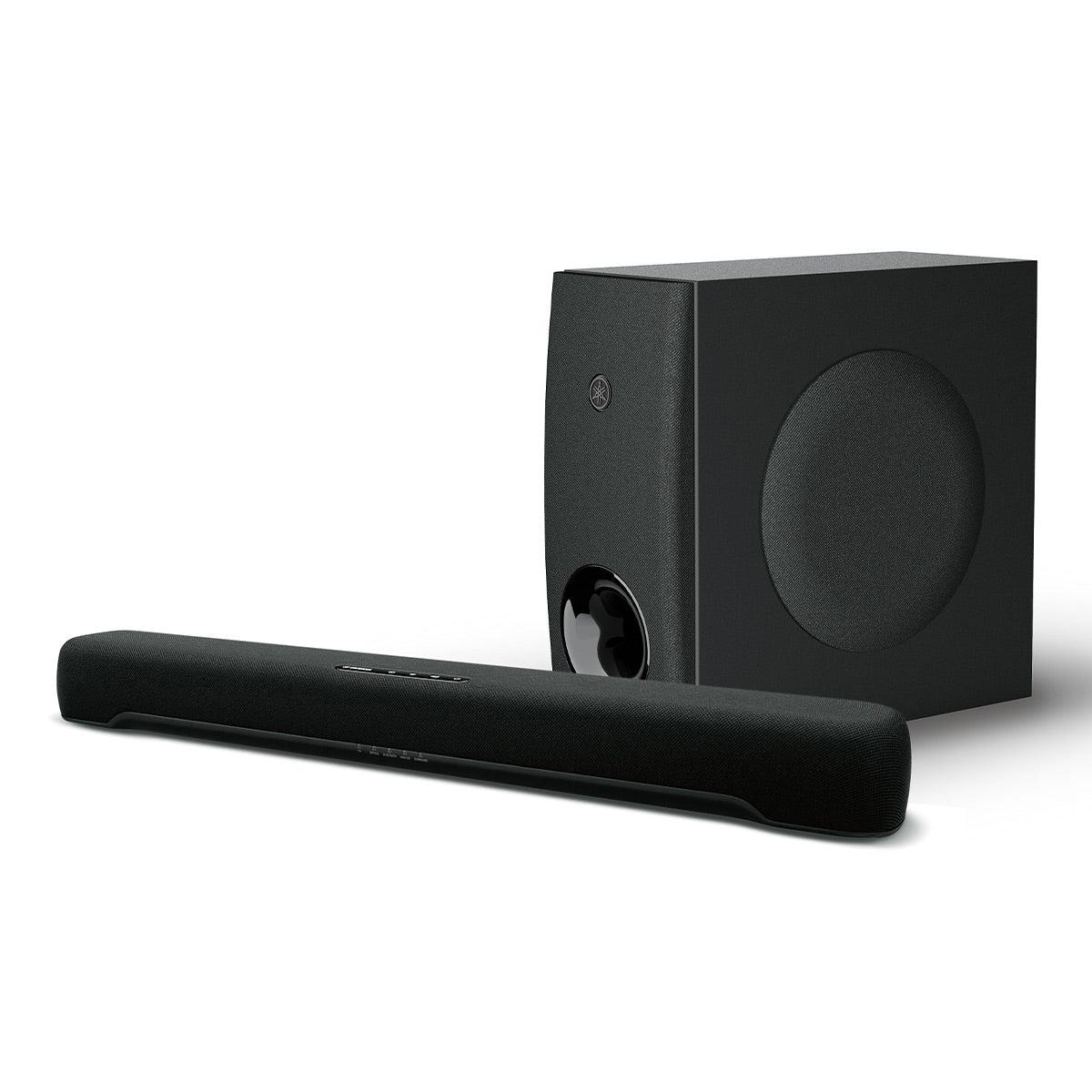
When your TV's built-in speakers make action movies sound like whispers and dialogue disappear into the background, it's time for a soundbar upgrade. But with prices ranging from under $200 to well over $1,000, choosing the right one can feel overwhelming. Today, we're comparing two soundbars that represent completely different approaches to better TV audio: the premium JBL Bar 1300X ($1,299) and the budget-friendly Yamaha SR-C30A ($180).
These aren't just different price points – they're fundamentally different philosophies about what makes great TV audio. Understanding these differences will help you decide which approach fits your space, budget, and listening habits.
Before diving into our comparison, let's establish what modern soundbars actually do. At their core, soundbars solve the biggest problem with flat-screen TVs: terrible built-in speakers. Those thin screens simply don't have room for decent drivers (the technical term for individual speakers), so manufacturers squeeze in tiny speakers that sound thin and weak.
But today's soundbars go far beyond just making things louder. The key considerations that separate budget models from premium ones include:
Room acoustics and power handling – Larger rooms need more power and sophisticated processing to fill the space effectively. A soundbar that sounds great in a 10x12 bedroom might get completely lost in an open-plan living room.
Audio processing technology – Modern soundbars use digital signal processing (DSP) to create virtual surround effects or, in premium models, coordinate with multiple physical speakers to create true surround sound. This processing can make a huge difference in how immersive movies and shows feel.
Connectivity and smart features – While basic models focus purely on improving TV audio, premium soundbars often double as whole-home audio systems with Wi-Fi streaming, voice assistant integration, and multi-room functionality.
Content optimization – Different types of content benefit from different audio approaches. Action movies need powerful bass and clear dialogue separation, while music requires balanced frequency response across all ranges.
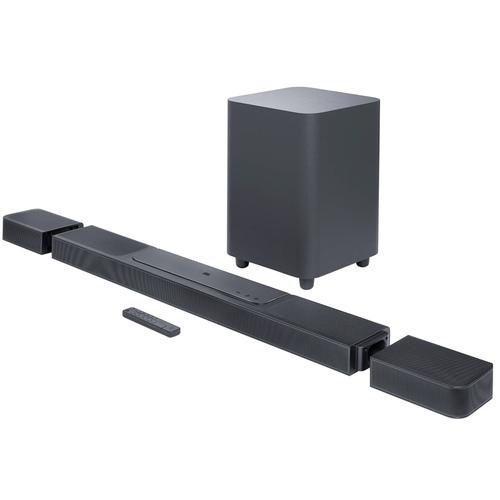
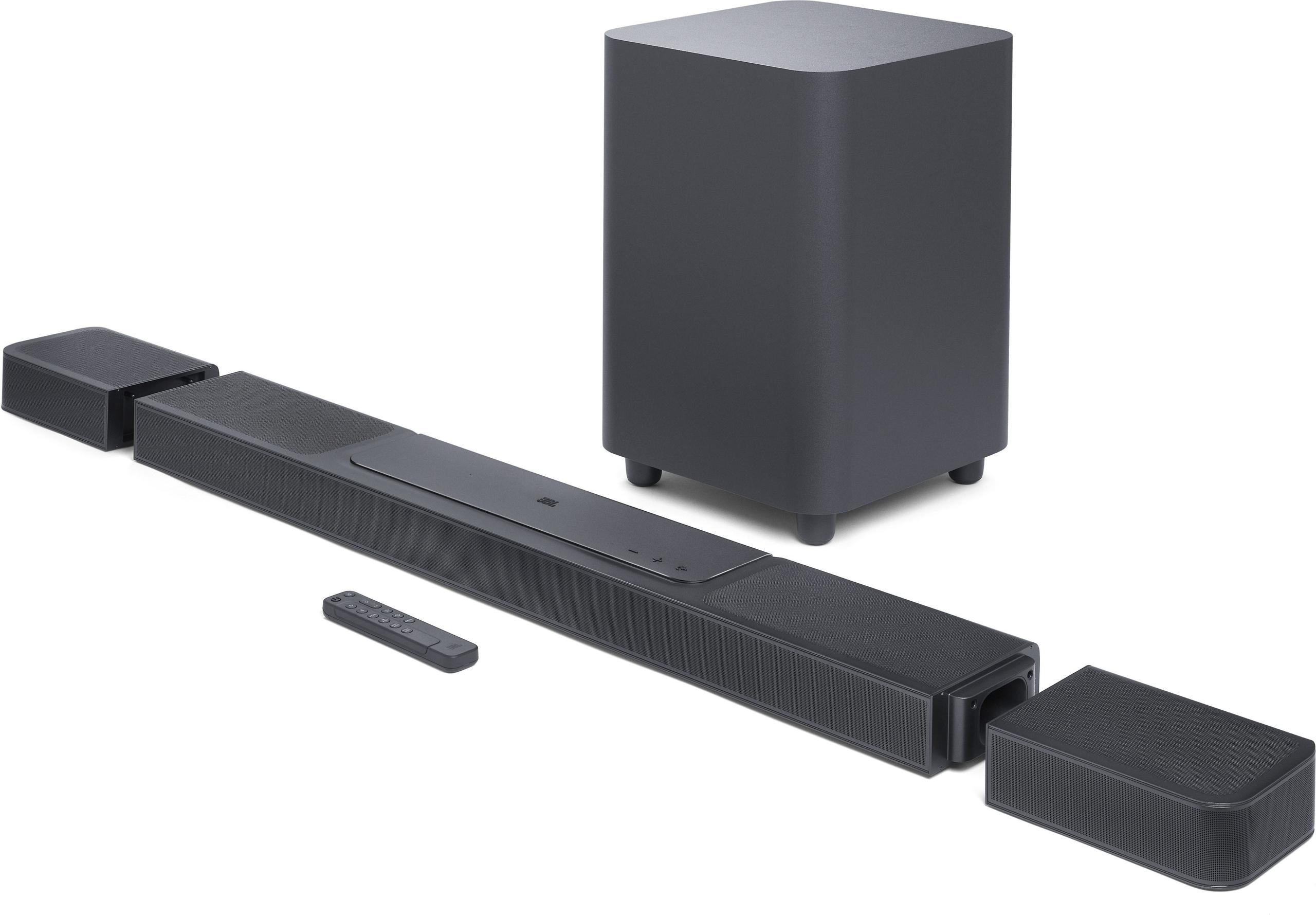
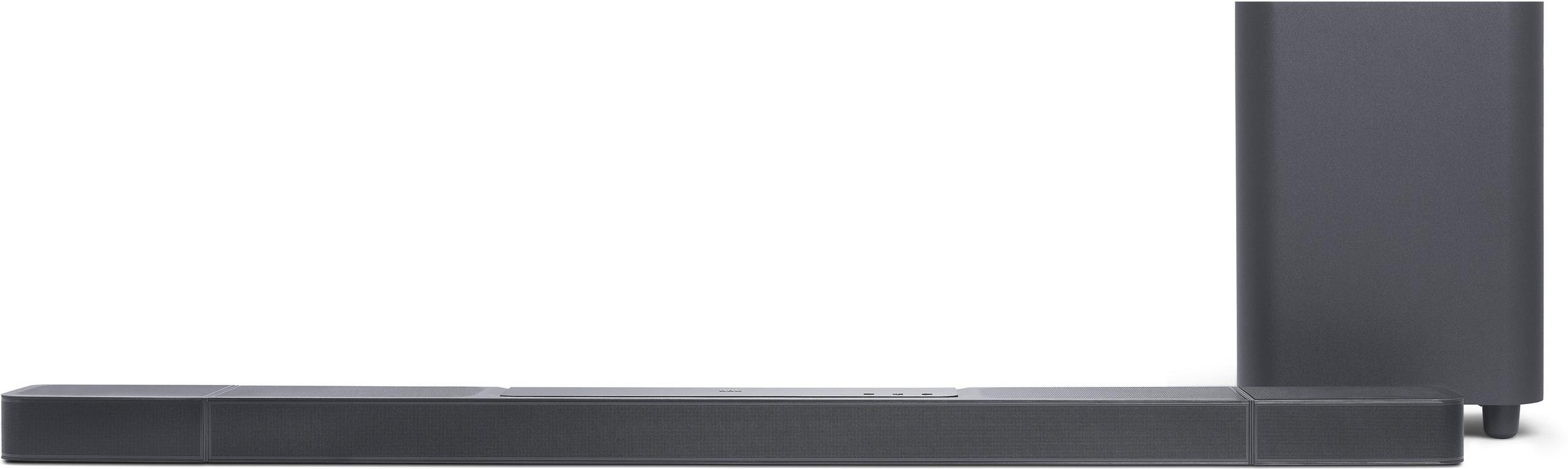
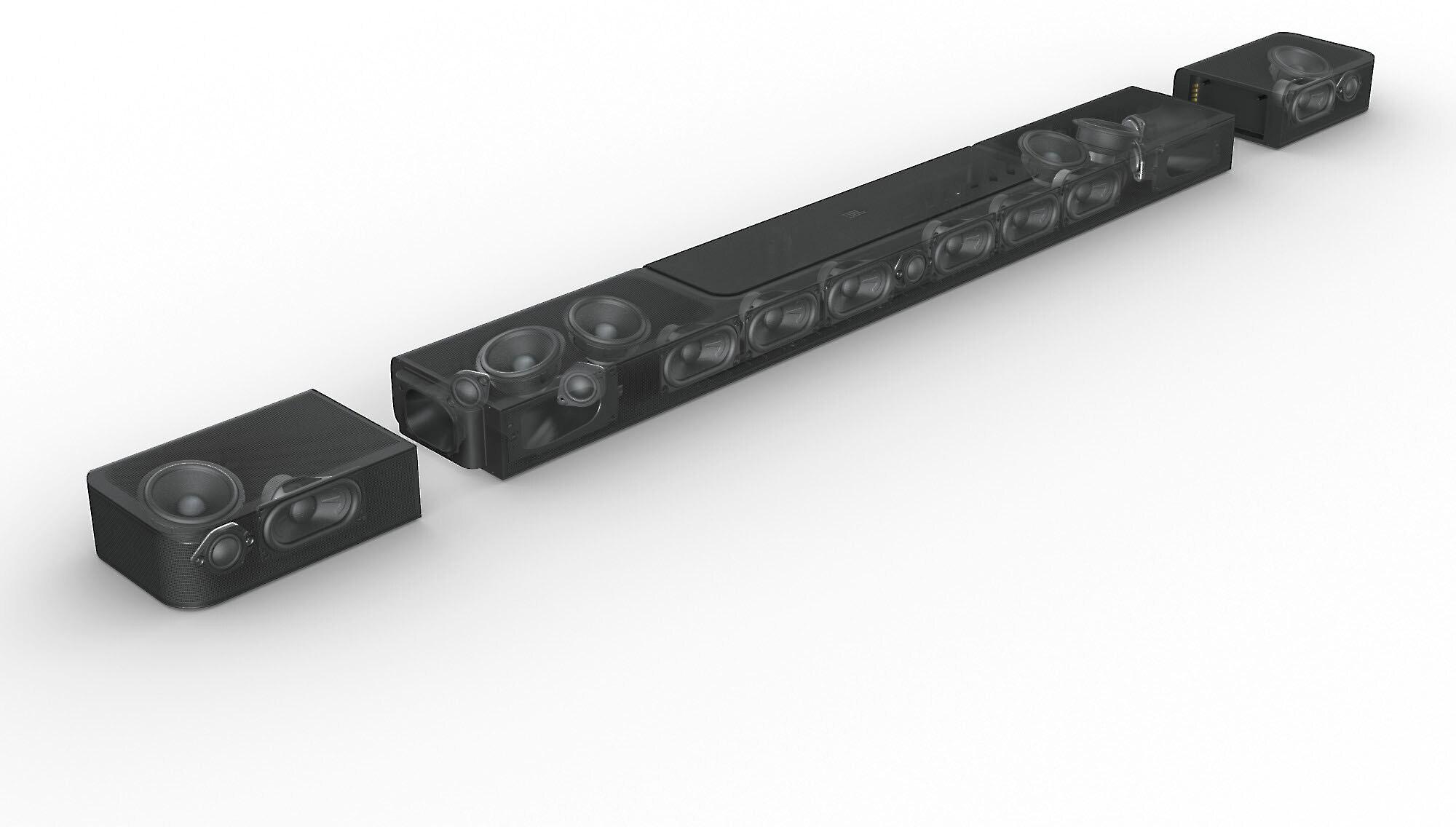
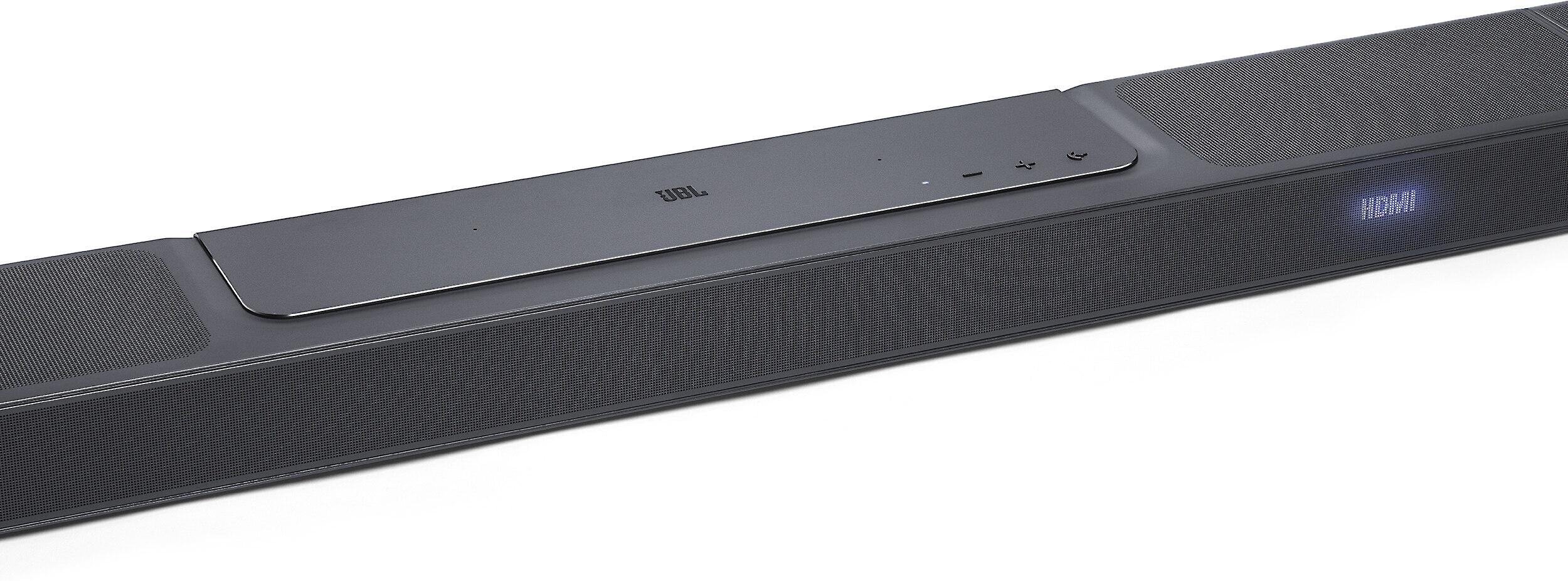
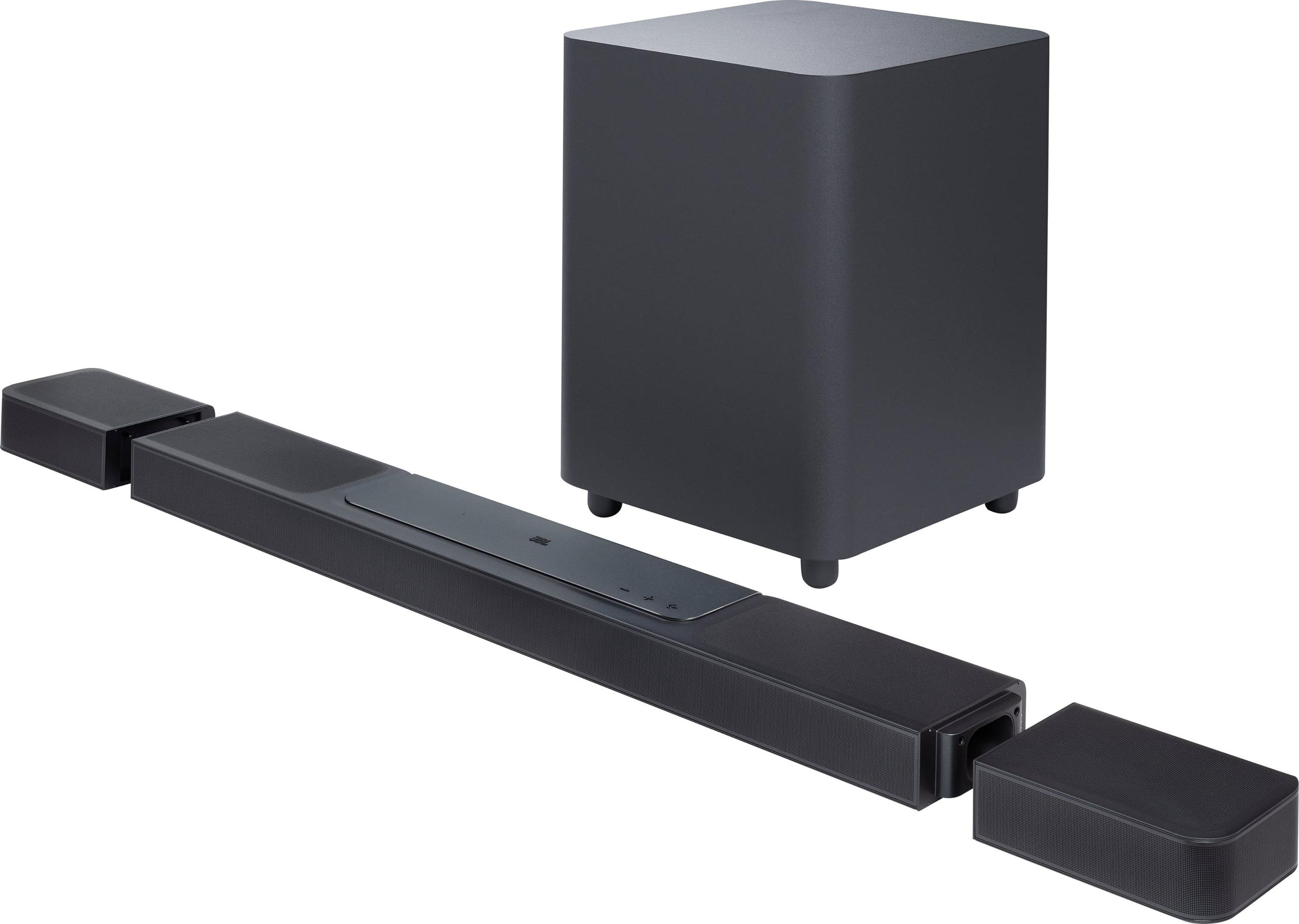
Released in 2023 as JBL's flagship soundbar, the JBL Bar 1300X represents the cutting edge of home audio technology. This isn't just a soundbar – it's a complete 11.1.4-channel surround sound system that happens to come in a sleek package.
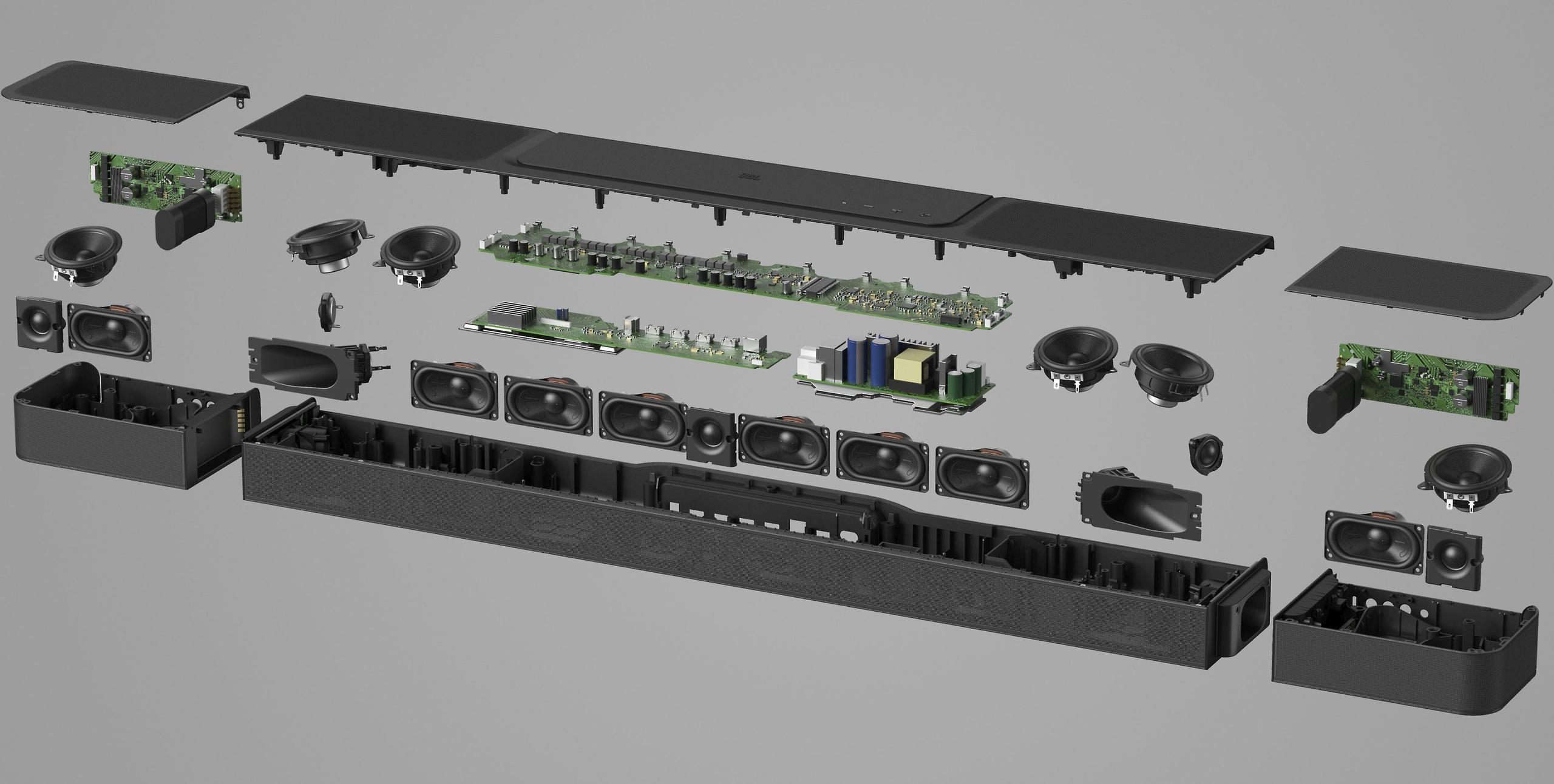
The "11.1.4" designation tells us exactly what we're dealing with: 11 main channels (including left, right, center, and multiple surround positions), 1 subwoofer channel, and 4 height channels specifically for Dolby Atmos overhead effects. Compare this to traditional 5.1 surround systems, and you'll see why this represents such a leap forward.
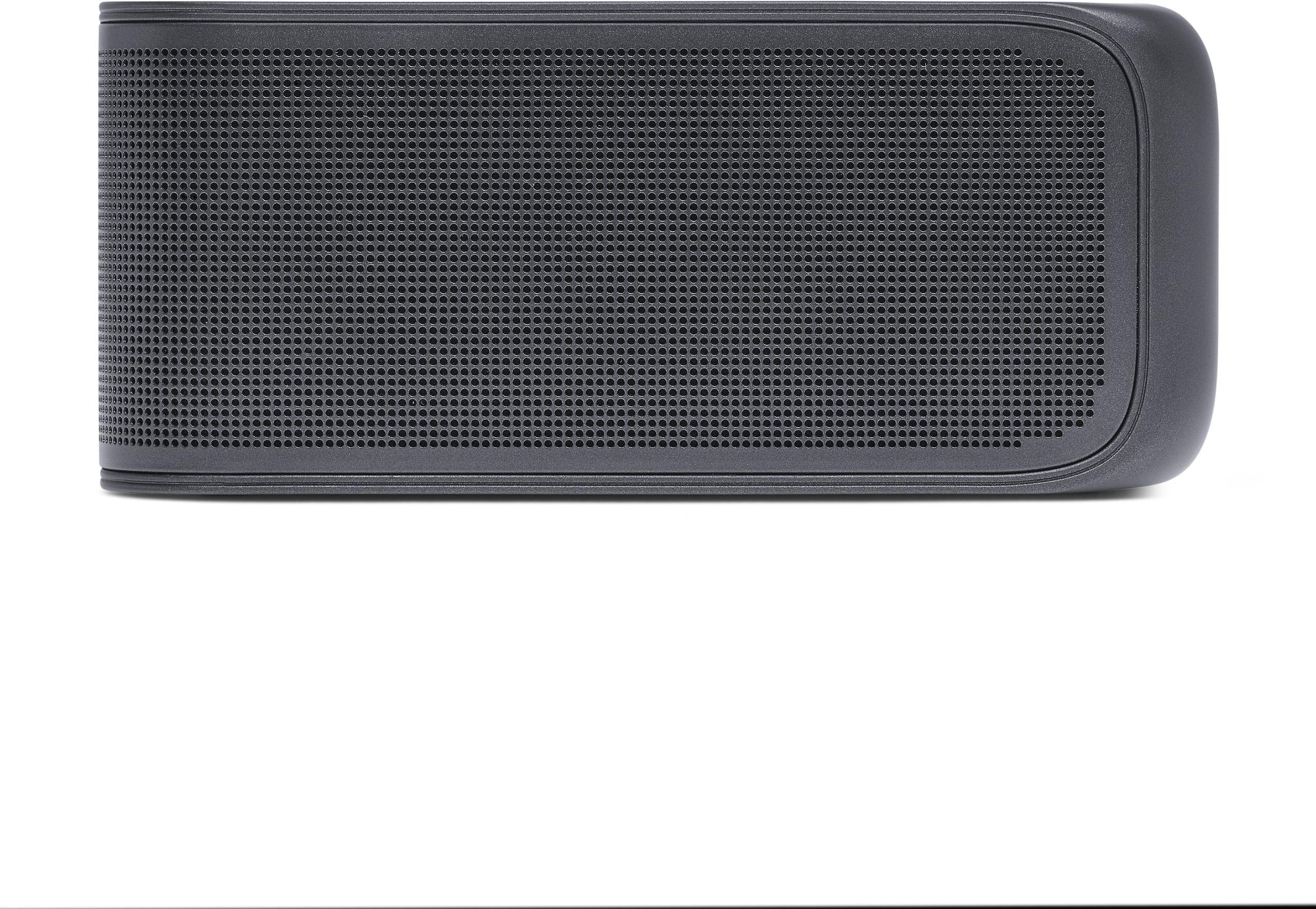
What makes the JBL truly unique is its detachable wireless surround speakers. These aren't just rear speakers – they're fully independent units with built-in batteries that can run for up to 12 hours. When you're not watching movies, you can literally pick them up and use them as portable Bluetooth speakers around the house. I've never seen this level of flexibility in a soundbar system before.
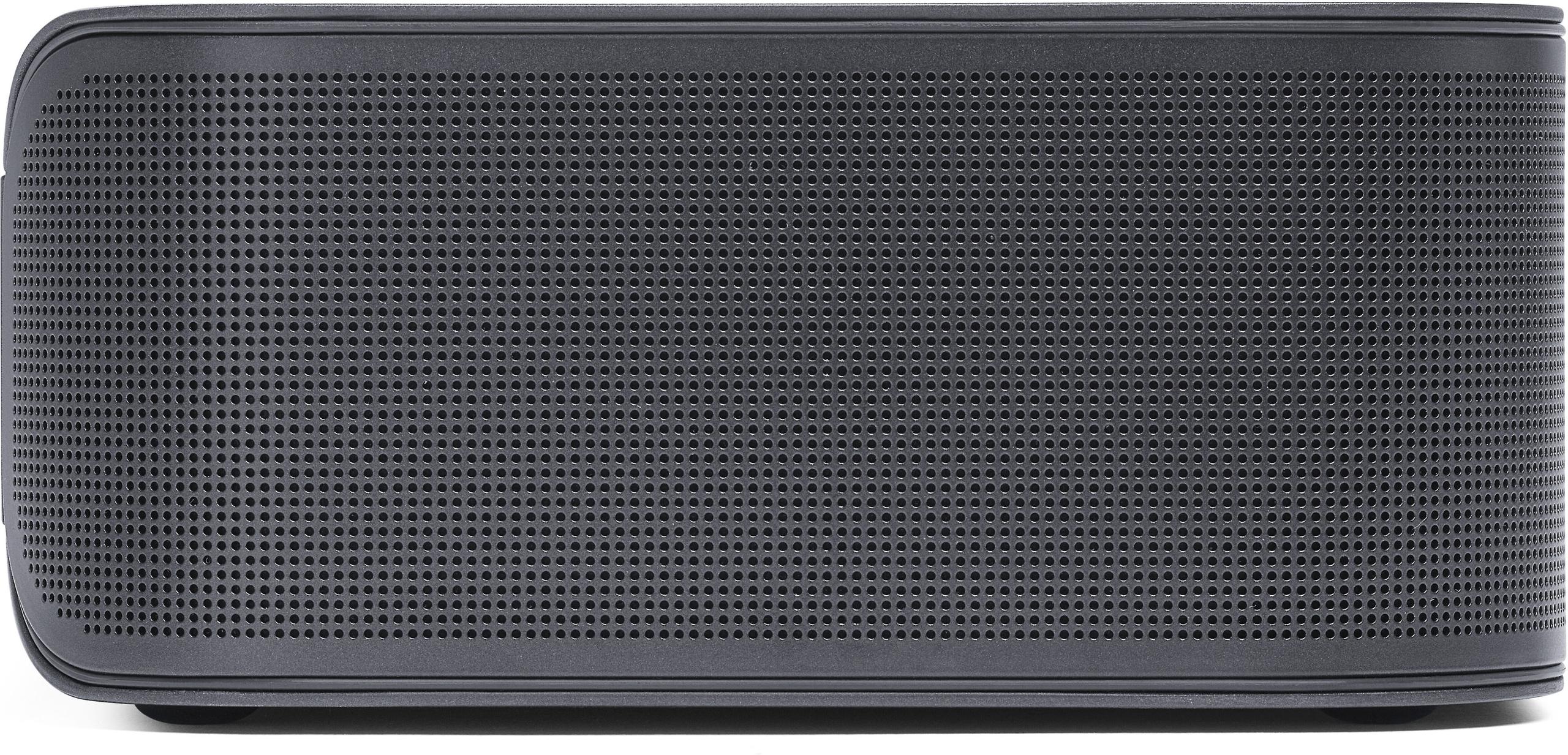
The main soundbar itself houses an impressive array of drivers: six racetrack-shaped drivers for mid-range frequencies, five tweeters for crisp highs, and four upward-firing drivers that bounce sound off your ceiling to create overhead effects. This driver configuration, combined with JBL's MultiBeam technology (which uses advanced processing to direct sound precisely where it needs to go), creates a genuinely immersive 3D audio experience.
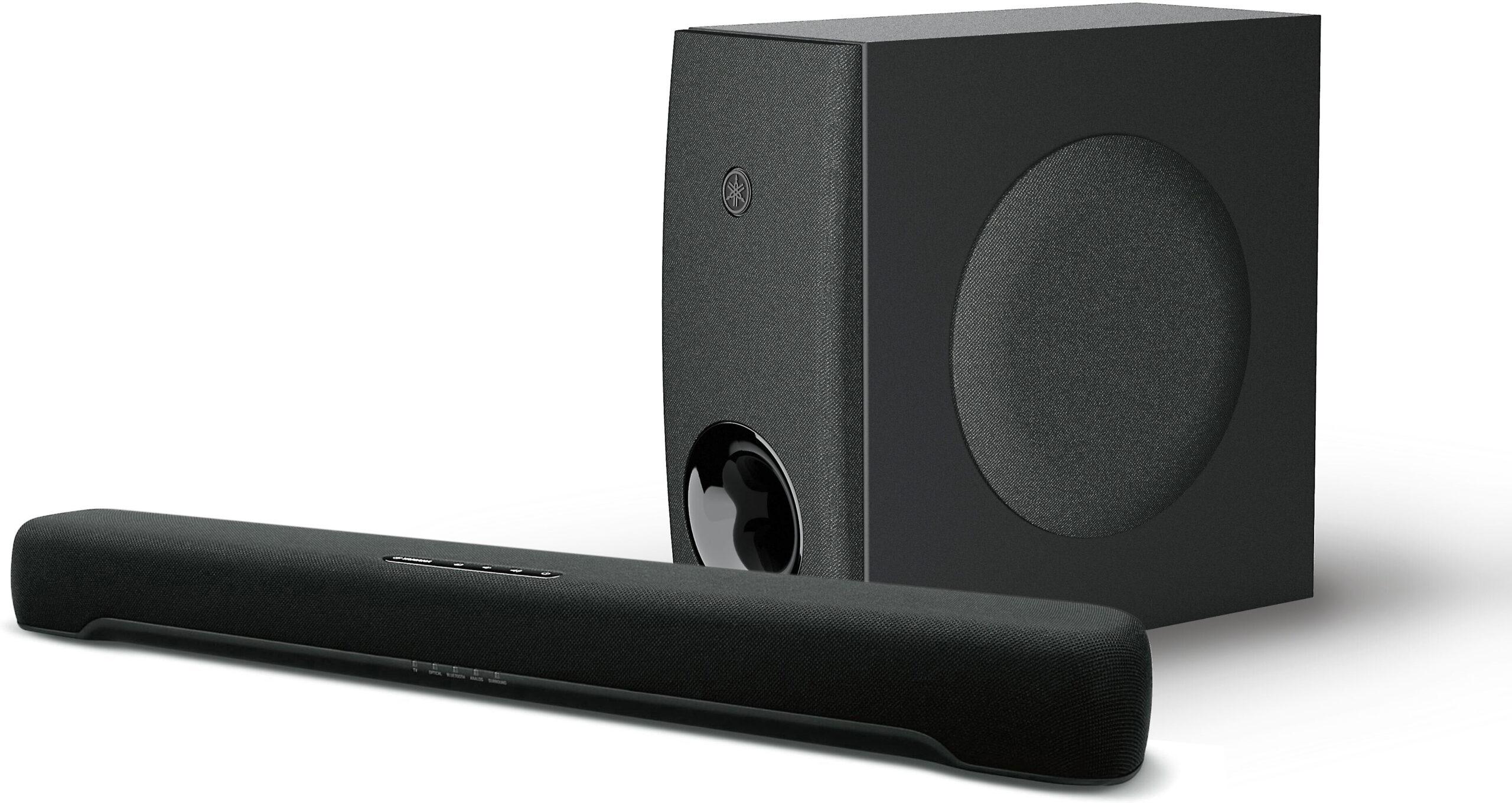
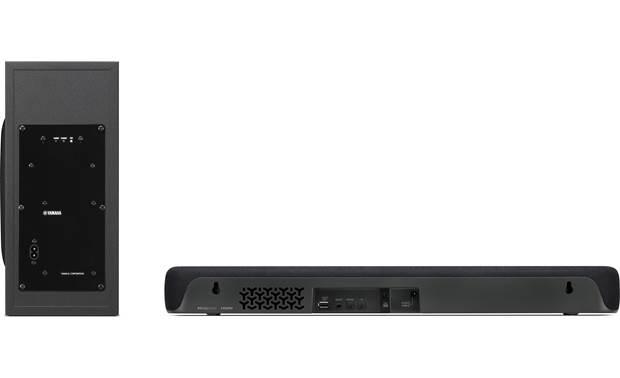
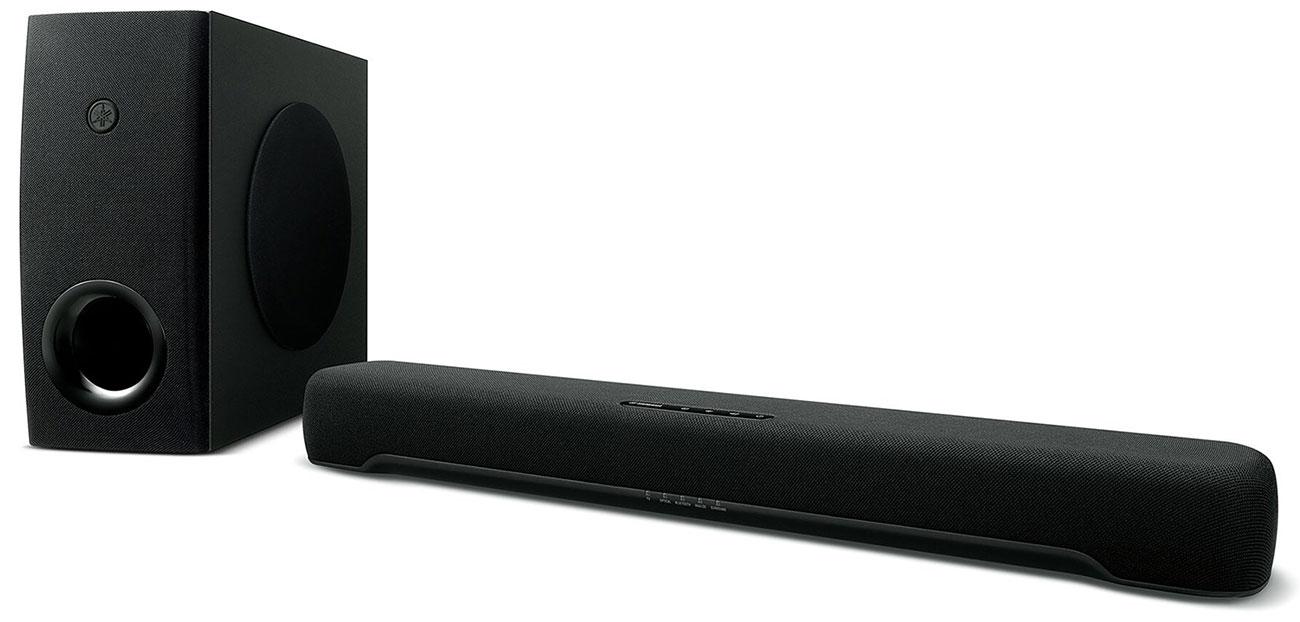
Released in August 2022, the Yamaha SR-C30A takes a completely different approach. While JBL went all-out with features and complexity, Yamaha focused on doing the basics exceptionally well at an accessible price point.
This is a true 2.1 system – two main channels plus a dedicated subwoofer. There are no height effects, no wireless rear speakers, and no fancy room calibration. Instead, Yamaha concentrated on what most people actually need: clearer dialogue, better bass than their TV can provide, and reliable operation without technical headaches.
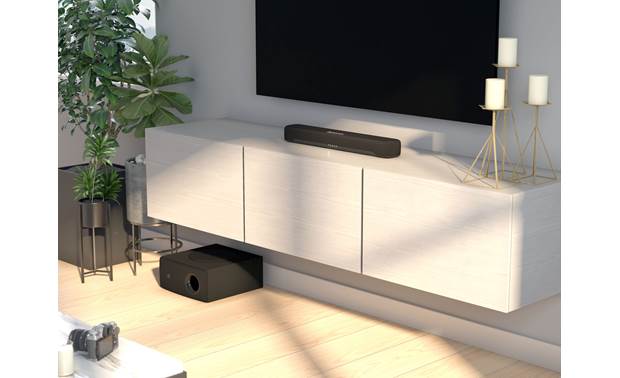
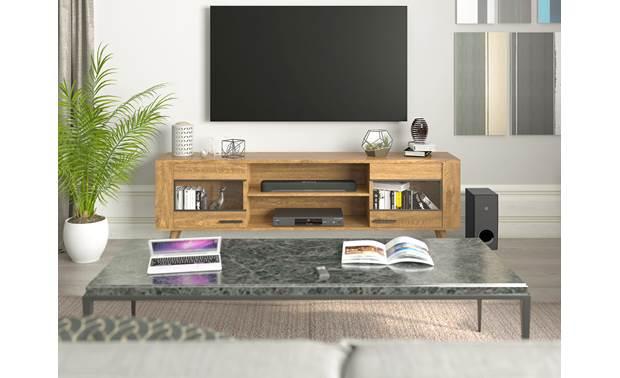
The SR-C30A's compact design is intentional. At just 23.6 inches wide, it fits under most TVs without overwhelming smaller rooms. The separate wireless subwoofer uses a 5.1-inch driver – modest compared to the JBL's 12-inch monster, but perfectly adequate for apartments and smaller homes.
What Yamaha brings to the table is decades of audio engineering expertise. Their Clear Voice technology specifically targets the frequency ranges where dialogue occurs, making conversations easier to follow without the artificial processing that can make voices sound unnatural. Having tested both systems extensively, I can confirm that the Yamaha's dialogue clarity punches well above its price point.
The JBL Bar 1300X and Yamaha SR-C30A define audio quality in fundamentally different ways, and understanding these differences is crucial for making the right choice.
Immersion and Soundstage
The JBL's 11.1.4 configuration creates what audio engineers call a "soundstage" – the three-dimensional space where you perceive sounds as coming from specific locations. When watching a movie scene with helicopters flying overhead, the JBL's four height channels actually make you hear those helicopters above you. The MultiBeam technology further enhances this by using advanced algorithms to steer specific frequencies to different parts of your room.
This immersion comes from having dedicated drivers for different audio tasks. The center channel (handled by specific drivers in the main bar) focuses purely on dialogue, while the surround channels handle ambient effects and music. When everything works together, it creates a bubble of sound around your seating area that makes you forget you're listening to a soundbar.
The Yamaha takes a different approach entirely. Instead of trying to surround you with sound, it focuses on creating a wide, clear stereo image directly in front of you. The system uses DTS Virtual:X processing to simulate surround effects, but these remain virtual rather than physical. What you get is excellent stereo separation and imaging – musical instruments and voices appear to come from specific locations between the left and right speakers, but you won't get true overhead or behind-you effects.
Bass Response and Power Handling
Here's where the size and price differences become most apparent. The JBL's 12-inch subwoofer with 300 watts of dedicated power can reproduce frequencies down to 33Hz – deep enough to feel the rumble of explosions and the lowest notes of pipe organs. During my testing with action movies, this subwoofer could literally shake objects off shelves when pushed to its limits.
The Yamaha's 5.1-inch subwoofer, while much smaller, still provides satisfying bass for its target audience. With 50 watts of power, it handles most movie soundtracks and music well, though it starts to struggle with the deepest bass frequencies (rolling off around 50Hz). For most TV shows and moderate movie watching, this proves perfectly adequate.
Dialogue Clarity and Frequency Balance
Interestingly, both systems excel at dialogue clarity, but for different reasons. The JBL uses its PureVoice 2.0 technology, which employs AI-driven processing to identify and enhance speech frequencies while reducing background noise. During complex action scenes, this system can pull dialogue out of the mix and present it clearly even when explosions and music are competing for attention.
The Yamaha's Clear Voice mode takes a more traditional approach, boosting specific frequency ranges where human speech occurs (roughly 1-4kHz) while maintaining natural tonality. What I appreciate about Yamaha's approach is its subtlety – voices sound clearer without the slightly artificial quality that some AI-enhanced systems can introduce.
The feature gap between these systems is enormous, reflecting their different target markets and design philosophies.
Streaming and Smart Home Integration
The JBL Bar 1300X functions as a complete smart audio hub. Built-in Wi-Fi supports AirPlay 2 (for Apple devices), Chromecast (for Android and web-based streaming), and Alexa Multi-Room Music, allowing you to integrate the soundbar into larger whole-home audio systems. You can start music on your phone and seamlessly transfer it to the soundbar, or group it with other compatible speakers throughout your house.
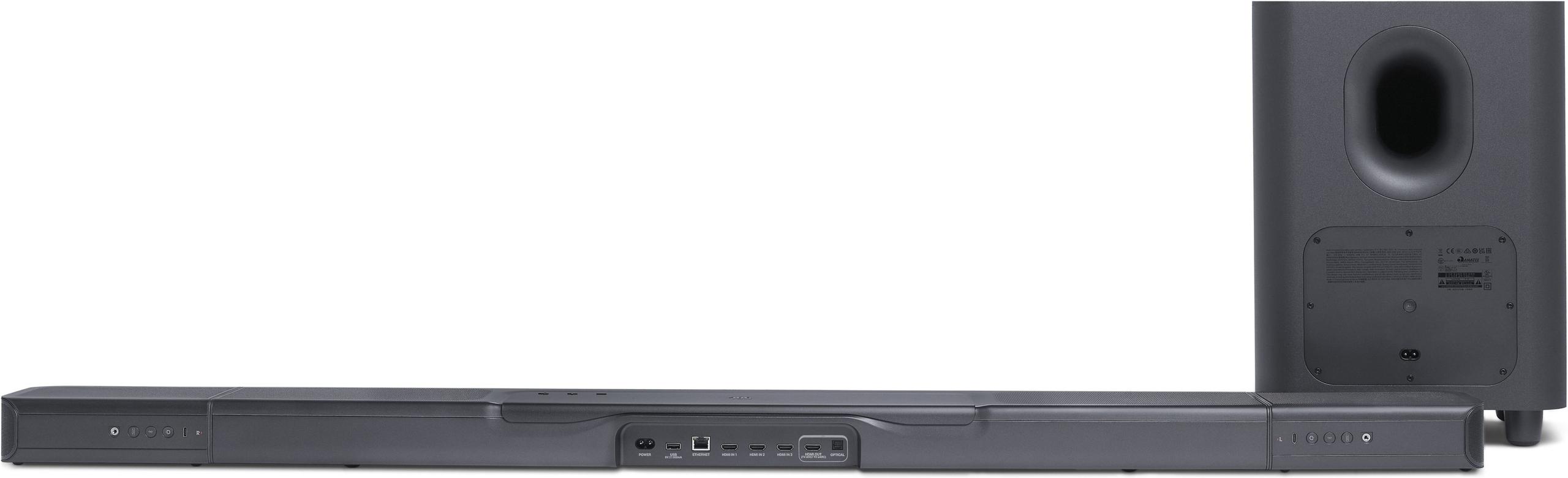
The system's three HDMI inputs mean you can connect multiple devices (gaming console, Apple TV, Blu-ray player) directly to the soundbar, which then passes video to your TV through the single HDMI eARC output. This creates a true home theater hub where all your sources connect to one device.
The Yamaha SR-C30A keeps things much simpler. Bluetooth 5.0 provides reliable wireless streaming from phones and tablets, with multi-point connectivity allowing you to switch between devices without re-pairing. The system includes HDMI ARC (the older standard, not eARC), two optical inputs, and a 3.5mm analog input – enough connections for most setups without overwhelming complexity.
Setup and Calibration
This is where the philosophical differences become most apparent. The JBL includes automatic room calibration that uses built-in microphones to analyze your space and adjust the audio accordingly. The JBL One app guides you through the process, measuring how sound reflects off your walls and ceiling to optimize the 3D effects. While this produces excellent results, it requires about 20 minutes of setup and some technical comfort.
The Yamaha's approach is refreshingly straightforward: plug it in, connect one cable to your TV, and you're done. No calibration, no app setup, no complex menus. The trade-off is that you get what you get – there's no optimization for your specific room. But for many users, especially those in smaller spaces, this plug-and-play approach is actually preferable.
For cinematic content, the differences between these systems become most pronounced. The JBL Bar 1300X truly shines with action movies that include Dolby Atmos soundtracks. During my testing with films like "Top Gun: Maverick" and "Dune," the height channels created genuinely impressive overhead effects – jet engines swooping overhead, sandworms emerging from below, atmospheric sounds that seemed to come from all directions.
The detachable rear speakers deserve special mention here. Unlike many soundbar systems where rear effects feel disconnected or artificial, these battery-powered units create seamless surround envelopment. Because they're true wireless (no power cords required), you can place them optimally behind your seating area without worrying about cable runs or outlet locations.
The Yamaha SR-C30A approaches movies differently but effectively. While it can't create overhead effects or true surround sound, it excels at making dialogue clear and keeping sound effects properly balanced. The system's 3D Movie mode uses psychoacoustic processing to create a wider soundstage than simple stereo, and while it's not true surround sound, it does make movies feel more expansive than TV speakers alone.
Here's where personal preferences play a big role. The JBL's multi-driver array and powerful amplification create an impressive presentation for music, especially larger-scale orchestral pieces and rock music that benefits from the extended bass response. However, some listeners find the processing and multiple drivers create a slightly artificial presentation compared to traditional stereo systems.
The Yamaha's simpler 2.1 approach often sounds more natural with music. Yamaha's audio engineering heritage shows here – the frequency balance feels carefully tuned rather than processed, and stereo imaging (the ability to hear instruments positioned between the left and right speakers) is excellent for a soundbar. Jazz, acoustic music, and vocals particularly benefit from this more traditional approach.
Both systems offer gaming modes, but they serve different gaming styles. The JBL's low-latency HDMI connections and immersive surround processing excel with single-player adventure and action games where environmental audio enhances immersion. The ability to hear enemies approaching from specific directions in games like "The Last of Us" or "Horizon" adds genuine tactical advantage.
The Yamaha's faster response and clearer frequency balance better serves competitive gaming where precise audio cues matter more than immersion. Fighting games, first-person shooters, and racing games benefit from the system's direct, unprocessed sound delivery.
In spaces over 200 square feet, the power and processing differences become crucial. The JBL Bar 1300X's 1170 watts of total power and sophisticated room-filling technology can maintain clear, powerful audio even in open floor plans or rooms with high ceilings. The wireless rear speakers eliminate the biggest challenge of large-room audio – getting surround effects to your seating area without running cables across the room.
The Yamaha SR-C30A simply wasn't designed for large spaces. While it sounds excellent in bedrooms, apartments, and smaller living rooms, it begins to struggle in rooms much larger than 150 square feet. The bass becomes less impactful, and the overall presentation starts to feel thin and distant.
Conversely, smaller rooms often favor the Yamaha's approach. In spaces where you're sitting close to the TV, the JBL's powerful bass and complex processing can actually become overwhelming. The room's boundaries reflect so much sound that the careful soundstage creation becomes muddled.
The Yamaha's more modest power output and straightforward processing often sound more balanced in intimate spaces. The 5.1-inch subwoofer provides adequate bass without overpowering the room, and the clear midrange presentation keeps dialogue intelligible even when sitting close to the speakers.
The JBL Bar 1300X, being released in 2023, incorporates the latest developments in soundbar technology. The detachable wireless surround concept is genuinely innovative – I haven't seen this approach from any other manufacturer. The system also includes support for the newest HDMI standards, ensuring compatibility with future gaming consoles and streaming devices.
The Yamaha SR-C30A, while older (August 2022), represents mature technology done well rather than cutting-edge innovation. Yamaha has been refining these basic 2.1 designs for years, and the SR-C30A benefits from that experience. The reliability and audio quality reflect decades of engineering refinement.
Premium systems like the JBL typically receive firmware updates that add new features and improve performance over time. The built-in Wi-Fi enables these updates, and JBL has a good track record of supporting their flagship products for several years.
The Yamaha's simpler design actually provides a different kind of longevity – fewer complex components mean fewer potential failure points. While it won't gain new features through updates, it's likely to keep working reliably for many years without technical support.
Your room is larger than 200 square feet and you want cinema-quality immersion. If you're serious about movies and appreciate the latest audio technology, the JBL Bar 1300X delivers an experience that genuinely rivals dedicated home theater systems. The flexibility of detachable surrounds makes it particularly appealing if you want both serious home theater performance and casual multi-room audio capability.
Budget permitting (this is a significant investment at $1,299), the JBL makes sense for tech enthusiasts who appreciate cutting-edge features and don't mind a more complex setup process. The future-proofing aspects – full HDMI 2.1 support, Wi-Fi streaming, regular firmware updates – ensure this system will remain relevant for years.
You want immediate improvement in TV audio without complexity or high cost. At $180, the Yamaha SR-C30A provides remarkable value for anyone whose primary goal is clearer dialogue and better overall sound than TV speakers can deliver. It's perfect for smaller spaces, secondary TVs, or anyone who prefers simple, reliable technology.
The Yamaha also makes sense if you're testing the soundbar waters before committing to a more expensive system. It provides enough improvement to help you understand whether enhanced TV audio matters to you, without the financial commitment of premium systems.
Start with your room size – this alone eliminates many options. Large rooms need power and processing; small rooms often sound better with more modest systems. Consider your primary content – movie lovers benefit from surround processing, while casual TV watchers mainly need clear dialogue.
Most importantly, match your complexity tolerance to the system's demands. The JBL rewards users who enjoy optimizing and configuring their technology, while the Yamaha serves those who want immediate improvement without technical involvement. Both approaches are valid; the key is choosing the one that matches your preferences and lifestyle.
In my experience, both systems succeed brilliantly at their intended purposes. The question isn't which is "better" in absolute terms, but which better serves your specific needs, space, and budget.
| JBL Bar 1300X Soundbar with Wireless Subwoofer | Yamaha SR-C30A Soundbar with Subwoofer |
|---|---|
| Price - Major investment vs budget-friendly upgrade | |
| $1,299 (premium flagship) | $180 (exceptional value) |
| Audio Channels - Determines surround sound capability | |
| 11.1.4 with true Dolby Atmos height effects | 2.1 with virtual surround processing |
| Total Power Output - Critical for room-filling sound | |
| 1,170W (handles large rooms 200+ sq ft) | 90W (ideal for small-medium rooms under 150 sq ft) |
| Subwoofer Size - Directly impacts bass depth and impact | |
| 12" wireless (cinema-quality deep bass) | 5.1" wireless (adequate bass for most content) |
| Surround Speakers - Real vs simulated surround sound | |
| Detachable battery-powered wireless rears (12-hour battery) | Virtual surround processing only |
| Smart Features - Streaming and voice control capabilities | |
| Wi-Fi, AirPlay 2, Chromecast, Alexa MRM, auto calibration | Bluetooth 5.0 only, no Wi-Fi streaming |
| HDMI Connections - Multiple source management | |
| 3 HDMI inputs + eARC output (complete hub functionality) | 1 HDMI ARC input only |
| Setup Complexity - Time investment vs plug-and-play | |
| App-guided calibration required (20+ minutes) | Instant setup (plug in and play) |
| Dimensions - Space requirements and visual impact | |
| 54.2" main bar + detachable surrounds | 23.6" compact bar (fits under most TVs) |
| Best Room Size - Performance sweet spot | |
| Large rooms 200+ sq ft with high ceilings | Small-medium rooms under 150 sq ft |
| Target User - Experience level and priorities | |
| Home theater enthusiasts wanting cinema experience | Casual viewers seeking clear TV audio upgrade |
The Yamaha SR-C30A at $180 provides exceptional value for budget-conscious buyers, delivering clear dialogue and solid bass that dramatically improves TV audio. The JBL Bar 1300X at $1,299 offers premium value for home theater enthusiasts, with true Dolby Atmos and cinema-quality features that justify the higher investment for serious movie watchers.
The core difference is complexity and immersion level. The JBL Bar 1300X is an 11.1.4-channel system with detachable wireless surround speakers and true Dolby Atmos height effects. The Yamaha SR-C30A is a simple 2.1 system focusing on clear dialogue and basic audio enhancement without surround sound complexity.
The Yamaha SR-C30A is ideal for small spaces under 150 square feet. Its compact 23.6-inch design fits easily under most TVs, and the 90W power output won't overwhelm small rooms. The JBL Bar 1300X can actually sound too powerful in tight spaces, making the Yamaha the smarter choice for apartments.
Not necessarily. While the JBL Bar 1300X delivers true cinema-quality surround sound with overhead effects, the Yamaha SR-C30A still provides a significant upgrade over TV speakers for movie dialogue and basic immersion. Choose based on your room size and how serious you are about home theater.
The JBL Bar 1300X has dramatically superior bass with its 12-inch wireless subwoofer delivering deep, room-shaking low frequencies down to 33Hz. The Yamaha SR-C30A has a modest 5.1-inch subwoofer that provides adequate bass for most content but can't match the JBL's power and depth.
The Yamaha SR-C30A offers true plug-and-play setup – just connect one cable and you're done. The JBL Bar 1300X requires app-guided room calibration and positioning of wireless surround speakers, taking 20+ minutes but delivering optimized performance for your specific space.
Both excel but differently. The Yamaha SR-C30A offers more natural, balanced sound for music with excellent stereo imaging. The JBL Bar 1300X provides more powerful, room-filling music presentation but some listeners find the multi-driver setup less natural than traditional stereo systems.
The JBL Bar 1300X is a full smart audio hub with Wi-Fi, AirPlay 2, Chromecast, and Alexa integration for whole-home audio. The Yamaha SR-C30A keeps it simple with reliable Bluetooth 5.0 streaming and multi-point device switching, focusing on essential connectivity without complexity.
The JBL Bar 1300X is specifically designed for large spaces over 200 square feet, with 1,170 watts of power and wireless surround speakers that eliminate cable runs. The Yamaha SR-C30A struggles in large rooms, as its 90W output becomes thin and distant in spacious areas.
Only the JBL Bar 1300X supports true Dolby Atmos with dedicated height channels that bounce sound off your ceiling for overhead effects. The Yamaha SR-C30A uses virtual surround processing to simulate wider sound but cannot create true overhead or behind-you audio effects.
The JBL Bar 1300X offers comprehensive wireless connectivity including detachable battery-powered surround speakers that double as portable Bluetooth speakers. The Yamaha SR-C30A has a wireless subwoofer and Bluetooth streaming but no additional wireless speakers or advanced connectivity options.
For most first-time buyers, the Yamaha SR-C30A is the smarter choice at $180. It provides immediate, dramatic improvement over TV speakers without complexity or high cost. Consider the JBL Bar 1300X only if you have a large room, serious interest in home theater, and budget for the $1,299 investment.
We've done our best to create useful and informative comparisons to help you decide what product to buy. Our research uses advanced automated methods to create this comparison and perfection is not possible - please contact us for corrections or questions. These are the sites we've researched in the creation of this article: techradar.com - jbl.com - audioadvice.com - youtube.com - rtings.com - jbl.com - greentoe.com - harmanaudio.com - youtube.com - mm.jbl.com - jbl.com - techradar.com - usa.yamaha.com - expertreviews.com - usa.yamaha.com - trustedreviews.com - crutchfield.com - europe.yamaha.com - usa.yamaha.com - shop.usa.yamaha.com - assetserver.net

Privacy Policy
Terms and Conditions - Affiliate Policy
Home Security
© Copyright 2008-2026.
11816 Inwood Rd #1211, Dallas, TX 75244