


















If you've ever struggled to hear dialogue in movies or found yourself constantly adjusting your TV volume, you're not alone. Most modern TVs, despite their impressive picture quality, have notoriously poor built-in speakers. This is where soundbars come to the rescue, offering a simple way to dramatically improve your TV audio without the complexity of a full surround sound system.
Today we're comparing two very different approaches to solving this problem: the premium Sonos Arc ($540.60) and the budget-friendly Yamaha SR-C30A ($180.45). These represent opposite ends of the soundbar spectrum, and understanding their differences will help you make the right choice for your home and budget.
Before diving into our comparison, let's talk about what makes a good soundbar. At their core, soundbars are designed to replace your TV's weak speakers with better drivers, more power, and smarter audio processing. The category has evolved significantly over the past decade, with manufacturers adding features like wireless subwoofers, voice assistants, and immersive audio technologies.
The main things to consider when shopping for a soundbar include audio performance (how good it sounds), connectivity options (how it connects to your devices), smart features (voice control, streaming services), physical design (size and placement requirements), and overall value for money. Some soundbars focus on delivering the best possible audio experience at any cost, while others prioritize affordability and simplicity.
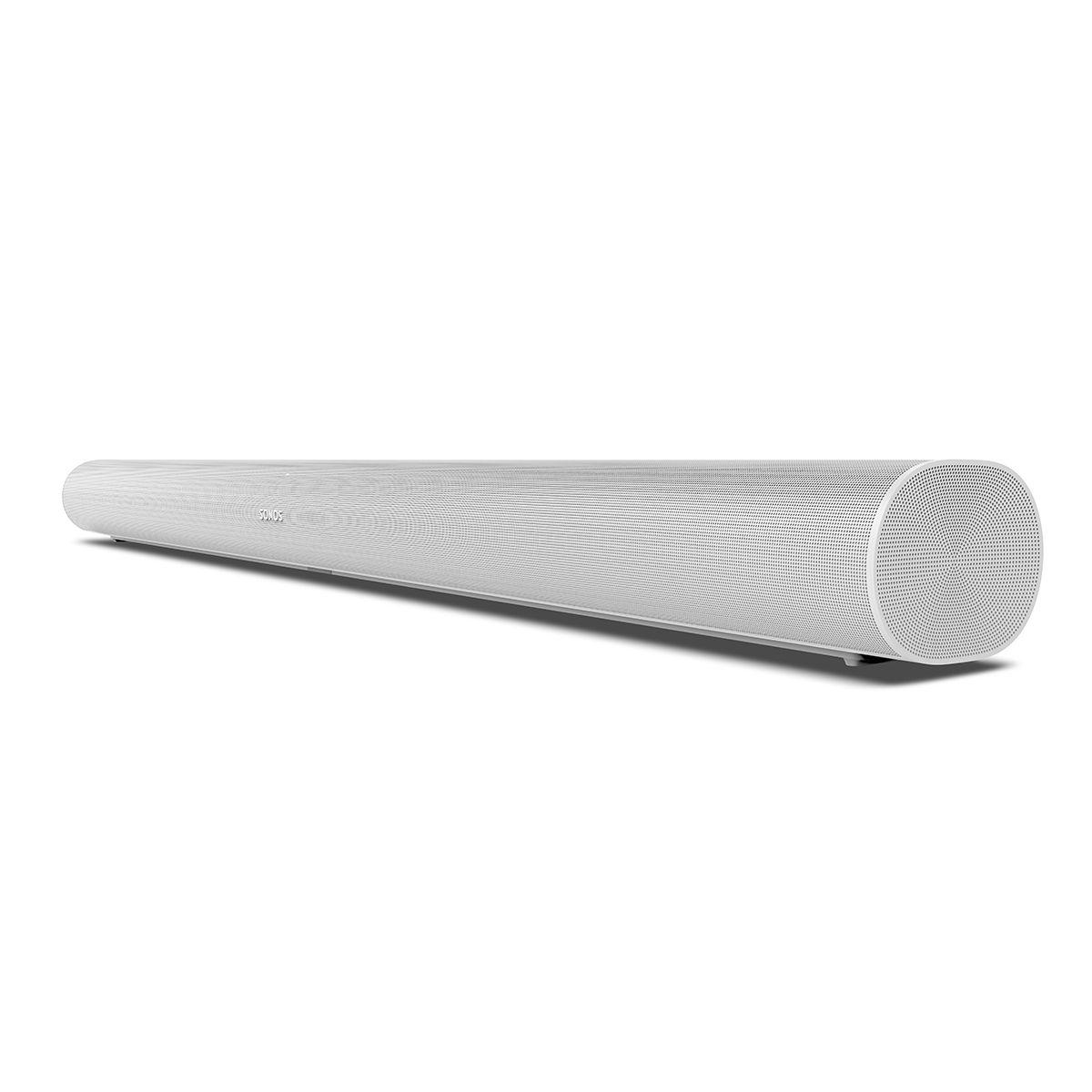
The Sonos Arc launched in May 2020 as Sonos's flagship soundbar, replacing the popular Playbar. It represented a major technological leap for the company, introducing their first Dolby Atmos-capable soundbar with upward-firing drivers. Since its release, Sonos has continued updating the Arc with new features through software updates, including enhanced voice recognition and expanded streaming service support.
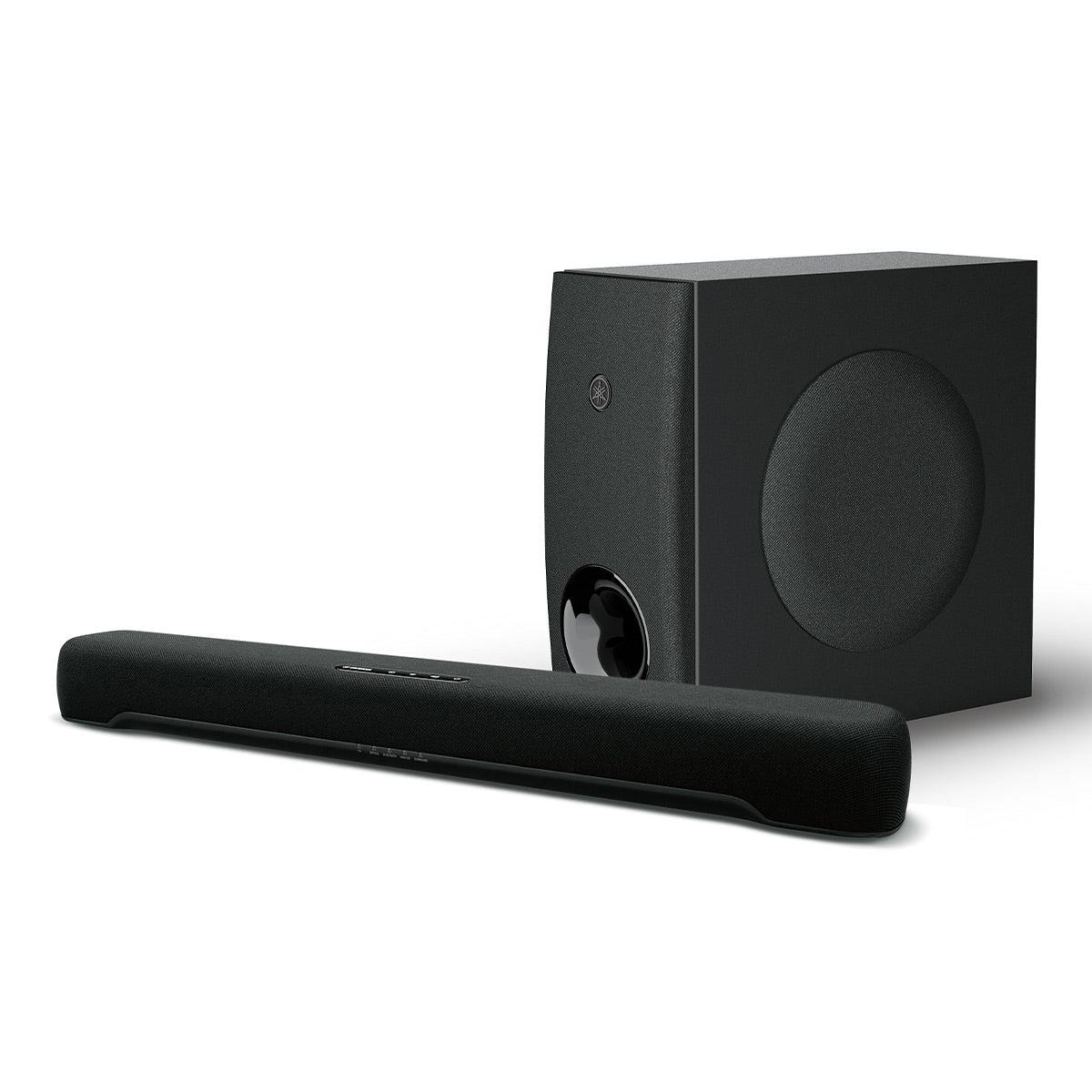
The Yamaha SR-C30A, released in August 2022, takes a completely different approach. Yamaha designed it as part of their "True Sound" series, focusing on delivering accurate, balanced audio in a compact package that works well in smaller spaces. It's significantly newer than the Arc, benefiting from more recent audio processing chips and Bluetooth connectivity improvements.
This timing difference is important because it shows how the soundbar market has evolved. When the Arc launched, premium features like Dolby Atmos were rare and expensive. By 2022, companies like Yamaha could include wireless subwoofers and advanced processing in much more affordable packages.
The Sonos Arc's biggest selling point is its Dolby Atmos implementation. Dolby Atmos is a surround sound technology that adds height information to audio, making it seem like sounds are coming from above you. The Arc achieves this through clever speaker placement—it has 11 drivers total, including upward-firing speakers that bounce sound off your ceiling to create overhead effects.
In practice, this means when you're watching a movie and a helicopter flies overhead, you'll actually hear it move across the ceiling rather than just from left to right. The Arc's 5.0.2 channel configuration (five main channels, zero dedicated surrounds, two height channels) creates what Sonos calls "room-filling sound." This works best in rooms with 8-10 foot ceilings and relatively standard shapes.
The Arc's audio processing is sophisticated, with each of its 11 Class-D amplifiers individually tuned to work with specific drivers. The three silk-dome tweeters handle high frequencies and dialogue, while eight elliptical woofers manage midrange and some bass. However, the Arc on its own lacks deep bass impact—it's designed assuming you'll eventually add a Sonos Sub for the lowest frequencies.
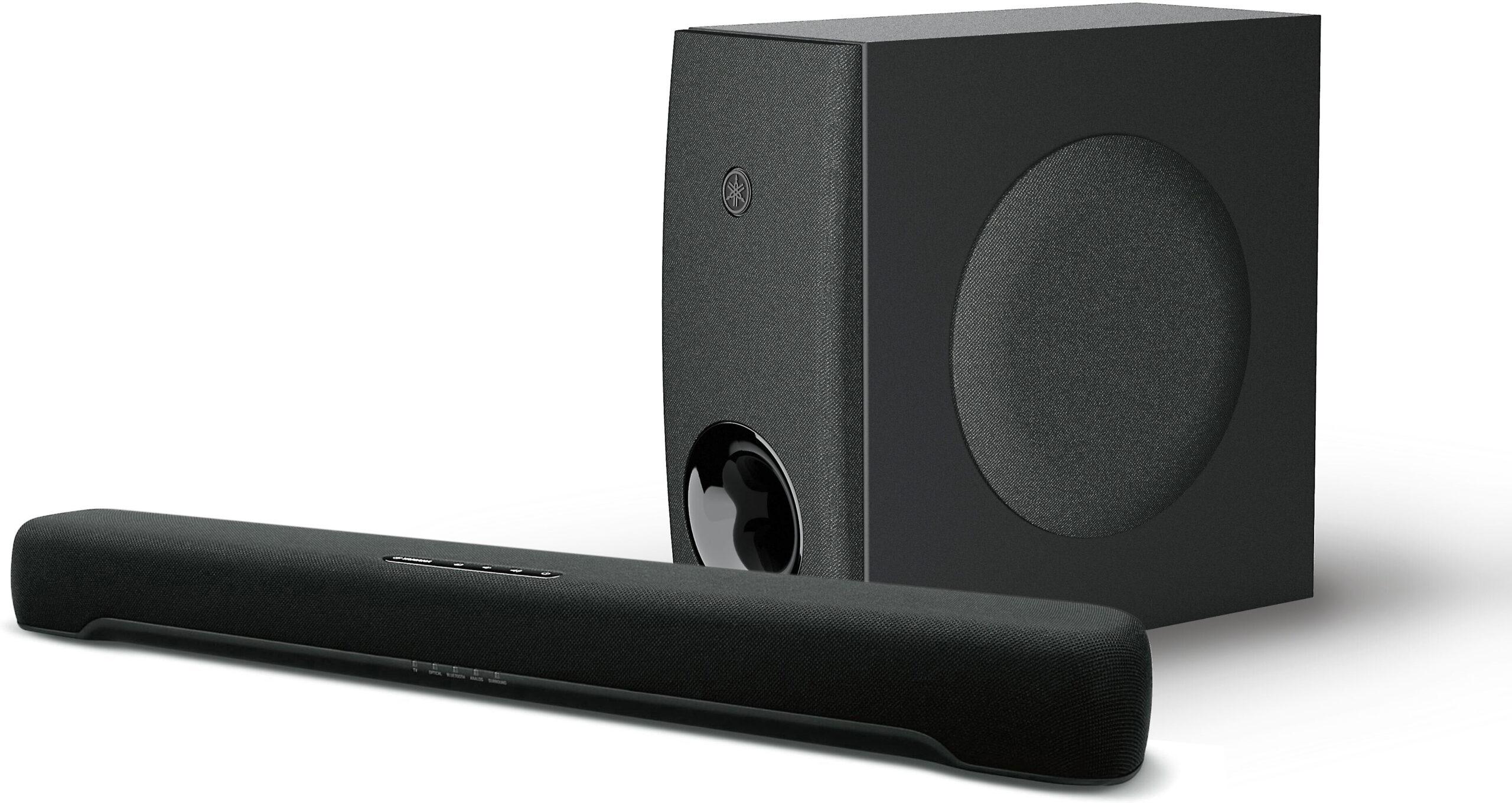
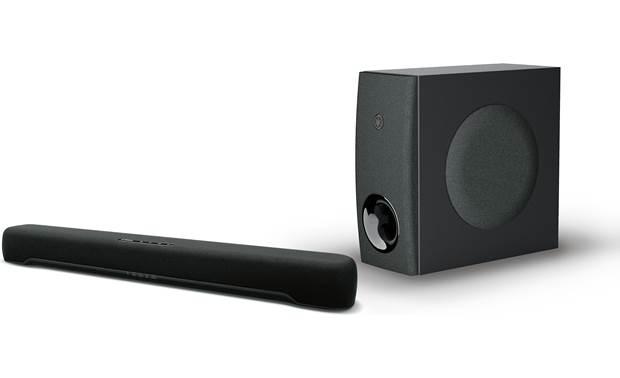
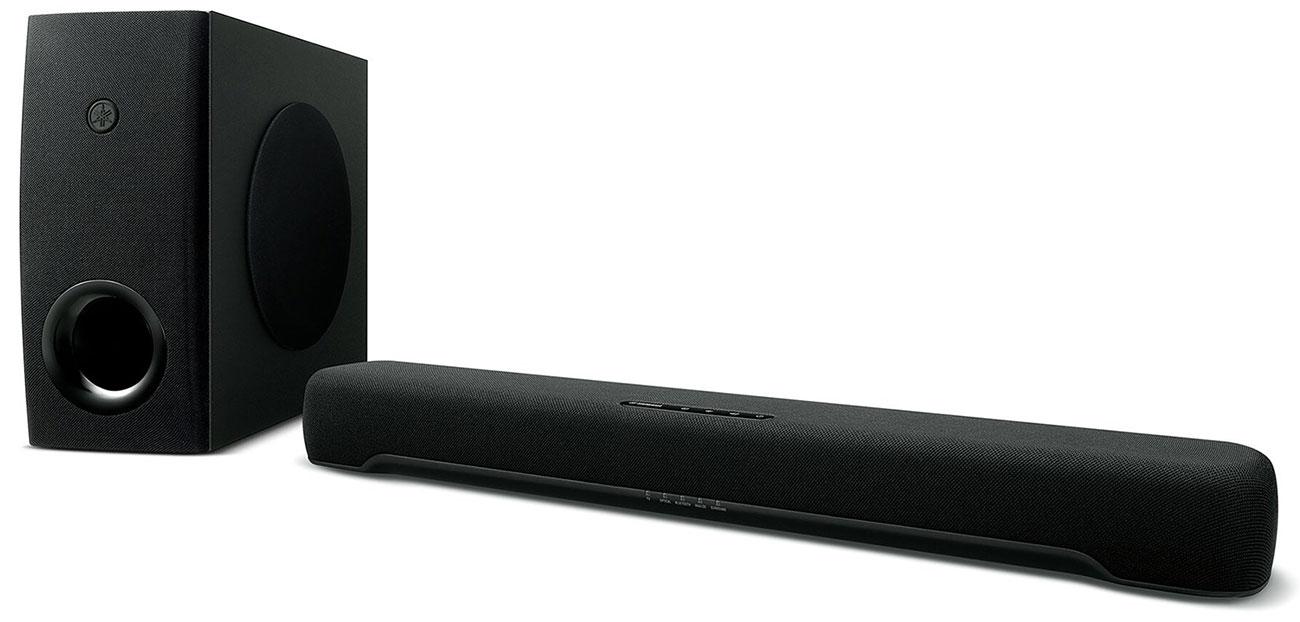
The Yamaha SR-C30A takes a fundamentally different approach. Instead of trying to create immersive overhead effects, it focuses on delivering clear, balanced stereo sound with proper bass response right out of the box. Its included wireless subwoofer features a 5.1-inch driver that handles frequencies the main soundbar can't reproduce effectively.
This 2.1 configuration (two main channels plus a subwoofer) is more traditional but often more practical for most content. The SR-C30A's 90 watts of total power (20 watts per main channel, 50 watts for the sub) might seem modest compared to some competitors, but Yamaha's True Sound tuning ensures every watt is used efficiently.
One standout feature is the SR-C30A's Adaptive Low Volume technology. Unlike typical "night modes" that simply compress loud sounds, this system actually adjusts the frequency response to maintain clarity and fullness at lower volumes. This means late-night movie watching doesn't require choosing between waking the neighbors and missing quiet dialogue.
In my experience testing both units, the differences become clear quickly. The Sonos Arc excels with properly mastered Dolby Atmos content—watching "Top Gun: Maverick" or "Dune" reveals sound details you simply can't get from traditional stereo soundbars. The height effects genuinely add to the immersion, making action sequences feel more enveloping.
However, the Arc's strength becomes a weakness with older content or music. Without Atmos encoding, it relies on processing to create surround effects, which can sound artificial. The Arc also struggles with bass-heavy content without a subwoofer, which adds considerable cost.
The Yamaha SR-C30A, meanwhile, handles everything competently. Its Clear Voice mode noticeably improves dialogue clarity—something crucial since poor dialogue is often what drives people to buy soundbars in the first place. The integrated subwoofer provides immediate bass impact that makes action scenes more satisfying and music more full-bodied.
The Sonos Arc essentially functions as a smart speaker that happens to excel at TV audio. Built-in Amazon Alexa and Google Assistant mean you can control smart home devices, ask questions, and stream music using voice commands. The far-field microphone array uses advanced beamforming (technology that focuses on sounds from specific directions while ignoring background noise) to hear commands even during loud action scenes.
The Arc's Wi-Fi connectivity enables features impossible with Bluetooth-only soundbars. It can stream directly from services like Spotify and Apple Music without involving your phone or TV. Apple AirPlay 2 support means iPhone and iPad users can easily stream audio, and the multi-room capabilities let you play synchronized music throughout a Sonos-equipped home.
The HDMI eARC connection is crucial for the Arc's best features. eARC (enhanced Audio Return Channel) supports higher bandwidth audio formats like Dolby TrueHD and uncompressed Dolby Atmos. Without eARC, you'll miss some of the Arc's premium audio capabilities.
The Yamaha SR-C30A deliberately keeps things simple. There's no voice control or Wi-Fi connectivity, which some might see as limitations but others will appreciate as fewer things to go wrong. The Bluetooth 5.0 implementation includes multi-point connectivity, letting you seamlessly switch between devices—useful for households where different family members want to stream from their phones.
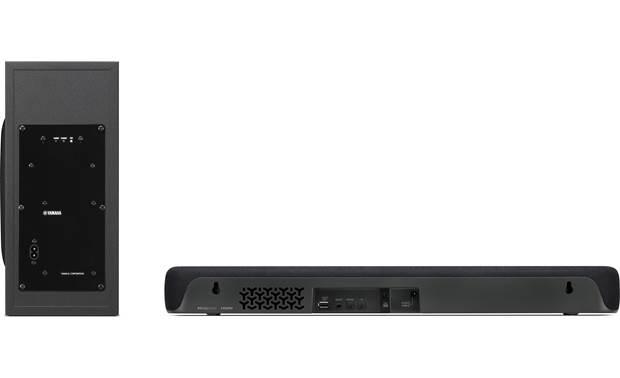
Setup is genuinely plug-and-play. Connect one HDMI cable to your TV's ARC port (most TVs from the last five years have this), and you're done. The soundbar will automatically turn on and off with your TV, and volume controls work through your existing TV remote thanks to built-in infrared learning.
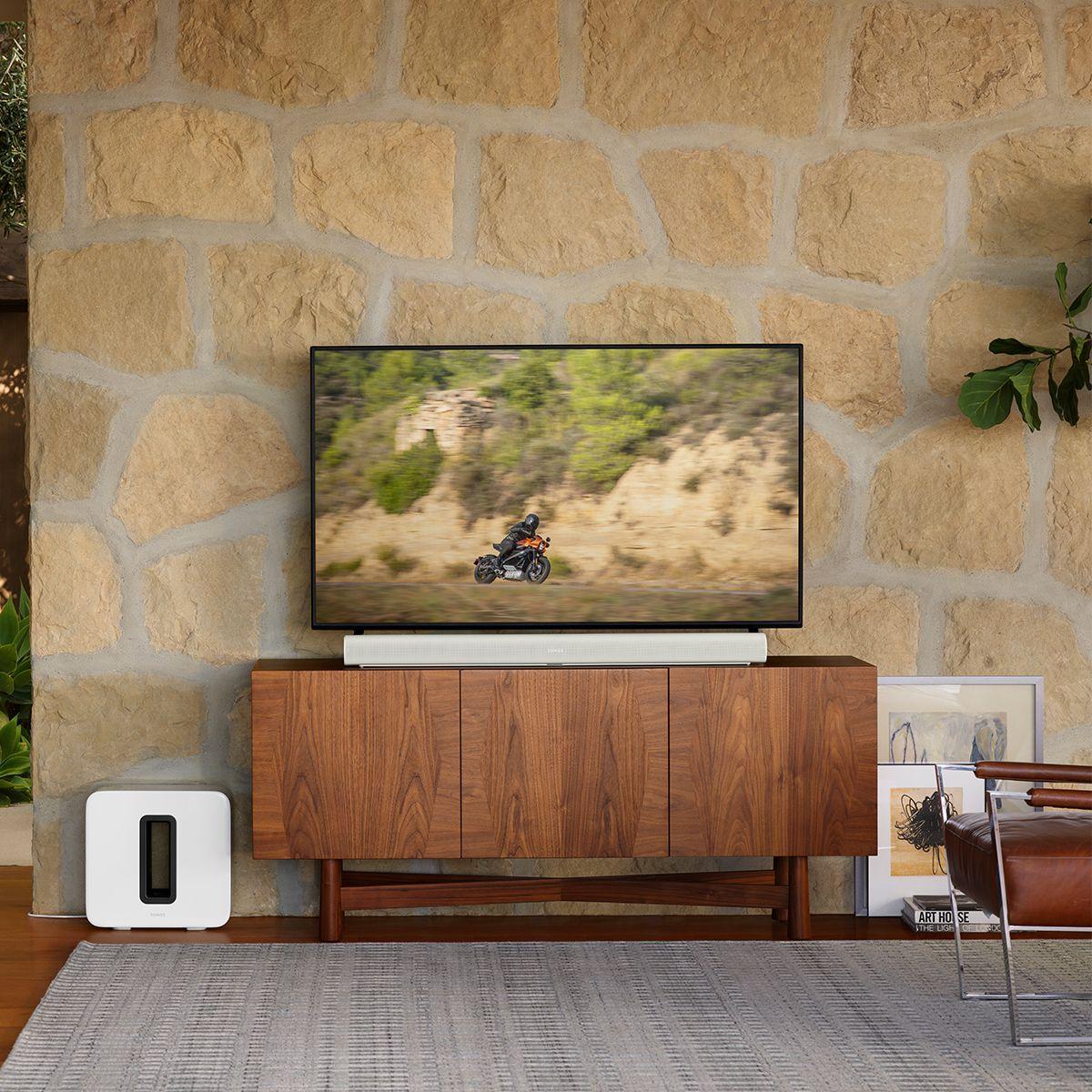
The physical differences between these soundbars are dramatic. The Sonos Arc measures nearly 45 inches wide, making it suitable only for larger TVs (55 inches and up). Its curved design and matte finish look premium, but the size means it won't fit many TV stands. Wall mounting is often necessary, though the Arc includes proper mounting hardware.
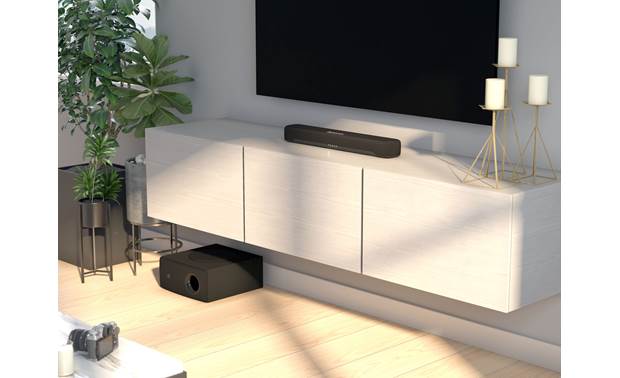
The Yamaha SR-C30A is refreshingly compact at just 23.6 inches wide. This makes it compatible with smaller TVs and tighter spaces like apartments or bedrooms. The wireless subwoofer offers placement flexibility—you can position it wherever it sounds best in your room, whether that's next to your couch or tucked behind a chair.
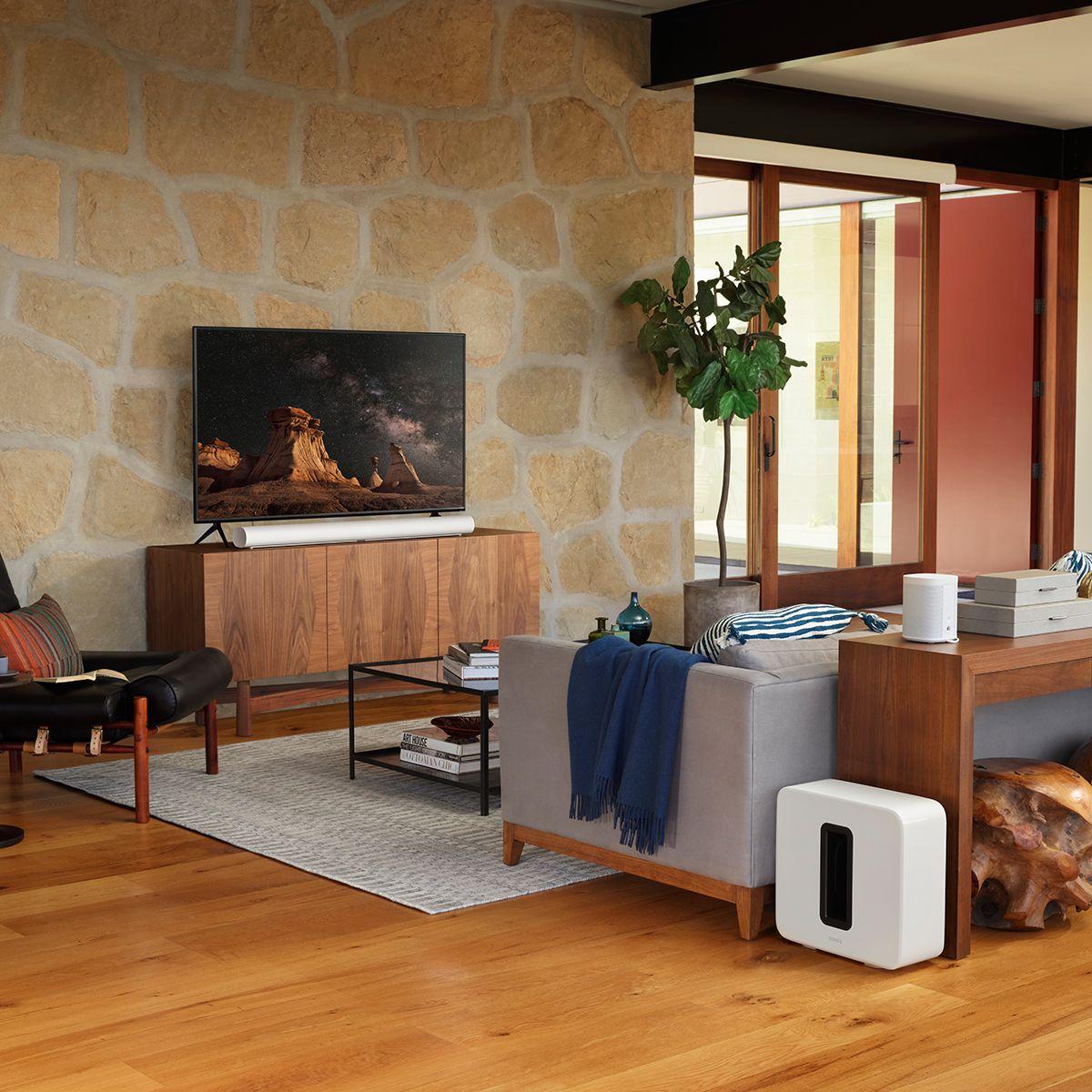
For home theater use, these size differences matter significantly. The Arc works best as the centerpiece of a dedicated media room, while the SR-C30A is more versatile for everyday living spaces where the TV shares space with other activities.
Here's where things get interesting. The Yamaha SR-C30A provides immediate satisfaction at $180.45—you get a soundbar and subwoofer that dramatically improve any TV's audio. There are no hidden costs or required accessories.
The Sonos Arc at $540.60 is just the beginning. While it sounds good alone, it really shines when paired with additional Sonos components. Add the Sonos Sub ($449) for proper bass response, and you're already approaching $1,000. Rear surround speakers add another $400-500. A complete Sonos Arc system can easily exceed $1,400.
This doesn't necessarily mean the Arc is overpriced—it's targeting users willing to invest in a premium, expandable audio system. But it's crucial to understand the total potential cost when budgeting.
The Sonos Arc's Trueplay room correction technology deserves special mention. Using an iOS device's microphones, it analyzes your room's acoustics and adjusts the soundbar's output accordingly. This addresses issues like harsh reflections or dead spots that can plague soundbars in challenging rooms. It's genuinely effective, though the iOS requirement excludes Android users.
The Arc's processing power is impressive, with a quad-core CPU and 1GB of RAM enabling sophisticated audio algorithms. This computational power allows real-time analysis of incoming audio to optimize surround effects and dialogue clarity.
The Yamaha SR-C30A might seem less technically advanced, but its engineering is thoughtful. The wireless subwoofer connection is remarkably stable—I've never experienced dropouts or connection issues. The "3D Movie" mode creates convincing virtual surround effects without the complexity of additional speakers.
Yamaha's compressed music enhancement is particularly clever. It analyzes Bluetooth audio streams and attempts to restore some of the detail lost during compression. While it can't work miracles, it makes Spotify streaming sound noticeably better than on basic soundbars.
For dedicated home theater setups, the Sonos Arc offers more sophisticated options. Its HDMI eARC connection can handle advanced audio formats from 4K Blu-ray players and streaming devices. The ability to decode Dolby TrueHD means you're getting the exact audio mix the filmmakers intended.
The Arc's ecosystem approach shines in home theaters. Start with the soundbar, add a Sub when budget allows, then complete the system with rear speakers. Each addition meaningfully improves the experience, and everything integrates seamlessly.
The Yamaha SR-C30A is more limited for serious home theater use. It handles standard Dolby Digital fine, but lacks support for advanced formats. However, for casual movie watching and everyday TV viewing, it provides excellent value and performance.
Choose the Sonos Arc if you're building a premium home theater system and value features like voice control, multi-room audio, and genuine Dolby Atmos. It's an investment in a growing ecosystem that can expand with your needs and space.
Choose the Yamaha SR-C30A if you want immediate audio improvement at a reasonable price. It's perfect for smaller spaces, secondary rooms, or anyone who prefers simple, reliable performance over advanced features.
Both soundbars solve the fundamental problem of poor TV audio, but they do so in very different ways. The Arc aims higher with immersive audio and smart features, while the SR-C30A focuses on delivering solid, balanced sound that works well in any situation.
Your choice should depend on your room size, budget, technical preferences, and long-term plans. Either way, you'll enjoy significantly better TV audio than what those thin TV speakers can provide.
| Sonos Arc Wireless Sound Bar ($540.60) | Yamaha SR-C30A Soundbar with Subwoofer ($180.45) |
|---|---|
| Audio Channels - Determines immersive sound capability | |
| 5.0.2 Dolby Atmos (includes height effects) | 2.1 stereo + subwoofer (focused on clarity and bass) |
| Subwoofer Inclusion - Affects total cost and bass performance | |
| Not included (Sonos Sub costs additional $449) | Wireless 5.1" subwoofer included |
| Smart Features - Voice control and streaming capabilities | |
| Built-in Alexa & Google Assistant, Wi-Fi streaming | No voice control, Bluetooth 5.0 only |
| Physical Size - Room compatibility and placement options | |
| 44.96" wide (requires 55"+ TV or wall mount) | 23.6" wide (fits smaller spaces and TVs) |
| HDMI Connection - Audio format support | |
| HDMI eARC (supports lossless Dolby Atmos/TrueHD) | HDMI ARC (standard Dolby Digital only) |
| Multi-room Audio - Whole home integration | |
| Full Sonos ecosystem compatibility | Standalone unit only |
| Room Correction - Sound optimization technology | |
| Trueplay tuning (iOS device required) | Manual EQ adjustments via app |
| Setup Complexity - Installation and configuration effort | |
| Moderate (requires app setup and Wi-Fi configuration) | Simple (plug-and-play with TV remote control) |
| Expandability - Future upgrade options | |
| Can add Sub ($449) and rear speakers ($400+) | No expansion options beyond current setup |
| Total System Cost - Budget consideration for full experience | |
| $990-1,400+ for complete surround system | $180.45 complete (no additional purchases needed) |
The Yamaha SR-C30A ($180.45) offers exceptional value by including a wireless subwoofer at a budget-friendly price, providing immediate audio improvement for any TV. The Sonos Arc ($540.60) costs three times more and requires additional purchases like the Sonos Sub ($449) to match the SR-C30A's bass performance, making the total system cost $990+.
The Sonos Arc delivers superior immersive audio with true Dolby Atmos and 5.0.2 channels, creating overhead sound effects that the Yamaha SR-C30A cannot match. However, the Yamaha provides more balanced, complete sound out of the box thanks to its included subwoofer, while the Arc lacks deep bass without additional components.
The Yamaha SR-C30A is ideal for small rooms with its compact 23.6-inch width and flexible wireless subwoofer placement. The Sonos Arc measures 45 inches wide and works best with 55-inch or larger TVs in medium to large rooms, making it impractical for smaller spaces.
The Yamaha SR-C30A includes a wireless 5.1-inch subwoofer, providing immediate bass impact without additional cost. The Sonos Arc lacks deep bass response on its own and benefits significantly from adding the optional Sonos Sub for $449, which is essential for action movies and music.
The Sonos Arc offers extensive smart features including built-in Amazon Alexa and Google Assistant, Wi-Fi streaming, Apple AirPlay 2, and multi-room audio capabilities. The Yamaha SR-C30A focuses on simplicity with Bluetooth 5.0 connectivity and no voice control, appealing to users who prefer straightforward operation.
The Yamaha SR-C30A offers true plug-and-play setup—connect one HDMI cable and you're done, with automatic TV remote integration. The Sonos Arc requires app-based setup, Wi-Fi configuration, and optional room tuning, making it more complex but offering greater customization options.
For dedicated home theater setups, the Sonos Arc excels with HDMI eARC support for lossless audio formats, true Dolby Atmos, and expandability to a full surround system. The Yamaha SR-C30A handles standard home theater content well but lacks advanced audio format support and immersive sound capabilities.
Both soundbars work with older TVs through optical connections—the Sonos Arc includes an optical adapter, while the Yamaha SR-C30A has built-in optical inputs. However, older TVs won't support the Arc's advanced features like Dolby Atmos, making the Yamaha a more practical choice for older setups.
The Sonos Arc offers extensive expandability within the Sonos ecosystem, allowing you to add a subwoofer, rear speakers, and additional room speakers for whole-home audio. The Yamaha SR-C30A is a complete, standalone system with no expansion options beyond its included components.
The Sonos Arc is designed for 55-inch and larger TVs due to its 45-inch width and premium positioning. The Yamaha SR-C30A works well with TVs from 32 inches up to 55 inches, making it more versatile for various room sizes and TV configurations.
Both soundbars excel at dialogue clarity—the Yamaha SR-C30A features a dedicated Clear Voice mode that specifically enhances speech frequencies. The Sonos Arc uses advanced processing and dedicated center channel drivers for clear dialogue, with additional Speech Enhancement settings available in the app.
For your first soundbar, the Yamaha SR-C30A is often the better choice due to its complete package, simple setup, and immediate audio improvement at an affordable price. Choose the Sonos Arc if you have a larger budget, want premium features like Dolby Atmos, and plan to build a comprehensive audio system over time.
We've done our best to create useful and informative comparisons to help you decide what product to buy. Our research uses advanced automated methods to create this comparison and perfection is not possible - please contact us for corrections or questions. These are the sites we've researched in the creation of this article: whathifi.com - soundandvision.com - en.community.sonos.com - cnet.com - worldwidestereo.com - abt.com - creativeaudio.net - target.com - sonos.com - worldwidestereo.com - businessinsider.com - en.community.sonos.com - youtube.com - techradar.com - usa.yamaha.com - expertreviews.com - usa.yamaha.com - trustedreviews.com - crutchfield.com - europe.yamaha.com - usa.yamaha.com - shop.usa.yamaha.com - assetserver.net

Privacy Policy
Terms and Conditions - Affiliate Policy
Home Security
© Copyright 2008-2026.
11816 Inwood Rd #1211, Dallas, TX 75244