




When your TV's built-in speakers just aren't cutting it anymore, you've got two very different paths to better home theater audio. The Sony HT-A9M2 and Yamaha SR-C30A represent opposite ends of both the complexity and price spectrum, yet they share the goal of dramatically improving your movie-watching experience. Understanding which approach fits your situation requires diving into what makes each system tick.
Before we compare these specific products, it's worth understanding the landscape. Home theater audio has evolved dramatically over the past decade. We've moved from the days when you needed a massive AV receiver, multiple speakers, and hours of wire-running to achieve surround sound. Now, manufacturers offer everything from simple sound enhancement to wireless systems that rival traditional component setups.
The key considerations haven't changed much: room size, your tolerance for complexity, budget constraints, and how much you care about true surround sound versus just "better than TV speakers." What has changed is how sophisticated these systems have become at delivering immersive audio without the traditional hassles.
Both products we're examining launched in 2024, representing the latest thinking in their respective categories. The Sony HT-A9M2 builds on lessons learned from its predecessor (the original HT-A9 from 2021) with improved wireless stability and refined audio processing. The Yamaha SR-C30A reflects Yamaha's focus on making quality audio accessible in increasingly compact living spaces.
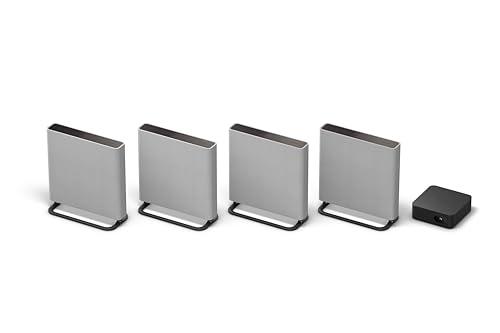
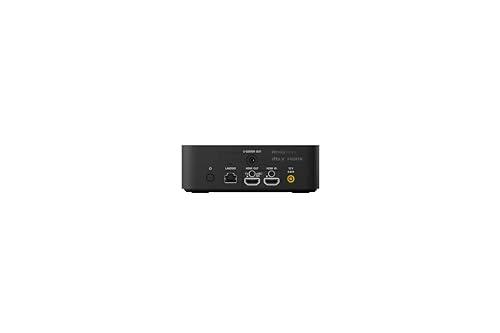
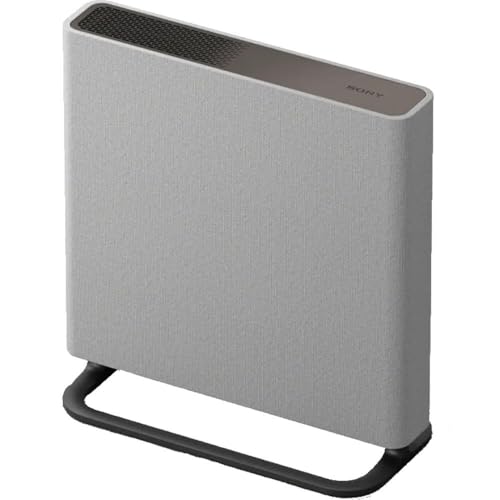
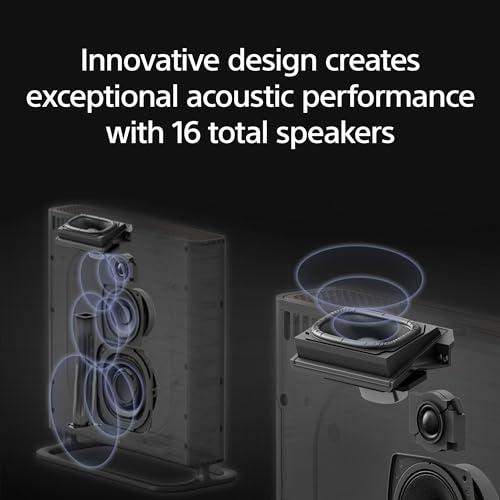
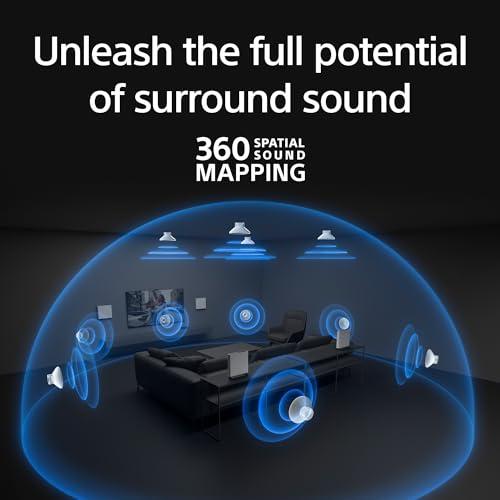
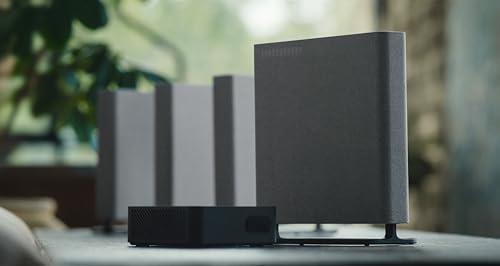
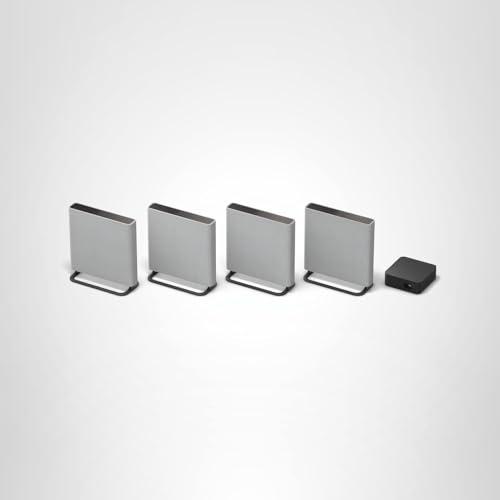
The Sony HT-A9M2 takes what we might call the "wireless separates" approach. Instead of cramming all your speakers into one bar, Sony gives you four identical wireless speakers that you place around your room, plus a small control hub that connects to your TV. Each speaker contains multiple drivers including an upward-firing unit for height effects – think of them as mini surround speakers that happen to be wireless.
This system uses something Sony calls 360 Spatial Sound Mapping, which is essentially sophisticated audio processing that creates "phantom speakers" in your room. By carefully controlling the timing and phase of audio sent to each of the four physical speakers, the system tricks your ears into hearing sounds coming from many more locations than the four actual speaker positions. It's like having 12 speakers when you only have four.
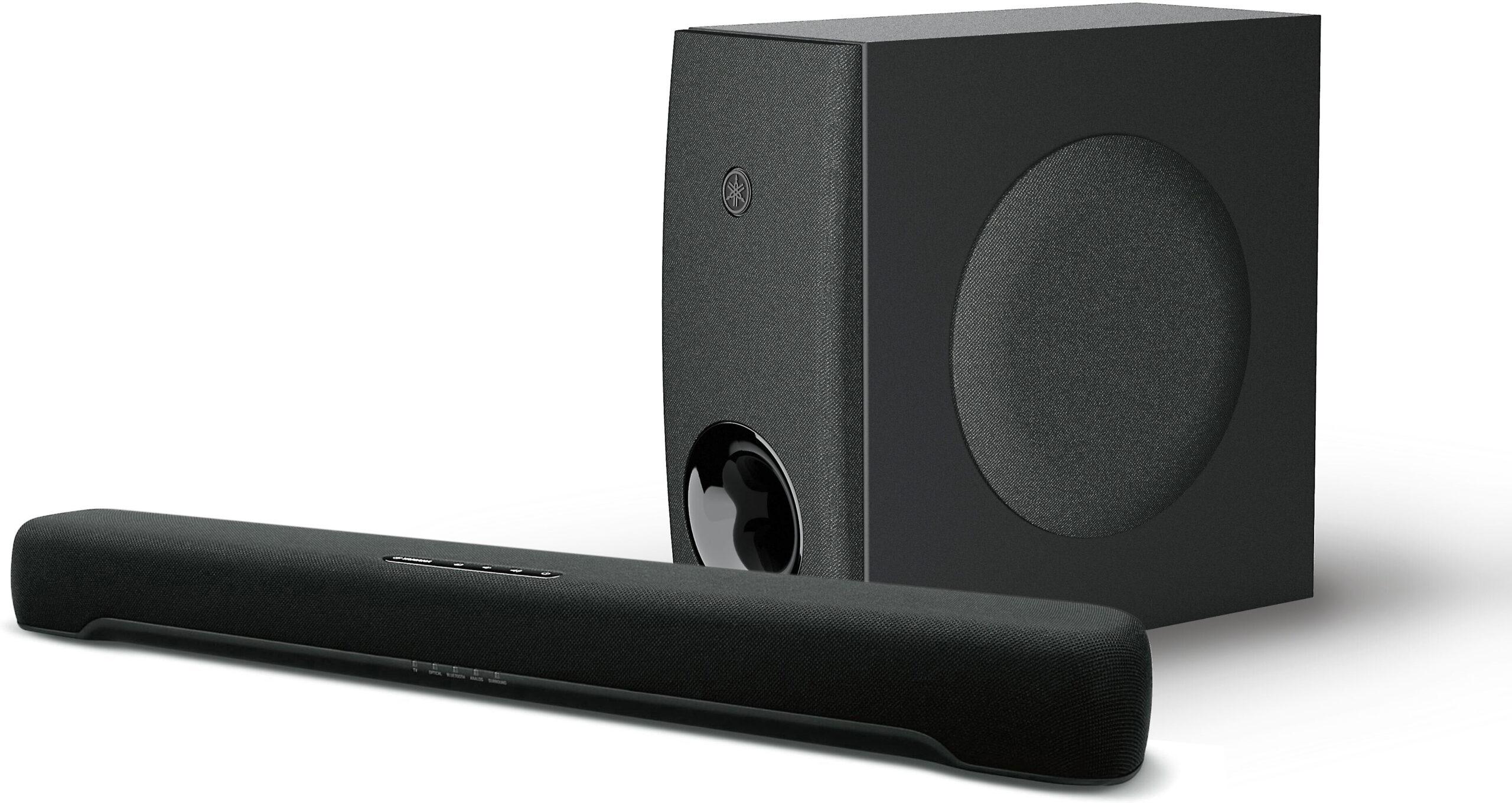
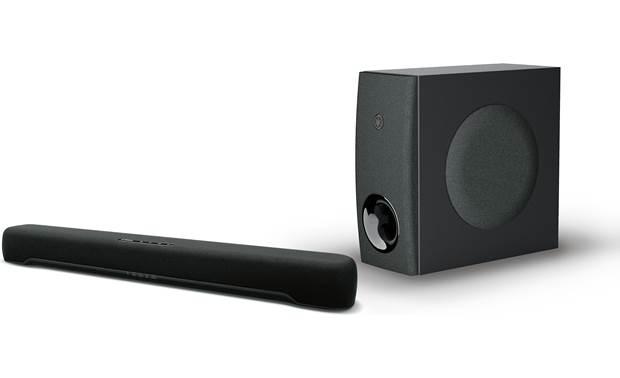
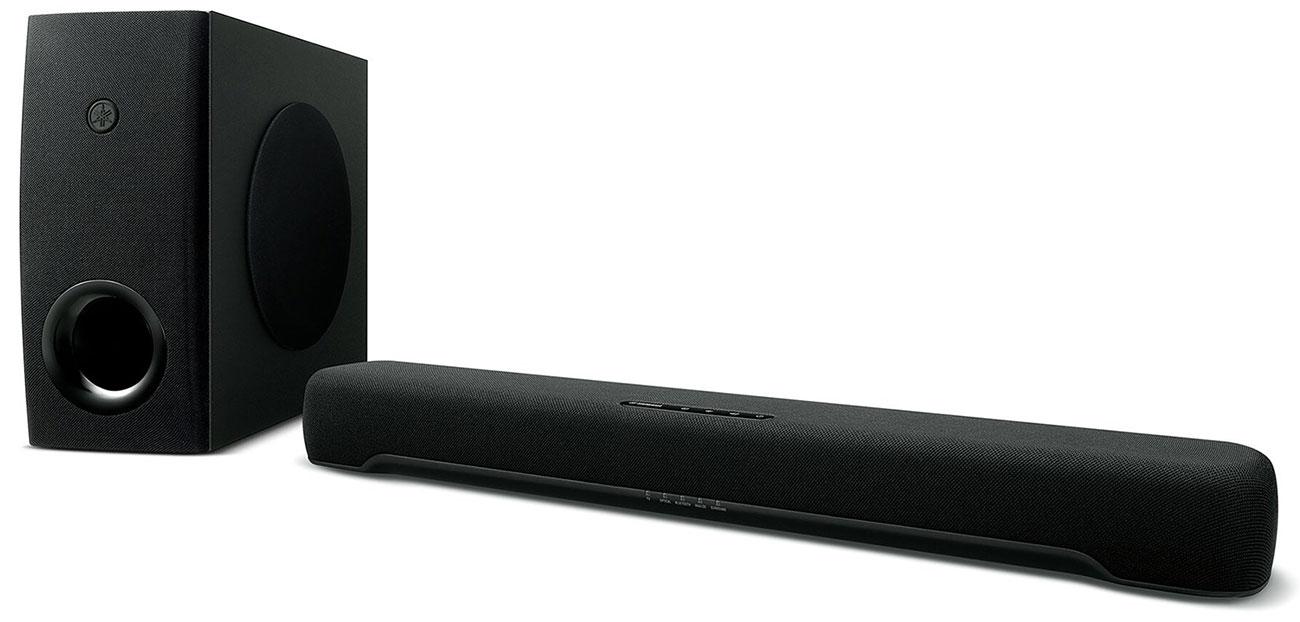
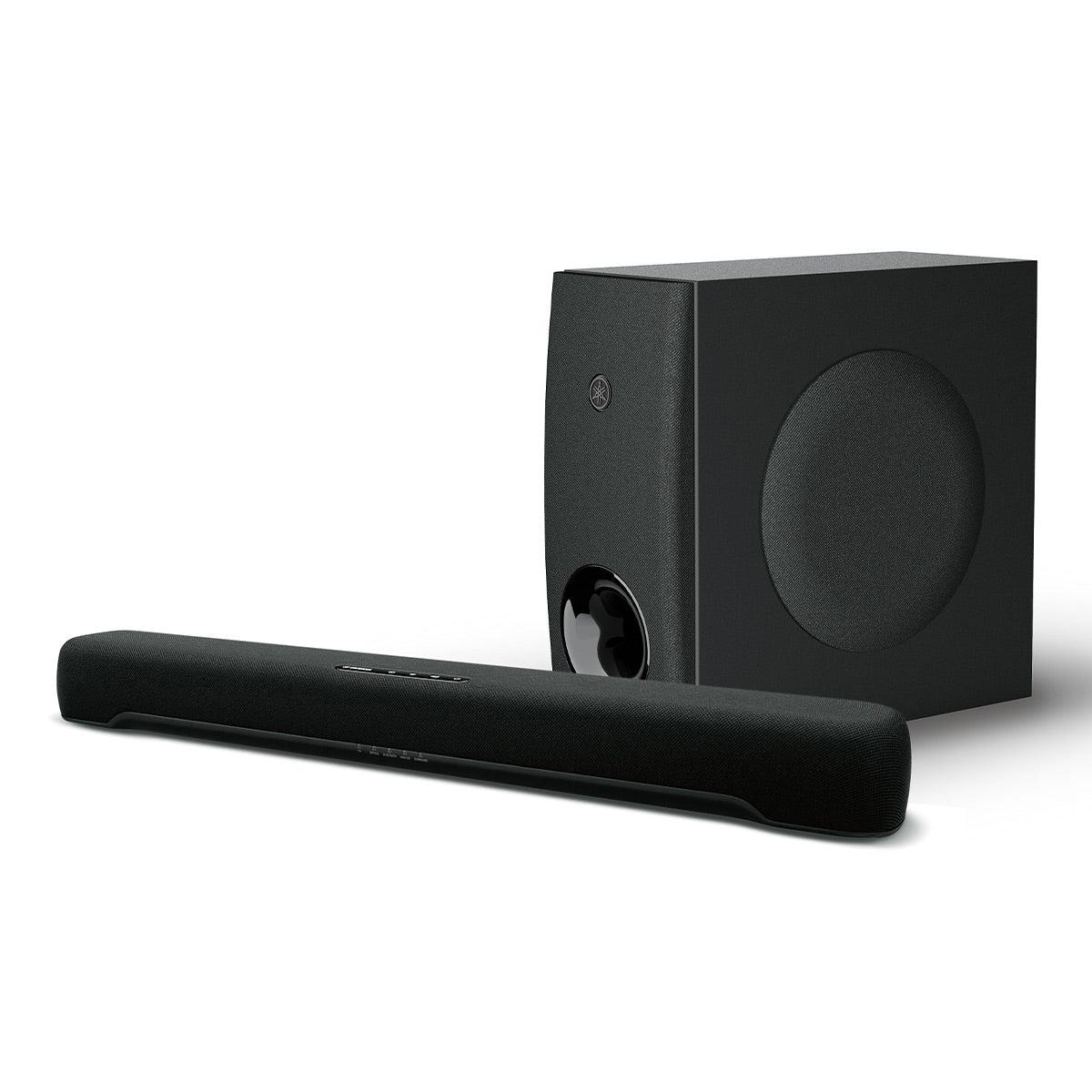
The Yamaha SR-C30A, meanwhile, follows the traditional soundbar philosophy but executes it thoughtfully. You get a compact bar that sits in front of your TV plus a separate wireless subwoofer that handles bass duties. This is the "keep it simple" approach – better sound without reinventing your living room setup.
Yamaha focuses on what they call True Sound design, which prioritizes accuracy and clarity within the system's physical limitations. Instead of trying to create phantom speakers everywhere, the SR-C30A concentrates on making dialogue clearer, adding meaningful bass, and creating some sense of width through digital processing.
Here's where the fundamental differences become crystal clear. The Sony HT-A9M2 creates what many reviewers describe as a "bubble" of sound around your seating area. Because you have four separate speakers that can be placed anywhere within about 100 feet of the control hub, you can position them optimally for your room – behind your couch, to the sides, even at different heights.
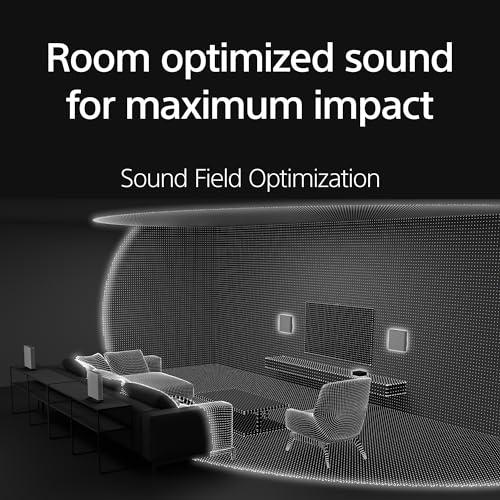
The system's automatic calibration is genuinely impressive. Using microphones built into each speaker, it measures distances, room reflections, and acoustic characteristics, then adjusts timing and levels accordingly. This means you can place the speakers wherever works for your furniture and décor, and the system adapts. In testing scenarios, reviewers have placed speakers asymmetrically and still achieved convincing surround effects.
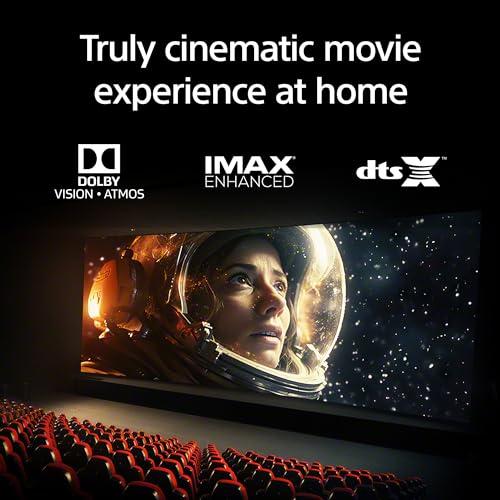
The height channels deserve special mention. Each Sony speaker has a dedicated upward-firing driver that bounces sound off your ceiling to create overhead effects. When properly calibrated, this can produce genuinely convincing "helicopter flying overhead" moments in movies like Top Gun: Maverick or the mechanical sounds moving above you in Blade Runner 2049.
The Yamaha SR-C30A, being a traditional soundbar, works differently. Its 3D Movie mode uses digital signal processing (DSP) to create virtual surround effects from its two front-facing drivers. Think of it as audio sleight-of-hand – the system delays and phases certain frequencies to make your brain think sounds are coming from beside or behind you.
This virtual processing has gotten quite sophisticated over the years, and Yamaha's implementation is competent. However, it's still fundamentally limited by physics. You can't create true separation between channels when all the sound is coming from one direction. The SR-C30A will give you a wider, more enveloping sound than your TV speakers, but it won't make you forget where the soundbar is located.
One of the trickiest aspects of home theater audio is reproducing dialogue clearly. In traditional surround systems, you'd have a dedicated center speaker positioned directly below or above your TV screen. Both of our contenders handle this challenge differently, with mixed results.
The Sony HT-A9M2 creates what's called a phantom center channel. Instead of having a physical speaker in the center, it processes the center channel audio and distributes it between the front-left and front-right speakers, using precise timing to make dialogue appear to come from the screen. This can work quite well, especially if you're sitting in the sweet spot directly in front of your TV.
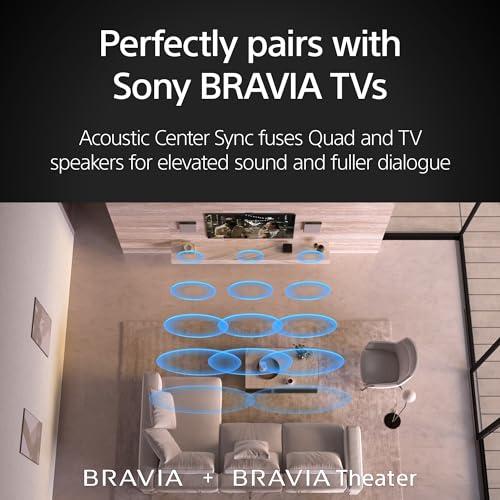
However, Sony knows this isn't perfect, which is why they created Acoustic Center Sync. If you own one of Sony's compatible BRAVIA TVs, you can use the TV's built-in speakers as an actual center channel, with the HT-A9M2 handling everything else. This locks dialogue directly to the screen and often provides superior clarity.
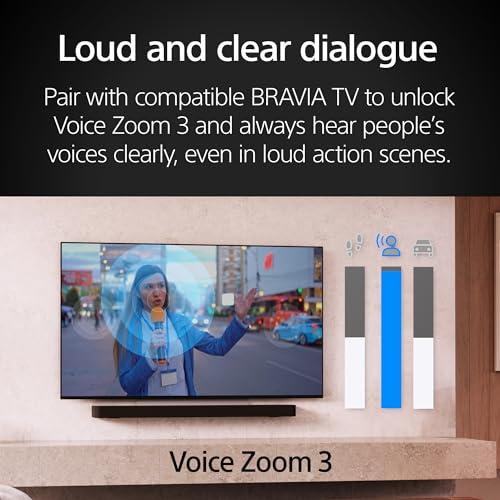
The system also includes Voice Zoom 3, which uses AI processing to identify and enhance dialogue in the audio mix. This technology separates human voices from background music and effects, then amplifies them selectively. It's particularly useful for modern movie mixes where dialogue can get buried under spectacular sound effects.
The Yamaha SR-C30A takes a simpler approach with its Clear Voice Mode. This feature boosts certain frequency ranges where human speech typically occurs and applies some compression to make quiet dialogue more audible. It's not as sophisticated as Sony's AI-driven approach, but it's effective for its intended purpose.
In smaller rooms, the Yamaha's approach often works quite well. When you're sitting close to the soundbar, the phantom center effect is more convincing, and dialogue clarity is generally good. The system's compact drivers are actually well-suited to reproducing the midrange frequencies where most speech occurs.
This is where things get interesting from a value perspective. The Yamaha SR-C30A includes a dedicated 5.1-inch wireless subwoofer right out of the box. This 50-watt unit can be placed anywhere in your room (it even includes feet for both vertical and horizontal placement) and immediately provides the kind of bass impact that makes movie explosions feel more visceral.
The Sony HT-A9M2, surprisingly for its premium price point, doesn't include a subwoofer. It relies on the woofers built into each of its four speakers to handle bass duties. These X-Balanced units use rectangular diaphragms instead of traditional round ones, which allows for more cone area in a compact space, but they're still limited by size and the need to share cabinet space with the other drivers.
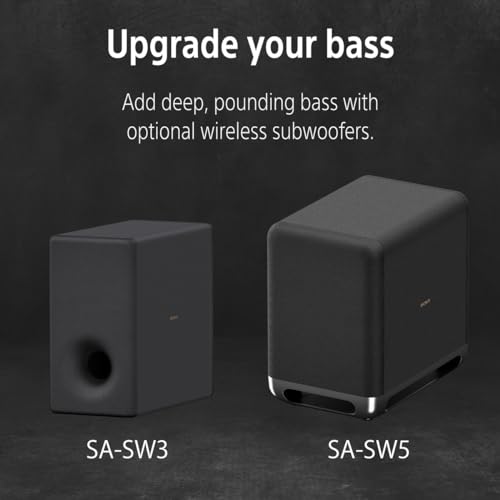
Multiple professional reviews consistently note that the Sony really needs the optional subwoofer to reach its full potential. Without it, the system can sound lean or clinical, especially compared to its predecessor. The bass is present and well-controlled, but it lacks the physical impact that makes action movies truly engaging.
When you factor in the cost of Sony's compatible SA-SW3 or SA-SW5 subwoofer, you're looking at a significantly higher total system cost. This isn't necessarily a deal-breaker if you value the Sony's unique capabilities, but it's important to understand the true cost of ownership.
The Yamaha, meanwhile, delivers satisfying bass impact immediately. The subwoofer integrates well with the soundbar, providing the low-frequency foundation that makes everything from movie explosions to music bass lines more engaging. For many users, this immediate gratification is exactly what they're looking for.
While both systems are designed primarily for enhancing TV and movie audio, their music performance tells an interesting story about their underlying design philosophies.
The Sony HT-A9M2 supports high-resolution audio formats up to 192kHz/24-bit, which means it can handle studio-quality music files without compression. Its DSEE Ultimate technology uses AI to upscale compressed music from streaming services, attempting to restore some of the detail lost in MP3 or AAC compression. For spatial audio enthusiasts, it also supports 360 Reality Audio, which creates immersive music experiences similar to Dolby Atmos for movies.
The wide speaker placement possible with the Sony system creates an expansive stereo image that can be quite impressive for music. When you can place speakers far apart and at different positions, you get better channel separation and a more spacious sound than any single soundbar can achieve.
However, the Sony's heavy processing and phantom center approach can sometimes make traditional stereo music sound less focused than you might prefer. Some listeners find that two-channel music benefits from the directness and simplicity of traditional left/right speaker placement.
The Yamaha SR-C30A takes a more straightforward approach. Its Compressed Music Enhancer works specifically with Bluetooth streaming to improve the sound of compressed audio files. The system's True Sound design emphasizes accuracy within its limitations rather than trying to create artificial spatial effects.
For casual music listening, especially in smaller rooms, the Yamaha often provides a more immediately satisfying experience. The included subwoofer gives music the bass foundation it needs, and the stereo imaging, while not as wide as the Sony, is coherent and well-balanced.
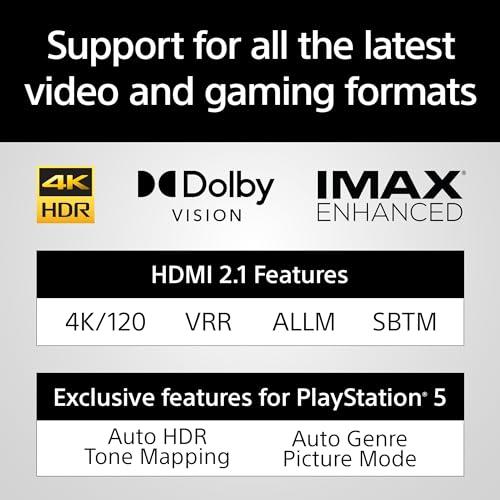
The gaming landscape has changed dramatically with the introduction of next-generation consoles, and home theater systems need to keep up with features like 4K at 120Hz, Variable Refresh Rate (VRR), and Auto Low Latency Mode (ALLM).
The Sony HT-A9M2 excels here with full HDMI 2.1 support. Its control hub can pass through 4K/120Hz signals, supports VRR for tear-free gaming, and includes ALLM to automatically switch your TV to game mode when it detects a gaming console. For PlayStation 5 owners, there are additional optimizations including Auto HDR Tone Mapping that work in conjunction with compatible Sony TVs.
The spatial audio capabilities really shine with gaming. Modern games increasingly support Dolby Atmos and object-based audio, allowing you to hear enemies approaching from specific directions or environmental sounds positioned accurately in 3D space. The Sony's ability to create height effects and precise positioning can provide a competitive advantage in games where audio cues matter.
The Yamaha SR-C30A offers more basic gaming support. It has a dedicated Game mode that optimizes the sound profile for gaming content, reducing input lag and emphasizing important audio cues. However, it lacks the advanced HDMI features of the Sony and won't support the highest-bandwidth gaming features.
For casual gaming, the Yamaha is perfectly adequate and will provide better audio than your TV speakers. For serious gamers or those investing in premium consoles, the Sony's advanced features justify their cost.
The day-to-day experience of using these systems differs significantly, and it's worth considering how each fits into your lifestyle.
Setting up the Sony HT-A9M2 requires more planning but offers more flexibility. You need to find power outlets for four separate speakers, which might require some creative cable management or additional power strips. However, once powered, the speakers connect wirelessly to the control hub and automatically calibrate themselves using the BRAVIA CONNECT app.
The calibration process is genuinely sophisticated. The system plays test tones from each speaker, measures the acoustic response using the built-in microphones, and creates a custom acoustic map of your room. This process adapts to your specific speaker placement, room size, and acoustic characteristics. You can re-run calibration if you move furniture or speakers, maintaining optimal performance.
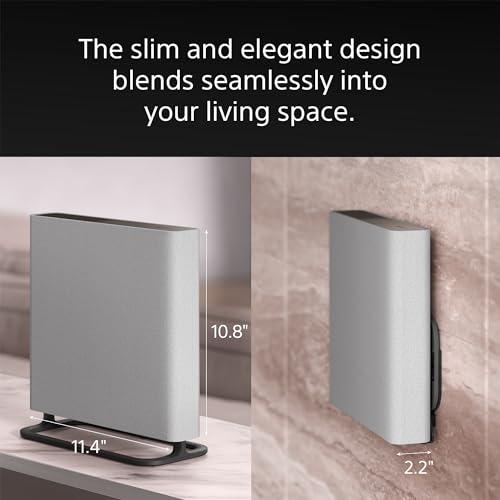
Living with the Sony system means having four moderately-sized speakers around your room. They're not huge, but they're definitely visible. The trade-off is that flexibility – you can place them on furniture, wall-mount them, or even put them at different heights to work around your décor.
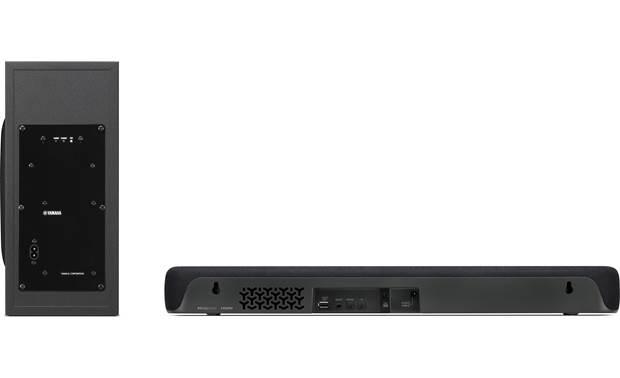
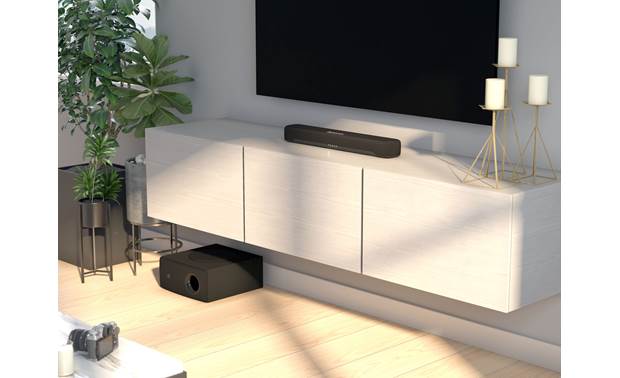
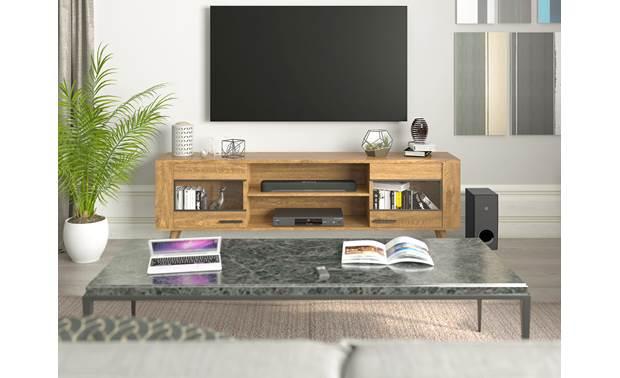
The Yamaha SR-C30A prioritizes simplicity. The soundbar sits in front of your TV or mounts to the wall using built-in keyholes. The subwoofer connects wirelessly and can be tucked anywhere with reasonable proximity to your seating area. Setup takes minutes rather than the hour or more you might spend optimizing the Sony.
The Yamaha includes both a traditional remote and a smartphone app for control. The app connects via Bluetooth and provides access to EQ settings, sound modes, and volume control. While not as sophisticated as Sony's room calibration app, it's straightforward and functional.
For apartment dwellers or those who frequently move, the Sony's flexibility is valuable – no permanent installation required, and the system adapts to new rooms automatically. For those who want to set it and forget it, the Yamaha's plug-and-play approach is more appealing.
At the time of writing, these products occupy very different price tiers, and understanding the value proposition requires looking beyond just the initial purchase price.
The Yamaha SR-C30A represents exceptional value in the entry-level category. You get a complete 2.1 system that immediately and meaningfully improves upon TV speakers. For many users, especially those in smaller spaces or with modest home theater ambitions, this level of improvement is entirely sufficient.
The Sony HT-A9M2 commands a premium price – roughly six to eight times the cost of the Yamaha at launch. However, this comparison becomes more nuanced when you consider what you're getting. Traditional AV receiver and speaker packages that provide similar wireless flexibility and immersive capabilities often cost similar amounts, and they require much more complex installation.
The Sony also needs a subwoofer to reach its full potential, adding another significant cost. However, Sony's wireless subwoofers integrate seamlessly with the system and maintain the wire-free aesthetic.
From a long-term value perspective, the Sony offers more upgrade potential and flexibility. As your needs change or you move to different spaces, the system adapts. The Yamaha is more of a fixed solution – what you buy is what you get, with limited expansion options.
The decision between these systems ultimately depends on your priorities, budget, and living situation.
Choose the Sony HT-A9M2 if you want the closest thing to a traditional surround sound system without running wires. You should have a medium to large room where the speaker placement flexibility provides real benefits. This system makes the most sense if you're serious about home theater, regularly watch Atmos content, or play games where spatial audio matters. The premium price is justified by unique technology and convenience features you can't get elsewhere.
The Sony is also ideal for renters or people who move frequently. The complete lack of permanent installation and automatic room adaptation make it uniquely suitable for changing living situations. If you own or are considering a Sony BRAVIA TV, the ecosystem integration adds significant value.
Choose the Yamaha SR-C30A if your primary goal is making dialogue clearer and adding some bass impact to your TV viewing. This system excels in smaller rooms where its limitations are less apparent. It's perfect for budget-conscious buyers who want immediate improvement without complexity or ongoing optimization.
The Yamaha makes sense for casual viewers who aren't interested in learning about audio technology or spending time tweaking settings. It's also ideal for secondary viewing areas like bedrooms or kitchens where simplicity and compactness are more important than ultimate performance.
These products aren't really competitors in the traditional sense – they're solving different problems for different users. The Sony HT-A9M2 pushes the boundaries of what's possible with wireless audio technology, creating an immersive experience that rivals traditional component systems while maintaining apartment-friendly installation. The Yamaha SR-C30A focuses on delivering immediate, meaningful improvement over TV speakers at a price point that makes sense for casual users.
Your choice should depend on whether you prioritize the Sony's unique capabilities and are willing to pay for them, or if the Yamaha's straightforward value proposition better matches your needs and budget. Both products succeed at their intended goals – the question is which goal aligns with your home theater aspirations.
| Sony HT-A9M2 BRAVIA Theater Quad | Yamaha SR-C30A Soundbar with Subwoofer |
|---|---|
| System Type - Determines installation complexity and performance ceiling | |
| 4.0.4 wireless theater system with 4 separate speakers + control hub | Traditional 2.1 soundbar with wireless subwoofer |
| Speaker Configuration - Affects surround sound authenticity | |
| 16 discrete drivers across 4 wireless speakers (true multichannel) | 2 front drivers in soundbar + 1 subwoofer driver |
| Subwoofer Inclusion - Critical for bass impact and value | |
| No subwoofer included (optional purchase required) | 5.1" wireless subwoofer included |
| Total Power Output - Indicates maximum volume capability | |
| 504W total (31.5W per channel across 16 channels) | 90W total (20W per front driver, 50W subwoofer) |
| Immersive Audio Support - Essential for modern movie experiences | |
| Full Dolby Atmos/DTS:X with height channels and object placement | Dolby Digital/Pro Logic II with virtual 3D processing |
| HDMI Features - Important for gaming and future-proofing | |
| HDMI 2.1 with 4K/120Hz, VRR, ALLM, eARC | Basic HDMI ARC (no advanced gaming features) |
| Room Calibration - Affects ease of setup and sound optimization | |
| Automatic Sound Field Optimization with built-in microphones | Manual sound mode selection only |
| Wireless Connectivity - Determines streaming capabilities | |
| Wi-Fi, AirPlay 2, Spotify Connect, Bluetooth 5.2 with LDAC | Bluetooth 5.0 with multi-point, basic codec support |
| Installation Requirements - Affects placement flexibility vs simplicity | |
| 4 power outlets needed, unlimited placement flexibility | Single soundbar placement + subwoofer positioning |
| High-Resolution Audio Support - Matters for music listening quality | |
| Up to 192kHz/24-bit, 360 Reality Audio, DSEE Ultimate upscaling | Compressed Music Enhancer for Bluetooth only |
| Ecosystem Integration - Adds value for brand loyalists | |
| Deep Sony BRAVIA TV integration with Acoustic Center Sync | Universal compatibility with standard connections |
| Physical Footprint - Important for small spaces | |
| 4 speakers (11.5" x 10.9" x 2.3" each) placed around room | Compact soundbar (23.6" x 2.6" x 3.8") + small subwoofer |
The Sony HT-A9M2 is a premium wireless theater system with four separate speakers that you place around your room, creating true surround sound. The Yamaha SR-C30A is a traditional soundbar with a wireless subwoofer that sits in front of your TV. The Sony offers genuine multichannel audio while the Yamaha provides virtual surround effects.
The Yamaha SR-C30A is much easier to set up - just place the soundbar in front of your TV and position the wireless subwoofer anywhere nearby. The Sony HT-A9M2 requires finding power outlets for four separate speakers around your room, though it automatically calibrates itself once powered.
The Yamaha SR-C30A includes a wireless subwoofer in the box, giving you immediate bass impact. The Sony HT-A9M2 doesn't include a subwoofer and many reviewers recommend adding Sony's optional subwoofer for the best experience, which increases the total cost significantly.
The Yamaha SR-C30A is ideal for small rooms due to its compact design and immediate setup. The Sony HT-A9M2 can work in small spaces but its four-speaker design is better suited for medium to large rooms where you have space to properly position the speakers around your seating area.
The Sony HT-A9M2 fully supports Dolby Atmos with dedicated upfiring drivers in each speaker for true height effects. The Yamaha SR-C30A supports Dolby Digital and uses virtual processing to simulate surround and height effects, but doesn't have true Atmos capability.
For true home theater immersion, the Sony HT-A9M2 provides superior surround sound with its four discrete speakers and genuine height channels. The Yamaha SR-C30A offers good dialogue clarity and bass impact but relies on virtual processing that can't match physical speaker separation.
The Sony HT-A9M2 supports high-resolution audio up to 192kHz/24-bit and creates a wide stereo image with its separated speakers. The Yamaha SR-C30A handles music well for casual listening with its included subwoofer providing good bass, though it's more limited in audio format support.
The Sony HT-A9M2 excels for gaming with HDMI 2.1 support, 4K/120Hz passthrough, and spatial audio that helps with directional audio cues. The Yamaha SR-C30A has a basic game mode but lacks advanced gaming features and high-bandwidth video support.
No, the Sony HT-A9M2 works with any TV that has HDMI ARC or eARC. However, it offers special features like Acoustic Center Sync when paired with compatible Sony BRAVIA TVs, using the TV speakers as a center channel for better dialogue clarity.
This depends on your needs and budget. The Yamaha SR-C30A offers excellent value as a complete system that immediately improves TV audio. The Sony HT-A9M2 costs significantly more but provides unique wireless flexibility and immersive audio that traditional systems require complex installation to achieve.
The Sony HT-A9M2 can be expanded with Sony's wireless subwoofers and potentially additional speakers in some markets. The Yamaha SR-C30A is essentially a complete system with limited expansion options - what you buy is what you get.
The Sony HT-A9M2 is excellent for renters because it requires no permanent installation and automatically adapts when you move to a new space. The Yamaha SR-C30A is also renter-friendly due to its simple setup, but the Sony offers more flexibility for different room layouts and sizes.
We've done our best to create useful and informative comparisons to help you decide what product to buy. Our research uses advanced automated methods to create this comparison and perfection is not possible - please contact us for corrections or questions. These are the sites we've researched in the creation of this article: bestbuy.com - whathifi.com - whathifi.com - youtube.com - rtings.com - audiosciencereview.com - bhphotovideo.com - skybygramophone.com - sony.com - manuals.plus - audioadvice.com - dell.com - valueelectronics.com - youtube.com - merlinstv.com - videoandaudiocenter.com - electronics.sony.com - sony.com - bestbuy.com - beachcamera.com - sony.com - win.consulting - sony.com - techradar.com - usa.yamaha.com - expertreviews.com - usa.yamaha.com - trustedreviews.com - crutchfield.com - europe.yamaha.com - usa.yamaha.com - shop.usa.yamaha.com - assetserver.net

Privacy Policy
Terms and Conditions - Affiliate Policy
Home Security
© Copyright 2008-2026.
11816 Inwood Rd #1211, Dallas, TX 75244