




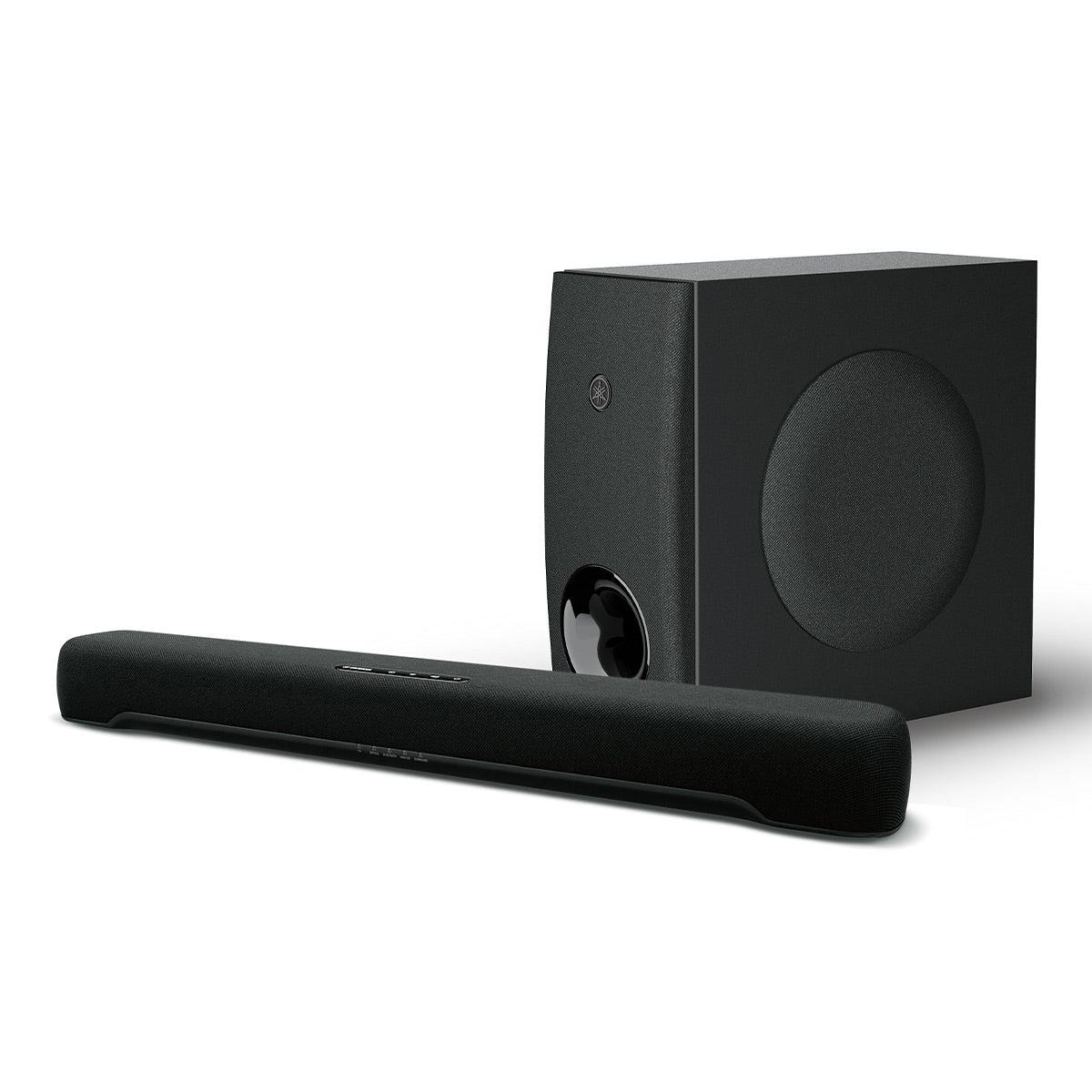
When your TV's built-in speakers just aren't cutting it anymore, you're facing a decision that goes far beyond simply "getting better sound." The soundbar market has evolved dramatically, splitting into distinct categories that serve very different needs. At one end, you have comprehensive home theater systems like the ULTIMEA Skywave X40, and at the other, streamlined solutions like the Yamaha SR-C30A. Understanding which approach fits your lifestyle—and your living room—makes all the difference.
Today's soundbar market reflects how we consume entertainment differently than even five years ago. Some of us have embraced the home theater experience, binge-watching series on massive screens and gaming for hours. Others want their evening news to sound clearer without turning the living room into a tech showcase. This divide has pushed manufacturers toward specialization rather than one-size-fits-all solutions.
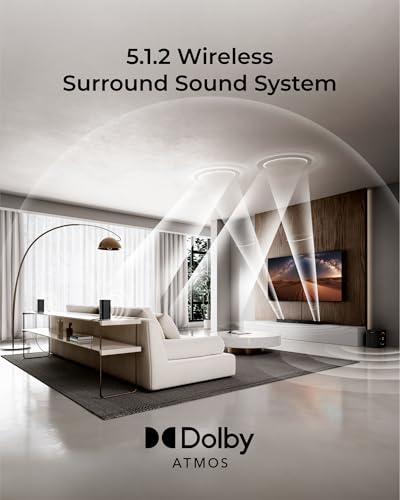
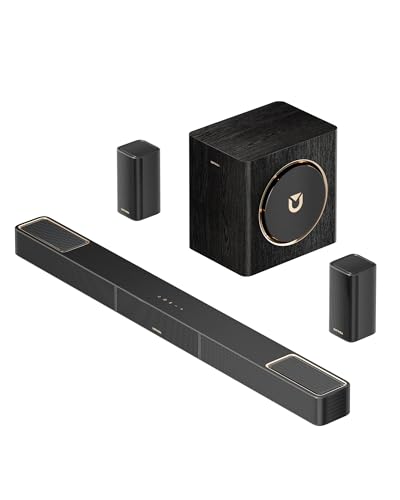
The fundamental choice comes down to channel configuration—essentially, how many separate audio streams the system can handle. A 2.1 system like the Yamaha SR-C30A processes left, right, and subwoofer channels. The ULTIMEA Skywave X40, with its 5.1.2 configuration, handles left, right, center, two surround channels, one subwoofer channel, and two height channels for overhead effects. That's not just more speakers—it's a completely different approach to recreating sound.
What makes this comparison particularly interesting is how these systems represent opposite philosophies. The Skywave X40, released in 2025, embodies the "wireless everything" trend that's been building since smart homes became mainstream. Meanwhile, the SR-C30A, despite being a more recent product, takes the traditional approach of keeping things simple and reliable.
The performance gap between these systems is substantial, but it's important to understand what drives those differences. The ULTIMEA Skywave X40 delivers 530 watts of peak power through its GaN (Gallium Nitride) amplifier—a relatively new technology that's significantly more efficient than traditional silicon-based amplifiers. GaN amplifiers generate about 40-50% less heat while switching signals eight times faster, which translates to cleaner sound reproduction, especially at higher volumes.
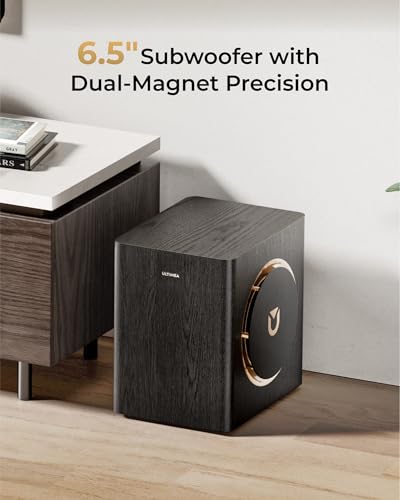
This power advantage becomes evident in real-world use. Based on user reviews and expert testing, the Skywave X40 can fill rooms up to 300 square feet without strain, maintaining clarity even during explosive action sequences. The system's bass response, extending down to 35Hz through its 6.5-inch wireless subwoofer, provides the kind of low-end impact that you feel as much as hear. The Gravus Ultra-Linear Bass Technology—ULTIMEA's proprietary processing—prevents the subwoofer from overwhelming dialogue even when delivering room-shaking effects.
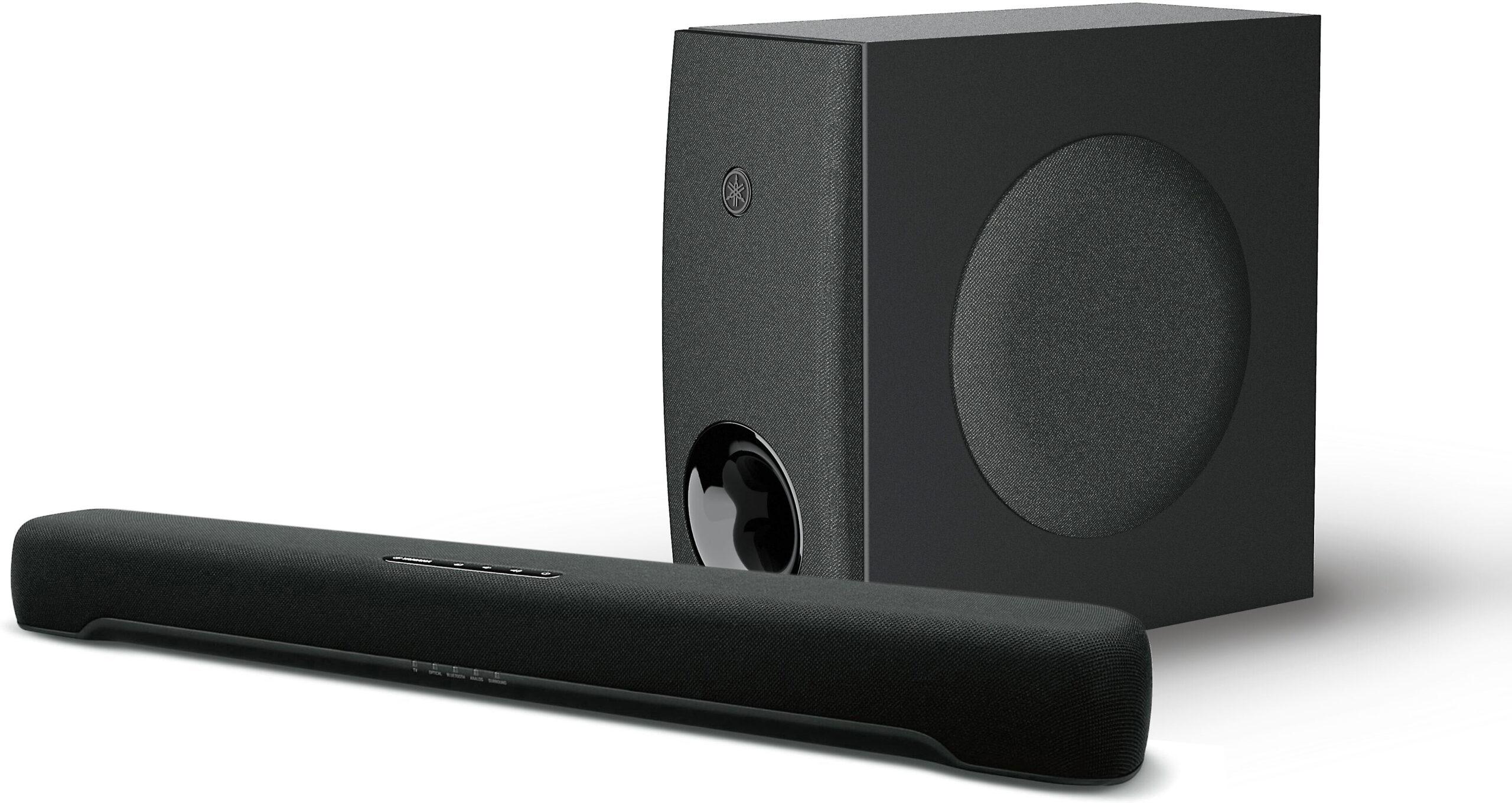
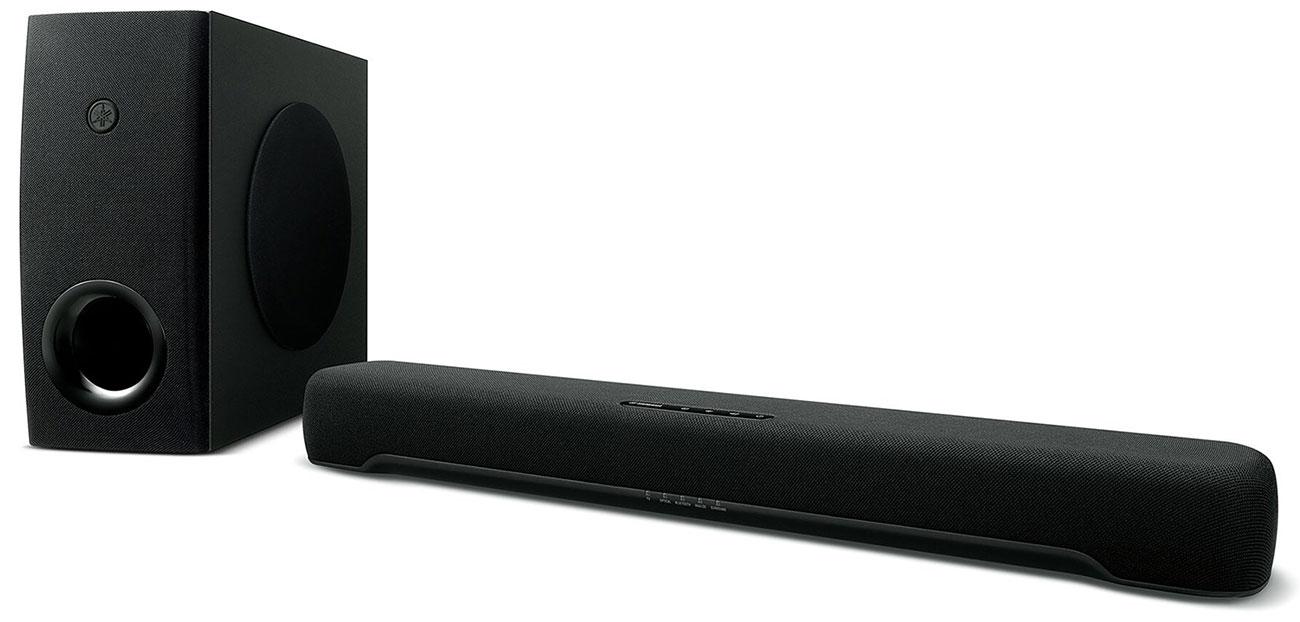
The Yamaha SR-C30A, with its 90-watt total output, operates in a different league entirely. Its 5.1-inch subwoofer and dual 1.8-inch front drivers are designed for clarity and dialogue enhancement rather than overwhelming power. Yamaha's Adaptive Low Volume Technology stands out here—it maintains fuller frequency response when you're watching late at night, avoiding the thin, compressed sound that typical "night modes" produce.
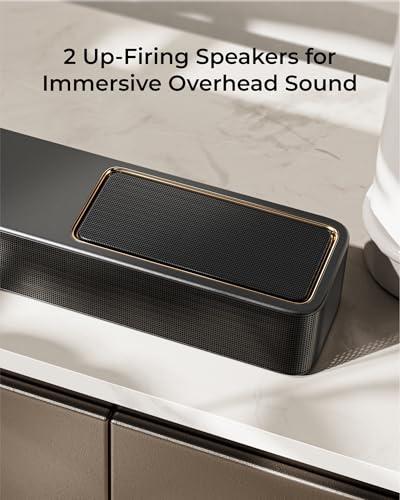
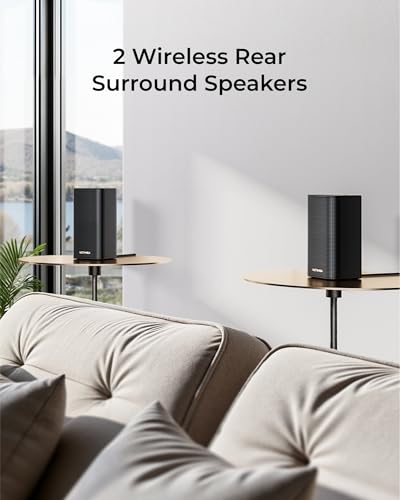
The surround sound capabilities reveal the most significant performance difference. The Skywave X40 creates genuine 360-degree audio through physical speaker placement. Its up-firing drivers bounce sound off your ceiling to create overhead effects—when a helicopter flies across the screen, you actually hear it move above your head. The wireless rear speakers position explosions and ambient sounds behind you, creating the immersive bubble that defines modern home theater.
The SR-C30A uses virtual surround processing instead, analyzing stereo signals and using psychoacoustic tricks to simulate spatial effects through just two front-facing drivers. While Yamaha's DSP (Digital Signal Processing) algorithms are sophisticated, they can't replicate the physical placement of actual surround speakers. The trade-off is simplicity—you get improved spatial awareness without the complexity of positioning multiple speakers.
The ULTIMEA Skywave X40 showcases some genuinely impressive processing capabilities through its NEURACORE engine. This triple-core DSP system operates at 2,000 MIPS (Million Instructions Per Second), handling up to 17 channels of 24-bit/192kHz audio processing. What this means practically is that the system can make real-time adjustments to optimize sound based on your room's acoustics and the content you're watching.
The system's ability to maintain less than 0.5% distortion across its entire frequency range is notable. Distortion at this level is essentially inaudible, meaning the sound you hear closely matches what the original content creators intended. This level of processing power also enables the system's 121 preset sound profiles, which adjust EQ curves for different content types and room configurations.
The Yamaha SR-C30A uses more straightforward processing focused on specific improvements rather than comprehensive sound field manipulation. Its Clear Voice mode employs targeted frequency adjustments to make dialogue more intelligible—particularly valuable if you find yourself constantly adjusting volume during shows with whispered conversations followed by loud action scenes.
Both systems support HDMI ARC (Audio Return Channel), which allows your TV to send audio back to the soundbar through the same HDMI cable that receives video. However, the ULTIMEA Skywave X40 supports eARC (enhanced Audio Return Channel), which can handle higher-quality audio formats including uncompressed 5.1 and 7.1 surround sound, as well as object-based formats like Dolby Atmos.
The Skywave X40 also includes 4K HDR passthrough, meaning you can connect gaming consoles or media players directly to the soundbar without sacrificing video quality. This feature has become increasingly important as 4K content has become standard and gaming has adopted higher frame rates and variable refresh rates.
Bluetooth connectivity differs significantly between the systems. The Skywave X40 uses Bluetooth 5.4, which offers improved range, lower power consumption, and better audio quality than the SR-C30A's Bluetooth 5.0 implementation. However, the Yamaha system includes multi-point Bluetooth connectivity, allowing you to connect multiple devices simultaneously and switch between them seamlessly.
For dedicated movie watching and gaming, the ULTIMEA Skywave X40 provides an experience that approaches commercial cinema quality. The system's low-latency wireless transmission (under 20 milliseconds) ensures that audio stays perfectly synchronized with on-screen action—critical for gaming where audio cues often provide tactical advantages.
The Dolby Atmos implementation truly shines with properly mastered content. Streaming services like Netflix, Disney+, and Apple TV+ increasingly offer Atmos soundtracks that take full advantage of the system's height channels. Rain scenes feel like they're falling from above, aircraft movements track realistically across the soundstage, and ambient environmental sounds create convincing atmosphere.
Gaming performance benefits significantly from the surround capabilities. In competitive shooters, being able to accurately locate footsteps or gunfire provides legitimate advantages. The wireless rear speakers eliminate the cable management headaches that traditionally come with surround sound, making it practical to achieve proper speaker positioning even in rooms where running wires would be challenging.
The Yamaha SR-C30A approaches gaming and movies from a different angle, focusing on making dialogue and important audio cues clearer rather than creating immersion. Its Clear Voice mode can be genuinely helpful for games with important dialogue or movies where accents or mumbling make conversations hard to follow.
For casual television viewing, both systems improve significantly over TV speakers, but they excel in different areas. The SR-C30A particularly shines for news, talk shows, and daytime television where dialogue clarity matters most. Its compact design means it won't dominate your living space, and the simple controls make it approachable for all family members.
Music performance varies considerably based on genre and listening habits. The ULTIMEA Skywave X40 excels with complex, layered music where instrument separation and soundstage width enhance the listening experience. Jazz, classical, and well-produced rock albums benefit from the system's ability to position instruments in three-dimensional space.
The SR-C30A delivers respectable music performance for casual listening, with Yamaha's audio tuning providing balanced frequency response. However, its stereo-only configuration limits its appeal for serious music listening compared to the Skywave X40's more expansive presentation.
The ULTIMEA Skywave X40 represents both the benefits and challenges of advanced wireless technology. Setup involves positioning four separate components: the main soundbar, subwoofer, and two rear speakers. The system comes pre-paired from the factory, so once everything is plugged in, the components should connect automatically. However, achieving optimal performance requires some thought about speaker placement.
The rear speakers should ideally be positioned slightly behind and to the sides of your listening position, while the subwoofer needs placement that provides good bass response without overwhelming the room. The up-firing speakers in the main bar require a reasonably flat ceiling at standard height to work effectively—cathedral ceilings or unusual room shapes can compromise the overhead effects.
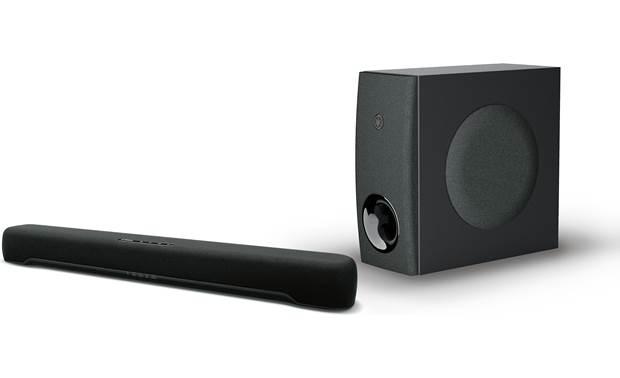
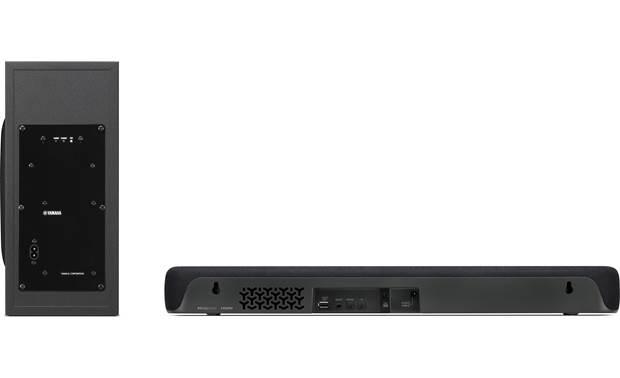
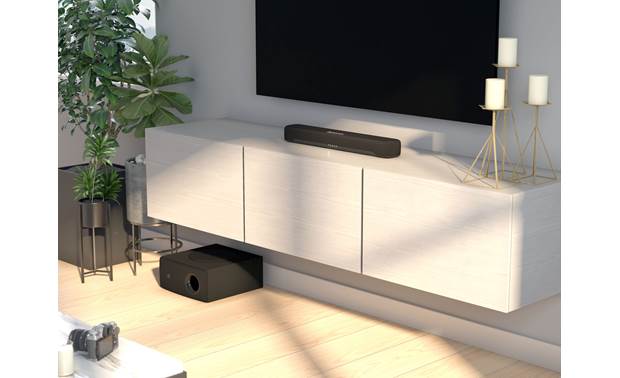
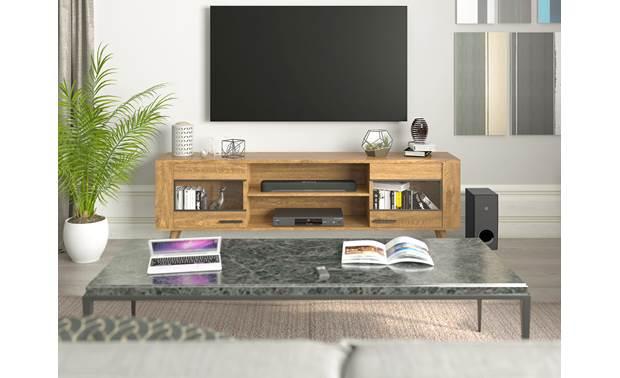
The Yamaha SR-C30A offers genuine plug-and-play simplicity. The soundbar connects to your TV, the subwoofer pairs wirelessly, and you're essentially done. The compact soundbar fits easily in front of most TVs or can be wall-mounted using built-in keyholes. The subwoofer can be positioned vertically or horizontally, providing flexibility for tight spaces.
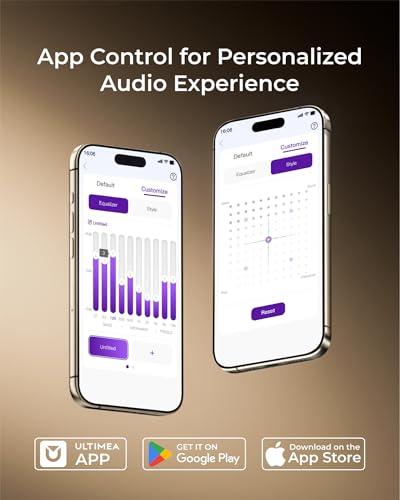
The ULTIMEA Skywave X40 provides extensive customization through its smartphone app, which includes a 10-band equalizer and 121 preset sound profiles. These presets aren't just basic EQ adjustments—they represent different approaches to sound processing optimized for specific content types or room configurations. The app also allows fine-tuning of surround speaker levels and subwoofer output, enabling precise calibration for your specific setup.
This level of control can be both a strength and a complication. Users who enjoy tweaking settings to perfect their audio experience will appreciate the flexibility, while those who prefer simple operation might find the options overwhelming.
The SR-C30A keeps controls straightforward with basic source selection, volume, and sound mode switches. The available sound modes—Standard, 3D Movie, and Game—provide enough variation for most users without complexity. The optional smartphone app offers additional convenience but doesn't fundamentally change the experience.
At the time of writing, these systems occupy very different price brackets, reflecting their distinct target markets. The ULTIMEA Skywave X40 positions itself in the premium soundbar category, competing with established brands' high-end offerings while typically providing better value than comparable systems from Samsung, JBL, or Bose.
The Yamaha SR-C30A targets the budget-conscious market, aiming to provide the maximum improvement over TV speakers for the minimum investment. At around $280, it represents an entry point into better TV audio without the complexity or cost of a full home theater setup.
The Skywave X40 offers better future-proofing with support for the latest audio formats and connectivity standards. As content creators increasingly adopt Dolby Atmos and similar technologies, the system will remain relevant longer. The wireless design also provides flexibility if you rearrange your room or move to a new home.
The SR-C30A serves as either a permanent solution for users with modest needs or a stepping stone for those who might eventually want to upgrade. Yamaha's reputation for reliability suggests the system should provide years of trouble-free operation, but its limited feature set means you might eventually outgrow its capabilities.
The ULTIMEA Skywave X40 justifies its premium positioning for users who regularly watch movies, play games, or listen to music as primary entertainment activities. If you've invested in a quality TV and streaming services with 4K and Atmos content, this system provides the audio quality to match your visual experience.
Room size plays a crucial role in this decision. The system's power and surround capabilities are best appreciated in medium to large rooms where you can position the speakers effectively and have space for the sound to develop. Studio apartments or very small living rooms might not allow the system to reach its full potential.
The wireless convenience particularly appeals to renters or anyone who doesn't want to run speaker cables across their living space. The ability to position speakers optimally without worrying about cable routing makes this system practical in situations where traditional wired surround sound would be problematic.
The Yamaha SR-C30A excels for users who primarily want clearer dialogue and better overall TV sound without complexity or high cost. If your main entertainment consists of news, talk shows, and casual TV watching, this system provides meaningful improvements without overwhelming your space or budget.
Small rooms, apartments, and bedrooms often work better with the SR-C30A's compact approach. The system won't overpower intimate spaces, and its simple operation makes it suitable for secondary rooms or situations where multiple family members need to operate the system easily.
Budget constraints naturally favor the SR-C30A, but it's worth considering this system even if you could afford more expensive options. Sometimes the simplest solution that meets your needs is genuinely the best choice.
These systems represent fundamentally different approaches to improving your TV audio experience. The ULTIMEA Skywave X40 transforms your living room into a home theater with genuine surround sound and advanced features, while the Yamaha SR-C30A provides straightforward improvements with minimal fuss.
Your choice should align with how you actually use your entertainment system. If you're the type of person who dims the lights for movie nights, plays games seriously, or listens to music while relaxing, the Skywave X40 will enhance these experiences significantly. If you mainly want the evening news to sound clearer and occasionally watch a movie, the SR-C30A accomplishes those goals more simply and affordably.
Consider your living situation, entertainment habits, and comfort level with technology when making this decision. Both systems will improve your audio experience dramatically over TV speakers—the question is whether you want that improvement to be comprehensive and immersive or focused and straightforward.
| ULTIMEA Skywave X40 5.1.2 Soundbar System | Yamaha SR-C30A Soundbar with Subwoofer |
|---|---|
| Channel Configuration - Determines surround sound capabilities and immersion level | |
| 5.1.2 channels with true surround and height effects | 2.1 channels (stereo plus subwoofer only) |
| Total Power Output - Affects maximum volume and room-filling capability | |
| 530W peak power (suitable for large rooms) | 90W total (20W per front driver, 50W subwoofer) |
| Dolby Atmos Support - Enables overhead sound effects for cinematic experience | |
| Yes, with dedicated up-firing drivers | No, virtual surround processing only |
| Subwoofer Configuration - Impacts bass depth and placement flexibility | |
| 6.5-inch wireless subwoofer, 35Hz frequency response | 5.1-inch wireless subwoofer, basic bass enhancement |
| Rear Surround Speakers - Creates true surround sound vs simulated effects | |
| Two dedicated wireless rear speakers included | None (virtual surround from front speakers only) |
| Wireless Technology - Affects setup convenience and placement options | |
| Fully wireless with dual 5GHz transmission, <20ms latency | Wireless subwoofer only, soundbar requires wired TV connection |
| Audio Processing - Determines sound quality and customization options | |
| NEURACORE triple-core DSP, 2,000 MIPS processing power | Basic Dolby Digital/Pro Logic II processing |
| Connectivity Options - Affects compatibility with modern devices | |
| HDMI eARC, 4K HDR passthrough, Bluetooth 5.4, optical, USB | HDMI ARC, dual optical inputs, Bluetooth 5.0, 3.5mm analog |
| Control and Customization - Impacts user experience and sound tuning | |
| Smart app with 10-band EQ, 121 preset profiles | Basic remote, 4 sound modes, optional app |
| Physical Design - Affects room aesthetics and placement requirements | |
| Larger system requiring space for 4 components | Compact design, 30% smaller than traditional soundbars |
| Target Room Size - Optimal performance based on space constraints | |
| Medium to large rooms (200+ sq ft) | Small to medium rooms, ideal for apartments |
| Setup Complexity - Time and effort required for installation | |
| More complex (positioning 4 wireless components optimally) | Simple plug-and-play setup |
| Value Proposition - Performance relative to typical market pricing | |
| Premium system competing with high-end brands at better value | Budget-friendly entry point for TV audio improvement |
The ULTIMEA Skywave X40 is significantly better for movies with its true 5.1.2 Dolby Atmos surround sound, creating overhead effects and immersive audio. The Yamaha SR-C30A focuses on dialogue clarity with its Clear Voice mode, making it better for TV shows and news where speech intelligibility matters most.
The ULTIMEA Skywave X40 is a complete 5.1.2 surround sound system with wireless rear speakers and overhead effects, while the Yamaha SR-C30A is a simple 2.1 stereo soundbar with just a subwoofer. The X40 creates true surround sound, while the SR-C30A enhances stereo audio.
The Yamaha SR-C30A is much easier to set up with just two components and basic controls. The ULTIMEA Skywave X40 requires positioning four wireless components (soundbar, subwoofer, and two rear speakers) and offers more complex customization options through its smartphone app.
The ULTIMEA Skywave X40 performs best in medium to large rooms (200+ square feet) where you can properly position all speakers. The Yamaha SR-C30A is designed for smaller spaces and apartments, with a compact design that won't overwhelm tight areas.
Both offer good value in their categories. The Yamaha SR-C30A provides excellent value for basic TV audio improvement at a budget-friendly price. The ULTIMEA Skywave X40 offers competitive value compared to other premium Dolby Atmos systems from major brands.
Both soundbars connect to your TV via HDMI or optical cables. However, the ULTIMEA Skywave X40 features fully wireless rear speakers and subwoofer that only need power outlets. The Yamaha SR-C30A has a wireless subwoofer but the main soundbar requires a wired connection to your TV.
The ULTIMEA Skywave X40 excels for gaming with its low-latency wireless technology (under 20ms) and surround sound that helps locate audio cues. The Yamaha SR-C30A offers a dedicated Game mode but lacks the positional audio advantages of true surround sound.
The ULTIMEA Skywave X40 delivers 530W of peak power across all channels, suitable for filling large rooms. The Yamaha SR-C30A provides 90W total power (20W per front speaker, 50W subwoofer), which is adequate for smaller spaces and moderate volume levels.
The ULTIMEA Skywave X40 features a larger 6.5-inch wireless subwoofer with deeper bass extension down to 35Hz and Gravus Ultra-Linear Bass Technology. The Yamaha SR-C30A includes a 5.1-inch subwoofer that provides enhanced bass but with less depth and power.
The ULTIMEA Skywave X40 includes a comprehensive smartphone app with 10-band EQ, 121 preset sound profiles, and detailed customization options. The Yamaha SR-C30A offers a basic Sound Bar Remote app for simple control functions, with most settings managed via the included remote.
Only the ULTIMEA Skywave X40 supports true Dolby Atmos with dedicated up-firing speakers for overhead effects. The Yamaha SR-C30A uses virtual surround processing and supports Dolby Digital but cannot create true Atmos height effects.
For a complete home theater experience, choose the ULTIMEA Skywave X40 with its true surround sound and Dolby Atmos capabilities. If you want simple TV audio improvement without complexity, the Yamaha SR-C30A provides an affordable entry point with reliable performance and easy operation.
We've done our best to create useful and informative comparisons to help you decide what product to buy. Our research uses advanced automated methods to create this comparison and perfection is not possible - please contact us for corrections or questions. These are the sites we've researched in the creation of this article: bestbuy.com - shopabunda.com - youtube.com - youtube.com - youtube.com - youtube.com - ultimea.com - walmart.com - youtube.com - hometechnologyreview.com - community.ultimea.com - avsforum.com - youtube.com - youtube.com - youtube.com - bestbuy.com - hometechnologyreview.com - techradar.com - usa.yamaha.com - expertreviews.com - usa.yamaha.com - trustedreviews.com - crutchfield.com - europe.yamaha.com - usa.yamaha.com - shop.usa.yamaha.com - assetserver.net

Privacy Policy
Terms and Conditions - Affiliate Policy
Home Security
© Copyright 2008-2026.
11816 Inwood Rd #1211, Dallas, TX 75244