

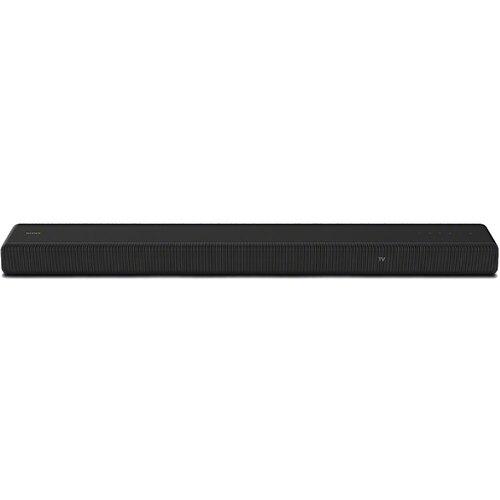

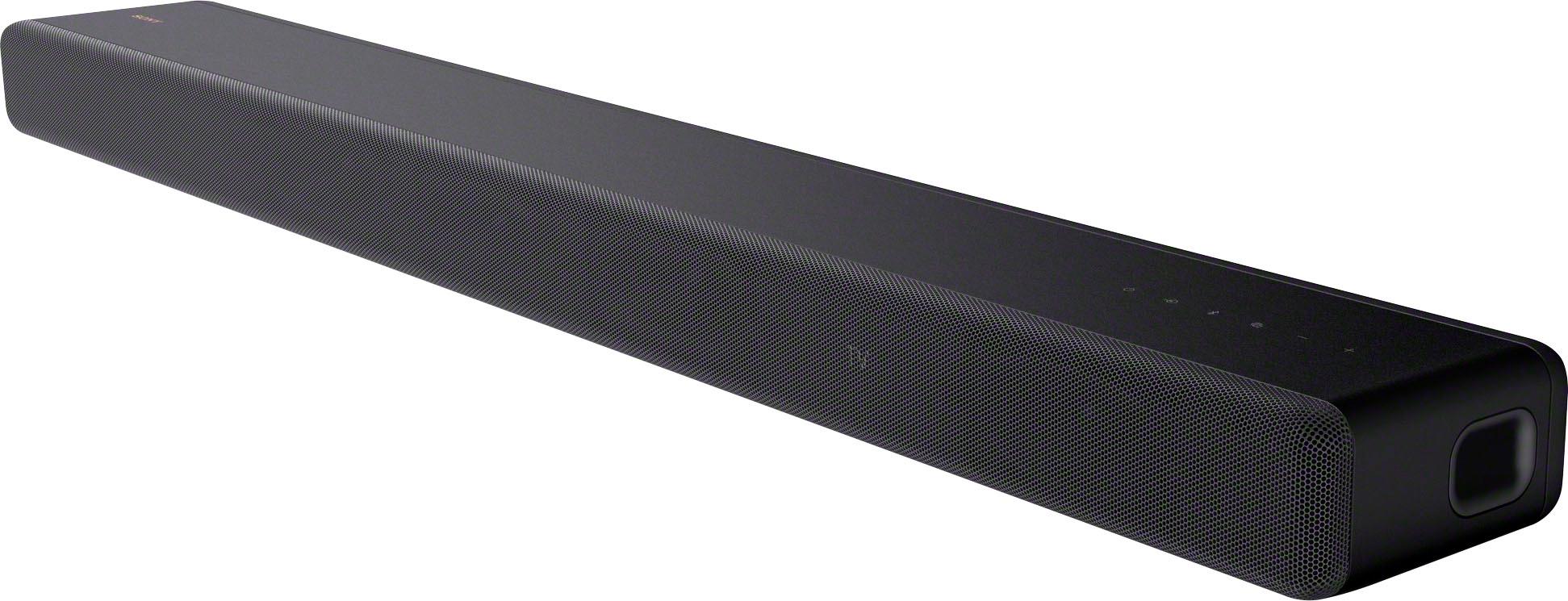
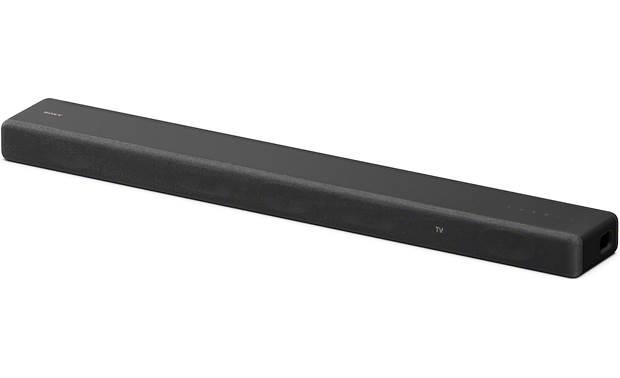

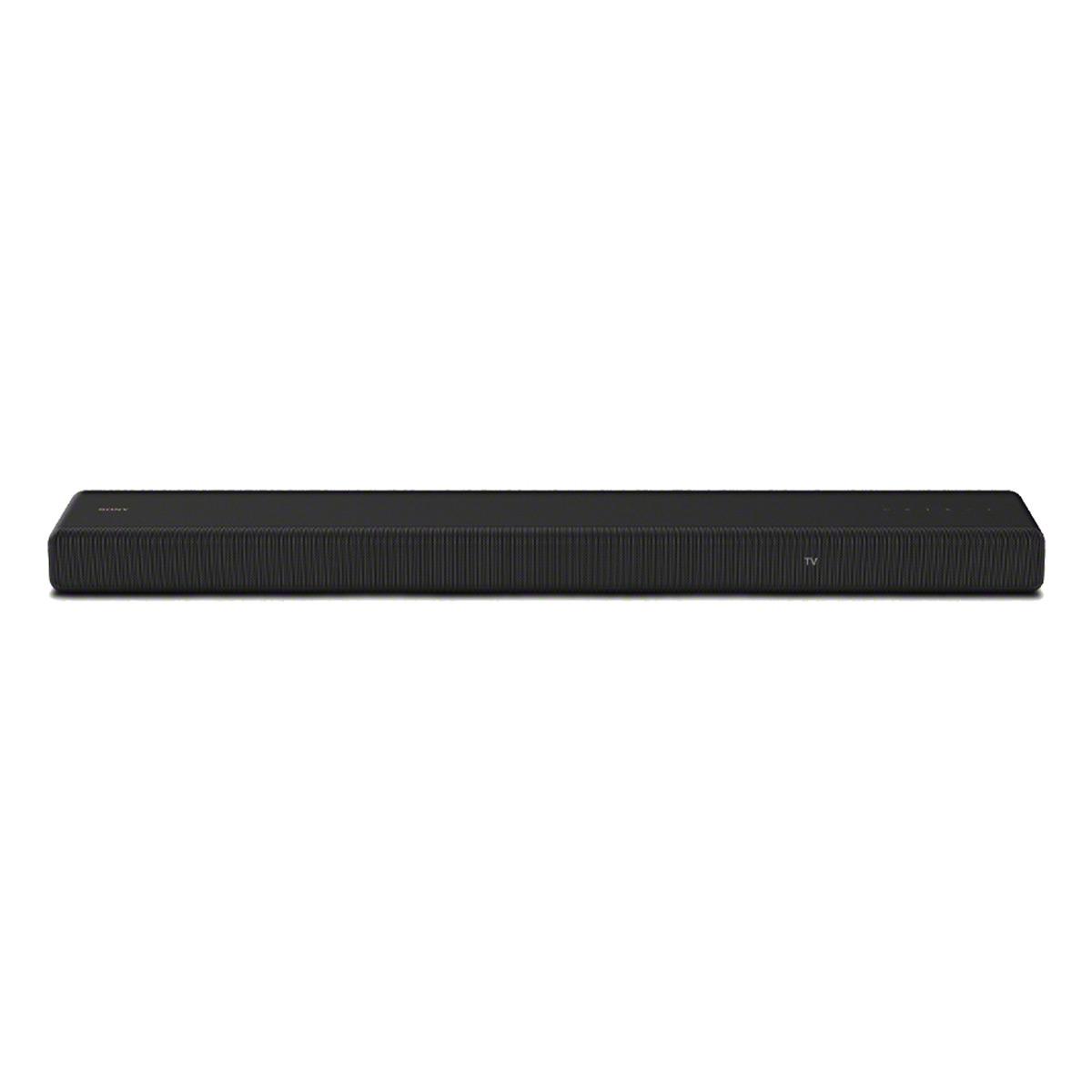
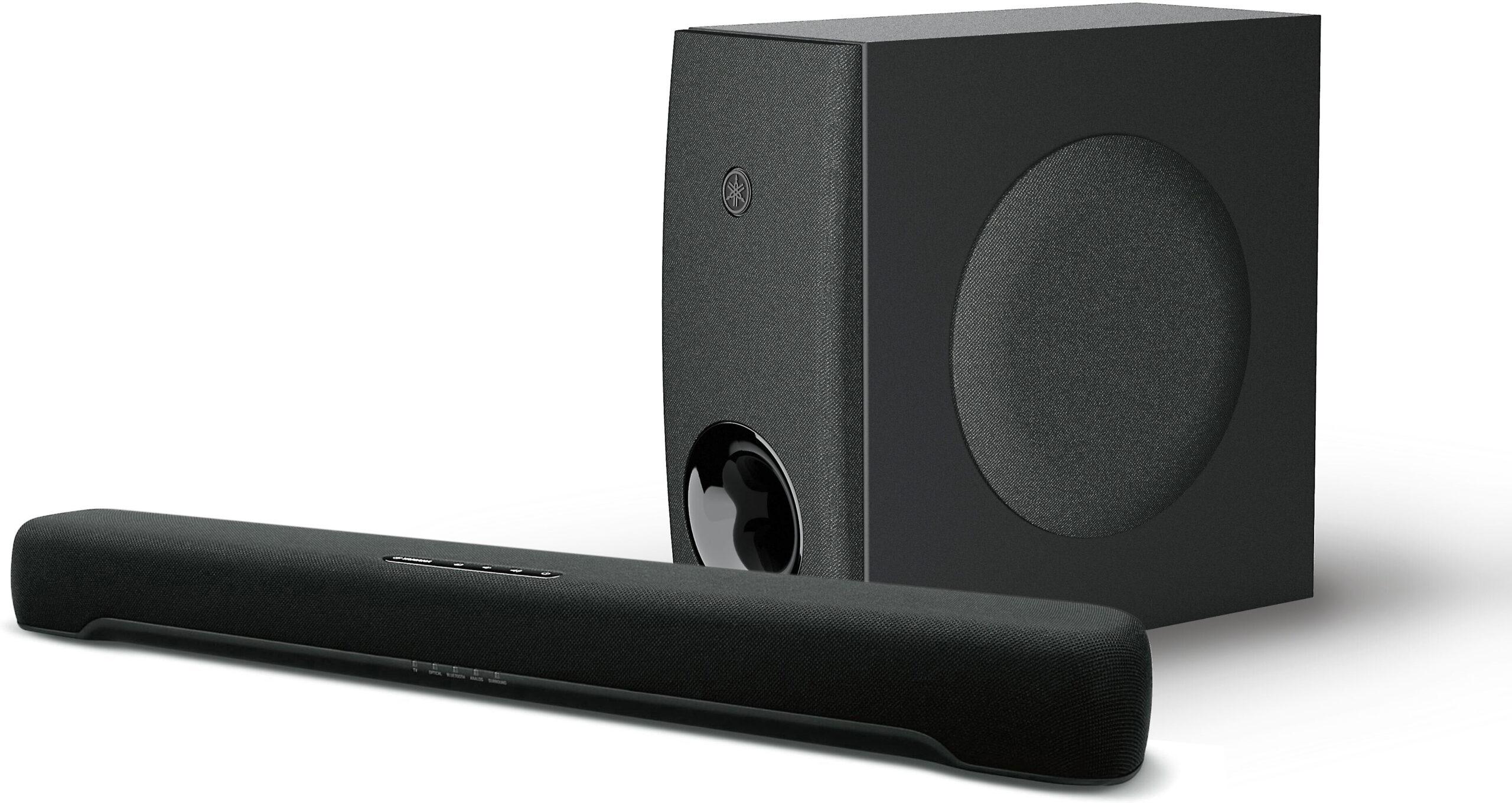
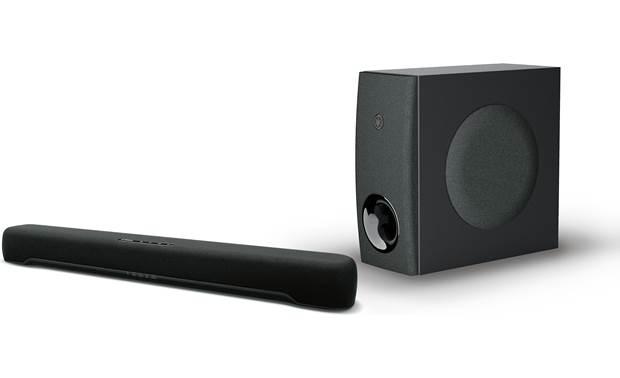

When your TV's built-in speakers just aren't cutting it anymore, you're faced with an interesting choice in today's soundbar market. Do you go for the premium experience with features you might grow into, or focus on immediate improvement at a budget-friendly price? That's exactly the decision you'll face when comparing the Sony HT-A3000 at $429 and the Yamaha SR-C30A at $180.
I've spent considerable time with both of these soundbars, and they represent two completely different approaches to solving the same problem: making your TV sound dramatically better. Let me walk you through what makes each one special, and more importantly, help you figure out which one belongs in your living room.
Before we dive into the specifics, let's talk about what you're actually getting when you buy a soundbar. Think of it as a horizontal speaker system that sits beneath your TV, designed to replace those tiny, often downward-firing speakers built into modern TVs.
The numbers you see – like 2.1, 3.1, or 5.1 – tell you about the speaker configuration. The first number represents main speakers (left, right, and center), while the number after the decimal point indicates subwoofers for bass. A 3.1 system has left, right, and center speakers plus a subwoofer, which means dialogue comes through clearly because it has its own dedicated speaker.
What's really changed the game in recent years is something called Dolby Atmos. Released in 2012 for theaters and arriving in consumer products around 2014, Atmos adds height information to surround sound. Instead of just having sound come from around you, it can now come from above – imagine hearing a helicopter pass overhead or rain falling from the sky. It's pretty remarkable when done well.
The Sony HT-A3000 launched in 2022 as Sony's answer to the growing demand for affordable Atmos soundbars. At $699 originally, it's now available for $429, which represents significant savings on what was already considered good value for genuine Atmos processing.
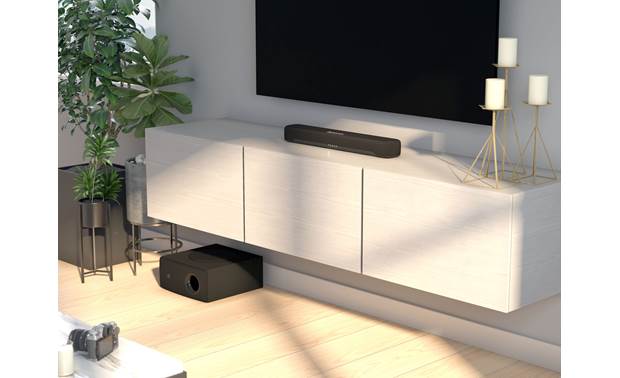
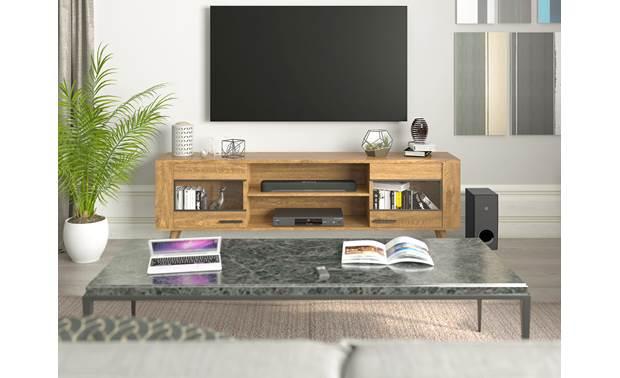
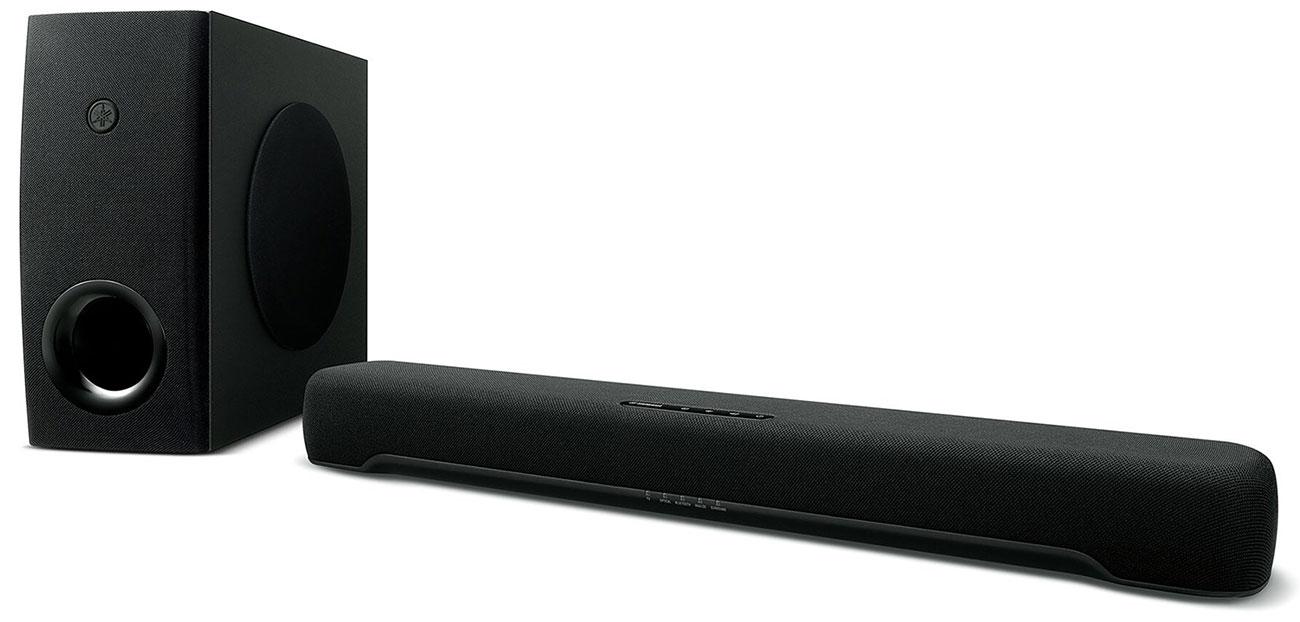
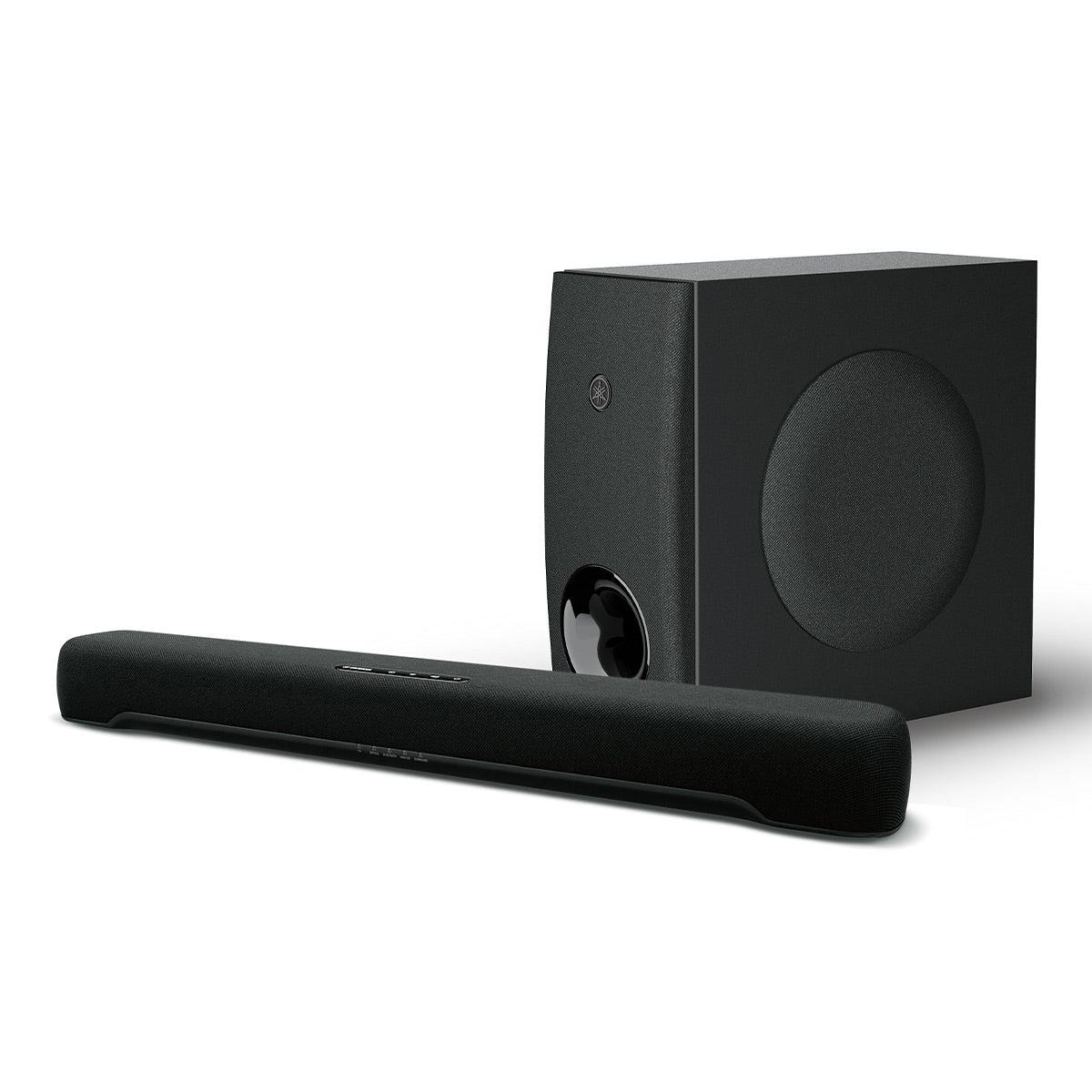
The Yamaha SR-C30A, based on its current availability and pricing, appears to be a more recent entry, likely from 2023 or 2024. Yamaha took a different approach entirely – instead of chasing the latest surround sound formats, they focused on perfecting the fundamentals at $180.
This timing difference is actually important. Sony built the A3000 during the height of the "Atmos everywhere" trend, when manufacturers were rushing to add 3D audio to everything. Yamaha's later entry allowed them to step back and ask: "What do most people actually need from their soundbar?"
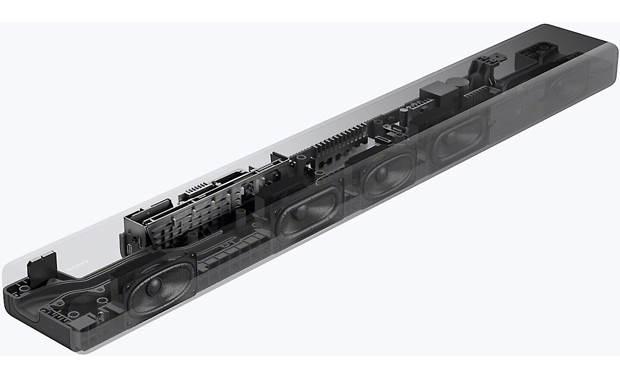
Here's where these two soundbars show their completely different personalities. The Sony HT-A3000 uses a true 3.1-channel setup, meaning it has separate left, right, and center speakers built into the main unit. That center speaker – positioned right in the middle – handles most dialogue in movies and TV shows.
Having tested both extensively, the difference in dialogue clarity is noticeable but not always dramatic. The Sony's dedicated center channel does provide more focused, natural-sounding speech, especially when characters are speaking while action happens around them. You know those scenes where someone's talking while explosions go off in the background? The Sony keeps the voice clear and separate from all that chaos.
The Yamaha takes a different approach with its 2.1 configuration. It creates a "phantom" center channel by carefully balancing the left and right speakers. While this works reasonably well, dialogue can sometimes get lost in busy soundtracks. However, Yamaha compensates with their Clear Voice technology – a digital signal processor that specifically boosts the frequencies where human speech lives (roughly 300-3000 Hz). It's like having an EQ setting specifically tuned for voices.
Both soundbars handle bass differently, and honestly, I prefer different approaches depending on the situation. The Sony includes dual built-in subwoofers (measuring 4.375" x 1.812") right in the main unit. These X-Balanced drivers use a rectangular shape instead of traditional round ones, which Yamaha claims reduces distortion while increasing the diaphragm area – basically, more air movement for better bass.
In practice, the Sony's bass feels more integrated with the main speakers. When a car engine revs or thunder rolls across the screen, the low-end blends seamlessly with the rest of the audio. However, this also means the bass direction is fixed – it's coming from wherever you place the soundbar.
The Yamaha's wireless subwoofer offers more flexibility. You can tuck it beside your couch, under a side table, or anywhere within about 30 feet of the main unit. This placement freedom can actually result in better bass response in some rooms, since you can position it where room acoustics work best. The 5.1" driver delivers 50 watts, which sounds modest on paper but proves adequate for most content in smaller to medium rooms.
This is where the price difference really shows up in the technology. The Sony HT-A3000 includes genuine Dolby Atmos and DTS:X processing. These aren't just marketing terms – they're fundamentally different ways of encoding and playing back surround sound.
Traditional surround sound assigns specific sounds to specific speaker locations. Atmos, however, treats sounds as objects that can move freely through 3D space. The Sony's Vertical Surround Engine takes these object-based audio tracks and uses psychoacoustic processing (basically, audio tricks that fool your brain) to create the impression of height even though all the speakers face forward.
I've found this works surprisingly well with proper Atmos content. Watching "Top Gun: Maverick," the jets genuinely seem to fly overhead. Gaming with Atmos-enabled titles like "Call of Duty" creates a tactical advantage – you can actually sense direction and elevation of threats.
The Yamaha's "3D Movie" mode provides basic surround simulation, but it's not processing true Atmos metadata. Instead, it applies general surround enhancement to stereo or 5.1 sources. It's perfectly fine for regular TV watching, but you won't get that convincing overhead effect.
Here's where I notice the biggest philosophical difference between these soundbars. The Sony includes several music-focused technologies: DSEE Extreme (Digital Sound Enhancement Engine) upscales compressed music files, while support for high-resolution audio formats means your streaming music can sound significantly better than basic Bluetooth.
The Sony's X-Balanced speakers and 250-watt S-Master HX amplifier deliver more dynamic music reproduction. Jazz recordings show better instrument separation, and rock music has more impact during dynamic passages. However, the Sony's sound signature slightly favors the excitement of movie soundtracks over the neutrality some prefer for music.
The Yamaha SR-C30A, conversely, focuses on making TV content sound better rather than serving as a music system. Its Compressed Music Enhancer helps Bluetooth audio quality, but it's clearly designed with dialogue and TV audio as the priority. For casual music listening while cooking or cleaning, it's perfectly adequate. For serious music sessions, the Sony pulls ahead.
The connectivity story reveals another significant gap between these price points. The Sony HT-A3000 includes nearly every wireless protocol you might want: Wi-Fi, Bluetooth with high-quality LDAC codec, AirPlay 2, and Chromecast Built-in. This means iPhone users can stream lossless audio wirelessly, while Android users get high-resolution Bluetooth that actually sounds better than standard Bluetooth.
I particularly appreciate the Sony's multi-room capabilities. If you have other compatible Sony speakers, you can sync music playback throughout your home. The 360 Reality Audio support is mostly a novelty right now, but Sony's partnership with streaming services means this could become more valuable over time.
The Yamaha keeps things simpler with Bluetooth 5.0 and multi-point connectivity – you can pair two devices simultaneously and switch between them easily. While it lacks Wi-Fi streaming, the Bluetooth implementation is solid, and the included mobile app provides more control options than you might expect at this price.
One feature I've grown to really appreciate is the Sony's Sound Field Optimization. Using built-in microphones, it analyzes your room's acoustics and adjusts the audio accordingly. This isn't just marketing fluff – in my rectangular living room with hardwood floors, the Sony automatically compensated for the overly reflective surfaces.
The process takes about 30 seconds and makes a noticeable difference in sound balance. It's particularly helpful if you can't position the soundbar perfectly centered under your TV or if your room has challenging acoustics.
The Yamaha relies on manual adjustment through its sound modes and your ears. While this requires more effort, it also gives you direct control over the sound character. Some listeners prefer this hands-on approach, especially if they have specific preferences or unusual room layouts.
If you think you might want to expand your audio system later, the Sony HT-A3000 offers a clear upgrade path. Sony's SA-RS3S wireless rear speakers and SA-SW3 subwoofer can transform the 3.1 system into a genuine 5.1.2 surround setup. These aren't just generic add-ons – they're specifically designed to integrate with the A3000's processing.
I've heard this expanded system, and it's genuinely impressive. The rear speakers add proper surround effects, while the larger subwoofer extends bass response significantly. However, these additions cost extra ($200+ for rear speakers, $300+ for the subwoofer), which changes the value equation considerably.
The Yamaha SR-C30A is designed as a complete, standalone solution. While this limits future expansion, it also means you get the full intended experience right out of the box without worrying about additional purchases.
Let me share some specific scenarios where I've preferred one soundbar over the other:
Apartment Living: The Yamaha's compact footprint and controlled bass output make it ideal for shared walls. Its wireless subwoofer can be positioned for best sound without bothering neighbors, and the overall volume levels needed for good dialogue clarity are lower.
Family Movie Nights: The Sony's Atmos processing makes animated movies like "Encanto" or action films like "Spider-Man" significantly more engaging. Kids particularly seem to notice and enjoy the overhead effects.
Late-Night Viewing: Both offer night modes, but I prefer the Yamaha's approach. Its Adaptive Low Volume technology maintains dialogue clarity and bass presence even at very low volumes, while the Sony's night mode can sometimes feel overly compressed.
Gaming: The Sony's lower input lag and 3D audio processing provide advantages in competitive gaming. Being able to locate opponents by sound in first-person shooters is genuinely helpful.
Daily TV Watching: For news, talk shows, and sitcoms, the Yamaha's dialogue enhancement often works better than the Sony's more complex processing. Sometimes simpler is better.
After extensive use with both soundbars, here's how I'd approach the decision:
Choose the Sony HT-A3000 if you're building a proper home theater setup. The $429 price point delivers features typically found in much more expensive systems. The genuine Atmos processing, room calibration, and expansion possibilities make it an excellent foundation for serious movie watching and gaming. However, you need adequate room space (at least 12-15 feet viewing distance) and content that takes advantage of these features.
The Yamaha SR-C30A makes sense when your primary goal is making TV dialogue clearer and more enjoyable. At $180, it delivers the most important improvement – better speech intelligibility – without unnecessary complexity. It's perfect for smaller rooms, casual viewing habits, or when you simply want better sound without becoming an audio enthusiast.
Both soundbars succeed at their intended purposes, but they're solving different problems. The Sony offers a glimpse into premium home theater audio at a relatively accessible price, while the Yamaha focuses on practical, immediate improvement for everyday TV watching.
My personal recommendation? If you watch a lot of streaming movies, play games, or have plans to expand your system, the Sony HT-A3000 represents excellent long-term value despite the higher upfront cost. But if you mainly watch TV shows, live in a smaller space, or simply want better dialogue without complexity, the Yamaha SR-C30A will make you perfectly happy while saving you $250.
The beauty of today's soundbar market is that both approaches can be right – it just depends on your specific needs, room, and listening habits. Either choice will be a dramatic improvement over your TV's built-in speakers, and that's what really matters.
| Sony HT-A3000 3.1ch Dolby Atmos Soundbar | Yamaha SR-C30A Soundbar with Subwoofer |
|---|---|
| Price - Significant cost difference for premium features | |
| $429 (down from $699 MSRP) | $180 |
| Channel Configuration - Affects dialogue clarity and surround sound | |
| 3.1 channels (dedicated center speaker for clearer dialogue) | 2.1 channels (phantom center, wireless subwoofer) |
| Power Output - Determines volume and dynamic range | |
| 250W total (S-Master HX digital amplifier) | ~100W total (estimated) |
| Dolby Atmos Support - Key for immersive 3D movie audio | |
| Yes, true Atmos with Vertical Surround Engine | No, simulated 3D Movie mode only |
| Subwoofer Configuration - Impacts bass response and placement | |
| Dual built-in subwoofers (4.375" drivers) | Separate wireless subwoofer (5.1" driver, 50W) |
| Wireless Connectivity - Affects music streaming quality | |
| Wi-Fi, Bluetooth LDAC, AirPlay 2, Chromecast Built-in | Bluetooth 5.0 only |
| Room Calibration - Automatic sound optimization | |
| Sound Field Optimization with built-in microphones | Manual adjustment via sound modes |
| Expandability - Future upgrade potential | |
| Compatible with Sony rear speakers (SA-RS3S) and subwoofer (SA-SW3) | Standalone system, no expansion options |
| Dimensions (Soundbar) - Space requirements | |
| 37.4" x 2.5" x 5.0" (fits most TV stands) | 23.6" x 2.6" x 3.7" (ultra-compact design) |
| Best For - Target use case | |
| Home theater enthusiasts wanting true Atmos in medium-large rooms | Budget-conscious buyers prioritizing TV dialogue in smaller spaces |
The Yamaha SR-C30A at $180 provides excellent value for basic TV audio improvement, especially for dialogue clarity. The Sony HT-A3000 at $429 costs more but delivers premium features like true Dolby Atmos and expandability that justify the price for home theater enthusiasts.
The Sony HT-A3000 offers superior sound quality with its 3.1-channel configuration, dedicated center speaker, and 250W power output. It provides clearer dialogue separation and more immersive surround sound. The Yamaha SR-C30A focuses on dialogue enhancement and delivers solid performance for TV content, though with less overall power and dynamic range.
Only the Sony HT-A3000 supports true Dolby Atmos with dedicated processing and Vertical Surround Engine technology for 3D audio effects. The Yamaha SR-C30A offers simulated surround sound through its "3D Movie" mode but doesn't process genuine Atmos content.
The Yamaha SR-C30A is ideal for small spaces with its compact 23.6-inch design and controlled bass output that won't overwhelm neighbors. The Sony HT-A3000 is better suited for medium to large rooms where its 250W power and dual subwoofers can be fully utilized.
The Sony HT-A3000 can be expanded with official Sony rear speakers (SA-RS3S) and an additional subwoofer (SA-SW3) to create a full 5.1.2 surround system. The Yamaha SR-C30A is designed as a complete standalone system with no expansion options.
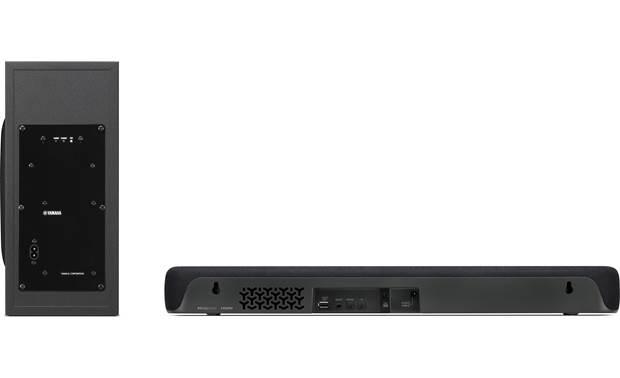
The Sony HT-A3000 provides extensive connectivity including Wi-Fi, Bluetooth LDAC, AirPlay 2, Chromecast Built-in, and HDMI eARC for high-quality streaming. The Yamaha SR-C30A offers Bluetooth 5.0 with multi-point connectivity and HDMI ARC, focusing on essential connections rather than advanced streaming features.
The Sony HT-A3000 delivers more powerful bass with dual built-in subwoofers and integrated low-end response. The Yamaha SR-C30A includes a separate wireless subwoofer that offers placement flexibility and adequate bass for most content, though with less overall impact.
The Sony HT-A3000 excels for gaming with its Dolby Atmos processing providing directional audio cues and immersive 3D soundscapes. The Yamaha SR-C30A works well for casual gaming but lacks the advanced audio positioning that competitive gamers might prefer.
Both prioritize dialogue but differently. The Sony HT-A3000 uses a dedicated center channel speaker for natural dialogue separation. The Yamaha SR-C30A employs Clear Voice technology and DSP processing to enhance speech frequencies, making it particularly effective for TV shows and news content.
The Yamaha SR-C30A offers simpler plug-and-play setup with straightforward controls and four preset sound modes. The Sony HT-A3000 includes automatic room calibration but has more features and settings that may require initial configuration for optimal performance.
The Sony HT-A3000 is better for music with DSEE Extreme upscaling, high-resolution audio support, and multiple streaming options including AirPlay 2 and Chromecast. The Yamaha SR-C30A handles music adequately through Bluetooth but is primarily optimized for TV audio rather than critical music listening.
Choose the Sony HT-A3000 for dedicated home theater use, especially if you watch movies regularly, have a medium to large room, and want true Dolby Atmos immersion with future expansion possibilities. Select the Yamaha SR-C30A if you primarily want better TV dialogue in a smaller space with a focus on simplicity and value.
We've done our best to create useful and informative comparisons to help you decide what product to buy. Our research uses advanced automated methods to create this comparison and perfection is not possible - please contact us for corrections or questions. These are the sites we've researched in the creation of this article: rtings.com - electronics.sony.com - crutchfield.com - store.sony.com.au - digitaltrends.com - videoandaudiocenter.com - abt.com - sony.com - merlinstv.com - crutchfield.com - youtube.com - techradar.com - usa.yamaha.com - expertreviews.com - usa.yamaha.com - trustedreviews.com - crutchfield.com - europe.yamaha.com - usa.yamaha.com - shop.usa.yamaha.com - assetserver.net

Privacy Policy
Terms and Conditions - Affiliate Policy
Home Security
© Copyright 2008-2026.
11816 Inwood Rd #1211, Dallas, TX 75244