


If you've ever tried watching an action movie with your TV's built-in speakers, you know the struggle. Dialogue gets lost in explosions, bass is practically non-existent, and the whole experience feels flat. That's where soundbars come in—they're designed to fix these problems without the complexity of a full surround sound system.
Today we're comparing two soundbars that couldn't be more different: the high-end Devialet Dione and the budget-friendly Yamaha SR-C30A. These represent opposite ends of the soundbar market, and understanding their differences will help you figure out which approach makes sense for your situation.
Before diving into specifics, let's talk about what actually matters in a soundbar. The most important factors are audio quality (how good it sounds), spatial audio capabilities (how well it creates a surround sound effect), room integration (how it fits in your space), connectivity options, and overall value.
Audio quality comes down to several technical aspects. Frequency response measures how evenly a soundbar reproduces different pitches—from deep bass rumbles to crisp high notes. Dynamic range refers to the difference between the quietest and loudest sounds it can produce cleanly. Distortion is unwanted noise that creeps in when you turn up the volume. The best soundbars excel in all these areas.
Spatial audio, particularly Dolby Atmos, adds height to the sound field by bouncing audio off your ceiling to create the impression of overhead effects. This makes helicopters sound like they're flying above you rather than just in front of you. However, not all Atmos implementations are equal—some use dedicated upward-firing drivers, while others rely on digital processing tricks.
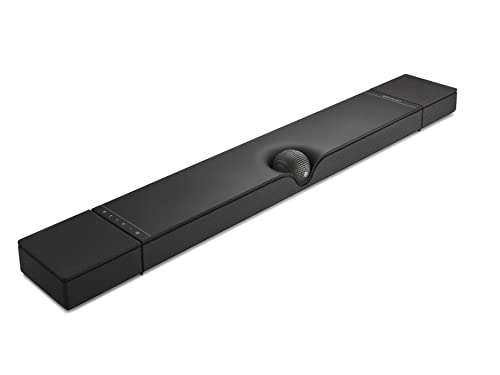
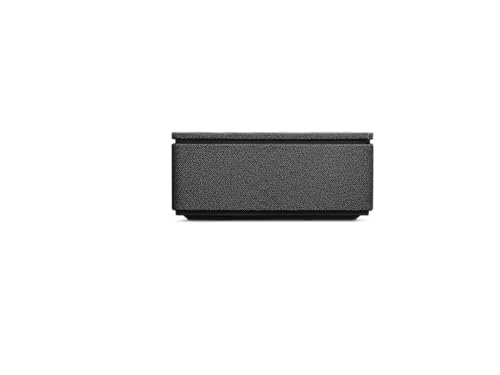
Released in 2022, the Devialet Dione represents what happens when an audiophile company decides to make a soundbar. Devialet built their reputation on ultra-high-end speakers that cost as much as a car, so their approach to soundbars was always going to be different.
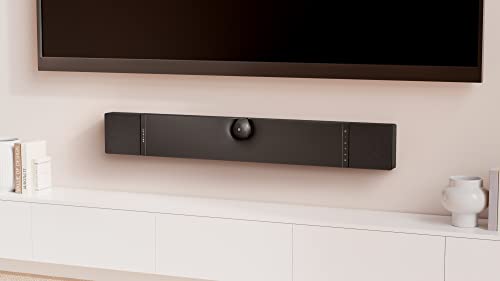
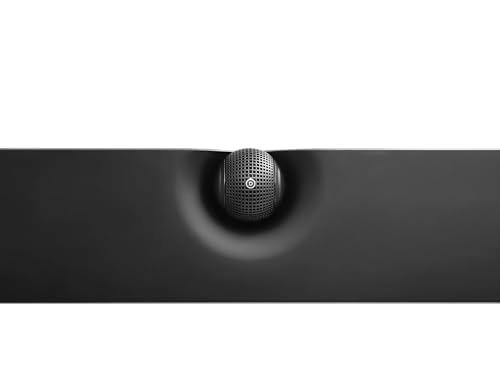
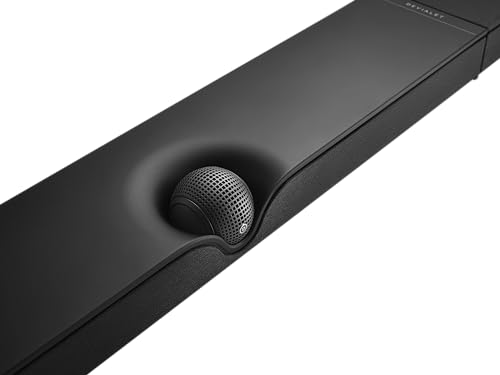
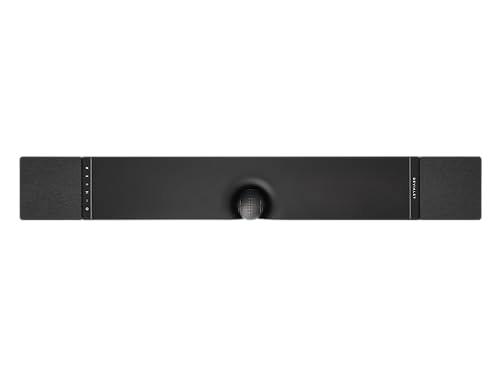
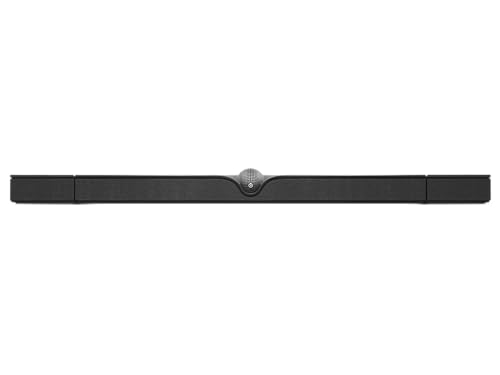
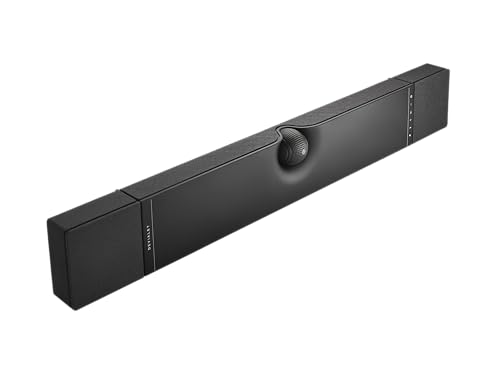
The first thing you notice about the Dione is its distinctive spherical center channel, called the ORB. This isn't just for show—it's a mechanically rotating speaker that ensures dialogue always points toward your listening position, whether the soundbar is sitting on a TV stand or mounted on the wall. This kind of engineering attention is typical of Devialet's approach.
Under the hood, the Dione packs 17 individual drivers: 9 full-range speakers for mids and highs, plus 8 dedicated bass drivers. That's more speakers than many people have in their entire home theater setup. These aren't generic drivers either—Devialet uses aluminum cones and advanced magnet systems that you'd typically find in high-end bookshelf speakers.
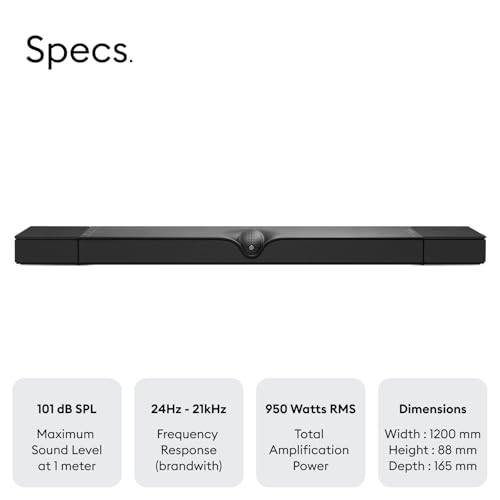
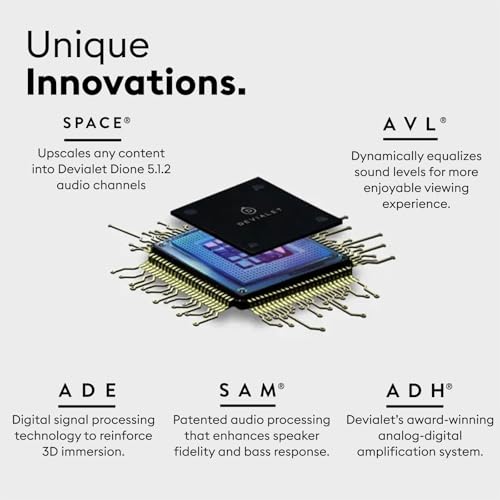
The real magic happens in the amplification. The Dione uses something called ADH (Analog Digital Hybrid) amplification. Without getting too technical, this combines the pure sound quality of traditional analog amplifiers with the efficiency and power of digital ones. The result is 950 watts of total power with incredibly low distortion—we're talking about measurements that rival dedicated audiophile equipment.
Another standout technology is SAM (Speaker Active Matching), which essentially means the soundbar knows exactly how each driver behaves and corrects for any imperfections in real-time. This is why the Dione can produce bass down to 24Hz (that's subwoofer territory) without actually needing a separate subwoofer.
Based on professional reviews and user feedback, the Dione delivers on its technical promises. The bass response is genuinely surprising for a single-unit soundbar—it can shake your couch during action scenes while maintaining clarity in dialogue. The frequency response stays remarkably even across the spectrum, meaning voices sound natural, explosions have weight, and musical scores retain their detail.
For Dolby Atmos content, the Dione uses a technology called ADE (Advanced Dimensional Experience) that combines physical driver placement with digital processing to create convincing height effects. While it can't perfectly replicate having actual ceiling speakers, it comes closer than most soundbars manage.
The SPACE technology deserves special mention—this is Devialet's proprietary system for converting regular stereo content into a more immersive experience. Unlike generic surround modes that often make music sound artificial, SPACE is designed to enhance without overwhelming the original recording.
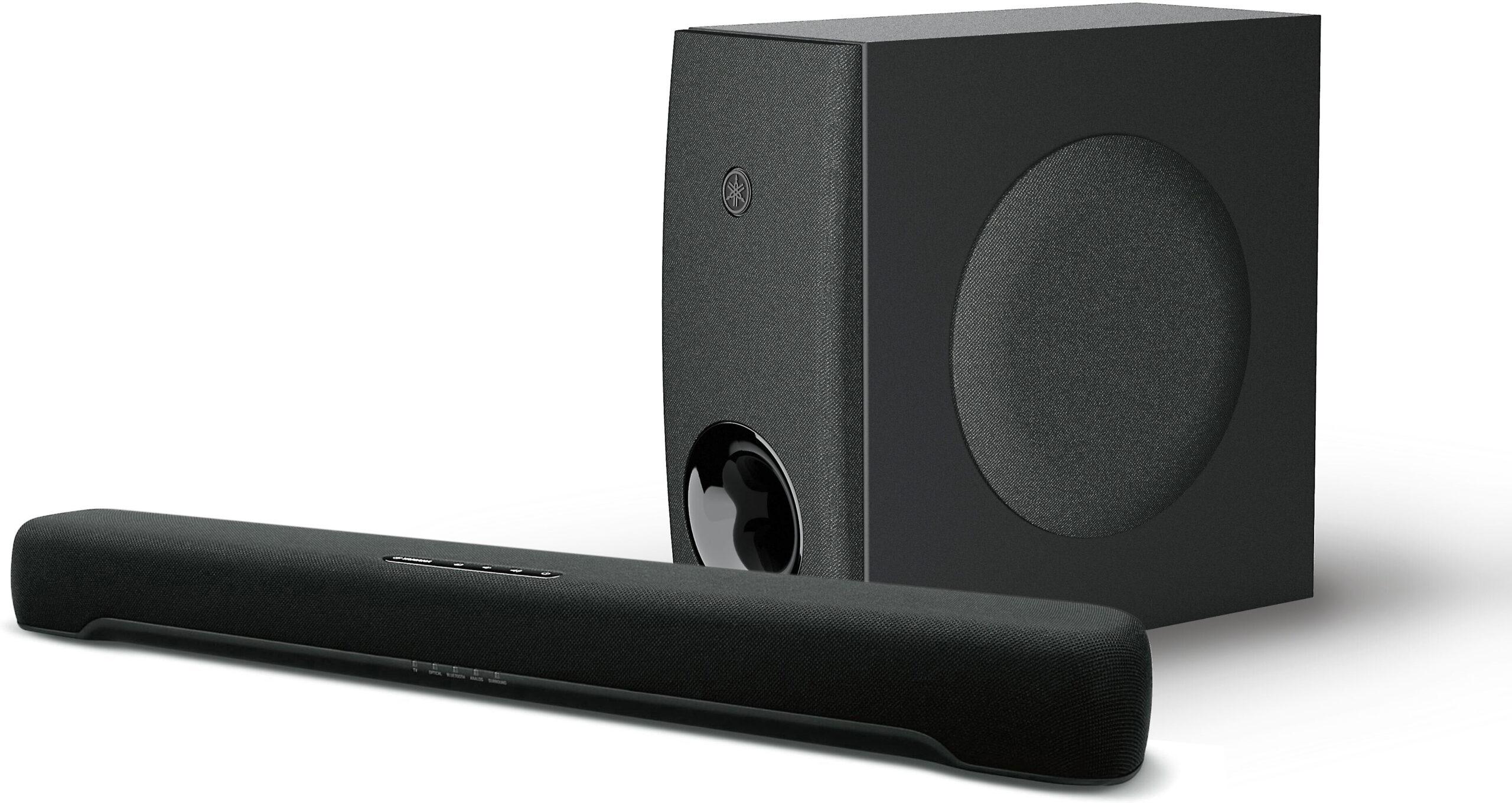
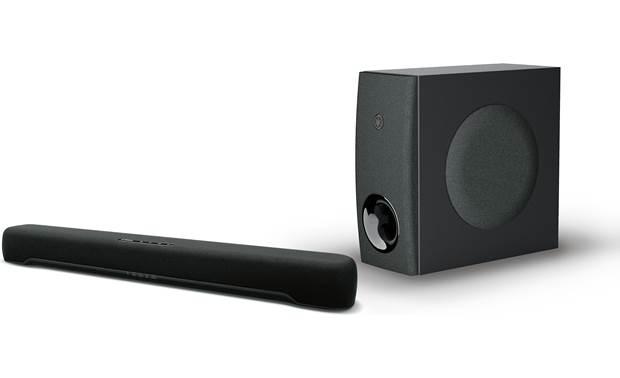
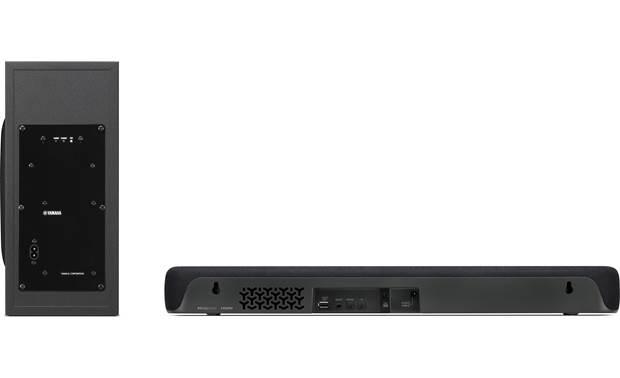
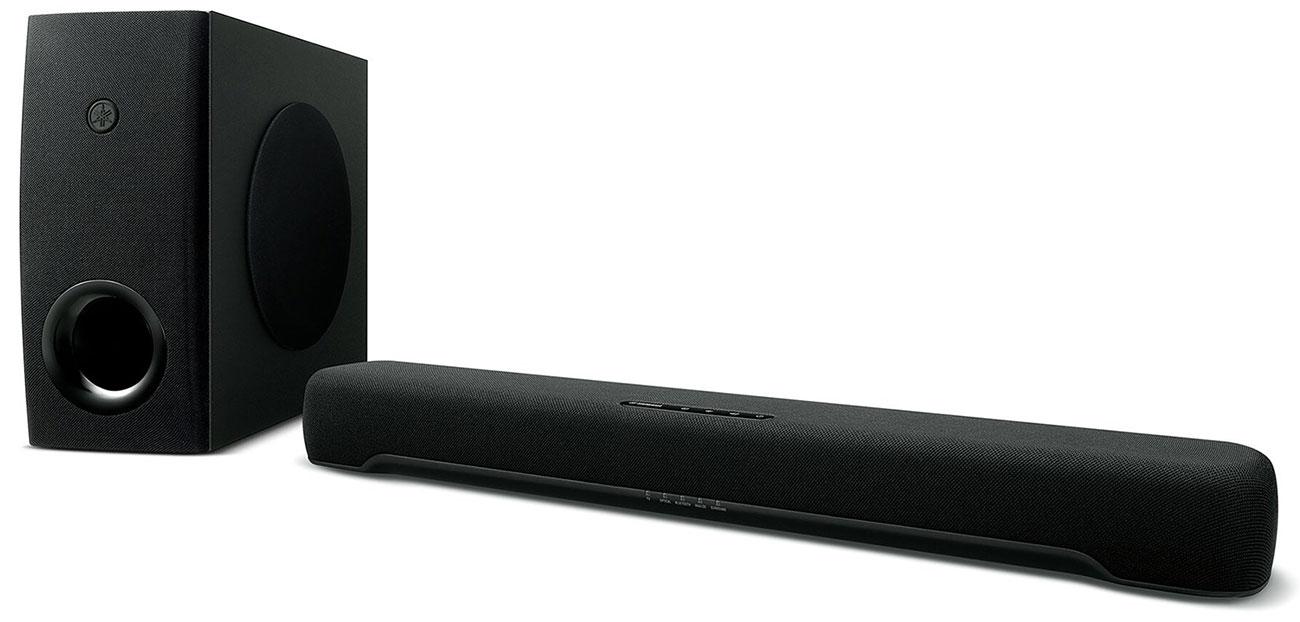
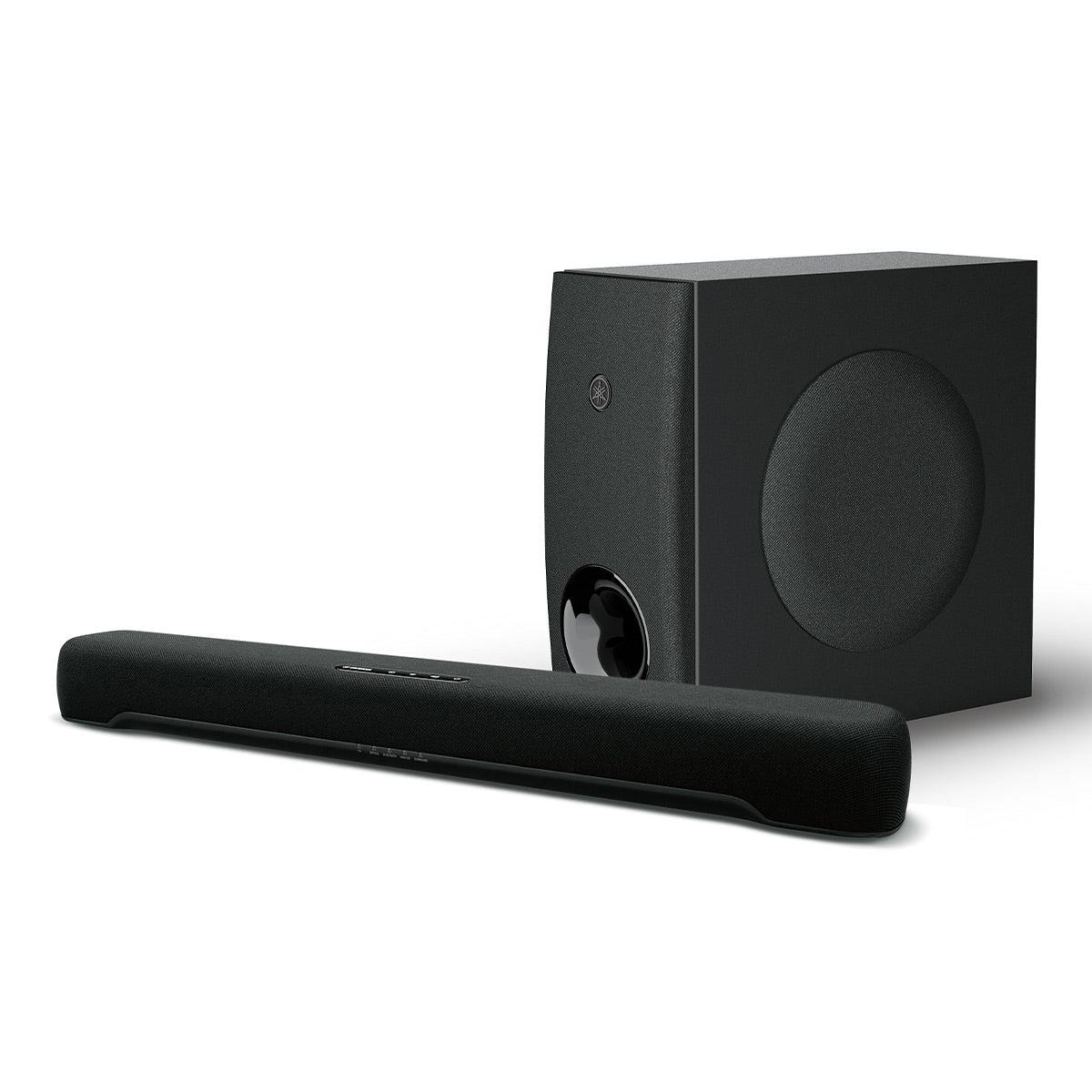
Released around the same time, the Yamaha SR-C30A takes a completely different approach. Instead of trying to do everything in one unit, Yamaha split the system into a compact soundbar paired with a wireless subwoofer. This traditional approach has proven benefits, especially at this price point.
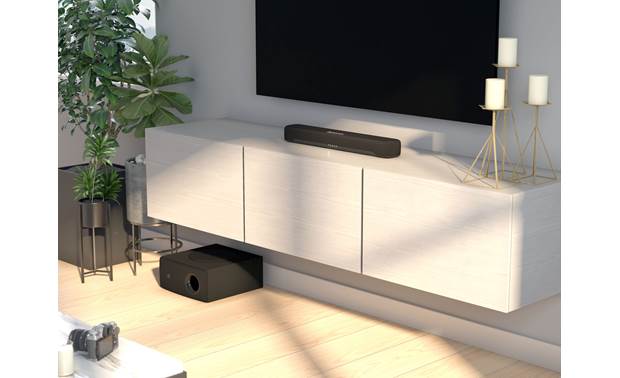
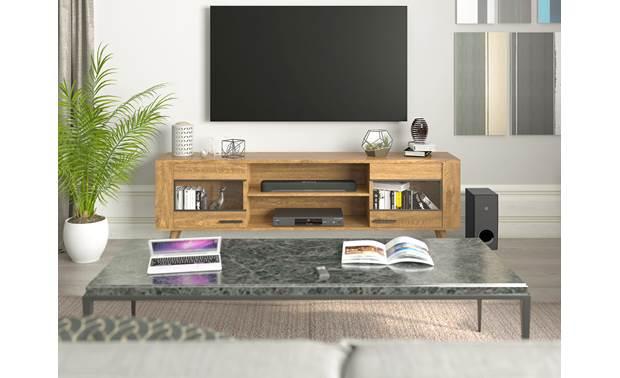
The SR-C30A is notably smaller than most soundbars—about 30% more compact than typical models. This makes it perfect for smaller TVs and tight spaces where a larger soundbar would look overwhelming. The separate subwoofer can be placed anywhere in the room for optimal bass response.
With only 90 watts of total power split between three drivers (two in the soundbar, one in the sub), the SR-C30A might seem underpowered compared to the Dione. But Yamaha has decades of audio engineering experience, and they've made smart choices about where to spend their limited budget.
The Clear Voice mode specifically targets dialogue clarity—a common complaint with TV audio. This feature boosts the frequency range where human speech occurs while reducing competing sounds. It's a simple but effective solution that addresses real user needs.
Adaptive Low Volume technology is another clever feature. Most soundbars lose their fullness when you turn them down for late-night viewing, but this system maintains bass presence and clarity even at whisper levels. It's particularly useful for apartment dwellers who can't blast action movies at full volume.
According to reviews and user feedback, the SR-C30A excels at making TV dialogue clearer and adding meaningful bass to your viewing experience. The wireless subwoofer provides the low-end punch that the soundbar's small drivers simply can't produce on their own.
The 3D Movie mode attempts to create virtual surround sound, though it's more of a widening effect than true spatial audio. It works well for enhancing the sense of space in movies, but it can't compete with dedicated Atmos systems like the Dione.
For music listening, the SR-C30A performs surprisingly well given its price point. The separate subwoofer allows for better bass control, and the overall tonal balance is pleasing rather than analytical. It won't satisfy serious audiophiles, but it's perfectly adequate for casual listening.
This is where the engineering philosophies diverge most dramatically. The Dione uses eight dedicated bass drivers in a push-pull configuration—pairs of drivers that move in opposite directions to cancel out vibrations and allow for deeper bass extension. This lets it reach genuine subwoofer frequencies (down to 24Hz) without the cabinet rattling apart.
The SR-C30A relies on its 5.1-inch wireless subwoofer for bass duties. While this driver is much smaller than what you'd find in dedicated subwoofers, it's properly designed for its cabinet volume and can produce satisfying bass for most content. The key advantage is placement flexibility—you can put the subwoofer wherever it sounds best in your room.
In practice, the Dione produces deeper, more controlled bass with better integration to the rest of the frequency spectrum. The SR-C30A provides adequate bass that significantly improves the TV experience, though it can sometimes sound slightly disconnected from the soundbar's drivers.
Both systems prioritize dialogue clarity, but they achieve it differently. The Dione's rotating ORB center channel provides mechanical optimization—it literally aims the center channel driver toward your listening position. Combined with Devialet's advanced DSP (digital signal processing), this creates exceptionally clear and well-located dialogue.
The SR-C30A uses its Clear Voice mode to electronically enhance speech frequencies. While less sophisticated than Devialet's approach, it's quite effective for typical TV viewing. Many users report that they can finally understand dialogue in shows where they previously needed subtitles.
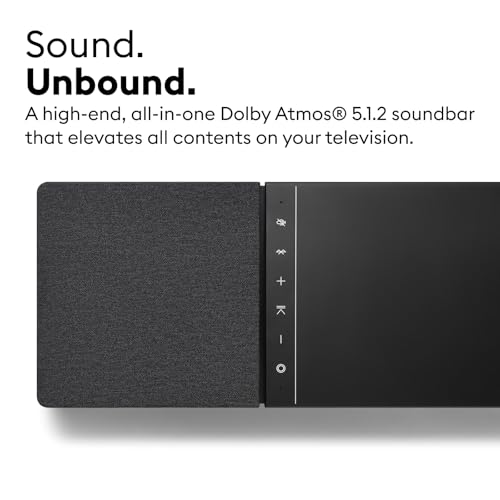
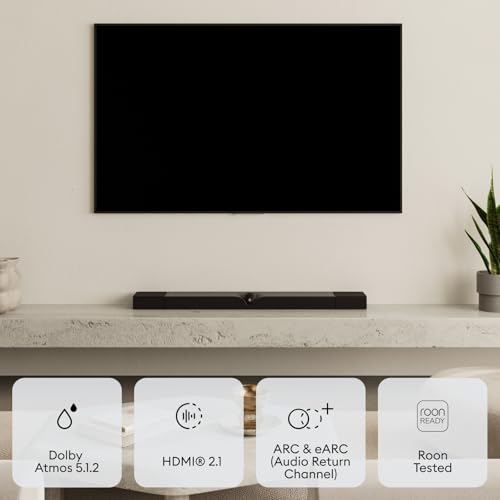
This is perhaps the biggest performance gap between the two systems. The Dione implements true 5.1.2-channel Dolby Atmos with dedicated height drivers and sophisticated processing. While it can't fully replicate the experience of having actual overhead speakers, it comes remarkably close for a single soundbar.
The SR-C30A offers basic virtual surround through its 3D Movie mode, but this is more about widening the soundstage than creating genuine height effects. It's still an improvement over TV speakers, but it's not really Atmos in any meaningful sense.
The choice between these systems often comes down to your room and setup. The Dione is designed for medium to large rooms and works best with TVs 55 inches or larger. Its substantial size and powerful output can easily fill a dedicated home theater space.
The SR-C30A shines in smaller setups—bedrooms, apartments, or secondary viewing areas. Its compact footprint won't overwhelm smaller TVs, and the wireless subwoofer provides flexibility in challenging room layouts.
Wall mounting changes the equation for both systems. The Dione's ORB center channel rotates to maintain optimal performance when wall-mounted, and its integrated design means you only need to mount one unit. The SR-C30A can be wall-mounted too, though you'll still need to place the subwoofer somewhere on the floor.
Both soundbars support HDMI ARC for simple TV connection, but the Dione goes further with HDMI 2.1 and eARC support. This enables high-bandwidth audio formats and better compatibility with the latest gaming consoles and streaming devices.
For wireless audio, the Dione offers a more comprehensive suite including AirPlay 2, Spotify Connect, and high-quality Bluetooth. The SR-C30A covers the basics with Bluetooth 5.0 and multi-point connectivity, which is perfectly adequate for most users.
Neither system includes built-in voice assistants, keeping the focus purely on audio performance rather than smart home integration.
At the time of writing, these systems occupy completely different price tiers. The Dione costs roughly 8-10 times more than the SR-C30A, which immediately tells you they're targeting different buyers with different needs and budgets.
The SR-C30A represents excellent value for first-time soundbar buyers or anyone looking to significantly improve their TV audio without a major investment. It addresses the most common TV audio problems—weak dialogue and no bass—at an accessible price point.
The Dione is positioned as a premium alternative to traditional component audio systems. When compared to buying separate amplifiers, speakers, and subwoofers of similar quality, its pricing becomes more reasonable, though it's still a significant investment.
Choose the Dione if you:
Choose the SR-C30A if you:
These aren't really competing products—they're serving entirely different market segments. The SR-C30A is an excellent entry point that will satisfy most users' needs for dramatically improving TV audio. The Dione is a statement piece for those who want reference-quality sound without the complexity of separates.
If you're unsure which category you fall into, start with something like the SR-C30A. You can always upgrade later, and you'll have a better understanding of what matters most to you in a sound system. But if you know you're serious about audio quality and have the budget to match, the Dione offers a level of performance that's genuinely difficult to achieve any other way.
The soundbar market has matured significantly since these models were released, but the fundamental divide between budget and premium options remains. Both approaches have their place, and the best choice depends on your priorities, space, and expectations rather than simply which one has more features or higher specifications.
| Devialet Dione | Yamaha SR-C30A |
|---|---|
| Configuration - Single unit vs separate components affects placement flexibility | |
| All-in-one soundbar with integrated subwoofers | Compact soundbar + wireless subwoofer |
| Driver Count - More drivers typically mean better sound separation and power | |
| 17 drivers total (9 full-range + 8 bass drivers) | 3 drivers total (2 in bar + 1 in subwoofer) |
| Total Power - Higher wattage enables louder, cleaner sound in larger rooms | |
| 950W RMS (premium amplification with minimal distortion) | 90W total (adequate for small-medium rooms) |
| Bass Extension - Lower frequency response means deeper, more impactful bass | |
| 24Hz-21kHz (subwoofer-level bass without external sub) | Not specified (relies on 5.1" wireless subwoofer) |
| Dolby Atmos Support - Height effects create more immersive movie experience | |
| True 5.1.2 Atmos with dedicated height processing | Virtual surround only (3D Movie mode) |
| Dimensions - Size affects TV compatibility and room aesthetic | |
| 47.2" W × 3" H × 6.5" D (suits large TVs 55"+) | 23.6" W × 2.6" H × 3.7" D (ideal for smaller TVs) |
| HDMI Connectivity - eARC enables lossless audio from modern TVs | |
| HDMI 2.1 with eARC (supports highest quality audio formats) | HDMI ARC (basic TV connection) |
| Wireless Streaming - More options mean better device compatibility | |
| AirPlay 2, Spotify Connect, Bluetooth 5.0, UPnP | Bluetooth 5.0 with multi-point |
| Special Technologies - Proprietary features that differentiate performance | |
| ADH amplification, SAM driver matching, rotating ORB center, SPACE upmixing | Clear Voice mode, Adaptive Low Volume |
| Room Calibration - Auto-tuning optimizes sound for your specific space | |
| 4-microphone automatic room correction | Manual placement optimization |
| Target Market - Understanding intended use helps set expectations | |
| Audiophiles wanting reference-quality all-in-one system | First-time buyers seeking significant TV audio upgrade |
The Yamaha SR-C30A is specifically designed for small spaces, measuring 30% smaller than traditional soundbars at just 23.6 inches wide. Its compact design won't overwhelm smaller TVs or tight spaces, while the wireless subwoofer can be placed flexibly around the room. The Devialet Dione at 47.2 inches wide is better suited for larger rooms and TVs 55 inches or bigger.
The Devialet Dione has 8 built-in bass drivers that eliminate the need for a separate subwoofer, reaching down to 24Hz for deep bass. The Yamaha SR-C30A comes with a dedicated 5.1-inch wireless subwoofer that's essential for proper bass response, as the soundbar's small drivers alone cannot produce adequate low-end frequencies.
The Devialet Dione offers true 5.1.2 Dolby Atmos with dedicated height channels and sophisticated processing for genuine overhead effects. The Yamaha SR-C30A only provides virtual surround sound through its 3D Movie mode, which creates a wider soundstage but doesn't deliver actual Atmos height effects.
The Devialet Dione delivers 950W RMS through its advanced ADH amplification system, providing exceptional power and clarity for large rooms. The Yamaha SR-C30A offers 90W total power split between the soundbar and subwoofer, which is adequate for small to medium-sized rooms but significantly less powerful than the Dione.
The Yamaha SR-C30A is extremely user-friendly with simple plug-and-play setup and automatic wireless subwoofer pairing. The Devialet Dione requires more initial configuration including room calibration through its 4-microphone system, though this results in optimized sound for your specific space.
Both soundbars significantly improve dialogue clarity over TV speakers. The Yamaha SR-C30A features a dedicated Clear Voice mode that specifically enhances speech frequencies. The Devialet Dione uses its rotating ORB center channel and advanced processing for exceptionally clear, well-positioned dialogue that stays locked to the screen.
The Devialet Dione excels at music playback with audiophile-grade components, even frequency response, and dedicated Music mode that preserves stereo imaging. While the Yamaha SR-C30A handles music adequately for casual listening, it's primarily optimized for TV and movie content rather than critical music reproduction.
The Devialet Dione offers comprehensive wireless options including AirPlay 2, Spotify Connect, and Bluetooth 5.0 for high-quality streaming from multiple devices. The Yamaha SR-C30A supports Bluetooth 5.0 with multi-point connectivity, allowing easy switching between paired devices but with fewer streaming protocol options than the Dione.
The Yamaha SR-C30A provides exceptional value for first-time soundbar buyers, delivering significant TV audio improvements at an accessible price point. The Devialet Dione represents premium value for audiophiles, offering performance that competes with much more expensive component systems, though at a substantially higher investment.
Both soundbars support wall mounting with included hardware. The Devialet Dione features a unique rotating ORB center channel that automatically adjusts for optimal performance whether placed on furniture or mounted on the wall. The Yamaha SR-C30A can be wall-mounted, though you'll still need floor space for the wireless subwoofer.
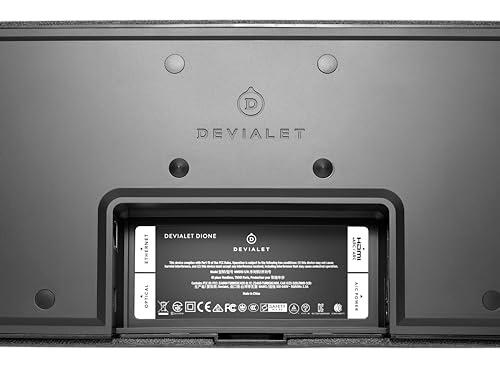
The Devialet Dione offers more advanced connectivity with HDMI 2.1 eARC support for high-bandwidth audio, plus Ethernet and dual-band Wi-Fi. The Yamaha SR-C30A provides essential connections including HDMI ARC, two optical inputs, and analog input for gaming consoles, covering most users' basic connectivity needs.
For dedicated home theater setups, the Devialet Dione delivers reference-quality performance with true Dolby Atmos, powerful bass extension, and room-filling output suitable for large spaces. The Yamaha SR-C30A works well for casual home theater use in smaller rooms, providing significant improvements over TV speakers but without the advanced spatial audio capabilities of the Dione.
We've done our best to create useful and informative comparisons to help you decide what product to buy. Our research uses advanced automated methods to create this comparison and perfection is not possible - please contact us for corrections or questions. These are the sites we've researched in the creation of this article: rtings.com - crutchfield.com - devialet.com - ooberpad.com - bhphotovideo.com - kjwestone.co.uk - whathifi.com - devialet.com - devialet.com - sound-advice.online - kjwestone.co.uk - device.report - tmraudio.com - devialet.com - devialetchat.com - projectorscreen.com - soundandvision.com - bestbuy.com - youtube.com - av.com - audiofi.ca - devialet.com - blog.son-video.com - audioconnection.com.au - baybloorradio.com - cdn.abicart.com - smarthomesounds.co.uk - e-piphany.co.za - cloneyaudio.com - devialet.com - catalog.asbis.ee - av.com - soundandvision.com - youtube.com - comparisontabl.es - techradar.com - usa.yamaha.com - expertreviews.com - usa.yamaha.com - trustedreviews.com - crutchfield.com - europe.yamaha.com - usa.yamaha.com - shop.usa.yamaha.com - assetserver.net

Privacy Policy
Terms and Conditions - Affiliate Policy
Home Security
© Copyright 2008-2026.
11816 Inwood Rd #1211, Dallas, TX 75244