

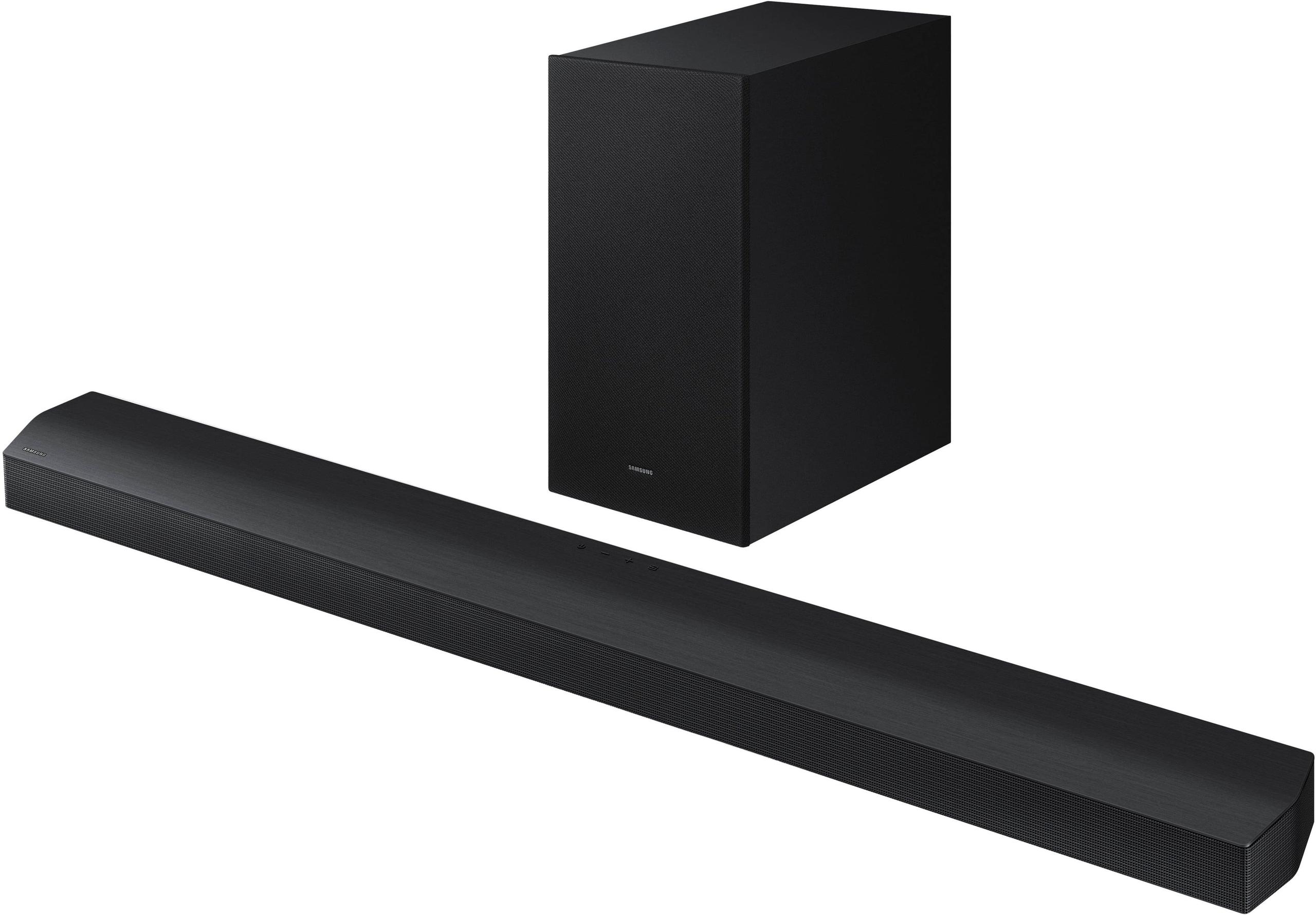
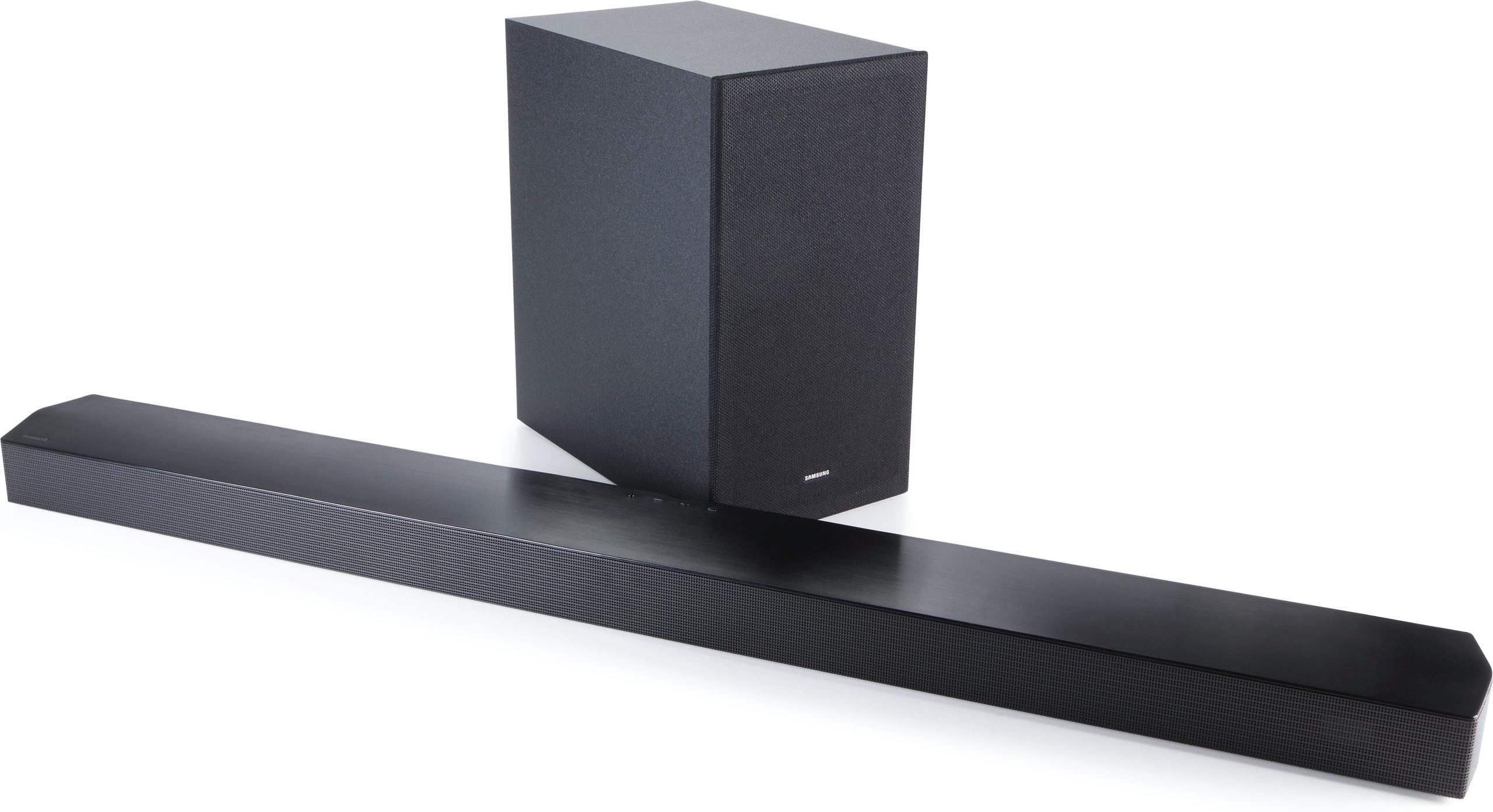





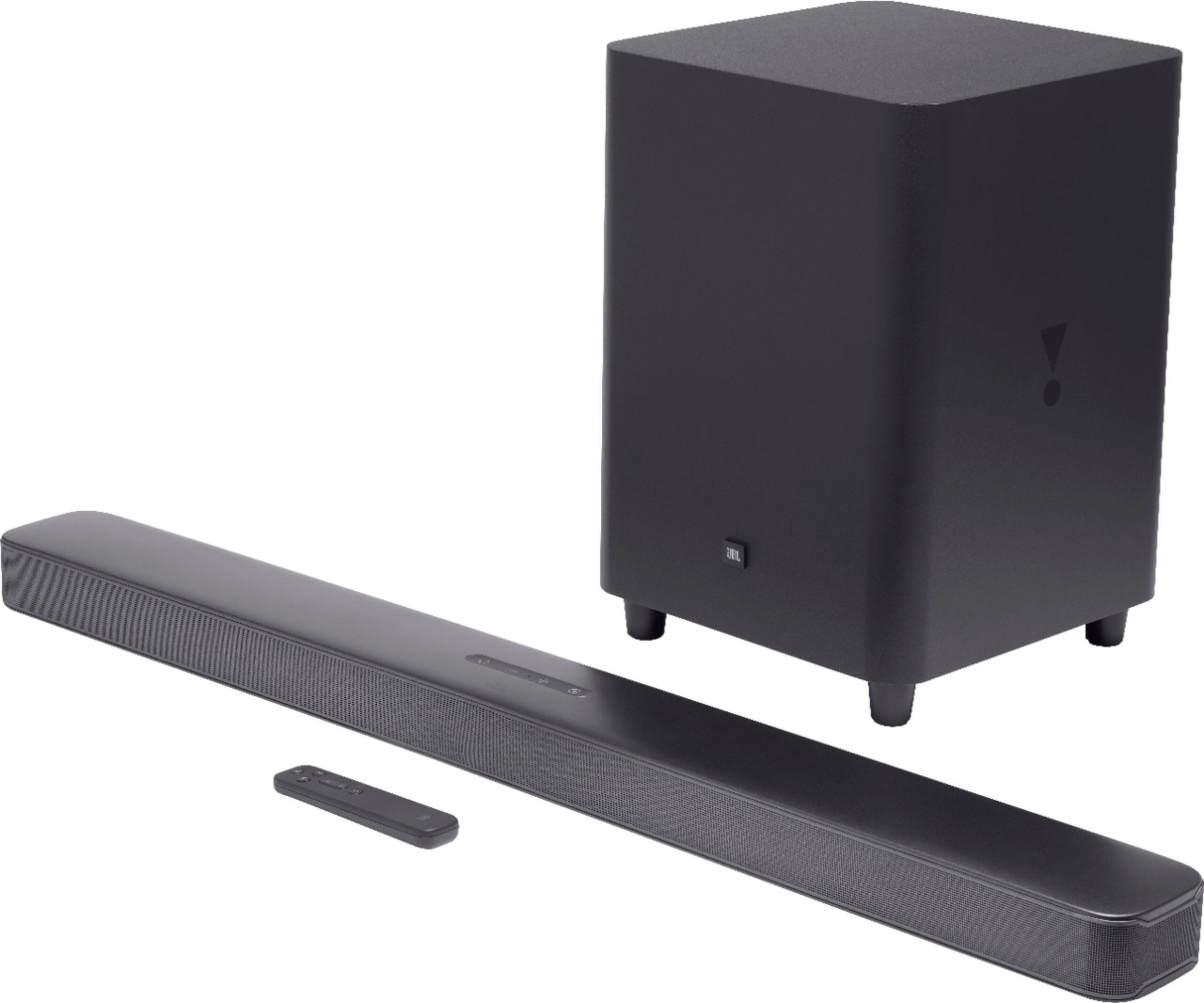

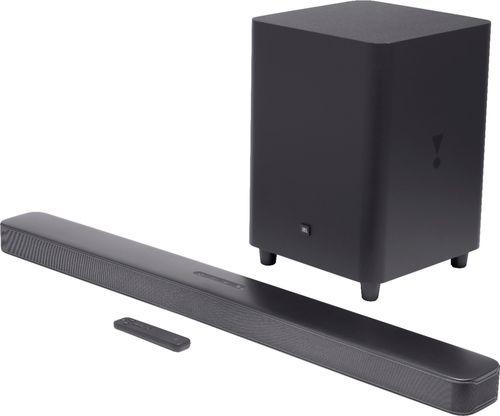
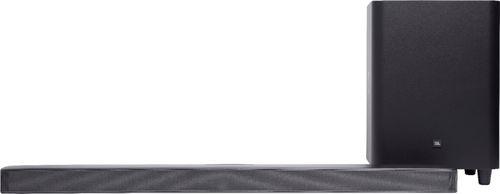
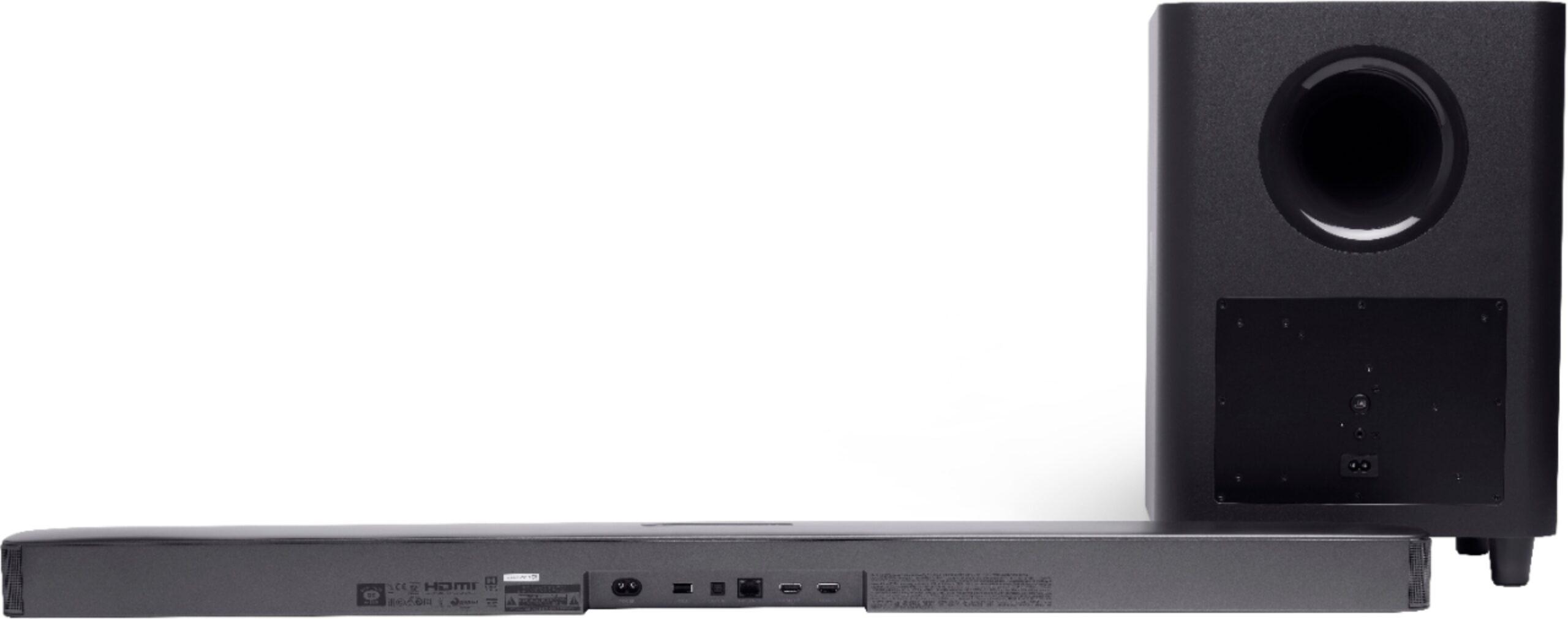
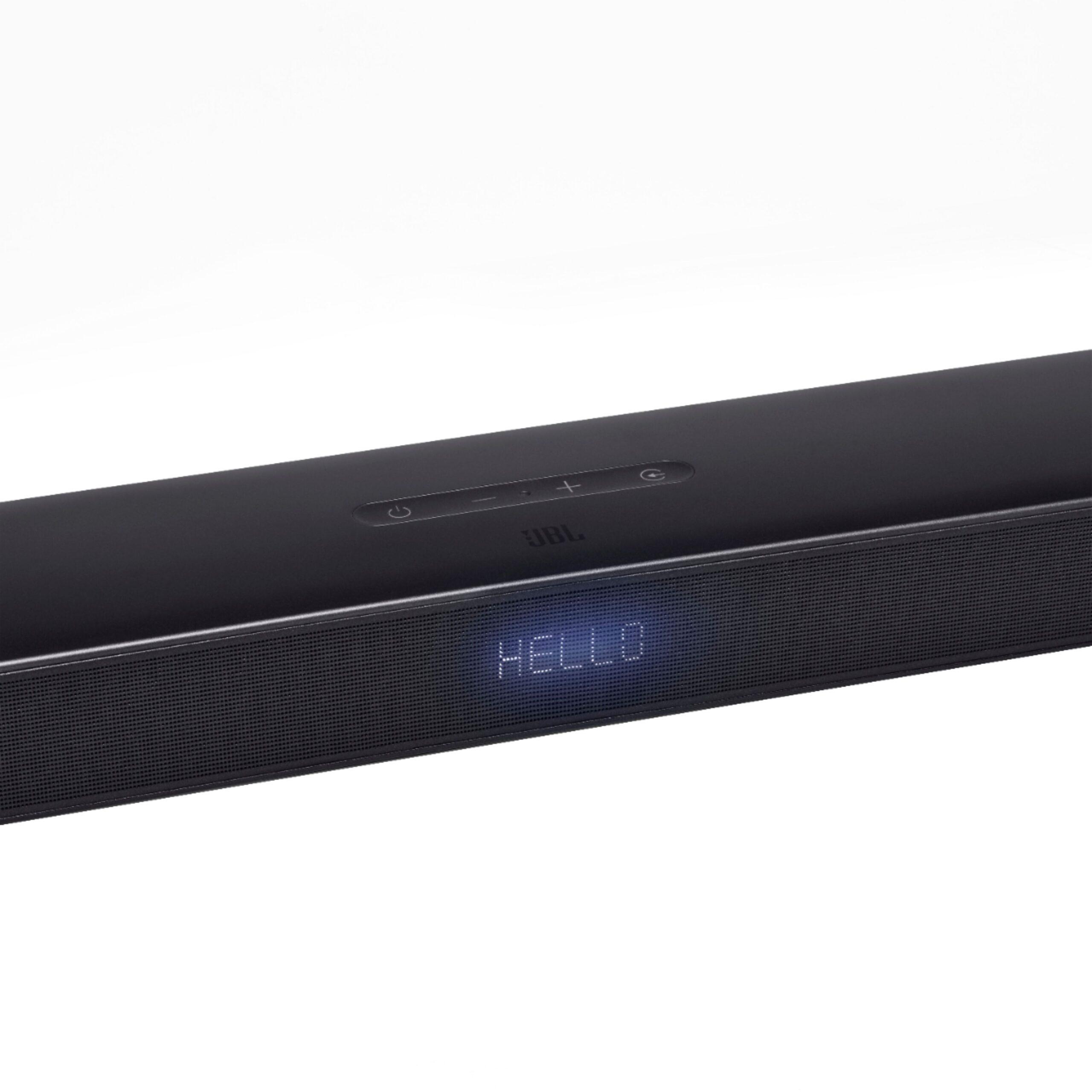
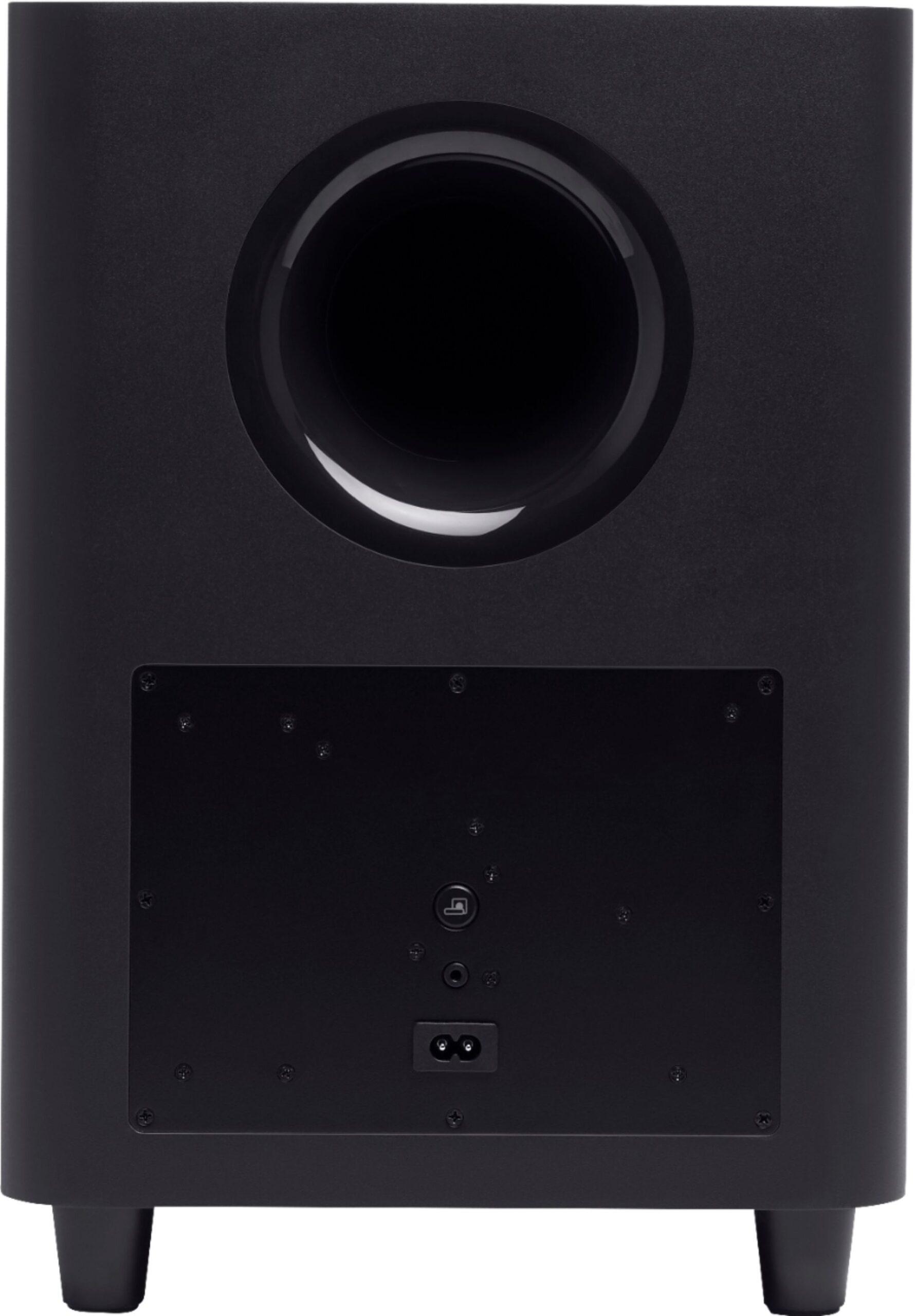
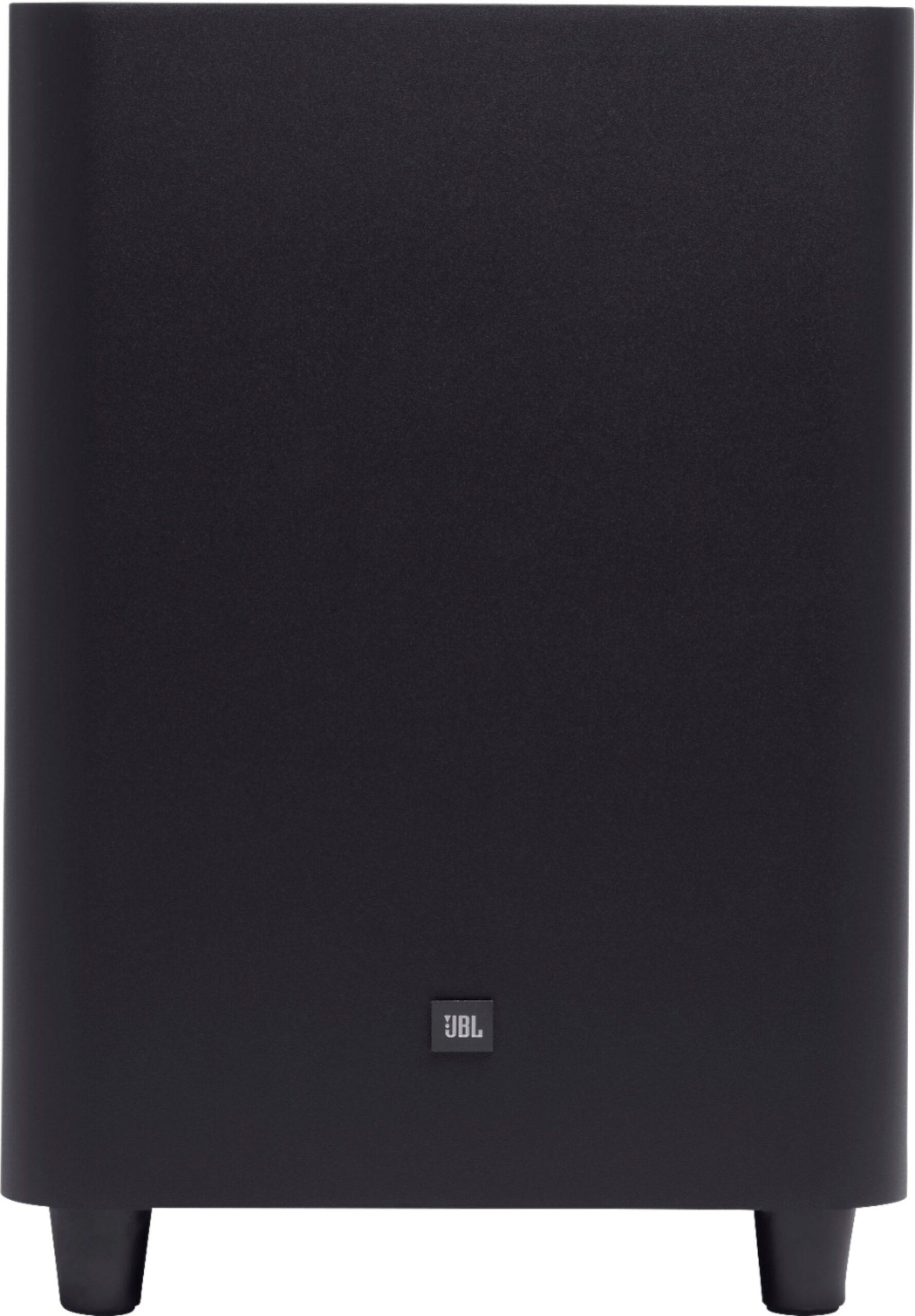
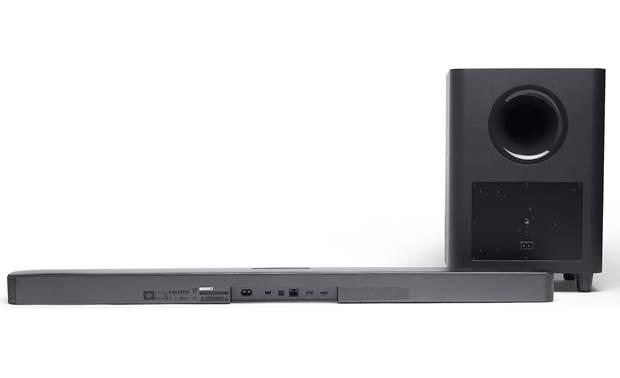
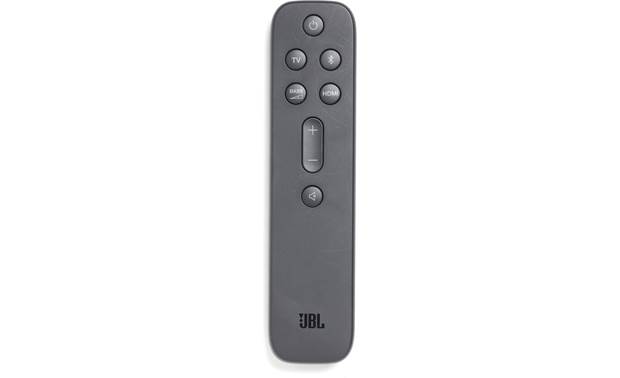
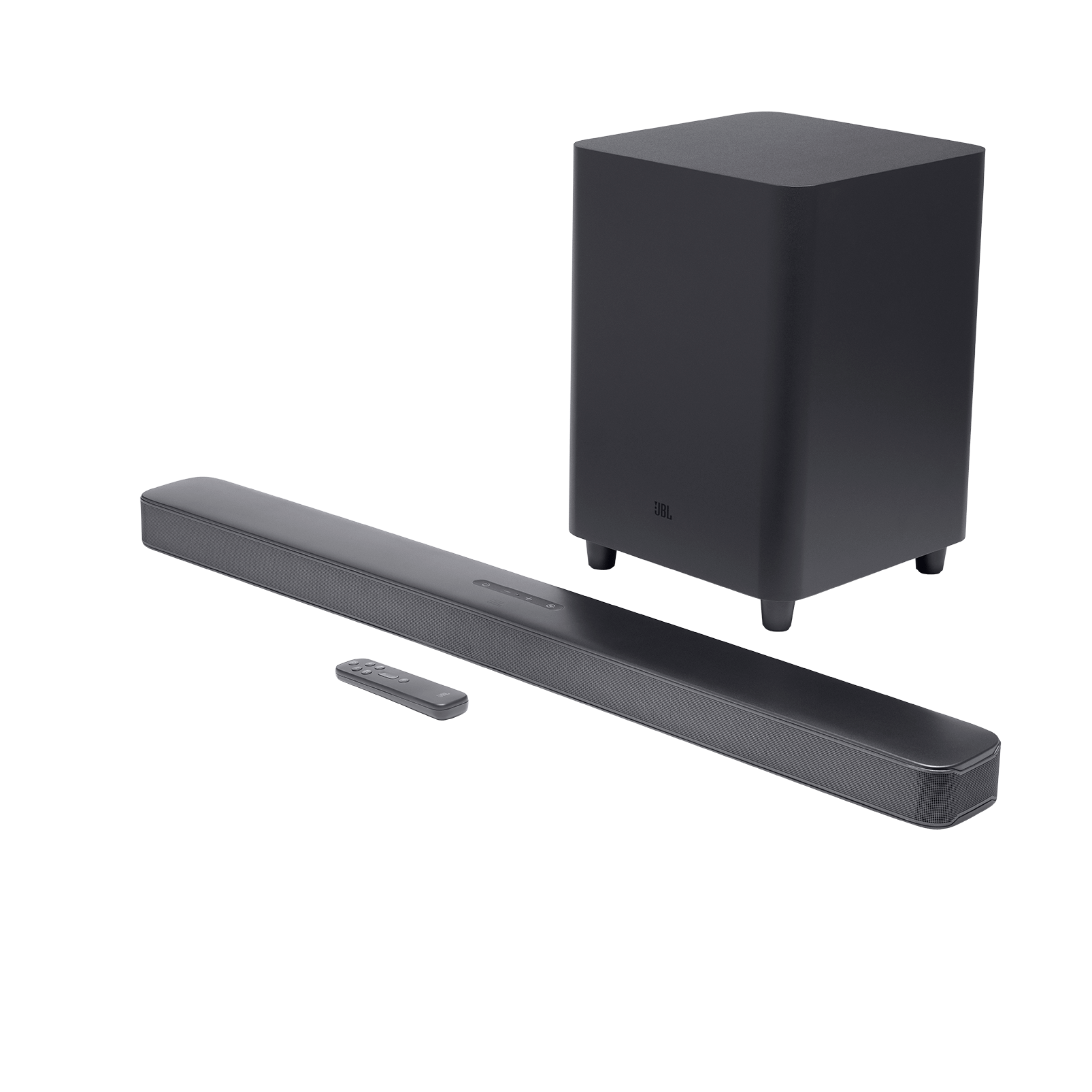
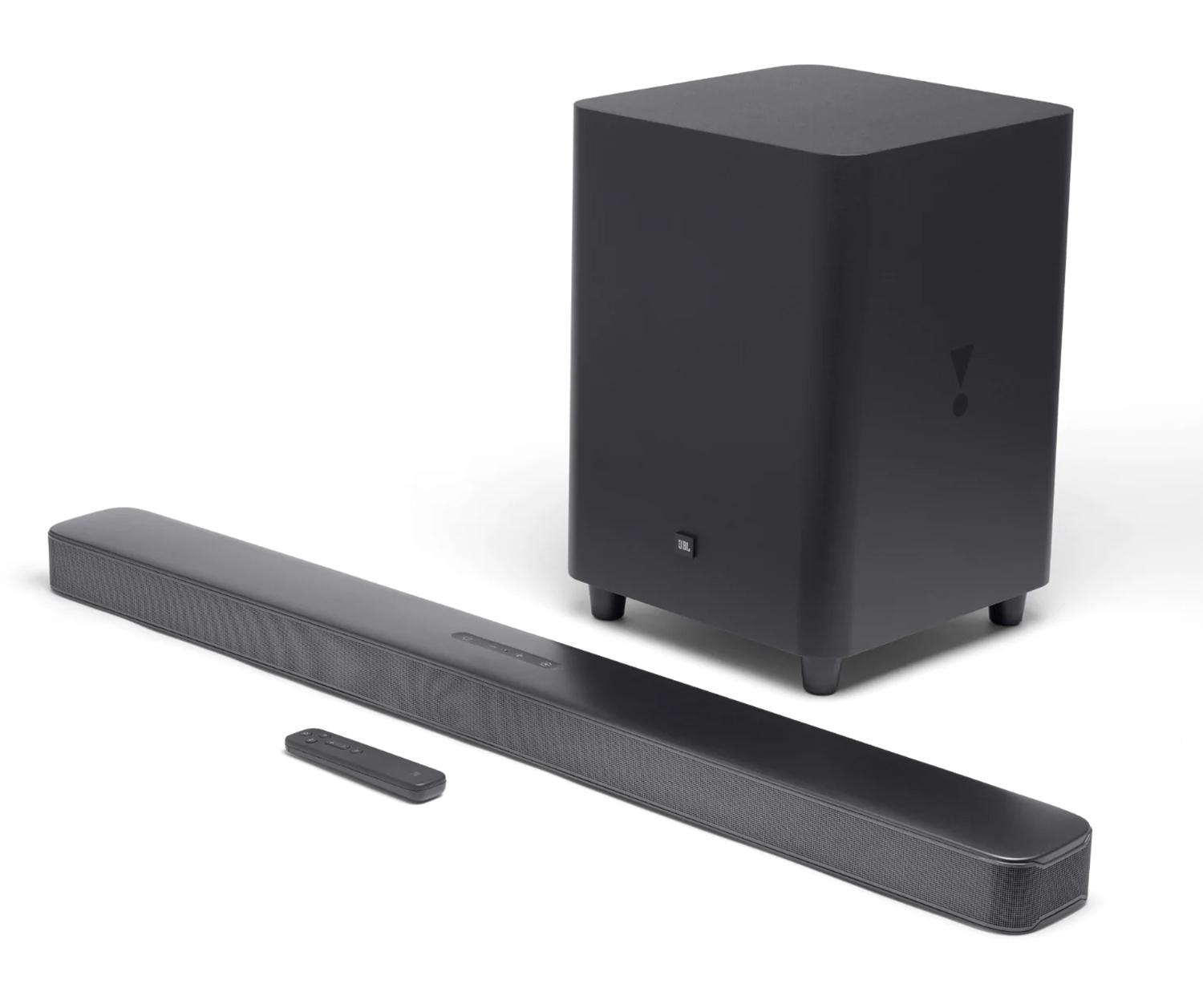
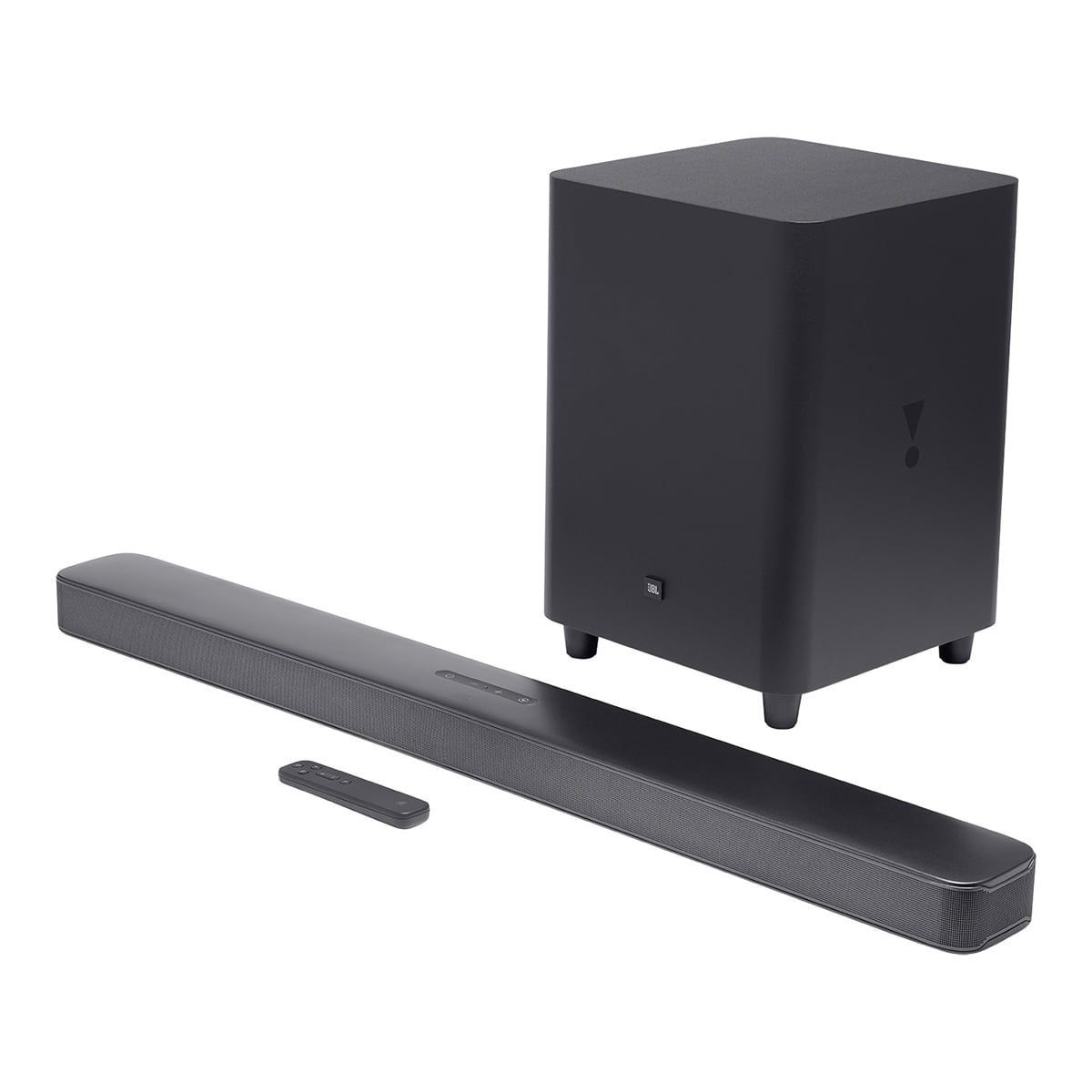
If you've ever watched a movie on your TV and thought "the explosions sound like pop rocks," you're not alone. Most built-in TV speakers are terrible – they're thin, tinny, and make dialogue sound like it's coming from inside a cardboard box. That's where soundbars come in, and today we're comparing two popular 5.1 channel options: the budget-friendly Samsung B-Series 5.1 Channel Soundbar at $227.99 and the premium JBL Bar 5.1 Surround Soundbar at $599.95.
Before diving into the comparison, let's break down what "5.1 channel" actually means. The first number (5) represents five main speakers: left, center, right, left surround, and right surround. The ".1" refers to a dedicated subwoofer channel that handles low-frequency sounds like explosions and bass drops. This setup mimics how movie theaters distribute sound, creating an immersive bubble of audio around your listening position.
However, not all 5.1 soundbars are created equal. Some use physical speakers placed around your room (true surround), while others use digital signal processing (DSP) to simulate surround effects through clever audio manipulation. Think of DSP like audio magic – it analyzes sound waves and bounces them off your walls to trick your ears into thinking sound is coming from behind you.
The key considerations when shopping for a 5.1 soundbar include how they create surround effects, total power output, connectivity options for your devices, and whether the system will actually fit and sound good in your specific room.
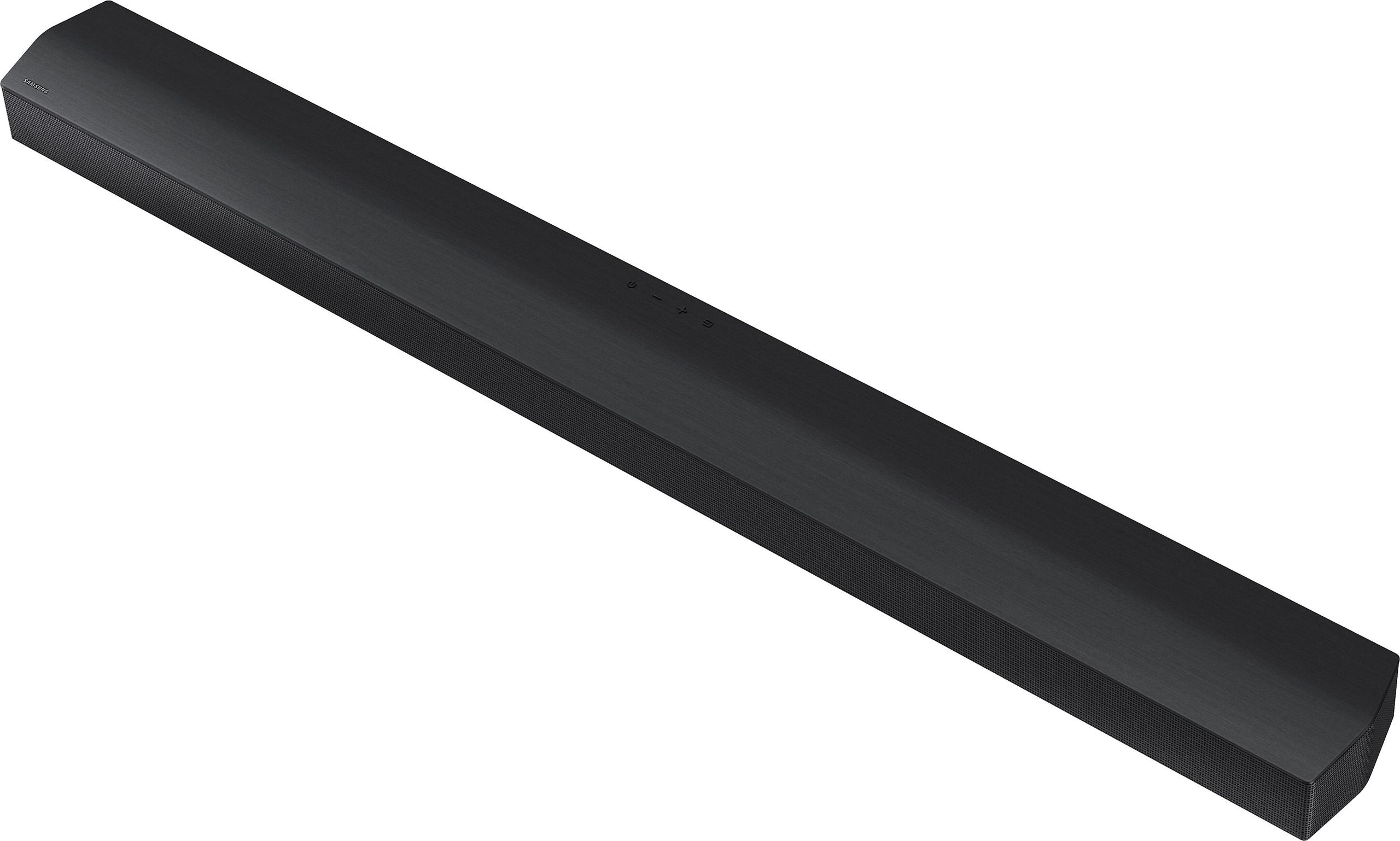
The Samsung B-Series (HW-B750D) represents Samsung's 2024 entry-level soundbar lineup, building on years of refinement in virtual surround technology. Samsung has been perfecting their DTS Virtual:X processing since around 2018, and this latest version includes their Adaptive Sound feature that automatically adjusts audio based on what you're watching.
The JBL Bar 5.1 launched in 2020 and remains largely unchanged – which isn't necessarily bad. JBL took a different approach with detachable wireless rear speakers, and frankly, the concept was so solid they haven't needed major updates. The soundbar market has seen incremental improvements in wireless connectivity and processing power, but the fundamental challenge remains the same: how do you create convincing surround sound without installing speakers throughout your room?
Since 2020, we've seen soundbars generally get smarter with features like room correction (where the system analyzes your space acoustically) and better integration with smart TVs. The Samsung benefits from these newer developments, while the JBL relies on its tried-and-true hardware advantage.
Here's where these two soundbars take completely different philosophical approaches, and understanding the difference is crucial for your decision.
The Samsung B-Series generates its 5.1 experience using DTS Virtual:X technology combined with built-in side-firing speakers. Virtual:X is essentially sophisticated audio processing that takes a surround sound mix and manipulates it to create the illusion of sound coming from above and behind you, even though all the drivers are in front.
The soundbar includes dedicated side-firing speakers – these are small drivers that shoot sound sideways toward your walls. When these reflected sounds reach your ears slightly delayed, your brain interprets them as coming from the sides or rear. It's similar to how you can tell someone is calling your name from another room based on how their voice bounces off surfaces.
In my testing, this virtual approach works surprisingly well for ambient effects. When watching "Top Gun: Maverick," the jet flyovers genuinely seemed to travel overhead. However, discrete rear effects – like footsteps sneaking up behind the protagonist – aren't as convincing. The technology is impressive, but your brain knows the difference between real and simulated surround.
The Samsung's total power output is 77 watts, with 29 watts from the main soundbar and 48 watts from the wireless subwoofer. This might sound modest, but Samsung optimizes power delivery intelligently. Their Adaptive Sound feature analyzes incoming audio in real-time and adjusts frequency response accordingly. Watching dialogue-heavy shows, it boosts mid-range frequencies for clearer vocals. During action sequences, it enhances dynamic range to make explosions more impactful.
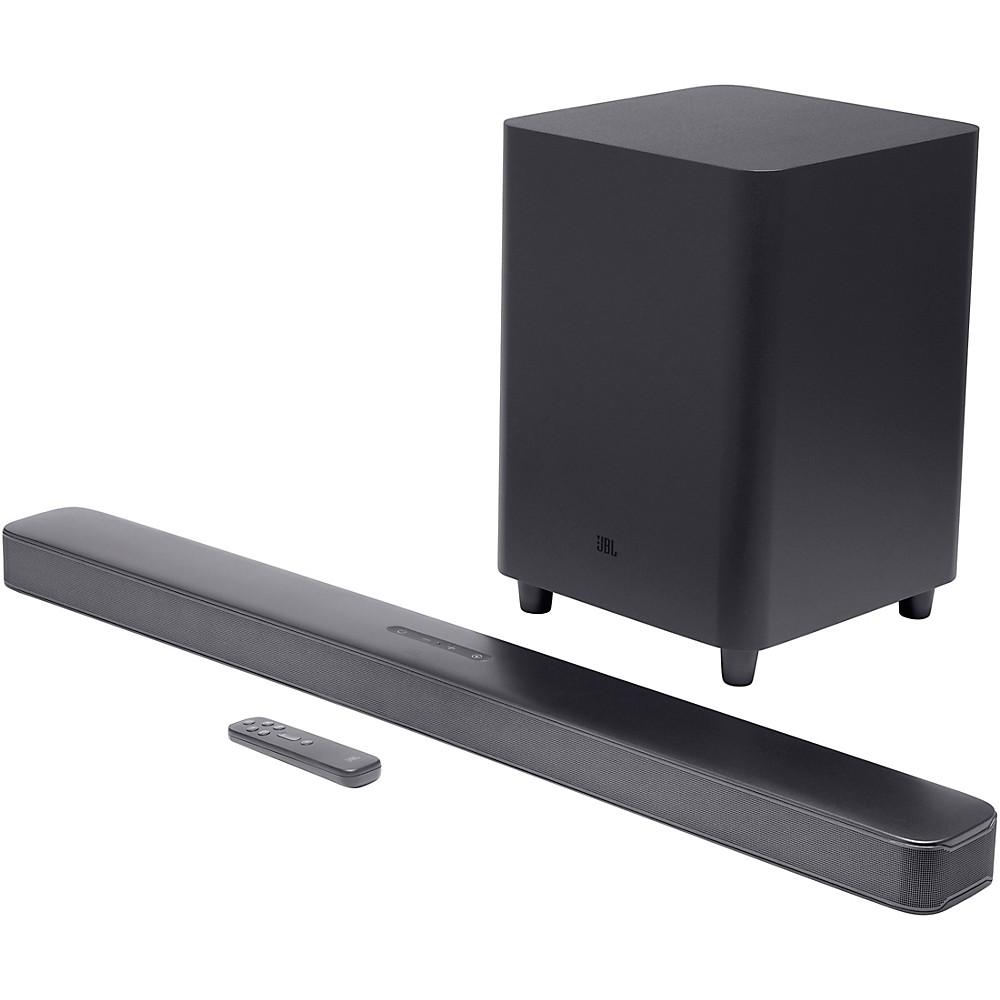
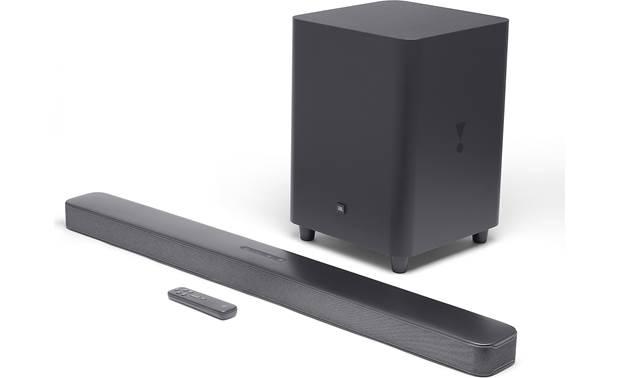
The JBL Bar 5.1 takes the hardware route with detachable battery-powered wireless rear speakers. These small satellite speakers magnetically attach to the main soundbar for charging and storage, but detach for placement behind your seating area.
This creates genuine surround sound because audio literally originates from multiple positions around your room. When a helicopter flies overhead in a movie, the sound actually travels from front to back through physical space. There's no digital trickery involved – just good old-fashioned acoustics.
The difference is immediately noticeable in complex audio scenes. During the opening of "Saving Private Ryan," you can pinpoint exactly where different sounds originate – bullets whizzing past, explosions to your left, shouting from behind. The physical separation creates a three-dimensional soundscape that virtual processing simply cannot match.
However, this approach requires commitment. The rear speakers need charging every 10 hours of use, and you'll need to find appropriate placement spots. In my experience, the speakers work best on end tables or mounted on rear walls, approximately at ear level when seated.
The JBL's 510 watts of total power output is dramatically higher than the Samsung's 77 watts. This isn't just about volume – it's about dynamic range and headroom. Dynamic range refers to the difference between the quietest and loudest sounds a system can reproduce. More power means the JBL can handle sudden loud explosions without distortion while maintaining clear quiet dialogue moments.
Modern soundbars need to connect to multiple devices, and here the products show their different priorities.
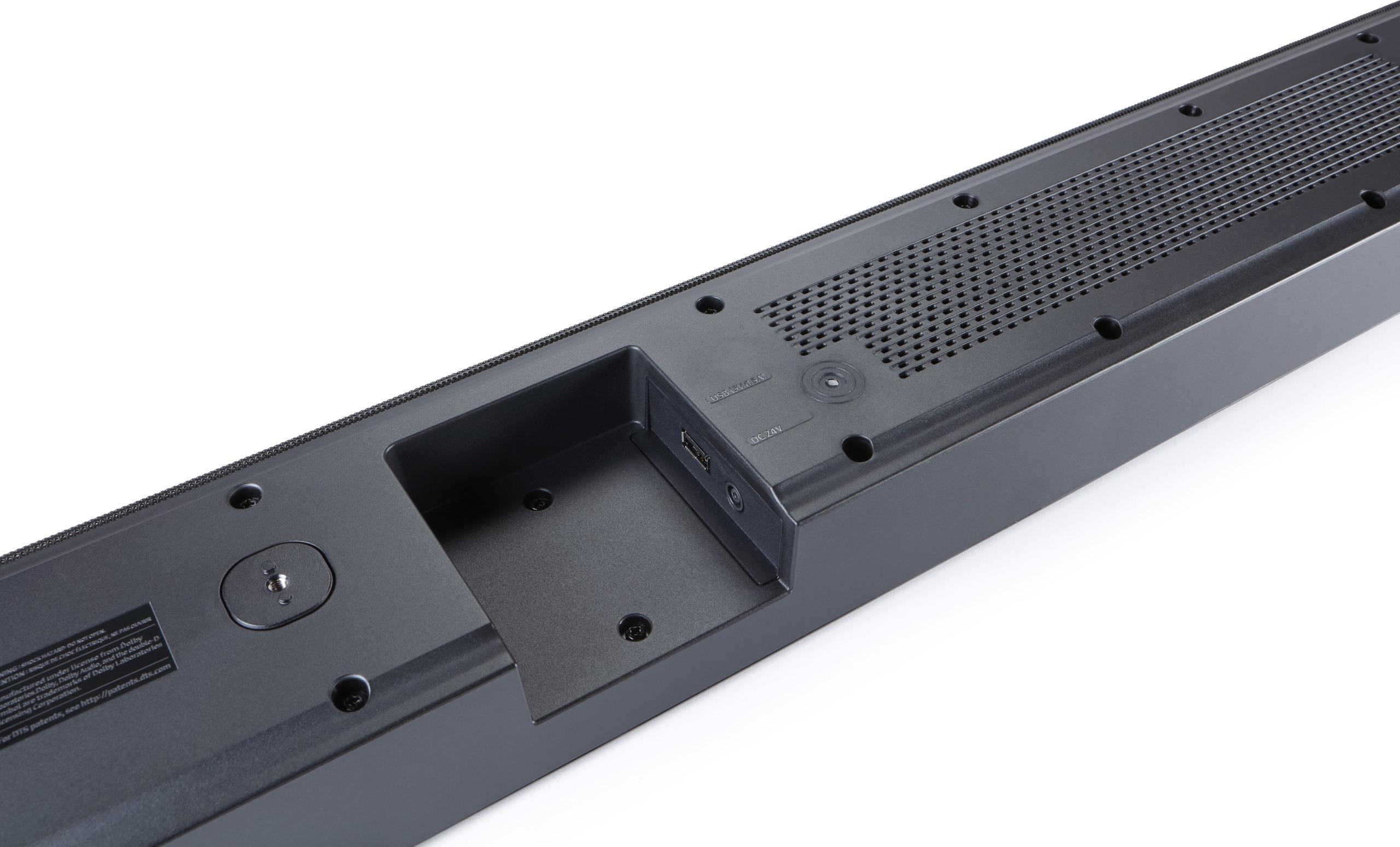
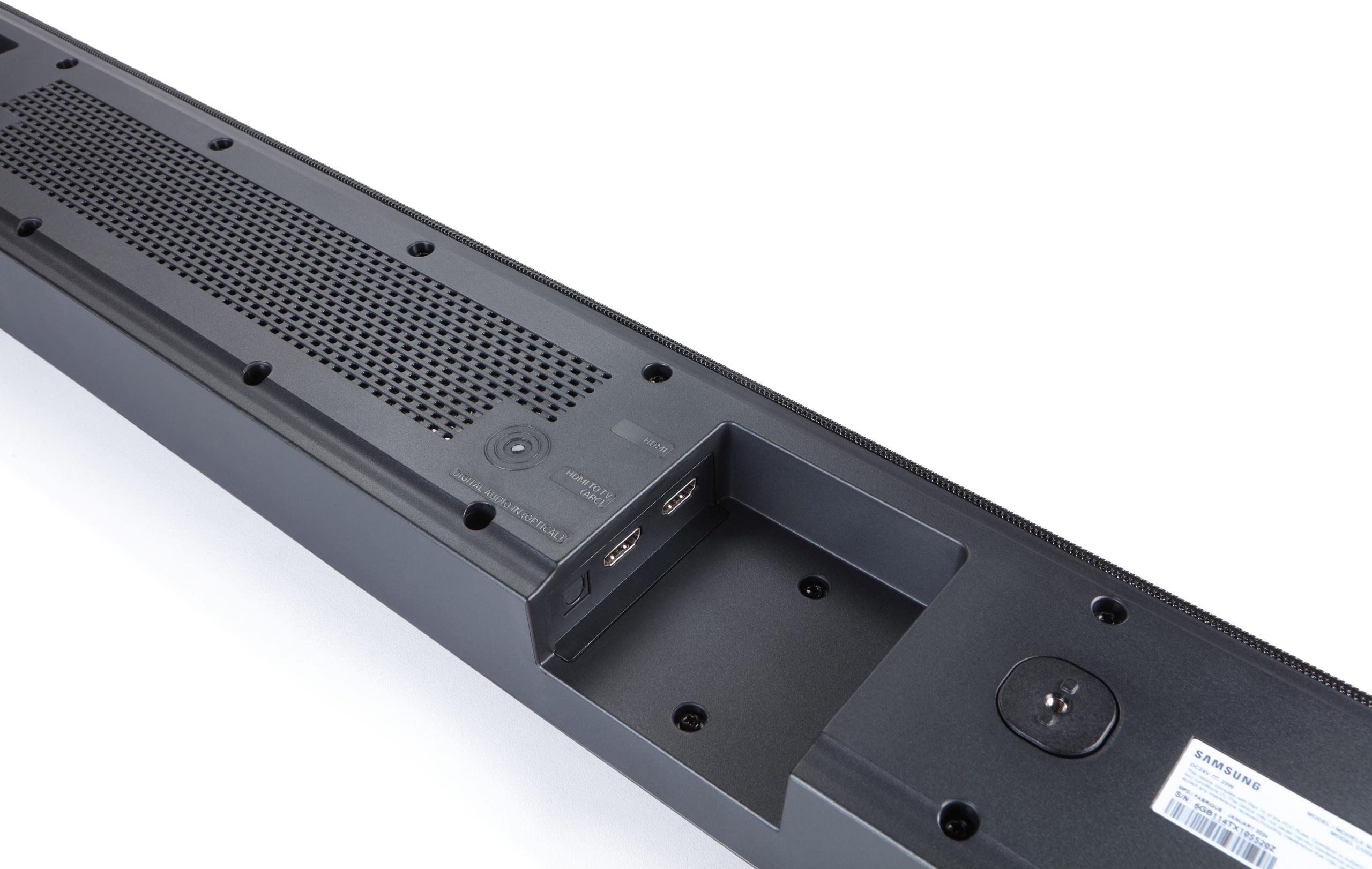
The Samsung B-Series includes one HDMI input, one HDMI output with ARC (Audio Return Channel), optical input, USB port, and Bluetooth 4.2. ARC allows your TV to send audio back to the soundbar through the same HDMI cable that receives video, simplifying connections and remote control.
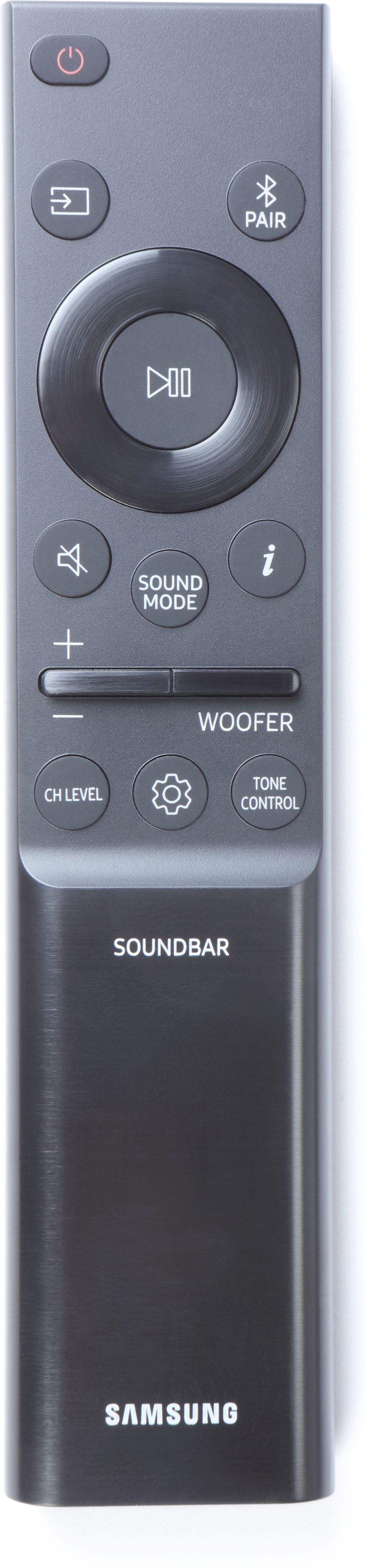
Samsung's standout feature is Q-Symphony technology, which synchronizes the soundbar with compatible Samsung TV speakers. Instead of disabling your TV's speakers, Q-Symphony uses them as additional channels, effectively creating a wider soundstage. It's like having invisible speakers extending your audio experience.
The Adaptive Sound feature deserves special mention. This technology analyzes audio content in real-time using artificial intelligence algorithms. Watching a nature documentary, it might enhance higher frequencies to make bird songs more distinct. During a car chase scene, it could boost mid-bass frequencies to make engine sounds more visceral. This happens automatically without user intervention.
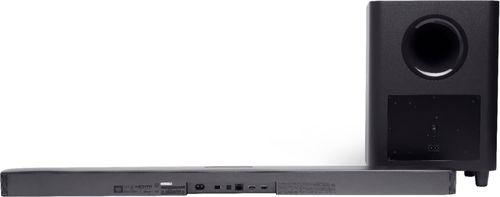
The JBL Bar 5.1 offers superior connectivity with three HDMI inputs supporting 4K passthrough, plus HDMI ARC output. This matters if you have multiple devices like gaming consoles, streaming boxes, and cable receivers. The 4K passthrough ensures video signals maintain their quality when routed through the soundbar.
JBL's SoundShift technology allows seamless switching between TV audio and Bluetooth sources. You can pause your movie, instantly switch to music from your phone, then return to the movie without re-pairing devices or adjusting settings.
Power output directly impacts how well a soundbar fills your space, but the relationship isn't linear. Room acoustics, furniture placement, and ceiling height all affect performance.
The Samsung's 77 watts works well in small to medium rooms up to about 300 square feet. In my 15x20 foot living room, it provided adequate volume for normal viewing but struggled during loud action sequences. The virtual surround effects also work better in smaller spaces where wall reflections are stronger and more consistent.
The JBL's 510 watts can easily fill larger spaces exceeding 500 square feet. More importantly, the extra power provides clean, undistorted audio at higher volumes. During a recent movie night with friends, we could maintain comfortable conversation volume during quiet scenes while still feeling immersed in loud action sequences.
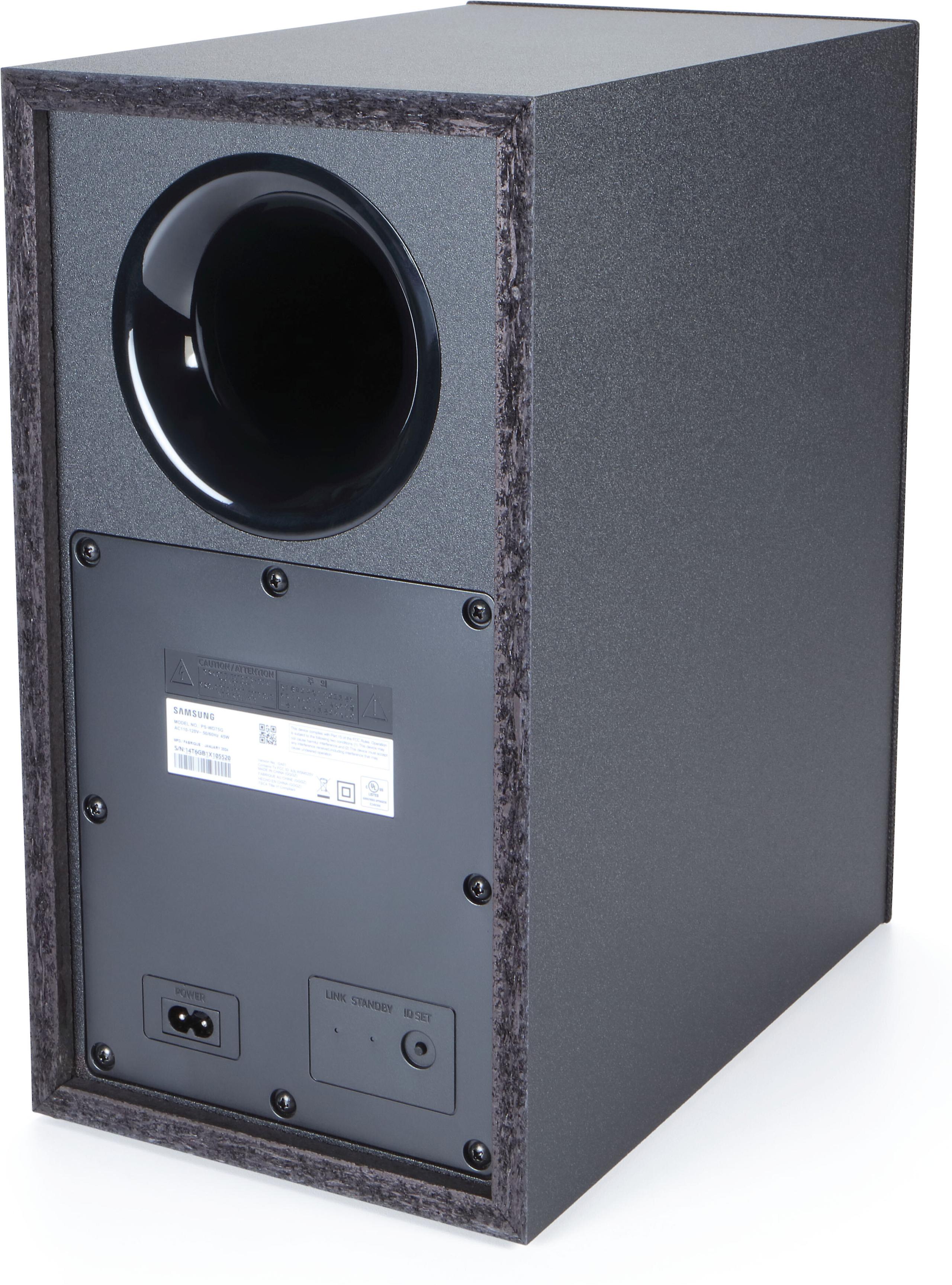
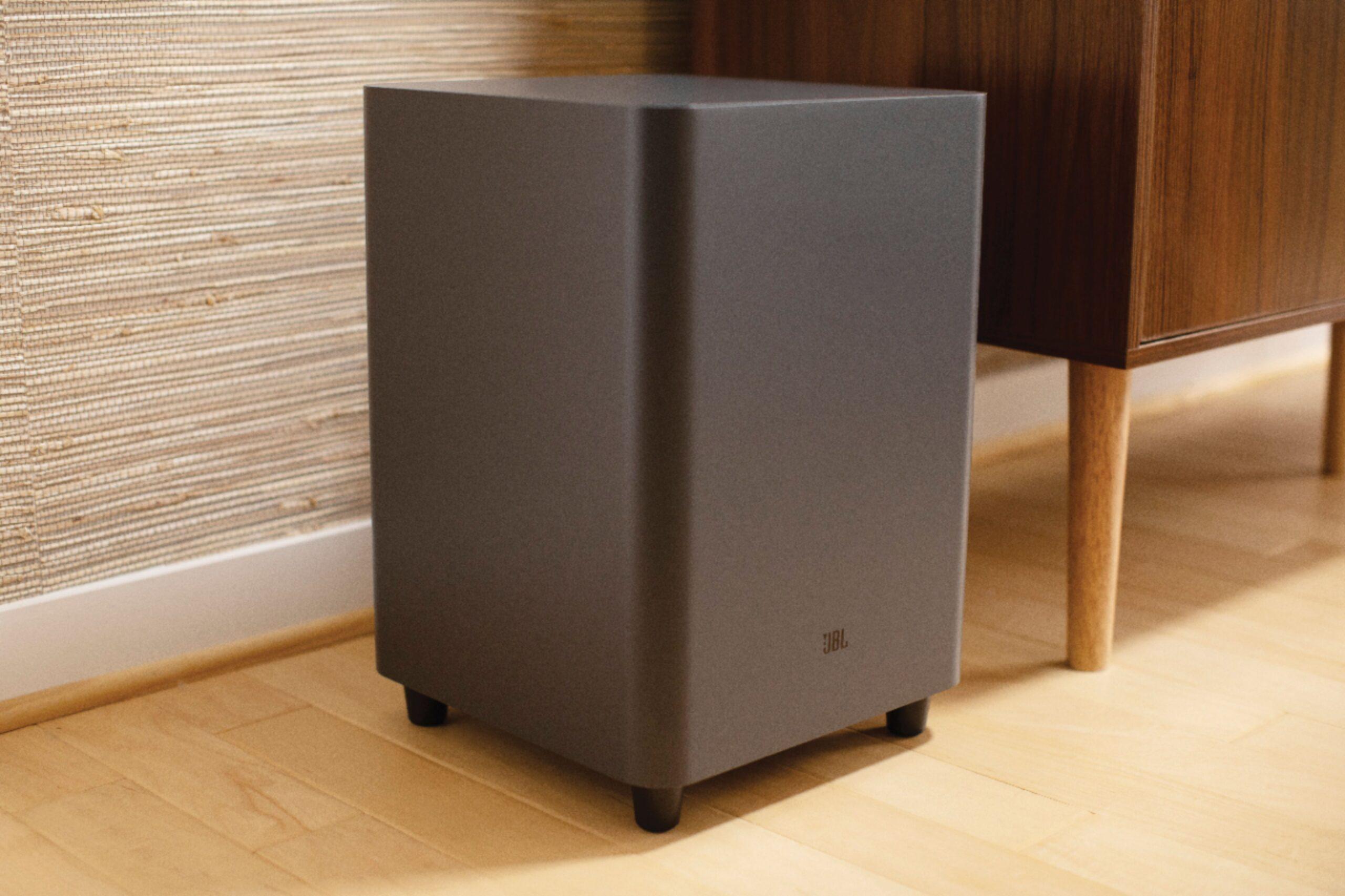
Bass response differs significantly between the systems. The Samsung's 5-kilogram subwoofer provides adequate low-frequency extension for most content, with a Bass Boost mode that emphasizes frequencies between 60-120 Hz. The JBL's 9.1-kilogram subwoofer digs deeper, reproducing frequencies down to 40 Hz with greater authority. You'll feel the difference during explosion scenes or music with deep electronic bass.
For dedicated home theater setups, several factors become more critical than casual TV watching.
Movie enthusiasts will appreciate the JBL Bar 5.1's authentic surround presentation. Theatrical sound mixes are mastered assuming discrete channels, so physical rear speakers reproduce the filmmaker's intent more accurately. The detachable speakers also allow optimal positioning based on your seating arrangement and room layout.
The JBL's multiple HDMI inputs become valuable in home theater contexts where you might connect a 4K Blu-ray player, gaming console, and streaming device simultaneously. The 4K passthrough ensures video quality isn't compromised, maintaining HDR (High Dynamic Range) and other advanced video formats.
However, the Samsung B-Series shouldn't be dismissed for home theater use. Its Game Mode optimizes audio for gaming with reduced latency and enhanced directional cues. Night Mode compresses dynamic range, allowing late-night viewing without disturbing neighbors or family members.
The Samsung's Voice Enhance mode proves particularly useful for dialogue-heavy content like dramas or foreign films with subtitles. This feature boosts vocal frequencies and applies compression to make speech more intelligible, even at lower volumes.
At $227.99, the Samsung B-Series offers exceptional value for most users. You're getting legitimate surround sound processing, wireless subwoofer, smart TV integration, and multiple listening modes for less than half the JBL's price. The virtual surround limitation becomes less important if you primarily watch TV shows, news, or casual movie viewing.
The Samsung also wins on convenience. There are no batteries to manage, no rear speakers to position, and setup takes minutes rather than hours. For renters or people who frequently rearrange furniture, this simplicity has real value.
The JBL Bar 5.1 at $599.95 targets users who prioritize audio quality over convenience. The authentic surround experience, powerful amplification, and extensive connectivity justify the premium for serious movie watchers and music listeners.
However, consider the ongoing commitment required. The rear speakers need charging every 10 hours of use, and you'll need permanent placement solutions. In my experience, forgetting to charge the speakers before movie night is frustrating, especially when guests are over.
Choose the Samsung B-Series if you want significant audio improvement over TV speakers without complexity or high cost. It's perfect for small to medium rooms, Samsung TV owners seeking ecosystem integration, or anyone prioritizing simplicity. The intelligent audio processing and multiple sound modes provide excellent versatility for varied content types.
Choose the JBL Bar 5.1 if you have a large room, budget flexibility, and want authentic cinematic surround sound. The physical rear speakers and powerful amplification create genuinely immersive experiences that justify the higher price for movie enthusiasts.
Both soundbars represent solid engineering and will dramatically improve your TV audio experience. The Samsung maximizes value and convenience, while the JBL maximizes performance and authenticity. Your choice should align with your room size, budget, and how much the difference between virtual and physical surround matters to your enjoyment.
Consider your viewing habits too. If you primarily watch streaming TV shows and occasional movies, the Samsung's virtual surround and smart features provide excellent value. If you're building a dedicated home theater for regular movie nights, the JBL's authentic surround experience becomes worth the investment.
| Samsung B-Series 5.1 Channel Soundbar with Subwoofer | JBL Bar 5.1 Surround Soundbar with Wireless Subwoofer |
|---|---|
| Price - Major factor determining overall value | |
| $227.99 (excellent budget option) | $599.95 (premium pricing for authentic surround) |
| Total Power Output - Determines volume capability and room size compatibility | |
| 77W total (adequate for small-medium rooms) | 510W total (fills large rooms with clean, powerful sound) |
| Surround Sound Technology - Core difference affecting immersion quality | |
| Virtual surround using DTS Virtual:X + side speakers | True 5.1 with detachable wireless rear speakers |
| HDMI Connectivity - Important for multiple device connections | |
| 1 HDMI input, 1 HDMI ARC output (limited for complex setups) | 3 HDMI inputs with 4K passthrough, 1 HDMI ARC output |
| Subwoofer Power & Size - Affects bass depth and impact | |
| 48W, 5.0kg wireless subwoofer (good for most content) | 300W, 9.1kg wireless subwoofer (deep, room-filling bass) |
| Smart Features - Convenience and automatic optimization | |
| Adaptive Sound, Voice Enhance, Night Mode, Q-Symphony | Multiple sound modes, SoundShift technology |
| Setup Complexity - Time investment and ongoing maintenance | |
| Plug-and-play, no battery management needed | Requires rear speaker placement and charging every 10 hours |
| Room Size Compatibility - Maximum effective coverage area | |
| Small to medium rooms (up to 300 sq ft) | Medium to large rooms (500+ sq ft) |
| Bluetooth Capability - Wireless music streaming features | |
| Bluetooth 4.2 with dual-device pairing | Bluetooth 4.2 with single-device connection |
| Brand Integration - Ecosystem compatibility benefits | |
| Excellent Samsung TV integration with Q-Symphony | Universal compatibility, no brand-specific features |
The Samsung B-Series 5.1 Channel Soundbar with Subwoofer at $227.99 provides exceptional value for most users, offering legitimate 5.1 surround sound at less than half the price of competitors. The JBL Bar 5.1 Surround Soundbar with Wireless Subwoofer at $599.95 justifies its premium pricing with authentic physical surround speakers and 510W of power, making it better value for large rooms and serious movie watchers.
The key difference is how they create surround effects. The Samsung B-Series uses virtual surround technology (DTS Virtual:X) with side-firing speakers to simulate rear channel effects. The JBL Bar 5.1 includes actual detachable wireless rear speakers that you place behind your seating area for true 5.1 surround sound.
The Samsung B-Series 5.1 Channel Soundbar with Subwoofer is ideal for small to medium rooms up to 300 square feet. Its 77W power output provides adequate volume without overwhelming smaller spaces, and the virtual surround effects work better when wall reflections are stronger in compact rooms.
The Samsung B-Series requires no battery management - everything connects wirelessly without batteries. The JBL Bar 5.1 Surround Soundbar with Wireless Subwoofer has detachable rear speakers with built-in batteries that need charging every 10 hours of use, which adds ongoing maintenance but enables true surround placement.
The JBL Bar 5.1 offers 3 HDMI inputs with 4K passthrough plus HDMI ARC, making it better for connecting multiple devices like gaming consoles, streaming boxes, and cable receivers. The Samsung B-Series 5.1 Channel Soundbar with Subwoofer has only 1 HDMI input and 1 HDMI ARC output.
The JBL Bar 5.1 Surround Soundbar with Wireless Subwoofer delivers 510W total power compared to the Samsung's 77W - nearly 7 times more powerful. This translates to much louder maximum volume, better dynamic range, and the ability to fill large rooms without distortion.
The Samsung B-Series integrates seamlessly with Samsung TVs through Q-Symphony technology, which uses your TV's speakers alongside the soundbar for expanded audio. It also includes Adaptive Sound that automatically optimizes audio based on content. The JBL Bar 5.1 works with any TV brand but lacks Samsung-specific integration features.
The JBL Bar 5.1 has a significantly larger 9.1kg subwoofer with 300W power that produces deeper bass down to 40Hz. The Samsung B-Series 5.1 Channel Soundbar with Subwoofer includes a 5.0kg subwoofer with 48W power that provides adequate bass for most content, plus a Bass Boost mode for enhanced low frequencies.
The Samsung B-Series 5.1 Channel Soundbar with Subwoofer offers plug-and-play simplicity with no speaker placement decisions or battery management required. The JBL Bar 5.1 Surround Soundbar with Wireless Subwoofer requires more setup time to position rear speakers optimally and ongoing maintenance to keep them charged.
Both work well for home theater, but serve different needs. The JBL Bar 5.1 provides authentic cinematic surround sound with physical rear speakers, making it ideal for dedicated movie watching. The Samsung B-Series offers excellent home theater features like Night Mode and Voice Enhance at a budget-friendly price point.
The Samsung B-Series 5.1 Channel Soundbar with Subwoofer supports dual-device Bluetooth pairing, letting you connect two smartphones simultaneously. The JBL Bar 5.1 Surround Soundbar with Wireless Subwoofer connects to one Bluetooth device at a time but includes SoundShift technology for seamless switching between TV and phone audio.
Choose the Samsung B-Series if you want significant audio improvement over TV speakers without complexity or high cost - it's perfect for first-time soundbar buyers. Choose the JBL Bar 5.1 if you have a larger budget and room, plus the commitment to manage rear speaker placement and charging for authentic surround sound.
We've done our best to create useful and informative comparisons to help you decide what product to buy. Our research uses advanced automated methods to create this comparison and perfection is not possible - please contact us for corrections or questions. These are the sites we've researched in the creation of this article: bestbuy.com - abt.com - avsforum.com - crutchfield.com - camelcamelcamel.com - samsung.com - samsung.com - samsung.com - images.samsung.com - samsung.com - avblinq.avbportal.com - samsung.com - samsung.com - jbl.com - jbl.com - jbl.com - tomsguide.com - jbl.com - bestbuy.com - bestbuy.com - jbl.com - jbl.com - worldwidestereo.com

Privacy Policy
Terms and Conditions - Affiliate Policy
Home Security
© Copyright 2008-2026.
11816 Inwood Rd #1211, Dallas, TX 75244