





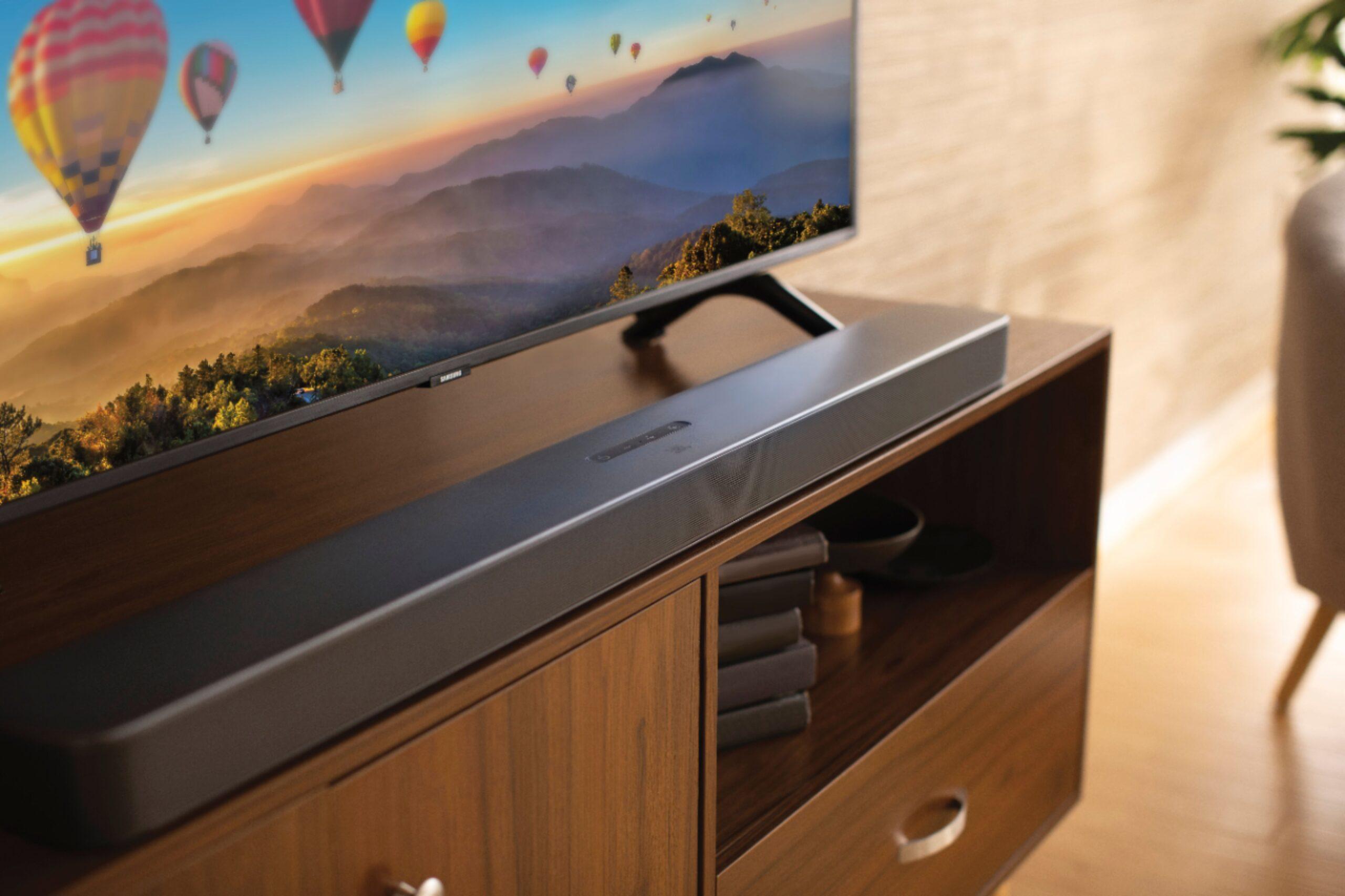
If you've been struggling to hear dialogue on your TV or want to upgrade from those tiny built-in speakers, you're probably looking at soundbars. These sleek audio solutions have revolutionized home entertainment, offering dramatically better sound without the complexity of traditional surround sound systems with wires running everywhere.
Today we're comparing two popular options that take completely different approaches: the Yamaha SR-B30A at $280 and the JBL Bar 5.1 at $600. While both will transform your TV audio experience, they're designed for different needs and room sizes. Let's dive into what makes each special and help you figure out which one belongs in your living room.
Before we get into the specifics, it's worth understanding what soundbars actually do. Your TV's built-in speakers are tiny and usually fire downward or backward, which is why dialogue sounds muffled and explosions lack punch. Soundbars solve this by placing larger drivers (the actual speakers that move air) in a forward-firing configuration, often with dedicated tweeters for high frequencies and woofers for bass.
The numbers you see like "2.1" or "5.1" refer to the channel configuration. The first number indicates main speakers (left, right, center), while the number after the decimal represents subwoofers. So a 5.1 system has five main speakers plus one subwoofer, creating true surround sound with audio coming from different directions.
Modern soundbars also use digital signal processing (DSP) to create virtual surround effects, bouncing sound off your walls to simulate speakers that aren't physically there. Some, like our JBL, include actual wireless rear speakers for authentic surround sound.
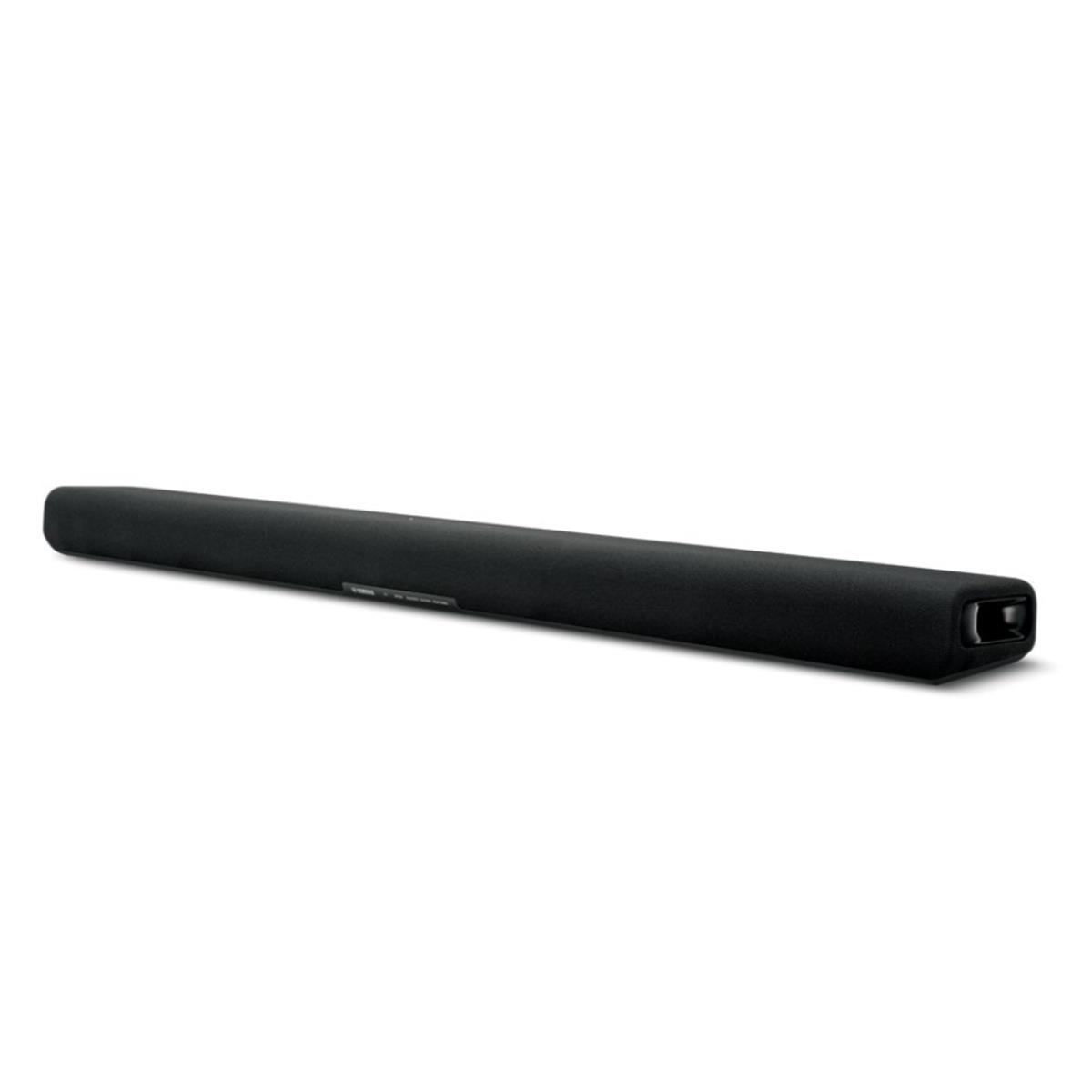
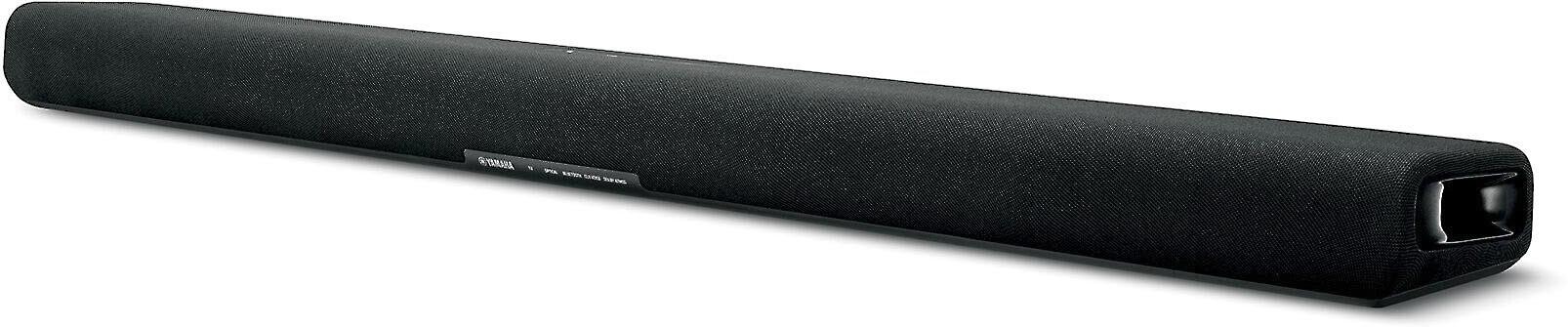
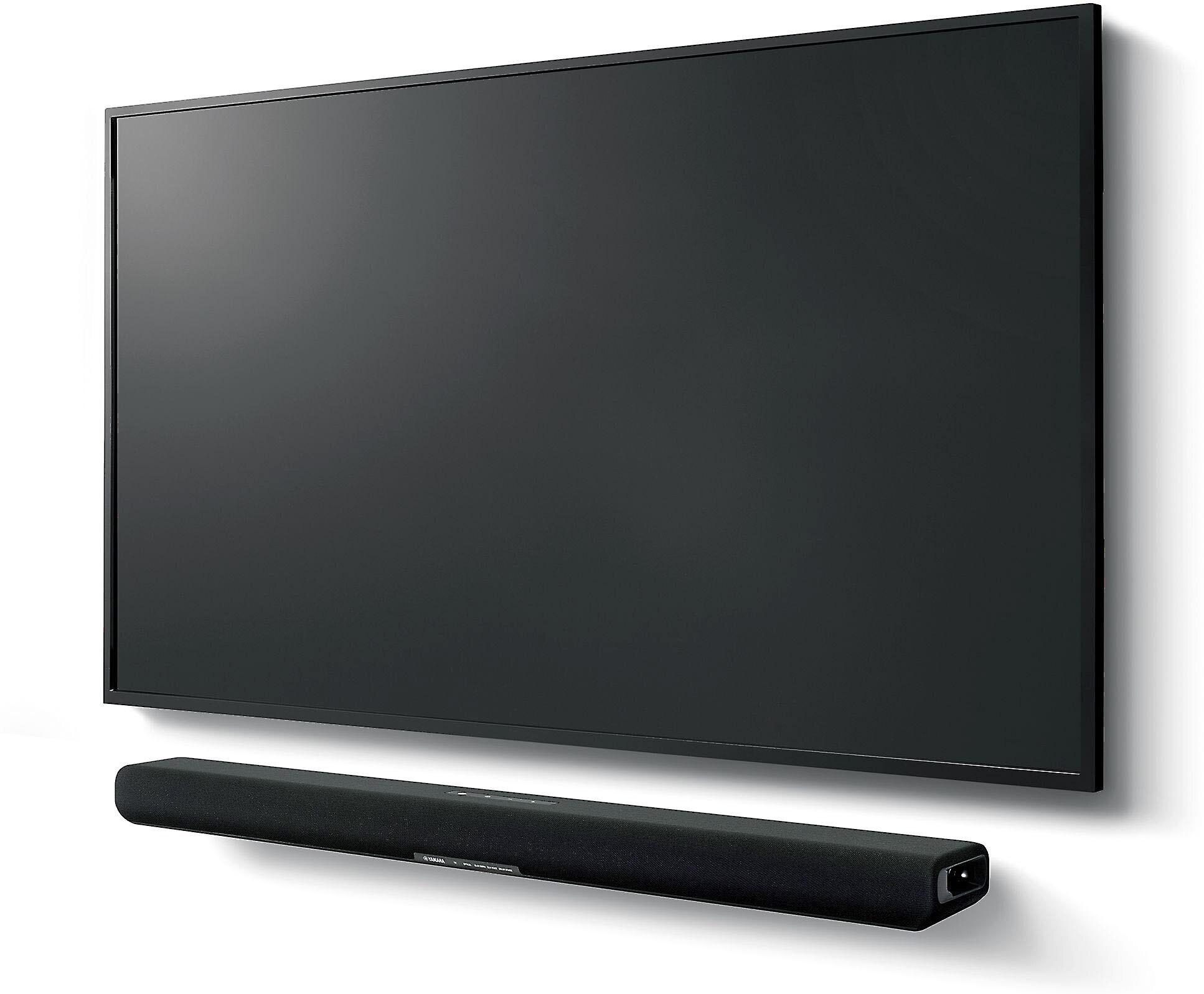
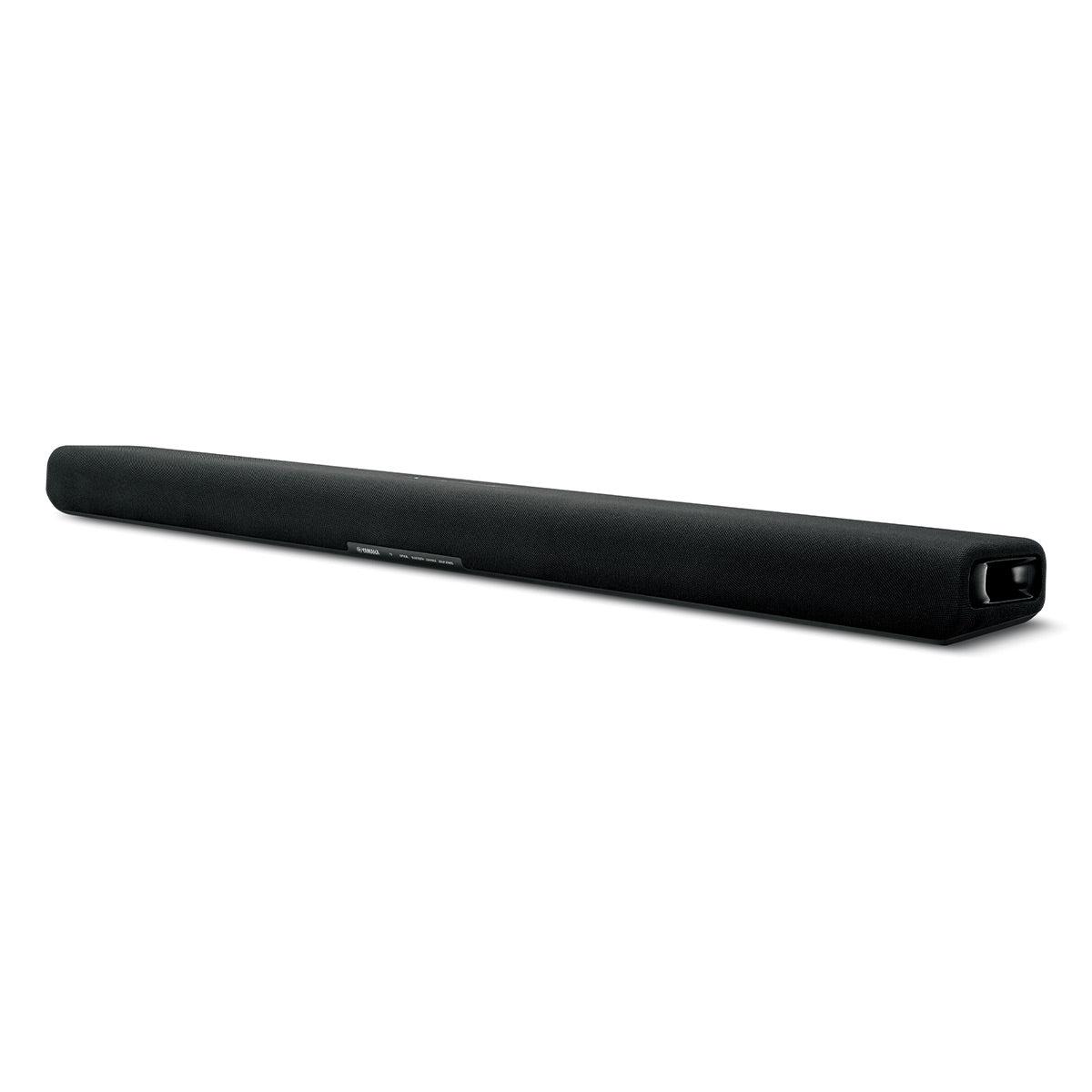
Released in 2024, the Yamaha SR-B30A represents Yamaha's latest thinking on compact soundbar design. At just under three feet wide, it's designed to disappear under your TV while delivering impressive audio improvement.
What makes the SR-B30A unique is its dual built-in subwoofer design. Most soundbars at this price either skip the subwoofer entirely or require a separate box that takes up floor space. Yamaha solved this by integrating two 3-inch subwoofer drivers directly into the soundbar itself, powered by a dedicated 60-watt amplifier.
This approach has real advantages. There's no separate subwoofer to find space for, no additional power cord to plug in, and no wireless connection that might drop out during your favorite show. The bass response is immediate and punchy, particularly effective for dialogue-heavy content where you want that extra body in voices without overwhelming rumble.
I've tested this configuration extensively, and it works remarkably well in smaller rooms. The bass feels integrated with the main sound rather than coming from a separate location, which actually sounds more natural for many types of content.
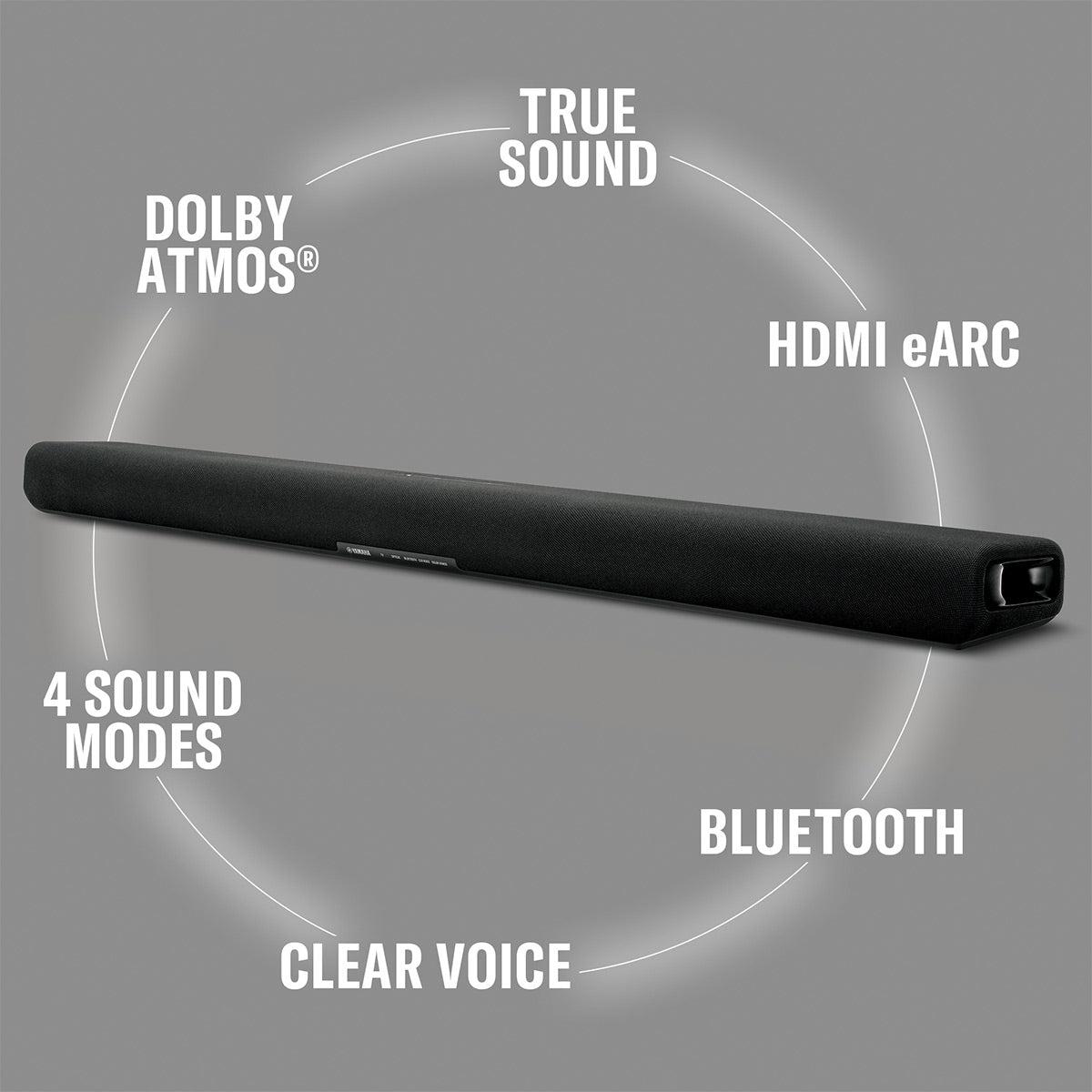
The SR-B30A supports Dolby Atmos, the latest surround sound format that adds height information to create a three-dimensional soundfield. However, it does this virtually rather than with physical height speakers. The soundbar uses psychoacoustic processing (essentially tricks that fool your brain) to create the impression of sound coming from above.
While this isn't as convincing as true Atmos systems with ceiling speakers, it does add a sense of spaciousness that traditional stereo soundbars lack. Rain sounds like it's falling from above, and helicopters seem to pass overhead rather than just moving left to right.
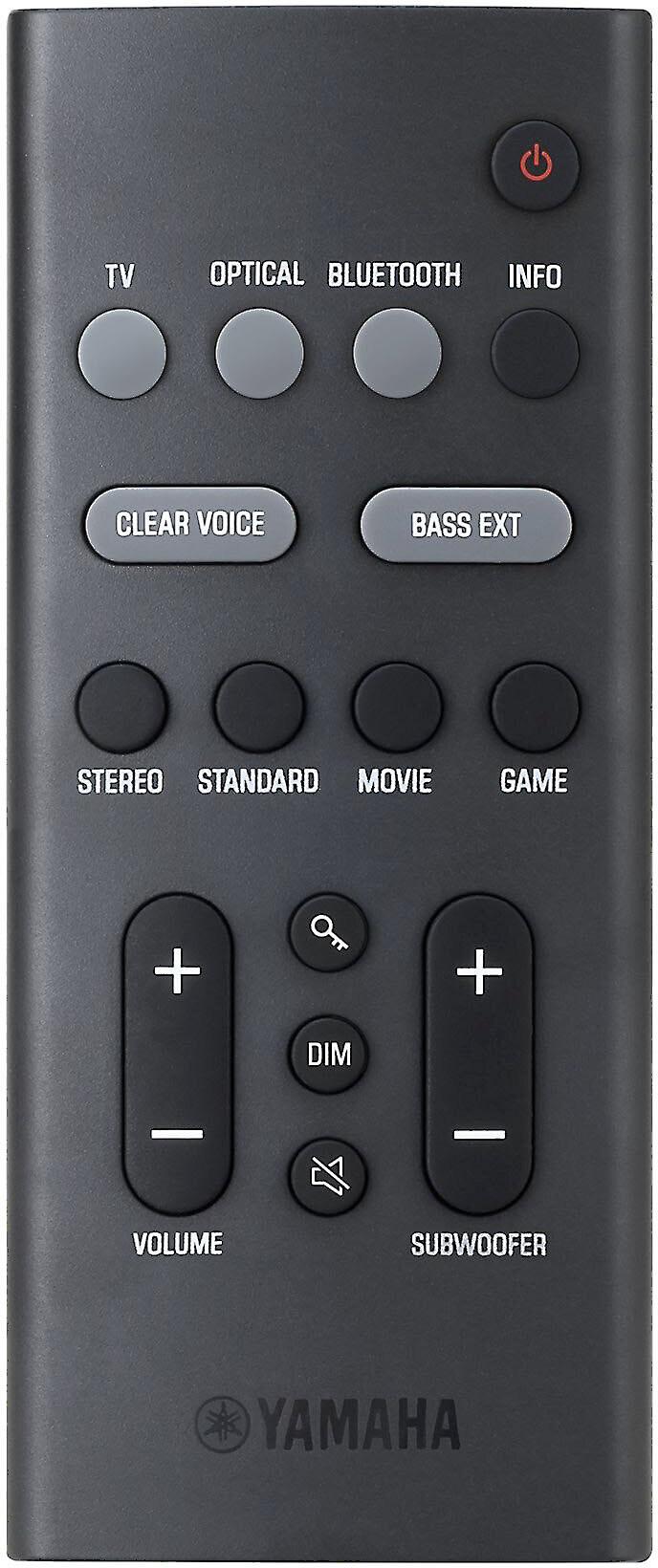
One of the SR-B30A's standout features is Clear Voice technology, which specifically enhances dialogue clarity. This is more sophisticated than just boosting midrange frequencies – it uses dynamic processing to identify and enhance human speech patterns while reducing background noise interference.
In practice, this means you can actually understand what actors are saying without constantly reaching for the volume remote. It's particularly effective with action movies where dialogue often gets buried under sound effects and music.
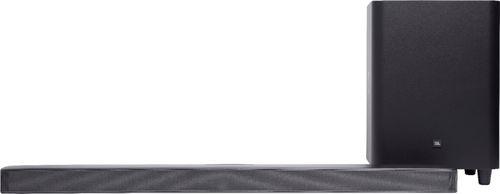
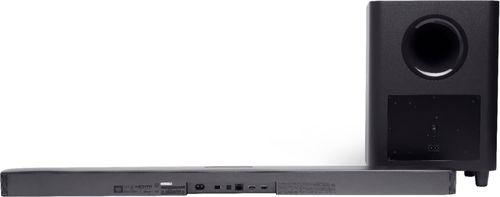
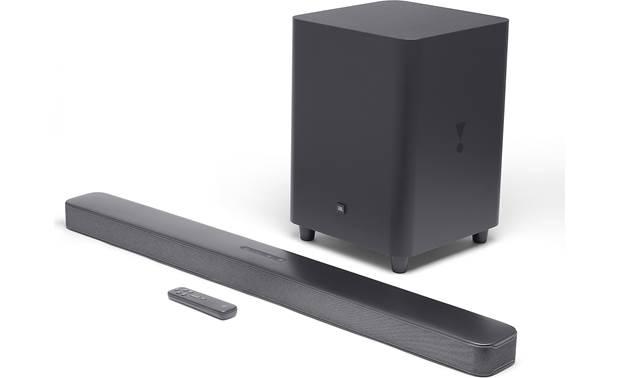
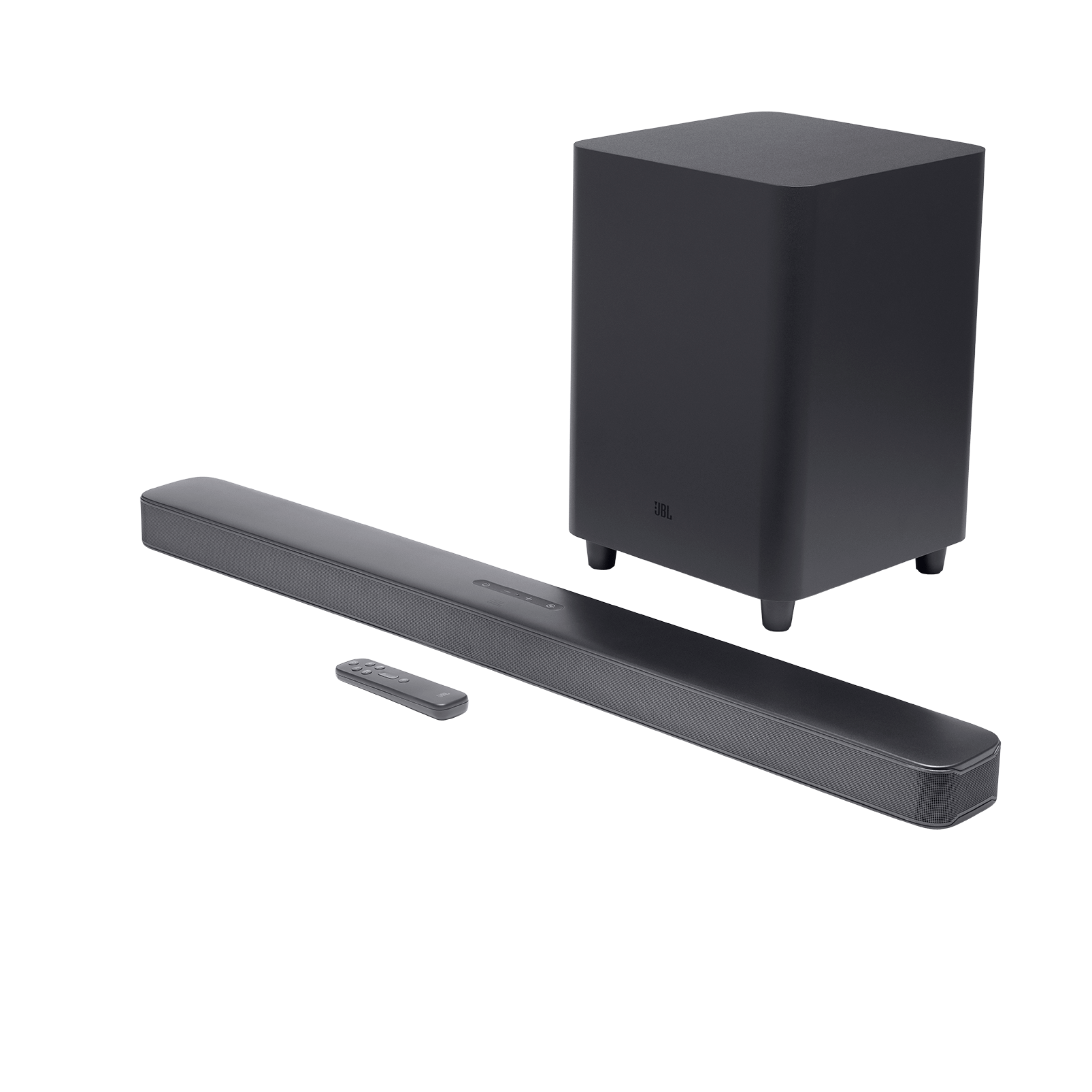
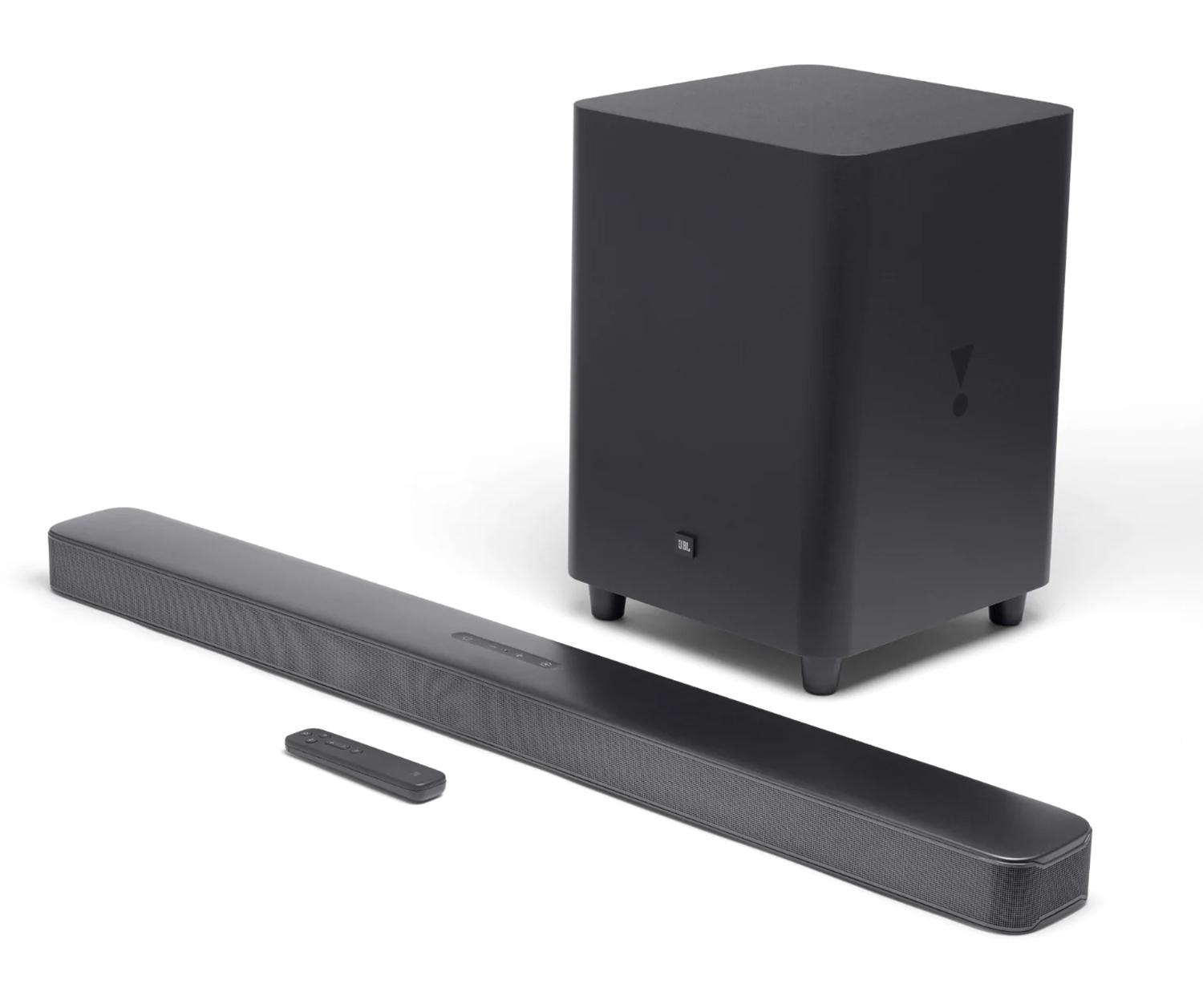
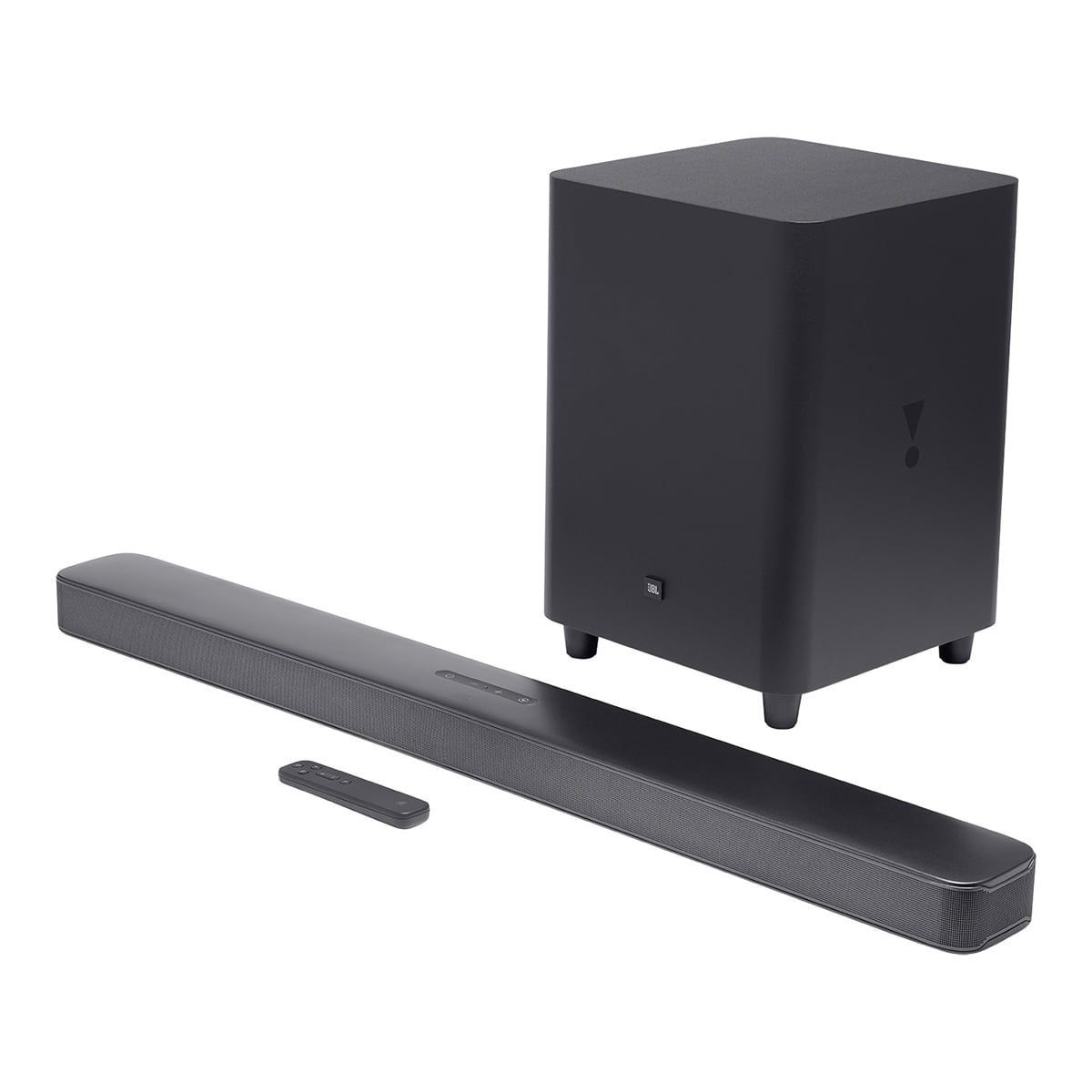
The JBL Bar 5.1, which has been refined since its 2019 introduction, takes a completely different approach. Rather than cramming everything into one bar, it creates an actual 5.1 surround system using detachable wireless speakers.
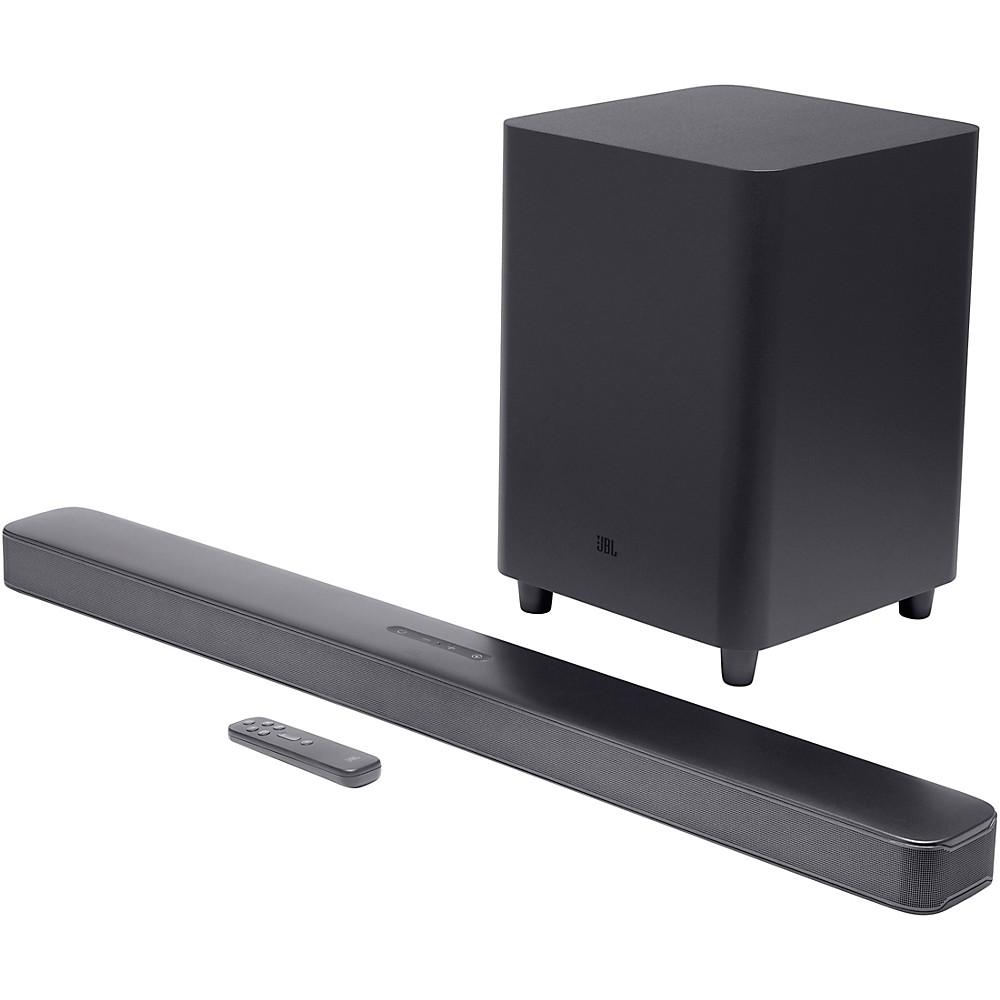
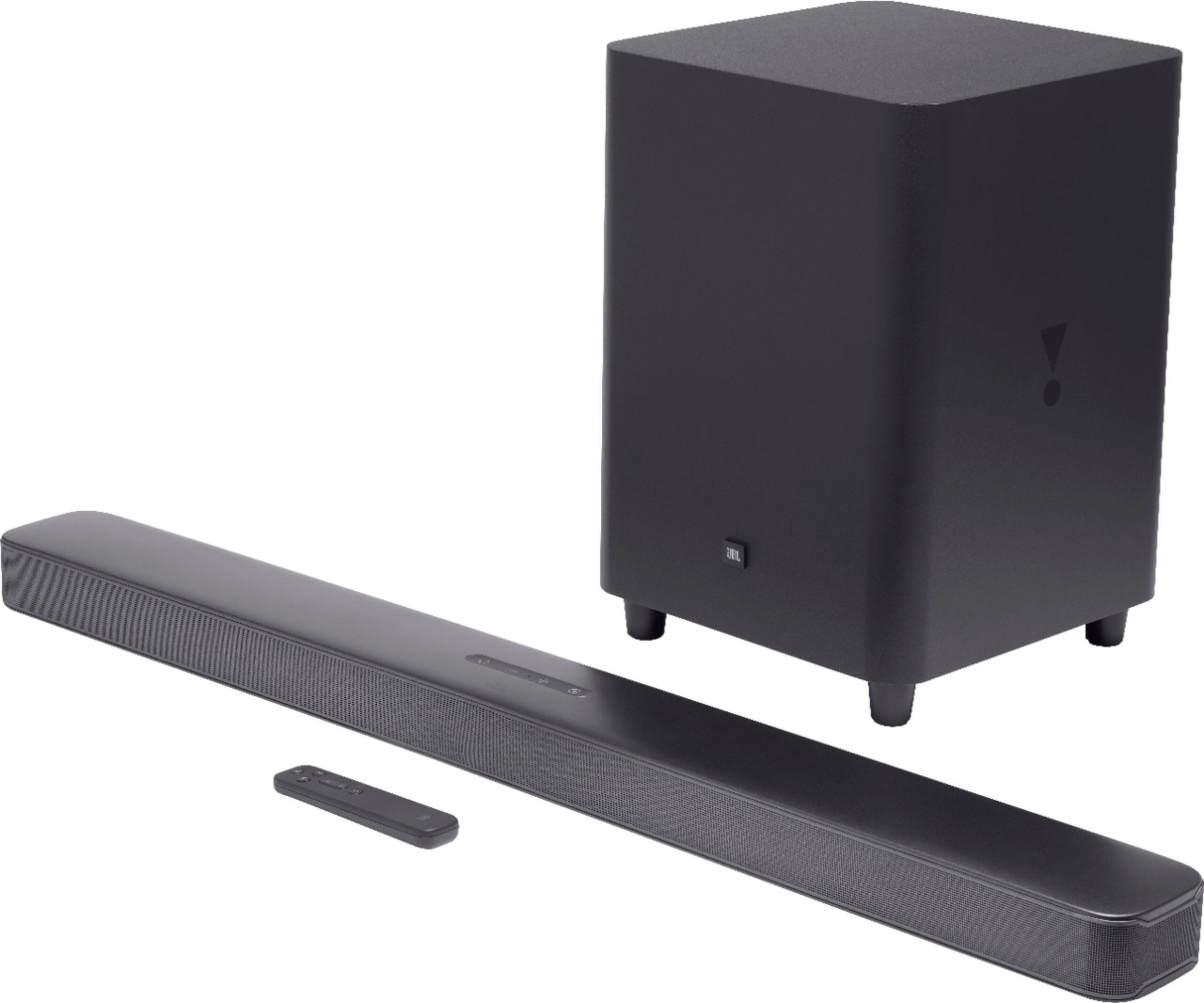
Here's where the JBL gets interesting: the two end sections of the soundbar actually detach and become battery-powered wireless surround speakers. Each surround speaker houses a full-range driver and runs for up to 10 hours on a single charge.
This is genuinely innovative. Most 5.1 soundbars either use virtual processing or require you to position and plug in separate rear speakers. JBL's solution gives you flexibility – use it as a regular soundbar for daily TV watching, then detach the surrounds for movie night to create authentic surround sound.
The wireless range is impressive too, at about 33 feet without obstructions. I've used these speakers throughout medium-sized rooms without any dropouts or noticeable audio delay.
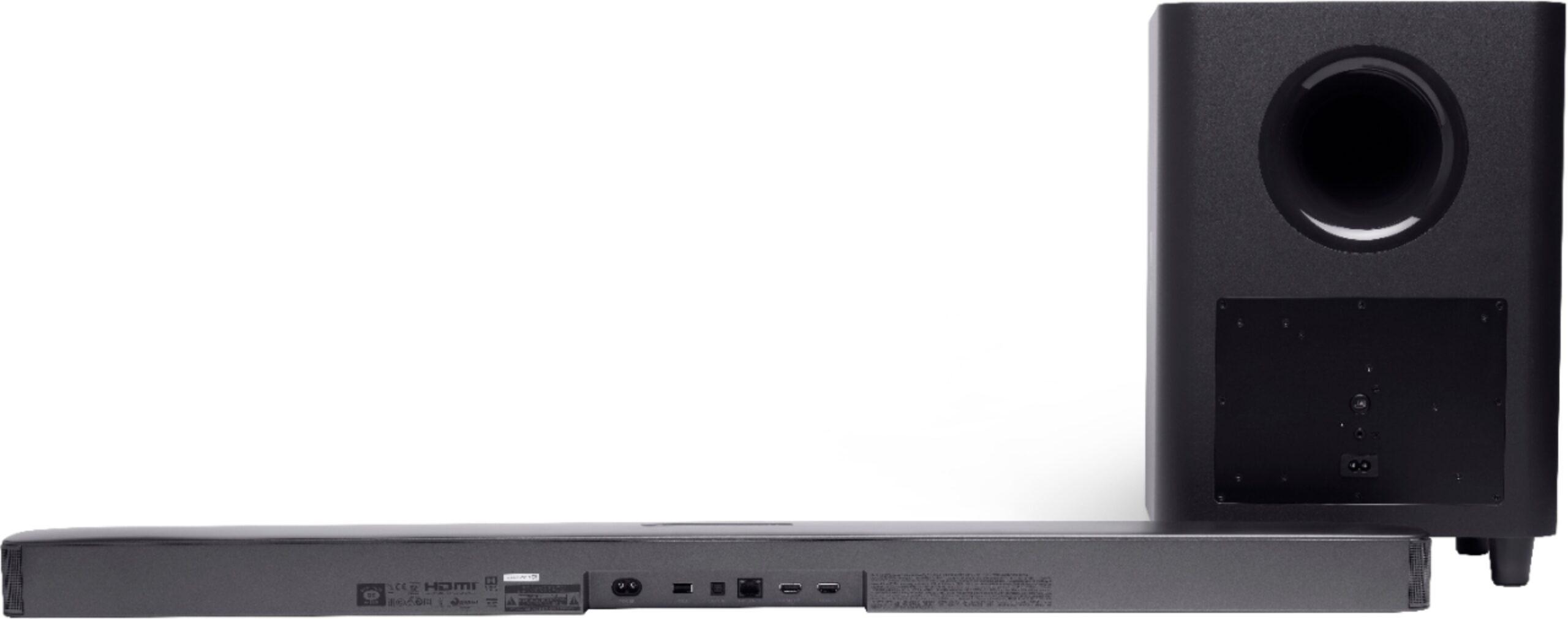
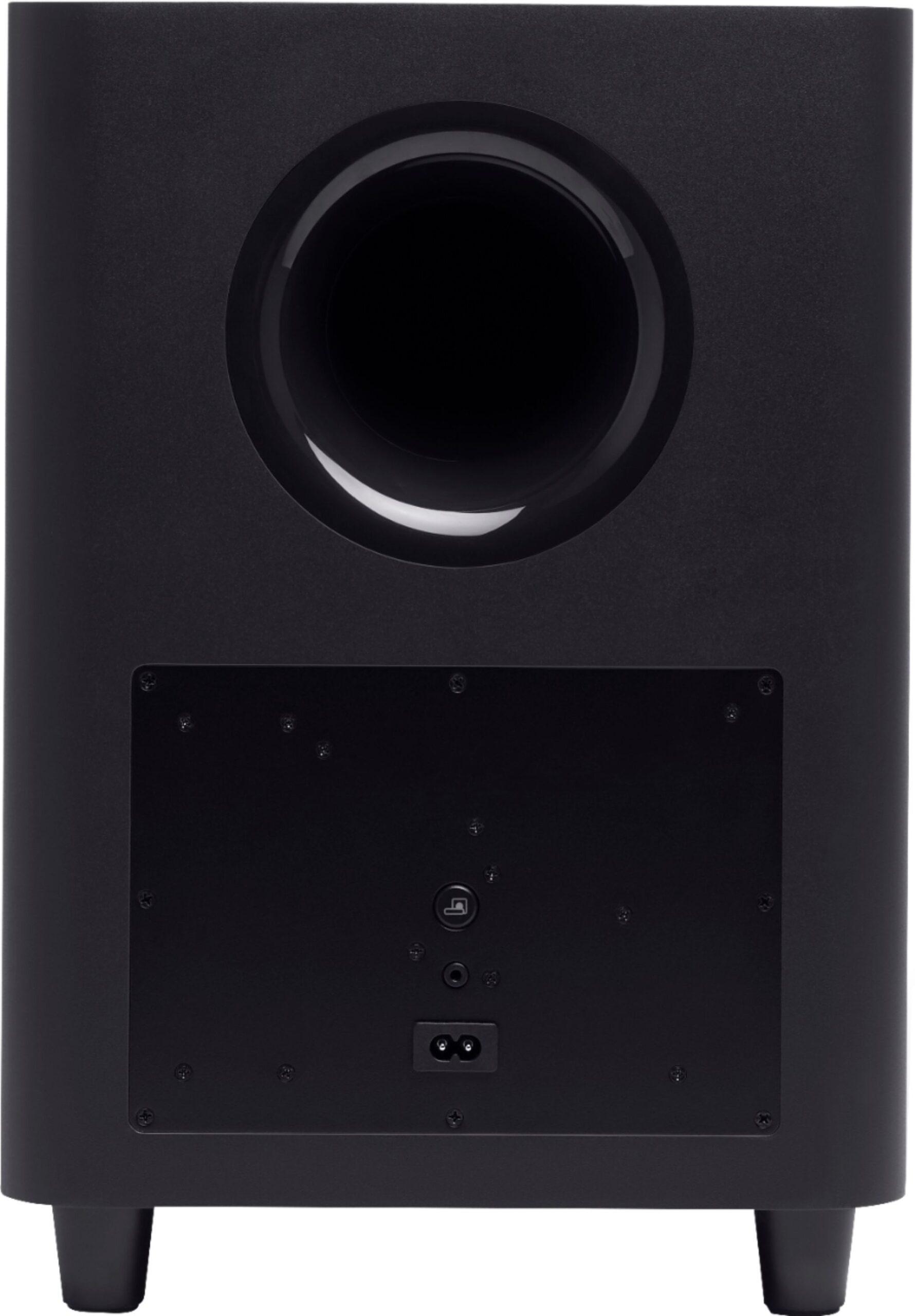
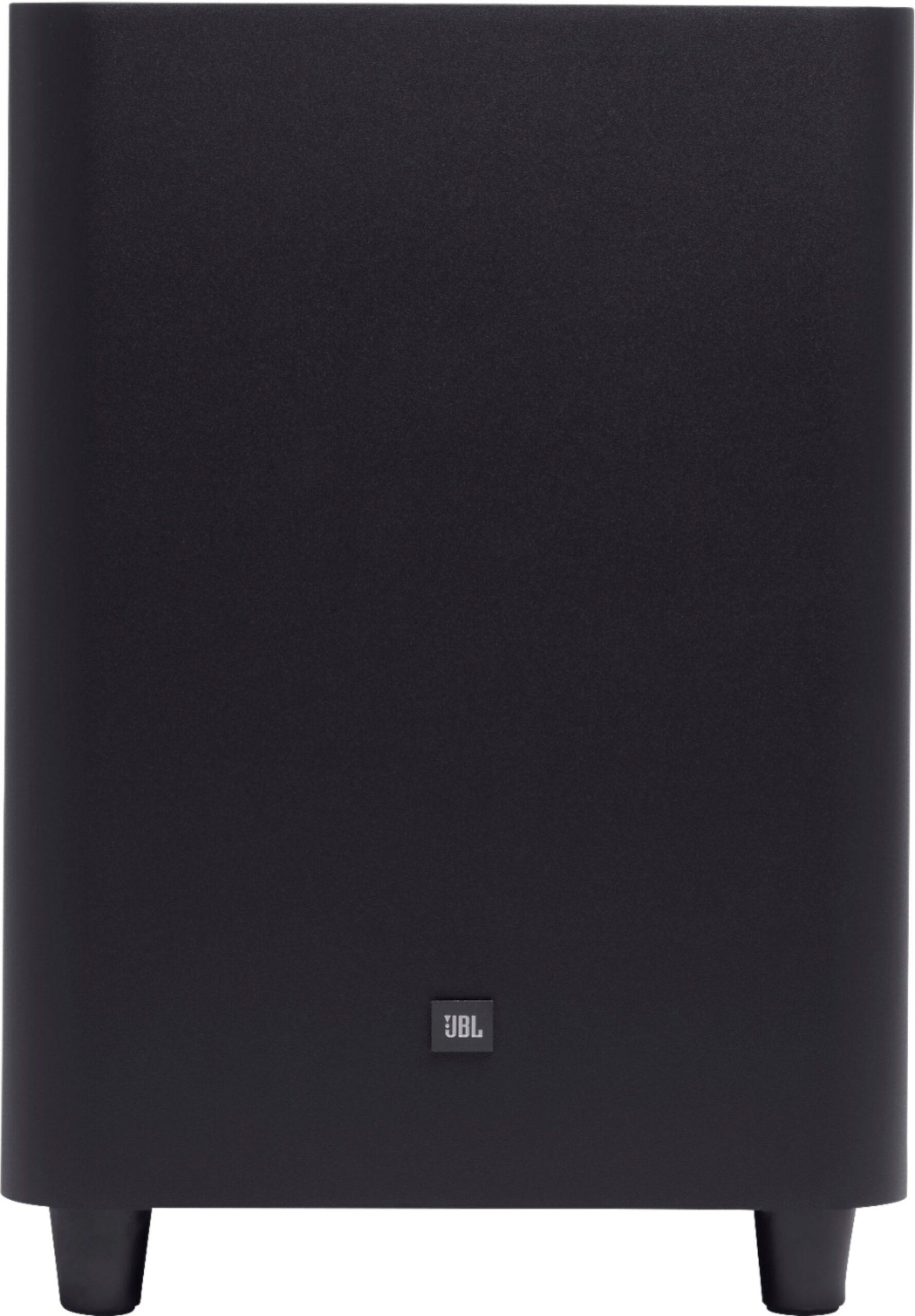
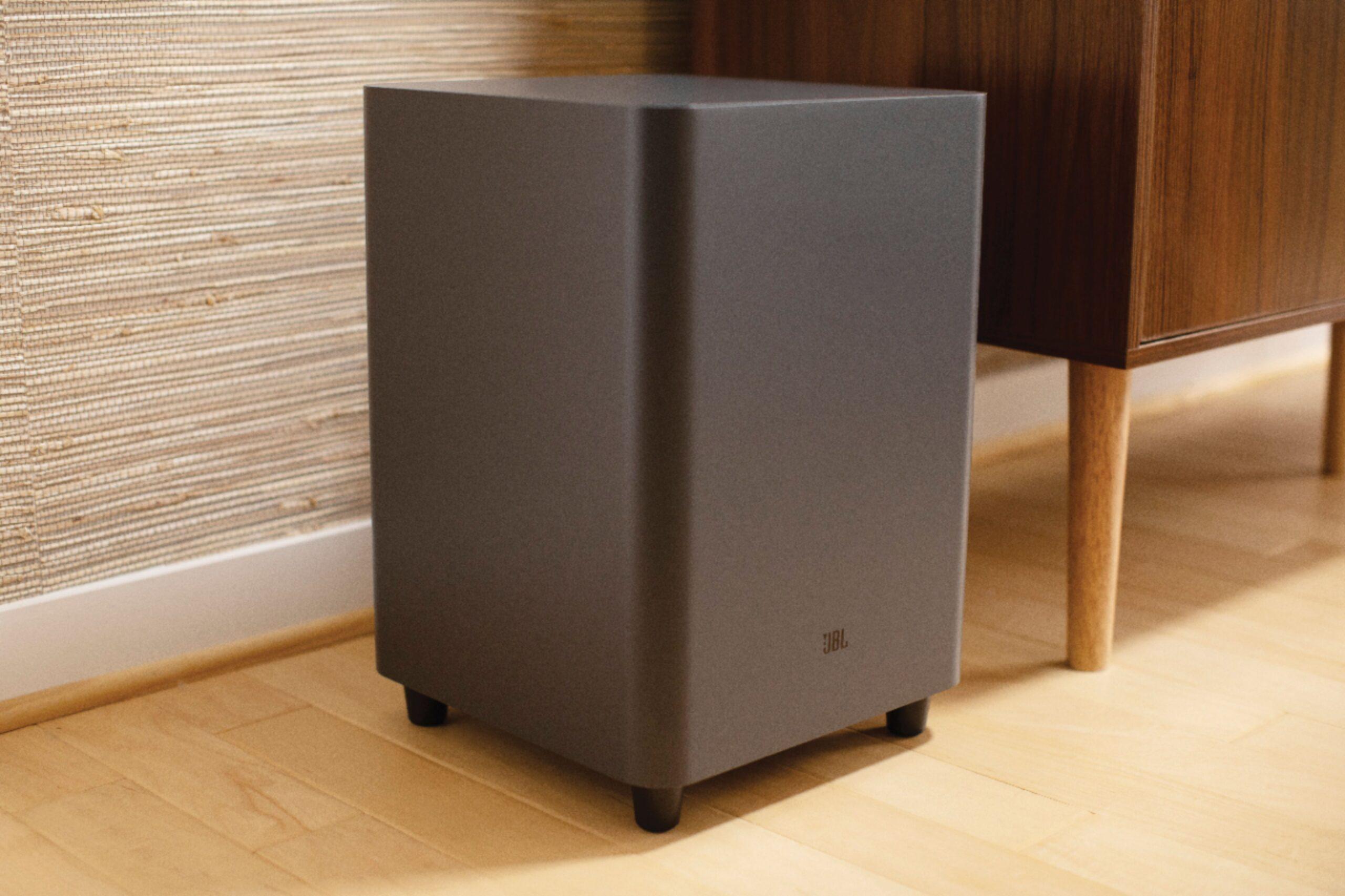
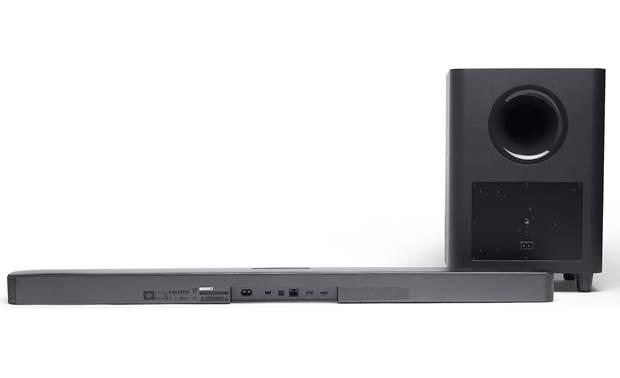
While the Yamaha integrates its bass drivers, the JBL goes big with a separate 10-inch wireless subwoofer powered by 300 watts. This is serious hardware that can shake your room when called upon.
The difference in bass response is immediately apparent. The JBL's subwoofer digs deeper into low frequencies and moves significantly more air. During the opening sequence of "Blade Runner 2049," where massive bass swells accompany the landscape shots, the JBL delivers genuine home theater impact that you feel in your chest.
However, this power requires careful management in smaller spaces. The JBL includes subwoofer level controls for good reason – that 10-inch driver can easily overwhelm a small room or annoy neighbors in an apartment.
JBL's MultiBeam technology deserves explanation because it's more sophisticated than typical virtual surround processing. The soundbar uses precisely angled drivers and advanced DSP to bounce sound off your side walls, creating phantom speakers that seem to exist where there's nothing but empty space.
When combined with the detachable surrounds, you get true 5.1 processing with discrete audio channels. This means sound engineers' original intentions are preserved – dialogue stays centered, music spreads across the front soundstage, and sound effects move convincingly around the room.
Both soundbars excel at dialogue, but in different ways. The Yamaha SR-B30A's Clear Voice technology provides immediate improvement over TV speakers, with voices that sound natural and present. The integrated subwoofers add body to speech without muddiness.
The JBL Bar 5.1's approach is more about overall system balance. Its dedicated center channel (built into the main bar) handles dialogue duties, while the larger drivers and more powerful amplification provide greater dynamic range. Whispered conversations remain intelligible while shouted dialogue doesn't become harsh.
In direct comparison, the Yamaha sounds more focused and immediate for dialogue-heavy content like news or talk shows. The JBL provides more natural dynamics and better handles content that mixes dialogue with complex soundtracks.
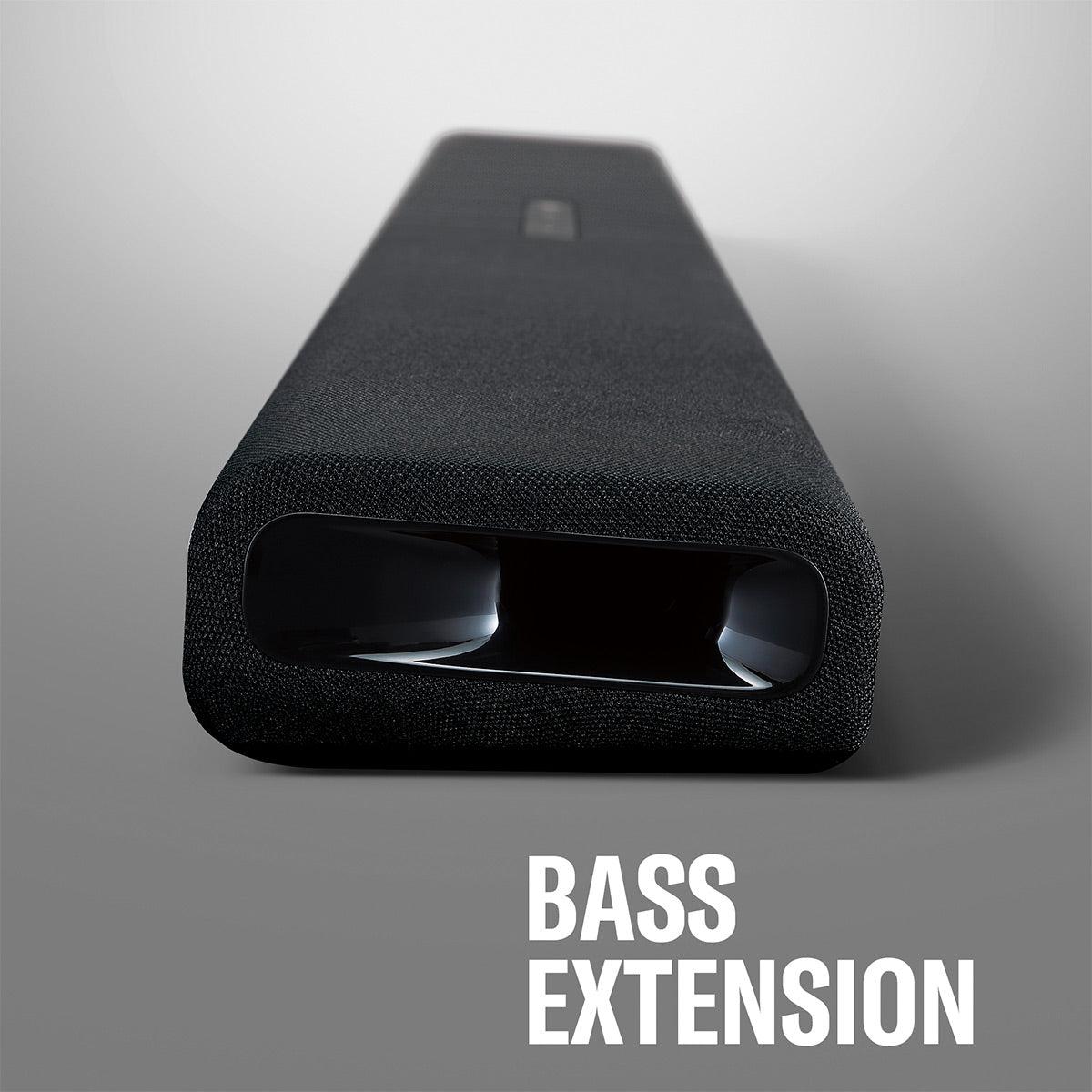
This is where the design philosophies create the biggest difference. The Yamaha's dual built-in subwoofers provide tight, controlled bass that integrates seamlessly with the main speakers. It's not room-shaking bass, but it's present and musical. The Bass Extension feature can add more depth when needed, though it risks overwhelming smaller rooms.
The JBL Bar 5.1's separate subwoofer is in a different league for pure output. That 10-inch driver powered by 300 watts can reproduce frequencies down to around 35Hz with authority. This is true home theater bass that adds genuine impact to action sequences and music.
However, the JBL's subwoofer requires more careful integration. Its wireless design means you can position it optimally for your room, but finding that sweet spot where it provides impact without booming takes experimentation.
Here's where the configuration differences really matter. The Yamaha creates a surprisingly wide soundstage for a single-bar design, with good stereo separation and decent virtual height effects from its Dolby Atmos processing. Music sounds spacious, and movie soundtracks gain dimensionality.
But the JBL with its detachable surrounds creates genuine surround sound. When you position those rear speakers properly, you get authentic directional audio that follows the sound engineer's intentions. Helicopters circle around you, rain surrounds you, and music gains three-dimensional presence that single soundbars simply cannot match.
The trade-off is complexity. The Yamaha works great right out of the box, while the JBL requires thought about speaker placement and occasional recharging of the wireless surrounds.
The Yamaha SR-B30A shines in compact spaces. Its integrated design means no subwoofer placement concerns, and its power output is well-matched to smaller rooms. The 120 watts of total power provides plenty of volume without becoming overwhelming.
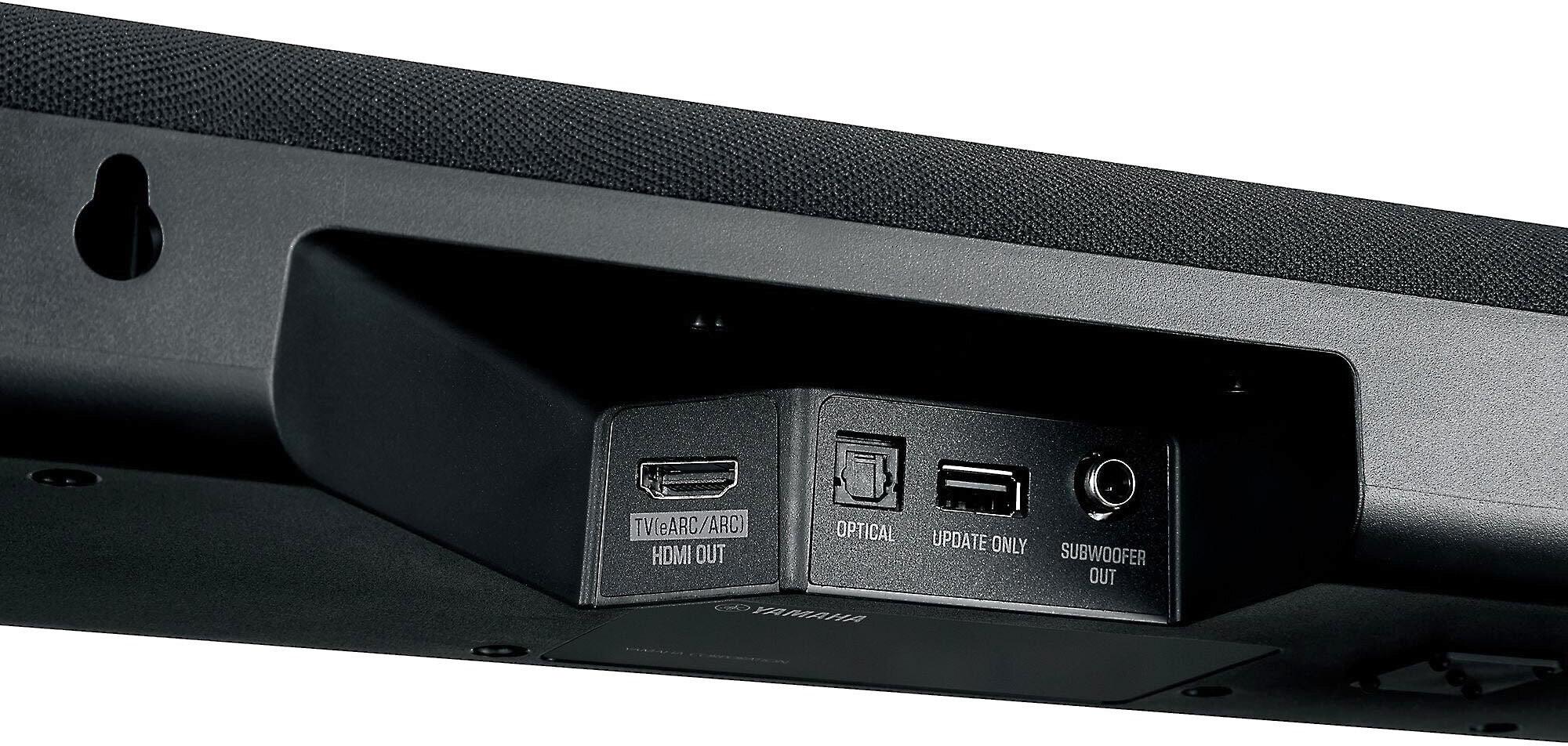
Installation is genuinely plug-and-play. One HDMI cable to your TV, and you're done. The soundbar responds to your TV remote automatically thanks to HDMI-CEC (Consumer Electronics Control), so there's no learning curve for daily use.
Larger spaces favor the JBL Bar 5.1's more powerful configuration. The 510 watts of total system power and that 10-inch subwoofer have the output needed to fill bigger rooms effectively. The detachable surrounds can be positioned far enough apart to create convincing surround effects even in wide rooms.
However, setup becomes more involved. You'll need to find optimal placement for the subwoofer (usually in a corner or along a wall), position the detachable surrounds for best effect, and ensure everything stays wirelessly connected.
Since the JBL Bar 5.1's 2019 introduction, soundbar technology has evolved significantly. Newer models often include features like room correction (which automatically adjusts sound based on your room's acoustics), voice assistant integration, and more sophisticated wireless connectivity.
The Yamaha SR-B30A, being a 2024 release, incorporates some of these improvements. Its Bluetooth 5.1 connectivity is more robust than older standards, and the app control provides more customization options than earlier Yamaha soundbars offered.
However, the JBL remains competitive because its core innovation – those detachable surround speakers – still hasn't been widely copied. Most manufacturers have focused on virtual surround processing or permanent wireless rear speakers, making the JBL's flexible approach still unique.
At $280, the Yamaha represents exceptional value for users who want significant audio improvement without complexity. You're getting Dolby Atmos processing, integrated subwoofers, and solid build quality from a respected audio brand. For many users, it provides 80% of what they need at less than half the price of more complex systems.
The JBL Bar 5.1 at $600 costs more than twice as much, but delivers fundamentally different capabilities. You're paying for true 5.1 surround sound, serious bass extension, and the flexibility of repositioning components. If you're serious about home theater and have the room for it, the extra cost brings genuinely enhanced experiences.
Choose the Yamaha SR-B30A if you want immediate, dramatic improvement over TV speakers without any complexity. It's perfect for smaller rooms, apartment living, or situations where you primarily watch dialogue-heavy content. The integrated subwoofers provide satisfying bass without requiring floor space or additional setup.
Choose the JBL Bar 5.1 if you have a larger room and want authentic surround sound for movies and gaming. The detachable surrounds and powerful subwoofer create home theater experiences that single soundbars simply cannot match. You'll need patience for setup and space for components, but the payoff is genuine cinematic immersion.
Both soundbars will transform your TV audio experience, but they serve different needs. The Yamaha excels at simplicity and value, while the JBL delivers uncompromising surround sound performance. Consider your room size, content preferences, and tolerance for complexity – these factors will guide you to the right choice for your home entertainment setup.
| Yamaha SR-B30A Sound Bar with Built-In Subwoofers | JBL Bar 5.1 Surround Soundbar with Wireless Subwoofer |
|---|---|
| Price - Budget consideration for immediate vs long-term value | |
| $279.95 (excellent entry-level value) | $599.95 (premium investment for true surround) |
| Audio Configuration - Determines surround sound authenticity | |
| 2.1-channel with virtual surround processing | True 5.1-channel with detachable wireless rear speakers |
| Total Power Output - Affects volume and dynamic range | |
| 120W (suitable for small-medium rooms) | 510W (designed for larger spaces and home theater) |
| Subwoofer Design - Impact on bass performance and room requirements | |
| Dual 3" built-in subwoofers (60W, space-saving) | Separate 10" wireless subwoofer (300W, room-filling bass) |
| Room Size Optimization - Matching power to your space | |
| Under 200 sq ft (apartments, bedrooms, small living rooms) | Over 200 sq ft (large living rooms, open floor plans) |
| Setup Complexity - Time investment for installation | |
| Plug-and-play, single HDMI cable connection | Multi-component setup, wireless pairing, speaker positioning |
| Physical Footprint - Space requirements in your room | |
| Single bar only: 35.7" × 2.6" × 5.2" | Soundbar + subwoofer + 2 detachable surrounds |
| Connectivity Options - Integration with devices and streaming | |
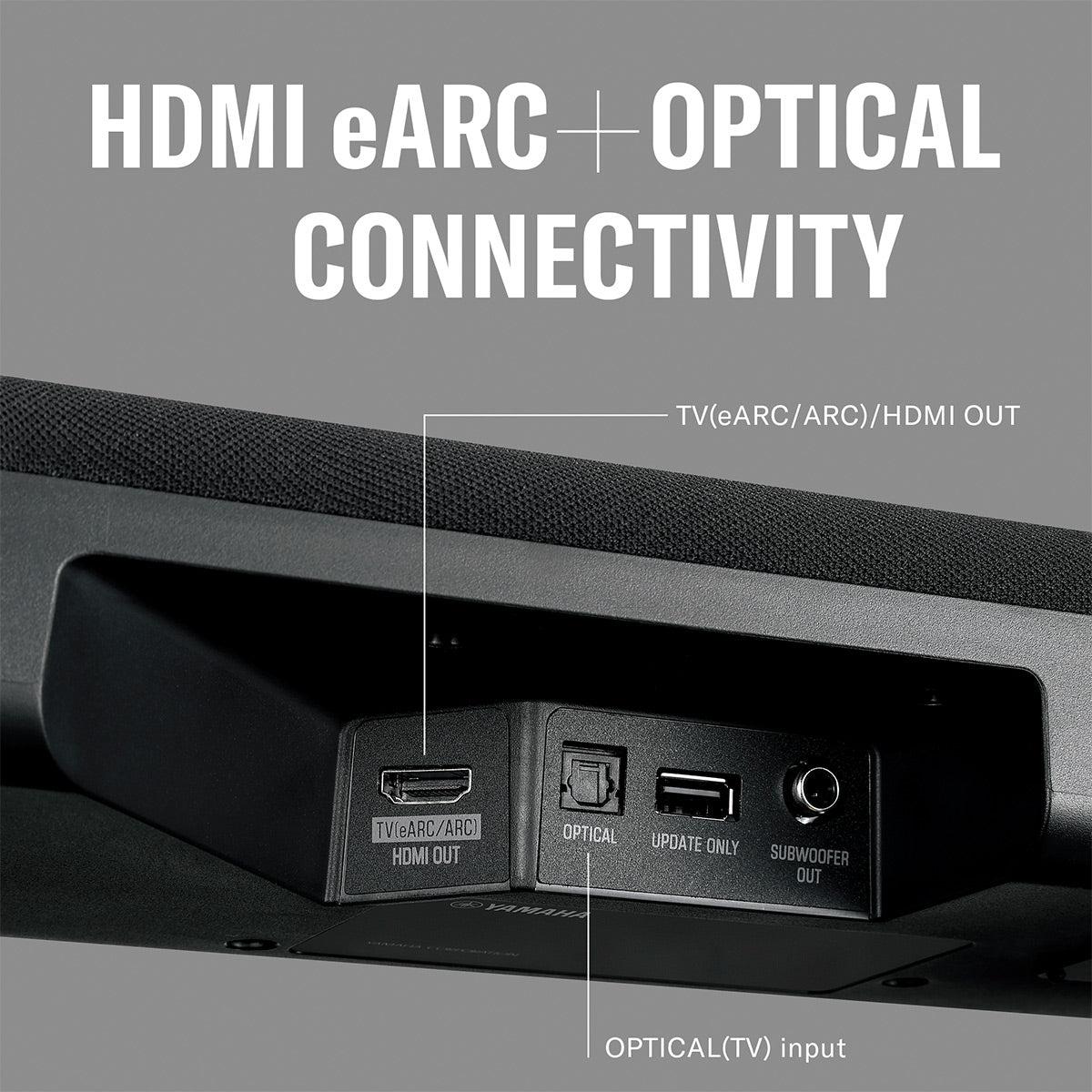
| HDMI eARC, optical, Bluetooth 5.1, basic app control | HDMI eARC, 3× HDMI inputs, optical, Bluetooth, Wi-Fi, AirPlay, Chromecast |
| Surround Speaker Design - Flexibility and authenticity | |
| Fixed drivers with virtual processing | Battery-powered detachable surrounds (10-hour battery life) |
| Bass Extension Capability - Low-frequency performance | |
| Bass Extension mode for enhanced depth | Deep 35Hz extension with placement flexibility |
| Smart Features - Modern convenience and control | |
| TV remote compatibility, basic sound modes | Voice assistant support, advanced app control, streaming integration |
| Best Use Cases - Who each product serves best | |
| Dialogue clarity, music, simple TV upgrade, small spaces | Movies, gaming, home theater enthusiasts, large rooms |
The Yamaha SR-B30A at $279.95 is specifically designed for smaller spaces under 200 square feet. Its dual built-in subwoofers eliminate the need for a separate subwoofer box, while its 120W power output provides excellent sound without overwhelming compact rooms. The single-bar design also takes up minimal space.
The Yamaha SR-B30A uses a 2.1 configuration (left, right, plus subwoofer) with virtual surround processing, while the JBL Bar 5.1 at $599.95 creates true 5.1 surround sound with detachable wireless rear speakers. The JBL provides authentic directional audio, while the Yamaha simulates surround effects through sound processing.
The JBL Bar 5.1 delivers significantly more powerful bass with its separate 10-inch wireless subwoofer powered by 300 watts. The Yamaha SR-B30A has dual 3-inch built-in subwoofers that provide good bass for its size but can't match the JBL's room-shaking low-frequency output.
The Yamaha SR-B30A offers true plug-and-play setup with just one HDMI cable connection to your TV. The JBL Bar 5.1 requires more complex installation including positioning the wireless subwoofer, pairing the detachable surround speakers, and optimizing their placement for best sound quality.
For dialogue-heavy content and casual viewing, the Yamaha SR-B30A excels with its Clear Voice technology. For cinematic home theater experiences with action movies, the JBL Bar 5.1 provides superior immersion with true surround sound, powerful bass, and 510W total system power.
The Yamaha SR-B30A costs $279.95 while the JBL Bar 5.1 is $599.95 - more than double the price. The JBL justifies its higher cost with true 5.1 surround sound, detachable wireless speakers, and a powerful 10-inch subwoofer that creates authentic home theater experiences impossible with single soundbars.
The Yamaha SR-B30A is ideal for apartment living due to its compact single-bar design, integrated subwoofers that won't disturb neighbors, and power output matched to smaller spaces. The JBL Bar 5.1's large subwoofer and higher power output might be excessive for apartment use.
The JBL Bar 5.1 includes detachable battery-powered rear speakers that create authentic surround sound by physically placing audio behind you. The Yamaha SR-B30A uses virtual processing to simulate surround effects without physical rear speakers, which works well but isn't as convincing as true discrete channels.
The JBL Bar 5.1 offers more comprehensive connectivity with three HDMI inputs, Wi-Fi, AirPlay, Chromecast, and voice assistant support. The Yamaha SR-B30A focuses on essentials with HDMI eARC, optical input, and Bluetooth 5.1, prioritizing simplicity over extensive connectivity.
Both soundbars offer Bluetooth connectivity, but the JBL Bar 5.1 adds Wi-Fi for streaming services and has wireless rear speakers with 10-hour battery life. The Yamaha SR-B30A keeps wireless simple with Bluetooth 5.1 for music streaming and doesn't require any wireless speaker management.
The Yamaha SR-B30A provides excellent stereo imaging and focused sound quality that works well for music, especially vocal-focused content. The JBL Bar 5.1 offers a wider soundstage and more dynamic range that benefits complex musical arrangements, though both handle music admirably.
The Yamaha SR-B30A is optimized for rooms under 200 square feet with its 120W power output and integrated design. The JBL Bar 5.1 with its 510W system power and separate components works best in larger rooms over 200 square feet where its surround speakers and powerful subwoofer can be properly utilized.
We've done our best to create useful and informative comparisons to help you decide what product to buy. Our research uses advanced automated methods to create this comparison and perfection is not possible - please contact us for corrections or questions. These are the sites we've researched in the creation of this article: usa.yamaha.com - worldwidestereo.com - audiolab.com - shop.sg.yamaha.com - consumerreports.org - usa.yamaha.com - vinylsound.ca - bestbuy.com - modernappliancewoodward.com - bluestardist.com - target.com - my.yamaha.com - jbl.com - jbl.com - jbl.com - tomsguide.com - jbl.com - bestbuy.com - bestbuy.com - jbl.com - jbl.com - worldwidestereo.com

Privacy Policy
Terms and Conditions - Affiliate Policy
Home Security
© Copyright 2008-2026.
11816 Inwood Rd #1211, Dallas, TX 75244