





When your TV's built-in speakers just aren't cutting it anymore, you're faced with a fundamental choice in home theater audio: go with a traditional system that uses real speakers placed around your room, or invest in newer technology that creates the illusion of surround sound from a single device. This decision becomes particularly interesting when comparing the Ultimea Poseidon D50 5.1 Soundbar and the Sennheiser AMBEO Soundbar Plus – two products that represent completely different philosophies in achieving great home theater sound.
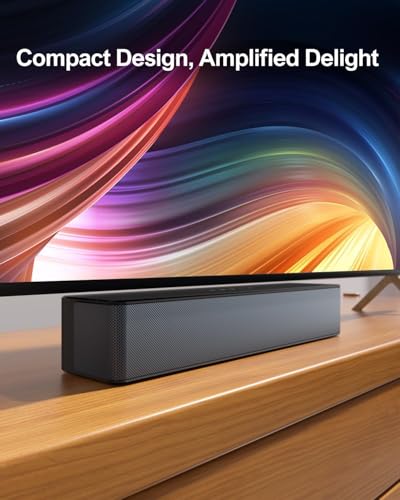
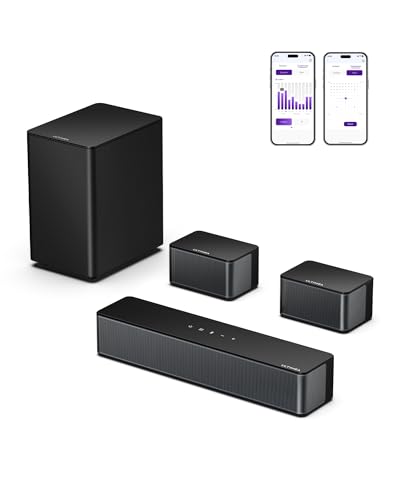
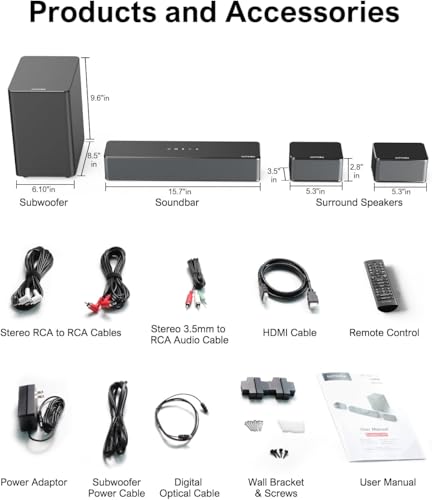
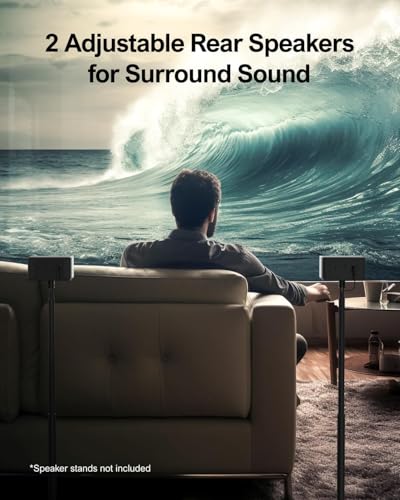
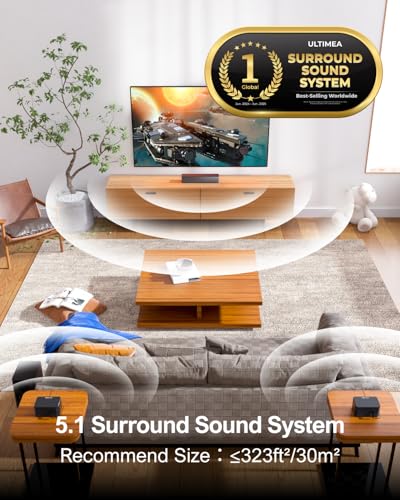
Before diving into these specific products, it's crucial to understand what we're comparing. The Ultimea Poseidon D50 follows the traditional path: it's a true 5.1 surround system, meaning it has five main speakers plus one subwoofer (that's what the ".1" refers to). You get a main soundbar for your TV, two physical speakers that go behind your seating area, and a separate subwoofer for bass. This approach has been the gold standard for home theater audio for decades because it places actual speakers where the sound is supposed to come from.
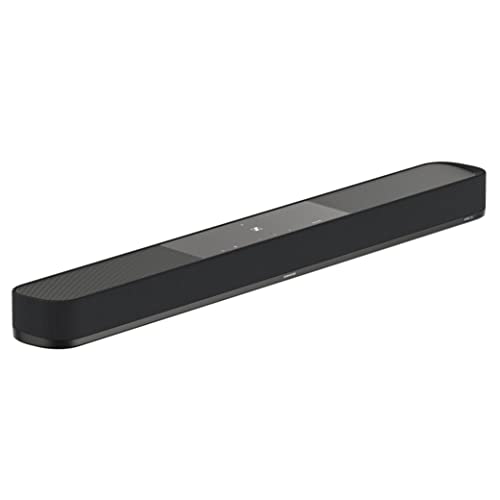
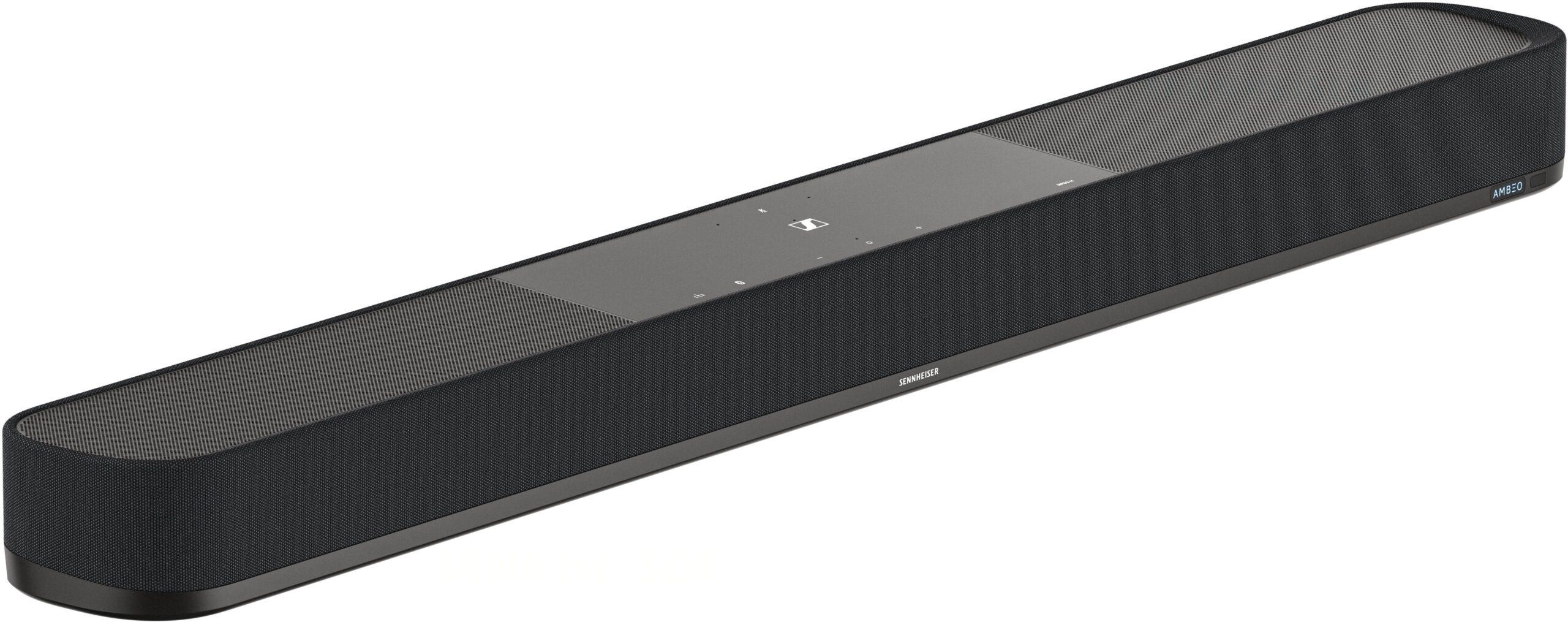
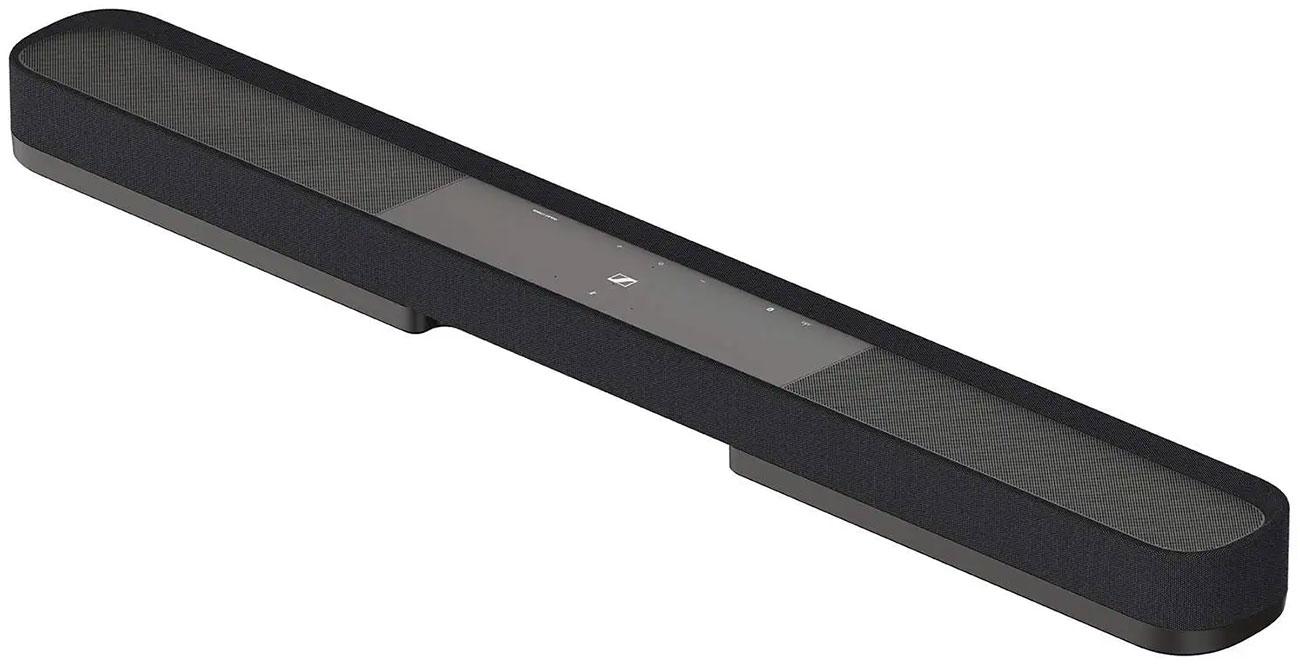
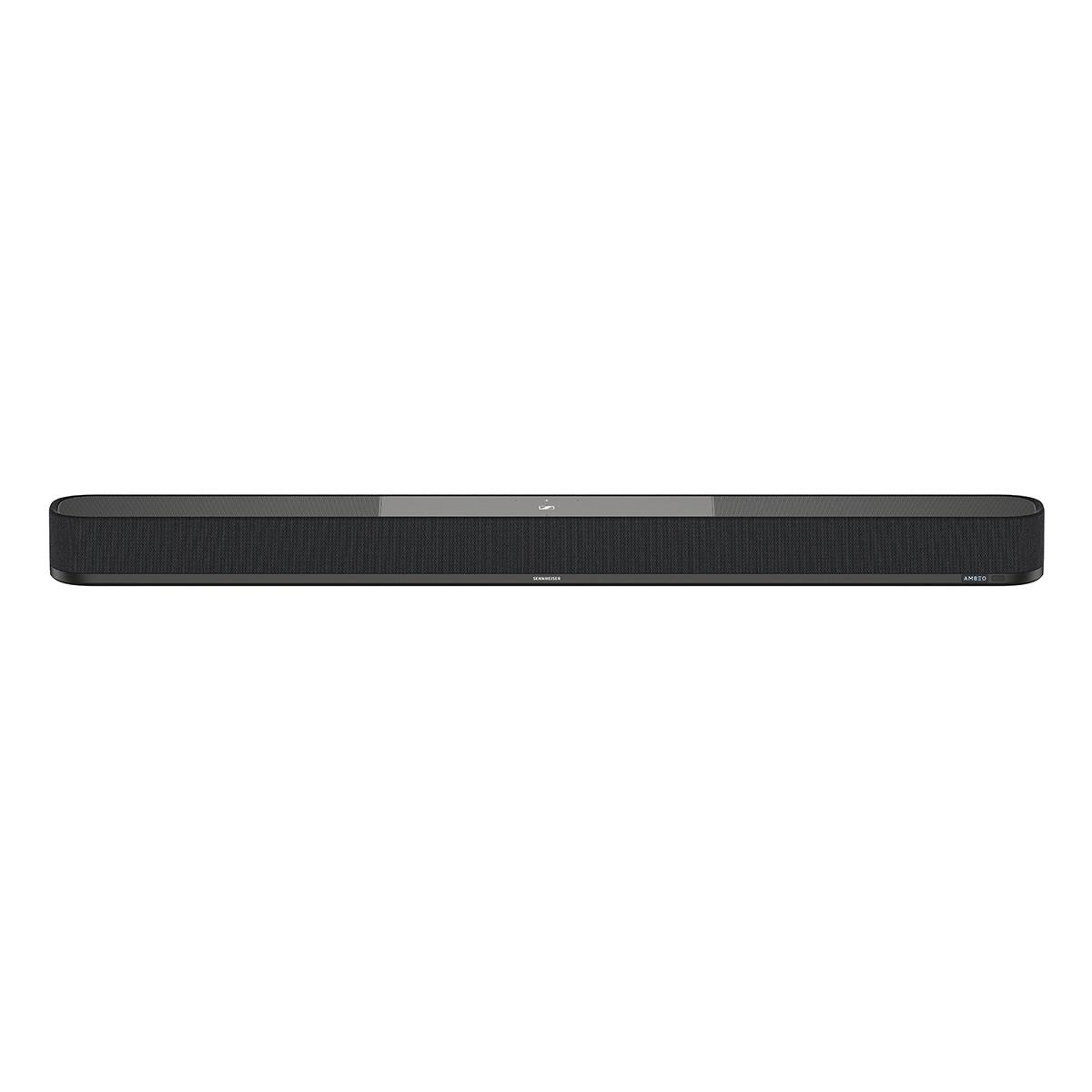
The Sennheiser AMBEO Soundbar Plus, released in 2022, takes the newer virtualization approach. Instead of using separate speakers around your room, it uses advanced digital signal processing (DSP) – essentially a computer chip that manipulates audio – to trick your ears into thinking sound is coming from all directions. It's a single bar that sits under your TV but creates the impression of a 7.1.4 system, meaning seven main speakers, one subwoofer, and four overhead speakers for what's called "height effects."
Both approaches have merit, but they excel in different situations and appeal to different priorities.
The Ultimea Poseidon D50, released in 2025, represents an interesting evolution in budget surround sound. What makes this system compelling isn't just its use of physical rear speakers – it's how Ultimea has managed to pack genuine 5.1 performance into what appears to be a very affordable package.
The SurroundX Algorithm and Real Processing Power
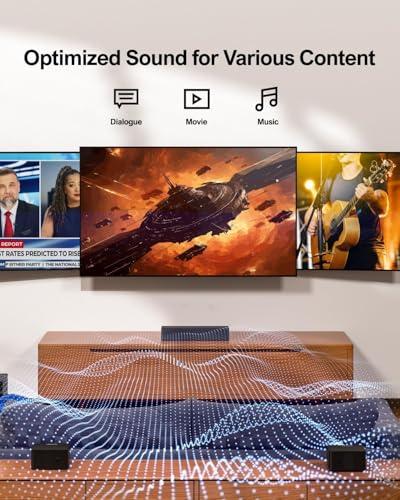
At the heart of the Poseidon D50 is something called SurroundX technology, which uses an integrated DSP chip to convert regular stereo audio (2.0 PCM) into proper 5.1 surround sound. This is important because most streaming content and even many TV shows aren't originally mixed in surround sound. The system essentially takes that stereo signal and intelligently distributes it across all five speakers and the subwoofer, creating a more immersive experience even from basic content.
The rear satellite speakers use 2.25-inch drivers, which might sound small, but they're specifically designed for surround effects rather than heavy lifting on bass or main dialogue. These speakers connect via 19.6-foot cables, giving you reasonable flexibility in placement while ensuring they get full power from the main unit.
BassMX Technology and Subwoofer Performance
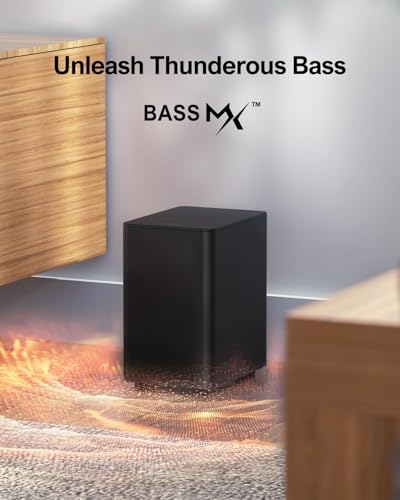
Where the Ultimea system particularly shines is in its approach to bass. The wireless subwoofer features what Ultimea calls BassMX technology, which optimizes the magnetic circuit design and allows for 15mm of diaphragm excursion. In simple terms, excursion refers to how far the speaker cone can move back and forth – more excursion generally means deeper, more impactful bass. At 15mm, this is quite impressive for a budget system and should deliver the kind of room-shaking low-end that makes movie explosions feel real.
The 5.25-inch subwoofer driver is also notably larger than what you'll find in most soundbars' built-in bass systems. This separate subwoofer can be placed anywhere in your room for optimal bass response, which is a significant advantage since bass performance is highly dependent on room placement.
App Control and Customization
One area where the Poseidon D50 punches well above its apparent weight class is customization. The dedicated app provides access to 121 different EQ presets and a 10-band equalizer. To put this in perspective, most soundbars in this price range offer maybe three or four basic sound modes. Having 10 bands means you can adjust specific frequency ranges – like boosting dialogue frequencies or reducing harsh treble – with precision usually reserved for much more expensive systems.
The app also allows independent volume control for the rear speakers, which is crucial for balancing the surround effect in different room layouts. Too often, budget surround systems force you to accept whatever balance the manufacturer chose, but here you can fine-tune the experience.
The Sennheiser AMBEO Soundbar Plus represents a completely different philosophy. Instead of placing speakers around your room, it uses some of the most sophisticated audio processing available to create the illusion of surround sound through what's called psychoacoustic manipulation – essentially tricking your brain's audio processing.
AMBEO 3D Virtualization Technology
The AMBEO technology at the heart of this system is genuinely impressive. Using a quad-core 1.8GHz processor – more powerful than many smartphones – the AMBEO Plus analyzes your room's acoustics using four built-in far-field microphones. It then adjusts its output to use wall reflections and timing differences to place virtual speakers throughout your space.
This isn't just marketing fluff. The system can actually create convincing overhead effects for Dolby Atmos content, where helicopters seem to fly over your head or rain appears to fall from above. The automatic calibration process takes several minutes and requires you to remain in your listening position, but the results can be remarkably convincing.
Nine-Driver Array and Power Distribution
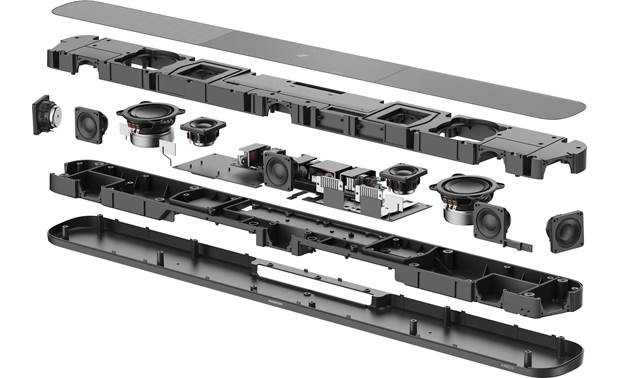
Rather than relying on a few powerful drivers, the AMBEO Plus uses nine smaller, specialized drivers: seven 2-inch aluminum cone full-range drivers and two 4-inch cellulose cone woofers for bass. Each driver has its own dedicated Class-D amplifier, allowing for precise control over timing, phase, and power distribution.
This approach offers several advantages. First, having dedicated amplification for each driver eliminates the compromises that come with shared amplification. Second, the smaller drivers can be positioned more precisely to create specific beam patterns – some fire forward, some to the sides, and some upward to create height effects.
The total power output of 400W RMS (RMS means continuous power, not peak) is distributed intelligently across these nine amplifiers. This is fundamentally different from the Ultimea's approach of using fewer, more powerful drivers with shared amplification.
Premium Codec Support and Future-Proofing
One significant advantage of the Sennheiser system is its support for advanced audio formats. Beyond basic Dolby Digital, it handles Dolby Atmos, DTS:X, MPEG-H, and Sony 360 Reality Audio. These formats contain specific instructions for height effects and object-based audio, where sounds can be precisely positioned in three-dimensional space rather than just assigned to specific channels.
This matters because streaming services like Netflix, Disney+, and Apple TV+ are increasingly using these advanced formats for their premium content. The AMBEO Plus can decode and render these formats properly, while the Ultimea system, lacking height speakers, cannot fully reproduce the intended experience.
Surround Sound Accuracy and Immersion
This is where the fundamental difference in approach becomes clear. The Ultimea Poseidon D50 provides what audio enthusiasts call "discrete" surround sound – actual speakers behind you creating real rear-channel effects. When a car crashes behind the main character in a movie, you hear it from actual speakers behind your seating position. There's no processing trickery involved; the sound genuinely originates from where it should.
Based on user feedback and expert reviews, this creates a more consistent surround experience. The effect works regardless of your head position or room acoustics, and it's particularly effective for gaming where precise directional audio can be crucial.
The Sennheiser AMBEO Plus, however, can create a more expansive soundstage when conditions are right. The virtualization technology can place sounds not just behind you, but above you and at precise points throughout your room. For properly mastered Dolby Atmos content, this can create moments that feel genuinely three-dimensional in ways that traditional 5.1 cannot match.
The trade-off is consistency. Virtualization works best in specific acoustic conditions and listening positions. Move your head significantly or have a room with unusual acoustics, and the effect can diminish. The automatic calibration helps, but it's still fundamentally dependent on reflections and psychoacoustic tricks.
Bass Response and Low-Frequency Impact
This comparison reveals interesting differences in philosophy. The Ultimea system's separate subwoofer with its larger 5.25-inch driver and dedicated wireless connection provides more flexibility in bass management. You can place it wherever it sounds best in your room – often in a corner for maximum room reinforcement – and it has the physical capacity for deeper, more impactful bass.
The AMBEO Plus's built-in dual 4-inch woofers are more limited by physics but benefit from sophisticated digital processing. Sennheiser's engineers have tuned the frequency response curve to extend down to 38Hz, which is respectable for built-in drivers. The advantage here is integration – the bass response is precisely calibrated to work with the other drivers and the room correction system.
For movies with significant low-frequency effects – think Marvel films or action movies – the Ultimea system likely provides more visceral impact. For music and dialogue-heavy content, the AMBEO's more integrated approach might sound more natural.
Dialogue Clarity and Vocal Performance
Both systems handle dialogue well, but through different approaches. The Poseidon D50 uses a dedicated center channel in its main soundbar, which is the traditional approach for dialogue reproduction. The system offers specific dialogue enhancement modes and EQ settings that can boost vocal frequencies.
The AMBEO Plus uses its sophisticated processing to create a virtual center channel that can actually sound more focused than some physical center channels. The automatic room calibration specifically optimizes for dialogue clarity from your listening position.
In practice, both systems should handle dialogue well, with the edge possibly going to the Sennheiser system due to its more advanced processing and room optimization.
At the time of writing, these products occupy very different price points, which fundamentally changes the value equation. The Ultimea Poseidon D50 appears positioned as a budget-friendly option that doesn't compromise on the core surround sound experience, while the AMBEO Plus commands a premium price for its advanced technology and convenience.
The Ultimea Value Argument
The Poseidon D50's value proposition is straightforward: genuine 5.1 surround sound with physical rear speakers at a price point where most competitors offer only virtual surround or 2.1 systems. The extensive app customization, wireless subwoofer, and robust connectivity options typically require stepping up to much more expensive systems.
For someone setting up their first serious home theater system or upgrading from basic TV speakers, this represents exceptional value. You get the full surround sound experience that has been the home theater standard for decades, plus modern conveniences like app control and wireless connectivity.
The Sennheiser Premium Positioning
The AMBEO Plus justifies its premium pricing through technology and convenience. The automatic room calibration, advanced codec support, extensive streaming integration, and single-unit simplicity appeal to users who prioritize sophistication over raw value.
This system makes sense for someone with a high-end TV setup who wants audiophile-level performance without the complexity of multiple components. The built-in voice assistants, premium connectivity options, and regular firmware updates provide long-term value that extends beyond just audio performance.
The installation requirements for these systems highlight their different target audiences. The Ultimea system requires planning for rear speaker placement and cable management. The 19.6-foot rear speaker cables provide reasonable flexibility, but you'll need to think about routing them cleanly or potentially investing in speaker stands.
This setup complexity isn't necessarily negative – it allows for optimization. You can place the subwoofer where it sounds best, position rear speakers at the ideal height and angle, and adjust everything through the app. For enthusiasts who enjoy tweaking their setup, this flexibility is valuable.
The AMBEO Plus eliminates these considerations entirely. Wall mount it or place it on your TV stand, plug it in, run the calibration, and you're done. This simplicity is genuinely valuable for many users, particularly those in apartments or homes where running speaker cables isn't practical.
Both systems integrate well with modern TVs through HDMI eARC connections, which allow for high-quality audio transmission and TV remote control of the soundbar. However, their long-term positioning differs significantly.
The Ultimea system represents proven technology that's unlikely to become obsolete. Physical speakers producing discrete surround sound will work the same way ten years from now as they do today. The trade-off is that this system cannot take advantage of newer audio formats that require height channels or more sophisticated processing.
The AMBEO Plus is more future-oriented, with support for the latest audio formats and the potential for firmware updates that could improve performance over time. However, it's also dependent on continuing technological refinement and could potentially feel dated as virtualization technology advances.
Choose the Ultimea Poseidon D50 if:
You want authentic surround sound without compromise. If you've experienced true 5.1 systems before and know you prefer the discrete speaker approach, the Poseidon D50 delivers this experience at an exceptional value. This system is ideal for movie enthusiasts, gamers who rely on directional audio, and anyone who enjoys customizing their audio experience.
The system also makes sense if you have a dedicated media room or home theater space where cable management and speaker placement aren't significant obstacles. If you're building a budget home theater and want maximum impact for your investment, this system provides genuine surround sound that would typically cost much more.
Choose the Sennheiser AMBEO Plus if:
You prioritize convenience, aesthetics, and cutting-edge technology. If you want excellent audio performance without any visible components beyond the soundbar itself, the AMBEO Plus delivers sophistication that's hard to match. This system excels for users with premium TVs who want matching premium audio without complexity.
The automatic calibration and advanced format support make it particularly appealing for streaming-focused households. If most of your content comes from Netflix, Apple TV+, or other services that offer Dolby Atmos content, the AMBEO system can properly decode and render these advanced formats.
These products represent two valid but different approaches to home theater audio. The Ultimea Poseidon D50 offers exceptional value for those willing to embrace traditional multi-component surround sound, while the Sennheiser AMBEO Plus provides premium convenience and future-focused technology.
Your choice should align with your priorities: authentic surround sound and maximum value, or technological sophistication and single-unit simplicity. Both will dramatically improve your TV audio experience, but they'll do so in fundamentally different ways that appeal to different types of users and living situations.
The good news is that in 2025, you can get genuinely impressive home theater audio regardless of which approach appeals to you more.
| Ultimea Poseidon D50 5.1 Soundbar | Sennheiser AMBEO Soundbar Plus |
|---|---|
| Surround Sound Configuration - Determines authenticity of directional audio | |
| True 5.1 with physical rear satellite speakers | Virtual 7.1.4 through advanced processing |
| Power Output - Affects volume levels and dynamic range | |
| 320W peak power | 400W RMS continuous power |
| Speaker Configuration - Impacts sound distribution and placement flexibility | |
| 6 drivers + separate subwoofer + 2 rear speakers | 9 built-in drivers (no external components) |
| Subwoofer Design - Critical for bass impact and room integration | |
| 5.25" wireless subwoofer with BassMX technology | Dual 4" built-in woofers |
| Room Calibration - Affects sound optimization for your space | |
| Manual app-based adjustments with 121 EQ presets | Automatic calibration with 4 far-field microphones |
| Audio Format Support - Determines compatibility with premium streaming content | |
| Standard surround formats (Dolby Digital, DTS) | Advanced formats (Dolby Atmos, DTS:X, MPEG-H, 360 Reality Audio) |
| Connectivity Options - Affects device compatibility and streaming convenience | |
| HDMI eARC, Optical, AUX, USB, Bluetooth 5.3 | HDMI eARC, Optical, Wi-Fi 6, Bluetooth 5.0, AirPlay 2, Chromecast |
| Installation Complexity - Determines setup time and cable management needs | |
| Multiple components with 19.6ft rear speaker cables | Single soundbar with automatic setup |
| Smart Features - Affects ease of use and integration with other devices | |
| Dedicated app control with extensive EQ customization | Built-in voice assistants (Alexa, Google), streaming service integration |
| Voice Control Integration - Convenience factor for daily use | |
| App-based control only | Native Alexa built-in, Google Assistant compatible |
| Rear Speaker Control - Flexibility for different room layouts | |
| Independent volume control for satellite speakers | No physical rear speakers (virtual positioning only) |
| Processing Power - Affects audio quality and feature capabilities | |
| Standard DSP with SurroundX algorithm | Quad-core 1.8GHz processor with 32-bit processing |
| Target TV Size Compatibility - Optimal visual proportion and audio scale | |
| Medium to large TVs (recommended for 20-35m² rooms) | Large TVs 55"+ (designed for premium setups) |
The Ultimea Poseidon D50 is a true 5.1 surround sound system with physical rear speakers that you place behind your seating area, while the Sennheiser AMBEO Plus uses advanced virtualization technology to create surround sound effects from a single soundbar. The Ultimea provides authentic directional audio through real speakers, whereas the Sennheiser creates virtual surround effects through sophisticated audio processing.
Both excel at home theater, but in different ways. The Ultimea Poseidon D50 delivers authentic surround sound with genuine rear-channel effects, making it excellent for action movies and immersive experiences. The Sennheiser AMBEO Plus supports advanced formats like Dolby Atmos and can create overhead effects, making it ideal for premium streaming content with height channels.
Not necessarily. The Ultimea Poseidon D50 uses physical rear speakers for guaranteed directional audio from behind your seating position. The Sennheiser AMBEO Plus creates convincing surround effects without rear speakers through virtualization technology. Physical rear speakers provide more consistent surround sound, while virtual systems offer better convenience and cleaner aesthetics.
The Sennheiser AMBEO Plus is significantly easier to set up as a single soundbar with automatic room calibration. The Ultimea Poseidon D50 requires placing and connecting multiple components including rear speakers with 19.6-foot cables, a wireless subwoofer, and manual calibration through the app.
The subwoofer approach significantly affects bass performance. The Ultimea Poseidon D50 includes a separate 5.25" wireless subwoofer that can be placed anywhere for optimal bass, typically providing deeper and more impactful low-frequency effects. The Sennheiser AMBEO Plus has dual 4" built-in woofers that are more limited but perfectly integrated with the overall sound signature.
The Ultimea Poseidon D50 offers more extensive customization with 121 EQ presets, a 10-band equalizer, and independent rear speaker volume control. The Sennheiser AMBEO Plus provides smart app control but focuses more on automatic optimization and streaming integration rather than manual EQ adjustments.
Yes, both the Ultimea Poseidon D50 and Sennheiser AMBEO Plus support HDMI eARC connections, allowing your TV remote to control volume and basic functions. The Sennheiser system also includes built-in voice assistants for additional control options beyond traditional remotes.
The Sennheiser AMBEO Plus supports significantly more advanced audio formats including Dolby Atmos, DTS:X, MPEG-H, and Sony 360 Reality Audio. The Ultimea Poseidon D50 handles standard surround formats like Dolby Digital and DTS but cannot process height-based audio formats due to its lack of upward-firing drivers.
The Sennheiser AMBEO Plus excels at music streaming with built-in Wi-Fi, AirPlay 2, Chromecast, Spotify Connect, and TIDAL Connect. The Ultimea Poseidon D50 offers Bluetooth 5.3 connectivity and dedicated music EQ modes but lacks the advanced streaming service integration of the Sennheiser system.
The Ultimea Poseidon D50 may have an advantage for competitive gaming due to its physical rear speakers providing precise directional audio cues. The Sennheiser AMBEO Plus offers lower latency through its advanced processing and can create immersive gaming experiences, but the virtual positioning may be less consistent for competitive play.
The Ultimea Poseidon D50 is optimized for medium to large rooms (20-35m²) and requires adequate space for rear speaker placement. The Sennheiser AMBEO Plus is designed for larger TVs (55"+) and uses room reflections for its virtualization, so it works best in properly sized spaces with suitable wall surfaces for acoustic reflections.
The Ultimea Poseidon D50 offers exceptional value for authentic surround sound with proven technology that won't become obsolete. The Sennheiser AMBEO Plus provides premium features, automatic optimization, and future-proofing through firmware updates and advanced format support. Your choice depends on whether you prioritize immediate value or long-term technological sophistication.
We've done our best to create useful and informative comparisons to help you decide what product to buy. Our research uses advanced automated methods to create this comparison and perfection is not possible - please contact us for corrections or questions. These are the sites we've researched in the creation of this article: youtube.com - eu.ultimea.com - newegg.com - tvsbook.com - youtube.com - provantage.com - ultimea.com - techradar.com - community.ultimea.com - homedepot.com - community.ultimea.com - ultimea.com - ultimea.de - youtube.com - medisamhealthcenter.com - ultimea.com - youtube.com - walmart.com - techradar.com - pocket-lint.com - moon-audio.com - stereonet.com - rtings.com - abt.com - projectorscreen.com - youtube.com - videoandaudiocenter.com - crutchfield.com - sennheiser-hearing.com - newsroom.sennheiser.com

Privacy Policy
Terms and Conditions - Affiliate Policy
Home Security
© Copyright 2008-2026.
11816 Inwood Rd #1211, Dallas, TX 75244