




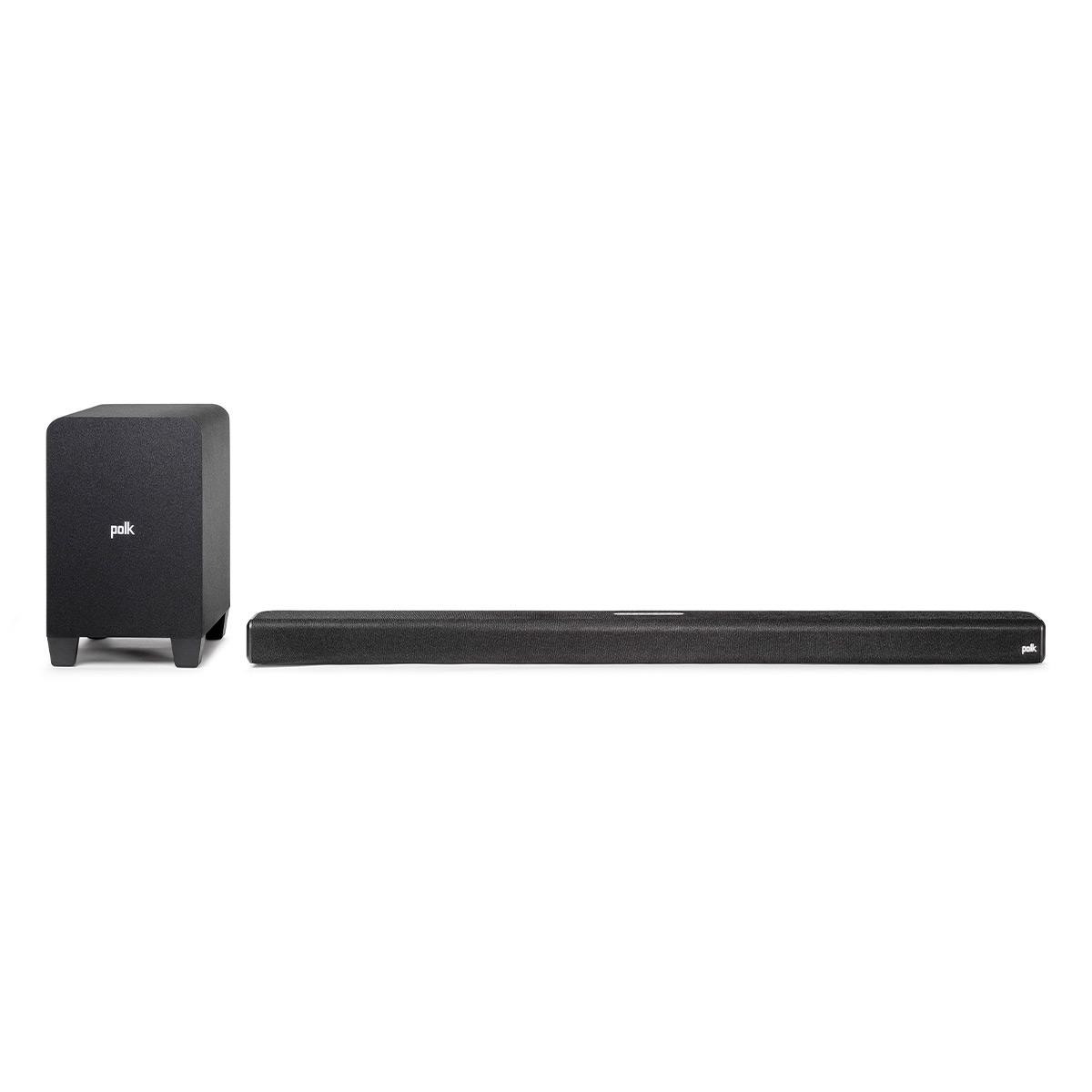
Your TV's built-in speakers are terrible. We all know it. Those paper-thin panels that manufacturers call "smart TVs" have about as much room for decent speakers as a smartphone has for a full-size keyboard. That's where soundbars come in, but choosing the right one means understanding two completely different philosophies about how to recreate theater-quality sound in your living room.
The Ultimea Poseidon D50 5.1 Soundbar, released in 2025, and the Polk Audio Signa S4, which hit the market in 2021, represent these two distinct approaches. One uses physical speakers placed around your room to create authentic surround sound, while the other relies on advanced audio processing to simulate that same experience from a single location. Both have their merits, but which one belongs in your home theater depends on what you value more: authenticity or convenience.
Before diving into specifics, it's worth understanding what these systems are trying to achieve. When you watch a movie in a theater, sound comes from multiple directions – dialogue from the screen, effects from the sides, and ambient sounds from behind you. Your brain uses these directional cues to feel immersed in the action.
Traditional home theater systems use five or seven separate speakers plus a subwoofer (hence "5.1" or "7.1") to recreate this experience. But most people don't want speakers scattered around their living room, which is where soundbars entered the picture. The challenge is physics: how do you create the illusion of surround sound when most of your speakers are crammed into a single bar sitting below your TV?
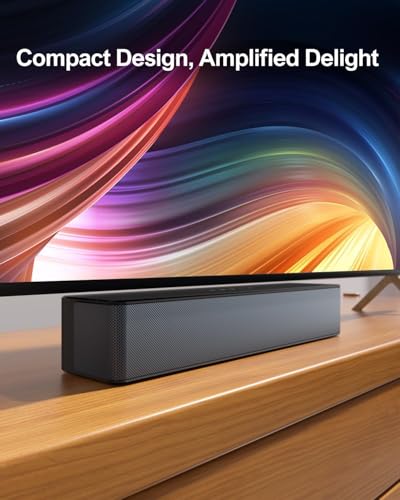
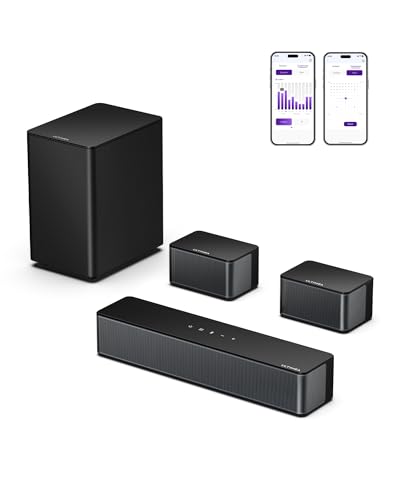
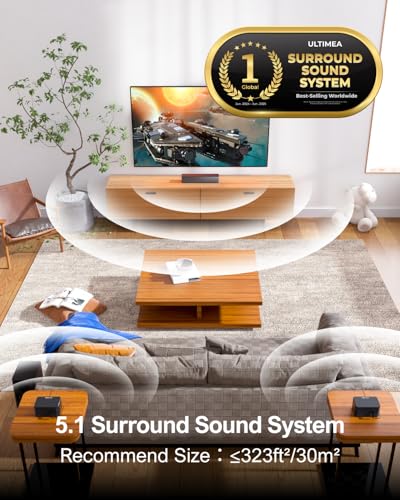
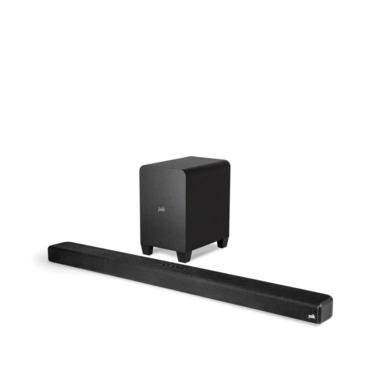
The Ultimea Poseidon D50 tackles this with a hybrid approach – it's technically a soundbar system, but it includes separate satellite speakers that you place behind your seating area. Meanwhile, the Polk Audio Signa S4 uses purely virtual processing, bouncing sound off your walls and ceiling to create spatial effects without any additional speakers in your room.
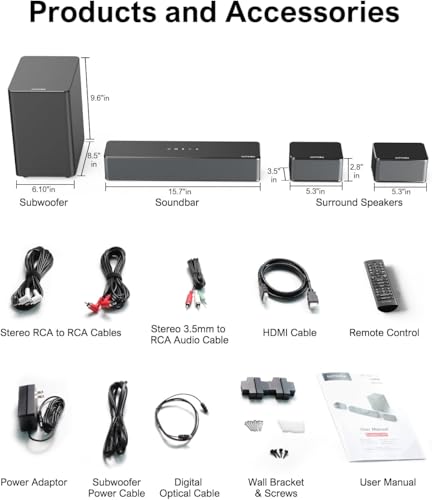
The Poseidon D50's most compelling feature is its commitment to authentic surround sound. When you unbox this system, you'll find not just a soundbar and subwoofer, but two separate satellite speakers that connect to the wireless subwoofer via 19.6-foot cables. This might sound like a hassle, but it solves the fundamental problem that plagues most soundbars: they can't actually put sound behind you.
The difference is immediately noticeable when watching action movies. In scenes where helicopters circle overhead or bullets whiz past characters, the D50 can actually place those sounds in the correct location relative to your seating position. The satellite speakers handle the rear channels independently, creating genuine directional audio cues that your brain recognizes as authentic surround sound.
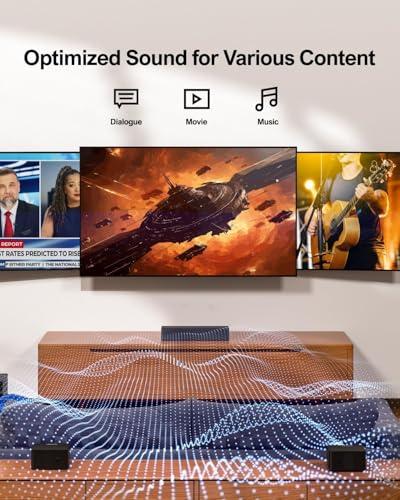
What makes this particularly impressive is the system's SurroundX algorithm, which uses an integrated DSP (digital signal processor) chip to convert regular stereo content into true 5.1 surround. This means even older movies or TV shows that weren't originally mixed in surround sound can benefit from the full speaker array. The algorithm analyzes the stereo signal and intelligently distributes different elements – like ambient sounds, music, and dialogue – across all six speakers to create a more immersive experience.
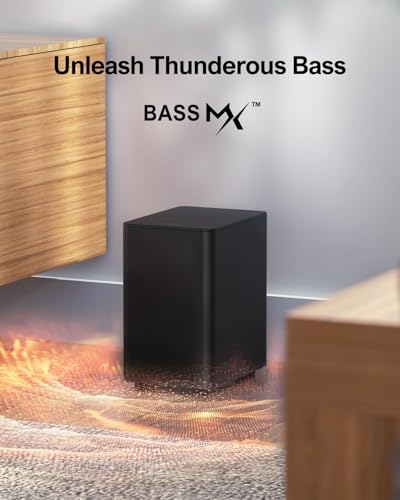
The bass response deserves special mention. The D50's 5.25-inch wireless subwoofer incorporates Ultimea's BassMX technology, which combines an optimized magnetic circuit with a 15mm diaphragm excursion. In practical terms, this means the subwoofer can move more air and produce deeper, more impactful low-frequency effects without distorting. During our research into user experiences, the consistent theme was surprise at how much bass this relatively compact subwoofer could produce.
The Polk Signa S4 takes a fundamentally different approach by embracing Dolby Atmos, a technology that's transformed high-end home theaters since its introduction in the mid-2010s. Instead of just thinking about sound in terms of left, right, and surround, Atmos treats audio as objects that can be positioned anywhere in three-dimensional space – including above your head.
The S4's 3.1.2 configuration means it has three main channels (left, center, right), one subwoofer, and two height channels. Those height channels use upward-firing drivers that bounce sound off your ceiling to create the illusion of overhead effects. When a helicopter flies across the screen, properly mixed Atmos content can make it sound like it's actually moving through the air above your seating area.
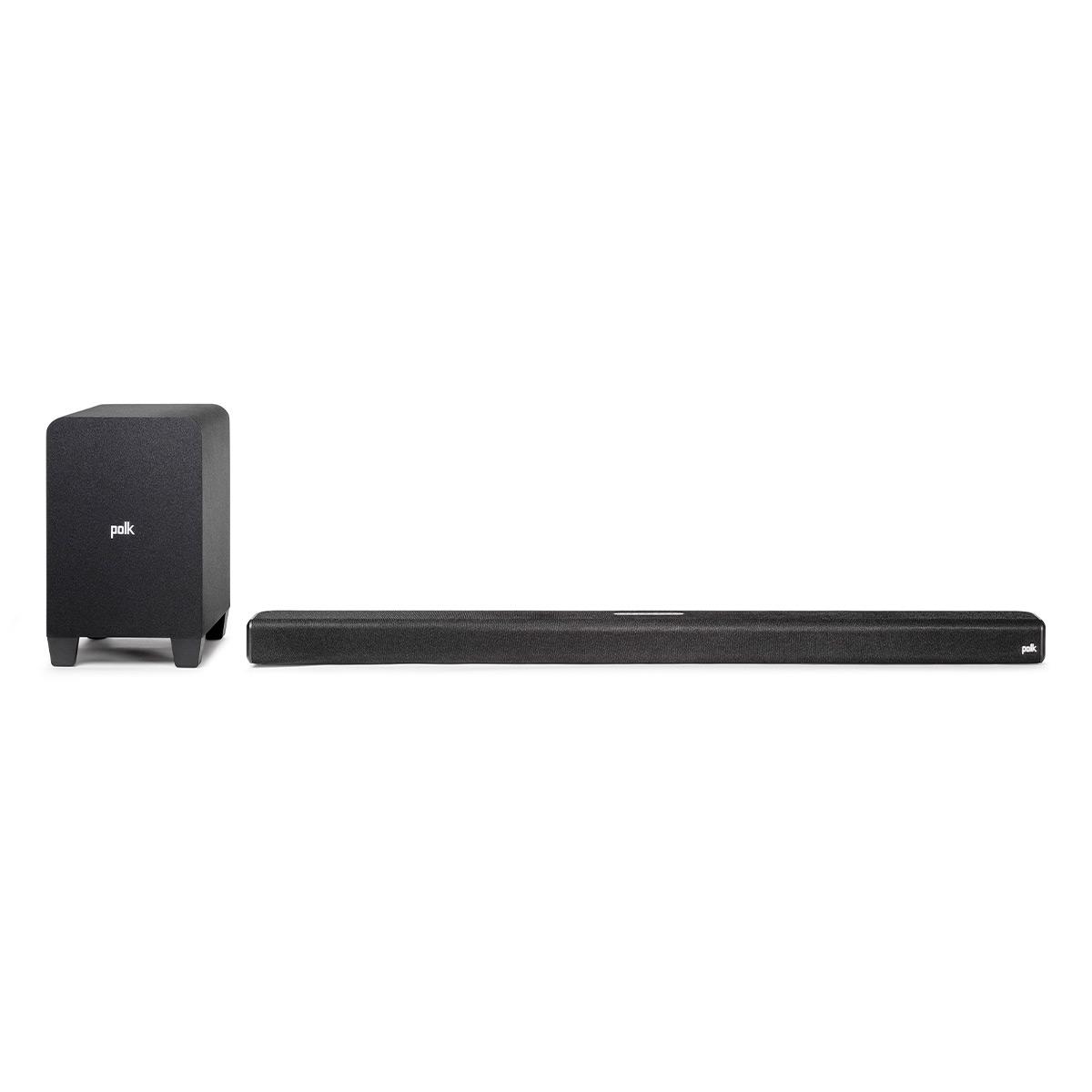
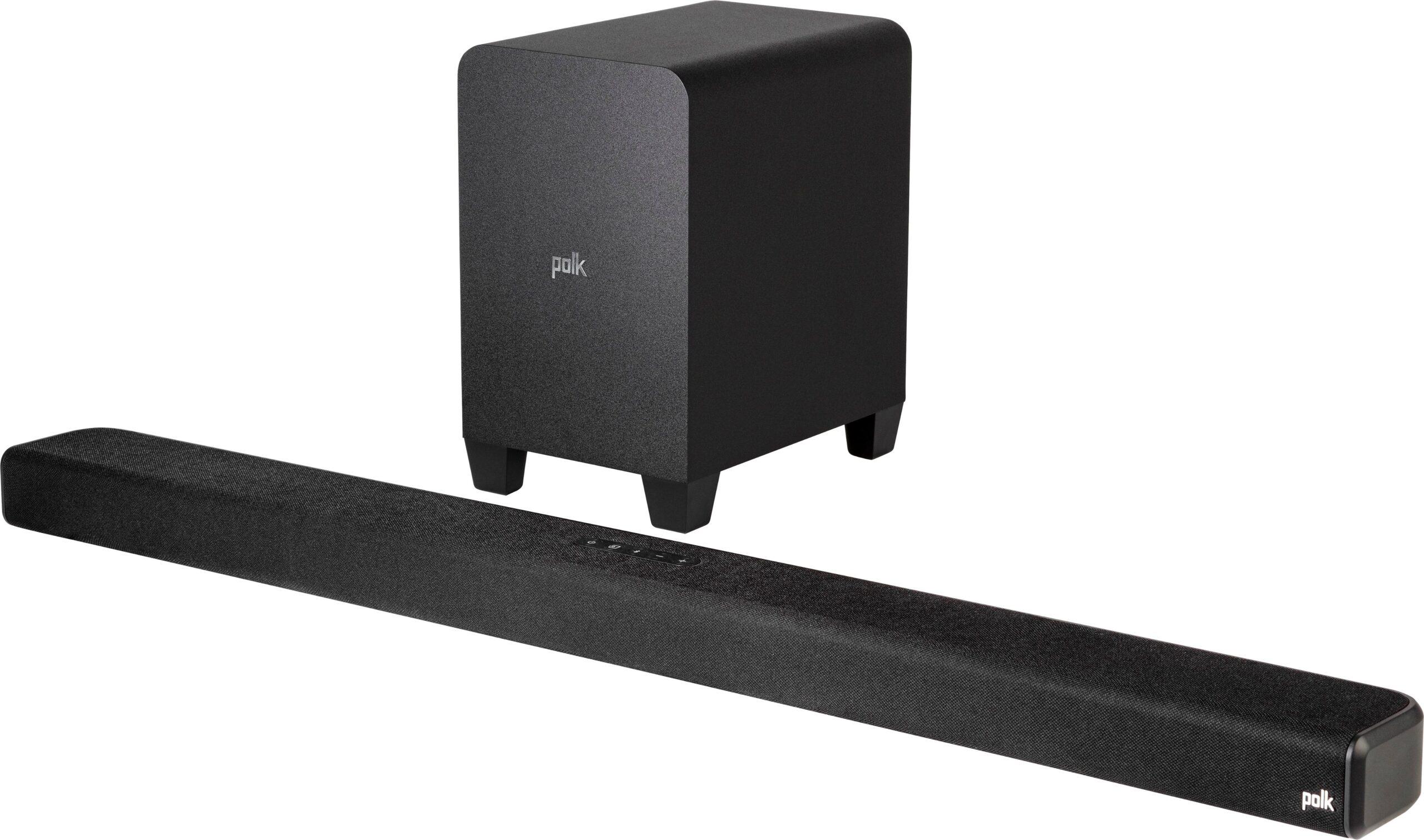
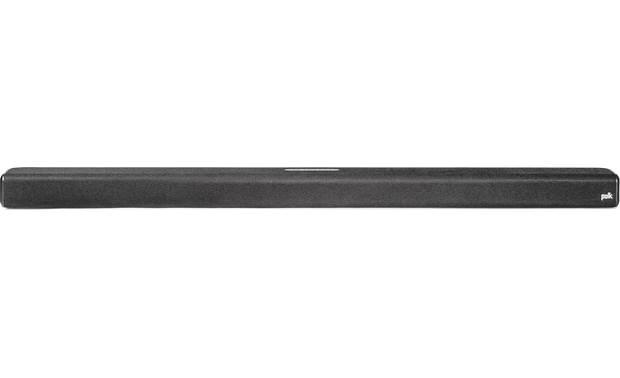
This technology has matured significantly since 2021, and the Signa S4 represents one of the more affordable ways to experience genuine Dolby Atmos processing. The system's seven-driver array includes dedicated tweeters and woofers for the left, right, and center channels, plus those crucial upward-firing height drivers. The result is a surprisingly wide soundstage that extends well beyond the physical boundaries of the soundbar itself.
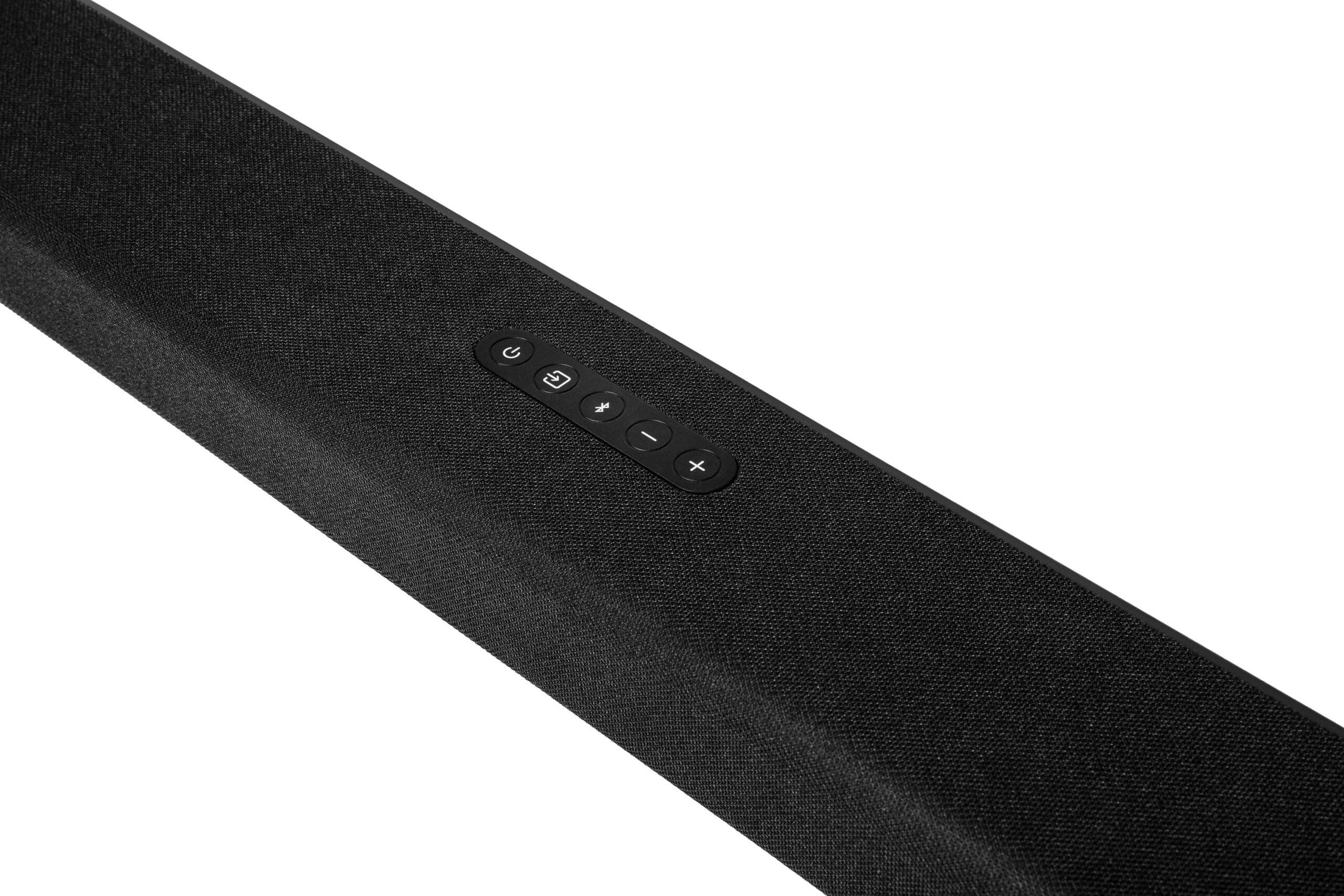
One of Polk's standout innovations is their VoiceAdjust technology, which addresses one of the most common complaints about modern TV audio: muddy dialogue. The system can selectively boost voice frequencies without affecting the rest of the soundtrack, making conversations clear even during the most chaotic action sequences. This feature alone has earned praise from users who struggle with hearing or simply find modern movie mixes too aggressive.
This is where the fundamental difference between these systems becomes most apparent. The Poseidon D50 creates surround sound the traditional way – by actually placing speakers around your listening area. When a car crashes behind the main character, you'll hear the impact from behind your couch because that's where the satellite speakers are located.
The Polk S4 relies on psychoacoustic processing to create similar effects. It analyzes the audio signal and uses precisely timed reflections off your walls and ceiling to trick your brain into perceiving sounds as coming from different directions. This works remarkably well in the right room – one with appropriate ceiling height and wall surfaces that can effectively bounce sound back to your listening position.
The key difference is consistency. The D50's approach works regardless of your room's acoustics, while the S4's performance varies significantly based on your space. In a room with high ceilings, lots of soft furnishings, or an irregular layout, the virtual surround effects may not work as intended.
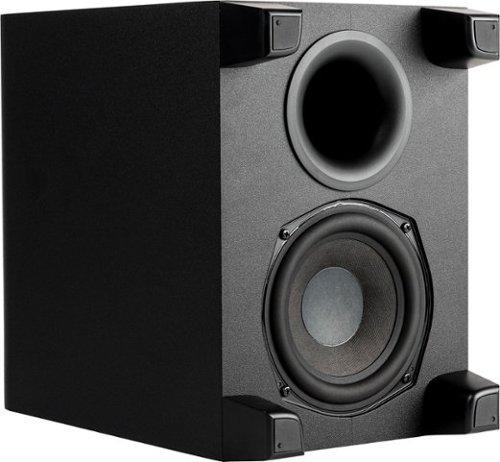
Both systems include wireless subwoofers, but they're tuned for different purposes. The D50's subwoofer prioritizes impact and extension, producing the kind of room-shaking bass that makes action movie explosions feel visceral. Our research suggests this approach resonates with users who want their home theater to compete with commercial cinemas in terms of pure impact.
The Polk S4's subwoofer takes a more balanced approach, focusing on accuracy and integration with the main soundbar. Rather than overwhelming the mix with excessive bass, it provides a solid foundation that supports the overall sound without drawing attention to itself. This approach tends to work better for music listening and in smaller rooms where overpowering bass can become fatiguing.
The difference becomes most apparent during action sequences. Explosions, crashes, and other low-frequency effects have more physical presence through the D50, while the S4 maintains better overall balance across different content types.
Both systems include dedicated center channels, but they implement dialogue enhancement differently. The S4's VoiceAdjust technology automatically analyzes the audio signal and boosts dialogue frequencies when needed. It's essentially an intelligent equalizer that focuses specifically on the frequency range where human voices sit, making it particularly effective for users who struggle with hearing dialogue in complex mixes.
The D50 offers more manual control through its extensive EQ system. The smartphone app provides access to 121 preset EQ matrices and a 10-band manual equalizer, allowing users to fine-tune the sound signature to their preferences. While this requires more user involvement, it also provides more precise control over the final result.
For users who prefer "set it and forget it" simplicity, the Polk's automatic approach is more appealing. For those who enjoy tweaking their audio setup, the Ultimea's comprehensive controls offer more flexibility.
The Poseidon D50 requires more planning and effort to set up properly. You'll need to position the satellite speakers behind your seating area and run cables back to the wireless subwoofer. This isn't necessarily difficult, but it does require some thought about speaker placement and cable management. The payoff is authentic surround sound that works consistently regardless of your room's acoustic properties.
The Polk S4 offers plug-and-play simplicity. Position the soundbar below your TV, place the subwoofer somewhere in the room, and you're essentially done. The system handles the rest through processing, making it ideal for users who want improved audio without the complexity of a traditional surround system.
However, the S4's virtual approach means your room becomes part of the audio system. Rooms with appropriate dimensions and acoustic properties will deliver impressive results, while challenging spaces may limit the effectiveness of the height and surround effects.
The Polk S4, released in 2021, represents the first wave of affordable Dolby Atmos soundbars. Since then, Atmos content has become increasingly common on streaming services, making height-channel processing more relevant than ever. Netflix, Disney+, and Amazon Prime all offer extensive Atmos catalogs, and most new blockbuster movies include Atmos soundtracks.
The Ultimea D50, as a 2025 release, incorporates more recent connectivity standards like Bluetooth 5.3 and improved DSP processing. The sophisticated smartphone app represents the current trend toward user customization and control, allowing for the kind of detailed audio tuning that was previously limited to high-end receivers.
Both approaches have merit for future-proofing. Atmos continues gaining adoption across streaming platforms and gaming, while traditional multichannel surround remains the standard for most content. The D50's SurroundX processing can enhance any content type, while the S4 truly shines with properly mastered Atmos material.
At the time of writing, these systems occupy different price brackets, with the Polk S4 positioned as a premium budget option and the D50 competing in the value-oriented mid-range segment. The price difference reflects their different approaches: physical speakers cost more to manufacture and ship than virtual processing algorithms.
From a pure features-per-dollar perspective, the D50 offers impressive value. True 5.1 surround sound, extensive customization options, and powerful bass performance traditionally required much more expensive systems. The inclusion of satellite speakers at this price point represents solid value for users willing to deal with the added setup complexity.
The S4 commands a premium for its brand reputation, Dolby Atmos certification, and refined implementation. Polk Audio's decades of speaker engineering experience show in the balanced sound signature and reliable performance. For users who prioritize brand confidence and proven audio expertise, the price premium may be justified.
The Ultimea Poseidon D50 makes the most sense for dedicated home theater enthusiasts who can accommodate satellite speakers and want authentic surround sound. If you have a basement theater room, can run speaker wire without spousal objections, and prioritize immersive gaming or action movie experiences, the D50 delivers more convincing spatial audio than most soundbars costing significantly more.
This system particularly excels for users who enjoy customizing their audio experience. The smartphone app's extensive controls appeal to tweakers who want to fine-tune their sound signature for different content types. It's also the better choice for larger rooms where the powerful subwoofer and discrete satellite speakers can fill the space more effectively.
The Polk Audio Signa S4 suits users who want premium audio technology without setup complexity. If you live in an apartment, have a living room that serves multiple purposes, or simply don't want visible speakers beyond the main soundbar, the S4's virtual approach delivers impressive results with minimal fuss.
This system makes particular sense for users who watch a lot of Atmos-enabled content or struggle with dialogue clarity. The automatic voice enhancement and height-channel processing create a more sophisticated listening experience than traditional soundbars, even without discrete surround speakers.
Both systems succeed at their intended purposes, but they serve different user priorities. The Ultimea Poseidon D50 delivers more authentic surround sound through physical speaker placement, making it the better choice for users who want the most convincing home theater experience possible. The setup complexity and cable management requirements are worthwhile trade-offs for the superior spatial audio performance.
The Polk Audio Signa S4 provides a more refined, convenient solution that excels with modern Atmos content while maintaining the simplicity that makes soundbars appealing in the first place. The virtual processing approach works well enough in most rooms to deliver a satisfying surround experience without the complexity of additional speakers.
Your choice ultimately depends on whether you prioritize authenticity or convenience. For the most immersive possible experience, choose the D50. For the best balance of performance and practicality, the S4 represents a more mature, refined approach to soundbar design. Either way, you'll be getting dramatically better audio than your TV's built-in speakers – and isn't that really the point?
| Ultimea Poseidon D50 5.1 Soundbar Home Theater (2025) | Polk Audio Signa S4 Dolby Atmos Soundbar with Wireless Subwoofer |
|---|---|
| Channel Configuration - Determines how authentic your surround sound experience will be | |
| True 5.1 with physical rear satellite speakers | Virtual 3.1.2 with height channels for Dolby Atmos |
| Setup Complexity - How much effort and planning you'll need | |
| Requires running 19.6ft cables to rear speakers | Plug-and-play with no additional speaker placement |
| Audio Technology - What premium features you get | |
| SurroundX algorithm, BassMX subwoofer tech, no Atmos | Dolby Atmos certified, VoiceAdjust dialogue enhancement |
| Customization Options - How much control you have over sound | |
| 121 EQ presets, 10-band equalizer, smartphone app control | Basic Movie/Music/Night modes, limited EQ options |
| Subwoofer Power - How impactful bass effects will be | |
| 5.25" wireless with BassMX tech (room-shaking bass) | 5.9375" wireless (balanced, integrated bass) |
| Peak Power Output - Maximum volume and dynamic range | |
| 320W total system power | Not specified (likely lower based on size) |
| Connectivity Options - What devices you can connect | |
| HDMI eARC, Optical, Bluetooth 5.3, AUX, USB | HDMI eARC, Optical, Bluetooth 4.2, 3.5mm input |
| Room Size Recommendation - Where each system works best | |
| Medium to large rooms (250-380 ft²) | Small to medium rooms with appropriate ceiling height |
| Brand Heritage - What reputation and support you're buying | |
| Newer brand focused on value and features | Established Polk Audio with decades of speaker expertise |
| Release Year - How current the technology is | |
| 2025 (latest connectivity and processing) | 2021 (proven Dolby Atmos implementation) |
The Ultimea Poseidon D50 delivers more authentic surround sound with true 5.1 channels using physical rear satellite speakers that actually place sound behind you. The Polk Audio Signa S4 uses virtual 3.1.2 processing with Dolby Atmos to create surround effects through your ceiling and walls. For genuine surround placement, the D50 wins, but the S4 offers impressive height effects with Atmos content.
The Polk Audio Signa S4 is much easier to install - just place the soundbar under your TV and position the wireless subwoofer anywhere in the room. The Ultimea Poseidon D50 requires running 19.6-foot cables from the satellite speakers to the subwoofer and careful speaker placement behind your seating area.
If you watch a lot of Netflix, Disney+, or newer movies, Dolby Atmos adds impressive overhead effects that the Polk Audio Signa S4 handles well. However, the Ultimea Poseidon D50 can enhance any content with its SurroundX processing, even older movies without Atmos soundtracks. Atmos is nice but not essential for great surround sound.
The Ultimea Poseidon D50 produces more impactful, room-shaking bass with its 5.25-inch subwoofer and BassMX technology designed for maximum low-frequency impact. The Polk Audio Signa S4 offers more balanced bass that integrates better with music and dialogue without overwhelming the mix.
Yes, the Ultimea Poseidon D50 includes a comprehensive smartphone app with 121 EQ presets, 10-band equalizer, and independent satellite speaker volume control. The Polk Audio Signa S4 uses traditional remote control with basic sound mode selections but no dedicated mobile app.
The Polk Audio Signa S4 works better in smaller spaces since it doesn't require satellite speaker placement and its balanced sound signature won't overwhelm compact rooms. The Ultimea Poseidon D50 is designed for medium to large rooms (250-380 sq ft) where its powerful bass and discrete speakers can perform optimally.
The Ultimea Poseidon D50's 5.1 system has five main speakers (front left/right, center, rear left/right) plus a subwoofer for true surround placement. The Polk Audio Signa S4's 3.1.2 configuration has three front channels, one subwoofer, and two height channels that bounce sound off your ceiling for overhead effects.
The Ultimea Poseidon D50 offers more connectivity options with HDMI eARC, Optical, Bluetooth 5.3, AUX, and USB inputs. The Polk Audio Signa S4 includes HDMI eARC, Optical, and Bluetooth 4.2 but lacks USB and uses an older Bluetooth version for wireless streaming.
The Polk Audio Signa S4 provides more balanced music reproduction with its refined sound signature, though the Ultimea Poseidon D50 offers extensive EQ customization to tune the sound for different music genres. Both work for music, but the D50 is more focused on movie and gaming experiences.
Polk Audio has decades of speaker manufacturing experience and established customer support, making the Polk Audio Signa S4 a safer choice for brand reliability. The Ultimea Poseidon D50 represents a newer brand focused on value and features, with less long-term track record but impressive recent reviews.
Yes, both the Ultimea Poseidon D50 and Polk Audio Signa S4 support wall mounting with included hardware. However, the D50 requires additional planning for satellite speaker cable routing, while the S4 mounts more simply with just the main soundbar.
The Ultimea Poseidon D50 typically offers more features per dollar with true 5.1 surround, extensive customization, and powerful bass at a competitive price point. The Polk Audio Signa S4 commands a premium for its brand reputation, Dolby Atmos certification, and refined audio engineering. Choose the D50 for maximum features or the S4 for proven reliability.
We've done our best to create useful and informative comparisons to help you decide what product to buy. Our research uses advanced automated methods to create this comparison and perfection is not possible - please contact us for corrections or questions. These are the sites we've researched in the creation of this article: youtube.com - eu.ultimea.com - newegg.com - tvsbook.com - youtube.com - provantage.com - ultimea.com - techradar.com - community.ultimea.com - homedepot.com - community.ultimea.com - ultimea.com - ultimea.de - youtube.com - medisamhealthcenter.com - ultimea.com - youtube.com - walmart.com - soundandvision.com - audioholics.com - crutchfield.com - cnet.com - richersounds.com - crutchfield.com - rtings.com - polkaudio.com - walmart.com - polkaudio.com - crutchfield.com - youtube.com - profx.com

Privacy Policy
Terms and Conditions - Affiliate Policy
Home Security
© Copyright 2008-2026.
11816 Inwood Rd #1211, Dallas, TX 75244