









When your TV's built-in speakers make explosions sound like popping bubble wrap and dialogue gets lost in the mix, it's time for a soundbar upgrade. But here's where it gets interesting – not all soundbars take the same approach to fixing your audio problems. You've got two fundamentally different philosophies competing for space under your TV, and understanding the difference could save you from buyer's remorse.
The Ultimea Poseidon D50 represents the traditional "more speakers, better sound" approach with its true 5.1 setup, while the JBL Bar 300 embodies the modern "smart processing in a sleek package" philosophy. Both launched recently – the Ultimea in 2025 and the JBL in 2024 – but they're solving the same problem in completely different ways.
Before diving into specifics, let's talk about what makes a soundbar tick. At its core, a soundbar's job is to create a wider, more immersive soundstage than your TV can manage. The challenge is how to do this effectively.
Traditional surround sound systems place speakers around your room – behind you, beside you, above you – to create directional audio cues that make you feel like you're in the middle of the action. This works brilliantly but requires running wires, finding space for speakers, and dealing with the complexity that comes with multiple components.
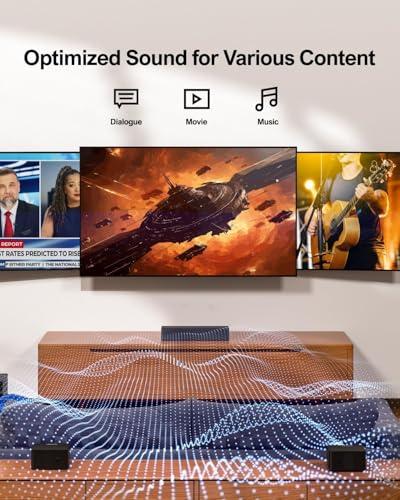
Virtual surround sound, on the other hand, uses psychoacoustics (basically, audio tricks that fool your brain) combined with precisely positioned drivers to bounce sound off your walls and ceiling. The goal is creating the impression of surround sound without the physical speakers. It's elegant when it works, but heavily dependent on your room's acoustics.
The key considerations when shopping come down to: How important is authentic surround sound to you? How much setup complexity can you tolerate? What's your room like? And crucially – what's your primary use case?
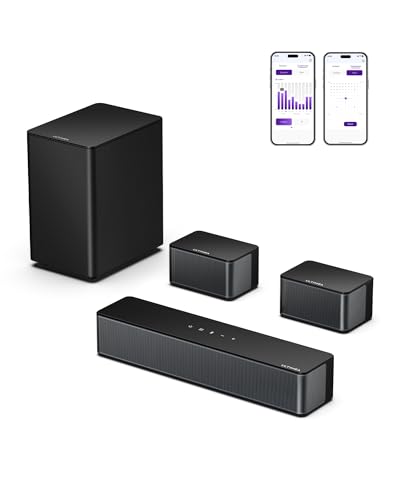
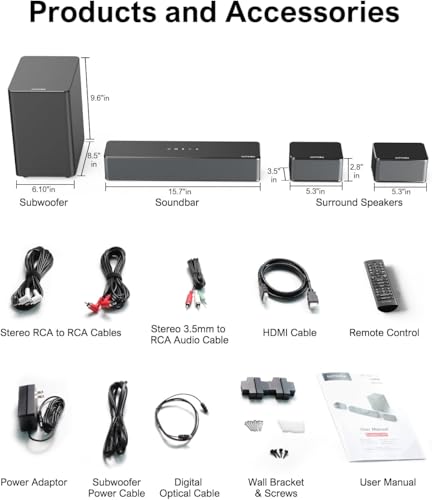
The Ultimea Poseidon D50 doesn't mess around with audio illusions. When they say 5.1 channels, they mean five speakers plus a subwoofer, positioned exactly where audio engineers intended them to be. The main soundbar handles left, center, and right channels, while two satellite speakers connect via 19.6-foot cables to provide genuine rear channel effects. A wireless subwoofer rounds out the low end.
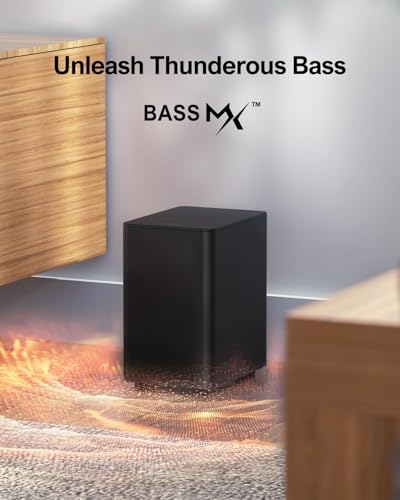
This isn't just about having more speakers – it's about audio authenticity. When a helicopter flies overhead in a movie, you hear it move from front to back through actual speakers positioned behind you. When an explosion happens on screen, the subwoofer's 5.25-inch driver with BassMX technology (Ultimea's term for optimized magnetic circuits and larger enclosure design) delivers the kind of visceral impact that you feel in your chest.
The system's SurroundX algorithm deserves special attention. This proprietary DSP (Digital Signal Processing) chip can take standard stereo content and convert it into genuine 5.1 multi-channel audio. Unlike simple upmixing that just duplicates stereo channels, SurroundX analyzes the audio content and creates distinct surround information for each speaker. It's particularly effective with music, where instruments can be separated and placed throughout the soundstage.
At 320 watts peak power, the Ultimea Poseidon D50 has the muscle to fill larger rooms without strain. The satellite speakers feature 2.25-inch drivers, which might sound small, but they're designed specifically for rear channel effects – ambient sounds, directional cues, and surround music elements that don't require heavy bass response.
What really sets this system apart is its customization depth. The companion app provides access to 121 preset EQ matrices – these are pre-configured sound profiles optimized for everything from action movies to classical music. You also get a 10-band equalizer for manual tuning, plus independent volume control for the satellite speakers. This last feature is crucial because every room is different, and being able to dial in the perfect surround balance makes the difference between good and great sound.
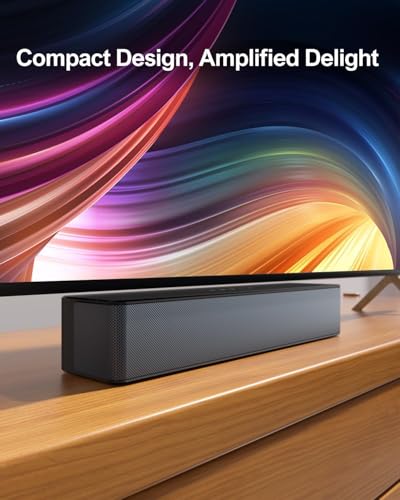
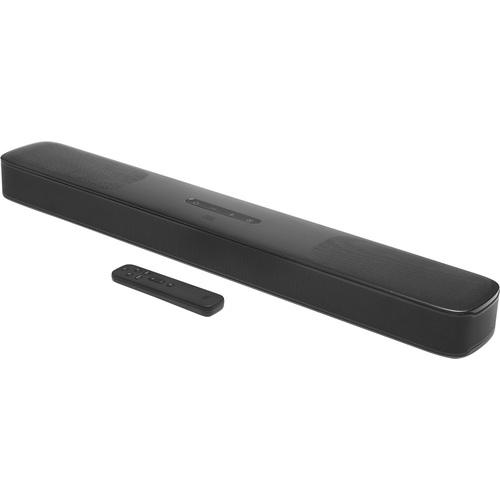
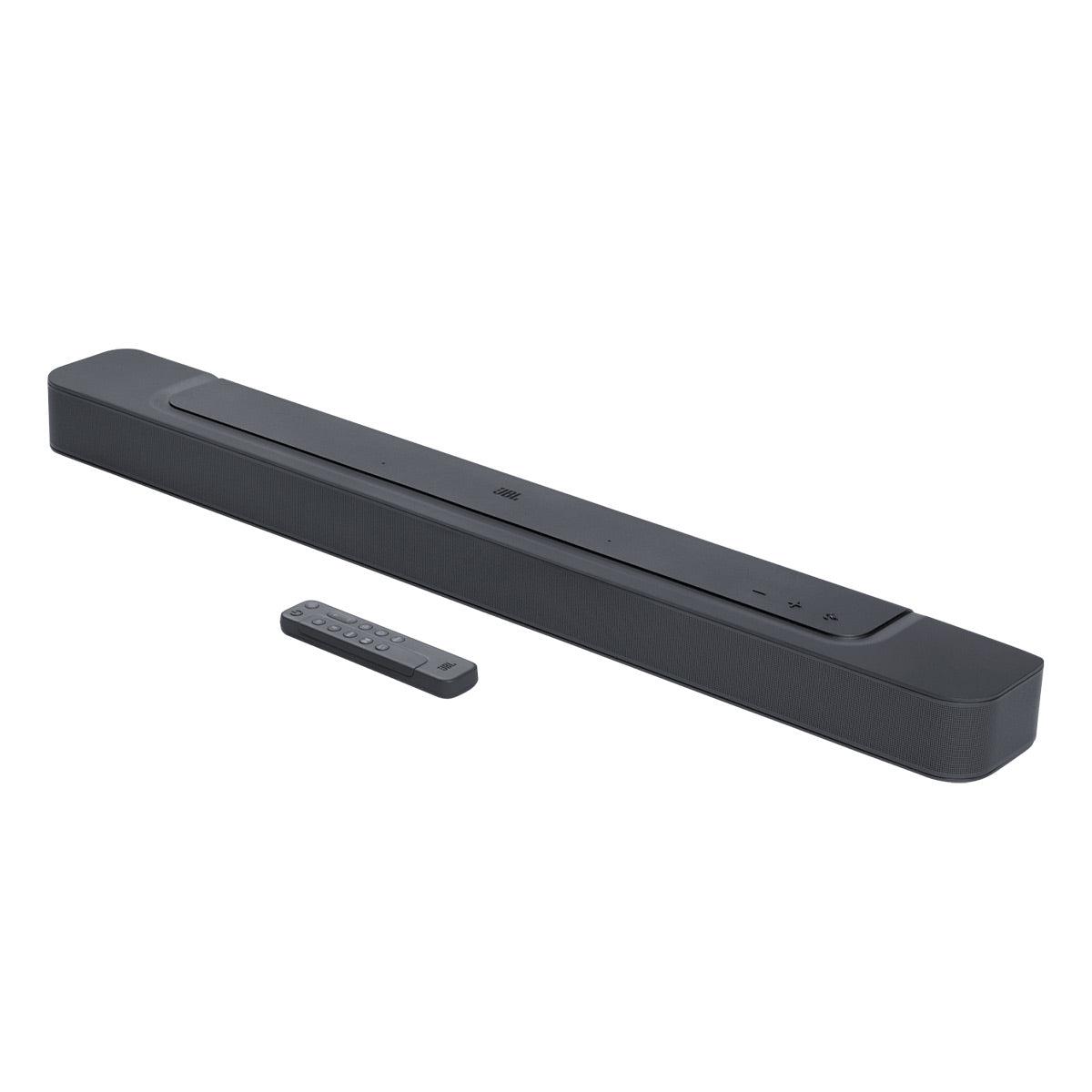
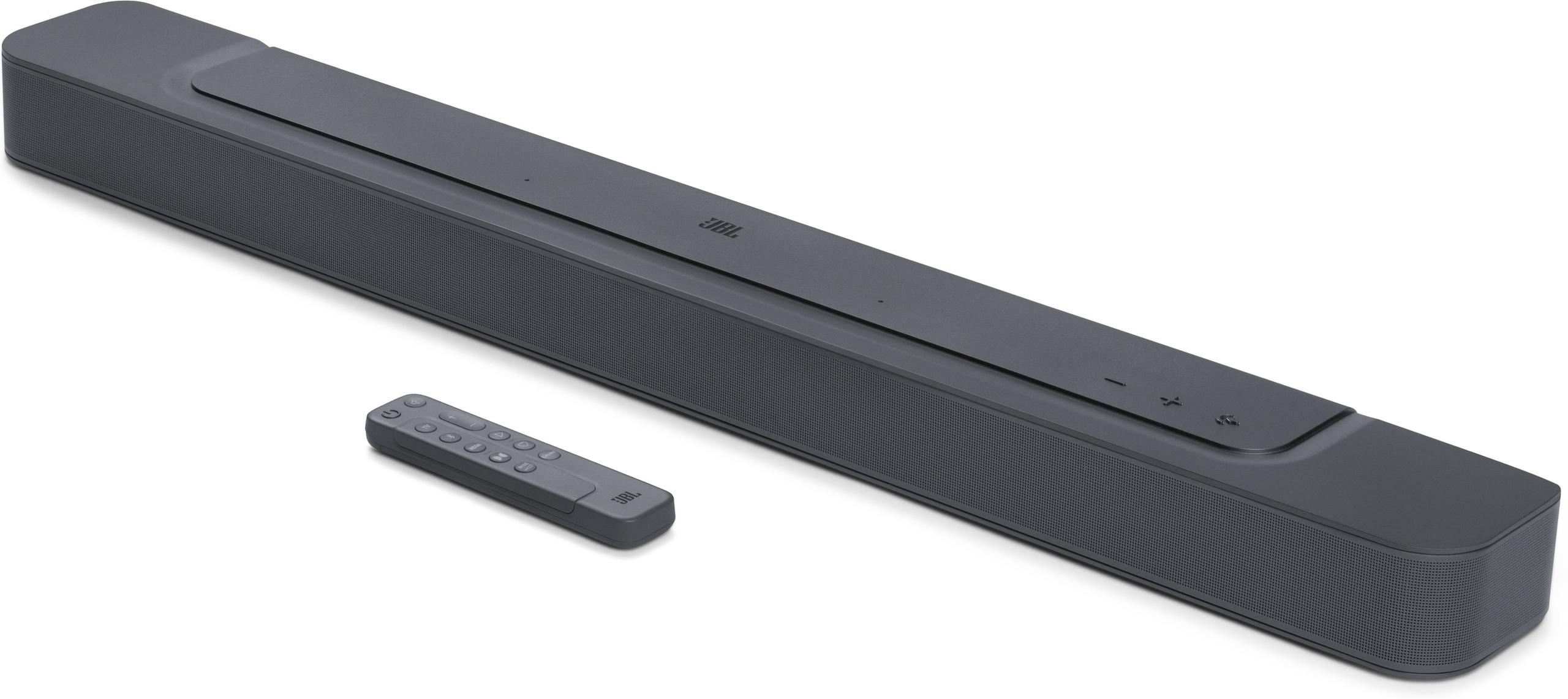
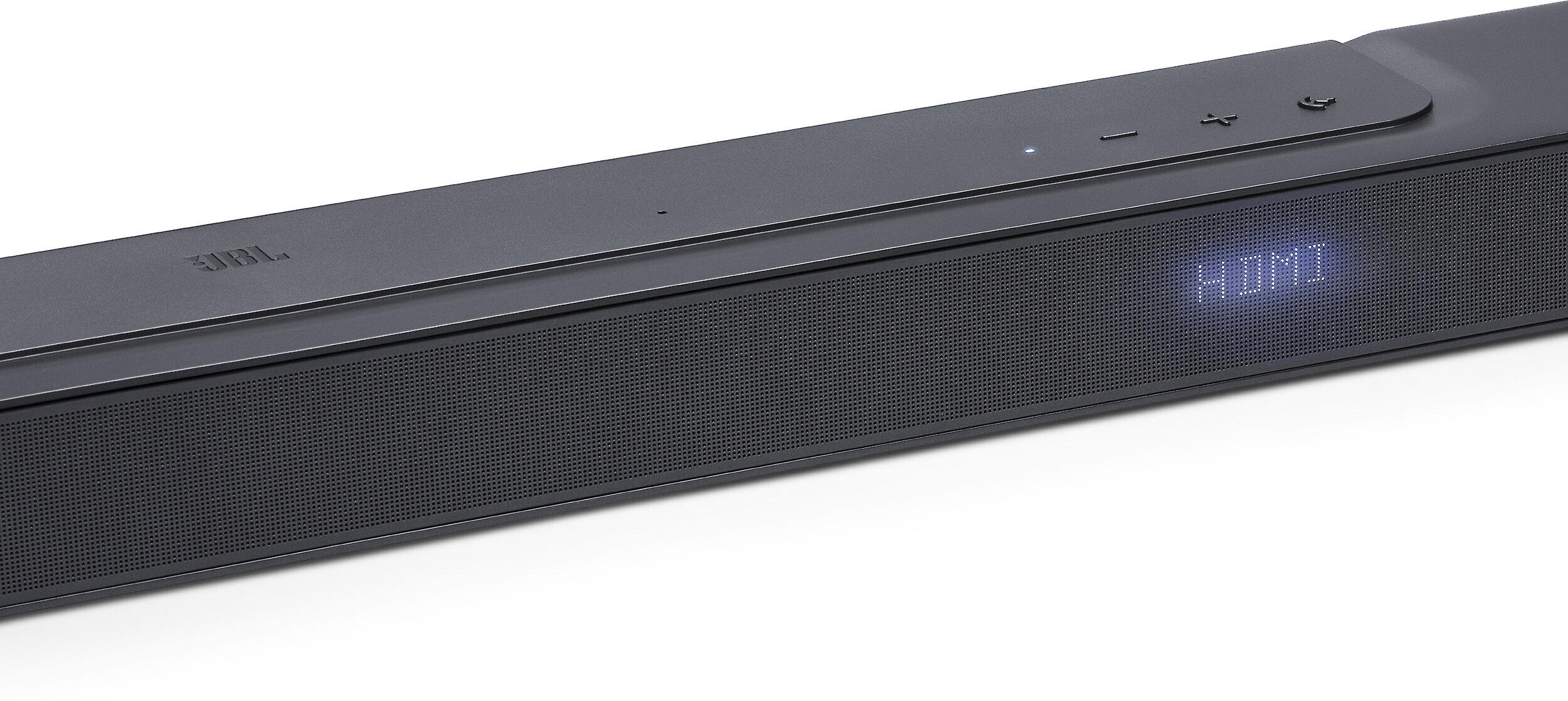
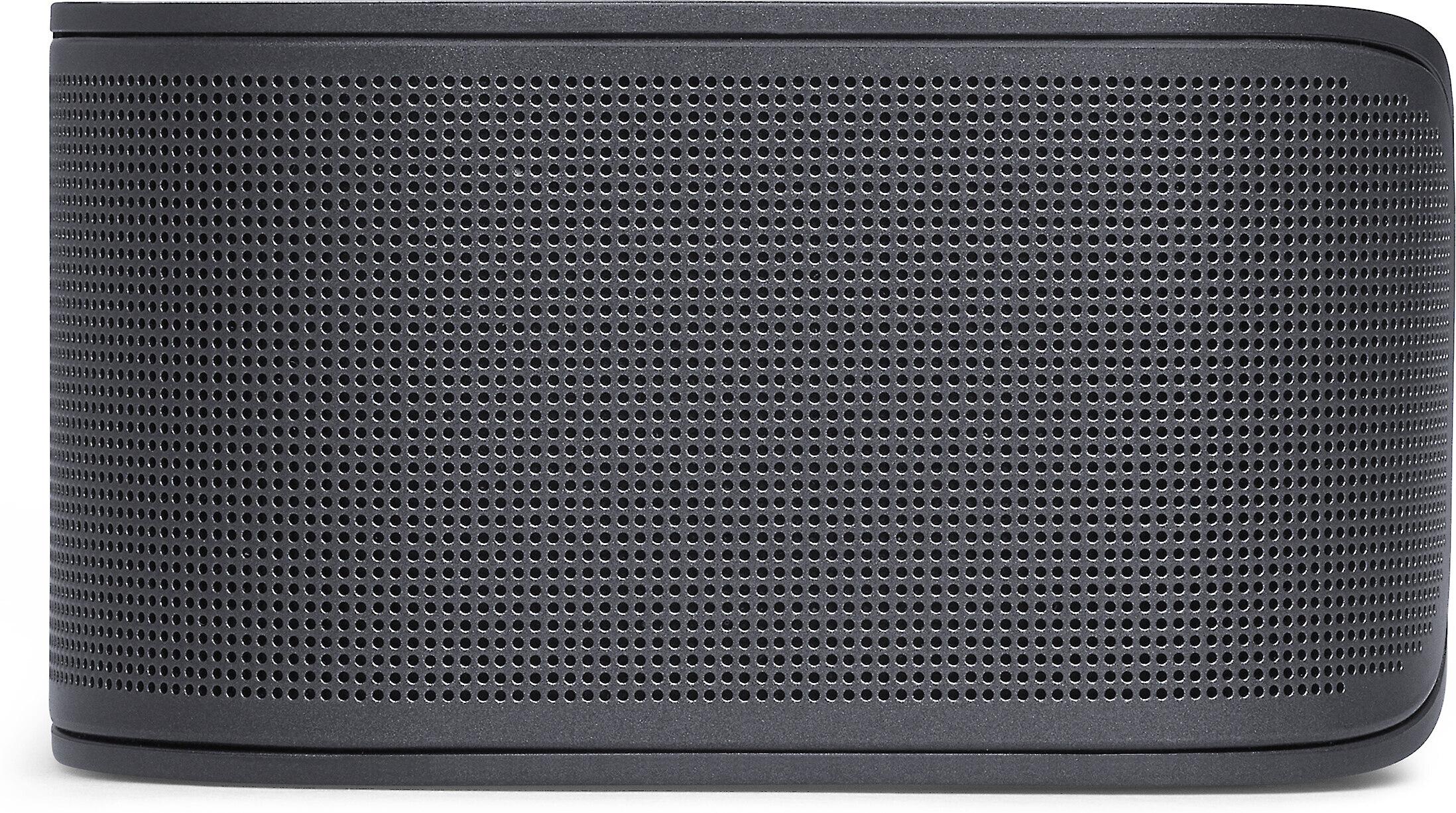
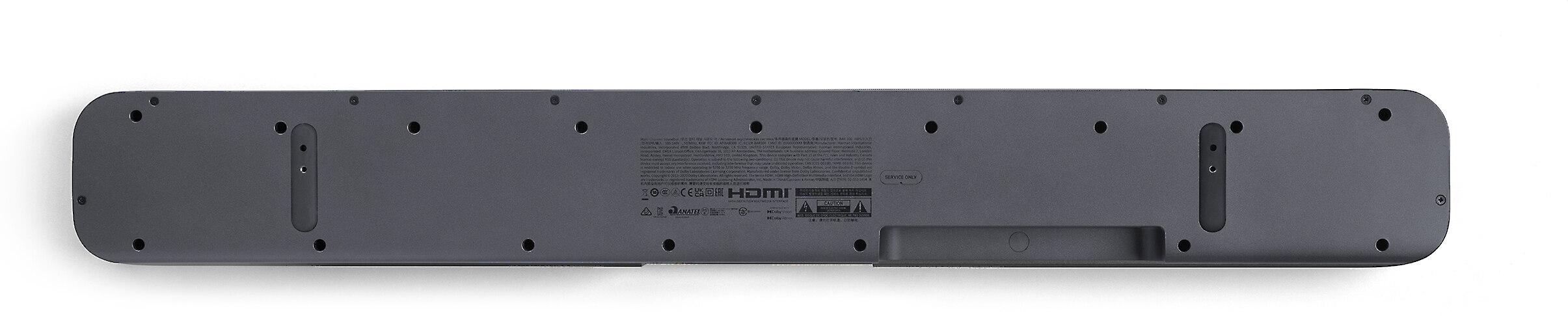
The JBL Bar 300 takes an entirely different approach. At just 32 inches wide and weighing 5.5 pounds, it's designed to deliver impressive audio performance while maintaining the aesthetic and practical benefits of a single-unit solution.
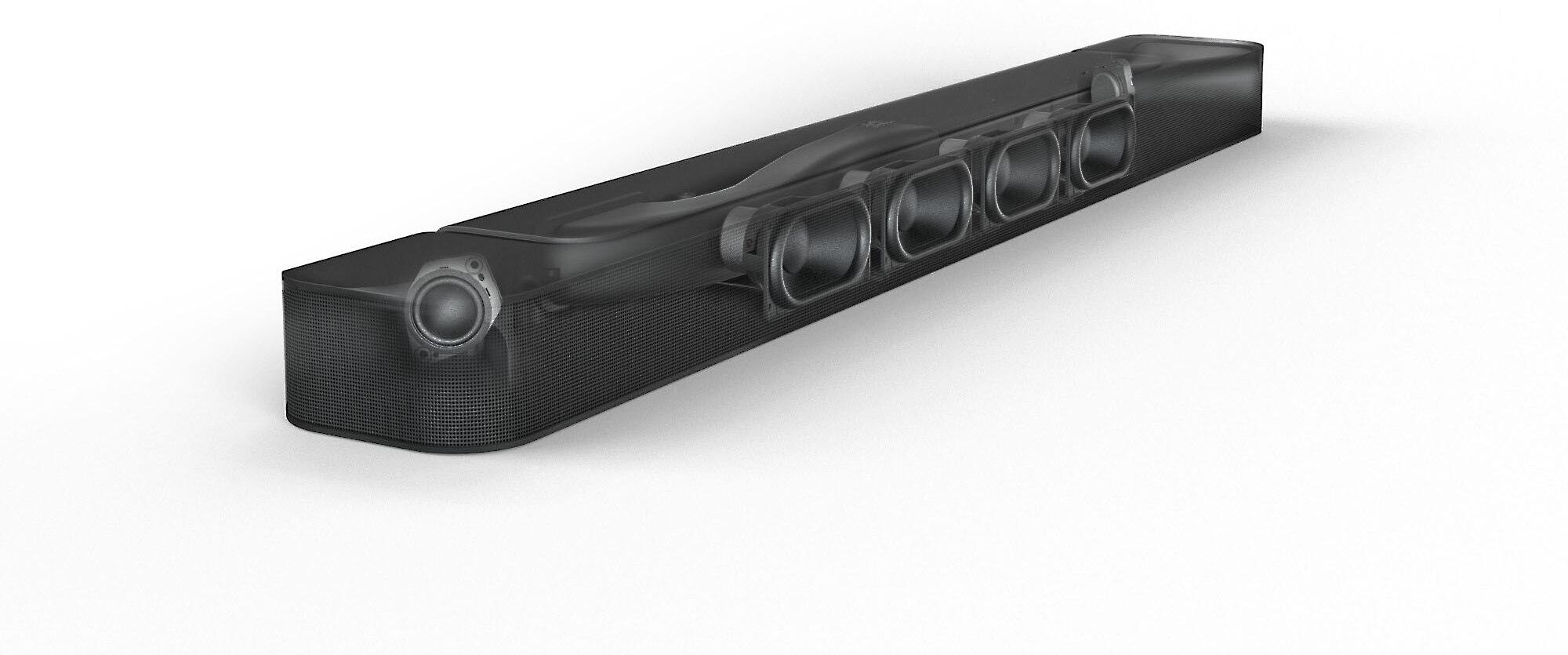
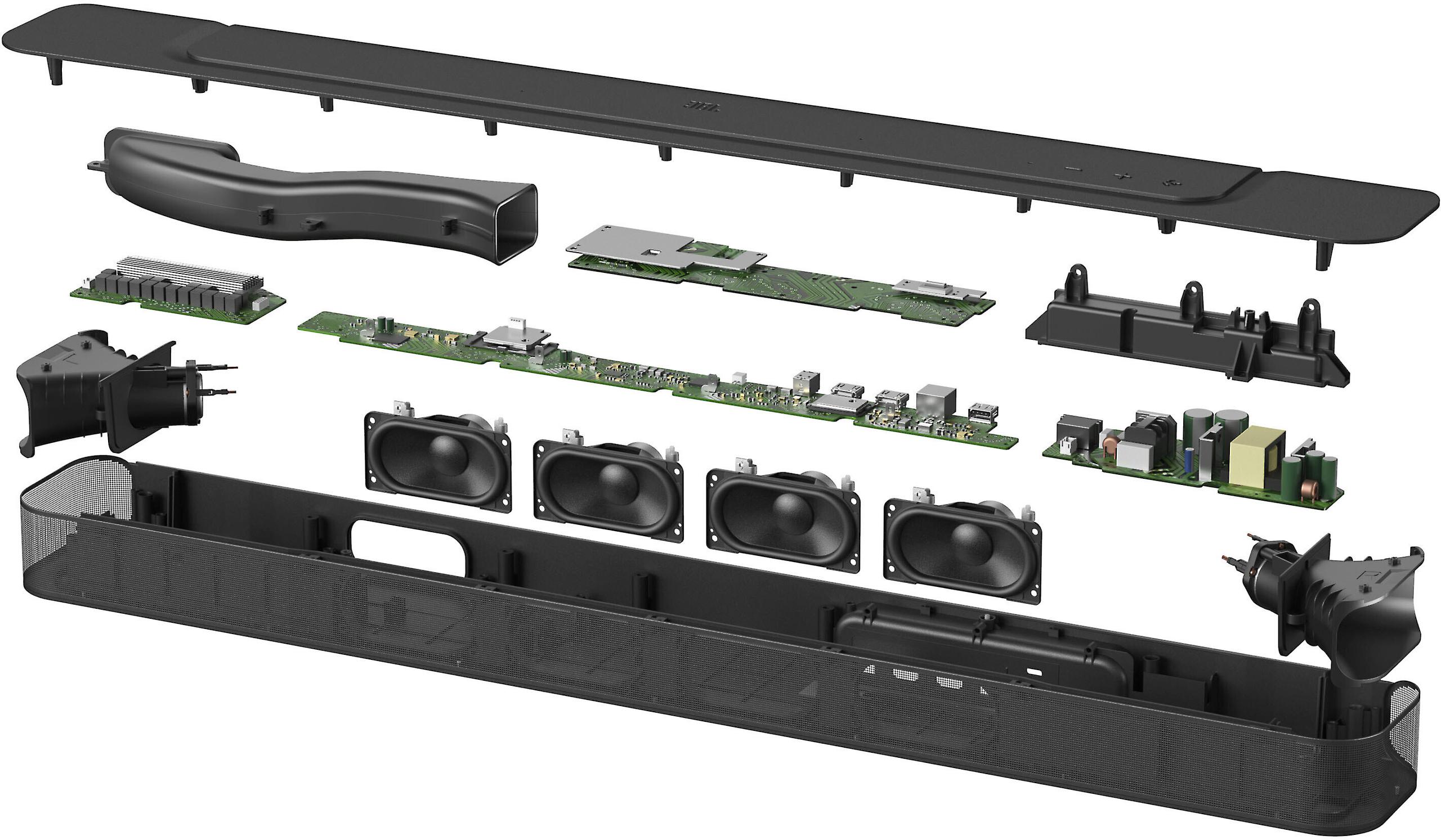
The secret sauce here is MultiBeam technology, which uses an array of precisely angled drivers – four racetrack drivers and two tweeters – to create virtual surround effects. These drivers fire sound at specific angles to bounce audio off your walls and ceiling, creating the perception of surround sound through reflections and psychoacoustic processing.
JBL's implementation is more sophisticated than typical virtual surround. The system includes Dolby Atmos processing, which adds height dimension to compatible content. This means when rain falls in a movie scene, you might actually perceive it coming from above, even though all the speakers are in front of you.
The JBL Bar 300 also features PureVoice technology, which is JBL's take on dialogue enhancement. This uses specific algorithms to identify and boost vocal frequencies while managing background effects, ensuring dialogue remains clear even during intense action sequences. For TV watching – where clear speech is often more important than thunderous explosions – this can be game-changing.
Built-in Wi-Fi opens up streaming capabilities that the Ultimea can't match. AirPlay 2, Chromecast built-in, and Alexa Multi-Room Music support mean you can access over 300 streaming services directly through the soundbar. The system automatically updates its software, ensuring you get new features and improvements over time.
Here's where the fundamental difference between these approaches becomes crystal clear. The Ultimea Poseidon D50 delivers authentic surround sound that doesn't rely on room acoustics or acoustic tricks. When you hear a car chase scene, sounds genuinely move from speaker to speaker around your room. The directionality is precise and consistent regardless of where you sit or how your room is furnished.
Based on our research into user experiences and expert reviews, the Ultimea's surround performance is described as "genuinely immersive" and "night and day compared to virtual surround." Users consistently report that movies become more engaging, with effects that pull them into the action rather than just coming from the general direction of the TV.
The JBL Bar 300 relies on your room's acoustic properties to create surround effects. In ideal conditions – a room with appropriate wall surfaces and minimal sound-absorbing materials – MultiBeam can create convincing surround impressions. However, rooms with heavy curtains, thick carpeting, or irregular layouts can significantly diminish the effect.
Expert consensus suggests that JBL's virtual surround works best in small to medium rooms with hard surfaces that reflect sound effectively. Users in these optimal conditions report satisfaction with the surround effect, though they acknowledge it's not as precise or consistent as physical rear speakers.
This category isn't even close. The Ultimea Poseidon D50 includes a dedicated 5.25-inch wireless subwoofer designed specifically for low-frequency reproduction. The BassMX technology uses optimized magnetic circuits and allows for 15mm diaphragm excursion – that's how far the speaker cone can move back and forth to push air and create bass.
User reports consistently highlight the Ultimea's bass impact. Movie explosions have weight and presence, music reproduction includes the full spectrum of low frequencies, and the overall audio experience has the kind of foundation that makes everything more engaging. The wireless connection eliminates the need to run subwoofer cables, while still providing the dedicated bass performance that compact soundbars simply cannot match.
The JBL Bar 300 uses built-in bass ports – essentially tuned openings that enhance low-frequency response from the main drivers. While this provides better bass than typical TV speakers, it's fundamentally limited by physics. A compact soundbar can't move the amount of air necessary for deep, impactful bass reproduction.
Reviews note that the JBL provides "adequate bass for dialogue-heavy content" and "sufficient low-end for most TV shows," but consistently mention that it lacks the impact needed for action movies or music with significant bass content.
Here's where the JBL Bar 300 takes the lead. PureVoice technology specifically targets speech intelligibility, using algorithms that identify vocal frequencies and optimize them while managing competing background sounds. This isn't just EQ adjustment – it's active processing that adapts to the content in real-time.
User feedback on dialogue clarity is overwhelmingly positive for the JBL. People report being able to understand dialogue clearly even at moderate volumes, and the system maintains speech intelligibility during complex audio scenes where other soundbars might bury voices under effects.
The Ultimea Poseidon D50 handles dialogue through its center channel, which is standard for home theater systems. While this provides clear speech reproduction, it doesn't include the specialized dialogue enhancement processing that JBL offers. Users can adjust EQ settings to emphasize vocal frequencies, but this requires manual tweaking rather than automatic optimization.
The Ultimea Poseidon D50 dominates in this category with its comprehensive app-based control system. Those 121 preset EQ matrices aren't just marketing fluff – they represent pre-configured audio profiles developed for specific content types and listening preferences. Whether you're watching dialogue-heavy dramas, bass-heavy action films, or listening to acoustic music, there's likely a preset that optimizes the sound for that content.
The 10-band equalizer provides manual control over specific frequency ranges, allowing users to compensate for room acoustics or personal preferences. Independent satellite speaker volume control is particularly valuable – you can adjust rear channel levels to achieve perfect surround balance for your specific seating position and room layout.
The JBL Bar 300 offers basic customization through the JBL One app, including EQ adjustment and setup options. While not as extensive as the Ultimea's options, it includes automatic room calibration that uses an embedded microphone to optimize sound for your specific space. This automated approach is more convenient but less flexible than manual adjustment.
The JBL Bar 300 clearly wins in the connectivity and smart features department. Built-in Wi-Fi with support for major streaming platforms means you can use the soundbar as a complete audio system, not just a TV accessory. AirPlay 2 lets iPhone and iPad users stream directly to the soundbar, while Chromecast built-in provides similar functionality for Android devices.
Voice assistant integration with Alexa, Google Assistant, and Siri adds convenience for users invested in smart home ecosystems. The automatic software updates ensure the system stays current with new features and improvements.
The Ultimea Poseidon D50 focuses on traditional connectivity with Bluetooth 5.3, HDMI eARC, optical, AUX, and USB inputs. While this covers all standard audio sources reliably, it lacks the streaming capabilities and smart home integration that make the JBL more versatile as a modern audio hub.
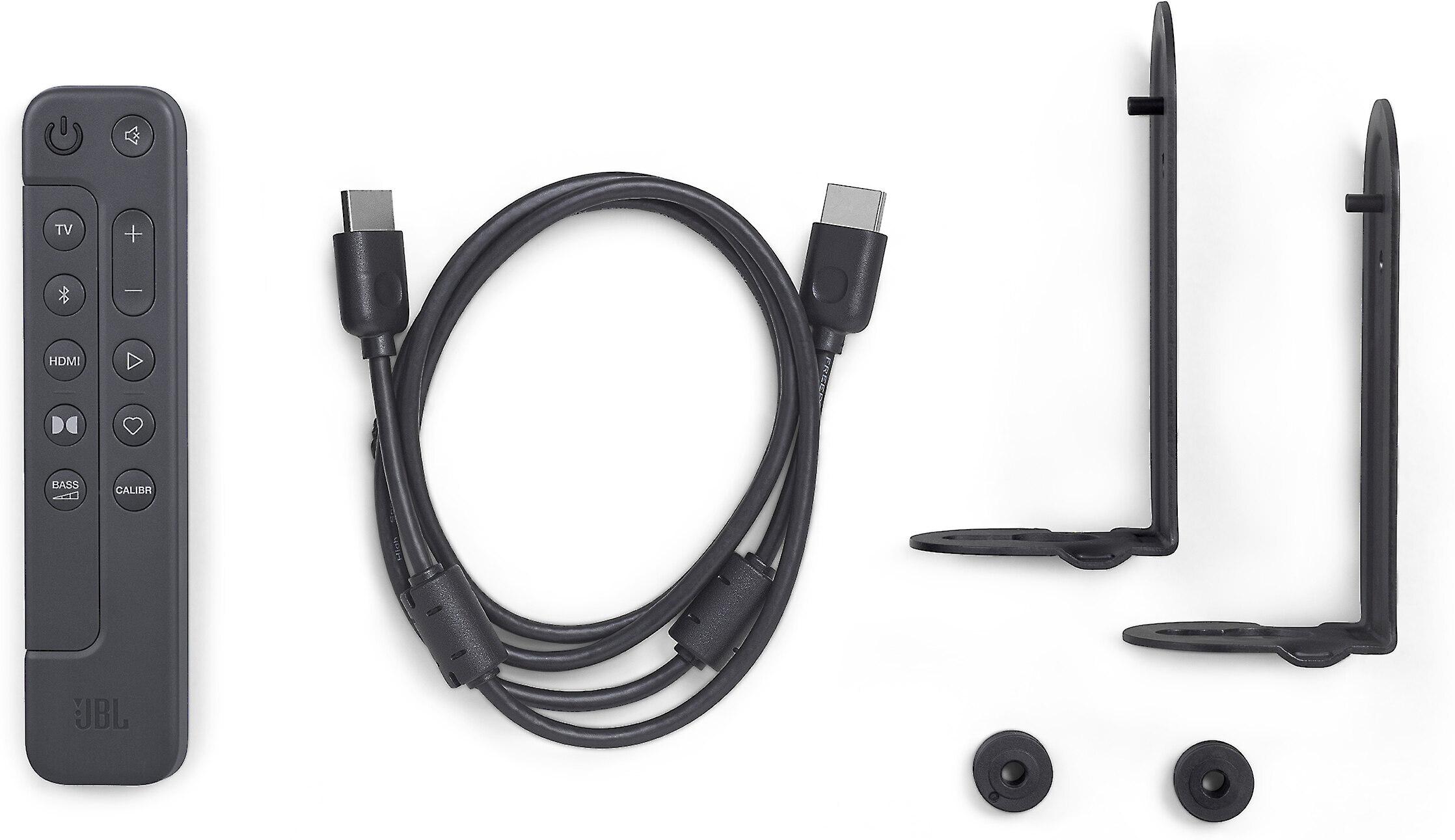
Let's be honest about what you're getting into with each system. The JBL Bar 300 lives up to its "plug and play" promise. Connect power and a single HDMI cable to your TV, and you're operational within minutes. Wall mounting is straightforward with the included hardware, and the slim profile maintains your room's aesthetic.
The Ultimea Poseidon D50 requires significantly more effort. You'll need to position the wireless subwoofer somewhere in your room (it needs a power outlet), run 19.6-foot cables to position the satellite speakers behind your seating area, and spend time optimizing speaker placement and system settings.
This isn't necessarily a dealbreaker, but it's a real consideration. If you're renting, frequently rearrange furniture, or simply want audio improvement without the commitment, the JBL's simplicity becomes a major advantage.
Room characteristics play a crucial role in determining which system will work better for you. The Ultimea Poseidon D50 performs consistently across different room sizes and acoustic environments because it doesn't rely on reflections or specific room characteristics. Whether you have carpet or hardwood, curtains or bare walls, the physical speakers deliver sound directly to your ears.
For larger rooms – say, over 300 square feet – the Ultimea's dedicated subwoofer and higher power output become increasingly important. Virtual surround systems like the JBL can struggle to create convincing effects in very large spaces where reflections become diffused and timing cues get confused.
The JBL Bar 300 works best in small to medium-sized rooms with relatively live acoustics. Hardwood floors, drywall surfaces, and minimal sound-absorbing materials help MultiBeam technology create more convincing surround effects. In rooms with heavy carpeting, lots of upholstered furniture, or acoustic treatments, the virtual surround effect diminishes significantly.
At the time of writing, both systems occupy similar price ranges in the premium soundbar segment, making value comparison particularly relevant. The Ultimea Poseidon D50 delivers true 5.1 hardware that would typically cost significantly more from established brands. You're getting a wireless subwoofer, satellite speakers, and comprehensive app control at a price point where most competitors offer virtual surround or basic 2.1 systems.
The JBL Bar 300 represents solid value for users prioritizing convenience and smart features. JBL's brand reputation, established customer support, and advanced streaming capabilities compete favorably with soundbars costing considerably more. The Dolby Atmos support and automatic room calibration add premium features typically found in higher-end models.
Choose the Ultimea Poseidon D50 if you're serious about home theater performance and willing to invest in proper setup. This system excels for dedicated movie watching, gaming, and music listening where audio quality takes priority over convenience. It's ideal for larger rooms, home theater setups, and users who enjoy customizing their audio experience.
The satellite speaker placement does require commitment – you'll need to route cables and position speakers appropriately. But in return, you get authentic surround sound that doesn't depend on room acoustics or audio tricks. The powerful subwoofer ensures that action scenes have proper impact, while the extensive customization options let you optimize performance for any content type.
Choose the JBL Bar 300 if dialogue clarity and setup convenience are your primary concerns. This system shines for TV watching, where clear speech is often more important than thunderous bass or precise surround effects. It's perfect for apartments, smaller rooms, or situations where aesthetic considerations and easy installation matter.
The smart streaming features make it valuable as a complete audio system, not just a TV upgrade. If you frequently use streaming services, want voice assistant integration, or prefer systems that update automatically with new features, the JBL provides a more future-proof approach.
Both soundbars represent thoughtful approaches to improving TV audio, but they're solving different problems for different users. The Ultimea Poseidon D50 prioritizes audio authenticity and performance, delivering genuine surround sound and powerful bass at the cost of setup complexity. The JBL Bar 300 emphasizes convenience and dialogue clarity, providing a premium single-unit solution with smart features that work immediately.
Your choice ultimately depends on what you value most: authentic surround sound performance or streamlined convenience with smart capabilities. Neither approach is inherently better – they're optimized for different priorities and use cases. Understanding these differences ensures you'll choose the system that best matches your specific needs and expectations.
| Ultimea Poseidon D50 5.1 Soundbar | JBL Bar 300 5.0 Soundbar |
|---|---|
| Channel Configuration - Determines authentic vs simulated surround sound | |
| True 5.1 with physical satellite speakers and wireless subwoofer | Virtual 5.0 using MultiBeam technology (no separate subwoofer) |
| Total Power Output - Affects volume and dynamic range | |
| 320W peak power (higher output for larger rooms) | 260W RMS (adequate for small-medium spaces) |
| Bass System - Critical for movie impact and music fullness | |
| Dedicated 5.25" wireless subwoofer with BassMX technology | Built-in bass ports only (limited low-frequency extension) |
| Setup Complexity - Time and effort required for installation | |
| Multi-component setup with 19.6ft satellite cables to position | Single soundbar with HDMI connection (plug-and-play) |
| Surround Sound Method - Affects reliability and room dependency | |
| Physical rear speakers create consistent directional audio | Virtual processing relies on wall reflections and room acoustics |
| Smart Features - Streaming and voice control capabilities | |
| Basic connectivity (Bluetooth 5.3, HDMI eARC, optical, USB) | Advanced streaming (Wi-Fi, AirPlay 2, Chromecast, voice assistants) |
| Audio Customization - Control over sound tuning | |
| 121 EQ presets, 10-band equalizer, independent speaker controls | Basic EQ in app plus automatic room calibration |
| Dialogue Enhancement - Speech clarity for TV content | |
| Standard center channel processing | Dedicated PureVoice technology for optimized speech |
| Dolby Atmos Support - 3D height effects capability | |
| SurroundX conversion technology (upmixes to 5.1) | Native Dolby Atmos processing with height virtualization |
| Physical Footprint - Space requirements and aesthetics | |
| Multiple components require subwoofer and satellite placement | Compact 32.3" soundbar weighing just 5.5 lbs |
| Room Size Optimization - Best performance environment | |
| Medium to large rooms (200-350+ sq ft) with flexible placement | Small to medium rooms with reflective surfaces for virtual surround |
| Brand Support - Warranty and customer service reliability | |
| Newer brand with limited established support network | Established JBL brand with comprehensive customer support |
The Ultimea Poseidon D50 delivers superior surround sound quality with its true 5.1 channel system featuring physical satellite speakers positioned behind your seating area. This creates authentic directional audio that moves sound around your room naturally. The JBL Bar 300 uses virtual surround processing which can be effective in the right room conditions but cannot match the precision and consistency of actual rear speakers.
The Ultimea Poseidon D50 includes a dedicated 5.25-inch wireless subwoofer that delivers deep, impactful bass for movies and music. The JBL Bar 300 does not include a separate subwoofer and relies on built-in bass ports, which provide adequate bass for dialogue-heavy content but lack the power for action scenes or bass-heavy music.
The JBL Bar 300 is much easier to set up, requiring only a single HDMI cable connection to your TV for immediate operation. The Ultimea Poseidon D50 requires positioning a wireless subwoofer, running 19.6-foot cables to place satellite speakers behind your seating area, and optimizing speaker placement for best performance.
The Ultimea Poseidon D50 is a true 5.1 system with five speakers plus a dedicated subwoofer (.1 channel) for low frequencies. The JBL Bar 300 is a 5.0 system that simulates five channels through virtual processing but lacks a dedicated subwoofer, limiting its bass performance compared to the Ultimea Poseidon D50.
The JBL Bar 300 excels at dialogue clarity with its PureVoice technology that specifically enhances speech frequencies and manages background sounds. While the Ultimea Poseidon D50 provides clear dialogue through its center channel, it doesn't include the specialized dialogue enhancement processing found in the JBL Bar 300.
Both soundbars offer smartphone control, but with different capabilities. The Ultimea Poseidon D50 provides extensive app control with 121 EQ presets, 10-band equalizer, and independent speaker volume controls. The JBL Bar 300 offers basic app control through JBL One app plus automatic room calibration and streaming service access.
The Ultimea Poseidon D50 is better suited for large rooms due to its 320W peak power output, dedicated subwoofer, and physical speakers that don't rely on wall reflections. The JBL Bar 300 works best in small to medium rooms where its virtual surround technology can effectively use wall reflections to create surround effects.
The JBL Bar 300 offers extensive streaming capabilities with built-in Wi-Fi, AirPlay 2, Chromecast, and access to over 300 streaming services directly through the soundbar. The Ultimea Poseidon D50 focuses on traditional connectivity with Bluetooth 5.3 and standard audio inputs but lacks built-in streaming features.
The Ultimea Poseidon D50 significantly outperforms the JBL Bar 300 in bass response thanks to its dedicated 5.25-inch wireless subwoofer with BassMX technology. This provides room-filling bass for action movies and music, while the JBL Bar 300 relies on built-in bass ports that offer limited low-frequency extension.
The JBL Bar 300 offers full voice assistant integration with Alexa, Google Assistant, and Siri for hands-free control and smart home connectivity. The Ultimea Poseidon D50 does not include built-in voice assistant support but can be controlled through its dedicated smartphone app.
For dedicated home theater use, the Ultimea Poseidon D50 offers exceptional value with true 5.1 surround sound, powerful bass, and extensive customization options typically found in much more expensive systems. The JBL Bar 300 provides better value for users prioritizing convenience, dialogue clarity, and smart streaming features over authentic surround sound performance.
The fundamental difference is that the Ultimea Poseidon D50 uses physical speakers positioned around your room to create authentic surround sound, while the JBL Bar 300 uses advanced processing and driver positioning to simulate surround effects from a single unit. This makes the Ultimea Poseidon D50 better for audio purists and the JBL Bar 300 ideal for convenience-focused users.
We've done our best to create useful and informative comparisons to help you decide what product to buy. Our research uses advanced automated methods to create this comparison and perfection is not possible - please contact us for corrections or questions. These are the sites we've researched in the creation of this article: youtube.com - eu.ultimea.com - newegg.com - tvsbook.com - youtube.com - provantage.com - ultimea.com - techradar.com - community.ultimea.com - homedepot.com - community.ultimea.com - ultimea.com - ultimea.de - youtube.com - medisamhealthcenter.com - ultimea.com - youtube.com - walmart.com - whathifi.com - safeandsoundhq.com - youtube.com - cnet.com - mm.jbl.com - jbl.com - bestbuy.com - support.jbl.com - dell.com - walmart.com

Privacy Policy
Terms and Conditions - Affiliate Policy
Home Security
© Copyright 2008-2026.
11816 Inwood Rd #1211, Dallas, TX 75244