


Shopping for a home theater sound system can feel overwhelming, especially when you're comparing products that seem similar but cost dramatically different amounts. The Hisense HT Saturn and Ultimea Poseidon D50 both promise immersive surround sound, but they represent completely different philosophies about how to deliver that experience. One costs about ten times more than the other, so the question becomes: what exactly are you getting for that premium, and is it worth it?
Before diving into these specific systems, it's helpful to understand what modern home theater audio is trying to achieve. The goal is creating an immersive bubble of sound that makes you feel like you're inside the movie rather than just watching it. This involves placing sounds not just left and right of you, but behind, above, and all around you.
Traditional home theater systems used multiple speakers wired to a central receiver—a complex setup that many people found intimidating. Today's systems try to simplify this while maintaining (or improving) the audio quality. However, there are two very different approaches: some systems use multiple physical speakers placed around the room, while others use a single soundbar with clever processing to simulate the surround effect.
The key technical concepts you'll encounter include channel configuration (like 5.1 or 4.1.2, where the numbers represent different speaker locations), object-based audio (like Dolby Atmos, which places sounds as objects moving through 3D space), and DSP (Digital Signal Processing, which is the computer brain that manipulates audio signals). Understanding these helps explain why some systems cost significantly more than others.
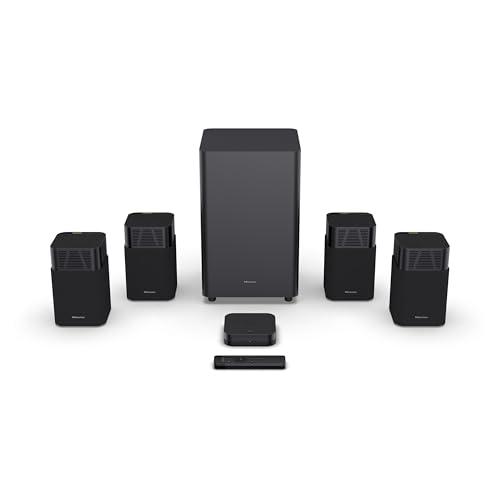
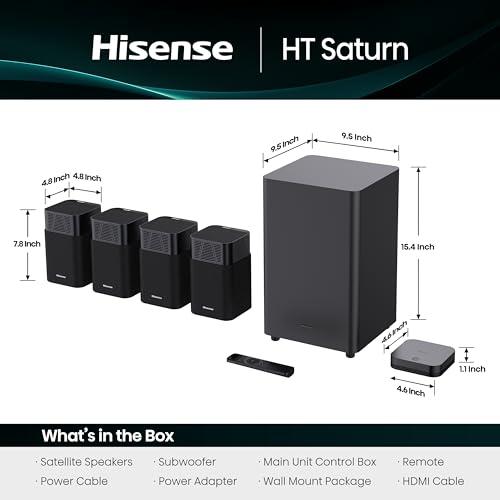
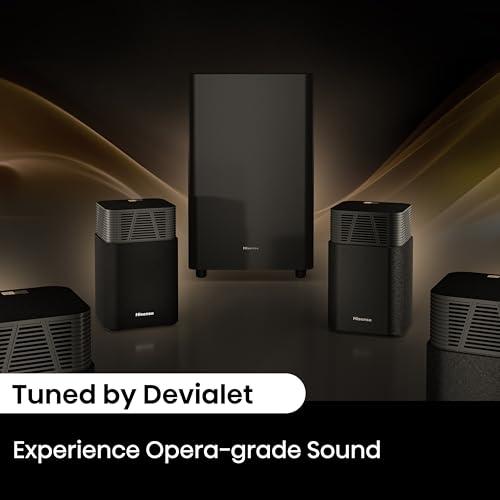
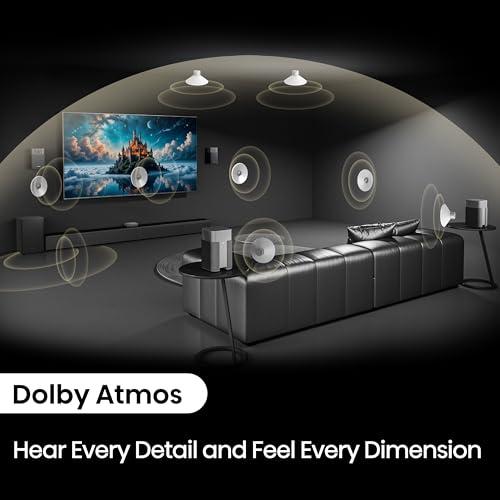
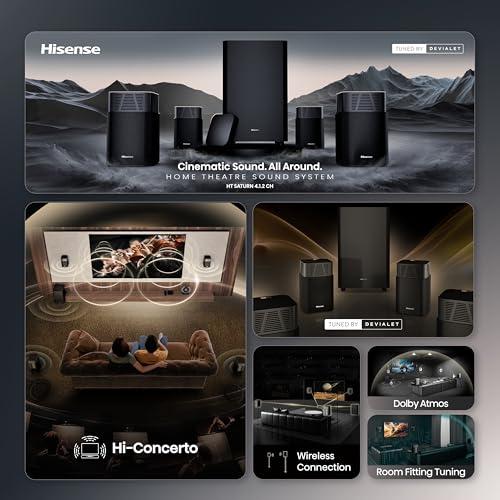
The Hisense HT Saturn, released in 2025, represents Hisense's flagship attempt to revolutionize home audio. Rather than creating another traditional soundbar, they developed what they call a "soundbar killer"—a system that uses four separate wireless satellite speakers plus a subwoofer to create true surround sound. This 4.1.2 configuration includes dedicated height channels for Dolby Atmos effects, where sounds can appear to come from above you.
What makes the HT Saturn unique is its partnership with Devialet, a French company known for extremely high-end audio equipment. This "tuned by Devialet" approach brings professional-grade acoustic engineering to a mass-market product. The system uses 13 individual speakers across all its components, with sophisticated wireless connectivity that operates on three different frequency bands to avoid interference.
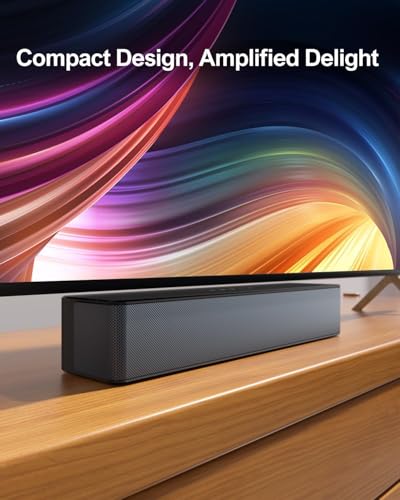
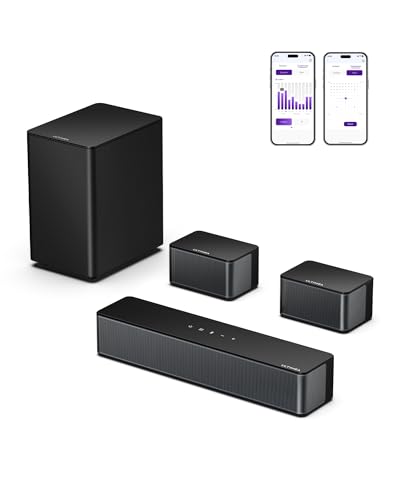
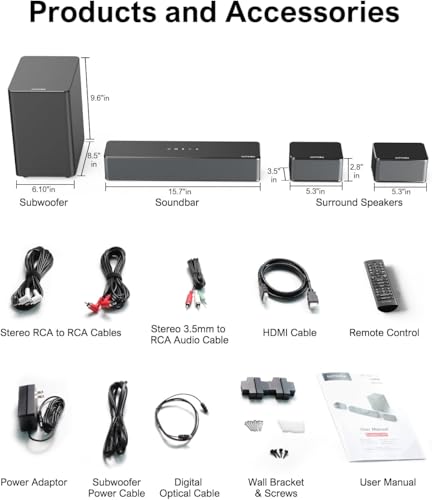
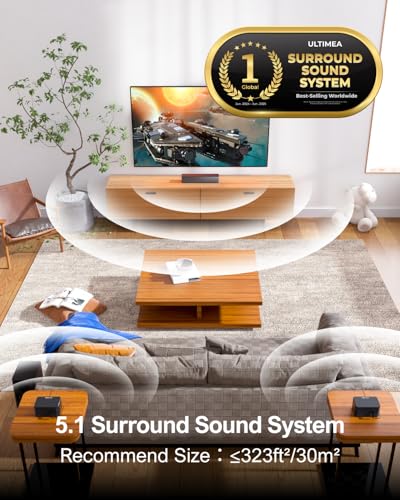
The Ultimea Poseidon D50, despite being marketed as a "2025" model, actually launched in late 2023. This budget-focused system takes a more traditional approach: a main soundbar combined with two wired rear speakers and a wireless subwoofer. It uses what Ultimea calls SurroundX technology—essentially software that takes regular stereo audio and converts it into simulated 5.1 surround sound.
At the time of writing, the Poseidon D50 costs roughly one-tenth the price of the HT Saturn, making it one of the most affordable true 5.1 systems available. However, this price difference reflects fundamental differences in approach, components, and capabilities.
The most crucial difference between these systems lies in their audio architecture—how they actually create the surround sound experience.
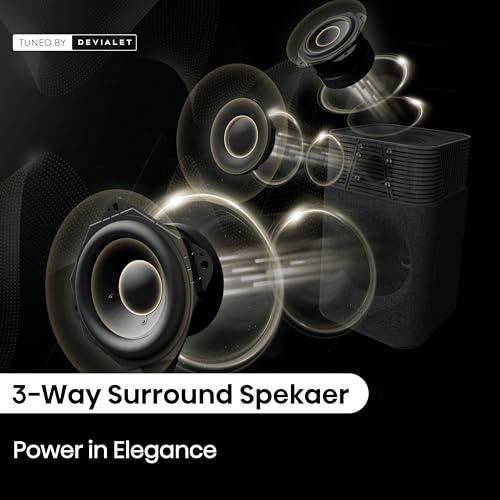
The HT Saturn uses genuine multi-channel processing with physical speakers positioned around your room. Each of its four satellite speakers contains multiple drivers (the individual speaker elements) including full-range drivers and dedicated tweeters for high frequencies. The system can decode true Dolby Atmos and DTS:X audio tracks, which contain specific instructions for placing sounds in 3D space. When a helicopter flies overhead in a movie, the system can actually move that sound from the front speakers, up to the height channels, and across to the rear—creating a convincing illusion that the helicopter is actually above you.
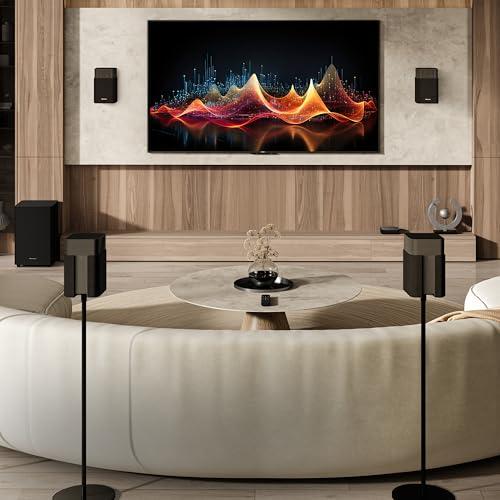
This is possible because of the system's 4.1.2 configuration: four main speakers (front left/right, rear left/right), one subwoofer for bass, and two upward-firing drivers that bounce sound off your ceiling to create height effects. The phantom center approach is particularly clever—instead of a dedicated center speaker for dialogue, the system uses precise timing and level matching between the left and right front speakers to create a stable "virtual" center where voices appear to come from, even though there's no physical speaker there.
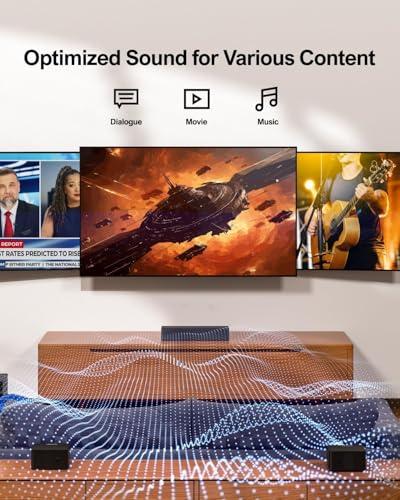
The Poseidon D50 takes a different approach. Its SurroundX algorithm uses DSP to analyze incoming audio and extract surround information, then routes different elements to the rear speakers and subwoofer. This works reasonably well for creating a sense of spaciousness and some directional effects, but it can't create the precise object placement or height effects of true Atmos systems. Think of it as an intelligent guess about where sounds should go, rather than following specific instructions from the movie's audio track.
The practical difference is significant. With the HT Saturn, when you watch a scene with rain, you'll hear individual droplets seemingly falling from above. With the Poseidon D50, you'll hear rain sounds that are clearly coming from the speakers around you, which is still immersive but not as convincing.
Audio power specifications can be confusing because manufacturers often use different measurement standards. However, the difference between these systems is substantial enough to be meaningful regardless of how it's measured.
The HT Saturn delivers what Hisense rates as 720W of total system power, distributed across its 13 individual drivers. More importantly, this power comes from professional-grade amplification designed to handle dynamic peaks—the sudden loud explosions or musical crescendos that can make lesser systems sound strained or distorted. The Devialet tuning ensures this power is delivered cleanly across the entire frequency range, from deep bass to crisp highs.
The Poseidon D50 offers 320W total power, which is actually quite good for its price range. However, this is distributed across only six speakers total, and the amplification is built to consumer-grade rather than professional standards. You'll notice this difference most clearly at higher volumes, where the Poseidon D50 may start to sound harsh or compressed, while the HT Saturn maintains clarity and composure.
For room size considerations, the HT Saturn is designed for large spaces—Hisense specifically markets it for rooms with 85-inch or larger TVs. The Poseidon D50 works best in medium-sized rooms (roughly 250-380 square feet) and will struggle to fill very large spaces with convincing surround sound.
Bass performance is where many home theater systems succeed or fail, and the difference between these products is immediately apparent.
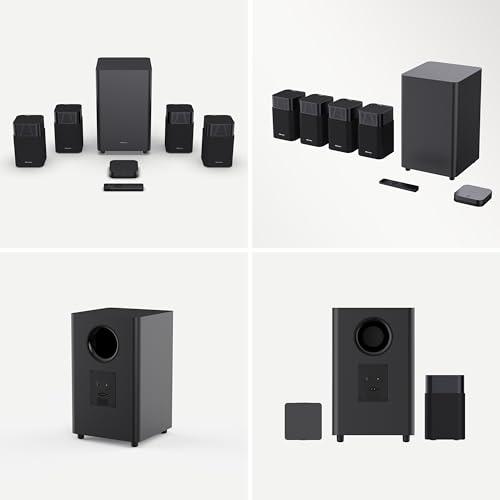
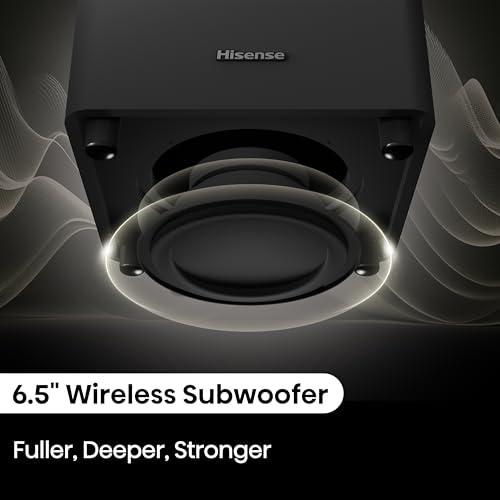
The HT Saturn includes a 6.5-inch wireless subwoofer with what the company describes as down-firing design—the speaker driver faces the floor, using the surface to help distribute bass throughout the room. The subwoofer can reproduce frequencies down to 40Hz, which covers the deep rumbles of explosions and the lowest notes of music. The Devialet tuning ensures the subwoofer integrates seamlessly with the satellite speakers, so bass effects don't sound disconnected from the rest of the audio.
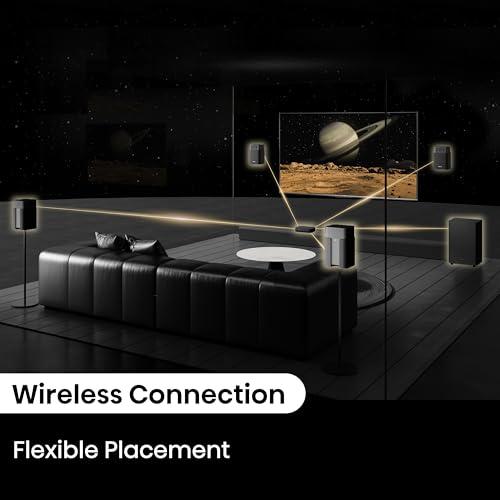
The wireless connectivity is crucial here because it allows you to place the subwoofer wherever it sounds best in your room—often in a corner or along a wall—without worrying about running cables. The system's room calibration feature (available when paired with compatible Hisense TVs) can automatically adjust the bass levels and timing to match your room's acoustics.
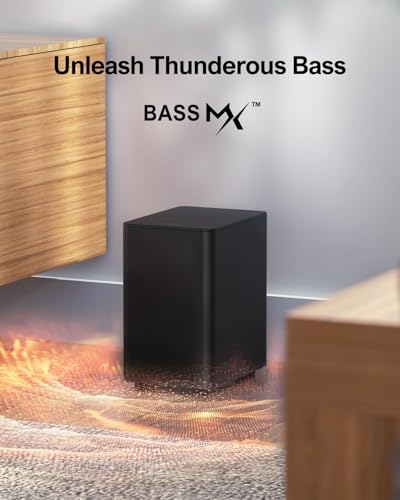
The Poseidon D50 uses a smaller 5.25-inch subwoofer with what Ultimea calls BassMX technology. This involves optimizing the magnetic motor and allowing for greater driver excursion (how far the speaker cone can move), which helps the smaller driver produce more bass than you might expect. However, physics still applies—a smaller driver in a budget enclosure simply cannot match the depth and impact of the HT Saturn's larger, more sophisticated subwoofer.
In practical terms, action movie explosions will have more visceral impact with the HT Saturn, and music with deep electronic bass or orchestral drums will sound more natural and extended. The Poseidon D50 provides adequate bass for casual viewing, but won't deliver the room-shaking effects that make big-screen entertainment truly immersive.
Modern home theater systems need to connect seamlessly with today's TVs and streaming devices while remaining flexible enough for future upgrades. Here's where the two systems show their different priorities.
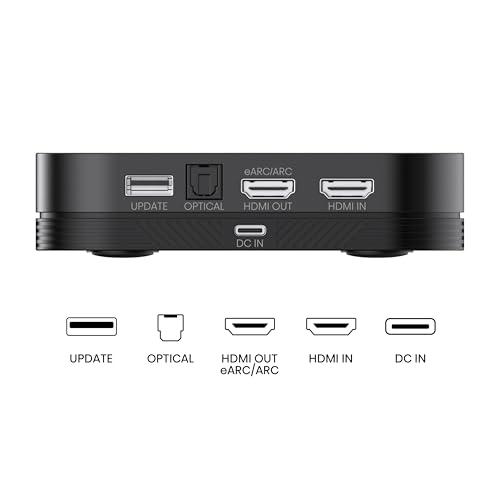
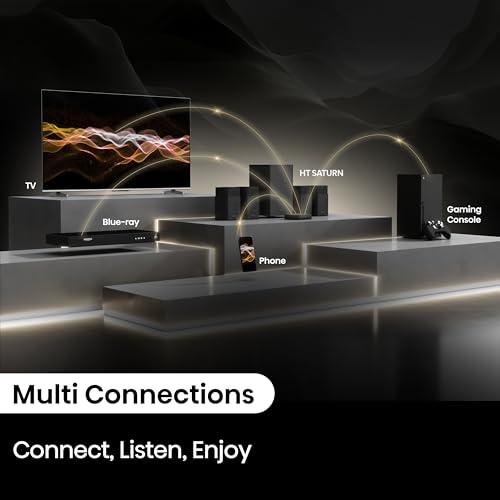
The HT Saturn includes both HDMI input and HDMI eARC output, allowing it to act as a hub for your devices while sending the highest-quality audio back from your TV. The system supports 4K 60Hz pass-through, meaning you can connect a gaming console or media player directly to the soundbar, then send the video to your TV without any quality loss. The eARC connection supports the full bandwidth needed for lossless Dolby Atmos tracks from Blu-ray discs or streaming services.
What's particularly impressive is the HT Saturn's tri-band wireless system operating on 2.4GHz, 5.2GHz, and 5.8GHz frequencies simultaneously. This ensures stable connections between all the wireless components even in environments crowded with Wi-Fi networks and other wireless devices. The satellites automatically pair and sync when powered on, eliminating the setup headaches that plague some wireless multi-speaker systems.
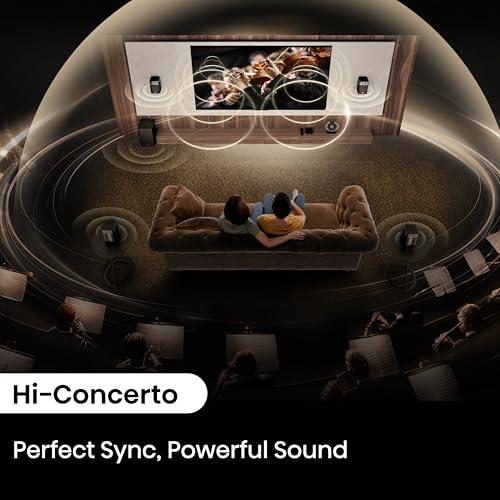
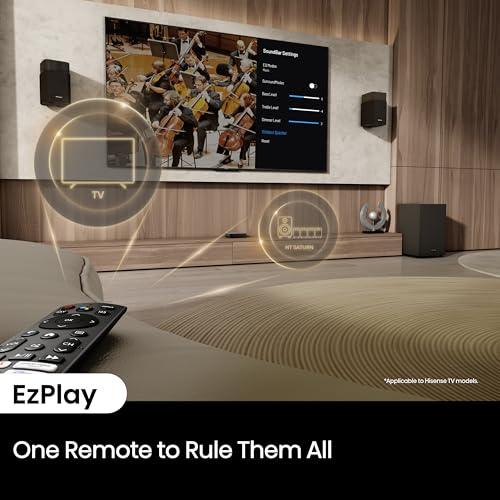
The Hi-Concerto integration with Hisense TVs is a standout feature. When properly configured, the TV's built-in speakers actually work together with the HT Saturn to create an even wider soundstage. The TV handles some of the front-channel duties while the external system provides surround and height effects—essentially turning your entire wall into one giant speaker array.
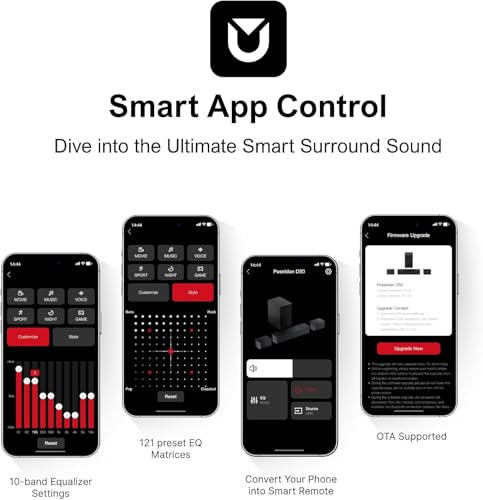
The Poseidon D50 takes a simpler approach with HDMI eARC, optical, AUX, and USB inputs—everything most people need for basic connectivity. The smartphone app control is actually quite sophisticated for this price range, offering a 10-band equalizer and 121 preset sound profiles. However, the rear speakers connect via traditional speaker wire (with 19.6-foot cables included), which limits placement flexibility and creates installation complexity.
How a home theater system adapts to your specific room makes a huge difference in real-world performance. Rooms have different sizes, shapes, and acoustic properties that can dramatically affect how audio sounds.
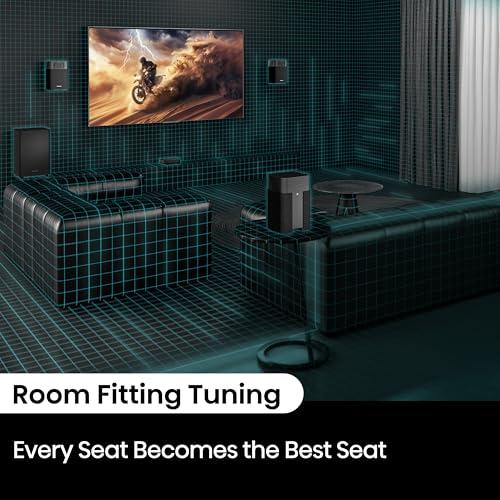
The HT Saturn includes Room Fitting Tuning technology that automatically measures your room's acoustic response and adjusts the system accordingly. This feature works through compatible Hisense TVs, using their processing power to analyze how sound reflects off your walls, furniture, and ceiling, then optimizing the speaker levels, timing, and EQ to compensate for any acoustic problems.
This automatic calibration is particularly important for the Atmos height effects. If your ceiling is too high, too low, or has an unusual shape, the system can adjust how it uses the upward-firing drivers to maintain convincing overhead effects. Similarly, if your room is asymmetrical or you can't place the satellite speakers in ideal positions, the calibration helps maintain proper surround imaging.
The Poseidon D50 relies on manual adjustment through its smartphone app. While the 10-band equalizer and multiple preset modes provide good flexibility, you need to make these adjustments by ear rather than through automated measurement. This works fine for basic optimization, but won't achieve the precision of automated room correction systems.
The physical construction of these systems reflects their different target markets and price points.
The HT Saturn's satellite speakers use aerospace-grade neodymium magnets and composite fiber diaphragms—materials chosen for their ability to reproduce sound with minimal distortion and resonance. Each satellite is surprisingly compact (under 8 inches tall and about 3.5 pounds) but feels substantial, with solid construction that dampens unwanted vibrations.
The wireless design means each satellite only needs a power connection, making installation much cleaner than traditional wired systems. Wall mounting hardware is included, and the speakers' compact size makes them unobtrusive in most room layouts.
The Poseidon D50 uses more conventional materials appropriate for its price point. The satellites are lightweight and functional, but won't match the build quality or acoustic performance of the HT Saturn's components. However, they're still a significant step up from typical budget soundbar systems that rely purely on processing tricks rather than physical rear speakers.
Based on comprehensive research of professional reviews and user feedback, the performance differences between these systems become clear in specific scenarios.
For movie watching, the HT Saturn excels at creating that "theater at home" experience. Action sequences with complex soundtracks—think Marvel movies with their layered effects, music, and dialogue—remain clear and engaging even during the loudest scenes. The Atmos height channels add genuine immersion for films mixed to take advantage of them, and the phantom center keeps dialogue anchored and intelligible.
The Poseidon D50 provides a solid surround experience for movies, with clear improvements over TV speakers or basic soundbars. However, at higher volumes or with very complex soundtracks, some users report that the system can sound harsh or congested. The lack of true Atmos means height effects are limited, though the rear speakers do provide convincing surround placement for many effects.
For music listening, the differences are more subtle but still present. The HT Saturn's Devialet tuning shows in its ability to handle complex orchestral pieces or detailed acoustic recordings without losing clarity in the midrange where most instruments and vocals live. The Poseidon D50 is adequate for casual music listening, though some users note that it's clearly optimized more for movie sound than audiophile music reproduction.
Gaming performance is where the HT Saturn's object-based audio really shines. Modern games with Atmos support can place footsteps, gunfire, and environmental sounds with pinpoint accuracy, providing competitive advantages and enhanced immersion. The Poseidon D50 still offers good gaming performance through its surround speakers, but without the precise positioning capabilities of true object-based audio.
The decision between these systems ultimately comes down to your priorities, room size, and budget constraints.
Choose the HT Saturn if you're building a serious home theater setup with a large TV (75 inches or bigger), want the most immersive audio experience available, and have the budget for premium components. It's particularly compelling if you already own or plan to buy a Hisense TV, as the integration features add significant value. This system is built for the long term—supporting current and future audio formats while providing professional-grade performance that won't become limiting as your expectations evolve.
The Poseidon D50 makes sense for budget-conscious buyers who want real surround sound without breaking the bank. It's ideal for medium-sized rooms where you want a significant upgrade from TV speakers or basic soundbars but don't need reference-level performance. It's also good for secondary rooms, apartments where extreme volumes aren't practical, or as a first step into multi-channel audio before potentially upgrading later.
These two systems represent different philosophies about home theater audio, and both succeed within their intended markets. The HT Saturn delivers on its promise to be a "soundbar killer" with genuine professional-grade performance that justifies its premium pricing for serious home theater enthusiasts. The Poseidon D50 maximizes value for budget-conscious buyers, delivering real surround sound at an accessible price point.
The ten-fold price difference isn't just about brand premium—it reflects fundamental differences in audio architecture, component quality, wireless technology, and long-term capabilities. Your choice should align with your room size, budget reality, and how important cutting-edge audio performance is to your entertainment experience.
| Hisense HT Saturn HTSATURN 4.1.2Ch Sound Bar System | Ultimea Poseidon D50 5.1 Soundbar Home Theater (2025) |
|---|---|
| Channel Configuration - Determines surround sound capability and immersion level | |
| 4.1.2 channels with dedicated height speakers for true Dolby Atmos | 5.1 channels with traditional surround layout (no height channels) |
| Total Speaker Count - More drivers typically mean better sound distribution | |
| 13 speakers (8 full-range + 4 tweeters + 1 subwoofer) across wireless satellites | 6 speakers total across soundbar, satellites, and subwoofer |
| Power Output - Affects maximum volume and dynamic range | |
| 720W total system power with professional-grade amplification | 320W total power with consumer-grade amplification |
| Audio Format Support - Essential for future-proofing and premium content | |
| Native Dolby Atmos, DTS:X, Dolby TrueHD, DTS-HD Master Audio | Basic Dolby Digital/DTS with SurroundX upmixing (no native Atmos) |
| Speaker Design - Impacts placement flexibility and installation complexity | |
| Four wireless satellite speakers (only need power connections) | Wired rear speakers with 19.6ft cables plus wireless subwoofer |
| Subwoofer Size - Larger drivers typically produce deeper, more impactful bass | |
| 6.5" wireless down-firing subwoofer (40Hz response) | 5.25" wireless subwoofer with BassMX technology |
| Room Calibration - Automatic tuning optimizes performance for your space | |
| Room Fitting Tuning via compatible Hisense TVs with acoustic measurement | Manual EQ adjustment via smartphone app (10-band equalizer) |
| TV Integration - Enhanced features when paired with same brand | |
| Hi-Concerto technology works with TV speakers for expanded soundstage | Standard HDMI eARC connection (no special TV integration) |
| Connectivity Options - More inputs provide greater flexibility | |
| HDMI In + eARC Out, Optical, Bluetooth 5.3, 4K 60Hz pass-through | HDMI eARC, Optical, AUX, USB, Bluetooth 5.3 |
| Wireless Technology - Better wireless means more stable multi-speaker performance | |
| Tri-band wireless (2.4/5.2/5.8 GHz) for interference-resistant connections | Standard Bluetooth 5.3 for subwoofer, wired rear speaker connections |
| Professional Tuning - Audio engineering expertise affects overall sound quality | |
| Tuned by Devialet with aerospace-grade components and phantom center technology | Consumer-grade tuning with SurroundX processing algorithms |
| Recommended Room Size - Matching system capability to space is crucial | |
| Large rooms with 85"+ TVs, designed for spacious home theaters | Medium rooms (250-380 sq ft), ideal for typical living rooms |
| Price Category - Value proposition and target market | |
| Premium flagship system with professional-grade components | Budget-focused entry-level system maximizing features per dollar |
The Hisense HT Saturn is a premium wireless home theater system with four separate satellite speakers and genuine Dolby Atmos support, while the Ultimea Poseidon D50 is a budget-friendly 5.1 system that combines a soundbar with wired rear speakers. The HT Saturn costs significantly more but delivers true 3D audio with height channels, whereas the Poseidon D50 provides basic surround sound through traditional speaker placement and audio processing.
The Hisense HT Saturn offers superior surround sound quality with its 4.1.2 channel configuration and native Dolby Atmos decoding. It uses 13 individual speakers across four wireless satellites to create precise sound placement and overhead effects. The Ultimea Poseidon D50 provides good surround sound for its price range using real rear speakers, but relies on SurroundX upmixing technology rather than true object-based audio formats.
Yes, both the Hisense HT Saturn and Ultimea Poseidon D50 work with any TV that has HDMI ARC or optical output. However, the HT Saturn offers enhanced integration features like Hi-Concerto technology and Room Fitting Tuning when paired with compatible Hisense TVs, providing additional value for Hisense TV owners.
The Ultimea Poseidon D50 has simpler initial setup since it's a more traditional configuration, but requires running 19.6-foot speaker cables to the rear speakers. The Hisense HT Saturn takes slightly more initial configuration but offers cleaner installation since all satellite speakers are wireless and only need power connections, making placement more flexible.
The Hisense HT Saturn features a larger 6.5-inch wireless subwoofer with professional Devialet tuning, delivering deeper bass down to 40Hz with better integration. The Ultimea Poseidon D50 uses a smaller 5.25-inch subwoofer with BassMX technology that provides adequate bass for medium rooms but can't match the depth and impact of the HT Saturn's premium subwoofer.
The Hisense HT Saturn is specifically designed for large rooms and spaces with 75-85 inch TVs or larger, with 720W of power distributed across multiple wireless speakers. The Ultimea Poseidon D50 works best in medium-sized rooms (250-380 square feet) and may struggle to fill very large spaces with convincing surround sound due to its lower power output and simpler speaker configuration.
The Hisense HT Saturn supports native Dolby Atmos and DTS:X decoding with dedicated height channels that create true overhead sound effects. The Ultimea Poseidon D50 does not support Dolby Atmos but uses SurroundX technology to simulate surround effects from stereo sources, providing a basic surround experience without height channel effects.
The Hisense HT Saturn provides more comprehensive connectivity with HDMI input and eARC output, optical input, and 4K 60Hz pass-through capability. The Ultimea Poseidon D50 offers HDMI eARC, optical, AUX, USB, and Bluetooth 5.3 connections. Both systems include Bluetooth for wireless streaming, but the HT Saturn offers more flexibility for connecting multiple devices.
The Ultimea Poseidon D50 includes a dedicated smartphone app with 10-band equalizer and 121 preset sound profiles for extensive customization. The Hisense HT Saturn can be controlled through compatible Hisense TV interfaces for settings like Room Fitting Tuning and Hi-Concerto modes, though it primarily uses the included remote for daily operation.
This depends on your budget and priorities. The Ultimea Poseidon D50 offers exceptional value for budget-conscious buyers, delivering real surround sound at an entry-level price point. The Hisense HT Saturn provides premium value for serious home theater enthusiasts who want professional-grade audio quality, wireless convenience, and future-proof features like native Dolby Atmos support.
No, only the Hisense HT Saturn features fully wireless satellite speakers that require only power connections. The Ultimea Poseidon D50 includes wired rear speakers that connect via traditional speaker cables, though it does include a 19.6-foot cable length for placement flexibility. Both systems have wireless subwoofers.
For serious gaming and movie watching, the Hisense HT Saturn excels with its native Dolby Atmos support, precise sound placement, and professional-grade components that maintain clarity during complex audio scenes. The Ultimea Poseidon D50 provides good performance for casual gaming and movie watching, offering a significant upgrade from TV speakers, but lacks the advanced 3D audio positioning of the HT Saturn system.
We've done our best to create useful and informative comparisons to help you decide what product to buy. Our research uses advanced automated methods to create this comparison and perfection is not possible - please contact us for corrections or questions. These are the sites we've researched in the creation of this article: bestbuy.com - youtube.com - blog.son-video.com - youtube.com - youtube.com - techradar.com - ecoustics.com - jbhifi.com.au - shop.hisense-usa.com - bhphotovideo.com - bestbuy.com - digitalreviews.net - hisense-usa.com - projectorscreenstore.com - valueelectronics.com - dolby.com - giftpack.ai - youtube.com - eu.ultimea.com - newegg.com - tvsbook.com - youtube.com - provantage.com - ultimea.com - techradar.com - community.ultimea.com - homedepot.com - community.ultimea.com - ultimea.com - ultimea.de - youtube.com - medisamhealthcenter.com - ultimea.com - youtube.com - walmart.com

Privacy Policy
Terms and Conditions - Affiliate Policy
Home Security
© Copyright 2008-2026.
11816 Inwood Rd #1211, Dallas, TX 75244