

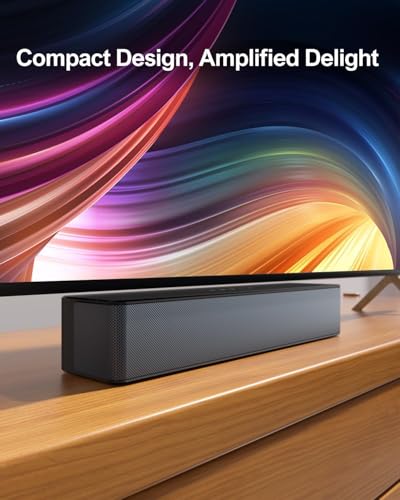
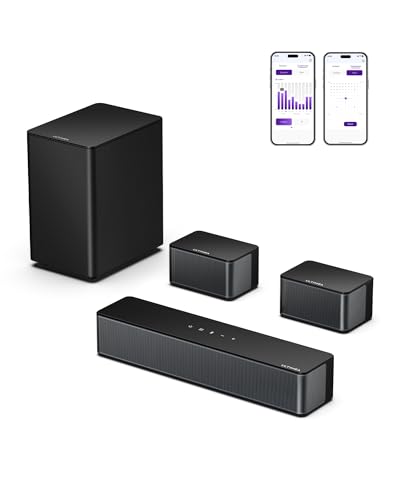



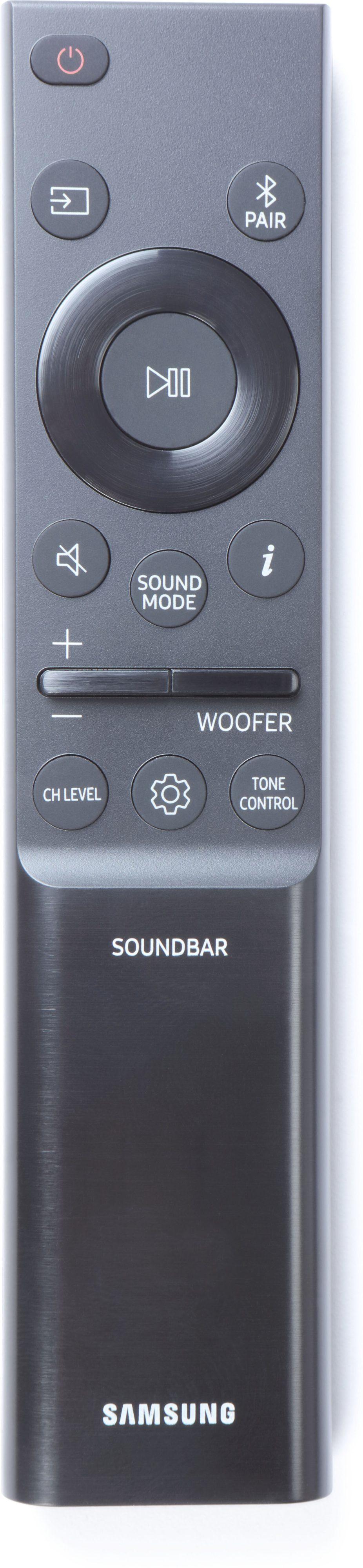
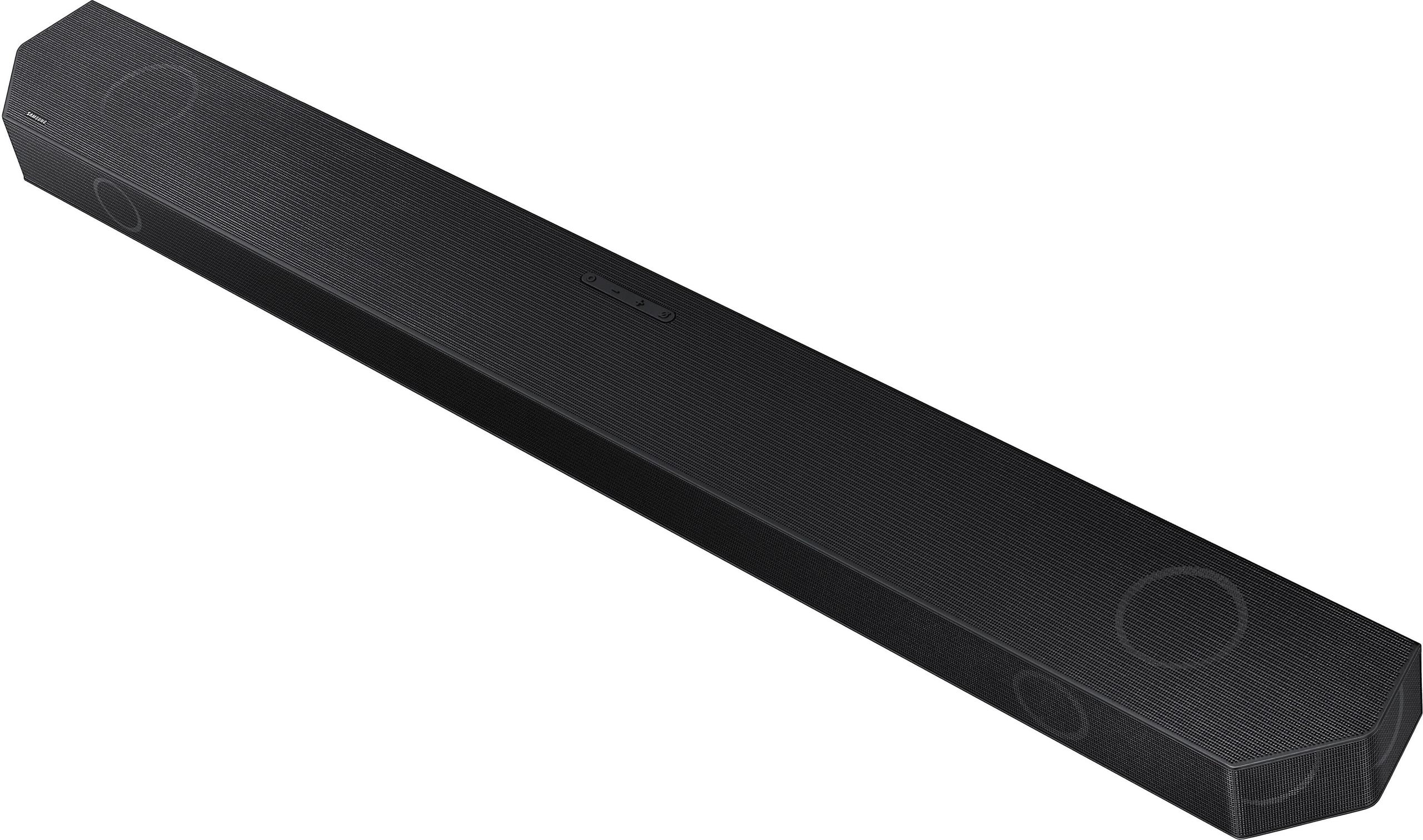
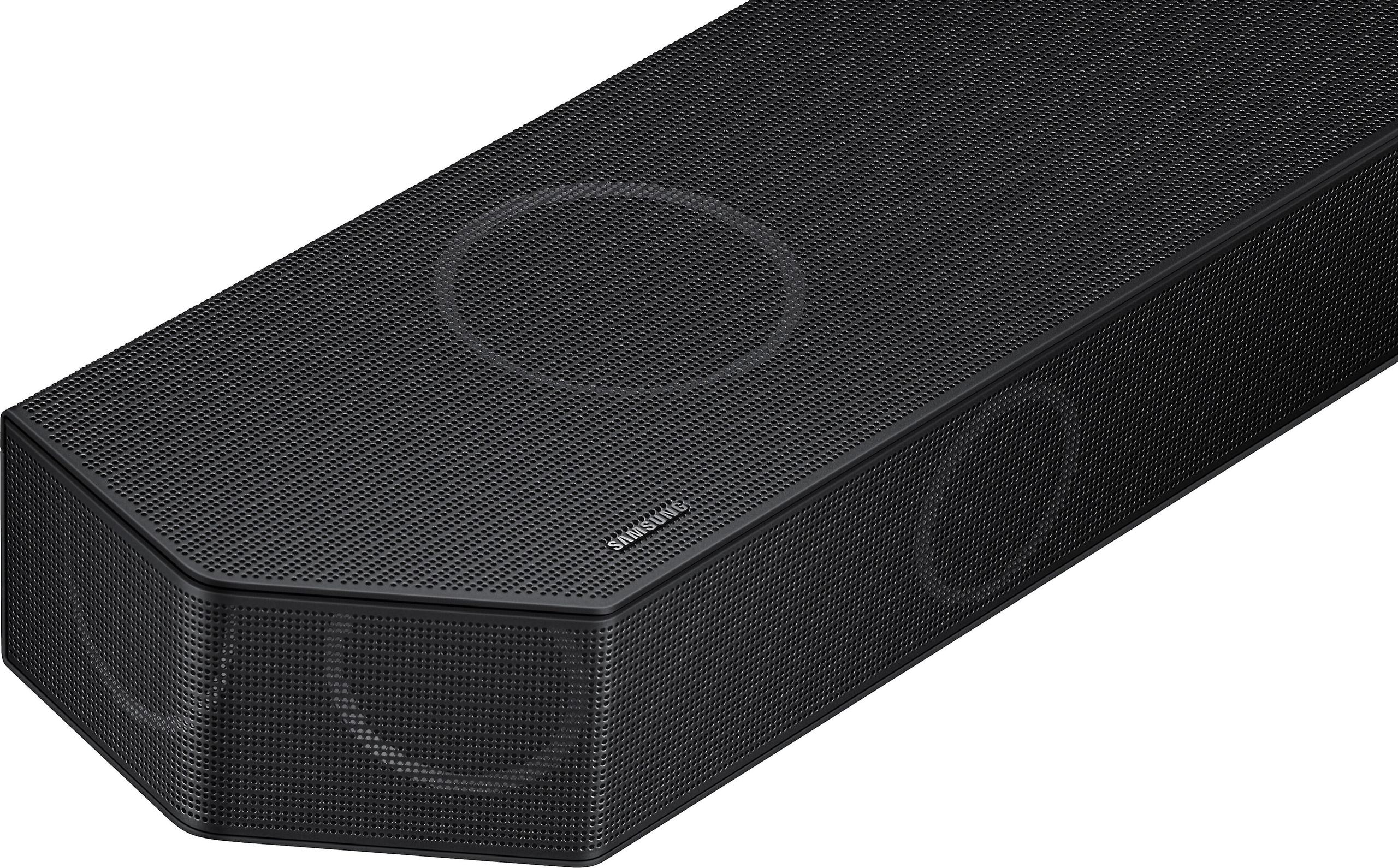


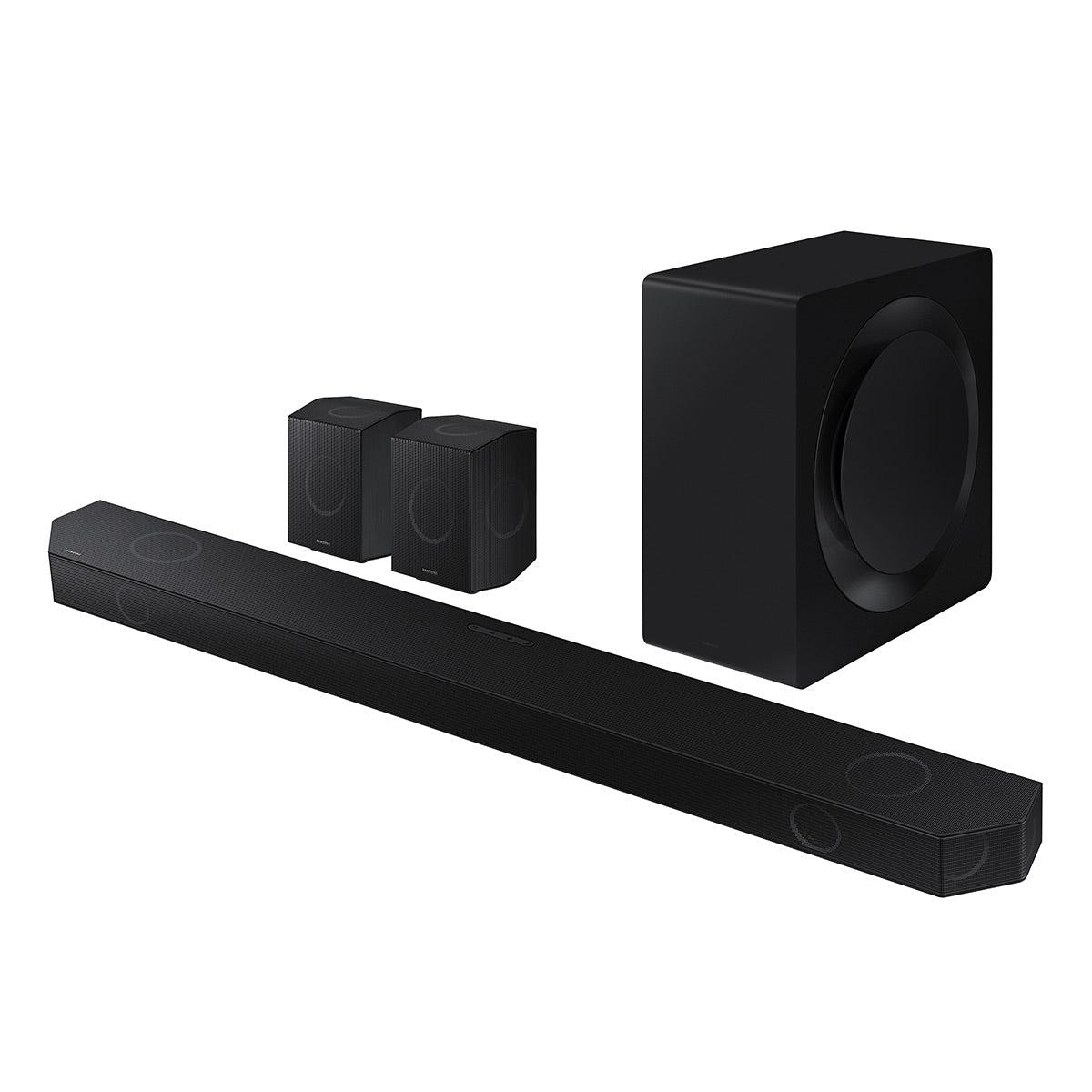
When your TV's built-in speakers sound like they're trapped inside a tin can, it's time for a soundbar upgrade. But with options ranging from bargain-basement models to luxury systems costing more than some people's rent, choosing the right one can feel overwhelming. Today, we're diving deep into two soundbars that represent completely different philosophies: the Ultimea Poseidon D50 5.1 Soundbar and the Samsung HW-Q990D 11.1.4 Channel Sound Bar.
These aren't just different price points—they're fundamentally different approaches to home theater audio. One delivers remarkable value by bringing true surround sound to the masses, while the other pushes the boundaries of what's possible in a home soundbar system.
Before we jump into specifics, let's talk about what makes a soundbar tick in 2024. The numbers you see—like 5.1 or 11.1.4—tell you everything about a system's capabilities. The first number indicates main channels (left, center, right, plus side surrounds), the second shows subwoofers, and the third represents height channels for overhead effects.
Height channels are crucial for modern audio formats like Dolby Atmos, which places sounds in three-dimensional space around you. Instead of just hearing a helicopter fly left to right, Dolby Atmos lets you hear it circle overhead and behind you. It's the difference between watching a movie and feeling like you're inside it.
The channel configuration directly impacts immersion, but it's not the whole story. Driver quality, processing power, and room optimization all play massive roles in the final experience.
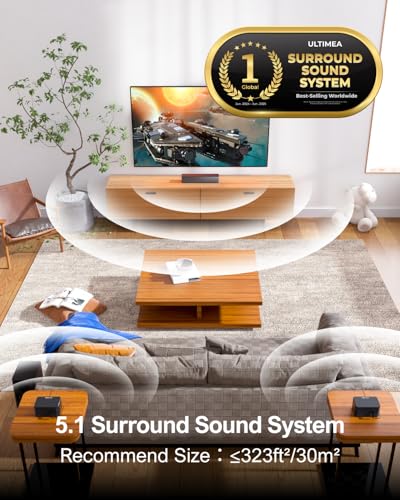
Released in 2024 as an updated version of Ultimea's popular D50 series, the Poseidon D50 represents something increasingly rare in today's market: genuine 5.1 surround sound at a price that won't require a second mortgage. At the time of writing, it typically sells for well under $200, making it one of the most affordable ways to get true surround sound in your living room.
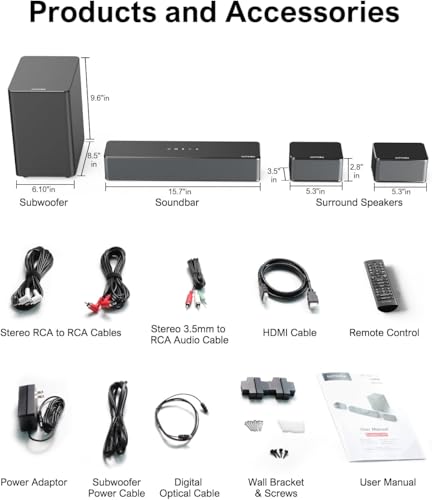
The D50's secret weapon is its complete system approach. While many budget soundbars fake surround sound through processing tricks, the D50 includes actual rear speakers that you place behind your seating position. These satellite speakers connect via 19.6-foot cables, giving you flexibility in placement while ensuring reliable connectivity—no wireless dropouts to worry about.
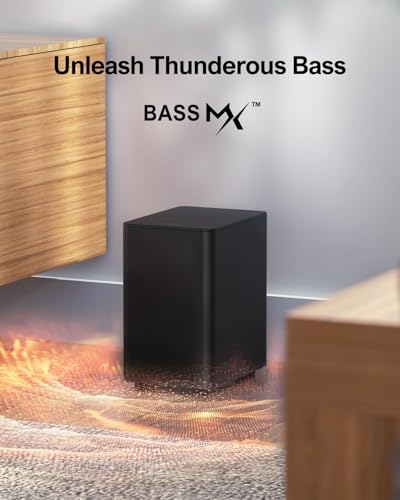
The wireless subwoofer uses what Ultimea calls BassMX Technology, featuring a 5.25-inch driver with optimized magnetic circuitry and 15mm of excursion capability. In plain English, that means the speaker cone can move back and forth significantly, pushing more air to create deeper, more impactful bass.
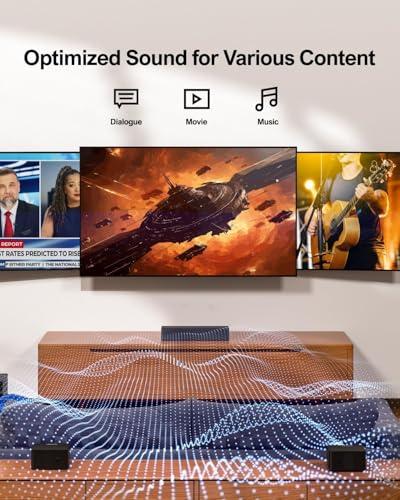
Perhaps most impressively, the Poseidon D50 includes SurroundX Technology—a digital signal processor (DSP) that analyzes incoming stereo audio and intelligently converts it to 5.1 surround sound. This means even your old movies and TV shows suddenly gain spatial dimension, with the system creating realistic surround effects from basic stereo sources.
Based on extensive user feedback and professional evaluations, the D50 delivers surprisingly convincing surround sound for its price bracket. Movie explosions have genuine impact, dialogue remains clear during complex scenes, and the rear speakers actually contribute meaningfully to the soundstage rather than just adding background noise.
However, it's important to set realistic expectations. The sound signature prioritizes impact and excitement over refinement. At higher volumes, some users report slight harshness in the treble, and the overall presentation favors movies and TV over music listening. For late-night viewing, the rear speakers can feel a bit disconnected from the main soundbar, requiring manual volume adjustments through the companion app.
The smartphone app deserves special mention—it's genuinely useful rather than just a marketing checkbox. You get access to 121 preset EQ curves, a 10-band manual equalizer, and independent volume control for the rear speakers. This level of customization is rare at any price point, let alone in budget territory.
Samsung's flagship HW-Q990D, released in 2024, represents the cutting edge of soundbar technology. This isn't just a bigger version of a basic soundbar—it's a complete reimagining of what's possible when you combine advanced driver arrays with sophisticated processing and smart home integration.
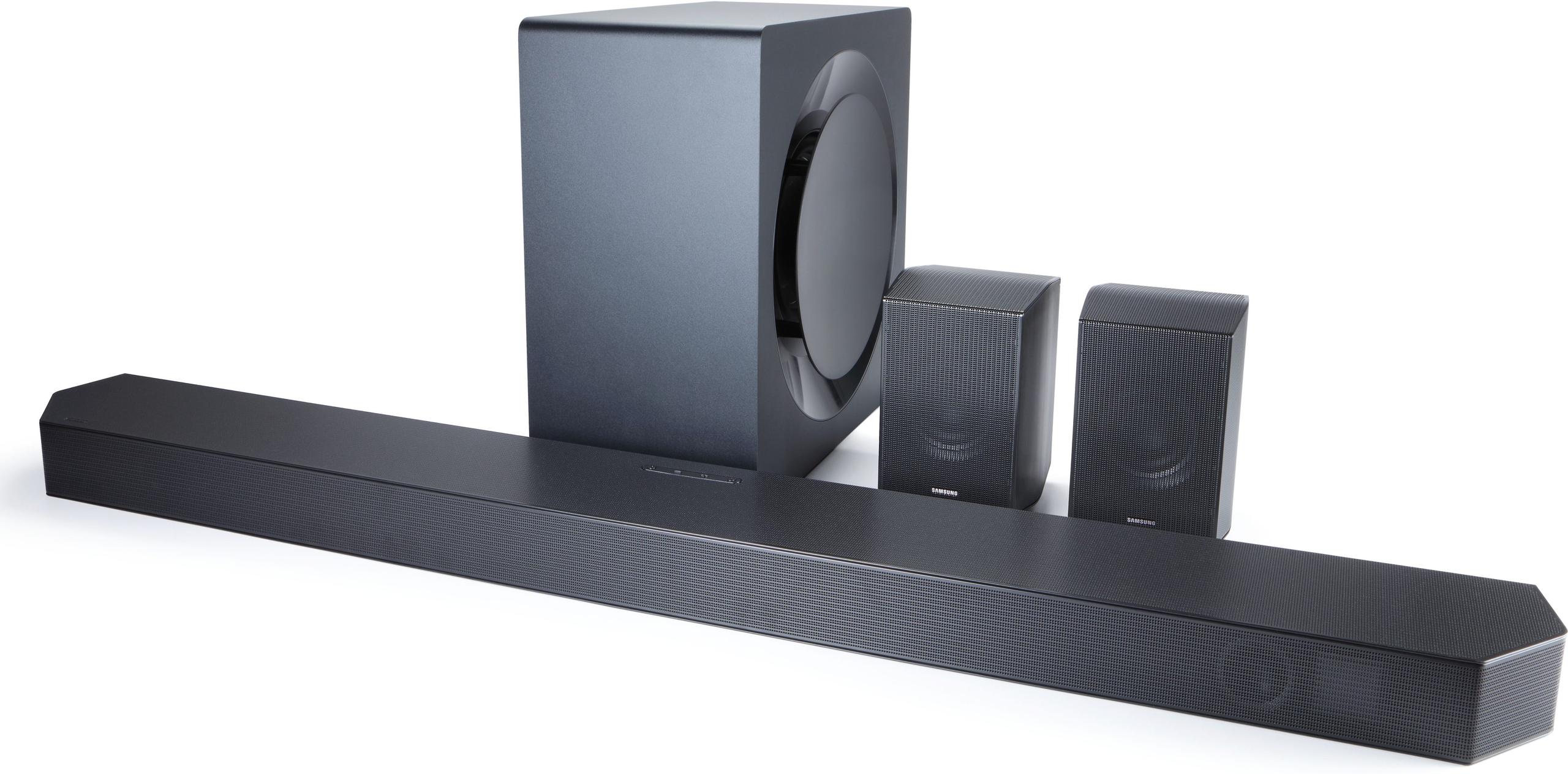
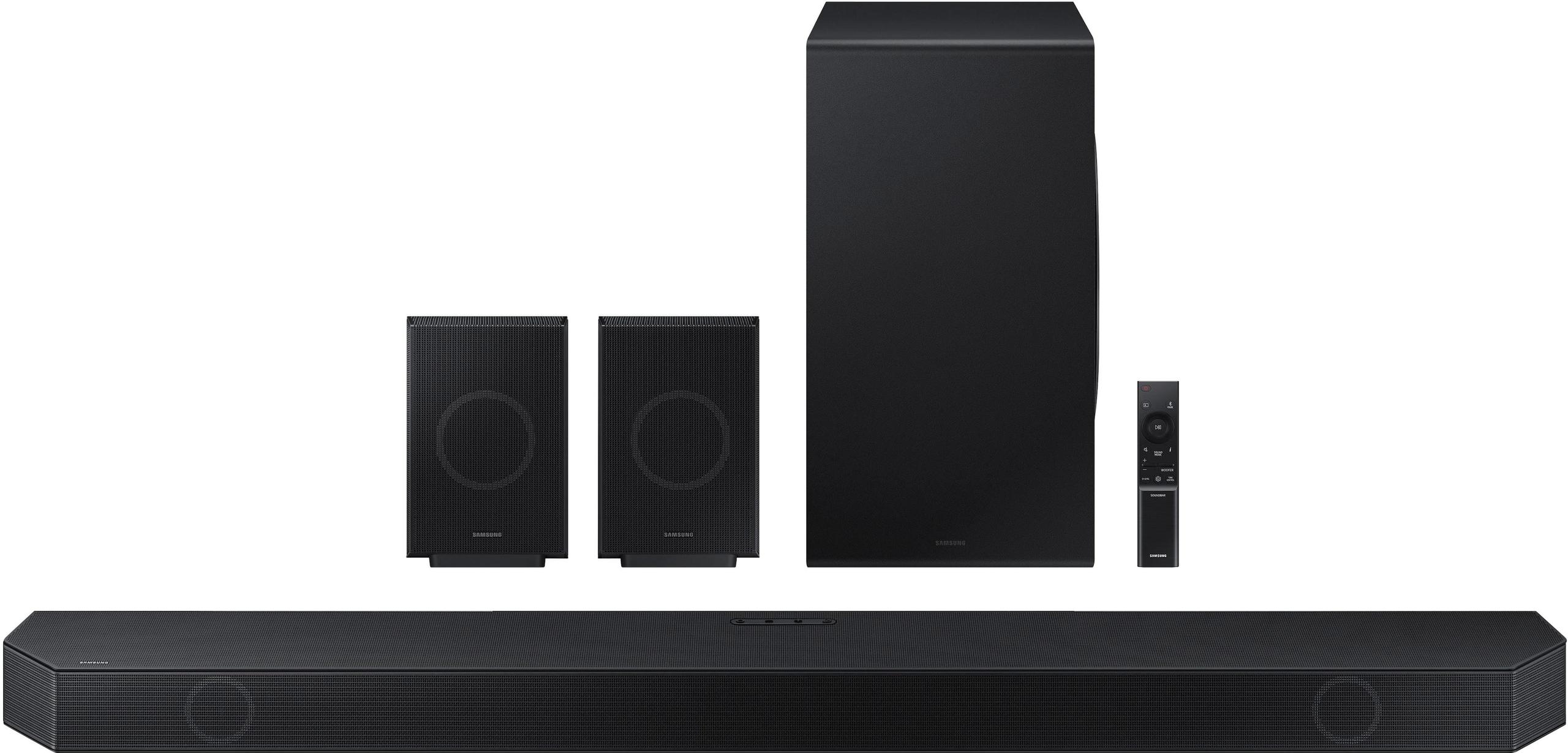
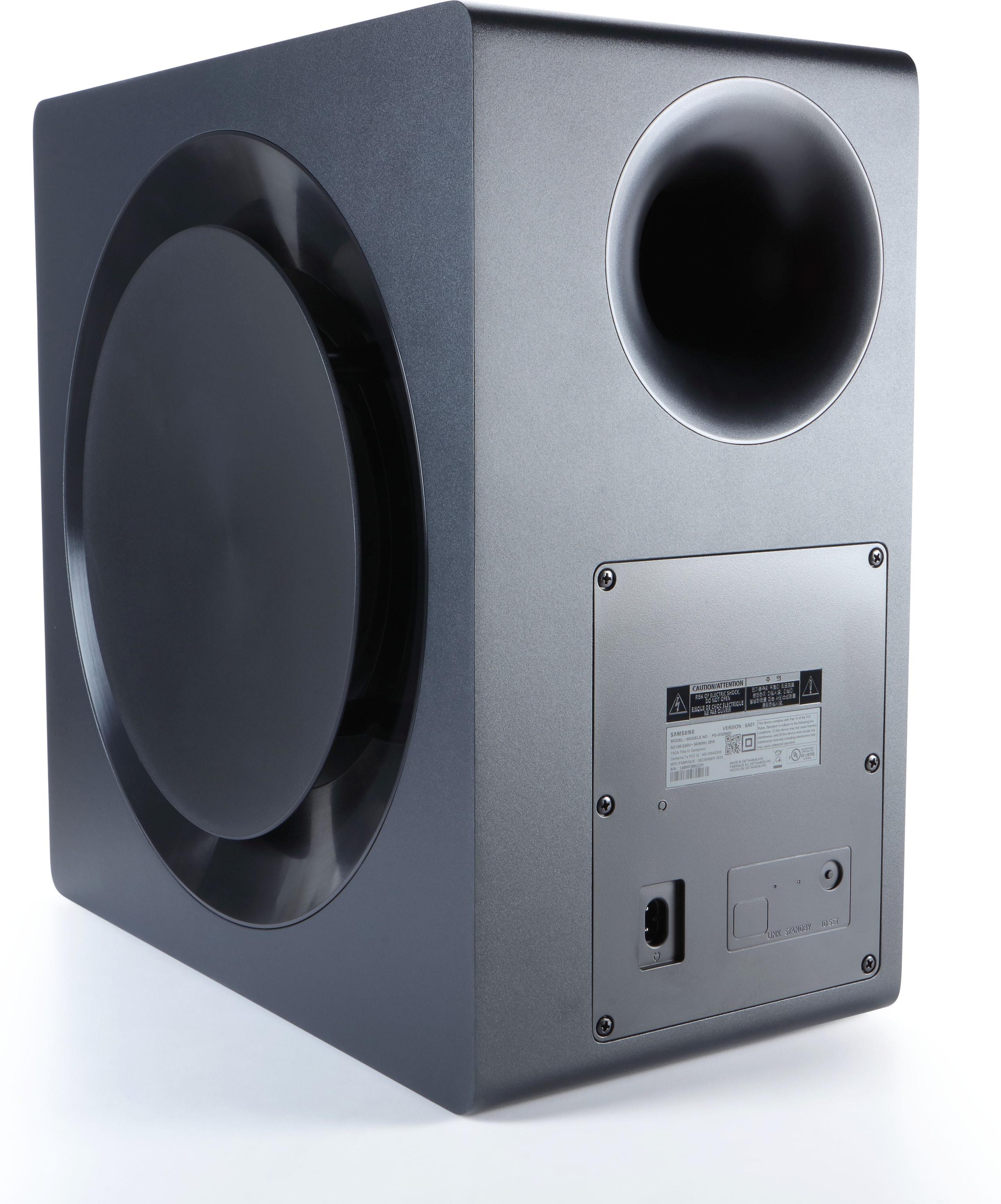
The Q990D's 11.1.4 configuration means 11 main channels, one subwoofer, and four height channels, powered by a total of 22 individual speakers spread across four separate units. The main soundbar alone houses multiple driver types: six elliptical midrange drivers, three tweeters firing forward, four side-firing drivers for width, and two up-firing drivers for height effects.
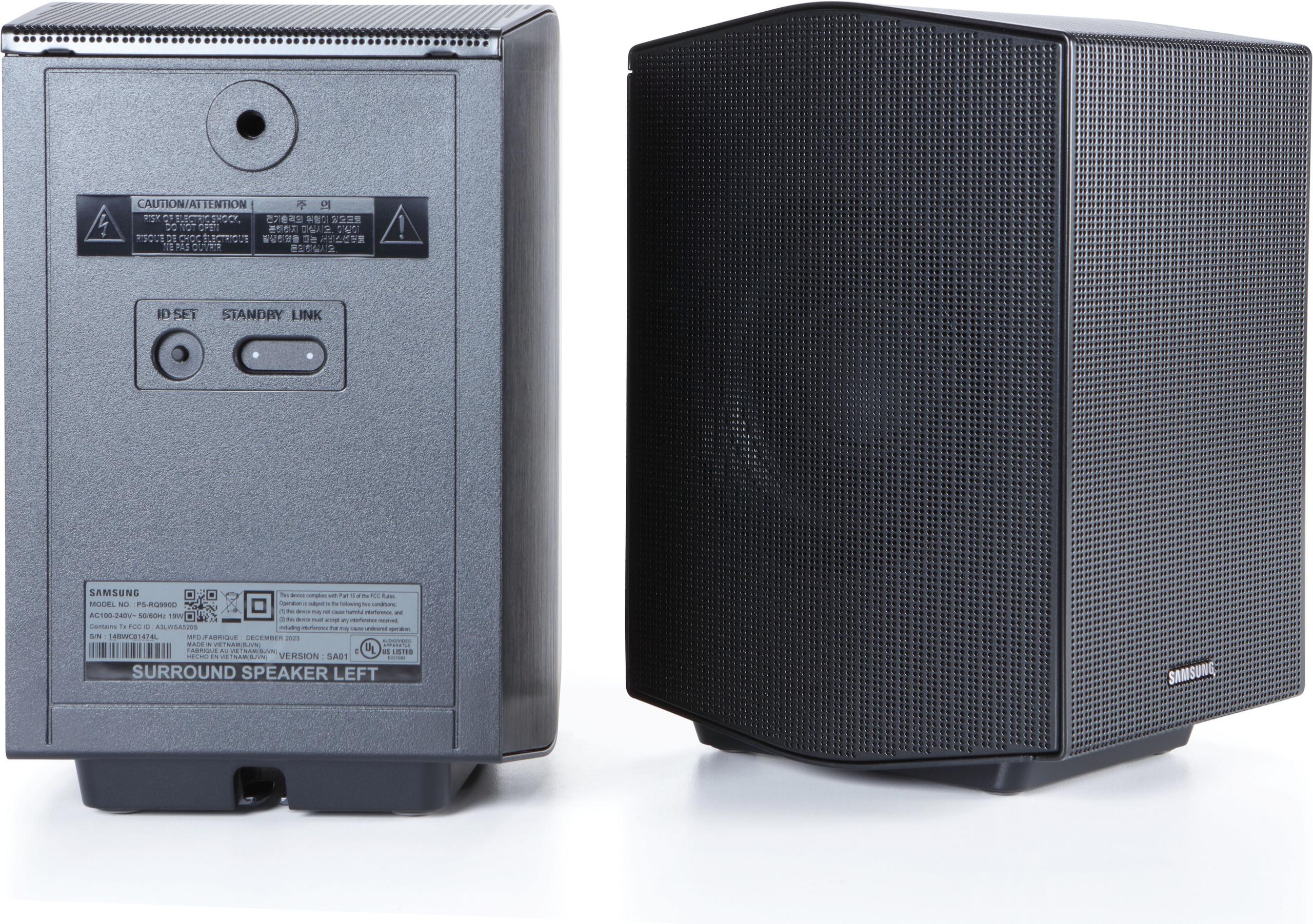
Each rear surround speaker contains three drivers—forward-firing, side-firing, and up-firing—creating genuine 360-degree sound placement. The 8-inch wireless subwoofer provides the foundation, while Samsung's advanced DSP manages the complex task of making all these elements work together seamlessly.
The Samsung Q990D incorporates several proprietary technologies that go beyond marketing speak. SpaceFit Sound Pro uses built-in microphones to continuously analyze your room's acoustics and adjust the sound accordingly. Unlike systems that require you to run test tones or calibration routines, this happens automatically and adapts as your room changes—move furniture around, and the soundbar notices.
Q-Symphony represents something genuinely innovative: when connected to compatible Samsung TVs, the soundbar doesn't just replace your TV's speakers—it works with them. The TV's built-in speakers handle specific frequency ranges while the soundbar manages others, creating a wider, more enveloping soundstage than either could achieve alone.
For gaming enthusiasts, the Q990D includes HDMI 2.1 support with 4K/120Hz passthrough, Variable Refresh Rate (VRR), and Auto Low Latency Mode (ALLM). Game Mode Pro analyzes the type of game you're playing and optimizes the audio accordingly—action games get enhanced explosions and gunfire, while RPGs focus on dialogue clarity and atmospheric effects.
Professional reviews consistently praise the Samsung Q990D for delivering on its premium promises. The Dolby Atmos implementation genuinely creates overhead effects that most competing soundbars only hint at. Rain sounds like it's falling above you, aircraft move convincingly through three-dimensional space, and even subtle atmospheric details like wind through trees gain spatial presence.
Music performance is equally impressive, with natural instrument timbre and excellent stereo imaging. The system's AI-enhanced Adaptive Sound technology analyzes incoming audio in real-time, automatically adjusting dialogue clarity, dynamic range, and frequency balance based on content type.
The bass response from the 8-inch subwoofer provides both power and precision—action movie explosions have weight and impact without becoming boomy or overwhelming quieter details.
The fundamental difference between these systems comes down to sophistication versus value. The Poseidon D50 creates genuine surround sound that significantly outperforms most soundbars in its price range, but the Samsung Q990D operates on another level entirely.
With movies, the D50 delivers satisfying surround effects and impactful bass that makes action scenes exciting. However, the Q990D creates a truly three-dimensional soundscape where individual elements can be precisely located in space. The difference is most noticeable with Dolby Atmos content—the D50 can't decode these advanced formats, while the Q990D was specifically designed for them.
For music listening, both systems favor their intended use cases. The D50 sounds good with pop and electronic music but can feel slightly harsh with acoustic instruments at higher volumes. The Q990D handles everything from classical to hip-hop with equal sophistication, thanks to its balanced frequency response and advanced room correction.
Bass quality often makes or breaks a home theater experience, and here we see clear differences in approach. The D50's 5.25-inch subwoofer with BassMX Technology focuses on impact and presence—explosions feel powerful, and electronic music gets the punch it deserves. However, the bass can occasionally feel slightly disconnected from the main soundbar, especially in larger rooms.
The Samsung Q990D's 8-inch subwoofer benefits from more sophisticated DSP integration. The bass feels more naturally connected to the rest of the audio spectrum, with better definition in complex passages. Low-frequency effects extend deeper while maintaining clarity, and the overall presentation feels more cohesive across the entire frequency range.
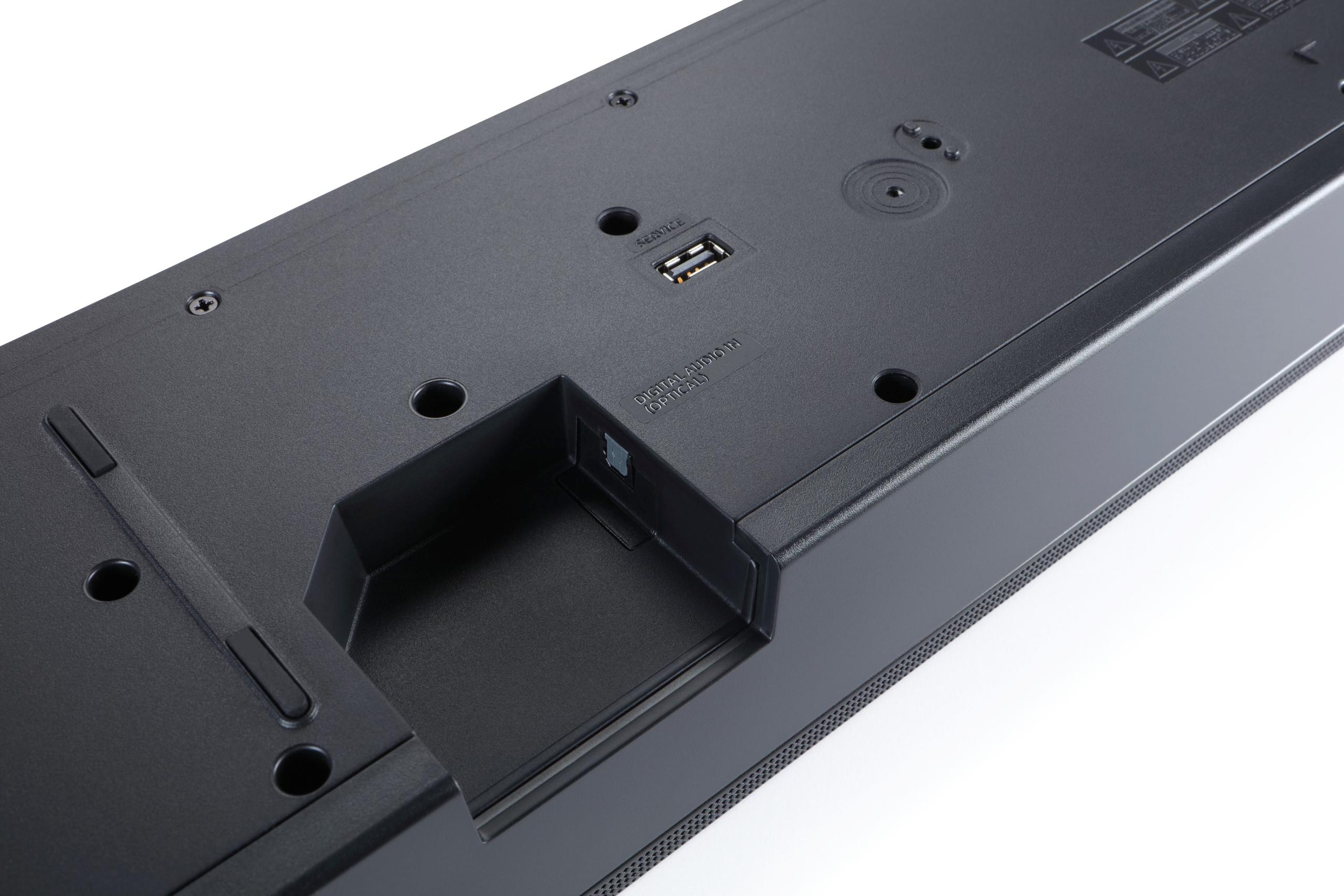
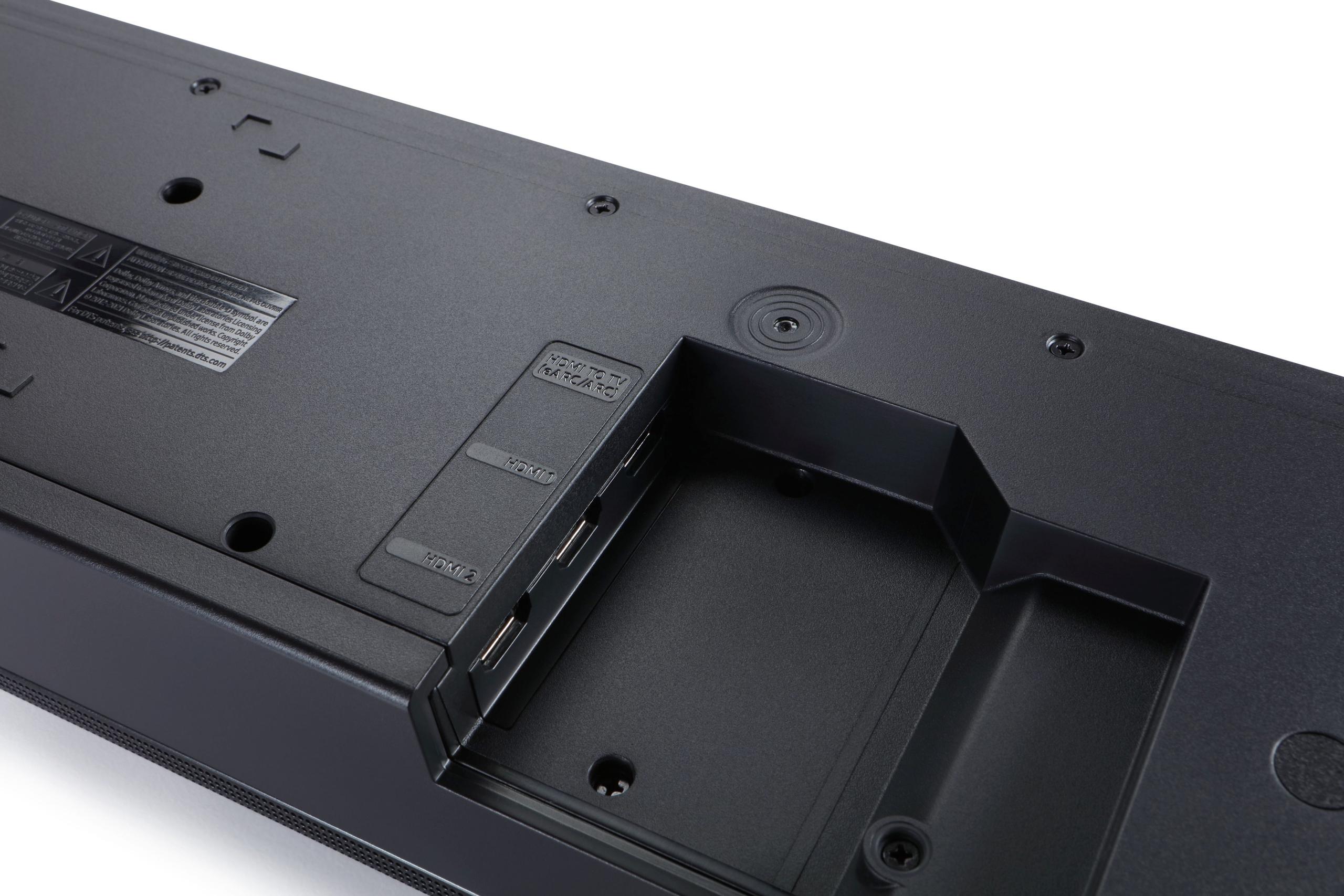
Both soundbars cover the connectivity basics—HDMI eARC, optical, Bluetooth, and auxiliary inputs—but the Q990D adds crucial gaming features and smart home integration. The HDMI 2.1 support matters enormously for PlayStation 5 and Xbox Series X owners, ensuring you get full 4K/120Hz gaming performance without compromising audio quality.
The D50's smartphone app provides impressive control over EQ settings and surround levels, which is remarkable for its price point. However, the Q990D integrates with your entire smart home ecosystem through built-in Alexa, optional Google Assistant, and support for premium streaming services like Tidal and Apple Music with full Dolby Atmos support.
The Poseidon D50 excels in specific scenarios that make it an obvious choice despite its limitations. If you're currently using TV speakers and want a dramatic upgrade without a dramatic price increase, it delivers exceptional value. The jump from stereo TV audio to true 5.1 surround sound is massive, and the D50 makes that transformation accessible to almost any budget.
Apartment dwellers and smaller room owners particularly benefit from the D50's approach. The system provides room-filling sound without requiring the space or volume levels that larger premium systems demand. The rear speakers can be positioned on shelves or small stands, and the overall setup remains relatively unobtrusive.
First-time soundbar buyers often find the D50 ideal because it delivers obvious improvements without overwhelming complexity. Setup is genuinely plug-and-play, and the smartphone app provides enough customization to fine-tune the experience without requiring an audio engineering degree.
The Samsung Q990D targets users who prioritize audio quality above budget constraints and have the space to take advantage of its capabilities. If you regularly watch movies with Dolby Atmos soundtracks, the difference between the two systems becomes immediately apparent. The Q990D doesn't just play these advanced audio formats—it was designed around them.
Serious gamers benefit enormously from the Q990D's HDMI 2.1 features and Game Mode Pro processing. The combination of low latency, high refresh rate support, and optimized audio processing creates a competitive advantage that budget alternatives simply can't match.
Large room owners need the Q990D's power and room optimization features. Its 22 speakers and advanced DSP can fill spaces that would leave the D50 struggling, while SpaceFit Sound Pro ensures optimal performance regardless of room acoustics.
The technology gap between these systems reflects broader industry trends. The Poseidon D50 represents refined traditional approaches—well-executed surround sound using proven methods. The Samsung Q990D showcases emerging technologies like AI-enhanced processing, object-based audio, and smart home integration that define premium audio's current direction.
From a future-proofing perspective, the Q990D has significant advantages. Its Dolby Atmos and DTS:X support ensure compatibility with current and future content formats, while HDMI 2.1 features protect your investment as gaming and streaming technology evolves.
However, the D50's simpler approach offers its own form of longevity—fewer complex features mean fewer potential points of failure, and its fundamental 5.1 surround sound capabilities will remain relevant regardless of format evolution.
The choice between these soundbars ultimately comes down to priorities and expectations. The Ultimea Poseidon D50 offers an almost unbeatable value proposition for users seeking genuine surround sound on a budget. It transforms the listening experience dramatically compared to TV speakers, provides meaningful customization options, and accomplishes its goals without requiring significant investment.
The Samsung HW-Q990D justifies its premium positioning through sophisticated engineering, advanced features, and superior performance across all metrics. It's designed for users who want the best possible home theater experience and are willing to invest accordingly.
Consider the D50 if you're new to soundbars, have budget constraints, live in a smaller space, or simply want a significant upgrade from TV speakers without complexity. Choose the Q990D if audio quality is your primary concern, you frequently consume premium content, you're a serious gamer, or you want a system that will remain cutting-edge for years to come.
Both soundbars succeed in their intended roles, but they serve fundamentally different markets and use cases. The key is honestly assessing your needs, space, and budget to determine which approach better matches your home theater goals.
| Ultimea Poseidon D50 5.1 Soundbar Home Theater (2025) | Samsung HW-Q990D 11.1.4 Channel Sound Bar |
|---|---|
| Channel Configuration - Determines surround sound immersion level | |
| 5.1 channels with physical rear speakers | 11.1.4 channels with overhead height effects |
| Total Speakers - More drivers generally mean better sound distribution | |
| 6 drivers plus subwoofer and satellite speakers | 22 speakers across all units |
| Premium Audio Format Support - Required for modern streaming content | |
| SurroundX conversion technology only | Native Dolby Atmos and DTS:X decoding |
| Subwoofer Size - Larger drivers produce deeper, more impactful bass | |
| 5.25" wireless subwoofer with BassMX Technology | 8" wireless subwoofer with advanced DSP |
| HDMI Features - Critical for gaming and 4K content | |
| HDMI eARC support | HDMI 2.1 with 4K/120Hz passthrough and eARC |
| Wireless Connectivity - Affects streaming quality and smart features | |
| Bluetooth 5.3 | Bluetooth 5.2 + Wi-Fi with AirPlay 2 and Chromecast |
| Room Optimization - Automatically adjusts sound for your space | |
| Manual EQ with 121 presets via app | SpaceFit Sound Pro with AI-powered room analysis |
| Voice Control - Hands-free operation and smart home integration | |
| Smartphone app control only | Built-in Alexa, optional Google Assistant |
| Gaming Features - Important for console gaming performance | |
| Standard audio processing | Game Mode Pro with optimized audio profiles |
| Setup Complexity - Affects ease of installation | |
| Plug-and-play with wired rear speakers | Advanced wireless system with multiple components |
| Music Streaming Integration - Access to high-quality audio services | |
| Basic Bluetooth streaming | Premium service integration (Tidal, Apple Music, Spotify) |
| TV Speaker Integration - Enhanced soundstage with compatible TVs | |
| None | Q-Symphony technology (Samsung TVs only) |
| Physical Design - Impacts room aesthetics and placement options | |
| Compact, budget-focused plastic construction | Premium materials with sophisticated styling |
The Ultimea Poseidon D50 5.1 Soundbar delivers exceptional value by providing true 5.1 surround sound with physical rear speakers at a budget-friendly price point. The Samsung HW-Q990D offers premium value through advanced features like Dolby Atmos, 11.1.4 channels, and smart home integration, but at a significantly higher cost. Choose the Poseidon D50 for maximum audio improvement per dollar spent, or the Samsung HW-Q990D if you want flagship performance regardless of budget.
The primary difference is channel configuration and complexity. The Ultimea Poseidon D50 provides genuine 5.1 surround sound with rear speakers and a subwoofer, while the Samsung HW-Q990D offers an advanced 11.1.4 system with overhead height channels for Dolby Atmos. The Samsung system delivers more immersive 3D audio, while the Ultimea soundbar focuses on delivering real surround sound at an accessible price.
The Ultimea Poseidon D50 5.1 Soundbar is ideal for smaller spaces due to its compact design and appropriate power output for medium-sized rooms. The rear speakers can be placed on shelves without overwhelming the space. The Samsung HW-Q990D is designed for larger rooms and may be overpowered for small apartments, though its room optimization features can adapt to various spaces.
No, only the Samsung HW-Q990D supports native Dolby Atmos and DTS:X decoding with dedicated height channels for overhead effects. The Ultimea Poseidon D50 uses SurroundX technology to convert stereo audio to 5.1 surround but cannot decode Dolby Atmos content. If you frequently watch movies with Dolby Atmos soundtracks, the Samsung soundbar is the clear choice.
The Samsung HW-Q990D provides superior bass with its larger 8-inch subwoofer and advanced digital signal processing, delivering deeper extension and better integration with the main channels. The Ultimea Poseidon D50 offers impressive bass for its price range with a 5.25-inch subwoofer featuring BassMX technology, providing punchy bass that's perfect for action movies but not as refined as the Samsung system.
The Ultimea Poseidon D50 5.1 Soundbar offers simpler plug-and-play setup with wired rear speakers that eliminate wireless connectivity issues. The Samsung HW-Q990D requires more complex setup due to its multiple wireless components but includes automatic room calibration. Both systems can be wall-mounted, but the Poseidon D50 is generally easier for beginners to install and configure.
The Samsung HW-Q990D is significantly better for gaming, featuring HDMI 2.1 support with 4K/120Hz passthrough, Variable Refresh Rate (VRR), and Game Mode Pro that optimizes audio based on game genres. The Ultimea Poseidon D50 provides standard gaming audio through HDMI eARC but lacks advanced gaming features. Console gamers with PS5 or Xbox Series X will benefit greatly from the Samsung soundbar's capabilities.
The Samsung HW-Q990D has built-in Alexa and optional Google Assistant support for hands-free control and smart home integration. The Ultimea Poseidon D50 5.1 Soundbar relies on smartphone app control and doesn't include voice assistant features. If voice control and smart home connectivity are important, the Samsung system is the only option between these two.
The Samsung HW-Q990D excels at music playback with balanced frequency response, natural instrument reproduction, and support for high-quality streaming services like Tidal and Apple Music. The Ultimea Poseidon D50 is optimized primarily for movies and TV, with decent music performance but some harshness at higher volumes. Serious music listeners should choose the Samsung soundbar for superior audio fidelity.
Both soundbars work with any TV brand through HDMI, optical, or auxiliary connections. However, the Samsung HW-Q990D offers exclusive Q-Symphony technology that works with compatible Samsung TVs to use both the TV's speakers and soundbar simultaneously for enhanced audio. The Ultimea Poseidon D50 provides universal compatibility without brand-specific features, making it equally effective with any television.
The Ultimea Poseidon D50 5.1 Soundbar requires space for rear speakers behind your seating area but has a more compact main unit. The Samsung HW-Q990D includes larger wireless rear speakers and a bigger subwoofer that need strategic placement for optimal performance. Both systems require similar floor space, but the Samsung soundbar benefits more from proper speaker positioning in larger rooms.
Both the Ultimea Poseidon D50 and Samsung HW-Q990D typically include one-year manufacturer warranties. Samsung generally offers more comprehensive customer support and service network coverage due to its larger market presence. The Poseidon D50 provides basic support through Ultimea's channels. Consider the Samsung soundbar if extensive customer support and service accessibility are priorities for your purchase decision.
We've done our best to create useful and informative comparisons to help you decide what product to buy. Our research uses advanced automated methods to create this comparison and perfection is not possible - please contact us for corrections or questions. These are the sites we've researched in the creation of this article: youtube.com - eu.ultimea.com - newegg.com - tvsbook.com - youtube.com - provantage.com - ultimea.com - techradar.com - community.ultimea.com - homedepot.com - community.ultimea.com - ultimea.com - ultimea.de - youtube.com - medisamhealthcenter.com - ultimea.com - youtube.com - walmart.com - techradar.com - avsforum.com - valueelectronics.com - samsung.com - rtings.com - samsung.com - avsforum.com - samsung.com - cdwg.com - youtube.com - whathifi.com

Privacy Policy
Terms and Conditions - Affiliate Policy
Home Security
© Copyright 2008-2026.
11816 Inwood Rd #1211, Dallas, TX 75244